Preparing for a wedding, or a marriage?

I’m taking my 45th wedding today. Or, as I like to put it, today I’ll be marrying my 46th woman… and my 45th man! You should be able to figure it out :). It’s a beautiful Canberra Autumn day, the sun is shining, it’s not too cold, and the wedding is happening in a park by the lake. Fantastic!

The service is planned, music selected, talk written, prayers organised, vows crafted, certificates prepared, poem orchestrated, and Bible readings chosen. I’ve had my shave, selected my tie, ironed my shirt (actually my wife did that!), arranged my suit, got my notes, register, certificates, Bible, L plates (props!)… ready to go… licensed to marry!

People love weddings. The beauty, the pageantry, the joy, the love, the tears. They are very special occasions. So much time, money, and effort goes into making this special day one to remember for a life time. And why not? This is a huge day.

But herein lies a problem. I think people often have a blind spot when it comes to weddings. Let’s compare how much goes into preparing for the wedding day with how much goes into preparing for the years of marriage that follow. Tens of thousands of dollars on the wedding and reception. Every waking hour for months stressing over the reception arrangements. Fittings for dresses and suits. Pouring over wedding catalogues. The agony of culling guest lists and organising seating arrangements. Getting the flowers just right. Choosing the best photographer (and later discovering they rule the day). Hours at the hairdressers. Trying to please the mother and the mother in law. The weight-loss program, so as to look fabulous on the day, to fit in that dress, or that suit. All that, and much more, just for ONE day!

And what about preparing for the marriage? “What do you mean?”, I hear some say. What I mean is, preparing to transition from being single to being married. Learning about yourselves, and each other, and what you would like to make of your marriage. Learning to communicate. Working out good ways to resolve conflict. Discussing your families of origin. How you want to rewrite the script and do things differently. Exploring your views on children, how many, and how soon, parenting strategies, roles and responsibilities. Discussing issues of intimacy and sex. Sharing your fears, hopes, dreams, expectations.

How much time is put into laying a foundation for a lifetime together? What is the rock that you will build your marriage on? Do you share the same spiritual convictions? Who will matter most in the marriage? Will it be you, or will you put your partner first, or will both of you seek to put God first? These are big issues, and they surely matter much more than matching the groomsmen’s ties to the bridesmaids dresses?!

As I prepare for another wedding, my prayer for the couple is that they will be prepared for their marriage. I will be encouraging them to…

3 Do nothing out of selfish ambition or vain conceit, but in humility consider others (each other) better than yourselves. 4 Each of you should look not only to your own interests, but also to the interests of others. 5 Your attitude should be the same as that of Christ Jesus.  (Philippians 2:3-5)

Looking to Jesus offers the best hope that a marriage can have. My marriage, my children’s marriages, my friends marriages, the couple whom I will marry today. Jesus is to be our foundation and rock. He is to be the model for the husband, for me, as he lays down his life for his bride, the church, his people.

Husbands, love your wives, just as Christ loved the church and gave himself up for her…  (Ephesians 5:25)

What a challenge this is! If only I, and other husbands, would take this to heart. It certainly doesn’t come naturally to me. And so I should keep praying:

Dear God, please help me to love Fiona, as Jesus has loved me. Help me to overcome my selfishness, my pride, my impatience, my greed, my laziness. Please empower me to care for the beautiful wife that you have entrusted to my care. Please strengthen me to show love, to be loving, to love from the heart. Please enable me to minister to my wife, not for what I can get, but always to give and to bless. Please enrich our marriage and keep us growing together, until death do we part.

Looking back through my marriage register is a bitter sweet experience. So much history, and such a mixture of emotions. It mixes the tears of joy and the tears of broken hearts. One couple celebrating their 20th wedding anniversary. Many marriages going strong. But some of them have broken apart. Some have been parted by death. Others fractured by unfaithfulness. Some might say they have drifted from their foundations. Maybe one or two might wish they had worried less about the wedding and put more into preparing for the marriage.

Every time I take a wedding it causes me to pause, reflect, and consider my own. Not the wedding so much – that was nearly 29 years ago – but the marriage. I’m praying for 29 more years together! If we make that it will be a miracle, and I’m not just referring to God removing the cancer from my body. It will mean God continuing to work in both our hearts, to keep us looking to Jesus, and putting each other before ourselves.

Please God, may it be so!

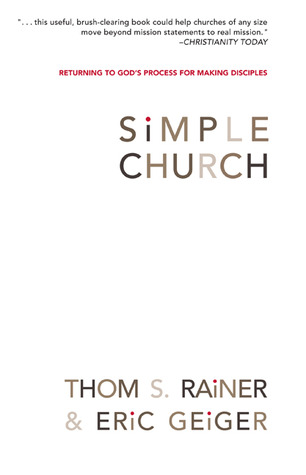
Simple Church

Simple ChurchSimple Church begins with a story about Pastor Rush who, I was convinced, was modelled on me! He’s aptly named because he’s always rushing from one thing to the next. Preaching, visiting, planning (occasionally), emails, emails, emails, meetings, business, admin, family, sports, evenings out with work, days away with conferences, more conferences, patching up problems, helping people resolve conflicts, preparing on the fly, constantly tired, stressed, adrenalin driven, and every week having to do it again! Sound familiar to some of you?

Simple sounds very attractive. I long to get rid of the clutter! Simple is where it’s at. It’s the latest trend. Look at Apple, Google, designers, marketers, book titles… and now churches! This book offered something I was craving. It promised to be my ‘ministry stress detox diet’ and I was keen to take it in! It launched me reading widely on ‘church’, not just about the theology of church (as I’d read a lot of good stuff on what church is), but about how we put things into practice.

Let me start by saying what I didn’t like about Simple Church. 

Firstly, it was too long. How simple can something be if it takes over 250 pages to explain it? At times I found the book annoyingly repetitive and protracted. What I’d really like to see is a condensed version of Simple Church. One that comes to about 20 or 30 pages in length. I’m a big fan of little books! There is a revised edition of the book out now. It includes lessons learned since the first edition. But it’s longer rather than shorter!

Secondly, the constant references to statistical data left me a bit cynical and tired. In fact, I started to skip these sections once I realised their findings were entirely predictable… ‘our research shows the simple church is better on all counts than the complex church!’

Thirdly, I was left thinking that there’s a fine line between simple and simplistic. People could be tempted to think that church is all about process, and if we get the process right then church will be successful. The trouble is, we could have a very successful process that does nothing to build the church for eternity. It may be successfully simple. In fact, it may be successful by a whole range of human measures, and yet fail by God’s measure. As it says in 1 Corinthians 3:10 “…each one should be careful how he builds.”

And fourthly, this book makes all kinds of assumptions about the place and purpose of the church without grounding them clearly in the Bible. There is very little engagement with the Bible, and the foundations of the book seem more sociological than theological. The risk is that this book could simply help a church, with appalling theology, do what they do even better, rather than changing what they do! So I recommend getting a good grasp on God’s design for the church in the Bible, before you get too heavily into Simple Church. A good starting point would be detailed study of the books of Ephesians and Hebrews, combined with reading Understanding the Church by David Jackman.

Now that my gripes are out of the way, let me say this is a very useful book. It’s provided the paradigm for our ministry team to evaluate how we’re travelling as a church. It’s given us a template for thinking about the shape of the Christian life, how we are growing followers of Jesus, and how we encourage this in our church.

The authors, Rainer and Geiger, define a simple church as a congregation designed around a straight-forward and strategic process that moves people through the stages of spiritual growth. (p60) Each part of this is significant. It’s designed, thought out, structured, not just thrown together. The process is straight-foward, clear, easy to grasp, known to the leaders and the congregation, and doesn’t keep changing according to the latest fad. The process is strategic, tied to the purpose and vision of the church. It moves people, logically. Church programs are means, not ends in themselves. They provide ways to help people grow together spiritually. The overall plan is for the church to cooperate with God in seeing people’s lives changed for eternity. In considering ‘stages’ of spiritual growth, we shouldn’t consider discipleship as a sequence of steps or courses to be completed. However, we want to see people progressing as Christians and growing together into maturity, so we should consider what we are doing as a church to help this happen.

If your church feels cluttered, with a busy calendar, too many programs, and a lack of overall vision or purpose, then Simple Church offers a plan for a makeover. If you’re intending to plant a church and you want to avoid getting lost in your own mistakes, then Simple Church may help you create a template to follow. It could help by getting you to consider the following four important areas:

The leadership and the church are clear about the process (clarity) and are committed to executing it. The process flows logically (movement) and is implemented in each area of the church (alignment). The church abandons everything that is not in the process (focus).  (p67-68)

The book devotes a chapter to each of these areas, and these four chapters provide the substance of the book. The chapter headings show the thrust of the argument:

Clarity:  Starting with a Ministry Blueprint
Movement:  Removing Congestion
Alignment:  Maximizing the Energy of Everyone
Focus:  Saying No to Almost Everything

Clarity
The task of creating a simple church begins with clarifying what discipleship is and how it will happen in our church. Let the Bible inform our picture of what growing Christians and a growing church should look like. Then we work out what needs to happen for the church to grow disciples. Specifically, in the terms of the book, what processes need to happen? Of course, narrowing down processes will be somewhat artificial, but it has the value of clarifying where we will be headed. We don’t start by assuming our pre-existing church programs. Rather, we ask what programs will facilitate this process of disciple making.

For our church this has meant identifying three steps in the process: connecting, growing, and serving. We desire to see people connecting with God and each other through the gospel of Jesus. We desire to see people in the church growing together into maturity through applying God’s Word in their lives. And we desire to see people using their time, resources, and gifts in serving the church and the people around us (especially in helping people connect and grow).

Movement
Once the process is designed, it needs to be implemented. This involves placing programs alongside the process. If you are auditing your existing programs in line with your clarified process of disciple making, then this may be rather confronting. There may be areas of the process that are completely unaddressed. You may have programs that you can’t fit in anywhere. You might discover the need to refocus some of your programs to reach your goals.

We’ve followed the example of other churches by specifying some programs as integral to our process. For example, we run a regular ‘connect’ course that is designed to be an entry point for connecting people into our church. It is designed to introduce them to the message of the gospel, to the vision of our church, and to people at church. This helps some people to decide that our church is not for them and others to be clear about what they’re jumping into. Once people have decided that they want to be part of the church, we then encourage them into ‘growth’ groups which provide a relational context for people to grow together spiritually. Then, as we get to know people in growth groups, we can encourage them to ‘serve’ in ministry teams throughout the church. We have many service options including kids ministry, youth work, music, welcoming, international student outreach, and much more.

Alignment
The next step is to get the whole church aligned with our process. This means the leaders, the programs, the calendar, the announcements, the congregations, everything and everyone. People and programs need to be held accountable according to our agreed process. Staff should be recruited and deployed according to the process. Understanding and unity are increased through such alignment. And we avoid clashes and clutter.

Simple Church has pushed us to consider what programs are critical to disciple making, and to make these programs our focus. But we still have a long way to go in creating alignment across our church and its various programs.

Focus
The book says, and others with experience tell me, that focus is where it gets ugly! Rainer and Geiger write:

OK, this is where the change is REALLY felt. Please notice that here is the only time in the entire book we used all caps to emphasize a point.  (p240)

People appreciate clear processes, purposeful programs, and the unity created by people moving together in the same direction. People love clarity, focus, and simplicity. But if you try to axe their favourite program because it doesn’t contribute to the process, watch out! We grow very attached to the things we create and maintain. We’ll probably disagree that our program is part of the clutter! So, lots of love, care, skill, and communication will be needed if we’re going to get all our programs aligned to our process and purpose. And it might take some time.

Change can be very difficult. It involves loss and grief and uncertainty. Some things disappear while others take their place, and not everyone is happy. But if we’re failing as a church to grow followers of Jesus, if we’re simply going through the motions, propping up the programs, and feeling constantly, mind-numbingly, busy, and without clear purpose… then change is essential. Of course, we can make these changes without ever reading Simple Church. And there are other good tools available to help us. But if we’re stuck in a bit of a rut, and we’re keen to see our churches growing followers of Jesus, then it might just be worth a look!

Patience

Patience has never been my strong suit. You’ve probably heard about the person who prays, “Lord make me patient, and do it now!” How does God answer that one?!

I just want to be better… now! I want to get off the chemo and onto drugs that don’t hurt… now! I want to be fit again… to run, lift weights, throw a football, climb stairs easily, catch waves, join my friends on bike rides… NOW!

The family are off being active and I’m just climbing out of bed after a nanna nap! Do I take panadol for the chest pain, the sore head, and the aches in my joints? Or do I hop back into bed and hope it will go away? Do I push through the pain barriers? Or do I rest and let the body catch up? I’ll tell you, there are no easy answers.

Most of my life I’ve maintained a reasonable level of fitness. Running, swimming, walking, riding, lifting. I’ve never been a top class athlete, but I’ve never felt disabled either. That is, until now. And I don’t like it!

This year I’d planned to be active, really active. I was going to be a barra fishing, pig shooting, motorbike riding, four-wheel driving, pastor in the NT! We were looking forward to a physical, outdoors lifestyle. And now I’m stuck inside, hiding from the cold, unable to shake a cold. So what on earth does God have to teach me?

Patience… I’m a slow learner! And I usually have to learn the hard way. There’s lots I need to learn, but patience has to be right up there.

I need to be reminded that this world is not the way God intends it to be. I’m not the way God intends me to be. It’s not how things started, and it’s not how they’ll finish. God has big plans and he’s not done yet. The Apostle Paul reflects on the chaos and suffering he sees in this world and he helps us to get things back in perspective – God’s perspective.

18 I consider that our present sufferings are not worth comparing with the glory that will be revealed in us. 19 For the creation waits in eager expectation for the children of God to be revealed. 20 For the creation was subjected to frustration, not by its own choice, but by the will of the one who subjected it, in hope 21 that the creation itself will be liberated from its bondage to decay and brought into the freedom and glory of the children of God.

22 We know that the whole creation has been groaning as in the pains of childbirth right up to the present time. 23 Not only so, but we ourselves, who have the firstfruits of the Spirit, groan inwardly as we wait eagerly for our adoption to sonship, the redemption of our bodies. 24 For in this hope we were saved. But hope that is seen is no hope at all. Who hopes for what they already have? 25 But if we hope for what we do not yet have, we wait for it patiently.  (Romans 8:18-25)

I don’t have to be satisfied with how things are… because God is ok with me longing for things to be better. I don’t have to pretend that the world really is wonderful… because God reminds me that it’s been subjected to frustration. There’s no point putting on a brave face and doing all I can to improve my lot… because God has put into place his plan to renew all things. So what does he ask of me?

To put my hope in him, and to wait, patiently.

The Biblical way to dodge death

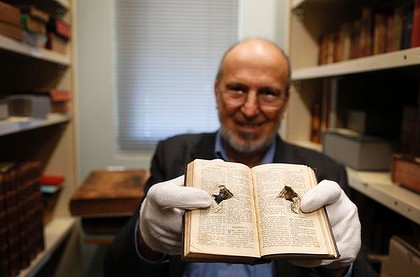
As I opened the Canberra Times over breakfast this morning, I was intrigued to read an article on the Bible. Stories about the Bible are rare in the papers, but this one’s rather special. The Bible belonged to Lance Corporal Elvas Jenkins. He placed it in his shirt pocket and it took a bullet for him at Gallipoli on May 7, 1915. It’s a great story. The lead shrapnel bullet from the shell of a 75mm field gun went through the Psalms and lodged in the Gospels! The Bible literally saved his life… that is, until he was killed a year later while heading a reconnaissance party on its way to the Battle of Somme. Now, nearly a hundred years later, this little Bible has come to rest in Canberra!

Very cool to be saved by a Bible tucked into your shirt pocket, and a testimony to God’s kindness to him that day. But then, it could have equally been a tobacco tin that saved him, or a pocket watch, or something else that could withstand the shrapnel. These days, I guess it would be more likely a kevlar jacket, or some other piece of high-tech armour. So why get excited about this pocket Bible saving his life that day?

I think it’s because of the strong associations with something bigger and more profound. The Bible has saved many people, countless people, from death. Not the ‘dodging bullets’ kind of death (only to die later), but from spiritual death that is separation from God for eternity. Arguably, the most famous words in the Bible, give us this life-saving message:

For God so loved the world that he gave his one and only Son, that whoever believes in him shall not perish but have eternal life.  (John 3:16)

The Bible offers real hope to the dying. The evidence of the life, death and resurrection of Jesus shows us that death doesn’t have the final say. Life beyond the grave or the crematorium isn’t just an empty wish, but a rational expectation based on the evidence of Jesus Christ who has made it possible. It’s worth grabbing a Bible and reading one of the four Gospels – Matthew, Mark, Luke or John – to find out more.

(You can read the Canberra Times article here.)

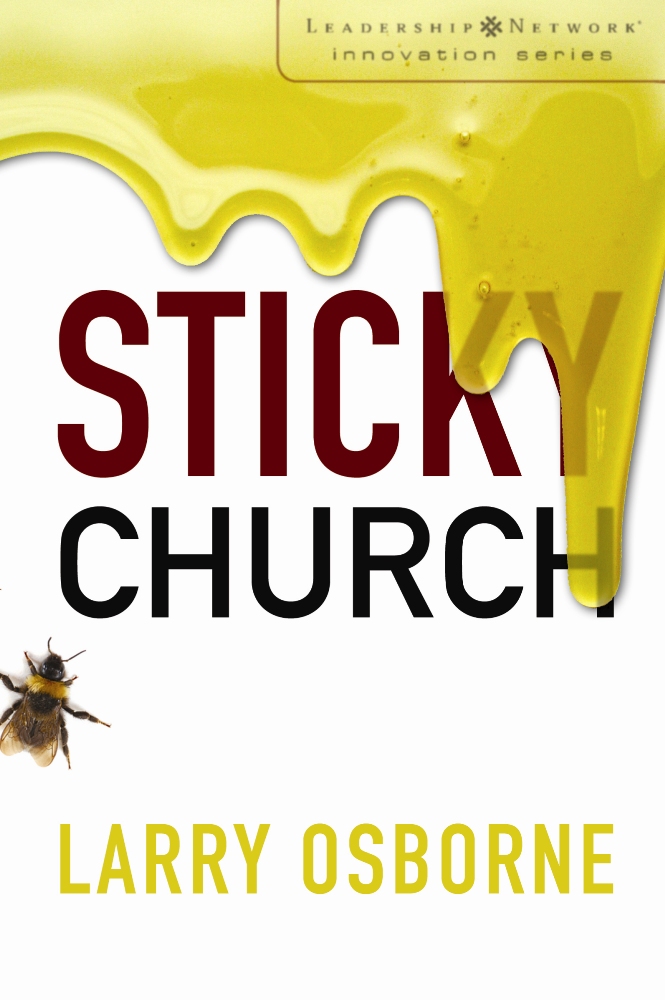
Sticky Church

Last year, I purchased the ‘wrong book’, and read it by accident – and I’m so glad I did. Sticky Teams had been recommended to me as a helpful book to consider our organisation and direction as a church, but I mistakenly ordered Sticky Church by Larry Osborne instead! It took me a while to appreciate that this was a different title by the same author. And it proved to be even more important in thinking about how we were doing church.

As a senior pastor/team leader/preacher I’ve applied myself to the crafts of leadership and communication over many years. There may be 100 or more books on my shelves touching on these areas. But I’d probably only read 3 or 4 books on the topic of small group ministry, and none that had really explored the strategic importance of a well integrated small group ministry in a growing church. Sticky Church has begun to fill this void and pushed me to explore other material in this vital, and yet overlooked, area of our ministry.

The book begins by tackling the matter of how we grow our churches. While many churches work hard to get people in through the front door, they leave the back door wide open and people don’t stick around. By contrast, Osborne’s church does no marketing, gets plenty of visitors and inquirers, and focuses on building genuine connections with those who come. In short, small groups are seen as the key to closing the back door, by building real relationships in a context of ministry, Bible, prayer, and life experience.

For the statisticians among you, think about this one:

Imagine two churches that each grew in attendance from 250 people to 500 people over a 10 year period.

Church A is a revolving door. It loses 7 people for every 10 it adds. To reach 500, it will have to add 834 new members of attenders.

Church B is a sticky church. It loses only 3 people for every 10 it adds. To reach 500, it has to add 357 new members or attenders.

On the surface, both churches appear to have doubled. But the revolving door church had to reach reach 834 new people to get there, while the sticky church only needed to reach 357.

Obviously, doubling attendance is a lot easier for the sticky church than for the revolving door church. No surprise there. But here’s the kicker: After ten years, the church with the big back door will have 500 attenders and 584 former attenders! And every year after that the spread between the number of ex-attenders and the number of current attenders will grow larger.

No matter what that church does to expand the size of the front door, it’s going to be hard to keep reaching people when the predominant word on the street is, “I used to go there.”  (p17-18)

Osborne is committed to having 80% or more of church attenders actively involved in small groups. He sees the groups as the hub of the ministry. And he sees this model as fully scalable. The same principles that make a church sticky with a hundred or so in attendance, continue to work as the church grows into the thousands. Osborne’s church, North Coast Church, is a mega church in Aussie terms and may lead some of us to tune out as to the relevance to our contexts. However, it took them five years to reach 180 attenders and another five to reach 750, and they worked hard at the small stuff along the way.

Sticky Church presents a model of sermon based small groups, where the preaching on the Sunday is followed up in people’s homes throughout the week. We can argue about the ups and downs of groups being sermon based, but let’s not miss the primary observation. Osborne writes:

It doesn’t matter if the groups are sermon based or not. Ours weren’t initially. All that matters is that a significant percentage of the congregation begins to meet in small gatherings outside the church building to share life and study the Bible together.  (p49)

I read over this book a couple of times, gave copies to all our pastoral staff, and used it as the basis for evaluation and planning at our staff week away last year. Here are some comments, relevant to our situation, that I pencilled into the inside cover of my book for our discussions:

How do we convey the value and importance of groups to the life of our church and the spiritual vitality of our members?

  • teaching ‘one another’ the word of God
  • developing authentic relationships and Christian community
  • encouraging people to share their lives and faith with others (in the groups and beyond)
  • helping more people take up opportunities to serve in the life of the church and our outreach
  • decentralising leadership and care of one another
  • experiencing more personal prayer in relationship with others

Growth in churches is often crippled by what Osborne describes as the ‘holy man myth’. This is the idea that pastors have a more direct line to God. They are seen as the ones who must teach, visit, pray, counsel, and do pretty much everything. Especially if we’re paying them to do it! Aside from the poor theology driving this myth, the harsh reality is that one man simply can’t do all these things. My observation is that if a church or its ‘holy man’ thinks he must do everything, then we are not likely to see the church grow beyond 100 to 150 people. Healthy small groups are a valuable means for decentralising the ministry, and empowering people within the church to use their gifts in service of one another.

This book promotes sermon based Bible study in small groups. Our church had only done this occasionally, usually for a specific purpose such as focusing the whole church on a theme. People expressed appreciation for the guidance and resources, but we’d never managed to keep it going. From my perspective it was hard enough getting the sermon done well, let alone adding the preparation of small group material. I’d seen others committing to it over the years, week in week out, and in some cases preparing their whole series of Bible study notes before the preaching even began. I would just sit back and marvel at how they could pull it off. I’d leave it for the Phil Campbells, Steve Crees, Craig Dobbies… it wasn’t for me!

But, Sticky Church has pushed us out of our comfort zone to develop a sermon linked small group Bible study strategy. We haven’t managed to write a series in advance yet. Mostly the studies are produced and distributed week to week, ‘just in time’ for leaders to work over material and prepare for their groups. They are sermon linked, rather than based, because we don’t want people just rehashing what the preacher said on Sunday. We want people getting back into the text, doing some work themselves, and applying it in their lives. Some groups like to follow the sermon with the emphasis on further exploration and application. Others have opted to precede the sermon with the study, aiming to get people more engaged in the observation and investigative processes, raising their questions, and whetting their appetite for a sermon to follow. Horses for courses, but I think that in our context we will benefit from a greater commitment to applying the Word in the context of relationship with one other after the sermon. So I’d tip the scales towards sermon first – small group studies afterwards.

There are a few things that have moved us in this direction. Feedback from some of our leaders has shown that they have worked hard on preparing Bible studies from scratch and devoted little or no time beyond this to leading and caring and promoting the ministries of others in their groups. Some haven’t even seen this as their role. (This probably says more about our poor communication of expectations and encouragement of leaders in their roles). Just focusing on preparing and leading studies is commendable at one level, but if we are seeking these groups to become ‘little church’, where people are being fed, encouraged, caring for one another, and encouraging each member to be connecting with people who don’t follow Jesus… then the leaders need to be helped to embrace a larger job description. Not simply preparing and leading studies, but leading people, and this takes time. If we can resource the leaders with material, this will give them a leg up. Some leaders follow our material pretty much as provided, while others use it as an aid for their own specific preparation.

We’ve also seen the positive benefits of having the entire church learning together the same or similar material. In fact, on the occasions we have been able to integrate youth and children’s material with the adult preaching and small groups, we’ve had great feedback from families. By linking to the sermons, people have had the benefit of the preacher’s hard work combining with the group working through understanding and application of the Bible together. As we put our sermons on line, people who miss church are able to download the talk before attending (or even leading) their small groups. This seems to be increasing people’s engagement with the Bible and with working through its implications for life.

Osborne’s church has worked to keep their groups aligned with the mission of the church. They are not seen as optional accessories, but integral to the church fulfilling its purpose. They desire to 1) enlist new followers into God’s kingdom; 2) train them how to live the Christian life; and 3) equip them and deploy them into service. Small groups are vital to this process.

There are some interesting particulars how about how North Coast Church groups function. People sign up for a term at a time, and are then asked to provide feedback at the end of each term, which includes indicating whether they will be remaining with the group the following term. Osborne says that providing a clear way out of groups has led to more people staying in. Groups are not divided into two as numbers increase. In fact, he has a whole chapter on Why dividing groups is a dumb idea. He notices that some people take forever to click with a group that works for them, and then we cruelly split their group and they’re lost again. Their answer lies in two strategies: starting new groups for new members, and hiving off leaders rather than dividing whole groups. We’ve basically adopted this approach and begun to see the advantages of moving newcomers through an introductory ‘connect’ course into a small group with the people they’re already getting to know.

There is some good stuff on finding and developing leaders. Look for spiritual and relational warmth in prospective leaders. Avoid hyperspiritual God-talkers and single-issue crusaders. Look to apprenticing leaders within existing small groups, or else find people with few preconceived ideas or baggage about how groups should be run and prepare them to play on the team. Grabbing a leader who did things differently in their previous church, without engaging them with the vision of your church, can spell disaster! And it’s better to ask for recommendations, rather than asking for volunteers.

I also appreciated the creative rethink on how we go about training leaders. The emphasis is on preparing leaders on the job, for the job. Keeping the information flow with resources, encouragement, tips, suggestions, and ensuring that groups are well connected with the wider ministries and mission of the church is vital in equipping our leaders. This hasn’t been our strength to date, and we’re seeking to improve. Osborne also addresses the different needs of rookie and veteran leaders. This is something we should probably consider more.

Finally, the last section of the book includes tips for preparing sermon based studies. For mine, this is not the high point of the book, but it’s worth reading as we review our approach and strategies. And there are a number of appendices that show how North Coast Church puts their model into practice.

I’m very glad that I stumbled onto this book. Not simply because of it’s great ideas and practical common sense, but especially because it reminds me that if we’re expecting our small groups to be the hub of our ministry, and a primary pastoral care context, and the leaders to run with this vision, then we must invest more in helping them to work well.

Suffering sermons

For years now, my family have had to put up with being my ‘go to’ sermon illustrations. Especially when the kids were younger, and didn’t know much about it. I’ve heard that some preachers pay their kids for the privilege of speaking about them in talks. I’d have gone broke a long time ago! Anyway, my wife was very excited recently to hear me being used as the introduction to a couple of very encouraging, insightful, Biblical and helpful sermons on the topic of the why and how of suffering. These talks were given by a good friend, Rob Smith, in Sydney earlier this year. We commend them to you. Rob doesn’t speak from an ivory tower on this topic. He is well acquainted with personal suffering and, most importantly, he has soaked himself deeply in the Bible. You can download and listen to his talks at…

Rob Smith: The how and why of suffering #1
Rob Smith: The how and why of suffering #2

Journey with cancer 18 Apr 2012

Dear family and friends,

This has been a heavy week. CT scans on Monday of chest, abdomen, pelvis, and brain. Maintenance chemo on Tuesday with Alimta and Avastin, no more Carboplatinum. Appointment with our oncologist this morning, to interpret scans, check how I’m going, and confirm plans looking ahead.

I say it’s been a heavy week, because it has been focused on the disease and it’s been a reality check. We’ve been able to (largely) forget the seriousness of the cancer in recent days, especially as we spent a lovely family time at the beach over the Easter week. But then, we come out of holiday land and back home to face facts. And some of the facts aren’t too good. We keep being reminded that the treatment is not considered curative and that the best we can hope for is to slow down the progress of the cancer, while seeking to minimise the bad effects of treatment. Of course, this is still good. I do thank God for the availability of quality medical care, access to good information, the support of others who understand all this stuff (especially my wife), and the hope that comes from the treatment available.

People often ask what they can pray for me. There are lots of things: patience, good use of my time, strategic ministry opportunities, the capacity to love and serve my wife and children, the strengthening of my (and my family’s) trust in God, availability of the targeted Crizotinib drug (currently only approved in the US, and made available in Australia within certain trials or after evidence of cancer progression from standard chemo), and other things. But high on the list I keep asking people to pray for complete healing. That God will, either by medical means or a complete miracle, free me from this disease.  Many of us have been praying this for 4 months now, and I keep hoping that it will either keep shrinking every day, or that one day I will wake up and it’ll all be gone!

This week has been tough because we’ve been reminded that the cancer is still there. The CT shows a very small reduction in the primary tumour and no evidence of any new tumours or spread to the brain. However, it has highlighted a couple of nodes with evidence of cancer, and we are unclear as to whether this is new, whether they have increased in size since the last scan, or whether they were present earlier without being clearly detectable. I think I was hoping for a profound reduction in the cancer. Perhaps for them to say that it’d almost disappeared!

So far the new chemo regime seems like it will be more manageable. Although it is normally 2 or 3 days after treatment that the side effects start to get bad, and they can last for more than a week after that, so I shouldn’t make too many predictions here! My ‘muck in the lungs’ problem is still evident, but I’m about to take a fourth course of antibiotics and it does seem to be slowly getting better. Please pray that it gets completely cleared up.

I’ve been a bit miserable over the last few days. For some reason last night I was picturing my own funeral in my mind, with Fiona and the kids deeply saddened at my passing. This led to a few tears and me being rather melancholic today. My kids are too young for this, I thought. I want to enjoy more time with them yet. I need to make a priority of investing in my family, filling their minds with the promises of God, and depositing good investments into their memory banks. Of course this is true whether I have a months, years or decades. And I need to keep reminding myself that God will look after them. He is an expert at it, with or without my help!

IMG_4963And we’ve had some good times recently. The family escape to Broulee was nice. We spent time lazing in the sun, walking the beaches, the kids surfed each day, everyone but me swam in the ocean (I wimped out, blaming my chest infection and reduced immunity), we read books, watched Sherlock, completed a WASGIJ (a back-the-front jigsaw), and Marcus caught a couple of fish. It was especially nice to have Matt home with us for a week or so before returning to uni.

On Sunday I gave my second sermon for the year on Connecting with God and each other, based on Ephesians 2-3. It was exciting to be able to open God’s Word with the church again, though it left me exhausted after repeating the talk at night. We also had a wonderful time over lunch catching up with 3 families who are long term friends, including a special friend who became a Christian in the first year of our ministry here in Canberra. I hope to be speaking again in a few weeks, as we begin a series in Genesis.

The following prayer featured in my recent talk on Sunday. I am keen to be praying this myself, and I recommend it to each of you also.

 14 For this reason I kneel before the Father, 15 from whom his whole family in heaven and on earth derives its name. 16 I pray that out of his glorious riches he may strengthen you with power through his Spirit in your inner being, 17 so that Christ may dwell in your hearts through faith. And I pray that you, being rooted and established in love, 18 may have power, together with all the saints*, to grasp how wide and long and high and deep is the love of Christ, 19 and to know this love that surpasses knowledge—that you may be filled to the measure of all the fullness of God. 20 Now to him who is able to do immeasurably more than all we ask or imagine, according to his power that is at work within us, 21 to him be glory in the church and in Christ Jesus throughout all generations, for ever and ever! Amen.  (Ephesians 3:14-21)

(* saints doesn’t refer to dead Christians who have done special things they’re remembered for – it refers to living Christians in this prayer)

Thank you again for your support. We are continually humbled to hear of people praying all over the world, some every day. We love getting messages of encouragement via cards, email, facebook, now twitter :), and especially in person. Please feel free to drop in and share a coffee!

With love,

Dave (and Fiona)

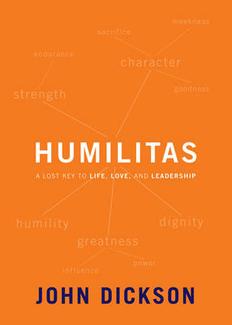
Humilitas

It’s hard to know how to review John Dickson’s book, Humilitas. With humility I suppose, or at least without humiliating myself! It’s hard because I’m not much of an expert on the topic, and it’s doubly hard because the author is a good mate whom I greatly admire. I’ve always been stimulated through reading John’s books. I confess to having envied John’s capacity as a preacher, didgeridoo player, author, and general all round talent. But mostly I just like having the occasional catch up, coffee together, and being encouraged by an old friend.

Well, Humilitas is not what I expected! I’ve grown accustomed to John writing books on the life and teaching of Jesus, books that answer difficult questions, and books seeking to persuade others to follow Jesus. I quickly discovered that this is a different type of book, pitched at a different audience. This is not so much for the enquirer into Christianity, as the one who is seeking to grow as a leader and build stronger relationships with others. (Not to suggest these are mutually exclusive, by the way.) I’d expect to find this book sitting comfortably alongside books by Ken Blanchard or Max de Pree in the leadership section of your local bookshop… if there are any local bookshops still in existence!

I found Humilitas a good read and completed it in a couple of sittings. John is self-effacing as he writes, only too aware of the sitting duck he has become in presuming to teach on humility! He writes with grace and style, colouring his work with historical and contemporary examples of humble men and women. Indeed, I loved reading some of my favourite anecdotes from A Sneaking Suspicion now providing powerful illustrations of humility in action! But this is not a repackaged, ‘slap together’ paperback by a prolific author. It shows evidence of serious research over many years, much of it historical, laying a foundation for an academic and yet highly practical work. As I was reading this book, I also listened to James O’Loghlin interviewing John about the topic on ABC radio. It helped bring the book to life even more. You can listen to the interview online.

John writes of humilitas in the positive sense of humility, rather than its negative sense of humiliation. He provides his own working definition that he expounds throughout the book…

Humility is the noble choice to forgo your status, deploy your resources or use your influence for the good of others before yourself. More simply, you could say the humble person is marked by a willingness to hold power in service of others. (p24)

Three thoughts are inherent in this definition of humility. Firstly, it presupposes your dignity. The humble person begins by being aware of their worth and abilities. Secondly, it is a choice. Otherwise it would simply be humiliation. And thirdly, it is social, as it’s shown in putting others before yourself.

John argues persuasively that humility is a necessary ingredient to truly successful leadership. He demonstrates that it’s common sense to cultivate humility in our personal and professional dealings with others. He highlights the aesthetics of humility, not as an ornament to be worn, but as an inner virtue that is attractive to others. The historian in John comes to the fore as he reveals how humility wasn’t always a prized virtue in the ancient world. In fact, self-congratulation and boasting (that would often be despised today) was much more common and accepted in the ancient world. However, something happened to change this perspective, such that humility is widely recognised as a beautiful and desirable virtue today.

John presents a strong case for the impact of Jesus changing people’s perspective on humility in the first century. Mind you, he argues as a historian, and not as a preacher, Christian apologist or evangelist. This is not to say that Christians have a monopoly on humility – they certainly don’t! He writes…

My point is not that Christians alone can be humble; rather, as a plain historical statement, humility came to be valued in Western culture as result of Christianity’s dismantling of the all-pervasive honour-shame paradigm of the ancient world.

Put another way, while we certainly don’t need to follow Christ to appreciate humility or to be humble, it is unlikely that any of us would aspire to this virtue were it not for the historical impact of his crucifixion on art, literature, ethics, law and philosophy. Our culture remains cruciform, long after it stopped being Christian. (p112)

The latter chapters of the book reveal the some of the practical benefits of humility for life, love and leadership. I will simply refer to the chapter headings to highlight the trajectory of his arguments:

Chapter 7 – Growth: Why humility generates abilities.
Chapter 8 – Persuasion: How character determines influence.
Chapter 9 – Inspiration: How humility lifts those around us.
Chapter 10 – Harmony: Why humility is better than “tolerance”.
Chapter 11 – Steps: How it’s possible to become (more) humble.

I was anxious to dip into the final chapter and come away with some tips on becoming (more) humble! Something I need, I’m afraid to say – in fact, we probably all do. John leaves us with six thoughts to consider. Firstly, we are shaped by what we love. If humility doesn’t appeal, then we are hardly likely to become very humble. Secondly, reflect on the lives of the humble. Jesus, is undisputedly humble and reading the New Testament Gospels offers an excellent insight into humility in action. And, John mentions other more recent examples, people such as Mahatma Ghandi and Nelson Mandela, along with some notorious counter-examples! Thirdly, John suggests conducting thought experiments to enhance humility. Perhaps, another way to put this is, is to exercise our empathy muscles, so as to consider how we will relate with others in advance. Fourthy, act humbly. This doesn’t mean we should pretend. Faking it would hardly count as humility! Rather, humility becomes easier and a more natural response the more we put it into practice. Fifthly, he suggests we invite criticism. It’s not easy, and we won’t do it naturally, but seeking feedback from people you respect and trust is very worthwhile. And sixthly, forget about being humble. He quotes C.S. Lewis on this point:

If anyone would like to acquire humility… the first step is to realise that one is proud. (p183)

I found myself wanting to add another thought to this list. Pray. God wants to transform us into the likeness of his son, Jesus. The Bible teaches that to become more and more like Jesus involves becoming increasingly humble. So I recommend we ask God to grow an attitude of humility within us. In fact, I must confess to often praying something like: Dear God, please make me more humble, but without humiliating me. A dangerous prayer, perhaps!

This is a helpful book. It’s not a religious book, and it should appeal to people of many walks of life, cultural contexts, and different philosophical and religious persuasions. It’s a book I would recommend or offer to others, especially those in positions of leadership. As a Christian it whet my appetite to learn more of what God says about humility. To look more closely at the life and teaching of Jesus Christ, and what others have said about him, inside and outside the Bible (especially in the Apostle Paul’s letter to the Philippians). In fact, I would like to see a follow up or addendum to Humilitas. Perhaps John could produce a study guide, or discussion questions, or a specifically Christian booklet, that would take us deeper into the the Bible’s teaching on this important topic.

Body Image

Having cancer doesn’t do much for one’s body image. Shortly after coming home from hospital I visited a friend’s pool with my family. I’d undergone 2 surgeries and had some good looking scars where the tubes went between my ribs. I’d lost about 13 kilos, but without becoming trim and taut. It was like my muscles had melted and disappeared, and those that were left had slipped down my body and become fairly useless. I didn’t much like what I saw in the mirror. And neither did my youngest. Sitting beside the pool he said to me, “Just as well you’re married dad. Otherwise you’d never get anyone to marry you, looking like that!” Mmmm! 😦

And a strange thing happened on Saturday. We’d been out watching the Brumbies demolish the Rebels in an awesome game of rugby, and I came home planning to check out the highlights on the television. As I was watching the wrap up after the game, the camera showed one of the Rebels players speaking with a bloke wearing a Brumbies hoodie on the field. I looked closely trying to work out who it was. And then I realised… it was me! I didn’t recognise myself on the TV. A serious lack of hair. An unwanted increase in girth. And I seemed to have aged 10 years in 4 months.

Today I felt like a human pin cushion. One injection for blood tests. A cannula to pump radioactive fluid into my veins for CT scans to the torso and brain. A needle full of vitamin B12 to help me make blood cells. 29 acupuncture needles to strengthen my immune system and alleviate pain. Another 9 tiny needle tabs to continue the benefit of the acupuncture. All that in one day!

And the killer chemo drugs, the ‘weed killer’ they pump into my body. The steroids, anti-nauseals, antihistamines, pain killers, vitamins, iron tablets, herbal medicines, laxatives, reflux tablets, and more. My kitchen resembles a pharmacy. The only drug I enjoy is the one that comes out of the shiny machine in the corner!

It’s not just the treatments, or people’s comments, or looking at myself in the mirror. I know that things aren’t what they once were. Shortness of breath, aches and pains, muscular weakness, nanna naps during the day, waking up during the night to visit the toilet, and the list continues. I keep hoping things will get better, but they might not. Somethings improve, and others get worse. And I’m not going to reverse the ageing process. None of us are!

There are some things I can do. Eat less, or at least cut out some of the ‘comfort’ snacks. Exercise more, without compromising my capacity to recover from chemo and fight the cancer. Not get hung up about what I look like, although I am under instruction to have a shave every day!

Our culture makes things harder for us. We are obsessed with image. We idolise youth and we’re constantly being tempted by strategies to make ourselves look and feel younger. But, why can’t we face the reality? People get sick. People grow old. Bodies wear out. One day we’ll die. We don’t like it, and nor should we, but we can’t change it.

The Bible candidly reminds us of this reality. One day every one of us will die and meet our Maker. We’re called to live in the light of this reality, not to try to hide it or avoid it. The ageing process reminds us to consider God while we can, to enjoy God as we live this life. Not to ignore him, or put him off until it’s too late. As it says in the book of Ecclesiastes:

 1 Remember your Creator
in the days of your youth,
before the days of trouble come
and the years approach when you will say,
“I find no pleasure in them”—
2 before the sun and the light
and the moon and the stars grow dark,
and the clouds return after the rain;
3 when the keepers of the house tremble,
and the strong men stoop,
when the grinders cease because they are few,
and those looking through the windows grow dim;
4 when the doors to the street are closed
and the sound of grinding fades;
when men rise up at the sound of birds,
but all their songs grow faint;
5 when men are afraid of heights
and of dangers in the streets;
when the almond tree blossoms
and the grasshopper drags himself along
and desire no longer is stirred.
Then man goes to his eternal home
and mourners go about the streets.
6 Remember him—before the silver cord is severed,
or the golden bowl is broken;
before the pitcher is shattered at the spring,
or the wheel broken at the well,
7 and the dust returns to the ground it came from,
and the spirit returns to God who gave it.
(Ecclesiastes 12:1-7)

These words were written hundreds of years before Jesus. The author reflects on the meaningless emptiness he sees in life. Life’s experiences can be wonderful, they can be awful, but either way death bringing everything to a halt. We come and go so quickly, like a mist or a vapour. Death is the big full stop to life.

Jesus frees us from this depressing analysis. Life is no longer without meaning or purpose, because we see clearly that death is not the end. The resurrection of Jesus offers purpose and hope, both for this life and the life to come. We don’t have to panic and fight the decay of our bodies at all costs. This life matters deeply, but it’s not all there is.

The Apostle Paul speaks of our bodies as being like a tent, a temporary dwelling. He contrasts this with the image of a permanent home, a heavenly building, a resurrected body:

1 Now we know that if the earthly tent we live in is destroyed, we have a building from God, an eternal house in heaven, not built by human hands. 2 Meanwhile we groan, longing to be clothed with our heavenly dwelling, 3 because when we are clothed, we will not be found naked. 4 For while we are in this tent, we groan and are burdened, because we do not wish to be unclothed but to be clothed with our heavenly dwelling, so that what is mortal may be swallowed up by life. 5 Now it is God who has made us for this very purpose and has given us the Spirit as a deposit, guaranteeing what is to come.
6 Therefore we are always confident and know that as long as we are at home in the body we are away from the Lord. 7 We live by faith, not by sight. 8 We are confident, I say, and would prefer to be away from the body and at home with the Lord.  (2 Corinthians 5:1-8)

Jesus can free us from being obsessed with how we appear, with trying to stay young at any price. He can lift us beyond the depressing observation that one day we will be dead and gone, and ultimately forgotten. More than this, he reminds us that life is not all about our self image or how others see us. What matters much more is how God sees us, and what God is doing in and through us. If we’re willing to put our trust in Jesus, then we can be confident that…

Though outwardly we are wasting away, yet inwardly we are being renewed day by day. (2 Corinthians 4:16)

QandA – Dawkins and Pell

As I watched QandA last night on television, I was reminded that Australia is a great country to live in. Professor Richard Dawkins, probably the world’s most famous atheist, debating Cardinal George Pell, head of the Roman Catholic Church in Sydney. Religions in conflict. Worldviews clashing. Freedom to speak your mind. This would never happen in some parts of the world. People are threatened with censorship, imprisonment, beatings, even death if they challenge another’s beliefs. Australia is a great country to live in because we are free to disagree. We are free to argue and persuade and critique and defend our beliefs. May it ever be so.

The debate itself left me somewhat disappointed. My chief concern was that Biblical Christianity was not well represented. Cardinal Pell made some curious comments about ‘atheists’ going to heaven, a place of purification for people not ready for heaven, bread and wine turning into the body and blood of Jesus, and the like. Dawkins was also bemused by Pell’s equivocation about a real Adam and Eve.

At times both Pell and Dawkins seemed to argue the case in areas beyond their expertise. Dawkins conceded that he was not a physicist as he sought to explain, in ‘layman’s terms’, how something can be created out of nothing. Pell got drawn into justifying scientific standpoints, when he was clearly unclear about the details. He had obviously done some homework in preparation for the debate, but it reminded me of a student swatting up a few exam questions, knowing they would likely come up. Dawkins was challenged with the ‘why’ question about existence. The question of meaning and purpose. His response was to ridicule the question as a ‘non-question’. At this point he had assumed his conclusion that there is no God. If you postulate a creator God, then the ‘why’ question is very meaningful indeed.

As could have been expected, Pell was challenged about his personal views on global warming, about the church’s attitude toward homosexual marriage, and there were snickers when he spoke of ‘preparing boys’ for their first communion. Sadly, religion was pitted against science, on the assumption that faith is incompatible with a scientific worldview. This wasn’t a debate of Christianity versus atheism. It was much murkier than this.

My biggest concern was that the very heart of Christian faith was largely ignored in this debate. While being promoted as an Easter edition of QandA, the events of Good Friday and Easter Sunday were not properly addressed. Sadly, it was Dawkins, not Pell, who most accurately described the meaning and significance of the cross for Christians. The Cardinal didn’t focus people’s attention on Jesus. The evidence of the empty tomb and the witnesses who claimed to have seen the risen Jesus didn’t rate a mention. All in all, it was most unsatisfying.

My hope and prayer is that this debate will stimulate discussion, thinking and investigation. There must be better answers than what we heard last night. What does the Bible actually say? Who was Jesus? How is it that one man has left a mark on billions? Are we simply the product of time plus matter plus chance? Is death really the end? Is there evidence that Jesus rose bodily from the dead? Is there more clarity available?

And for Christians, let’s open our Bibles and read. And let’s listen to what others are saying, to understand their arguments and concerns, and to seek to understand them. Let’s take the time to truly know more of what we believe and what others believe. Let’s take the opportunities to talk rationally and clearly about the genuine hope that we have. Let’s seek to point people to the one we follow, Jesus Christ. As the first follower of Jesus, the apostle Peter, said:

But in your hearts set apart Christ as Lord. Always be prepared to give an answer to everyone who asks you to give the reason for the hope that you have. But do this with gentleness and respect…  (1 Peter 3:15)

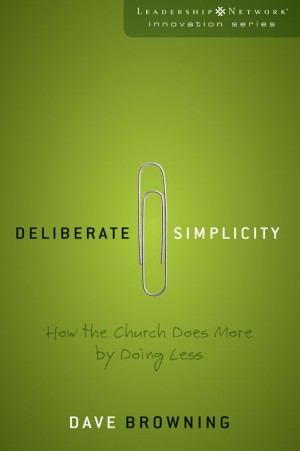
Deliberate Simplicity

deliberate_simplicityThey say you shouldn’t judge a book by its cover, but I confess to buying and reading this book because of its cover! Deliberate Simplicity – How the Church Does More by Doing Less is a catchy title and the image of the paperclip on the cover captures the essence of functional simplicity. This book aims at getting the church and its leaders to be intentionally aiming to fulfil our mission in the simplest ways possible.

Last year I focused on reading books and resources aimed at clarifying and refocusing our ministry. We seemed to be doing a lot, but it wasn’t always clear why we were doing what we were doing, or how some of the things we did related to other things we did. Life and ministry were feeling cluttered and busy, and I was keen to stocktake, prune, reorganise and rebuild for the future. I’m sorry that I didn’t know about this book then.

Deliberate Simplicity identifies six factors that describe the successfully Deliberately Simple church. These are:

Minimality – keep it simple.
Intentionality – keep it missional.
Reality – keep it real.
Multility – keep it cellular.
Velocity – keep it moving.
Scalability – keep it expanding.

Browning identifies these six things as his new equation for the deliberately simple church. He contrasts his approach with that of ‘traditional’ churches, mega churches, and other sorts of churches. At times there seems a measure of arrogance or smugness with his approach, like he has discovered the key to doing church properly, or that his ways reconnect with the church of New Testament times. However, despite the ‘we’ve got it right’ feel about the book, it does contain many helpful perspectives on church, and it offers a helpful diagnostic tool for refreshing our ministries. Let me share a few ideas that I found helpful from the different sections of this book.

Minimality

Deliberate Simplicity aims at restricting the activities of the church instead of expanding them. The goal is to prioritise what’s important and get rid of extraneous junk. Browning’s church values small groups as the centre of church life, so they deliberately remove things that get in the way of small groups functioning well.

The book rejects the way that many large churches have moved toward a professionalism that only allows for the most gifted and talented to be actively involved in ministry. In contrast to the ‘Search for Excellence’, they proclaim that ‘good enough is good enough’. The desire to have everything well resourced, carefully measured and planned can make churches too complicated. In contrast…

We keep asking, “What is the simplest thing that could possibly work?” We try to have just enough to facilitate our mission. Just enough money. Just enough time. Just enough leaders. Just enough space. Just enough advertising. We don’t want to stockpile assets.

They also aim for doctrinal simplicity, majoring on the majors, and not being dominated by peripheral teaching. While it’s true that there are doctrines central to Christian faith, and others are less so, we need to be careful here. I don’t know the teaching agenda of Browning’s church, but being too selective can easily lead to neglecting scripture that is difficult or awkward, and to merely preaching our hobbyhorses.

Intentionality

By making an up-front investment in unusual clarity, a Deliberately Simple church reaps the benefit of spending less time and energy trying to figure out what it’s trying to do and more time doing it.

This quote resonated with me. I look back over many years of ministry and think about how many things we’ve done that have been a waste of time, or a tangent to the main game, and how much has been absolutely central. I think some of our busyness and distractedness came about because we hadn’t adequately clarified or communicated our mission.

Peter Drucker says that every organisation needs to be able to answer two questions: What business are we in? and How’s business? We can’t answer the second unless we are clear on the first. Some of the books I’ve read on ‘church’ suggest that the answer to the first question is subjective, particular to each and every church. I disagree. The church belongs to God, and we’re called to be on about his business, not ours. The answer must come from the Bible. We’re called to discern God’s plans and purposes for his church, and then to put that into effect in our own context. The power of the vision lies in its divine origin. The role of the leaders is to align and engage the church with God’s vision.

Browning’s church is intentionally mission-focused. He sees the church existing for the sake of those who aren’t in it, and he prioritises outreach (care for those on the outside) over nurture (care for those on the inside). A big part of the pastor’s job is to keep the church focused on the outsider, because it is more natural and comfortable to look after our own needs first.

Reality

Many look at the church and see something that seems artificial, hypocritical or contrived. Why is that? If God is real, if the gospel is real, then why don’t Christians get real in how we go about church? Deliberate Simplicity is aiming for WYSIWYG (what you see is what you get). Our personal and public presentation should be sincere.

People need to understand that it’s not about religion. It’s about a personal relationship with God through Jesus Christ. It’s about loving God and loving people. Church should be come as you are. It should be an environment of grace. Posing and artificiality need to be rooted out. Church should be less like the formal living room, and more like the lived-in family room.

The reality of Christian faith and experience should come across in what we do and how we do it. Church shouldn’t be cluttered with fluff. At Browning’s church, straightforward messages are given in a normal tone of voice and in conversational style. I like that! Our sermons aren’t lectures. We’re not presenting papers to a symposium. We’re not reading someone else’s work. So let’s get real about how we communicate God’s word. My belief, is that we need to let God’s word work on us first, and thenwe are much more likely to communicate in a real way to others.

Multility

I didn’t recognise this word, and neither did my spell-checker. Browning defines it as…

mul•til•i•ty  n:  a commitment to multiples of something, instead of a larger version of that thing

He believes that more is better than bigger. This is a methodological commitment that differs from the megachurch approach. He illustrates this strategy by reference to the McDonalds restaurant franchise that keeps reproducing more of the same-size outlets in new locations, rather than up-sizing the outlets. He advocates a multi-location church, with multiple smaller centres, and multiple teachers and leaders, as the pathway for growing the church. His church has many such parts throughout the US and many other countries. He calls it a church, but I think I’d call it a denomination!

The rhetoric of this approach says more instead of bigger, ministries instead of programs, empower instead of control, prosumers instead of consumers, decentralised instead of centralised, and yes instead of no. Who can argue with that?! I’d be an idiot not to follow this model, wouldn’t I?!

There is much worth digesting in this section. It’s important to ask questions about our churches and our culture, about our ability and what we’re attempting to do, and about what is working and not working as we look at our church and others. As our churches get bigger, so they also need to get smaller. We need to keep people connected and engaged, to make it harder to be a passenger, and easier to be a participant.

Velocity

Many traditional churches don’t seem to change at all, and they take forever to do anything. By contrast, there’s a real energy in the Deliberately Simple church. They’re committed to growing, and growing quickly. They are always aiming for more – more people, more groups, more congregations, more people serving more people.

And they plan for this to happen. They keep asking questions like What will be need to do to double this congregation? This means they’re preparing for the future rather than simply catching up with the present. They see the need to let leaders lead, to streamline the organisation for action, to step out in faith, to be ready to respond to opportunities, and to keep the church from institutionalisation. These are risky ideals. But risks are needed.

I believe we need a greater sense of urgency in our churches. We move so slowly sometimes that it doesn’t seem like we’re moving at all. We act like we have all the time in the world. But, the truth is we don’t! We need to number our days, to seize our opportunities, to live as though each day is our last.

Scalability

Can the church think forward and outward instead of inward and backward? Can we start thinking about those we are to serve instead of how they can serve us?

The deliberately simple church is called to look beyond itself, to increase its reach and influence, to multiply and grow.

Browning uses the image of a network of ‘terror cells’ and flips it to describe the church. He calls us to create a ‘global unterror network’. His mandate for leaders is to create organisational structures that support consistent, small-scale, organic, growth in our churches. This contrasted with church structures where small congregations and groups exist to support hierarchy and bureaucracy at the top.

Perhaps controversially, he argues for rapid leader deployment. His model is IDTS (identify, deploy, train, support) rather than the traditional ITDS (identify, train, deploy, support). There’s a momentum in this approach that gets people engaged in ministry quickly. The one deployed is the one who understands the need to be trained. In my experience, we sometimes run training courses, qualify and equip people for ministry, but then fail to deploy them. Or else people get bored by the training and fail to take the next step into service. There’s much to be said for training on the job.

And so?

So what do we make of this book? It’s a stimulating read, littered with good ideas, helpful critiques and pithy quotes. But, I found it annoying too! I came away feeling like Browning thought he’d rediscovered the ‘right’ way to do church, especially when he described his church as being similar to the early church in the Book of Acts. I’m left with many questions about how things really work in practice, and whether there are substantial differences between what they are doing and many other churches.

I was left unsatisfied that the ‘equation’ of six factors really defines a Deliberately Simple church. It was hard to clearly distinguish between ‘multility’ and ‘scalability’. And I think six things isn’t simple enough. Our church once had a five point vision. We reduced it to four points, to make it more memorable and functional. Our last change was to get it down to three points, and I think people are starting to get it! But I do commend this book to church leaders. We could all do with little more deliberate simplicity.

Journey with cancer – Easter update

Dear family and friends,

This week marks 4 months since I was admitted to hospital with cancer and it’s certainly been quite a ride! We are so grateful for your ongoing prayers, support, encouragement and practical help from so many of you. It would be a very lonely experience without you.

I’ve just completed my fourth and final ‘full’ round of chemo – on carboplatinum, alimta and avastin. While this has knocked me round pretty seriously each time, I’ve been able to push on knowing that if it’s hurting me, then it should be hurting the cancer even more! Scans after the 2nd cycle showed that it was working, with the tumour shrinking substantially, and we are hoping for more of the same the next time around.

I go back for further scans on 16 April. They will do a CT of my chest and abdomen, so as to measure any reduction or growth of the tumour. They will also do a brain scan – just to check if I have one – so as to rule out any spread of the cancer! Please pray that the cancer will not have spread anywhere else in the body, and that the lung tumour will have shrunk even further.

The results of these scans will determine the best form of treatment to undergo next. Recent conversations with our oncologist suggest that they will simply drop out the carboplatinum and continue the other chemicals on a continued 3 weekly cycle. The idea is to try and keep the cancer from growing or spreading and, potentially God willing, to poison it out of existence. We don’t know how long this will continue, but we will have periodic scans to monitor what’s happening. Our hope and prayer is that these ‘maintenance cycles’ will have less severe side effects, and enable me to do a bit more.

On the family front, we continue to be encouraged. We thank God for our kids and continue to pray that God will help them to trust him through these events and circumstances. We’re all looking forward to a few days together at the south coast over the Easter week. A change of scenery, the beach, some surf, and some fish n chips, won’t do us any harm!

I’ve enjoyed getting back involved with some ministry at church and at the Brumbies. This has mainly involved meeting with people to encourage them, work through issues, or to discuss Christian beliefs. Ironically, having a life-threatening illness seems to open more doors than it closes. It has also been good to meet with some of the pastoral staff in a ‘mentor’ type capacity. After we get back from the coast I’m very excited to be giving my second talk for the year, on the topic of ‘Connecting’. You can tell I’m a frustrated preacher! Writing this blog is also becoming more and more enjoyable. Initially, I wasn’t keen to do it. In fact, I didn’t want to do it at all! But it’s been exciting to be able to encourage people, provoke their thinking, and support others in similar circumstances, through this medium.

Over the past few days, I’ve been involved in a few conversations about the heart of Christianity. Some have wanted to say that Christianity is just one religious phenomenon among others, that it’s not much more than good ethical teaching. Some have spoken of Jesus as an influential and important figure of history, but don’t believe we need to make anything more of him. I understand these perspectives are widespread and common,  but I worry about these assessments. I don’t think it’s fair to Christianity (or Buddhism, Hinduism, Judaism, Islam, or any other religion) to put all ‘religions’ in a bucket and assume they are different expressions of the same reality. Nor do I think it takes Jesus seriously to consider him ‘just a good man’ or an amazing moral teacher. A closer look at the New Testament reveals Jesus making claims to be God and the only way for people to know God personally. If I was to make these type of claims for myself today, then I think people would rightly see me as either crazy or dangerous – certainly not the ultimate good man.

Yesterday, I was having lunch with a mate, enjoying the beautiful sunshine. He and I believe very different things about God and Christianity. But we agree on one thing especially – the importance of keeping an open mind and being open to persuasion. In fact, it is very refreshing to be able to have honest conversation without covering over our differences. Can I ask you this week, is your mind open to the possibility that there is a God? Would you be willing to take a fresh look at the evidence for Christianity, at the claims and teaching of Jesus? Would you have a think about why Christians bizarrely call the execution day of Jesus, Good Friday? Would you consider the importance of this early * Christian record describing the events and meaning of the first Easter?

3 For what I received I passed on to you as of first importance: that Christ died for our sins according to the Scriptures, 4 that he was buried, that he was raised on the third day according to the Scriptures, 5 and that he appeared to Peter, and then to the Twelve. 6 After that, he appeared to more than five hundred of the brothers at the same time, most of whom are still living, though some have fallen asleep. 7 Then he appeared to James, then to all the apostles, 8 and last of all he appeared to me also… (1 Corinthians 15:3-8)

* The creed of verses 3-5 is normally dated before the year AD 35 by Christian and non-Christian historians alike.

The truth or otherwise of Christianity is inextricably linked to events of history. It cannot be detached and left in the realm of ideas or philosophy. If Jesus died for our sins, and if he was raised on the third day, then it makes all the difference. But, if there was no resurrection, if the whole thing has been made up or misunderstood, then we need to take these words seriously:

13 If there is no resurrection of the dead, then not even Christ has been raised. 14 And if Christ has not been raised, our preaching is useless and so is your faith. 15 More than that, we are then found to be false witnesses about God, for we have testified about God that he raised Christ from the dead. But he did not raise him if in fact the dead are not raised. 16 For if the dead are not raised, then Christ has not been raised either. 17 And if Christ has not been raised, your faith is futile; you are still in your sins. 18 Then those also who have fallen asleep in Christ are lost. 19 If only for this life we have hope in Christ, we are to be pitied more than all men. (1 Corinthians 15:13-19)

Christianity is based on verifiable events. Historians engage seriously with this stuff. They check out the sources, both Christian and and non-Christian sources. They assess the possible explanations, consider the impact of the events, and weigh up the evidence. I’m encouraged that world-class historians take the person of Jesus and the Gospel documents very seriously as facts of history. The question is, what do they mean and what difference does it make?

I believe the answer is as big as the difference between life and death for all eternity and something that big has to be worthy of serious investigation.

As I reflect on life and death this Easter, my prayer continues to be that God will take away my cancer – that I will be fully healed. But I want you to know that I thank God that he has already taken away something far worse than my cancer. He has healed me from my sin, from my selfish hostility to him. And while the price of chemotherapy is very high, the price of my spiritual cure is unbelievable – that Jesus should give his life for me, dying in my place, on that first Good Friday.

My prayer for you is that this will be the best Easter you have ever known.

Love from Dave

Sticky teams

I’ve been a pastor in an independent church for some time now. We don’t own any property, but we’ve been meeting regularly in community centres, clubs, schools, and universities. Our church is free of many of the trappings and restrictions of traditional churches. We’re not big on ceremony. We’re not into dressing up to go to church. You don’t have to be a card-carrying member of a particular denomination to get involved. In fact, a lot of what we do is being worked out ‘on the run’ and could probably described as pretty amateur.

Our church culture and community doesn’t have a lot of history. We’ve had to invent a few wheels and learn a fair bit from trial and error. It’s not that we’re making up new doctrines or teaching. We’re not abandoning the traditional understanding of the Christian faith. In fact, we’re very keen to be shaped and directed by the Bible in all we believe. It’s more to do with how things are done around here. 

Many of my friends in ministry don’t have to think too much about leadership structures in their churches – they simply are what they are. They’re Presbyterian, so they have elders, sessions, presbyteries and committees of management. Or they’re Baptist, so they have deacons and congregational meetings and pastors and water! But how do things work when you’re independent?

Last year, I made a particular focus of reading widely on issues of leadership and church life. I read, so as to better diagnose our own condition and to digest ideas and input for moving our church forward. One book that was very stimulating and resonated with many of our issues and concerns was, Sticky Teams by Larry Osborne.

The basic idea of Sticky Teams is to achieve unity in alignment. Getting people on the same page, with the same goals, and headed in the same direction. In particular, it focuses on getting the church, the staff, and the governing body of the church united in vision and purpose. A number of our leaders read this book and they had various reactions to it. Some were sold on the ideas, while others were more reflective and circumspect. The value lies in working through these things together.

Unity is fundamental to the church. At heart, it’s not something we can create for ourselves, but something achieved by God himself. As it says in Ephesians 4:4-6:

4 There is one body and one Spirit—just as you were called to one hope when you were called— 5 one Lord, one faith, one baptism; 6 one God and Father of all, who is over all and through all and in all.

God unites Christians together spiritually, but then he calls us to live this out practically. It’s not enough to pay lip service to unity. It raises real challenges for how we treat one another, and how churches are to function. See the previous verses in Ephesians 4:1-3:

1 As a prisoner for the Lord, then, I urge you to live a life worthy of the calling you have received. 2 Be completely humble and gentle; be patient, bearing with one another in love. 3 Make every effort to keep the unity of the Spirit through the bond of peace.

Osborne values three types of unity in the church – doctrinal unity (what we believe), respect and friendship (how we treat each other), and philosophical unity (how we do things around here). The importance of philosophical unity is often overlooked, but it is critical to getting people headed in the same direction. It is often harder to achieve than the first two.

There’s nothing academic about this book. It’s been worked out in practice and we’re invited to learn from the experience of the author. It offers many practical tips and great ideas that we might easily take for granted. For example, as we seek to build unity in our church leadership teams and meetings, consider if these issues might be making it hard:

Does our venue help or hinder our meetings?
Are we ignoring the relationships of the people on the team?
Are we meeting often enough or too often?
Is there a constant turnover of people or is it a closed group?
Are there too many members on the team to be productive?

If you want to avoid politics shaping the agenda of your church’s governing body, then there are lessons to be learned here. One gem, is the importance of looking for leaders, not representatives. Representatives are more likely to see themselves as lobbyists for their particular area. This can reinforce the silo mentality, polarise areas of the church, and hinder progress through controversial issues. Leaders should be people of spiritual maturity, who fit well into the team relationally and organisationally, and who are aligned with the vision of the church. And remember that CVs always look better than people, and that character matters more than ability.

Osborne offers helpful insight to how an organisation changes its shape and function as it grows. He illustrates this with a sporting analogy:

The changes we had to work through at each stage of growth resembled the changes an athlete must make every time he or she switches from playing one sport to another.

Growth produces predictable changes in the way leaders and leadership teams relate and carry out their functions, changes that are remarkably parallel to the changes an athlete must go through to transition from running track, to playing golf, basketball or football.

How does this translate? He sees a solo leader or pastor as being like a track athlete, who works with others, but basically performs alone. As things grow they become more relational, like a game of golf, where buddies work together doing much the same thing. As we grow further, we resemble more a basketball team, where complementary roles and positions are vital to making things work. With significant growth, multiple staff, congregations, departments and so on, the organisation resembles more the complexity of an American Football team. The important thing is that we must change as we grow, and we must help people navigate these changes.

There is so much detail in Sticky Teams worth digesting. But it’s also worth highlighting its overall shape and structure. There are three parts. The first highlights the problems, the second seeks to get people on the same page, and the third aims to keep people aligned. We mustn’t stop with the first bit. Diagnosing a problem is not enough – we need to prescribe a way forward. This book works to help us stay united through clarity about where we’re going, equipping people to get there, and communicating what is expected.

Sticky Teams can be treated as a workbook or a manual. It’s worth picking up again and again, reading and re-reading, with a highlight pen or a pencil. I suggest it’s best read in community with others – there are discussion questions at the back of the book. Remember, it’s not the Bible. It’s not fool-proof. And it’s not the only way to think about or do things. But it’s aim is to get us thinking and doing, and not to leave us stuck in the vortex that simply repeats the same old failures year after year.

Clumsy Christians

My experience of Christians is that many of them – including me – are really quite clumsy. Not literally stumbling or falling over ourselves, but often doing the social equivalent. We put our feet in our mouths, we make others feel uncomfortable, we have a knack of saying the right thing at the wrong time, and vice versa.

It may be the exuberant charismatic Christian who just assumes that everybody else is on the same page as them. It might be the type who drops Christian jargon and ideas into every conversation. It could be the awkward, shy, ‘uncomfortable to be around’ Christian. Or even the one who seems embarrassed to be, or at least to be known to be, a Christian.

I suspect that whether you’re a Christian, not a Christian, or not sure what you believe, you can at least identify with my experience. That is, we Christians can be quite clumsy. In fact, as I read back over this, I’ve used the word Christian eight times already – am I just proving my point?!

Of course, there are all kinds of reasons why some people gel together and others don’t. Like attracts like. We feel comfortable with our ‘tribe’. We get nervous around people we don’t understand. We fear the unknown. We want to be accepted, and fit in, and have people understand us – and sometimes we just try too hard. These things can be the same across all sorts of groupings – political, sporting, work, ethnic, hobbies, you name it. Sometimes it’s just really awkward to bridge the gap.

But, to be honest, these factors don’t get to the very heart of my clumsiness. I think there is something more profound that often makes things awkward for me in relating to others – and that is, what I believe. You see, I sincerely believe in many things that others will find quite unusual, maybe even absurd. Let me offer a list to start with:

I believe in God.
I believe he made everything.
I believe that he made everyone – including me and you – to be able to relate with him.

Apparently, most Aussies still believe something like this. But then my Christian beliefs start to get a little more uncomfortable, more pointed:

I believe we all push God to the periphery of our life, if not shut him out altogether.
I believe we get what we ask for when we choose to reject him, and it’s serious – separation from God in this life and beyond.
I believe that without God, we are without hope.

These beliefs are foundational, but they’re only the prelude to the most important message I want people to know and embrace:

God has not left us without hope.
He sent Jesus into this world so that we can know him.
Jesus was crucified to show us the depths of God’s love for us, to  personally pay the cost of our rejection of God, and to overcome all barriers separating us from God.
God physically raised Jesus to life, opening the door for us to have a genuine relationship with him, and real hope for life now and in eternity.

I know that when I speak with some of my friends about these beliefs they will glaze over. They won’t understand. They’ll put me in the weirdo box.  “He seems an otherwise normal bloke. How can he possibly believe this stuff?” Santa Claus, flat earth, tooth fairies, Harry Potter, religion, Jesus, resurrection!

Some probably think I’ve been brainwashed into believing a fiction, that I am willing to base my life on a myth or fantasy or fabrication. Some explain it to me as, “You’re into religion, but I’m not.”  Some of my friends might even feel a bit sorry for me. I don’t know!

Let me say this. I hope that none of my friends dismiss the Christian message simply because of my clumsiness. I pray they’ll put up with some of my mistakes, my awkwardness, even my selfishness, and hypocrisy… and look beyond me to Jesus.

As I read more and more of Jesus in the Bible, so I get to know the one who came to bring reconciliation, to break down walls and hostility. He is the one who made religious people uncomfortable, and yet welcomed the outcasts and despised. Jesus connects people to God. He breaks through our tribes and divisions. He builds genuine community. I’ve seen and experienced this in profound ways, that cross all kinds of barriers and boundaries. In fact, this community and depth of relationship has been one of the real joys of my Christian experience. My desire is to enjoy this more and more – not by keeping things ‘in house’, but by sharing the reality with others.

I’ll keep making mistakes. I don’t want to, or plan to… I just will!

Please, don’t be put off by my Christian clumsiness.