Help me live

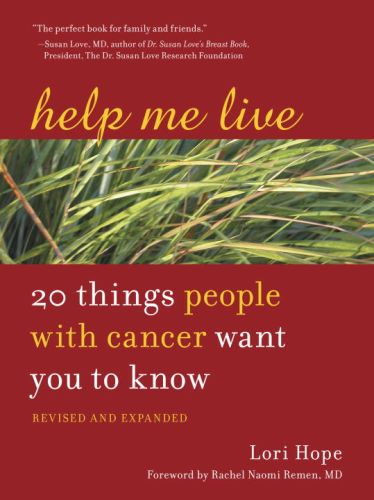
HelpmeliveHelp Me Live: 20 things people with cancer want you to know is a must read for anyone who seriously wants to support people with cancer. This book is a treasure chest. Lori Hope understood! She surveyed hundreds of people with cancer, read widely on the topic, spoken with doctors, patients, carers and therapists. Most significantly, she battled with cancer herself. The book is chocked full of wisdom, insights, anecdotes, humour and pathos. It shares the actual stories of so many who have personal experience in these areas. It’s an excellent resource. I’ve read it and I’ll be recommending it widely.

So if you’re an oncologist or work in oncology, then please get yourself a copy and read it! If your husband, wife, child, parent, relative, friend, neighbour, or colleague have cancer – and you want to support them – then please heed the wisdom in this book. If you know people with cancer, but you’re scared of saying or doing the wrong thing, then this book will equip you to help. If you’re the pastor of a church, a medical social worker, a general practitioner, a nurse, or simply want to better understand others, then this will open your mind to the needs of many. If you have cancer yourself, and want to feel supported and loved and understood, then I recommend reading this book and passing it around.

Many of the books I’ve read have been written from a specifically Christian perspective. This one isn’t, but it shows an empathy for people with a range of beliefs and doesn’t discount faith in God or the significance of prayer.

I’ve read Help Me Live through once and I anticipate dipping into it again and again in days to come. Some of the issues it raises are worth exploring more thoroughly and I’ve begun compiling a ‘further reading’ file to explore at some point. At a recent ‘Lung Cancer and Mesothelioma Support Group’ meeting I mentioned this resource and none of the medical staff, cancer support staff, carers or patients were aware of it’s existence. But then neither did I until the author wrote to me a few weeks back. So let me give you the gist of it with a few quotes and snippets from the book.

The 20 things people with cancer want you to know

1. It’s okay to say or do the ‘wrong’ thing.

“Doing nothing or holding back is worse to me than doing too much or saying the wrong thing.”  (p20)

Six words in sequence that never fail: “I don’t know what to say.”  (p18)

2. I need to know you’re here for me, but if you can’t be, you can still show you care.

“I know that my being sick scares you. It scares me, too. Don’t stay away from me because of this. We don’t have to talk about it. Just be here for me.”  (p25)

3. I like to hear success stories, not horror stories.

“They spent the entire afternoon telling me about everyone they had known that had cancer, and telling me the details about how many of them had passed away. It made me feel terrified.”  (p32)

4. I’m terrified and need to know you’ll forgive me if I snap at you or bite your head off.

“I just need them to understand that I was not at my best mentally and emotionally and to be patient with me.”  (p42)

5. I need you to listen to me and let me cry.

“Sometimes someone would ask me how I was and when we started talking cancer, they changed the subject. That made me feel terrible.”  (p50)

6. Asking my permission can spare me pain.

“I liked it when people would call and make an appointment to come over and see me and call an hour before to check that I was up for it.”  (p62)

7. I need to laugh – or just forget about cancer for a while!

“I just needed someone to help take my mind off all the stuff going on. I didn’t want to think about the cancer. So just do things like watch a movie or go for a walk and just talk to them and treat them like you would if they didn’t have cancer.”  (p69)

8. I need to feel hope, but telling me to think positively can make me feel worse.

“Just think positive … hooey! LOL … that’s it? That’s all it takes to cure my cancer? And hey, you try thinking positive after a round of chemo.”  (p77)

9. I want you to respect my judgment and treatment decisions.

“He kept encouraging me to deny chemo, that it was poison. It didn’t help me at all. My choice wasn’t respected, and I was left with a sinking suspicion that I may be choosing to poison myself.”  (p92)

10. I want you to give me an opening to talk about cancer and then take my lead.

“I just wanted it to be normal. My friend came and we played Scrabble and talked, and it helped. Sometimes we talked about cancer. Sometimes we did not. But we played Scrabble just as we had most of our friendship.”  (p99)

11. I want compassion, not pity.

“Many words of heartfelt compassion without being condescending were said. ‘I love you’ meant a lot to hear, or ‘You mean so much to me’.”  (p105)

12. Advice may not be what I need, and it may hurt more than help. Try comforting me instead.

“I don’t like it when anyone starts a sentence with ‘you have to’.”  (p111)

13. I am still me; treat me kindly, not differently.

“People don’t change when they get cancer and suddenly stop wanting to be called smart, sexy, fun, funny, a good Christian, an excellent cook, singer, etc. or a total fashionista. People are more than their cancer.”  (p118)

14. If you really want to help me, be specific about your offer, or just help without asking.

“Instead of asking can I do anything, just do something, don’t wait for me or my caregiver to ask, because we more than likely won’t.”  (p123)

15. I love being held in your thoughts or prayers.

“A friend told me I was wrapped in her love and prayers. I’ve never forgotten those words, and years later when I had a health scare, I thanked her again and told her how much those words meant to me.”  (p128)

16. Hearing platitudes or what’s good about cancer can minimize my feelings.

“Beginning a sentence with ‘At least…’, at best minimizes and at worst totally dismisses a concern or worry.”  (p135)

17. I don’t know why I got cancer, and hearing your theory may add grave insult to injury.

“A few people act as if you might be contagious or had done something to deserve the disease. Now that really hurt, I suppose because of the little nagging voice inside that’s saying the same thing.”  (p139)

18. Don’t take it personally if I don’t return your call or want to see you.

“I wanted people to understand that I was tired and couldn’t return all calls or emails.”  (p146)

19. I need you to offer support to my caregiver, because that helps me, too.

“When friends called and said they were bringing meals over and asked whether Thursday or Friday would be best, I could cry. Not only was it a show of their love and support but also it relieved my wife of yet something else to deal with.”  (p152)

20. I don’t know if I’m cured, and bringing up my health can bring me down.

“On the ‘Are you cured now?’ issue, every time they ask it, it drives home the point deep inside of you that you will never know.”  (p162)

And a bonus, from the revised and expanded edition…

21. I am more grateful than I can say for your care, compassion, and support.

“Friends and school families came and took care of us. Took my daughter to school and sports. Set a website for meals and rides. Kept my dogs when I was in hospital. Kept my kid when I was in hospital! They saved my life, and I will be forever grateful.”  (p166)

On that note, let me say again that I am so thankful to God and to so many for their prayers, love, encouragement, and practical support. I need you to help me live, too!

Thank you!
Blessed be the name of the Lord?

I think I’m becoming more emotional! I’ve probably shed more tears in the past year than in all the years previous. It doesn’t take much to get me a little choked up and one of the big catalysts is music. At this point I must confess that I’ve become totally addicted to the TV music shows, The Voice and X Factor. Some of the singing has given me goosebumps. Some of the heart-wrenching stories behind the musos have brought tears to my eyes. Let me say, I think it’s good for me. Crying is a helpful pressure release valve, and I find that music sometimes flicks the switch.

Those of you who know me via church, will recognise that I’m not much of a musician. Sometimes I drift off during the singing. Other times I find myself kind of lip-syncing. Very occasionally, I get into a song and belt it out with gusto. Sometimes I find myself stopping to think, what exactly are we singing?

One song that has become something of an anthem in the Christian circles I mix in is Matt Redman’s Blessed be the name of the Lord. With a great band and lots of people singing, it can really get you going. I’ve sung it many times, I enjoy it, and at times I’ve been swept along by it. But until very recently I haven’t stopped to think about what we’re actually singing. I could be wrong, but I suspect that few others have either. This is a shortened version of how it goes:

Blessed Be Your Name
In the land that is plentiful
Where Your streams of abundance flow
Blessed be Your name

Blessed Be Your name
When I’m found in the desert place
Though I walk through the wilderness
Blessed Be Your name

Blessed be Your name
When the sun’s shining down on me
When the world’s ‘all as it should be’
Blessed be Your name

Blessed be Your name
On the road marked with suffering
Though there’s pain in the offering
Blessed be Your name

Every blessing You pour out
I’ll turn back to praise
When the darkness closes in, Lord
Still I will say

Blessed be the name of the Lord
Blessed be Your name
Blessed be the name of the Lord
Blessed be Your glorious name

It’s a song for all seasons. It’s a message of contrasts and extremes. We sing of plenty and abundance, the sun shining and the world being as it should be. But we also sing of the desert and the wilderness, suffering and pain. The refrain says that it doesn’t matter what comes our way, we will bless God’s glorious name. These are bold promises we are singing and I wonder if we sing them with integrity. When everything is cruising along nicely, how often do we stop to thank God for his goodness to us? When our world seems to be falling apart, how easily do we offer praises to God?

A few weeks back I was singing this song with a crowd of others and I found the tears flowing in the final chorus:

You give and take away
My heart will choose to say
Lord, blessed be Your name

We kept singing over and over You give and take away. I felt like I’d been pierced through the heart. God had given and he had taken away… from me! He’d given me my health and and now it was gone. He’d given us the plan of heading to Darwin and brought us right back to Canberra. He’d given me dreams for the future and he’d cut them short. He’d given me life and he’d take it back again. Suddenly, this song hurt. It asked questions, real questions, of me: Will my heart choose to say Lord, blessed be Your name? How will my faith stand up to the challenges of circumstances? Am I a fair-weather believer? Do I simply turn to God because he protects me and shields me? Will I trust him and honour him in my darkest hours?

As I sang these words and contemplated these thoughts I remembered that I’d heard the words and the context before somewhere. They’re taken from the introduction to the Book of Job in the Bible. Job is a bloke who’s experiencing extreme suffering. His livelihood has been completely taken from him and his family have been killed in a catastrophic disaster. This is suffering and pain at the top end of the richter scale. It’s far more than I’ve endured, or ever want to. This isn’t passing and failing tests at school. It’s not struggling with diets or disappointments. It is life and death. It’s God giving and taking away. We may know people who’ve faced such tragedy, but it doesn’t happen often at this level. How will Job respond? Of what value is his faith? Will he acknowledge and turn to God?

This is how he responds after hearing the disastrous news:

20 At this, Job got up and tore his robe and shaved his head. Then he fell to the ground in worship 21 and said:

“Naked I came from my mother’s womb,
and naked I will depart.
The Lord gave and the Lord has taken away;
may the name of the Lord be praised.”

I think Matt Redman’s song is worth singing. But I also reckon we should pause and consider if we can sing it in all honesty. It’s ridiculous to mouth the words as though they’re the latest Christian pop song. They cut to the heart. They lay bare our soul. They point us to the Lord who leads and guides us through the light and the darkness. I pray that God will enable me to honour his name, whatever he gives and whatever he takes away.

And I think I’ve got it easier than Job in another way. Job didn’t know about all that God had planned to give in the future. A future that has now happened. He didn’t understand that God would give his only son, Jesus, so that all who put their trust in him would not perish, but live forever. Once we grasp this, we can know for sure that God gives far far more than he will ever take. Blessed be the name of the Lord.

Pendulum swings

DJP_2179The pendulum swings continue. A week ago I was enjoying life with my wife, riding a ferry on Sydney Harbour. Today I climbed out of bed for the first time in five days since having chemotherapy. Chemo messes with my body big time. But it also messes with my mind. When I’m relatively chemo-free, I start to feel ‘normal’, like I can make plans and take on the world.  Then comes the poison again, and the world seems to collapse around me. I worry that I won’t get better and that I won’t be able to do anything much at all.

Perhaps, I need to adopt a mathematical approach to working out how I’m going and how much I can do…

(G + B) ÷ 2 = R

G is the good times
B is the bad times
R is a realistic assessment of where I’m at and what I can do!

In other words, when I feel really good, I need to realise that this is the top of the pendulum swing and it won’t be this good for long. And when I feel bad, I need to remember that things will get better and it’s just for a time. Split the difference and I will have a more realistic picture of things!

More importantly, I don’t want to be controlled by the pendulum, whether it’s mood swings or health swings or any other kind of swing. I have the capacity and the responsibility to choose how I will respond to my circumstances. Victor Frankl, who spend time as a prisoner in Nazi concentration camps, highlighted this fact in his book Man’s Search for Meaning. He wrote:

“Forces beyond your control can take away everything you possess except one thing, your freedom to choose how you will respond to the situation.”

“When we are no longer able to change a situation, we are challenged to change ourselves.”

“Life is never made unbearable by circumstances, but only by lack of meaning and purpose.”

Frankl was a brilliant and exceptional man. In the face of extreme suffering, he shaped a philosophy of life and an approach to therapy that has had massive influence. I enjoy reading his works, and find it helpful to be reminded that I can choose how I’ll respond to what happens to me. I’m not simply a victim (or otherwise) or my personal circumstances.

But I’m also a little wary of Frankl’s positivism. Yes, it’s up to me to choose, but what if I can’t? I might want to take control of my thoughts and feelings, but struggle to do so. What if I’m overwhelmed by my bad experiences or seduced by the good ones? What if I’m simply too weak to think clearly and rationally? What if the treatment impacts my mood so greatly that I don’t know what I’m feeling?

I take comfort in the knowledge that God knows what I’m thinking and what I’m feeling. He understands the full impact of my circumstances upon me. He’s aware of my tendency to swing with the pendulum. He’s seen me get cocky when things are going well and he’s seen me depressed when things seem too hard. And he cares for me in all these situations.

I’m comforted by the fact that even if I despair and struggle to pray, God will help me in my weakness.

26 In the same way, the Spirit helps us in our weakness. We do not know what we ought to pray for, but the Spirit himself intercedes for us through wordless groans. 27 And he who searches our hearts knows the mind of the Spirit, because the Spirit intercedes for God’s people in accordance with the will of God.  (Romans 8:26-27)

I’m encouraged by the promise that whatever circumstances may threaten to overpower me, nothing can separate me from the love of God in Jesus Christ.

38 For I am convinced that neither death nor life, neither angels nor demons, neither the present nor the future, nor any powers, 39 neither height nor depth, nor anything else in all creation, will be able to separate us from the love of God that is in Christ Jesus our Lord.  (Romans 8:38-39)

The pendulum will continue to swing. Life will have its ups and its downs. I will get tossed around more than I would like. But I thank God for his strength and grace to see me through.

A temporary leave pass from Cancerland

A few weeks back I asked the kind staff at my hospital if I could put off having treatment for 10 days, so as to enjoy a brief holiday with my family. “Absolutely!” they said. “It’s so important to get some fun time with the family.” And they know. They spend time with hundreds of cancer patients.

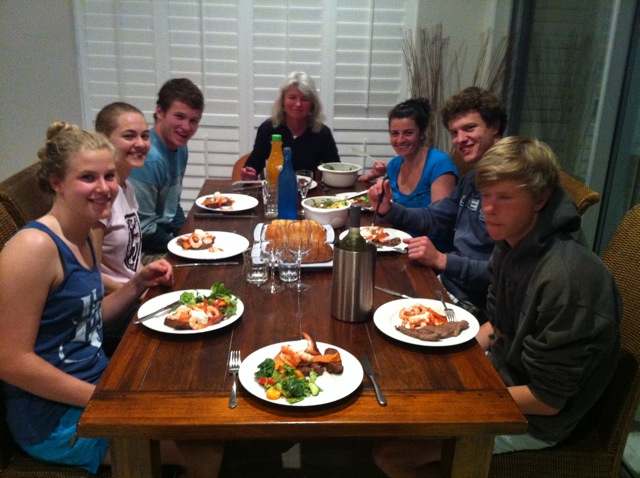
We’ve just had a wonderful time away with all our family courtesy of some thoughtful and generous people. Good friends of ours won a holiday in an apartment on the Sunshine Coast, other friends helped out with our flights, still others offered cars, transport, surfboards and a place to stay on the way there and back. Wow! This kind of kindness puts a spring in the step and a sparkle in the eye. It’s lovely to be loved in such thoughtful, practical and generous ways.

It was great to escape the sub-zero mornings. Fiona and I swam each day in the warm waters of the ocean. The kids surfed. We walked through the national park and along the beaches. I found the best coffee available. I read newspapers, David Pocock’s biography, and a book on ‘social entrepreneurialism’. We watched the Wallabies scrape in against the Pumas on the Saturday and enjoyed our time with a very friendly local church on the Sunday.

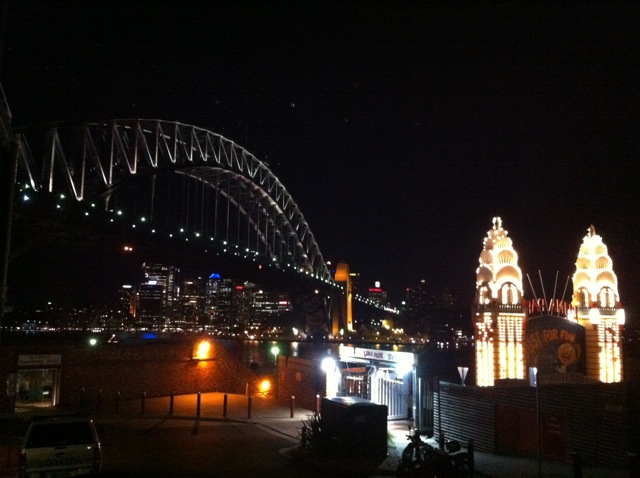
On arriving back in Sydney, the kids headed home while Fiona and I stayed to attend a 2 day Refresh Conference at Milson’s Point, for husbands and wives involved in leading new churches. We had planned to be at this conference for some refreshment from the hard work of church-planting in Darwin, and at one stage I was going to be giving a couple of the talks. All that has changed, but it was still a great encouragement to spend time with other church-planting couples and find out more of what God is doing throughout Australia and New Zealand. It lived up to it’s name and we arrived home refreshed. I think the harbour views and the wonderful restaurant meals did their bit to help!

Fiona and I enjoyed taking ferries on the harbour, watching the city lights at night, and generally having some time to ourselves. We talked a little about the future and the possibilities for life and ministry. Though I sometimes found myself getting a bit uptight as we talked. It’s not easy not knowing what lies ahead (yes, I know we never do, but…) and some of the possibilities are hard to accept. We do need to make some decisions, but we probably need to ask God for a large dose of his grace and the strength to trust him – come what may – as we go about it. And we’d value your wisdom, thoughts and prayers as we plan.

Having some time away made it easier to forget about the cancer for a while. You can’t see it and the fun in the sun makes it seem so far away. I thank God for my temporary leave pass from Cancerland. I’m far more than someone who has cancer. ‘Cancer patient’ doesn’t define who I am, and I don’t need to be reminded of it 24/7. In the midst of all that’s serious, all that hurts, and all that produces worries and fears, escape is a good thing. And it’s not escape from reality. It’s more about prioritising other realities of life such as family, relationships, recreation, reflection.

There is hope

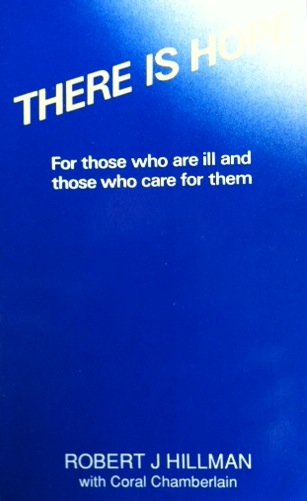
Don’t judge a book by its poorly photographed cover! There is hope: for those who are ill and those who care for them. That includes me, and my wife and children, my parents, my in-laws, our church, our friends, and so many more. There aren’t too many scarier diagnoses than lung cancer, especially once it reaches stage 4. Lung cancer kills more people than the next 3 cancers combined. So where is the hope? And are we talking about hope for a cure, hope for a better life, or hope for eternity?

Bob Hillman wrote this little book over 20 years ago, toward the end of his journey with ‘non-curable’ cancer. He had a long and difficult struggle over many years and was sometimes tempted to give up. However, the love from God and family and friends gave him reasons to continue and he left a powerful legacy in the lives of many. Friends gave me their copy of his book for my birthday, and it’s already made a difference in my life.

This book outlines different types of hope: 1) present hope that helps in everyday life, improving the quality and, sometimes, length of life; and 2) future hope for life beyond death, found in a relationship with God through Jesus Christ, and shaping the character of life here and now. It also warns against the dangers of false hope. When you’re seriously ill you can be tempted to expect too much from your therapy, depend too much on being cured, and fall prey to all sorts of claims and promises of miracle treatments and cures. I found this outline extremely helpful. While my hope lies ultimately in the God who raises the dead, hope remains essential to living today, tomorrow and the next. Without hope we have nothing to live for.

Bob is candid about his experiences in battling cancer and the things he found helpful. He recognised his limitations, but he was willing to work within them, and often push beyond them. He was patient with others who were sometimes unhelpful and occasionally cruel in their claims or advice. He’s a testimony to God’s grace and power at work through human frailty and weakness.

There’s a lot of talk these days (but often very little action) about multi-disciplinary healthcare and the need to understand and treat the whole person. Bob devotes a number of chapters to addressing emotional, relational, physical and spiritual factors that give present hope in dealing with cancer and other serious and chronic illnesses. It strikes me that these insights are just as important for the healthy as they are for the sick.

Psychological factors have a major impact on our health and general well-being and functioning. Bob described his battle with depression weighing on him more heavily than his terminal cancer. He encourages us to speak up about our struggles and to not be ashamed to seek help. Counselling may uncover issues contributing to our poor health and may provide better strategies for dealing with them. Anti-depressants could be the help we need to cope more effectively with the struggles of life. Perhaps we need to stop living on adrenaline, de-stress and remove the clutter in our lives. If we believe that we’re personally responsible to keep the world spinning, then maybe we should hand it over to God and enjoy the benefits of doing so!

Serious illness is a major wakeup call. Changes are forced upon us, and sometimes for the better! It’s not too late to change our diet, begin some exercise, increase our hours of sleep, enjoy some recreation, pick up a hobby, laugh a little more. The importance of good relationships with others is heightened. Maybe it’s time to resolve that grievance, offer him or her forgiveness, or seek reconciliation with the estranged friend. Time with family, having fun together, showing love and kindness, serving others – all valuable stuff and all so health promoting! Incidentally, I read an article in the Canberra Times yesterday that provided evidence that married people have much better outcomes than single people in dealing with cancer. Whether it’s a wife, a husband, a good friend, or an organised support group, relationships are so important. God has given us relationships to invest in and reap the dividends from. Don’t neglect them.

Bob Hillman’s hope is shaped by his knowledge of God. God’s word is the spiritual food we need to survive and we’re encouraged to set aside time to meditate on his word. God invites us to speak with him – to pray – and he takes all our calls. We’re urged to spend time with other followers of Jesus, to support one another, share each other’s burdens, celebrate one another’s joys, and point each other to our God and Saviour.

Shaping our present hope, is the confidence we have of an eternal hope in Jesus Christ. If this life is all we have, then I can understand people clinging on at all costs. I can appreciate the despair that comes when all the medical evidence is against us. But one day, whether by cancer or some other tragedy, each life will come to an end. We must face this reality with an open mind to God. The message of this book, and of God’s book, is that there is hope for eternity to be found in Jesus. The Apostle Paul prayed that others would know this hope, and this is my prayer also.

17 I keep asking that the God of our Lord Jesus Christ, the glorious Father, may give you the Spirit of wisdom and revelation, so that you may know him better. 18 I pray that the eyes of your heart may be enlightened in order that you may know the hope to which he has called you, the riches of his glorious inheritance in his holy people, 19 and his incomparably great power for us who believe. That power is the same as the mighty strength 20 he exerted when he raised Christ from the dead and seated him at his right hand in the heavenly realms.  (Ephesians 1:17-20)