Bubble bubble toil and trouble

BubblingI’ve now officially lost count of how many courses of chemo I’ve had. Somewhere over 30 is the answer. I just keep on putting more and more poison into my body! People have asked me whether it gets easier. That’s difficult to answer. I struggle more with anxiety now. As the day approaches, the blood tests, the smell of the ward, the needles, the confinement, the knowledge of what’s to come. It all seems to increase my anxiety.

The last couple of treatments I’ve displayed more physical anxiety symptoms. My temperature goes up and I start sweating. The nurses bring me an iced water, I raise my feet, and I try to relax. It’s easier if I can pass the time quickly, but I can’t stay focused on anything. I need to shut my eyes. It would be easiest if I fell asleep. I ask the nurses to speed up my dose, to get out of there more quickly. I do pray about my anxiety, but God doesn’t necessarily take it away. Still, it’s good to talk to him about it.

The after-effects vary considerably. In some ways, knowing what to expect makes it easier. But this last cycle surprised me. The aching, and cramps, headaches, and nausea all seemed so much worse. I wondered if it was because I’d lost so much weight. I thought perhaps they were overdosing me with the poison, because the dose is calculated according to bodyweight. But a call to the ward today revealed they’d been under-dosing me for a year or so! It had been based on a weight that I haven’t been since April last year.

This has been a difficult week to feel so sick. My mother has been in hospital, my parents’ house is under threat from the fires, there are big issues on the horizon, we’re expecting our first grandchild, there are talks to be written, and clear head and able body would be so helpful. But I can’t control these things. Only God can. And he decided that I’d be better off spending time in bed and achieving very little rather than busy solving the world’s problems—or even my own.

Another good lesson is patience, humility, and trust.

Targeted therapy now available

Yesterday I met with my oncologist to discuss how things were going. He was pleased with my condition, commented on my weight loss, and was open to discussing longer term strategies. The immediate future means continuing on the three-weekly regime of chemo with Alimta and Avastin. This has proven the right cocktail for attacking my cancer, even if it has resulted in some damage to the rest of me. I’m also hoping to take a brief rest every now and then to help the body recover.

He also informed me that Crizotinib (Xalkori) has now been approved by the TGA for use in Australia. It is available in many countries throughout the world, but Australia has been dragging the chain. If you’ve been following this blog for some time, you might remember that this is a targeted therapy for the particular genetic mutation (ALK+) that is driving my cancer. This drug blocks the cancer pathway without having much impact on the other organs in my body. While not being a cure, Crizotinib has given medical hope to many lung cancer patients throughout the world. We thank God for this development as it opens the door to other treatment options down the track if needed. Thank you especially to those who have prayed that this drug would become available.

Growing yourself up

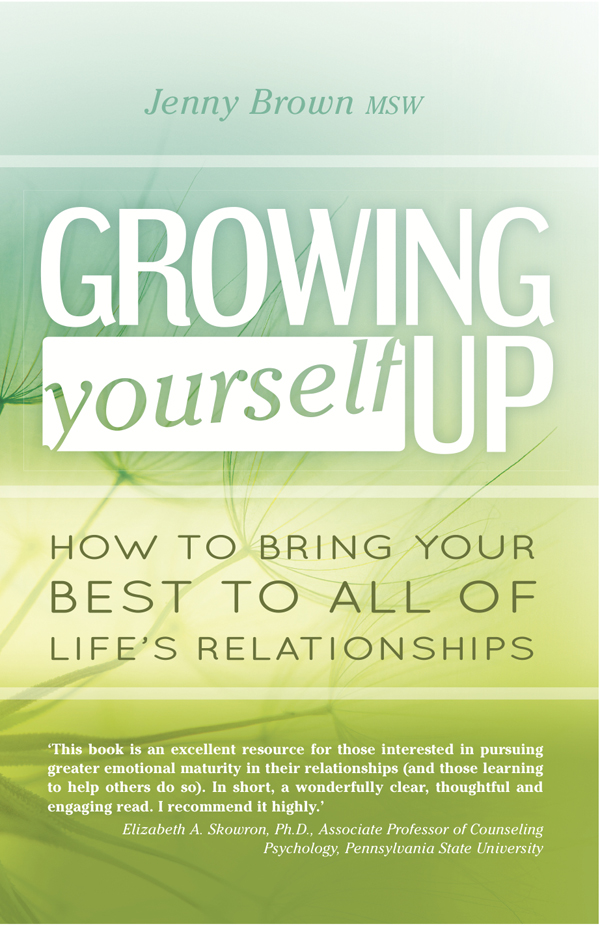
GYUThis book takes me back a quarter of a century to my times as a social worker. In the final year of my BSW degree, I focused primarily on studying family therapy and the writings of Murray Bowen were very influential. I loved this stuff. It was so helpful to see people as part of a family system and to explore the influences and impact of relationships, family members, experiences, and expectations. One time we saw an adolescent boy for counselling. He had been acting out at school and finding a multitude of ways to get into trouble. It wasn’t until we met with his family and discovered that his father had become dependent on a kidney dialysis machine, that we were able to begin understanding and helping him. It wasn’t his problem alone–it was a family problem.

I enjoyed reading through this book and discovered many insights relevant to my circumstances. I know others have found much benefit in this material, but one or two have commented to me that they’ve found it hard going, like entering another world with its own vocal and jargon. Perhaps, my earlier training made this book easier.

Jenny Brown has built heavily on the work of Bowen in her excellent book, Growing Yourself Up. You could probably describe this as a ‘self help’ book, but with a difference. It’s about helping the reader to gain an increased sense of ‘self’ to enable them to enjoy better relationships with others. We grow into personal maturity as we learn to more clearly differentiate ourselves from others so that we develop healthy personal relationships. This book draws on family systems theory to help us understand who we are in the light of, and distinct from, our relationships with others. Our families of origin have a profound impact on who we are—how we think and act and speak.

Brown’s underlying conviction is that it’s never too late for any of us do do some more growing up. Greater emotional maturity is at the heart of this goal.

This book starts with the big question: Are you willing to take a fresh look at your own maturity gaps, instead of declaring that another needs to ‘grow up’?  (p8)

Growing Yourself Up helps us to see and understand the immature part that that we are playing in our relationships with others. Instead of pointing the blame, we are helped to see our own contribution to the problems and impasses we find ourselves caught up in. Unlike much recent psychotherapy which focuses on finding our inner child, this approach is about growing our inner adult in all areas of our relationships. Moving beyond childhood to adulthood can be expressed by the following attributes:

  1. Have your feelings without letting them dominate; tolerate delayed gratification
  2. Work on inner guidelines; refrain from blaming
  3. Accept people with different views; keep connected
  4. Be responsible for solving our own problems
  5. Hold onto your principles
  6. See the bigger picture of reactions and counter-reactions  (p17-19)

It takes time to work through these things. We need to learn about ourselves in relationship with others. We need to learn not to let our emotions dominate our thinking. We need to learn how to take control of our anxieties. This is all part of growing our inner adult—slowly.

Relationships—close relationships, while remaining a distinct self—are at the core of adult maturity. Our experiences of relationship from our earliest times vary along a continuum of feeling isolated and abandoned, through to feeling inseparable or smothered by others. We are helped to understand more clearly the strengths and weaknesses of our previous experiences of relationships—especially those in our family of origin—and how they impact our decision making in the present.

This book takes us through various key life stages, circumstances, and changes. It looks at the threats to and opportunities for growing in maturity. Such areas include leaving home, single adulthood, marriage, sex, parenting, work, facing setbacks such as separation or divorce, midlife, ageing, empty nests, retirement, old age, and facing death. Pretty well covers it really! In all these situations there are issues to face in our quest to grow into adult-maturity. This book helps us to understand our part in navigating these changes and stages wisely.

One section in this book, I found particularly helpful deals with the temptation to triangulate our relationships, especially in situations of conflict. This is one of the major threats to adult maturity. A relationship triangle is where the tensions between two people are relieved by escaping to a third party. (p44) This may serve to dissipate tension and help families and groups to manage, but it also results in issues not being addressed and often placing the third person is a vary awkward position. It’s helpful to examine how we might have been (or currently be) involved in such triangles, and why. Such triangles are very common and universally unhelpful for dealing with conflict and tensions in families, churches, teams, and a range of relationships.

This is the type of book that you benefit from reading through completely and then returning to digest the most relevant sections in more detail. As a pastor who deals with people all the time, I found this book offering many helpful insights. It is especially important to understand people in the context of their relationships. And it’s in these relationships that we grow ourselves up.

Life’s for the living

Recently I’ve been listening to a fair bit of Passenger. I love the music and the poetry of the lyrics. One song goes:

Don’t you cry for the lost
Smile for the living
Get what you need and give what you’re given
Life’s for the living so live it
Or you’re better of dead

Life is for living, and I feel so privileged to have spent a few days camping by the ocean. There’s something about being outside, under the trees, by the sand and the sea, to make you feel alive. I thank God that I’m alive and for the treats He’s given me over the past few days:

Time with my son away from the TV.
Swimming in the glassy ocean, hiding from the hot northerly winds.
Watching a young seal playfully skimming through the waves.
Learning to catch bream and spending forever cleaning, filleting, barbecuing, and eating them.
Rocking gently in the hammock to the sound of the wind in the trees and the surf on the beach.
Soaking up the sunsets.
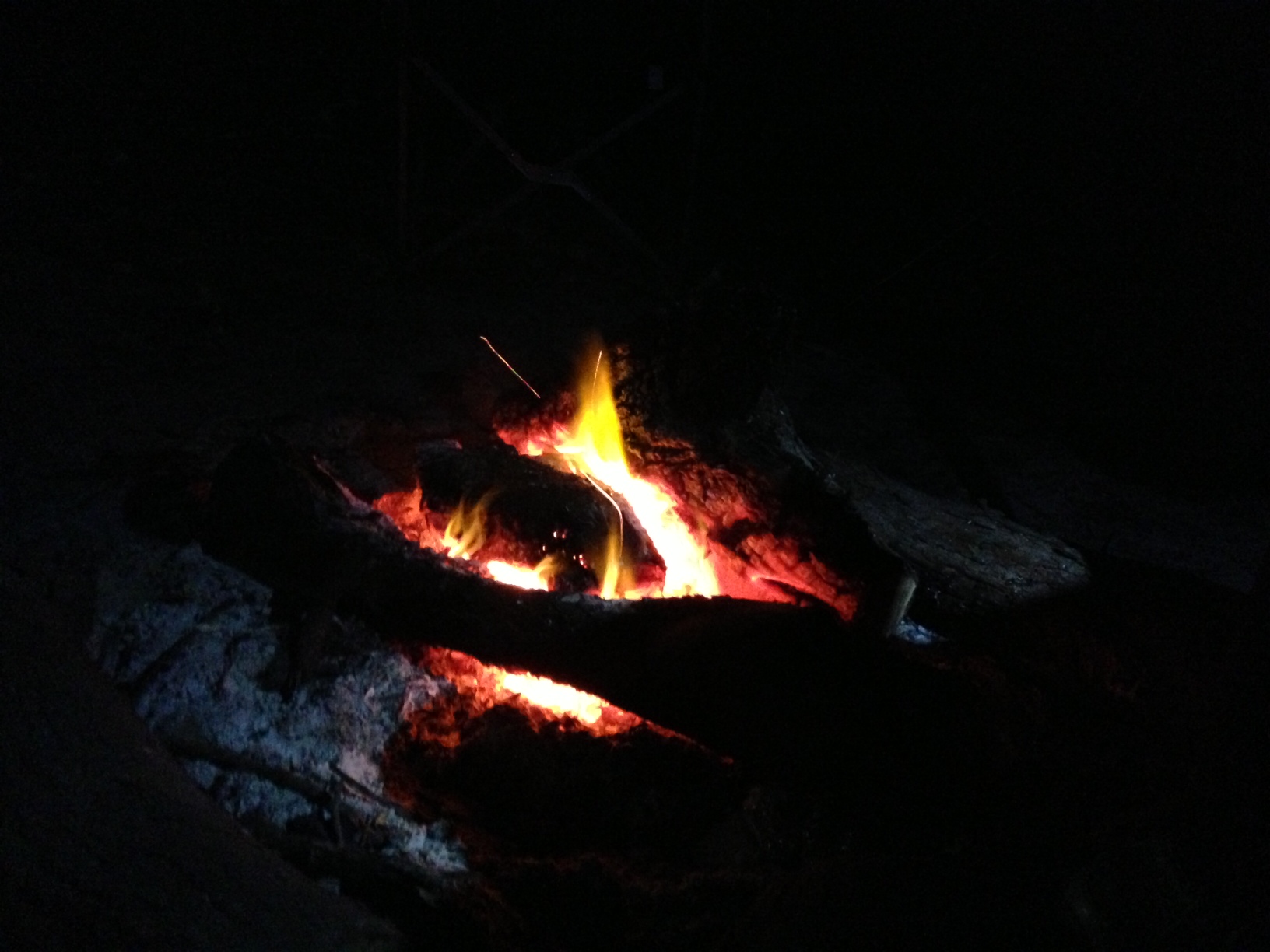
Sitting by the campfire, shifting my gaze from the flames to the moon and the stars.
Talking to my Father in heaven and thanking him for life.

fire sunset burrillsunset bream

Accidental Pharisees

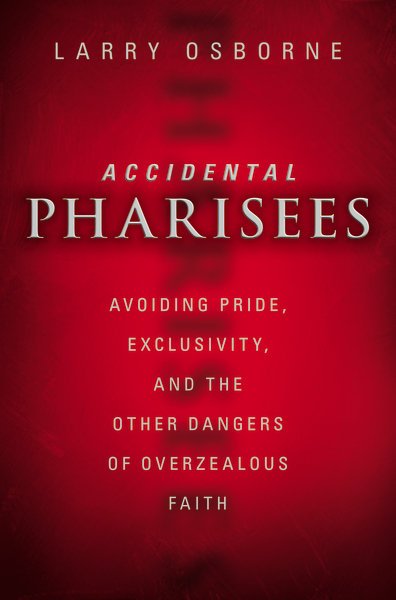
accidentalphariseesAccidental Pharisees by Larry Osborne has been recommended to me a couple of times recently. Having now read it, I’m wondering if my friends figured that I needed to learn the truth about myself or whether they simply wanted to know what I thought about the book. It has helped me to see more clearly how easily I can fall into pharisaic behaviour. For one thing, it’s easier to see others in the book rather than myself—surely this alone makes me a classic Pharisee! But I can also see my own capacity to make rules where the Bible has none and to measure myself and others by things other than the gospel of God’s grace in Jesus Christ. This book is sharp, yet gentle. It allows us the gracious assumption that we don’t want to be Pharisees—but it’s easy to accidentally become one.

Accidental Pharisees resonates with a worry that I’ve had for some time–that it’s easier to follow the tribal position than to assess how we think and speak and act in the light of Scripture. I touched on some of these themes when I wrote a post called Get off the Bandwagon. It addresses some of the same issues as Joshua Harris’s excellent little book, Humble Orthodoxy. My worry is that we can major on the minor issues and lose sight of the major issue. And we argue our positions with such a passion that we fail to love the people who take a contrary viewpoint. I’ve seen evidence of this in blog comments and Facebook posts over recent times, with reference to such matters as the Sydney Archbishop election. Sadly, I’ve seen a stronger push for Christians to distance themselves from one another over non-salvation issues, than they have to affirm their unity in salvation.

This is not to say that doctrine is unimportant. Nor that the Scriptures are not the authoritative and clear revelation of God. Doctrinal truth brings life and the Bible leads us to faith in Jesus Christ and equips us fully for every good work. Truth is foundational to life and to unity. But the Scriptures are a message of love, grace, mercy and kindness. If we speak ‘truth’ without love then we are distorting God’s word. If we seek to love without truth, then we will ultimately fail, for only the truth can be truly loving. And so we are called to speak the truth in love and not separate the two (Ephesian 4).

I believe that Accidental Pharisees is a word in season. It addresses all kinds of blind spots. It challenges us against taking the higher moral ground and looking down on others. It warns against the dangers of pride and exclusivity. It unpacks some of the new ways we can introduce legalism. It spotlights the dangers of seeking uniformity rather than rejoicing in our unity in diversity.

There is a tendency among Christians to divide into tribes along non-essential lines. Osborne writes that:

We’ve coined words like radical, crazy, missional, gospel-centred, revolutionary, organic, and a host of other buzzwords to let everyone know that our tribe is far more biblical, committed, and pleasing to the Lord than the deluded masses who fail to match up. (p90)

These labels have their usefulness. They can be used to correct wrong emphases or to call the troops to action. But they become dangerous when used as a shibboleth to divide Christians from one another. We have centuries of tradition in doing this—Baptists separating from Presbyterians; Methodists from Anglicans; Congregationalists from Episcopal churches. There have been good reasons for many of these distinctions and even separations, but the label or the club is not what defines or describes a true believer. That privilege belongs to the gospel of Jesus Christ alone. Of one thing we can be sure—none of these badges will have any relevance in heaven.

Accidental Pharisees also warns against a bullying behaviour that is more keen to separate the sheep from the goats than it is to win back the lost sheep. Some churches and their leaders are very committed to setting a high bar of ‘Christian’ performance and they castigate the under-performing and the luke-warm. This change strategy tends to favour the big stick over the winsome power of the gospel. It can easily become a slippery path to a legalism that has forgotten the gospel all together. We would do well to remember that but for the grace of God go I.

I expect a book like Accidental Pharisees to receive a mixed response in the Christian community. Some will embrace it because they see the Pharisee so clearly in others. Some will reject it because they see it as an excuse for discipline-less Christianity. I recommend we read it with a view to log extraction, so that we can see more clearly to help one another with our various splinters.

‘Do not judge, or you too will be judged. For in the same way as you judge others, you will be judged, and with the measure you use, it will be measured to you.

‘Why do you look at the speck of sawdust in your brother’s eye and pay no attention to the plank in your own eye? How can you say to your brother, “Let me take the speck out of your eye,” when all the time there is a plank in your own eye? You hypocrite, first take the plank out of your own eye, and then you will see clearly to remove the speck from your brother’s eye. (Matthew 7:1-5)