
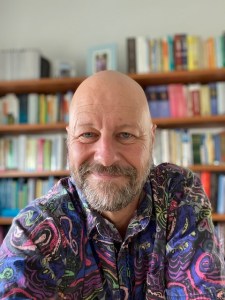
 Hello from quarantine. I haven’t been overseas, and I don’t think I’ve been exposed to the virus, but my pre-existing lung condition and daily treatment for lung cancer have put me on high alert. In some ways, I’ve been slow to grasp what is going on here. The practice of distancing is a personal and a public health strategy. It’s not just about stopping me getting sick, it’s about reducing potential channels for the spread of this virus. I tend to be a bit of a social butterfly, often out and about, time in coffee shops, catching up with people, hanging with people from church and at church, and trying to catch up with a couple of mates. Now it’s lock down. I’m not simply at higher risk of illness, but if I kept up my normal social behaviours then I would also be at at risk of becoming a super spreader. So, lockdown it is.
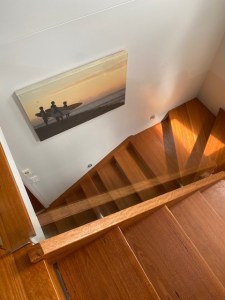 The coronavirus has changed how we live at home. I live upstairs and Fiona lives downstairs. I’m spoilt for comfort in my quarantine. We’ve made a kitchenette and created a ‘flat within the house’ for Fiona. We are keeping strict physical distance. Separate beds, separate bathrooms, separate kitchens, separate entrances. We are using gloves and disinfectants. I cook dinner and leave it on a tray on the stairs for Fiona. It’s already challenging and stressful. But it’s Fiona’s initiative and it’s motivated by love for me.
Fiona is on the medical front line in this war on the virus. Three days a week she drives off to the front line. The rest of the week she is following up on patients, tests, and results. She gowns up with oversized men’s shirts from the op shop. She covers her hair with a shower cap. She puts on gloves and a mask. And she is courageously putting herself at risk for the welfare of patients. Now telemedicine is supplementing car consults and physical distancing. But there are still people walking in with ‘normal’ sicknesses. She is navigating a potential minefield. A handful of patients just haven’t grasped what is at stake and have put medical staff and other patients at risk through their careless or arrogant behaviour.
Please practice careful physical distancing.
It is now estimated that as many as 31% of new COVID-19 infections are being caused as a result of transmission through asymptomatic individuals those who have been infected with SARS-CoV-2 but don’t shown signs and symptoms of the disease.
(Nishiura H, Kobayashi T, Suzuki A, et al. Estimation of the asymptomatic ratio of novel coronavirus infections (COVID-19). Int J Infect Dis. 2020.)
This is an especially important aspect of SARS-CoV-2 transmission and reinforces why we need to practice stringent social distancing to flatten the curve.
Please take this seriously. Look at what is happening in Italy, Spain, France, USA. Health workers are now having to choose who will live and die as their medical system is overloaded and broken. It’s catastrophic beyond belief. I pray this won’t happen here. Please don’t take your health for granted and please don’t carelessly put others health at risk. And take a moment to say thank you to the doctors, nurses, and other health workers who are risking their lives for the sake of us all.
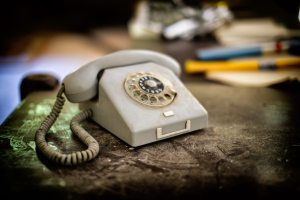 Let’s do a thought experiment. Take yourself back 30 or 40 years to a world without the internet. There is no Google, no Facebook, no email, no Instagram, no Twitter. How would we manage our current challenges in such times? My first thought is that we’d go back to speaking on the telephone. Remember the telephone! We’d call and say, “How are you doing?” “Is there anything I can do for you?” “Have you got enough toilet paper?” “Can I drop a meal around?” “How are you off for money?” “Are you feeling any better today?” “What can I pray for you?”
 macarisms