
 I have been one to avoid the Christianity Today podcast, The Rise and Fall of Mars Hill. I didn’t want to join the voyeurs. It wasn’t my business. I have a church to lead, people to pastor, leaders to mentor, books to read, things to do. I don’t need to spend 15 or more hours being infotained by a church tragedy.
But a few days back, I was challenged to listen to the Rise and Fall. At the encouragement of a friend, I thought I would at least listen to the final episode, The Aftermath, to hear the impact on the lives of so many people who had been caught up in what Paul Tripp describes as the most toxic church culture he had ever experienced.
A few days later, many walks up and down our beach, and I’ve now listened through the entire series. What do I make of it? It’s extraordinary. In this internet age, we get to listen in to conversations, sermons, meetings, interviews, that paint an amazing and yet disturbing picture. It’s compelling listening. Sobering. Disturbing. Heart-wrenching. And, in so many ways, closer to home than I ever imagined.
I’d love to reflect on some of the lessons and the warnings for those of us in Christian ministry. To be honest, on a smaller scale, I’ve seen and experienced much of what is described in the series. I’ve assisted in churches processing the fallout of a narcissistic leader. I’ve witnessed the damage caused by leaders who churn through staff. I’ve been exposed to pastors with a ‘you’re either for me or you’re against me’ mindset. I’ve gone from being a friend to a foe simply by listening to an alternative point of view. It’s more than thirty years since I started out in Christian leadership and over that time I’ve seen and heard too many stories of ministers behaving badly. It’s not hard for me to see the reality of Mars Hill by looking at others, but I want to consider first what I can be learning—and this may take some time. There are many, many issues to consider.
It’s not about me.
A major concern of the Podcast is how a vision for ministry in Seattle morphed into the vision to build the Mark Driscoll personal brand. And how the leadership and the church were complicit in fuelling the vision. As brand ‘Driscoll’ grew, so the church grew, so the opportunities for the gospel expanded, so the influence on others’ ministry multiplied, and so it rolled on. Mark Driscoll was the centre piece of the puzzle and, according to those close to him, brand ‘Driscoll’ eclipsed honouring Jesus.
I’m reminded of the untimely exit of James O’Connor from Australian Rugby Union in 2013. There had been numerous ‘off-field indiscretions’, but the deeper problem was O’Connor’s explicit verbalised commitment to ‘building his own brand’. In a team sport such as rugby, there is a massive culture clash here. If we cringe at this for something so inconsequential as rugby, then how much more should we take notice when someone makes ministry all about them. We should remember the words of the psalmist:
Not to us, Lord, not to us
but to your name be the glory,
because of your love and faithfulness. (Psalm 115:1)
But what about me? It could be ironic that I am writing a blog post on this. Look at me humble-bragging about me! Writing builds profile. Not just a pastor, but a blogger. Make that an author too. Record your sermons and put them online. Check out the number of hits. Until Covid hit, we only ever recorded audio, now we’ve moved into video, then we need a better microphone, and a better camera, and a website to deliver it. I have felt the Driscoll-danger of preaching to the camera instead of to the congregation. The temptations are subtle. The rationalisations are easy.
It’s easy to justify a library of video sermons on the church website. They bless the regulars who miss church. They enable the sick and vulnerable to receive teaching. They can provide a lifeline to churches without a pastor and isolated Christians. They effectively advertise the church and the importance of expositional preaching.
And yet the dangers of pride are real. Does my self-esteem rise and fall with the number of downloads, likes, or comments? Do I hog the pulpit? Am I encouraging other preachers? Do I have to get my way? Do I make it easier or more difficult for people to disagree with me? Do I need the accolades? Am I depressed when no one thanks me? Do I make ministry about me?
It seems funny to draw these comparisons with Driscoll and Mars Hill. Millions of people listened to his sermons and thousands attended his churches. We might get a hundred downloads or a hundred attend church on a good day. But it’s not about circumstances. It’s a heart problem. Deep down I need to keep asking who my life is about? Am I serving my own interests, or am I willing to be anonymous, as I serve Jesus and his church? I need to remember that Jesus said:
“Be careful not to practice your righteousness in front of others to be seen by them. If you do, you will have no reward from your Father in heaven.” (Matthew 6:1)
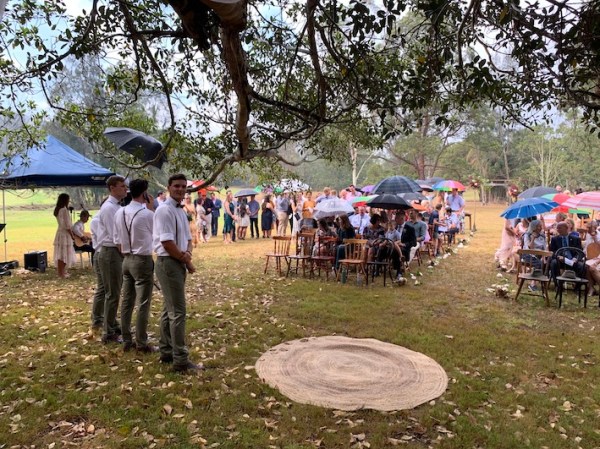
 If you’re looking to get married, then don’t sell yourself short. Don’t put all your focus on making the day just perfect, but take the time to prepare for what comes afterwards. For better and worse, for richer and poorer, in sickness and in health. This is the important stuff. This is the tough stuff. This is where the deep and lasting joy is to be found. This is really what it’s all about. Marriage is for a lifetime together. Isn’t that worth a little serious preparation?
 Dear friends
 Independent churches lack accountability! I’ve been told this for the past 24 years. And it’s true. Independent churches often lack accountability, but so do mainstream denominational churches. You only need to look at the terrifying accounts of greed, sexual immorality, false teaching, abuse, and cover ups within churches, to see the failures of our structures to ensure accountability.

 In 1996 we planted Crossroads in Canberra. It was among the earliest of the now FIEC churches. Its origins are found in Dickson Baptist Church and a growing university ministry at the ANU and UC. In the lead up, I had been working as an associate pastor at Dickson as well as working with the Australian Fellowship of Evangelical Students leading the campus ministries. Dean Ingham worked alongside me in the church and on the campus.
 Some of us have been on a date, a third date to be precise. It’s been a date of ‘fellowships’, or should that be ‘denominations’. The Fellowship of Independent Evangelical Churches has gone out with the Fellowship of Evangelical Churches of Australia. We had three leaders of each group meeting, listening, talking, exploring, wondering what it might be like to be in ministry together. Two of their leaders attended our national conference, then two of our leaders shared in their conference. We’ve begun to explore matters of unity in the gospel and what matters are non-negotiable when it comes to getting hitched. There has been much to thank God for and there is much more yet to be considered.
 It’s been an anxious week as I’ve anticipated returning to the exact place and the same event where I first noticed the symptoms of my cancer. It was the Geneva Push church planting conference and I was speaking on leadership, church planting, and the vision to reach Australia with the good news of Jesus. It was the end of November in 2011 that I climbed the three flights of stairs at Scots Church in Melbourne, stopping on each landing, completely breathless, not knowing that within a few days I’d be in hospital fighting for my life.
 It’s a joy and honour to be able to gather with men and women, young and old, to spur each other on to reach Australia with the life transforming, eternally consequential message of Jesus. People are getting jaded by the endless cycle of meaninglessness promoted by our society. People are searching for meaning. Surely there has to be more that work, sleep, eat, over and over again. Or are we just caught up in an endless Groundhog Day?
 macarisms