Beam me up Scotty!

Beam me up Scotty! There’s something epic about those words. I can’t say I was ever a hard-core Star Trek fan, but this is one line that really stuck. Maybe it tapped into an inner deep desire to experience teleportation – how cool would it be to just get beamed places?

Well now it’s happened… to Scotty. The ashes of actor James Doohan, who played ‘Scotty’ in the 1960s TV series of Star Trek, were beamed into space on board a SpaceX Falcon 9 rocket. They are expected to orbit the earth for about a year before the rocket’s second stage falls to ground and Scotty gets burned up again on re-entry. You can do it too if you wish. It will cost you $2995 for every gram of your ashes, with a minimum fee of $12,500.

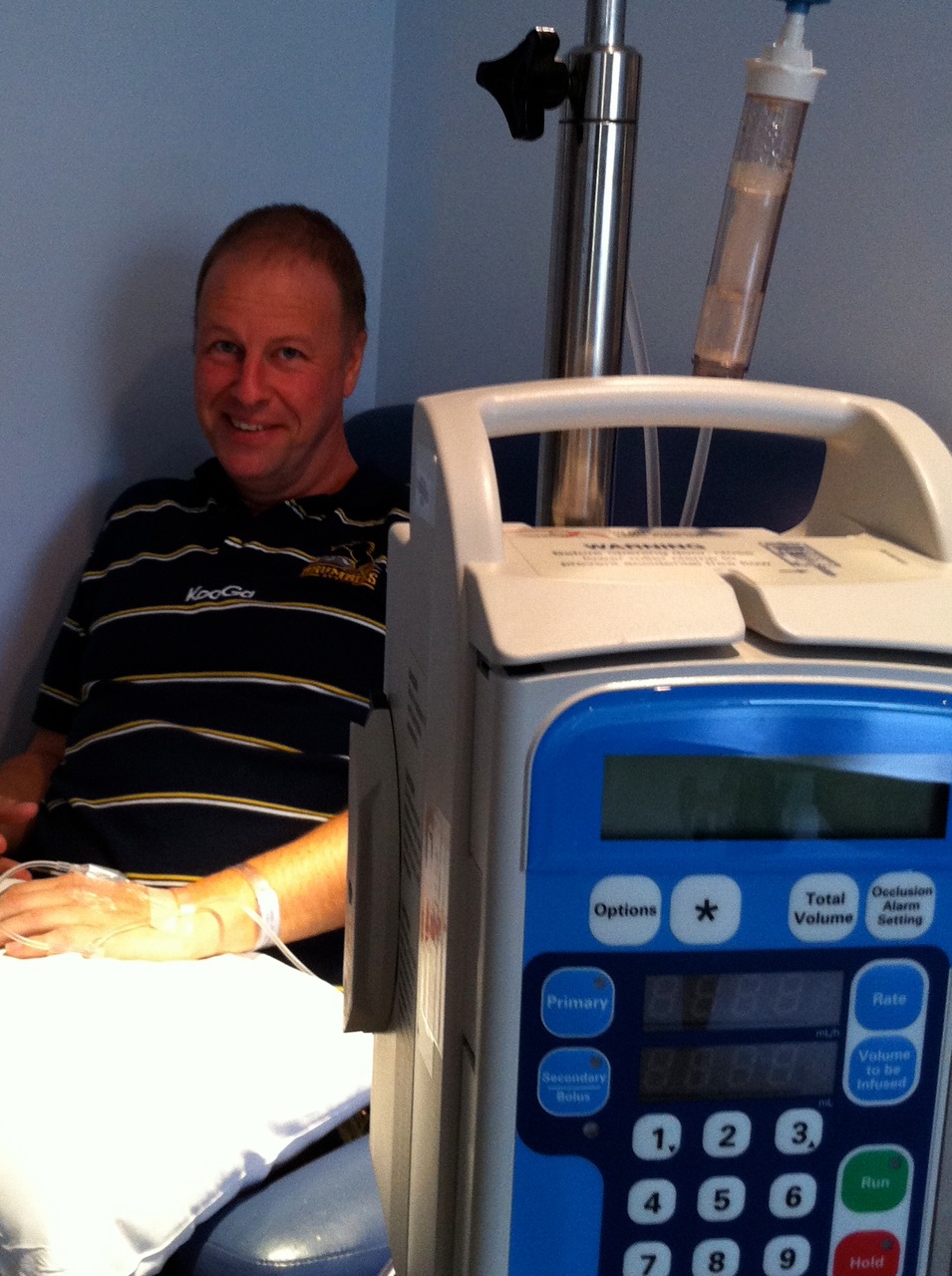
I learned of this as I was driving to the hospital for chemo this morning. It must have tickled the announcer’s fancy, because he asked people to ring in and discuss what they’ve done with their loved one’s ashes or what they’d like done with their own. One bloke said he’d invested so much in his house and property that he wanted his ashes scattered over the lawn. Another spoke of the urn getting used as a door stop until other family members objected. One woman wanted hers put into the garden to fertilise the tomato plants, and another described scattering them on the ocean.

However, one caller left me gob-smacked with what she had done with her partner’s ashes. They’d been compressed to make a diamond! For real! You can take a cup or so of ashes and get them fashioned it into a flawless diamond. They can make it different colours to suit your choice. You can have different sizes, a half-carat or a one carat stone. Presumably it can be set on a ring, a brooch, or a necklace, so you can carry the remains of your loved one with you. They can be on your body all the time, or put on for special occasions. Once again, you can do it too. Most say ‘price on application’, but word is you’ll be looking upwards of $15,000 for a one carat gem. Someone commented on radio that you could be worth more dead than alive!

It used to be dust to dust, ashes to ashes… but now there are more glamourous options, for the rich and eccentric anyway. I’m not sure how the conversation would go if you were complemented on your pendant, and then replied “That’s my husband. I had him made into jewellery.” I suspect it’d stop pretty quickly, that is until they moved on and couldn’t stop speaking about you to others! 

I get the space thing, even though I would never blast that kind of money away. It celebrates the life of the deceased. Just like a gardener might want to be used as fertiliser or a fisherman used as burley. If something is so much a part of their life, its nice to celebrate or at least respect that in death.

And I kind of get the diamond idea. Perpetual memory, something beautiful and precious, ongoing respect, even if a tad elitist. But maybe there’s also the sense of not wanting to let go and not wanting death to be the end. Maybe the diamond is seen as a hint of victory over death, something of substance that will last for eternity?

But let’s get real, it’s only a rock. It can’t replace the person. It won’t listen or respond. It can’t offer comfort or help. It might have the DNA (I don’t understand all that stuff) but it is not the person. And maybe one day it will be lost or stolen or given away to someone who doesn’t appreciate what it is, and the grief will flood back all over again.

So much effort to blast ashes into space or to fashion a diamond. They can’t take away the harshness of death. And what’s more, they don’t offer any substantial hope beyond death. Death is cruel and unnatural. It’s an ugly stain on our existence. It’s no respecter of persons. It makes a mockery of so much that we consider to be important in life. It’s a final undoing. These words from the Bible are blunt, but true:

By the sweat of your brow
you will eat your food
until you return to the ground,
since from it you were taken;
for dust you are
and to dust you will return.  (Genesis 3:19)

Naked a man comes from his mother’s womb,
and as he comes, so he departs.
He takes nothing from his labor
that he can carry in his hand.  (Ecclesiastes 5:15)

I’m a little surprised, yet pleased, that we had a quarter hour of radio talkback about death this morning. I admit it was probably the quirky that caused it, not the mundane fact of death. We rarely talk about death. We’d prefer to ignore it, because it’s going to hurt, and we don’t have any answers. But taking the time to think about the reality of death can make a huge difference to how we live life now. You’re more likely to make wise decisions for your life following a friend’s funeral, than you are at a New Years party, even with all the resolutions. Consider these strange but wise words from the Bible:

It is better to go to a house of mourning
than to go to a house of feasting,
for death is the destiny of every man;
the living should take this to heart.
Sorrow is better than laughter,
because a sad face is good for the heart.
The heart of the wise is in the house of mourning,
but the heart of fools is in the house of pleasure.
(Ecclesiastes 7:2-4)

The important question remains, is there be any substantial hope beyond death? Or is the crematorium fire, the last word on our existence? We want to cling on to our loved ones. We’d dearly love to be reunited on the other side. Is this possible? Is there something more personal, more relational, more real than ashes to diamonds? The Bible’s answer is yes. The answer is the promised resurrection of the body. Consider these words:

35 But someone may ask, “How are the dead raised? With what kind of body will they come?” 36 How foolish! What you sow does not come to life unless it dies. 37 When you sow, you do not plant the body that will be, but just a seed, perhaps of wheat or of something else. 38 But God gives it a body as he has determined, and to each kind of seed he gives its own body.39 All flesh is not the same: Men have one kind of flesh, animals have another, birds another and fish another. 40 There are also heavenly bodies and there are earthly bodies; but the splendor of the heavenly bodies is one kind, and the splendor of the earthly bodies is another. 41 The sun has one kind of splendor, the moon another and the stars another; and star differs from star in splendor.

42 So will it be with the resurrection of the dead. The body that is sown is perishable, it is raised imperishable; 43 it is sown in dishonor, it is raised in glory; it is sown in weakness, it is raised in power; 44 it is sown a natural body, it is raised a spiritual body.

If there is a natural body, there is also a spiritual body. 45 So it is written: “The first man Adam became a living being”; the last Adam [ie. Jesus], a life-giving spirit. 46 The spiritual did not come first, but the natural, and after that the spiritual. 47 The first man was of the dust of the earth, the second man from heaven. 48 As was the earthly man, so are those who are of the earth; and as is the man from heaven, so also are those who are of heaven. 49 And just as we have borne the likeness of the earthly man, so shall we bear the likeness of the man from heaven.  (1 Corinthians 15:35-49)

This is God’s promise to those who will listen to him, and trust in Jesus. There’s evidence in history that Jesus has conquered death, and this gives us good reasons for hope beyond death. Not wishful thinking. Nor absolute certain proof beyond any shadow of a doubt. But reasonable and rational confidence based on reliable historical evidence. I’d recommend investigating these promises. They offer so much more than getting beamed up like Scotty!
Compassion

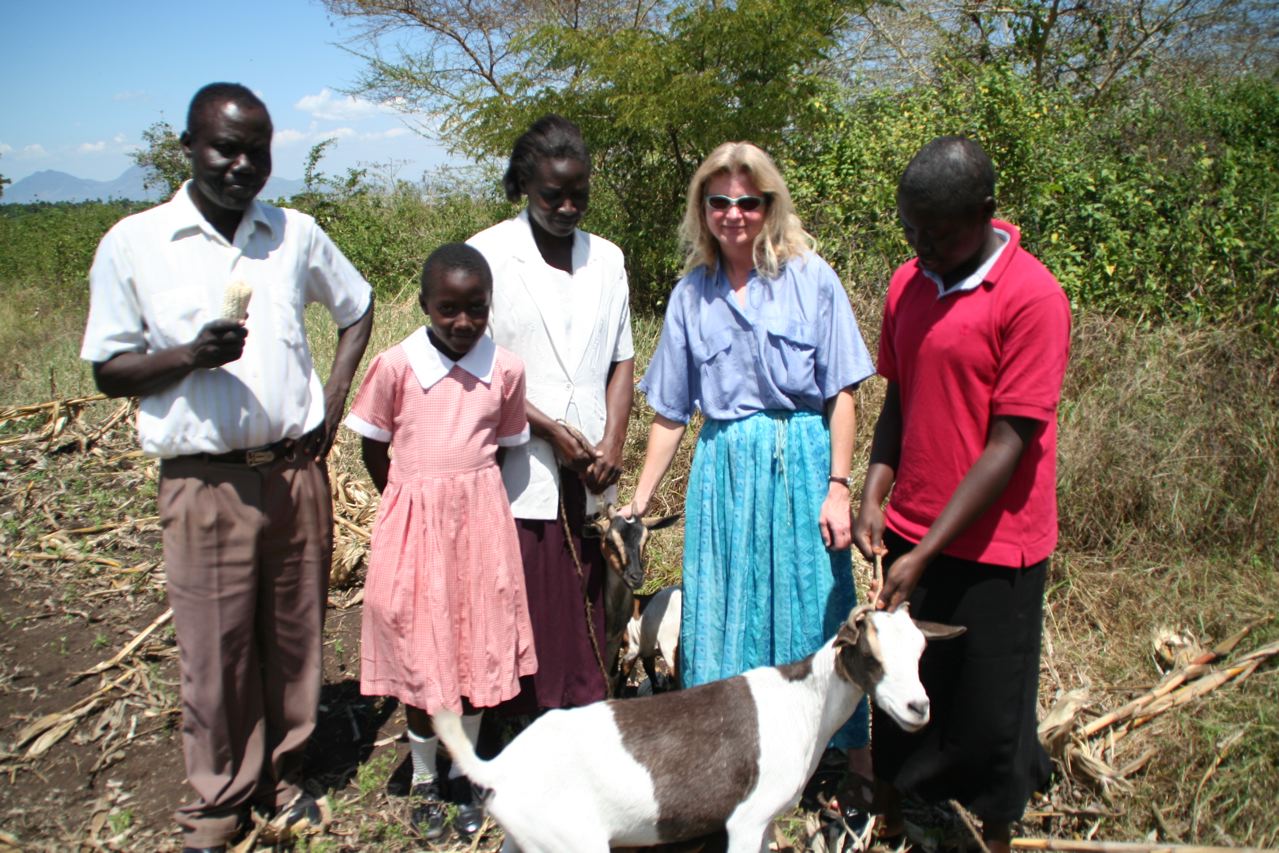
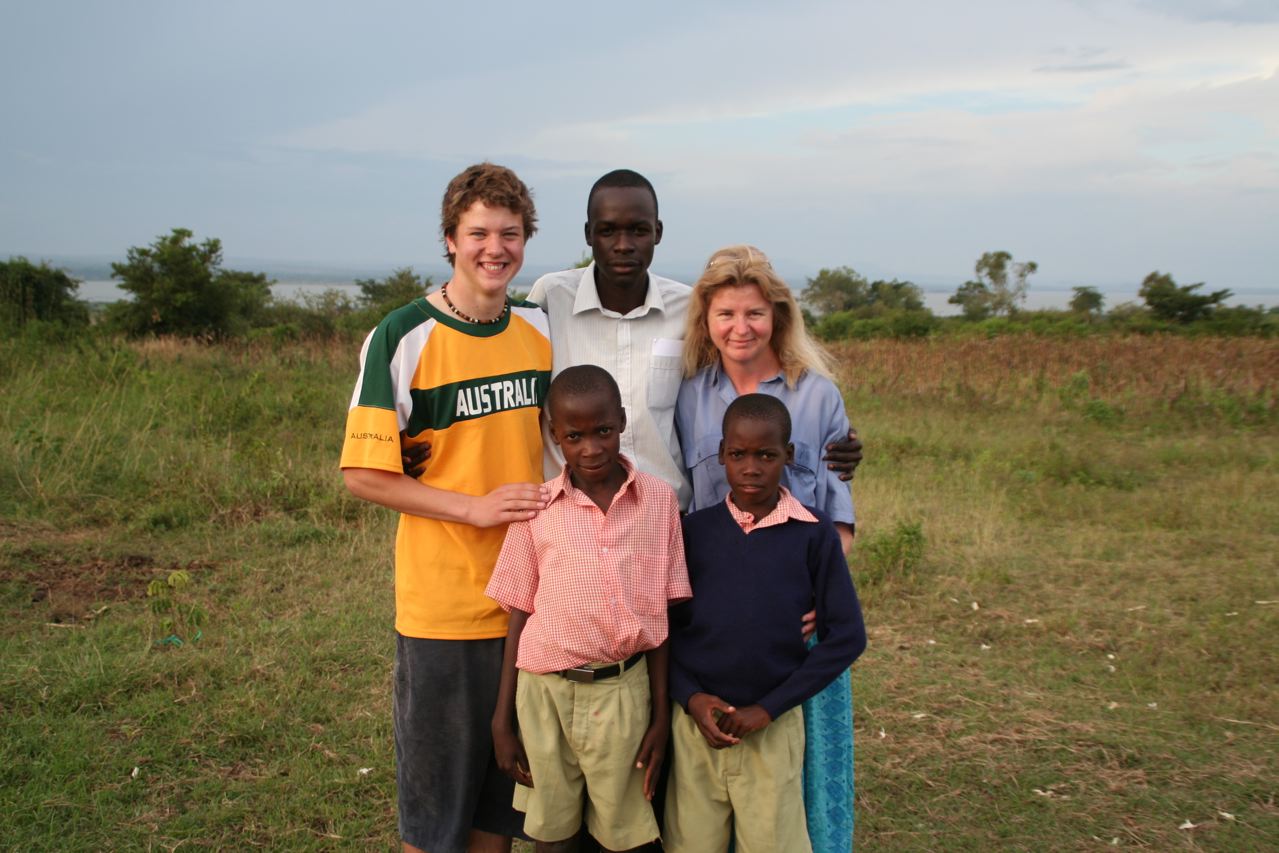
I always enjoy receiving comments on this blog, but a comment last week especially warmed my heart. It was a message from Manase Ogola, who lives in Kenya. Manase has been a part of our family since 1993. Let me explain.

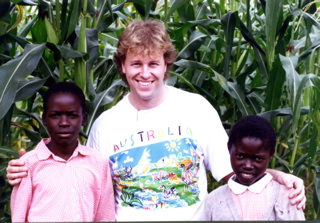
After becoming parents, Fiona and I made the decision that for every child God gave to us, we would sponsor a child living in poverty and seek to share in their lives. We stumbled across an organisation called Compassion that was committed to the physical and spiritual welfare of the children, together with their families and community. We initially ‘adopted’ two children, Grace and Manase, from different families in the same area of Kenya.

The connection was mainly through letters. We would write 5 or 6 times a year and they would reply. We’d write news (our kids would sometimes draw pictures), ask them how they were going, and we’d seek to be encouraging. They’d share about how the money was being spent, what they were learning at school, how they contributed in their families, and how they’d been encouraged from learning more about God.

In 1995 I was able to take this relationship to another level. I was invited to be an Australian representative at an international student ministry conference in Nairobi. This gave me the opportunity to visit the children and their families. I’ll never forget this day we met. There were many tears of joy! After writing letters and praying daily for these kids I’d never actually met, it was deeply moving to spend time with them and their families. It was also incredibly humbling. I remember walking into Manase’s very simple home, a mud hut with a thatched roof, and seeing a photograph of my family on the wall. It was so moving to hear his mother say that she prayed daily for me, my family and our church in Canberra. I thought I was going to bless them, but they blessed me more than they could ever imagine.

We’ve maintained our support for these children ever since this time. Many letters have been exchanged and a few years ago Fiona and our son, Luke, were able to visit them again. We’ve sponsored more children as God has blessed our own family with growth. We added Lawrence to our Kenyan family shortly after adopting Grace and Manase. Compassion have also enabled us to continue our commitment to their families once the children have grown beyond sponsorship age. We now support Manase’s twin brothers, Nelson and Allan, and Lawrence’s niece, Sharon. After our daughter, Grace, was born, our Kenyan Grace had a sister called Fiona whom we now support! Grace is now married and has a little boy, named Luke! As you can see the connections have grown strong and are very precious.

While no longer a part of the Compassion program, we have decided to continue our support for Manase as he pursues God’s purposes in his life. He is now studying to be a pastor and we’ve been able to help this happen by providing the fees necessary for his tuition. Aussie money can go a long way in Kenya and we are pleased to continue this fellowship. Recently, friends moved from Canberra to Kenya for work and they were able to take a load of good theological books for Manase. What a joy it is to share with our adopted families across the world. God has blessed us richly and we are pleased to be able to share his blessing with others.

We’ve been encouraged by the work of Compassion. We support their commitment to being Christ-centred, child-focused, and church-based. We’ve experienced their work on the ground and believe they’re a trustworthy group, doing a good job. If you’re thinking of how you can make a difference to others, share your wealth, bring blessing to others, while having your life enriched… then let me encourage you to take a good look at Compassion.

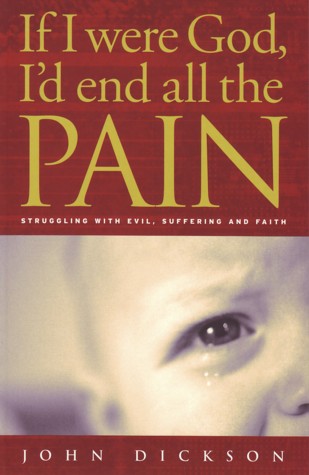
If I were God I’d end all the pain

PainIf I were God I’d end all the pain. That sounds pretty right. I’m not much of a fan of pain, especially my own! Currently, I’m sitting on my bed wearing ugg boots and a hoodie, bemoaning the cold weather, wondering if I’m well enough to venture out to watch the Brumbies play the Reds at Canberra Stadium tonight. Today’s temperature is supposed to range between 0 and 10 degrees. Subtract the wind chill and it will probably feel like minus a zillion at the ground. I must be sick or something, because until this year, I don’t think I’d missed a home game in a decade. Maybe I should ring up someone and see if I can sneak into a corporate box!

Yesterday it felt like sickness was getting the better of me. I ached all over and spent the afternoon and evening drifting in and out of sleep. I’ve probably just got another cold and a weakened immune system. But it’s not fun and it’s another reminder that things aren’t what they should be. For some dumb reason I checked the weather app on the phone at 10pm last night to discover it felt like -1.6 degrees in Canberra, while it was a balmy 25 degrees in Darwin. My heart sighed, I wished we were there, and once again wondered what on earth God was doing.

John Dickson’s little book, If I were God I’d end all the pain, is a helpful read for those who are looking for answers to the questions raised by suffering and pain. It’s not a detached philosophical book that fills the head and ignores the heart. John has experienced pain, first hand and from a young age, having lost his dad in plane crash when he was nine years old. He writes as one who understands the questions and who has explored many of the answers being offered.

Issues of faith and doubt loom large in the presence of suffering. Sometimes people attempt to use suffering as proof for the non-existence of God. It’s often expressed something like this:

Assumption 1:  An all-powerful God would be able to end suffering.
Assumption 2:  All all-loving God would desire to end suffering.
Fact:  Suffering exists.
Conclusion:  An all-powerful, all-loving God, therefore, does not exist.  (p15)

John offers an alternative proposition that he explores in this book:

Assumption 1:  An all-powerful God exists.
Assumption 2:  All all-loving God exists.
Fact:  Suffering exists.
Conclusion:  God must have loving reasons (which he is able to achieve) for permitting suffering.  (p16)

This is not offered as a proof for God. Nor does it solve the problem of suffering. It still leaves deep and emotional difficulties for the one who believes in God. Such as, Why does God allow this suffering? and What has he done about it? 

Before John gives a Christian explanation for the problem of suffering, he explores a number of other perspectives. He demonstrates how Islam understands suffering in a very different manner to Buddhism, and how Hinduism and Atheism are very different again. I won’t attempt to summarise these views because I don’t want to caricature them by reducing each to a few sentences. But it’s important to understand how different these world views are, against the popular claim that all religions are simply windows into the same truth. This suggestion shows serious ignorance and disrespect for each of these religions and world views.

The Bible’s perspective on suffering is that it’s okay to ask questions and raise doubts. In fact many of the biblical authors, especially the Psalm writers, do exactly that. Psalm 22 is offered as an important example:

1  My God, my God, why have you forsaken me?
Why are you so far from saving me,
so far from the words of my groaning?
2  O my God, I cry out by day, but you do not answer,
by night, and am not silent.

John writes in response to the words of this Psalm:

If I were a Buddhist, this sort of questioning would indicate my unenlightenment; if I were a Muslim, it would border on blasphemy; if I were an atheist, or course, it would be meaningless. Actually, I suspect some church folk of today would feel uncomfortable repeating the sentiments of this psalm. Sometimes we in the church feel we must declare “The Lord is my shepherd” even if the Shepherd seems to have gone walk-about. But faith isn’t like that, at least biblical faith isn’t like that. Faith is not denial of reality, nor does it involve repeating a mantra to dispel the doubts. The presence of Psalm 22, in the Bible, right before Psalm 23, reminds us that we have God’s permission to express our disappointment.  (p34-35)

The Bible gives an explanation for the cause of human suffering and it lies in our decision to reject our Creator. From that moment onwards (somewhere near the beginning of human history) everything has been out of whack. Things have grown worse and worse with every assertion of our independence from God. I’m preaching on Genesis 4-9 tomorrow and I’ve been struck again at how quickly everything deteriorated. John writes of Genesis 3:6, So began the long and torturous story of the human will: men and women, made in God’s image, defying their Maker for an imagined personal gain. (p42)

Of course, many have asked why God doesn’t simply step in, over-rule our selfish decisions, and stop the pain we cause. If he has the power to do this, then what’s stopping him? The answer lies in God’s respect for human dignity. He has made us as real beings with real choice. We’re not puppets like Truman, in the movie, The Truman Show. God doesn’t play ‘dolls house’ with the world. We are real independent beings who can choose either to relate to God, or to reject God. God allows us to choose, and to live with our choices, but he won’t allow evil and suffering to continue forever. He’s set a time when he will call all injustice to account. It’s a testimony to God’s patience that he hasn’t done this yet. God is giving people time to turn back to him.

This book also highlights the biblical perspective that God hasn’t given up on this world. He promises an eternal future for all who put their confidence in Jesus Christ. Contrary to the popular notion of heaven, where people are seen as disembodied souls separated from physical existence, the Bible speaks of a new physical creation. We can look forward to an end to pain and suffering and the restoration of our bodies. This is a place where we continue to enjoy real physical sensory experience. We can look forward to a future that holds real hope for those currently suffering in pain.

John finishes his book with a profound perspective on suffering that’s unique to Christianity. In contrast to Islam, which sees God as the ‘Unmoved-Mover’, the Bible portrays God as sharing in our suffering as the ‘Deeply-Moved-Mover’. Jesus, God-in-the-flesh, shares in this painful world, suffers deeply, and dies a torturous death by crucifixion. But the deeper significance in Jesus’ suffering is found in these words of Psalm 22, that Jesus makes his own:

My God, my God, why have you forsaken me?

Why would Jesus cry out such a thing? This is God’s Son, in whom God is well pleased, so what’s happening? Jesus does far more than experience my physical or emotional suffering and pain. He takes my guilt and shame, enduring the judgment of God against all my selfishness and sin, so that I can receive God’s mercy. Totally undeserved, but generously offered. Here is real hope for all who suffer… if we will put our trust in Jesus.

Death by Meeting

meetingA friend of mine had a fishing boat that he’d named A MEETING. It was brilliant really. He could be out fishing and if anyone called, his wife could ‘honestly’ let them know that he was in a meeting and he’d be back later (hopefully with dinner)!

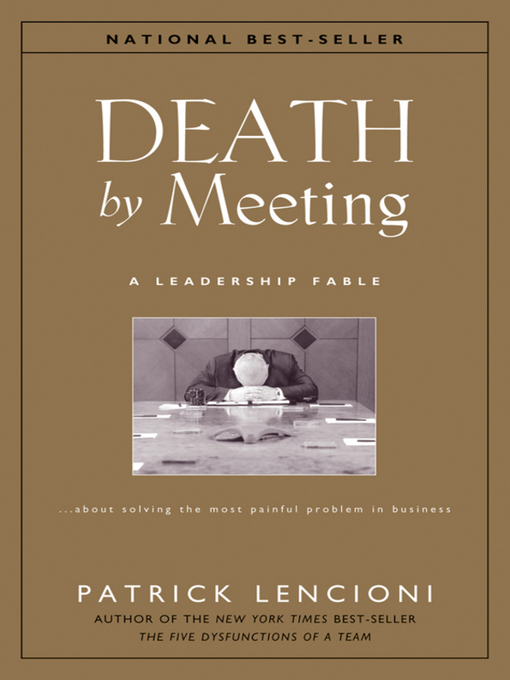
My kids used to think that my job was to go to meetings. Sometimes I thought that too! Staff meetings, council meetings, leaders meetings, training meetings, congregational meetings, one-to-one meetings, committee meetings, annual general meetings, budget meetings, planning meetings, review meetings, vision meetings, administration meetings, board meetings, boring meetings, way too many meetings! If you didn’t enjoy having to read the word ‘meeting’ 16 times in the previous sentence, then you’re probably like many of us who don’t like seeing the word appear that many times in our diaries. Surely life wasn’t meant to be an endless sequence of meetings. In his book, Death by Meeting, Patrick Lencioni writes:

While it is true that much of the time we currently spend in meetings is largely wasted, the solution is not to stop having meetings, but rather to make them better. Because when properly utilized, meetings are actually time savers.  (p250)

In my line of work, I couldn’t see a way around having meetings, so I was a prime target for this book. I read it and I wasn’t disappointed! Death by Meeting is another ‘Leadership Fable’ in the same vein as The Five Dysfunctions of a Team. It hooks in the reader with a great story, making the book easy to devour, and finishes with a summary section that ties together all the main points.

Lencioni argues that there are two main reasons we don’t like meetings. Firstly, meetings are boring, tedious, unengaging and dry. Does this resonate with anyone?! Busy people forced to sit through boring meetings is a recipe for pain. Secondly, meetings are ineffective. Sometimes it’s impossible to see how they contribute to our organisations. All they seem to achieve is tying up people’s time and breeding resentment. I’m sure you know what he’s saying!

Problem #1: Lack of Drama

Lencioni brings his experience as a student of screenwriting to the topic of meetings. Why is it that we get excited about watching a movie for two hours, but cringe at the thought of a two hour meeting? He explains why meetings should hold greater appeal than movies. We get to participate and interact in a meeting, whereas we sit passively during a movie. Meetings can have a massive impact on what we need to do afterwards, whereas nothing much in our lives is affected by whether we watch a movie or not. The difference, he demonstrates, is that movies contain drama, tensions and conflict. And these are the same ingredients that make for good meetings.

People need to be hooked in to participating in a meeting from the outset. They need to be jolted into grasping how important this meeting will be, how dangerous it would be to make a bad decision or to fail to respond to a strategic opportunity.

Throughout meetings conflict should be encouraged, not avoided. Avoiding difficult issues ultimately leads to boredom and frustration. However, mining for conflict and disagreement opens the opportunity for productive, engaging, and even fun meetings! Leaders need to give people permission to disagree and explore contentious issues. This creates an environment of trust where individuals can be honest and constructive and it leads to better outcomes for the organisation. Lencioni writes:

The truth is, the only thing more painful than confronting an uncomfortable topic is pretending it doesn’t exist. And I believe far more suffering is caused by failing to deal with an issue directly – and whispering about it in the hallways – than by putting it on the table and wrestling with it head on.  (p230)

Problem #2: Lack of Contextual Structure

Too often our meetings lack clarity and purpose. Some topics take up all the time and never get resolved. Other matters are rushed through at the end without getting the scrutiny they need. Some agenda items are big picture, long range and visionary. They require research, preparation and time to consider. Other items are trivial and would be better dealt with outside of the meeting. What’s the point of our meetings? Lencioni writes:

The single biggest structural problem facing leaders of meetings is the tendency to throw every type of issue that needs to be discussed into the same meeting, like a bad stew with too many random ingredients. Desperate to minimize wasted time, leaders decide that they will have one big staff meeting either once a week or every other week. They sit down in a room for two or three or four hours and thrash everything out… Unfortunately, this only ensures that the meeting will be ineffective and unsatisfying for everyone.  (p235)

This book recommends there should be different meetings to fulfil different purposes. It offers a template of four basic types of meetings.

Meeting #1: The Daily Check-In

This is a 5 minute meeting, held at the start of each day, where each member of the team reports very briefly on their activities for that day. This meeting is to get everyone on the same page, clear about priorities, so that things don’t fall between the cracks, and people don’t step on each other’s toes.

Meeting #2: The Weekly Tactical

These meetings are focused on tactical issues of immediate concern. Lencioni recommends not setting agendas in advance for these meetings. Rather, what’s actually going on and what the organisation needs to be doing determine what get’s discussed. Discussion should be restricted to specific, short-term topics that require people to focus on solving problems. The two overriding goals of these meetings are the resolution of issues and the reinforcement of clarity.

These meetings should normally take place weekly and run for between 45 and 90 minutes. Of course, this will mean that there simply isn’t enough time to discuss many complex and important matters. Long-term strategic issues will be left unresolved. There won’t be the opportunity for brainstorming, analysis, or even preparation (as there is no prior agenda). When strategic issues are raised in the weekly meeting, it’s important for the leader to take them off the table and plan for them to be discussed in a different type of meeting.

Meeting #3: The Monthly Strategic

These are potentially the most interesting, important, and fun meetings for the team. This is where we deal with the big stuff, where we’re headed and how we’re going to get there. It’s important to set the agenda for these meetings so that people come prepared. Research, planning and preparation will be required if quality decisions are to be made. There should only be one or two topics on the agenda so they can each receive the attention they need. The duration of these meetings will vary, but Lencioni recommends scheduling two hours per topic to encourage good conversation and debate.

It’s important to schedule these strategic topic meetings. When we don’t hold them, our meetings are dominated by the urgent rather than the important, and we fall into the trap of simply doing the same old same old. Sometimes a topic will arise that can’t wait until the next monthly strategic meeting. In these cases, the leader should call an ad hoc meeting specifically to tackle this topic. Don’t fall back into the trap of stumbling over the topic in the weekly tactical meeting.

Meeting #4: The Quarterly Off-Site Review

Off-site meetings provide the opportunity to step away from the daily, weekly and monthly issues that dominate our time and thinking. They provide the time and space to sit back and take in the wider picture. In fact, getting away from the office (so to speak) often creates a freshness and energy that takes the team and the organisation to a new level.

Such meetings need more time, usually a day or two. They provide a relaxed environment free from normal distractions. They can be utilised for a variety of purposes, such as building relationships, enhancing teamwork, comprehensive strategy review, long range dreaming and planning, or exploring what the competition is doing.

A final thought on meetings

As a church pastor, my life and work and ministry has been dominated by meetings. At times they’ve been vibrant, productive, and fun. Often they’ve been dull, lifeless and a chore. This book has offered me cause to reflect and examine our meetings. It’s led me to make some helpful changes, to clarify the purpose of our meetings, and to introduce deliberate variety in our meeting program. But as I reflect, it’s the kind of book that needs to be read and re-read. It’s easy to fall back into unhelpful old patterns and for our meetings to lose their edge. I’ll finish with this quote from Lencioni:

Bad meetings exact a toll on the human beings who must endure them, and this goes far beyond their momentary dissatisfaction. Bad meetings, and what they indicate and provoke in an organisation, generate real human suffering in the form of anger, lethargy, and cynicism. And while this certainly has a profound impact on organisational life, it also impacts people’s self-esteem, their families and their outlook on life.

And so, for those of us who lead organisations and the employees who work within them, improving meetings is not just an opportunity to enhance the performance of our companies. It is also a way to positively impact the lives of our people. And that includes us.  (p253)

What caused the cancer?

It’s a question many people have been asking me. And believe me, I’ve asked it myself. I’m not a smoker. I haven’t spent my life hanging around smokers. So how did I end up with a lung cancer? I know it’s not a smokers’ cancer, but that doesn’t explain why I have it.

There are lots of things that go through the mind. Is it genetic? My grandfather had cancer, my father has recently had cancer, and I haven’t explored the family tree any further. But each of these cancers are so different. There doesn’t appear to be any connections between them, other than the ‘C’ word.

Have I brought it on myself with overwork and stress? Being the pastor of a church may seem like a pretty cushy job, but I can tell you it ain’t! Mentoring a team of staff, managing a significant budget, coming up with talks each week, pastoring hundreds of people, juggling church leadership with a university ministry and sports chaplaincy, raising up and training leaders, running conferences, admin, change and rebuilding year after year. Then there’s the stuff that goes pearshaped, the breakdown in relationships, the staff conflicts, helping the schizophrenic who then turns on you, counselling couples with broken marriages, comforting grieving parents, and the list goes on. A friend once told me that you couldn’t pay him enough to do all that stuff! Not that I’d change this (not all of it anyway!) and I thank God for the opportunities he’s given me.

Or is it the imbalance of life, getting it wrong, living on stress and adrenalin, insufficient exercise, too many coffees, not taking my lunch to work, staying up late to finish off work, working on days off, not allowing enough time for the fun stuff? Where should I lay the blame?

There are some who believe that I must accept the blame. I’ve clearly done something to deserve it. Perhaps it’s spiritual karma that is causing the suffering. Maybe I’ve done something that’s resulted in me getting sick. Some Christians might claim that God is teaching me a lesson, or disciplining me, or punishing me for specific things I’ve done wrong. They might suggest if I own up to my actions then maybe I’ll be healed, or spared further suffering. Others would claim that Satan has me in his cross-hairs, wanting to damage not only my life, but my faith in God.

I reckon there could be some truth in some of the things above. Genetics, lifestyle, and spiritual factors may all play a part. But it’s not helpful to speculate or jump to conclusions about what lies behind it all. It’s tempting to fall into the trap of Job’s so-called ‘comforters’ and presume to speak for God. I find myself going back over my life, and words, and decisions, wondering if something I’ve done is responsible for the cancer. But I can’t find an answer and it probably doesn’t help. The truth is I haven’t been given a divine diagnosis. God hasn’t given me an explanation, and he may never. He’s under no obligation to do so.

I don’t know the reasons why I have this particular cancer at this particular time. But let me tell you what I do know! We live in a messed-up fallen world. The Christian explanation for this, is that we’ve all chosen to turn away from our creator and this has serious repercussions. We forfeit the joy of living in harmony with God. We experience the pain of fractured and broken relationships with one another. We damage ourselves and our environment through our selfishness. In short, we’ve turned our backs on God and we now live with the consequences. Pain, suffering, tragedy and grief have become a normal part of human experience. Cancer, my cancer, all cancers are part of this fallen world. This doesn’t explain why particular things happen to particular people, but it certainly puts them in context.

In fact, from the moment we’re born we live under the shadow of death. It’s hard to accept this when we’re young. Old age seems seems so far away, but it’s an obvious fact of life that each of us will die at some point. It may not be soon, but it’s guaranteed to happen. From a Christian perspective, we not only live under the shadow of death, we also live under the sentence of death. Death is God’s judgment for our spiritual anarchy. It sounds harsh, and it is. There’s nothing nice or natural about death.

You might be thinking, what a gloomy pessimistic post. Life sucks and then you die! Is this all there is?

Let me change tone. The Bible is not fundamentally a book about why we die, but about how we can live. God cares deeply about our suffering. Jesus has shared our human experience and endured greater pain than we could ever imagine. He was rejected, tortured and crucified for no human reason other than he was a threat to the religious establishment. And yet God had a purpose in this awful death… through one death to save many lives. Jesus paid the price for our rebellion (sin) so that we could live. He overcame death to give real hope to all who will trust him.

He was delivered over to death for our sins and was raised to life for our justification.  (Romans 4:25)

He himself bore our sins in his body on the tree, so that we might die to sins and live for righteousness; by his wounds you have been healed.  (1 Peter 2:24)

For Christ died for sins once for all, the righteous for the unrighteous, to bring you to God.  (1 Peter 3:18)

Not only is there hope for individuals, but through the death and resurrection of Christ there is hope for this world. God promises a new creation. There’s a future for people struggling with chronic sickness and terminal illness. I don’t expect to be saved from death for, even if I am healed of my cancer, I will eventually die of something else. God’s word offers me a better and enduring hope beyond death. The final scenes in the Bible point to the wonder of what is to come. The language is a little unusual, dripping with images from other parts of the Bible, but the basic idea is clear. God isn’t done with us yet! He has better things in store for those who belong to him…

Then I saw a new heaven and a new earth, for the first heaven and the first earth had passed away, and there was no longer any sea. I saw the Holy City, the new Jerusalem, coming down out of heaven from God, prepared as a bride beautifully dressed for her husband.  And I heard a loud voice from the throne saying, “Now the dwelling of God is with men, and he will live with them. They will be his people, and God himself will be with them and be their God. He will wipe every tear from their eyes. There will be no more death or mourning or crying or pain, for the old order of things has passed away.”  (Revelation 21:3-4)

stormWhat great words. What a tremendous hope. This momentary life is not all there is! There is hope and peace beyond the storm. Jesus has come back from the dead to reveal what lies ahead for all who will follow him.

By the way, I got to speak at church again this last weekend. I spoke on Genesis 3 and explored the issues of sin, suffering, death, and the hope that God offers. If you’re interested, you can download the talk and have a listen!

Gospel ink

Tattoos used to be the just for bikers and sailors. Now they’re for everyone! Walk up and down the beach on a summer’s day and count them. Check out the tattoos on the arms, legs and bodies of the rugby players. It’s like they’re wearing line-art skins under their jerseys. Musicians, artists, athletes, public servants, computer geeks, tradies, stay-at-home mothers… everyone’s getting inked!

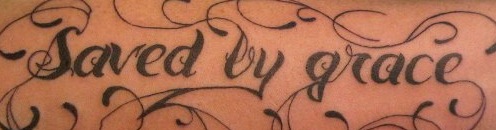
Last year I thought seriously about getting some tattoos. Yeah, I did! Maybe I was having a mid-life crisis, but I saw it as a way to communicate some really important things about myself. If it matters that much to me, then surely I’d be willing to write it on my arms was my line of thinking. There’s a tattoo shop near where we live, so I paid them a visit, checked out some designs, worked out some costings, even asked about booking a time!

We were planning a move to Darwin and tattoos are more common than crocodiles up there. I figured that my uniform for the Territory could be shorts, t-shirt, thongs, and tattoos! We were heading north to start a new church, so I thought that I could use tattoos as part of my advertising strategy! The plan was for two tattoos. One on each arm. Three words each.

SAVED BY GRACE and COMPELLED BY LOVE

There’s so much packed into each of these phrases. They sum up what God has done for me and how this motivates me. Each phrase is taken from verses in the Bible. Let me quote them in full:

For it is by grace you have been saved, through faith — and this not from yourselves, it is the gift of God — not by works, so that no one can boast. (Ephesians 2:8-9)

For Christ’s love compels us, because we are convinced that one died for all, and therefore all died. And he died for all, that those who live should no longer live for themselves but for him who died for them and was raised again. (2 Corinthians 5:14-15)

Both these sets of verses mean so much to me. The first makes it absolutely clear that the only way I can be right with God is by what he has done. So many people make the mistake of thinking that a Christian is a religious person who tries to earn their standing with God by living a good life. Absolute rubbish! Being Christian is about what God has done for us, not what we do for God. It’s a God-given righteousness, not a self-righteousness. And God makes this possible through Jesus Christ dying on the cross to pay the price for our rejection of him. We are simply called to trust (put our faith) in what God has already done on our behalf. A Christian is one who is saved by grace.

tattooThe second set of verses shape the way I respond to what God has done for me. Love is the compelling motivation to change how I live. This love is Christ’s love for me, not my love for him. Jesus effectively swapped places with me, dying my judgement instead of me. The price is paid. There’s nothing owing on my account. It’s as though when Christ died in 30AD I died with him. The invoice is wiped and God no longer holds anything against me.

Following the logic of this connection with Christ, not only have I died with him, but I’ve also been raised with him. I’ve been given a new life and a new purpose for living. The death and resurrection aren’t simply facts of history, they’re motivators for a whole new personal history. I’ve been given my life back so that I can live it for Jesus, rather than selfishly living it for myself all over again.

These two phrases sum it up for me. Saved by grace – I’ve been rescued from my sin through the death of Jesus. Compelled by love – having dealt with my sin, Christ is calling me to live for him.

Should I get these words inked on my arms? My mum will say no! Maybe, I should take a poll! I must confess, I’m a bit nervous given my infection risk with chemotherapy. I’m not even supposed to get a scratch at certain points of the chemo cycle. So, it’d probably be irresponsible. And I can’t help thinking, what if they spolled one of the words rong?!

Counting my blessings

I’m about to preach to myself. In fact, I’m about to preach at myself. Every now and then I need a good talking to, and now is one of those times. Listen if you want. But if you don’t want to hear what I’m going to say to myself, then just stop reading!

I’m not happy. My breathing is uncomfortable. The pain in my chest cuts like a knife… especially when I cough or sneeze. Yawning hurts like crazy. My joints ache, my head hurts, my stomach complains, my skin flakes, my rashes burn, my nose bleeds, my mood changes, my patience runs thin, as does my hair, and yet, I am blessed!

IMG_0947How many people in our world or throughout history have had anything like the medical care that I take for granted? The drugs I’m given are the products of years of research, and millions of dollars of investment, from some of the smartest minds in the world. And they work. They attack the cancer, they shrink the tumours, and they destroy the bad cells. It hurts, and I hate it, but it’s a good thing. And I’m blessed to have such amazing treatment available!

I have specialists and GPs (one very special one!) and nurses who care for me. I have a family who loves me and watches over me. I have friends who call, write, visit, or support in practical ways. There must be so many who suffer alone, without care, without compassion and without hope. I do feel somewhat lonely and sad, but deep down I know that I’m blessed to experience the care and love of so many.

It might not seem like it, and I know that I can so easily forget it, but the reality is that I’m truly blessed. I have a hope that comes, not from anything medicine or people can offer, but from the trustworthy promises of God. In Jesus Christ, God has forgiven my selfish independence and accepted me as his own child. He has started my life over again, and assured me that nothing can separate me from his love. Nothing! As it says in Romans…

35 Who shall separate us from the love of Christ? Shall trouble or hardship or persecution or famine or nakedness or danger or sword? 36 As it is written: “For your sake we face death all day long; we are considered as sheep to be slaughtered. 38 For I am convinced that neither death nor life, neither angels nor demons, neither the present nor the future, nor any powers, 39 neither height nor depth, nor anything else in all creation, will be able to separate us from the love of God that is in Christ Jesus our Lord.  (Romans 8:35-39)

This is the reality of my blessing. It’s incomparable. It’s astonishing. It’s undeserved. And it’s available!

As I preach to myself, so I pray…

Heavenly Father,
Let me see things as they truly are.
Let me not be blinded by my selfishness.
Let me hold fast to the Your Word.
Let me count my blessings.
Amen

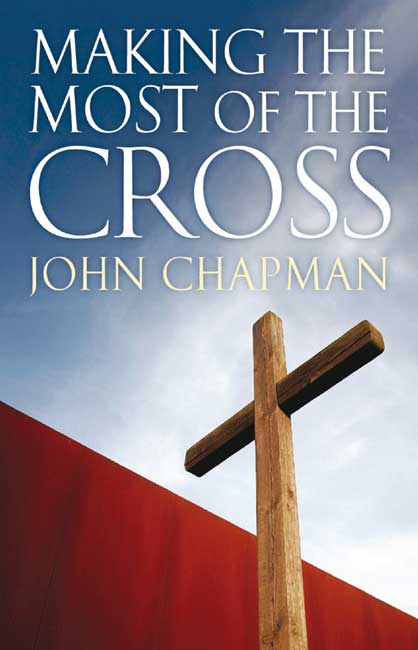
Making the most of the cross

The second sermon I ever gave was a cracker. People told me! It was logical, engaging and humorous. I succeeded in explaining, illustrating and applying the Bible in a way that captivated the listeners. My girlfriend (now wife) even started to believe that I might have some hope of becoming a preacher! But, it’s time for public confession. I basically pinched the whole talk, idea for idea, point for point, from John Chapman.

I don’t think I was the first to do this, and I’m certain that I wasn’t the last. You see, I’d looked over the Bible passage again and again, and I couldn’t see any way to make it clearer than Chappo. So why not simply copy his talk?

Chappo’s passionate desire for people to understand the truth, and his confidence in the Bible to reveal it, came through so clearly in his preaching. He still has this same passion and confidence, and it comes across in his recent book, Making the most of the Cross. How many people are still writing books after their 80th birthdays, and dedicating them to their friends in the retirement home? Well, at least one! And I thank him for it!

This book takes us to the very core of the Christian message – the death and resurrection of Jesus Christ. Everything stands or falls on these events. Without them, there is no Christianity. If Jesus didn’t die, or if he died and remains dead, then there is no real hope for humanity, either in life or in death. This is no take it or leave it topic. It’s worth investigating seriously, whether we’re a child or an octogenarian. But don’t leave it until you’re 80 if you’re not already there!

There are two main sections in Making the most of the Cross. The first explores the significance of the death of the Lord Jesus. The second considers the facts and meaning of the resurrection. You could tackle the book in two parts, but the real benefits will come from going even more slowly and considering the many different aspects and implications of these events.

The death of Jesus has been described as a jewel with many facets. Each facet gives us a different window into the significance of the cross and its profound implications for us. All facets need to be seen so that we don’t underestimate or skew the meaning of the cross. For example, Chappo helps us to see that…

  1. Jesus’ death brings salvation
  2. Jesus’ death is a substitute
  3. Jesus’ death is a ransom
  4. Jesus’ death turns away God’s anger
  5. Jesus’ death brings the defeat of Satan
  6. In Jesus’ death, the just God justifies sinners freely
  7. Jesus’ death is the unifying force in the Christian community
  8. Jesus’ death brings forgiveness and cleansing

John Chapman grounds every chapter of his book in the text of the Bible. The Gospel accounts are the primary evidence for what happened to Jesus, and how Jesus understood what was happening. The rest of the New Testament supports this, giving additional insight into their meaning. Sometimes the Old Testament is quoted to assist us in understanding a particular background to Jesus’ death or resurrection. In fact, reading this book helps us to see more of how the whole Bible is focused on Jesus and only makes sense in the light of what he has done.

Given the brevity of this book, there is much more that could be said about the significance of the cross. But, this book provides a very good primer. If you are keen to take things deeper then let me recommend The Cross of Christ by John Stott, The Atonement by Leon Morris, and Where Wrath and Mercy Meet edited by David Peterson, among others.

To claim that Jesus was raised from the dead and is alive today, 2000 years later, is nothing short of extraordinary. What is more, Christianity stands or falls on the truth of this claim. It’s not an optional accessory. It’s the heart and soul of it all! Chappo outlines briefly the evidence for the resurrection, including the empty tomb, the eyewitnesses, the amazing transformation of the disciples, and their lasting impact on others (even to this day). But he doesn’t stop here. He goes on to highlight the significance of Jesus being raised, how the resurrection vindicates Jesus in his death, reveals him to be God’s appointed eternal ruler, the judge of all people, the pioneer of life beyond the grave, the pattern of resurrection to come, and the very real hope for you and me that death is not the end.

One thing that impressed and encouraged me about Making the most of the Cross is the suggested prayer, usually just a sentence or two, printed at the end of each chapter. This gives the book a personal edge that encouraged me to relate to God and not simply fill my head with ideas and information. The death and resurrection of Jesus is life-transforming. It has changed my life forever. But the truth is, I need to keep being reminded of these things. Perhaps you do too! I found these words ringing true…

Sometimes the circumstances of life may cause us to wonder if God has forgotten us. Everything seems to be going wrong. But the death of Jesus is above our circumstances. Nothing can take away the fact that Christ died for us. No matter what happens to you or to me, the death of the Lord Jesus says, “I love you”. Nothing can change that. Be in no doubt that God loves you. Jesus’ death remains as a beacon of God’s eternal love for us. (p14)

Teach us to number our days

IMG_4961Dear family and friends,

Thank you again for your ongoing support and encouragement. We continue to be buoyed by your prayers, visits, messages, gifts, and kindness. They matter just as much to us now as they did in the initial days of crisis.

After 6 cycles of chemo some of you have been asking, “How many have you got to go?” Our answer is simply, “We have no idea!” If the Alimta/Avastin chemo continues to shrink the tumour, or at least prevent it from growing, and if I can tolerate the toxic effects, then it could be a while. We’ve been viewing data that shows some patients with my specific gene mutation doing very well on Alimta for many months. This means that life may continue to be shaped by the ups and downs of chemo cycles for some time yet. We are still hoping to get access to the targeted drug, Crizotinib, once the chemo starts to fail, and we’re praying that the government or drug company will release this to us (ideally subsidised or free of charge).

I’m pleased that the two latest (maintenance) cycles have been easier to tolerate. This has meant that I’ve been able to do a bit more. Over recent days days I’ve even been spending time on the exercise bike, while watching episodes of iFish, and wishing I was somewhere in Northern Australia landing barra and GTs! I’m starting to do some light weights, situps, and a bit on the rowing machine too, under strict instruction from my youngest! Nothing too intense, but they say it all helps.

Over the next few weeks I have the opportunity to speak at church again. I’ll be giving a couple of talks based on Genesis chapters 3 to 9, God willing. These chapters of the Bible deal with the mess we make of our lives when we push God aside. They address issues of suffering and death, and consider God’s purposes in these things. I’m anticipating that I’ll feel their impact more intensely and personally than I have previously!

Let me say, one of the hardest things about this struggle with cancer is not knowing what the future holds. Silly really, because we have never known and we will never know… we just think we do! The daily reminder of my own mortality intensifies the urgency and importance of good decisions, making the most of my opportunities, and using my time wisely. I can’t simply put things off until tomorrow, or next year, or some time in the indefinite future. If they matter, really matter, then I need to get onto them now. I need to make them a priority. How much time gets frittered away doing nothing of lasting value? These words in the Psalm keep coming back to me:

12 Teach us to number our days carefully
so that we may develop wisdom in our hearts.
13 Lord—how long?
Turn and have compassion on Your servants.
14 Satisfy us in the morning with Your faithful love
so that we may shout with joy and be glad all our days.
15 Make us rejoice for as many days as You have humbled us,
for as many years as we have seen adversity.  (Psalm 90:12-15)

I used to think I had all the time in the world, enough time to get around to anything and everything I wanted to do. But then we grow older and life speeds up. Time starts to slip away. They say a mid-life crisis is being confronted with the reality that you can’t and won’t do everything you had planned in life. If so, then a terminal illness is this plugged into an amplifier!

My prayer is that God will teach me to number my days, to make the most of each day he gives me, and that I will thank him for these days whatever they may hold. It’s very easy to dwell on the negatives, to get miserable, to become filled with self-pity. But it doesn’t help. All it does is distract me from the true source of satisfaction and joy. This Psalm offers me some sound advice: talk to God, let him know how I’m feeling, ask him to be compassionate with me, call on him to satisfy me with his faithful love and enable me to find real joy… every day and whatever my circumstances.

Let me encourage you also to consider these words, to take them to heart, and to ask God to teach you to number your days.

With love, Dave (and Fiona)

Will I be the biggest loser?

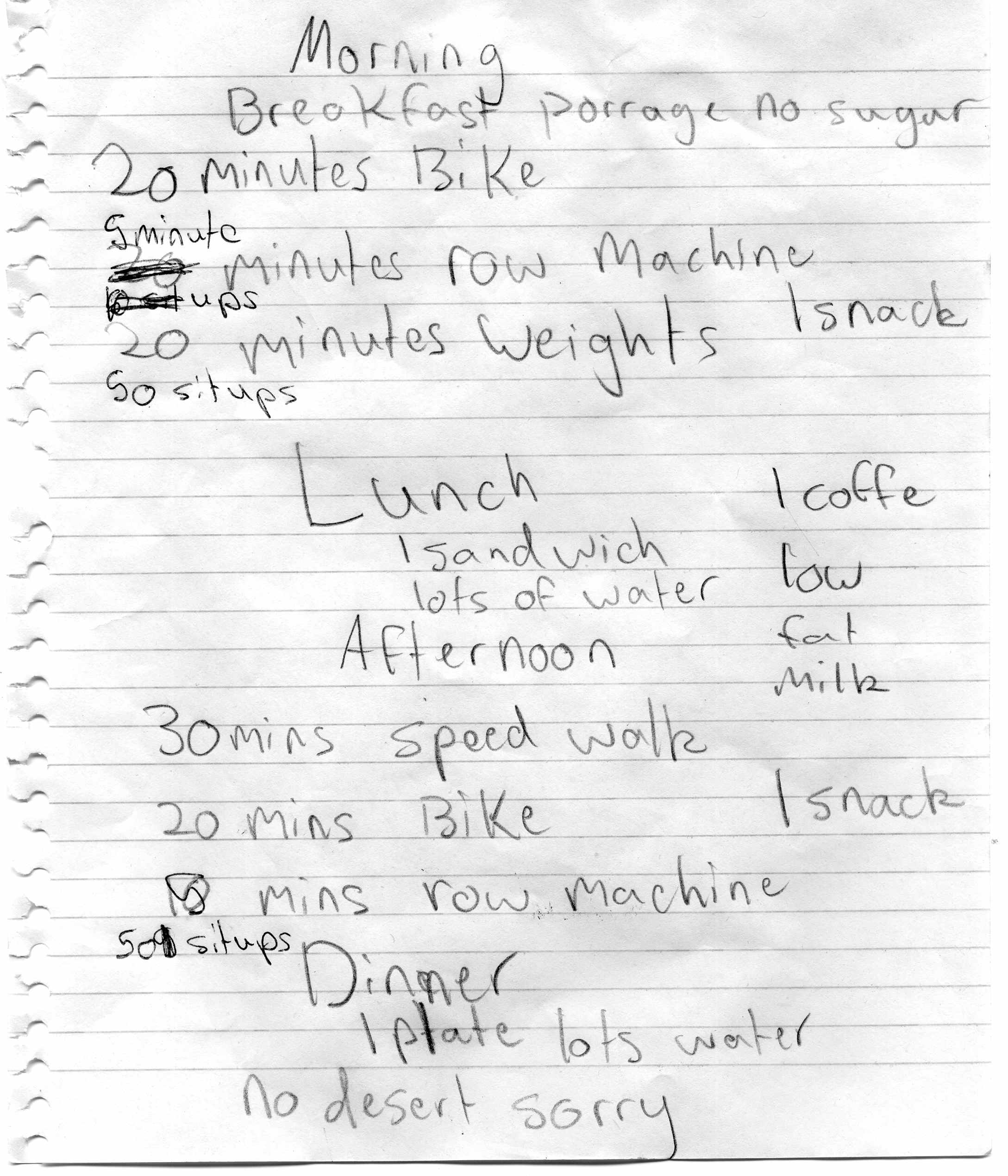
My 13 year old is concerned that I should be more active, drinking less coffee, not snacking on chocolate, and shedding the kilos. He is now well trained as a ‘personal trainer’ after watching just about every episode of The Biggest Loser. Hence, he thought he’d write a fully integrated program for me, and then make sure I stick to it! I’ve attached it here, just in case it might be of benefit to any of you too!

Deserted by Lady Luck?

Saturday night was pretty cold in Canberra. I blame the cancer and chemo for the fact that I feel the cold more this year. So much so, that I splurged on buying a down-filled jacket to wear to the rugby. It was a clearance sale! My youngest called me a sheep when I wore it. That is, until my wife informed him it was filled with goose down. Now I’m the goose! Not that I care… I was warm, and happy, watching the Brumbies play the Tahs at Canberra stadium. I love getting out and watching the games live, even if it is on the chilly side.

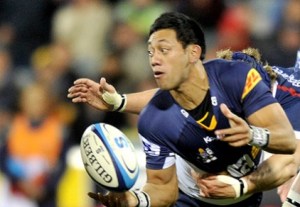
I’m a bit of a rugby tragic, so I subscribe to a few rugby news updates. Sunday’s edition of The Roar Daily Email contained an article called, Lady Luck deserts Lealiifano. It seemed a fair call really. The game was over. It was done and dusted. Christian had led the way to an emphatic victory over the Tahs. He was inspirational. And he’d been steadily building a claim for the Wallabies five eighth position. Then, with seconds left in the game, his leg gets trapped under another player. His ankle is fractured and dislocated. Out for the rest of the season.

The excitement of beating the Tahs, cementing the Brumbies at the top of the Aussie conference, and climbing another step closer to finals rugby, is overshadowed by the pain of seeing Christian on the stretcher, sucking madly on the green happy whistle. My joy is overtaken by sorrow, and the solemn reminder that there are bigger things in life than winning games of rugby.

A freak accident, yes. A common casualty in a tough collision sport, yes. A serious setback to plans, goals, and aspirations, yes. But deserted by Lady Luck? What does that mean, anyway? Fate turned bad? The gods of sport turning their faces away from Christian? Is that the way it is?

Well, I know Christian disagrees. I disagree. Life isn’t controlled by the random turn of the dice. It’s not the meaningless result of cause and effect, of time plus chance. In fact, the logic of the headline could be taken to imply that Christian’s success on the rugby field was merely the outworking of luck as well. What about his strength, speed, agility, skill, training, teamwork, leadership. What about the years of blood, sweat, and tears?

I’ve spoken with Christian Lealiifano (I’m the Brumbies team chaplain – not just a stalking fan!) and we both believe there’s a God who is involved and who cares. He’s working out his purposes through all the events of life, the ups and the downs, the good and the bad. Even through a season ending injury. Even over the loss of of our second flyhalf in a few weeks. Even when both of them, Matt and Christian, are trusting in Jesus and seeking to honour God with their lives. It doesn’t mean they understand it! It doesn’t mean they have an answer to ‘why’! But they do know it’s not blind fate, it has a purpose, and God can be trusted.

Suffering and trials can be a challenge to our beliefs. They can cause us to question and doubt. But they can also play a role in transforming us for the better. They can sharpen our focus in life and cause us to reconsider what matters really matter. My experience through recent serious trials and challenges has been that God has taken centre stage more clearly. I see evidence of him working his greater purposes, in me and in others, through the the suffering.

I’ll be praying to God for Christian, and Matt, and other players recovering from injury. Not just for a complete and speedy recovery. Not just for patience, a positive outlook, and hard work on the rehab. But, that God will work out his good purposes in their lives, that they will know and trust him though the ups and the downs, that God will build character in each of them. And I’ll be praying that they’ll be an encouragement, an inspiration and a blessing to those around them. If you’re one who prays, please join with me. If you’re not, can I recommend starting?!

But there’s no point praying to Lady Luck. She won’t hear you. She can’t help you. And she’ll only distract you from the One who can!

What a will won’t do

This morning Fiona and I were discussing wills. We’d had my will drawn up while I was in hospital, when things were looking pretty grim. We reckoned it was important to get my affairs in order. But, it’s no less important to attend to Fiona’s affairs, so we figured she should draw up a will too.

It’s a bit morbid writing wills, thinking about who we want to get what when we die. Mostly it’s about possessions… the house, cars, bank accounts, superannuation, life insurance, all the books, fishing tackle, camping gear, my ‘limited edition commemorative 2004 championship-winning embroidered and framed Brumbies jersey’… and some other stuff!

However, the big concern is not our stuff. It’s deciding who’ll look after the children if we’re taken from them. We want to make sure our children will be in good hands. We want people who’ll care for them, protect them, teach them, encourage them, discipline them and, most of all, love them. We want people who share our priorities and values and beliefs.

At the end of the day, it’s not about preparing to financially compensate our kids for losing their parents. It’s not about giving our children financial security. There’s no such thing really. We do our children a huge disservice if we teach them that life can be measured by money in the bank or possessions in the hand. We rob them of the joy of trusting God to meet their needs if we influence them to covet a potential inheritance.

Jesus famously taught…

25 “Therefore I tell you, do not worry about your life, what you will eat or drink; or about your body, what you will wear. Is not life more important than food, and the body more important than clothes? 26 Look at the birds of the air; they do not sow or reap or store away in barns, and yet your heavenly Father feeds them. Are you not much more valuable than they? 27 Who of you by worrying can add a single hour to his life? (Matthew 6:25-27)

On another occasion, Jesus got caught up in a domestic dispute over an inheritance and he had these words of warning…

13 Someone in the crowd said to him, “Teacher, tell my brother to divide the inheritance with me.” 14 Jesus replied, “Man, who appointed me a judge or an arbiter between you?” 15 Then he said to them, “Watch out! Be on your guard against all kinds of greed; a man’s life does not consist in the abundance of his possessions.” (Luke 10:13-15)

What a great reminder. Our lives are not to be measured by how much we earn, or save, or have. We’re not the sum total of our mortgages, bank accounts, or life insurance. Economic measures have their place, but they don’t define who we are or what we’re worth.

As Christian parents, who believe in life after death with God for all who trust in Jesus, there’s a far more significant legacy we want to leave our children. One that can’t be measured by an accountant, or distributed by a solicitor. We want them to look forward to an inheritance that can never perish, spoil or fade.

3 Praise be to the God and Father of our Lord Jesus Christ! In his great mercy he has given us new birth into a living hope through the resurrection of Jesus Christ from the dead, 4 and into an inheritance that can never perish, spoil or fade — kept in heaven for you. ( 1 Peter 1:3-5)

This is not something we can give our kids, but God can! We can point them in the right direction. We can remind them of God’s generous offer of eternal life. We can model sitting loose to stuff, not trusting in hollow promises of financial security, and trusting in God for all our needs. As Jim Elliot wrote before losing his life, he is no fool who gives up what he cannot keep to gain what he cannot lose.

We can’t write these things in our wills, but we can pray that God will write them on the hearts of each of our children.

Making the most of the rest of your life

John Chapman, or Chappo as we like to call him, is one of my heroes. Back in 1989 I had the privilege of being trained by Chappo to become a preacher. He’s a master communicator, one of the best preachers I’ve heard, and he also knows how to share his craft with others. He’d give his young apprentices, including yours truly, what we affectionately called ‘the blow torch to the belly’. If he didn’t like your talk, he’d tell you! And then he’d deconstruct and reconstruct the talk, and eventually it would morph into a much better one. It wasn’t always pleasant, but he worked hard with us, and on us, because he was passionate about what we were doing. Our job was to communicate, clearly and truthfully, the importance of Jesus Christ. Chappo’s job was to make sure we did it well.

John is now well into his 80s and he remains just as committed to communicating the good news about Jesus. He doesn’t do as much preaching these days, but he still makes the most of his opportunities. Making the most of the rest of your life is Chappo practising what he preaches. This is a book about Chappo’s favourite topic – Jesus!

It’s taken me a while to pull this book off my shelf and read it. I shouldn’t have waited so long, because it’s a great book and it took me less than an hour to read the whole thing. I’d assumed it was only for old people, and that wasn’t me! But the key thing about being ‘old’ is not your age. It’s being forced to accept your mortality. Getting older means you don’t have as long to live anymore. I’m not that old (I haven’t hit 50 yet), but God has certainly confronted me with my mortality recently. Chappo writes:

Life in a retirement village has been a new experience for me. The paper man comes every morning at 4.30am and the ambulance at 9.15am. Sometimes it brings people home, but not always. Your mortality presses in.  (p9)

There’s nothing morbid about this book. Chappo has a cheeky sense of humour and it comes through in his writing. He writes with clarity and energy, and this is a book brimming with life and hope. Greater hope than you could ever imagine. A hope that motivates Chappo to write and share with others… while he still can, and while we can still read it (and it is printed in large type)!

You may think it is strange that I’m writing about making the most of the rest of our lives. Humanly speaking, I don’t have all that much left. The average male in Australia lives for 79 years. That doesn’t leave me much time.

On the other hand, if there is life after death, if eternity is really eternity and I have the greater bulk of my life to look forward to, then it makes all the difference.  (p9)

For Chappo, life beyond the grave is far more than wishful thinking. It’s the promise of God. He bases his confidence in the words of the Bible, and the historical person of Jesus. It’s the death and the resurrection of Jesus that provides the hope of resurrection beyond death for others. This is not the cartoon-like picture of someone in a white dress hanging out in the clouds playing a harp. Nor is it the idea of a disembodied soul floating around in heaven. It’s the hope of having a resurrected body, living in a new creation, made by God. Perhaps this still sounds a little weird, but I reckon it’s worth an hour of your time reading Making the most of the rest of your life to begin an investigation. If it’s not true then I guarantee you’ve still spent a better hour than anyone watching Biggest Loser. If it is true, then you’d be the biggest loser if you didn’t bother to check it out.

The guts of the book are spent describing who Jesus is, and what he said and did. Chappo takes us through Mark’s Gospel, explaining, illustrating, and applying as he goes. He has the knack of showing how Jesus makes sense of everything in the Bible and how he impacts life here and now. I’d recommend reading the book first, and then getting hold of a Bible and reading over Mark’s Gospel for yourself. Perhaps you could read the relevant section in Mark’s Gospel and then compare it with what Chappo writes in the book.

Chappo’s aim with this book is to persuade people to put their trust in Jesus, and to do this before it’s too late. He addresses some of the reasons and excuses we might have that prevent us from taking such a step. And he offers a prayer – some words we might want to borrow – to let God know if we decide to put our lives in his hands. Finally, he shares a few tips for people who’ve made the decision to go with Jesus.

So who’s this book for? It’s for you, if you want to get to the heart of the Christian message. Read it for yourself. Discuss it with friends. Buy one for your grandparents. Share it with friends in the retirement village or nursing home. Get a copy for your kids – that’s right – it’s only 50 or so pages, it’s large easy-to-read type, and it explains Christianity so clearly. It’s a great book for anyone really!

I’d like to recommend it to another group of people as well. If you’re a novice preacher, if you want to communicate the Bible well to others, if you need help becoming less boring, clearer, and more relevant in your ministry… then read this book! Making the most of the rest of your life is a great example of how to connect the ancient text of the Bible with real life and real people today. Grab a copy and read it!

Rhythm

Five months have passed since I was first admitted to hospital and I’m now in my 5th cycle of chemo. Life is so different to what it once was. It’s not entirely predictable, but it’s begun to take on some rhythm and routine. My life currently revolves around three weekly cycles. I gear myself up for the next chemo and then prepare to go downhill over the following week or so. Days 5, 6, 7 are usually pretty tough. Aching joints, pains, nausea, constipation, fatigue, skin rashes, headaches have become the new normal! But then the side effects fade away and I rebuild. Sometimes in the third week I can even forget that I’m unwell.

The good news is that my new ‘maintenance’ chemo regime seems to be more tolerable. I haven’t had the same severity of symptoms. The roller coaster hasn’t dipped so low. I’ve even continued my daily coffees! My appetite hasn’t dropped – this has has created a new problem with me putting on too much weight. But there are still bad days, even really bad days, and I need to be prepared for these.

I’m learning to plan ahead and work with these rhythms. Some days are good for catching up with people, some not so. We’ve been able to arrange some days away as a family. I’ve been able to plan to preach on certain weekends. We’re looking forward to a few friends coming to visit on some (anticipated) good days ahead! Unfortunately, the Brumbies schedule hasn’t followed my routine. I haven’t been able to build consistency in my involvement with the team. I get to be at some games live at the stadium, and other times I’m stuck at home, grateful for Foxtel!

Though I still get frustrated and impatient with my limitations, I am learning to go with the flow a bit more. There are times to rest and times for activity. When the energy levels allow, then I’m keen to get out and about, to catch up with people, to talk. When I ache, or feel weak and unwell, then my goals are more limited. Perhaps, this is the time to reply to a few emails, make a phone call, read a chapter of a book, or write another post. My family know there are times when I can do things and times when I can’t. They’ve been very patient with me and shown great care and concern.

There are some areas where I haven’t adapted well to my new rhythms. It’s important to build gentle regular exercise into the routine, but it’s not really happening. I’m keen to be reading the Bible and praying regularly with Fiona, but we’re haphazard at best. We want to be spending more time talking things through with our children, reading and praying together, but we get distracted by all that’s going on.

I’ve been a ‘twice every Sunday’ church attender most of my life, but now I can’t even make it every week. And I’m often too exhausted to back up on a Sunday evening after going along in the morning. Preaching twice on a Sunday recently was a big challenge! But, I’ve discovered that I approach church a little differently now. Previously, I’ve been focused on my sermon, or the details of leading the church. Now that I preach only rarely, I find myself more relaxed at church. And because I’m not spending as much time mixing with people during the week, I look forward to Sunday interactions even more. I’m more conscious of wanting to make my time count with people and to talk about the stuff that really matters!

The shape of my ministry has certainly changed. I’ve spent years and years focused on the spoken word and now find myself spending more and more time on the written word. My desire remains for people to discover the joy of knowing God and to discover the difference that Jesus makes to life. It’s wonderful to hear when something I’ve written has been an encouragement to someone. I thank God that blogging has pushed some people to ask questions, to explore issues, and to begin conversations about the big issues of life (and death).

As I write this, I’m spending a couple of days away with our church staff team. It’s great to be a part of the conversations, the planning, the prayer, the brain storming. But it’s also a reminder of how much has changed. I’m not working hard these three days, pushing the agenda, pulling everything together, focusing on action plans and outcomes. I’m no longer the senior pastor! I’ve gone from a leading ministerial portfolio to being a backbencher! Last year I was captain coach and now I’m an interchange player! I don’t resent this. In fact, it’s a relief (especially given my health and resources) not currently having the buck stop with me. It’s important to have the freedom to be involved as I’m able, and to not be involved when I’m unable. And I thank God that our church is in good hands with our new senior pastor!

There are challenges ahead as I explore what I can and can’t do. Who am I now? For so long I’ve been the leader, my job description has been defined, my responsibilities have been clear, and I’ve known what I have to do. Now I find myself asking new questions. How do I fit in? How can I complement the others on the staff team? What can I do given my limitations? What will make the biggest impact? How can I keep serving, learning, growing? Are there things that God has in store for me, which would never have been possible except for this cancer? They’re difficult questions to answer, because I don’t know what the future holds? But then, who does? We make our plans, but the Lord determines our steps.