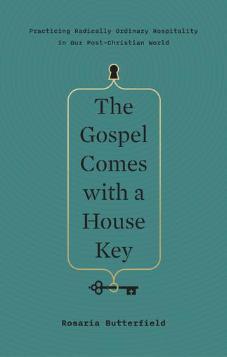
The Gospel Comes with a House Key

9781433557866_grandeInspirational. Provocative. Enticing. Raw. These are some of the words that quickly come to mind as I reflect on Rosaria Butterfield’s new book, The Gospel Comes with a House Key. Let me confess, I didn’t read this book. I listened to Rosaria read it. She kept me captivated from the minute I left Canberra until I drove into my street in Bonny Hills. Eight hours of ‘radically ordinary hospitality’.

If you haven’t come across Rosaria Butterfield, let me introduce her briefly. She grew up in an atheist family and went to a Catholic school. She found herself attracted to the lesbian and homosexual communities at an early age, pursued studies in literature, and eventually became a professor in English and Women’s Studies at Syracuse University. Rosaria was a influential radical and a leader in LGBTQ rights. In an earlier book, The Secret Thoughts of an Unlikely Convert, Rosaria describes how she set out to write a book critiquing Christianity, and how in the process she became a Christian herself.

The Gospel Comes with a House Key is a book about the importance of hospitality. Not the hospitality of tea parties and lace tablecloths. This is a long distance from ‘entertaining’ others. This is radical and ordinary, and it is motivated and shaped by the Gospel of Jesus Christ. It’s about welcoming strangers and turning them into neighbours. It’s about welcoming neighbours and inviting them to become extended family.

Rosaria’s conversion came about over many months of dinners at the home of a Presbyterian minister and his wife. They demonstrated to her the deep difference between acceptance and approval. They accepted Rosaria for who she was. Her beliefs, lifestyle, aspirations, and politics were no barrier to real welcome, hospitality, acceptance, and friendship. Her experience of God’s grace through the hospitality of a Christian couple has radically shaped her desire to pass it forward. Together with her husband and family, they welcome anyone and everyone into their home, and they do it not occasionally, but on a daily basis. Their modest and functional home provides a safe haven for many in their community. They share meals, discuss current affairs, explore what it means to be a follower of Jesus, assist the needy, provide a refuge for discarded and abused, provide warmth, and model genuine love and friendship to others.

It’s a costly process. They give time and love in spades. Their food bill each week is double or triple what they would spend on themselves. Rosaria is making extra food literally every single day. When a family is in crisis, she is out delivering homemade meals. She makes regular offers on a social media app to the entire local community of 300 homes to assist the needy. All this on top of caring for her own family, supporting her husband in the ministry of their church, looking out for wider friends and family in need, studying the Scriptures, praying for many people, and even writing books. It’s a family lifestyle. The children consider it normal to reach out to others and invite people into their home. Her husband takes this attitude of hospitality to the jail, where he provides support for men who society has rejected and forgotten.

The Gospel Comes with a House Key is a gripping read because it is so real and raw. Rosaria tells story after story. We learn of her mother who absolutely hated Christianity and made life hell for the family. We meet the bloke across the street, his pit bull, and his drug addicted girl friend, and the account of the DEA raiding the house to dismantle his crystal meth lab. And we learn how God worked through the patience and love of Rosaria’s family to introduce these people and many more to the saving love of Jesus.

There is nothing showy about this hospitality. The regular menu revolves around rice and beans and the occasional chicken. Chairs are optional. Dogs are welcome. It’s barebones, rough, honest, and unpretentious. It’s attractive and daunting at the same time. Rosaria doesn’t have all the time and resources at her disposal, but she finds them and makes them. It’s costly and sacrificial.

There’s a warning too. Those who will find it most difficult to offer hospitality to the stranger, the sinner, the outcast, the unloved and unlovable will more than not be the rich—people like me, and maybe you. Those who have the most, fear they have the most to lose. They can’t risk their carpet, or their dining setting, or their polished reputation, or their safe, self-contained lifestyle. It’s hard following Jesus if you’re well off. Jesus had meals with ‘sinners’ and prostitutes. He met with lepers and social outcasts like the tax-collectors. He didn’t care about his reputation. He was willing to be waylaid and interrupted. He taught us what hospitality should really look like.

I asked myself a couple of questions after finishing this book:

  1. How much of my hospitality is merely catching up with friends, rather than reaching out to care for the needy or the alienated? How much of my hospitality is literally the philoxenia—love of strangers—that we find in the New Testament?
  2. We have a nice home, fairly new, matching furniture, close to the beach. Will I ensure that our home is for people? Will I care more for the welfare of those around us, than the welfare of our couches and coffee machine?

“Please God, help me to love others before myself. Help me to love people more than things. Help me to be generous with my time, gifts, possessions, and particularly our home. Teach me to become more and more hospitable. Teach me to delight in the love and care of those around me. Move me to share the great news of Jesus Christ with strangers and neighbours as you give me opportunity.”

 

Gospel economics

rawpixel-741658-unsplashWhen we’re hit by the trials of life, we face the temptation to look immediately to our own resources. We’re taught to do this—to be resilient and strong and resourceful. We draw on our experience, our education, our networks, our finances. And we should. If a nail is sticking out of the wall, and we have a hammer, then we knock it in. Problem solved. If an unexpected bill arrives, and there’s money in the bank, then we pay it. If we lose your job, and we have the right qualifications and experience, then we look for another. We can overcome adversity, we’ve done it before, we’ll do it again, and it’s all good.

On the other hand, sometimes we don’t hold the winning cards. We’re short-suited because we lack the resources that we need to face our crises. We despair because we lack the money, or training, or relationships, or optimism to carry on. The trials overcome us. We’re left troubled and weak and ashamed.

And it’s easy to envy. Some people never seem to face any trials. Their lives are endless pleasure cruises. They’re handed everything on a plate. Or so it seems.

Jesus warns us to beware the deceitfulness of wealth. Money, investments, financial strategies are dangerously deceptive. They seduce us into trusting in them. More than this, they have the audacity to call themselves ‘securities’. They promise everything, but they can’t ultimately deliver. We don’t have to look far to see the how empty such promises can be. Remember the GFC.

Every night as I watch the news, there are stories of war, crime, drought, corruption, drugs, disease, and new political leaders. And every night we are drawn to focus on finances. What is the dollar doing? What’s happening with the housing market? What’s rising and falling on the stock exchange? How is our economy comparing to yours?

It’s hard to escape the viewpoint that whatever problems we are facing in this world, the solutions are economic. If we’re wealthy, we’ll make it. If we’re poor, then we’ll struggle and fail. That’s how we’re measured and valued. It’s just the way life works. Except it’s not.

James knew this, and he tackles our warped perspectives as he shows us how to face trials of many kinds. He writes to Christian brothers and sisters with these words…

Believers in humble circumstances ought to take pride in their high position. But the rich should take pride in their humiliation—since they will pass away like a wild flower. For the sun rises with scorching heat and withers the plant; its blossom falls and its beauty is destroyed. In the same way, the rich will fade away even while they go about their business.
(James 1:9-11)

The deception of wealth is that the more we have the safer we feel. We look to our possessions as the source of our satisfaction and security. But they’re not. They’re like a mirage in the desert, or a chasing after the wind. Money can buy us lots of things but, as the Beatles said, it can’t buy us love. And more importantly is doesn’t buy security. How many of the multi-millionaires of the 19th century are still secure in their wealth? None of them. How much of their hard earned wealth and their clever investments did they lose when they died? Absolutely all of it. If we don’t waste it, or lose it in this life, then we will most certainly say goodbye to it all when we die. And we’re going to die! And death will make a complete mockery of our claims to be secure.

Do you feel rich? Or do you feel poor? My guess is that most of us feel somewhere in between. We move between confidence and fear, based on the measure of our cashflow, assets, and  savings. We get tossed around by the seduction of our society and the deception of our hearts.

If you know Jesus Christ, if you have been forgiven by the loving Heavenly Father, if you have received God’s Spirit as a down-payment on eternal security, then you have a far better hope. You have different economic values—gospel economics. You might not have much to lay claim to in this life, but you have an eternal home that is kept secure. You might be very comfortable, even wealthy in this life, but it would be a massive delusion to rely on what you have to get you where you ultimately need to go.

When the wealthy face trials of many kinds, they should humble themselves and remember their need for God. When the poor are troubled and overwhelmed they should remember the treasure that is theirs in God.

“Thank you Jesus Christ, that though you were rich beyond measure, you became poor, that in you we might become rich.”

Wisdom in crisis

cristian-palmer-718048-unsplashIt’s some time since I’ve been out in big surf. I don’t trust myself anymore. I’m certainly not as young or fit as I like to think I was. But there have been times in the past when I’ve been dumped by large waves, tossed and turned, struggling to find my way to the surface, desperate for air, wondering if I was going to drown.

Life can be like that. We can feel so tumbled and turned that we don’t know which way is up and which way down. It’s all too hard, too scary. Crises have the capacity to disorient and destabilise. Where do we turn when our world is falling apart around us, when the ground is shifting under us, when the sky is falling in on us?

James, in the New Testament, writes to his Christian brothers and sisters, calling them to have a joyful outlook as they face their fears. A nice thought, but when the trials come, that might well be the last thought to enter our minds. The darkness closes in and we struggle to find a glimmer of light. It’s seems easier to retreat, to curl into a ball, and to hope the darkness goes away. And so we will often miss out on what God wants to do in us doing in these tough times.

It’s no simple matter to find joy in the context of suffering and pain. It takes real wisdom to see the broader context and the deeper reality. So many time over the past few years, I’ve sat in a dentist chair while needles and probes and high speed drills have gone to work in my gums and teeth. It can be hard to focus on the ‘greater good’ when your gums are being stretched to splitting point and a high speed pain delivery device is doing its stuff. But there is a greater good. There is a genuine joy to be found in the midst of the suffering. The pain is short-term but the gain is long-term. And I need wisdom to remember this.

James writes into the the context of suffering…

Consider it pure joy, my brothers and sisters, whenever you face trials of many kinds, because you know that the testing of your faith produces perseverance. Let perseverance finish its work so that you may be mature and complete, not lacking anything. If any of you lacks wisdom, you should ask God, who gives generously to all without finding fault, and it will be given to you.
(James 1:2-5)

So often we lack wisdom. We can’t see the bigger picture. We are overcome by the circumstances we are facing, and joy seems an impossible dream, let alone a present experience. And into this crisis we are called to ask God for help.

It’s not humanly possible to find joy in the midst of all pain and suffering. Don’t waste your energy trying to lift yourself up by your shoelaces, to conjure up enough faith to carry on, to convince yourself that it will all work out fine. But do ask God for wisdom. The great promise is that God will give wisdom to those who ask him. He will. It’s a promise. This doesn’t mean you will necessarily feel wise, but God promises to give you wisdom all the same.

If…

That’s right, there is a proviso.

But when you ask, you must believe and not doubt, because the one who doubts is like a wave of the sea, blown and tossed by the wind. That person should not expect to receive anything from the Lord. Such a person is double-minded and unstable in all they do.
(James 1:6-8)

When you ask God for wisdom, be willing to receive it. Don’t be secretly working out your alternatives for when God doesn’t seem to give it. Don’t go through the facade of praying that God will give you his wisdom, but always planning to rely on everything else to get you through. These verses don’t mean that you have to be 100% sure of God, or that there is no place for confusion or fear. This isn’t about the power of positive spiritual thinking, or ‘name it and claim it’ word/faith mysticism. What they are saying is don’t be double-minded. You can’t have a bet each way. You need to come to God and rely on him to equip you with what you need. You can depend upon God. You don’t need your back up plan. That will only turn you away from God and keep you from his wisdom.

So if you struggle to see the greater good, if you can’t find the path to joy, if everything is overwhelming, then pray. Ask God to graciously open your eyes. Ask him to ease the pain in your heart and to find solace in him. Seek his supernatural help to keep on trusting in Him.

“Father God, please give me wisdom to see the unseen, to remember that you are at work in all things, to know deeply that you will never leave me nor forsake me, to grasp that there is real hope, to feel your comforting presence, to be reminded of your deep, costly, generous love in Jesus, and to keep my faith in you, now and for the future.”

Reflecting on suffering

aaron-burden-426280-unsplashJames, the brother of Jesus, opens the argument of his New Testament letter with these words…


Consider it pure joy, my brothers and sisters, whenever you face trials of many kinds
(James 1:2)

At first glance, this seems superficial—put on a happy face, smile, look on the bright side. At second glance, this seems a gloss or a pretence—things aren’t really that bad, there’s always someone worse off than you, you think you’ve got problems, luxury. At third glance, this seems to represent an asceticism or stoicism that’s detached from reality—pain is inherently good, no pain-no gain, harden up.

But if you only glance three times at this verse, then you will be ill-prepared to face the difficulties of this life, and you won’t have much that’s helpful to offer others.

I’m off to a funeral this morning. A young man, husband, father of two, son, brother, friend to many. Some will still be in shock. How could this happen? It’s so not right. Many will feel the pain acutely. Something tragic has taken place. Relationships have been severed. The grief will be palpable.

We will gather in a church—a building that many of us have gathered in many times. We’ve been there for weddings, baptisms, funerals. We’ve come looking for answers, searching to find hope, seeking to make some sense out of such horror. We will ponder two small children without their daddy. Not today, not tomorrow, not next year, not in this life. Our hearts will crumble as we listen to family sharing, friends praying, people crying.

What help does James 1:2 offer at such a time? Is it a verse for such an occasion? Will it only rub salt into our wounds? Is it best left for another time?

James 1:2 is a word for a such a season, because it is written specifically to brothers and sisters. Not flesh and blood, but spiritual siblings. Even though Jesus and James shared the same mother, it’s their spiritual bond that matters most. He writes for those who have been adopted into the God’s family through trusting in Jesus Christ. James has a word for Christians who call God their Father.

It’s a timely word for us today, for James is not saying to pucker up and smile. He’s saying first of all to think. That’s right, think. He doesn’t say ‘Be joyful’, he says ‘consider it pure joy’. He calls us to reflect, ponder, meditate upon, consider what’s really going on when we face trials of many kinds. When life is difficult beyond belief, when people are suffering, when there don’t seem to be answers, when it just hurts so deeply… at this time consider it joy. How so?

because you know that the testing of your faith produces perseverance. Let perseverance finish its work so that you may be mature and complete, not lacking anything.
(James 1:3-4)

A Christian funeral is not a place for platitudes. It’s not a place for wishful thinking, for simply hoping for the best, and least of all for glossing over the pain and hurt. Death is harsh. It’s unkind and unrelenting. It’s devastating and cruel to all who are left behind. And yet, for the brothers and sisters, for those who hope in Jesus, for the ones who trust that Jesus has conquered death and offers forgiveness and eternal life to all who trust him—death causes us to reflect again on what matters most. We are reminded to refocus, to maintain our hope in Jesus, and to persevere in trusting him.

We might not feel much joy on this occasion, but we have reason to be reminded of the objective joy of resurrection hope. My friend is now with his saviour. His wife, his children, his family, his friends, you and I, will one day be reunited for all eternity if we persevere in our faith. Death and funerals will test our faith. As we look to Jesus, this faith grow stronger.

“Dear Heavenly Father, as we mourn today, fill our hearts with the truth, enable us to trust in your good and loving purposes, enrich our faith in Jesus Christ, and remind us to see the joy in being with you for all eternity.”

Carry on baggage

clem-onojeghuo-254153-unsplash

Independent churches tend to attract people with baggage. At least that’s been my experience, having pastored two of them and now attending another. I suspect most churches attract people with baggage, in the sense that everyone has baggage, but I think independent churches are especially ripe for the experience.

Why so? We live in an age of church shopping. People are seeking a church that’s just right for them. If they don’t like what they get in one place, then it’s not hard to shop for another. If you are living in the bush, where there is only one church for the next hundred kilometres, then this probably isn’t your experience, but it’s certainly common in cities and larger towns.

Some of our independent evangelical churches have arisen because of perceived needs in certain areas. Existing churches aren’t growing, or aren’t preaching the Scriptures, or aren’t reaching out to the community, or aren’t providing anything for children and youth, or keep stubbornly riding their ridiculous hobby-horses, or something. When a new church is planted it isn’t too long before people are leaking out of other churches. Drifters, who’ve left their churches some time back, dribble into the new church, aiming to give it another go. All these people bring baggage. They might recognise it or they might not, but it will surface soon enough.

The baggage comes in different shapes and forms. Firstly, there is the idealist. They’ve created a picture of what church is to be like. Sadly, their last church didn’t live up to the ideal. Neither did the one before, or the one before. There will be a honeymoon period where they give you time to impress them. You might even find that you are the best church they’ve ever been to. You’re a breath of fresh air; an oasis in the desert. You might start to hear stories of the horrors of the past, the problems of their previous church, the failings of the pastor. Beware—you might be next!

Secondly, people come with an attachment to how things have been done. They might have left their denomination, but they haven’t necessarily discarded what attracted them there in the first place. It won’t be long before you start hearing what you ought to be doing and how church should function. You see, there is a right way to do things. It’s stunning how often I’ve heard ex-Baptists tell us we must baptise for membership, or ex-Presbyterians insist we have a council of elders, or ex-Pentecostals tell us we need to be more open to the working of the Holy Spirit, or ex-Anglicans tell us we should follow a particular liturgical form, or ex-Salvos tell us we should all wear uniforms and play brass instruments. OK, I made the last one up.

People move because they are unhappy, but they may remain deeply attached to familiar practices, forms, structures, and values. The independent church is considered a clean slate to be filled. People with baggage cling to ways that things should be done and feel strongly about ways they shouldn’t. Transfer growth is usually accompanied by excess baggage. History is often the strongest predictor of the future, and discontent will likely lead to more discontent.

Thirdly, people move churches because they’ve had a bad experience with a previous church. More often than not, they feel hurt or grieved by things that have been said, or done, or not done. In reality, the pain is mainly about people—being treated poorly by someone, often in leadership. They’re likely leaving because they haven’t resolved the conflict or haven’t dealt with the pain. So if you are a leader, it’s possible that you will be tested. Are you going to be just like the perpetrators of previous pain? Can you be trusted? Will you repeat the patterns of the past? It’s too easy to get these things very tangled when we leave matters of the past unresolved. And maybe they tried to resolve things, and it didn’t end well, and they are broken, and seeking care and compassion. They are looking to your church to be a safe haven.

So what can independent (and other) churches learn? Here are a eight suggestions:

  1. If people come to you from another church, then have a conversation with them early. Listen to them. Where did you come from? What was it like? What happened? Have you worked through these things? Does the church know you have left? Have you spoken with the pastor or leadership? Do you think you need to go back and work on things? Maybe, let them know you will give a courtesy call to their previous pastor. Be strong, but gracious and caring. Don’t be bullied by people seeking a platform for themselves. Don’t become a bully to people who are seeking refuge and help.
  2. Communicate clearly what your church is on about. Speak to the things you value. Make clear what you won’t fight about and what you will. Share your theological convictions, your mission, and your vision. Don’t just tell people what you do, but how you do things, and why you do them. Excite people about gospel priorities. Aim for simplicity and clarity. Draw people into God’s agenda. Explain that your church is not a place for competing human agendas, but a place to draw together in the one Spirit.
  3. Invite people to become part of the church on the church’s terms. Tell them where the church is at currently and where you are hoping to get to. Let them decide if they want to go on the journey. Of course, this means you need to know where you’re headed and how to communicate it.
  4. Hold orientation meetings for newcomers where you can share the matters of importance. This might be an evening in the home of the pastor or a course over multiple weeks in small groups. Whatever it is, create an opportunity for people to know who the church is and who it’s not, so they can be clear about what they are joining. Some people will leave early, saving you and them the pain of breakup down the track. Others will join more enthusiastically because they love the vision and appreciate your communication.
  5. Have a clear website that outlines what you are on about. Websites are the noticeboards, the yellow pages, the advertising brochures of the past. The flavour of the church should be clear before someone visits. If people want to dig deeper then they should be able to find your beliefs, values, priorities, and other essentials. Or at least they should know where they can find out more.
  6. For those digging deeper, consider an FAQ page or link to position papers on matters that might divide. This is not shop window stuff, but it is what you keep on your shelves inside. If need be, spell out your beliefs about things like church governance, tithing, communion, baptism, spiritual gifts, roles of men and women, creation, predestination, or whatever hot button topics are relevant in your context. If you take a position, then explain why it matters, how much it matters, and what it looks like in practice. If you are inclusive of different views, then make it clear why you accept different views, and what this will mean for unity in your church. Most importantly, work out what you believe and be prepared to explain this to others. If you leave a vacuum, then someone else is going to fill it.
  7. Be clear on how people can get involved. If you need to be a ‘member’ before you can exercise caring ministries, then explain how and why? Some churches are quick to rope people into various ministries, either to make them feel involved or because they can fill a pressing need. If you need to join a small group before you join a serve team, then explain why and help people navigate the steps. Go slow. Not too slow, but go wisely and carefully. Take the time to get to know people. Let them know the pathway to involvement and walk with them.
  8. Most importantly, be motivated by love, not suspicion. Knowing that people have baggage that they carry around with them, gives you the opportunity to help them lighten their load. Everyone has a history and every history is burdened by pain. Remember that we are called to share one another’s burdens. It’s the gospel that frees us from every weight. So speak and act from the gospel of grace. Don’t add further burdens, but help people to find freedom that comes from Jesus.

Gracious living

I was introduced to the idea of ‘gracious living’ by some friends—time out, good friends, laughter, rejoicing, wine and cheese, sunsets and oceans, enjoying the blessings of God.

For everything God created is good, and nothing is to be rejected if it is received with thanksgiving, (1 Timothy 4:4 NIV)

kat-yukawa-754726-unsplashBut at church this past weekend I was reminded of another kind of gracious living—the grace of giving generously. I had to pause and think. Do I really know what that means? Not just in theory, but in practice? Have I ever truly given generously? Or do I merely give out of my surplus, redistributing what I don’t need anyway?

Take a look at how the Apostle Paul describes the Christians in Macedonia:

And now, brothers and sisters, we want you to know about the grace that God has given the Macedonian churches. In the midst of a very severe trial, their overflowing joy and their extreme poverty welled up in rich generosity. For I testify that they gave as much as they were able, and even beyond their ability. Entirely on their own, they urgently pleaded with us for the privilege of sharing in this service to the Lord’s people. And they exceeded our expectations: They gave themselves first of all to the Lord, and then by the will of God also to us.
(2 Corinthians 8:1-5 NIV)

A close look at these verses challenges me to my core. It turns upside down many of my assumptions and expectations about the grace of God.

  1. God gives his grace to his people so that they are able to give to others who are in need. This is the idea of it being more blessed to give than to receive. God does a supernatural, gracious work in the hearts of the Macedonian Christians and this motivates and enables them to give.
  2. God’s grace works to prevent needy people becoming greedy people. The capacity to give doesn’t flow from having more than we need, and then giving the surplus away to appease our guilt. It comes from the joy of knowing that God provides, so that even in their poverty the Macedonians gave to meet the needs of others.
  3. Gracious giving is costly. It’s sacrificial. It’s giving beyond our assumed capacity to give. It is generous, not because of the amount that is given or the percentage that is given, but because it gives away what we would normally keep for ourselves.
  4. Gracious giving is taking the initiative to give to the needs of others without prompting, pleading, special marketing campaigns, or end of financial year fund raisers. It’s common to give when called upon to do so, but unusual to ‘entirely on our own’ plead for the privilege of being generous.
  5. Gracious giving is giving first of all to God and then to others. And it’s way more than money—and nothing less than giving our whole selves.

Have you discovered this grace in your life—the grace that moves you to delight in giving your God-given time, money, and resources to him and to others?

There was an Old Testament pattern of giving called a tithe. I grew up on the idea of a tithe, literally a tenth. So every time I earned money, I would set aside 10% of what I earned and give it to church, or missions, or charity, or child sponsorship, or such like. And I thought I was generous. But it didn’t hurt because I still had 90% left to spend on myself. Now I’m all grown up and I know how much more complicated it is. Giving 10% doesn’t mean that I have 90% for play money. There are never ending bills and expenses. There are the weekly, monthly, quarterly, yearly costs of groceries, fuel, utilities, insurance, education, clothing, housing, you name it. And it’s so easy to we consumed by these things.

It’s a rare thing for me to give beyond my ability. To be honest, I don’t know if I ever have. Have you? I’m missing out really—missing out on the gracious living that only comes from God.

Please God, lead me to give cheerfully, generously, graciously. Lead me to consider what I can give and then give more. And lead others who know your amazing grace to do the same. Amen

Muddled emotions

Recently I stumbled across a video clip of John Macarthur critiquing Joel Osteen. He read from his first book, Your Best Life Now, offering a harsh critique of his self-centred prosperity gospel. Macarthur went so far as to say that Osteen was making the same promises as Satan when he called Jesus to make the stones into bread and told him that all the kingdoms of the world could be his.

I have no problem with this criticism. It seems to me that Macarthur nailed it. The wealthiest pastor in the USA with the largest congregation in the USA, sadly has much to answer for. His massive TV audience, his millions of books, and his huge following, including the likes of Oprah Winfrey, make him a hugely influential figure. And I don’t believe it’s an influence for good or God. I believe our Christian bookshops should boycott his books and television stations should take him off air. They are my thoughts.

UnknownBut what disturbed me in the video, was the laughter of the audience when Macarthur quoted Osteen. There was much hilarity and amusement. Now, I’m not suggesting that Macarthur was using Osteen to whip up his congregation, or making light of what he was teaching, but is laughter really the appropriate response? Is what Osteen teaches funny? If it’s false and destructive, then shouldn’t it lead us to tears?

Many years ago, I gave a talk at a student conference and began with various critiques of false teachers. Some of the stories I quoted had been taken from a Macarthur book that highlighted the nonsense of what some had described as people claimed to have died and gone to heaven and back. Some of the stories were really weird. As I told these accounts, I had people in stitches. There was uncontrollable laughter at times. I found the accounts so bizarre and ridiculous that it was easy to generate comic relief. Even I had tears running down my eyes—not of sorrow but laughter.

After the talk I was taken aside by two young men I deeply respect, and by my wife. They had the courage to challenge me about what I’d said and done. Did I really believe this was false teaching? Did I care that it was leading people astray? Was I committed to the truth of the gospel? Then how could I make light of these things? How could I use them to grab quick laughs and build rapport with my listeners? They called me to repent. And I did. I asked God for forgiveness and I stood before the conference the next day and asked for their forgiveness.

If we are convinced that these things matter, then is no place for being flippant with the truth. False teaching is dangerous and should be no cause for hilarity. We’d do well to remember the example of the Apostle Paul when he speaks of those who oppose the truth…

For as I have often told you before and now tell you again even with tears, many live as enemies of the cross of Christ. (Philippians 3:18 NIV, my emphasis)

As he leaves the Ephesian elders to take care of the church, and to protect their congregation from false teachers, he reminds them…

Even from your own number men will arise and distort the truth in order to draw away disciples after them. So be on your guard! Remember that for three years I never stopped warning each of you night and day with tears‘Now I commit you to God and to the word of his grace, which can build you up and give you an inheritance among all those who are sanctified. (Acts 20:30-32 NIV, my emphasis)

I believe we are called to know the truth—the truth that sets us free—and to share this truth with others. This will mean opposing the post-modern nonsense that you can have your truth and I can have mine. There will be times when we must speak up for the truth and call out lies and falsehood. But when it comes to life and death, salvation and judgment, it’s not a game. It’s very real and the stakes are high. So let’s speak the truth, in love, and warn people of lies that destroy. And let’s remember what it cost Jesus to rescue people from hell and judgment. Jesus wept over Jerusalem because they ignored and opposed the truth. Will we weep over the blinding deceptions being propagated by the likes of Osteen and others?

Reflections on the beginnings of Crossroads

DM2In 1996 we planted Crossroads in Canberra. It was among the earliest of the now FIEC churches. Its origins are found in Dickson Baptist Church and a growing university ministry at the ANU and UC. In the lead up, I had been working as an associate pastor at Dickson as well as working with the Australian Fellowship of Evangelical Students leading the campus ministries. Dean Ingham worked alongside me in the church and on the campus.

Throughout the previous year Dickson Baptist had engaged Les Scarborough from John Mark Ministries to review and make recommendations about various ministries in the church. He spent many months surveying and interviewing pastoral staff, deacons, leaders and congregation members on a range of issues. Through this process, six recommendations were made for the church leading into the future. One of these was to plant a new independent church, with a particular focus on university ministry, under my leadership. A Dickson Baptist congregational meeting voted about 96% in favour of starting the new church, and it was launched on February 11, 1996.

Allow me to reflect on a couple of matters associated with this plant.

Firstly, it was a plant that had grown out of some adverse circumstances at the Baptist church. Not everything was going well, and the regular influx of students over the previous few years had changed the culture of the place. Some members wanted their old church back. Others were keen to see the strong synergy between church and campus ministries continue to make an impact. I suspect that the strong vote to plant Crossroads was shaped by both these desires.

Secondly, it was a careful process. Les Scarborough was able to guide us every step of the way. He continued to mentor me in the years following the plant. We had detailed conversations with AFES (my employer) about what this church plant would mean for interdenominational ministry. It was agreed that AFES wasn’t planting this church, and that I would cease to be employed by AFES and move to full employment by, and funding from, Crossroads. This took place over a few years. We held prayer meetings, vision meetings, planning meetings, and asked many from outside the core team to give advice and feedback.

Thirdly, planting independent evangelical churches wasn’t really a ‘thing’ in those days. We didn’t set out to be independent of other denominations—just independent of Dickson Baptist. In fact, we explored options with Presbyterian and Anglican denominations and talked with other churches, before settling on the decision to incorporate separate from existing denominational structures.

Fourthly, we realised that being independent had the potential to suggest that we were anti-denominational, divisive, or even cultish. For this reason we worked hard to establish ourselves carefully as a mainstream evangelical church. We wrote letters, made calls, and had meetings with pastors around Canberra. We chose a name that was conservative, but that stood out from the pack, without sounding whacko. Crossroads Christian Church was chosen over other options. We hoped that this would shrink in people’s memories to one word – ‘Crossroads’ – and it has.

Sadly, Crossroads quickly developed a bad name in Baptist circles, as did AFES. Some were spreading the perspective that Crossroads was a church split and that AFES (ie, me) had divided and damaged a Baptist church.  This happened despite the careful planning and congregational decisions by the Baptist church to plant Crossroads.

Fifthly, the risks associated with isolation and independent-mindedness, led us to engage a Board of Reference to increase our broader accountability. We invited men and women who weren’t part of Crossroads and who had a strong reputation for being mature Christian leaders to stand with us. We asked them to pray for our ministry, take an interest in what we were doing, consult with us if they saw problems, advise us on matters of doctrine, speak into any major changes the church might be considering. They had no governing authority, and weren’t required to meet as a group, but they stayed in touch with us. Let me say, this group was so helpful in our early days. We called on them as we established our constitution and shaped the directions of the church. We continued to draw on these people in the years to come as we faced some significant and difficult decisions as a church. We sought their input in times of staff tensions and we considered their advice with some major staff changes and appointments.

There is no doubt that risks are plenty among independent churches. Many of these risks can be avoided or overcome by pursuing fellowship with other churches. In 1996 we were pretty much just doing our own thing—going it alone, so to speak. Now, in 2018, independent churches are being planted with a view to being interdependent with others. While the churches are independently governed, many churches are choosing to join a fellowship with other independently governed churches. They recognise there is strength in numbers, pooled resources, and the wisdom of those who’ve gone before. They are making a choice to limit their absolute autonomy for the good of the gospel witness in our land. It’s been exciting to visit theological and Bible colleges and to invite students to consider joining a new movement of evangelical ministry in Australia through joining with the FIEC. We are independent churches, but in active fellowship with one another.

Along with the benefits of being a part of the fellowship, I am encouraging each of our independent churches to engage an external board of reference, or something equivalent. To have godly, experienced, mature, Christian leaders who will stand by us, help us to see our blind spots, offer support or advice in a crisis, pray and invest in our ministries, and more—is invaluable. I’d say that it’s basic common sense. And I’d worry about why a church might oppose such an idea. We need to be above reproach in our lives and ministries. Our decisions and processes should be open to scrutiny. And it’s so valuable to have others to speak into our circumstances because they are committed to our churches and the good of the gospel. In FIEC we are looking to encourage each of our churches into practical fellowship and to connect regularly with their external board of reference.

Our prayer is that we will keep growing churches for Jesus’ sake and that we will grow them in godliness and truth for the sake of all.

The Friend who Forgives

forgiveNow that I’m a grandpa, I’m on the look out for great kids’ books. We’ve still got a few at home that our kids haven’t taken with them, but we’re keen for some new ones for when the grandkids come to visit. So I was pleased when the The Good Book Company sent me a new children’s book to review. It’s The Friend who Forgives: A True Story about how Peter Failed and Jesus Forgave, written by Dan DeWitt and illustrated by Catalina Echeverri.
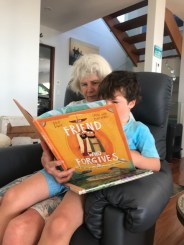
Firstly, this is a beautiful book. The pictures are captivating—not just for kids, but adults too. They are lively, funny, colourful, and expressive. And the words, too. They’re written in a clear, simple, conversational style, that works for adults and children. The listener is drawn in with the occasional question. And most importantly, it’s beautifully theological. It introduces the readers and listeners to the wonder of Jesus’ forgiveness.

IMG_1171We tested the book yesterday with our nearly five year old grandson. He’s not reading yet so Nona read it to him. He listened intently, answering appropriately, and told me he enjoyed it at the end. We’ll read it to him again, next time he comes over.
But this is a review and not the ramblings of a grandpa. I need to mention the inside back cover. It helpfully reminds the readers that this is a ‘tale that tells the truth’. DeWitt explains that this story is taken from the New Testament Gospels. This is God’s revealed will. It’s anchored in history and it has significance for us. I think it would be worth reading the account from an easy-to-read Bible with the children from time to time, so they make the connection with the Scriptures.

I do have one concern about this book. It uses the words ‘forgive’, ‘forgave’, ‘forgiven’, ‘forgiveness’ without giving an explanation of what the word means. Not all words need explanation, but I think this one does. It’s central to the book and our grandson couldn’t tell us what it meant. When we thought about it, we realised that it is a difficult word to define simply. I recommend that you work out a simple explanation of forgiveness to share with the children who read this or have it read to them. Perhaps, you can think of an example or two they will quickly understand or identify with. Maybe, the author could add another page at the start or back, with a ‘For the reader’ section, defining and describing forgiveness.

For now, why don’t you make a comment or suggestion on this post. How would you explain forgiveness to a five year old?

Caring for One Another

caringWho of us wouldn’t want our churches to be genuine communities of meaningful, caring relationships? Perhaps this is your experience already. People invest in each other, they look out for one another, they show genuine interest, they seek help, they ask what they can pray and then they pray. They do more than offer support to others, they show deep empathy, compassion, and practical care. Maybe this is a bit of overreach, but you see glimpses of it and you want it more and more. Right?

If you’re a pastor or church leader, there is a danger of burning out due to the endless expectations that people place on you. Are you tired and weary from being expected to be the ‘minister’ to everyone? Do you wish that some other people would step up a bit, or that other leaders would share the load? Do you long for a community where everyone is looking out for one another?

Or are you getting disappointed that ministry has become more and more like social work? Are you worried that people’s health and finances and relationships are what seem to matter most? Do you lament the lack of spiritual engagement between people throughout the week, and worry that Sunday conversations rarely get beyond small talk?

Let me offer a suggestion for taking things deeper.

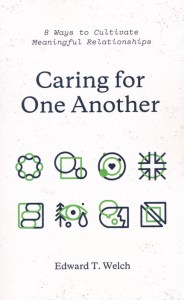
Ed Welch has released a new book called Caring for One Another: 8 Ways to Cultivate Meaningful Relationships. Get yourself a copy, read it, and start getting those around you to buy in. Following on from one of his previous books, Side by Side, he provides a simple and practical resource for equipping Christians for real interpersonal ministry. It’s a brief book—8 short chapters that get us thinking about how to encourage each other to live in the light of the gospel of Jesus. There are great ideas, Biblical foundations, practical recommendations, and each chapter finishes with questions for discussion and application.

This book is intended to be read with others. I can see it providing a good tool for one-to-one meetings with key leaders, or in small group leader training, or with a pastoral care team. It’s not specifically a book for leaders—it’s intended to mobilise everyone in the church to be encouraging and building each other—but I’d start by working these things through with leaders and then mobilise them to equip others.

Welch’s book is less of a ‘how to manual’ and more of a ‘keys to the heart’ guide—but practical and hands on nonetheless. He shows deep understanding of God’s part and our part in God’s work of changing people. Humility, prayer, understanding our weaknesses and sin, reflecting carefully on suffering, and knowing the power of God and the gospel are all critical. Caring for One Another moves well past the theoretical. It aims to grow intentionality and to activate us in relationship with each other. It’s grounded in a deep understanding of how people tick and it’s littered with great ideas and suggestions for making things happen.

I’ve read through this book quickly, but I plan to go over it again, and probably again, and again, by reading it with others. I recommend you do too.

Welch writes in his closing:

Caring for One Another has identified ordinary features of person-to-person engagement. There is nothing new here. The purpose has been to remember and live out applications of the gospel of Jesus Christ. But in that, the very power of God is further on display, and the church is strengthened and drawn together. (p67)

Fellowship or denomination

helena-lopes-459331-unsplashSome of us have been on a date, a third date to be precise. It’s been a date of ‘fellowships’, or should that be ‘denominations’. The Fellowship of Independent Evangelical Churches has gone out with the Fellowship of Evangelical Churches of Australia. We had three leaders of each group meeting, listening, talking, exploring, wondering what it might be like to be in ministry together. Two of their leaders attended our national conference, then two of our leaders shared in their conference. We’ve begun to explore matters of unity in the gospel and what matters are non-negotiable when it comes to getting hitched. There has been much to thank God for and there is much more yet to be considered.
There have been lots of questions in the mix, but I’d like to focus on one in particular. It’s an issue that has concerned both groups at different times and, in some cases, has led to a separation and parting of ways between churches. It has to do with whether our groups are ‘fellowships’ or ‘denominations’ and how that might be expressed in financial terms. The mindset of some appears to be that ‘fellowship’ is good, but ‘denomination’ is bad. Perhaps there have been fears of centralism, external controls, wasted resources, inertia, growing bureaucracy and the like. If so, then these are legitimate concerns and need to be taken seriously.

To put a sharp edge on it, if a fellowship gathered fees from its members, would that make it a denomination? Is giving money to the centre so as to resource the ministry of the fellowship a step too far? Does it boil down to taxation, socialism, control, establishment, or some other negative idea?

It strikes me that we need to renew our understanding from the scriptures. But we wont get very far searching for ‘denomination’ in the Bible. We’re better off looking in a good dictionary. ‘Denomination’ is literally concerned with naming things or designating something. It can be used of different categories. For example, when we speak of denominations of bank notes, we are describing notes with the same value and appearance. Likewise, a denomination of churches could be simply a collection of churches that share a name and the same values. Our government recognises formal denominations in this way, and affords certain privileges and sets obligations and expectations accordingly. The reality is that both the FIEC and the FECA are denominations.

What about fellowship? I grew up with a weak understanding of what ‘fellowship’ meant. Sometimes it meant having a coffee and biscuit after church. Other times it seemed to be a name given to a group that was more fun than work—a fellowship group rather than a Bible study. But the Bible offers us much greater clarity when it comes to understanding ‘fellowship’. The word for ‘fellowship’ in the Greek New Testament is koinonia. It appears in English versions translated variously as ‘fellowship’, ‘sharing’, ‘participation’ and ‘contribution’.

The book of Philippians is a good case study for the use of ‘fellowship’ because the word appears on six occasions. Each highlighted word below is a translation of koinonia in the New International Version:

In all my prayers for all of you, I always pray with joy because of your partnership in the gospel from the first day until now (1:4-5)

It is right for me to feel this way about all of you, since I have you in my heart and, whether I am in chains or defending and confirming the gospel, all of you share in God’s grace with me. (1:7)

Therefore if you have any encouragement from being united with Christ, if any comfort from his love, if any common sharing in the Spirit, if any tenderness and compassion,  then make my joy complete by being like-minded, having the same love, being one in spirit and of one mind. (2:1-2)

I want to know Christ – yes, to know the power of his resurrection and participation in his sufferings, becoming like him in his death, and so, somehow, attaining to the resurrection from the dead. (3:10-11)

I know what it is to be in need, and I know what it is to have plenty. I have learned the secret of being content in any and every situation, whether well fed or hungry, whether living in plenty or in want.  I can do all this through him who gives me strength. Yet it was good of you to share in my troubles. (4:12-14)

Moreover, as you Philippians know, in the early days of your acquaintance with the gospel, when I set out from Macedonia, not one church shared with me in the matter of giving and receiving, except you only; for even when I was in Thessalonica, you sent me aid more than once when I was in need. (4:15-16)

We discover some profound and powerful things about ‘fellowship’ in Paul’s letter. Fellowship is a unity in the Holy Spirit. It’s a reality of being Christian that we are united to brothers and sisters in the gospel. God’s work in us means that we arein fellowship together. All Christians are joined together in having received God’s grace. We are brought into partnership with others from day one of our new life in Christ. So fellowship is first and foremost not something that we create, but a gift from God in the gospel.

However, expression of this fellowship can be sought, developed, offered and maintained. It is to be given observable and practical expression. Paul seeks to share in Christ’s sufferings and he is united with fellow believers who are similarly focused. He was in physical need, not discontented, but definitely in need. And the Philippians showed him fellowship. Their fellowship with the Apostle cost them as a church. It meant giving gifts and aid to their brother. In other words, sharing resources was what fellowship looked like. It’s a fundamentally Christian attitude and behaviour.

It seems bizarre, therefore, to oppose churches giving money to each other, or committing together to provide common resources for gospel work, or ‘giving to the centre’ to help the gospel work grow and develop in health and numbers, or setting fees to share the costs of working well together, or taking up a collection to assist other churches. Yes, we are to be careful and prudent with our funds. No, we don’t want to throw money away or waste it on bad ideas. But sharing money doesn’t tip us into becoming a ‘denomination’—it’s simply what Christians and churches and fellowships do.

Resilience – A Spiritual Project

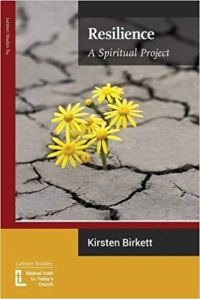
resilienceResilience and burnout are big issues in work and ministry at present. In the field of Christian ministry the statistics of burnout seem alarmingly high and the focus on building resilience is both urgent and important. Kirsten Burkett has provided a great service by sharing her research into these areas in her latest book Resilience: A Spiritual Project. This isn’t a popular level book. For a start it’s published by The Latimer Trust, as the 84th of their brief academic studies. While only being 46 pages in length, it includes another 9 pages of bibliography, comprising mainly of academic journal articles. But don’t let these things put you off. Resilience: A Spiritual Project is compact, yet thorough, and I found it engaging and easy to read. While much of her book is surveying and summarising findings in the literature, Dr Birkett draws us to practical conclusions with profound pastoral implications.

Dr Birkett writes as an experienced researcher, academic, author, and teacher. However, she does this in sync with her experience of grappling with burnout herself, and with an eye to equipping men and women in pastoral ministry. She understands the particular dangers and threats for those engaged in a profession where resilience is needed to fuel perseverance and endurance. Most profoundly, Dr Birkett draws on the wisdom of the research to argue that resilience ‘can be learned’ and ‘people can be trained against future stress’ (p17). She is also careful to emphasise that resilience is not a cure all. Sometimes people are simply tired and need to slow down, rest, or take time out. Other times people are overwhelmed by sadness, grief, or trauma, and just need time to weep and mourn. However, she writes:

If we keep resilience in perspective, as ways of helping healthy people stay healthy and of helping ill people recover, it seems to be an extremely useful construct. Human beings are resilient — we could hardly have survived this long otherwise. (p25)

Dr Birkett demonstrates in her book that there are significant overlaps between resilience research and Christian spirituality. Many features identified in the literature as important in building resilience, find expression in biblical expressions of Christian faith in action. She examines the following areas:

  • Adversity leads to strength
  • Sense of meaning and purpose
  • Transcendence
  • Hope and optimism and positive emotions
  • Altruism
  • Self-efficacy: God efficacy
  • Forgiveness
  • Social network

If you have a good understanding of the life of a Christian then you will hear the resonance already.

We believe that God works to strengthen and transform his people through adversity. Suffering is not to be sought after, but it is to be expected. ‘What people need, it seems, is not a stress-free life, but the framework to treat stress well; to use it as a stimulus for growth, rather than buckling under it’ (p33).

We believe that we have been created for a purpose, essentially for Jesus Christ (Colossians 1:16). We are not the product of chance and time. There is meaning, purpose, significance, and eternity. We may not always understand our suffering but God, in his wisdom, uses it to produce good (Romans 8:18,28).

We believe, not in some external transcendent force, but in a God who is accessible and invites us to come to him in our times of need. God has come to us in the incarnation of Jesus. God dwells in and among his people by his Spirit. We have access to God through the death and resurrection of his Son, and so we are invited to come before him in prayer, and present our requests to him rather than staying isolated in our anxiety.

We believe there is good reason for hope. Our faith is built on hope in the promises of God. God has shown he is faithful in Christ Jesus and because of this we can have joy even in the midst of suffering (1 Peter 1:3-7).

We have deep reason to love others. We did nothing to deserve it, but God has loved us, at enormous cost, through the atoning death of Jesus. This leads to a purposeful altruism, motivated by God’s work in and through us. At the heart of this is power and willingness to forgive those who have wronged us. We can shed our anger and avoid bitterness.

We believe, not in self-efficacy, but in the efficacy of God. There is honesty in Christian understanding that we are not equal to all tasks. We don’t need to be demoralised by our continual sub-par performances. We’re not required to grow super powers. Our sovereign God knows our needs and will accomplish his purposes for our good. This is stress-relieving.

We believe that God has given us a community. We are adopted into his family and called to love our brothers and sisters. Hospitality and care are part of the fabric of our relationships.

You see, in other words, God is in the business of building resilience in his people. How then should we train Christian ministers for resilience? Dr Birkett nails it with her insight:

It would seem we do so by training them to be Christian. (p38)

Read that again! Building resilience comes from Christian discipleship.

Building resilience in Christian leaders isn’t simply the domain of Christian psychologists, as important and as helpful as they can be. It should be the fruit of putting a deepening understanding of God and his ways into practice. It should come as we soak ourselves in the Scriptures and turn to God in prayer. Resilience should be the outworking of good doctrine and faith working itself out in love. There are no silver bullets, no secret elixirs, when it comes to avoiding burnout. But, as God’s children, we have a Father in heaven who knows us, loves us, guides us, equips us, heals us, and sustains us. Let’s turn to him in our hour of need.

Resilience: A Spiritual Project is a word in season.

Serendipity or God works in mysterious ways

God works in mysterious ways.

q400A fortnight ago I boarded a plane for Sydney in order to speak at the Managers Conference for Koorong Books. They wanted me to speak devotionally and to share about Hope Beyond Cure. My plans had been to shut my eyes and add a little sleep after what had been a very busy fortnight in New Zealand. But it wasn’t to be.

The woman in the seat beside me asked what I would be doing in Sydney. I replied that I was planning to speak at a conference about ‘How to find hope in the face of a terminal diagnosis’. At this she choked up, and began to share with me that her husband had died only weeks before. Her grief was palpable as she described the heartache and devastation on her family.

She asked my how I came to be speaking on this topic and I shared that I’d received a terminal lung cancer diagnosis a few years back. We talked for a while and shared a connection through the heaviness of our conversation. I wanted to be able to offer her a copy of my book, but I didn’t have one with me. Why would I? I was off to Koorong Books!

As the flight continued, we talked through many shared experiences. I told her of my struggle with cancer and also the challenges to my faith in God. As I described the context of my circumstances, something clicked for her, and she asked me whether I had written a book.

“Yes”, I said.

“Is it just a small book?”

“With a black cover?”

“With a picture of someone in a tunnel?”

“Yep, that’s it”, I said.

When hearing of her husband’s diagnosis, her aunt had sent her a copy of Hope Beyond Cure, which she then read to her husband each day in hospital. They both found it encouraging and hope-filling. She said that she wasn’t religious, but something deep struck a chord with them.

She wept at the serendipity of sitting beside me in the plane. Who’d have thought? What were the chances? She asked if we could get a photo together to show her aunt. She lives in Victoria, but her aunt lives close to us and works in the local Op Shop. I’ve since popped into the Op Shop, met her aunt, and thanked her for sending the book.

I continue to thank God that this book is helping people. And I thank him for connecting the two of us on the plane.