The pastor’s heart

Some years back we surveyed the members of our church about what they expected from their pastors. It was hard to know what to do with the results. There were almost as many ideas as there were respondents. Some emphasised preaching, whereas others played it down. Some focused on personal visitation, while others sought good administration. Some highlighted the importance of vision and leadership, while others desired warmth and relationship. There was a lot of confusion.

heart-monitor-500Among all the ideas of what a pastor should do, we mustn’t lose sight of who a pastor should be. Who he is on the inside is even more important than what we see on the outside. It’s the heart of the pastor that matters most. What does God desire of a pastor?

Let’s take a look at 1 Peter to be reminded of God’s will for pastors…

Therefore, as a fellow elder and witness to the sufferings of the Messiah and also a participant in the glory about to be revealed, I exhort the elders among you: Shepherd God’s flock among you, not overseeing out of compulsion but freely, according to God’s will; not for the money but eagerly; not lording it over those entrusted to you, but being examples to the flock. And when the chief Shepherd appears, you will receive the unfading crown of glory.  (1 Peter 5:1-4)

Before we get into the significance of this passage, a quick word of clarification is needed. Three different terms are used to refer to pastors – elder, overseeing, and shepherding. Depending on our church traditions, we have elders (or presbyters) in some churches, pastors in others, and bishops (or overseers) in others. While we may think of them differently, the Apostle Peter doesn’t. Peter writes to them as elders, calling them to do the work of shepherding (or pastoring) and overseeing. It all belongs together.

Pastor to pastor

Peter writes as a pastor to his fellow pastors because he is concerned with the spiritual health of the church. He is concerned that Christians honour God in how they live, that they seek the welfare of those around them, that they point people to what God has done through Jesus. The church is to have a positive influence in the world. God’s people are to be different – in a godly way – and this means the pastors too.

In this day and age where the church and it’s leaders have such an appalling reputation, where scandal after scandal is now being uncovered, where vulnerable people have been abused and mistreated, it’s so important we listen again to what God wants. Let’s get right to the heart of the matter.

God calls pastors to treat the church with great care. We’re not talking about a building or an organisation or an institution. We’re not thinking of St Blogs or a particular denomination. The church pastors are to treat carefully is made up of people who belong to God. People who have placed their trust in Jesus Christ. The church belongs to God. It’ his precious possession. He purchased it with his own blood, through Christ’s sufferings. The Apostle Paul put it this way in his final words to the Ephesian elders…

Be on guard for yourselves and for all the flock that the Holy Spirit has appointed you to as overseers, to shepherd the church of God, which He purchased with His own blood.  (Acts 20:28)

The church is God’s flock. It’s not my church, or your church, or our church. It’s the church of God. It belongs to God. The church should matter to us, because it matters so much to God. How we treat the church matters. What we do in church matters. How we lead the church matters. How we relate to people in church matters. Our use or abuse of money, sex, and power matters. There are no excuses for mistreating what’s so precious to God. Our hearts need to be changed so that we see things as God sees them, so that we love people as God loves them.

The Apostle Peter encourages his fellow pastors to have pastors’ hearts, and he describes what this will look like…

1. not overseeing out of compulsion but freely, according to God’s will

The pastor is called to oversee God’s church voluntarily. He’s to do it because he’s willing, not because he must. It shouldn’t be the position, or the job description, or the performance review, or the boss, or the demands of the congregation, that motivates the pastor to serve. It’s not to earn his pay, or to gain a promotion, or to satisfy his own performance standards. The pastor is called to serve freely, willingly, voluntarily, of his own accord, not because he has to, but because wants to. Just as God loves cheerful givers when it comes to our money (2 Corinthians 9:7) so he loves cheerful givers when it comes to pastoral ministry. This is pleasing to our Father in heaven.

But what about when ministry becomes a chore, a drudgery, a ball and chain? What about when the only thing that gets us out of bed in the morning is our sense of obligation and responsibility? Then it’s time to pray. It’s time to remind ourselves of the gospel. It’s time to dwell again on the grace of God who has given us everything we need to serve him. It’s time to ask God to fill us with his Spirit, so that we rediscover the mindset of Jesus Christ who delighted in serving others. It’s time to draw on the strength of God who delights in working through our weakness and frailty.

2. not for the money but eagerly

The Bible makes it clear that we can’t serve both God and money. The love of money is a root of all kinds of evil. Greed is idolatry and it’s a slippery path to destruction. Many ministries have been ruined because the pastors have been in it for the money. This shouldn’t be.

Peter calls us to banish greed from our hearts. Ministry is not about the money. It’s not about earthly rewards. It’s not about making ourselves comfortable. It’s not about what we can get, but what we can give. If we have the opportunity to pastor God’s church then we should remember what a privilege it is to be entrusted with something so precious to God and give of ourselves eagerly.

It’s so tempting to put our own needs first. Our world tells us to do this all the time. We’re urged to make sure we get all we can and to protect all we’ve got. Looking out for our own interests is simply ‘normal’ behaviour, isn’t it? No. Not for people who have already been given everything from God. Those who belong to Jesus Christ have already received so much. We have every spiritual blessing in Christ. We’ve been adopted into God’s family. He’s our Heavenly Father, who knows all our needs, and promises to watch over us.

The implications of this are profound. Because God has promised to take care of our needs, we don’t need to spend our time worrying about them. We don’t need to protect our own interests. We’re liberated to look to the needs of others. We’re freed to serve God and serve others eagerly.

3. not lording it over those entrusted to you, but being examples to the flock

The Apostle is passing on a lesson that he received directly from Jesus…

42 Jesus called them together and said, ‘You know that those who are regarded as rulers of the Gentiles lord it over them, and their high officials exercise authority over them. 43 Not so with you. Instead, whoever wants to become great among you must be your servant, 44 and whoever wants to be first must be slave of all. 45 For even the Son of Man did not come to be served, but to serve, and to give his life as a ransom for many.’

Now Peter passes it on to his fellow pastors. The overseer is to be the servant. Authority is to be exercised with humility. The supreme example of this is Jesus himself. He humbled himself, even to death on a cross. Jesus wasn’t in it for himself. He didn’t stand on his rights. Jesus made no claims to position or prestige, even though he had every right to do so. Jesus, the Chief Shepherd, offers us the ultimate example of what a pastor should be like.

Humility flows from following the example of Jesus, but it doesn’t happen without a profound change of heart. Let’s pray that God will liberate us from our selfishness, our controlling desires, and our quests for recognition. Let’s ask him to remind us daily of his generosity and grace towards us. Let’s dig deep into God’s Word and read again of God’s amazing love for his enemies. Let’s ask God to help us forget ourselves and to focus on serving those around us. Let’s ask God to give us pastors’ hearts.

And remember

…when the chief Shepherd appears, you will receive the unfading crown of glory.

We live, breathe, think, act and speak in the light of eternityPastors, here is your reward. As you live and even suffer for Jesus now, so you will one day share in his glory. This isn’t something we deserve, we don’t earn it, and we can’t demand it. It’s not payment for services rendered. It comes freely from God to the undeserving.

Let our hearts be satisfied in Jesus. Let’s fill our minds with the things of Jesus. Let’s keep our eyes on Jesus. Let’s trust him, serve him, seek to honour him, proclaim him, model our lives upon him, and point others toward him. For this is the pastor’s heart.

Who pastors the pastor?

daveI’ve spent most of my adult working life as a pastor. Some of that time has been in university student ministry, some as an associate pastor in a denominational church, some as an itinerant evangelist, some as the senior pastor of a staff team in an independent church, and most recently I’m back to being an associate pastor again. Most of that time I’ve faced the pressures and concerns that come with the responsibility of pastoring God’s people. I’ve felt that the buck stops with me. I’m the one who has to be there for others. That’s my job.

Much of the time I was probably guilty of going at things too hard. I’d burn the candle at both ends and oscillate between adrenaline and exhaustion. I’d push too hard and get sick on at least an annual basis. There were times when I was probably burnt out. I didn’t want to see people, face decisions, or try anything new. I couldn’t cope with questions or criticism. I felt that I had very little to offer. Sometimes I found myself barely holding on, seemingly going through the motions.

I suspect that my experiences of being a pastor are not that unusual. Researchers tell me that there are as many ex-pastors in Australia as there are pastors. How can we change this? How can we support our pastors? Whose job is it to pastor the pastor?

Different churches have their standard answers to this question. Most denominations would see it falling to designated people and organisations within their denomination. Those with bishops might see it as the bishop’s job. Those with presbyteries might see it as the presbytery’s job. Those with employed chaplains, supervisors, or mentors might see it as the responsibility of these people. There can be great strengths in the relationships and networks offered by denominations. Pastors can rally alongside each other, resources can be deployed for the benefit of supporting pastoral staff, accountability can be built in through committees and structures. However, when it comes to pastoring the pastor, the Bible’s emphasis lies elsewhere. It’s not to be outsourced to the denomination, or the sole domain of a committee or board, but embraced by each church.

Here are a few ideas from a couple of Scripture passages about how churches can be supporting those involved in pastoral leadership…

Honour

The elders who direct the affairs of the church well are worthy of double honour, especially those whose work is preaching and teaching.  (1 Timothy 5:17)

The Apostle Paul has been speaking in this letter about giving honour to a range of different people. Here he addresses the church leaders. They are to be honoured, in fact double honoured. This can mean nothing less than elders within the church being valued, appreciated, supported, and upheld by their congregations. I’m an Aussie, and the Aussie way is to speak against, cut down, and undermine those in positions of authority. It’s a national sport! But, it shouldn’t be this way in our churches. God calls us to do a good job of honouring our leaders.

19 Do not entertain an accusation against an elder unless it is brought by two or three witnesses. 20 But those elders who are sinning you are to reprove before everyone, so that the others may take warning.  (1 Timothy 5:19-20)

There is no place for unsubstantiated criticism of our pastors. Gossip, innuendo, insinuation, smear campaigns, staging coups… are all out of place among God’s people. And yet they keep on happening. The deacons are unhappy with the pastor, so they start counting votes. Small groups grumble about their minister. People leave a church, critical of the leadership, and carry on about it in the new church (where they stay for a while, until they leave and badmouth the next one). Words and accusations can wreak much destruction. Elders of churches are to be held accountable for their words and actions, but they are not to be subject to trial by gossip.

Support

17 The elders who direct the affairs of the church well are worthy of double honour, especially those whose work is preaching and teaching. 18 For Scripture says, ‘Do not muzzle an ox while it is treading out the grain,’ and ‘The worker deserves his wages.’  (1 Timothy 5:17-18)

Going back to the ‘double honour’ idea, the following verse makes it clear that the honour also includes support or financial provision. It’s the concept of honorarium, recognising the significance of the elder’s ministry by supporting them to do it. We are not saying that all pastor’s must be paid, but that it is important for churches to show that they value those who lead them. If a church has agreed to support and pay for its pastor, then it should seek to do this thoroughly, not begrudgingly. Only last week, I listened to the sad story of a minister who was ‘starved’ out of his ministry by the church he served. Pastors shouldn’t be in it for the money, but neither should churches. How much more encouraging for a pastor to be respected and well supported by a church who gives them double honour.

Freeing the pastor from financial concerns enables them to go about their work. They can devote themselves to the word of God, to prayer, to equipping the church for ministry, without the need to add another job to pay the bills. My experience of being a pastor is that there is more than enough to fill all my time, without having to pay my own way on top of it. If I had to, then I would, but I’m grateful to our church for providing us the support we’ve needed.

Following

Remember your leaders, who spoke the word of God to you. Consider the outcome of their way of life and imitate their faith.  (Hebrews 13:7)

Ultimately, we’re called to follow Jesus. This is what it is to be a Christian. But following Jesus also involves us following our leaders, inasmuch as they are following Jesus. Pastors, elders, leaders are called to teach and model putting God’s word into practice. They’re to be examples of trusting in Jesus and progressing in the Christian life. And the congregation is not to forget this. They’re to join with their leaders in living transformed lives.

They say you’re not a leader unless people are following you. If you look over your shoulder, and find no one there, then you’re not leading people, you’re just going for a walk! On the other hand, it’s very encouraging to see people taking the journey with you. People walking the talk, changing their thinking, their words, and their behaviour. This brings great joy and encouragement.

Have confidence in your leaders and submit to their authority, because they keep watch over you as those who must give an account. Do this so that their work will be a joy, not a burden, for that would be of no benefit to you.  (Hebrews 13:17)

It’s a big responsibility being a pastor. In the original language these verses describe literally ‘watching out for people’s souls’. The leaders or overseers are given the responsibility of being spiritual lifeguards. So please make their job easier. Swim between the flags! Listen as they teach you the life-saving word of God and take it to heart. The congregation have the capacity to make the pastor’s life misery on the one hand, or joy on the other. What do you think will bring greatest benefit to the pastor and the church?

Prayer

18 Pray for us. We are sure that we have a clear conscience and desire to live honourably in every way. 19 I particularly urge you to pray so that I may be restored to you soon.  (Hebrews 13:18-19)

Like the Apostle Paul, the writer to the Hebrews asks people to pray for him. He understands that God alone is able to equip and sustain him, and so he calls others to pray for him. When people asked Charles Spurgeon the secret of his success in ministry, he humbly replied, “My people pray for me.” And he meant it. As I look back on many years as a pastor, I am thankful to God that people have prayed for me. Some people have faithfully, diligently, consistently asked God to be at work in me and through me. The church has made a commitment to uphold it’s leaders in prayer, and I am very grateful.

The writer to the Hebrews finishes his letter with these words…

20 Now may the God of peace, who through the blood of the eternal covenant brought back from the dead our Lord Jesus, that great Shepherd of the sheep, 21 equip you with everything good for doing his will, and may he work in us what is pleasing to him, through Jesus Christ, to whom be glory for ever and ever. Amen.  (Hebrews 13:20-21)

This prayer points us to the ultimate pastor. Here is the one who truly pastors all pastors. Jesus Christ is the great shepherd (or pastor) of the sheep. And the same God who powerfully raised Jesus from the dead is the one who will equip and sustain pastors for faithful and fruitful ministry. What an awesome promise! What an awesome privilege! Congregations and pastors – let’s keep humbly depending upon God in prayer.

Dysfunctional pastors

Preaching cartoonPastors everywhere are not doing their job. They’re not doing what they’re called to do and it’s hurting our churches. Not only is it restricting the growth and health of our churches, but it runs contrary to God’s word on the matter.

Pastors are doing the work of ministry. They’re preaching, teaching, visiting, caring, counselling, administrating. They’re running Bible studies, prayer meetings, committee meetings. They’re leading church, leading singing, leading prayers, leading worship. They’re following up newcomers, chasing up non-comers, greeting all-comers. They’re organising dinners, lunches, afternoon teas. They’re holding evangelistic courses, missions meetings, aid campaigns. They do the baptisms, the weddings, the funerals, and all the preparations. They’re in the office, typing up news sheets, photocopying bulletins, updating the website, organising the rosters, snowed under with emails.

Our pastors are doing the ministry. They’re busy with ministry. All kinds of ministry. Exhausted from ministry. Never ending ministry. And here’s the real problem…

God doesn’t call pastors to do the ministry.

A dysfunctional church is where the pastor does all the ministry. It’s not what a church should look like. It’s not what God intends for his church. Ministry is not ‘the pastor’s job’. And if it’s not the pastor’s job, then we’ve got to stop employing pastors to do it. We mustn’t hire pastors to do all the ministry. It doesn’t help pastors and it doesn’t help churches.

God’s design is so much better. Take a look at the picture that Paul paints in Ephesians 4:

11 And He (Jesus) personally gave some to be apostles, some prophets, some evangelists, some pastors and teachers, 12 for the training of the saints in the work of ministry, to build up the body of Christ…  (Ephesians 4:11-12, my emphasis)

Here’s the job description, for the pastor and for the church. The original language suggests that pastors and teachers should probably be seen as one and the same in this list. What are they to do? Training, equipping, preparing, getting others ready. That’s their job. Not simply doing, but helping others to get doing. The pastor’s job description is to train the saints (the Christians in the church) in the work of ministry. The pastor is to be the trainer, the coach, the mentor. God calls the whole church to be involved in ministry, not simply the pastor. When the pastor does the ministry instead of the church, he breeds a dysfunctional, disobedient, and lazy church. He robs the people of their opportunity to be ministering to one another.

The stupidity of this scenario becomes clear when we transpose the situation to a rugby team. The coach’s job is to prepare the players to play the game. He must focus on training, equipping, coordinating others. If he decided that he wasn’t going to train others, then the team would lose. If he decided that he would play instead of the team… you can see the problem, and too many churches are just like this.

The picture of a healthy church is very different…

From Him (Jesus) the whole body, fitted and knit together by every supporting ligament, promotes the growth of the body for building up itself in love by the proper working of each individual part.  (Ephesians 4:16, my emphasis)

Ministry is for every part of the body. We’re all called to play our part. We need each other. God’s design for a healthy church is that ministry is to be shared by all. It’s not the exclusive domain of the pastor.

How can we get this happening? One fundamental strategy is to get pastors actually doing their job. They need to spend time on what God wants them to be doing… training Christians for ministry to one another. I haven’t done the research, but I have enough anecdotal evidence to suggest that this is often the first thing that gets dropped off the pastor’s list of priorities (if it was ever there at all).

If you are a pastor, let me ask you how much time do you spend training, equipping, preparing, apprenticing, coaching, mentoring others in their ministries? Too often, the honest answer is very little or no time at all. This is so wrong. We need to audit our timetables, calendars, priorities. We’ve got to stop neglecting our responsibilities. We’ve got to stop robbing our churches. We’ve got to stop getting in the way of others doing ministry. What is it that you need to change? And how can you make it happen? If we’re not prepared to invest in training others for ministry, then we should do the honest thing and resign as pastors.

If you’re part of a church looking for a new pastor, be careful what you look for. Don’t hire someone who will do all the ministry in your church. Don’t hire someone who is really good at ministry, but who never spends any time mobilising others. Look for someone who will prepare others. That’s the KPI that really matters. Maybe you could help your existing pastor by offering to get more involved in ministry yourself or asking him to help you get equipped.

Let’s pray for healthy churches and godly pastors. God wants pastors who take seriously their responsibility to help the whole church in building one another. God is seeking churches where everyone is involved in ministry.

Communicating for a change

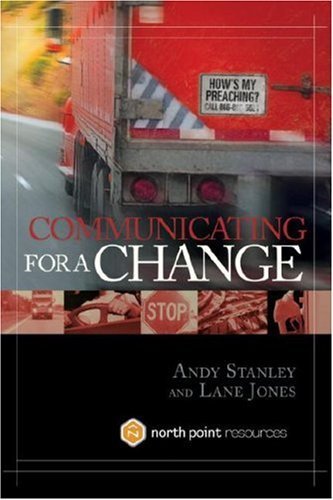
communicating_for_a_changeCommunicating for a Change by Andy Stanley and Lane Jones is both a joy and disturbing to read. It’s a joy because it’s so engaging and well written. It’s disturbing because it asks serious questions about how well our sermons are communicating with people and what difference they’re making to people’s lives. The book is written in two parts with very distinct styles. It begins with the story of a truck driver training a preacher in how to communicate sermons that make a real impact! This section is both humorous and persuasive. The second half shows the imperatives for good preaching being worked out in practice. This is where the rubber hits the road, so to speak!

Stanley’s philosophy of preaching is this:

Every time I stand to communicate I want to take one simple truth and lodge it in the heart of the listener. I want them to know that one thing and to know what to do with it.  (p12)

He’s critical of approaches to preaching that try to say too much and end up not saying anything clearly at all. Whereas a typical sermon might have three or four different points, an intro and a conclusion, his approach is to keep it to one point. Make your one point, make it clearly, apply it well! This may sound too simplistic. What if the passage of Scripture has three or four separate points? Then, he would say, we have sufficient material for a series rather than a sermon. I seem to remember a certain J. Chapman saying something like this! If the preacher can’t find the one major point of the text, then he has more work to do until the one big idea is clear.

Having one big idea does not constrain you to simple five minute, one point, messages. Presumably, the text of Scripture develops a flow of logic to arrive at the big idea. If so, then this will usually offer the best structure for your message. Follow the flow. You may discover three or four sub points, but they won’t be separate and unrelated ideas. Rather, they will develop the argument to arrive at the one big idea.

Stanley suggests that we see a sermon as a journey:

I’ve always thought of a sermon, or any talk for that matter, as a journey. You start somewhere, you go somewhere, and ultimately you end up somewhere. The question is, did you end up where you wanted to go?  (p38)

With this image in mind, a sermon outline should be like a map. It guides us on the journey to the big idea. We go from here, to there, to our destination. This is the sermon journey. By contrast, some sermons simply put marks on the map and then talk about the different places. They don’t show us the best routes between places or how to get where we need to go.

As a preacher it is humbling to think about how few of my sermons might actually get remembered long after they are given. Most likely, very few. If I was asked what were the four points in my message on Sunday, I might struggle to remember every one (let alone a twelve point sermon I gave once!) But one point, taking things deeper rather than wider, should be different.

Stanley distils seven imperatives from his story that he applies to preaching. And I think he’s made his point, because I can’t remember them all without looking back at the book! His points are as follows:

Determine your goal: What are you trying to accomplish?

If you don’t know what you are trying to do with your preaching then you won’t know if you’ve achieved it. I agree with Stanley that our goal should be much more than imparting information from the Bible. I’d argue that we are seeking to apply the gospel-shaped Word of God to people’s lives, for the purpose of God transforming their lives. This is something we ought to be passionate about. People’s lives hang in the balance. This isn’t take it or leave it theological education.

Pick a point: What are you trying to say?

The point might be an application, an insight, or a principle. We need to find the central idea that holds everything together. This will lead the preacher to address two questions: (i) What is the one thing I want my congregation to know? (ii) What do I want them to do about it? Stanley calls us to work hard in our preparation, digging around until we discover this central idea, building everything around it, and then making it stick. This will mean omitting material and shaping what’s left to make one coherent point.

Create a map: What’s the best route to your point?

Stanley has his own template that he uses on most of his sermons. It goes like this:

Me -> We -> God -> You -> We

orientation -> identification -> illumination -> application -> inspiration

This template ensures logical flow. It begins by raising issues that connect with the hearers. People need a reason to listen. There should be a tension to be resolved, such that they’re eager to hear how God’s word answers their questions and resolves the tension. This leads to the “So what?” and the “Now what?” questions, before finally casting a vision for how things could be when God’s word is applied.

Internalize the message: What’s your story?

We’re called to own our message, to internalize it, and to know it personally. Stanley urges us to preach with conviction and passion. There’s something less than persuasive about a preacher who stumbles over their notes, while telling us how important the message is! For the author, this means knowing where he is going so he is not note-dependent. Some things are written in his notes and others are not. The key to knowing the message isn’t rehearsing a text, it’s knowing the map, where you want to get to, and being clear about the key points along the way.

Engage your audience: What’s your plan to capture and keep their attention?

If communication is to be compared with taking people on a journey, then it’s important that they stay on the bus with us! Stanley challenges the common suggestion that people have shorter attention spans these days. He says the key issue is our ability to capture and hold their attention. If people are on board, can see where they’re going, and they want to get to the destination, then they’ll stay with us. It’s up to the preacher to work hard at being engaging, not to blame people for disengaging.

Find your voice: What works for you?

Authenticity communicates volumes. Authenticity covers a multitude of communication sins. If a communicator is believable and sincere, I can put up with a lot of things. But if I get the feeling that I’m listening to their stage personality, big turnoff. I imagine you are the same way. I want to hear you, not your best rendition of your favourite communicator.  (p169)

Having said, “Be yourself”, Stanley won’t allow us to hide behind our bad habits. We need to work to become clearer communicators. If we’re going to improve then we’ll need to listen to ourselves, seek constructive feedback, and make changes. And keep on doing this!

Start all over: What’s the next step?

Preachers get stuck. Sometimes we just can’t seem to get to the big idea. Other times we can’t work out how best to communicate it. This is the reality. It doesn’t always come easily or on time! We are ultimately inadequate for the task of preaching God’s word, so we need to learn to depend upon God. It’s only the work of God’s word and Spirit that will change people. I must never forget this. Clever communication is not enough!

When we get stuck, it should lead us again to prayer. Please God, work through me and your word, by your Spirit, to transform people. Stanley also suggests going back and asking five questions. He finds these questions regularly give him renewed traction:

  1. What do they need to know?   INFORMATION
  2. Why do they need to know it?   MOTIVATION
  3. What do they need to do?   APPLICATION
  4. Why do they need to do it?   INSPIRATION
  5. How can I help them remember?   REITERATION

So what do I make of this book? And will it help our preaching?

To be honest, I found it refreshing and stimulating. It made me think again about the earnest responsibility and important craft of preaching the Scriptures. Preaching is something we should take seriously, keep practicing, keep learning about, and be open to making changes. The creative approach of this book models the passion of the authors that we should do this well. It’s God’s precious life-transforming word we’re handling, so let’s give it the respect it deserves.

13 Until I come, devote yourself to the public reading of Scripture, to preaching and to teaching. 14 Do not neglect your gift, which was given you through prophecy when the body of elders laid their hands on you. 15 Be diligent in these matters; give yourself wholly to them, so that everyone may see your progress. 16 Watch your life and doctrine closely. Persevere in them, because if you do, you will save both yourself and your hearers.  (1 Timothy 4:13-16)

In the presence of God and of Christ Jesus, who will judge the living and the dead, and in view of his appearing and his kingdom, I give you this charge: Preach the word; be prepared in season and out of season; correct, rebuke and encourage—with great patience and careful instruction.  (2 Timothy 4:1-2)

Not many of you should become teachers, my fellow believers, because you know that we who teach will be judged more strictly.  (James 3:1)

Communicating for a change is a potent double entendre. ‘Communicating, for a change’ is a sad indictment on some preaching. Words are spoken, but the hearers are rarely engaged. Communicating for a change‘ is what we’re called to do. Preach the word so that people are moved to trust God and follow him with their lives.

I believe this book can help us to work at clarity in our preaching. Unless you believe that you should be offering a verbal commentary on every detail of the Bible passage, then you will need to be selective in your handling of the text. Being faithful requires you to let the Bible speak, and this means working hard to understand the issues, the logic, and the overall message. It means speaking in such a way as to reveal God’s word, not disguise or veil it.

I have some concerns bubbling up as I read this book. The author seems to start mostly from human issues and then find Scriptures to address them. The danger of this angle is that we control the agenda. A book-by-book, chapter-by-chapter, or passage-by-passage approach to preaching forces us to deal with whatever issues God’s word places on our agenda. It keeps me from my hobby horses and it helps me reevaluate my priorities.

I wonder also whether it places too much importance on the message being fully memorable. If preaching helps people get into the text for themselves, then as they go back to the passage afterwards (like good Bereans, Acts 17) God’s word should become clearer and more readily applied. Or to put it another way, we don’t want the listener to remember more of what the preacher said than what the Bible says. Surely, the preacher is to fade into the background and let God’s word take centre stage. I think Stanley would agree with me here, and say it’s all the more important we preach with clarity and conviction.

I love the call to passion and engagement in preaching. Great preaching warms the heart. Dull preaching puts people off God – and that is not excusable. I’ve listened to some sermons that sound like a person talking about their PhD. They obviously know a lot about the topic, and it means a lot to them, but it hasn’t engaged me or any of the other listeners, it seems. I’m not quite sure why we need to listen or what point the speaker is trying to make. This book calls us to make a priority of engaging people.

I’ve never heard Andy Stanley preach, so my assessment of this book is not shaped by the talks he produces. At the end of the day it’s not about the right model or technique. It’s about communicating God’s will to the hearts and minds of others, so that the gospel transforms their lives. This must be theologically-driven. It’s the nature and power of God’s Word that will lead me to handle it with great care and to be deeply concerned about the way it impacts others.

Little acts of kindness

kindnessLittle acts of kindness may not seem like much, but they can go a long way and have a lasting impact. They bless the recipient and that’s good enough. But sometimes they can become contagious. What you receive, you pass on to others. If others get caught in the acts as well, and they become infected, and the kindness continues … WOW! You could even start an epidemic of kindness. How good would that be?!

I don’t watch much so called ‘reality’ television, but there’s something about the acts of kindness shows that tugs at the heartstrings. Sure, they’re more BIG acts of kindness, like doing up the back yard, or changing rooms, or winning the holiday of a lifetime. But how good is it to see people who are down on their luck, getting a treat. To see the tears of joy. To share in the experience.

We can create our own experiences. We don’t need lots of time, money, skills, expertise, or television crews. We can start with little things. And the place to start is with our eyes wide open. It begins with seeing beyond what’s going on in our own lives and noticing the needs of others. As the Apostle Paul wrote:

…in humility value others above yourselves, not looking to your own interests but each of you to the interests of the others.  (Philippians 2:3-4)

Who do you know who could do with a little act of kindness? Someone doing things a bit tough? A single mum struggling on her own… or dad? Someone recently separated from their spouse? An unemployed friend? A neighbour whose yard has got beyond them? Is there someone you haven’t seen for a while? Perhaps they could do with a call or a visit? Who might appreciate a meal dropped around? Or the kids minded for the afternoon? Or some movie tickets? Maybe your mum has been overwhelmed by all that’s going on and you could pay for a massage for her? Do you know individuals or families who might never get invited out? Why not have them over to your place?

Sometimes people’s problems don’t go away. Bereavement and loss. Chronic pain or fatigue. Depression or anxiety. The serious illness, such as cancer. It may seem like there isn’t much we can do. But, let me encourage you to think again. Maybe there’s something you could offer that would just make things a little easier. In fact, it might make all the difference in the world. It could be as simple as popping over for a cup of tea. Maybe you could offer to read the Bible with them or pray for them. If you offer anything, please make sure you follow up on it. Little things show that you are still thinking of them. They indicate that you care. They demonstrate commitment. They’re not hard to do. Little acts of kindness can make a very big impact.

I thank God for the little things that people have done for us. For the gifts, the visits, the calls, the practical help, the messages. And the prayers. A little prayer to our awesome God is a kindness of huge proportions. Thank you.

Prayer in growth groups

swiss_army_knifeOnce upon a time I used to be part of a Bible study group. We’d spend most of our time studying the Bible together. The problem was we often spent so long looking at the Bible and talking together that we rarely allowed much time to pray. So we changed the name to Prayer and Bible groups. And you know what? Prayer was still frequently edged out by everything else. I wonder if your experience has been much the same.

We want our growth groups to be relational communities. People connecting with each other, getting to know each other, taking an interest in what’s going on in each other’s lives. However, the primary relationships aren’t those that we share with each other, but the relationships we share with God. We gather because we belong to God. We’ve been adopted into his family and God is our Father. Jesus has given us access to his Father, so that we can relate to him as our Father. This is a wonderful privilege. We can come before our Father in heaven at any time and in any place, through the mediating work of Jesus. For this reason we desire to express our dependence upon God and our fellowship together in growth groups through prayer.

I want you to imagine a different scenario with me for a minute.

You are part of a company think tank, gathered in a boardroom to come up with plans and changes for moving the company forward, helping each person in the company to improve their contribution, and using the vast resources of the company to bring these things about. The name of the company is Microsoft (assume you are happy with this!) and Bill Gates has agreed to come to every think tank meeting, and authorise the use of his resources to enable every venture that will improve the company. You meet together, read over the company documents, talk things over, come up with some astounding ideas, realise you’ve used nearly all your time, forget that Bill is in the room, ask him for nothing, and head off to try and do everything yourselves.

What a mistake! Forgetting the most important person in the room! Failing to speak with him, ask for his help, draw on his resources… even when he’s promised to give you more than you could ever imagine! It doesn’t make sense, does it? And yet, isn’t that what we do with God our Father, every time we meet and fail to pray. It seems to me that the key to praying in our growth groups is to remember who God is, and to take seriously his invitation, in fact his command, to pray.

We will spend some time in this paper, looking at the Bible, seeking to understand our God, because it is God himself who invites us to pray. You could use these Scriptures as a guide for your growth group in approaching God in prayer together.

The God to whom we pray

The Holy God

The Bible reveals God to be a Holy God who will not tolerate evil. We cannot come into the presence of God without fear for our lives. It is no simple thing to come before God to pray.

Isaiah shows us the problem when he is brought into the presence of God, presumably in a vision…

 In the year that King Uzziah died, I saw the Lord, high and exalted, seated on a throne; and the train of his robe filled the temple. Above him were seraphim, each with six wings: With two wings they covered their faces, with two they covered their feet, and with two they were flying. And they were calling to one another:

“Holy, holy, holy is the Lord Almighty;
the whole earth is full of his glory.”

At the sound of their voices the doorposts and thresholds shook and the temple was filled with smoke.

“Woe to me!” I cried. “I am ruined! For I am a man of unclean lips, and I live among a people of unclean lips, and my eyes have seen the King, the Lord Almighty.”  (Isaiah 6:1-5)

Habbakuk knows the dilemma of sinful people seeking to be heard by a righteous and holy God…

How long, Lord, must I call for help,
but you do not listen?
Or cry out to you, “Violence!”
but you do not save?

13 Your eyes are too pure to look on evil;
you cannot tolerate wrongdoing.  (Habakkuk 1:2, 13)

God, himself, says through Isaiah to the people of Israel…

15 When you spread out your hands in prayer,
I hide my eyes from you;
even when you offer many prayers,
I am not listening.
Your hands are full of blood!  (Isaiah 1:15)

And Isaiah speaks to the people about God…

1 Surely the arm of the Lord is not too short to save,
nor his ear too dull to hear.
But your iniquities have separated
you from your God;
your sins have hidden his face from you,
so that he will not hear.  (Isaiah 59:1-2)

So what hope do we have? Our lives are tainted by sin and selfishness. How can we presume to come before God in prayer?

On the basis of God’s grace and mercy, love and forgiveness. This is how! And it’s the only way. God enables us to pray. It’s not something we can do for ourselves. We need a saviour.

Our Saviour

God, in his kindness, has made it possible to come into a relationship with him. He has dealt with our sin, and invites us to trust him, submit to him, depend upon him, and speak with him.

God made it possible for Isaiah to stand before him…

Then one of the seraphim flew to me with a live coal in his hand, which he had taken with tongs from the altar. With it he touched my mouth and said, “See, this has touched your lips; your guilt is taken away and your sin atoned for.”  (Isaiah 1:6-7)

God makes it possible through the death of his Son, Jesus Christ, for each of us to be made clean, to have our sins forgiven, God’s judgment lifted, and to gain access to God.

Looking ahead to Jesus, God spoke through Isaiah announcing…

Surely he took up our pain
and bore our suffering,
yet we considered him punished by God,
stricken by him, and afflicted.
But he was pierced for our transgressions,
he was crushed for our iniquities;
the punishment that brought us peace was on him,
and by his wounds we are healed.
We all, like sheep, have gone astray,
each of us has turned to our own way;
and the Lord has laid on him
the iniquity of us all.  (Isaiah 53:4-6)

Because God is the Saviour, like the Psalmist, we should delight to call on him…

I love the Lord, for he heard my voice;
he heard my cry for mercy.
Because he turned his ear to me,
I will call on him as long as I live.  (Psalm 116:1-2)

Jesus has given us access into the throne room of God. His saving work enables us to boldly approach God with confidence and ask him to help us in our weakness and need…

14 Therefore, since we have a great high priest who has ascended into heaven, Jesus the Son of God, let us hold firmly to the faith we profess. 15 For we do not have a high priest who is unable to empathize with our weaknesses, but we have one who has been tempted in every way, just as we are—yet he did not sin. 16 Let us then approach God’s throne of grace with confidence, so that we may receive mercy and find grace to help us in our time of need.

Permission to pray is a wonderful gift from God. God invites us to enjoy a new relationship with him. And this is a special, personal, and familial relationship. We’re granted the privilege of relating to the Holy God as our Father.

Our Father

Before Jesus leaves his disciples he prepares them for the relationship they are to have with his Father in heaven…

23 In that day you will no longer ask me anything. Very truly I tell you, my Father will give you whatever you ask in my name. 24 Until now you have not asked for anything in my name. Ask and you will receive, and your joy will be complete. 25 “Though I have been speaking figuratively, a time is coming when I will no longer use this kind of language but will tell you plainly about my Father. 26 In that day you will ask in my name. I am not saying that I will ask the Father on your behalf. 27 No, the Father himself loves you because you have loved me and have believed that I came from God. 28 I came from the Father and entered the world; now I am leaving the world and going back to the Father.”  (John 16:23-28)

17 Jesus said, “Do not hold on to me, for I have not yet ascended to the Father. Go instead to my brothers and tell them, ‘I am ascending to my Father and your Father, to my God and your God.’”  (John 20:17, my emphasis)

Paul reminds us that by God’s Spirit we are able to relate to God as our Father…

15 The Spirit you received does not make you slaves, so that you live in fear again; rather, the Spirit you received brought about your adoption to sonship. And by him we cry, “Abba, Father.” 16 The Spirit himself testifies with our spirit that we are God’s children. 17 Now if we are children, then we are heirs—heirs of God and co-heirs with Christ, if indeed we share in his sufferings in order that we may also share in his glory.  (Romans 8:15-17)

As God’s dearly loved and adopted children, we have the privilege of coming to him in prayer. Jesus gave this model for prayer…

And when you pray, do not keep on babbling like pagans, for they think they will be heard because of their many words. Do not be like them, for your Father knows what you need before you ask him.

“This, then, is how you should pray:

“‘Our Father in heaven,
hallowed be your name,
10 your kingdom come,
your will be done,
on earth as it is in heaven.
11 Give us today our daily bread.
12 And forgive us our debts,
as we also have forgiven our debtors.
13 And lead us not into temptation,
but deliver us from the evil one.’

Jesus asks us to remember the all-surpassing goodness and generosity of our Father, and so to bring our needs before Him…

“Ask and it will be given to you; seek and you will find; knock and the door will be opened to you. For everyone who asks receives; the one who seeks finds; and to the one who knocks, the door will be opened.

“Which of you, if your son asks for bread, will give him a stone? 10 Or if he asks for a fish, will give him a snake? 11 If you, then, though you are evil, know how to give good gifts to your children, how much more will your Father in heaven give good gifts to those who ask him!

Through Jesus Christ, and the work of God’s Spirit, we are brought into a relationship with God as our heavenly Father. He calls us to speak with Him, to bring our needs before him, knowing that he will shower his good gifts upon us. God is both willing and able to answer our prayers according to his perfect will. He has our absolute best interests at heart. There is nothing that can thwart his good plans and purposes. So why wouldn’t we pray?!

What to pray

When Jesus was asked how to pray, he responded by telling his disciples what to pray. The Lord’s prayer, as it has become known, gives us a template to pray, as Jesus instructed. We approach God as Father, we desire his honour in all things, we seek his will to be done, we ask him to shape our priorities, enable us to live lives that honour him and reflect him in this world. In other words, the first thing we discover about how to pray, is to have our prayers shaped by God’s own agenda.

According to God’s will

As we seek to pray as Jesus instructed, we desire to have our prayers shaped according to God’s revealed will in the Scriptures. Jesus, himself, submitted his will to the Father as he prayed…

42 “Father, if you are willing, take this cup from me; yet not my will, but yours be done.”  (Luke 22:42)

How can we know the will of God? By reading it! We should allow Scripture shape our prayers. The Bible reveals God’s plans and priorities. It reveals God’s wonderful promises. Scripture shows us how to live and speak and think in according to God’s revealed will. The Bible also contains many prayers, that give us an insight into what matters matter to God and his people. We can even pray the content of Scripture as we ask God to make it live in our hearts and minds.

As we study the Bible in our groups, allow the passage you have been examining to shape the prayers that follow. We don’t want to be mere listeners to the word, but people who put into practice what we’ve learned. Let’s ask God to transform us in the light of what we’ve just read.

Bring our needs before God

We’re invited to bring our anxieties and worries and requests to God. Even though God knows what we need before we ask, he calls us to open up to him…

Do not be anxious about anything, but in every situation, by prayer and petition, with thanksgiving, present your requests to God.  (Philippians 4:6)

16 Rejoice always, 17 pray continually, 18 give thanks in all circumstances; for this is God’s will for you in Christ Jesus.  (1 Thessalonians 5:16-18)

Humble yourselves, therefore, under God’s mighty hand, that he may lift you up in due time. Cast all your anxiety on him because he cares for you.  (1 Peter 5:6-7)

If we claim to be without sin, we deceive ourselves and the truth is not in us. If we confess our sins, he is faithful and just and will forgive us our sins and purify us from all unrighteousness.  (1 John 1:8-9)

Nothing is too big or too small to bring to God. Whatever burden is on our heart, God invites us to hand it over to him. Whatever we need, God wants us to ask him for it. And God’s word equips us to ask in accordance with God will. The more we grow in our knowledge and love of God, the more we will understand how and what to pray for things.

These verses above give guidance about the attitude we should have as we pray. First, we should trust God rather than clinging to our worries. God is the one most able to resolve our worries, so leave them to him. There’s no point you and God doubling up! Secondly, we’re called to humble ourselves before God. He alone is God. He is the Holy and Righteous One. He is the Judge and the Saviour. He is the Creator and we are the creature. He is the Sovereign Lord over all creation. He is our Father in heaven. Our Father! Humility, requires first and foremost that we acknowledge our sin before him and seek forgiveness. Thirdly, we’re urged to be thankful as we pray. With all that we know of God, and what he has done and will do, we have great reasons for thanksgiving. So let’s ask God, with gratitude in our hearts.

Sometimes our needs are deeply troubling. Sometimes we just don’t know what to pray. Sometimes we’re unable to pray in our frailty and weakness. It’s a wonderful comfort to know that God will help us in these times, so don’t stress…

26 In the same way, the Spirit helps us in our weakness. We do not know what we ought to pray for, but the Spirit himself intercedes for us through wordless groans. 27 And he who searches our hearts knows the mind of the Spirit, because the Spirit intercedes for God’s people in accordance with the will of God.  (Romans 8:26-27)

And what awesome promises follow these words…

28 And we know that in all things God works for the good of those who love him, who have been called according to his purpose.  (Romans 8:28)

35 Who shall separate us from the love of Christ? Shall trouble or hardship or persecution or famine or nakedness or danger or sword? 36 As it is written:

“For your sake we face death all day long;
we are considered as sheep to be slaughtered.”

37 No, in all these things we are more than conquerors through him who loved us.  (Romans 8:35-37)

In our groups

As we focus on the will of God in bringing our requests to God, how should we actually pray in our groups? Here are some suggestions…

  1. Allow sufficient time to pray each week. This means limiting the time in the Bible, or chatting, or sharing prayer points, so that we actually pray. Sometimes we may wish to begin the time together with prayer, so as to give it priority. Some weeks we may set aside the majority of the time to focus on prayer for an extended period.
  2. Let our understanding of the Bible shape our prayers. Draw points for prayer from the passage we’ve been studying together.
  3. Show care for each other by inviting people to share their needs with the group, so that we can pray together for these matters. It can be helpful to write things into a prayer diary or leave them on the whiteboard for the following week. This way we can follow up on how God has been answering our prayers.
  4. Tune in to how comfortable people are with praying out loud in a group. Some may be unfamiliar or uncomfortable with doing this. It’s important not to put people under pressure. Going round the circle can make things awkward for people, so it might be better to seek volunteers to pray. Breaking into twos and threes can help our prayers to be more personal, and make it easier for the shy members of the group to contribute.
  5. Pray for needs outside the group; such as current events and issues, our communities, our governments, our churches, our pastors, link missionaries, and more.
  6. Pray for people to hear the truth about Jesus. Let’s ask God to change the hearts of our friends.
  7. Help people to understand we are talking to God, not seeking to impress each other.

Set an example

Prayer is unlikely to be a priority for the group if it’s not a priority for the leader. Let’s come before God ourselves, thanking him, confessing our sins, and bringing our needs before him. Let’s do this regularly and wholeheartedly. Pray for the members of our groups and, like the Apostle Paul, let them know we’ve been praying for them and what we’ve been praying.

Further reading

Karen and Rod Morris, Leading Better Bible Studies, chapter 5
Colin Marshall, Growth Groups, chapter 8

Don Carson, A Call to Spiritual Reformation
Richard Coekin, Our Father
Graeme Goldsworthy, Prayer and the Knowledge of God
Phillip Jensen and Tony Payne, Prayer and the Voice of God

Please let us speak

CrossroadsDec2011‘Confessions of a blind pastor’ or ‘A new view from the pew’. These were potential titles for this post. You see, I’ve started to observe church a little differently over the past year or so. Instead of being up front nearly every week, viewing all that happens through my leadership glasses, I’ve gained a clearer perspective on how things look as part of the congregation.

If you’d ask me whether church should be an opportunity to speak, I’d have said yes. If you’d asked me whether church should involve interactive and two-way communication, I’d have said yes. If you’d asked me if people were getting an opportunity to speak using their own words during church, I’d have said yes. I’d have said yes, because I believed these things should be happening in church. And I’d have said yes, because I got to speak my own words in church just about every week. I was seeing things from my perspective as preacher or service leader, not as a member of the congregation. In fact, I think the answer is commonly no.

Let me illustrate. A few weeks back I went to church and sat down. We started singing and there were three or four songs in a row. During this time someone I didn’t know came in and sat beside me. The songs ran into each other, so I didn’t get an opportunity to speak. The leader then welcomed people and introduced church. We moved from singing, to praying, to having the Bible read, to listening to a sermon, then singing. I’d been consciously waiting for a break in what was happening up front so that I could at least say g’day and introduce myself to the person beside me. There wasn’t one provided and all I could manage was a very quick “Hi, I’m Dave!” while the musicians played an intro to a song. Church came to a finish, the leader wrapped things up, and then invited us to continue our conversations over supper.

That’s when it hit me. “Continue our conversations!?” We hadn’t even begun. We didn’t have a chance. There was no space. And it wasn’t on the run sheet.

The church I go to is independent. We have no traditional liturgy or forms of words. We’re supposed to be, almost by definition, relaxed and informal. And yet that night there was no space even to greet the person sitting next to me. I’d expect that more traditional churches with their formalities and fixed liturgies might be guilty of this, but not us! We’re supposed to be more relational. I’ve come to realise that independent and informal churches need to pay attention to this issue just as much as denominational and more formal churches.

Now there are some counter-arguments, and I’ve used them. People do get to speak up during church. Every time we sing, people are involved using their voices. When someone leads in prayer, we are invited to say amen. More formal liturgies often involve scripted call and response readings, corporate prayers, reciting of creeds together, and sometimes a break where people are instructed to walk around and ‘pass the peace’. This goes something like ‘Peace be with you’ followed by the reply ‘And also with you.’ Isn’t this evidence of people’s involvement in speaking during church?

It’s speaking, yes. But it’s not voluntary speech using our own words. It’s not natural conversation. It’s following a script. Scripted words can have an important place, but they’re not the ideal way to build relationships between people. Sometimes I’ve visited churches that have invited us to pass the peace to one another. A complete stranger comes up to me and says, ‘Peace be with you’. I find myself replying, ‘G’day. I’m Dave. Sorry, what’s your name?’ I crave an opportunity to relate to people, not to perform a ritual set of words.

So why do I think voluntary, natural, two-way personal communication is important in church? There are many reasons. Here’s a few:

  1. The experience of church should be very different to attending a concert, school speech night, watching a movie, or listening to a lecture. It should be the gathering of a community for the purpose of mutual edification. However amazing the sermon, songs, prayers, readings, videos, dramas, or up front interviews may be… they are all communication from the front.
  2. We shouldn’t force newcomers, guests, or visitors to sit among strangers for 75+ minutes before anyone speaks to them. (Unless they choose to.) It will simply make the people in church look extremely unfriendly. If we create space for a friendly ‘hello’ early on, then people will be more comfortable during church, and more likely to stay afterwards.
  3. Talking together during church can help us to engage more with what’s going on. If we are talking, even for a minute or so, on issues related to the sermon, we’re likely to be listening more attentively.
  4. As we hear God’s word it calls for our response. If we want to promote discussion and mutual edification after church, it’s much more likely to happen if we get it going during church.
  5. We should be helping people get to know one another at church. While the potential for this is limited in a large congregation, and we may rely heavily on small groups, we  should look for ways for people to connect during church also.
  6. It’s helpful for people to be able to share what God has been doing in their lives, or issues they are dealing with. Of course, there are limitations on how much we can do this in a large gathering, but we could at least give it some thought.

So how and when can we get this interaction happening? Here are a few suggestions to get us thinking. You may like to add your own.

  1. Encourage friendly conversations in your auditorium or church building before things officially kick off. During this time, look out for people sitting on their own, and make sure they are welcomed.
  2. The service leader, after welcoming people from the front, can allow 3-5 minutes for people to say g’day to those around them. The kids and youth head out to their own programs in our morning congregation. During this time people are encouraged to be friendly and talk together. Our evening congregation doesn’t have this opportunity, so we have to create one.
  3. The leader could also raise an issue for people to talk about for a minute or so. This could lead people into a Bible reading or the sermon. For example, if the passage deals with issues of suffering, we could get people sharing the questions they have about suffering. The leader could then invite a few responses from the congregation.
  4. While we can all add our amen to up front prayers, it is helpful to encourage people to make their own response in prayer. This can happen by allowing a time of silence for people to pray. In some cases we can invite people to pray with those seated around them (so long as no one feels uncomfortable or pressured to speak out loud).
  5. Questions and comments after the sermon are a helpful way to engage the congregation further in thinking and working through their understanding and application of the passage. If there’s no time for this, perhaps we could trim a little off the talk to allow it. I think people are more likely to discuss the message afterwards if they’ve already been doing it in church.
  6. People could be invited to share something of what God has been doing in their lives with the congregation. This is probably best arranged in advance, so as to give people time to think about what they want to say.

On the question of open sharing times during church we need to consider the logistics. In larger congregations like ours with 300+ people. If everyone spoke for 30 seconds with no breaks between, then it would take 2.5 hours just to get through everyone each week! If we gave everyone 5 minutes to speak and only had one person a week, you would get an opportunity to do this once every 6 years. Maybe this is feasible in a house church, but we have to be more selective in a larger congregation. But, if we allowed 3 minutes for each person to share something with the person beside them, then in 6 minutes everyone would have the opportunity to share something every time we met! Food for thought!

Bible study in growth groups

swiss_army_knifeGrowth groups have commonly been called ‘Bible study groups’ and not without good reason. Studying the Bible together is at the heart of what we do. It’s by no means the only thing we do in our groups, but it is central. Studying the Bible has a purpose. We’re not seeking to fill our heads with facts about God, but to fill our hearts and minds with the knowledge and love of God. Studying the Bible is about relationship, about getting to know God, and living in relationship with him. It’s not a bunch of people sharing our best ideas about God. Rather, it’s about listening to God speak in his word, the Bible, and responding to his revelation by trusting him and changing the way we live.

God’s revelation

It’s important to recognise how the Bible views itself. We should come to terms with the Bible on it’s own terms, not what we might like it to be. Rather than being the best inspirational thoughts of human beings about God, the Bible claims to be unique expirational thoughts from God himself. This is seen most clearly in Paul’s second letter to Timothy, when he writes:

15 and how from infancy you have known the Holy Scriptures, which are able to make you wise for salvation through faith in Christ Jesus. 16 All Scripture is God-breathed and is useful for teaching, rebuking, correcting and training in righteousness, 17 so that the servant of God may be thoroughly equipped for every good work.  (2 Timothy 3:15-17, my emphasis)

The word translated as God-breathed is theopneustos, literally ‘God-spirited’. While the Bible is made up of 66 different books, with a variety of human authors, there is one ultimate author behind it all. God has spoken. The Bible is his breathed-out word.

We find the same perspective in other parts of the Bible. The Apostle Peter wrote:

20 Above all, you must understand that no prophecy of Scripture came about by the prophet’s own interpretation of things. 21 For prophecy never had its origin in the human will, but prophets, though human, spoke from God as they were carried along by the Holy Spirit.  (2 Peter 1:20-21)

Two authors at work: the human writer and God. The ultimate author is God himself, and the writer is God’s prophet, or mouthpiece. The Holy Spirit has a message for us, and the Bible authors have passed this on.

The Bible therefore is a prophetic book. Not in the commonly understood sense of predicting the future, though some parts of the Bible clearly do this, but God speaking a message through human beings. This has always been God’s purpose, ultimately preparing us to receive the complete and final revelation of God in his Son, Jesus Christ. The writer to the Hebrews begins his letter with these words:

1 In the past God spoke to our ancestors through the prophets at many times and in various ways, but in these last days he has spoken to us by his Son, whom he appointed heir of all things, and through whom also he made the universe. The Son is the radiance of God’s glory and the exact representation of his being, sustaining all things by his powerful word.

God has much to say to us. The Bible is his message, handed down through various people in various ways at various times. But God’s ultimate message to us is found in his Son. Jesus Christ shows us God in all his glory and he reveals what the purpose of life is all about.

The implications of understanding the nature of the Bible are very important. We need to sit under the authority of Scripture. Rather than judging God’s words by our standards, we should allow God’s word to critique our minds and hearts. As we study the Bible in our groups we should anticipate having our ideas challenged and changed. We should be willing to give up our preconceived ideas about God and have them replaced with God’s revelation of himself. It’s a word of love, grace and hope, for it leads us to Jesus, and through him into relationship with God. It’s a word that, when embraced, will bring satisfaction for our souls.

A transformational word

The Scriptures quoted above also give us insight into the purpose and power of God’s word. If we begin reading the Bible at the start, then the power of God’s word shouldn’t surprise us. God speaks and life comes into existence. This was true for the creation and it is equally true for new life in relationship with God through Jesus. 2 Timothy 3:15 reveals that Scripture is able to make us wise for salvation through faith in Christ Jesus. The Bible shines a light upon Jesus Christ. He is the main topic and focal point of the Bible. Jesus is the fulfilment of all God’s promises and everyone who turns to him and trusts in him will be saved from God’s judgment and brought into relationship with God.

Expect people to be changed as they study the Bible. For some the change will be revolutionary. People will discover how God loves them, and has acted to save them. They will view the events of Jesus death and resurrection with wonder and amazement, They will humble themselves before God to accept his gift of forgiveness and life. What a wonderful reason to study the Bible in our growth groups! People entering into the joy of eternal life. And people being reminded of what they have believed and encouraged to continue their trust in Jesus.

We also see that all Scripture, not just our favourite passages, are useful for making us thoroughly equipped for every good work (2 Timothy 3:16-17). As we study any part of the Bible there are two types of questions to be asking: i) Wise for salvation type questions; and ii) thoroughly equipped for good works type questions. To put it in other terms: How does this part of the Bible help me to understand what God has done to bring me into a relationship with himself and what should this relationship look like? This has to do with understanding and responding to the gospel of Jesus.

Our salvation has a purpose for life now. We’ve been created in Christ Jesus to do good works that God has prepared for us to do. Paul makes this clear in his letter to the Ephesians:

For it is by grace you have been saved, through faith—and this is not from yourselves, it is the gift of God— not by works, so that no one can boast. 10 For we are God’s handiwork, created in Christ Jesus to do good works, which God prepared in advance for us to do.  (Ephesians 2:8-10, my emphasis)

We are emphatically not saved by doing good works, as if we could ever do enough. But we are saved, through Christ Jesus, in order to do good works. God has a plan and purpose for our lives, here and now. He calls us to live as his people, to make a difference, to impact others for good, to bring blessing to those around us, to build up his people, to seek the welfare of others, to honour God. This is what the saved life is about. And notice again what Scripture does: it makes us thoroughly equipped for every good work (2 Timothy 3:17).

Why wouldn’t we study the Bible in our growth groups, when it can do this? It can lead us to Christ and equip us for life with Christ. The Bible not only has authority from God, it is sufficient to equip us for living in relationship with God. We don’t need to be seeking new and special revelations from God. He’s given us everything we need. We aren’t left to the whims of the gurus and priests. We don’t need to try and find our own way in the dark. The Bible can make us thoroughly equipped. If we believe this, then we will keep calling one another back to the Scriptures. God’s word will be a lamp for our feet and a light on our path.

How to study the Bible

The key to knowing how to study the Bible is knowing what the Bible is and what it can do. It’s the same with anything. Take dynamite: we should understand what it is, the impact it can have, handle it with care, and keep it away from unstable people with matches! Likewise, we should recognise the power of God’s word. The Bible can lead people to a saving relationship with God as they come to trust in Jesus. Scripture can fully equip people to live lives that are pleasing to God. So let’s handle it with care, with humility, with expectation.

It starts with the leader

As leaders, let’s prayerfully come before God, asking him to enable us to understand the message of the Bible, grasp it’s implications, and put it into practice in our lives. It must start with us. We lead with example and with words. If we haven’t taken the Bible seriously and applied it to our own lives, this will come across in our studies. They will be half-baked, superficial, and academic. Application will be forgotten or tacked on at the end. We should be impacted by the Bible ourselves first and foremost.

Many of us will be leading studies that have been prepared by someone else. This doesn’t excuse us from preparation and personal application in advance. Ideally, we should come to the growth group having already been profoundly impacted by the passage we will be studying. It’s not a bad idea to keep a notebook where you can write down what you have learned from the Bible, and how you plan to respond.

Engaging the group

Your job isn’t to give a sermon in your lounge room. Someone else can do that at church. We are seeking leaders who will help the members of their groups on a journey of discovery from the passage of Scripture. It’s important for people to learn how to understand and apply the Bible for themselves. We don’t want them dependent on preachers and commentaries. Growth groups provide interactive opportunities for people to get into the Bible in creative ways together.

Four elements to Bible study

  1. Bible study begins with observing what the passage of Scripture is saying. For this we need Bibles open and we will keep encouraging people back into the text to see what it says. There are so many creative ways to do this. Don’t be limited to question and answer strategies. Take a look at the resources listed below for some excellent suggestions.
  2. Secondly, we need to understand the message of the passage. What is it actually saying? What’s the big idea? How do the various parts support this understanding? Are there words, phrases, ideas that people don’t understand? Get the group working together to grasp the message clearly.
  3. Thirdly, we need to grasp the implications of this part of God’s word. How does it change my understanding of God? Of Jesus? Of what it means to be a Christian? Of how I trust God in the difficult times? Of joy in the face of suffering? Of things that I can be tempted to replace God with? And so on. This is about bridging from the message of the passage to it’s implications for how I understand God, his word, and my response? Some of this work will help build our theology (our understanding of God), some with challenge our wrong ideas, some will strengthen our right understanding, some will lead to significant changes in our thinking and practice.
  4. Lastly, and this is the goal and purpose of the Bible study, we should consider how to apply our understanding of this passage. This is what should happen in relationships. As I discover my friend loves drinking coffee, then I can offer to make him one or take him to a great coffee shop. Understanding leads to action. The beauty of studying the Bible together in groups is that we can support each other to take action. We can gently encourage each other to take the Scriptures seriously. We can pray for the changes Tom is seeking to make. We can ask God to help Jenny as she struggles to trust God in an area of her life. We can spur each other on to love and good works, because this is what the Bible study is all about. As it says in Hebrews 10:23-25:

23 Let us hold unswervingly to the hope we profess, for he who promised is faithful. 24 And let us consider how we may spur one another on toward love and good deeds, 25 not giving up meeting together, as some are in the habit of doing, but encouraging one another—and all the more as you see the Day approaching.

Throughout the week

Most groups only meet once a week. Some meet less frequently than this. We encourage the leaders of growth groups, together with all the members of these groups, not to see things stopping and starting on a weekly basis. The Bible calls for real change, not just answering questions correctly in a study once a week. It’s about ongoing transformation. So when we see one another at church, let’s continue to encourage each other. You might ask a friend how that change they were planning to make with how they relate to their boss is going. You could send an email saying that you’re praying for them. You could offer to catch up over a cuppa and talk more about what you were learning in the group and the difference it’s making to each of your lives. Make it real!

Further reading

Colin Marshall, Growth Groups
Michael Hanlon and James Leitch, Spice it up
Rod and Karen Morris, Leading Better Bible Studies

Gospel-centred church

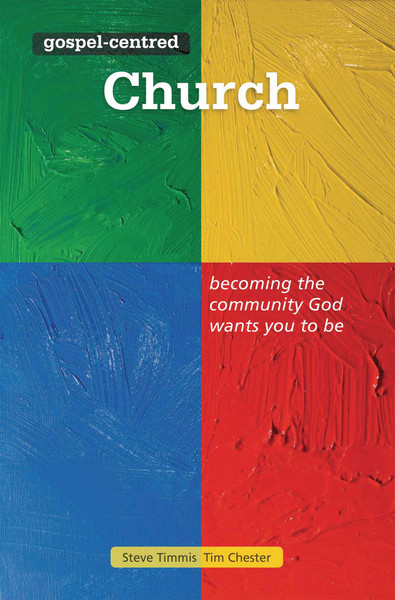
gccGospel-centred church: becoming the community God wants you to be by Steve Timmis and Tim Chester is a book to get churches moving. This isn’t a theology of church, nor is it a typical catalogue of all the key elements of church. It’s a book designed to get churches looking outward. The authors are persuaded that mission is the central purpose of the church in the world. (p10) The key word for them is ‘central’. Mission is not to be one thing that is done among many others. They’re not promoting mission teams alongside pastoral teams, music teams, and youth teams. They’re not looking at mission as one branch of theology alongside many others, but argue that all theology must be missionary in it’s orientation. (p11)

Along with their other ‘gospel-centred’ books, this is a practical workbook. It’s designed to get people thinking and talking together, engaging with the Scriptures, engaging with their circumstances, and taking action as part of a missional church. Each chapter begins with a short cameo issue facing the church. These are real teasers. I long to see how the authors would address each issue, but they are left unresolved to get us thinking. It worked for me! These are followed by a stated principle, that is then explained with reference to the Bible. Lastly there are questions for discussion and ideas for action. Gospel-centred church can be read by an individual fairly quickly. However, the real benefits will come from reading slowly, working through the issues, making some plans for action, and preferably doing this with others.

No doubt evangelicals (gospel people) will debate whether the central purpose of the church in the world is in fact mission. What about doing everything to the glory of God? What about the worship of God? What about the profound existence of a gathering of people who are one with Christ? There is a need for the authors to spend some time establishing their thesis, rather than simply writing… Who will argue that mission is not the purpose of the church? As Emil Brunner famously said: ‘The church exists by mission as fire exists by burning’. (p10) The central point of the book needs to be better anchored and secured, as they go on to hang so much from this.

Some might argue that this book should be given a different title. Perhaps it could be more accurately called ‘mission-focused small churches’. There is a clear preference for certain types of churches and particular strategies for outreach, that drive the principles in this book. Larger churches, who own their own buildings, have multiple staff, embrace particular outreach strategies, and do things differently to the Crowded House network, might be tempted to dismiss sections of this book. Let me say, I believe it would be a big mistake to ignore this because there are things you disagree with. This book contains much that our churches desperately need to hear afresh.

It’s far too easy for churches to become preoccupied with themselves. We can become isolated from the world around us. Many church people need to do a stocktake of their relationships and time with people. How much time is caught up with church people, church activities, church events? Every now and then I hear Christians bemoaning the fact that they don’t really know anyone who’s not a Christian. They’ve become settled in their Christian ghetto. There’s church, Christian groups, church committees, Christian friends, church responsibilities. If we’re so inclined, we can probably shut ourselves off from the rest of the world all together. And some of the people most in danger of doing this are the pastors of churches. Church takes all their time, so they can’t possibly be expected to relate to anyone else. Can they? The answer is ‘Yes’. And they must!

We forget that we have been entrusted with the news of eternal life that our world so desperately needs. News is for sharing – simple as that. No pastor should be disconnected from the world around them. Every Christian should seek friendships with people who aren’t Christian. In other words, we should live normal lives. Some of my best friends aren’t Christian, even though I’d love them to be. It’s not hard to get out and start mixing with people at school, the shops, in sport, interest groups, in the neighbourhood, with extended family. Wherever you naturally rub shoulders with people. And if you only rub shoulders with other Christians, then it’s time to repent of your monastic attitude. And don’t blame your church for your choices. If your church has such control over you that you have no choice, then it’s time to find another one – one that seeks to honour God in the freedom of the gospel.

This book will get churches and Christians thinking afresh. It will challenge our sacred cows, demolish some of our idols, and question our priorities and practices. It will help you to start thinking, planning, praying, speaking and living as a missionary. You don’t have to get a passport and visa to become a missionary. The need is right around you. The church is called to do more than send and support others as missionaries. We all have a role to play in promoting this great news of Jesus where we are. Let’s ensure that our lives and our words, individually and corporately, bear testimony to our Saviour and Lord.

It would be a big mistake to take this book and simply adopt the practices within. Not every church has to be like the ones the authors are engaged in. There is no ‘one size fits all’ template for gospel-centred churches. Every chapter of this book should be read in the light of the principle in the final chapter: All church structures and activities should be evaluated by how they help the spread of the gospel. (p93)

Also, if the authors are planning a revised second edition, then I’d recommend another chapter and it should be the first one. A book on Gospel-centred church should start with the gospel! The existing chapter 1 needs to be relegated to second place. We need to hear first about what God has done for us in Christ, how Jesus is building his church, about his death and resurrection, before we consider the purpose of the church in the world. A Gospel-centred church will shine a light on the wonder and work of God. And this is where this book should begin.

Easter Sunday and new life for Bronwyn

emptytombEaster Sunday. Resurrection Sunday. The day Jesus Christ rose from the grave and first appeared to his disciples. The first day of the week. The first day of a new life, a glorious future, for all eternity, with the God of all grace. What a day! Then and now.

chins2For you, Bronwyn, a day of glorious change. Like a butterfly, transformed from a caterpillar, only far more beautiful. All that was damaged and dying has been resurrected in wonder and joy. Weakness has been raised in power. The perishable has clothed itself with the imperishable. The earthly has been replaced with the heavenly. The mortal with immortality. Death has been swallowed up in victory. The sting of death has been taken away.

You now dwell with your God and Father. You are his precious child. Your tears have been wiped away. Your cancer has gone. You are suffering no longer.

Nothing could separate you from the love of Christ. Neither death nor life, neither angels nor demons, neither the present nor the future, nor any powers, neither height nor depth, nor anything else in all creation, could separate you from the love of God that is in Christ Jesus our Lord.

You are now with Christ, which is better by far.

You are loved. You are missed. Your husband, your children, your family, your friends, your brothers and sisters in Christ.

You inspired so many with your kindness and love. Your joy in the midst of sorrow. Your fighting spirit. Your love for your family. Your patient endurance in the face of suffering. Your concern for others. Your testimony to Jesus. Your passion for God’s glory. Your strong hope of life in God.

Bronwyn, you have shown us faith and hope and love in the face of death. We thank you. We miss you.

Get off the bandwagon

the-band-wagon-1I’ve seen a lot of bandwagons over the years. I’ve ridden a few too! Maybe you have as well. I wonder, is it time to get off the bandwagon? I’m thinking especially as a pastor, one in Christian ministry leadership. Fads and fashions come and go. Leaders and their ideas or catch cries become the latest big thing. People are in or out depending on what band wagon they are or aren’t riding.

If you’re riding a bandwagon now, you mightn’t even realise. Perhaps, you’ve become so comfortable riding in the back that you haven’t given too much thought to what you’re doing or where you’re going. Maybe it’s time to get off. Maybe you need to take a bit more control, bear a little more personal responsibility. You could be better off walking or riding a bicycle.

What is a ‘bandwagon’? According to Wikipedia:

In layman’s term the bandwagon effect refers to people doing certain things because other people are doing them, regardless of their own beliefs, which they may ignore or override. The perceived “popularity” of an object or person may have an effect on how it is viewed on a whole. For instance, once a product becomes popular, more people tend to “get on the bandwagon” and buy it, too. The bandwagon effect has wide implications, but is commonly seen in politics, consumer and social behaviour.

And it’s commonly seen in pastors, preachers, churches, denominations, Christian networks, and more. I’ve seen it many times over the years. When I was at university, studying Social Work, all the Christians were into the writings of Larry Crabb. Great stuff too. But after a while it seemed that every issue, every sermon, every relationship was dissected in terms of our security and significance. When I was at theological college, everyone was talking about John Wimber and the signs and wonders movement. Sometime later it was the Toronto Blessing. For a while everyone was heading to the mission field, then we needed to see 10% of Australia in churches. One denomination was in favour, then another, and then everyone wanted to be independent. We had our teaching gurus, our Carsons, and Kellers, and Driscolls, and Pipers. Our convention speakers like Jensen and Cook, our authors like Lewis or Lucado, our apologists like Zacharias or Craig, our evangelists like Graham or Gumbel, our bloggers like Challies, our spiritual guides like the Gospel Coalition.

And it’s not a new thing. Some followed Luther, some Calvin, some Zwingli, some Cranmer. Some flocked to hear Wesley, others to hear Whitefield. Some read Edwards and others were devoted to Spurgeon. Going back even further, bandwagons abounded:

Brothers and sisters, I could not address you as people who live by the Spirit but as people who are still worldly—mere infants in Christ. I gave you milk, not solid food, for you were not yet ready for it. Indeed, you are still not ready. You are still worldly. For since there is jealousy and quarreling among you, are you not worldly? Are you not acting like mere humans? For when one says, “I follow Paul,” and another, “I follow Apollos,” are you not mere human beings? What, after all, is Apollos? And what is Paul? Only servants, through whom you came to believe—as the Lord has assigned to each his task. I planted the seed, Apollos watered it, but God has been making it grow. So neither the one who plants nor the one who waters is anything, but only God, who makes things grow.

Band-Wagon-Effect1I suggest it’s time to stop and think. Are we just riding a bandwagon? Is it time to get off? Is there another way to travel? A better way? I suggest there is. God calls us to think, to be wise, to reflect carefully on his word, and to follow Him. We’d do well to be like the Bereans, who are commended for their careful analysis of the Apostle Paul’s teaching by it examining against Scripture.

10 As soon as it was night, the believers sent Paul and Silas away to Berea. On arriving there, they went to the Jewish synagogue. 11 Now the Berean Jews were of more noble character than those in Thessalonica, for they received the message with great eagerness and examined the Scriptures every day to see if what Paul said was true. 12 As a result, many of them believed, as did also a number of prominent Greek women and many Greek men.  (Acts 17:10-12)

Bandwagons are not a safe or reliable way to travel. They have are all sorts of problems and risks associated with them. Let me highlight some of the dangers:

Bandwagons are lazy. You can sit on the back and enjoy the ride without having to think or do any work. Others have done all the work, thought about the destination, the path, the means of getting there.  If you were asked where you’re going, or why, or why you’re going that way, would you have an answer? Would it be a thoughtful, God-honouring answer? Have you taken the time to weigh things up, to think about things carefully, to know where you’re headed, how you should get there, and why?

Bandwagons are comfortable.  It’s not just that you can sit back while others do all the heavy lifting. You have your friends with you. This is the ride for your tribe! It’s comfortable to go with the flow, follow the trends, especially when others you trust are doing exactly the same thing. The more comfortable you become, the harder it is to get off, to think independently, to risk a major break with those around you.

Bandwagons can be blind. It’s more difficult to see where you’re going when you’re stuck in the back with everyone else. You’re blinded to what’s ahead, to significant threats  and dangers, and you might not notice when everyone makes a wrong turn. What if you’re all misguided? Maybe you need to look at the map occasionally and not simply trust those leading the wagon.

Bandwagons don’t last the distance. They come and they go. They charge ahead, but eventually they all peter out. Before too long, they get overtaken by the next one coming. Some from your wagon jump ship for the next one, and you feel the pressure to join them. Sometimes this works, but from time to time the wagon gets stuck in a deep rut, the wheels fall off, it gets completely lost, and then so are you!

Maybe it’s time to take responsibility. Get off and walk. Get out your bike and pedal. It’ll be hard work and you might be tempted to stop. There’ll likely be sweat, and blood, and dirt, and tears. You’ll get a few flats, the tyres will wear, the chain might come off, you might even get hurt. You’ll see the wagons come and go, and you’ll be tempted to get on. But keep on riding. You’ll see much more clearly where you’re going. The threats and dangers will be still be there, but it should be easier to avoid them.

Don’t just go with the flow. The head of my residential college at university, Stuart Barton-Babbage, used to say, “Even a dead dog can swim with the tide.” Prayerfully, engage your brain, seek wisdom from God, and weigh carefully what you see and hear. Be like the Bereans. My pastor years ago, Phillip Jensen, kept urging us “not to believe what he said, but to check it out for ourselves from the Bible.” Great advice. I’ve tried to follow this and call others to do same when they hear me speak or read what I’ve written.

We need to avoid the genetic fallacy when it comes to authors and preachers. Just because Don Carson, John Piper, Kevin de Young, Tim Keller, or Mark Driscoll have spoken or written on the matter, doesn’t make it right or true. As reliable as I believe these men to be, they are not infallible. They’re not the Pope and they’re not God. They will make mistakes. I do need to listen with discernment, read with care, and weigh up what they’re communicating in the light of the Bible.

I love the writing of Carson, but I’ve got questions over his understanding of worship. I’ve found de Young’s books to be such an encouragement, but I’d question his emphases on holiness. Piper is a riveting writer and speaker, but I’m still pondering some of his statements about how to view cancer. Keller is an extraordinary thinker and communicator, but I wonder if the emphasis on the city is overstated. Driscoll is a storm-trooping preacher and evangelist, but I struggle sometimes to see what is Bible and what is Driscoll. Each of these men are highly gifted and seeking to be profoundly biblical, but this does not excuse us from the need for careful thought and reflection. We’re not simply to jump on their bandwagons.

I picked the men above to illustrate my point, not because they’re bad, but because they’re so good and have such a broad influence. Most of what I hear and read is very persuasive. And I’m sort of caught up in much the same tribes as these guys. I might be wrong in the questions or critiques above. All the more important for me to search the Scriptures and prayerfully work out which way ahead. And by the way, if I start driving a bandwagon, please don’t get on. Much better to make your own way.

Get on ya bike.

Promoting the gospel in growth groups

swiss_army_knifeGrowth groups can have a tendency to focus inwardly upon themselves. Or should we say, the people in growth groups can become attached to their groups, so that the group gets all the bulk of their attention. This might be hard to believe when you first join up with a bunch of strangers, but as we get involved in each others’ lives, we can grow attached to each other. Of itself this is good, but if it leads to the neglect of others outside the group then we have a problem. Sometimes this can manifest itself with a prioritising of the group over the rest of church. But it can also mean that we forget about the needs of people outside church altogether.

centrifugalI didn’t do much physics at school, but my novice understanding is that growth groups therefore have a centripetal tendency. We tend to become preoccupied with what’s going on inside the group. If so, then I suggest we also encourage a centrifugal interest among the members of our groups. We want to be concerned for what’s happening on the outside, and we want to be preparing people in our groups to live and speak as followers of Jesus outside the group.

We don’t want growth groups to be holy huddles or simply emotional support groups. They are growth groups. We want to see the members of our groups growing together in Christian maturity. This will mean following the mission of Jesus, who came to seek and to save those who are lost. It will involve promoting the gospel of Jesus in our daily lives and it will move us to prayer.

There are many ways that growth groups can focus on promoting the gospel. We’ll explore a few:

1. Prayer

2 Devote yourselves to prayer, being watchful and thankful. 3 And pray for us, too, that God may open a door for our message, so that we may proclaim the mystery of Christ, for which I am in chains. 4 Pray that I may proclaim it clearly, as I should.

Paul asked the churches to support him in prayer. He had the responsibility of preaching Christ to the nations and he needed God’s help and people’s partnership in prayer. We can also support others in their proclamation of Jesus. Pray for the preachers and evangelists in our churches. Pray for others who are entrusted with the privilege and responsibility of making Christ known. Pray for those who are under much public scrutiny. Pray for people who are using different media, who are writing books and blogs, producing audio, video and TV, to proclaim Christ. Pray that they will be faithful, engaging, and bring honour to God. If our church supports global partners (or missionaries), or has sent people to plant new churches, then let’s uphold them in prayer.

Let’s also pray for one another in our groups, that we will live godly lives and show the difference that a relationship with Jesus can make. Pray for opportunities to do good to others and to bring blessing into people’s lives. Pray that God will open doors for us to give a reason for the hope that we have. Ask God to help us do this with gentleness and respect to others.

Maybe your group could pray for particular people outside the group. Friends of the members, family, workmates, neighbours, people we’re keen to see come to know Jesus. If your group breaks into 2s or 3s to pray, then you could pray more specifically and personally.

2. Living out the implications of the gospel during the week

People notice how we live. It matters! Who’s going to pay attention to someone who tells them that being a Christian can change their life, if they’re known by everyone as the office gossip, a liar and a cheat? Titus 2 gives us gospel motives and purpose for living lives of integrity and grace…

5 … so that no one will malign the word of God.

8 … so that those who oppose you may be ashamed because they have nothing bad to say about us.

10 … so that in every way they will make the teaching about God our Saviour attractive.

For this reason our Bible studies should be focused on producing fruit in people’s lives. Application shouldn’t simply be tacked on when we allow enough time. It’s the whole purpose of the study. Transformed lives is what we are seeking. Not so that we can pat ourselves on the back, but for the glory of God and the welfare of others.

We should make time to get to know the members of our groups. What are their lives like? Who do they live with? What’s goes on in their workplace? What courses are they studying? Do they have any kids? What do they find tough? Who do they hang out with? What temptations do they face? Where do they think they are most on show? Let’s use our time together in growth groups to encourage one another, as it says in Hebrews 10:24-25:

24 And let us consider how we may spur one another on toward love and good deeds, 25 not giving up meeting together, as some are in the habit of doing, but encouraging one another—and all the more as you see the Day approaching.

3. Celebrate our God-given differences

The beauty of a church and a growth group is that they’re made up of different people. We’re united in the gospel of Jesus, but we have different gifts, personalities, experiences, opportunities. God has designed it this way so that we recognise the benefits of working together. When it comes to promoting the gospel, it’s important that we don’t spend the whole time making each other feel inadequate. Perhaps John spent a recent plane trip talking with his fellow passengers about why he’s a Christian. That doesn’t mean that everyone else should be doing the same thing. Some people can’t afford plane trips! Seriously, others will be too shy to ever contemplate such a thing. Some will be better communicators than others. We’re all wired differently and we should celebrate this, rather than judging one another.

15 Now if the foot should say, “Because I am not a hand, I do not belong to the body,” it would not for that reason stop being part of the body. 16 And if the ear should say, “Because I am not an eye, I do not belong to the body,” it would not for that reason stop being part of the body. 17 If the whole body were an eye, where would the sense of hearing be? If the whole body were an ear, where would the sense of smell be? 18 But in fact God has placed the parts in the body, every one of them, just as he wanted them to be. (1 Corinthians 12:15-18)

This doesn’t mean that we can’t be nudging each other along or encouraging each other to grow and change. We must. But let’s encourage transformation into the image of Christ, rather than calling everyone to conform to a particular stereotype. How many Ned Flanders do we really need!?

4. Work on a gospel project together

Perhaps your growth group could work on a project to promote the gospel. This could be an event that you each invite people to. They tend to work best when the members of the group are connected with similar people. If everyone lived in the same community, perhaps they could each invite their neighbours. Parents of the kids in the same school or sporting team could arrange an event for other parents. A group meeting in the same workplace could invite their colleagues to something in a lunch hour or after work. A common ethnic group could promote an event in their community. A common interest group could connect with others in their network. A group of people living in the same university residence have special opportunities to promote the gospel together.

Their are all sorts of events that could be used in promoting the gospel. Here are a few suggestions that I’ve participated in…

  • A Question & Answer event where someone answers people’s questions about Christianity. People invite friends, put on a good meal or refreshments, invite a speaker, or a panel of speakers, to answer questions. It’s very important people know clearly what they’re being invited to come to. No surprises. And don’t let the Christians dominate discussion!
  • An fun activity followed by short refreshments and a brief talk. If everyone is into mountain biking, perhaps go for a ride, come back for a BBQ, and have someone share why being a Christian is so important to them. Our group once held a wine tasting event at a local winery, after which I spoke about the one who turned water into wine!
  • A God party! You’ve heard of Tupperware and Nutrimetics parties. It’s the same idea with a few differences. The good stuff is all free. A friend of mine promoted this idea by encouraging people to take advantage of an excellent opportunity to discuss the often neglected, but important, topic of God. Heaps of people came.
  • A home brew evening. We have a few clever blokes in our church who make their own. They got together, put on a demo, and invited Pat Alexander (The bloke who wrote I’d love to have a beer with Duncan for Slim Dusty) to speak about the two most influential men in his life – Jesus and Duncan!
  • Use the collective imaginations of the people in the group to come up with your own ideas!

5. Training together

5 Be wise in the way you act toward outsiders; make the most of every opportunity. 6 Let your conversation be always full of grace, seasoned with salt, so that you may know how to answer everyone. (Colossians 4:5-6)

15 But in your hearts revere Christ as Lord. Always be prepared to give an answer to everyone who asks you to give the reason for the hope that you have. But do this with gentleness and respect, 16 keeping a clear conscience, so that those who speak maliciously against your good behavior in Christ may be ashamed of their slander. ( 1 Peter 3:15-16)

If someone was to ask you how you became a Christian, or what makes a Christian different to a Jew, a Hindu, or a Jehovah’s Witness, what would you say? If they asked why you go to church, or whether you pray, or what’s so important about Jesus, would you have an answer? If someone enquired why you have an eternal hope in the face of death… do you know what you want to say? The Apostles, Peter and Paul, both call us to be prepared to answer those who want to know what it’s all about. We’re encouraged to be willing and able to speak to others about what we believe.

Willingness flows from confidence in the gospel, trusting in God to be at work, and that he can use our lives and words to impact others. It’s easy to be embarrassed, or even ashamed, of the perceived weakness of our message. We need to be regularly reminded that the truth about Jesus can change people’s lives for good and forever. Ability comes from knowing what we believe and knowing people, and connecting the two in practice. Growth groups are a great environment to build confidence in God’s word and how it changes people.

A group can take incidental opportunities for equipping each other in sharing what we believe. Maybe we’re telling the group about a conversation we had at work where Christianity came up. The group could brainstorm how we might have handled it well or how we could improve. An idea might arise out of the Bible study that helps us to explain an aspect of our faith to enquirers. It’s good to highlight and reinforce these things. The Bible passage might intersect with some issues that are preventing people from taking God seriously, and the group could discuss how to over come this. People could talk together about how God has relevance to issues that we deal with day to day, so as to be better prepared when opportunities arise.

There can also be formal opportunities for training in gospel communication. If the church is providing courses or one-on-one mentoring, the leader might encourage people to participate (even if it means skipping the group for a few weeks). Maybe the growth group could set aside a few weeks from the regular studies to focus on some area of training.

6. Are people who aren’t Christian invited?

I think the short answer is “Why not?” Why wouldn’t we welcome anyone who wants to join with us, look at the Bible together, enter into life together. We don’t put bouncers on the door at church, so why would we close the doors to our groups? It could offer a wonderful opportunity to build genuine relationships and promote real discussion that will help someone come to a decision to follow Jesus.

It is important for the group to be of a common understanding of what the group is about, who it’s for and how it functions. Let everyone discuss their hopes and expectations. If you are a group of Christians, and then someone who isn’t persuaded joins with you, it will change the dynamics considerably. Not a bad thing, but we need to work with the changes. You might need to talk about whether your particular group is the best context for a friend who’s not a Christian, or whether another group might be better. If your church has special groups for those who are looking into Christianity, perhaps it would be better to go with your friend to that group for a while. Think about whether they’d be more comfortable talking things through with you, just sitting anonymously in church, joining in with the group, or something else entirely.

Remember we are talking about GROWTH groups. Our desire is to be growing followers of Jesus, through people coming to faith in Jesus Christ and growing together into maturity.

Further reading
Colin Marshall, Growth Groups, chapter 9
John Chapman, Know and tell the Gospel
Kel & Barbara Richards, Hospitality Evangelism
Dave Thurston, Making friends for life
John Dickson, Promoting the Gospel
Steve Timmis & Tim Chester, The Gospel-centered Church

Fact or fantasy

You head to the local library looking for a book to read over the long weekend. Something with drama, mystery, intrigue, torture, murder. You want to read about some allegations of grave robbery, insider plots, religious corruption, political power plays. And you’re keen to spice it up with some angels and demons, astrology, ghostly appearances, the spiritual underworld, ancient signs, the dead coming to life, and claims to divinity. “Where will I find something?” you ask.

matthewThe librarian brings you a book. It’s a little bit dusty. Doesn”t get borrowed too often. You look at the cover and it says Holy Bible. She opens it for you and points to The Gospel of Matthew. Where did she get it from? Is this Fact or Fantasy? Is it found in Fiction or Non-fiction? Is it History or Legend? Biography or Novel? Was it next to Harry Potter and The Twilight series, or was it down with The Works of Josephus and Suetonius?

What do you think?

Reading these requirements sounds like we’re dealing with fiction and fantasy, not history and reality. This is the kind of stuff you find in airport novels, B grade movies, low rating TV dramas. It’s not the kind of book you take seriously. Or is it?

I can tell you most people don’t. Even in many churches. The last 100 years or more has seen embarrassed churchy people talking these things down. Bishops denying that Jesus was born to a virgin. Theologians writing books claiming that Jesus didn’t actually rise from the dead. It’s just his idea that lives on and that’s what we mean by resurrection. Many will say, it doesn’t matter one way or the other. The ideas are nice, they’re moral, they’re a good story, they’re nice for children. And hey, we get a few public holidays, so don’t worry about it!

Let me be open with you. Unless this is non-fiction, historical, factual, and continues to have relevance, then I’ve backed a complete loser. I’ve invested all my hopes, plans, priorities, aspirations, on this being truth. When I discovered that I had a terminal illness, the weight of these issues became enormous. I experienced doubts, fears, and confusion. I had big questions. Real questions, not just theoretical or ideological questions. They were intense, existential, of utmost significance. I engaged in investigation and reinvestigation. I had bet my life on this. Is it true?

I hadn’t just staked my future on this being real. I’d been living my life on the basis that it is. I’d been teaching that this book explains life. I’d been calling others to take it seriously. I’d been an advocate, an ambassador, a preacher of these things. Was I a fraud? Inadvertently even? Am I mistaken? Some say it doesn’t matter. I say it does!

In 1 Corinthians chapter 15, one of the first Christian preachers had this to say about the substance of the events described in the gospels:

14 And if Christ has not been raised, our preaching is useless and so is your faith.

This is not just the idea of Christ living on, keeping his memory alive, but his physical bodily resurrection. Real death followed by real coming back to life. If it didn’t happen then there’s no point me trusting that it did or trying to persuade people that it still matters.

15 More than that, we are then found to be false witnesses about God, for we have testified about God that he raised Christ from the dead.

If these things are simply one big misunderstanding then the early Christians were guilty of perjuring themselves. They were liars, perpetuating myths about Jesus, brainwashing people with ridiculous notions. And therefore I’m guilty of doing much the same thing. Gullible, deluded, or just plain deceptive.

17 And if Christ has not been raised, your faith is futile; you are still in your sins.

When it comes to death – and let me tell you this is something that I take very seriously – I believe what happens afterwards really matters. If there is a God, and he takes me seriously, and I’m asked to give an account for how I’ve treated Him, then my only hope is in Christ dealing with my sins in his body on the cross. No point claiming I’ve been good. I haven’t. No point backing my religious behaviour. It’s pathetic. My hope is only in Jesus and his life, death, and resurrection. If this didn’t happen, then I don’t have a leg to stand on before God.

18 Then those also who have fallen asleep in Christ are lost.

There’s no hope for countless people who’ve already gone to their grave believing in Jesus. And what about those who’ve done so at gun point, who’ve been burned alive, crucified upside down, or thrown to lions? When all they had to do was change their minds! Recant! All they had to say was “No, I don’t really believe it!” They could have lived.

19 If only for this life we have hope in Christ, we are of all people most to be pitied.

What a waste! Why would you spend your life living for a fiction, trying to persuade others. It’s really pretty sad! In fact, we may as well take these words seriously…

32 If the dead are not raised, “Let us eat and drink, for tomorrow we die.”

That’s right. No point wasting my life on God, Jesus, hoping for resurrection, and a life beyond the grave. May as well simply focus on and enjoy what I’ve got now, because that’s all there is, and it’s not going to last that long.

What do I believe? I believe in the death of Jesus and the resurrection of Jesus from the dead. I believe in the ongoing significance of these events. I believe that my sin against God has been dealt with and that I have real hope for all eternity. As it says in 1 Corinthians 15:

For what I received I passed on to you as of first importance: that Christ died for our sins according to the Scriptures, that he was buried, that he was raised on the third day according to the Scriptures, and that he appeared to Cephas, and then to the Twelve. After that, he appeared to more than five hundred of the brothers and sisters at the same time, most of whom are still living, though some have fallen asleep. Then he appeared to James, then to all the apostles, and last of all he appeared to me also, as to one abnormally born.

I believe the evidence needs to be considered carefully. Weighed up seriously. These events make sense of promises written centuries before. They tie in so well with the words of the Bible that predicted them happening. When these words were first written, it was less that a generation after the events described. There were people alive who claimed to be eye-witnesses to the resurrected Jesus. You could question and cross examine them.

Cephas (Peter) had spent so long with Jesus, he was hardly likely to be mistaken. The twelve weren’t expecting him to appear. They were cowering in a room, in fear of their lives, after Jesus was killed. Five hundred people claimed to have seen Jesus on one occasion. You can’t explain this as mass hallucinations. And you could have asked some of them about who and what they saw. James, the brother of Jesus, would have been hard to convince. Not to mention Thomas, who wouldn’t believe without physical evidence. And Paul (or Saul as he used to be known) was so persuaded of the resurrection that he went from imprisoning Christians to joining them in prison. I understand a few lawyers would love this quality of evidence.

And then there’s the circumstantial evidence. How do you explain the missing body? The empty tomb? The wrong tomb? Surely, they’d just go to the next one. The authorities stole the body? All they had to do to stop the early Christians was produce it. The disciples stole the body and pulled off a conspiracy? Likely! A pathetic bunch of eleven cowards overthrowing imperial guards and then perpetuating lies that they go on to die for? Surely, at least one would have cracked to save himself!

There are many more pieces to the puzzle. Lot’s more circumstances to consider carefully. They keep pointing me to the conclusion that the accounts of Jesus are non-fiction, factual, historical records of real events. And these events are worth staking your life on.

This Easter, please consider.

Hey barista

This post is for my two baristas this morning…

photo[1]Thank you for your coffee, and the second one! I’d contemplated making myself a coffee this morning, but my machine was off, I only had a few beans, and I didn’t have time. So discovering you guys as I walked to work was a bonus!

Sorry I didn’t have any money. I’d left my wallet in the jeans I was wearing yesterday. It was nice of you to offer to barter, but I didn’t really have anything I could part with. And then you were so generous – offering me lunch! Bananas, plums, rolls! I couldn’t take anything because I’d already picked up the lunch my wife left on the bench.

You seemed surprised when I told you I was a pastor. Maybe you don’t meet too many! And then suggesting I could offer you a blessing in exchange for a coffee! But your next suggestion was a cracker…

How about free entry to heaven?!!

Not sure how powerful you think I am or what influence I have, but as I said, I can’t give you that. BUT it is available! Truly! There are free tickets on offer. Paid for already. It’s what Easter is all about. Good Friday, the day Jesus died, is the day the entry fee to heaven was paid. For you. For me. For all who will trust Jesus. So if you’re serious about getting in, then I’d recommend you take a good look at Jesus. Best place to look is in the Bible. I’d suggest reading the Gospel of Mark.

I know you were surprised when I came back with the money. You probably get lots of people pretending to be pastors who have left their wallets at home, asking for free coffees! And you were probably even more surprised when I told you that I wanted to give you a blessing too. Those two books called A Fresh Start that I gave you were written by a good mate of mine. It’s a pretty clear explanation of what being a Christian is all about. The book explains how entry to heaven is possible and why it’s free. Please check it out. And I hope you like the Chuppa Chups too. I’m not allowed to eat sugar any more.

Not sure if you’ll get to read this, but I hope you will.

Great coffee too, by the way. I’ll be back for another! Have a great day.

Mentoring matters

mentoringmattersFor the last month or so I’ve been particularly focused on issues of leadership development. I’ve been considering the respective roles of mentoring, coaching, and training. These are hot topics these days in many areas and it’s been difficult to know what material to consider. My special interest has been to view distinctively Christian perspectives on these areas, and in particular to see how they can be a help to Christian ministry. I’m discovering there is much to be learned in these areas, but we need to carefully sift the helpful from the not so helpful. Mentoring Matters by Rick Lewis is full of practical wisdom and helpful advice that’s been tested by experience. However, I believe there’s a theology driving this book that is actually unhelpful.

Lewis offers this definition of mentoring:

Within intentional, empowering, unique relationships, Christian mentoring identifies and promotes the work of God’s Spirit in others’ lives, assisting them to access God’s resources for their growth and strength in spirituality, character and ministry.  (p20)

All parts of this definition are important to the author. Mentoring relationships should be tailored, focused on supporting and equipping the mentoree, for their good. The focus is on being, more than doing, and seeking to allow God’s agenda to shape the mentoree from the inside out. They’re more than a friendship because they’re grounded on an agreement between the two parties about the purpose and shape of the relationship.

Mentoring Matters shows mentoring to be an effective way of addressing many problems faced by today’s Christian leaders. The mentor can provide help in encouraging personal spiritual health; non-judgmental friendship and support; safe peer relationships in which to discuss vocational issues; accountability from a person outside the organisation with no positional power; help in integrating the theory and practice of ministry through reflection; and help in reaching specific goals for change.

Lewis argues that everyone in ministry would benefit from a mentor outside their particular church or organisation. Indeed, the advance of God’s kingdom can be helped by the focus on developing more leaders, more frequently, of a better quality, and who will last longer. He provides evidence that in Australia there are as many ex-ministers as there are current ministers and argues that good mentoring can change this sad equation.

A strength of Mentoring Matters lies in how it distils so many different factors in mentoring with clarity and simplicity. I plan to write up a number of checklists for myself based on the material in this book. A good example is this ‘rough guide’ to help new mentors quickly get their bearings on pages 111-118. This is also summarised on the Mentoring Matters website.

Build genuine relationship
Spiritual mentoring is more than an arrangement set in place for pragmatic purposes and cannot be conducted from an emotional distance. An environment of mutual positive regard, respect and heartfelt care is required.

Establish mentoree responsibility
Mentoring is effective only when the mentoree takes responsibility for his or her own spiritual growth and health. There is absolutely no domination or control in healthy mentoring.

Prioritise the inner life
While the whole person is of interest, development of the inner life is fundamental to spiritual mentoring. Our doing flows out of our being. The principal means of bringing about deep inner change is the power of the Holy Spirit in the life of the mentoree.

Put aside other agendas
Good mentors do not see mentorees as a means for achieving a preconceived agenda. The mentor’s concern is for the spiritual growth of the mentoree, beginning where the person is at, and working toward what God has designed them to be and do.

Discern God’s work
Mentoring involves a process through which two people together seek to understand what God is doing and saying. This does not need to be an obscure, mystical process. Thoughtful conversations linked with prayer comprise an effective process.

Facilitate reflection and goal-setting
Encouraging reflection and goal-setting in mentoring is aimed at achieving experience-based learning. Reflection turns experience into learning, on the basis of which mentorees can construct and commit to goals and to action steps.

Provide positive accountability
Mentorees set their own goals and action steps and give their mentor permission to hold them accountable for following through on those commitments. Accountability is an opportunity to prove progress rather then to expose failure.

Prepare thoroughly
Both mentors and mentorees will get the most out of mentoring sessions only if they are prepared to review points covered previously, complete any undertakings made, and prepare good questions for one another.

Pursue mentoring energetically
Be deliberately proactive about your mentoring relationship. If mentoring is not made a priority it will certainly be edged out by the huge number of competing demands on a leader’s time and energy.

Encourage mentorees to mentor others
Where a mentoree takes on the role of serving another future leader, the benefit they have received through being mentored is more firmly established in their own life.

Learn from Jesus
Spiritual mentoring is a Biblical process, modelled most perfectly by Jesus. He mentored his disciples by who he was, what he said and what he did. The gospels comprise a mentoring handbook useful to the most experienced mentor.

So what are my main concerns with this book? And how important are they?

mm2A key theme running through this book is the idea of discerning God’s particular will for the mentoree. Mentoring is seen as a specific journey of helping the mentoree to work out where they are, where God wants them to go, and how they can get there. This has to do with discovering what God’s Spirit is doing in their life. An earlier cover of the book describes the book as Identifying and promoting the work of God’s Spirit in the lives of Christian leaders. This has now changed to Building strong Christian leaders. Avoiding burnout. Reaching the finishing line. I’m not aware that the inside of the book has changed at all. My guess is that the new cover has been designed to appeal to a broader audience and to focus on the outcomes of mentoring.

Am I concerned with this emphasis on identifying and promoting the work of God’s Spirit? Am I one of those evangelical Christians ‘who don’t really believe in the work of the Spirit’, ‘who are all head and hands and no heart’?

Let me try to communicate clearly! The work of God’s Spirit must be central in the life of the mentor and mentoree. No equivocations. If we’re not on about God’s work in people, then we’re wasting our time. No amount of mentoring will be of any eternal benefit unless God’s Spirit is at work. Therefore, I believe it is critically important to identify and promote the work of God’s Spirit in the life of the Christian leader.

It’s what the author understands this to mean and his suggested methods for discovering and discerning the will of God that I take issue with. Lewis writes that Godly mentors are attuned to the prompting of the Holy Spirit. Out of a deep desire to live a life pleasing to God, they are able to discern the ‘still, small voice’ and are in the habit of following that leading. (p125) While saying that tuning into the Spirit’s work doesn’t have to be a mystical experience, the overall message and vibe of this book is that it is. There is very little mention of the Bible as a source of discovering God’s will. In fact, there is very little Bible in this book at all. Its main appearance is in the chapter called an Ancient Art for a Post-Modern Context where various Bible passages provide part of the justification for mentoring today. Very helpful passages, by the way.

I worry that mentoring conducted along these lines could be unhelpful to the participants. It could lead to people believing they need to be looking for and responding to particular, personal, leadings of God’s Spirit, rather than concentrating on the given, revealed, sufficient, sword of the Spirit, the Bible. Over time the focus turns away from reading the Scriptures, that are able to make us thoroughly equipped for every good work (2 Timothy 3:17), to reading circumstances, weighing up feelings, or looking for God to speak in other ways outside of the Bible.

My concerns about this book are not so much with mentoring per se, as they are with a perspective on guidance implicit throughout. I would love to see much more in Mentoring Matters about opening the Bible together, searching the Scriptures, seeing God’s revealed plans, to discover what this means for our lives, ministries, and the options before us. A great model of this approach is offered in Don Carson’s book on the topic of prayer, called A Call to Spiritual Reformation. He reveals how his mentor patiently and carefully helped him to pray according to the will of God as they delved deeply into the Bible together. If you’re keen to work through what the Bible teaches about guidance, let me recommend you work carefully through any of the following books:

Decision making and the will of God by Garry Friesen
Just do something by Kevin de Young
Guidance and the voice of God by Phillip Jensen and Tony Payne

If you’re serious about mentoring Christian leaders, then you will find much in Mentoring Matters that is helpful and practical. You will benefit from the emphasis on internal transformation, the priority on being before doing, and the focus on genuine relationships at the core of mentoring. But, let’s read with discernment, as we should with every book.

The pride of planting churches

A message to my tribe…

Church growth used to be all the rage in Christian circles a few years back. All the focus was on how to make your church bigger and bigger. If you really wanted to be successful,  you aspired to have a mega church one day!

Now it’s church planting. Church planters are the rock stars of the ministry world. Sure, anyone can maintain a church, some can even get a church to grow, but if you really want to get recognised, then you plant a new one.

Ministers used to get together and compare the size of their churches. We’d come away feeling smug or depressed, depending how we ranked against others. Now the accolades come from planting churches. How many churches has your church planted? Oh, you haven’t? When do you plan to? What, seriously, you’ve really planted 10 churches? Wow!

We used to get stroppy because the church down the street grew massive while we struggled. They’re all going there because of the music, the teaching, the youth program, the coffee machine. Now we get annoyed at anyone who wants to plant a new church in our backyard. Why do we need a new church here? Why don’t they go somewhere they’re really needed?

The truth is, I love church. And not half as much as God does. But all this stuff about church planting, or church growth, can be a massive worry. It can show up how pride-filled and pathetic we are. So much of it has to do with me… my ministry, my reputation, my church, my denomination, my ambitions.

What about what God is doing? Where does God fit in? What does God value? What does God expect from us? I wonder what God thinks of our petty politics, our jealousy, our pride? Truth is, I do know, and I’m embarrassed to say that it doesn’t always paint me or others in a good light.

Easter is a good time to focus again on what matters most. As the Apostle Paul wrote:

Now, brothers and sisters, I want to remind you of the gospel I preached to you, which you received and on which you have taken your stand. By this gospel you are saved, if you hold firmly to the word I preached to you. Otherwise, you have believed in vain.

For what I received I passed on to you as of first importance: that Christ died for our sins according to the Scriptures, that he was buried, that he was raised on the third day according to the Scriptures, and that he appeared to Cephas, and then to the Twelve. After that, he appeared to more than five hundred of the brothers… (1 Corinthians 15:1-6, my emphasis.)

It’s not about what we do. It’s about what God has done in Jesus Christ. A death on a cross. Resurrection appearances and an empty tomb. Forgiveness of sins. Salvation by grace alone. Hope for eternity.

It’s possible to plant churches, it’s possible to grow churches, without anything eternally significant happening. Sometimes, it’s simply people moving locations, joining new clubs, shuffling the deck, making our lives more convenient, starting your own adventure.

Worrying about a new church being planted nearby can be a strong indicator that we’ve lost the plot. We’re more concerned with our show than we are with people getting to know Jesus. Surely, we must rejoice at every person who hears the good news and responds! What matters is their rescue, not who’s in our ship.

Don’t we long for people to hear and respond to the message of the first Easter? Discovering real life through Jesus? And when that happens we have God to thank. How fantastic when that happens in our own backyard! How awesome when it happens in neighbouring suburbs or far off places! And how exciting when these people are gathered into churches – whether they’re new church plants, growing mega churches, or something else altogether!

Remember, it’s not my church, your church, our church, or their church. It’s God’s church. It’s the church of Jesus Christ.

To God be the glory, great things He has done;
So loved He the world that He gave us His Son,
Who yielded His life an atonement for sin,
And opened the life gate that all may go in.
(F.J. Crosby 1875)

My own personal breakdown

I’m 50 years of age. I feel 70. My doctor tells me that my body is behaving like a 70 year old. It’s a little scary. Stage IV lung cancer and 15 months of non-stop chemo can do that to you.

The lightest of exercise elevates my heart rate. I get breathless quickly. It’s hard to suck in enough air. It takes nothing to raise a sweat. A crushing feeling in the chest. Shooting pains from the lungs.

I get pins and needles in my feet and hands. Aches in my ankles. Heaviness in the soles of my feet. The signs of peripheral neuropathy. So I only wear shoes when I have to – nothing new there! We reduce the chemo and add some antidepressants. Folic acid and daily cymbalta seems to do the trick.

Headaches are common. A band round the head. Pulsing pain in the temples. Light-headed, dizzy, a cloudy feeling. Couple of panadols, it is.

Blood pressure out of control. Topping the charts one day. Normal the next. Too high overall. Fears of heart failure, strokes, heart attacks. Not to mess around with. We’ll see if daily ramipil antihypertensives bring things down.

Fatigue is growing. I can’t seem to wake up. Some days I spend more time in bed than out of it.

Rashes and redness. Blemishes and acne. Sometimes I feel like a 70 year old going through puberty. The dexamethasone steroids help for a while (don’t tell ASADA), and then we can try some claratine antihistamines, or we can just wait for it to go away.

The weight coming on, then going off, then going on more. Metabolism out of control. Unable to eat. Unable not to eat. The cravings. Self control, diet, careful eating, not too much. Sometimes I think, who cares.

The blood sugar. Getting way too high. Diabetic levels. What next? No lollies, no soft drinks, no chocolate, no jams. That’s all the food groups. What’s left? Exercise more. Get the heart rate up. Burn more sugar. Use up the fuel. I’ll probably have to take a drug for this problem too!

Add an allergic reaction to the contrasts used in the CT scan. Because I came out in hives, they won’t allow me to take it any more, lest I have a more serious anaphylactic reaction.

And then there’s just the overall feeling of being heavily poisoned. Argh!

Where will it stop? When will it stop? I don’t know. But I have a choice.

I can dwell on my problems, be filled with self-pity. I can hide from others, ignore the good, forget God, complain and grumble. I can become a completely selfish pain in the bum. I’ve got a ticket that gives me permission to become a totally self-obsessed whinging prat. It’s called cancer. It lets you get away with all kind of stuff.

Or…

photoI can take responsibility. Get enough sleep and rest. Exercise even when I don’t feel like it. Show restraint with my diet. Be patient when the side effects are worst. Push on with what hurts knowing that it’s an absolute privilege to receive the medical care I have available.

I can rejoice. I can give thanks for my beautiful wife, my fantastic children, my supportive friends, my praying church. I can thank my doctors and nurses. I can praise God for life and hope. I can look outward and love. I can share and give. I can serve and support. I can wonder at the many doors God has opened, for every one that’s closed. I can stop wishing for change and change my wishes. Better still, I can fall on my knees and thank God for his amazing grace to me in the Lord Jesus Christ.

My life is not my own. It was given me by God and I was bought at a price. I’ve already died to myself so that I should live to God. And I can still do this, whatever bits of me don’t work! If God gives me days and months and years, then they are for him. To show perseverance in the face of suffering. To exercise faith in the midst of doubts. To offer kindness when I feel mistreated. To be a friend when I’m lonely. When I am weakest, God can shine through in strength.

I can learn from the Word of God…

Therefore, in order to keep me from becoming conceited, I was given a thorn in my flesh, a messenger of Satan, to torment me. 8 Three times I pleaded with the Lord to take it away from me. 9 But he said to me, “My grace is sufficient for you, for my power is made perfect in weakness.” Therefore I will boast all the more gladly about my weaknesses, so that Christ’s power may rest on me. 10 That is why, for Christ’s sake, I delight in weaknesses, in insults, in hardships, in persecutions, in difficulties. For when I am weak, then I am strong. (2 Corinthians 12:7-10)

Good Friday and the curse of cancer

Cancer has been front and centre this last week. Relay for Life on the weekend, with cancer survivors and carers, and the memory of loved ones now gone. Surgery today for our niece to remove any traces of melanoma. A funeral this morning for my friend’s mum, who lost her brief battle with lung cancer. Not long before there was Tony Grieg, and then Peter Harvey, and there have been so many others. Mums and dads, grandparents, cousins, uncles, children, bosses, neighbours, colleagues, passing acquaintances. Cancer is a cancer on our world. It invades our lives. It breaks our hearts.

Next Friday is Good Friday. A strange day, when we remember a man dying. In fact, I remember two men dying on this day. On Good Friday 2007 – it was the 6th April – I lost a good friend. He was only 29 years of age. He’d only been married for two years. We’d go to the gym together. He was my neighbour. He stood in the rain and helped us bury our family pet. He’d encourage me with stories – all true. He was my brother in Christ. Cancer took hold of my friend and it didn’t let go. I’d conducted his wedding and, soon after, I conducted his funeral.

It’s not right that a parent should have to view the death of their child.
It’s not right that a wife should lose a husband after only 2 years of marriage.
It’s not right that a man shouldn’t live to see his 30th birthday.

It’s not right. God knows it’s not right. I wondered, after my friend’s passing, if we’d be able to look on Good Friday as good ever again. How could it be good when every Easter we’d be reminded of the death of our friend, or husband, or son?

crossWe need to reflect on the death of the other man. He’s the reason we call it Good Friday. Jesus, who wasn’t much older than my friend. Jesus, who never married. Jesus, whose mother looked on in anguish at his death. Not a good Friday for Jesus. Nailed on a wooden cross. Between two criminals. Publicly ridiculed. Despised and rejected. Forsaken by his followers. Crying out, Eli, Eli, lama sabachthani? My God, my God, why have you forsaken me?

The worst of Fridays. The brutal execution of an innocent man. A genuinely good man. A just and merciful, compassionate and courageous man. But even more, this man Jesus was the Son of God, the Messiah, the Lord, and the Saviour. He was Immanuel, God with us. The death of Jesus was no accident. God wasn’t ambushed by the might of the Jews or Romans. There was a plan, a costly plan, a purpose to the death of Jesus. Something that would turn the worst of Fridays into the best day ever.

God had promised this day, centuries before, through the prophet Isaiah:

The servant grew up before God—a scrawny seedling,
a scrubby plant in a parched field.
There was nothing attractive about him,
nothing to cause us to take a second look.
He was looked down on and passed over,
a man who suffered, who knew pain firsthand.
One look at him and people turned away.
We looked down on him, thought he was scum.
But the fact is, it was our pains he carried—
our disfigurements, all the things wrong with us.
We thought he brought it on himself,
that God was punishing him for his own failures.
But it was our sins that did that to him,
that ripped and tore and crushed him—our sins!
He took the punishment, and that made us whole.
Through his bruises we get healed.
We’re all like sheep who’ve wandered off and gotten lost.
We’ve all done our own thing, gone our own way.
And God has piled all our sins, everything we’ve done wrong,
on him, on him. (Isaiah 53:2-6 The Message)

On that first Good Friday, Jesus took our sin upon himself and he bore the punishment. He paid the price. He won our forgiveness, our freedom, our life with God. As Jesus hung on that cross, it should’ve been me… and you. Jesus, the Righteous One, took the judgment we deserve. He endured it, himself, so that we don’t have to.

It’s because of that first Good Friday, that we can look on the day my friend died as a very good day. My friend knew the forgiveness of sins that comes through Jesus. He trusted Jesus, not only in his life, but unto death. He knew the significance of Good Friday and the sure hope of Resurrection Sunday. As I saw the lifeless body of my friend in the hospital on Good Friday, I recognised that he was no longer there. He’d already departed. He was now with his Saviour. Death no longer had hold on him. Cancer did not have the final word. That word belonged to Jesus.

Mentoring, coaching, and training

swiss_army_knifeI’ve just returned from a conference called ‘Coaching the Coaches’ aimed at equipping pastors to coach other pastors involved in planting and leading churches. I picked up many things from the time together. Some of it was information to learn and digest. Some of it was method to put into practice. Some of it was encouragement to keep at the task. Some of it was relational in sharing the journey. It was all important.

At one point during the conference we appeared to get bogged down in semantics. ‘What’s the difference between coaching and mentoring and training?’ someone asked. ‘What should we be focusing on?’ ‘Which area is most important for us?’ ‘Does it really matter?’ These questions led to some helpful clarification and we moved on. No doubt you can find many definitions of these roles and tasks. Some will be distinct and some overlapping. I’m not so much interested in crisp textbook definitions, as I am to bring clarity in how we are aiming to use these strategies to support the growth group leaders in our church.

Coaching

My understanding of coaching is largely shaped by the sporting world – especially team sports. As I observe Jake White at the Brumbies, I see a coach who is focused on goals and outcomes. He’s responsible for the big picture and how the different parts fit together to make the whole. He works at directing people towards achieving desired outcomes. He helps people to identify areas of improvement or barriers to be removed.

Mentoring

The team environment instructs here also. I watch senior players getting alongside the junior players, advising, critiquing, suggesting, encouraging, playing practical jokes! The more knowledgable or experienced person invests in the next generation. Relationships are formed and powerful results can flow.

Training

Training can take a number of forms. In the professional rugby world there will be fitness trainers, strength and conditioning trainers, training camps, training drills, training timetables, team training, individual training. Training is provided so as to build the competence needed to achieve the goals. Training is about building competency and gaining the skills, tools and resources to do the job.

traingleAll these areas are important, each contribute to supporting growth group leaders in their ministries, and each are dependent on the work of the others. Without being too pedantic, we could say something like:

    • Mentoring is about encouraging.
    • Coaching is about directing.
    • Training is about equipping.

Our aim is to support our leaders in each of these ways. Every leader should be connected with a mentor, to encourage them in their leadership. Every mentor should be connected with a coach, to help direct and support them in their mentoring. All leaders, mentors, and coaches should have access to trainers and training to equip them for their ministries.

Here’s a model of what this could look like in practice:

Coach 1 —>
—>  Mentor A  —>  Leader a, Leader b, Leader c
—>  Mentor B  —>  Leader d, Leader e, Leader f
—>  Mentor C  —>  Leader g, Leader h, Leader i

Coach 2 —>
—>  Mentor D  —>  Leader j, Leader k, Leader l
—>  Mentor E  —>  Leader m, Leader n, Leader o
—>  Mentor F  —>  Leader p, Leader q, Leader r

Coaches aim to catch up with their mentors at least once a term, to guide them in their ministry of mentoring each of the leaders. If the mentors are also growth group leaders then there will be a strong mentoring element to these meetings also.

Coaches are equipped by a pastor or director of the growth groups ministry, so that they are clear on expectations and the direction this ministry should take. They will draw on resources, books and training material to assist them to develop as coaches.

Here’s a timetable of meetings to facilitate these goals:

Once a term all growth group leaders, mentors and coaches meet together for vision meeting. These meetings may include: input on upcoming Bible talk/study series; direction on key goals for groups in the upcoming term; info on particular ministry plans for groups; and prayer together. 

At least once a term, the director meets with all coaches; coaches meet with all mentors; and mentors meet with leaders and co-leaders. These meetings could take place in small groups or one-to-one. As relationships grow, it is hoped that people will desire to meet more often.

Here’s some specific training strategies for equipping leaders:

Apprenticing
Encourage all growth group leaders to find core members to prepare for future growth group leadership. Involve them in leadership, providing practical experience of ministry, support, advice, feedback. Encourage them to read some helpful resources.

Training courses
Encourage apprentice leaders to participate in a targeted training course for growth group leaders. This could be ‘Growth Groups’ or ‘Spice it Up’. Offer this course over a few weeks in third or fourth term, with the aim of having potential leaders to begin in the new year.

Turbo training
When leaders find themselves ill-equipped for their roles offer to bridge the gap. Consider a two workshop intensive course that focuses i) on leading better Bible studies; and ii) on pastoral leadership of growth groups.

Access to resources
Provide books, courses, materials, articles that will encourage and equip growth group leaders. This Leaders Toolkit is being designed for this purpose!

The purpose of growth groups

swiss_army_knifeSmall groups in churches go by a range of different names, such as home groups, cell groups, community groups, connect groups, Bible study groups, fellowship groups, gospel groups… even growth groups. What is the purpose of a growth group? And is it distinct from any of the other groups?

The first thing to say is that something’s name doesn’t always correspond to its purpose. I’ve belonged to study groups that have had lots of fun drinking coffee and playing pool but have had very little to do with study! You can join a fellowship group for the purpose of fellowship and then discover that everyone in the group has a different understanding of fellowship. Are gospel groups just for people looking into the gospel? Are Bible study groups purely about Bible study? What about prayer? And discussion? And food?!

It seems that our task is to work out what purpose we want groups to have and then shape them around this purpose. Our church has gone with the name ‘growth groups’ for a couple of reasons. The first is that we see our small group ministry fitting into a pathway of church involvement. It goes like this:

 Connect —> Grow —> Serve

Our desire is to see people connected to God through the good news of Jesus Christ. We’re also keen for people to build real connections with each other centred on fellowship with God. This starts as people come along to church and get involved in one of our weekly congregations. But it doesn’t stop here. Real connections are developed as people engage with each other in meaningful relationships. People grow as they learn from God’s word and apply it in their lives. Growth groups provide an important context for people to grow together in living out the implications of the gospel. As people grasp the gospel more and more, so they will be moved to serve God and others with the gifts God has given them. At the risk of oversimplifying something that is not simple, our pathway corresponds to these three areas of involvement:

 Church —> Growth Group —> Ministry Team

The second reason we’ve opted for the name ‘growth groups’ is that it highlights the purpose of transformation and changed lives in our groups. We don’t want ‘inertia’ groups, ‘atrophy’ groups, or ‘static’ groups! Our goal is for people to grow together as they share in God’s word. Growth focuses on outcomes, not simply inputs. A Bible study group can be committed to inwardly digesting the Scriptures, but give no evidence of any fruit of change in people’s lives. The purpose of our groups is to produce change in people and change in our church as we grow together in the likeness of Christ.

What I’ve stated indicates that the purpose of our growth groups is in step with the purpose of our church. They run in parallel. So why add growth groups within the church? The answers are mainly pragmatic. Growth groups have certain advantages.

Learning from the Bible

In a growth group, learning from the Bible is a relational experience. We explore together, discuss together, question one another, disagree from time to time, help each other, learn together, and push each other to apply what we’ve learned. It’s a very different dynamic from either personal Bible reading or listening to a sermon. More time can be given to the ‘how did you come up with that idea’ question. Our methods of reading, interpretation, and application are on view. We can help hone each others’ abilities in handling the Bible well. Application can become more focused, specific and targeted. We can help one another follow up on our commitments to change. And we can pray specifically that we will be transformed by what we learn.

Educational advantages

People learn in a variety of ways and a growth group is better equipped to accommodate these differences than a sermon. A key factor of groups is that people get to talk – to verbalise their ideas – and this helps them to distil what they’re learning. Getting ideas out in the open allows the opportunity for the group to be involved in fine tuning, correcting, or even total changing a person’s mind. Whereas a sermon should (hopefully) remain on topic, groups can agree to follow helpful and fruitful tangents.

Prayer

We’re keen for our growth groups to be places of prayer. Not cursory ‘opening and closing’ prayers, but the group coming together before God our Father, bringing their requests to him. Such prayers can be shaped by the Bible passages we’ve been studying. They can openly reflect what’s going on in people’s live. They can focus on supporting particular people and ministries (such as a missionary linked to the group). Growth groups are a good opportunity to model prayer and encourage prayerfulness among the members. And it’s very encouraging to follow up on answers to prayer.

Improving your serve

A large church can be overwhelming at times. Maybe it seems like everything is under control and your contribution isn’t needed. The reality is usually the exact opposite, but it’s not always easy to see where to start. Growth groups are a good place to begin because the needs are more apparent and you don’t need to ask too many questions to work out how to respond. You could lead a study, organise a meals roster, offer hospitality to others, visit a sick member, offer to read the Bible or pray with someone, arrange a social outing and more. These groups are are a good way to get practice in different ministry areas and you can make it purposeful by asking your leader for support, advice and feedback.

Promoting the gospel

Our desire is for people to hear the great news about Jesus and respond by trusting him with their lives. God uses us to share the message and to live it out. We’re keen for every member of the church to be engaged in promoting the gospel as they have opportunity. Growth groups can support this happening in a number of ways. The most obvious is that we can be praying regularly for people. We can keep asking God to save our family, friends, neighbours, colleagues, and others. We can also encourage one another to make the most of the opportunities that come our way. The group could consider organising an event to share the good news of Jesus. In some cases, we might even have the opportunity to welcome enquirers into our groups so that can learn and observe what it means to be Christian.

 A growing pastoral network

Many churches view their pastor as the ‘hired gun’. It’s his job to run the church, teach the Bible, reach the lost, nurture the new believer, be the caretaker, visit the sick, resolve conflicts, and… pretty much do anything else that needs doing! Who’d sign up? This is a very unbiblical picture of church and it’s a guaranteed recipe for burning out pastors and stopping church growth. By contrast the New testament envisages the church as a body where each part works together for the sake of the whole.

15 Instead, speaking the truth in love, we will grow to become in every respect the mature body of him who is the head, that is, Christ. 16 From him the whole body, joined and held together by every supporting ligament, grows and builds itself up in love, as each part does its work.
(Ephesians 4:15-16)

DSC_1080Growth groups provide smaller relational environments that enable more personal interaction between people. We get to discover what’s going on in each other’s lives. We listen and talk and share ideas and thoughts and questions. We can ask each other for help. We can offer encouragement. We can carry each other’s burdens. This is more than a microcosm of social welfare. It’s the opportunity to put God’s word into practice in our lives with each other.

Little church – big church

The bottom line is our growth groups are church. For where two or three gather in my name, there am I with them. (Matthew 18:20) People are gathered together with God and each other, centred on the Bible, responding in prayer, encouraging and spurring one another on to good works. Whatever guidance the Scriptures give us on church, we’d do well to apply to growth groups. Spiritually speaking growth groups are church.

However, it would be a mistake to see growth groups as independent churches. They are dependent and interdependent on other relationships. These groups are a subset of a bigger church. They share relationship with other groups that are also subsets of the church. The church has a vision for ministry that is supported and activated by the growth groups. They need each other. The church leadership should be committed to strengthening and encouraging growth groups to fulfil their purpose. Growth groups should be committed to contributing to the whole church fulfilling its purpose. Little church and big church – working together for God’s glory.

Further reading
Colin Marshall, Growth Groups
Andy Stanley & Bill Willits, Creating Community