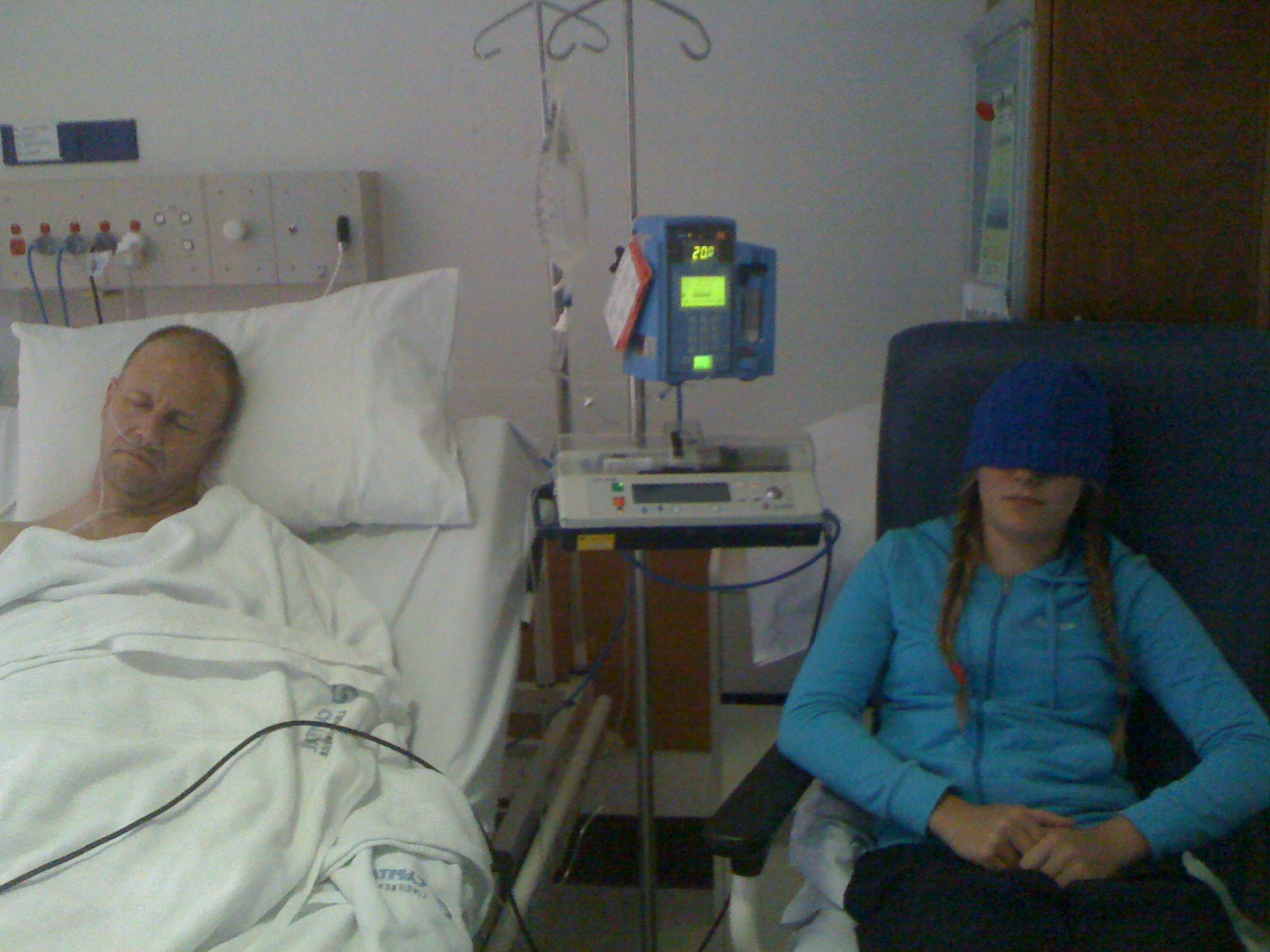
When crisis changes to chronic

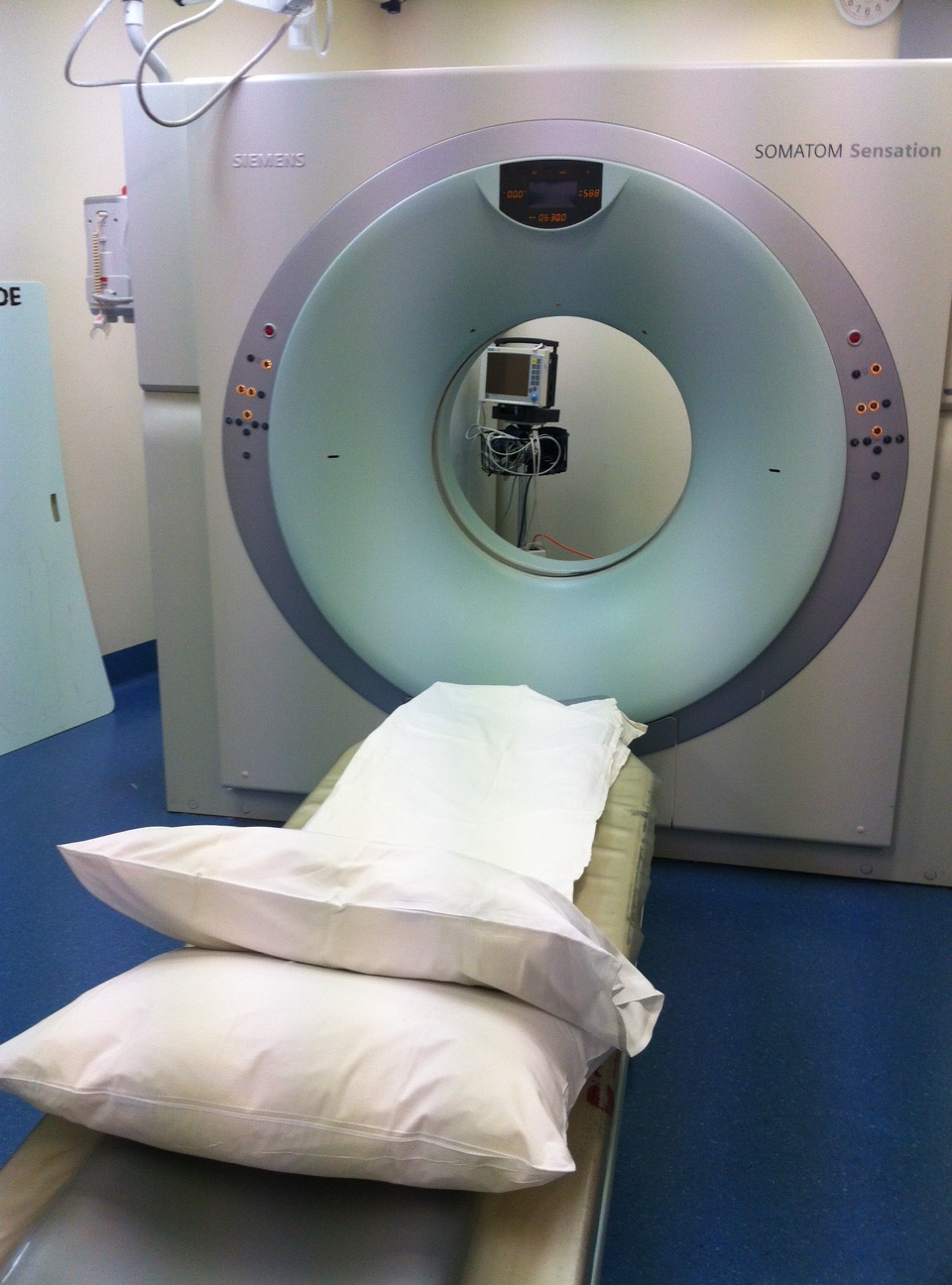
It began with a crisis. Taken to hospital, rushed through Emergency, hooked up to an ECG machine, off for x-rays, back for a CT scan, a massive fluid build up around the lung… looked like there could be a tumour. A whirlwind of people, activity and emotion. Within hours people were visiting, offering help, gathering to pray, preparing meals, picking up cars, contacting children. Within days I’d become the centre of attention, everywhere, it seemed! It was confirmed that I had cancer and the prospects didn’t look good. So many people from so many places turned up to see me. The nurses complained that there were too many people. Letters, cards, Facebook greetings, emails, came in from all over. Meals kept turning up at the right times. A small army of people unpacked our belongings and refurnished our house. Fifteen hundred students gathered in small groups at a conference to pray for me! It was intense! It was life and death in our faces every day.

I’ve seen our family cope pretty well with a crisis. We’ve had a few now! We made some very big decisions very quickly. We put new plans into place. We made the adjustments. We had the tough conversations without too many problems. We just did what we had to… and coped. We enjoyed the support from others. We were conscious of God’s strength and comfort and we prayed a lot.

But…

Things have changed. The pace has slowed. The crisis has gone and left us with the chronic. It’s become three weekly by three weekly, rather than day by day. Life is now shaped by chemo cycles. One week sick, two weeks better. One week sick, two weeks better. On and on. It’s exhausting and we don’t seem to be achieving much else in life. Sometimes we feel like we’re just drifting with the current or stuck in a rut going nowhere. It’s not so much action that’s needed now, but patience and perseverance and gentleness and self-control. And that seems so much harder. It doesn’t come naturally. We absolutely need the help of God’s Spirit.

22 But the fruit of the Spirit is love, joy, peace, forbearance, kindness, goodness, faithfulness, 23 gentleness and self-control.  (Galatians 5:22-23)

In many ways the excitement of the crisis has given way to the mundane of the chronic. The daily grind is hard work. Perhaps, even more challenging than the mountain climb. In the crisis I think to pray. In the chronic I’m more tempted to forget. Gratitude easily gets replaced with grumbling. Matters of eternity give way to matters of trivia. Urgency steps aside for complacency. I can forget to number my days and begin again to take for granted my months or even years. Oh, how slow to learn I can be!

I think it’s harder for others also. Initially, people were making every effort to visit, bending over backwards to offer support… as we tend to do in a crisis. But as time goes on it’s harder to sustain the effort. Life fills up, another crisis gets in the way, we have our own lives to look after. We forget to drop in, make the call, check up on each other, see if there is anything we can do.

To be honest, it can be rather lonely having a chronic illness. You feel just as sick and powerless and needy, but you’re pretty much left to manage on your own. There’ve been times when I’ve felt disappointed in people. Why haven’t they called? It wouldn’t be too hard to drop in. It’d be awesome if they’d just ask Fiona if there’s anything they could do to help. I long to hear what’s going on in people’s lives. I’m interested in knowing about work or family or the latest sporting achievement. I’d love to have people offer to come and pray with me, or read the Bible and talk about stuff. Hey, I’d even be up for a regular game of real Scrabble! Even a quick phone call just to say they’re thinking of me!

I shouldn’t whinge. Fiona tells me I shouldn’t write posts when I’m feeling revolting from chemo and she’s probably right! I have so much to be thankful for and I keep being overwhelmed by how many people tell me they’re praying for me. But, I’m trying to be honest and I’m learning lots about myself as well. As I reflect on many years of pastoral ministry, I don’t think I had begun to appreciate what it was like for some people struggling with chronic issues. People with physical or mental disabilities, people with CFS unable to get out of bed for much of the day, women with debilitating pregnancies, people without transport or living in nursing homes. I had so many opportunities to be an encouragement to others that I simply overlooked. As a pastor, I was always up for putting on my superman cape and dealing with a crisis… but the chronic was often forgotten. Out of sight, out of mind perhaps.

Jesus is the Pastor Supremo. He came to overcome our alienation from God, which is the biggest crisis we will ever face. He did so at enormous personal cost, sacrificing his life on the cross to bring us reconciliation. But we also see Jesus caring for those with chronic disabilities, people who are outcasts and isolated from others. He was willing to hang with lepers, prostitutes, tax cheats, and those despised by the religious leaders of his day. Jesus had a pastoral heart that didn’t overlook the needy and he called those who follow him to have the same attitude.

12 Then Jesus said to his host, “When you give a luncheon or dinner, do not invite your friends, your brothers or sisters, your relatives, or your rich neighbors; if you do, they may invite you back and so you will be repaid. 13 But when you give a banquet, invite the poor, the crippled, the lame, the blind, 14 and you will be blessed. Although they cannot repay you, you will be repaid at the resurrection of the righteous.”  (Luke14:12-14)

Here’s a thought. Next time you think of putting on a BBQ, think about people you know who might rarely get invited out. Are there lonely people at work or church who’d love an invitation? Perhaps, there’s someone who’s not well and you can make a special effort to include them. Maybe even offer to take the BBQ to their place if that’d make it easier!

On another occasion Jesus told a parable to describe those who belong to him and those who don’t. They’re challenging words.

34 “Then the King will say to those on his right, ‘Come, you who are blessed by my Father; take your inheritance, the kingdom prepared for you since the creation of the world. 35 For I was hungry and you gave me something to eat, I was thirsty and you gave me something to drink, I was a stranger and you invited me in, 36 I needed clothes and you clothed me, I was sick and you looked after me, I was in prison and you came to visit me.’

37 “Then the righteous will answer him, ‘Lord, when did we see you hungry and feed you, or thirsty and give you something to drink? 38 When did we see you a stranger and invite you in, or needing clothes and clothe you? 39 When did we see you sick or in prison and go to visit you?’

40 “The King will reply, ‘Truly I tell you, whatever you did for one of the least of these brothers and sisters of mine, you did for me.’  (Matthew 25:34-40)

The mention of brothers and sisters shows that Jesus especially has in mind the way Christians are called to treat each other. If we’re part of the same family, then we’re called to love our siblings. There’s a lesson here for those of us in churches to care for one another in our times of need. It should never be out of sight out of mind. But, I wouldn’t be too quick to say this stops with how Christians should treat each other. We’re called to do good to all, as we have opportunity. Do you know someone needing a place to stay? Is there neighbour down the street who never gets visitors? Is there someone at work going through a difficult divorce? Is there old friend with CFS who’s been doing it tough for so long that they’re embarrassed to even mention it? Do you know a single mum who never gets any time to herself? Would a friend appreciate you doing some shopping, spending time in the garden, running a few errands, taking the kids for a while? Is there someone you should get onto right away, just to check they’re doing okay?

How can you make a difference?

Consider it pure joy

Sickness, loneliness, trouble at work, struggles in marriage, financial pressure, wayward children, car accidents, overlooked for promotion, slandered, mocked, imprisoned, persecuted. Who wants a piece of that… any of it? And yet James writes in the Bible:

Consider it pure joy, my brothers and sisters, whenever you face trials of many kinds…  (James 1:2)

What was he thinking?! And he doesn’t simply say, look on the bright side, cheer up, things will get better. He says to consider it pure joy (or all joy) whenever you face trials. And he doesn’t restrict the range of trials. I take it this covers pretty much the full spectrum of nasty things that could happen to you. How do you adopt such a view of life? And is this any different to the power of positive thinking?

Perhaps we need to consider the meaning of joy. The temptation is to equate joy with happiness or a bubbly personality or a permanent smile. But joy runs deeper than an emotional response. It has to do with contentment and trust and confidence. In James’ words he calls us to a thinking response more than an emotional response. He’s not telling us how to feel about the trials we’re experiencing, he’s telling us how to think about our circumstances, to consider it pure joy when we face various trials. But why?

…because you know that the testing of your faith produces perseverance.  (James 1:3)

The experience of facing trials puts our faith to the test. It shows up what’s real and not real. Theoretical faith is no faith at all. Genuine faith is shown by it’s action, it’s fruit, the changes it produces. And the real test is perseverance, keeping on when things are tough, and finishing the race.

Sadly, I know a number of people who have claimed to have faith in God, who’ve claimed to be Christian, who have said most of the right things… but when pain and difficulties and trials have come along their faith has proved wanting. Perhaps they were presented with a false picture of God – one where he’d remove anything undesirable – and it didn’t stand up to their experience. Maybe they hadn’t really come to the point of trusting God at all. When life is good, when we’re healthy, wealthy and happy, it’s easy to think we’re in control and not bother trusting in God.

Trials of various kinds give us the opportunity to live out our faith, to demonstrate a faith that works. I would never have planned it this way, but my experiences with cancer over the past year have given me many reasons to examine my faith and look again to God. Will I trust God with what I do not like? Can I be contented and joyful in the midst of painful chemotherapy? Can I count it as pure joy to have an ‘incurable’ lung cancer? Please note, I’m not saying that the cancer is a good thing. God is sovereign over all, but he teaches me that cancer, disease and death is part of this cursed world that he will ultimately restore. I don’t go looking for trials, but they will come and the question is how I respond when they do.

I’ve had a number of people say to me that they’ve been observing my faith more closely since I’ve got sick. They’ve heard me preach and teach and counsel people over the years, but now they are watching how I respond personally? Is my faith really real? Does it stand up? Will I persevere or turn away? My prayer is that I will persevere as my faith is tested and consider it pure joy when I face these and other trials, because of what God is doing through them.

One of my problems is that I’m so short sighted. All I can see is the immediate trial. Right now, it’s the effects of chemo: the headaches and nausea and rashes and fatigue. Another time it’s the struggle of a difficult relationship, or the criticism of others, or my disappointment in myself. God is calling me to get the bigger picture, to grasp his perspective. James continues…

Let perseverance finish its work so that you may be mature and complete, not lacking anything.  (James 1:4)

The God who reveals himself in the Bible doesn’t promise health and prosperity… in this life. He doesn’t say that he will remove all our suffering and take away all our pain… in this life. But we can be confident that God is at work in all situations. He is growing our faith muscles against the resistance of trials and difficulties. He is strengthening us to persevere through the trials, that we might become mature and complete in him.

Do I always have this perspective? Sadly, no. Sometimes the end is hard to see behind all the hurt and the pain. And at these times God promises to help.

If any of you lacks wisdom, you should ask God, who gives generously to all without finding fault, and it will be given to you.  (James 1:5)

This is a wonderful promise. When we’re blinded to the truth of God at work in our lives, we should ask God for wisdom to see things more clearly, to see things through his eyes. And he promises to give generously. God knows it’s hard, he knows it hurts, he knows we’re weak, and he doesn’t find fault. He gives us the wisdom needed to be able to count it pure joy.

When I was younger I remember singing the song, ‘What a friend we have in Jesus’. It’s a great song, but I think this second verse means more to me now than it did back then…

Have we trials and temptations?
Is there trouble anywhere?
We should never be discouraged;
take it to the Lord in prayer.
Can we find a friend so faithful
who will all our sorrows share?
Jesus knows our every weakness;
take it to the Lord in prayer.

And so I will pray…

Heavenly Father,
Please give me the wisdom to see things your way.
Please help me to look beyond my current circumstances,
to be reminded that you are working within me,
to strengthen my faith,
to enable me to persevere,
and grow into maturity.
I ask that you will help me consider it pure joy as I face my trials.
Amen

Don’t panic – breathe!

Let me ask you, who willingly chooses to drink poison?

I do! Once every three weeks. Mind you, I’d prefer another option. I’m longing for that elusive targeted thereapy. But if it’s a choice between controlling the cancer or being controlled by the cancer, then I’ll take the poison. Having now spent nine months in regular chemo, you’d think that I’d be pretty cool with it by now. I know roughly what’s coming. There aren’t too many surprises. Well, at least there weren’t until last time.

As the chemo flowed into my veins, I found myself tensing up. My heart rate increased and my breathing laboured. I just wanted to pull out the tubes, get free and run out of there. The treatment only takes a couple of hours, but suddenly that seemed like a lifetime. I felt trapped and I started to panic. I knew it wasn’t rational, but it was real nonetheless and I needed to deal with it. So here’s what I did – three things:

  1. Prayed. Dear God, please help me. I’m not handling this. Please help me relax.
  2. Breathed. I concentrated on controlling my breathing so as to calm myself down.
  3. Listened to music. I put in my headphones and distracted myself with some James Morrison and Eva Cassidy.

I have a hunch, based on what others going through chemo have experienced, that this might not be the last time I’m tempted to panic. So I’ll keep talking to God about it, I’ll keep breathing, and I’ll make sure the iPod is charged.

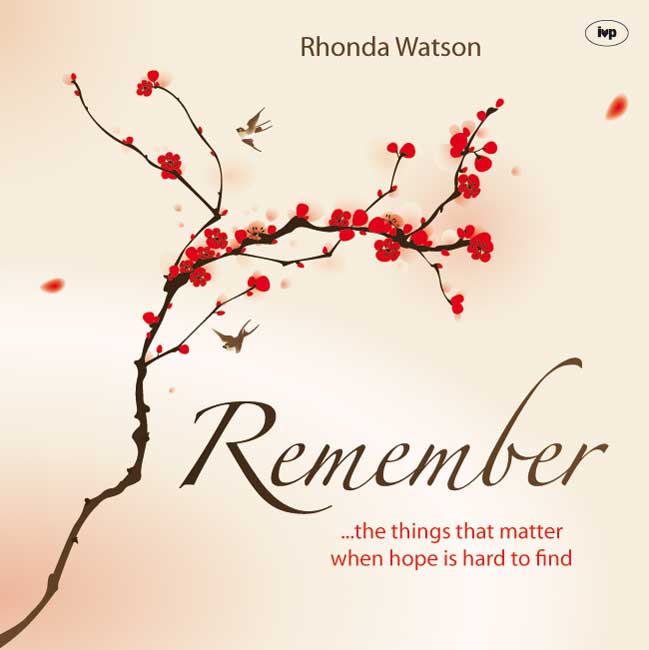
Remember the things that matter when hope is hard to find

RememberGood friends of ours sent us this book in the mail. I know they’re good friends because they sent such a good book! It truly is a gem. This is a book to read slowly. I didn’t – but I will! Take it a chapter at a time. Maybe read it more than once. Pause, reflect, write notes, meditate and pray.

Rhonda Watson has motor neurone disease (MND) and has lost her ability to speak, along with other physical functions. In the midst of her loss and grief she turns her heart to the Word of God. Not in any superficial or trite sense, but grappling with the ambiguities and complexities of life. Like so many of the Psalms, she cries out at the pain, she fights to maintain her trust in God, and she finds consolation in the character and promises of God. I found that I could identify with many of the author’s feelings and experiences, and I was encouraged by her honesty as she struggled to find answers and hope in God. My heart was warmed as I read Remember and these words from the foreword ring true:

Rhonda Watson writes with the sensitivity of a tender heart, tested in the furnace of trial, and the wisdom of someone who has learned to depend utterly on God for her daily portion of strength. I greatly appreciate the combination of the subjective – her own feelings and experience – and the objective truths of the Scriptures.  (p7)

The author follows the advice of Dr Martyn Lloyd-Jones in his book Spiritual Depression where he stresses the importance of talking to ourselves, instead of simply allowing ‘ourselves’ to talk to us. There are so many voices telling us what to think and feel and do, and sometimes the worst one to listen to is our own! It’s so much more helpful to listen to God’s voice and allow him to speak into our lives. God offers us true perspective and we do well to remind ourselves of God, who he is, what he has done, and what he promises to do.

Each chapter of Remember takes us on a journey of hope with the author. She grapples with the issues faced by those who are suffering and she turns our hearts and minds to the wonder and freedom found only in God. This is no simple exercise. It requires honesty, humility, and trust. We’re called to open our Bibles and prayerfully take God at his word. This book helps us through this process and encourages us to make our own responses in each of the following areas.

1. Beauty and ugliness

In a society obsessed with body image, it can be very difficult for those with chronic illness and disability. Instead of being overwhelmed by the ugliness of our situation or measuring ourselves by others, we are encouraged to look to Jesus who reveals the beauty of God. Jesus takes the ugliness of our sin and replaces it with his beautiful righteousness.

2. Silence and speech

Watson had spent her life speaking. She was a teacher, trainer, and educator. She mourns her inability to read books to her grandchildren or enjoy conversation with family and friends. And yet she writes:

I look forward to the day when, with healed tongue, I will sing and praise my Saviour. On that day my silence will be over.  (p37)

3. Fear and trust

Fear
Took me by the throat today
Shook me till
My bones rattled

Chased me
Relentless and cold
Insidious, mocking
Chased me all day

I could have stood my ground
But I ran
So fear
Grew stronger

I was captured
In the end
Quaking and fallen
Curled on the ground in shame

(Rhonda Watson, 2009. p63-64)

We’re encouraged to overcome our fears by turning to God who can be trusted. God is our mighty, sovereign, and loving Saviour. He calls us, as his beloved children, to trust him.

4. Thankfulness and bitterness

I found this chapter full of challenges. It’s so easy to feel that this world owes us something and to grow bitter at lost opportunities or unrealised potential through a disabling disease. Drawing on Oswald Chambers, Watson writes of the challenge to live an ordinary, unobserved, ignored existence as a disciple of Jesus. I might think that I should be doing extraordinary things for God, when he simply calls me to do ordinary things in an exceptional way – his way, for his glory, not mine! When I’m reminded of God’s extraordinary grace in Jesus Christ, it moves me toward thankfulness instead of wallowing in bitterness.

5. Joy and grief

Acceptance of grief is part of the journey toward joy.  (p107)

We don’t need to deny or suppress grief in order to experience joy. The Psalms give expression to a range of human emotions. They acknowledge and give voice to our pain, disappointment and grief. They show that it’s okay to cry out to God, to express our doubts, worries and fears. And they shine a light on the path to joy that can only be found in God himself. Joy is not be found in our circumstances, but through trusting our loving Father in Heaven despite our circumstances.

6. Delight and despair

In times of suffering it is so easy to give in to despair, to give up hope. Perhaps, we now view ourselves as unproductive and worthless. Watson speaks of two choices for how we think and act…

Choice 1: I am worthless, I don’t know why God would inflict this useless suffering on me, I give up, I will turn my face to the wall and surrender to these feelings of despair.
Choice 2: This is tough going, it’s hard to hold on to a sense of worth, but nevertheless I will commit my way to God, I will attune my desires to his ways, I will trust him, and I will seek to delight him.  (p132-133)

7. Awake or asleep?

Chronic illness can lead to sleepiness. Not simply staying in bed, but drifting aimlessly and passing the time with mindless distractions. Some of this is necessary, but failure to navigate can lead to shipwreck. We can slide into self-pity and resentment or drift into despair. We need awakening to how God sees us, our circumstances and this world we live in. Watson offers this prayer:

Our Heavenly Father,
Help us to stay awake.
We grow drowsy and distracted as we wait for you,
At times our hearts are loaded down with sadness and struggle.
By your Spirit, strengthen us,
By your Word, nourish us,
Keep us longing for our true home,
Forever with you.  (p160)

8. Life and death

Everyone one of us is going to die. This is our lot, but that doesn’t make it okay. Death wasn’t part of the good world that God created and it’s right to rage against it. It’s not a natural part of life and shouldn’t be viewed as such. Death sucks!

22 We know that the whole creation has been groaning as in the pains of childbirth right up to the present time. 23 Not only so, but we ourselves, who have the firstfruits of the Spirit, groan inwardly as we wait eagerly for our adoption to sonship, the redemption of our bodies. 24 For in this hope we were saved. But hope that is seen is no hope at all. Who hopes for what they already have?  (Romans 8:22-24)

Many of us go through life ignoring death. Those with chronic and terminal illnesses probably feel it’s presence more acutely. We groan along with the creation at the pain it causes. And we groan not in despair, but with hope and longing. Jesus in his death and resurrection has conquered death’s power over us. God has promised that he will abolish death and restore the creation, and we long for that day. We are meant for life, not death. Watson writes:

…there are two ways of looking at this day. Either I am dying of MND, or I am living with MND. There is a simple but profound difference between these two perspectives. One is death, one is life. The choice is: Which perspective will I accept for myself today?  (p166).

And so I will pray:

Please God, help me to choose life.

I thank God that he has used Rhonda Watson to write this honest and inspirational book. My only regret is that the cover has a feminine look about it! This is for blokes just as much as women. It’s a gutsy message. Remember is a book for all people, not simply those with illness of some form or other. We will all experience the struggles of faith in the face of suffering and temptations. This book calls us to remember the things that matter when hope is hard to find.

Journey with cancer – 7 Oct 2012

Dear family and friends,

IMG_1217This morning someone asked me if I was in remission. I looked so healthy! I told them that the cancer was being kept in check, but that I wasn’t in remission (as far as I know). It’s now over 10 months since I was diagnosed and I’m very thankful to God to be alive. In fact, my overall health levels seem to be higher than they were back then. My friend then asked me when I’d be finished on the chemo, and I couldn’t tell them. I’m about to have my 14th dose of 3 weekly chemo and it seems to be doing its job of controlling things. We recently read of someone who’d received 92 doses of the same stuff so I’ll keep going so long as it keeps working and my body can tolerate it.

Last week we had a visit to the oncologist. He was positive about how I was travelling and the treatment options ahead. He’d recently been updated on some targeted therapies for people with my type of lung cancer and he seemed prepared to speak with me about a longer term future. In fact, he went so far as to speak of the possibility of treating me more as a patient with a chronic illness, rather than a terminal illness. This was quite radical! It was very heartening to hear a more optimistic tone from our specialist. Of course, everyone is unique and responds differently to treatment, so there are no promises.

I need to be reminded to keep my trust in God rather than brilliant doctors or wonder drugs. God is the one who holds my life in his hands. He alone gives life and takes it away. He alone has the power to heal. And so we continue to call on God to heal me, we pray for wisdom for my doctors, we ask that the drugs will destroy the cancer, we plead for more days and years with my family and friends, we pray for new opportunities to serve God in this life that he’s given to me. If you too pray, we ask that you continue to remember me from time to time.

With deep appreciation,

Dave

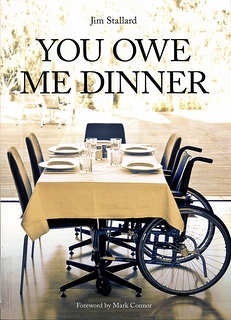
You owe me dinner

My wife told me to read this book. She said, “Read this and stop feeling sorry for yourself.” I must admit, I was a bit indignant at first. After all, I wasn’t feeling sorry for myself. And if I did choose to feel sorry for myself, then I obviously had every right to! I saw the cover of the book and quietly thought, “I’m sure having terminal cancer is a lot worse than being stuck in a wheelchair.” Well, I’ve now read the book and confess to having been a complete git! This is an emotional and gut-wrenching book that has seriously opened my eyes.

The author, Jim Stallard, thought he understood disabilities. He’d worked as a nurse among people with psychiatric and intellectual disabilities in the years when Australia was just beginning to correct some of it’s institutional abuse. He’d experienced struggles himself, suffering from type 1 diabetes and having gone blind in one eye. But when a freak accident left him a quadriplegic, he began a torturous and terrifying journey with disability that would continue throughout his life. In the midst of this, he has so much to teach us.

I won’t recount the story, other than to say that there’s something coming around every bend and it doesn’t let up! Just when you feel things couldn’t possibly get worse, they do. And they do again, and again, and again. Jim has stared death in the face over and over. We feel his powerlessness, his pain and his fear. We’re inspired by his humour, and we’re also confronted with his faith.

Jim’s wife is a humble champion. His children are inspirational. His carers and friends are genuine servants. The people who surround Jim enrich his life as they are enriched by his. I was encouraged by the commitment to prayer by so many. I was challenged by Jim’s continual trust in God through all that he endures. He his confident that nothing can separate him from the love of God that is in Christ Jesus our Lord. He refuses to confuse his changing circumstances with God’s unchanging love.

This book has also helped me to appreciate how difficult we can make things for people with disabilities. Our society is changing, more and more facilities are being offered, but it’s attitudes that need to change most. Ignorance is a big problem. Jim has helped me to appreciate how our churches can be just as alienating to those with disabilities. We can so easily send the message that this isn’t a place for you. These words are very confronting:

Every church in Australia makes a statement about people with disabilities, and in one aspect or another it is usually exclusion. If you show me a church with ramps at the door, I see a legal building. If you show me a church with signers for people who are deaf and Braille song sheets, large-printed hand-outs and ramps to the platform, I see a glimpse of heaven. The Kingdom of God is inclusive.

My disability is not to be feared, pitied or overlooked. It is a reality and a challenge for Pam and me every day. I acknowledge that it is sometimes a challenge for able-bodied people to deal with the issue of disability. But my disability is not my biggest problem. My biggest problem arises when able-bodied people only see my disability and not the rest of me.

What is most beneficial to me is not so much a building that meets all the legal requirements, but an attitude that meets all the attributes of Jesus. And whilst Jesus certainly healed people, he didn’t heal everyone. I wasn’t healed, but I still needed all of my faith to help sustain me.  (p96)

My hope is that this book will help me to treat people as people, whatever they look like, whatever their abilities or disabilities. It’s so easy to fear the unknown or unusual, to avoid those who are different from us, and to make assumptions about people without getting to know them. My desire is to become a source of help and hope for people who struggle with disability. This will mean keeping my eyes open and thinking and speaking and doing. It will mean not assuming or neglecting or walking away. Through my cancer, God has given me a personal taste of what disability can mean. Jim’s book has inspired me to change my attitude to others. Jesus has shown me God’s heart for all people, especially those with disabilities.

12 Then Jesus said to his host, “When you give a luncheon or dinner, do not invite your friends, your brothers or sisters, your relatives, or your rich neighbors; if you do, they may invite you back and so you will be repaid. 13 But when you give a banquet, invite the poor, the crippled, the lame, the blind, 14 and you will be blessed. Although they cannot repay you, you will be repaid at the resurrection of the righteous.”  (Luke 14:12-14)

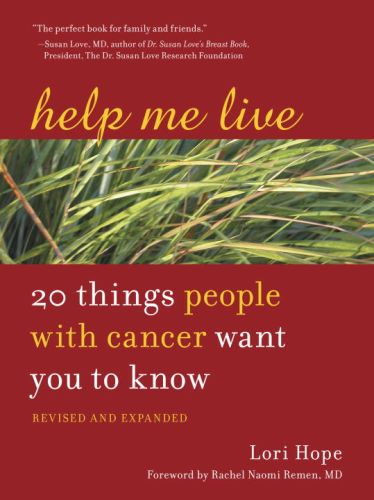
Help me live

HelpmeliveHelp Me Live: 20 things people with cancer want you to know is a must read for anyone who seriously wants to support people with cancer. This book is a treasure chest. Lori Hope understood! She surveyed hundreds of people with cancer, read widely on the topic, spoken with doctors, patients, carers and therapists. Most significantly, she battled with cancer herself. The book is chocked full of wisdom, insights, anecdotes, humour and pathos. It shares the actual stories of so many who have personal experience in these areas. It’s an excellent resource. I’ve read it and I’ll be recommending it widely.

So if you’re an oncologist or work in oncology, then please get yourself a copy and read it! If your husband, wife, child, parent, relative, friend, neighbour, or colleague have cancer – and you want to support them – then please heed the wisdom in this book. If you know people with cancer, but you’re scared of saying or doing the wrong thing, then this book will equip you to help. If you’re the pastor of a church, a medical social worker, a general practitioner, a nurse, or simply want to better understand others, then this will open your mind to the needs of many. If you have cancer yourself, and want to feel supported and loved and understood, then I recommend reading this book and passing it around.

Many of the books I’ve read have been written from a specifically Christian perspective. This one isn’t, but it shows an empathy for people with a range of beliefs and doesn’t discount faith in God or the significance of prayer.

I’ve read Help Me Live through once and I anticipate dipping into it again and again in days to come. Some of the issues it raises are worth exploring more thoroughly and I’ve begun compiling a ‘further reading’ file to explore at some point. At a recent ‘Lung Cancer and Mesothelioma Support Group’ meeting I mentioned this resource and none of the medical staff, cancer support staff, carers or patients were aware of it’s existence. But then neither did I until the author wrote to me a few weeks back. So let me give you the gist of it with a few quotes and snippets from the book.

The 20 things people with cancer want you to know

1. It’s okay to say or do the ‘wrong’ thing.

“Doing nothing or holding back is worse to me than doing too much or saying the wrong thing.”  (p20)

Six words in sequence that never fail: “I don’t know what to say.”  (p18)

2. I need to know you’re here for me, but if you can’t be, you can still show you care.

“I know that my being sick scares you. It scares me, too. Don’t stay away from me because of this. We don’t have to talk about it. Just be here for me.”  (p25)

3. I like to hear success stories, not horror stories.

“They spent the entire afternoon telling me about everyone they had known that had cancer, and telling me the details about how many of them had passed away. It made me feel terrified.”  (p32)

4. I’m terrified and need to know you’ll forgive me if I snap at you or bite your head off.

“I just need them to understand that I was not at my best mentally and emotionally and to be patient with me.”  (p42)

5. I need you to listen to me and let me cry.

“Sometimes someone would ask me how I was and when we started talking cancer, they changed the subject. That made me feel terrible.”  (p50)

6. Asking my permission can spare me pain.

“I liked it when people would call and make an appointment to come over and see me and call an hour before to check that I was up for it.”  (p62)

7. I need to laugh – or just forget about cancer for a while!

“I just needed someone to help take my mind off all the stuff going on. I didn’t want to think about the cancer. So just do things like watch a movie or go for a walk and just talk to them and treat them like you would if they didn’t have cancer.”  (p69)

8. I need to feel hope, but telling me to think positively can make me feel worse.

“Just think positive … hooey! LOL … that’s it? That’s all it takes to cure my cancer? And hey, you try thinking positive after a round of chemo.”  (p77)

9. I want you to respect my judgment and treatment decisions.

“He kept encouraging me to deny chemo, that it was poison. It didn’t help me at all. My choice wasn’t respected, and I was left with a sinking suspicion that I may be choosing to poison myself.”  (p92)

10. I want you to give me an opening to talk about cancer and then take my lead.

“I just wanted it to be normal. My friend came and we played Scrabble and talked, and it helped. Sometimes we talked about cancer. Sometimes we did not. But we played Scrabble just as we had most of our friendship.”  (p99)

11. I want compassion, not pity.

“Many words of heartfelt compassion without being condescending were said. ‘I love you’ meant a lot to hear, or ‘You mean so much to me’.”  (p105)

12. Advice may not be what I need, and it may hurt more than help. Try comforting me instead.

“I don’t like it when anyone starts a sentence with ‘you have to’.”  (p111)

13. I am still me; treat me kindly, not differently.

“People don’t change when they get cancer and suddenly stop wanting to be called smart, sexy, fun, funny, a good Christian, an excellent cook, singer, etc. or a total fashionista. People are more than their cancer.”  (p118)

14. If you really want to help me, be specific about your offer, or just help without asking.

“Instead of asking can I do anything, just do something, don’t wait for me or my caregiver to ask, because we more than likely won’t.”  (p123)

15. I love being held in your thoughts or prayers.

“A friend told me I was wrapped in her love and prayers. I’ve never forgotten those words, and years later when I had a health scare, I thanked her again and told her how much those words meant to me.”  (p128)

16. Hearing platitudes or what’s good about cancer can minimize my feelings.

“Beginning a sentence with ‘At least…’, at best minimizes and at worst totally dismisses a concern or worry.”  (p135)

17. I don’t know why I got cancer, and hearing your theory may add grave insult to injury.

“A few people act as if you might be contagious or had done something to deserve the disease. Now that really hurt, I suppose because of the little nagging voice inside that’s saying the same thing.”  (p139)

18. Don’t take it personally if I don’t return your call or want to see you.

“I wanted people to understand that I was tired and couldn’t return all calls or emails.”  (p146)

19. I need you to offer support to my caregiver, because that helps me, too.

“When friends called and said they were bringing meals over and asked whether Thursday or Friday would be best, I could cry. Not only was it a show of their love and support but also it relieved my wife of yet something else to deal with.”  (p152)

20. I don’t know if I’m cured, and bringing up my health can bring me down.

“On the ‘Are you cured now?’ issue, every time they ask it, it drives home the point deep inside of you that you will never know.”  (p162)

And a bonus, from the revised and expanded edition…

21. I am more grateful than I can say for your care, compassion, and support.

“Friends and school families came and took care of us. Took my daughter to school and sports. Set a website for meals and rides. Kept my dogs when I was in hospital. Kept my kid when I was in hospital! They saved my life, and I will be forever grateful.”  (p166)

On that note, let me say again that I am so thankful to God and to so many for their prayers, love, encouragement, and practical support. I need you to help me live, too!

Thank you!

Blessed be the name of the Lord?

I think I’m becoming more emotional! I’ve probably shed more tears in the past year than in all the years previous. It doesn’t take much to get me a little choked up and one of the big catalysts is music. At this point I must confess that I’ve become totally addicted to the TV music shows, The Voice and X Factor. Some of the singing has given me goosebumps. Some of the heart-wrenching stories behind the musos have brought tears to my eyes. Let me say, I think it’s good for me. Crying is a helpful pressure release valve, and I find that music sometimes flicks the switch.

Those of you who know me via church, will recognise that I’m not much of a musician. Sometimes I drift off during the singing. Other times I find myself kind of lip-syncing. Very occasionally, I get into a song and belt it out with gusto. Sometimes I find myself stopping to think, what exactly are we singing?

One song that has become something of an anthem in the Christian circles I mix in is Matt Redman’s Blessed be the name of the Lord. With a great band and lots of people singing, it can really get you going. I’ve sung it many times, I enjoy it, and at times I’ve been swept along by it. But until very recently I haven’t stopped to think about what we’re actually singing. I could be wrong, but I suspect that few others have either. This is a shortened version of how it goes:

Blessed Be Your Name
In the land that is plentiful
Where Your streams of abundance flow
Blessed be Your name

Blessed Be Your name
When I’m found in the desert place
Though I walk through the wilderness
Blessed Be Your name

Blessed be Your name
When the sun’s shining down on me
When the world’s ‘all as it should be’
Blessed be Your name

Blessed be Your name
On the road marked with suffering
Though there’s pain in the offering
Blessed be Your name

Every blessing You pour out
I’ll turn back to praise
When the darkness closes in, Lord
Still I will say

Blessed be the name of the Lord
Blessed be Your name
Blessed be the name of the Lord
Blessed be Your glorious name

It’s a song for all seasons. It’s a message of contrasts and extremes. We sing of plenty and abundance, the sun shining and the world being as it should be. But we also sing of the desert and the wilderness, suffering and pain. The refrain says that it doesn’t matter what comes our way, we will bless God’s glorious name. These are bold promises we are singing and I wonder if we sing them with integrity. When everything is cruising along nicely, how often do we stop to thank God for his goodness to us? When our world seems to be falling apart, how easily do we offer praises to God?

A few weeks back I was singing this song with a crowd of others and I found the tears flowing in the final chorus:

You give and take away
My heart will choose to say
Lord, blessed be Your name

We kept singing over and over You give and take away. I felt like I’d been pierced through the heart. God had given and he had taken away… from me! He’d given me my health and and now it was gone. He’d given us the plan of heading to Darwin and brought us right back to Canberra. He’d given me dreams for the future and he’d cut them short. He’d given me life and he’d take it back again. Suddenly, this song hurt. It asked questions, real questions, of me: Will my heart choose to say Lord, blessed be Your name? How will my faith stand up to the challenges of circumstances? Am I a fair-weather believer? Do I simply turn to God because he protects me and shields me? Will I trust him and honour him in my darkest hours?

As I sang these words and contemplated these thoughts I remembered that I’d heard the words and the context before somewhere. They’re taken from the introduction to the Book of Job in the Bible. Job is a bloke who’s experiencing extreme suffering. His livelihood has been completely taken from him and his family have been killed in a catastrophic disaster. This is suffering and pain at the top end of the richter scale. It’s far more than I’ve endured, or ever want to. This isn’t passing and failing tests at school. It’s not struggling with diets or disappointments. It is life and death. It’s God giving and taking away. We may know people who’ve faced such tragedy, but it doesn’t happen often at this level. How will Job respond? Of what value is his faith? Will he acknowledge and turn to God?

This is how he responds after hearing the disastrous news:

20 At this, Job got up and tore his robe and shaved his head. Then he fell to the ground in worship 21 and said:

“Naked I came from my mother’s womb,
and naked I will depart.
The Lord gave and the Lord has taken away;
may the name of the Lord be praised.”

I think Matt Redman’s song is worth singing. But I also reckon we should pause and consider if we can sing it in all honesty. It’s ridiculous to mouth the words as though they’re the latest Christian pop song. They cut to the heart. They lay bare our soul. They point us to the Lord who leads and guides us through the light and the darkness. I pray that God will enable me to honour his name, whatever he gives and whatever he takes away.

And I think I’ve got it easier than Job in another way. Job didn’t know about all that God had planned to give in the future. A future that has now happened. He didn’t understand that God would give his only son, Jesus, so that all who put their trust in him would not perish, but live forever. Once we grasp this, we can know for sure that God gives far far more than he will ever take. Blessed be the name of the Lord.

Pendulum swings

DJP_2179The pendulum swings continue. A week ago I was enjoying life with my wife, riding a ferry on Sydney Harbour. Today I climbed out of bed for the first time in five days since having chemotherapy. Chemo messes with my body big time. But it also messes with my mind. When I’m relatively chemo-free, I start to feel ‘normal’, like I can make plans and take on the world.  Then comes the poison again, and the world seems to collapse around me. I worry that I won’t get better and that I won’t be able to do anything much at all.

Perhaps, I need to adopt a mathematical approach to working out how I’m going and how much I can do…

(G + B) ÷ 2 = R

G is the good times
B is the bad times
R is a realistic assessment of where I’m at and what I can do!

In other words, when I feel really good, I need to realise that this is the top of the pendulum swing and it won’t be this good for long. And when I feel bad, I need to remember that things will get better and it’s just for a time. Split the difference and I will have a more realistic picture of things!

More importantly, I don’t want to be controlled by the pendulum, whether it’s mood swings or health swings or any other kind of swing. I have the capacity and the responsibility to choose how I will respond to my circumstances. Victor Frankl, who spend time as a prisoner in Nazi concentration camps, highlighted this fact in his book Man’s Search for Meaning. He wrote:

“Forces beyond your control can take away everything you possess except one thing, your freedom to choose how you will respond to the situation.”

“When we are no longer able to change a situation, we are challenged to change ourselves.”

“Life is never made unbearable by circumstances, but only by lack of meaning and purpose.”

Frankl was a brilliant and exceptional man. In the face of extreme suffering, he shaped a philosophy of life and an approach to therapy that has had massive influence. I enjoy reading his works, and find it helpful to be reminded that I can choose how I’ll respond to what happens to me. I’m not simply a victim (or otherwise) or my personal circumstances.

But I’m also a little wary of Frankl’s positivism. Yes, it’s up to me to choose, but what if I can’t? I might want to take control of my thoughts and feelings, but struggle to do so. What if I’m overwhelmed by my bad experiences or seduced by the good ones? What if I’m simply too weak to think clearly and rationally? What if the treatment impacts my mood so greatly that I don’t know what I’m feeling?

I take comfort in the knowledge that God knows what I’m thinking and what I’m feeling. He understands the full impact of my circumstances upon me. He’s aware of my tendency to swing with the pendulum. He’s seen me get cocky when things are going well and he’s seen me depressed when things seem too hard. And he cares for me in all these situations.

I’m comforted by the fact that even if I despair and struggle to pray, God will help me in my weakness.

26 In the same way, the Spirit helps us in our weakness. We do not know what we ought to pray for, but the Spirit himself intercedes for us through wordless groans. 27 And he who searches our hearts knows the mind of the Spirit, because the Spirit intercedes for God’s people in accordance with the will of God.  (Romans 8:26-27)

I’m encouraged by the promise that whatever circumstances may threaten to overpower me, nothing can separate me from the love of God in Jesus Christ.

38 For I am convinced that neither death nor life, neither angels nor demons, neither the present nor the future, nor any powers, 39 neither height nor depth, nor anything else in all creation, will be able to separate us from the love of God that is in Christ Jesus our Lord.  (Romans 8:38-39)

The pendulum will continue to swing. Life will have its ups and its downs. I will get tossed around more than I would like. But I thank God for his strength and grace to see me through.

A temporary leave pass from Cancerland

A few weeks back I asked the kind staff at my hospital if I could put off having treatment for 10 days, so as to enjoy a brief holiday with my family. “Absolutely!” they said. “It’s so important to get some fun time with the family.” And they know. They spend time with hundreds of cancer patients.

We’ve just had a wonderful time away with all our family courtesy of some thoughtful and generous people. Good friends of ours won a holiday in an apartment on the Sunshine Coast, other friends helped out with our flights, still others offered cars, transport, surfboards and a place to stay on the way there and back. Wow! This kind of kindness puts a spring in the step and a sparkle in the eye. It’s lovely to be loved in such thoughtful, practical and generous ways.

It was great to escape the sub-zero mornings. Fiona and I swam each day in the warm waters of the ocean. The kids surfed. We walked through the national park and along the beaches. I found the best coffee available. I read newspapers, David Pocock’s biography, and a book on ‘social entrepreneurialism’. We watched the Wallabies scrape in against the Pumas on the Saturday and enjoyed our time with a very friendly local church on the Sunday.

On arriving back in Sydney, the kids headed home while Fiona and I stayed to attend a 2 day Refresh Conference at Milson’s Point, for husbands and wives involved in leading new churches. We had planned to be at this conference for some refreshment from the hard work of church-planting in Darwin, and at one stage I was going to be giving a couple of the talks. All that has changed, but it was still a great encouragement to spend time with other church-planting couples and find out more of what God is doing throughout Australia and New Zealand. It lived up to it’s name and we arrived home refreshed. I think the harbour views and the wonderful restaurant meals did their bit to help!

Fiona and I enjoyed taking ferries on the harbour, watching the city lights at night, and generally having some time to ourselves. We talked a little about the future and the possibilities for life and ministry. Though I sometimes found myself getting a bit uptight as we talked. It’s not easy not knowing what lies ahead (yes, I know we never do, but…) and some of the possibilities are hard to accept. We do need to make some decisions, but we probably need to ask God for a large dose of his grace and the strength to trust him – come what may – as we go about it. And we’d value your wisdom, thoughts and prayers as we plan.

Having some time away made it easier to forget about the cancer for a while. You can’t see it and the fun in the sun makes it seem so far away. I thank God for my temporary leave pass from Cancerland. I’m far more than someone who has cancer. ‘Cancer patient’ doesn’t define who I am, and I don’t need to be reminded of it 24/7. In the midst of all that’s serious, all that hurts, and all that produces worries and fears, escape is a good thing. And it’s not escape from reality. It’s more about prioritising other realities of life such as family, relationships, recreation, reflection.

There is hope

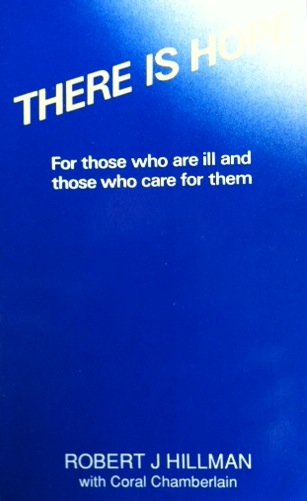
Don’t judge a book by its poorly photographed cover! There is hope: for those who are ill and those who care for them. That includes me, and my wife and children, my parents, my in-laws, our church, our friends, and so many more. There aren’t too many scarier diagnoses than lung cancer, especially once it reaches stage 4. Lung cancer kills more people than the next 3 cancers combined. So where is the hope? And are we talking about hope for a cure, hope for a better life, or hope for eternity?

Bob Hillman wrote this little book over 20 years ago, toward the end of his journey with ‘non-curable’ cancer. He had a long and difficult struggle over many years and was sometimes tempted to give up. However, the love from God and family and friends gave him reasons to continue and he left a powerful legacy in the lives of many. Friends gave me their copy of his book for my birthday, and it’s already made a difference in my life.

This book outlines different types of hope: 1) present hope that helps in everyday life, improving the quality and, sometimes, length of life; and 2) future hope for life beyond death, found in a relationship with God through Jesus Christ, and shaping the character of life here and now. It also warns against the dangers of false hope. When you’re seriously ill you can be tempted to expect too much from your therapy, depend too much on being cured, and fall prey to all sorts of claims and promises of miracle treatments and cures. I found this outline extremely helpful. While my hope lies ultimately in the God who raises the dead, hope remains essential to living today, tomorrow and the next. Without hope we have nothing to live for.

Bob is candid about his experiences in battling cancer and the things he found helpful. He recognised his limitations, but he was willing to work within them, and often push beyond them. He was patient with others who were sometimes unhelpful and occasionally cruel in their claims or advice. He’s a testimony to God’s grace and power at work through human frailty and weakness.

There’s a lot of talk these days (but often very little action) about multi-disciplinary healthcare and the need to understand and treat the whole person. Bob devotes a number of chapters to addressing emotional, relational, physical and spiritual factors that give present hope in dealing with cancer and other serious and chronic illnesses. It strikes me that these insights are just as important for the healthy as they are for the sick.

Psychological factors have a major impact on our health and general well-being and functioning. Bob described his battle with depression weighing on him more heavily than his terminal cancer. He encourages us to speak up about our struggles and to not be ashamed to seek help. Counselling may uncover issues contributing to our poor health and may provide better strategies for dealing with them. Anti-depressants could be the help we need to cope more effectively with the struggles of life. Perhaps we need to stop living on adrenaline, de-stress and remove the clutter in our lives. If we believe that we’re personally responsible to keep the world spinning, then maybe we should hand it over to God and enjoy the benefits of doing so!

Serious illness is a major wakeup call. Changes are forced upon us, and sometimes for the better! It’s not too late to change our diet, begin some exercise, increase our hours of sleep, enjoy some recreation, pick up a hobby, laugh a little more. The importance of good relationships with others is heightened. Maybe it’s time to resolve that grievance, offer him or her forgiveness, or seek reconciliation with the estranged friend. Time with family, having fun together, showing love and kindness, serving others – all valuable stuff and all so health promoting! Incidentally, I read an article in the Canberra Times yesterday that provided evidence that married people have much better outcomes than single people in dealing with cancer. Whether it’s a wife, a husband, a good friend, or an organised support group, relationships are so important. God has given us relationships to invest in and reap the dividends from. Don’t neglect them.

Bob Hillman’s hope is shaped by his knowledge of God. God’s word is the spiritual food we need to survive and we’re encouraged to set aside time to meditate on his word. God invites us to speak with him – to pray – and he takes all our calls. We’re urged to spend time with other followers of Jesus, to support one another, share each other’s burdens, celebrate one another’s joys, and point each other to our God and Saviour.

Shaping our present hope, is the confidence we have of an eternal hope in Jesus Christ. If this life is all we have, then I can understand people clinging on at all costs. I can appreciate the despair that comes when all the medical evidence is against us. But one day, whether by cancer or some other tragedy, each life will come to an end. We must face this reality with an open mind to God. The message of this book, and of God’s book, is that there is hope for eternity to be found in Jesus. The Apostle Paul prayed that others would know this hope, and this is my prayer also.

17 I keep asking that the God of our Lord Jesus Christ, the glorious Father, may give you the Spirit of wisdom and revelation, so that you may know him better. 18 I pray that the eyes of your heart may be enlightened in order that you may know the hope to which he has called you, the riches of his glorious inheritance in his holy people, 19 and his incomparably great power for us who believe. That power is the same as the mighty strength 20 he exerted when he raised Christ from the dead and seated him at his right hand in the heavenly realms.  (Ephesians 1:17-20)

The insecurity of my introspection

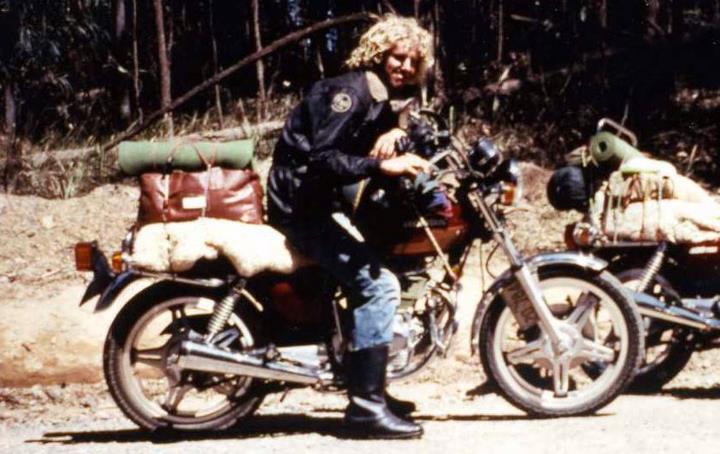
When I was in my late teens I seem to remember spending a lot of time praying. There were two main reasons for this. The first was that I rode motorcycles and I didn’t want to become a ‘temporary Australian’. As I look back, I’m sure there was something inconsistent about breaking the speed limit and asking God to keep me safe at the same time! The second reason I prayed a lot is that I kept getting myself into trouble. I’d do things I knew I shouldn’t do, and that I didn’t want to do, and I’d just keep on doing them. Many a night I’d be praying through this long list of things I’d done wrong, just in case I died that night and God still held them against me.

I didn’t realise it at the time, but my problem was that I thought it was up to me to make myself a Christian and to keep myself a Christian. If only I could be good enough for God. I’d try and turn over a new leaf each time I failed – which was pretty often, daily even. Surely, if I confessed the things I’d done to God, and didn’t miss any, then he couldn’t really blame me. To be honest, I now recognise that I was living in fear and insecurity. I was anxious about dying, and deep down I knew I wasn’t at peace with God. Having grown up in a Christian family, always going to church, and having called myself a ‘Christian’, this was a pretty strange place to be.

My problems intensified when I moved away from home. In many ways I longed to escape my past, start afresh, and do everything right from now on. And people wouldn’t label me as a hypocrite because they couldn’t judge me by my past failures. Somehow, I thought a change of environment would make it easier to satisfy God too. The problem was that the environment changed but I didn’t! I failed almost immediately and my new circumstances just provided me new opportunities to stuff up. And so I started to doubt the whole Christian thing. Perhaps, there was no God. Or if there was, then I needed to admit that I didn’t really belong to him. I was a disappointment to myself, to others and to God.

Something happened to change all this. Someone helped me to grasp the difference that Jesus makes. I’d heard the language – Jesus died to save you from your sins – but I hadn’t understood what this meant. It was reading these verses from the Bible that turned my whole life inside out:

But God demonstrates his own love for us in this: While we were still sinners, Christ died for us. Since we have now been justified by his blood, how much more shall we be saved from God’s wrath through him! 10 For if, while we were God’s enemies, we were reconciled to him through the death of his Son, how much more, having been reconciled, shall we be saved through his life!  (Romans 5:9-11)

The idea of being justified comes from the world of legal transactions. It means to be declared in good standing – with God in this case. The reason for the good standing is that the penalty has been payed and the debt fully cancelled. And the payment here is nothing less than the death of Jesus Christ. In short, God no longer holds anything against me because Jesus has fully paid the price for all my failures by dying upon the cross. Jesus takes the judgment I deserve. It’s like he swaps places with me and is executed in my place. The implication of this, or the how much more argument, is that because the price is fully paid then I can be fully confident of being in good standing with God – now and on the day when everyone is called to give account. Wow!

This was revolutionary for me. This meant that because Jesus had died for me, then my past failures, my present failures, my forgotten failures, my future failures – they are all paid for in full. No judgment to come. Nothing to fear. It’s not about my performance or my penance or remembering my every shortcoming. It’s all about Jesus and what he’s done to guarantee me a relationship with God. There’s no pride in this either, for it’s all God’s work. Once I’d grasped this, I can honestly say that everything changed. It’s not that I became perfect – far from it – it’s that I knew I could rest my confidence in God.

That was many many years ago and a lot’s happened since then – especially this past year. Recent months have presented quite a few challenges to my beliefs and my confidence in God. Being faced with my own mortality has taken things to a whole new level. It hasn’t always been plane sailing. In fact, there’ve been a few times when I’ve slipped back into the errors of my teenage years. What if I stop believing in God? What if doubt gets the better of me? What if I’ve made all this up? What if I’m really hollow, living a facade, and there is no substance to my faith? These sorts of struggles have bothered me in the dark times, but I know that the answer remains the same. It’s not up to me. It’s not my performance. It’s not my good life or the strength of my faith or the sincerity of my confessions that secure my relationship to God. It is entirely God’s gift through the substitutionary death of his Son, Jesus Christ. As I was reading through 2 Corinthians earlier today, I was encouraged also by these words:

20 For no matter how many promises God has made, they are “Yes” in Christ. And so through him the “Amen” is spoken by us to the glory of God. 21 Now it is God who makes both us and you stand firm in Christ. He anointed us, 22 set his seal of ownership on us, and put his Spirit in our hearts as a deposit, guaranteeing what is to come.  (2 Corinthians 1:20-22)

This is my prayer:

Thank you God that you offer failures like me a relationship with you. Thank you Jesus for dying in my place and paying the full cost for all my failings. Thank you God for taking hold of me, keeping me in your care, and giving me your Spirit as a guarantee of life with you forever.

Listening, learning, laughing

Following my recent post on preventing foot in mouth disease, a friend suggested that I highlight words and actions that people with cancer would find encouraging or helpful. As a ‘newby’ to cancer I thought it’d be wise to seek feedback from others who’ve had the disease for some time. So I posted on a lung cancer survivors forum and asked for feedback. It’s hard to summarise the comments because everyone is different, but I’d like to highlight just few things that resonated with me:

Be willing to listen.
Seek to understand by asking questions.
Humour is a wonderful balm.

Most helpful was a reply I received from Lori Hope, who has Stage IV lung cancer like myself. She is an author and blogger who has written extensively on the experience of having cancer and caring for those who have the disease. I’ve just begun to work through her writings and have already found many wonderful insights. If this is something you’re keen to understand more fully, then I recommend you check out her website or blog. I’ve ordered a copy of her book, Help Me Liveand I anticipate drawing on her ideas for encouraging those around me. Here’s a taste of her wisdom in an acrostic that I grabbed from her website:

ope  – Keep it positive; no horror stories; highly suggestible.

mpathy – Imagine what your friend is going through; don’t pity, which implies rank.

isten – Your friend may need to talk; but don’t try to force them.

ermission – Ask before giving advice, sharing info, visiting.

ake it about them – It’s not about you, what you think they should do or feel.

scape – Help them escape through humor, light media.

ove – Say I love you if you do; what people with cancer said they most wanted to hear from family and friends.

nitiate contact – Check in, leave messages saying you don’t need to call me back; send cards (#1 form of social support women said they wanted); visit (after asking permission).

alidate their feelings – Say things like, “That must be difficult”; don’t minimize feelings by saying they just have to think positively; don’t deny their feelings by saying they shouldn’t feel sad/angry, etc.

ducate yourself – Who is the person with cancer? Educate yourself about the disease; about what your friend enjoys and needs and wants, including their interests.

What comfort?

I didn’t make it to church this morning. The toxic effects of chemo were still knocking me around and I didn’t feel up to leaving the house. I’d been bed-ridden most of the past few days and was feeling rather miserable, so I thought I’d stay at home and read a bit of the Bible. I’m glad I did because it helped me get my eyes off my misery and onto the source of comfort and compassion. These verses stuck out for me…

Praise be to the God and Father of our Lord Jesus Christ, the Father of compassion and the God of all comfort, who comforts us in all our troubles, so that we can comfort those in any trouble with the comfort we ourselves receive from God. For just as we share abundantly in the sufferings of Christ, so also our comfort abounds through Christ.
(2 Corinthians 1:3-5)

Sometimes God can seem so remote, disinterested, uncaring, even cruel. Suffering, injustice, oppression, sickness, pain, disaster, corruption – they all seem to testify against God. But the trouble is we’re only looking at part of the evidence. If we look closer we’ll see that God cares deeply about all this misery and he promises to support us in our suffering. This doesn’t mean he’ll take the pain away or remove the suffering, but he promises to comfort us in our struggles.

Last week we listened to a friend explaining the message of Psalm 23. We were reminded that while these words are often read at funerals, they have great comfort and significance for the living. Verse 4 speaks of God being with us in the darkest times…

Even though I walk
through the valley of the shadow of death,
I will fear no evil,
for you are with me;
your rod and your staff,
they comfort me.

Notice that it doesn’t promise that we’ll avoid walking through very difficult places. Nor does it say that God will come in a helicopter and lift us above the dark valley. This is not a promise that suffering will be taken away, but that God will be with us every step of the way. He’ll be our guide and protector. He offers us comfort even in our darkest hour.

But in what sense is God the Father of compassion or the God of all comfort? Is it just rhetoric? Is this just religious pep talk to help us cope with our misery? Is it no better than a cliché in the centre of a sympathy card? Friends, I’m confident that there’s substance behind these words that means they’re powerful and true. The Apostle Paul bases his convictions about God on the evidence that Jesus died for our sins and that God has raised Jesus from the dead. God’s promise is to do the same for all who call on him. A few verses later in 2 Corinthians he writes…

Indeed, in our hearts we felt the sentence of death. But this happened that we might not rely on ourselves but on God, who raises the dead.
(2 Corinthians 1:9)

The resurrection of Jesus gives grounds for relying on God. If God has done this for Jesus, then we can trust him to do the same for us. And it’s not just pie in the sky when you die. The promise is that God will comfort us in our troubles now. He’s with us when we’re sick. He understands when we’re conflicted and confused. He cares when we fearful. He will not leave our side even when we’re dying. And the comfort he brings is that he’s fully guaranteed our future in Jesus Christ.

The challenge to me in these verses is to pass on the comfort that I’ve received from God. This comfort isn’t for my sake alone – it’s for all who groan and struggle and grieve. It’s for all who’s souls are restless and troubled. I don’t need to despair. I have no reason to spiral in self-pity. No, God has comforted me that I might bring his comfort to others. He calls me to be a blessing to those around me, by pointing people to the compassion and comfort that comes from him alone.

Preventing foot in mouth disease

foot-in-mouthCancer is a scary topic and it’s hard to know what to say to someone who has it. I admire people who’ve taken the time to ask me questions, share some encouragement, and speak up even when it’s awkward. I’ve been overwhelmingly encouraged by the words of so many. It’s understandable that some people will simply want to avoid the topic, but there will likely be one or two who plunge right in with both feet in their mouths! For the most part, I’ve had very supportive and helpful things said to me, but here are a few things I’ve heard that you might want to avoid…

I know how you must feel.

Everyone’s experience is different. Most of us will know someone who has cancer, either now or previously, and we may have learned a lot from them. But it’s impossible to know how each person is handling it, or to understand their feelings, emotions, and thoughts. I’d suggest it’s far more helpful to ask how the person is feeling and then respond to what they are willing to share.

So how long have you got?

This is a brave question, but it’s kind of blunt, isn’t it! The truth is no one but God really knows. If the doctors have given a likely prognosis, it is simply that – likely, not guaranteed. We want to be in control and know how long we or others have to live, but it’s presumptuous to think that we can know the future. What’s more, if the doctors have warned that the patient does not have long to live, I doubt it will be encouraging to focus in on this.

Yeah, I had a friend/relative with cancer and they died…

It’s common when hearing of another’s experience to springboard into speaking of our own. I’ve heard (and participated in) some conversations that bounce backwards and forwards, with each person talking about their own stuff, without either acknowledging or engaging with what the other is saying. And besides, just because you know someone who’s died of cancer, it doesn’t mean that I will be encouraged to hear this!

Yeah, I had a friend/relative with cancer and they’re now completely healed…

Nor will it necessarily encourage me to keep hearing stories of remission, survival, wonder treatments, or miraculous healings. As I’ve said, everyone’s experience will be different. Even two people with the same cancer and receiving the same treatment will experience a different journey and have different outcomes. Having said this, I have found it helpful to hear words of empathy from those who are well experienced with the impact of cancer. It’s about engaging with one another, rather than just trading stories!

You’ll be right.

I might not be. What do you know, that I don’t? Positive thinking needs reason and substance behind it. Platitudes and blind optimism don’t offer much encouragement.

So what do you do with all your time?

People who are chronically ill often struggle with their lack of productivity. If they’ve previously been active, employed, and busy, then they could hear such a question as a criticism or judgment. While the question may be intended as a simple enquiry, it may induce grief and longing for better times.

I know God will heal you.

Do you really? How do you know? We need to be very careful about presuming to speak the will of God. A number of people have told me this already and, while I’m sure they are well intentioned, I’m a little suspicious. God hasn’t said anything specifically to me about it. While I pray that he will heal me, and I would love you to join in this prayer, I believe that God wants me to trust him whatever he has planned.

Let me say as I finish, that I haven’t written this to shut people up! It’s so important we talk with each other. I’m so grateful that people care enough to speak with me. It often takes real courage. Most people are keen to be encouraging and I want to express my appreciation. My prayer is that these words of mine will help us all to better support others who are are struggling. I recommend reading through the Book of Proverbs in the Bible which has many wise words to say about how we speak with one another. Try these:

12:18  The words of the reckless pierce like swords,
but the tongue of the wise brings healing.

16:24  Gracious words are a honeycomb,
sweet to the soul and healing to the bones.

A strange urge

I’ve developed a strange urge this year. It hits me every time I see someone smoking. I feel like going over to them and asking them to give up – to quit. I’m seriously tempted to take off my shirt, show them the scars on my side, and let them know that lung cancer is no fun at all (even though mine isn’t from smoking). But you know what? I don’t! I just turn away and keep on going. The problem is I’m gutless!

I have another urge, a deeper urge. Every time one of my friends shows a disinterest in God or dismisses Christianity, I feel like pleading with them check it out – to reconsider. I want to point to the scars on Jesus’ hands, the wounds in his side, and let them know that God offers each of us a fresh start because of Jesus’ crucifixion. The consequences of rejecting God are serious, but I want to speak of the love of God, his offer of forgiveness, and his promise of life beyond death. But you guessed it! Too often I say nothing at all. I just ignore the issue and continue as though it doesn’t really matter. Let me apologise for being gutless! Seriously, let’s talk.

Waking up with a Harley

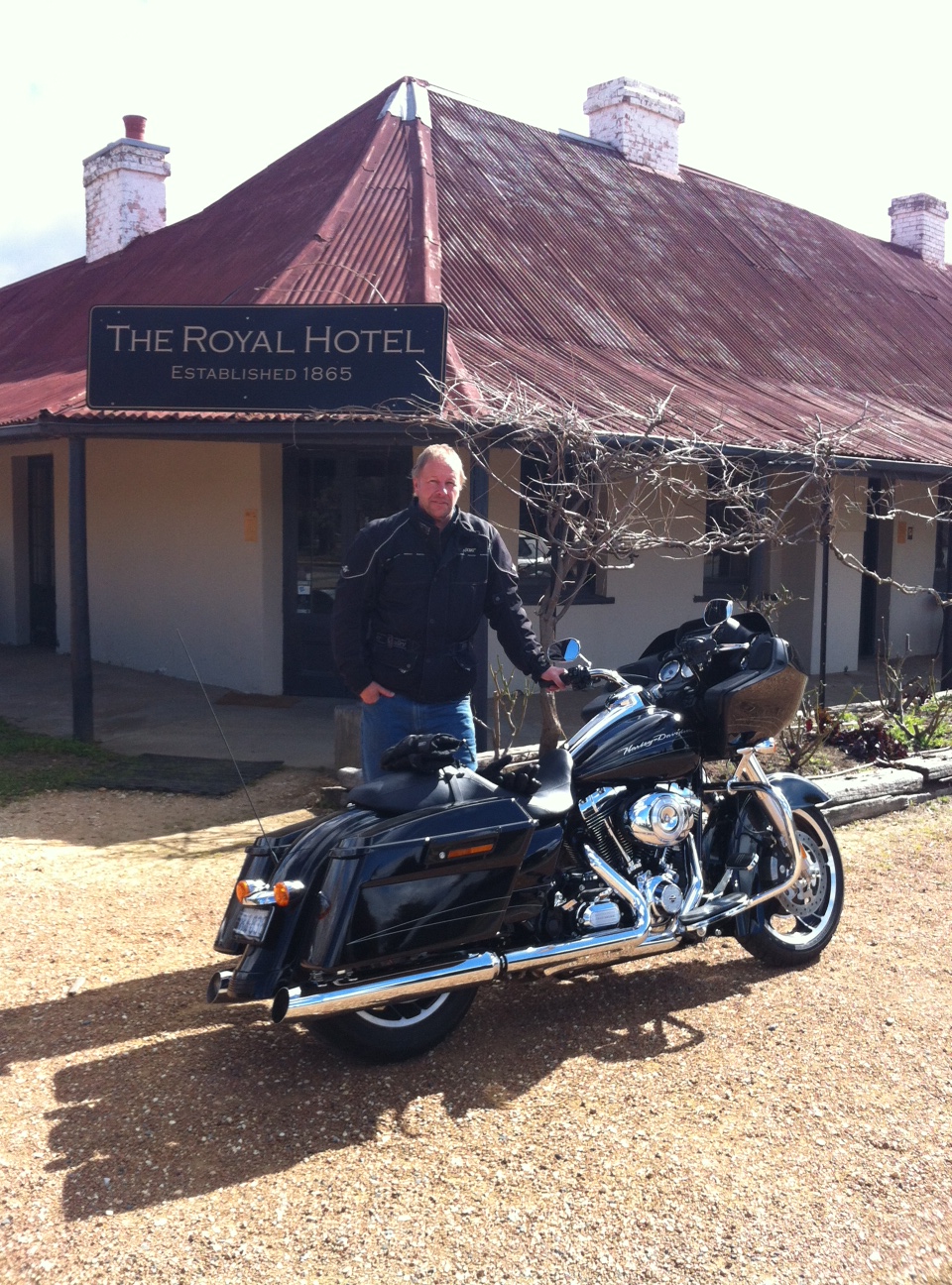
This morning I woke up with a Harley! To be specific, it was a 2012 Harley Davidson Road Glide Custom. It was my birthday present from Fiona – what a woman! Let me say this is an awesome machine. It’s got serious grunt with it’s V-twin 1690cc engine. It’s built for touring and has twin headlights, a fairing, saddle bags, glove boxes, cruise control, ABS brakes, radio, CD player, GPS, intercom, and even a cigarette lighter!

Fiona planned to hire me a Harley for my birthday but couldn’t find anywhere in Canberra that would do that. Not a problem though, because she discovered the Wake up with a Harley program. The local dealer would loan us a cruiser for 24 hours at no cost, unlimited mileage, no insurance premiums, and no excess! Thank you God!

I must admit I was pretty anxious before I picked up the bike. I hadn’t ridden since I don’t know when. The bike, weighing 370kg, was bigger than I’d ever ridden. And I’m not exactly in peak fitness. In fact I had a restless night, prior to picking it up, that reminded me of the night before I hired my first tinnie on the crocodile infested Mary River!

Yesterday I spent time getting the hang of it myself, before taking Fiona and the kids on various trips up and down Black Mountain, Mount Ainslie and around Lake Burley Griffin. My youngest paid me a compliment when we’d finished a loop, saying “Dad, you’re gun!” Not sure what that means, but it sounded good!

Today, after delivering the kids to school on the bike, Fiona and I went for a cruise together. Out to Bungendore for a coffee, across to Gundaroo, around past Murrumbateman, back to Canberra. You take in so much more on a motorbike than sitting behind the windscreen of a car. The wind, the bends, the scenery, the vibrations. It was exhilerating! Just me, the Harley, and my girlfriend hanging on behind! I felt very alive and I thanked God so much for this awesome opportunity. What a privilege to be alive and I’m so thankful to be well enough to enjoy such a treat. Who’d ever have thought I’d be cruising around on a massive motorcycle in August this year?!

The sad part was taking it back. But as they say, all good things… Would I get one? Probably not one of these cruisers. I felt a bit like one of those old blokes from the Ulysses Club. The one who’s motto is grow old disgracefully! But don’t you have to be 50 to join that club? Oops, I am!

Journey with cancer 15 Aug 2012 – a quick update

Dear friends and family

We received a progress report on the cancer this week and can happily report that there’s been no progress! The CT scans revealed that the cancer hasn’t grown or spread in the past 11 weeks. Given that I didn’t receive any aggressive chemo during this period, this is good news. We’re smiling! 🙂 In fact, our oncologist was smiling too – very good news! 🙂 🙂 Thank you God!

The plan is for me to go back on the Alimta/Avastin cocktail that I’d been on previously. We hope this will lead to the tumour shrinking even further. Preferably down to nothing! The dosage of Alimta will be reduced by 20% with the aim of keeping peripheral neuropathy at bay. I’ve also been prescribed some anti-depressants – not for depression – but because there is evidence that they may help prevent the development of neuropathy.

For those of you who pray, could you please ask God for these three things: 1) that the chemo will be effective in destroying the cancer; 2) that the side effects of the chemo won’t be too harsh; and 3) that I won’t get further neuropathy.

With thanks,

Dave

50 not out – thank God!

photo[1]Had my birthday on Sunday. 50 not out! To be honest, late last year I seriously doubted I’d see this day. As the news of cancer hit us like a tsunami… as we sat drawing up my will… as I talked seriously with some of my kids about life without their dad… as I collapsed in the x-ray room, unable to breathe or support my own weight… as I struggled to think about all the things Fiona would need to know… as my whole life seemingly passed before my eyes, with people travelling from everywhere to see me… I didn’t hold a lot of hope of seeing my 50th birthday.

But God has been very kind, and I not only reached my birthday, but I thoroughly enjoyed it! It was cool to be bombarded by facebook messages, emails, cards and greetings from friends all over the world. It was a great joy to share an afternoon in our backyard with a number of our friends. Fiona was awesome, she had gone to so much trouble to give me a special day – and it was! Our church sang Happy Birthday to me and gave me an incredible cake! It was a fun day. 🙂

In fact, this has been a special weekend in other ways as well. Saturday night was the annual Brumbies Presentation Dinner – a black tie affair! I couldn’t remember ever wearing a dinner suit before and I thank the two men who offered me all the bits and pieces I needed. It felt kind of cool to be all dressed up like James Bond for a night, with a pretty girl on my arm! The dinner is a night to celebrate the season and give awards to the best players. Over the years some of the best players I’ve ever seen have taken out the awards. Notably George Smith winning Players’ Player on 9 separate occasions!

awardThe shock of the evening was the announcement that I’d won an award – Best Left Right Out of the Team! No, I was given the Garry Quinlivan Service Award in recognition of service to the Brumbies. It’s an absolute honour to receive this award named after Quinzo. He’s a living legend at the Brumbies, having given his everything in serving the players since the club began. It’s been my privilege to serve as their chaplain for ten seasons. Most of the time my efforts are well hidden, behind the scenes. I don’t do it for money or recognition, but it was lovely to receive this show of appreciation.

Some weeks back I asked Marcus, our lead pastor, if I could preach on this Sunday. “But it’s your birthday”, he said. “What would you want to preach on your birthday for?! You’d better check with Fiona, and your oncologist!” I count it a special gift from God to have been able to preach from the Bible at church on my birthday. I debated whether I should, because I didn’t want to do it for my sake, just because I like preaching. But deep down I wanted to be able to share God’s word with those I love. It’s the greatest gift I had to offer them.

I love teaching God’s word to others and I love sharing in people’s lives, so it was a delight to look at this part of the Bible. 1 Thessalonians 2:8 especially stands out:

Because we loved you so much, we were delighted to share with you not only the gospel of God but our lives as well.

These words are an encouragement to me to make a priority of both truth and relationships. It’s hopeless to be a preacher who is doctrinaire and disinterested in people. It’s dangerous to be a people-pleaser who is cavalier with the truth. Genuine knowledge of God shows itself in real love for people. Real love for people will be shaped and guided by the truth. Real love leads to humbly making the truth known to others.

God’s love, revealed in the gift of Jesus Christ, is the truth that keeps me going. It’s a message of hope and life and a future beyond death itself. I know it will seem to some as wishful thinking or religious superstition. But I ask you to give the message about Jesus’ life and death and resurrection your serious consideration. If it’s true, then you have nothing to lose and absolutely everything to gain.

I don’t know how many more birthdays I’m likely to see. I do pray there’ll be many more to come, but the message of Jesus gives me hope beyond birthdays. These words by John Newton express what I believe and where my hope lies:

Amazing Grace, how sweet the sound,
That saved a wretch like me.
I once was lost but now am found,
Was blind, but now I see.

T’was Grace that taught my heart to fear.
And Grace, my fears relieved.
How precious did that Grace appear
The hour I first believed.

Through many dangers, toils and snares
I have already come;
‘Tis Grace that brought me safe thus far
and Grace will lead me home.

The Lord has promised good to me.
His word my hope secures.
He will my shield and portion be,
As long as life endures.

Yea, when this flesh and heart shall fail,
And mortal life shall cease,
I shall possess within the veil,
A life of joy and peace.

When we’ve been here ten thousand years
Bright shining as the sun.
We’ve no less days to sing God’s praise
Than when we’ve first begun.

Scanxiety

I discovered a new word the other day…

scanxiety
n. the tension which builds particulary amongst those who have or have had cancer as they move towards their regular check up scan, hyperscanxiety being the period as they await results!
Usage: His scanxiety, though suppressed, grew as he awaited his next scan in the certain knowledge that hyperscanxiety would cut in as soon as the scan was over as he awaited the results!

I can relate! Just returned from the hospital following another CT scan. I’m becoming well acquainted with this machine! It’s a couple of months since my last scan and we’re pretty keen to know what’s been going on in the interim. Especially as we’ve backed off the serious chemotherapy in this time.

Scans are my reality check. They provide the best evidence for what’s going on inside. The experts can compare scans to determine whether the tumours are growing, shrinking, spreading, or just staying much the same. Whatever’s going on, they provide objective information on which to base decisions about my treatment. This is so important, because the externals can give a false picture. Having had less chemo and having returned from a couple of weeks in the Queensland sun, people have been saying “You’re looking so well!” Maybe, but this doesn’t mean I’ve been getting better! That remains to be seen.

I’ve experienced my share of anxiety in the face of scans, but overall I think I look forward to them. Not totally sure, but I’m keen to know what we’re dealing with. Even though the scans remind me of the harsh reality that I have cancer, I’d prefer to deal with the facts. I don’t want to be flying blind. And I know that worrying won’t do me any good. I’m not going to get a better outcome by becoming more anxious. If anything, it’ll make things worse.

God’s word provides me with good reasons for not being anxious and a good alternative when anxiety creeps in. Jesus said these words to his followers in the famous ‘Sermon on the Mount’:

25 “Therefore I tell you, do not be anxious about your life, what you will eat or what you will drink, nor about your body, what you will put on. Is not life more than food, and the body more than clothing? 26 Look at the birds of the air: they neither sow nor reap nor gather into barns, and yet your heavenly Father feeds them. Are you not of more value than they? 27 And which of you by being anxious can add a single hour to his span of life? (Matthew 6:25-27)

Paul wrote to the church in Philippi:

6 Do not be anxious about anything, but in every situation, by prayer and petition, with thanksgiving, present your requests to God. 7 And the peace of God, which transcends all understanding,will guard your hearts and your minds in Christ Jesus. (Philippians 4:6-7)

These are excellent reasons not to be overcome by scanxiety or any other form of anxiety. Worrying is a normal response to fear and uncertainty, but it’s what we do with those worries that matters most. We are invited to pray – to share our worries with our Father in heaven. God knows me more precisely than any scan will reveal and he has my life in his loving hands. Rather than placing my hope in CTs and doctors and chemo and special targeted therapies, I will put my hope in God. I will hand my anxieties over to him. I will tell him my wants and desires, and trust him to meet all of my needs. I will ask him to guard my heart and my mind in Christ Jesus.