Black Box Thinking

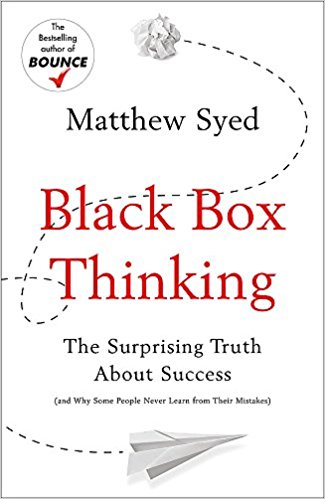
blackboxYes, I’m trying to get my writing mojo back. People say the way to start writing is to start writing. People are profound sometimes! So back to reviewing a few of the books I’ve been reading. This book was recommended to me by a friend who suggested it might be helpful to leaders in our network around the country.
Black Box Thinking: The surprising truth about success and why some people never learn from their mistakes by Matthew Syed identifies some important blind spots. People are always telling us that we should learn from our mistakes, fail forward, and change the way we go about things so that we keep on improving. The problem is that we so often repeat our mistakes, get stuck in ruts, and fear making changes.

This book takes its title from the little black boxes fitted to aeroplanes. I understand that planes are fitted with devices to record the electronics of the aircraft and to record the interactions of the pilots. These devices are stored in ‘indestructible’ black boxes that can be retrieved in the case of accidents. Apparently these black boxes are now orange, not because orange is the new black, but because orange boxes are easier to locate when rubble is scattered far and wide. What a great example of black box thinking!

Going back to 1912, plane crashes were considered normal and inevitable. Half of US army pilots died in air crashes, even during peacetime. Fast-forward to today and plane travel is one of the safest means of transport. There are very few deaths and the accident rate is about 1 in 2.5 million flights. There are many reasons for this tremendous improvement, but at its core there is a mindset in the aviation world that says, “We must learn from our mistakes.” The black box is a tangible expression of this attitude. When something goes badly wrong, it must then be examined with a fine tooth comb to make sure such mistakes don’t happen again. This is a life and death imperative.

This mindset is not seen everywhere else. People are reluctant to own up to their mistakes. We’d prefer to rationalise things, pass the blame, gloss over what has happened, and avoid scrutiny or accusation. Human pride gets in the way. Syed contrasts the slowness of the health profession to learn from mistakes with the progress of the aviation industry. When doctors make mistakes they get hammered by litigation, public shaming, deregistration, increased insurance costs, and the like. So who wants to admit fault? In both arenas, people’s lives depend on learning from mistakes and making changes to avoid things being repeated.

I depend greatly on the proficiency and safety of both the medical and aviation sectors. Both these areas matter to me. But there are other lessons I am interested in. As one who now leads are network of churches, or denomination, I am concerned about the systemic failure of churches to learn from their mistakes. The recent Royal Commission into institutional child abuse, has reveal some appalling accounts of denials, cover ups, and codes of silence. Black box thinking requires the truth to be revealed, serious questions to be asked, and future problems avoided.

We need to learn from our mistakes. Even more so, we need to repent of our blatant sin. The problem with sin is that it leads to shame and so we cover ourselves. We’ve been doing it since the beginning. God calls us to confess our sins, to be honest with one another, to take heed of our failures, and to spur each other on to love and good works.

But it’s not simply in the areas of heinous sin that we need to develop black box thinking—it’s in the day to day of our ministry. It seems that many churches are trapped in patterns of mindless repetition. Q. “Why do we do what we do?” A. “Because that’s what we’ve always done.”  And we wonder why people have stopped coming!

Whether it’s church, school, business, club, or whatever, we need to keep thinking about what’s not working, why it’s not working, what needs to change, and how we can change it. Review should me commonplace and regular. Action—reflection—reaction should be our normal pattern. Failures should be seen as opportunities to make changes for the better. Mistakes should be valued as triggers for improvement. You’ve probably heard the Michael Jordan stories of countless missed shots, errors of judgment, lost games—all viewed as opportunities to learn, grow, succeed, and become arguably the greatest basketball player in history.

Syed challenges the popular view that success is primarily based upon innate qualities such as talent and intelligence. He describes this as a Fixed Mindset. He argues that we need to develop a Growth Mindset, where success can be achieved though dedication and hard work. People are capable of achieving more if they are willing to learn and make changes and if they are willing to practice until perfect.

In my world of Christian ministry I want to make a plea for black box thinking. Let’s learn from our mistakes and failures. Let’s ask the difficult questions. Let’s normalise reviews and feedback. And this will require humility from everyone, and especially from pastors and leaders.

Allow me to illustrate with 7 suggestions for black box thinking for pastors:

  1. Pastors would benefit from professional supervision. Taking timeout to reflect and learn from our practice will improve our ministries. Find someone who can speak into your circumstances and help you to develop black box thinking.
  2. Pastors should seek feedback on their sermons from people they trust. I’ve heard depressing tales of ministers unwilling to provide support and feedback to their trainees because they won’t accept critique themselves.
  3. Pastors can build a culture of learning from mistakes by reviewing what they and the church do on a regular basis. Go with the natural rhythms. Monday is a good time to review the services on the weekend—what worked, what didn’t, what could be done better next time? Once a quarter would be a good time to make adjustments to our regular programs. Why not introduce a major annual review, such that every year things change and grow for the better?
  4. Pastors could organise to get together with peers from time to time to share successes and failures. Being open with one another builds a culture of humility. Iron sharpens iron. You can learn from one another’s mistakes and avoid falling in the same traps. Go to a conference or two where you can learn from others.
  5. Maintain the discipline of reading books that will keep building your competencies. Begin regularly with the Bible and ask God to deepen your love and understanding of him. Read a commentary to enrich your understanding of the Scriptures, something on leadership to challenge your practice, a book on culture to evaluate how well you understand your world, and so on. Ask others you trust what they have found useful.
  6. Become more thoughtful. Think about your thinking. Keep some notes and look back over them. Journal lessons you have learned. Set goals for change.
  7. Pray. Ask God to shine a light into your thinking, feelings, emotions, relationships, decisions, plans. Look into the ‘black box’ of God’s word and make the necessary changes.

Do not merely listen to the word, and so deceive yourselves. Do what it says. Anyone who listens to the word but does not do what it says is like someone who looks at his face in a mirror and, after looking at himself, goes away and immediately forgets what he looks like. But whoever looks intently into the perfect law that gives freedom and continues in it – not forgetting what they have heard but doing it – they will be blessed in what they do. (James 1:22-25)

Thinking, Fast and Slow

thinkingI could never have imagined myself reading a book by a Nobel Prize-winning economist, but I have, and to my profit. Daniel Kahneman’s Thinking, Fast and Slow has helped me understand more about how I think, make decisions, communicate, and respond to the words and actions of others.
His basic idea is that we have two different modes of thinking and processing information. The first mode is automatic and impulsive. It’s our knee-jerk response that enables us to take short cuts and move on with ease. The second mode is more deliberate, focused, logical, and it’s necessary for making truly wise choices. Some of us tend to react instinctively, go with our guts, and sometimes miss things that are critical. As an ENFP (Myers-Briggs Type), I’m one of them. People need to spend most of their time in the first mode because we haven’t got the time or the stamina to carefully examine every decision we make. Some things just need to be automatic. However, we can become lazy thinkers, and take short cuts when we shouldn’t, and not slow down when we really should.

We are all prone to making snap choices—weighing up people and situations in an instant. We oversimplify, latching on to something we like and assuming that we will like everything. This can lead to major errors in judgment. Let’s say I’m considering someone for a job. I learn that they love fishing, camping and four-wheel driving. This leads me to gravitate towards them. We spend time chatting about our common interests, places we’ve been, experiences we’ve had. I like them. Hence, there is now a bias toward preferring this person regardless of what experience they might have had in the job, how competent or incompetent they are, whether they are a team player or prima donna, or any other critical criteria. This has been called the halo effect. We assume they will be good even though we know very little about them.

Similarly, I might know some details about a person, such as where they trained or who they’ve worked with previously. I associate what I know about them with an ideal that I’ve created. If I’ve had positive experiences with the people they know or with the training organisation they come from, then confirmation bias may lead me to make assumptions about them and not do due diligence to get more relevant information specifically about them. I wonder how many people employed on the ‘it’s not what you know, it’s who you know’ principle, have turned out so differently to what was expected. Taking short cuts might save time in the short term, but may lead to drawn out disasters in the longer term.

Kahneman discusses how we perceive statistics, memories, risks, choices, and more. He shows how our perspective shapes how we respond to things. For example, if a shopkeeper is told that there is a 1% chance that someone entering her shop will be a shoplifter, then she might not worry too much. But, if she was told that of the 1000 people who will come through her shop this week, 10 of them will be shoplifters, you can imagine she will be on high alert for who they might be. The statistics are identical but each statement offers a different perspective.

Context is also important for weighing decisions. If two people are both promised that by the end of the year they will each have a net worth of $100 million, then you’d expect them to be equally happy, wouldn’t you? If one of them was me, I’d be ecstatic. Who wouldn’t be happy with $100 million? If I told you that the other person was Mark Zuckerberg, whose current net worth sits at $75 billion, you can see how context changes everything!

These insights will help us to be more effective communicators. Pausing to consider how people might ‘see’ what we are saying, will move us to take the extra step to get our message across more clearly. So often we think if something has been said then it’s been heard. But is their perception the same as our intention? It pays to be clear and it pays to enquire as to whether we’ve been understood.

Thinking, Fast and Slow is a book to get us thinking about our thinking. While much of what we do needs to be quick and automatic, there are some areas where we need to disengage cruise control and put our minds into manual. In my work as a church pastor over many years I can see times when I took the lazy option and endured the consequences of not thinking hard or long enough. Now, I watch others fall into similar errors of judgment. While we know there is always more than meets the eye and we shouldn’t judge a book by its cover, we get lazy, we’re attracted by the short cuts. I hope that I will grow in wisdom, be a better judge of people, make smarter decisions, and communicate for effectively, as I seek to think both fast and slow.


My Donkey Body

It’s a small world, sometimes. Last weekend Fiona and I were camped in the shearers quarters at Lake Menindee, together with the members of Saltbush Church from Broken Hill. We hadn’t been there before and it’s quite a while since we were anywhere so remote. Over breakfast I met John Wenham, and I jokingly said that I had a few books written by him at home. Turns out that I had read books by his grandfather of the same name, also a few by his dad, and a couple by one of his uncles. I’ve since read a book by another of his uncles, Michael Wenham, called My Donkey Body: Living with a body that no longer obeys you. Wow, so many books in one family!

donkeyMy Donkey Body recounts Michael Wenham’s journey with a rare form of Motor Neurone Disease (MND). If you’re unfamiliar with this disease, think Stephen Hawking. The motor neurones that transmit instructions from the brain to the muscles deteriorate and cannot replace themselves. The brain keeps working but it becomes unable to get messages to the muscles to do their work. The person becomes more and more debilitated and eventually the muscles that keep you alive stop working. MND is a terminal illness and there is currently no known cure.

Michael Wenham is a Christian, who tells his story of discovering and living with this disease from the perspective of faith. My Donkey Body is a sad, gripping, and often humorous account of one man, together with his wife and family, coming to grips with weakness, disability, frustration, pain, and ultimately mortality. As a preacher, whose voice was his tool of trade, he recounts what it’s like to lose control over your vocal muscles. He shares about the humiliation of being picked up out of the gutter by strangers and relying on his wife to wipe his backside. There’s nothing romantic about MND.

I checked with Google and discovered that Wenham continues to blog, write articles, and he has done some very moving video interviews. Wenham has now been living with this disease for many years. While his physical abilities have declined, his mind has remained sharp. He engages with real issues of relationships, health, religion, dependence, living and dying. Wenham has engaged with Stephen Hawking and provided informed and sympathetic rebuttals to Hawking’s dismissive critiques of any afterlife. He has written against legalising assisted suicide for the terminally ill like himself.  He opposes the creation of human stem cells for the purpose of experimentation, even if it should provide the cure for MND. His arguments aren’t a bigoted bias toward regressive religion over against progressive science. Rather, they arise from one who knows suffering and mortality, but who deeply respects that all persons are made in God’s image. He demonstrates powerfully that people are not valuable according to their utility and value to society (however that might be measured), but because God has made them human. Every person matters.

Wenham argues for the importance of knowing God and having faith in God’s power and goodness. He’s prepared to ask the hard questions and admits to not having all the answers. Being a Christian doesn’t take away the pain or the suffering. He argues with CS Lewis:

Talk to me about the truth of religion and I’ll listen gladly. Talk to me about the duty of religion and I’ll listen submissively. But don’t come talking to me about the consolations of religion or I shall suspect you don’t understand.
(quoting CS Lewis A Grief Observed p23) in My Donkey Body p128

I am grateful that Michael Wenham took the time and made the effort to share his thoughts. Much of this book resonates with my experience of receiving a terminal diagnosis, coping with physical and mental pain, losing things that have shaped my identity, and asking questions of faith and doubt. Yet my circumstances have taken a turn for the better. Many of my disabilities have been replaced by renewed abilities. And that brings it’s own dangers and threats—especially the risk of forgetting how much I need God.

There is something about weakness that drives us back to our Father in heaven. I need to be reminded that this life is a gift from God. Every day is a day for rejoicing. Nothing should be taken for granted. The less I remember my dependence on God, the bigger an ass I become.

IMG_8818


Expositional Preaching

helmCoaching and playing don’t always require the same skill set. Not every player will make a good coach and not every successful coach will have been an elite player. Look at some of the men coaching gymnastics. It’s hard to believe they could have ever mastered the pommel horse or uneven bars for themselves, but they can be brilliant at training others.  The successful coaches are somehow able to deconstruct each aspect of each move, and train their athletes to weave their brilliance in seamless performances.
Every now and then we see a player with a deep awareness of the game. And not just their contribution to the game, but the game itself, and how every part works together. Steve Larkham, the Australian rugby great, was a player like this. He’d weave his magic and he’d create the opportunities for others to weave their’s. Larkham not only did, but he knew what he did, and he could pass this on to others. He coached as he played and it was no surprise to see him coaching after he stopped playing.

So what does this have to do with expositional preaching? Nothing. I just love gratuitous sporting illustrations!

Seriously though, many great preachers function at a very high level of unconscious competence. They communicate with clarity and depth. They shine a light on the riches of God’s word and they impress it on the hearts and minds of their listeners. We come away from their preaching with ‘our hearts burning within us’. But don’t ask them to train other preachers. They can’t even tell you what it is they do. They’re at a loss when it comes to coaching.

Recently, I attended a preaching coaching workshop at Moore College. I’m so glad I did. For me it was Preaching Coaching 101. Keep it simple. Break things down. Clarity. Simplicity. Specificity. Depth. Grace. Gospel. Theological. Heart. Mind. Affections. Motivations. Exegesis. Contextualisation. And more.

I love preaching, but I also love listening to great preaching. We need more and more passionate, humble, empowered, clear, focused communicators of the Word of God’s Spirit. We need people who will dig deeply into the text and fire it deep into the psyches of the listeners. We need preachers who handle the Scriptures with care and expect God to transform their listeners. This means both getting the message right and getting the message across.

Enter David Helm and his sharp little book, Expositional Preaching: How we speak God’s Word today. Our coaching workshop leant heavily on Helm’s approach to expositional preaching. Helm has learned much from the likes of great preachers like Dick Lucas and Kent Hughes, and it shows. Like a master coach he has broken down the art of preaching so as to pass it on to others. Helm is persuaded that we need to do two things well: Get it right and get it across (p36).

I’ve listened to the audio book of Expositional Preaching and now I’m digging into it more thoroughly with my paper copy, and a pen and a highlighter in hand.

Helm addresses the dangers of merely coming to the Bible to find something that fits with what we want to say. He asks the question “Who will be king? Me? Or the biblical text?” Helm is persuaded that we must let God speak and not get in his way with our hobby horses or attempts to be ‘relevant’. This must involve careful exegesis and theological reflection, but it will also require an investment in careful communication. Helm covers both sides of this equation in his book.

Expositional Preaching provides an introduction to the necessary building blocks for preparing messages that will communicate God’s message to contemporary listeners. If I can shift my metaphors, Helm’s book offers us a recipe for preaching that is nutritious, well presented, and full of taste.

It’s probably aimed at new preachers—ministry trainees, students in theological colleges, people starting out on a lifetime of teaching the Scriptures. For me, it’s an excellent coaching manual for those of us who feel we can do, but who have trouble in identifying what we do and why we do it and how we do it. If we seriously want to equip people who are passionate and skilled in biblical preaching, then I recommend we recruit David Helm as our coach—or at least work seriously through his coaching manual.

Heaven, how I got here

heavenI miss Chappo! Yesterday I saw someone reading one of his books and I felt a pang of grief. He was so good to talk with, to chat to about real stuff. He’d always keep pointing me to Jesus. He loved Jesus and wanted nothing more than for others to love him too. Chappo might not be here—that’s because he is now with the risen Jesus—but I still have his books. My favourite is A Fresh Start. It’s clear, fun, engaging, serious, Biblical, and helpful, all rolled into one. It’s a great explanation of what a Christian is and how you can become one.
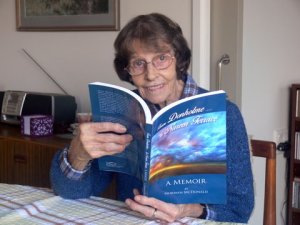
It got me thinking that we could do with some more books like A Fresh Start. It’s a while since I’ve read a simple and engaging book that explains the significance of Jesus and calls people to respond.

Last night, Good Friday, I sat down with my Kindle and thumbed through the books that I’d bought cheaply, but hadn’t got around to reading. Colin S. Smith’s book, Heaven, how I got here caught my eye. I decided to take a look, hoping it wasn’t another of those ‘heaven tourism’ books. My Kindle told me that it would take about an hour to complete. Just what I needed before I went to bed.

Heaven, how I got here tells the story of the thief on the cross from the thief’s perspective. Of course, we only have a brief glimpse of this man in the Scriptures and only a few of his words are recorded, so there is much that has to be ‘imagined’ in this account. However, I would describe Smith’s narrative as a ‘Biblically informed imagination’. The author draws all his important insights from the Scriptures themselves. Profoundly important theological insights are ascribed to the dying thief as he reflects on the significance of the innocent Jesus, dying at his side.

Why has he be condemned if he is innocent? How can God allow him to hang on the cross if he is the promised Christ? Smith highlights one reality that I’d only ever glossed over—that Jesus died before this man. He watched as Jesus died. He had time (albeit agonisingly brief) to reflect on what Jesus had said and done. The thief heard the taunts and attacks thrown at Jesus. He saw close up the injustice and horror. He witnessed the devastating words of Jesus, “My God, My God, Why have you forsaken me?” and his final cry “It is finished.” He experienced the total darkness in the middle of the day, the shudder of the earthquake, and the acclamation of the centurion, “Surely this man was the son of God.”

This book is tonic to those for whom the cross has become mundane. It brings us in, close and personal. We can almost hear and touch and see and smell the events as they unfold. But the real strength of this book lies not in reminding us of the horrors of crucifixion. It lies in the awesome significance of what Jesus achieved, not only for the thief, but for you and for me. Heaven, how I got here is good news to all who think they have no hope of forgiveness and a challenge to any who think that it’s what they do that will get them there.

Another author in the family

P1070341Over the past couple of years my father has been working on his memoirs. He’s been reflecting on more than eight decades of seeing God at work in and through his family, in many different locations. In the last few days these words have been delivered—printed and bound—to his home. Dad has called his book From Donholme to Nareen Terrace, and he has shaped the book around each of the places he has lived. I’m glad the book has a title, because otherwise I might be tempted to call it The Book of Norman! (That’s got that joke out of the way. It was bound to emerge at some point.)
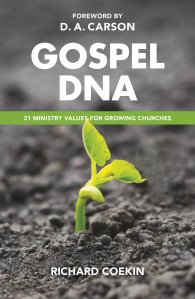
I am eagerly waiting to get my hands on a copy—not least to reflect on my own life through the lens of my father. But more so, to read and learn from the experiences of my dad. It is a joy to see this book come out. Roughly six years ago, my father was diagnosed with cancer and we all wondered how long he would be with us. Then my diagnosis made it seem highly unlikely that we would have much of a future together. Tomorrow marks my father’s birthday, and how great it is to be able to look back and celebrate the goodness of God over 82 years.

Maybe you know my father. Perhaps you’ve shared a part of your life with him. If so, there’s a chance you might even get a mention!

Let me know if you’d like to buy a copy. Perhaps I can get a job as a promoter.

Then again, I should probably read what he has to say about me first!

Gospel DNA

gospeldnaDNA is who we are. It’s you and I boiled down to our most basic fundamental parts. It’s our point of difference, our unique identifier. It’s the building block of our health and biological integrity. DNA gets passed from generation to generation during reproduction. Zillions of pieces of code are transmitted intact so that new things grow. Occasionally there are mistakes in the code. Sometimes things go wrong—like in me! I have a genetic mutation. My second chromosome has flipped around, fused with the fifth chromosome, and created a genetic short circuit, thus producing cancer of the lungs.

What about other bodies? What about the body of Christ we call the church? How is it reproduced? What keeps it healthy? The answer is Gospel DNA. The gospel gives spiritual life to churches. People respond to the gospel in repentance and faith, are thereby incorporated in Christ’s body, and knit together by his Spirit. Healthy churches reproduce this gospel DNA without allowing mutations to develop.

Richard Coekin’s new book Gospel DNA is a spiritual health manual for evangelical churches. He focuses on what he calls an ‘electrifying training seminar’ for church leaders. You and I might know it as the Apostle Paul’s words to the Ephesian elders recorded in Acts 20:17-38. In a handful of verses, Paul condenses the essence of what it takes to grow and reproduce healthy gospel-shaped churches. He identifies the matters that matter to God, responsibilities of leaders, the convictions that must shape all we do, and the threats to healthy church growth and reproduction. Richard Coekin spends 22 chapters exploring 22 verses of the Bible that are nothing less than a masterclass for gospel ministers.

I’ve long turned to Acts 20 for encouragement and inspiration for the work of gospel ministry. Simply being reminded that the church belongs to God and has been purchased by his blood, is enough to call me back into line. Paul’s words refocus my lens when I’m pulled here and there by the pressures and challenges of leading a church. They retune me to the matters of first importance to God. They remind me what the church is, why it matters so much to God, what will see it grow bigger and stronger, and warn me to stay alert to attacks.

This book isn’t so much a commentary on Acts 20:17-38 as it is a reflection on the Apostle Paul’s ‘ministry values’. No doubt Paul had more to say to the Ephesian elders, but the message that Luke records takes us deep into his core values of gospel ministry. Richard Coekin works off Paul’s script to explore these values in greater detail, by taking us to other parts of the Bible that expound each value. He explains their significance for promoting faithful and fruitful gospel ministry, often illustrating from his own experience with the Co-Mission network of churches in the UK.

I’m keen to get multiple copies of this book so that I can start reading it with others. In fact, I recommend the churches and leaders in our FiEC network make use of this book as a training manual. It’s a book to read slowly, chapter by chapter, pausing to review, discussing how we can apply its lessons, and making plans to change for the better. Gospel DNA is an excellent resource to use in personal ministry, training our leaders, enriching our elders, inspiring our potential missionaries, and preparing our future church planters.

(Richard Coekin, Gospel DNA: 21 Ministry Values for Growing Churches, The Good Book Company, 2017)

Too much, too little

screen-shot-2016-09-18-at-2-45-24-pmMy new year resolutions for 2016 included reading a book a week. The plan was to finish 52 books before the end of the year. I wasn’t following a recommended reading list, but there were a few books that I was keen to knock over. Someone had suggested mixing things up with a range of genres and topics. There were issues I was interested in researching and their were numerous new books that piqued my interest. During this time I also discovered audio books and bought myself a kindle. So my list represents an eclectic mix of styles, difficulty, issues, media, and… quality. Yes, I also discovered that some books had done little more than steal my time.
Here is my list:

1. Forever, Paul Tripp
2. The Story of Everything, Jared Wilson
3. Why Trust the Bible, Greg Gilbert
4. Ordinary, Michael Horton
5. Seven Practices of Effective Ministry, Andy Stanley
6. The Martian, Andy Weir
7. Brothers, We Are Not Professionals, John Piper
8. The Rider, Tim Krabbé
9. The Churchill Factor, Boris Johnson
10. The Pilgrim’s Progress, John Bunyan
11. Sex and Money, Paul Tripp
12. Side By Side, Edward Welsh
13. Dangerous Calling, Paul Tripp
14. Lectures to my Students, Charles Spurgeon
15. Creating Community, Andy Stanley and Bill Willits
16. Knowing God, J.I. Packer
17. Do More Better, Tim Challies
18. Teaching Isaiah, David Jackman
19. Organising love in church, Tim Adeney and Stuart Heath
20. Mission Drift, Peter Greer and Chris Horst
21. Why bother with church? Sam Allberry
22. The Cross of Christ, John Stott
23. Taking God at his Word, Kevin DeYoung
24. Zeal without Burnout, Christopher Ash
25. Living Forward, Michael Hyatt and Daniel Harkavy
26. Seeking Allah Finding Jesus, Nabeel Qureshi
27. Praying the Bible, Donald S. Whitney
28. Word-filled Women’s Ministry, Gloria Furman and Kathleen Nielson
29. Living in the Light, John Piper
30. What’s Best Next, Matthew Perman
31. The Ideal Team Player, Patrick Lencioni
32. Who Moved My Pulpit? Thom Rainer
33. Strong and Weak, Andy Crouch
34. Big Blue Sky, Peter Garrett
35. Wild at Heart, John Eldredge
36. The Life You Can Call Your Own, David Aspenson
37. I am a Church Member, Thom Rainer
38. Unashamed, Lecrae Moore
39. Autopsy of a Deceased Church, Thom Rainer
40. The Gospel, Freedom, and the Sacraments, Barry Newman
41. Fool’s Talk, Os Guinness
42. How to Read Proverbs, Tremper Longman 3rd
43. Life Together, Dietrich Bonhoeffer
44. Shattered Shepherds, Steve Swartz
45. Canon Revisited, Michael J. Kruger
46. What is a Healthy Church Member? Thabiti Anyabwile
47. Center Church, Tim Keller
48. The Gospel and Mental Illness, Heath Lambert
49. True Friendship, Vaughan Roberts
50. A Model of Christian Maturity, D.A. Carson
51. Why Your Pastor Left, Christopher Schmitz
52. Independent Church, John Stevens

I’m not planning in this post to a comment on each of these books, but rather to share some overall observations, and in no particular order.

True to form, I didn’t read many novels. It’s rare for me to read fiction. But, on reflection, it would do me good to read more. Sitting in a hammock, reading The Martian, took me to another place! This book, together with Boris Johnson’s riveting biography, The Churchill Factor, were my most relaxing reads of the year. They both helped me to forget about my life for a while.

Audio books have been a great find. They’ve made long car trips pass effortlessly and they’ve redeemed so much wasted time in daily commutes. Some books are more suited to this media than others. If you’re grappling with a new topic and need to take notes, then it’s probably not the best approach. I’ve found great reward in using audio books to ‘re-read’ a few important books that I have been deeply influenced by in years past. Packer’s Knowing God, Spurgeon’s Lectures to my Students, Stott’s Cross of Christ, and Tripp’s Dangerous Calling had all previously left their mark on me. Hearing them over again was an excellent way to refresh.

Much of my reading has focused on thinking through ministry, mission, and leadership matters. Life Together is a classic that I come back to regularly. What’s Best Next is full of wisdom, but way way way too long. Zeal without Burnout is a simple book that I anticipate revisiting over and over.

Center Church has been sitting on my shelf for a few years. It’s been too intimidating to start, but people keep referencing it, so I decided to dig in and give it a go. This is Keller’s magnum opus on church and his philosophy of ministry. I haven’t digested everything as yet. Much was stimulating, but some parts were just annoying. Maybe I will attempt a serious review sometime in the future.

I will offer three awards:

  1. Diamond Award—a small and precious gem.
    Shattered Shepherds, Steve Swartz.
    A must read for those who’ve been devastated by their ministry going wrong.
  2. Kodak Award—for under-developed and over-exposed ideas.
    Wild at Heart, John Eldridge.
    A best seller that is more pop culture than biblical wisdom.
  3. Orange Award—fresh and healthy, but could sting if it comes into contact with an open wound.
    The Gospel, Freedom, and the Sacraments, Barry Newman.
    A very fresh socratic-style approach to revisiting what the bible says about baptism and the Lord’s supper.

Overall, I think I’ve probably read too much too quickly and taken too little in. I don’t remember much about some of these books and I haven’t allowed sufficient time for important discoveries to take root. Unlike previous efforts, I’ve neglected to annotate most of these books, failed to record important ideas and quotes, and not written summaries or reviews. For these reasons, some of these books are going back onto the desk for another go next year—a little more slowly, and a lot more carefully.

The Power of I Am

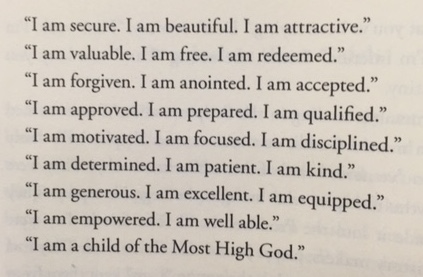
iamI am grieved. I am angry. I am appalled. I am not going to buy this book. I am calling people to stay clear of this false gospel. There—I’ve said it. This is fundamentally false teaching. Some might say this is blasphemy. I’d say it’s ignorant and dangerous at best. It’s popular. It sells. And it’s toxic. This is not what our world needs. This is not what our God is offering. This is graceless, hopeless, truth less, and fruitless. If this is indicative of what this man teaches, then keep your distance.

Why the rant? Because I just visited my local Christian bookshop and found this volume prominently displayed in the new release section. I stayed a while and skim read the book. I arrived home, gathered my mail, and found this same book on the recommended Christmas reading list of a Christian bookshop catalogue. So, woe to me if I do not speak. If a blind man prepared to step off the edge of a cliff, I would take hold of him tightly. If my grandson picked a toadstool believing it to be a mushroom, I would snatch it from his mouth. So I say, beware this book. It might look real, it might look healthy, it might even reference the Bible again and again, but it will leave you unwell.

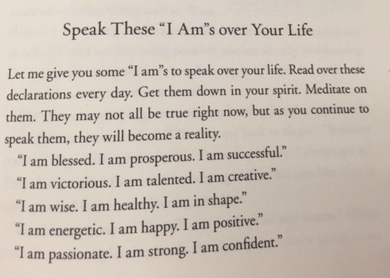
Pardon my naivety, but I opened this book expecting to read of the wonder and power of Yahweh—the one true God, the great I AM or maybe to be reminded of the wondrous I AM sayings of Jesus in John’s Gospel. Instead I read the narcissistic promises of a ‘name it and claim it’ speech-faith preacher. Rather than hearing the call to humble myself before the God of all the earth, I am told to banish all negative thoughts and place ‘me’ at the centre. I am told to be positive or be quiet. No!

Osteen calls his readers to Speak These “I Am”s over Your Life

IMG_1527  IMG_1528

Please, whatever happened to I am undeserving, I am weak, I am a slave, I am rejoicing in suffering, I am being poured out like a drink offering? Where is the call to lose our lives for Christ’s sake? Why has the glory of God been replaced with the glory of self?

Joel Osteen, follow the example of Volkswagen, and recall your fraudulent books.

ESV Men’s Devotional Bible

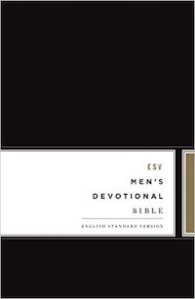
ESVLast week I received a free copy of the ESV Men’s Devotional Bible. I was surprised as I couldn’t remember ordering it. The accompanying letter asked if I would be willing to review it. Normally I would read a book from cover to cover before writing a review. I can honestly say I’ve only read a small portion of this volume over the past week. But I have read other versions of the same book. Some years I’ve read it through more than once. I’ve read this ESV translation and I’ve also read other translations, such as the NIV and the HCSB.
So, on the basis of my previous readings, let me say this is a must read. It’s living and active. I believe it’s the word of God himself through multiple human authors over multiple centuries in multiple real life contexts. It’s an awesome collection of works, of different genres, revealing a coherent narrative. It’s helpful and practical. It’s graceful and glorious. It’s simple and sometimes complicated. It shines a spotlight on the Almighty God and climaxes in the revelation of his Son. It holds a mirror to my heart. It gives me hope beyond my circumstances. It speaks into every context of my life. It liberates me from religious law keeping. It guides my decision making. It offers me deep wisdom. It inspires me from grace to grace.

I must confess this book sometimes spends too much time on my shelf. It gets reduced to a means for ministry rather than being a gateway to intimacy with God. I turn reading into a chore rather than a delight. I rush my way through this volume rather than pausing to meditate on the beauty it reveals. And so I miss out.

I’m grateful to be asked to review this Bible because it gives me cause to open this book of books and look again on the glory God.

But, I have a feeling that the publisher may desire something a little different from a review! Perhaps a comment on this particular publication. And not just the text of the Bible, but the other bits they’ve added. So here goes.

This Bible’s appearance is plain and yet formal and sophisticated, even professional. It’s black with page numbers and headings printed in gold text. This looks impressive, but I find the headings hard to read in certain light.

This is a devotional bible, especially for men. I like the idea because men need to read the Bible—and yet often don’t—and Bible reading should lead to devotion to God. Various authors have contributed brief articles to assist us to reflect on the meaning and application of Bible as we read. I know a few of the authors and I’m encouraged that they have a deep respect for the Bible. They are keen to let it speak for itself. There are 365 of these scattered throughout, so this might give you an idea about how to pace yourself in your reading. The articles I’ve read have all highlighted important truths in the text, and not simply used the Bible passage to launch into another issue. Some have been more applicational and devotion-inspiring than others.

In addition to the daily devotional comments, there are some slightly longer articles of particular relevance to men. These include such topics as  work, singleness, identity, fathering, pornography, life in the local church, doubt, and more. While none of these matters are uniquely relevant to fellas, they cover topics that I often hear men asking about.

Each book of the Bible is preceded by a brief introduction to orient us as we start our reading. While many of the comments can be discovered through the process of reading, it doesn’t hurt to see a map or some key landmarks before we embark on our journey.

Sometimes I worry about extra stuff that gets printed in Bibles. The mere fact that additional text has been bound together with the Word of God can confuse the novice reader. Which bits have authority and which sections should I be evaluating for their accuracy and relevance? There is a good argument for printing a companion volume to the Bible—perhaps one you could slip inside the cover or packaging of the Bible. At least this way, it will be clearer what is human and what is divine. They could have matching covers and cross-references to help you turn to comments on the text you are reading. But I haven’t been asked to design my own devotional Bible!

A related danger of printing articles on topics as ‘part of’ the Bible is that they can too easily be regarded as the last word on the matter. What do you do if you find yourself disagreeing with part of this volume of the Bible, even if it’s not really part of the Bible? The discerning reader can make these assessments, but the novice needs to be guided to make the appropriate distinctions.

If you are a bloke who desires to read the Bible to get to know God more closely then this publication might help you to get on with it. You don’t need a ‘devotional’ Bible to do this, but having the wisdom of some Christian brothers guiding you along the way might help you—especially in some of the more difficult sections. To be honest, I don’t mind if you read this particular ‘model’ of the Bible or not. I’d just love you to discover the delight of reading God’s life-giving, life-shaping Word—whatever the packaging.


When Cancer Interrupts

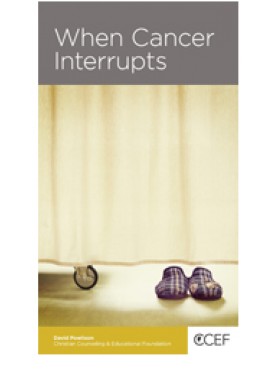
when-cancer-interrupts-1Books on cancer—I tend to buy them, read them, and subject them to greater scrutiny than many other books. When Cancer Interrupts by David Powlison is more of an essay than a book, being only 20 pages in length. And this is one of it’s strengths. People facing such trauma as a cancer diagnosis are unlikely to settle down with anything that seems too heavy or unwieldy. Let me say at the outset that I am very encouraged and positive about this little book. But before I explain why, I need to express my only criticism and a plea to the author and publishers.

Please chop out the following sentences in the opening paragraph!

It is a bit like coming home after an evening out to discover your home broken into, every drawer ransacked, and your most treasured possession stolen. You feel betrayed. The enemy got inside.” (p3)

No it’s not! I’ve had the experience of having our house broken into a number of times. I’ve had my wedding ring stolen. I’ve had my motorcycle stolen. We’ve had treasured gifts to my wife stolen. But, with respect, this is nothing compared to being diagnosed with terminal cancer. This illustration trivialises the impact of being told that your life is now effectively over. Life is not equal to stuff.

Take out these sentences and I’m engaged. You understand my plight. You sympathise with my fears. You invite me to journey with you in your book.

Personally, I don’t think you need any metaphor. Just tell it like it is. You’ve been through it four times. Wow!

Having got that off my chest, let me say how wonderful this booklet is. I’d make this a go to book in ministering among those with cancer and their carers. In fact, I’d love it to be available online as a free pdf to get it out there as easily as possible (I had to order my copy from the USA).

Powlison brings comfort and hope by pointing his readers to the beautiful words of Scripture. I found myself saying “Yes. Yes. Yes.” as he quotes the words of the Spirit.

God is our refuge and strength,
    a very present help in trouble.
Therefore we will not fear though the earth gives way.
(Psalm 46:1-2)

He has said, “I will never leave you nor forsake you.”
(Hebrews 13:5)

Even though I walk through the valley of the shadow of death, I will fear no evil, for you are with me.
(Psalm 23:4)

When Cancer Interrupts takes us on a journey from fear to faith. It sympathises with our troubles; understands our uncertainties, pain, and fears; recognises our questions; identifies with our loss; feels our vulnerability; and calls us to acknowledge our struggles.

We are reminded that God is always with us and he invites us to cry out our troubles to him. He listens and cares. Rather than God being absent in the face of a serious cancer diagnosis, he remains close. God is the rock solid constant. He calls us to live out our faith in the midst of our fears. While we benefit so greatly from the love and support of close family and friends, Christ walks closely with us even through the valley of the shadow of death. He will stay with us even when and where others cannot.

Powlison calls us to cling to Christ by faith when we face the trials of cancer. I found the following words to be especially helpful and wise.

If your faith does not come to life in your weakness and need, then fear and false hopes take over. “I’m deathly afraid” and “I can beat this” are evil twins. On the one hand, fear bullies you into putting your ultimate hope in something that’s never good enough—doctors, percentages, treatments, a cure, strategies for self-healing, keeping yourself busy, self-numbing. On the other hand, pride and self-trust seduce you into thinking that you don’t need to be afraid, that faith is a crutch for weak people, and that you can be stronger than cancer and stronger than the shadow of death. (p14)

I find this to be so true. People speak of battling cancer, struggling against cancer, fighting the cancer. They’re admired for their strength, for being champions. And sadly we also describe losing the battle or giving up the fight. Why can’t we be allowed to acknowledge our weakness, our needs, our frailty, our dependence of people, medicine, circumstances outside our control, and ultimately our need for God.

This is not a self-centred or self-help book. It takes us to God, invites us to rest in him, and shows how we can reach out, even in our sickness, with love for others. Little things can make such a difference. And God is in the business of working his strength through our weaknesses.

If we don’t know the love of God in Jesus Christ, then this book points us to the source of life and hope. If we do know him, then we are called to come to him in our times of need.

David Powlison, thank you for writing this little book.

How to walk into church

hwic_265It’s important to be able to do things on autopilot. Can you imagine having to think through every step to riding a bicycle every time you got on? Or opening your users manual every time you wanted to watch TV?

However, sometimes, autopilot can be a problem. We visited our premature daughter at the hospital every day for over 3 months until she was able to come home. Many times after that day, I’d get in the car, and be almost at the hospital before I realised that I should have been going in the opposite direction.

I suspect that going to church is an autopilot experience for most Christians. Sunday comes around and we get up, head to church, sit in the same place, and do what we always do. Interestingly, the Bible teaches us that we shouldn’t head to church on autopilot. We should turn autopilot off and engage manual. Hebrews 10:24-25 teaches us:

And let us consider how we may spur one another on towards love and good deeds, not giving up meeting together, as some are in the habit of doing, but encouraging one another – and all the more as you see the Day approaching.

We are encouraged to meet together regularly so as to encourage and spur one another on in our Christian lives. I take this as encouragement to make church a regular and important priority. We are also urged to ‘consider’ how me do this, which I take as call to disengage autopilot. We are to think about why we go to church, what we will do when we are there, who will be there, how we might encourage them, and more.

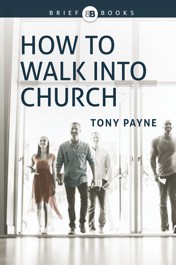
Tony Payne’s brief book, How to Walk into Church is written to encourage us to switch off the autopilot and think how we can make our time at church amongst the most valuable activity we engage in each week. He writes:

We come not to spectate or consume, nor even to have our own personal encounter with God. We come to love and to serve.(p13)

This little book is firmly grounded in Hebrews chapters 10 to 12. We are introduced to the heavenly gathering called church and move to the implications of belonging to this church for how me spend our time together with other Christians in our local churches. Our churches are to be shaped by love, and this only happens as we make God and one another the purpose of our gathering. We meet to love, which means we meet so as to build one another by the truth of God’s word. Tony suggests that every time we walk into church we should be wearing a metaphorical t-shirt that says:

“God is important to me, and you are important to me”. And on the back it says, “And that’s why I wouldn’t dream of missing this.” (p37)

How to Walk into Church contains helpful suggestions for promoting ‘every member’ ministry. You don’t need to be the preacher, the Bible reader, or the song leader to be able to influence others. We can all strike up conversations shaped by the Word of God. We can look out for one another, notice who’s missing, and show hospitality to newcomers. If church has become a passive experience, then this book will help you to turn things back toward active engagement every week.

This brief book is one that I plan to use as a tool in our ministry. Our church has already purchased a box of these books and we are promoting them to our regulars. My hope is that the book can also become part of a membership toolkit. When people indicate that they’re keen to belong to our church, then we will talk through how they can contribute to the ministry. We may well give them this book, urging them to read it, jot down some notes and questions, and we’ll talk about it together. I will be recommending this book to churches, small groups, and individuals.

There are many strengths of this book, not least is that it’s only 64 pages and takes 30 minutes to read. Yet more importantly is that it is derived clearly from the Scriptures. Some books about ‘what to do in church’ simply springboard from the Bible into the pool of pragmatism.

Having read over this book a couple of times, there are improvements that I think could be made in a second edition. It’s a good book that could be even better. I’d like to be able to offer this book to anyone who comes to our church—whether they are Christian or not. Thus, I think the book would benefit by a clearer explanation of how to become part of the heavenly church, the church belonging to Jesus. While this point is made, a few pages completely devoted to the message of the gospel would strengthen its impact.
I’d also like to read more practical ideas for ministry at church. Perhaps in between chapters we could read some cameos of people in their service at church. Alternatively, each chapter could finish with some dot points of ideas, or even a section for personal reflection and prayer for the reader to map out some ideas for service.

I had an opportunity to raise these suggestions with the author at a recent conference and he was most receptive. I sensed that his desire is to serve the church by listening as well as by writing.

This review was written for The Gospel Coalition Australia

Wisdom in Leadership

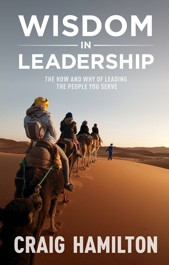
wisdomIt’s a while since I’ve been as excited about a book on leadership as I am about this one. Craig Hamilton’s Wisdom in Leadership is a treasure chest of wisdom. It’s set to become my “go to” book for Christian leaders and I’ve already pre-ordered copies for each member of our church’s leadership group.

Craig has managed to successfully integrate Christ-focused biblical theology and gospel priorities with the best of the literature and practical wisdom. There is a depth of maturity about this book that belies the age of the author. He’s studied the Scriptures, he’s read widely from the best, and he’s tested and refined his wisdom in the course of his own ministry.

Wisdom in Leadership begins with a clear theological foundation that avoids the common practice of arguing prescription from the descriptions of leaders in the Bible. I’d buy the book for this section alone. It’s an excellent example of how to think theologically and then apply our thinking to what we do. The gospel of Jesus, the strength of God, the dependability of the Bible, the necessity of prayer, the significance of serving others, and the importance of being before doing — all take priority over the particulars and practicalities of leadership.

This is a big book. It’s almost 500 pages and it contains 78 different chapters. It’s really a compendium of quality advice on a wide range of leadership matters. When I first read it, I could imagine it being a series of short books on a range of leadership topics, or a long series of posts on a quality leadership website. But I love the fact that Craig has gathered so much together into one volume. It’s the type of book to write notes in, to return to topics over and again, and to dip in and sample, rather than having to read from cover to cover. I expect to refer to chapters and use them as discussion starters with different groups of leaders. I’ve already written summaries, comments, questions, and tips for application in the margins of my book. I’ve typed up a 20-page summary of quotes and ideas from the book, so that I can remember where to go for what.

Here’s a taste of quotes to whet your appetite:

“The biblical model of leadership” is a stupid title because of the words leadership, model, biblical, and the. I do want to make it clear, though, that I quite like the word ‘of’. (p 30)

You want to be a leader? Good. You want to be a great leader? You want to be the greatest? That’s good too. Be a servant. Be the greatest servant. Serve everyone you can. Everyone you meet. Be all about others; be in it for others. (p 53)

Who God wants you to be will always have an impact on what God wants you to do. Secret sins will choke your heart and erode your ministry. Deal with them tirelessly and repent of them quickly. (p 73)

Submitting to authority, being a follower, is a mark of maturity. Those who can’t follow, or are unwilling to follow another leader, shouldn’t lead. It’s a lack of character that needs to be addressed. (p 120)

Leading is pain. It’s part of the job. And if you’re planning on not being hurt then you’re planning on not being a leader. (p 135)

When it comes to how you view the world, the future, and your life, if you’re measuring your circumstances then you’re measuring the wrong thing. Your hope is not based on the shape of your circumstances but on the size of your God. (p164)

Having read this book for myself, I’m looking forward to working through it with others. I anticipate using it as a reference tool for many areas of leadership development. Wisdom in Leadership will help to get our leaders onto the same page, working together for common goals, with a unity of spirit and purpose.

If you’ve read widely in the world of leadership, management, teamwork, time management, change and the like, then Wisdom in Leadership will serve as a refresher course by selecting from the best of the best, adding some home-grown wisdom, and distilling it all through the lens of the Scriptures. If you’re starting out on the task of becoming a leader, or you’re training up new leaders, then I’d recommend saving a lot of time and money by starting with this book first.

This review first appeared on The Gospel Coalition Australia website.

Worth reading

NIV_blueWe’re not all natural readers, but my experience is that reading brings great reward. I struggle to read the great novels or works of fiction. But I’m a fan of sports biographies, and works on leadership, people, organisations, and new ways of thinking and doing. But hands down the most instructive, life-changing, and liberating book I’ve ever read—and continue to read is the Bible.

Apparently it takes less time to read than Game of Thrones and not all that much more than Lord of the Rings or Harry Potter. And while these are great stories, the Bible is so much more. If you’ve never really dipped into the Bible, can I recommend you give it a shot. Grab a modern translation—replace the old King James with a New International Version or the Holman Christian Standard Bible—and give it a read. Maybe start in the second part, the New Testament, and discover the extraordinary account of Jesus. It’s a book of life and hope and, contrary to popular opinion, extraordinary relevance and applicability to life now.

If you’d like to read the Bible with someone else, this can make it easier and more fun. Let me know and I will see if I can arrange a reading buddy or even a reading group.

For those of you who have read the Bible—’have’ being the operative word—and want to dip into it again, here are a few suggested approaches to get you restarted.

  1. Read the whole Bible through in one year. A good option is to get a Bible reading plan and follow it. Such plans are available on line or on smart phone Bible apps.
  2. Listen to the Bible on your mp3 player as you travel to and from work, go on holidays, or exercise.
  3. Use some Bible study guide, such as those produced by Matthias Media, which help you through an entire book of the Bible. These provide some commentary and ask questions to assist your understanding and application of the passage.
  4. Get into a routine Monday to Friday that fits with work and other regularities. Don’t worry if the weekend doesn’t fit the routine – do something different on weekends.
  5. If you know another language then, after you have looked at the passage in English, read through it again in the other language. This with help you give more attention to the meaning.
  6. Read with a friend and discuss what you have learned. Or both of you read on your own and then make contact to discuss it together.
  7. Read the Bible out loud to yourself.
  8. Use Search the Scriptures – a three year Bible reading program. You can take this at whatever pace you desire. Maximum benefit is gained if you take the time to write your answers to the questions.
  9. Follow Don Carson’s For the Love of God to read the Bible over one to four years. Excellent commentary by Carson. Available free on the Gospel Coalition website.
  10. Keep a journal of what you have learned and intend to apply from your reading.
  11. Prepare for sermons and Bible studies by reading over the passages beforehand.
  12. Read a passage with a view to giving a very brief talk which explains it, illustrates it and applies it. Then you can talk to me about finding an opportunity to give it!
  13. Try the S.O.A.P. approach. Read or write out the passage of Scripture. Note your observations and questions of the text. Decide how you are going to apply what you’ve learned. Pray that God will give you understanding and enable you to put it into practice.
  14.  ‘Manuscript Discovery’ is a term given to the study of the text of the Bible without chapters, verses, paragraphs or headings included. This means you have to do more work, with the result that you learn more. You can do this yourself simply by printing out the text of the Bible from Bible Gateway and removing all added numbers and headings.
  15. Commit verses to memory.
  16. Type out the entire Bible.
  17. Come up with your own ideas… share them with others

Rejoicing in lament

Todd Stern’s review of Rejoicing in Lament by J. Todd Billings. This review first appeared on The Gospel Coalition website on 18 March 2015.

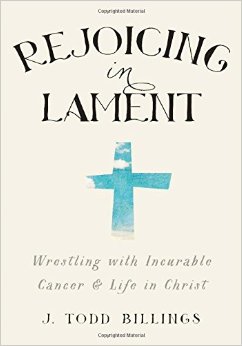
rejoicingWhen Christians are confronted with significant tragedy, we are often reminded of Paul’s words to the church at Philippi: “Do not be anxious about anything. . . . [There is] a peace that passes all understanding. . . . I can do all things through Christ who strengthens me” (Phil. 4:6, 7, 13). While all this is wonderfully true, less often do we hear the line that immediately follows: “It was good of you to share in my troubles” (Phil. 4:14).

Dealing with our own troubles and sharing in those of others are among the most challenging aspects of the Christian life. It isn’t always easy to weep with those who weep (Rom. 12:15). Foolish and insensitive things get said by well-meaning folks. J. Todd Billings’s excellent new book, Rejoicing in Lament: Wrestling with Incurable Cancer and Life in Christ, will go a long way in equipping us to endure and to minister to one another in more theologically grounded and helpful ways.

How does Billings, professor of Reformed theology at Western Theological Seminary in Holland, Michigan, accomplish this task?

Writing from the Cauldron

If you’ve ever heard the harrowing words, “You have cancer,” you will quickly realize that Billings has “street cred.” He isn’t writing from a position of dispassionate analysis but rather from the cauldron, speaking openly and honestly of his experience of being diagnosed at age 39 with Myeloma, a rare and incurable cancer. Throughout Rejoicing in Lament he references his CarePages, an online journal for sharing with others the progression in his own thinking as he moves from the immediate upheaval surrounding the initial diagnosis to dealing with the “new normal.”

It is instructive how well reasoned even his early entries are. Even though Billings may have been surprised by the diagnosis, he was already well versed in truth, which enabled him to find solace and comfort in the only place it can truly be found—at the foot of the cross and in the pages of the Bible. Don’t wait for a crisis to read this book—strengthen your faith now, even in a peaceful season, by building these truths into your soul.

Praying the Psalms

Billings provides excellent instruction on praying the Psalms—particularly the psalms of lament—with all the honesty, struggle, and emotion of the Spirit-breathed writers themselves. He deals with these in detail throughout the book, teaching us how to fight our fears with faith and the language of Scripture. This discipline frees us to be honest and calls us to reflect on God’s wonderful promises, even when we can’t fully understand all that’s happening to us.

Billings helpfully explains that, as with Job, God does not owe us an explanation for why he allows severe trials. There is mystery here, yet we can rely on the truth that only he fully understands our suffering. We waste precious energy when we seek answers that only reside in the secret places of the Most High (Deut. 29:29).

Helping the Church

Billings also offers practical instruction for the church in chapters 6 and 7, “Death in the Story of God and in the Church” and “Praying for Healing and Praying for the Kingdom.” These chapters are particularly accessible and illuminating. The church is the place to run to rather than avoid when experiencing suffering. Sometimes we want to “grieve in private” or don’t want others to “see our pain,” but that can be profoundly counterproductive.

I hadn’t considered Billings’s point that the church is the one place where we celebrate birth, baptism, marriage, and death—a point that reinforced to me the importance of faithful perseverance in the church from cradle to grave.

Two Small Cautions

Lay readers (like me) should know in advance that Billings is an accomplished theologian and academician. As a result, some of the book’s language may be less accessible to the typical person wrestling with a trial of this magnitude. I’d counsel readers to stick with it, however, because there’s much gold to be mined in these pages.

A challenge in writing a book so tightly interwoven with the author’s experience is that he can share what he experienced and how he handled it, yet the reader’s experience may differ. While there may be certain commonalities in all Christian suffering, changing just one variable in a trial can make a world of difference experientially. Therefore, there cannot be a “one size fits all” approach. Questions that surface for some won’t rise for others. New and different questions may demand fresh and distinct responses.

I, too, have been diagnosed with incurable cancer. Even as I write this review, my chemo regimen is changing after 34 rounds because the tumors are continuing to grow. Additionally, today is the six-month anniversary of my wife’s death from her incurable cancer. I don’t have exactly the same struggles or questions as Billings: the “why” question hasn’t bothered me as deeply; I haven’t really experienced anger at God; and I find peace in the certain knowledge that he’s promised to “never leave us or forsake us” (Deut. 31:6, 8; Heb. 13:5). Billings implies at times that this sort of response is dangerously close to blind stoicism—but it might just be how God has prepared me to endure this trial. We all experience and respond to affliction in slightly different ways, and that’s okay.

Caught Up into His Story

All Christians can agree with Billings when he writes:

Even when we feel left in the dark, even when suffering and death seem senseless, we are empowered by the Spirit to groan, lament, and yet rejoice. God’s promise is trustworthy, and this same Spirit has united us to Christ, through whom we are able to call out to the Father as adopted children. We rejoice, we lament. In all of this, our own stories are not preserved in a pristine way; we are displaced (“I am not my own”) and incorporated into a much larger story—God’s story in Christ. (p170)

That message of truth needs to be heard loud and clear throughout the church, and Billings brings it home in a brilliant and powerful way. Whether you are walking with someone who is suffering, you are suffering yourself, or you want to be prepared to suffer, Billings can lead and guide you to do so in a God-honoring way.

Leaders eat last

leaderseatlastLeaders eat last: Why some teams pull together and others don’t by Simon Sinek is a thoughtful analysis of many of the problems created and experienced by leaders and organisations in today’s world. It contains case studies, research, and biological and anthropological explanations for why successful organisations are those that create strong and safe communities. While this book is longer than it needs to be, and possibly over reaches in its biological and evolutionary claims, there is much to learn and relearn in this analysis of human interaction. Leaders of all types, whether in families, business, churches, government or other organisations, will do well to review their leadership in the light of Leaders eat last. I’ve personally found many points for reflection as I’ve be pushed to evaluate my leadership and the organisation (church) that I lead.

While the title is a metaphor for selflessness, it resonates literally with me. In 2002, as I became the team chaplain for the Brumbies Super 12 Rugby Team, I met the assistant team manager, Garry Quinlivan. ‘Quinzo’ is a retired customs officer who devotes his time to serving the Brumbies players and staff. He works without pay, spending long hours preparing, cleaning, checking up on, and sacrificially caring for everyone. Many things stand out about Quinzo, but one thing has struck me over the entire time I have watched him at work—he always eats last! Whether it’s a social BBQ, a drinks break, team lunch, or celebrating after a win—Quinzo always eats last. He gives everything for the team. And, in turn, people love Quinzo—they would do anything for this man.

Leaders eat last has constructive advice to leaders who preside over toxic work places. Watch how you lead—you may be the problem! Though of course, many selfish leaders would never consider themselves at fault. They don’t pause to reflect on the climate they are creating. The push for profits, the obsession with numbers, and the focus on short-term results mask the damage many leaders are doing to people. And then they wonder why their outcomes and results are so poor.

Sinek makes much of the importance of creating a circle of safety in the organisation. This idea is taken from Aesop’s Fable:

A lion used to prowl about a field in which four oxen used to dwell. Many a time he tried to attack them; but whenever he came near they turned their tails to one another, so that whichever way he approached them he was met by the horns of one of them. At last, however, they fell a-quarrelling among themselves, and each went off to pasture alone in a separate corner of the field. Then the Lion attacked them one by one and soon made an end of all four. (p20)

When we are part of a strong circle of safety, we naturally share ideas, burdens, successes, and we build a culture of collaboration, trust, and innovation. Good relationships are key to people surviving, let alone flourishing. A healthy organisation will be built on good relationships between colleagues. People grow in their trust for one another and become willing to do more for each other and the organisation. By contrast, organisations characterised by suspicion, fear, and distrusting micromanagement, are destined for decline and failure.

Sinek suggests a number of strategies that leaders can adopt to build a healthy, positive, relational culture in their organisations:

Rule 1: Keep it real—bring people together. Efficiency doesn’t always equal effectiveness. Emails, intranets, and on-line people management systems won’t necessarily build deep, trusting relationships. Trust is not formed through a screen, it is formed across the table. It takes a handshake to bind humans … and no technology yet can replace that. There is no such thing as virtual trust. (p111)

Rule 2: Keep it manageable—obey Dunbar’s Number. Anthropologist Robin Dunbar has found that people are not able to maintain close relationships with more than 150 people at a time. Traditional societies around the world tend to be organized in groups of 100 to 150. Larger groups require clear lines of organisation and specialist care to encourage cooperation and healthy relationships to develop. I suspect it is no accident that many churches seem to get stuck, never growing much beyond 150 people.

Rule 3: Meet the people you help. Fund-raising workers who have personal contact with the people they help have far more success. We work harder and better when we can see our potential impact. If we are focused purely on names and numbers, then morale drops and the organisation suffers.

Rule 4: Give them time, not just money. Research has shown that we place a higher value on time than money. Giving time, attention, and energy builds relationship, fosters community, creates trust, and encourages loyalty.

Rule 5: Be patient—obey the rule of seven days and seven years. Building relationships of trust takes time. Gauging someone’s fit in an organisation or in a relationship takes longer than the time that we typically give it: ‘more than seven days, but less than seven years’.

Sinek teaches that becoming a leader involves the key ingredients of love and trust. Leaders must model and grow organisations shaped and characterised by care and strong relationships. They should work to provide safe environments for their workers to enjoy being productive.

It’s not hard to see the relevance of this book to many workplaces and community organisations. Many of us have experienced difficult work environments where the CEO or the boss is a large part of the problem. The drive for profits often leaves a wake of departures and problems for the organisation.

As a pastor, I see a number of lessons for myself and my colleagues. If churches focus on growing numbers, budgets, buildings and the like, then we can forget that we should be primarily about the love of God and a love for people. I’m called to put others before myself—to be a leader who eats last. Jesus is the great example of the one who did not come to be served, but to serve, and to give his life as a ransom for many (Mark 10:45). In a sense, I don’t need the wisdom of Sinek—I need the vision and example of Jesus. However, it doesn’t hurt to be reminded by whatever means. If God can teach people through an ass, then he can certainly challenge me through a popular leadership book!

The sad reality is that there are too many people who’ve been hurt by their churches. I regularly meet people who feel they have been neglected, rejected, abused, or betrayed by their church or their leaders. This many be a one-sided analysis (it’s much easier to see how we’ve been hurt, than how we might have hurt others) but it’s a reminder to stay in touch with what the church is intended to be—the body of Christ, shaped by his love.

Leaders eat last has encouraged me to do some self-reflection. Is my leadership offering care and protection to those entrusted to me? Are we building a church community where it is safe to be weak and vulnerable? Are people more important than processes? Is maturity more valued than money? Where are my blind spots as a leader? What do I need to change or work at?

Christians get depressed too

depressedtooLast week I attended a half day seminar on mental illness. It was aimed especially at Christian workers, offering an introduction to the prevalence and complexity of depression in particular. It sparked my interest to refresh my understanding and delve a little deeper into this troubling matter. ‘Depression’ can be a polarising issue among people in general, and there are particular dividing lines among Christians. There are different schools of thought about what it looks like, how and why people become depressed, and what should be done to help people with depression. Christians get depressed too by David Murray is a short book (112 pages) that is well worth reading. It shows a good understanding of the complexity of this issue and argues for a decrease in dogmatism and an increase in humility.

Murray urges us to avoid simplistic extremes when considering the cause of depression. He demonstrates how Christian analysis has fallen into three camps: the cause is all physical; the cause is all psychological; or the cause is all spiritual. The problem with these positions is the word ‘all’. We are complex beings and it is unlikely that one factor alone can be found that explains the cause of depression. In the case of spiritual factors, Murray argues that spiritual problems are more likely to be the result rather than the cause of depression. This is not to rule out spiritual factors sometimes being the cause of depression. But we are urged not to jump to this conclusion any more than we would assume spiritual factors to have caused headaches, cancer or asthma. The second chapter of this book offers some helpful analysis of the approach and writings of Jay Adams and also the modern Biblical Counselling Movement.

This book seems especially aimed at helping the person who believes that having depression is incompatible with being a Christian. Murray shows how this is not the case, and provides biblical evidence for depression and faith in God coexisting in the one person. The book of Psalms illustrates this, with approximately one third of the Psalms demonstrating depressed thoughts and feelings.

Many factors can be involved in depression: life circumstances; unhelpful thought patterns; negative emotions and feelings; bodily symptoms; and changes to behaviour and activity. Acknowledging the complexity of causes and the variety of symptoms, alerts us to the benefits of a multifaceted approach to helping a depressed person. Murray suggests making helpful adjustments to our lifestyles in the areas of routine, relaxation, recreation, sleep, diet, and the like. He recommends addressing our thought processes and assessing our feelings. If making these adjustments doesn’t fix things, then he recommends seeking out trained medical help and possible medication. He also urges us to correct spiritual consequences and, where appropriate, spiritual causes of the depression.

The last chapter gives some good advice to non-professional caregivers. We are urged to learn more about the nature of depression, and there are some useful recommendations for further reading. Murray calls for sympathy for the person suffering depression. However , in my opinion, what he describes might be better described as empathy. We don’t all need to experience depression ourselves to be able to help those who do. Secrecy and stigma are among the problems to overcome in caring for a depressed person. There’s helpful list of things not to say to someone who is depressed. And there is an important section on helping someone who may become suicidal.

There are no easy answers and no quick fixes when it comes to depression. Ongoing support and understanding are required to be helpful and this book is a useful tool for becoming better equipped at both.

10-10-10

10-10-1010-10-10 by Suzy Welsh is a very simple and very practical decision making tool. It revolves around asking three simple questions: When faced with a dilemma, stop and ask, “What will the consequences of my options be in 10 minutes, 10 months, and 10 years?”

This approach helps broaden the variables in complex decision making. It enables us to tap into our values and focus on our goals as we face the immediate crisis of making a decision. Some choices have long ranging consequences and other do not. 10-10-10 helps us weigh the different consequences of our decisions.

10-10-10’s applicability is wide ranging. “From college students to busy mothers to senior business executives, from artists to government administrators to entrepreneurs, 10-10-10 has shown its effectiveness in decisions large and small, routine and radical, changing lives for the better at home, in love, at work, and in friendship.”

While I appreciate the power of this decision making tool and recommend it to others, it doesn’t go far enough. And I mean more than extending it to 50-50-50, to enable decisions to be made with ‘whole of life’ implications considered.

As a Christian, I believe that we all make decisions with eternal consequences. Choices made today and tomorrow will have implications for more than this life alone. If I choose to shut God out of my life for the next 10 minutes, and the next 10 months, and the next 10 years, then I run the risk of distancing myself from God for all eternity. My choice is to trust God with the complexity of day to day, month to month, year to year decisions. I believe that God has secured my eternity through Jesus Christ and that every decision I make should reflect this reality.

The words of John Newton, in his famous song Amazing Grace, come to mind:

When we’ve been there 10,000 years
Bright shining as the sun
We’ve no less days to sing God’s praise
Than when we first begun

Let’s make our decisions by weighing up the consequences for 10 minutes time, 10 months time, 10 years time, and 10 thousand years into eternity. I’d love to cooperate with Suzy Welch in a Revised Edition called 10-10-10-10!

The morality of God in the Old Testament

Layout_GenesisHow are we to understand the Israelites being commanded to wipe out all the Canaanites in Deuteronomy and Joshua? What do we make of the various Psalms that call down curses on the enemies of the writers and God? Perhaps, like me you are troubled by these things (and others) in the Bible. Atheists, such as Richard Dawkins, Daniel Dennett, Christopher Hitchens, and Sam Harris, point to these things as evidence for the moral corruption of God (who they believe is really a fiction). Christians come under attack for their beliefs in a God, whom some describe as a moral monster. Some would say how can Christians criticise the recent actions of the IS in Iraq or Syria, when the Old Testament provides evidence of God’s people doing similar things, and at the behest of God?

Let me say that this isn’t really the atheist’s problem—this is a problem that the Jews and the Christians need to deal with. For the atheist, the problem is not with God, for he/she/it doesn’t actually exist, but with the people who claim to believe in God. Their criticism is fundamentally toward religious people justifying their immoral behaviours in the name of an imaginary divine being. However, for the Christian who believes that God is real, that he has revealed himself to people, and that he is involved in human history—there are real issues to consider when it comes to trusting that God is morally pure. This is an issue that I’m keen to explore further.

In considering this matter, I’ve recently read a brief book by G.K. Beale, called The morality of God in the Old Testament. The book focuses on the commands of God to destroy every man, woman and child of the Canaanites (e.g.. Deuteronomy 20:10-18) and also on the imprecatory Psalms (e.g.. Psalms 7; 35; 55; 58; 68; 79; 109; 137) which call upon God to judge and destroy his enemies.

Beale explores various proposed solutions to deal with the difficulties raised by these passages. First, he describes how people argue that wartime ethics differ from peacetime ethics. While this may be true, it doesn’t account for the commands to kill non-combatants. Secondly, he explores the suggestion that the command to kill women and children is not meant to be taken literally, but is a metaphoric way of describing a total victory over the Canaanites. Beale demonstrates that while there may be something in both these suggestions, neither adequately explain the texts.

Instead Beale offers a fivefold approach to engaging with these issues. His approach gives important nuance and perspective to interacting with the difficult moral issues of the Old Testament.

  1. God’s wiping out the wicked Canaanites as a demonstration of his justice;
  2. God’s extermination of the Canaanites as a purifying of uncleanness of the Promised Land as an Edenic sanctuary;
  3. God’s self-sufficiency and independence from creation;
  4. suspension of ethical obligation by typology and intrusion of final judgment;
  5. suspension of the law of neighbour love. (p33)

Beale argues that we need to recognise the uniqueness of the Canaan episode. It does not offer a paradigm for continued activity in the Old Testament, let alone the New Testament. Instead, it should be seen as a once-only, historic actioning of God’s redemption of Israel, as the nation enters into the land of promise. This salvation/judgment event is also to be understood as a type of what is to happen through Christ’s first and second coming.

There is more to his argument than this, but he demonstrates how it is important to allow Scripture to be understood in it’s full biblical context. The critiques of Dawkins and others show absolutely no understanding of the overall shape of the Bible or the saving purposes of God in the Old and New Testaments.

I still find the matters being described troubling, but no more so than the reality of death and the promise of eternal judgment for all who dismiss God. As a Christian I need to grapple with why God allows any suffering, evil or death, and especially with the moral rightness of God judging people for eternity. It’s sobering to remember how much my own moral failings corrupt my ability to recognise what is right and true and perfect. It’s totally presumptuous (and deluded) to think that I can stand morally superior to God, and judge him for his actions. This becomes clearest to me when I am reminded that God loved the world so much, that he sent his only Son, Jesus, to die in our place, so that all who trust in him will not perish but have everlasting life. Such is the moral character of God.

How can I be sure?

sureJohn Stevens’ little book, How can I be sure? And other questions about doubt, assurance and the Bible is definitely one that I will be recommending to others. It’s clear and simple, without being simplistic; it’s empathic and it uses the Bible well. The author understands that doubt is a complex beast, displayed in a variety of forms, and arising from many different causes. I personally found the book to be inspiring and reassuring. It resonated at times with my experiences of doubt, and some of the causes; and it took me to the places where I’ve found reassurance. While recognising that everyone’s circumstances are different, my prayer is that it will do the same for others. All in all, this compact book is one of the better books on doubt and assurance I’ve read.

If I’m going to engage with a book dealing with these topics, I want to know that the author has a firsthand personal understanding of the matter—and Stevens does. He writes about the impact that his father dying of lung cancer had on his faith. It rocked his world, not simply as an intellectual challenge to the goodness and sovereignty of God, but with personal pain and experience. He took some years to recover from the anguish of this time. Stevens has also explored these issues with many in his church over the past twenty years. This has helped him to grasp the different forms that doubt can take in people’s lives, and to apply his thinking to how the Bible helps each one. The book engages the reader by presenting a mix of personal stories of doubt. People have trouble believing due to their struggles with personal sin, unanswered prayers, the challenge of other religions, relationships with people who have different belief systems, God seemingly remote or out of touch with this modern world, feeling overwhelmed by all around who don’t hold the same beliefs, or questioning whether their ‘conversion experience’ was real. Recognising this complexity is so helpful, and many more scenarios could be added, because doubt is not a one-size-fits-all phenomenon. Doubt could mean a lack of certainty about the future, or a questioning of what we believe, or a lack of assurance, or unbelief. The first three types of doubt will likely be common experience for all Christians and if they are unchecked they can lead to the more dangerous position of unbelief. This book helps us to engage with our doubts as part of the normal experience of living as a Christian.

So if you are reading this book because you are struggling with a problem of doubt at the moment, be encouraged! The fact that you doubt does not mean that you can’t be a Christian. “Doubt” is not the same as “unbelief”. However, you can’t afford to ignore your doubt, treating it complacently or just hoping that it will go away. You must deal with it so that it does not develop into unbelief, and use it as an opportunity to develop a more confident, resilient and mature faith. (p18-19)

Stevens answers the important question “How can I be sure that I’m really a Christian?” by pointing not to us, but to God’s love for us in Jesus. There are dangers in becoming too introspective about this issue. We can end up placing confidence, or lack of, in ourselves rather than the gospel. If we base our assurance on a response we previously made at church, or at a Simply Christianity course, or on a university camp, or an outreach event, this can lead to a misplaced and false assurance. We are not made right with God because of our response, but because of God’s gracious work in Jesus’ death and resurrection on our behalf. For me, who had made decision after decision to become a Christian (again) in my teens, it was realising the truth of Romans 5:8-9 — that Jesus had paid for my sins past, present and future — that led to my assurance before God. While this book generally leads us away from introspection, it does call us to examine the evidence for our lives being changed. The Bible pushes us to look for evidence that our faith is real and we should expect to see our lives changed by the Spirit of God at work within us. On three occasions, Stevens recommends that we keep a spiritual journal to chronicle the evidence of God working in us and changing us. I must admit that I worry a little about this strategy. It’s not that I’m opposed to journalling, it’s more that documenting our experiences will always provide fickle evidence at best. I’d recommend that if we’re going to journal, we spend even more time documenting the promises of God that we discover in  the Bible. God’s promises remain trustworthy, whereas my experiences lead me here and there. If I want clear evidence that God loves me, then I need to look at the cross, not what happened in my life last week or last year. As Martyn Lloyd-Jones describes in his book Spiritual Depression, after looking at Psalm 42-43, we need to spend more time speaking to ourselves (about God), than listening to ourselves (about why God is absent or doesn’t care). The chapter on overcoming doubt is practical and helpful. Stevens recommends the following strategy:

  1. Admit that you are struggling with doubt and seek help.
  2. Come to Jesus for help with your doubt.
  3. Seek the help of mature believers with your doubt.
  4. Identify the root causes of your doubt
    1. Doubt rooted in our bodies: Physical causes of doubt.
    2. Doubt rooted in our minds: Intellectual causes of doubt.
    3. Doubt rooted in our hearts: Experiential and emotional causes of doubt.
    4. Doubt rooted in our spirits: Spiritual causes of doubt.
  5. Addressing the causes of doubt.

In the end, the Christian faith stands or falls on whether Jesus really was the Divine Son of God who took on human flesh, was crucified and rose again after three days. If this really happened, then we can be sure that God exists. We can know what God is like because Jesus fully reveals him to us. We can be sure that the Bible, both Old and New Testament, is true because Jesus tells us so. We can be confident that God is love, and that he will accomplish his good purposes for his people. We can trust that our sufferings are part of his good plan for us, even though we may not understand how, because we can see that Jesus entered into glorious new life after suffering on the cross. We can trust that Jesus will return to bring true justice and remake our broken world. If we can be confident about Jesus, then this is the basis from which we can address all our doubts. (p71-72)

This book will point you to Jesus as the basis of your assurance and the antidote to your doubts. Any book that does this is worth a read, I reckon.