Learning to read and write again

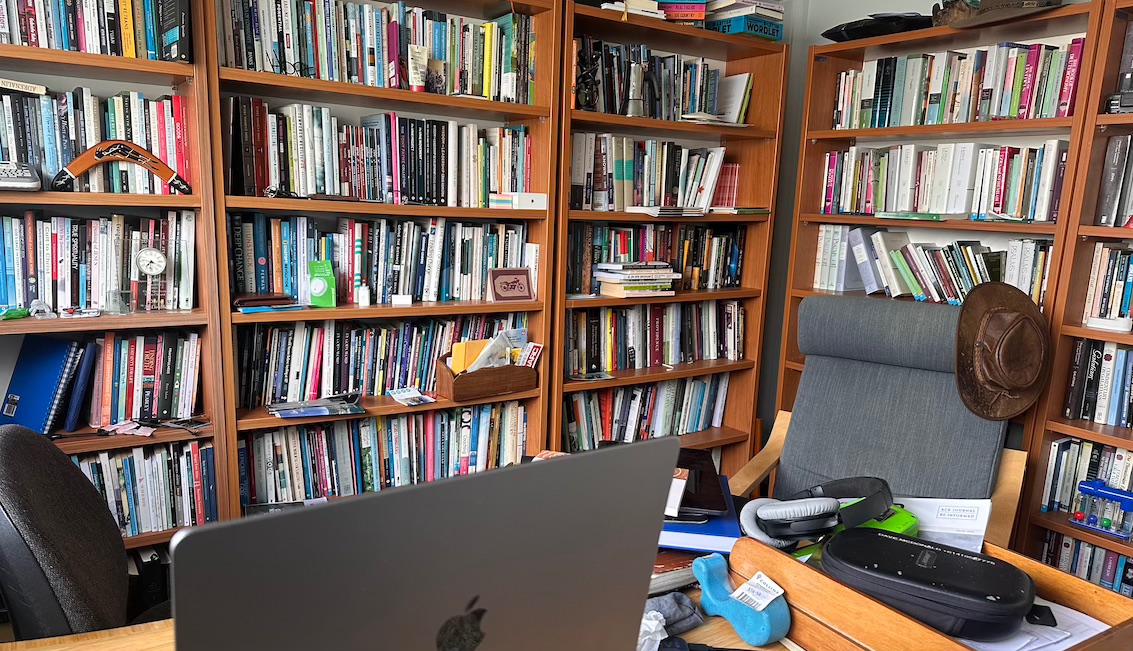
The number of books on my shelf grows at a much faster rate than the number of books I actually read. I keep piling books on top of books and eventually feel the guilt of too many unnecessary purchases. So, I grab a cardboard box and sift through the books I’ve never read and probably never will. Some get given to friends or family, others find their way to a give away table at church, and the remainder usually end up at a local Christian op shop.

The writer of Ecclesiastes couldn’t have begun to grasp the sheer volume of books, not to mention blogs, articles, and podcasts that saturate our world today. “Of making many books there is no end, and much study wearies the body.” (Ecclesiastes 12:12) I confess to feeling overwhelmed and weary. There has never been so much information to take on board. The internet floods our lives with content. So much information. How do I know what matters most? How much do I need to understand as a Christian leader? I can’t read everything, so should I read anything?

The danger is we give up. Let AI decide what we read, what we hear, how we think. Don’t do the hard work. Have someone else (something else) curate our learning. Take all the short cuts. Stop being curious. Give up on exploring, investigating, comparing, researching, and discussing.

God is in the business of transforming our minds and reshaping our thinking. Not just our knowledge, but our discernment, our priorities and perspectives. We’re called to be sober minded and to take every thought captive to make it obedient to Christ (2 Corinthians 10:5). “Therefore, I urge you, brothers and sisters, in view of God’s mercy, to offer your bodies as a living sacrifice, holy and pleasing to God – this is your true and proper worship. Do not conform to the pattern of this world, but be transformed by the renewing of your mind. Then you will be able to test and approve what God’s will is – his good, pleasing and perfect will.” (Romans 12:1-2)

So I’ve decided I must keep reading. Bible first. Good Christian books second. Other worthwhile books, articles, essays, and blogs. I believe God wants me to be a lifelong learner. To inform my mind for his glory, for the sake of all who live without the hope of Jesus, and for the building of my brothers and sisters in Christ.

I’ve set the goal of reading a book a fortnight. To be transparent, sometimes this will mean listening to an audio book and other times turning the pages of a hard copy or kindle. It’s challenging to do, but more than possible. Less time on the phone, computer, or tv could open up hours. In many cases that will mean averaging one or two chapters most days. I will listen to the recommendations of others so that I’m not wasting my time, and I will mix it up so I’m learning more widely. Thus far in 2026 I’m not quite achieving my goal, having read 12 books in a bit over 6 months. But it’s more than I managed last year, and the discipline is making it easier as I go along.

And writing? Yes I’m keen to start writing again. It clarifies my thoughts, pushes me to consider others, and offers a means for ministry to others. This is my first blog post in 3 years – you have to start somewhere!

Below are the books I have read so far this year. There is much more to be said about each of these books. Some commendations and some critiques. But that will be for another day.

  1. Peter Adam, Prayerfulness
    An inspirational and practical call to have the Bible shape and fill our prayers. I must return to this book and read it more slowly.
  2. Bobby Jamieson, Everything is Never Enough
    A rich and beautiful deep-dive into the book of Ecclesiastes. My only gripe is you need to hang in there until the end to find the hope of Jesus.
  3. Salas and Tannenbaum, Teams that work
    A master-class on teamwork drawing on widespread research, giving evidence-based insight into what makes teams work well. A secular book with important insights for ministry leaders.
  4. Carl Trueman, The Desecration of Man
    Somewhat brain-straining, though not as much as some of his former books. An important reminder that we are made in God’s image to show his glory. We are made to be God’s temple and our sin ‘desecrates’ this sanctuary.
  5. Matt Smethurst, Before you open your Bible
    Good Bible reading requires more than in depth study. It takes a heart posture that is seeking to be transformed.
  6. Karen Bell, The Adkar Advantage
    The ADKAR approach to change management is intuitive and evidence-based. The book argues that all successful change efforts will contain the same components in the same order. It rings true to me.
  7. Timothy Paul Jones, Did the resurrection really happen?
    Easter provided a good opportunity to examine another resource for skeptics looking at evidence for the bodily resurrection of Jesus.
  8. John Mark Comer, Practicing the Way
    Many people seemed to be greatly influenced by JMC’s books, podcasts, and resources. I wanted to understand why he was so popular and what to make of his emphasis on spiritual ‘practices’. To be honest, I’m concerned. While he diagnoses many of the ills of our modern busy lives, my fear is that he replaces them with a move to mysticism that has little regard for the local church. For a “Christian’ book, it did not seem to give much emphasis to the person and work of Christ.
  9. Anna Boxwell, Amy Erickson, Laura Rademaker, God’s Yes to Women
    I started reading this on the plane returning from the overtly complementarian TGC Women’s Convention in Indianapolis. Knowing many of the book’s authors, I was keen to hear their arguments about egalitarianism. I found myself saying “yes, yes” to much in this book, but remained unpersuaded of its conclusions that all ministry roles are open to both men and women, and that God’s design for Christian marriage doesn’t involve an extraordinary synergy of loving headship and submission.
  10. Craig Ott, The Church on Mission: A Biblical Vision for the Transformation among All People
    God’s plan to transform his image bearers is the key to understanding the church in this world. I read this book in preparation for the FIEC conference this coming week. To be fair, I need to read it again with a pen in hand.
  11. Mark Vroegop, Dark Clouds, Deep Mercy
    It took me a while to get into this book but once I did I was gripped. Mark is the President of TGC in the US and I heard him give a passionate talk from Psalm 102 on the importance of lament. Lament is a category that I have been exploring deeply over the past year or so, and Mark Vroegop’s book is a biblical master class.
  12. Collin Hansen, Timothy Keller: His Spiritual and Intellectual Formation
    Now that I’m working with TGCA I figured that I wanted to know some of the origin stories. Never having met Tim Keller and not knowing a great deal about him, I have found this book to be inspirational. Hansen gives us so many windows into who and what shaped Tim and Kathy Keller. I love a good biography and there is much to learn and apply in this volume.

What are you reading? What would you recommend?

Too much, too little

screen-shot-2016-09-18-at-2-45-24-pmMy new year resolutions for 2016 included reading a book a week. The plan was to finish 52 books before the end of the year. I wasn’t following a recommended reading list, but there were a few books that I was keen to knock over. Someone had suggested mixing things up with a range of genres and topics. There were issues I was interested in researching and their were numerous new books that piqued my interest. During this time I also discovered audio books and bought myself a kindle. So my list represents an eclectic mix of styles, difficulty, issues, media, and… quality. Yes, I also discovered that some books had done little more than steal my time.
Here is my list:

1. Forever, Paul Tripp
2. The Story of Everything, Jared Wilson
3. Why Trust the Bible, Greg Gilbert
4. Ordinary, Michael Horton
5. Seven Practices of Effective Ministry, Andy Stanley
6. The Martian, Andy Weir
7. Brothers, We Are Not Professionals, John Piper
8. The Rider, Tim Krabbé
9. The Churchill Factor, Boris Johnson
10. The Pilgrim’s Progress, John Bunyan
11. Sex and Money, Paul Tripp
12. Side By Side, Edward Welsh
13. Dangerous Calling, Paul Tripp
14. Lectures to my Students, Charles Spurgeon
15. Creating Community, Andy Stanley and Bill Willits
16. Knowing God, J.I. Packer
17. Do More Better, Tim Challies
18. Teaching Isaiah, David Jackman
19. Organising love in church, Tim Adeney and Stuart Heath
20. Mission Drift, Peter Greer and Chris Horst
21. Why bother with church? Sam Allberry
22. The Cross of Christ, John Stott
23. Taking God at his Word, Kevin DeYoung
24. Zeal without Burnout, Christopher Ash
25. Living Forward, Michael Hyatt and Daniel Harkavy
26. Seeking Allah Finding Jesus, Nabeel Qureshi
27. Praying the Bible, Donald S. Whitney
28. Word-filled Women’s Ministry, Gloria Furman and Kathleen Nielson
29. Living in the Light, John Piper
30. What’s Best Next, Matthew Perman
31. The Ideal Team Player, Patrick Lencioni
32. Who Moved My Pulpit? Thom Rainer
33. Strong and Weak, Andy Crouch
34. Big Blue Sky, Peter Garrett
35. Wild at Heart, John Eldredge
36. The Life You Can Call Your Own, David Aspenson
37. I am a Church Member, Thom Rainer
38. Unashamed, Lecrae Moore
39. Autopsy of a Deceased Church, Thom Rainer
40. The Gospel, Freedom, and the Sacraments, Barry Newman
41. Fool’s Talk, Os Guinness
42. How to Read Proverbs, Tremper Longman 3rd
43. Life Together, Dietrich Bonhoeffer
44. Shattered Shepherds, Steve Swartz
45. Canon Revisited, Michael J. Kruger
46. What is a Healthy Church Member? Thabiti Anyabwile
47. Center Church, Tim Keller
48. The Gospel and Mental Illness, Heath Lambert
49. True Friendship, Vaughan Roberts
50. A Model of Christian Maturity, D.A. Carson
51. Why Your Pastor Left, Christopher Schmitz
52. Independent Church, John Stevens

I’m not planning in this post to a comment on each of these books, but rather to share some overall observations, and in no particular order.

True to form, I didn’t read many novels. It’s rare for me to read fiction. But, on reflection, it would do me good to read more. Sitting in a hammock, reading The Martian, took me to another place! This book, together with Boris Johnson’s riveting biography, The Churchill Factor, were my most relaxing reads of the year. They both helped me to forget about my life for a while.

Audio books have been a great find. They’ve made long car trips pass effortlessly and they’ve redeemed so much wasted time in daily commutes. Some books are more suited to this media than others. If you’re grappling with a new topic and need to take notes, then it’s probably not the best approach. I’ve found great reward in using audio books to ‘re-read’ a few important books that I have been deeply influenced by in years past. Packer’s Knowing God, Spurgeon’s Lectures to my Students, Stott’s Cross of Christ, and Tripp’s Dangerous Calling had all previously left their mark on me. Hearing them over again was an excellent way to refresh.

Much of my reading has focused on thinking through ministry, mission, and leadership matters. Life Together is a classic that I come back to regularly. What’s Best Next is full of wisdom, but way way way too long. Zeal without Burnout is a simple book that I anticipate revisiting over and over.

Center Church has been sitting on my shelf for a few years. It’s been too intimidating to start, but people keep referencing it, so I decided to dig in and give it a go. This is Keller’s magnum opus on church and his philosophy of ministry. I haven’t digested everything as yet. Much was stimulating, but some parts were just annoying. Maybe I will attempt a serious review sometime in the future.

I will offer three awards:

  1. Diamond Award—a small and precious gem.
    Shattered Shepherds, Steve Swartz.
    A must read for those who’ve been devastated by their ministry going wrong.
  2. Kodak Award—for under-developed and over-exposed ideas.
    Wild at Heart, John Eldridge.
    A best seller that is more pop culture than biblical wisdom.
  3. Orange Award—fresh and healthy, but could sting if it comes into contact with an open wound.
    The Gospel, Freedom, and the Sacraments, Barry Newman.
    A very fresh socratic-style approach to revisiting what the bible says about baptism and the Lord’s supper.

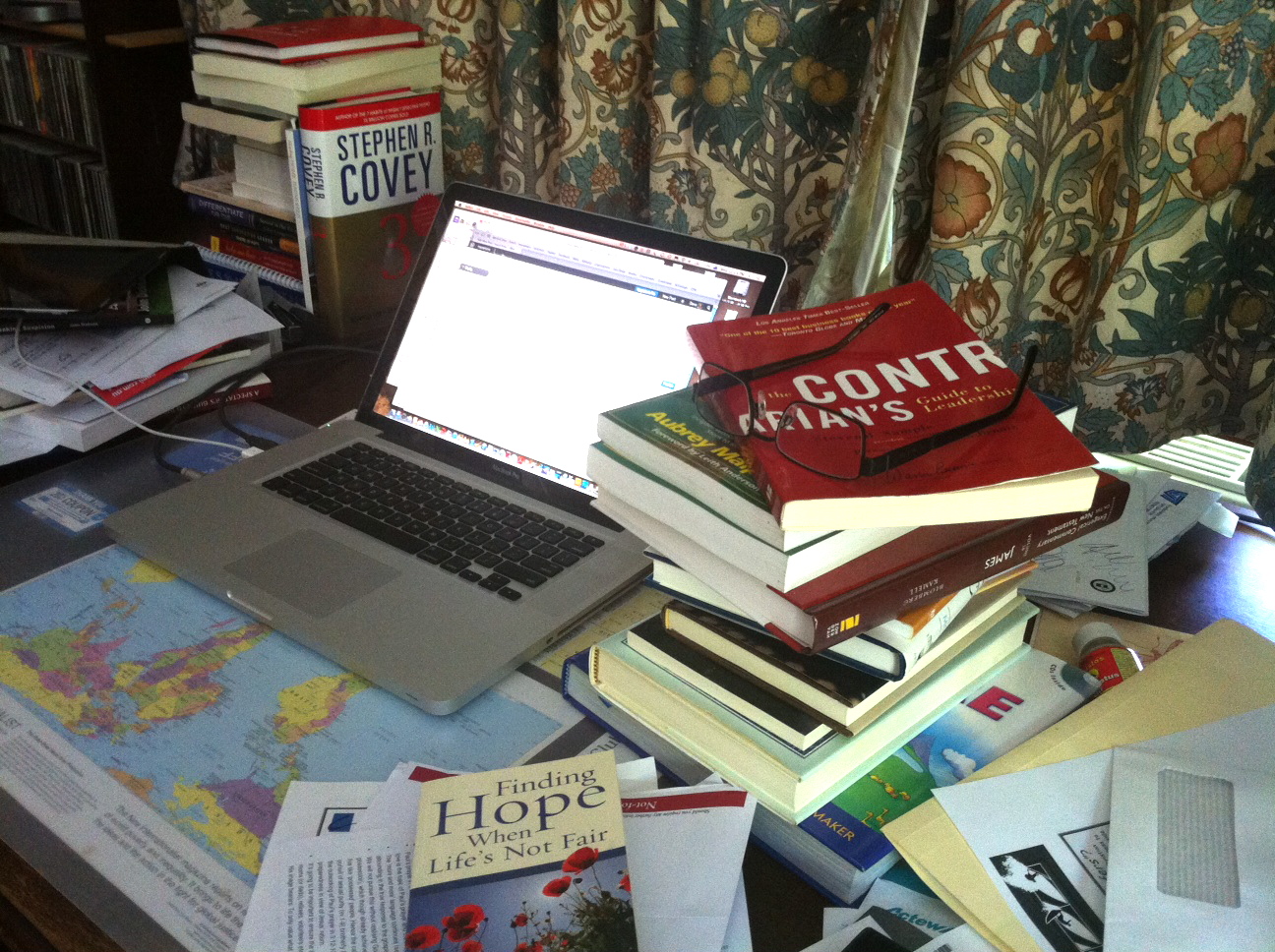
Overall, I think I’ve probably read too much too quickly and taken too little in. I don’t remember much about some of these books and I haven’t allowed sufficient time for important discoveries to take root. Unlike previous efforts, I’ve neglected to annotate most of these books, failed to record important ideas and quotes, and not written summaries or reviews. For these reasons, some of these books are going back onto the desk for another go next year—a little more slowly, and a lot more carefully.

A time to read

20-minVarious studies and websites have demonstrated the importance and value of encouraging children to read for 20 minutes every day. It doesn’t seem like much, certainly when compared to average times spend watching television, playing on computers, and the like. However, the reality for many children is that it simply doesn’t happen.

Forgetting about children for a minute—what would be the value to adults if we spent 20 minutes a day reading? Let’s look at some stats…

People estimate we could read 1,800,000 words per year.
This is the equivalent of 28 average size books.
We could finish a book every two weeks.
We could cover a broad range of topics and interests.

Given that the Bible contains approximately 1,200,000 words, we could read it 3 times over 2 years.
Or we could read the Old Testament once, and the New Testament and Psalms twice each year.
Or we could read the whole Bible and more than 9 Christian books every year.
Or—if we read the Bible for an additional 15 minutes—then we could read the whole Bible each year, and at least one Christian book and one general book every month, and still have time for this blog!

Yes, I do know you can make stats say whatever you want, but even with a large measure of miscalculation and exaggeration, you can begin to see what just 20 minutes a day reading could achieve.

So why not take the 20 minute challenge?

Christian men and books

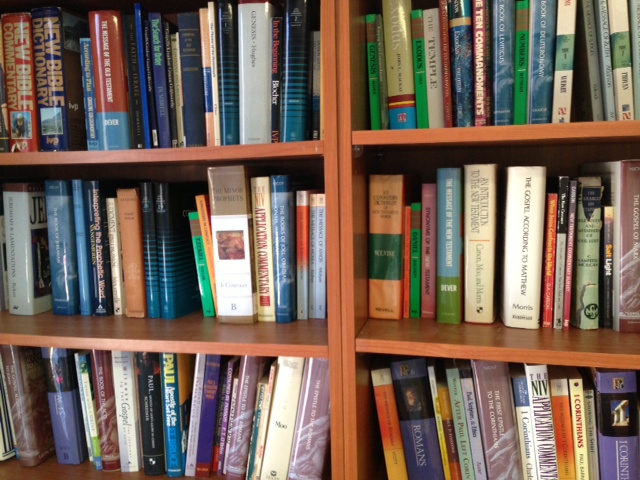
booksIt’s been said that men no longer read. I have no idea how true this is, but if it’s true then we have a crisis on our hands.  The forecast is not good. We will be left with an ill-informed, illiterate generation—men who lack knowledge for encouraging their wives, teaching their children, serving in the church, and living in society.

If you can read, then let me encourage you to read. If you’re a Christian man, then let me encourage you especially to read. I’d say that number one in your top ten list of books should always be the Bible, for this word will equip you for life now and life eternal.

Beyond this, I recommend you choose wisely what books to read. There are more books produced every day than you could read in a lifetime—so be selective. Begin by filling your mind with matters of substance, meaning, logic and truth. Aim to fill your heart and mind with the glory of God, the wonder of his salvation, the freedom of his grace, and the hope of eternity.

Two books in my recommended top 10 would be Knowing God by JI Packer and The Cross of Christ by John Stott. These two books take you to the heart of what matters really matter. Neither is short or simplistic, but they’ll both reward your time and attention. Many readers I know have started both, and yet finished neither. But don’t give up. Take them in chapter-sized bites and enjoy the nourishment.

If you’re like me, then you can read something and quickly forget it. There’s no point in reading for reading’s sake. Read to remember, to learn, and to apply. I suggest having a pen or pencil in hand as you read. When you discover a helpful explanation, a good idea, or a point to apply—use your pencil to help it stick. Underline, write in the margins, put boxes around great quotes, asterisk points that you plan to apply, write practical notes at the end of the book to follow up later. 

Better still, write yourself a summary and share it with others.

My forced sabbatical

In some respects I view 2012 as a kind of forced sabbatical. I’ve read more books than normal and written more words than ever. It’s been incredibly helpful, to me at least, not only to read books, but to summarise, reflect and begin to apply what I’ve been reading. In fact, this has been some of the most careful reading I’ve done in a long time. Many of the summary/reviews have appeared on this blog and so far I’ve restricted myself to books that I’d encourage others to read. Books that haven’t made the grade have either been left unfinished or unreviewed.

When I began this process I worried that it wasn’t a good use of my time. If I wasn’t going to live that long, should I really waste it reading books? I knew it was a step up from watching TV and DVDs, but it still seemed a little introspective and indulgent. However, I don’t feel this way today. Rather, I’m keen to keep learning as long as I can so that I’ll be better equipped to encourage and resource others. My whole adult life has been shaped and influenced by books. Some of these books I’ve read and long forgotten, but others continue to guide me in the things that matter. Supreme among these is the Bible, followed by those that learn from the Bible and put it into practice. There are many others that contain great wisdom, make a practical difference in the lives of the reader, yet have nothing to do with the Bible. But we’d do well to be discerning about how we fill our minds and use up our time.

11 The words of the wise prod us to live well.
They’re like nails hammered home, holding life together.
They are given by God, the one Shepherd.

12-13 But regarding anything beyond this, dear friend, go easy. There’s no end to the publishing of books, and constant study wears you out so you’re no good for anything else. The last and final word is this:

Fear God.
Do what he tells you.

14 And that’s it. Eventually God will bring everything that we do out into the open and judge it according to its hidden intent, whether it’s good or evil.  (Ecclesiastes 12:11-14 The Message)

Someone once said that they wished 90% of writers wouldn’t bother and the other 10% would write more. It’s true that there is much drivel between the covers of books. My desire is to focus on the 10%, to learn myself, and to urge others to do the same. I thank God for his Book. And I thank him for creating people with the ability to think, imagine, create, and tell. Books are a wonderful gift.