
 This morning I read some stats from a US research company on how Americans are managing the pandemic. The results aren’t at all surprising, but they are a cause for alarm. I haven’t seen equivalent research for the Aussie context, but I doubt our figures would show any improvement.
To help them cope with the pandemic, most Americans said they are staying home to watch Netflix and chill: 89% reported that they are watching TV or movies daily or weekly. This includes 90% of all Christians, 87% of Jews and 88% of the religiously unaffiliated, according to Pew.
Many Americans (84%) also are spending time outdoors or talking by phone or video with family and friends (70%), the survey said.
But fewer are turning to their faith for support.
More than half (55%) reported praying at least weekly, followed by reading Scripture (29%), meditating (26%) and practicing yoga (8%).
https://julieroys.com/to-cope-with-pandemic-americans-choose-tv-over-bible/
This confirms indications that there has been a rise in prayer during this period. Though, I wonder if longitudinal studies will demonstrate a spike in ‘crisis’ prayers tapering off with things becoming more ‘chronic’.
A worldwide crisis calls Christians to worldwide prayer. Now is the time above all to be drawing near to God for comfort and strength. Now is the time to listen to God, to be reminded of his intense glory, his sovereign power, his promise to judge the wicked, is loving mercy, his grace to the humble, the incarnation of his Son, and his promise of restoration to come.
As I speak with my Christian friends, I fear we have the balance wrong. Some of us are watching news almost ever waking minute of everyday. Our minds are saturated with numbers, testing, positive cases, epicentres, hotspots, clusters, close contacts, numbers in ICU, deaths. The numbers are staggering, catastrophic, overwhelming, even numbing. And then, as if for relief, we add US-China tensions, Beirut blasts, political posturing, and football.
I tend to watch an hour of news most days, local and international. I flick around the internet, checking reports, reading an online paper, following news feeds. We often watch a show in the evenings. Maybe a miniseries, or a movie, or a catch up of some old series we enjoyed. Some are glued to screens most of the time. The most honest advertising I’ve seen recently was the introduction of Foxtel’s new streaming service and calling it ‘Binge’. (If only the gaming, alcohol, and tobacco industries were so honest about their intentions.) The aim is addiction. You can escape into another world and leave the real worries of this world behind—until you have to work again tomorrow after 2 hours sleep.
OK, so what am I recommending? Listening to God daily. Taking the time to read from the Bible. Hearing God’s perspective on what matters matter most. Discovering an antidote to anxiety and fear. Being reminded of God’s deep secure love and his promise to never leave nor forsake us. Grappling with the questions of suffering and pain, death and disaster. Having our hearts warmed by the rich mercies of God in Christ Jesus. Being comforted by the Comforter, who dwells in all who trust in Jesus. Being moved beyond ourselves to show love and compassion to others.
Can you find time each day to turn off the TV, put away your device, open a Bible—yes, a real one, with a cover, paper pages, where you can highlight, jot notes, flick between passages, and come back to things you’ve read before?
Why not change the TV diet. A little less Netflix. Listen again to the sermon from Sunday. Start a reading program. Mix it up. Dwell deeply in the Psalms. Explore the existential questions in Ecclesiastes. Take an attitude check with James. Rediscover worship in Romans 12. Recharge for ministry from Philippians. Investigate Jesus from the Gospels.
During the pandemic I’ve been aiming to record a Bible talk each day, with the aim of encouraging people from our church, and others, to keep a regular balanced diet of God’s word. There are talks for enquirers, equipment for people in ministry, encouragement to godly living, and calls to persevere under trial. Why not replace a little TV, with a regular Bible Bite.
It started as a pandemic project, but I’m hoping to keep it going. It’s been encouraging to hear from husbands and wives who watch an episode each day over coffee to explore God’s word together, from people who are sick and appreciate a brief exposition, from a Christian radio station who are broadcasting them, from Bible study leaders who have used them to supplement their programs, and from people isolated here and abroad, who have been encouraged by God’s word.
Please have a think about your spiritual diet. Check out the talks at http://youtube.com/c/davemcdonaldbibletalks and subscribe for regular updates. I’d love to hear how you use them and if they’re a help in any way.
You can find the following Bible Bites (5-10 minutes):
Psalms (3 talks ongoing)
Ecclesiastes (38 talks)
Philippians (22 talks)
Titus (19 talks ongoing)
James (23 talks)
And the following sermons (roughly 20 minutes):
Romans 12 (10 talks)
2 Corinthians (2 talks ongoing)
 I listened last night as representatives of the World Health Organisation described our world as a tinder box. It will only take a spark here or there to keep fuelling the flames of our global pandemic. I watch with dismay as the state of Victoria records the highest total daily coronavirus cases on record. Sydney is declared a hotspot and people around me are starting to wear masks. I’m distressed as I hear that my nephew is infected with Covid-19 and quarantines from family and friends.
 “G’day, Dave here, and we’re looking at…”
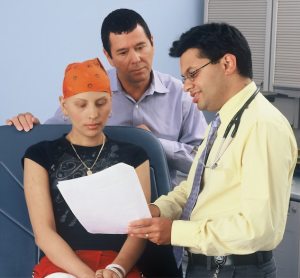 Covid-19 isn’t the only big C going around. Do you remember cancer? Yep. It’s still with us. We haven’t found a cure and there is no vaccine.
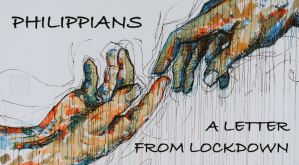 Paul’s letter from prison lockdown to the Christians in Philippi is a warm, heartfelt encouragement to following Jesus. In chapter 2 Jesus’ extreme humility is presented as the model for Christian relationships. Impossible? Certainly, unless God is at work within us to will and to act. We are called to lives of humble gladness rather than selfish grumbling and arguing. Paul’s colleague, Timothy, and his Philippians friend, Epaphroditus, give us a picture of what humble service looks like in practice.
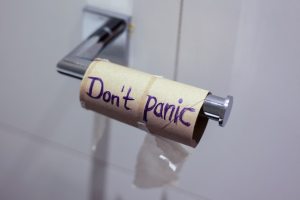 We’ve been told that things will never be the same again, and they won’t. The world has shifted. Massive movements of global social tectonic force.
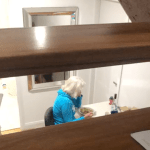 Our son Marcus, came out of quarantine over the weekend and was cleared of having the coronavirus. He returned from Indonesia as the borders were closing and flights were being cancelled. We thank God for the timing. He has now joined me in the house.
 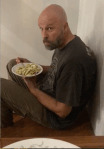 Marcus now helps with the cooking and we deliver the meals downstairs. Last night we met in the middle, sharing dinner together on the stairs. Thanking God for my family.
 Some of us go regularly to church. Fewer of us think about what we’re going to do when we get there. We’ve been on autopilot for too long. Our current crisis gives us the perfect opportunity to pause and think about what we’re doing, how we do it and, most importantly, why we do it.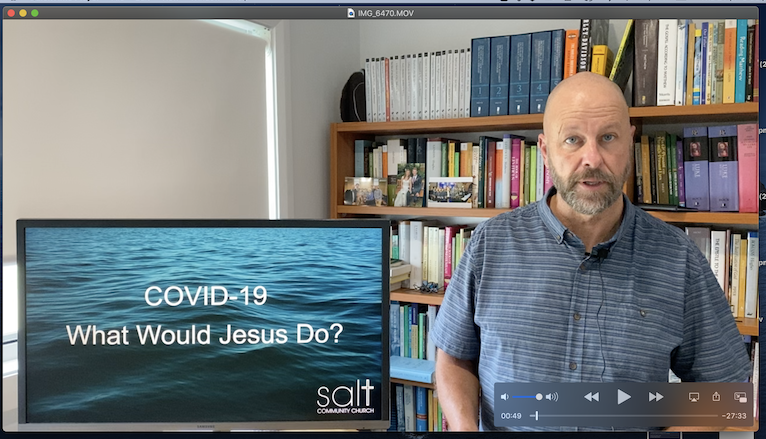
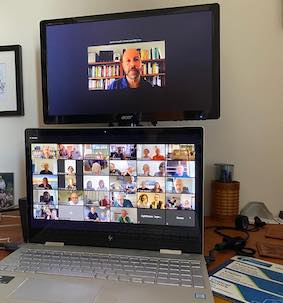 The second approach is purposefully interactive. This might be a preferred option among smaller churches. but some larger ones have mastered the tech and give a pretty good experience. This is what we’re doing at my local church:
  Hello from quarantine. I haven’t been overseas, and I don’t think I’ve been exposed to the virus, but my pre-existing lung condition and daily treatment for lung cancer have put me on high alert. In some ways, I’ve been slow to grasp what is going on here. The practice of distancing is a personal and a public health strategy. It’s not just about stopping me getting sick, it’s about reducing potential channels for the spread of this virus. I tend to be a bit of a social butterfly, often out and about, time in coffee shops, catching up with people, hanging with people from church and at church, and trying to catch up with a couple of mates. Now it’s lock down. I’m not simply at higher risk of illness, but if I kept up my normal social behaviours then I would also be at at risk of becoming a super spreader. So, lockdown it is.
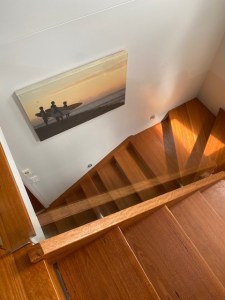 The coronavirus has changed how we live at home. I live upstairs and Fiona lives downstairs. I’m spoilt for comfort in my quarantine. We’ve made a kitchenette and created a ‘flat within the house’ for Fiona. We are keeping strict physical distance. Separate beds, separate bathrooms, separate kitchens, separate entrances. We are using gloves and disinfectants. I cook dinner and leave it on a tray on the stairs for Fiona. It’s already challenging and stressful. But it’s Fiona’s initiative and it’s motivated by love for me.
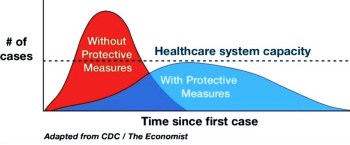 This is an especially important aspect of SARS-CoV-2 transmission and re
 Let’s do a thought experiment. Take yourself back 30 or 40 years to a world without the internet. There is no Google, no Facebook, no email, no Instagram, no Twitter. How would we manage our current challenges in such times? My first thought is that we’d go back to speaking on the telephone. Remember the telephone! We’d call and say, “How are you doing?” “Is there anything I can do for you?” “Have you got enough toilet paper?” “Can I drop a meal around?” “How are you off for money?” “Are you feeling any better today?” “What can I pray for you?”
 macarisms