Managing your boss

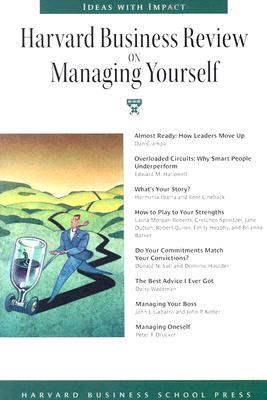
HBR_managing_yourselfIn the early 90s a good friend put me onto an article by John Garbaro and John Kotter called Manage Your Boss. It was first published in the Harvard Business Review in 1980 and reproduced 25 years later as a classic in a compilation volume called Harvard Business Review on Managing Yourself. When I first read this article, I was both leading my own team in student ministry and reporting to a senior pastor, as his associate, in church ministry. I found it so helpful in alerting me to a number of issues that can dramatically impact working relationships. So much so, that over the next two decades I would often give this article to new staff and trainees when they joined our team. If they were going to have to work with me, then they may as well have some guidance in how to make it work for them. Now that I’m an associate pastor again, I thought I should read over the article again to brush up on my skills in relating well to my boss!

If you have a tendency to cynicism, you may be tempted to think this article will be spin for political manoeuvring or sucking up. It’s not. It’s about consciously working with your superior to obtain the best possible results for your boss, yourself and the organisation. It’s really about ensuring people and teams work well together, and accepting your role in making this happen. I’m sure this applies to any organisation, but I know that it’s critical for church leadership teams.

Too many breakdowns of relationship get blamed on personality conflicts. It’s an easy diagnosis that seems to absolve everybody of responsibility or blame. However, I suspect, this is often a very small part of the picture. Yes, personalities will conflict, but why haven’t they been able to work through the differences? That’s the real question.

Kotter and Garbaro helpfully describe boss-subordinate relationships as involving mutual dependence between two fallible human beings. This means that managing these relationships will require the following:

1. You have a good understanding of the other person and yourself, especially regarding strengths, weaknesses, work styles, and needs.
2. You use this information to develop and manage a healthy working relationship – one that is compatible with both people’s work styles and assets, is characterised by mutual expectations, and meets the most critical needs of the other person.  (p135)

This has many practical implications. For example, do you know your boss’s preferred method of communication? Does he or she prefer to receive written reports or have verbal discussions? Do they like to get regular updates on your work or progress, or are they happy for occasional summaries? When they delegate work to you, do you know what they mean by delegation? Is it now hands off by them, or are they expecting you to check with them before making key decisions? Do they like to communicate early on issues and bang them around out loud, or do they tend only to communicate once they have resolved the way forward? Being able to answer these and similar questions will advance your working relationships no end. It will also head off potential conflicts and breakdowns.

Developing effective working relationships also requires you to have a good understanding of your own preferences, your needs, strengths, weaknesses, idiosyncrasies, communication and work styles. What can you do that will will improve your working relationship with the person you report to? This can also help you to avoid counterdependent and overdependent behaviours.

Clarity of expectations is crucial to good working relationships. Subordinates who passively assume they know their boss’s expectations are in for trouble. It’s their responsibility to find them out. Ask, clarify, explore, listen, feed back. The time given to getting on the same page with your boss will certainly be worth it.

And don’t assume your boss is disinterested or doesn’t need to know what you’re doing. What you’re doing is part of a bigger picture and your boss needs to be able to hold the various parts together. They likely need to know more about you and your work than you realise. It’s important to take the initiative to communicate what you are doing, if for know other reason than to breed trust and enable your boss to defend you to others who may not be sure. And be honest! Honesty is crucial in team work. If your boss cant believe you or trust you, then ultimately they won’t want you.

The authors offer a quick checklist for managing your boss:

Make sure you understand your boss and his or her context, including:
• Goals and objectives
• Pressures
• Strengths, weaknesses, blind spots
•
 Preferred work style

Assess yourself and your needs, including:
• Strengths and weaknesses
• Personal style
• Predisposition toward dependence on authority figures

Develop and maintain a relationship that
• Fits both your needs and styles
• Is characterized by mutual expectations
• Keeps your boss informed
• Is based on dependability and honesty
• Selectively uses your boss’s time and resources  (p143)

Managing your boss is a brief, practical and insightful article to help stimulate good team work and working relationships. I commend it to pastors, associate pastors, ministry trainees, leaders and others. It will help in your church, as well as your work place.

I’ve noticed in myself various tendencies and preferences over the years that have been useful for my associates and employees to understand. Here are a few:

  • I prefer to be over-informed than under-informed.
  • The more I understand and trust what people are doing, the more freedom I offer.
  • I find passive resistance infuriating.
  • Regular updates from my co-workers builds my trust in them.
  • Triangulating relationships in conflict increases the damage. If people take their concerns about me to others rather than me it often makes things worse.
  • I believe that people should always reply promptly to emails, even if it is only to say they have received it and will deal with it asap.
  • Being late for meetings steals time from others who need to be there. Recidivist lateness is selfish and inconsiderate.

My task now as an associate pastor is to apply things from the other direction. How can I best relate with my boss and my new peers? It’s important we build good relationships based on trust and mutual dependence. We need to be able to express conflict in healthy ways. We need to learn to hold one another accountable without appearing to be judgmental. We need to be committed to the common goals of our organisation (church) and thus measure and evaluate our results.

Many of the ideas in this article resonate with God’s word:

One who is slack in his work
is brother to one who destroys.  (Proverbs 18:9)

13 To answer before listening—
that is folly and shame.  (Proverbs 18:13)

15 The heart of the discerning acquires knowledge,
for the ears of the wise seek it out.  (Proverbs 18:15)

17 Do not repay anyone evil for evil. Be careful to do what is right in the eyes of everyone. 18 If it is possible, as far as it depends on you, live at peace with everyone.  (Romans 12:17-18)

Do nothing out of selfish ambition or vain conceit. Rather, in humility value others above yourselves,not looking to your own interests but each of you to the interests of the others.  (Philippians 2:3-4)

If you report to a superior in your workplace, I recommend you read this article. If you lead others in your team, read the article and pass it around. If you lead a church or serve as member of a pastoral team, you will benefit from following much of the wisdom in this article. You can find the article in the compilation book (and it contains other useful articles) or you can purchase one or more copies of the article on the HBR website.


A pastor’s pride

Late last night I wept. I lay in my bed and I cried until my pillow was wet. What brought it on? It suddenly hit me how proud I’d become. My heart was full of me. And this blog was a big part of it.

I wasn’t sure if I should write this post. It could be just another example of what brought me to tears. A proud response to my response to pride. But I need to write it. I want to apologise and I want to change. I think my pride had become public, and thus so should my confession.

My dramatic realisation of my own pride hit me hard. It was a bit like hearing that I had a tumour. I was devastated, the tears flowed, and I prayed. The kids were away, Fiona was in another room, and I cried out on my own to God.

I’d just written a post telling pastors to be humble and yet my own heart was hard. I was writing as the preacher, not the practitioner. I was pronouncing who pastors should and shouldn’t be, but it was me that needed to listen. Here was I, doing all my reading, making all my comments, implicitly claiming to be an authority, telling others what to do, and I wasn’t doing it.

Sometime last night God told me. I don’t know how exactly, but he made it very clear to me that my heart was the problem. I’d been getting the message all week, but I wasn’t listening.

On Sunday I joined in the memorial service for my friend Bronwyn. On the front cover of the order of service, were printed these words:

Not to us, LORD, not to us but to your name be the glory, because of your love and faithfulness.  (Psalm 115:1)

I was so convicted as I read and heard these words. These words seemed so true on the lips of Bronwyn, but as I mouthed them they seemed so hollow. In fact, even during the service I found my thoughts and tears and prayers wandering away to my self and my family instead.

There were so many people at that service to thank God for Bronwyn, support the family, and pay tribute to her life. I knew so many of them, and they kept coming up to me saying how good it was to see me looking so well, and how they’d been praying for me, even daily. And my heart swelled up. I’d become the prayer celebrity. Oh, how I hate it how my heart can take what is good and twist it so badly.

On Monday and Tuesday I joined a planning retreat with the staff of our church, and it did my head in. I was struggling with the effects of chemo, but that wasn’t the real problem. It was being in a situation I was so familiar with, but in a role that was totally foreign. I’d been the leader and now I wasn’t. It’s not that I wanted to be. I’m very grateful for Marcus, and for the grace that all the team have shown me. But I realise that my heart is still catching up with my head.

On Wednesday I went to the oncologist. It had been a while and I’d been doing so well. I wanted him to tell me that I was the best patient he’d had, that he’d been wrong about me, and that we could expect the cancer to disappear very soon. I now realise I’d become proud of how I’d been going. I’d had 23 cycles of chemo. Most people don’t have more than 5 or 6. I’d been battling cancer and winning. I could succeed where others had failed! How stupid and how arrogant. The oncologist made it clear that I still have a terminal illness. I’d done nothing, but fill myself with pride.

Thursday and Friday I’d been writing. Telling people what to look for in a pastor, what a pastor should be like. What I should have been doing was listening to the word of God that I was preaching. I should have been looking into the mirror and seeing what I looked like. We’d actually read these verses on our staff retreat only days before:

22 Do not merely listen to the word, and so deceive yourselves. Do what it says. 23 Anyone who listens to the word but does not do what it says is like someone who looks at his face in a mirror 24 and, after looking at himself, goes away and immediately forgets what he looks like.  (James 1:22-24)

And I’d been doing exactly that! It took the words of two friends to point it out to me. They don’t know it, but they were angels, messengers from God. They were true prophets, for they told me the truth from God. They weren’t so rude as to tell me outright, but their gentle and wise questions helped me to see the truth clearly last night. My heart was proud and it needed to change.

Last night I prayed and I cried, asking God to forgive me and to change me. Thank God, he is gracious and merciful and forgiving. My ongoing prayer is that God will gently work within me to give me humility.

I’ve written and published this because I believe that I owe you, my reader, an apology. Please forgive me my pride.

The pastor’s heart

Some years back we surveyed the members of our church about what they expected from their pastors. It was hard to know what to do with the results. There were almost as many ideas as there were respondents. Some emphasised preaching, whereas others played it down. Some focused on personal visitation, while others sought good administration. Some highlighted the importance of vision and leadership, while others desired warmth and relationship. There was a lot of confusion.

heart-monitor-500Among all the ideas of what a pastor should do, we mustn’t lose sight of who a pastor should be. Who he is on the inside is even more important than what we see on the outside. It’s the heart of the pastor that matters most. What does God desire of a pastor?

Let’s take a look at 1 Peter to be reminded of God’s will for pastors…

Therefore, as a fellow elder and witness to the sufferings of the Messiah and also a participant in the glory about to be revealed, I exhort the elders among you: Shepherd God’s flock among you, not overseeing out of compulsion but freely, according to God’s will; not for the money but eagerly; not lording it over those entrusted to you, but being examples to the flock. And when the chief Shepherd appears, you will receive the unfading crown of glory.  (1 Peter 5:1-4)

Before we get into the significance of this passage, a quick word of clarification is needed. Three different terms are used to refer to pastors – elder, overseeing, and shepherding. Depending on our church traditions, we have elders (or presbyters) in some churches, pastors in others, and bishops (or overseers) in others. While we may think of them differently, the Apostle Peter doesn’t. Peter writes to them as elders, calling them to do the work of shepherding (or pastoring) and overseeing. It all belongs together.

Pastor to pastor

Peter writes as a pastor to his fellow pastors because he is concerned with the spiritual health of the church. He is concerned that Christians honour God in how they live, that they seek the welfare of those around them, that they point people to what God has done through Jesus. The church is to have a positive influence in the world. God’s people are to be different – in a godly way – and this means the pastors too.

In this day and age where the church and it’s leaders have such an appalling reputation, where scandal after scandal is now being uncovered, where vulnerable people have been abused and mistreated, it’s so important we listen again to what God wants. Let’s get right to the heart of the matter.

God calls pastors to treat the church with great care. We’re not talking about a building or an organisation or an institution. We’re not thinking of St Blogs or a particular denomination. The church pastors are to treat carefully is made up of people who belong to God. People who have placed their trust in Jesus Christ. The church belongs to God. It’ his precious possession. He purchased it with his own blood, through Christ’s sufferings. The Apostle Paul put it this way in his final words to the Ephesian elders…

Be on guard for yourselves and for all the flock that the Holy Spirit has appointed you to as overseers, to shepherd the church of God, which He purchased with His own blood.  (Acts 20:28)

The church is God’s flock. It’s not my church, or your church, or our church. It’s the church of God. It belongs to God. The church should matter to us, because it matters so much to God. How we treat the church matters. What we do in church matters. How we lead the church matters. How we relate to people in church matters. Our use or abuse of money, sex, and power matters. There are no excuses for mistreating what’s so precious to God. Our hearts need to be changed so that we see things as God sees them, so that we love people as God loves them.

The Apostle Peter encourages his fellow pastors to have pastors’ hearts, and he describes what this will look like…

1. not overseeing out of compulsion but freely, according to God’s will

The pastor is called to oversee God’s church voluntarily. He’s to do it because he’s willing, not because he must. It shouldn’t be the position, or the job description, or the performance review, or the boss, or the demands of the congregation, that motivates the pastor to serve. It’s not to earn his pay, or to gain a promotion, or to satisfy his own performance standards. The pastor is called to serve freely, willingly, voluntarily, of his own accord, not because he has to, but because wants to. Just as God loves cheerful givers when it comes to our money (2 Corinthians 9:7) so he loves cheerful givers when it comes to pastoral ministry. This is pleasing to our Father in heaven.

But what about when ministry becomes a chore, a drudgery, a ball and chain? What about when the only thing that gets us out of bed in the morning is our sense of obligation and responsibility? Then it’s time to pray. It’s time to remind ourselves of the gospel. It’s time to dwell again on the grace of God who has given us everything we need to serve him. It’s time to ask God to fill us with his Spirit, so that we rediscover the mindset of Jesus Christ who delighted in serving others. It’s time to draw on the strength of God who delights in working through our weakness and frailty.

2. not for the money but eagerly

The Bible makes it clear that we can’t serve both God and money. The love of money is a root of all kinds of evil. Greed is idolatry and it’s a slippery path to destruction. Many ministries have been ruined because the pastors have been in it for the money. This shouldn’t be.

Peter calls us to banish greed from our hearts. Ministry is not about the money. It’s not about earthly rewards. It’s not about making ourselves comfortable. It’s not about what we can get, but what we can give. If we have the opportunity to pastor God’s church then we should remember what a privilege it is to be entrusted with something so precious to God and give of ourselves eagerly.

It’s so tempting to put our own needs first. Our world tells us to do this all the time. We’re urged to make sure we get all we can and to protect all we’ve got. Looking out for our own interests is simply ‘normal’ behaviour, isn’t it? No. Not for people who have already been given everything from God. Those who belong to Jesus Christ have already received so much. We have every spiritual blessing in Christ. We’ve been adopted into God’s family. He’s our Heavenly Father, who knows all our needs, and promises to watch over us.

The implications of this are profound. Because God has promised to take care of our needs, we don’t need to spend our time worrying about them. We don’t need to protect our own interests. We’re liberated to look to the needs of others. We’re freed to serve God and serve others eagerly.

3. not lording it over those entrusted to you, but being examples to the flock

The Apostle is passing on a lesson that he received directly from Jesus…

42 Jesus called them together and said, ‘You know that those who are regarded as rulers of the Gentiles lord it over them, and their high officials exercise authority over them. 43 Not so with you. Instead, whoever wants to become great among you must be your servant, 44 and whoever wants to be first must be slave of all. 45 For even the Son of Man did not come to be served, but to serve, and to give his life as a ransom for many.’

Now Peter passes it on to his fellow pastors. The overseer is to be the servant. Authority is to be exercised with humility. The supreme example of this is Jesus himself. He humbled himself, even to death on a cross. Jesus wasn’t in it for himself. He didn’t stand on his rights. Jesus made no claims to position or prestige, even though he had every right to do so. Jesus, the Chief Shepherd, offers us the ultimate example of what a pastor should be like.

Humility flows from following the example of Jesus, but it doesn’t happen without a profound change of heart. Let’s pray that God will liberate us from our selfishness, our controlling desires, and our quests for recognition. Let’s ask him to remind us daily of his generosity and grace towards us. Let’s dig deep into God’s Word and read again of God’s amazing love for his enemies. Let’s ask God to help us forget ourselves and to focus on serving those around us. Let’s ask God to give us pastors’ hearts.

And remember

…when the chief Shepherd appears, you will receive the unfading crown of glory.

We live, breathe, think, act and speak in the light of eternityPastors, here is your reward. As you live and even suffer for Jesus now, so you will one day share in his glory. This isn’t something we deserve, we don’t earn it, and we can’t demand it. It’s not payment for services rendered. It comes freely from God to the undeserving.

Let our hearts be satisfied in Jesus. Let’s fill our minds with the things of Jesus. Let’s keep our eyes on Jesus. Let’s trust him, serve him, seek to honour him, proclaim him, model our lives upon him, and point others toward him. For this is the pastor’s heart.

Who pastors the pastor?

daveI’ve spent most of my adult working life as a pastor. Some of that time has been in university student ministry, some as an associate pastor in a denominational church, some as an itinerant evangelist, some as the senior pastor of a staff team in an independent church, and most recently I’m back to being an associate pastor again. Most of that time I’ve faced the pressures and concerns that come with the responsibility of pastoring God’s people. I’ve felt that the buck stops with me. I’m the one who has to be there for others. That’s my job.

Much of the time I was probably guilty of going at things too hard. I’d burn the candle at both ends and oscillate between adrenaline and exhaustion. I’d push too hard and get sick on at least an annual basis. There were times when I was probably burnt out. I didn’t want to see people, face decisions, or try anything new. I couldn’t cope with questions or criticism. I felt that I had very little to offer. Sometimes I found myself barely holding on, seemingly going through the motions.

I suspect that my experiences of being a pastor are not that unusual. Researchers tell me that there are as many ex-pastors in Australia as there are pastors. How can we change this? How can we support our pastors? Whose job is it to pastor the pastor?

Different churches have their standard answers to this question. Most denominations would see it falling to designated people and organisations within their denomination. Those with bishops might see it as the bishop’s job. Those with presbyteries might see it as the presbytery’s job. Those with employed chaplains, supervisors, or mentors might see it as the responsibility of these people. There can be great strengths in the relationships and networks offered by denominations. Pastors can rally alongside each other, resources can be deployed for the benefit of supporting pastoral staff, accountability can be built in through committees and structures. However, when it comes to pastoring the pastor, the Bible’s emphasis lies elsewhere. It’s not to be outsourced to the denomination, or the sole domain of a committee or board, but embraced by each church.

Here are a few ideas from a couple of Scripture passages about how churches can be supporting those involved in pastoral leadership…

Honour

The elders who direct the affairs of the church well are worthy of double honour, especially those whose work is preaching and teaching.  (1 Timothy 5:17)

The Apostle Paul has been speaking in this letter about giving honour to a range of different people. Here he addresses the church leaders. They are to be honoured, in fact double honoured. This can mean nothing less than elders within the church being valued, appreciated, supported, and upheld by their congregations. I’m an Aussie, and the Aussie way is to speak against, cut down, and undermine those in positions of authority. It’s a national sport! But, it shouldn’t be this way in our churches. God calls us to do a good job of honouring our leaders.

19 Do not entertain an accusation against an elder unless it is brought by two or three witnesses. 20 But those elders who are sinning you are to reprove before everyone, so that the others may take warning.  (1 Timothy 5:19-20)

There is no place for unsubstantiated criticism of our pastors. Gossip, innuendo, insinuation, smear campaigns, staging coups… are all out of place among God’s people. And yet they keep on happening. The deacons are unhappy with the pastor, so they start counting votes. Small groups grumble about their minister. People leave a church, critical of the leadership, and carry on about it in the new church (where they stay for a while, until they leave and badmouth the next one). Words and accusations can wreak much destruction. Elders of churches are to be held accountable for their words and actions, but they are not to be subject to trial by gossip.

Support

17 The elders who direct the affairs of the church well are worthy of double honour, especially those whose work is preaching and teaching. 18 For Scripture says, ‘Do not muzzle an ox while it is treading out the grain,’ and ‘The worker deserves his wages.’  (1 Timothy 5:17-18)

Going back to the ‘double honour’ idea, the following verse makes it clear that the honour also includes support or financial provision. It’s the concept of honorarium, recognising the significance of the elder’s ministry by supporting them to do it. We are not saying that all pastor’s must be paid, but that it is important for churches to show that they value those who lead them. If a church has agreed to support and pay for its pastor, then it should seek to do this thoroughly, not begrudgingly. Only last week, I listened to the sad story of a minister who was ‘starved’ out of his ministry by the church he served. Pastors shouldn’t be in it for the money, but neither should churches. How much more encouraging for a pastor to be respected and well supported by a church who gives them double honour.

Freeing the pastor from financial concerns enables them to go about their work. They can devote themselves to the word of God, to prayer, to equipping the church for ministry, without the need to add another job to pay the bills. My experience of being a pastor is that there is more than enough to fill all my time, without having to pay my own way on top of it. If I had to, then I would, but I’m grateful to our church for providing us the support we’ve needed.

Following

Remember your leaders, who spoke the word of God to you. Consider the outcome of their way of life and imitate their faith.  (Hebrews 13:7)

Ultimately, we’re called to follow Jesus. This is what it is to be a Christian. But following Jesus also involves us following our leaders, inasmuch as they are following Jesus. Pastors, elders, leaders are called to teach and model putting God’s word into practice. They’re to be examples of trusting in Jesus and progressing in the Christian life. And the congregation is not to forget this. They’re to join with their leaders in living transformed lives.

They say you’re not a leader unless people are following you. If you look over your shoulder, and find no one there, then you’re not leading people, you’re just going for a walk! On the other hand, it’s very encouraging to see people taking the journey with you. People walking the talk, changing their thinking, their words, and their behaviour. This brings great joy and encouragement.

Have confidence in your leaders and submit to their authority, because they keep watch over you as those who must give an account. Do this so that their work will be a joy, not a burden, for that would be of no benefit to you.  (Hebrews 13:17)

It’s a big responsibility being a pastor. In the original language these verses describe literally ‘watching out for people’s souls’. The leaders or overseers are given the responsibility of being spiritual lifeguards. So please make their job easier. Swim between the flags! Listen as they teach you the life-saving word of God and take it to heart. The congregation have the capacity to make the pastor’s life misery on the one hand, or joy on the other. What do you think will bring greatest benefit to the pastor and the church?

Prayer

18 Pray for us. We are sure that we have a clear conscience and desire to live honourably in every way. 19 I particularly urge you to pray so that I may be restored to you soon.  (Hebrews 13:18-19)

Like the Apostle Paul, the writer to the Hebrews asks people to pray for him. He understands that God alone is able to equip and sustain him, and so he calls others to pray for him. When people asked Charles Spurgeon the secret of his success in ministry, he humbly replied, “My people pray for me.” And he meant it. As I look back on many years as a pastor, I am thankful to God that people have prayed for me. Some people have faithfully, diligently, consistently asked God to be at work in me and through me. The church has made a commitment to uphold it’s leaders in prayer, and I am very grateful.

The writer to the Hebrews finishes his letter with these words…

20 Now may the God of peace, who through the blood of the eternal covenant brought back from the dead our Lord Jesus, that great Shepherd of the sheep, 21 equip you with everything good for doing his will, and may he work in us what is pleasing to him, through Jesus Christ, to whom be glory for ever and ever. Amen.  (Hebrews 13:20-21)

This prayer points us to the ultimate pastor. Here is the one who truly pastors all pastors. Jesus Christ is the great shepherd (or pastor) of the sheep. And the same God who powerfully raised Jesus from the dead is the one who will equip and sustain pastors for faithful and fruitful ministry. What an awesome promise! What an awesome privilege! Congregations and pastors – let’s keep humbly depending upon God in prayer.

Dysfunctional pastors

Preaching cartoonPastors everywhere are not doing their job. They’re not doing what they’re called to do and it’s hurting our churches. Not only is it restricting the growth and health of our churches, but it runs contrary to God’s word on the matter.

Pastors are doing the work of ministry. They’re preaching, teaching, visiting, caring, counselling, administrating. They’re running Bible studies, prayer meetings, committee meetings. They’re leading church, leading singing, leading prayers, leading worship. They’re following up newcomers, chasing up non-comers, greeting all-comers. They’re organising dinners, lunches, afternoon teas. They’re holding evangelistic courses, missions meetings, aid campaigns. They do the baptisms, the weddings, the funerals, and all the preparations. They’re in the office, typing up news sheets, photocopying bulletins, updating the website, organising the rosters, snowed under with emails.

Our pastors are doing the ministry. They’re busy with ministry. All kinds of ministry. Exhausted from ministry. Never ending ministry. And here’s the real problem…

God doesn’t call pastors to do the ministry.

A dysfunctional church is where the pastor does all the ministry. It’s not what a church should look like. It’s not what God intends for his church. Ministry is not ‘the pastor’s job’. And if it’s not the pastor’s job, then we’ve got to stop employing pastors to do it. We mustn’t hire pastors to do all the ministry. It doesn’t help pastors and it doesn’t help churches.

God’s design is so much better. Take a look at the picture that Paul paints in Ephesians 4:

11 And He (Jesus) personally gave some to be apostles, some prophets, some evangelists, some pastors and teachers, 12 for the training of the saints in the work of ministry, to build up the body of Christ…  (Ephesians 4:11-12, my emphasis)

Here’s the job description, for the pastor and for the church. The original language suggests that pastors and teachers should probably be seen as one and the same in this list. What are they to do? Training, equipping, preparing, getting others ready. That’s their job. Not simply doing, but helping others to get doing. The pastor’s job description is to train the saints (the Christians in the church) in the work of ministry. The pastor is to be the trainer, the coach, the mentor. God calls the whole church to be involved in ministry, not simply the pastor. When the pastor does the ministry instead of the church, he breeds a dysfunctional, disobedient, and lazy church. He robs the people of their opportunity to be ministering to one another.

The stupidity of this scenario becomes clear when we transpose the situation to a rugby team. The coach’s job is to prepare the players to play the game. He must focus on training, equipping, coordinating others. If he decided that he wasn’t going to train others, then the team would lose. If he decided that he would play instead of the team… you can see the problem, and too many churches are just like this.

The picture of a healthy church is very different…

From Him (Jesus) the whole body, fitted and knit together by every supporting ligament, promotes the growth of the body for building up itself in love by the proper working of each individual part.  (Ephesians 4:16, my emphasis)

Ministry is for every part of the body. We’re all called to play our part. We need each other. God’s design for a healthy church is that ministry is to be shared by all. It’s not the exclusive domain of the pastor.

How can we get this happening? One fundamental strategy is to get pastors actually doing their job. They need to spend time on what God wants them to be doing… training Christians for ministry to one another. I haven’t done the research, but I have enough anecdotal evidence to suggest that this is often the first thing that gets dropped off the pastor’s list of priorities (if it was ever there at all).

If you are a pastor, let me ask you how much time do you spend training, equipping, preparing, apprenticing, coaching, mentoring others in their ministries? Too often, the honest answer is very little or no time at all. This is so wrong. We need to audit our timetables, calendars, priorities. We’ve got to stop neglecting our responsibilities. We’ve got to stop robbing our churches. We’ve got to stop getting in the way of others doing ministry. What is it that you need to change? And how can you make it happen? If we’re not prepared to invest in training others for ministry, then we should do the honest thing and resign as pastors.

If you’re part of a church looking for a new pastor, be careful what you look for. Don’t hire someone who will do all the ministry in your church. Don’t hire someone who is really good at ministry, but who never spends any time mobilising others. Look for someone who will prepare others. That’s the KPI that really matters. Maybe you could help your existing pastor by offering to get more involved in ministry yourself or asking him to help you get equipped.

Let’s pray for healthy churches and godly pastors. God wants pastors who take seriously their responsibility to help the whole church in building one another. God is seeking churches where everyone is involved in ministry.

Communicating for a change

communicating_for_a_changeCommunicating for a Change by Andy Stanley and Lane Jones is both a joy and disturbing to read. It’s a joy because it’s so engaging and well written. It’s disturbing because it asks serious questions about how well our sermons are communicating with people and what difference they’re making to people’s lives. The book is written in two parts with very distinct styles. It begins with the story of a truck driver training a preacher in how to communicate sermons that make a real impact! This section is both humorous and persuasive. The second half shows the imperatives for good preaching being worked out in practice. This is where the rubber hits the road, so to speak!

Stanley’s philosophy of preaching is this:

Every time I stand to communicate I want to take one simple truth and lodge it in the heart of the listener. I want them to know that one thing and to know what to do with it.  (p12)

He’s critical of approaches to preaching that try to say too much and end up not saying anything clearly at all. Whereas a typical sermon might have three or four different points, an intro and a conclusion, his approach is to keep it to one point. Make your one point, make it clearly, apply it well! This may sound too simplistic. What if the passage of Scripture has three or four separate points? Then, he would say, we have sufficient material for a series rather than a sermon. I seem to remember a certain J. Chapman saying something like this! If the preacher can’t find the one major point of the text, then he has more work to do until the one big idea is clear.

Having one big idea does not constrain you to simple five minute, one point, messages. Presumably, the text of Scripture develops a flow of logic to arrive at the big idea. If so, then this will usually offer the best structure for your message. Follow the flow. You may discover three or four sub points, but they won’t be separate and unrelated ideas. Rather, they will develop the argument to arrive at the one big idea.

Stanley suggests that we see a sermon as a journey:

I’ve always thought of a sermon, or any talk for that matter, as a journey. You start somewhere, you go somewhere, and ultimately you end up somewhere. The question is, did you end up where you wanted to go?  (p38)

With this image in mind, a sermon outline should be like a map. It guides us on the journey to the big idea. We go from here, to there, to our destination. This is the sermon journey. By contrast, some sermons simply put marks on the map and then talk about the different places. They don’t show us the best routes between places or how to get where we need to go.

As a preacher it is humbling to think about how few of my sermons might actually get remembered long after they are given. Most likely, very few. If I was asked what were the four points in my message on Sunday, I might struggle to remember every one (let alone a twelve point sermon I gave once!) But one point, taking things deeper rather than wider, should be different.

Stanley distils seven imperatives from his story that he applies to preaching. And I think he’s made his point, because I can’t remember them all without looking back at the book! His points are as follows:

Determine your goal: What are you trying to accomplish?

If you don’t know what you are trying to do with your preaching then you won’t know if you’ve achieved it. I agree with Stanley that our goal should be much more than imparting information from the Bible. I’d argue that we are seeking to apply the gospel-shaped Word of God to people’s lives, for the purpose of God transforming their lives. This is something we ought to be passionate about. People’s lives hang in the balance. This isn’t take it or leave it theological education.

Pick a point: What are you trying to say?

The point might be an application, an insight, or a principle. We need to find the central idea that holds everything together. This will lead the preacher to address two questions: (i) What is the one thing I want my congregation to know? (ii) What do I want them to do about it? Stanley calls us to work hard in our preparation, digging around until we discover this central idea, building everything around it, and then making it stick. This will mean omitting material and shaping what’s left to make one coherent point.

Create a map: What’s the best route to your point?

Stanley has his own template that he uses on most of his sermons. It goes like this:

Me -> We -> God -> You -> We

orientation -> identification -> illumination -> application -> inspiration

This template ensures logical flow. It begins by raising issues that connect with the hearers. People need a reason to listen. There should be a tension to be resolved, such that they’re eager to hear how God’s word answers their questions and resolves the tension. This leads to the “So what?” and the “Now what?” questions, before finally casting a vision for how things could be when God’s word is applied.

Internalize the message: What’s your story?

We’re called to own our message, to internalize it, and to know it personally. Stanley urges us to preach with conviction and passion. There’s something less than persuasive about a preacher who stumbles over their notes, while telling us how important the message is! For the author, this means knowing where he is going so he is not note-dependent. Some things are written in his notes and others are not. The key to knowing the message isn’t rehearsing a text, it’s knowing the map, where you want to get to, and being clear about the key points along the way.

Engage your audience: What’s your plan to capture and keep their attention?

If communication is to be compared with taking people on a journey, then it’s important that they stay on the bus with us! Stanley challenges the common suggestion that people have shorter attention spans these days. He says the key issue is our ability to capture and hold their attention. If people are on board, can see where they’re going, and they want to get to the destination, then they’ll stay with us. It’s up to the preacher to work hard at being engaging, not to blame people for disengaging.

Find your voice: What works for you?

Authenticity communicates volumes. Authenticity covers a multitude of communication sins. If a communicator is believable and sincere, I can put up with a lot of things. But if I get the feeling that I’m listening to their stage personality, big turnoff. I imagine you are the same way. I want to hear you, not your best rendition of your favourite communicator.  (p169)

Having said, “Be yourself”, Stanley won’t allow us to hide behind our bad habits. We need to work to become clearer communicators. If we’re going to improve then we’ll need to listen to ourselves, seek constructive feedback, and make changes. And keep on doing this!

Start all over: What’s the next step?

Preachers get stuck. Sometimes we just can’t seem to get to the big idea. Other times we can’t work out how best to communicate it. This is the reality. It doesn’t always come easily or on time! We are ultimately inadequate for the task of preaching God’s word, so we need to learn to depend upon God. It’s only the work of God’s word and Spirit that will change people. I must never forget this. Clever communication is not enough!

When we get stuck, it should lead us again to prayer. Please God, work through me and your word, by your Spirit, to transform people. Stanley also suggests going back and asking five questions. He finds these questions regularly give him renewed traction:

  1. What do they need to know?   INFORMATION
  2. Why do they need to know it?   MOTIVATION
  3. What do they need to do?   APPLICATION
  4. Why do they need to do it?   INSPIRATION
  5. How can I help them remember?   REITERATION

So what do I make of this book? And will it help our preaching?

To be honest, I found it refreshing and stimulating. It made me think again about the earnest responsibility and important craft of preaching the Scriptures. Preaching is something we should take seriously, keep practicing, keep learning about, and be open to making changes. The creative approach of this book models the passion of the authors that we should do this well. It’s God’s precious life-transforming word we’re handling, so let’s give it the respect it deserves.

13 Until I come, devote yourself to the public reading of Scripture, to preaching and to teaching. 14 Do not neglect your gift, which was given you through prophecy when the body of elders laid their hands on you. 15 Be diligent in these matters; give yourself wholly to them, so that everyone may see your progress. 16 Watch your life and doctrine closely. Persevere in them, because if you do, you will save both yourself and your hearers.  (1 Timothy 4:13-16)

In the presence of God and of Christ Jesus, who will judge the living and the dead, and in view of his appearing and his kingdom, I give you this charge: Preach the word; be prepared in season and out of season; correct, rebuke and encourage—with great patience and careful instruction.  (2 Timothy 4:1-2)

Not many of you should become teachers, my fellow believers, because you know that we who teach will be judged more strictly.  (James 3:1)

Communicating for a change is a potent double entendre. ‘Communicating, for a change’ is a sad indictment on some preaching. Words are spoken, but the hearers are rarely engaged. Communicating for a change‘ is what we’re called to do. Preach the word so that people are moved to trust God and follow him with their lives.

I believe this book can help us to work at clarity in our preaching. Unless you believe that you should be offering a verbal commentary on every detail of the Bible passage, then you will need to be selective in your handling of the text. Being faithful requires you to let the Bible speak, and this means working hard to understand the issues, the logic, and the overall message. It means speaking in such a way as to reveal God’s word, not disguise or veil it.

I have some concerns bubbling up as I read this book. The author seems to start mostly from human issues and then find Scriptures to address them. The danger of this angle is that we control the agenda. A book-by-book, chapter-by-chapter, or passage-by-passage approach to preaching forces us to deal with whatever issues God’s word places on our agenda. It keeps me from my hobby horses and it helps me reevaluate my priorities.

I wonder also whether it places too much importance on the message being fully memorable. If preaching helps people get into the text for themselves, then as they go back to the passage afterwards (like good Bereans, Acts 17) God’s word should become clearer and more readily applied. Or to put it another way, we don’t want the listener to remember more of what the preacher said than what the Bible says. Surely, the preacher is to fade into the background and let God’s word take centre stage. I think Stanley would agree with me here, and say it’s all the more important we preach with clarity and conviction.

I love the call to passion and engagement in preaching. Great preaching warms the heart. Dull preaching puts people off God – and that is not excusable. I’ve listened to some sermons that sound like a person talking about their PhD. They obviously know a lot about the topic, and it means a lot to them, but it hasn’t engaged me or any of the other listeners, it seems. I’m not quite sure why we need to listen or what point the speaker is trying to make. This book calls us to make a priority of engaging people.

I’ve never heard Andy Stanley preach, so my assessment of this book is not shaped by the talks he produces. At the end of the day it’s not about the right model or technique. It’s about communicating God’s will to the hearts and minds of others, so that the gospel transforms their lives. This must be theologically-driven. It’s the nature and power of God’s Word that will lead me to handle it with great care and to be deeply concerned about the way it impacts others.

Gospel-centred church

gccGospel-centred church: becoming the community God wants you to be by Steve Timmis and Tim Chester is a book to get churches moving. This isn’t a theology of church, nor is it a typical catalogue of all the key elements of church. It’s a book designed to get churches looking outward. The authors are persuaded that mission is the central purpose of the church in the world. (p10) The key word for them is ‘central’. Mission is not to be one thing that is done among many others. They’re not promoting mission teams alongside pastoral teams, music teams, and youth teams. They’re not looking at mission as one branch of theology alongside many others, but argue that all theology must be missionary in it’s orientation. (p11)

Along with their other ‘gospel-centred’ books, this is a practical workbook. It’s designed to get people thinking and talking together, engaging with the Scriptures, engaging with their circumstances, and taking action as part of a missional church. Each chapter begins with a short cameo issue facing the church. These are real teasers. I long to see how the authors would address each issue, but they are left unresolved to get us thinking. It worked for me! These are followed by a stated principle, that is then explained with reference to the Bible. Lastly there are questions for discussion and ideas for action. Gospel-centred church can be read by an individual fairly quickly. However, the real benefits will come from reading slowly, working through the issues, making some plans for action, and preferably doing this with others.

No doubt evangelicals (gospel people) will debate whether the central purpose of the church in the world is in fact mission. What about doing everything to the glory of God? What about the worship of God? What about the profound existence of a gathering of people who are one with Christ? There is a need for the authors to spend some time establishing their thesis, rather than simply writing… Who will argue that mission is not the purpose of the church? As Emil Brunner famously said: ‘The church exists by mission as fire exists by burning’. (p10) The central point of the book needs to be better anchored and secured, as they go on to hang so much from this.

Some might argue that this book should be given a different title. Perhaps it could be more accurately called ‘mission-focused small churches’. There is a clear preference for certain types of churches and particular strategies for outreach, that drive the principles in this book. Larger churches, who own their own buildings, have multiple staff, embrace particular outreach strategies, and do things differently to the Crowded House network, might be tempted to dismiss sections of this book. Let me say, I believe it would be a big mistake to ignore this because there are things you disagree with. This book contains much that our churches desperately need to hear afresh.

It’s far too easy for churches to become preoccupied with themselves. We can become isolated from the world around us. Many church people need to do a stocktake of their relationships and time with people. How much time is caught up with church people, church activities, church events? Every now and then I hear Christians bemoaning the fact that they don’t really know anyone who’s not a Christian. They’ve become settled in their Christian ghetto. There’s church, Christian groups, church committees, Christian friends, church responsibilities. If we’re so inclined, we can probably shut ourselves off from the rest of the world all together. And some of the people most in danger of doing this are the pastors of churches. Church takes all their time, so they can’t possibly be expected to relate to anyone else. Can they? The answer is ‘Yes’. And they must!

We forget that we have been entrusted with the news of eternal life that our world so desperately needs. News is for sharing – simple as that. No pastor should be disconnected from the world around them. Every Christian should seek friendships with people who aren’t Christian. In other words, we should live normal lives. Some of my best friends aren’t Christian, even though I’d love them to be. It’s not hard to get out and start mixing with people at school, the shops, in sport, interest groups, in the neighbourhood, with extended family. Wherever you naturally rub shoulders with people. And if you only rub shoulders with other Christians, then it’s time to repent of your monastic attitude. And don’t blame your church for your choices. If your church has such control over you that you have no choice, then it’s time to find another one – one that seeks to honour God in the freedom of the gospel.

This book will get churches and Christians thinking afresh. It will challenge our sacred cows, demolish some of our idols, and question our priorities and practices. It will help you to start thinking, planning, praying, speaking and living as a missionary. You don’t have to get a passport and visa to become a missionary. The need is right around you. The church is called to do more than send and support others as missionaries. We all have a role to play in promoting this great news of Jesus where we are. Let’s ensure that our lives and our words, individually and corporately, bear testimony to our Saviour and Lord.

It would be a big mistake to take this book and simply adopt the practices within. Not every church has to be like the ones the authors are engaged in. There is no ‘one size fits all’ template for gospel-centred churches. Every chapter of this book should be read in the light of the principle in the final chapter: All church structures and activities should be evaluated by how they help the spread of the gospel. (p93)

Also, if the authors are planning a revised second edition, then I’d recommend another chapter and it should be the first one. A book on Gospel-centred church should start with the gospel! The existing chapter 1 needs to be relegated to second place. We need to hear first about what God has done for us in Christ, how Jesus is building his church, about his death and resurrection, before we consider the purpose of the church in the world. A Gospel-centred church will shine a light on the wonder and work of God. And this is where this book should begin.

Get off the bandwagon

the-band-wagon-1I’ve seen a lot of bandwagons over the years. I’ve ridden a few too! Maybe you have as well. I wonder, is it time to get off the bandwagon? I’m thinking especially as a pastor, one in Christian ministry leadership. Fads and fashions come and go. Leaders and their ideas or catch cries become the latest big thing. People are in or out depending on what band wagon they are or aren’t riding.

If you’re riding a bandwagon now, you mightn’t even realise. Perhaps, you’ve become so comfortable riding in the back that you haven’t given too much thought to what you’re doing or where you’re going. Maybe it’s time to get off. Maybe you need to take a bit more control, bear a little more personal responsibility. You could be better off walking or riding a bicycle.

What is a ‘bandwagon’? According to Wikipedia:

In layman’s term the bandwagon effect refers to people doing certain things because other people are doing them, regardless of their own beliefs, which they may ignore or override. The perceived “popularity” of an object or person may have an effect on how it is viewed on a whole. For instance, once a product becomes popular, more people tend to “get on the bandwagon” and buy it, too. The bandwagon effect has wide implications, but is commonly seen in politics, consumer and social behaviour.

And it’s commonly seen in pastors, preachers, churches, denominations, Christian networks, and more. I’ve seen it many times over the years. When I was at university, studying Social Work, all the Christians were into the writings of Larry Crabb. Great stuff too. But after a while it seemed that every issue, every sermon, every relationship was dissected in terms of our security and significance. When I was at theological college, everyone was talking about John Wimber and the signs and wonders movement. Sometime later it was the Toronto Blessing. For a while everyone was heading to the mission field, then we needed to see 10% of Australia in churches. One denomination was in favour, then another, and then everyone wanted to be independent. We had our teaching gurus, our Carsons, and Kellers, and Driscolls, and Pipers. Our convention speakers like Jensen and Cook, our authors like Lewis or Lucado, our apologists like Zacharias or Craig, our evangelists like Graham or Gumbel, our bloggers like Challies, our spiritual guides like the Gospel Coalition.

And it’s not a new thing. Some followed Luther, some Calvin, some Zwingli, some Cranmer. Some flocked to hear Wesley, others to hear Whitefield. Some read Edwards and others were devoted to Spurgeon. Going back even further, bandwagons abounded:

Brothers and sisters, I could not address you as people who live by the Spirit but as people who are still worldly—mere infants in Christ. I gave you milk, not solid food, for you were not yet ready for it. Indeed, you are still not ready. You are still worldly. For since there is jealousy and quarreling among you, are you not worldly? Are you not acting like mere humans? For when one says, “I follow Paul,” and another, “I follow Apollos,” are you not mere human beings? What, after all, is Apollos? And what is Paul? Only servants, through whom you came to believe—as the Lord has assigned to each his task. I planted the seed, Apollos watered it, but God has been making it grow. So neither the one who plants nor the one who waters is anything, but only God, who makes things grow.

Band-Wagon-Effect1I suggest it’s time to stop and think. Are we just riding a bandwagon? Is it time to get off? Is there another way to travel? A better way? I suggest there is. God calls us to think, to be wise, to reflect carefully on his word, and to follow Him. We’d do well to be like the Bereans, who are commended for their careful analysis of the Apostle Paul’s teaching by it examining against Scripture.

10 As soon as it was night, the believers sent Paul and Silas away to Berea. On arriving there, they went to the Jewish synagogue. 11 Now the Berean Jews were of more noble character than those in Thessalonica, for they received the message with great eagerness and examined the Scriptures every day to see if what Paul said was true. 12 As a result, many of them believed, as did also a number of prominent Greek women and many Greek men.  (Acts 17:10-12)

Bandwagons are not a safe or reliable way to travel. They have are all sorts of problems and risks associated with them. Let me highlight some of the dangers:

Bandwagons are lazy. You can sit on the back and enjoy the ride without having to think or do any work. Others have done all the work, thought about the destination, the path, the means of getting there.  If you were asked where you’re going, or why, or why you’re going that way, would you have an answer? Would it be a thoughtful, God-honouring answer? Have you taken the time to weigh things up, to think about things carefully, to know where you’re headed, how you should get there, and why?

Bandwagons are comfortable.  It’s not just that you can sit back while others do all the heavy lifting. You have your friends with you. This is the ride for your tribe! It’s comfortable to go with the flow, follow the trends, especially when others you trust are doing exactly the same thing. The more comfortable you become, the harder it is to get off, to think independently, to risk a major break with those around you.

Bandwagons can be blind. It’s more difficult to see where you’re going when you’re stuck in the back with everyone else. You’re blinded to what’s ahead, to significant threats  and dangers, and you might not notice when everyone makes a wrong turn. What if you’re all misguided? Maybe you need to look at the map occasionally and not simply trust those leading the wagon.

Bandwagons don’t last the distance. They come and they go. They charge ahead, but eventually they all peter out. Before too long, they get overtaken by the next one coming. Some from your wagon jump ship for the next one, and you feel the pressure to join them. Sometimes this works, but from time to time the wagon gets stuck in a deep rut, the wheels fall off, it gets completely lost, and then so are you!

Maybe it’s time to take responsibility. Get off and walk. Get out your bike and pedal. It’ll be hard work and you might be tempted to stop. There’ll likely be sweat, and blood, and dirt, and tears. You’ll get a few flats, the tyres will wear, the chain might come off, you might even get hurt. You’ll see the wagons come and go, and you’ll be tempted to get on. But keep on riding. You’ll see much more clearly where you’re going. The threats and dangers will be still be there, but it should be easier to avoid them.

Don’t just go with the flow. The head of my residential college at university, Stuart Barton-Babbage, used to say, “Even a dead dog can swim with the tide.” Prayerfully, engage your brain, seek wisdom from God, and weigh carefully what you see and hear. Be like the Bereans. My pastor years ago, Phillip Jensen, kept urging us “not to believe what he said, but to check it out for ourselves from the Bible.” Great advice. I’ve tried to follow this and call others to do same when they hear me speak or read what I’ve written.

We need to avoid the genetic fallacy when it comes to authors and preachers. Just because Don Carson, John Piper, Kevin de Young, Tim Keller, or Mark Driscoll have spoken or written on the matter, doesn’t make it right or true. As reliable as I believe these men to be, they are not infallible. They’re not the Pope and they’re not God. They will make mistakes. I do need to listen with discernment, read with care, and weigh up what they’re communicating in the light of the Bible.

I love the writing of Carson, but I’ve got questions over his understanding of worship. I’ve found de Young’s books to be such an encouragement, but I’d question his emphases on holiness. Piper is a riveting writer and speaker, but I’m still pondering some of his statements about how to view cancer. Keller is an extraordinary thinker and communicator, but I wonder if the emphasis on the city is overstated. Driscoll is a storm-trooping preacher and evangelist, but I struggle sometimes to see what is Bible and what is Driscoll. Each of these men are highly gifted and seeking to be profoundly biblical, but this does not excuse us from the need for careful thought and reflection. We’re not simply to jump on their bandwagons.

I picked the men above to illustrate my point, not because they’re bad, but because they’re so good and have such a broad influence. Most of what I hear and read is very persuasive. And I’m sort of caught up in much the same tribes as these guys. I might be wrong in the questions or critiques above. All the more important for me to search the Scriptures and prayerfully work out which way ahead. And by the way, if I start driving a bandwagon, please don’t get on. Much better to make your own way.

Get on ya bike.

Mentoring matters

mentoringmattersFor the last month or so I’ve been particularly focused on issues of leadership development. I’ve been considering the respective roles of mentoring, coaching, and training. These are hot topics these days in many areas and it’s been difficult to know what material to consider. My special interest has been to view distinctively Christian perspectives on these areas, and in particular to see how they can be a help to Christian ministry. I’m discovering there is much to be learned in these areas, but we need to carefully sift the helpful from the not so helpful. Mentoring Matters by Rick Lewis is full of practical wisdom and helpful advice that’s been tested by experience. However, I believe there’s a theology driving this book that is actually unhelpful.

Lewis offers this definition of mentoring:

Within intentional, empowering, unique relationships, Christian mentoring identifies and promotes the work of God’s Spirit in others’ lives, assisting them to access God’s resources for their growth and strength in spirituality, character and ministry.  (p20)

All parts of this definition are important to the author. Mentoring relationships should be tailored, focused on supporting and equipping the mentoree, for their good. The focus is on being, more than doing, and seeking to allow God’s agenda to shape the mentoree from the inside out. They’re more than a friendship because they’re grounded on an agreement between the two parties about the purpose and shape of the relationship.

Mentoring Matters shows mentoring to be an effective way of addressing many problems faced by today’s Christian leaders. The mentor can provide help in encouraging personal spiritual health; non-judgmental friendship and support; safe peer relationships in which to discuss vocational issues; accountability from a person outside the organisation with no positional power; help in integrating the theory and practice of ministry through reflection; and help in reaching specific goals for change.

Lewis argues that everyone in ministry would benefit from a mentor outside their particular church or organisation. Indeed, the advance of God’s kingdom can be helped by the focus on developing more leaders, more frequently, of a better quality, and who will last longer. He provides evidence that in Australia there are as many ex-ministers as there are current ministers and argues that good mentoring can change this sad equation.

A strength of Mentoring Matters lies in how it distils so many different factors in mentoring with clarity and simplicity. I plan to write up a number of checklists for myself based on the material in this book. A good example is this ‘rough guide’ to help new mentors quickly get their bearings on pages 111-118. This is also summarised on the Mentoring Matters website.
Build genuine relationship
Spiritual mentoring is more than an arrangement set in place for pragmatic purposes and cannot be conducted from an emotional distance. An environment of mutual positive regard, respect and heartfelt care is required.

Establish mentoree responsibility
Mentoring is effective only when the mentoree takes responsibility for his or her own spiritual growth and health. There is absolutely no domination or control in healthy mentoring.

Prioritise the inner life
While the whole person is of interest, development of the inner life is fundamental to spiritual mentoring. Our doing flows out of our being. The principal means of bringing about deep inner change is the power of the Holy Spirit in the life of the mentoree.

Put aside other agendas
Good mentors do not see mentorees as a means for achieving a preconceived agenda. The mentor’s concern is for the spiritual growth of the mentoree, beginning where the person is at, and working toward what God has designed them to be and do.

Discern God’s work
Mentoring involves a process through which two people together seek to understand what God is doing and saying. This does not need to be an obscure, mystical process. Thoughtful conversations linked with prayer comprise an effective process.

Facilitate reflection and goal-setting
Encouraging reflection and goal-setting in mentoring is aimed at achieving experience-based learning. Reflection turns experience into learning, on the basis of which mentorees can construct and commit to goals and to action steps.

Provide positive accountability
Mentorees set their own goals and action steps and give their mentor permission to hold them accountable for following through on those commitments. Accountability is an opportunity to prove progress rather then to expose failure.

Prepare thoroughly
Both mentors and mentorees will get the most out of mentoring sessions only if they are prepared to review points covered previously, complete any undertakings made, and prepare good questions for one another.

Pursue mentoring energetically
Be deliberately proactive about your mentoring relationship. If mentoring is not made a priority it will certainly be edged out by the huge number of competing demands on a leader’s time and energy.

Encourage mentorees to mentor others
Where a mentoree takes on the role of serving another future leader, the benefit they have received through being mentored is more firmly established in their own life.

Learn from Jesus
Spiritual mentoring is a Biblical process, modelled most perfectly by Jesus. He mentored his disciples by who he was, what he said and what he did. The gospels comprise a mentoring handbook useful to the most experienced mentor.

So what are my main concerns with this book? And how important are they?

mm2A key theme running through this book is the idea of discerning God’s particular will for the mentoree. Mentoring is seen as a specific journey of helping the mentoree to work out where they are, where God wants them to go, and how they can get there. This has to do with discovering what God’s Spirit is doing in their life. An earlier cover of the book describes the book as Identifying and promoting the work of God’s Spirit in the lives of Christian leaders. This has now changed to Building strong Christian leaders. Avoiding burnout. Reaching the finishing line. I’m not aware that the inside of the book has changed at all. My guess is that the new cover has been designed to appeal to a broader audience and to focus on the outcomes of mentoring.

Am I concerned with this emphasis on identifying and promoting the work of God’s Spirit? Am I one of those evangelical Christians ‘who don’t really believe in the work of the Spirit’, ‘who are all head and hands and no heart’?

Let me try to communicate clearly! The work of God’s Spirit must be central in the life of the mentor and mentoree. No equivocations. If we’re not on about God’s work in people, then we’re wasting our time. No amount of mentoring will be of any eternal benefit unless God’s Spirit is at work. Therefore, I believe it is critically important to identify and promote the work of God’s Spirit in the life of the Christian leader.

It’s what the author understands this to mean and his suggested methods for discovering and discerning the will of God that I take issue with. Lewis writes that Godly mentors are attuned to the prompting of the Holy Spirit. Out of a deep desire to live a life pleasing to God, they are able to discern the ‘still, small voice’ and are in the habit of following that leading. (p125) While saying that tuning into the Spirit’s work doesn’t have to be a mystical experience, the overall message and vibe of this book is that it is. There is very little mention of the Bible as a source of discovering God’s will. In fact, there is very little Bible in this book at all. Its main appearance is in the chapter called an Ancient Art for a Post-Modern Context where various Bible passages provide part of the justification for mentoring today. Very helpful passages, by the way.

I worry that mentoring conducted along these lines could be unhelpful to the participants. It could lead to people believing they need to be looking for and responding to particular, personal, leadings of God’s Spirit, rather than concentrating on the given, revealed, sufficient, sword of the Spirit, the Bible. Over time the focus turns away from reading the Scriptures, that are able to make us thoroughly equipped for every good work (2 Timothy 3:17), to reading circumstances, weighing up feelings, or looking for God to speak in other ways outside of the Bible.

My concerns about this book are not so much with mentoring per se, as they are with a perspective on guidance implicit throughout. I would love to see much more in Mentoring Matters about opening the Bible together, searching the Scriptures, seeing God’s revealed plans, to discover what this means for our lives, ministries, and the options before us. A great model of this approach is offered in Don Carson’s book on the topic of prayer, called A Call to Spiritual Reformation. He reveals how his mentor patiently and carefully helped him to pray according to the will of God as they delved deeply into the Bible together. If you’re keen to work through what the Bible teaches about guidance, let me recommend you work carefully through any of the following books:

Decision making and the will of God by Garry Friesen
Just do something by Kevin de Young
Guidance and the voice of God by Phillip Jensen and Tony Payne

If you’re serious about mentoring Christian leaders, then you will find much in Mentoring Matters that is helpful and practical. You will benefit from the emphasis on internal transformation, the priority on being before doing, and the focus on genuine relationships at the core of mentoring. But, let’s read with discernment, as we should with every book.

The pride of planting churches

A message to my tribe…

Church growth used to be all the rage in Christian circles a few years back. All the focus was on how to make your church bigger and bigger. If you really wanted to be successful,  you aspired to have a mega church one day!

Now it’s church planting. Church planters are the rock stars of the ministry world. Sure, anyone can maintain a church, some can even get a church to grow, but if you really want to get recognised, then you plant a new one.

Ministers used to get together and compare the size of their churches. We’d come away feeling smug or depressed, depending how we ranked against others. Now the accolades come from planting churches. How many churches has your church planted? Oh, you haven’t? When do you plan to? What, seriously, you’ve really planted 10 churches? Wow!

We used to get stroppy because the church down the street grew massive while we struggled. They’re all going there because of the music, the teaching, the youth program, the coffee machine. Now we get annoyed at anyone who wants to plant a new church in our backyard. Why do we need a new church here? Why don’t they go somewhere they’re really needed?

The truth is, I love church. And not half as much as God does. But all this stuff about church planting, or church growth, can be a massive worry. It can show up how pride-filled and pathetic we are. So much of it has to do with me… my ministry, my reputation, my church, my denomination, my ambitions.

What about what God is doing? Where does God fit in? What does God value? What does God expect from us? I wonder what God thinks of our petty politics, our jealousy, our pride? Truth is, I do know, and I’m embarrassed to say that it doesn’t always paint me or others in a good light.

Easter is a good time to focus again on what matters most. As the Apostle Paul wrote:

Now, brothers and sisters, I want to remind you of the gospel I preached to you, which you received and on which you have taken your stand. By this gospel you are saved, if you hold firmly to the word I preached to you. Otherwise, you have believed in vain.

For what I received I passed on to you as of first importance: that Christ died for our sins according to the Scriptures, that he was buried, that he was raised on the third day according to the Scriptures, and that he appeared to Cephas, and then to the Twelve. After that, he appeared to more than five hundred of the brothers… (1 Corinthians 15:1-6, my emphasis.)

It’s not about what we do. It’s about what God has done in Jesus Christ. A death on a cross. Resurrection appearances and an empty tomb. Forgiveness of sins. Salvation by grace alone. Hope for eternity.

It’s possible to plant churches, it’s possible to grow churches, without anything eternally significant happening. Sometimes, it’s simply people moving locations, joining new clubs, shuffling the deck, making our lives more convenient, starting your own adventure.

Worrying about a new church being planted nearby can be a strong indicator that we’ve lost the plot. We’re more concerned with our show than we are with people getting to know Jesus. Surely, we must rejoice at every person who hears the good news and responds! What matters is their rescue, not who’s in our ship.

Don’t we long for people to hear and respond to the message of the first Easter? Discovering real life through Jesus? And when that happens we have God to thank. How fantastic when that happens in our own backyard! How awesome when it happens in neighbouring suburbs or far off places! And how exciting when these people are gathered into churches – whether they’re new church plants, growing mega churches, or something else altogether!

Remember, it’s not my church, your church, our church, or their church. It’s God’s church. It’s the church of Jesus Christ.

To God be the glory, great things He has done;
So loved He the world that He gave us His Son,
Who yielded His life an atonement for sin,
And opened the life gate that all may go in.
(F.J. Crosby 1875)

Mentoring, coaching, and training

swiss_army_knifeI’ve just returned from a conference called ‘Coaching the Coaches’ aimed at equipping pastors to coach other pastors involved in planting and leading churches. I picked up many things from the time together. Some of it was information to learn and digest. Some of it was method to put into practice. Some of it was encouragement to keep at the task. Some of it was relational in sharing the journey. It was all important.

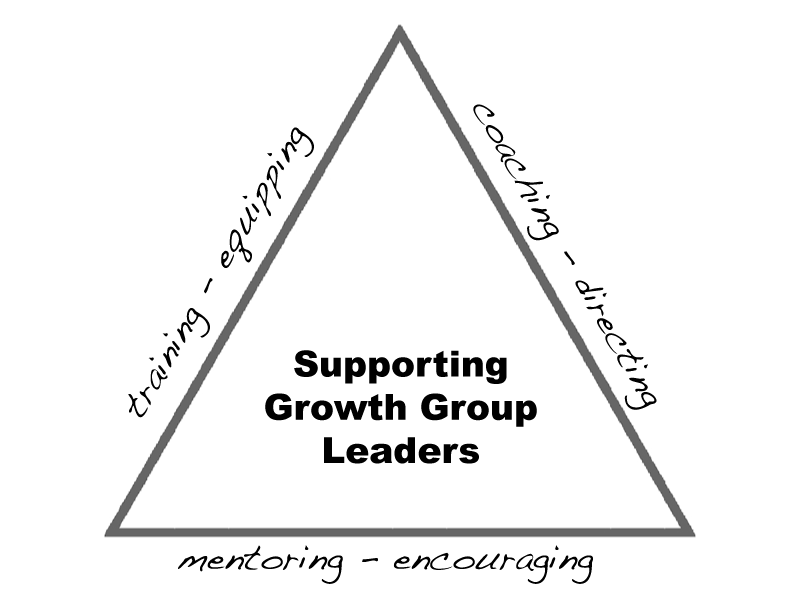
At one point during the conference we appeared to get bogged down in semantics. ‘What’s the difference between coaching and mentoring and training?’ someone asked. ‘What should we be focusing on?’ ‘Which area is most important for us?’ ‘Does it really matter?’ These questions led to some helpful clarification and we moved on. No doubt you can find many definitions of these roles and tasks. Some will be distinct and some overlapping. I’m not so much interested in crisp textbook definitions, as I am to bring clarity in how we are aiming to use these strategies to support the growth group leaders in our church.

Coaching

My understanding of coaching is largely shaped by the sporting world – especially team sports. As I observe Jake White at the Brumbies, I see a coach who is focused on goals and outcomes. He’s responsible for the big picture and how the different parts fit together to make the whole. He works at directing people towards achieving desired outcomes. He helps people to identify areas of improvement or barriers to be removed.

Mentoring

The team environment instructs here also. I watch senior players getting alongside the junior players, advising, critiquing, suggesting, encouraging, playing practical jokes! The more knowledgable or experienced person invests in the next generation. Relationships are formed and powerful results can flow.

Training

Training can take a number of forms. In the professional rugby world there will be fitness trainers, strength and conditioning trainers, training camps, training drills, training timetables, team training, individual training. Training is provided so as to build the competence needed to achieve the goals. Training is about building competency and gaining the skills, tools and resources to do the job.

traingleAll these areas are important, each contribute to supporting growth group leaders in their ministries, and each are dependent on the work of the others. Without being too pedantic, we could say something like:

    • Mentoring is about encouraging.
    • Coaching is about directing.
    • Training is about equipping.

Our aim is to support our leaders in each of these ways. Every leader should be connected with a mentor, to encourage them in their leadership. Every mentor should be connected with a coach, to help direct and support them in their mentoring. All leaders, mentors, and coaches should have access to trainers and training to equip them for their ministries.

Here’s a model of what this could look like in practice:

Coach 1 —>
—>  Mentor A  —>  Leader a, Leader b, Leader c
—>  Mentor B  —>  Leader d, Leader e, Leader f
—>  Mentor C  —>  Leader g, Leader h, Leader i

Coach 2 —>
—>  Mentor D  —>  Leader j, Leader k, Leader l
—>  Mentor E  —>  Leader m, Leader n, Leader o
—>  Mentor F  —>  Leader p, Leader q, Leader r

Coaches aim to catch up with their mentors at least once a term, to guide them in their ministry of mentoring each of the leaders. If the mentors are also growth group leaders then there will be a strong mentoring element to these meetings also.

Coaches are equipped by a pastor or director of the growth groups ministry, so that they are clear on expectations and the direction this ministry should take. They will draw on resources, books and training material to assist them to develop as coaches.

Here’s a timetable of meetings to facilitate these goals:

Once a term all growth group leaders, mentors and coaches meet together for vision meeting. These meetings may include: input on upcoming Bible talk/study series; direction on key goals for groups in the upcoming term; info on particular ministry plans for groups; and prayer together. 

At least once a term, the director meets with all coaches; coaches meet with all mentors; and mentors meet with leaders and co-leaders. These meetings could take place in small groups or one-to-one. As relationships grow, it is hoped that people will desire to meet more often.

Here’s some specific training strategies for equipping leaders:

Apprenticing
Encourage all growth group leaders to find core members to prepare for future growth group leadership. Involve them in leadership, providing practical experience of ministry, support, advice, feedback. Encourage them to read some helpful resources.

Training courses
Encourage apprentice leaders to participate in a targeted training course for growth group leaders. This could be ‘Growth Groups’ or ‘Spice it Up’. Offer this course over a few weeks in third or fourth term, with the aim of having potential leaders to begin in the new year.

Turbo training
When leaders find themselves ill-equipped for their roles offer to bridge the gap. Consider a two workshop intensive course that focuses i) on leading better Bible studies; and ii) on pastoral leadership of growth groups.

Access to resources
Provide books, courses, materials, articles that will encourage and equip growth group leaders. This Leaders Toolkit is being designed for this purpose!

Growth group leaders bibliography

swiss_army_knifeEvery tradie needs their tools. Good tools make it so much easier to do a job well. Imagine trying to cut wood with a blunt saw that’s been left out in the rain, or snipping electrical wires with a pair of kitchen scissors, or trying to mix concrete in your bathtub. Growth group leaders need good tools too. Our trade is dealing with the Word of God and people, so here’s a few useful tools.

1. A Bible

bible_picYou can’t do without this one. We’re on about knowing God through his word so, unless you’ve got your own special divine broadband network, you’ll need a Bible! It usually helps if most people are reading from the same translation, so you might want to get a feel for what others in your group are reading. There are many good up-to-date English versions available. Try the New International Version, the English Standard Version, or the Holman Christian Standard Bible.

2. A Study Bible or Reference Bible

ESVThese are useful tools for helping you prepare studies. Reference Bibles contain cross-references which assist you in chasing themes around the Bible and discovering Old Testament background to New Testament ideas. Study Bibles go a step further and include commentary on verses and background articles on books of the Bible and selected topics. The ESV Study Bible is probably the most comprehensive around.

BUT, I don’t recommend you use a Study Bible when you lead studies because you don’t want people to think you’ve got the Leaders Version with Complete Cheat Notes. The idea is to learn together from the Bible, not someone’s commentary on the Bible.

3. New Bible Dictionary

NBDA good quality Bible dictionary is an excellent tool for getting background and details on the Scriptures. The New Bible Dictionary contains articles on every book of the Bible, names, places, themes and ideas. If you need to research further, these articles are a good starting point, and refer you to other works.

4. New Bible Commentary

NBCThe New Bible Commentary is the companion volume to the dictionary. This is a one volume commentary on every chapter in the Bible. Written by authors who respect the authority of the Bible, it can help you to get a handle on the big picture, or grapple with difficult ideas.

There are a number of good books available that will help you as you develop as a leader. A few are summarised and reviewed on this site. Check out some of these:

5. Spice it up

spiceitupThis is a great book for all growth group leaders. Its strength is in getting people into the Bible in creative ways that help them to deeply engage with God’s word for their lives. The book is strictly a course manual, but there is enough in it to pick up the gist if you can’t access a training course.

6. Growth Groups

The name says it. This is the basic text book for growth group ministry. It breaks down the different aspects of group life and address topics such as Bible study, prayer, developing leaders, outreach, group dynamics and more. Great for all leaders and very helpful for mentors.

7. Leading Better Bible Studies

Leading Better Bible StudiesThis book in grounded in the Bible, while being very practical. It draws from theological study and adult education theory, to help leaders to creatively approach Bible study and build good group interaction. Coaches and mentors will also find this an excellent resource.

8. Gospel centered leadership

gcleadershipGrowth group leadership is part of a bigger picture of Christian leadership. You can read this book personally, but it may have greater benefit if you discuss it with others, such as your mentor, peer leaders or an apprentice leader in your group.

9. The Trellis and the Vine

Trellis and the VineIt’s too easy become caught up with organisation and structures – even organising growth groups – so that we lose sight of the purpose of meeting. This excellent resource reminds us to keep focused on the ministry of the word, training one another in godliness, and growing in relationship with God.

10. Sticky Church

sticky_church_coverAn inspiring book, containing many encouraging suggestions for organising groups, training leaders and keeping groups at the heart of church life. Sermon-based Bible studies are advocated, with the main purpose of encouraging participation and application in groups.

11. Creating Community

creatingcommunityThe emphasis of this material is on relationships and creating community and it provides a helpful complement to the Bible input from some of the books above. This is a useful book for pastors or directors of growth group ministries to consider as they evaluate and review the ministry.

Mentoring growth group leaders

swiss_army_knifeEveryone needs encouragement. It’s pretty tough doing a job on your own without the support of others spurring you along. Growth group leaders are no different. They require training and resources, but they also depend on encouragement. In a church with many leaders, no one person can be relied upon to provide all the encouragement. We trust it will come from a number of sources. God’s Word is our primary source of inspiration. We look to the members of each group to not only support one another, but also their leaders. Co-leaders can meet and pray and share together about their group. Fellow leaders can catch up and support each other in their roles as leaders. A pastor can catch up with leaders here and there to enquire about how they’re travelling and suggest ways ahead. All this can happen quite naturally without any planning or any specific structures being put into place. However, the truth is it usually doesn’t!

Our plan is for every growth group leader to be able to meet up with a mentor (or coach) to encourage them in their ministry. We will arrange a meeting once a term where all the leaders get together, but we are also depending on purposeful mentoring relationships being established. Mentors should aim to connect with the other leaders at least once a term, ideally face-to-face, to share together in different areas.

HandSometimes we can get stuck in wondering what to talk about when we meet with others. How’re you doing? Good. How’s the group? Oh, it’s okay. What’ve you been studying? The same as everyone else! Need any help? Nah, I’ll be all right. Well, I’ll see you next time. Okay!

We can do a lot better! I suggest five areas to give you focus each time you meet together. To keep it memorable, you might want to think about each area as one finger!

1. Passage

For the word of God is alive and active. Sharper than any double-edged sword, it penetrates even to dividing soul and spirit, joints and marrow; it judges the thoughts and attitudes of the heart.  (Hebrews 4:12)

At the heart of all ministry is the Word of God. God speaks and gives life. He cuts deeply within us to transform us into the likeness of his Son, Jesus. Our growth groups are focused upon the Scriptures because we desire to see change in people’ lives. For the same reason, we want to shape our mentoring times by opening God’s word together. This isn’t the place for a detailed Bible study together, but we do want to hear from God each time we meet.

There are many different approaches we could take to looking at the Bible in our mentoring meetings. Here are a few suggestions:

  • Choose a few verses that have stood out in your recent Bible studies and share what they have meant to you.
  • Choose one of the pastoral letters (1 & 2 Timothy and Titus), take a few verses at a time, and reflect together on what you learn about Christian leadership.
  • Read through one stanza of Psalm 119 each time you meet and share any new insights into God’s word.
  • Take a short New Testament book, such as Philippians or James, read a few verses each time to encourage each other.

2. Personal

12 Don’t let anyone look down on you because you are young, but set an example for the believers in speech, in conduct, in love, in faith and in purity. 

15 Be diligent in these matters; give yourself wholly to them, so that everyone may see your progress. 16 Watch your life and doctrine closely. Persevere in them, because if you do, you will save both yourself and your hearers.  (1 Timothy 4:12; 15-16)

Leadership involves teaching in word and example. We’re called to walk the talk or stumble the mumble, as I heard recently! Mentors should take an interest in the lives and teaching of their leaders, but we can’t expect people to do what we’re not prepared to do. This means that mentors also need to be open about themselves. Each mentor meeting should allow time to share together about ourselves. This might be a little awkward at first, but will become easier as our relationships grow.

It’s helpful not to be prescriptive about what you discuss together. Some weeks there might be a big issue that takes most of the time. Other weeks there may be very little to discuss. Here are a few suggestions to get you going:

  • Get to know a little about each other’s lives – family, work, interests, etc.
  • Share together about how you became Christians.
  • Is there something you’ve been really encouraged with recently?
  • Is there something you’re finding hard?
  • How are you finding being a leader in the group?

3. Pastoral

Growth groups are about more than Bible study. They’re about the lives of the members of the group. It’s important that we recognise that everyone is different and that God is in the business of working in each person differently. This means we need to think specifically about individuals. Mentors can encourage their leaders to show an active interest in each member of the group. One way to do this is simply asking what they have observed.

Our greatest desire is for every member of our groups to know and love God, to place their trust firmly in Jesus, and to look forward to the hope of heaven. We want to spur the members of our groups on to love and good works, that God has prepared for them to do. This means a leader is rather like a Christian ‘coach’ urging the members of the team forward.

Mentors can help this to happen. We can discuss and pray about the people in our groups. As we do this, it’s important to be motivated by love. There is absolutely no excuse for gossip. We need to respect confidentiality. Many times we can talk productively without even needing to mention specific names or details.

Sometimes there will be people in our groups with very great needs. They could be very ill, going through a marriage break up, struggling with depression, out of work, having a crisis of faith, or struggling with other serious matters. This may be beyond the capacity of the group or its leaders to deal with on their own. The mentor may be able to assist by linking the leaders with the wider support of the church, or other resources.

Two books that will assist you to think pastorally about the members of the group are Mission Minded by Peter Bolt, and The Trellis and the Vine by Tony Payne and Colin Marshall.

4. Practical

It takes skill and practice to lead a group well. While we don’t expect mentors to necessarily be trainers, we do want them to encourage their leaders to keep getting better at their ministry. There could even be times when a mentor and leader will undertake a training course or refresher together.

A browse through the contents pages of Leading Better Bible Studies by Rod and Kaen Morris, or Growth Groups by Col Marshall, will highlight a number of aspects to group life worth exploring together. And reading the chapters will give you plenty to discuss! Further, we are aiming to produce a range of papers on this site to assist you with improving your small group leadership. Matthias Media has also started a monthly Home Group Leaders Digest which should offer some helpful ideas.

We’re looking to mentors to take the initiative in encouraging leaders to develop as leaders. Ask questions, be specific. For example:

  • What aspects of preparing or leading a Bible study do you find most difficult?
  • Why do some studies work better than others?
  • What do you think is stopping the group from opening up in prayer times?
  • How do you think social activities could help the group to click together?
  • What plans do you have for the term ahead?
  • Have you considered any ways that the group could serve the church together? What?

One area of practical consideration and long term importance is equipping new leaders. We are keen to be apprenticing leaders within our groups by giving them opportunities to lead and work through issues of leadership. If we don’t do this, then we won’t grow. Mentors can take a role in encouraging the leaders in their task of developing new leaders:

  • Have they identified people who could be potential leaders? Who?
  • What are the leaders doing with their apprentices? (e.g. preparing studies together, praying for members of the group, reflecting and planning together, following up members of the group one-to-one)
  • Have they encouraged their apprentice to participate in a training course, read some helpful books, come to a leaders meeting?

5. Prayer

What, after all, is Apollos? And what is Paul? Only servants, through whom you came to believe—as the Lord has assigned to each his task. I planted the seed, Apollos watered it, but God has been making it grow. So neither the one who plants nor the one who waters is anything, but only God, who makes things grow. The one who plants and the one who waters have one purpose, and they will each be rewarded according to their own labor. For we are co-workers in God’s service; you are God’s field, God’s building.  (1 Corinthians 3:5-9)

Without God we can do nothing. We can’t make a person trust in the death and resurrection of Jesus for their salvation. We can’t fill a person with love for others. We can’t save a person from the judgment of God. We can’t guarantee their future for all eternity. BUT God can… and more! So we are to rely on him, call out to him, ask him to be actively working in our lives and the members of our groups.

As mentors meet with their leaders, so we want them to pray. Together, humbly, asking God to be graciously at work. Allow the time to speak together with God, not as an afterthought, but as the most practical use of your time together. God loves to hear our prayers and he is more willing to bless us with answers than we are to ask him our questions.

Leading better Bible studies

Leading Better Bible StudiesLeading Better Bible Studies: Essential skills for effective small groups by Rod and Karen Morris is a compendium of valuable information on small groups ministry. The authors draw together a wealth of material acquired through theological training, adult education study, and years of practical experience leading Bible study groups. There’s much more to Leading Better Bible Studies than teaching us how to lead better Bible studies, but the Bible is clearly central to the whole agenda. This book is intended to assist leaders to ensure their groups are about helping people (i) grow in their relationships with God, (ii) become more like Jesus, and (iii) experience the joy of doing this in relationship with others.

Scan 2A strength of this book is its balance. Good small group leadership requires people to build biblically-shaped competence in a range of areas. Leading Better Bible Studies outlines seven areas important areas for leadership development. While the book follows a logical sequence, any chapter can be dipped into at any stage.

1. Being a Christian leader

The assumption is that leaders are men and women seeking to know God and serve him in their role as leaders. They must be Christians who trust in the saving work of the Lord Jesus. Leaders are not called primarily to impart their own wisdom, but to help the members of the group grow in their knowledge and love of God through studying the Bible. This will require leaders to focus on Christ, depend on the power of God’s Spirit, delve deeply into the Scriptures, pray humbly, teach in word and example, and call people to change in the light of God’s word.

2. Helping people learn

The main task of the leader is seen to be helping people learn from the Bible. This will, in turn, shape all the other ministry in the group. This takes diligence in understanding the Scriptures and it also requires the leader to understand how people people learn and how we can assist people to learn.

The content of our teaching is so important that we must use the best possible methods to enable people to learn.  (p2)

Scan 3Rod and Karen apply their understanding of adult learning principles and the adult learning cycle to enable leaders to suitably connect with the variety of people in their groups. They show how people learn through stages, but also how individuals have a preference for particular stages of the cycle. Activists tend to focus on the challenge of something new and fresh. They love the ‘doing’ part of learning. Reflectors take more time to reflect and consider how things relate. They look for patterns, connections and explore things from different perspectives. These people tend to take more time to come to their conclusions. Theorists are more into formulating explanations and developing principles. They’re keen to draw everything together into coherent unity. Pragmatists are keen to get to the point where the ‘rubber hits the road’. Recognising the different stages and preferences for learning can assist the leader to engage all members of the group better and, hopefully, help the pragmatists not to get so frustrated with the theorists!

3. Learning from the Bible in groups

This is the longest chapter in the book and focuses upon the leader’s central task. It looks to develop skills in handling the Bible, both personally and in the group. The foundations of understanding Scripture in its context are well presented here. We’re encouraged to look at the detail in each passage, within the overall theology of the whole Bible. Three aspects are developed in studying the Bible:

(i) observation – what does the text actually say?
(ii) interpretation – what does the text mean?
(iii) application – how do we respond to what the text means?

This chapter is a treasure chest of strategies for doing Bible study in our groups. It helps us to get beyond the boring Q and A approach of so many studies, and explore creative means of learning together from the Bible. They are designed to help people learn from the Bible and not simply discover what’s in the head of the leader! There are 21 different approaches to Bible study outlined here, each with an example study to share.

4. Developing group life

Many of us will have had superb experiences of small groups, along with others we’re still trying to forget. This chapter focuses on the ‘people’ side of our groups and how to develop groups that really work. It’s highly practical, dealing with issues such as group size, when and where you meet, developing mutual expectations of the group, building trust, sharing responsibilities, good communication, celebrating milestones, and more. Groups go through life cycles and good preparation enables the group to navigate these well. They require attention to task and maintenance functions. Finishing groups well can be as important as starting them well. If you’re looking for a range of activities to help people in your group get to know each other, this chapter offers you another 24 great ideas!

5. Helping people pray

Prayer is often emphasised in theory in Bible study groups, yet neglected in practice. We know of groups which run out of time and have only a perfunctory prayer to open and close the meeting; of others which never move beyond the mundane and superficial; and of still others where only one or two people pray, while everyone else remains silent.  (p151)

I suspect many of us have been involved in groups that struggle to pray. The strength of this chapter is that it offers practical steps to model, teach and encourage people in our groups to pray. And it needs to begin with the leader.

6. Sustaining group members

A good Bible study leader will seek to look after the members of their group. They will care for each person with regard to their relationship with God, and what’s going on in their lives. They will seek to equip the group to build one another through God’s word and loving service. This requires more than simply preparing a study and opening our homes each week. It requires perseverance and hard work, understanding of people, good communication skills, capacity to work through and resolve conflicts, and more. But it also requires a healthy grasp of the limits of our responsibility. Ultimately, the people in the group are God’s responsibility, not yours. Therefore there are limits to your accountability. (p188) A healthy reminder!

7. Continuing as a leader

How do we keep leaders fresh and willingly serving God in this ministry for the long haul? The book finishes with some more practical wisdom. Refreshment is key to doing anything long term. People need change, variety and breaks. While they may no longer need basic training, they may benefit greatly from ongoing encouragement and support. Supervision, peer mentoring, personal reflections and self-appraisal are all useful tools for developing leaders.

Scan 4Rod and Karen suggest focusing on the person, the people, and the process. These three areas are all important for healthy leaders and healthy groups. They include a few pages of questions and ideas that could be used either personally, or by a supervisor who is encouraging another leader (p195-8).

Leading Better Bible Studies finishes with a list of resources on a range of topics related to each of the chapters. These are good resources, but it would be useful to update them to include materials written since the first printing of the book in 1997.

I’ve worked through this book on a number of occasions previously. It’s been my ‘textbook’ for teaching courses on leading Bible studies. Along with other books, such as Growth Groups, it’s been a ‘reference guide’ for equipping myself and others to lead. Our church is implementing a strategy of coaching and mentoring for our growth group leaders. My hope is for every coach to be familiar with this book, so they are better equipped to support the leaders under their care.

Do you feel called by God?

calledI think I need to take more plane trips. They’re a great way to set aside time for reading. Bit expensive though! This book was started on the trip back from Sydney and finished during chemo this morning. The chemo makes it even more expensive! Having now read Michael Bennett’s Do you feel called by God? Rethinking the call to ministry, I’m eager to share what I’ve discovered. This is a book that mirrors so much of my own experience, addresses so many of the same questions I’ve asked, and comes to the same conclusions. It’s easy to review a book that backs up your own opinions, but I can honestly say that it has also been a long and careful journey for me to be persuaded of these matters and I’ve never once had a conversation about them with Michael Bennett.

We’re told from the outset why Michael wrote this book and what conclusions he makes throughout. The book is spent substantiating these conclusions:

  1. The often-ward and almost universally accepted expression “I feel God is calling me” is totally foreign to the revealed content of both the Old and New Testaments of the Bible. The continued use of this unscriptural pietistic language may be having negative consequences for churches, missionary societies and other Christian organisations in the choosing and training of leaders.
  2. Without denying in any way God’s ability to call people by overt and supernatural signs, it is argued here that this is not usually God’s method today. The motivation to serve the Lord, particularly in what is called full-time ministry, is a human desire to do so, and not a felt call. However, this human desire, which must spring from one’s love for Jesus and the gospel and genuine compassion for people, is not sufficient or valid in itself: it must be rightly motivated and rightly tested. (p6-7)

I suspect by revealing his conclusions at the outset, Michael will lose some readers. “That’s not right. It can’t be right. It’s not what happened to me… or others I know.” And they’ll put the book down. Or because they’ve read this far in my review, they wont even bother buying it! Oops, sorry! Let me say this would be a huge mistake. Please judge these conclusions on the strength of the arguments, not on whether they confirm or run contrary to your current thinking.

This book is very autobiographical and anecdotal. We get to know Michael Bennett, the rugby player, Christian, Bible college student, and author. We journey with him as his questions and struggles are explored and answered. However, this is not a this happened to me and therefore I am the paradigm for everyone else book. Michael seriously engages with the Scriptures to find the answers. We are able to weigh up his arguments on the lines of whether they faithfully expound the teaching of the Bible.

‘Call’ and ‘calling’ are explored in the Old and New Testaments. Michael examines the key people called by God to particular tasks and roles, and how this is specifically described. The observation is made that the word of God comes directly and personally to some people for particular purposes, but that this never resembles a concept of ‘feeling called’ that is commonly described today.

Close attention is given to examining every reference to ‘call’ and its cognates in the Greek New Testament. Only after the serious word studies completed and the contexts explored, are conclusions drawn. Seven different uses of the words are identified in the New Testament and the conclusion is reached, after looking at over 300 verses, that God calls all people in two specific ways:

  • First, we are called to be Christians – to be disciples of Jesus.
  • Second, we are called to be holy – to grow in Christ-likeness. (p60)

Some of the references that speak of a call to holiness are another way of describing the call to be Christian. Christians are the ‘called out’, ‘set apart’, or ‘sanctified ones’. They’re the saints – not those who gain post humous titles for miracles and deeds done – but those who, because of Christ’s work now, belong to God. In 1991, I completed exactly the same comprehensive word studies and came to the same conclusions that this is how the Bible speaks to Christians about the nature of being called by God.

Michael Bennett addressed the potential criticism of simply playing semantics by showing that the implications of using Biblical words and phrases in non-Biblical ways can be dangerous and debilitating. If candidate committees, ministers, theological colleges, and mission organizations are all asking for evidence of a ‘calling’, when the Bible doesn’t make this necessary, then where do people turn? Perhaps they end up deifying their desires to justify their position.

This book contains a very helpful and bold chapter of Hudson Taylor. It’s a pertinent case-study exploring what’s going on for this towering missionary as he speaks of his ‘call’. Taylor is quoted as saying:

I felt that I was entering into a covenant with the Almighty. I felt as though I wished to withdraw my promise but could not. Something seemed to say: “Your prayer is answered”. And from that time on the conviction has never left me that I was called to China. (quoted on p70)

The language of Hudson Taylor is important to observe. He uses expression such as, “I felt”, “Something seemed to say”, and “the conviction”. He doesn’t speak categorically of God’s specific or clear personal command. Michael respectfully seeks to diagnose what’s going on in Taylor’s experiences and the way he describes them. He argues that Taylor uses the normal language of pietism in his day (and for many in the church today) to tie together a number of influences and motivations for mission work. These areas include his family and background, his conversion to Christ as he understands grace, his grasp of the eternal consequences of the gospel, his deep compassion for people, his desire to take action, and his extraordinary suitability for the task.

After discussing some issues of how we should expect to receive guidance from God, Michael Bennett hones in on the question so who should go into ministry? The answer is biblical and profound: every Christian is called to ministry, that is, we are reborn into a new life of serving God. Ministry is not limited to some elite Christians, it’s for all! What then of those we call ‘ministers’, or pastors, or missionaries, or ‘full-time’ ministers? How do you work out if you should make the step from being a minister to being a Minister in some special sense? Again, we are directed to the text of Scripture. Some are set apart as overseers, pastors, or bishops – three overlapping terms to describe persons who lead, teach and equip the body of Christ to each minister to one another. Others are set apart for pioneer mission work or evangelising. How do you know if you should be one of these people?

Michael shows from the Bible the relevance of the same factors he describes for Hudson Taylor. He shows how the human desire to be involved in Christian leadership ministry is a desire for something very worthwhile. This desire should be tested and weighed by others also. We’re taken especially 1 Timothy 3:1-10 to explore the criteria for suitability:

Here is a trustworthy saying: Whoever aspires to be an overseer desires a noble task. 2 Now the overseer is to be above reproach, faithful to his wife, temperate, self-controlled, respectable, hospitable, able to teach, 3 not given to drunkenness, not violent but gentle, not quarrelsome, not a lover of money. 4 He must manage his own family well and see that his children obey him, and he must do so in a manner worthy of full respect. 5 (If anyone does not know how to manage his own family, how can he take care of God’s church?) 6 He must not be a recent convert, or he may become conceited and fall under the same judgment as the devil. 7 He must also have a good reputation with outsiders, so that he will not fall into disgrace and into the devil’s trap.

8 In the same way, deacons are to be worthy of respect, sincere, not indulging in much wine, and not pursuing dishonest gain. 9 They must keep hold of the deep truths of the faith with a clear conscience. 10 They must first be tested; and then if there is nothing against them, let them serve as deacons.

Do you feel called by God? is a breath of fresh clear air on the topic of guidance into Christian ministry. It’s a book I will recommend to many, but before I do, let me raise a couple of issues and suggestions. I believe a strength and a weakness of this book is that it covers a lot of ground and explores a lot of side streets on the way to its destination. We get to hear about Michael’s journey to faith, his pathway through theological training, high and low church differences, Catholic and Anglican confusions, dip into wider issues of guidance, and much more. This may frustrate the impatient person who simply wants the shortest distance between A and B. However, it makes the book highly suitable for one who is still grappling with many basic fundamentals of Christian life and ministry.

I also think there is a passage of the Bible, that warrants careful exegesis on this topic, that has been overlooked or simply omitted from this book. I’m referring to 1 Corinthians 7:17-24.

17 Nevertheless, each person should live as a believer in whatever situation the Lord has assigned to them, just as God has called them. This is the rule I lay down in all the churches. 18 Was a man already circumcised when he was called? He should not become uncircumcised. Was a man uncircumcised when he was called? He should not be circumcised. 19 Circumcision is nothing and uncircumcision is nothing. Keeping God’s commands is what counts. 20 Each person should remain in the situation they were in when God called them.

21 Were you a slave when you were called? Don’t let it trouble you—although if you can gain your freedom, do so. 22 For the one who was a slave when called to faith in the Lord is the Lord’s freed person; similarly, the one who was free when called is Christ’s slave. 23 You were bought at a price; do not become slaves of human beings. 24 Brothers and sisters, each person, as responsible to God, should remain in the situation they were in when God called them. (NIV, my emphasis.)

I’ve spent much time helping people work through what this passage is saying about the nature of God’s call. A superficial reading has led many to speak of God calling people to particular careers, jobs, places, or ministries. This appears to be the meaning of verse 17. However, the verses that follow make it clear that Paul is speaking of the circumstances of life that people are in before and after they become Christians. The ‘call’ on view is the call to be Christian.

This is a book that should be read by many. It should be passed on to people who are exploring these issues for there lives. Last weekend I was asked by a young man at church if he should be heading into ministry. I plan to buy a copy of this book and give it to him and I’ll talk through the issues with him. It’s an excellent resource for people considering MTS (Ministry Training Strategy) apprenticeships, or exploring whether to head to Bible college, formal ministry, or the mission field.

I would make this book compulsory reading for church and denominational leaders who will be making decisions about whether to admit people into training or ministry positions. I’d would love all members of missionary candidates committees to take the time to work through this book. Bishops should read it. Theological and Bible college admissions departments should read it. Those endless committees deciding people’s futures should read this book. It’s such an important issue for many. Perhaps you should read it!

Growth Groups

Passing the Baton-text-S2Growth Groups by Col Marshall has been around now for a couple of decades. For many of us, it’s been the ‘go to’ book on small group ministry. As I’m currently reviewing how we support and equip our growth group leaders, I thought I should read over it again. My immediate thought was it could do with an aesthetic refresh. The number-dot-number section headings makes it look out of date and rather academic. However, the content is as relevant and helpful now as it was back in ’95. If you were to get one book on leading Christian small groups, this would probably be the one to get. It gets you into the Bible, but it also explores the other aspects relevant to leading groups – such as group dynamics, prayer, personal ministry, evangelism, training leaders, and the like.

The real strength of Growth Groups is how it places small group ministry within the wider context of gospel ministry in church. God’s agenda for transforming lives shapes the agenda for these groups. The training course at the back of the book involves studying Paul’s letter to the Colossians and this anchors the earlier material in God’s Word. Colossians takes us from the grand themes of Christ’s lordship and salvation to their practical outworking in the Christian life. For this reason the best way to read Growth Groups is in conjunction with the training course.

If you’re not able to participate in a training course, the book still provides an excellent resource for leaders. It’s full of biblical and experiential wisdom on ministry in small groups. The following chapter headings show the breadth of material covered:

  1. The strategy of growth groups
  2. Growth group basics
  3. Pitfalls of growth groups
  4. Preparing a Bible study
  5. Leading a Bible study
  6. Answers about questions
  7. The games people play
  8. Praying in growth groups
  9. Gospel growth through growth groups
  10. Leading for growth
  11. Growing the individuals
  12. The healthy growth group
  13. Starting a growth group
  14. Selecting, training and shepherding leaders
  15. Developing the growth group program

It’s most logical to work through the chapters in the order they appear, but you can dip back into them any way you like. I’ve found that over the years I’ve written all sorts of notes, supplementary ideas, questions and links to other resources in the margins of my copy. It’s covered in underlining and highlighting, with various scraps of paper lodged inside. In other words its a tool – a workbook that I keep coming back to on the job.

Having read this book again in close proximity to reading Spice It UpI can see the overlapping ideas between the two. The latter builds on the chapters about preparing and leading Bible studies and it helps us to engage well with the text and with the people in our groups. Col’s book presents the foundational issues very clearly, and I believe its an indispensable ‘Small Groups 101′ manual. It offers a philosophy of small groups ministry, that’s anchored in Scripture, and from which our practise should flow. The best example of this is the opening chapter that draws us deeply into Colossians and expounds on receiving Christ as Lord and living with Christ as Lord (Colossians 2:6-7).

Chapter 3, on the pitfalls of groups, offered some helpful warnings. With the ubiquity of small groups in churches today, and the variety of purposes they seem designed to fulfil, this book warns how they can easily lose their way. Community, experience, and mission can all become divorced from their biblical significance and growth groups can become much like many non-Christian groups in our world. We’re encouraged to keep God’s agenda front and centre. Sometimes groups can take on an independent life of their own, reacting against the church, the minister, or the preaching. Our purpose is not to create isolated, independent mini-churches, but rather to help the whole church to build itself in truth and love by meeting regularly in smaller gatherings.

Chapter 9, on gospel growth, reminds us not to let groups become introspective cliques. God’s agenda of bringing people into his family through the gospel is to shape the purpose of growth groups. This might not mean regularly inviting and welcoming non-believers into our groups (though some groups could have this purpose), but it will mean keeping the gospel on our agenda. Growth groups are an excellent context to support one another in reaching out to others and to pray for friends’ friends to become followers of Jesus.

Growth Groups is intentional in developing leaders – it’s a training book, after all! But it calls leaders to be committed to expanding the numbers of groups by raising up and training new leaders. Apprenticing leaders is the preferred model, to be supplemented with the material in this book. The course itself involves guided reading of this book, plus a 10 week practical Bible study and training program. Our church is following a similar strategy by encouraging our leaders to have core members in their groups whom they are mentoring into leadership. We will also be offering specific targeted training courses later in the year for these apprentices and others.

If you’re a leader and you haven’t come across Growth Groups, then I recommend you get hold of a copy, read it and scribble what you learn all over it! If you’re looking for a training program for leaders in your church then this is a great place to turn, especially as it’s so comprehensive. If you’re feeling rather stale in your leadership, and you want to up-skill a bit, then why not read a few of the chapters of this book with a friend and discuss them together? If you’ve been reading The Trellis and the Vine then you will find that these books are singing from the same song sheet. And that’s a good thing because it’s about churches, small groups and individual Christians being shaped by the gospel.

Spice it up

spiceitupSpice It Up, by Mike Hanlon and James Leitch, is not a Spanish cookbook, nor a guide to better sex! It’s a course to equip leaders to lead more engaging Bible studies. If Bible studies are your thing, then I hope you haven’t had the experience of being bored to death (especially if you’ve been in a group with me!) Far too many studies end up being mundane and pedestrian. Sometimes we plough through the passage, asking basic comprehension questions, and fail to understand what it really means or what we should do in response. This course aims to overcome these problems. Bible study should be stimulating and life-changing.

Spice It Up is an 8 week course aimed at giving confidence to leaders in handling the Bible in a small group environment. The beauty of this course is that it’s compact and simple, while integrating wisdom from other books and resources. It acknowledges dependence on ideas and material from Growth Groups by Col Marshall and Leading Better Bible Studies by Rod and Karen Morris. This is a great start for new leaders, but it’s also an excellent refresher for those who have previously received training in leading Bible studies. It covers the following topics:

Week 1   Why Bible Study Groups
Week 2   Basic Bible Study
Week 3   Making Bible Study Come Alive
Week 4   Group Dynamics
Week 5   Understanding and Integration
Week 6   Learning Cycle – Application
Week 7   Preparation
Week 8   Practice Sessions

A real strength of this material is how it pushes the leaders to be more interesting AND to go deeper into the Bible. It’s a big mistake to think that the Bible and fun are at opposite ends of the spectrum. Instead of superficial pedestrian yes/no type questions, we’re urged to use creative strategies that connect people to the text and highlight it’s relevance. For example, instead of asking…

  1. What does it say?
  2. What does it mean?
  3. What does it mean to us?

we’re encouraged to explore with the group…

  1. What is surprising?
  2. What is thought provoking?
  3. How does it inspire and challenge us?

This course helps us to use questions well. We should consider the likely responses to any question we ask, but avoid questions that are really a quiz, asking people to discover the answer in our heads. We’re encouraged to have prompting questions up our sleeve that keep the discussion going. These might include extending questions (e.g. Can you explain that a bit more?”), justifying questions (e.g. How does that fit with what we’ve been talking about?”), and redirecting questions (e.g. Any other thoughts?”).

People learn in different ways. Some are more auditory, some visual, and others kinaesthetic. Recognising this opens up creative opportunities for engaging the group. The authors are huge fans of engaging people in a common space, especially by the use of a whiteboard. If people speak and get to write things on the board, then all three learning styles are engaged to some extent.

Spice It Up encourages leaders to add a step between meaning and application. This step asks how what we are learning fits with or shapes our overall theology and connects with the rest of the Bible. It helps people to do theology in a practical way. It also demonstrates that our thinking and practice are to be shaped by the Bible, rather than simply filtering the Bible through what we already believe.

The course also pushes us to apply ourselves to application. Too often we overlook this area and then tack on a question like “So how does this apply to us?” if there’s time! If the goal of Bible study is to see people’s lives transformed by the Word of God, then this is simply not good enough. The advice is to use more concrete and specific questions, to probe more deeply, and to introduce scenarios that highlight what the passage will mean in specific situations.

There are so many practical tips in this material. A whole chapter is devoted to how to go about preparing a study. There’s a string of appendices covering issues such as discovering your learning and communication styles, templates for preparing and writing studies, specific issues for studies from the Gospels and parables, factors of group life, relationships between leaders and personal ministry to members of the groups, and memory prompts for quick Bible studies.

Spice It Up describes the groups as Bible Study Groups. In our church context we’ve given small groups a variety of names and the current one is ‘growth groups’. They’re not intended to be simply Bible study groups, but also involve prayer and personal ministry. For this reason, I’d be inclined to speak of Bible Study in Groups instead. Maybe, then, this course could be accompanied by a series of other courses such as Prayer in Groups, Relationships in Groups, Promoting the Gospel in Groups, Personal Ministry and Care in Groups!

However, the strength of the book is in assisting us with leading better Bible studies. It does this with clarity and simplicity. It’s an excellent resource that is backed up by a website that includes training videos, Bible studies and other resources. The course material can be purchased from this site.

Gospel centered leadership

gcleadershipGospel Centered Leadership by Steve Timmis was a hard book to find – simply because I couldn’t spell centered! Now that’s sorted, and I’ve worked through the book, I’d like to recommend it. If you’ve never read a book on Christian leadership, this is a great place to begin. It’s thoroughly biblical and engages the reader with the arguments and implications of the Bible for leadership. It’s Christ-centred (!) as it describes the principles and distinctives and practicalities of leadership. It’s easy to read, focused and brief, with each chapter raising substantial issues to get your teeth into. It’s a practical workbook offering biblical content, discussion of principles, questions for personal reflection or group discussion, and ideas for action.

Each chapter of this book hooked me in with a brief scenario about leadership issues in church. I could identify with each of them and wanted Timmis to continue the story and reveal what happened! This is an excellent way to start each chapter as it helps us to see its relevance before we read it. We quickly move from these cameo intros to looking at the Scriptures, and then the Scriptures are applied to the relevant leadership matters. The use of the Bible throughout is very good. I’ve grown accustomed to leadership literature using the Bible as a springboard for ideas or a proof text for principles. This book does neither. Instead it grounds our understanding of Christian leadership in a biblical theological framework that centres on Christ. I’ve not read much by Steve Timmis, but as I worked through this book I grew to trust his handling of the Scriptures more and more.

Jesus Christ is demonstrated to be the leader of the church and therefore human leaders are to conform to his servant-hearted, cross-shaped leadership and they’re called to expound God’s word so that people respond to Jesus’ leadership. In the chapter focused upon various leaders from the Old Testament, Timmis challenges the simple ‘copy this leader’ approach of so many Christian leadership books, and instead explores how they point us to Jesus. I found this very refreshing. All human leaders will have their failures. Take these, for example: Noah – drunkard; Abraham – coward; Moses – murderer; David – adulterer; Nehemiah – failure. The Old Testament looks forward to a spectacular fulfilment in Jesus. It is Jesus who shows us what true leadership is to be like. He is the true shepherd of his sheep.

Gospel Centered Leadership explores a number of leadership distinctives. These include character, aptitude, wisdom, service, authority, style and leadership. A godly character is the chief qualification for Christian leadership. Timmis draws especially on the letters to Timothy and Titus to reveal that how we live is absolutely critical to leadership. There is to be no disjunction between life and teaching.

The bottom line is this: as leaders we are called to  be examples. Being an example is the primary way we lead. We are called to be intentional in how we live so that we can commend our attitude and lifestyle to others.  (p37)

These verses from the New Testament back this up:

In everything set them an example by doing what is good. In your teaching show integrity, seriousness and soundness of speech that cannot be condemned, so that those who oppose you may be ashamed because they have nothing bad to say about us.  (Titus 2:7-8 emphasis added)

To the elders among you, I appeal as a fellow elder and a witness of Christ’s sufferings who also will share in the glory to be revealed: Be shepherds of God’s flock that is under your care, watching over them—not because you must, but because you are willing, as God wants you to be; not pursuing dishonest gain, but eager to serve; not lording it over those entrusted to you, but being examples to the flock.
(1 Peter 5:1-3 emphasis added)

The explanation of  a leader’s aptitude to teach is most helpful. It cannot simply be an ability to craft or deliver words. Rather it’s more the fundamental ability to bring the truths of God’s word to bear with relevance into people’s lives. (p43) This can happen in a sermon, a Bible study, a seminar, a personal conversation. The medium is not the most important thing. It’s how the content of God’s word is handled that counts most.

Other aptitudes mentioned in the book are: taking responsibility, influencing others, working hard, making a priority of people, and self-awareness. Each of these areas contain the potential for building and for breaking great leadership. They can become virtues or vices. For example, hard work for the gospel can demonstrate credibility, integrity and commitment. But it can also be mere activism, or an excuse for neglecting family and other priorities. Laziness, on the other hand, in not fitting for the Christian leader and it can sometimes be well hidden behind a facade of ineffective busyness.

Wisdom is essential to good leadership and gospel centered leadership will embrace wisdom by keeping God at the centre of all things. The Scriptures teach that the fear of the Lord is the beginning of wisdom. This means much more than trembling in the presence of God. It’s the intention to honour God in all that we do. The alternatives can quickly damage good leadership. The fear of men and women, worrying about what people will think of us, peer pressures, seeking to make a name for ourselves, will all compete with God’s agenda for leadership.

Jesus demonstrates ever so clearly that leaders are to be servants. This isn’t a leadership strategy or an aspect of leadership. Rather it’s the very essence of leadership. It’s what the Christian leader is called to do. Forget self-promotion, parading of titles or degrees, the wearing of special clothing that separates us from the people. When Jesus washed his disciples feet, in the light of his impending death upon the cross, he demonstrated the cost of sacrificial servant leadership. But the willingness of the leader to do anything for his people doesn’t mean that he should do everything. God doesn’t expect us to be omnicompetent. Rather, as we teach the word of God so we are called to equip and empower others to lead by serving also.

Servant leadership is not an oxymoron. Leaders are to lead, but they lead in serving the needs of others. The leader sets the direction for people to follow and they do this by teaching the Scriptures with an awareness of the cultural context of the people. The leader sets a direction to develop a new culture in the Christian community, differentiated from the culture at large. This will affect relationships, priorities and expectations. It will be created through prayer, Bible teaching, example and influence. (p88) Leaders will take initiative to lead, and failure to take initiative may be an important indicator of one’s unsuitability for leadership.

The final section of the book deals with putting leadership into practice. Timmis admits that his chapter on decision making might be controversial. He calls for a consensus approach to decision making, claiming that this is the best way to care for all people and their issues. He encourages us to take the time to hear people’s concerns and to take on board their ideas. A consensus approach still requires the leaders to lead. They need to convey their vision and seek to persuade people of where the church should be headed and why. Leadership is about guiding people in God’s way, not getting our own way, and this takes time, patience, and good two-way communication. The principles in this chapter are excellent and I can see them working in in obvious ways in a small church. However, they raise many complicated issues for a large church with multiple staff, congregations, ministry departments and so on. More thought is needed here and such issues are teased out in other places (including some helpful work by Tim Keller on changes to decision making with the growth of a church).

Very helpfully, there is a chapter on what to do when leaders fail. And they will! In a fallen world, many Christian leaders will fall into temptation. We only need to read our New Testaments to see how quickly this can happen. Timmis gives good guidance in such situations encouraging other leaders in the church to not despair, nor simply to echo the woes of others, nor to assassinate the leader. No leader can or should ever replace Jesus. At such times we need to be reminded explicitly that Jesus is our only Saviour and he cares for his flock. Being reminded that this is God’s church frees us from many burdens.

Gospel Centered Leadership is a brief but important book. I’d recommend it to church leaders to read through and discuss together. Do the homework, read the Scriptures, answer the questions, raise your own issues, and work on building a common understanding of Christian leadership in your context and culture. I’ll be recommending this book to our Growth Group leaders, youth leaders, children’s leaders and others. You can, of course, read this on your own to great profit, but I’d recommend grabbing a few others and getting them to read it with you. If you’re a leader this will help you to develop other leaders. And if you’re not it will help you evaluate whether you could or should be seeking to serve others in this way.

Building Leaders

Malphurs-Building-LeadersNow that my brief is building leaders, I figured that I should read a few new books in the area. Building Leaders, by Malphurs and Mancini, seemed on topic and came highly recommended. I must confess that I wasn’t looking forward to reading this book. I worry when people have written lots of books on the same topic that they’ll be stretching out material for the sake of more royalties. But I hadn’t actually read any of their books on leadership, so I shouldn’t have been too quick to judge. It took a while, but it was a helpful read. Much in the book was familiar, but it helped to have things organised and spelled out with detail and clarity. I’ve already begun putting into practice a number of its lessons.

The authors have identified a lack of churches committed to training leaders. Most would claim to be, but closer analysis shows that it isn’t really happening. It’s not that ministry isn’t happening, but that these ministries aren’t developing leaders who will continue and grow the ministry. People aren’t taking the time to train others to lead. Sometimes we don’t feel the effects of this until people move on and there’s no one to replace them or until the ministry becomes too big for the current leader to lead. When we compare the attitude of the military who make this an ongoing priority, or when we look at the model of a teaching hospital, we can see how much churches can take leadership development for granted. Unless we plan to grow leaders we won’t.

Malphurs and Mancini offer a definition of a Christian leader:

A servant who uses his or her credibility and capabilities to influence people in a particular context to pursue their God-given direction.  (p20)

They define leadership development as:

The intentional process of helping established and emerging leaders at every level of ministry to assess and develop their Christian character and to acquire, reinforce, and refine their ministry knowledge and skills.  (p23)

It’s important to recognise that this is intentional. We have a responsibility to make it happen, not simply to hope that it is. Notice also the emphasis on character, together with knowledge and skill. Christian character is essential for Christian ministry leaders, for this is what God is seeking (and producing) in his followers. You can’t follow what you don’t see in the leader, so all these things matter.

They also discuss the importance of empowering leaders to lead, describing empowerment as:

The intentional transfer of authority to an emerging leader within specified boundaries from an established leader who maintains responsibility for the ministry.  (40)

This contrasts with directing, abdicating and disabling. For leadership to develop it must be applied. You can’t simply learn to drive a car by reading a book or sitting in a classroom. People need to get into the driver’s seat and give it a go. Likewise leaders learn to lead by leading. Good tuition, support, ongoing guidance, feedback, and praise will all be helpful, but ultimately the emerging leader needs the opportunity to give it a go.

Malphurs and Mancini seek to ground their understanding of Christian leadership in the Bible. I don’t think this is the strength of their work. They are careful to avoid teaching that the model of Jesus or the apostles gives us principles of leadership to follow, but they highlight the practices they see for us to learn from. This boils down to a model of recruitment – selection – training – deployment. These chapters feel a bit like things are read into rather than out of the text, but they offer wise processes to follow nonetheless.

The book is divided into 4 parts and it’s the 3rd part, The Process for Developing Leaders, that takes us to the nuts and bolts for making it happen. The strength of these chapters are how things are broken down into identifiable strategies. I realised that we have implemented many of these ideas and suggestions, without always thinking through why or how things fit together.

It’s been particularly helpful reading this book in close proximity to The Trellis and the Vine. There’s much overlap between the two, with this book being a lot more prescriptive, descriptive and highly structured. One interesting point of comparison relates to what to we are seeking to develop in a Christian leader. The Trellis and the Vine highlights conviction, character, and competency, whereas Building Leaders identifies character, knowledge, skills and emotions. Or, to put it another way: being, knowing, doing and feeling. The extra emphasis on emotional intelligence is helpful, because it’s a good indicator of someone’s capacity for healthy relationships in an intensely people focused area (ie. ministry leadership).

Malphurs and Mancini identify four types of training:

      1. Learner-driven training
      2. Content-driven training
      3. Mentor-driven training
      4. Experience-driven training

This breakdown is very helpful in helping us to think about how we train and why. Some methods of training overlap or integrate the different approaches, and they each have different strengths and weakness.

Learner-driven training

The up-coming leaders effectively take responsibility for their own training. It focuses on what they can do on their own. Listening to talks, watching DVDs, interviewing other leaders, attending classes or seminars are among the possibilities on offer.

Content-driven training

This focuses on the transfer of knowledge. It often flows from a pre-determined curriculum and tends to be one-way communication where important content is delivered. This is often the ‘go to’ strategy because we want to make sure people have the right information before they are let loose. However, it is rarely sufficient to equip people to lead.

Mentor-driven training

The distinguishing feature of this training is the trainer. This approach combines relationship with information, and modelling with teaching. Such mentoring will normally involve a loop of instruction, modelling, observation and evaluation.

Experience-driven training

The emphasis here is hands on – actually doing ministry. It’s on the job training. Experience prevents us becoming theoreticians, knowing lots about leading without actually being able to do it.

Recognising these different approaches to training opens up new opportunities  and contexts in which to train prospective Christian leaders. Building Leaders identifies 16 different ‘venues’ – what I’d prefer to call ‘contexts’ – for training leaders, and it demonstrates some of the strengths and weaknesses of each. For example, a classroom is good for content-driven training, but weak on showing how things actually happen. Apprenticing is ideal for relationally-based training, but it’s harder to stick to a syllabus.

Some training will deliberately utilise a number of strategies and contexts together. For example, we are reshaping how we equip and support our growth group leaders and there are a number of aspects to the training. People will meet with a mentor at least once a term for a personal catch up and feedback. They will be part of a vision meeting with all the leaders once a term to prepare for the new program ahead. Leaders will be encouraged to find one or two core members of their group to apprentice as leaders for the coming year. These apprentices will be offered a small group leaders course later in the year which will impart important information on our expectations of leaders. By breaking down our thinking about training and what we are seeking to achieve, be can be far more effective in preparing our leaders.

There are some excellent, if not overwhelming, ideas in these chapters on developing leaders. If you are a leader of leaders, then I’d recommend you spend some time in this book. You could use it help you audit what you are doing in training, how you’re doing it, and why. This book could help you to add to your armoury of training strategies, to be more focused, and to rekindle your excitement for training. The authors urge us to build evaluation into our leadership development strategy. For me, this is the place to begin, but once we make changes and try new things we’ll need to keep on evaluating. Most churches had good strategies and programs once. We just forgot to evaluate them and many of them stopped working. Time to lift our game again.

Saving Eutychus

Saving_EutychesI should declare my hand on this book. I’ve only met the Irish author, Gary Millar, on one occasion as he and his family sat in front of me at Chappo’s memorial service. I’ve known the Aussie one for over 30 years. Phil and I met at uni, studied theology together, and have partnered together in ministry often over many years. Phil sent me an advanced copy of this book (pdf only – I’m waiting for my published copy!) and invited a review. Here’s a quote from Phil’s email …

If you like it, we’d love a review on macarisms. If you don’t like it, it would be good to just forget you ever saw it 😉

This might sound like a ‘suck up’, but I really did enjoy reading this book! It’s full of wisdom, tried and tested, Biblical, theological and practical. I don’t preach as much these days, but I’m pleased to have been given this book just prior to my next gig. As I prepare this week and next to preach on Matthew 9 and 10, I plan to filter my preparation through the advice of this book.

Saving Eutychus, by Gary Millar and Phil Campbell, grabs it’s title from a popular eclectic blog written by Nathan Campbell. Eutychus was the bloke in Acts 20 who fell asleep, toppled out of the window, and died during a very long sermon by the Apostle Paul. Without criticising Paul, this book is an OH & S workbook to keep sermon listeners alive.

Saving Eutychus doesn’t just mean keeping him awake. It also means doing our best to keep him fresh and alert so he can hear the truth and be saved.  (p15)

The chapter I most needed to read was the opening on prayer. I easily identified with Gary’s temptations to get up and get busy. No time for prayer – there’s too many urgent things to do… like check Facebook, twitter, read the sports results etc. Sad, I know! And I need constant reminding that talking to God about stuff is the most useful thing I could be doing. This chapter encourages us to pray for our preachers. It also encourages preachers to pray that God will work through our words to transform and change people. Even having been struck with cancer, I still have a temptation to self-reliance. I need continual reminding that I might sow, plant, water and weed, but only God gives the growth. These words spoke to my heart:

God doesn’t use people because they are gifted. He uses people (even preachers) because he is gracious. Do we actually believe that? If we do believe it, then we will pray – we will pray before we speak, and we will pray for others before they speak. It’s that simple.  (p21)

The authors want to help us preach faithfully without being boring. This means people being profoundly impacted by what they hear. We should expect to be changed as we hear God’s word preached. In recent times, I’ve heard two words too often when it comes to describing preaching – encouraged and challenged. Now, there’s nothing wrong with these two responses to preaching, but God’s word promises to do so much more. Gary writes: I want to be challenged, humbled, corrected, excited, moved, strengthened, overawed, corrected, shaped, stretched and propelled out into the world a different person. (p27) In short, we want preaching that changes people.

The key to heart-changing preaching is not about tricks of emotional manipulation. It’s about letting God’s message come clearly through the sermon. The Bible is the life-giving, transforming, re-creating word from God. So the preacher can do no better than to let God speak. It’s not up to us to come up with a message. We simply need to put in the hard work to grasp God’s message and then let him speak. Don’t get in the way of what God has to say. This is what expository preaching is all about.

Phil has been banging a drum for a long time now. Clarity, clarity, clarity! It’s so important. If there’s a bushfire approaching your home, then you want the warning to be clear. If you’re taking potent drugs for a serious illness, then you want the labelling to be clear. If you have a message of life for all eternity, then you want the preaching to be clear. It matters! Saving Eutychus gives us a top ten list for making our preaching clearer and it’s good stuff.

  1. The more you say, the less people will remember
  2. Make the ‘big idea’ shape everything you say
  3. Choose the shortest, most ordinary words you can
  4. Use shorter sentences
  5. Forget everything your English teacher taught you
  6. Am I repeating myself?
  7. Translate narratives into present tense
  8. The six-million-dollar secret of illustrating
  9. People love to hear about people
  10. Work towards your key text

Not all these headings are self-explanatory, but together they offer great tips on making things clearer. Many good communicators tend to do these things instinctively. They’re the building blocks of clarity, especially with the spoken word. If you’re starting out as a preacher, or if you suspect that you’re not keeping people’s attention during your talks, then take the time to work through each of these points.

I’d say the big idea of this book is discovering the big idea of the Bible passage. If you don’t understand what the passage is saying, then you’ll simply pass on your confusion and ignorance. Hard work is required. Interrogate the Bible text until you’re clear on the big idea. What does it mean? What’s it saying? What does this have to do with me? If we can’t answer these questions, then we have no right preaching… yet. There’s more work to be done.

big_ideaPhil is a high-tech computer geek, but when it comes to working out the big idea, he goes old school. Strictly pen and paper. Write out the text, work out the logic, create a visual map of the argument, note repetitions, connections, links, and jot down questions to be explored. This takes time, but its rewards are great. You get it in your head to mull over and over during the week. Visual learners are able to see what’s happening. This exercise goes a long way to uncovering the big idea. And once you’ve got that idea, then you can start working out how it applies in the light of the gospel. Application is the goal, but you need to get there via the text, and that takes time.

Both authors are concerned that we produce gospel-shaped sermons. Gary writes: Just about the worst thing that can happen when we finish preaching is that someone will walk out the door of the church buoyed by their own resolve to try harder. (p77) The preacher’s role is to be faithful to the Bible in pointing people to Jesus. This means reading backwards and forwards. Things happened to others in the past that have been recorded for us in the present. I read the Bible as a Gentile not a Jew. This has big implications for how I relate to the Old Testament. I’m also a human being (yes!) and that puts me on common ground with Adam and everyone after him. It’s all about reading the Scriptures with wisdom and care, seeing how things progress towards and climax in Jesus. This book offers some good advice on preaching in a way that is shaped by the big idea of the Bible.

Saving Eutychus also includes practical tips for delivery. Varying pace, volume and pitch helps keep the listeners awake and engaged. How do you know where to put the emphases? Again, the answer is the same. It needs to be shaped by the big idea. If you’re clear on what you want to communicate, then you’re much more likely to communicate clearly!

In the last couple of chapters and the appendix we get to read a couple of sermons by the authors. These are run of the mill Sunday sermons. Phil shares the what and the why of his preparation and we get to see him putting his ideas into practice. Gary and Phil both critique each other, offering helpful insights and feedback at different points. It’s useful to see this modelled and to be offered a framework for providing feedback. They provide a sermon feedback form that can be used to invite feedback on our sermons, or to train others in preaching. When it comes to feedback, I agree with the authors that feedforward is preferable. It’s better to be able to improve the talk before you go live, than to wish you’d changed it afterwards.

So… I want a real copy of this book! I’ll be recommending it to the preachers in our church and networks. I’ll be encouraging those training to give Bible talks to work carefully through this book. I’ll be suggesting they listen to some recordings of the authors to see how they model what they teach. I’ll be critiquing my own preparation and talks in the light of the wisdom here.

But just one question… in a book that says to choose the shortest, most ordinary words you can… what’s with the “illocutionary effect”? Really!!