Journey with cancer 29 June 2012 – family bits and pieces

Dear family and friends

Time to share some personal updates on how we’re travelling. People have been asking how things are going with the changes to chemo. I’ve dropped the Alimta (the ‘poison the cancer and lots of other things’ chemo) for two cycles in an attempt to clear the neuropathy in my feet. I’m continuing with the Avastin (this chemo works by restricting the growth of new blood vessels that are required to deliver nutrients to the cancer). Without the Alimta in my system, I’ve felt the least toxic I’ve been in over 5 months. They say there’s a ‘chemo haze’ where things feel foggy, memory lapses and you can be rather vague. This has been me – or at least my excuse – for some time!

The neuropathy still exists in my feet, but the oncologist has recommended a 6 week break from Alimta in the hope it will clear. In the mean time, I’ve purchased some new shoes that are more supportive and comfortable, and I continue to go for walks as I’m able. I was reminded recently that I’d been talking about walking the Kokoda trail with a friend this August. It won’t be happening!

The costs of chemo have been very high over recent months and we are thankful to a number of people who have supported us in this. Recently, we received great news from Roche Pharmaceuticals saying that they were willing to share the costs of the Avastin on a 1 in 3 basis. This is a wonderful answer to prayer.

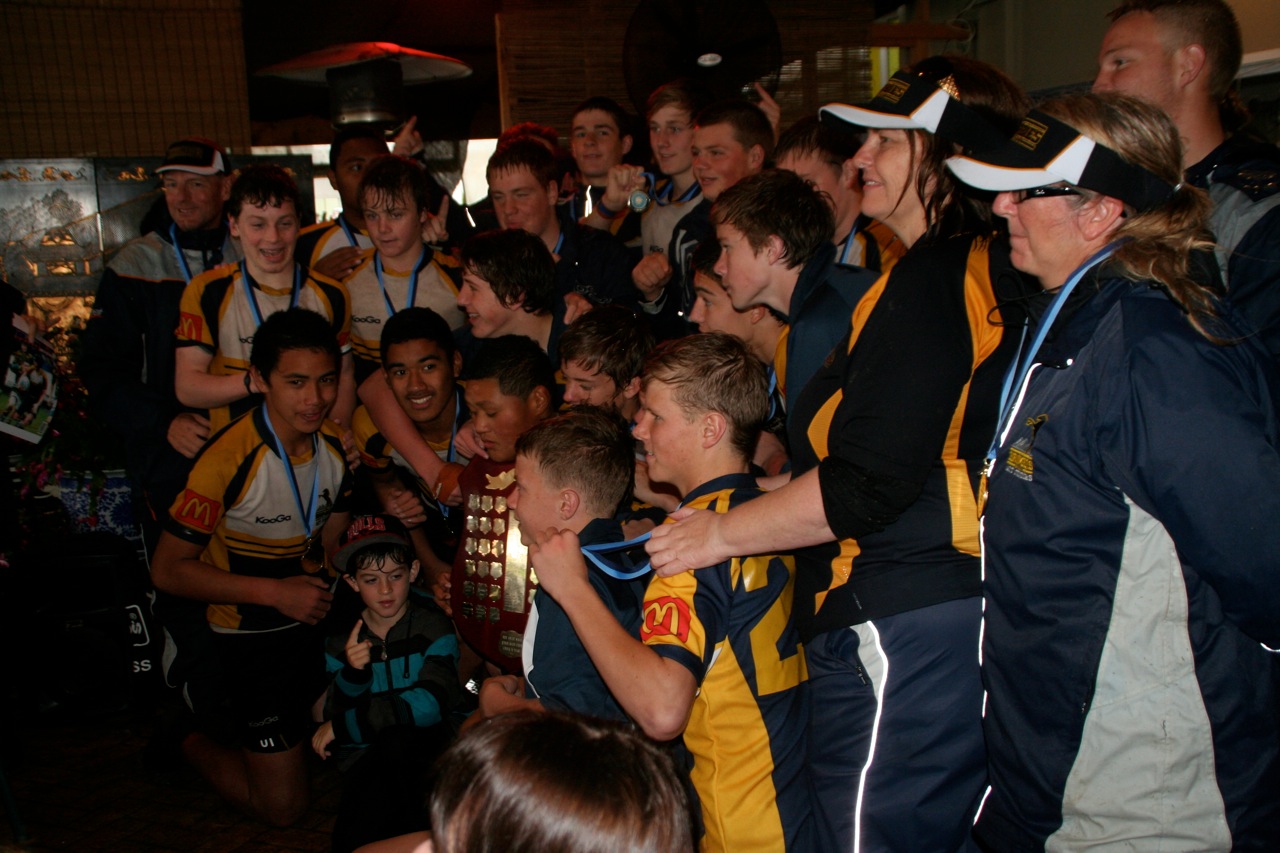
On the family front, June is always a busy birthday month for us. We celebrated Marcus’s birthday by watching him play for the Brumbies under 14s rep team at the NSW Junior Rugby Championships. They had a strong side and easily disposed of their opposition in the pool games. However, the finals were another story. The semi final was a bruising encounter as they played a Penrith side stacked full of boys twice as big as Marcus. At one point a boy, considerably bigger than me, cleared Marcus from the ruck by simply picking him up and throwing him out of the way!

The final was against a well-drilled Gordon side who were the reigning champions. It was played in torrential rain and the Brumbies toughed out an 8-5 victory to take the State Championship. We thoroughly enjoyed the weekend, staying with friends in Orange for the pool games (in beautiful sunshine) before heading to Sydney to play the final (in torrential rain). This worked well, as Marcus was able to enjoy a birthday dinner and an overnight stay with his grandparents as we passed through the Blue Mountains.

Grace’s world has been dominated by the school musical production of Footloose. They’ve spent this term learning parts and rehearsing for the public performances being held this week. Our whole family watched the show last night and thoroughly enjoyed it. Grace had a part that involved rollerskating (the old fashioned way) around a cafe on stage. It was great fun. Grace has also been counting down the days until she is able to get behind the wheel of a car. She picks up her learners permit this Monday and the fun begins!

Matt is home from uni this week, enjoying his mid-semester break. He had a tough start to the year, especially given all that we’ve had going on, but seems to have thoroughly settled back into things. His church in Sydney is a great encouragement and the ministry on campus continues to spur him on. He still enjoys surfing in Sydney, mainly at Maroubra, even in the winter months! As I write this he’s out for a 15km run, up and down Mt Ainslie, in training for a marathon in September. I wish I had that energy!

Luke and Sharon are doing well. Sharon’s still managing the new Kings Swim School near the airport. Luke continues his training in Physical Education and Maths teaching. They’re both busy at church, assisting with children’s and youth ministry and other things. We love having them nearby and appreciate their support and encouragement. Luke’s birthday was last week and the family enjoyed a night out listening to Nathan Tasker and his band. The music was great, but it was also encouraging to hear Nathan share how God had helped his wife and him to cope with the recent deaths of her father and their twin babies. There was a strong message of hope in the midst of great sorrow.

I’m very thankful for Fiona’s ongoing love and support, both personally and medically. This journey with cancer is often a tough one, and I probably don’t consider enough how it’s affecting my wife (or kids). Fiona’s the one who does most of the work keeping our home and family on track. She’s had a very busy term due to taking on an extra day relief doctoring at the Aboriginal Health Centre. She invests a lot into people and has laboured long and hard for a number of her patients. I think it’s been harder than usual lately, having to care for a few patients who are battling cancer. There’s a lot of emotion tied up with her work. Fiona also celebrated her birthday last week and we had a special dinner at a restaurant on Red Hill that has superb views of Canberra.

We’re looking forward to a couple of weeks away as a family in the school holidays. Friends have kindly offered their place on the Sunshine Coast in Queensland. We’re hoping to experience some warmth (please)! It’ll be good to enjoy some surf, maybe catch a few fish, visit some fun places, read a book or two, and generally relax together.

We continue to thank you for your support in this journey. Please keep asking God to heal me of the cancer and that our family will trust God in everything that comes our way.

May God bless you,

Dave

Telling the truth in your 80s

John Chapman is as bold as brass when it comes to telling the truth. He knows that when you’re 82 it’s not too smart to keep putting things off. Especially the things that really matter. Life’s too short. There’s no point in pretending. And certainly not with the people you deeply care about. So he just tells it like it is, and he gets away with it. Addressing a bunch of oldies in his retirement home he says…

I can see there are a lot of snow-capped mountains and barren peaks here today. Now put your hand up if you think you’ll be alive in 10 years … what about 5 years? … if you’re not right with God, and you’ve only got 3 years to go, wouldn’t you make that a high priority? I would, if I were you!

Chappo has been a follower of Jesus since his teens and he’s learned a great deal over the years. In a recent interview, at an AFES student workers conference, he shared at length about his experiences as a Christian. It’s a long interview (86 minutes) but it’s full of priceless gems of encouragement amidst his trademark story telling and humour. The topics cover such areas as being a Christian at school, connecting with people in country towns, his experiences with the 1959 Billy Graham crusade, how to become a better preacher, communicating about Jesus Christ on university campuses, getting organised with prayer, the struggles of growing old, why heaven will be so much better, and more.

A particular highlight for me was hearing about Chappo’s commitment to praying for other people. (It occurs between 54 and 60 minutes into the video.) He explained how 6 weeks of hospitalisation over Christmas gave him more opportunities to pray. He described his strategies for prayer that include his photographic prayer diary, his daily lists, his 9 day cycle, and his special prayers for people in need. He mentioned that he prays for his ‘oncology patient’ friends, including myself, each time he gets up to go to the toilet at night. I feel very privileged to be on this exclusive prayer list! Furthermore, Fiona and I were so encouraged to hear Chappo share how he also prays for our youngest son, and how they’ve been writing to each other and found this mutually encouraging. God bless you brother!

Do yourself a favour. Skip that meaningless forensic pathology television show, or that B grade multi-repeat movie, or that footy game you were planning to watch… and listen to Chappo get fired up about what’s really important. Click here to watch.

I can do all things through God who strengthens me

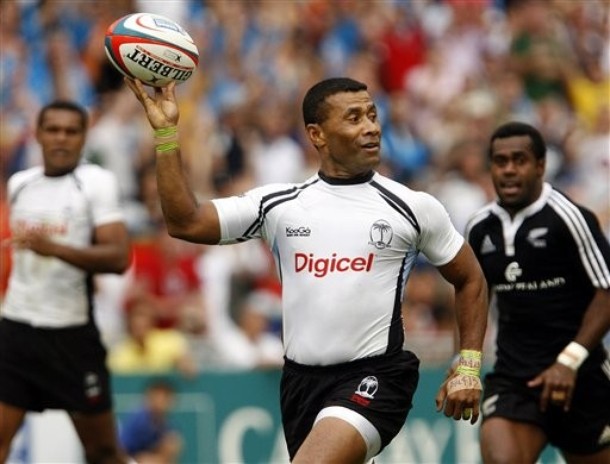
Waisale Serevi is arguably the greatest rugby 7s player ever. He represented Fiji from 1989 until 2007. This is an astonishing feat in a game that demands the utmost in speed, strength, stamina and skill. I remember the first time I noticed Serevi on television, as he had the words “Philippians 4:13” written (somewhere) on him. I understand he’d later have these words on his boots, strapping and jersey for every game. In fact, there are a number of high profile athletes who have taken to writing this reference on their arms or strapping, and some have even had them tattooed on their bodies. Joe Tomane, of the Brumbies and Wallabies, in a recent interview revealed that he has the whole text inked on his torso. It’s a verse from the Bible and this is what it says:

I can do everything through him who gives me strength.

What does it mean exactly? And what’s the appeal for athletes in particular? Is it saying that I can score more tries, kick more goals, lower my golf handicap, run faster times, improve my win/loss record, gain Olympic gold? Does it mean that with God’s help I can pull off anything I put my mind to? Are these words a recipe for success, reaching our dreams and achieving personal bests? And what’s the ‘everything’ spoken of in this verse?

As with any Bible reading, and all responsible reading in general, we need to take the words in their context. Someone once said that a text without a context is a pretext for a proof text. I just wanted to write that! Nobody likes having their words taken out of context and made to say something that they never intended. So let’s have a look at the verse in its context:

10 I rejoice greatly in the Lord that at last you have renewed your concern for me. Indeed, you have been concerned, but you had no opportunity to show it. 11 I am not saying this because I am in need, for I have learned to be content whatever the circumstances. 12 I know what it is to be in need, and I know what it is to have plenty. I have learned the secret of being content in any and every situation, whether well fed or hungry, whether living in plenty or in want.13 I can do everything through him who gives me strength.14 Yet it was good of you to share in my troubles. 15 Moreover, as you Philippians know, in the early days of your acquaintance with the gospel, when I set out from Macedonia, not one church shared with me in the matter of giving and receiving, except you only; 16 for even when I was in Thessalonica, you sent me aid again and again when I was in need. 17 Not that I am looking for a gift, but I am looking for what may be credited to your account. 18 I have received full payment and even more; I am amply supplied, now that I have received from Epaphroditus the gifts you sent. They are a fragrant offering, an acceptable sacrifice, pleasing to God. 19 And my God will meet all your needs according to his glorious riches in Christ Jesus. (Philippians 4:10-19)

We can see from its original context that the Apostle Paul is expressing his thanks to the Christians in Philippi for supporting him in his time of need. He thanks God for their gifts, not so much because he was in need but because it shows they have generous hearts. The immediate context is verse 12, where he reveals that he has learned the secret of contentment. He is able to be content in any and every situation.

The extraordinary thing is that Paul’s contentment is not contingent on his circumstances. His words are powerfully backed up by the fact that he’s in prison as he writes. He’s not waiting for good things to come his way. Winning Lotto won’t make him content. Having a supermodel wife won’t make him content. Winning the championship won’t make him content. Having his book published won’t make him content. He’s learned to be content even when he’s hungry, even when he’s abandoned, even when he’s imprisoned. How can this be? How can Paul find contentment even when things go pear-shaped? Here, in context, is his answer:

I can do everything through him who gives me strength.

Left to his own resources, Paul would be unsettled, dissatisfied, complaining, grumbling, miserable, and always wanting things to be different. In other words, he’d be like a lot of us – desperately hanging out for his circumstances to get better. Then we’d be content – or so we think. But for Paul contentment doesn’t come from his circumstances. Nor does it come from his inner strength, his resilience or his personal resources. It comes from the God who enables us to rise above our circumstances.

I’ve found these words to be a powerful challenge in the past week. I’ve been struggling with discontentment. The freezing cold here in Canberra. The frustration of having to back off the chemotherapy just as we see it further reducing the size of the cancer. The pain and discomfort in my feet preventing me from walking very far. The uncertainties about the future and my inability to make long-term plans. The grief of things lost and unfulfilled. Even the jealousy of having some of my close friends enjoying time in Darwin, instead of me! To be honest, I’ve been irritable, frustrated, depressed and generally discontented.

So what can I do? What should I do?

I should pray that God will strengthen me to learn the secret of contentment. That’s what I should do. That’s what I will do! I know the truth that contentment is not to be found by changing the circumstances. It comes from changing the heart. My prayer is that God will change my heart and help me to see things as he does. Knowing the secret of contentment rescues me from being self-obsessed. It frees me to love God, to love my wife and my children, to love my friends and others, even to love my ‘enemies’.

My prayer is that God will continually remind me of all that I have and all that I am in Christ Jesus, that he will strengthen me to be satisfied in him whatever my circumstances, and that he will teach me the secret of genuine contentment.

Why we need more churches

Late last year I was invited to speak at a conference on the topic Why we need more churches. It seemed a silly question really. Of course we need more churches. The population’s growing. We’re not keeping up. Denominations are dying. Church attendance is declining. Church buildings are being shut down or turned in restaurants, offices, trendy homes, and even funeral parlours.

But for me, it was and is a real issue. People confronted me with this question a number of times after hearing that we were moving to Darwin to plant a new church. Many were enthusiastic and supportive of our intentions, but others seemed to view it as invading their turf. Some denominational leaders said “We’ve already got churches up there.” One wrote to me and told me not to come because they had it covered. It was suggested we go somewhere else, where new churches were really needed. I met with one local pastor who warned me that the last thing they needed was people from ‘down south’ coming up and planting churches – despite the fact that he, and many other pastors I met, had done exactly this!

We faced the same issue in Canberra when deciding to plant a new church south of the lake. Some denominational leaders believed this would create a ‘competition’ with their churches. We were asked why people didn’t simply leave our church and join theirs, instead of starting another. It’s easy to get excited about new churches, until someone starts one in your neighbourhood.

Let me offer a number of practical reasons (with warnings) for why we need more churches, and then one theological reason.

Practical reasons why we need new churches

  1. Current churches are not effectively connecting with the Australian population. Some surveys suggest that 65% of Aussies don’t have a personal relationship with a Christian.
    We need to be careful here because we could increase the number of churches, remain in a religious ghetto, and still not connect with 65% of our population.
  2. Existing churches are perceived as irrelevant, out of date, oppressive, self-righteous, and a bunch of other things that keep people disinterested.
    It’s not ultimately perceptions or image that matters, but the reality of what is believed and practiced. It’s just as important for established churches to make an impact on people’s lives as it is for new ones. And who’s to say that new churches will be different? New churches could end up reproducing the problems of their founders.
  3. Someone once said of the church, “It’s easier to give birth than to raise the dead!” It’s true that some established churches will be harder to turn around than the Titanic, so maybe it’s better to leave them to sink and get people out into other boats.
    While this is often true, we shouldn’t cop out on the importance of revitalising wayward churches. I think it’s Mark Dever who has spoken of the 2 for 1 benefit of resurrecting dying churches. He sees it as both removing a bad witness in the community and adding a good witness. And it utilises existing resources.
  4. Geographical reach is an important strategic reason for planting new churches. While committed Christians might travel long distances to come to church, their neighbours or interested friends most likely won’t. This might lead to a city church giving birth to another congregation in a different part of the city, or a country church beginning a satellite church in a neighbouring town.
  5. Cultural reach is another driver for starting new churches. Some churches will never reach certain subcultures in their community. The language, dress, customs, activities of the church just alienate outsiders. Hence, a church might be planted to reach uni students, or an ethnic or language group, or mining workers, or some other group.
    While a church might be created to reach a certain demographic, the church needs to be open to anyone. It could begin with one type of people in mind, and discover the need to keep changing as it comes into contact with different people.
  6. Urban growth continues in some parts of Australia at a rapid rate. The number of churches is not keeping up proportionally with the size of the population. We can’t depend on town planners to allocate land or facilities for churches. We can’t assume denominations will add another franchise in the new housing development. Christians should see urban growth as creating new mission fields and the need for more churches tailored to connect with people in these centres.
  7. Of the many churches that exist, many seem to have lost the plot. They’re not what I’d call evangelical, that is grounded in the Bible and focused upon Jesus Christ – his offer of relationship with God and his call on people’s lives. Many churches have competing agendas or no apparent agenda at all. Some appear to be little more than middle-class religious clubs. Others are preoccupied with rituals and out-dated forms that veil the truth of the gospel. We need more churches that are teaching the Bible and proclaiming the good news of Jesus Christ.
    Mind you, the imperative is also to transform existing churches with God’s agenda.
  8. There’s a need to plant ‘church-planting-churches’. Very few churches in our country have planted daughter churches. Institutional thinking has left this to the denominations and it doesn’t always happen. If churches are planted with the DNA of planting more churches, then we create a multiplying (rather than simply adding) effect.
  9. Planting new churches re-energises people to serve. In large churches it’s easy for people to sit in the congregation and watch others do the work of ministry. The new group, or the core team for the new church, will easily see the needs and opportunities for ministry. There tends to be more urgency and importance placed on reaching out to others in new churches. Children’s workers, musicians, teachers, preachers, welcomers, carers, you name it – the new church needs them!
    The danger is that burnout often occurs. Many jobs are being filled by a few. The newly planted church needs to establish clear priorities and monitor people’s involvement carefully. Having lots of busy people doesn’t necessarily equal a healthy growing church.
  10. Planting new churches sharpens the vision for ministry. It requires people to ask the big questions of what are we doing, why, when, where and how? It forces people to get off the treadmill and set a deliberate course for the future.
    Once again, it’s important for existing churches to take stock and set a clear vision for their ministry. Planting a new church shouldn’t be seen as the easy alternative to making important changes in the existing one.
  11. It’s a good thing for the sending church. Planting a new church is always costly, so it helps the sending church to practice generosity. There’s a loss of people and relationships, money and resources, gifts and talents, vibe and comfort. If you’re the ones left behind it’s easy to feel like you’re the ones left behind! So we should see this as a fresh opportunity to grow and change, to step up and get involved, to refocus our vision, and to look toward planting again.

Theological reason why we need new churches

We could brainstorm and come up with dozens more practical reasons why it is important to keep planting new churches. And people already have! But the need for more churches isn’t essentially about pragmatics, strategy, analysis, or the latest trends. It’s not fundamentally needs driven.

There’s a deeper, broader, more profound, theological reason for why we need more churches. It’s at the core of the plans and purposes of God.

The church is at the heart of God’s design for humanity. We were created to belong to the church. It’s key to what it means to be truly human! Now all that might sound a bit weird, and you won’t find it taught in anthropology, psychology, sociology, or biology. You probably won’t even hear it taught in many churches. But it’s in the Bible and it needs to be taken seriously.

Take Ephesians 5, for example, a passage that gets preached at many weddings. It seems to be a passage about marriage, that gives instructions to husbands and wives. The Apostle Paul appeals to Genesis 2, man and woman in union together, as the foundation for marriage. But a careful reading shows something deeper going on…

31 “For this reason a man will leave his father and mother and be united to his wife, and the two will become one flesh.” 32 This is a profound mystery—but I am talking about Christ and the church.

The profound mystery isn’t the union of man and woman, it’s the union between Christ and his bride, the church. This is the core reality, the primary marriage. Humanity was created for union with Christ. That is, we were made to belong to Christ’s church and we experience this as we place our trust in Jesus Christ and respect his headship.

These ideas, introduced at the beginning of the Bible, find their climax and fulfilment at the end in Revelation 19…

Then I heard what sounded like a great multitude, like the roar of rushing waters and like loud peals of thunder, shouting:

“Hallelujah!
For our Lord God Almighty reigns.
Let us rejoice and be glad
and give him glory!
For the wedding of the Lamb has come,
and his bride has made herself ready.
Fine linen, bright and clean,
was given her to wear.”
(Fine linen stands for the righteous acts of the saints.)

Then the angel said to me, “Write: ‘Blessed are those who are invited to the wedding supper of the Lamb!’” And he added, “These are the true words of God.”

The ultimate event to participate in is the wedding between the Lamb, Jesus Christ, and his bride, the church. God is calling people to be ‘at one’ with his Son, our Lord and Saviour. This imagery highlights the extraordinary importance of being united to Jesus. This is what truly matters. This is the relationship we were made for. This is why the church is so important.

Of course, the church on view here is not St Blogs down the street, nor is it the denomination or institution. The church on view is the gathering of all who truly belong to Jesus Christ. This gathering finds its earthly expression as people give their lives to Jesus and meet together with others who have done the same.

It’s always been God’s plan to gather people to himself. His Son, the Messiah promised in the Old Testament, came to build his church. We see this in the climactic announcement about Jesus’ identity in Matthew 16…

13 When Jesus came to the region of Caesarea Philippi, he asked his disciples, “Who do people say the Son of Man is?”

14 They replied, “Some say John the Baptist; others say Elijah; and still others, Jeremiah or one of the prophets.”

15 “But what about you?” he asked. “Who do you say I am?”

16 Simon Peter answered, “You are the Christ, the Son of the living God.”

17 Jesus replied, “Blessed are you, Simon son of Jonah, for this was not revealed to you by man, but by my Father in heaven. 18 And I tell you that you are Peter, and on this rock I will build my church, and the gates of Hades will not overcome it. 19 I will give you the keys of the kingdom of heaven; whatever you bind on earth will be bound in heaven, and whatever you loose on earth will be loosed in heaven.” 20 Then he warned his disciples not to tell anyonethat he was the Christ.  (emphasis added)

Jesus is the promised Christ or Messiah (these words mean the same thing). He came to take on the Messiah’s job description, that is to build his church. Not an institution, not a building of bricks and mortar, not a local spiritual club – but a gathering of people, belonging to God for all eternity. The church is not a social construct. It comes from the heart of a merciful loving God.

Why do we need more churches? Fundamentally, because God is calling people to belong to the church of Jesus Christ. We’re not talking about structures, organisations, denominations, buildings or campuses. We’re talking about the church of God, union with Christ, people coming to grips with what it means to be truly human.

Humanly speaking, this will come about in many ways – denominational and non-denominational strategies, revitalising existing churches, transplanting congregations to reach new areas, pioneering mission to connect with new people groups, people speaking with their friends and family, church planting organisations equipping people to lead new churches, and more.

From God’s own perspective, this is a seriously costly project. Jesus went to the cross and died so as to bring people into his church. Growing the church required the ultimate sacrifice of Jesus Christ himself. The church is deeply precious to God. It’s his treasured possession and therefore needs to be handled with great care. We see Paul encouraging the leaders of the church in Ephesus to take this seriously…

Keep watch over yourselves and all the flock of which the Holy Spirit has made you overseers. Be shepherds of the church of God, which he bought with his own blood.  (Acts 20:28, emphasis added)

Planting churches will also mean leading churches. It’ll mean teaching and warning people, loving and caring for people, equipping and mobilising people, serving and encouraging people, praying for and giving to people. Planting new churches should never be seen as the ‘easy option’, nor should it be adopted as the latest fad strategy. It’s hard work. It’s a costly project. It can take a lifetime. It should be embraced with humility, relying on God’s strength, and going about it God’s way, because it comes from the heart of God himself.


Healing – medicine or miracles?

IMG_0877Everyone has an opinion on cancer. Since my diagnosis I’ve been given books and blogs and articles to read. Some are conservative and mainstream. Others are out there and adventurous. I’ve learned about surgery, chemotherapy, radiotherapy, phototherapy, herbal medicines, angiogenesis inhibitors, acupuncture, detox diets, and much more. It’s encouraging that research is advancing at a rapid rate and treatment options are available today that wouldn’t have been dreamed of a few years back. But it’s so confusing. There are so many voices. How do we know what’s best? How do we distinguish the quacks and the frauds from the progressive and informed? Do we just go with tried and tested or do we explore and experiment? I’m just grateful for my GP wife who is well equipped to ask the right questions and then translate the answers for me!

I’ve found something else disturbing, and it’s more theological than medical. A belief that treatment should be refused because it’s incompatible with faith in God. One man is refusing any treatment because his pastor has prayed for him and pronounced him to be healed. The problem is that he’s not healed. So what does he do? Conjure up faith that he really is healed, expecting his belief to eventually become reality? Or does he take the advice of family and friends and visit an oncologist?

The faith-healing movement has a lot to answer for. Promises of healing are sometimes presumptuous and dangerous. In some devastating cases people have died because they have refused simple, available, proven treatment options. I know of a number of people who’ve been left riddled with guilt because they (or their friends or relatives) have been promised healing if only they have enough faith. They’re rebuked for having hidden sin in their life. They’re criticised for having a weak faith or doubting God’s ability and willingness to heal. Sadly, this can become a self-fulfilling prophecy, leading people to doubt the goodness of God and the validity of their own faith.

The Bible describes God as the creator of heaven and earth. He sustains our every breath, knowing every detail of our bodies and minds. He is Ruler over all and not constrained in any way by our actions or beliefs, or our lack thereof. He is the Sovereign Lord who gives life and takes it away. He is the Healer who sometimes chooses to heal and other times does not. God works through our trials, struggle, sickness, and pain. He doesn’t promise to remove all suffering in this life, but he does promise to use it for our ultimate good. God has set a day when our healing will be full and complete, but this will be after our death and resurrection.

Ongoing illness needn’t be understood as a sign of personal sin or evidence of a lack of faith. It may simply be a part of God’s good purposes for our lives in this world of decay and death. Nor should we think that God’s ability or willingness to heal is in any way contingent on our faith. Jesus heals many people in the gospels without any mention of their faith. We mustn’t think that our faith is the trigger mechanism that activates God’s power to heal. God can do whatever he likes, with or without our help.

And what’s more, as creator and sustainer of all things, God can use whatever he chooses to bring healing to people. If someone is healed through chemotherapy, then we can thank God! He made the brilliant minds that have taken the products of his creation and applied them to fighting the cancer. If someone is healed through surgery, then we can thank God. He gave the skill to the surgeons, anaesthetists, and nurses. If someone is able to keep the cancer from growing or spreading by keeping to a strict diet, then we can thank God. How generous is God to provide ‘natural’ ways of combatting the cancer. If someone should be healed without any medical explanation and contrary to medical advice, then we should thank God. How merciful is our God, and how great beyond our understanding!

And if God chooses not to heal someone, but to take them home to himself, then we can thank God! We can thank him for our life! We can thank him for his kindness in giving us new life in Jesus Christ! We can thank him for his promise to rescue us from our decaying bodies and bringing us into a glorious future with him.

Healing – medicine or miracles? I really don’t mind. I’d love to be miraculously healed, and soon. I’d be thrilled to have chemo, or targeted drugs, or some other therapy succeed in eradicating all the cancer from my body. I’m very grateful that God has sustained me thus far and I look forward to many days, weeks, months and years ahead – God willing! But death awaits us all, one way or another, and I thank God most of all for the hope of the life to come.

Praise be to the God and Father of our Lord Jesus Christ! In his great mercy he has given us new birth into a living hope through the resurrection of Jesus Christ from the dead, and into an inheritance that can never perish, spoil or fade —kept in heaven for you, who through faith are shielded by God’s power until the coming of the salvation that is ready to be revealed in the last time. In this you greatly rejoice, though now for a little while you may have had to suffer grief in all kinds of trials. These have come so that your faith—of greater worth than gold, which perishes even though refined by fire —may be proved genuine and may result in praise, glory and honor when Jesus Christ is revealed. Though you have not seen him, you love him; and even though you do not see him now, you believe in him and are filled with an inexpressible and glorious joy, for you are receiving the goal of your faith, the salvation of your souls.  (1 Peter 1:3-9)

Silos, politics and turf wars

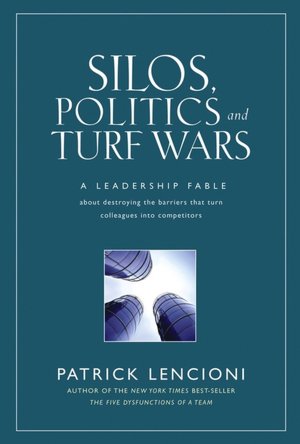
silosPatrick Lencioni is the guru of team work. His book, The Five Dysfunctions of a Team, is the place to begin. Then add Death by Meeting and Silos, Politics and Turf Wars and you’ve got an excellent tool kit for tuning up your team. This book is written primarily for executives in business who are seeking to align their organisations, departments and staff. I read it as the lead pastor of a church with multiple congregations, specialised ministries and a growing staff team. It helped me identify a number of areas that had been hampering our effectiveness as a team. The subtitle sums up its main message: about destroying the barriers that turn colleagues into competitors.

Our church would probably be considered mid to large on a scale of size and complexity for churches in Australia. We have three congregations meeting each Sunday (at one point we had four). There are forty to fifty small groups meeting throughout the week. We have children’s and youth ministries happening at various times and reaching around 250 young people. The church has sent and supports a number of home-grown missionaries. We provide staff and resources to university ministry on four local campuses. There are ten pastoral staff and seven ministry apprentices employed to work with the church and its associated ministries. All this means that we face many challenges in keeping people focused and cohesive as we pursue our mission together.

These challenges are experienced at a staff level with people on the team having different areas of responsibility. Some staff are deployed to work across multiple congregations, taking responsibility for connecting or growing or serving. Some have primary teaching/preaching responsibilities, whereas others work mainly with individuals and small groups. Some staff oversee teams on the different university campuses. One directs the youth ministry, another the children’s ministry, and another the ministry among international students. Some work from a church office, others work mainly from home, and a couple are most likely to be found in a coffee shop! It can be difficult getting everyone together, let alone working as a highly functioning team.

When it comes to team meetings that are working on church issues, it’s easy for the campus ministry staff to feel disconnected. If we spend time planning or reviewing the kid’s ministry, it might seem entirely unrelated to needs of the international student ministry. Different departments of the church can end up in competition for attention, people, budgets and resources. It’s easy to feel like my area is the most important and to resent the time wasted engaging with others’ concerns. Silos can arise in any organisation and growing churches are not immune. Sadly, divisions are far too common in churches. They can be found among staff and other leaders, and sometimes they can polarise whole congregations against each another. It’s so tempting to focus on ourselves and our areas of responsibility, and to forget that the church is called to a unity of people and purpose.

Silos, Politics and Turf Wars is full of practical wisdom for getting people and organisations together on the same page, supporting one another, sharing our problems, and celebrating our various successes and achievements. Lencioni offers a model for combating silos, consisting of four components:

  • A thematic goal
  • A set of defining objectives
  • A set of ongoing standard operating objectives
  • Metrics

Lencioni argues that determining the thematic goal is the key to aligning the organisation and its people. He defines this as a single, qualitative focus that is shared by the entire leadership team – and ultimately the entire organisation – and that applies for only a specified time period. (p178) This is different from a long-term vision, a five year plan or a ‘Big Hairy Audacious Goal’. It’s designed to focus the organisation over the next six to twelve months and provide clarity about what’s most important on the agenda over this period.

There should only be one thematic goal. If everything is considered equally important, then nothing ends up being important. However, the thematic goal needs to be broken down into a number of actionable defining objectives. These are the building blocks that clarify what is meant by the thematic goal. Everyone needs to be committed to these objectives, regardless of the role they have within the organisation.

The standard operating objectives are different. These are the objectives that don’t go away from period to period. These are the things the organisation needs to keep monitoring regardless of the current thematic goal. Depending on the business, these might include such topics as revenue, expenses, customer relations and so on. These aren’t the type of things to rally the organisation around, but they do require constant attention.

Once the thematic goal, the defining objectives, and the standard operating objectives have been established, it will now be important to measure progress. The leadership team will need to establish appropriate metrics.

Lencioni includes a number of fictional, but realistic, case studies at the back of his book. One of these case studies depicts a church and I will reproduce it (with modifications) to demonstrate how this model might work in practice. Don’t judge the details, but simply consider the illustration!

Situation:
Attendance at weekly services is up. More and more people are coming each week. The building size is limiting further growth. Regular giving is increasing. Many new people are not in small groups or serving in the life of the church.

Thematic goal:
Expand to enable healthy continued growth.

Defining objectives:
Add another Sunday service.
Offer more small groups.
Train more leaders for groups and other ministries.
Develop an integration process to assist newcomers into groups and ministry areas.
Add another member of staff.

Time frame:
One year.

Standard operating objectives:
Maintain attendance growth.
Maintain quality follow-up of all newcomers.

Maintain quality of Sunday services.
Maintain regular giving.
Increase numbers of people in small groups.
Maintain support and equipping for all leaders.

If you’re part of a growing organisation, and things are becoming more complex, and you’re keen to ensure people are clear on their roles and working as a team, then I expect you’ll find this a useful book. I recommend that you read The Five Dysfunctions of a Team before you read this one, because it’s more foundational and you’ll discover that they complement each other nicely. Like most of Lencioni’s books this is written as a ‘leadership fable’ so it’s very easy to read and the points are clearly summarised in the final section.

An open letter to Sam Harris

Dear Mr Harris

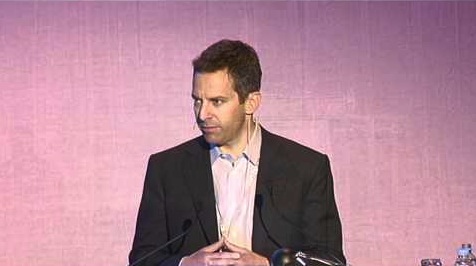
samharrisI was encouraged by a friend to watch your lecture on Death and the Present Moment at the recent Global Atheist Convention in Melbourne. Your topic is very close to home for me, as I’ve been battling a stage 4 adenocarcinoma of the lung for the past 6 months. I understand it was also especially pertinent for you, and many in your audience, following the death of your good friend, Christopher Hitchens. Your lecture has provoked me to consider a number of issues and to write a few words in response.

For me, the most provocative words in your talk were the following:

Atheism appears to be a death cult, because we are the only people who admit that death is real.

When I heard these words, I had to stop and hit replay. You didn’t really say that, did you? Surely, this is hyperbole for the sake of impact! I’m a theist, not an atheist, and I firmly believe in the reality of death. I’ve visited morgues, been on the scene at fatal accidents, attended funerals, and sat beside lifeless bodies in the hospital. Strangers, friends, and family. No breath, no movement, no heartbeat, no consciousness, no life. I’m not an atheist and yet I affirm that death is very very real. It seems bizarre to claim otherwise.

I suspect it’s what you call the ‘gospel of atheism’ – that nothing happens after death – that’s really at issue here. You admit that atheism doesn’t offer real consolation in the face of death and you claim that religion creates a fictional hope, that’s really no hope at all. Thus, while people might feel better that their deceased daughter is ‘now with Jesus’, you don’t believe they have any reason to believe. I think this is a question worth putting on the table and exploring:

Is there, or is there not, any reasonable evidence for life after death?

There may be a number of ways to answer this question, but it would appear to me that a fruitful starting place is the Christian claim that Jesus, the first century carpenter, died and subsequently rose from the dead. I’d start here because Christians base everything on this being true. The claims that Jesus’ body was no longer in the tomb and that he had been seen alive are foundational to Christian beliefs. Scrutinise them, consider the explanations, explore the alternatives, look at the impact on people at the time. Evaluate the counter claims, conspiracy theories, tampering of documents, and challenge the evidence. Public scrutiny and debate are a good thing if they’ll help us get to the truth of the matter.

You also seem to assume that religion is all about faith, whereas atheism is all about reason. This assumption needs to be challenged. They’re not opposing pairs. Faith can be based on reason. I’d say that good faith must be based on good reasons. Let me illustrate. I have faith that my wife loves me. Why? Because there is good evidence that this is so. I sit on a chair, showing my faith in the chair to hold my weight, only because it is reasonable. I take a step of faith (trust, dependence, practical belief) because there are good reasons to exercise that faith. Dare I say it, atheism is a step of faith – faith that there is no God and no life after death – based on reasons. What is needed is a non-bigoted, open-mindedness to examine and evaluate the reasons for the faith(s).

There is something else that bothered me about your lecture. You seem to divide the world into two belief systems: atheism and religion. This seems reductionist, disingenuous, and deceptive. It is not meaningful to lump together Muslims and Hindus as being the same. They’re both ‘religious’ and they’re both ‘not atheists’, but one believes in only one God and the other believes in many Gods. In fact, you could group Buddhism and Atheism together as ‘non-theism’ and contrast them with Judaism and Islam as ‘theism’. My point is that speaking of ‘religion in contrast to atheism’ simply muddies the waters. It would be much more productive to evaluate the particular claims of different religions alongside the particular claims of atheism.

I’d like to finish with an observation that you made about people. You intended it as a critique of atheists, and I’d like to claim it as a critique for many Christians also. These are your words:

We spend much of life tacitly presuming we’ll live for ever.

Death is the clearest evidence that life is finite and yet we live as though it isn’t so. You remind us that we waste a lot of time on trivia when things are ‘normal’. Why else would we watch that hopeless movie for the fourth time?! We care about the wrong things. We regret the things we’ve spent time caring about. You call us to live in the moment. You invite us to explore what’s really worth having and doing. I’m persuaded that the answers to these questions are to be found in knowing God and enjoying the life that God gives us, not by dismissing God and reconstructing a world without him.

The death and resurrection of Jesus is evidence to me of what lies ahead. These events in history provide the reasons for my faith. They explain why I’m not religious. That is, I’m someone who has discovered good reasons to put my faith in Jesus, rather than trying to earn my place in heaven (in contrast to many other religions). However, my assurance of a real life beyond death, doesn’t lead me to complacency, but to a renewed urgency and purpose in life here and now. Sometimes I can drift along as though this is not the case, as can we all, so thank you for bringing me to attention once again!

Sincerely,

Dave McDonald

Journey with cancer 6 June 2012 – the good, the bad and the ugly

Dear family and friends

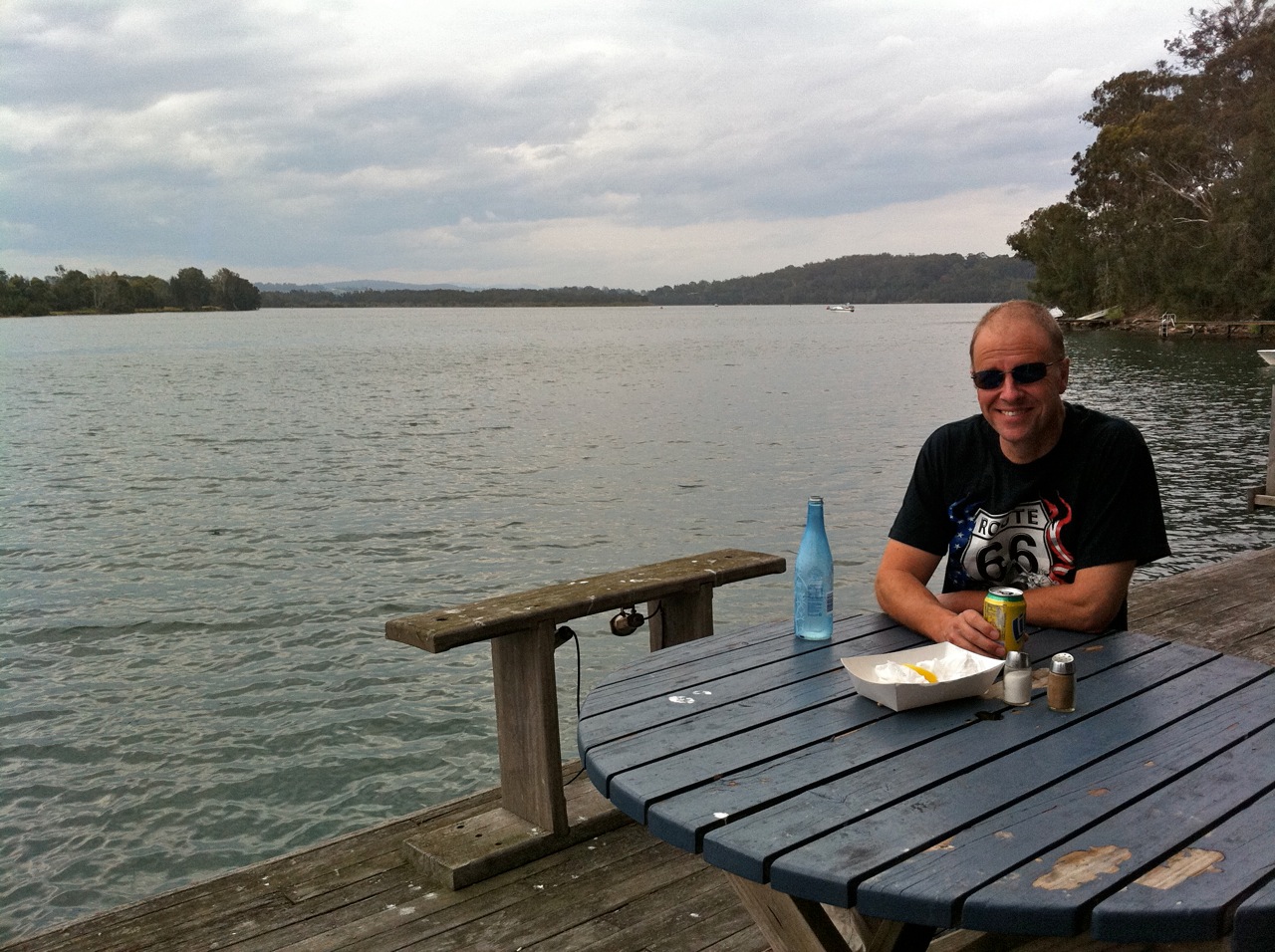
feetI’m sitting on my favourite bed, in my favourite room, writing to my favourite people! We’ve just got home from another visit to our oncologist. These are always anxious times and I tend to get fairly stressed around each visit. We were keen to learn about the results of my CT scan on Monday and to talk about what happens next. I’d been feeling more unwell than usual over the past week and we had a few questions to ask.

The good news is that the primary lung cancer has continued to reduce in size. This is a cause for rejoicing and I thank God for the positive benefits of the chemo. The shrinkage is unexpected, given that I’ve been on a maintenance chemo program and we were simply hoping to keep things in check. Six months ago the tumour was 26mm in diameter and it’s now shrunk to only 12mm. It makes me wonder if it can’t keep getting smaller until it vanishes altogether! However, the oncologist doesn’t see this happening and there are other factors involved. Seems bizarre to be held to ransom by something the size of a marble!

The bad news is that there is now clearer evidence of metastases. The cancer isn’t all in one place. Nothing new since the last scans, but evidence of the spread of cancer nonetheless. It would be so good if all the cancer was contained in the one tumour and all they needed to do was operate. Just cut it out! No more cancer! Clean bill of health! Sadly, this isn’t my story. Chemotherapy is designed to attack the cancer wherever it pops up, even in the places you can’t see, and thankfully it seems to have been doing it’s job pretty well.

This brings me to the ugly. Chemo has it’s side-effects and they can be pretty nasty. I’ve catalogued the various symptoms previously. Nausea, constipation, aching, skin rashes, lethargy, and so on, are all pretty standard. At least I’ve got my hair! But, I’ve begun to experience another effect that we need to take seriously… peripheral neuropathy. I get a burning sensation on the soles of my feet and palms of my hands, and it’s been getting worse in the last week or so. It’s a bit like pins and needles and makes my feet and hands feel tingly, hot and heavy. I walked into town the other day and had so much pain in my feet that I considered getting a taxi home. It’s been very concerning because walking is the easiest exercise for me to keep up.

While not a common side effect from my treatment, some patients do experience neuropathy in varying degrees. If ignored, it can leave severe and lasting damage. It’s resulted in some people becoming housebound or confined to a wheelchair.

Our oncologist is concerned by my symptoms and he’s recommended we cease the chemotherapy for a couple of cycles to see if the neuropathy improves. This will mean dropping Alimta, but continuing with the Avastin (which is not a chemo drug). I’m learning more and more that my treatment is a balancing act. You get wins in one area while accepting losses in another. I just want a lot more wins than losses! I’d love to keep charging on, bashing the cancer as hard as I can cope with, but it seems that I’ve found one of my limits already.

If you’re one who prays, then please speak to God about me over the next few weeks. We’d love the respite in chemo to clear up any symptoms of neuropathy AND we don’t want the cancer to grow or spread in this period. I hope this isn’t too much to ask for!

Thank you again for your support and for sharing this journey with us,

With love, Dave (and Fiona)

Journey with cancer 4 June 2012 – a chemo sandwich

It’s now six months since I was diagnosed with cancer. It feels like a landmark of some kind! The good news is I’m alive. The bad news is I sometimes don’t feel like it. Life has become a ‘chemo-sandwich’. I go into hospital and get poisoned, spend three weeks recovering, and then I do it all over again. The challenge is to put some nice stuff into the middle of the sandwich.

Here are some of the enjoyable bits I’ve found in my sandwiches…

  • Going for walks with my wife
  • Being invited out for a meal
  • Reading some good books
  • Sitting on the swing in the backyard, soaking up the sunshine
  • Having a family golf day
  • Sharing coffee with friends
  • Going for walks with the dog
  • Cheering on the Brumbies
  • Preaching at church
  • 10pin bowling with my boys
  • Learning to write (blog posts)
  • Chatting over lunch with friends
  • Catching a couple of fish
  • Visiting the Harley Davidson shop, and dreaming
  • Having a good cry
  • Buying myself a down-filled jacket
  • Going for walks with friends
  • Reading through 2 Corinthians
  • Having friends come to visit
  • Planning a holiday in Queensland
  • Walking the Relay for Life with my family
  • Playing Words with Friends with friends
  • Going out to dinner
  • Staying at home in front of the fire
  • Going for walks on my own
  • Drinking ginger beer
  • Being inspired by others who are also doing it tough
  • Learning more and more what it means to trust God in all things

Thank you once again for sharing our journey. 🙂

If I were God I’d make myself clearer

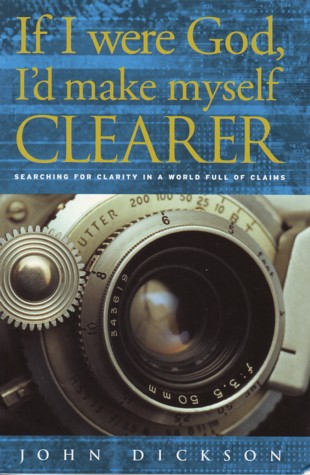
ClearerIf I were God I’d make myself clearer. That’s a big call! Way too big for me. But I can understand the sentiment. Why doesn’t God simply prove beyond all reasonable doubt that he exists? Once and for all. No questions. No ambiguities. No contradictory evidence. Just clear, obvious, proof.

I guess the obvious question is, what would such clarity look like? What would I consider persuasive? What would it take for you to be convinced of the existence of God? And then, which God are we talking about? There are so many religions, so many claims about God, how can we possibly know which is the right one, if any of them are?

In this little book, John Dickson takes us on a pathway through the maze of ideas about God. It’s been popular for years to argue that all beliefs are really different paths to the same end. This could be for a couple of reasons. Firstly, so much blood has been spilled through religious conflict, that there seems nothing to be gained by highlighting differences that could cause more conflict. Secondly, sorting out the differences takes research, time and effort, and not many people are prepared to do this. It’s easier to stay preoccupied with trivia.

John demonstrates that religious pluralism has obvious and fatal flaws. How can Hinduism and Buddhism possibly both be true expressions of reality. Hinduism has many gods, while classical Buddhism rejects the notion of any god. Christianity believes that people are saved by the mercy and grace of God, whereas Islam argues that people are saved through ethical and ritual obedience. Christianity claims that Jesus is the Messiah who fulfils the promises made to Israel, and yet Israel still awaits a Messiah. The Koran claims that Jesus was neither crucified or resurrected, while Christianity hangs everything on these events. A quick assessment of these claims highlights the bankruptcy of pluralism. It could be that none of these religions are true, but there is no way they can each be true.

This is a scary prospect in a world committed to tolerance. However, John offers us a better understanding of tolerance.

True tolerance, then, is not my willingness to accept the position of another, it is the more admirable ability to treat with respect a person with whom I deeply disagree. A tolerant Muslim, for instance, is not one who accepts as valid the Buddhist doctrine of ‘birth and rebirth’, it is one who, while rejecting such a teaching, is able to remain respectful and compassionate toward Buddhists themselves. Again, the tolerant Christian is not one who accepts as valid the Hindu claim that there are many gods, it is the one who, while denying polytheism, is able to treat Hindus with the honour due to them as fellow members of the human race. In each case there is an informed awareness of the contrary position of the other and a generous commitment to respect and value the person who holds that position.  (p38-39)

Such an understanding of tolerance opens the way through the maze of ideas. We can be intellectually rigorous and culturally sensitive in a way that overcomes bigotry and discrimination. We don’t have to paint over differences but can be freed to respectfully discuss, and argue, and explore and persuade one another.

This book argues that Christianity is to a large extent a ‘verifiable’ religion. This is not to say that it’s true, but that it’s founded upon public, historical, evidence. It makes claims that can be tested through historical, archeological, literary, and critical scrutiny. The implications of this are important. If none of the places, dates, names or events pertinent to Christianity could be attested anywhere else, there would be good grounds for being suspicious as to it’s truth claims. If it could be demonstrated that Jesus never lived, was not crucified, or did not rise from the dead, then Christianity could hardly be trusted as the way to God. As it is, Christianity makes some dangerously verifiable claims and invites people to check them out. No tricks or mirrors – just open investigation. This is a book that invites such scrutiny.

The heart of the evidence for Christianity lies in the documents of the New Testament, much of which were written shortly after the events they describe. Consider, for example, the following incident recorded in the Book of Acts. In AD 50 the city of Athens in ancient Greece was a melting pot of ideas. All kinds of claims were made about religion, and there were many ‘gods’ being promoted. Into this confusion, the Apostle Paul sought to bring some clarity by directing people to the evidence concerning Jesus. You can read what he said and the reaction it evoked…

22 Paul then stood up in the meeting of the Areopagus and said: “Men of Athens! I see that in every way you are very religious. 23 For as I walked around and looked carefully at your objects of worship, I even found an altar with this inscription: to an unknown god. Now what you worship as something unknown I am going to proclaim to you.

24 “The God who made the world and everything in it is the Lord of heaven and earth and does not live in temples built by hands. 25 And he is not served by human hands, as if he needed anything, because he himself gives all men life and breath and everything else.26 From one man he made every nation of men, that they should inhabit the whole earth; and he determined the times set for them and the exact places where they should live.27 God did this so that men would seek him and perhaps reach out for him and find him, though he is not far from each one of us. 28 ‘For in him we live and move and have our being.’ As some of your own poets have said, ‘We are his offspring.’

29 “Therefore since we are God’s offspring, we should not think that the divine being is like gold or silver or stone—an image made by man’s design and skill. 30 In the past God overlooked such ignorance, but now he commands all people everywhere to repent. 31 For he has set a day when he will judge the world with justice by the man he has appointed. He has given proof of this to all men by raising him from the dead.”

32 When they heard about the resurrection of the dead, some of them sneered, but others said, “We want to hear you again on this subject.” 33 At that, Paul left the Council. 34 A few men became followers of Paul and believed. Among them was Dionysius, a member of the Areopagus, also a woman named Damaris, and a number of others.  (Acts 17:22-34)

Some sneered, some followed, and others were keen to find out more. If you’d like to find out more, this little book by John Dickson will help point you in the right direction.