
 Dear Rugby Australia
I see a window of hope for our great game. It will take some humble pie. A decision or two will need to be reversed. But you have an opportunity to make rugby great again.
I love rugby. I love the Wallabies. I’ve held the Bledisloe Cup in my hands. I love the Brumbies. I’ve drunk from the 2004 Super 12 trophy. I love local rugby, standing in the driving rain, the sleet, the mud, and the heat, watching my boys compete with all their hearts. I’ve cheered Aussie rugby from my lounge room, the stands, the sidelines, the change room, in Australia and overseas. I’ve supported rugby and rugby has been my reward.
That is why, Rugby Australia, you are breaking my heart. I listen to so many who say they’ve had enough. They don’t care anymore. The politics, the ignorance, the mismanagement, the bullying, the elitism—they’ve had enough. And what can I say? They’ve got a point. But I won’t give up. In fact, I see a window of hope.
 Rugby Australia, you have made a mess of things, but there is still hope. You just need to own up to a few things. It has been reported today that Israel Folau wants to play rugby for Australia again, and he is willing to allow vetting of his social media posts. He is also willing to seek expert guidance on using social media to express his Christian views. Rugby Australia, there is your window. Don’t miss it. Offer an olive branch now. Do it now before rugby league gets the jump. Do it now before he signs overseas. Do it now before our best player misses the World Cup. Do it now because you can and it is the right thing to do.
Be honest. You have made things far worse than they needed to be. You have made a mountain out of a molehill. Israel was writing to those who chose to follow him on social media. They chose. They knew Izzy. They knew what he believes. It’s never been a secret. And they chose to follow him anyway. What is more, you know it wasn’t hate speech. It was a warning based on what he believes is the truth and it was motivated by love. You’ve seen enough hate speech to know the difference.
Rugby Australia, you didn’t handle things well. For years you’ve been saying we need to respect our players. All of them. Together with the Rugby Union Players Association, you have provided chaplains, cultural liaison workers, welfare workers and more. Orientation camps for players have included important pieces on the cultural, family, and religious convictions of our Pacific Islanders especially. Now you heavy-handedly ignore them. Wouldn’t it have been wiser to consult with cultural and religious experts, to seek to gain insight and understanding, to work toward future agreement, to learn from the misunderstanding to create a better outcome for all? But you rushed in like a bully in a china shop.
When Andy Friend was the coach of the Brumbies, he once surveyed all his players to discover the most influential people in their lives. A significant number of the players put Jesus Christ, or the Lord, or God as number one. I suspect this result would have been repeated in many of the teams across Australia, New Zealand, and South Africa. Most of the players who gave these responses were Polynesian. So, what did Andy do? He saw an opportunity to respect his players and further their development. He asked the chaplain to work with him to understand his players better, and to determine how he could support them in their beliefs. He explored how to enable players to live out their beliefs when at home and when on tour. We could do with a lot more of this kind of emotional intelligence among the leaders in our game.
Rugby Australia, you are alienating so much of your player base and your supporter base. Where would we be without our Polynesian brothers and sisters? Where would we be without our Catholic, Anglican, and other church school teams? If you are going to lead rugby into the future in Australia, then you need to get back in touch, and there is still time. Please, do it now.
You have painted Izzy into a corner. You demanded that he take down a post. That seems reasonable, but you haven’t attempted to walk in his shoes. Why would he be open to having all future posts vetted, but not take down an existing one? Have you thought about that? Have you asked him? Could it be that he sees you asking him to deny his beliefs? Please, lighten up a bit. The nature of social media posts is they are quickly buried and forgotten.
Look to the future, not to the past. Take the opportunity to forge a new future for religious and cultural liaison in rugby. Lead well. Show some grace. Be the sport that unites rather than divides.
Rugby Australia, I plead with you. Do the right thing. Give Israel Folau another chance. Take this window of opportunity to reconnect with Israel and work together for the future of our sport. I, for one, will respect you deeply if you do.
Dave McDonald
National Director, FIEC
Salt Community Church Pastor, Bonny Hills, NSW
Brumbies Chaplain 2003-2017
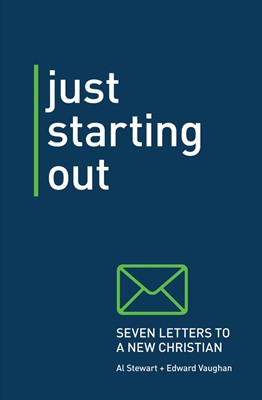 There aren’t too many books you can read, cover to cover, on a flight between Port Macquarie and Sydney, but Just Starting Out: Seven Letters to a New Christian by Al Stewart and Ed Vaughan is one. It’s short, pithy, punchy, and well worth the read. The book has been written for someone who has just become a Christian, to introduce them to some of the basics of the Christian life. They’ve chosen seven topics:
 Independent churches lack accountability! I’ve been told this for the past 24 years. And it’s true. Independent churches often lack accountability, but so do mainstream denominational churches. You only need to look at the terrifying accounts of greed, sexual immorality, false teaching, abuse, and cover ups within churches, to see the failures of our structures to ensure accountability.
 In 1968 my grandparents gave me my first Bible. It was a Revised Standard Version. In 1974, I began high school and we were all given a copy of the New English Translation. At university I discovered that everyone had copies of the New International Version so, of course, I bought one too. A decade or so back, most of my tribe jumped on board with the English Standard Version, and I began reading and preaching from this translation. And now there’s a new version of the New International Version to replace the one I loved for so long that’s now fallen apart. This is probably the version that I read the most. More recently, people have proclaimed the merits of the Christian Standard Bible, so I’ve been reading one of those too.
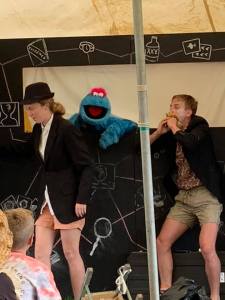 So goes the name of the beach mission facebook group I joined this summer. Actually, I joined more than a facebook group—Fiona and I joined the team at Old Bar with our son, Marcus. It had been 30 years since we’d last been on a beach mission as team members. This time at Old Bar and previously at Lake Tabourie. I figured I was joining the team so as to hang out with family, but it turned out to be a great way to start 2019. It was more helpful to me than I imagined.
 I have a first hand, hands on, deep connection to this matter. Our little girl wasn’t due until 7th January, but she arrived early on 1st October. Do the maths. That’s early. Very very early. More than 14 weeks early. We visited our beautiful girl every single day, sometimes 3 or 4 times, for 97 days in the NICU. We stood by her as she took one step forward and two steps back. We agonised over every setback and rejoiced at every advance. We put life on hold for her. We prayed for her. So many others prayed for her. A treasured daughter, sister, granddaughter, child of God. We watched her grow, develop and mature, day by day, until the day she was due. We had the privilege of seeing what is normally kept hidden—a perfect, precious, baby growing outside instead of inside the womb.
 It’s December 2nd—my seventh anniversary since diagnosis. Wow! A few tears fill my eyes. This is real. And it was never going to be. Life was over. It was all downhill. There was no hope. Expectations were gone. And then…
 Do you have a message to share? Is it the kind of word that puts fire in your belly? Do you wake up early wanting to spread this news to others? Is it unthinkable that you would keep it to yourself? I’m interested in the things that drive us, the messages that inspire us, and the passions that lead us to speak.
 Waste your Sundays? Dabble in religion? Make God happy? No. No. No. If you don’t go to church, then there are far better reasons than these to consider. Church is intended to be a gathering of Christian people and people who want to check out what being a Christian is really all about. Ideally, you will meet real people who’ve become convinced that knowing God and having a genuine relationship with Jesus is the most significant thing there is. They will engage on real issues in a real way. It might even surprise you. You could find your life changed in a positive way for ever. Many have.
 A few years back, having read Simple Church by Gieger and Rainer, we decided to align our church mission around CGS2 (though we never reduced it to CGS2). Connect, Grow, Serve, To the glory of God—that was our plan. Our church existed to build connections—connections into our community, connection with God through people responding to the gospel of Jesus, and connections with one another through regular fellowship. We existed to grow in spiritual maturity—through people responding to God’s word, coming before God in prayer, building one another in small groups, and applying the word in their lives. We existed to serve one another—to take the corporate and ‘one another’ language of the New Testament seriously, by actively investing in each other, serving the church in specific ministry teams, and reaching out to love our neighbours. And we wanted to do all this 2 the glory of God—not to us O Lord, not to us, but to you, be the glory forever and ever.
 When I was asked if I’d like to join ‘fight club’ at 5.45am on Wednesdays I was curious for more than one reason. What do they do at fight club? And why is it so important? And what would make them think I could get there if I wanted to? Now I know the number one rule of fight club is you don’t talk about fight club—but I’m going to break it, slightly. For years now, a few blokes have met every week, rain, hail, dark or shine, to pray. That’s right, to pray! To ask God to make a difference. To tune into the creator and sustainer of this universe. To ask their Father in heaven to make a positive impact in the lives of others.
 Are you at risk of having your whole life tied up with Christians so that you have no real engagement with anyone else? Does your week revolve around church meetings and activities? Does your sport, education, recreation, entertainment, socialising, music, and media all take place in a Christian bubble?
 True love doesn’t start with us—it starts with God. God doesn’t love us because we’re loveable, or deserving, or especially worthwhile. He loves us because he is love. He loves us despite who we are and what we’re like. He loves us at great personal cost. God’s love is passionate—it shows itself in the passion of the Christ, on Good Friday, with Jesus taking the punishment of death in my place.
 Being a Small Group Leader is a new book written by Richard Sweatman. Richard oversees the small group ministry program at Hunter Bible Church in Newcastle. He’s been using this material to clarify expectations of leaders in their church for a number of years. Now Matthias Media are making it available to a wider audience.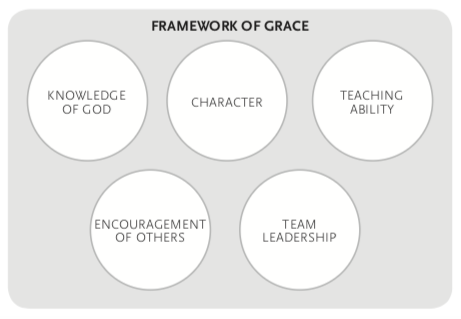
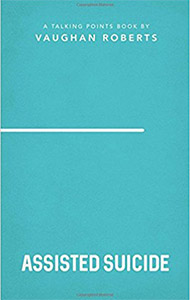 This book was hard to read. It wasn’t difficult to understand or even poorly written. In fact, it was clear, logical, and helpful. I found it hard because the subject matter is personal, heart wrenching, and has at times been too close to the bone. It brought to mind a conversation in our home a few years back. A friend was arguing that not only should voluntary euthanasia be legalised, but that doctors should be legally bound to offer it when asked. My wife, being a doctor, was horrified by the thought. Whatever happened to the Hippocratic oath? And I, being a terminally ill cancer patient, wasn’t feeling too comfortable with the intensity or insensitivity of the conversation either! And I still find this book a difficult topic to wrap my mind and heart around.
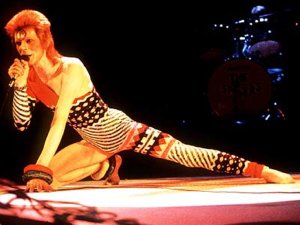 My introduction to ‘transgender’ ideas took place in 1974, when I sat watching David Bowie on ‘GTK’ on our TV. My first album was The Rise and Fall of Ziggy Stardust and the Spiders from Mars. It’s still one of my go to and favourite albums to this day! But it was the appearance of Bowie that messed with my head. It was hard for me as a 12 year old to look at this man. Was he man or was he woman? What did it mean to be somewhere in between? I felt uncomfortable with the image, but I loved the music. It wasn’t really transgender, but it made me feel that something was askew.
 And there was Lou Reed with his mascara, high heels, stockings and the seedy haunting lyrics of Take a Walk on the Wide Side with Holly, Candy, Little Joe and the others. Like most people, I sang along: ‘Doo doo doo doo doo doo doo doo doo doo doo doo doo doo doo doo doo doo…’ Impossible not to, really! ‘Hey, babe, take a walk on the wild side’. I find myself singing along today when I hear this song. Why would I be singing along to a song about transvestite prostitution? A disturbing fact of music is that it sticks in your head, even when the lyrics might be distasteful. (Just ask any parent or grandparent who has heard the Baby Shark song—don’t kill me for mentioning it.) Why would I be singing along to a song about transvestite prostitution?
 Transgender: A Talking Points Book by Vaughan Roberts is a users guide to transgender from the perspective of an intelligent, sympathetic, well-researched Christian writer. The Talking Points series of books is particularly designed to encourage Christians to understand today’s big issues with a view to encouraging meaningful, gracious, and intelligent discussion on a range of ethical matters. Tim Thornborough, the series editor, writes:
 Over the weekend Bonny Hills, where we live, was filled with people and festivities. Saturday featured the Back to Bonny’s community events with market stalls, historical displays, music, dancing, surf carnivals, a gala dinner, and more. Sunday saw another lesser-known event passing through our village. A crazy event really—the Beach to Brother Marathon.
