
 It’s some time since I’ve been out in big surf. I don’t trust myself anymore. I’m certainly not as young or fit as I like to think I was. But there have been times in the past when I’ve been dumped by large waves, tossed and turned, struggling to find my way to the surface, desperate for air, wondering if I was going to drown.
Life can be like that. We can feel so tumbled and turned that we don’t know which way is up and which way down. It’s all too hard, too scary. Crises have the capacity to disorient and destabilise. Where do we turn when our world is falling apart around us, when the ground is shifting under us, when the sky is falling in on us?
James, in the New Testament, writes to his Christian brothers and sisters, calling them to have a joyful outlook as they face their fears. A nice thought, but when the trials come, that might well be the last thought to enter our minds. The darkness closes in and we struggle to find a glimmer of light. It’s seems easier to retreat, to curl into a ball, and to hope the darkness goes away. And so we will often miss out on what God wants to do in us doing in these tough times.
It’s no simple matter to find joy in the context of suffering and pain. It takes real wisdom to see the broader context and the deeper reality. So many time over the past few years, I’ve sat in a dentist chair while needles and probes and high speed drills have gone to work in my gums and teeth. It can be hard to focus on the ‘greater good’ when your gums are being stretched to splitting point and a high speed pain delivery device is doing its stuff. But there is a greater good. There is a genuine joy to be found in the midst of the suffering. The pain is short-term but the gain is long-term. And I need wisdom to remember this.
James writes into the the context of suffering…
Consider it pure joy, my brothers and sisters, whenever you face trials of many kinds, because you know that the testing of your faith produces perseverance. Let perseverance finish its work so that you may be mature and complete, not lacking anything. If any of you lacks wisdom, you should ask God, who gives generously to all without finding fault, and it will be given to you.
(James 1:2-5)
So often we lack wisdom. We can’t see the bigger picture. We are overcome by the circumstances we are facing, and joy seems an impossible dream, let alone a present experience. And into this crisis we are called to ask God for help.
It’s not humanly possible to find joy in the midst of all pain and suffering. Don’t waste your energy trying to lift yourself up by your shoelaces, to conjure up enough faith to carry on, to convince yourself that it will all work out fine. But do ask God for wisdom. The great promise is that God will give wisdom to those who ask him. He will. It’s a promise. This doesn’t mean you will necessarily feel wise, but God promises to give you wisdom all the same.
If…
That’s right, there is a proviso.
But when you ask, you must believe and not doubt, because the one who doubts is like a wave of the sea, blown and tossed by the wind. That person should not expect to receive anything from the Lord. Such a person is double-minded and unstable in all they do.
(James 1:6-8)
When you ask God for wisdom, be willing to receive it. Don’t be secretly working out your alternatives for when God doesn’t seem to give it. Don’t go through the facade of praying that God will give you his wisdom, but always planning to rely on everything else to get you through. These verses don’t mean that you have to be 100% sure of God, or that there is no place for confusion or fear. This isn’t about the power of positive spiritual thinking, or ‘name it and claim it’ word/faith mysticism. What they are saying is don’t be double-minded. You can’t have a bet each way. You need to come to God and rely on him to equip you with what you need. You can depend upon God. You don’t need your back up plan. That will only turn you away from God and keep you from his wisdom.
So if you struggle to see the greater good, if you can’t find the path to joy, if everything is overwhelming, then pray. Ask God to graciously open your eyes. Ask him to ease the pain in your heart and to find solace in him. Seek his supernatural help to keep on trusting in Him.
“Father God, please give me wisdom to see the unseen, to remember that you are at work in all things, to know deeply that you will never leave me nor forsake me, to grasp that there is real hope, to feel your comforting presence, to be reminded of your deep, costly, generous love in Jesus, and to keep my faith in you, now and for the future.”
 James, the brother of Jesus, opens the argument of his New Testament letter with these words…
 But at church this past weekend I was reminded of another kind of gracious living—the grace of giving generously. I had to pause and think. Do I really know what that means? Not just in theory, but in practice? Have I ever truly given generously? Or do I merely give out of my surplus, redistributing what I don’t need anyway?
 But what disturbed me in the video, was the laughter of the audience when Macarthur quoted Osteen. There was much hilarity and amusement. Now, I’m not suggesting that Macarthur was using Osteen to whip up his congregation, or making light of what he was teaching, but is laughter really the appropriate response? Is what Osteen teaches funny? If it’s false and destructive, then shouldn’t it lead us to tears?
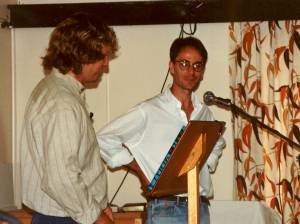 In 1996 we planted Crossroads in Canberra. It was among the earliest of the now FIEC churches. Its origins are found in Dickson Baptist Church and a growing university ministry at the ANU and UC. In the lead up, I had been working as an associate pastor at Dickson as well as working with the Australian Fellowship of Evangelical Students leading the campus ministries. Dean Ingham worked alongside me in the church and on the campus.
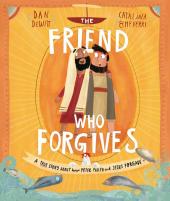 Now that I’m a grandpa, I’m on the look out for great kids’ books. We’ve still got a few at home that our kids haven’t taken with them, but we’re keen for some new ones for when the grandkids come to visit. So I was pleased when the The Good Book Company sent me a new children’s book to review. It’s The Friend who Forgives: A True Story about how Peter Failed and Jesus Forgave, written by Dan DeWitt and illustrated by Catalina Echeverri.
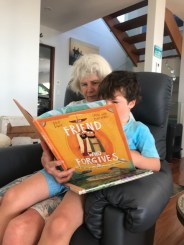 We tested the book yesterday with our nearly five year old grandson. He’s not reading yet so Nona read it to him. He listened intently, answering appropriately, and told me he enjoyed it at the end. We’ll read it to him again, next time he comes over.
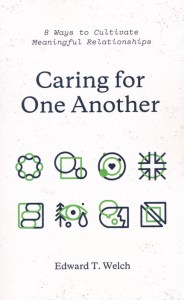 Who of us wouldn’t want our churches to be genuine communities of meaningful, caring relationships? Perhaps this is your experience already. People invest in each other, they look out for one another, they show genuine interest, they seek help, they ask what they can pray and then they pray. They do more than offer support to others, they show deep empathy, compassion, and practical care. Maybe this is a bit of overreach, but you see glimpses of it and you want it more and more. Right?
 Some of us have been on a date, a third date to be precise. It’s been a date of ‘fellowships’, or should that be ‘denominations’. The Fellowship of Independent Evangelical Churches has gone out with the Fellowship of Evangelical Churches of Australia. We had three leaders of each group meeting, listening, talking, exploring, wondering what it might be like to be in ministry together. Two of their leaders attended our national conference, then two of our leaders shared in their conference. We’ve begun to explore matters of unity in the gospel and what matters are non-negotiable when it comes to getting hitched. There has been much to thank God for and there is much more yet to be considered.
 Resilience and burnout are big issues in work and ministry at present. In the field of Christian ministry the statistics of burnout seem alarmingly high and the focus on building resilience is both urgent and important. Kirsten Burkett has provided a great service by sharing her research into these areas in her latest book Resilience: A Spiritual Project. This isn’t a popular level book. For a start it’s published by The Latimer Trust, as the 84th of their brief academic studies. While only being 46 pages in length, it includes another 9 pages of bibliography, comprising mainly of academic journal articles. But don’t let these things put you off. Resilience: A Spiritual Project is compact, yet thorough, and I found it engaging and easy to read. While much of her book is surveying and summarising findings in the literature, Dr Birkett draws us to practical conclusions with profound pastoral implications.
 A fortnight ago I boarded a plane for Sydney in order to speak at the Managers Conference for Koorong Books. They wanted me to speak devotionally and to share about Hope Beyond Cure. My plans had been to shut my eyes and add a little sleep after what had been a very busy fortnight in New Zealand. But it wasn’t to be.
 Yes, I’m trying to get my writing mojo back. People say the way to start writing is to start writing. People are profound sometimes! So back to reviewing a few of the books I’ve been reading. This book was recommended to me by a friend who suggested it might be helpful to leaders in our network around the country.
 I could never have imagined myself reading a book by a Nobel Prize-winning economist, but I have, and to my profit. Daniel Kahneman’s Thinking, Fast and Slow has helped me understand more about how I think, make decisions, communicate, and respond to the words and actions of others.
 My Donkey Body recounts Michael Wenham’s journey with a rare form of Motor Neurone Disease (MND). If you’re unfamiliar with this disease, think Stephen Hawking. The motor neurones that transmit instructions from the brain to the muscles deteriorate and cannot replace themselves. The brain keeps working but it becomes unable to get messages to the muscles to do their work. The person becomes more and more debilitated and eventually the muscles that keep you alive stop working. MND is a terminal illness and there is currently no known cure.
 Coaching and playing don’t always require the same skill set. Not every player will make a good coach and not every successful coach will have been an elite player. Look at some of the men coaching gymnastics. It’s hard to believe they could have ever mastered the pommel horse or uneven bars for themselves, but they can be brilliant at training others. The successful coaches are somehow able to deconstruct each aspect of each move, and train their athletes to weave their brilliance in seamless performances.
 It’s been an anxious week as I’ve anticipated returning to the exact place and the same event where I first noticed the symptoms of my cancer. It was the Geneva Push church planting conference and I was speaking on leadership, church planting, and the vision to reach Australia with the good news of Jesus. It was the end of November in 2011 that I climbed the three flights of stairs at Scots Church in Melbourne, stopping on each landing, completely breathless, not knowing that within a few days I’d be in hospital fighting for my life.
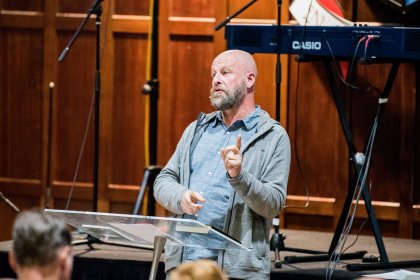 It’s a joy and honour to be able to gather with men and women, young and old, to spur each other on to reach Australia with the life transforming, eternally consequential message of Jesus. People are getting jaded by the endless cycle of meaninglessness promoted by our society. People are searching for meaning. Surely there has to be more that work, sleep, eat, over and over again. Or are we just caught up in an endless Groundhog Day?
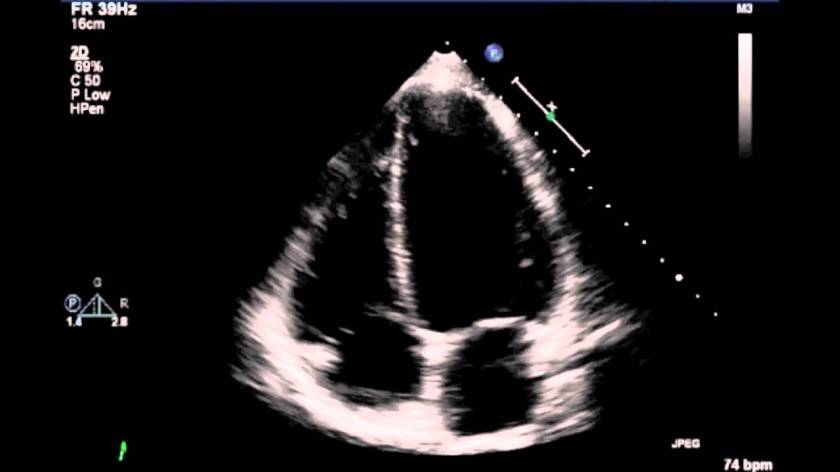 This morning I had an echocardiogram. Don’t know what that is? Neither did I until this morning. It’s basically an ultrasound of the heart. This is one of a number of health checks I’ve had in recent months. Since it’s six years since I was diagnosed with cancer, and two years since I’ve had chemo, and since we’re planning on moving cities, we thought it wise to book in for a major service or two. So far, I’ve had the cameras in both ends and seen some of the damage chemo has left behind. I’ve managed to take on another ‘C’ disease—well developed coeliac. So we’ve had a pantry purge and I’ve started to become one of those difficult people who is always asking what’s in the food I’ve been given. I’ve had lung function tests and discovered that despite the beating my lungs have taken I’m sitting on the low end of average for a bloke my age. My bone density has been checked and I’m osteopaenic. Don’t know that word either? Well, it’s much better than osteoporosis and osteopathetic. I’ve even spoken to my first specialist, a lung physician, who was willing to explore another ‘C’ word—cure. I liked the sound of that one, but we can’t ever know for sure.
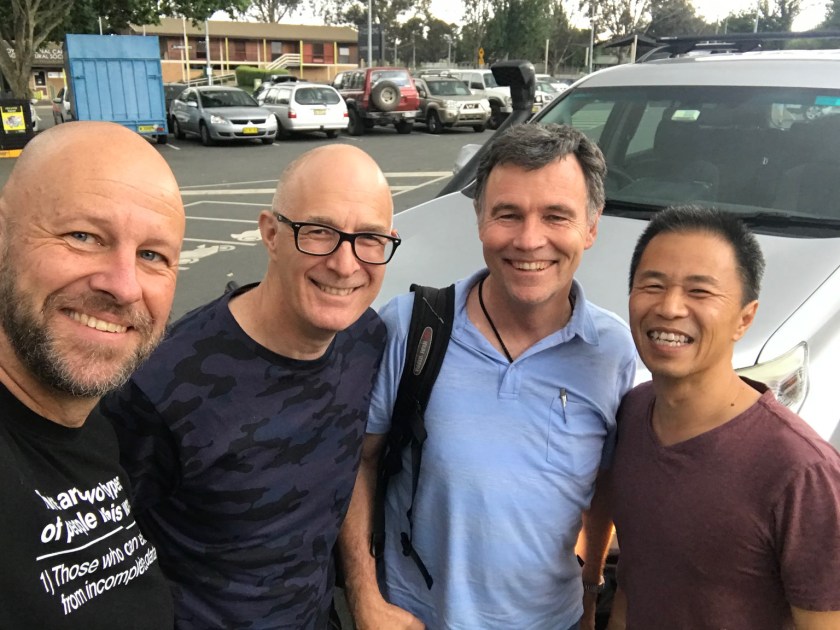 Yesterday I had the privilege of catching up with the same blokes who cared for me on that first day. As we have done every year, we drank coffee (or chai lattes and hot chocolates—we’re getting older), we shared stories, and we prayed for each other. Much has happened in this time. So much has changed. But the goodness of God remains. As I drove home, I found myself singing (yes, truly—and I believe I was even in tune!)
 I miss Chappo! Yesterday I saw someone reading one of his books and I felt a pang of grief. He was so good to talk with, to chat to about real stuff. He’d always keep pointing me to Jesus. He loved Jesus and wanted nothing more than for others to love him too. Chappo might not be here—that’s because he is now with the risen Jesus—but I still have his books. My favourite is A Fresh Start. It’s clear, fun, engaging, serious, Biblical, and helpful, all rolled into one. It’s a great explanation of what a Christian is and how you can become one.
 I’m a preacher. Something of a frustrated one currently. Most Easter Sundays see me preaching. And if you only ever hear me on this day, you might think I’m a one trick pony. The topic is always the same. Resurrection. Jesus coming back from the dead. The empty tomb. Appearances to the women. Dealing with doubting Thomas. The hope of eternal life. Why death is not all there is. Being prepared for your future beyond your future.
 macarisms