
 I miss Chappo! Yesterday I saw someone reading one of his books and I felt a pang of grief. He was so good to talk with, to chat to about real stuff. He’d always keep pointing me to Jesus. He loved Jesus and wanted nothing more than for others to love him too. Chappo might not be here—that’s because he is now with the risen Jesus—but I still have his books. My favourite is A Fresh Start. It’s clear, fun, engaging, serious, Biblical, and helpful, all rolled into one. It’s a great explanation of what a Christian is and how you can become one.
It got me thinking that we could do with some more books like A Fresh Start. It’s a while since I’ve read a simple and engaging book that explains the significance of Jesus and calls people to respond.
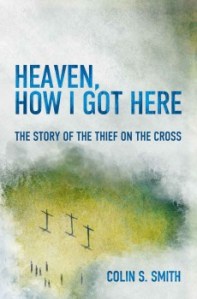
Last night, Good Friday, I sat down with my Kindle and thumbed through the books that I’d bought cheaply, but hadn’t got around to reading. Colin S. Smith’s book, Heaven, how I got here caught my eye. I decided to take a look, hoping it wasn’t another of those ‘heaven tourism’ books. My Kindle told me that it would take about an hour to complete. Just what I needed before I went to bed.
Heaven, how I got here tells the story of the thief on the cross from the thief’s perspective. Of course, we only have a brief glimpse of this man in the Scriptures and only a few of his words are recorded, so there is much that has to be ‘imagined’ in this account. However, I would describe Smith’s narrative as a ‘Biblically informed imagination’. The author draws all his important insights from the Scriptures themselves. Profoundly important theological insights are ascribed to the dying thief as he reflects on the significance of the innocent Jesus, dying at his side.
Why has he be condemned if he is innocent? How can God allow him to hang on the cross if he is the promised Christ? Smith highlights one reality that I’d only ever glossed over—that Jesus died before this man. He watched as Jesus died. He had time (albeit agonisingly brief) to reflect on what Jesus had said and done. The thief heard the taunts and attacks thrown at Jesus. He saw close up the injustice and horror. He witnessed the devastating words of Jesus, “My God, My God, Why have you forsaken me?” and his final cry “It is finished.” He experienced the total darkness in the middle of the day, the shudder of the earthquake, and the acclamation of the centurion, “Surely this man was the son of God.”
This book is tonic to those for whom the cross has become mundane. It brings us in, close and personal. We can almost hear and touch and see and smell the events as they unfold. But the real strength of this book lies not in reminding us of the horrors of crucifixion. It lies in the awesome significance of what Jesus achieved, not only for the thief, but for you and for me. Heaven, how I got here is good news to all who think they have no hope of forgiveness and a challenge to any who think that it’s what they do that will get them there.
 I’m a preacher. Something of a frustrated one currently. Most Easter Sundays see me preaching. And if you only ever hear me on this day, you might think I’m a one trick pony. The topic is always the same. Resurrection. Jesus coming back from the dead. The empty tomb. Appearances to the women. Dealing with doubting Thomas. The hope of eternal life. Why death is not all there is. Being prepared for your future beyond your future.
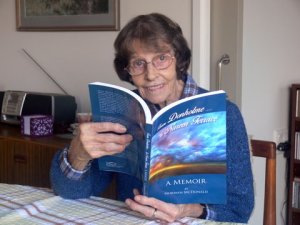 Over the past couple of years my father has been working on his memoirs. He’s been reflecting on more than eight decades of seeing God at work in and through his family, in many different locations. In the last few days these words have been delivered—printed and bound—to his home. Dad has called his book From Donholme to Nareen Terrace, and he has shaped the book around each of the places he has lived. I’m glad the book has a title, because otherwise I might be tempted to call it The Book of Norman! (That’s got that joke out of the way. It was bound to emerge at some point.)
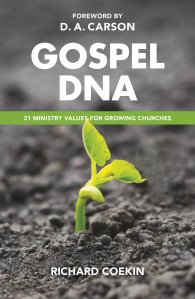 DNA is who we are. It’s you and I boiled down to our most basic fundamental parts. It’s our point of difference, our unique identifier. It’s the building block of our health and biological integrity. DNA gets passed from generation to generation during reproduction. Zillions of pieces of code are transmitted intact so that new things grow. Occasionally there are mistakes in the code. Sometimes things go wrong—like in me! I have a genetic mutation. My second chromosome has flipped around, fused with the fifth chromosome, and created a genetic short circuit, thus producing cancer of the lungs.
 It was my honour and privilege to speak at the thanksgiving service for Howard Bradbury at the Australian National University last Saturday. I first met Dr Bradbury (as I knew him then) early in 1975 when we moved to Canberra. I last met Howard (as I’ve known him for some time) at the ICU at National Capital Private Hospital only days before he died. Our lives have connected in so many ways over so many years, and I truly thank God for our friendship and his lasting influence upon me.
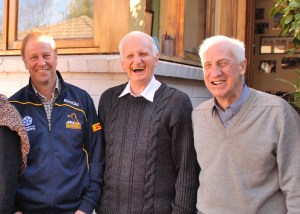 Over the last decade or more of Howard’s life our friendship has been enriched in new ways. Being unimpressed with the compromise of the Uniting Church on some matters of biblical importance, Howard led the planting of a new church called the Canberra Christian Fellowship (in the Methodist Tradition). I would visit this congregation often, regularly providing preaching support, and always dropping the average age significantly! While small in numbers, this body of believers has always been big in heart, no doubt encouraged by the wisdom, grace and love of Howard and Ruth. Each time I would join with this fellowship I would come away encouraged to keep on going myself.
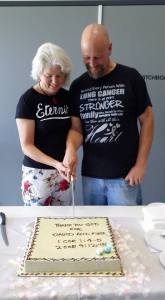 Today marks the end of another chapter of our life—a significant chapter that in many ways has felt like a bonus. Less than five years ago, I believed that my ministry days were done and dusted. I didn’t anticipate preaching again, far less leading a congregation or pastoring a church. Today we received special thanks from our brothers and sisters at Stromlo Christian Church for the past three years of serving among them. I preached my final sermon as lead pastor at Stromlo and later this week we will head away for a few weeks leave before commencing a new role in 2017.
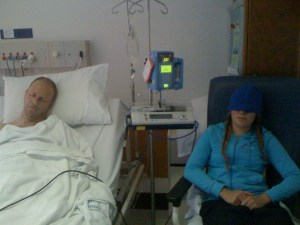 I lay alone in my hospital bed, the words and music of
 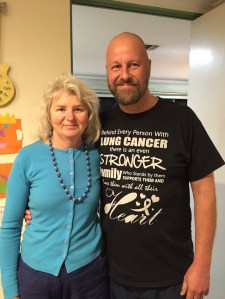 Time to say “Thank you”.
 My new year resolutions for 2016 included reading a book a week. The plan was to finish 52 books before the end of the year. I wasn’t following a recommended reading list, but there were a few books that I was keen to knock over. Someone had suggested mixing things up with a range of genres and topics. There were issues I was interested in researching and their were numerous new books that piqued my interest. During this time I also discovered audio books and bought myself a kindle. So my list represents an eclectic mix of styles, difficulty, issues, media, and… quality. Yes, I also discovered that some books had done little more than steal my time.
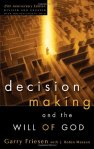 I first read Decision Making and the Will of God by Garry Friesen in 1982, when I was grappling with where my life was headed and what God wanted me to do. It revolutionised my thinking, pointed me to the freedom God has given us to make decisions, and lifted the burdens of guilt and insecurity from my shoulders. It’s a large book, but very easy to read. My only warning is that you must read past the first section of the book. No more spoilers.
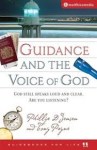 The person who has given me the most direct guidance about guidance is Phillip Jensen, who was the chaplain at UNSW where I studied Social Work in the early eighties. He helped me to love and trust the Bible, and I went to more than one conference where he taught us the importance and relevance of the Bible for understanding God’s will for our lives. Much of what I learned during this time is in included in an excellent little book called Guidance and the Voice of God by Phillip Jensen and Tony Payne. This book addresses an important matter that many overlook—and this is where God guides. To understand what God wants us to do with our lives, we must first understand where God is taking history. A clear grasp on salvation history and the purposes of God in Jesus give the essential perspective for understanding God’s will for each of our lives.
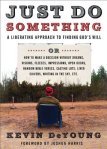 Let me also recommend a third book on guidance that, I suspect, has been deeply influenced by both books above. Just Do Something by Kevin de Young is another short, clear resource for grappling with questions of God’s guidance. Some people get paralysed, wondering and confused, because God doesn’t seem to have revealed his specific will for their life. Every little decision becomes a blockage rather than an opportunity. This book aims to overcome the inertia of people waiting for God to reveal which step to take next. We have the Bible, God has revealed his plan for us to love him, to trust and obey him, and to enjoy the abundant freedom that comes from living this way.
 This interview by Dominic Steele with his friend, Andrew Barry, is deeply moving and profoundly encouraging. Andrew’s son has very serious cancer. His situation has moved me to pray for him regularly. In this heartfelt chat Andrew talks about suffering, marriage, family life, work, treatment, salvation and what it means to have an eternal perspective. Take the time to watch it all and grab the tissues! Click on this
  Looking for people who can read the Bible out loud in church? Trying to fill the Bible reading roster? Building a team of Bible readers? Then let me ask you “What qualifies someone to be able to read the Bible?” Do they need to have a background in performing arts? Or perhaps have been a newsreader in a previous life? Should they audition for the task? Or complete a training course for reading in front of others? Is volunteering enough or is vetting needed? What makes a good Bible reader?
 Once upon a time Christian ministers were viewed with respect. Ministry was voted among the more trustworthy of professions, but not so much any more. The appallingly bad behaviour of some has damaged the reputations of many.
 Since receiving my cancer diagnosis, many have assumed that my big questions are “Why?” and “What?” Why am I going through this? Why did God let it happen? What did I do to deserve it? What could I have done to prevent it? What specifically caused it?
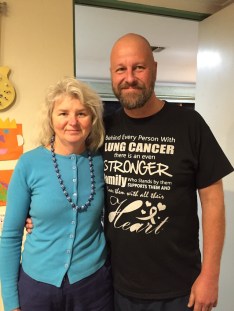 I described my circumstances to people the other day as like being in a battle zone. Through the years of chemo it was like I was wearing body armour to protect me from the enemy. At the beginning the enemy lines were clearly visible. After I became N.E.D. it changed to a fight against a hidden opposition—like terror cells that can pop up anywhere. I didn’t know where or when or how the enemy might appear, what shape it might take, or what it might do to me. My oncologists believed the enemy remained real and would seek any and every opportunity to attack. So the body armour was essential—I was urged to stay with the chemo indefinitely. The strategy was vigilance, protection, prevention.
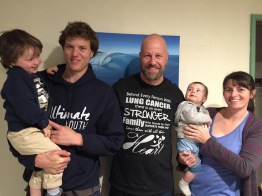 I want to honour my family for supporting me on this long and often painful journey. It’s been hard for them and I owe them a huge debt of gratitude.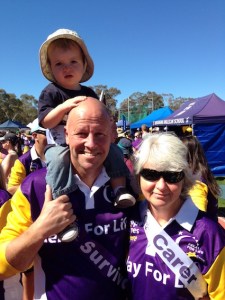
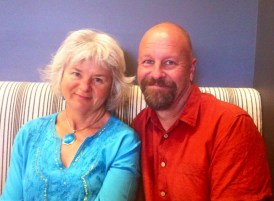 Yesterday I had a routine CT scan to check on any progression of my cancer. Thank God, there was no change. I remain NED! While this has been the pattern for some time, these results were especially encouraging because I haven’t had chemo since last November. I am taking a longer break from chemo to give my body and mind some reprieve. The constant barrage of toxins over the past 4 years has taken its toll.
