My forced sabbatical

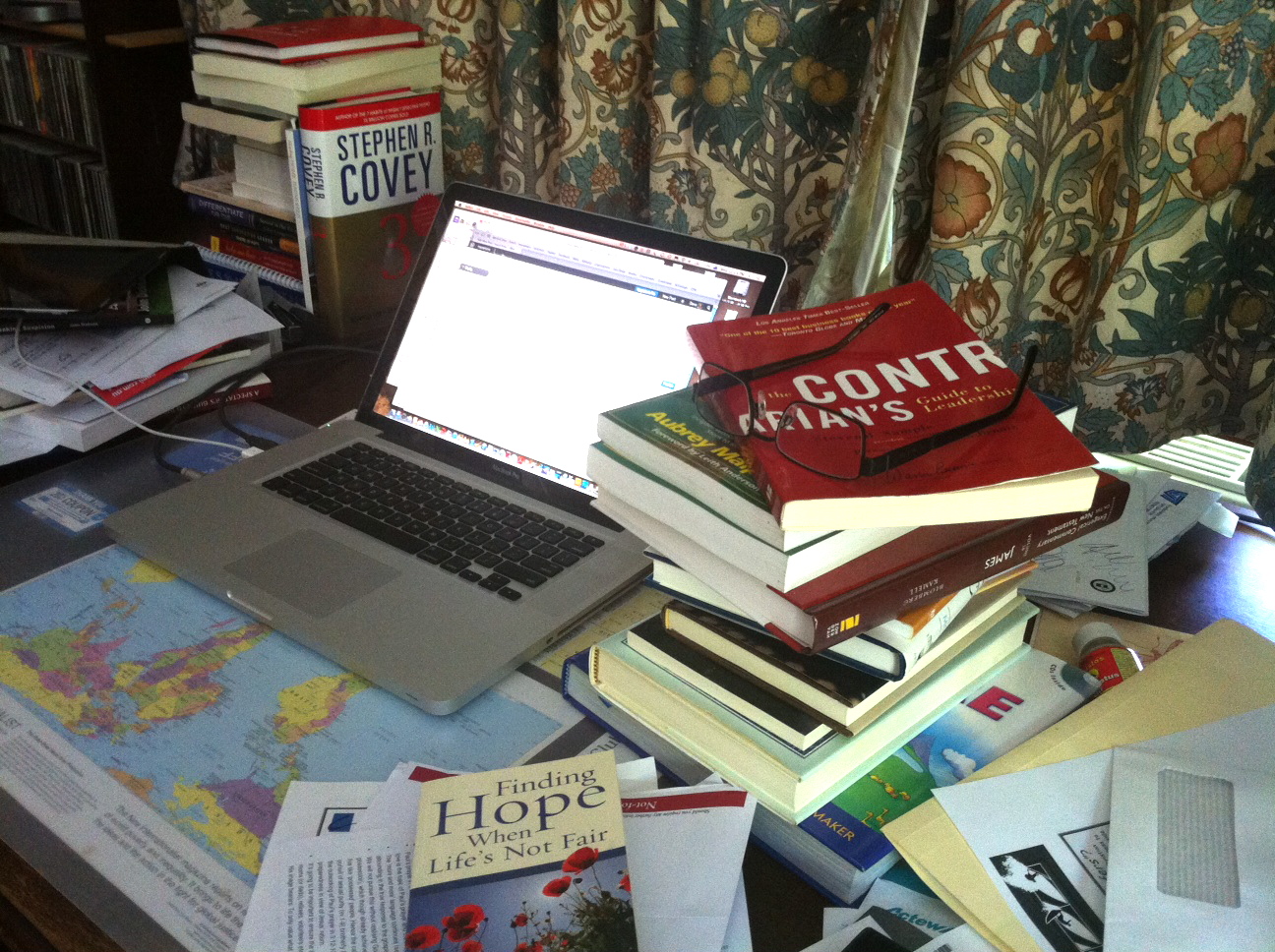
In some respects I view 2012 as a kind of forced sabbatical. I’ve read more books than normal and written more words than ever. It’s been incredibly helpful, to me at least, not only to read books, but to summarise, reflect and begin to apply what I’ve been reading. In fact, this has been some of the most careful reading I’ve done in a long time. Many of the summary/reviews have appeared on this blog and so far I’ve restricted myself to books that I’d encourage others to read. Books that haven’t made the grade have either been left unfinished or unreviewed.

When I began this process I worried that it wasn’t a good use of my time. If I wasn’t going to live that long, should I really waste it reading books? I knew it was a step up from watching TV and DVDs, but it still seemed a little introspective and indulgent. However, I don’t feel this way today. Rather, I’m keen to keep learning as long as I can so that I’ll be better equipped to encourage and resource others. My whole adult life has been shaped and influenced by books. Some of these books I’ve read and long forgotten, but others continue to guide me in the things that matter. Supreme among these is the Bible, followed by those that learn from the Bible and put it into practice. There are many others that contain great wisdom, make a practical difference in the lives of the reader, yet have nothing to do with the Bible. But we’d do well to be discerning about how we fill our minds and use up our time.

11 The words of the wise prod us to live well.
They’re like nails hammered home, holding life together.
They are given by God, the one Shepherd.

12-13 But regarding anything beyond this, dear friend, go easy. There’s no end to the publishing of books, and constant study wears you out so you’re no good for anything else. The last and final word is this:

Fear God.
Do what he tells you.

14 And that’s it. Eventually God will bring everything that we do out into the open and judge it according to its hidden intent, whether it’s good or evil.  (Ecclesiastes 12:11-14 The Message)

Someone once said that they wished 90% of writers wouldn’t bother and the other 10% would write more. It’s true that there is much drivel between the covers of books. My desire is to focus on the 10%, to learn myself, and to urge others to do the same. I thank God for his Book. And I thank him for creating people with the ability to think, imagine, create, and tell. Books are a wonderful gift.

Making the most of the Bible

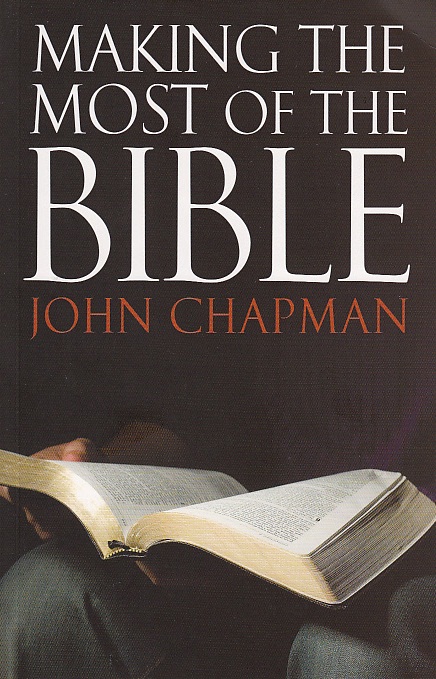
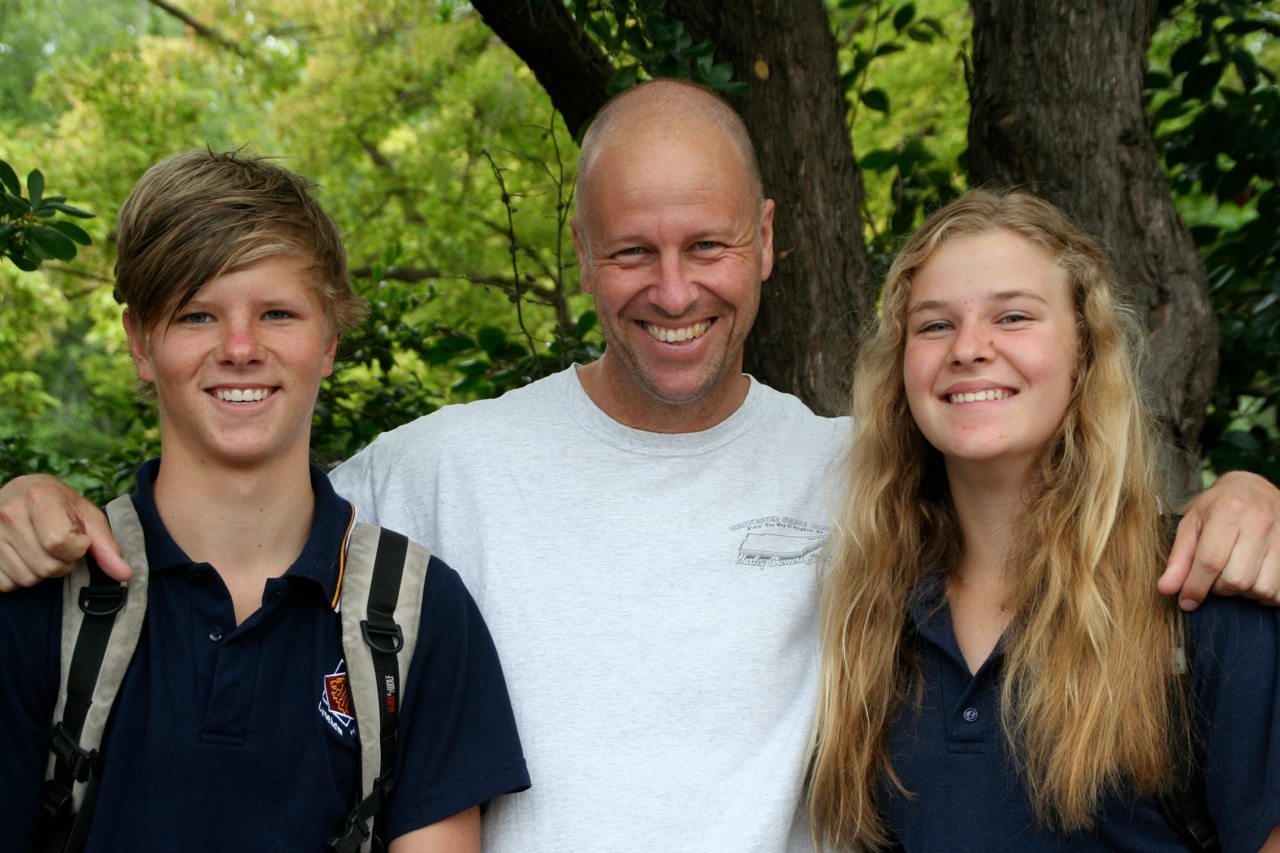
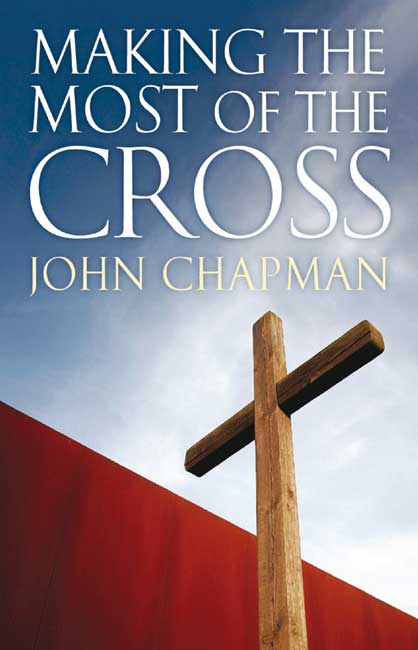
My youngest son received a wonderful parcel in the mail this morning – four copies of Making the most of the Bible sent by its author, John Chapman. One for him, another for his sister, one for Fiona and I, and another to give away. Thanks so much Chappo!

This is a great little primer for getting the most out of reading the Scriptures. It’s warm and engaging without wasting words. It’s more about attitude to the Bible than any special approach to reading. It’s only 66 pages short, I read it between breakfast and morning tea, and it’s the first book I’ve been able to read all year without glasses (nice large print)!

Chappo begins with the importance of faith. Reading the Bible should be more than an academic pursuit. We read it to discover the joy of trusting God with our lives. The Gospels reveal Jesus to be someone who can be completely trusted. He is reliable and always keeps his promises. As we read the Bible we have two choices: (1) either we approach it with hard hearts, only accepting what fits with our own desires and dismissing what doesn’t, or (2) we open our minds to discovering who God is, what he’s like, with a willingness grow in trusting him. Our attitude will make all the difference.

Making the most of the Bible focuses upon Jesus understanding and use of the Scriptures. This is an excellent approach, because anyone claiming to follow Jesus will surely want to see how Jesus treated the Bible. If we’re going to follow him with our lives, then we’ll also want to follow his lead with the Bible.

What was Jesus’ attitude to the Old Testament, what do we make of Jesus’ own words, and what was Jesus’ view of the New Testament?

The first thing we discover is that Jesus treated the Old Testament as having authority because he believed it to be God’s own words. He submitted to these words and called others to do the same. Jesus resisted the ancient temptation to doubt God’s truth and goodness, instead placing his full confidence in God’s promises. Jesus also claimed a special relationship to these words. He declared that the whole Old Testament points to him, and finds its fulfilment in him. These are bold claims, and they offer us the key to understanding the whole message of the Bible. After his resurrection, Jesus explained his life and ministry to his followers in these words:

44 He said to them, “This is what I told you while I was still with you: Everything must be fulfilled that is written about me in the Law of Moses, the Prophets and the Psalms.” 45 Then he opened their minds so they could understand the Scriptures.  (Luke 24:44-45)

It’s common for people to grab hold of some of Jesus’ teaching, without any intention of following him personally. Chappo reminds us that Jesus’ person, works and words are all tied together. Jesus’ life and teaching reveal who he is and his words calls us to follow him. Jesus claims to reveal God to us and backs this up with all he says and does. We might not appreciate this today, but at the time the religious authorities recognised the magnitude of his claim and they killed him for it. As Jesus reminded one of his followers at the last supper:

Jesus answered: “Don’t you know me, Philip, even after I have been among you such a long time? Anyone who has seen me has seen the Father. How can you say, ‘Show us the Father’? 10 Don’t you believe that I am in the Father, and that the Father is in me? The words I say to you I do not speak on my own authority. Rather, it is the Father, living in me, who is doing his work.  (John 14:9-10)

Jesus also explained why the New Testament should be accepted as God’s word. The apostles are the key. Jesus had spent time teaching them before and after his resurrection. It was his plan that they would pass on his message, and do it with an inspired accuracy. He promised the apostles that God’s Spirit would oversee this happening:

12 “I have much more to say to you, more than you can now bear. 13 But when he, the Spirit of truth, comes, he will guide you into all the truth. He will not speak on his own; he will speak only what he hears, and he will tell you what is yet to come. 14 He will glorify me because it is from me that he will receive what he will make known to you. 15 All that belongs to the Father is mine. That is why I said the Spirit will receive from me what he will make known to you.”  (John 16:12-15)

Chappo takes us to the heart of the Bible’s message, drawing us to God’s awesome offer of forgiveness and life with him for eternity. These promises are rooted in the Old Testament and find their full expression in Jesus. My heart was warmed as I was reminded of some of the wonderful promises contained in the Bible:

11 For as high as the heavens are above the earth,
so great is his love for those who fear him;
12 as far as the east is from the west,
so far has he removed our transgressions from us.
13 As a father has compassion on his children,
so the Lord has compassion on those who fear him;  (Psalm 103:11-13)

34 No longer will they teach their neighbor,
or say to one another, ‘Know the Lord,’
because they will all know me,
from the least of them to the greatest,”
declares the Lord.
“For I will forgive their wickedness
and will remember their sins no more.”  (Jeremiah 31:34)

And I heard a loud voice from the throne saying, “Look! God’s dwelling place is now among the people, and he will dwell with them. They will be his people, and God himself will be with them and be their God. ‘He will wipe every tear from their eyes.There will be no more death’ or mourning or crying or pain, for the old order of things has passed away.”
(Revelation 21:3-4)

What an awesome God! What wonderful promises he makes! What a beautiful hope he offers all who will take him at his word and put their trust in the Lord Jesus.

The final sections of this little book, highlight how to respect the Bible as literature and read it with understanding. They address commonly held concerns over the reliability of the Bible, confidence in the transmission of the manuscripts, and evidence for Jesus’ divinity.

Making the most of the Bible is an excellent introduction for people who want to understand what the Bible is about, why it matters and how we should approach it. I recommend it. Read it and think about who you can pass a copy to. Christmas is coming! I’d give this book to my two teenagers… but Chappo has beaten me to it!

Your church in rhythm

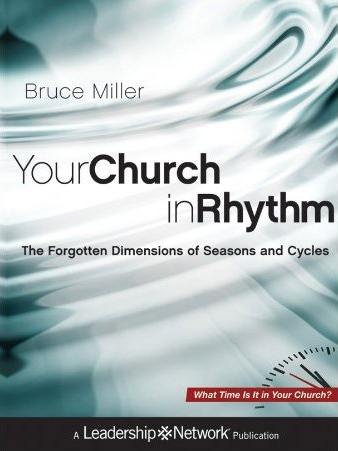
A catch-cry of recent years has been the search for ‘work-life balance’. Very few of us would be brave enough to claim achieving such equilibrium. And what is true for individuals has also been true for my experience of church. There are so many things clamouring for our attention and we feel guilty every time we notice that some aren’t getting any. So it was quite a breath of fresh air to read Bruce Miller’s Your Church in Rhythm. In his preface he argues for rhythm as the best picture of a healthy life and critiques the so-called balanced life as being…

…unbiblical, impossible, and toxic.

Here’s some questions to ask yourself right now:

Has our church got everything in balance?
Are we reaching out enough?
Are we giving enough time to preparation of sermons and lessons?
How is our care and counselling ministry?
Are we leading well? Are we developing leaders effectively?
Are we praying enough?
How are our administrative systems and processes?
How are our ministries to children and youth?
Are our small groups vibrant?
How are we doing at following up with our guests?
How is our communication with the church family?
How is our discipleship process?
Am I reading enough to grow personally?
Am I current on email and other correspondence?  (p. xxii)

If you’re a church pastor, elder, leader or committed member of your church, then I’d bet you’re probably feeling guilt, guilt and more guilt after reading this list. We just get one thing humming when another falls apart. We start to feel good about what we’re doing and then realise how much more is not getting done.

Miller gets us asking the question, “What time is it in your church?”. If we understand the times, he believes that our experience of church and ministry will become more effective and enjoyable. There will be less fatigue and burnout, less boredom and apathy, more enthusiasm and engagement, we will work harder and rest more thoroughly, and there will be greater outcomes for the kingdom of God. Does it sound like the kind of book you’d like to read? You can’t lose really. At least you’ll be able to tick your ‘Commitment to professional development’ box when you finish!

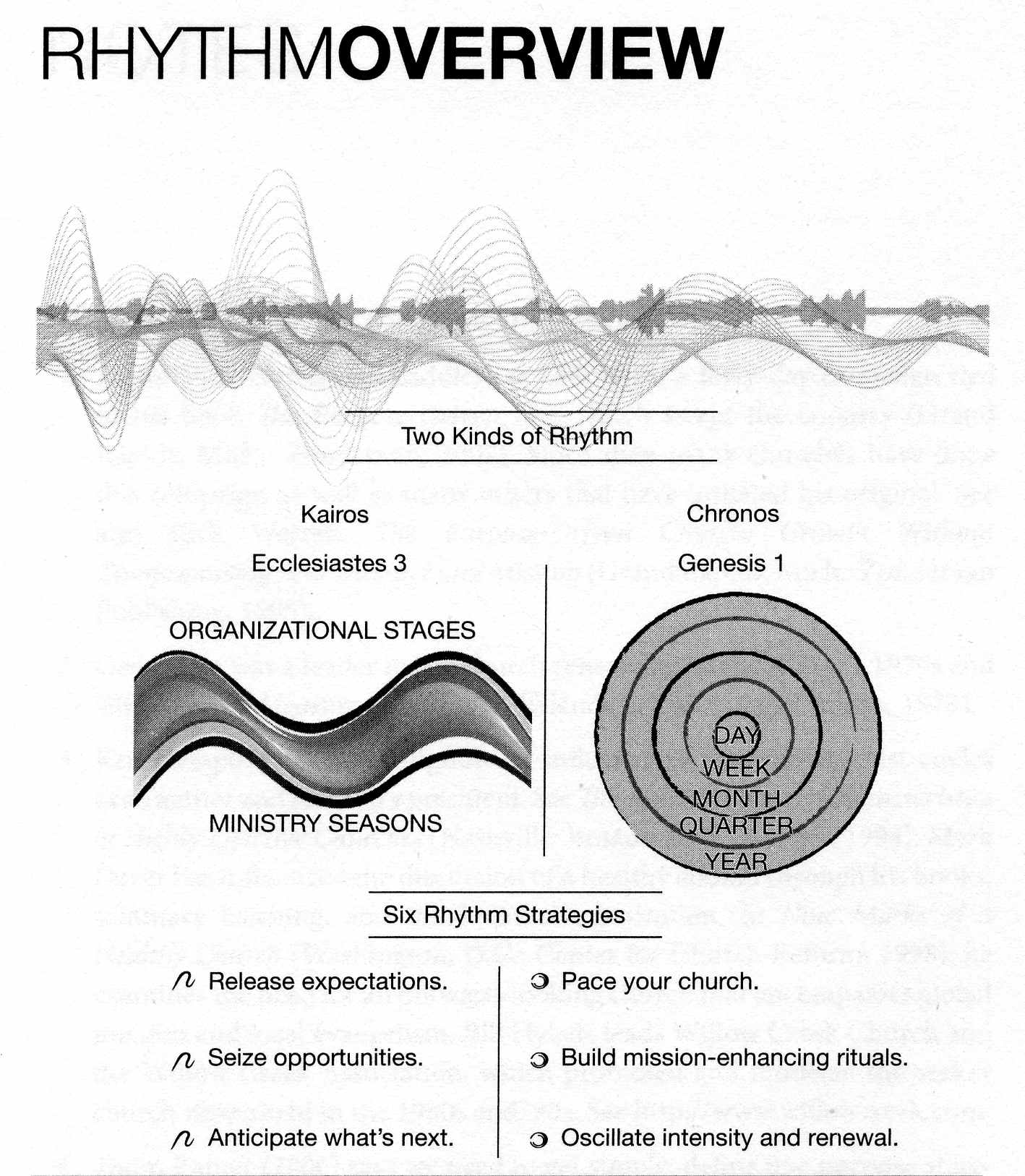
Your Church in Rhythm describes two types of time: kairos and chronos. Kairos time is experienced time, shaped by organisational stages and ministry seasons. Chronos time is measured time, it’s cyclical, and can be divided into days, weeks, months, quarters and years. Recognising the impact of the stages and seasons helps you to determine what is most appropriate for now. Understanding the five chronos cycles enables you to pace your ministry better.

By choosing rhythm, you will invite your church to live in harmony with the flow of life – to be content in all circumstances, to make the most of the moments, to rejoice at all times – and to set your hope on what’s to come.  (p. xxv)

A guideline is offered to understanding organisational stages in a church. The life span of a church is broken down into five stages: inception, growth, maturity, decline, death or renewal. This can be complicated further by recognising that larger churches are collections of congregations and ministries which also have their own life cycles. These stages rarely follow a simple straight pathway and are commonly impacted by crises or major transitions. What’s important is that we seek to discern what stage our church is in, to understand the times, so that we can identify what best to focus upon now.

Ministry seasons are shorter than organisational stages. They may only impact one ministry area, they can be experienced more than once, and a church could be in several seasons simultaneously. Throughout this book Miller engages helpfully with other literature and I will be following up various leads. In this chapter he draws on Kubler-Ross’s research on loss and grief cycles and John Kotter’s important work on change management. These perspectives are useful for appreciating what churches and ministries go through over time. If a church loses a pastor, gains a new one, shuts down a ministry, starts up another, builds a property, restructures its leadership, negotiates a difficult crisis, seeks to increase its giving, plants another church, or goes through a period of transition – these are seasons, not simply events. Their impact needs to be appreciated and navigated well.

Miller identifies six strategies for getting your church into rhythm, and then a conclusion that is a must read! The following table (p169) highlights the structure of this thinking:
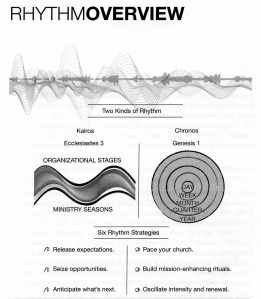
rhythmI won’t develop each strategy in any detail, as I don’t want to simply repeat the content of the book. The real benefits will come as you get into the book for yourself, identify your own organisational stage and ministry seasons, and consider the impact of the different chronos cycles on your church, people and community. You may disagree with the specific stages or strategies identified in this book, you may disconnect with some of his examples or illustrations, but I believe Miller’s overall thesis is both helpful and liberating. Let’s briefly skim over them.

Release expectations

Releasing expectations involves accepting that we can’t do everything. There are limitations placed upon us by our stage and season. There’s no point envying churches that are in different stages or wishing we were in a different season. Releasing expectations helps us to grow in contentment and focus on the time we’ve been given.

A heart at peace gives life to the body,
but envy rots the bones.  (Proverbs 14:30)

I have learned to be content whatever the circumstances.
(Philippians 4:11)

Consider a church that has just been planted and is getting underway. Now is probably not the time to worry about developing lots of ministry programs, you don’t need detailed systems in place, and you’ll manage fine without a sophisticated newcomer follow-up process. Just work hard at getting to know each other, invite people to your place for a meal, set the tone for your church community, relationships, and gospel priorities. As you move into your growth stage, as you add staff and become more complicated, then you will need clearer processes and systems so that you care effectively for the church and continue to reach your wider community. But there will be a time for this, it can wait for a while!

Likewise, recognising the seasons you are experiencing will help shape your focus and enable you to release expectations. If you’re falling well behind budget and encouraging your regulars to give, it’s not the time for embarking on a new program to reach all the local schools. If you’re transitioning between members of staff, it’s probably not wise to introduce a bunch of new ministry ventures. If the church has been impacted by a season of grief, then it’d be wise to forget the rah-rah and allow people the space to work through things carefully.

Seize opportunities

Open your eyes to the opportunities around you. Sometimes we can be so locked into our longterm strategic plans and goals that we fail to take up valuable opportunities before us. We need to discern whether to hold to the plan and pass on the opportunity, or to alter the plan and seize the opportunity. Evaluate your motives, ask what’s at stake. Most importantly, weigh things in the light of God’s agenda.

Any opportunity worth pursuing should advance the cause of Christ. Will this opportunity advance the Gospel better than the current plan and better than any of the other opportunities we could pursue?  (p77-78)

In the inception of a new church, people are more open than they will ever be. Seize the opportunities to establish culture, mission, vision and values. Focus on the unique low-key relational opportunities. It’s a time of firsts – make the most of them. It’s a busy period, but pause, catch your breath, and delight in what God is doing among you. Likewise, later stages and ministry seasons will offer you special opportunities to advance the cause of Christ. Look out for them, explore them, critique them, and weigh up the best way to move forward.

Anticipate what’s next

We need to live fully in the present stage or season, but looking forward fuels hope with anticipation. You can work hard for a season if you’re looking forward to the outcomes and you’ve planned for a time of rest afterwards. Change can be a difficult season in the life of a church, so it’s important to emphasise that it’s temporary, and for leaders to shepherd their people through the processes. Anticipating what’s ahead is a key to this.

It’s also important to consider all our stages and seasons in the light of the big picture. As Miller writes:

All stages and seasons will culminate in the final stage of all history: the new heavens and new earth. Our ultimate hope is the return of Christ who will make all things new. We do our work in anticipation of what God will do in the near future. We can persevere knowing these are temporary seasons. Our role in these seasons is to announce and demonstrate the Kingdom that has come and is coming.  (p94)

Some seasons can feel like they’re never going to finish, or that they will destroy our church. A building project can cause all kinds of stresses and grief. False teaching or moral failure by a leader can mark a terribly difficult time for the whole church. Anticipate that there will be better times ahead. And whatever our particular church may experience, it’s important to remember Jesus’ promise that nothing will destroy his church (even if our particular organisation struggles or dies).

Pace your church

Pacing is the technique of spreading out your strength over time so that you do not burn out before the end. (p111)

Athletes are acutely aware of the importance of pacing, but it doesn’t stop with them. It applies to many areas of life and work, and it’s important for organisations like churches. Church leaders need to pace themselves so that they run well for Christ, rather than burning out and quitting. Congregations need to pace themselves well, so that people don’t migrate from church to church, or drop out altogether.

It’s worth asking, what do we expect of people every day, every week, every month, every term, every year. There is a time for many things, but when everything happens at once we clearly haven’t paced things well. Miller suggests using the five chronos cycles as a foundational grid for identifying and assigning appropriate frequencies what what we do as a church. If we’re expecting people to come to church each week and to participate in a small group, then how much and how often can we expect more from them? Pacing our planning around terms and years assists people to grasp the bigger picture of where church is heading and what we’re trying to achieve. Giving people time out and time off on a regular basis helps them to remain in the game for the long haul.

Being aware of the natural rhythms of the community will help you to pace things more effectively also. Some coastal churches don’t run Sunday morning family services because many families are caught up with the surf programs running at that time. When we were preparing to plant a church in Darwin, we recognised the impact of the dry season, the build up and the wet season on community involvement and activities. There’s no point cutting across these natural flows if we intend on connecting with those around us.

Build mission-enhancing rituals

Mmmm! Coming from an independent church with very few of the trapping and rituals of traditional churches, I had to think hard on this one! But the key is ‘mission-enhancing’, not ritual for ritual sake. What patterns, practices and habits will help people to appreciate and engage in building Christ’s church? Some annual rituals or weekly practices can carry power explicitly by their repetition. Repetition can be mindless and meaningless, but it can also highlight what’s really matters.

Miller illustrates this with an example of how his church changed how they approached personal, small group and church-wide Bible study and preaching. The goal was to see people transformed and impacting others as they engaged with the Scriptures. They adopted a study → listen → discuss → share strategy. Everyone in the church was given a guide that helped them to study the passage of scripture during the week. Then on Sunday the sermon was preached from that passage. Small groups met in the following week and discussed the application of the passage, and people were encouraged to share and encourage one another with what they’d learned. This pattern increased alignment in the church and helped deepen people’s understanding and personal ministry to each other.

Oscillate intensity and renewal

Too many church leaders are not oscillating, and neither are their churches. We are neither working hard enough nor resting deeply enough.  (p140)

Life is not a marathon but rather a series of sprints and rests. If churches try to keep a constant pace, they build up higher and higher levels of stress.  (p141)

Miller argues that in each of the chronos cycles, we should experience an oscillation between intensity and renewal, work and rest. This is not the same as work-life balance, it’s about rhythm. God built this type of oscillation into his creation. Working six days, resting on the seventh. Sometimes we need to put our foot down on the accelerator, at other times we need to coast. There’s no place for workaholism and there’s no place for laziness. But there can be a time for climbing mountains and a time for lying on beaches, without feeling guilty for doing either!

Holidays, breaks, doing something different, changing things around. They can all help us to stay the course. Giving our leaders time out, refreshment, and encouragement will help them to want to do the work again. Encouraging our congregation to join together every week, but acknowledging there will be things that keep them away from time to time, can reduce guilt and increase enthusiasm for meeting together. Pastors taking a day off each week, protecting their annual holidays, having some study leave or taking a sabbatical, can decrease burn out and aid perseverance. Sleep matters, so does exercise, so does having other interests and so does working hard when we’re working! Oscillation is built into the rhythm of life – go with the flow!

Conclusion

Miller has written this book to be used. Each chapter contains a case study and a worksheet. There’s a ‘next step’ summary plan at the end of the book. I recommend we approach this as a workbook and take the time to apply it to our lives and gather with others to apply it to our churches. It’s about leveraging insights into the times and cycles we experience, so as to advance the cause of Christ. And it’s up to us what we make of it.

I appreciate the way this book recognises the ups and downs, seasons and stages, needs and opportunities in life. I’ve been persuaded that rhythm, rather than balance, is a better picture for describing the good life. Most of all, I’m warmed by the bigger picture that frames this book. As Miller writes:

It is the rhythm of eternity that empowers us to be steadfast and immoveable, giving ourselves whole-heartedly to the work of the Lord.

We can endure difficult days when we remember that ultimate rest is coming. A focus on the ultimate future sustains us today with vivid hope. Understanding the ultimate rhythm can help us release false expectations. In this case, we can – and should – release the erroneous expectation that this life will ever be paradise. Seize opportunities to do that which will last forever. Anticipate eternal joy to come. That is the source of true and rich hope. So in view of the eternal rhythm to come, we want to flow our ministries as well as possible in the earthly kairos and chronos rhythms.  (p157-158)

The 7 Habits of Highly Effective People

This is an oldie, but a goodie! It took me a while to discover The Seven Habits of Highly Effective People by Stephen Covey. It wasn’t recommended to me by anyone. I was simply browsing a local bookstore and the title caught my attention. I figured it wouldn’t hurt to read it because I was feeling particularly ineffective at the time! The holidays were approaching and I was looking for a book to read on the beach at Byron Bay. All I remember now, is feeling that this book must have been written about me. It identified at least seven areas that I needed to change… urgently!

Since this time, over 20 years ago, I’ve reread this book or parts of it numerous times. I still believe it’s one of the most helpful ‘personal organisation/time management/self help’ type books available. So if you’re feeling a little disorganised, don’t have enough hours in the day or days in the month, feeling overworked and underproductive, then I recommend dipping into the 7 habits.

This book stands apart from many contemporary ‘success’ or ‘personal management’ books, in that it focuses on character and principle-centred living. It’s not full of techniques, tricks, or tools, for getting ahead. Rather, it pushes the reader to focus on what matters matter most, so as to ensure that these values shape the way we live. This book deals with internal personal transformation as well as external interpersonal relationships. It seeks to help us reshape our lives so as to create sustainable changes for the better.

I will introduce each of the 7 habits, before offering some reflections on the usefulness and limitations of Covey’s approach.

Habit #1  Be Proactive

We have a tendency to see life as the product of our circumstances. We inherit traits from our parents and grandparents. The environment we grow up in, learn in, work in, live in, is said to determine how we will deal with the stuff that comes our way. Covey critiques this reactionary outlook on life, reminding us that we have the freedom to choose what happens between stimulus and response. Proactive people are driven by principles rather than circumstances. They have response-ability. The proactive person is focused on their circle of influence which is a subset of their wider circle of concern. There are somethings we can’t change and there is no point being all consumed with these. Rather we become more effective as we focus our energy in areas where we have direct or indirect control.

Habit #2  Begin with the End in Mind

Covey illustrates the second habit by asking the reader to envisage their own funeral. We are invited to imagine the eulogy. How will we be remembered? What do we want people to be saying about us? What type of a person are we? We’re encouraged to look to the end and ask what we need to do in order to get there. The suggestion is made to develop a personal mission statement as a guide to a principle-centred life. This exercise pushes us to consider what matters most, what we value in life, what shapes and drives our choices.

It’s incredibly easy to get caught up in an activity trap, in the busyness of life, to work harder and harder at climbing the ladder of success only to discover it’s leaning against the wrong wall. It’s possible to be busy – very busy – without being very effective.  (p98)

Habit #3  Put First Things First

This habit challenges traditional ways of looking at time management. It moves beyond ‘to do’ lists, calendars and diaries, and even priority listing. Covey describes his approach as fourth generational time management that includes people and relationship needs alongside efficiency and results. He suggests we identify our key relational roles, set goals in each area, schedule weekly to address our goals, and adapt daily as required.

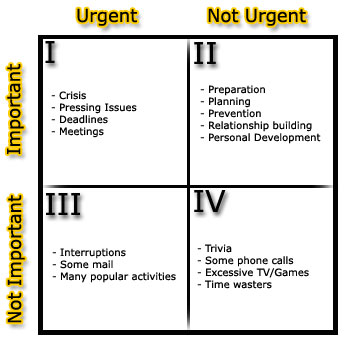
All activities can be defined as either important or unimportant, and urgent or non-urgent. Covey introduces a matrix to illustrate these variables and help us to put first things first. He argues that the more time we spend in quadrant 2, on non-urgent and important activity, the less time we need to spend on urgent matters, the less we experience burn out, and the more our personal effectiveness increases.

Habit #4  Think Win/Win

Relationships, work, ministry, teams, and life itself, will inevitably involve us in situations of disagreement and conflict. In many cases this ends very badly in a win/lose or even a lose/lose outcome. Unlike a game of rugby where win/lose is the desired outcome for players and fans (unless you’re on the losing side) win/win is the desirable goal for interpersonal relationships. Covey calls individuals and organisations to encourage and reward win/win solutions. He suggests following a four-step process:

First, see the problem from the other point of view. Really seek to understand and give expression to the needs and concerns of the other party as well as or better that they can themselves.

Second, identify the key issues and concerns (not positions) involved.

Third, determine what results would constitute a fully acceptable solution.

And fourth, identify possible new options to achieve those results.  (p233)

Habit #5  Seek First to Understand, then to be Understood

It doesn’t matter if we’re talking about marriage or work or international diplomacy, good communication is essential to good relationships. Seeking first to understand represents a paradigm shift for most of us. We typically want to be understood first and foremost. Instead of listening with the intent to understand, we listen with the intent to reply. Covey illustrates this with a quote:

A father once told me, “I can’t understand my kid. He just won’t listen to me at all.”  (p239)

I trust you can see the problem! In order to understand another person we need to listen to them. Empathic listening is required. We listen so as to understand, and then we get to communicate so as to be understood. In fact, we will do a far better job of communication if we’ve made the effort to understand the listener before we express our views.

Habit #6  Synergize

What is synergy? Simply defined, it means that the whole is greater than the sum of its parts. It means that the relationship which the parts have to each other is a part in and of itself. It is not only a part, but the most catalytic, the most empowering, the most unifying, and the most exciting part.  (p262-263)

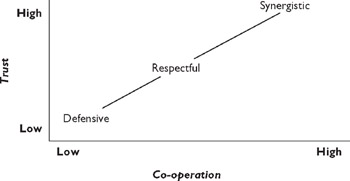
synergyIn order to achieve synergy, there needs to be high levels of trust and high levels of cooperation. This opens the door to creative outcomes and solutions. When there’s a lack of trust and cooperation, conflict, deadlock or compromise, may be the best that can be achieved. Synergy is achieved through the application of putting first things first, seeking to understand before seeking to be understood, and looking for win/win solutions. Covey describes the search for synergy as fishing for the third alternative. His more recent book entitled The 3rd Alternative examines this in much more detail.

Habit #7  Sharpen the Saw

This habit is focused on personal renewal. It’s illustrated by the story of a wood-cutter who takes a couple of minutes each hour to sharpen his saw, resulting in far greater effectiveness than the one who perseveres long and hard with a blunt saw. Covey identifies four dimensions to the self: physical, mental, social/emotional, and spiritual. He argues that a balanced lifestyle, that cares for and nurtures the self, will have a profound impact on personal effectiveness.

The physical dimension translates into issues of diet, exercise, rest and relaxation, and there are no quick fixes. He identifies such factors as prayer, meditation, religious literature, and music, in the spiritual dimension. The mental dimension means investing in the mind, strengthening and enriching it by reading, study and continued education. The social and emotional dimensions are tied together because of the significant impact of relationships on our emotional wellbeing. All four dimensions are important and the neglect of any will impact the other three.

Personal reflections

This book had a profound influence on me, especially as I sought to juggle or balance many important roles and responsibilities in life. How could I make investments in being a husband, a dad, a team leader, a pastor, a sports chaplain, a preacher/teacher, a trainer, and various other things all at the same time? I seemed to keep spending my life dropping one ball after another. I’d ignore some areas (often of vital importance) simply because other things had become more pressing.

Covey’s approach encouraged me to pay attention to each of my major roles every week. It urged me to focus on quadrant 2, non-urgent and important, activities. These are the activities that reap the greatest rewards down the track and they help keep us from being run ragged by the urgent. It also helped me understand why I often found myself in quadrant 4, the non-urgent and unimportant. This is the burnout zone, where you hide when you can no longer cope with all the demands upon you.

I followed this guide on a regular basis and encouraged our staff and trainees to do the same. It was very helpful. The emphasis on effectiveness over efficiency was especially important. I made sure I was investing in personal renewal areas. I’d keep developing long-term important goals and working towards them. I’d set aside time to reflect and examine how things were going, to plan and set a new course for the future. I even purchased a Seven Habits Diary to help me get it all together!

As a Christian I found that much of this book resonated with me, and it offered a framework for personal and time management that I could use consistently with my beliefs and values. My understanding is that Stephen Covey was not a Christian, but a member of the Church of Jesus Christ of Latter-Day Saints. While I’m certainly not a Mormon, and do not follow Mormon teaching, I found there was much in this book that I could apply to my life without compromising or abandoning my own beliefs.

But herein lies an important issue. We need to be clear on what our beliefs are. How can we assess the importance or relevance of these particular habits? What do we value? What really matters in life? What is the end that we should be heading towards? Covey’s book won’t answer these questions. If we have no clear principles, then we’re not going to find them by reading this or many other self-help type books. 7 Habits makes assumptions and claims about what matters matter that are based primarily on observation and experience. Some will read them and agree, others will look in other places.

I look to the Bible for my answers to these significant questions. I find my compass for life, as I trust in Jesus Christ and seek to follow his lead. The Bible offers me a guiding light for life and decision making. It shows me that wisdom is to be found by respecting God and honouring him in my thoughts, words and actions. Jesus provides the supreme example of one who truly began with the end in mind and followed this all through his life. He came to seek and to save the lost, knowing fully that it would cost him his life. He put the needs of others above his own. He depended on his heavenly Father and made time to escape the heavy demands upon him to spend time in prayer. He entrusted himself to God, in the face of of opposition and execution, for the greater goal of offering forgiveness and reconciliation to all.

If your life feels out of control, if you’re running on empty, dropping important balls all over the place, drowning in endless tasks, or dissolving into trivia… can I encourage you to take a step back and look at who you are and where you’re headed. I recommend you take a good look at the Bible, as I’m persuaded that it offers you the most accurate compass to follow. And if you’ve got that worked out, then I think you could do a lot worse than thinking through each of these 7 habits.

The Jesus Storybook Bible

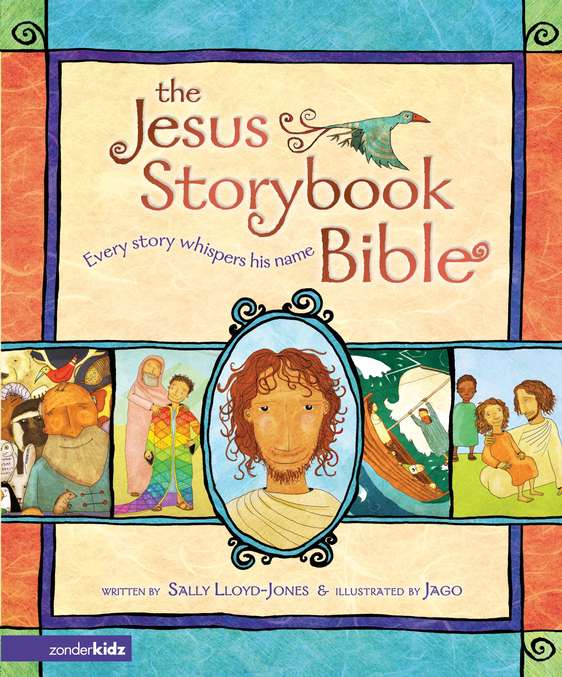
jesus-story-book-bibleThis afternoon I sat down and read the Bible from cover to cover. Well, not the whole Bible precisely. It wasn’t the King James or the New International Version. It wasn’t exactly the full text or even the actual text of the Bible. What I read was The Jesus Storybook Bible by Sally Lloyd-Jones. It’s a paraphrase of the main message of the Bible. It’s a birds-eye view of the whole landscape with stopovers to take in the major landmarks along the way. It’s written with younger children in mind and offers a wonderful summary of the Bible’s big idea. The words are excellent, the pictures are delightful, and it was cool to be able to read 350 pages from beginning to end in one sitting! I loved it!

What makes this so awesome is that the author understands that the Bible is ultimately a book about Jesus. The Old Testament points to Jesus and finds it’s fulfilment in him. The New Testament showcases Jesus and the impact he makes on others. It’s one coherent story about God’s big rescue plan, where Jesus ultimately comes into the world to bring people home to God.

Obviously the complete message of the Bible has been dramatically condensed to create this storybook Bible. What I appreciate are the wise selections of what’s been put in and what’s been left out. You come away from reading this with a good handle on the overall message of the Scriptures. It hangs together, it builds momentum, and it reaches an important climax. In reading the full version of the Bible we’re not dealing with a book of independent short stories, but an historical narrative with a coherent message. It’s one story. It’s God’s story. It’s his-story.

Let me try to summarise the summary! We start with God, who creates an awesome world, makes people who relate to him and all is perfect. The people are quickly deceived into not trusting God, things fall apart, and life seems hopeless. God promises to put things right, he works through a family line, he overcomes every setback, and we keep looking forward in anticipation to his coming into our world to rescue us. This is half the story, what gets described as the Old Testament, and it’s desperately waiting for its conclusion.

The second half, or the New Testament, announces the arrival of God in the person of Jesus. We learn the significance of the Christmas story, see the extraordinary things he does, hear his amazing words, and marvel at the way he treats people. We discover that the cruel execution of Jesus is actually essential to the plan. Easter is the climax. Jesus will rescue people by dying in their place and God will raise him to life, opening the way for us to return to God. God gives his Spirit to Jesus’ followers, they’re transformed by the message of Jesus, and the news of what God has done begins to spread throughout the world. An awesome story and it’s true!

I love lots of things about The Jesus Storybook Bible. You truly get the sense of promise and fulfilment. The heart of God to rescue, rather than destroy, his people comes through at every point. The pictures are wonderful, but it’s the love and generosity of God that really colours this book. The best thing is that this storybook accurately communicates that the Bible is a book about Jesus. He is the focal point of all God’s purposes. He’s the key to understanding ourselves and God and the purpose of life.

One of the great dangers of many kids Bible books is that they can reinforce the misunderstanding that the Bible is a book of cute and not-so-cute stories and that Christianity is a message of ‘doing the right thing so God will like you’. These ideas are false and dangerously misleading. The The Jesus Storybook Bible steers us away from such errors. It stays on message, that the Bible is a book about God’s amazing grace revealed in Jesus. Consider these words…

“It’s not about keeping rules!” Paul told the people. “You don’t have to be good at being good for God to love you. You just have to believe what Jesus has done and follow him. Because it’s not about trying, it’s about trusting. It’s not about rules, it’s about Grace: God’s free gift – that cost him everything.”
What had happened to Paul? He met Jesus.  (p340)

Lloyd-Jones uses a wonderful refrain throughout the book speaking of…

God’s Never Stopping
Never Giving Up
Unbreaking
Always and
Forever
Love

I highly recommend this storybook Bible. Adults will benefit from reading it through in one sitting. So will teenagers. But its intended audience is young children from 3 or 4 up to the end of primary school. I’d encourage parents and children’s ministry leaders to get a copy. Read it through first and then take it a chapter at a time. It’d be worth reading through with your children at least once every year. Each chapter also has a reference to the passages of the Bible that are being described. It’d be worth the adults reading over these texts before they read the storybook version to the children. Maybe read the full version in the mornings and then read to the kids before bed.

For adults who want to explore the overall message of the Bible for themselves, I’d recommend following a guided Bible reading plan. It’s also helpful to read According to Plan by Graeme Goldsworthy or God’s Big Picture by Vaughan Roberts. These books give excellent Bible overviews. You might also like to download a series of talks that offer a 10 week overview of the Bible’s message or work through the 8 studies in Full of Promise by Phil Campbell and Bryson Smith.

Come to think of it, there are many contexts where this book would be an excellent gift. If you’re invited to become a god-parent, then why not buy a copy for your god-child? Grandparents, add it to your Christmas list. Pastors, grab copies to offer parents at kid’s clubs or when they enquire about getting children baptised. Maybe, you could buy a copy for your kindergarten or primary school library. Get your children’s ministry leaders to read over it and use it for a training weekend. Use your imagination!

Alive and active


No, I’m not talking about myself. I’m not that active, but it’s sure good to be alive! This is how the Bible gets described in Hebrews 4:12…

bible_picFor the word of God is alive and active. Sharper than any double-edged sword, it penetrates even to dividing soul and spirit, joints and marrow; it judges the thoughts and attitudes of the heart.

It’s not how many people would describe the Bible. Maybe, ‘dead and dull’ or ‘outdated and boring’, but certainly not alive and active. I’ve got a few books at home written in the 1800s, even some written in the 1500s and 1600s. I even have a few editions published two centuries ago. They are truly old! But the Bible was written two to three millennia ago! That makes it truly ancient!

And yet, I agree with these words. It is alive and active. It’s every bit as relevant today as when the quill first hit the papyrus. It’s no accident that it continues to outsell every other book. There’s good reasons why people read it and study it, discuss it and teach it.

I’m persuaded that the Bible is more than a human manuscript. I believe it is God’s word and that he continues to speak through it today. So it obviously makes sense for me to pay it a lot of attention. I enjoy getting to know God as I read his words. I’ve spent many years seriously studying the Bible, and I haven’t begun to exhaust it’s wisdom. I keep working to understand and apply it to my life, and to explain and teach it’s relevance to others.

But I don’t think you necessarily need to believe that the Bible is God’s word for it to be worth your while reading it. You can gain massive insight into the human experience through this book. It’ll help you understand our culture and many others. It may even help you understand yourself. But most importantly, it’ll introduce you to arguably the most influential person who ever lived, Jesus. There is so much value in patiently discovering all you can about Jesus, and asking questions about who he was, what he taught, and whether he’s relevant to you, today.

I’d urge you to add Bible reading to your to do list for a while. You could put it on your bucket list, but then you might never get to it! Perhaps, begin with the New Testament and, if you need help focusing, try asking three questions:

(1) what does it say about who Jesus is?
(2) what does it say about what he said and did?
(3) what does it say about how I should respond to him?


A legacy of words

Words can be very powerful. They’re how we connect. They’re the way we get to know one another. The absence of words makes relationships very difficult. They reveal what’s on our minds, what’s on our hearts, what we’re thinking. Sometimes they express our feelings and emotions. They’re a vehicle for revealing our values, our beliefs, our convictions. Care must be taken with words because once offered they’re hard to take back. Words can be weapons that wound or even kill. Words can offer healing and forgiveness and kindness and love. Words, whether written or spoken, can leave an important legacy long after their author has gone.

Over the past month I’ve read a number of deeply helpful books written by people dealing with serious illnesses. Each of these books have been inspiring and I’ve wanted to review and promote them so that others can be blessed by them also. With three of these books, I described the authors, their experiences, their attitudes and their words in the present tense. I just assumed each one was still living and continuing with the challenges and struggles they described in their books. I was wrong.

Lori Hope, the author of Help Me Live, who had lung cancer, and who had written to me only weeks before, had died the day before I read her book. Rhonda Watson, the author of Remember, who lived with Motor Neurone Disease, had died only weeks before. And I discovered yesterday that Jim Stallard, the author of You owe me dinner, a quadriplegic who battled with diabetes and other disabilities, had died only last year.

The news of each of their deaths was very sobering for me. Once again it reminded me of the future. One day every one of us will take our last breath. We can’t escape this fact. And for those of us with serious illnesses that day may well be sooner than we’d like.

Each of these people have no doubt left many important legacies. I haven’t met any of them personally (other than an email from Lori) but I feel that I know each one, at least in part. I’ve got to know them through their books, through their words. I feel I’ve had a glimpse of each person, something of what they’ve been through, what they believed and hoped for. They continue to speak to me, even in their absence. And, in my heart, I thank them for their words.

I added it up the other day. Just under 80,000 words on this blog since March. Ouch, that’s a lot of words! I’ve sought to give a window into my experience, what’s been on my mind and heart, what I care about and appreciate. I’ve attempted to highlight the valuable words of others as I’ve reviewed books on a range of topics. And I’ve often quoted the words that matter to me more than any others – the words of the Bible. I’ve been amazed at the reach and impact of some of these words, and have been blessed by many wise words in response. My prayer is that I will leave a legacy with these written words.

In my case, I can do more than leave a legacy of words on the page or screen. I’ve been a preacher and Bible teacher my entire working life. This means that there are cassettes, CDs, and mp3 recordings of my talks. No vinyls or reel-to-reels! Without exaggeration, that adds up to hundreds, if not thousands, of hours of talks. Some might say, if I’d kept them shorter there’d be a lot less! People can go to our church website and continue to listen to my words. The digital footprint I leave will mean that I will be able to continue speaking for years and years to come.

Big deal, you might well say! Words, words, words! Lot’s of people have written books. Lots of people have left recordings. Lots of people get quoted, but far more are simply forgotten. And I agree with you! It’s not the volume of words or the fact that they’re recorded that matters. It’s the message they contain.

I’m keen to leave my children, and my children’s children, a legacy with my words. It’s kind of nice that each of them currently follow the blog and they’ll be able to read back over things once I’m gone. It’s pretty special that they’ll even be able to listen to my voice if they download talks. But it’s the content of what I say that’s important. My prayer is that I’ll leave a legacy that flows from my words and is supported by my life. I desire to point beyond myself to the one and only God who loves each one of them. I want to share the good news of Jesus, his life, his words, his death, and his resurrection, and show them why I believe it. I want to speak about the goodness of God in the face of suffering and evil, and show the true joy that comes from confidence and contentment in God.

I know that even if I were to write books and archive my talks in the safest of places, there will come a time when my words are no longer remembered. That’s just the way things go. But there are also some words that will never be wasted, words that will always achieve their purpose, words that will endure and live forever. The Apostle Peter wrote to Christians in the first century…

23 For you have been born again, not of perishable seed, but of imperishable, through the living and enduring word of God24 For,

“All people are like grass,
and all their glory is like the flowers of the field;
the grass withers and the flowers fall,
25     but the word of the Lord endures forever.”

And this is the word that was preached to you.
(1Peter 1:23-25, my emphasis)

He quotes words that were spoken by God through the prophet Isaiah 800 years before. He speaks about the message of Jesus. He describes the impact of the message of Jesus on other people years afterwards. This is the same Peter who was a close personal friend, an eye and ear witness witness to Jesus, who had one time spoken to Jesus saying…

68 “Lord, to whom shall we go? You have the words of eternal life. 69 We have come to believe and to know that you are the Holy One of God.”  (John 6:68-69, my emphasis)

This very same message continues to change lives today and it will tomorrow. I’m persuaded that God’s words are life-giving and life-transforming. I can testify to it personally, and I’ve seen it it countless others. The legacy I want to leave my children and my children’s children, is not ultimately my words, but the true words of God himself.

An alternative to reading the Bible

bible_picAs someone who has read the Bible most days of his life, studied the Bible at undergraduate and postgraduate level, taught the Bible to anyone who would listen, and encouraged others to read the Bible for themselves… you might be wondering what has changed so that I am now suggesting an alternative?!

The answer is nothing has changed. I still believe that the Bible is God’s word. I’m persuaded that by reading it we can discover the meaning and purpose of our lives. The Bible shines a light into our being. It reveals the matters that matter most. It’s not a book of rules. It’s not a religious artefact. It’s a life-giving word because it makes us wise for salvation through trusting in Christ Jesus. (2 Timothy 3:15) I can’t think of too many things more worthwhile than sitting down and reading through the New Testament Gospels, with an open mind to discovering all you can about Jesus.

But, for today, I want to commend an alternative to reading the Bible… listen to it. Have someone else read it to you. You don’t have to open your Bible. You can shut your eyes if you want. Just listen to what it says. If you do that, then you’ll find yourself in good company. Before the printing press was invented, very few people had access to reading the manuscripts of the Bible. They depended on it being read out loud by those who did have access. In more recent times, I met some people who lived in Ethiopia for years when it was illegal to have Bibles. They couldn’t be seen in public with Christian Scriptures. From time to time churches and Christian groups were discovered with Bibles and they were punished severely. So what did they do? They privately memorised huge sections of the Bible, so they could share it with one another when they got together.

Now you might be able to find someone who’s willing to read it out loud while you listen, but they’ll probably give up fairly quickly and there is an easier way. Get yourself a copy of the Bible on CD or mp3, put it on your iPod or phone and you can listen to it anywhere. If you’re connected to the internet then you can find audio versions of the Bible to listen to. Bible Apps such as You Version and sites such as Bible Gateway are a good place to look.

I’m not suggesting you stop reading the Bible, but I think there can be advantages to simply listening. It’s a great use of time when you’re out and about. Plug in your earphones and listen to the Bible while you commute to work or drive down the coast. If you’re walking the dog or riding your exercise bike you might be able to listen to a book of the Bible each time. Perhaps you could make up a play list of Bible passages, instead of music, to listen to now and again.

Our church is about to start a teaching series on the book of Jeremiah. We’re covering the whole book over the next 9 weeks. It’s a long book with 52 chapters and the danger is that we’ll get lazy and not bother reading it at all. We’ll get bits and pieces in the talk on Sunday, but not really get the full picture. Listening to the Bible read out loud will get it into our heads.

I’ve taught through the 66 chapters of Isaiah in 16 weeks and the 48 chapters of Ezekiel in 8 weeks. And I found it so useful to listen to the words. I remember one day walking up and down Black Mountain, Mt Ainslie, Mt Majura, past the airport, and around North Canberra as I listened to the whole of Ezekiel. Another occasion I listened to 29 consecutive chapters as I drove to Bateman’s Bay. I did this over and over and I came to know and understand these books better and better.

In fact, some things became so much clearer as I listened. You try listening to Ezekiel 40-48 with chapter after chapter describing measurements and details of the new temple. It’s almost deadening in the detail! But then, after all the names and places and numbers are given, you hear these words… And the name of the city from that time on will be: THE LORD IS THERE.  (Ezekiel 48:35) It doesn’t seem like much as you read it off the pages but, having heard the entire book read, and knowing the story that has gone before it, I can tell you it was WOW!

So if you’re about to embark on studying the book of Jeremiah, let me seriously suggest listening to it as well. If you’re not much of a reader but you’re interested in finding out what the Bible has to say, let me recommend getting an audio version. If you want to fill up some otherwise dead time, then why not stick the Bible on your phone or computer or put a CD in the car and listen to the Word of God. Who knows, it might even help you to read it more as well!

Remember the things that matter when hope is hard to find

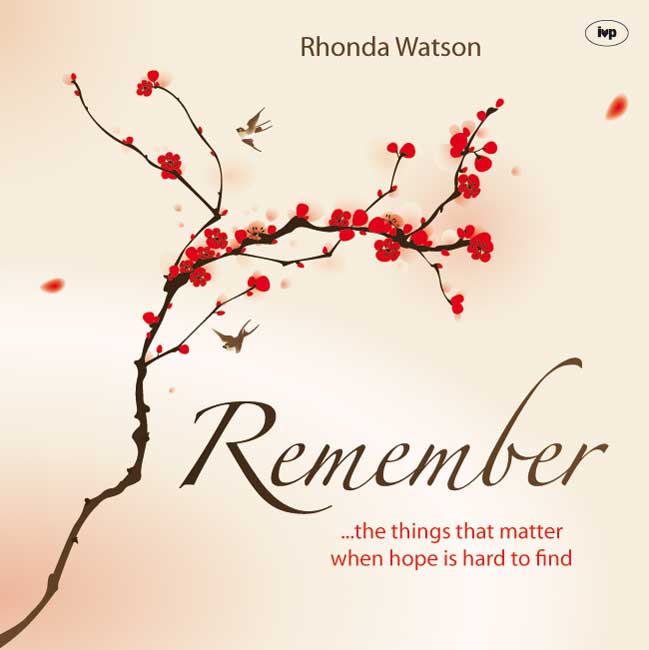
RememberGood friends of ours sent us this book in the mail. I know they’re good friends because they sent such a good book! It truly is a gem. This is a book to read slowly. I didn’t – but I will! Take it a chapter at a time. Maybe read it more than once. Pause, reflect, write notes, meditate and pray.

Rhonda Watson has motor neurone disease (MND) and has lost her ability to speak, along with other physical functions. In the midst of her loss and grief she turns her heart to the Word of God. Not in any superficial or trite sense, but grappling with the ambiguities and complexities of life. Like so many of the Psalms, she cries out at the pain, she fights to maintain her trust in God, and she finds consolation in the character and promises of God. I found that I could identify with many of the author’s feelings and experiences, and I was encouraged by her honesty as she struggled to find answers and hope in God. My heart was warmed as I read Remember and these words from the foreword ring true:

Rhonda Watson writes with the sensitivity of a tender heart, tested in the furnace of trial, and the wisdom of someone who has learned to depend utterly on God for her daily portion of strength. I greatly appreciate the combination of the subjective – her own feelings and experience – and the objective truths of the Scriptures.  (p7)

The author follows the advice of Dr Martyn Lloyd-Jones in his book Spiritual Depression where he stresses the importance of talking to ourselves, instead of simply allowing ‘ourselves’ to talk to us. There are so many voices telling us what to think and feel and do, and sometimes the worst one to listen to is our own! It’s so much more helpful to listen to God’s voice and allow him to speak into our lives. God offers us true perspective and we do well to remind ourselves of God, who he is, what he has done, and what he promises to do.

Each chapter of Remember takes us on a journey of hope with the author. She grapples with the issues faced by those who are suffering and she turns our hearts and minds to the wonder and freedom found only in God. This is no simple exercise. It requires honesty, humility, and trust. We’re called to open our Bibles and prayerfully take God at his word. This book helps us through this process and encourages us to make our own responses in each of the following areas.

1. Beauty and ugliness

In a society obsessed with body image, it can be very difficult for those with chronic illness and disability. Instead of being overwhelmed by the ugliness of our situation or measuring ourselves by others, we are encouraged to look to Jesus who reveals the beauty of God. Jesus takes the ugliness of our sin and replaces it with his beautiful righteousness.

2. Silence and speech

Watson had spent her life speaking. She was a teacher, trainer, and educator. She mourns her inability to read books to her grandchildren or enjoy conversation with family and friends. And yet she writes:

I look forward to the day when, with healed tongue, I will sing and praise my Saviour. On that day my silence will be over.  (p37)

3. Fear and trust

Fear
Took me by the throat today
Shook me till
My bones rattled

Chased me
Relentless and cold
Insidious, mocking
Chased me all day

I could have stood my ground
But I ran
So fear
Grew stronger

I was captured
In the end
Quaking and fallen
Curled on the ground in shame

(Rhonda Watson, 2009. p63-64)

We’re encouraged to overcome our fears by turning to God who can be trusted. God is our mighty, sovereign, and loving Saviour. He calls us, as his beloved children, to trust him.

4. Thankfulness and bitterness

I found this chapter full of challenges. It’s so easy to feel that this world owes us something and to grow bitter at lost opportunities or unrealised potential through a disabling disease. Drawing on Oswald Chambers, Watson writes of the challenge to live an ordinary, unobserved, ignored existence as a disciple of Jesus. I might think that I should be doing extraordinary things for God, when he simply calls me to do ordinary things in an exceptional way – his way, for his glory, not mine! When I’m reminded of God’s extraordinary grace in Jesus Christ, it moves me toward thankfulness instead of wallowing in bitterness.

5. Joy and grief

Acceptance of grief is part of the journey toward joy.  (p107)

We don’t need to deny or suppress grief in order to experience joy. The Psalms give expression to a range of human emotions. They acknowledge and give voice to our pain, disappointment and grief. They show that it’s okay to cry out to God, to express our doubts, worries and fears. And they shine a light on the path to joy that can only be found in God himself. Joy is not be found in our circumstances, but through trusting our loving Father in Heaven despite our circumstances.

6. Delight and despair

In times of suffering it is so easy to give in to despair, to give up hope. Perhaps, we now view ourselves as unproductive and worthless. Watson speaks of two choices for how we think and act…

Choice 1: I am worthless, I don’t know why God would inflict this useless suffering on me, I give up, I will turn my face to the wall and surrender to these feelings of despair.
Choice 2: This is tough going, it’s hard to hold on to a sense of worth, but nevertheless I will commit my way to God, I will attune my desires to his ways, I will trust him, and I will seek to delight him.  (p132-133)

7. Awake or asleep?

Chronic illness can lead to sleepiness. Not simply staying in bed, but drifting aimlessly and passing the time with mindless distractions. Some of this is necessary, but failure to navigate can lead to shipwreck. We can slide into self-pity and resentment or drift into despair. We need awakening to how God sees us, our circumstances and this world we live in. Watson offers this prayer:

Our Heavenly Father,
Help us to stay awake.
We grow drowsy and distracted as we wait for you,
At times our hearts are loaded down with sadness and struggle.
By your Spirit, strengthen us,
By your Word, nourish us,
Keep us longing for our true home,
Forever with you.  (p160)

8. Life and death

Everyone one of us is going to die. This is our lot, but that doesn’t make it okay. Death wasn’t part of the good world that God created and it’s right to rage against it. It’s not a natural part of life and shouldn’t be viewed as such. Death sucks!

22 We know that the whole creation has been groaning as in the pains of childbirth right up to the present time. 23 Not only so, but we ourselves, who have the firstfruits of the Spirit, groan inwardly as we wait eagerly for our adoption to sonship, the redemption of our bodies. 24 For in this hope we were saved. But hope that is seen is no hope at all. Who hopes for what they already have?  (Romans 8:22-24)

Many of us go through life ignoring death. Those with chronic and terminal illnesses probably feel it’s presence more acutely. We groan along with the creation at the pain it causes. And we groan not in despair, but with hope and longing. Jesus in his death and resurrection has conquered death’s power over us. God has promised that he will abolish death and restore the creation, and we long for that day. We are meant for life, not death. Watson writes:

…there are two ways of looking at this day. Either I am dying of MND, or I am living with MND. There is a simple but profound difference between these two perspectives. One is death, one is life. The choice is: Which perspective will I accept for myself today?  (p166).

And so I will pray:

Please God, help me to choose life.

I thank God that he has used Rhonda Watson to write this honest and inspirational book. My only regret is that the cover has a feminine look about it! This is for blokes just as much as women. It’s a gutsy message. Remember is a book for all people, not simply those with illness of some form or other. We will all experience the struggles of faith in the face of suffering and temptations. This book calls us to remember the things that matter when hope is hard to find.

You owe me dinner

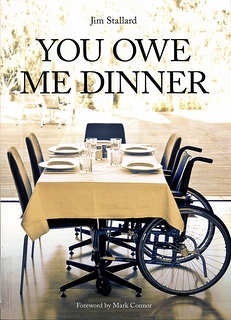
My wife told me to read this book. She said, “Read this and stop feeling sorry for yourself.” I must admit, I was a bit indignant at first. After all, I wasn’t feeling sorry for myself. And if I did choose to feel sorry for myself, then I obviously had every right to! I saw the cover of the book and quietly thought, “I’m sure having terminal cancer is a lot worse than being stuck in a wheelchair.” Well, I’ve now read the book and confess to having been a complete git! This is an emotional and gut-wrenching book that has seriously opened my eyes.

The author, Jim Stallard, thought he understood disabilities. He’d worked as a nurse among people with psychiatric and intellectual disabilities in the years when Australia was just beginning to correct some of it’s institutional abuse. He’d experienced struggles himself, suffering from type 1 diabetes and having gone blind in one eye. But when a freak accident left him a quadriplegic, he began a torturous and terrifying journey with disability that would continue throughout his life. In the midst of this, he has so much to teach us.

I won’t recount the story, other than to say that there’s something coming around every bend and it doesn’t let up! Just when you feel things couldn’t possibly get worse, they do. And they do again, and again, and again. Jim has stared death in the face over and over. We feel his powerlessness, his pain and his fear. We’re inspired by his humour, and we’re also confronted with his faith.

Jim’s wife is a humble champion. His children are inspirational. His carers and friends are genuine servants. The people who surround Jim enrich his life as they are enriched by his. I was encouraged by the commitment to prayer by so many. I was challenged by Jim’s continual trust in God through all that he endures. He his confident that nothing can separate him from the love of God that is in Christ Jesus our Lord. He refuses to confuse his changing circumstances with God’s unchanging love.

This book has also helped me to appreciate how difficult we can make things for people with disabilities. Our society is changing, more and more facilities are being offered, but it’s attitudes that need to change most. Ignorance is a big problem. Jim has helped me to appreciate how our churches can be just as alienating to those with disabilities. We can so easily send the message that this isn’t a place for you. These words are very confronting:

Every church in Australia makes a statement about people with disabilities, and in one aspect or another it is usually exclusion. If you show me a church with ramps at the door, I see a legal building. If you show me a church with signers for people who are deaf and Braille song sheets, large-printed hand-outs and ramps to the platform, I see a glimpse of heaven. The Kingdom of God is inclusive.

My disability is not to be feared, pitied or overlooked. It is a reality and a challenge for Pam and me every day. I acknowledge that it is sometimes a challenge for able-bodied people to deal with the issue of disability. But my disability is not my biggest problem. My biggest problem arises when able-bodied people only see my disability and not the rest of me.

What is most beneficial to me is not so much a building that meets all the legal requirements, but an attitude that meets all the attributes of Jesus. And whilst Jesus certainly healed people, he didn’t heal everyone. I wasn’t healed, but I still needed all of my faith to help sustain me.  (p96)

My hope is that this book will help me to treat people as people, whatever they look like, whatever their abilities or disabilities. It’s so easy to fear the unknown or unusual, to avoid those who are different from us, and to make assumptions about people without getting to know them. My desire is to become a source of help and hope for people who struggle with disability. This will mean keeping my eyes open and thinking and speaking and doing. It will mean not assuming or neglecting or walking away. Through my cancer, God has given me a personal taste of what disability can mean. Jim’s book has inspired me to change my attitude to others. Jesus has shown me God’s heart for all people, especially those with disabilities.

12 Then Jesus said to his host, “When you give a luncheon or dinner, do not invite your friends, your brothers or sisters, your relatives, or your rich neighbors; if you do, they may invite you back and so you will be repaid. 13 But when you give a banquet, invite the poor, the crippled, the lame, the blind, 14 and you will be blessed. Although they cannot repay you, you will be repaid at the resurrection of the righteous.”  (Luke 14:12-14)

Help me live

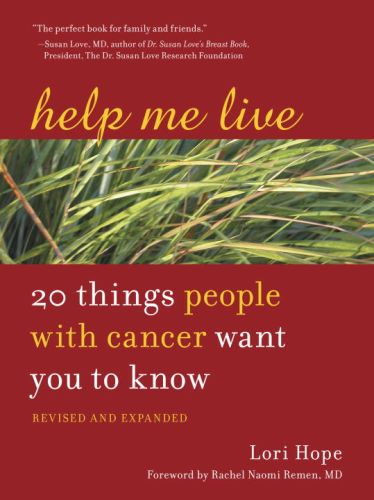
HelpmeliveHelp Me Live: 20 things people with cancer want you to know is a must read for anyone who seriously wants to support people with cancer. This book is a treasure chest. Lori Hope understood! She surveyed hundreds of people with cancer, read widely on the topic, spoken with doctors, patients, carers and therapists. Most significantly, she battled with cancer herself. The book is chocked full of wisdom, insights, anecdotes, humour and pathos. It shares the actual stories of so many who have personal experience in these areas. It’s an excellent resource. I’ve read it and I’ll be recommending it widely.

So if you’re an oncologist or work in oncology, then please get yourself a copy and read it! If your husband, wife, child, parent, relative, friend, neighbour, or colleague have cancer – and you want to support them – then please heed the wisdom in this book. If you know people with cancer, but you’re scared of saying or doing the wrong thing, then this book will equip you to help. If you’re the pastor of a church, a medical social worker, a general practitioner, a nurse, or simply want to better understand others, then this will open your mind to the needs of many. If you have cancer yourself, and want to feel supported and loved and understood, then I recommend reading this book and passing it around.

Many of the books I’ve read have been written from a specifically Christian perspective. This one isn’t, but it shows an empathy for people with a range of beliefs and doesn’t discount faith in God or the significance of prayer.

I’ve read Help Me Live through once and I anticipate dipping into it again and again in days to come. Some of the issues it raises are worth exploring more thoroughly and I’ve begun compiling a ‘further reading’ file to explore at some point. At a recent ‘Lung Cancer and Mesothelioma Support Group’ meeting I mentioned this resource and none of the medical staff, cancer support staff, carers or patients were aware of it’s existence. But then neither did I until the author wrote to me a few weeks back. So let me give you the gist of it with a few quotes and snippets from the book.

The 20 things people with cancer want you to know

1. It’s okay to say or do the ‘wrong’ thing.

“Doing nothing or holding back is worse to me than doing too much or saying the wrong thing.”  (p20)

Six words in sequence that never fail: “I don’t know what to say.”  (p18)

2. I need to know you’re here for me, but if you can’t be, you can still show you care.

“I know that my being sick scares you. It scares me, too. Don’t stay away from me because of this. We don’t have to talk about it. Just be here for me.”  (p25)

3. I like to hear success stories, not horror stories.

“They spent the entire afternoon telling me about everyone they had known that had cancer, and telling me the details about how many of them had passed away. It made me feel terrified.”  (p32)

4. I’m terrified and need to know you’ll forgive me if I snap at you or bite your head off.

“I just need them to understand that I was not at my best mentally and emotionally and to be patient with me.”  (p42)

5. I need you to listen to me and let me cry.

“Sometimes someone would ask me how I was and when we started talking cancer, they changed the subject. That made me feel terrible.”  (p50)

6. Asking my permission can spare me pain.

“I liked it when people would call and make an appointment to come over and see me and call an hour before to check that I was up for it.”  (p62)

7. I need to laugh – or just forget about cancer for a while!

“I just needed someone to help take my mind off all the stuff going on. I didn’t want to think about the cancer. So just do things like watch a movie or go for a walk and just talk to them and treat them like you would if they didn’t have cancer.”  (p69)

8. I need to feel hope, but telling me to think positively can make me feel worse.

“Just think positive … hooey! LOL … that’s it? That’s all it takes to cure my cancer? And hey, you try thinking positive after a round of chemo.”  (p77)

9. I want you to respect my judgment and treatment decisions.

“He kept encouraging me to deny chemo, that it was poison. It didn’t help me at all. My choice wasn’t respected, and I was left with a sinking suspicion that I may be choosing to poison myself.”  (p92)

10. I want you to give me an opening to talk about cancer and then take my lead.

“I just wanted it to be normal. My friend came and we played Scrabble and talked, and it helped. Sometimes we talked about cancer. Sometimes we did not. But we played Scrabble just as we had most of our friendship.”  (p99)

11. I want compassion, not pity.

“Many words of heartfelt compassion without being condescending were said. ‘I love you’ meant a lot to hear, or ‘You mean so much to me’.”  (p105)

12. Advice may not be what I need, and it may hurt more than help. Try comforting me instead.

“I don’t like it when anyone starts a sentence with ‘you have to’.”  (p111)

13. I am still me; treat me kindly, not differently.

“People don’t change when they get cancer and suddenly stop wanting to be called smart, sexy, fun, funny, a good Christian, an excellent cook, singer, etc. or a total fashionista. People are more than their cancer.”  (p118)

14. If you really want to help me, be specific about your offer, or just help without asking.

“Instead of asking can I do anything, just do something, don’t wait for me or my caregiver to ask, because we more than likely won’t.”  (p123)

15. I love being held in your thoughts or prayers.

“A friend told me I was wrapped in her love and prayers. I’ve never forgotten those words, and years later when I had a health scare, I thanked her again and told her how much those words meant to me.”  (p128)

16. Hearing platitudes or what’s good about cancer can minimize my feelings.

“Beginning a sentence with ‘At least…’, at best minimizes and at worst totally dismisses a concern or worry.”  (p135)

17. I don’t know why I got cancer, and hearing your theory may add grave insult to injury.

“A few people act as if you might be contagious or had done something to deserve the disease. Now that really hurt, I suppose because of the little nagging voice inside that’s saying the same thing.”  (p139)

18. Don’t take it personally if I don’t return your call or want to see you.

“I wanted people to understand that I was tired and couldn’t return all calls or emails.”  (p146)

19. I need you to offer support to my caregiver, because that helps me, too.

“When friends called and said they were bringing meals over and asked whether Thursday or Friday would be best, I could cry. Not only was it a show of their love and support but also it relieved my wife of yet something else to deal with.”  (p152)

20. I don’t know if I’m cured, and bringing up my health can bring me down.

“On the ‘Are you cured now?’ issue, every time they ask it, it drives home the point deep inside of you that you will never know.”  (p162)

And a bonus, from the revised and expanded edition…

21. I am more grateful than I can say for your care, compassion, and support.

“Friends and school families came and took care of us. Took my daughter to school and sports. Set a website for meals and rides. Kept my dogs when I was in hospital. Kept my kid when I was in hospital! They saved my life, and I will be forever grateful.”  (p166)

On that note, let me say again that I am so thankful to God and to so many for their prayers, love, encouragement, and practical support. I need you to help me live, too!

Thank you!

There is hope

Don’t judge a book by its poorly photographed cover! There is hope: for those who are ill and those who care for them. That includes me, and my wife and children, my parents, my in-laws, our church, our friends, and so many more. There aren’t too many scarier diagnoses than lung cancer, especially once it reaches stage 4. Lung cancer kills more people than the next 3 cancers combined. So where is the hope? And are we talking about hope for a cure, hope for a better life, or hope for eternity?

Bob Hillman wrote this little book over 20 years ago, toward the end of his journey with ‘non-curable’ cancer. He had a long and difficult struggle over many years and was sometimes tempted to give up. However, the love from God and family and friends gave him reasons to continue and he left a powerful legacy in the lives of many. Friends gave me their copy of his book for my birthday, and it’s already made a difference in my life.

This book outlines different types of hope: 1) present hope that helps in everyday life, improving the quality and, sometimes, length of life; and 2) future hope for life beyond death, found in a relationship with God through Jesus Christ, and shaping the character of life here and now. It also warns against the dangers of false hope. When you’re seriously ill you can be tempted to expect too much from your therapy, depend too much on being cured, and fall prey to all sorts of claims and promises of miracle treatments and cures. I found this outline extremely helpful. While my hope lies ultimately in the God who raises the dead, hope remains essential to living today, tomorrow and the next. Without hope we have nothing to live for.

Bob is candid about his experiences in battling cancer and the things he found helpful. He recognised his limitations, but he was willing to work within them, and often push beyond them. He was patient with others who were sometimes unhelpful and occasionally cruel in their claims or advice. He’s a testimony to God’s grace and power at work through human frailty and weakness.

There’s a lot of talk these days (but often very little action) about multi-disciplinary healthcare and the need to understand and treat the whole person. Bob devotes a number of chapters to addressing emotional, relational, physical and spiritual factors that give present hope in dealing with cancer and other serious and chronic illnesses. It strikes me that these insights are just as important for the healthy as they are for the sick.

Psychological factors have a major impact on our health and general well-being and functioning. Bob described his battle with depression weighing on him more heavily than his terminal cancer. He encourages us to speak up about our struggles and to not be ashamed to seek help. Counselling may uncover issues contributing to our poor health and may provide better strategies for dealing with them. Anti-depressants could be the help we need to cope more effectively with the struggles of life. Perhaps we need to stop living on adrenaline, de-stress and remove the clutter in our lives. If we believe that we’re personally responsible to keep the world spinning, then maybe we should hand it over to God and enjoy the benefits of doing so!

Serious illness is a major wakeup call. Changes are forced upon us, and sometimes for the better! It’s not too late to change our diet, begin some exercise, increase our hours of sleep, enjoy some recreation, pick up a hobby, laugh a little more. The importance of good relationships with others is heightened. Maybe it’s time to resolve that grievance, offer him or her forgiveness, or seek reconciliation with the estranged friend. Time with family, having fun together, showing love and kindness, serving others – all valuable stuff and all so health promoting! Incidentally, I read an article in the Canberra Times yesterday that provided evidence that married people have much better outcomes than single people in dealing with cancer. Whether it’s a wife, a husband, a good friend, or an organised support group, relationships are so important. God has given us relationships to invest in and reap the dividends from. Don’t neglect them.

Bob Hillman’s hope is shaped by his knowledge of God. God’s word is the spiritual food we need to survive and we’re encouraged to set aside time to meditate on his word. God invites us to speak with him – to pray – and he takes all our calls. We’re urged to spend time with other followers of Jesus, to support one another, share each other’s burdens, celebrate one another’s joys, and point each other to our God and Saviour.

Shaping our present hope, is the confidence we have of an eternal hope in Jesus Christ. If this life is all we have, then I can understand people clinging on at all costs. I can appreciate the despair that comes when all the medical evidence is against us. But one day, whether by cancer or some other tragedy, each life will come to an end. We must face this reality with an open mind to God. The message of this book, and of God’s book, is that there is hope for eternity to be found in Jesus. The Apostle Paul prayed that others would know this hope, and this is my prayer also.

17 I keep asking that the God of our Lord Jesus Christ, the glorious Father, may give you the Spirit of wisdom and revelation, so that you may know him better. 18 I pray that the eyes of your heart may be enlightened in order that you may know the hope to which he has called you, the riches of his glorious inheritance in his holy people, 19 and his incomparably great power for us who believe. That power is the same as the mighty strength 20 he exerted when he raised Christ from the dead and seated him at his right hand in the heavenly realms.  (Ephesians 1:17-20)

Investigating Jesus – An Historian’s Quest

I was never a great fan of history. Stuff done in the past. Dust and cobwebs. Rote learning names, dates, events and details. It all seemed so boring and irrelevant. I had to study some history at school, but from the moment I could choose my subjects I left it behind. History was history as far as I was concerned!

Of course, this attitude is pretty naive. History helps explain who we are, where we’ve come from, what’s influenced us, what things matter and what don’t. Every time we watch the news or read the paper we’re studying history. When we flick through our family albums or read over our diaries we’re reflecting on our own history. What I didn’t appreciate for sometime was that whenever I opened my Bible I was engaging with history. I was reading of people and events in the past that were shaping my life in the present. How reliable was that history? Could it be trusted? Was it something I could stake my life on? These are important questions for those of us who want to consider, or reconsider, the basis of our beliefs.

I’ve just finished reading Investigating Jesus – An Historian’s Quest by John Dickson. Firstly, let me say it’s a beautiful book! Hardback, stitch bound, colour photos of archeological sites and ancient papyri, laced with wonderful paintings and works of art, helpful diagrams, pithy quotes … and it’s well written!

More significantly, this book is entirely about history. It’s about how historians do their job. It’s not a theological book. It’s not religious propaganda aiming to persuade people to become Christians. Investigating Jesus offers a good introduction to anyone wanting to learn the tools and strategies available to historians, and it demonstrates how they’ve been applied in examining the evidence regarding Jesus.

John focuses the bulk of this book on examining the various sources that provide historical data about Jesus. He considers the Gnostic Gospels, that came to fame in Dan Brown’s The DaVinci Code, and shows both their value and limitations in gaining information on Jesus. He examines various non-Christian sources, from the first and second centuries, that make reference to Jesus and he argues that it’s important not to exaggerate or underestimate the value of these sources. In fact, without any reference to the Bible, the evidence from these sources leads all reputable historians to agree that a Jewish teacher named Jesus really did live and die in the first part of the first century AD.  (p84)

The New Testament provides the bulk of the information we have about Jesus. It’s common for people to dismiss this evidence as one source that’s biased and therefore unreliable. However, the New Testament is a collection of many sources, not just one. And the biases of the authors doesn’t mean that they’re therefore fabricating evidence. Historians are used to handling documents with obvious biases and they’ve developed a number of tests to evaluate the reliability of their evidence. These include:

  • The criterion of dissimilarity
  • The criterion of date
  • The criterion of multiple attestation
  • The criterion of embarrassment
  • The criterion of coherence
  • The criterion of historical plausibility
  • The criterion of archaic language
  • The criterion of memorability

These criterion are explained and illustrated in this book to show how they can be applied to the various accounts of Jesus in the New Testament. We are continually reminded that these are common tools of the trade for historians. These are the normal processes that historians, be they atheist, Christian, Jewish, or otherwise, apply to weighing the evidence before them.

Archeology is also considered alongside these criterion. In recent years there have been some very important archeological discoveries that have given insight into the world of the New Testament. Some incidental details in the Gospels have been confirmed and some previously held theories about Jesus have been overturned.

The concluding chapter of this book considers the difference between probability and proof. The discipline of history deals in degrees of probability rather than repeatable scientific proofs. This doesn’t mean that history only offers second class knowledge. In fact, there are strong similarities with our legal system that gains knowledge by weighing up the evidence. Historical (and legal) proof is really probability beyond reasonable doubt. 

Examining all the sources that refer to Jesus, both outside and inside the New Testament, and applying the aforementioned criterion for testing these sources, leads historians of all persuasions to agree on the following:

… while many doubts remain over the details, the core elements of Jesus’ life are in fact known … there is an overwhelming scholarly consensus today that a Galilean teacher and (reputed) healer named Jesus proclaimed the arrival of God’s kingdom, wined and dined with ‘sinners’, appointed a circle of twelve apostles, clashed with religious authorities, denounced the Jerusalem Temple and wound up dead on a Roman cross; shortly after which his first followers declared that they had seen him alive again, announced he was the long-awaited Messiah and sought to preserve and promote (first in oral form, then in writing) all that they could of their memorable master’s life. The sources and methods contemporary scholars use allow certainty on at least these elements of the ancient Gospel story. (p155)

If, like me, you’ve never been much into history, then Investigating Jesus is a great introduction. If you’ve never considered the reliability of the evidence for Jesus, then here’s a place to start. If you’re after an easy to read, well illustrated, clearly argued book on the historical bedrock of Christianity, then I recommend this one. In writing this, John Dickson set out to bridge the gap between popular perception and scholarly judgment about the figure of Jesus and in my humble opinion he does this well.

At the end of the day, this is a ‘second order’ book. It’s like an instruction manual that shows how something works and helps you to use it. Investigating Jesus is aimed at helping the reader to investigate Jesus. It’s not an alternative to investigating Jesus for yourself. Having read this book you’ll be better equipped to go back to the primary sources, read them over and over, and weigh up their implications. If you’ve never done this before, let me encourage you to get hold of a New Testament (and any of the other primary documents mentioned in this book) and discover all you can about Jesus.

Silos, politics and turf wars

silosPatrick Lencioni is the guru of team work. His book, The Five Dysfunctions of a Team, is the place to begin. Then add Death by Meeting and Silos, Politics and Turf Wars and you’ve got an excellent tool kit for tuning up your team. This book is written primarily for executives in business who are seeking to align their organisations, departments and staff. I read it as the lead pastor of a church with multiple congregations, specialised ministries and a growing staff team. It helped me identify a number of areas that had been hampering our effectiveness as a team. The subtitle sums up its main message: about destroying the barriers that turn colleagues into competitors.

Our church would probably be considered mid to large on a scale of size and complexity for churches in Australia. We have three congregations meeting each Sunday (at one point we had four). There are forty to fifty small groups meeting throughout the week. We have children’s and youth ministries happening at various times and reaching around 250 young people. The church has sent and supports a number of home-grown missionaries. We provide staff and resources to university ministry on four local campuses. There are ten pastoral staff and seven ministry apprentices employed to work with the church and its associated ministries. All this means that we face many challenges in keeping people focused and cohesive as we pursue our mission together.

These challenges are experienced at a staff level with people on the team having different areas of responsibility. Some staff are deployed to work across multiple congregations, taking responsibility for connecting or growing or serving. Some have primary teaching/preaching responsibilities, whereas others work mainly with individuals and small groups. Some staff oversee teams on the different university campuses. One directs the youth ministry, another the children’s ministry, and another the ministry among international students. Some work from a church office, others work mainly from home, and a couple are most likely to be found in a coffee shop! It can be difficult getting everyone together, let alone working as a highly functioning team.

When it comes to team meetings that are working on church issues, it’s easy for the campus ministry staff to feel disconnected. If we spend time planning or reviewing the kid’s ministry, it might seem entirely unrelated to needs of the international student ministry. Different departments of the church can end up in competition for attention, people, budgets and resources. It’s easy to feel like my area is the most important and to resent the time wasted engaging with others’ concerns. Silos can arise in any organisation and growing churches are not immune. Sadly, divisions are far too common in churches. They can be found among staff and other leaders, and sometimes they can polarise whole congregations against each another. It’s so tempting to focus on ourselves and our areas of responsibility, and to forget that the church is called to a unity of people and purpose.

Silos, Politics and Turf Wars is full of practical wisdom for getting people and organisations together on the same page, supporting one another, sharing our problems, and celebrating our various successes and achievements. Lencioni offers a model for combating silos, consisting of four components:

  • A thematic goal
  • A set of defining objectives
  • A set of ongoing standard operating objectives
  • Metrics

Lencioni argues that determining the thematic goal is the key to aligning the organisation and its people. He defines this as a single, qualitative focus that is shared by the entire leadership team – and ultimately the entire organisation – and that applies for only a specified time period. (p178) This is different from a long-term vision, a five year plan or a ‘Big Hairy Audacious Goal’. It’s designed to focus the organisation over the next six to twelve months and provide clarity about what’s most important on the agenda over this period.

There should only be one thematic goal. If everything is considered equally important, then nothing ends up being important. However, the thematic goal needs to be broken down into a number of actionable defining objectives. These are the building blocks that clarify what is meant by the thematic goal. Everyone needs to be committed to these objectives, regardless of the role they have within the organisation.

The standard operating objectives are different. These are the objectives that don’t go away from period to period. These are the things the organisation needs to keep monitoring regardless of the current thematic goal. Depending on the business, these might include such topics as revenue, expenses, customer relations and so on. These aren’t the type of things to rally the organisation around, but they do require constant attention.

Once the thematic goal, the defining objectives, and the standard operating objectives have been established, it will now be important to measure progress. The leadership team will need to establish appropriate metrics.

Lencioni includes a number of fictional, but realistic, case studies at the back of his book. One of these case studies depicts a church and I will reproduce it (with modifications) to demonstrate how this model might work in practice. Don’t judge the details, but simply consider the illustration!

Situation:
Attendance at weekly services is up. More and more people are coming each week. The building size is limiting further growth. Regular giving is increasing. Many new people are not in small groups or serving in the life of the church.

Thematic goal:
Expand to enable healthy continued growth.

Defining objectives:
Add another Sunday service.
Offer more small groups.
Train more leaders for groups and other ministries.
Develop an integration process to assist newcomers into groups and ministry areas.
Add another member of staff.

Time frame:
One year.

Standard operating objectives:
Maintain attendance growth.
Maintain quality follow-up of all newcomers.

Maintain quality of Sunday services.
Maintain regular giving.
Increase numbers of people in small groups.
Maintain support and equipping for all leaders.

If you’re part of a growing organisation, and things are becoming more complex, and you’re keen to ensure people are clear on their roles and working as a team, then I expect you’ll find this a useful book. I recommend that you read The Five Dysfunctions of a Team before you read this one, because it’s more foundational and you’ll discover that they complement each other nicely. Like most of Lencioni’s books this is written as a ‘leadership fable’ so it’s very easy to read and the points are clearly summarised in the final section.

If I were God I’d make myself clearer

ClearerIf I were God I’d make myself clearer. That’s a big call! Way too big for me. But I can understand the sentiment. Why doesn’t God simply prove beyond all reasonable doubt that he exists? Once and for all. No questions. No ambiguities. No contradictory evidence. Just clear, obvious, proof.

I guess the obvious question is, what would such clarity look like? What would I consider persuasive? What would it take for you to be convinced of the existence of God? And then, which God are we talking about? There are so many religions, so many claims about God, how can we possibly know which is the right one, if any of them are?

In this little book, John Dickson takes us on a pathway through the maze of ideas about God. It’s been popular for years to argue that all beliefs are really different paths to the same end. This could be for a couple of reasons. Firstly, so much blood has been spilled through religious conflict, that there seems nothing to be gained by highlighting differences that could cause more conflict. Secondly, sorting out the differences takes research, time and effort, and not many people are prepared to do this. It’s easier to stay preoccupied with trivia.

John demonstrates that religious pluralism has obvious and fatal flaws. How can Hinduism and Buddhism possibly both be true expressions of reality. Hinduism has many gods, while classical Buddhism rejects the notion of any god. Christianity believes that people are saved by the mercy and grace of God, whereas Islam argues that people are saved through ethical and ritual obedience. Christianity claims that Jesus is the Messiah who fulfils the promises made to Israel, and yet Israel still awaits a Messiah. The Koran claims that Jesus was neither crucified or resurrected, while Christianity hangs everything on these events. A quick assessment of these claims highlights the bankruptcy of pluralism. It could be that none of these religions are true, but there is no way they can each be true.

This is a scary prospect in a world committed to tolerance. However, John offers us a better understanding of tolerance.

True tolerance, then, is not my willingness to accept the position of another, it is the more admirable ability to treat with respect a person with whom I deeply disagree. A tolerant Muslim, for instance, is not one who accepts as valid the Buddhist doctrine of ‘birth and rebirth’, it is one who, while rejecting such a teaching, is able to remain respectful and compassionate toward Buddhists themselves. Again, the tolerant Christian is not one who accepts as valid the Hindu claim that there are many gods, it is the one who, while denying polytheism, is able to treat Hindus with the honour due to them as fellow members of the human race. In each case there is an informed awareness of the contrary position of the other and a generous commitment to respect and value the person who holds that position.  (p38-39)

Such an understanding of tolerance opens the way through the maze of ideas. We can be intellectually rigorous and culturally sensitive in a way that overcomes bigotry and discrimination. We don’t have to paint over differences but can be freed to respectfully discuss, and argue, and explore and persuade one another.

This book argues that Christianity is to a large extent a ‘verifiable’ religion. This is not to say that it’s true, but that it’s founded upon public, historical, evidence. It makes claims that can be tested through historical, archeological, literary, and critical scrutiny. The implications of this are important. If none of the places, dates, names or events pertinent to Christianity could be attested anywhere else, there would be good grounds for being suspicious as to it’s truth claims. If it could be demonstrated that Jesus never lived, was not crucified, or did not rise from the dead, then Christianity could hardly be trusted as the way to God. As it is, Christianity makes some dangerously verifiable claims and invites people to check them out. No tricks or mirrors – just open investigation. This is a book that invites such scrutiny.

The heart of the evidence for Christianity lies in the documents of the New Testament, much of which were written shortly after the events they describe. Consider, for example, the following incident recorded in the Book of Acts. In AD 50 the city of Athens in ancient Greece was a melting pot of ideas. All kinds of claims were made about religion, and there were many ‘gods’ being promoted. Into this confusion, the Apostle Paul sought to bring some clarity by directing people to the evidence concerning Jesus. You can read what he said and the reaction it evoked…

22 Paul then stood up in the meeting of the Areopagus and said: “Men of Athens! I see that in every way you are very religious. 23 For as I walked around and looked carefully at your objects of worship, I even found an altar with this inscription: to an unknown god. Now what you worship as something unknown I am going to proclaim to you.

24 “The God who made the world and everything in it is the Lord of heaven and earth and does not live in temples built by hands. 25 And he is not served by human hands, as if he needed anything, because he himself gives all men life and breath and everything else.26 From one man he made every nation of men, that they should inhabit the whole earth; and he determined the times set for them and the exact places where they should live.27 God did this so that men would seek him and perhaps reach out for him and find him, though he is not far from each one of us. 28 ‘For in him we live and move and have our being.’ As some of your own poets have said, ‘We are his offspring.’

29 “Therefore since we are God’s offspring, we should not think that the divine being is like gold or silver or stone—an image made by man’s design and skill. 30 In the past God overlooked such ignorance, but now he commands all people everywhere to repent. 31 For he has set a day when he will judge the world with justice by the man he has appointed. He has given proof of this to all men by raising him from the dead.”

32 When they heard about the resurrection of the dead, some of them sneered, but others said, “We want to hear you again on this subject.” 33 At that, Paul left the Council. 34 A few men became followers of Paul and believed. Among them was Dionysius, a member of the Areopagus, also a woman named Damaris, and a number of others.  (Acts 17:22-34)

Some sneered, some followed, and others were keen to find out more. If you’d like to find out more, this little book by John Dickson will help point you in the right direction.

If I were God I’d end all the pain

PainIf I were God I’d end all the pain. That sounds pretty right. I’m not much of a fan of pain, especially my own! Currently, I’m sitting on my bed wearing ugg boots and a hoodie, bemoaning the cold weather, wondering if I’m well enough to venture out to watch the Brumbies play the Reds at Canberra Stadium tonight. Today’s temperature is supposed to range between 0 and 10 degrees. Subtract the wind chill and it will probably feel like minus a zillion at the ground. I must be sick or something, because until this year, I don’t think I’d missed a home game in a decade. Maybe I should ring up someone and see if I can sneak into a corporate box!

Yesterday it felt like sickness was getting the better of me. I ached all over and spent the afternoon and evening drifting in and out of sleep. I’ve probably just got another cold and a weakened immune system. But it’s not fun and it’s another reminder that things aren’t what they should be. For some dumb reason I checked the weather app on the phone at 10pm last night to discover it felt like -1.6 degrees in Canberra, while it was a balmy 25 degrees in Darwin. My heart sighed, I wished we were there, and once again wondered what on earth God was doing.

John Dickson’s little book, If I were God I’d end all the pain, is a helpful read for those who are looking for answers to the questions raised by suffering and pain. It’s not a detached philosophical book that fills the head and ignores the heart. John has experienced pain, first hand and from a young age, having lost his dad in plane crash when he was nine years old. He writes as one who understands the questions and who has explored many of the answers being offered.

Issues of faith and doubt loom large in the presence of suffering. Sometimes people attempt to use suffering as proof for the non-existence of God. It’s often expressed something like this:

Assumption 1:  An all-powerful God would be able to end suffering.
Assumption 2:  All all-loving God would desire to end suffering.
Fact:  Suffering exists.
Conclusion:  An all-powerful, all-loving God, therefore, does not exist.  (p15)

John offers an alternative proposition that he explores in this book:

Assumption 1:  An all-powerful God exists.
Assumption 2:  All all-loving God exists.
Fact:  Suffering exists.
Conclusion:  God must have loving reasons (which he is able to achieve) for permitting suffering.  (p16)

This is not offered as a proof for God. Nor does it solve the problem of suffering. It still leaves deep and emotional difficulties for the one who believes in God. Such as, Why does God allow this suffering? and What has he done about it? 

Before John gives a Christian explanation for the problem of suffering, he explores a number of other perspectives. He demonstrates how Islam understands suffering in a very different manner to Buddhism, and how Hinduism and Atheism are very different again. I won’t attempt to summarise these views because I don’t want to caricature them by reducing each to a few sentences. But it’s important to understand how different these world views are, against the popular claim that all religions are simply windows into the same truth. This suggestion shows serious ignorance and disrespect for each of these religions and world views.

The Bible’s perspective on suffering is that it’s okay to ask questions and raise doubts. In fact many of the biblical authors, especially the Psalm writers, do exactly that. Psalm 22 is offered as an important example:

1  My God, my God, why have you forsaken me?
Why are you so far from saving me,
so far from the words of my groaning?
2  O my God, I cry out by day, but you do not answer,
by night, and am not silent.

John writes in response to the words of this Psalm:

If I were a Buddhist, this sort of questioning would indicate my unenlightenment; if I were a Muslim, it would border on blasphemy; if I were an atheist, or course, it would be meaningless. Actually, I suspect some church folk of today would feel uncomfortable repeating the sentiments of this psalm. Sometimes we in the church feel we must declare “The Lord is my shepherd” even if the Shepherd seems to have gone walk-about. But faith isn’t like that, at least biblical faith isn’t like that. Faith is not denial of reality, nor does it involve repeating a mantra to dispel the doubts. The presence of Psalm 22, in the Bible, right before Psalm 23, reminds us that we have God’s permission to express our disappointment.  (p34-35)

The Bible gives an explanation for the cause of human suffering and it lies in our decision to reject our Creator. From that moment onwards (somewhere near the beginning of human history) everything has been out of whack. Things have grown worse and worse with every assertion of our independence from God. I’m preaching on Genesis 4-9 tomorrow and I’ve been struck again at how quickly everything deteriorated. John writes of Genesis 3:6, So began the long and torturous story of the human will: men and women, made in God’s image, defying their Maker for an imagined personal gain. (p42)

Of course, many have asked why God doesn’t simply step in, over-rule our selfish decisions, and stop the pain we cause. If he has the power to do this, then what’s stopping him? The answer lies in God’s respect for human dignity. He has made us as real beings with real choice. We’re not puppets like Truman, in the movie, The Truman Show. God doesn’t play ‘dolls house’ with the world. We are real independent beings who can choose either to relate to God, or to reject God. God allows us to choose, and to live with our choices, but he won’t allow evil and suffering to continue forever. He’s set a time when he will call all injustice to account. It’s a testimony to God’s patience that he hasn’t done this yet. God is giving people time to turn back to him.

This book also highlights the biblical perspective that God hasn’t given up on this world. He promises an eternal future for all who put their confidence in Jesus Christ. Contrary to the popular notion of heaven, where people are seen as disembodied souls separated from physical existence, the Bible speaks of a new physical creation. We can look forward to an end to pain and suffering and the restoration of our bodies. This is a place where we continue to enjoy real physical sensory experience. We can look forward to a future that holds real hope for those currently suffering in pain.

John finishes his book with a profound perspective on suffering that’s unique to Christianity. In contrast to Islam, which sees God as the ‘Unmoved-Mover’, the Bible portrays God as sharing in our suffering as the ‘Deeply-Moved-Mover’. Jesus, God-in-the-flesh, shares in this painful world, suffers deeply, and dies a torturous death by crucifixion. But the deeper significance in Jesus’ suffering is found in these words of Psalm 22, that Jesus makes his own:

My God, my God, why have you forsaken me?

Why would Jesus cry out such a thing? This is God’s Son, in whom God is well pleased, so what’s happening? Jesus does far more than experience my physical or emotional suffering and pain. He takes my guilt and shame, enduring the judgment of God against all my selfishness and sin, so that I can receive God’s mercy. Totally undeserved, but generously offered. Here is real hope for all who suffer… if we will put our trust in Jesus.

Death by Meeting

meetingA friend of mine had a fishing boat that he’d named A MEETING. It was brilliant really. He could be out fishing and if anyone called, his wife could ‘honestly’ let them know that he was in a meeting and he’d be back later (hopefully with dinner)!

My kids used to think that my job was to go to meetings. Sometimes I thought that too! Staff meetings, council meetings, leaders meetings, training meetings, congregational meetings, one-to-one meetings, committee meetings, annual general meetings, budget meetings, planning meetings, review meetings, vision meetings, administration meetings, board meetings, boring meetings, way too many meetings! If you didn’t enjoy having to read the word ‘meeting’ 16 times in the previous sentence, then you’re probably like many of us who don’t like seeing the word appear that many times in our diaries. Surely life wasn’t meant to be an endless sequence of meetings. In his book, Death by Meeting, Patrick Lencioni writes:

While it is true that much of the time we currently spend in meetings is largely wasted, the solution is not to stop having meetings, but rather to make them better. Because when properly utilized, meetings are actually time savers.  (p250)

In my line of work, I couldn’t see a way around having meetings, so I was a prime target for this book. I read it and I wasn’t disappointed! Death by Meeting is another ‘Leadership Fable’ in the same vein as The Five Dysfunctions of a Team. It hooks in the reader with a great story, making the book easy to devour, and finishes with a summary section that ties together all the main points.

Lencioni argues that there are two main reasons we don’t like meetings. Firstly, meetings are boring, tedious, unengaging and dry. Does this resonate with anyone?! Busy people forced to sit through boring meetings is a recipe for pain. Secondly, meetings are ineffective. Sometimes it’s impossible to see how they contribute to our organisations. All they seem to achieve is tying up people’s time and breeding resentment. I’m sure you know what he’s saying!

Problem #1: Lack of Drama

Lencioni brings his experience as a student of screenwriting to the topic of meetings. Why is it that we get excited about watching a movie for two hours, but cringe at the thought of a two hour meeting? He explains why meetings should hold greater appeal than movies. We get to participate and interact in a meeting, whereas we sit passively during a movie. Meetings can have a massive impact on what we need to do afterwards, whereas nothing much in our lives is affected by whether we watch a movie or not. The difference, he demonstrates, is that movies contain drama, tensions and conflict. And these are the same ingredients that make for good meetings.

People need to be hooked in to participating in a meeting from the outset. They need to be jolted into grasping how important this meeting will be, how dangerous it would be to make a bad decision or to fail to respond to a strategic opportunity.

Throughout meetings conflict should be encouraged, not avoided. Avoiding difficult issues ultimately leads to boredom and frustration. However, mining for conflict and disagreement opens the opportunity for productive, engaging, and even fun meetings! Leaders need to give people permission to disagree and explore contentious issues. This creates an environment of trust where individuals can be honest and constructive and it leads to better outcomes for the organisation. Lencioni writes:

The truth is, the only thing more painful than confronting an uncomfortable topic is pretending it doesn’t exist. And I believe far more suffering is caused by failing to deal with an issue directly – and whispering about it in the hallways – than by putting it on the table and wrestling with it head on.  (p230)

Problem #2: Lack of Contextual Structure

Too often our meetings lack clarity and purpose. Some topics take up all the time and never get resolved. Other matters are rushed through at the end without getting the scrutiny they need. Some agenda items are big picture, long range and visionary. They require research, preparation and time to consider. Other items are trivial and would be better dealt with outside of the meeting. What’s the point of our meetings? Lencioni writes:

The single biggest structural problem facing leaders of meetings is the tendency to throw every type of issue that needs to be discussed into the same meeting, like a bad stew with too many random ingredients. Desperate to minimize wasted time, leaders decide that they will have one big staff meeting either once a week or every other week. They sit down in a room for two or three or four hours and thrash everything out… Unfortunately, this only ensures that the meeting will be ineffective and unsatisfying for everyone.  (p235)

This book recommends there should be different meetings to fulfil different purposes. It offers a template of four basic types of meetings.

Meeting #1: The Daily Check-In

This is a 5 minute meeting, held at the start of each day, where each member of the team reports very briefly on their activities for that day. This meeting is to get everyone on the same page, clear about priorities, so that things don’t fall between the cracks, and people don’t step on each other’s toes.

Meeting #2: The Weekly Tactical

These meetings are focused on tactical issues of immediate concern. Lencioni recommends not setting agendas in advance for these meetings. Rather, what’s actually going on and what the organisation needs to be doing determine what get’s discussed. Discussion should be restricted to specific, short-term topics that require people to focus on solving problems. The two overriding goals of these meetings are the resolution of issues and the reinforcement of clarity.

These meetings should normally take place weekly and run for between 45 and 90 minutes. Of course, this will mean that there simply isn’t enough time to discuss many complex and important matters. Long-term strategic issues will be left unresolved. There won’t be the opportunity for brainstorming, analysis, or even preparation (as there is no prior agenda). When strategic issues are raised in the weekly meeting, it’s important for the leader to take them off the table and plan for them to be discussed in a different type of meeting.

Meeting #3: The Monthly Strategic

These are potentially the most interesting, important, and fun meetings for the team. This is where we deal with the big stuff, where we’re headed and how we’re going to get there. It’s important to set the agenda for these meetings so that people come prepared. Research, planning and preparation will be required if quality decisions are to be made. There should only be one or two topics on the agenda so they can each receive the attention they need. The duration of these meetings will vary, but Lencioni recommends scheduling two hours per topic to encourage good conversation and debate.

It’s important to schedule these strategic topic meetings. When we don’t hold them, our meetings are dominated by the urgent rather than the important, and we fall into the trap of simply doing the same old same old. Sometimes a topic will arise that can’t wait until the next monthly strategic meeting. In these cases, the leader should call an ad hoc meeting specifically to tackle this topic. Don’t fall back into the trap of stumbling over the topic in the weekly tactical meeting.

Meeting #4: The Quarterly Off-Site Review

Off-site meetings provide the opportunity to step away from the daily, weekly and monthly issues that dominate our time and thinking. They provide the time and space to sit back and take in the wider picture. In fact, getting away from the office (so to speak) often creates a freshness and energy that takes the team and the organisation to a new level.

Such meetings need more time, usually a day or two. They provide a relaxed environment free from normal distractions. They can be utilised for a variety of purposes, such as building relationships, enhancing teamwork, comprehensive strategy review, long range dreaming and planning, or exploring what the competition is doing.

A final thought on meetings

As a church pastor, my life and work and ministry has been dominated by meetings. At times they’ve been vibrant, productive, and fun. Often they’ve been dull, lifeless and a chore. This book has offered me cause to reflect and examine our meetings. It’s led me to make some helpful changes, to clarify the purpose of our meetings, and to introduce deliberate variety in our meeting program. But as I reflect, it’s the kind of book that needs to be read and re-read. It’s easy to fall back into unhelpful old patterns and for our meetings to lose their edge. I’ll finish with this quote from Lencioni:

Bad meetings exact a toll on the human beings who must endure them, and this goes far beyond their momentary dissatisfaction. Bad meetings, and what they indicate and provoke in an organisation, generate real human suffering in the form of anger, lethargy, and cynicism. And while this certainly has a profound impact on organisational life, it also impacts people’s self-esteem, their families and their outlook on life.

And so, for those of us who lead organisations and the employees who work within them, improving meetings is not just an opportunity to enhance the performance of our companies. It is also a way to positively impact the lives of our people. And that includes us.  (p253)

Making the most of the cross

The second sermon I ever gave was a cracker. People told me! It was logical, engaging and humorous. I succeeded in explaining, illustrating and applying the Bible in a way that captivated the listeners. My girlfriend (now wife) even started to believe that I might have some hope of becoming a preacher! But, it’s time for public confession. I basically pinched the whole talk, idea for idea, point for point, from John Chapman.

I don’t think I was the first to do this, and I’m certain that I wasn’t the last. You see, I’d looked over the Bible passage again and again, and I couldn’t see any way to make it clearer than Chappo. So why not simply copy his talk?

Chappo’s passionate desire for people to understand the truth, and his confidence in the Bible to reveal it, came through so clearly in his preaching. He still has this same passion and confidence, and it comes across in his recent book, Making the most of the Cross. How many people are still writing books after their 80th birthdays, and dedicating them to their friends in the retirement home? Well, at least one! And I thank him for it!

This book takes us to the very core of the Christian message – the death and resurrection of Jesus Christ. Everything stands or falls on these events. Without them, there is no Christianity. If Jesus didn’t die, or if he died and remains dead, then there is no real hope for humanity, either in life or in death. This is no take it or leave it topic. It’s worth investigating seriously, whether we’re a child or an octogenarian. But don’t leave it until you’re 80 if you’re not already there!

There are two main sections in Making the most of the Cross. The first explores the significance of the death of the Lord Jesus. The second considers the facts and meaning of the resurrection. You could tackle the book in two parts, but the real benefits will come from going even more slowly and considering the many different aspects and implications of these events.

The death of Jesus has been described as a jewel with many facets. Each facet gives us a different window into the significance of the cross and its profound implications for us. All facets need to be seen so that we don’t underestimate or skew the meaning of the cross. For example, Chappo helps us to see that…

  1. Jesus’ death brings salvation
  2. Jesus’ death is a substitute
  3. Jesus’ death is a ransom
  4. Jesus’ death turns away God’s anger
  5. Jesus’ death brings the defeat of Satan
  6. In Jesus’ death, the just God justifies sinners freely
  7. Jesus’ death is the unifying force in the Christian community
  8. Jesus’ death brings forgiveness and cleansing

John Chapman grounds every chapter of his book in the text of the Bible. The Gospel accounts are the primary evidence for what happened to Jesus, and how Jesus understood what was happening. The rest of the New Testament supports this, giving additional insight into their meaning. Sometimes the Old Testament is quoted to assist us in understanding a particular background to Jesus’ death or resurrection. In fact, reading this book helps us to see more of how the whole Bible is focused on Jesus and only makes sense in the light of what he has done.

Given the brevity of this book, there is much more that could be said about the significance of the cross. But, this book provides a very good primer. If you are keen to take things deeper then let me recommend The Cross of Christ by John Stott, The Atonement by Leon Morris, and Where Wrath and Mercy Meet edited by David Peterson, among others.

To claim that Jesus was raised from the dead and is alive today, 2000 years later, is nothing short of extraordinary. What is more, Christianity stands or falls on the truth of this claim. It’s not an optional accessory. It’s the heart and soul of it all! Chappo outlines briefly the evidence for the resurrection, including the empty tomb, the eyewitnesses, the amazing transformation of the disciples, and their lasting impact on others (even to this day). But he doesn’t stop here. He goes on to highlight the significance of Jesus being raised, how the resurrection vindicates Jesus in his death, reveals him to be God’s appointed eternal ruler, the judge of all people, the pioneer of life beyond the grave, the pattern of resurrection to come, and the very real hope for you and me that death is not the end.

One thing that impressed and encouraged me about Making the most of the Cross is the suggested prayer, usually just a sentence or two, printed at the end of each chapter. This gives the book a personal edge that encouraged me to relate to God and not simply fill my head with ideas and information. The death and resurrection of Jesus is life-transforming. It has changed my life forever. But the truth is, I need to keep being reminded of these things. Perhaps you do too! I found these words ringing true…

Sometimes the circumstances of life may cause us to wonder if God has forgotten us. Everything seems to be going wrong. But the death of Jesus is above our circumstances. Nothing can take away the fact that Christ died for us. No matter what happens to you or to me, the death of the Lord Jesus says, “I love you”. Nothing can change that. Be in no doubt that God loves you. Jesus’ death remains as a beacon of God’s eternal love for us. (p14)

Making the most of the rest of your life

John Chapman, or Chappo as we like to call him, is one of my heroes. Back in 1989 I had the privilege of being trained by Chappo to become a preacher. He’s a master communicator, one of the best preachers I’ve heard, and he also knows how to share his craft with others. He’d give his young apprentices, including yours truly, what we affectionately called ‘the blow torch to the belly’. If he didn’t like your talk, he’d tell you! And then he’d deconstruct and reconstruct the talk, and eventually it would morph into a much better one. It wasn’t always pleasant, but he worked hard with us, and on us, because he was passionate about what we were doing. Our job was to communicate, clearly and truthfully, the importance of Jesus Christ. Chappo’s job was to make sure we did it well.

John is now well into his 80s and he remains just as committed to communicating the good news about Jesus. He doesn’t do as much preaching these days, but he still makes the most of his opportunities. Making the most of the rest of your life is Chappo practising what he preaches. This is a book about Chappo’s favourite topic – Jesus!

It’s taken me a while to pull this book off my shelf and read it. I shouldn’t have waited so long, because it’s a great book and it took me less than an hour to read the whole thing. I’d assumed it was only for old people, and that wasn’t me! But the key thing about being ‘old’ is not your age. It’s being forced to accept your mortality. Getting older means you don’t have as long to live anymore. I’m not that old (I haven’t hit 50 yet), but God has certainly confronted me with my mortality recently. Chappo writes:

Life in a retirement village has been a new experience for me. The paper man comes every morning at 4.30am and the ambulance at 9.15am. Sometimes it brings people home, but not always. Your mortality presses in.  (p9)

There’s nothing morbid about this book. Chappo has a cheeky sense of humour and it comes through in his writing. He writes with clarity and energy, and this is a book brimming with life and hope. Greater hope than you could ever imagine. A hope that motivates Chappo to write and share with others… while he still can, and while we can still read it (and it is printed in large type)!

You may think it is strange that I’m writing about making the most of the rest of our lives. Humanly speaking, I don’t have all that much left. The average male in Australia lives for 79 years. That doesn’t leave me much time.

On the other hand, if there is life after death, if eternity is really eternity and I have the greater bulk of my life to look forward to, then it makes all the difference.  (p9)

For Chappo, life beyond the grave is far more than wishful thinking. It’s the promise of God. He bases his confidence in the words of the Bible, and the historical person of Jesus. It’s the death and the resurrection of Jesus that provides the hope of resurrection beyond death for others. This is not the cartoon-like picture of someone in a white dress hanging out in the clouds playing a harp. Nor is it the idea of a disembodied soul floating around in heaven. It’s the hope of having a resurrected body, living in a new creation, made by God. Perhaps this still sounds a little weird, but I reckon it’s worth an hour of your time reading Making the most of the rest of your life to begin an investigation. If it’s not true then I guarantee you’ve still spent a better hour than anyone watching Biggest Loser. If it is true, then you’d be the biggest loser if you didn’t bother to check it out.

The guts of the book are spent describing who Jesus is, and what he said and did. Chappo takes us through Mark’s Gospel, explaining, illustrating, and applying as he goes. He has the knack of showing how Jesus makes sense of everything in the Bible and how he impacts life here and now. I’d recommend reading the book first, and then getting hold of a Bible and reading over Mark’s Gospel for yourself. Perhaps you could read the relevant section in Mark’s Gospel and then compare it with what Chappo writes in the book.

Chappo’s aim with this book is to persuade people to put their trust in Jesus, and to do this before it’s too late. He addresses some of the reasons and excuses we might have that prevent us from taking such a step. And he offers a prayer – some words we might want to borrow – to let God know if we decide to put our lives in his hands. Finally, he shares a few tips for people who’ve made the decision to go with Jesus.

So who’s this book for? It’s for you, if you want to get to the heart of the Christian message. Read it for yourself. Discuss it with friends. Buy one for your grandparents. Share it with friends in the retirement village or nursing home. Get a copy for your kids – that’s right – it’s only 50 or so pages, it’s large easy-to-read type, and it explains Christianity so clearly. It’s a great book for anyone really!

I’d like to recommend it to another group of people as well. If you’re a novice preacher, if you want to communicate the Bible well to others, if you need help becoming less boring, clearer, and more relevant in your ministry… then read this book! Making the most of the rest of your life is a great example of how to connect the ancient text of the Bible with real life and real people today. Grab a copy and read it!

Simple Church

Simple ChurchSimple Church begins with a story about Pastor Rush who, I was convinced, was modelled on me! He’s aptly named because he’s always rushing from one thing to the next. Preaching, visiting, planning (occasionally), emails, emails, emails, meetings, business, admin, family, sports, evenings out with work, days away with conferences, more conferences, patching up problems, helping people resolve conflicts, preparing on the fly, constantly tired, stressed, adrenalin driven, and every week having to do it again! Sound familiar to some of you?

Simple sounds very attractive. I long to get rid of the clutter! Simple is where it’s at. It’s the latest trend. Look at Apple, Google, designers, marketers, book titles… and now churches! This book offered something I was craving. It promised to be my ‘ministry stress detox diet’ and I was keen to take it in! It launched me reading widely on ‘church’, not just about the theology of church (as I’d read a lot of good stuff on what church is), but about how we put things into practice.

Let me start by saying what I didn’t like about Simple Church. 

Firstly, it was too long. How simple can something be if it takes over 250 pages to explain it? At times I found the book annoyingly repetitive and protracted. What I’d really like to see is a condensed version of Simple Church. One that comes to about 20 or 30 pages in length. I’m a big fan of little books! There is a revised edition of the book out now. It includes lessons learned since the first edition. But it’s longer rather than shorter!

Secondly, the constant references to statistical data left me a bit cynical and tired. In fact, I started to skip these sections once I realised their findings were entirely predictable… ‘our research shows the simple church is better on all counts than the complex church!’

Thirdly, I was left thinking that there’s a fine line between simple and simplistic. People could be tempted to think that church is all about process, and if we get the process right then church will be successful. The trouble is, we could have a very successful process that does nothing to build the church for eternity. It may be successfully simple. In fact, it may be successful by a whole range of human measures, and yet fail by God’s measure. As it says in 1 Corinthians 3:10 “…each one should be careful how he builds.”

And fourthly, this book makes all kinds of assumptions about the place and purpose of the church without grounding them clearly in the Bible. There is very little engagement with the Bible, and the foundations of the book seem more sociological than theological. The risk is that this book could simply help a church, with appalling theology, do what they do even better, rather than changing what they do! So I recommend getting a good grasp on God’s design for the church in the Bible, before you get too heavily into Simple Church. A good starting point would be detailed study of the books of Ephesians and Hebrews, combined with reading Understanding the Church by David Jackman.

Now that my gripes are out of the way, let me say this is a very useful book. It’s provided the paradigm for our ministry team to evaluate how we’re travelling as a church. It’s given us a template for thinking about the shape of the Christian life, how we are growing followers of Jesus, and how we encourage this in our church.

The authors, Rainer and Geiger, define a simple church as a congregation designed around a straight-forward and strategic process that moves people through the stages of spiritual growth. (p60) Each part of this is significant. It’s designed, thought out, structured, not just thrown together. The process is straight-foward, clear, easy to grasp, known to the leaders and the congregation, and doesn’t keep changing according to the latest fad. The process is strategic, tied to the purpose and vision of the church. It moves people, logically. Church programs are means, not ends in themselves. They provide ways to help people grow together spiritually. The overall plan is for the church to cooperate with God in seeing people’s lives changed for eternity. In considering ‘stages’ of spiritual growth, we shouldn’t consider discipleship as a sequence of steps or courses to be completed. However, we want to see people progressing as Christians and growing together into maturity, so we should consider what we are doing as a church to help this happen.

If your church feels cluttered, with a busy calendar, too many programs, and a lack of overall vision or purpose, then Simple Church offers a plan for a makeover. If you’re intending to plant a church and you want to avoid getting lost in your own mistakes, then Simple Church may help you create a template to follow. It could help by getting you to consider the following four important areas:

The leadership and the church are clear about the process (clarity) and are committed to executing it. The process flows logically (movement) and is implemented in each area of the church (alignment). The church abandons everything that is not in the process (focus).  (p67-68)

The book devotes a chapter to each of these areas, and these four chapters provide the substance of the book. The chapter headings show the thrust of the argument:

Clarity:  Starting with a Ministry Blueprint
Movement:  Removing Congestion
Alignment:  Maximizing the Energy of Everyone
Focus:  Saying No to Almost Everything

Clarity
The task of creating a simple church begins with clarifying what discipleship is and how it will happen in our church. Let the Bible inform our picture of what growing Christians and a growing church should look like. Then we work out what needs to happen for the church to grow disciples. Specifically, in the terms of the book, what processes need to happen? Of course, narrowing down processes will be somewhat artificial, but it has the value of clarifying where we will be headed. We don’t start by assuming our pre-existing church programs. Rather, we ask what programs will facilitate this process of disciple making.

For our church this has meant identifying three steps in the process: connecting, growing, and serving. We desire to see people connecting with God and each other through the gospel of Jesus. We desire to see people in the church growing together into maturity through applying God’s Word in their lives. And we desire to see people using their time, resources, and gifts in serving the church and the people around us (especially in helping people connect and grow).

Movement
Once the process is designed, it needs to be implemented. This involves placing programs alongside the process. If you are auditing your existing programs in line with your clarified process of disciple making, then this may be rather confronting. There may be areas of the process that are completely unaddressed. You may have programs that you can’t fit in anywhere. You might discover the need to refocus some of your programs to reach your goals.

We’ve followed the example of other churches by specifying some programs as integral to our process. For example, we run a regular ‘connect’ course that is designed to be an entry point for connecting people into our church. It is designed to introduce them to the message of the gospel, to the vision of our church, and to people at church. This helps some people to decide that our church is not for them and others to be clear about what they’re jumping into. Once people have decided that they want to be part of the church, we then encourage them into ‘growth’ groups which provide a relational context for people to grow together spiritually. Then, as we get to know people in growth groups, we can encourage them to ‘serve’ in ministry teams throughout the church. We have many service options including kids ministry, youth work, music, welcoming, international student outreach, and much more.

Alignment
The next step is to get the whole church aligned with our process. This means the leaders, the programs, the calendar, the announcements, the congregations, everything and everyone. People and programs need to be held accountable according to our agreed process. Staff should be recruited and deployed according to the process. Understanding and unity are increased through such alignment. And we avoid clashes and clutter.

Simple Church has pushed us to consider what programs are critical to disciple making, and to make these programs our focus. But we still have a long way to go in creating alignment across our church and its various programs.

Focus
The book says, and others with experience tell me, that focus is where it gets ugly! Rainer and Geiger write:

OK, this is where the change is REALLY felt. Please notice that here is the only time in the entire book we used all caps to emphasize a point.  (p240)

People appreciate clear processes, purposeful programs, and the unity created by people moving together in the same direction. People love clarity, focus, and simplicity. But if you try to axe their favourite program because it doesn’t contribute to the process, watch out! We grow very attached to the things we create and maintain. We’ll probably disagree that our program is part of the clutter! So, lots of love, care, skill, and communication will be needed if we’re going to get all our programs aligned to our process and purpose. And it might take some time.

Change can be very difficult. It involves loss and grief and uncertainty. Some things disappear while others take their place, and not everyone is happy. But if we’re failing as a church to grow followers of Jesus, if we’re simply going through the motions, propping up the programs, and feeling constantly, mind-numbingly, busy, and without clear purpose… then change is essential. Of course, we can make these changes without ever reading Simple Church. And there are other good tools available to help us. But if we’re stuck in a bit of a rut, and we’re keen to see our churches growing followers of Jesus, then it might just be worth a look!