December 2 seven years on

IMG_2831It’s December 2nd—my seventh anniversary since diagnosis. Wow! A few tears fill my eyes. This is real. And it was never going to be. Life was over. It was all downhill. There was no hope. Expectations were gone. And then…

To be alive. Intoxicating. Blessings. Fiona. Luke, Sharon, Matt, Liz, Grace, Sid, Marcus, Liam, Connor, Jesse, and the little one we are yet to meet. Family. Friends. Brothers and sisters in the Lord. Friends with cancer. Deep bonds.

Ministry. Work. Travel. Beaches. Lessons. Blessings. Opportunities. Words. Writing. Speaking. Listening. Learning.

Father in heaven, thank you for life and living. Thank you for health and possibilities and a future.

And forgive me. Yes, forgive me, for unlearning. For once more taking breath for granted, for my growing sense of entitlement, for pride, for becoming casual and flippant and attracted by trivia. 

Father, you have taught me so much on this journey with cancer. You have been with me in the valley of death, you’ve carried me through so many trials and temptations, you’ve been merciful beyond description. You have taught me lessons, encouraged my faith, and disciplined me in my wandering. You have comforted me, that I might comfort others. 

Father God, you have adopted me into your family, you have redeemed my life through Jesus, you have filled me with your Spirit. I can never thank you enough. You have reminded me that I’m not self-sufficient and shown me the your sufficiency of your grace. Thank you that my life is in your hands and teach me to number my days once more.

For you created my inmost being;
    you knit me together in my mother’s womb.
I praise you because I am fearfully and wonderfully made;
    your works are wonderful,
    I know that full well.
My frame was not hidden from you
    when I was made in the secret place,
    when I was woven together in the depths of the earth.
Your eyes saw my unformed body;
    all the days ordained for me were written in your book
    before one of them came to be.
How precious to me are your thoughts, God!
    How vast is the sum of them!

(Psalm 139:13-17)

Bring back the testimony

…in your hearts revere Christ as Lord. Always be prepared to give an answer to everyone who asks you to give the reason for the hope that you have. But do this with gentleness and respect, keeping a clear conscience, so that those who speak maliciously against your good behaviour in Christ may be ashamed of their slander.  (1 Peter 3:16-17)
God’s word encourages us to be willing and able to let people know what we believe and why we believe it. One way to do this is to share how God’s story—the good news of Jesus Christ—intersects with our story. Traditionally this has been called ‘sharing your testimony.’

Testimonies: evidence and honour

Testimony isn’t a word we use very often. We hear it in a courtroom, because it has to do with providing evidence. Sometimes special functions or dinners are held as a testimonial to a person, honouring their life or particular achievements.

A personal Christian testimony will provide evidence of how the gospel has transformed the life of an individual. The transformed person provides evidence that God’s continues to be active in people’s lives today.

When I was growing up, it was very common for Christians to share their testimonies. We would do this at youth group, in church services, or during special evangelistic events. Let me share a few things I’ve picked up along the way.

A testimony to forget

I can still remember giving my first testimony. At the age of 16, at a church camp, I was asked to describe what it was like to be a Christian. It was something I will likely never forget. The fear of speaking in front of others didn’t seem to bother me. It was more the pressure to say something impressive. I hadn’t been a knife-wielding, drug-crazed gang member. Nor had my conversion been any great, emotional, charismatic experience. I couldn’t remember a time when I didn’t believe in God, brought up in a Christian home, what could I say? I remember it well. I lied! That’s right, I made up a story to impress. And it was a great testimony. I know, because people came up and told me afterwards! Have you heard people give testimonies? Have you given one yourself? What was it like?

I made up a testimony to impress. And it was a great testimony. I know, because people came up and told me afterwards!

Why a testimony?

Testimonies are a great way of letting others know that people do change to become Christians. Real people—people who are like them. Because the gospel we preach is rooted in an event of early history, it is helpful for people to hear that God still works powerfully through His Word today. And living evidence for this stands before them.

Where and when to give a testimony?

Almost any situation can be a good time to give your testimony. You don’t need to be invited up front at church to tell someone about what Jesus has done.  This can be done as you talk with your friends, as you travel on a plane, as you chat with other mums in your antenatal class, as you share the good news on your campus, or as you talk with mates after work. If your church or group is planning a public outreach meeting, it may be helpful to arrange for someone to give their testimony. This gives a real-life example of the good news of Jesus at work.

Who should speak?

Remember the purpose of a testimony is to show that the gospel changes real people, people that the listener can relate to. For this reason, there is probably little mileage in having an ex-bikie speak at the Women’s Fellowship dinner. It is usually better to have an ordinary member of the group speak, rather than some high-powered outsider. You want those who accept your invitations to hear about someone just like them. It might even be good to have a couple of people speak to show how God deals differently with each of us.

What should you say?

Firstly, work out clearly why you are saying anything at all. You are speaking because you want to see people come into a relationship with God. And that means they need to hear about Jesus, not all the sordid details of your pre-Christian days. Some testimonies I hear are 95% sin and 5% salvation. And sometimes Jesus doesn’t even get a look in. Standing up and talking about your experience can be a great means of ego-tripping, so it is of first importance that we point people beyond ourselves to Jesus.

Your purpose is not to preach a sermon—it’s not about explaining a Bible passage. It’s about explaining what God has done in your life. So, speak about what Jesus has done, and how he has changed your life. Most people have no trouble speaking about themselves, so you must work out clearly beforehand what you are going to put in and what you will leave out.  We don’t need to hear every little detail, just the important bits: what was going on in your life, how you came to hear and understand about Jesus, how you responded to him, and what difference this has made to your life. A short clear talk will be remembered, but long-winded drivel will only bore people, and leave them wondering about your point.

I remember listening to a student give her testimony one night. It started off great. She quickly moved from her need of forgiveness to the night that she understood that Jesus had died for her. But then she didn’t know how to stop. Another 10 minutes passed before she sat down. Work out beforehand what you should say, how you will start, and how you should finish. You may not know when to stop but everyone else will.

How should you give it?

Not like an expert, but then you don’t want to be sloppy either. Think about meetings you’ve been to where everything seems laid back and relaxed. My guess is that they were very well prepared. It is a great idea to practise your testimony with a friend. They will be able to tell you how it sounds, whether there is jargon to chop out, if it is too long and so on. Clarity, sincerity and honesty are called for in a testimony. Not slickness! Give it without notes. If you think you need notes, then you’re probably saying too much, or perhaps you are speaking about things that haven’t really made a big impact on your life.

Interviewing

An alternative to the monologue testimony is the interview. Tom asks Jane a series of questions designed to show how Jesus has changed Jane’s life. The aim of the interview remains the same as the testimony. But this way gives Jane the advantage of not having to remember the format of the testimony. And people like to hear conversations and dialogue. Tom is able to control what is being said and the length of the interview. This is a great help to people who are unsure about public speaking. If Jane says something that’s unclear, or full of jargon, Tom is able to ask another question to clarify it. Again, preparation is important. Both people should meet beforehand to go over the questions and responses. Then you both know what is going to happen.

John Chapman developed a pattern of questions thatyou may find helpful:

  • Did you grow up in a Christian home?
  • What makes you say that?
  • How did you come to understand that Jesus died for you?
  • What did you do to respond to this?
  • What is the hardest part of the Christian life for you?
  • What is the best part of the Christian life for you?

Finally

Remember, it is Jesus you are promoting, not yourself. So pray that what you say might lead others to Jesus. That’s what you really want to happen, isn’t it?

P.S. 

There are a number of ways to improve your ability to testify to Jesus.  Here are some further tips:

  • Pray for opportunities to share Christ with others.
  • Practice talking with others about Jesus.
  • Know a gospel outline clearly.
  • Read Honest Evangelism by Rico Tice.
  • Listen to some evangelistic talks on line.
  • Practice talking with others about Jesus.
  • Pray for more opportunities to share Christ with others.

Edited version of article Remember Testimonies that first appeared on The Gospel Coalition Australia site.

Do you have a message to share?

mic2Do you have a message to share? Is it the kind of word that puts fire in your belly? Do you wake up early wanting to spread this news to others? Is it unthinkable that you would keep it to yourself? I’m interested in the things that drive us, the messages that inspire us, and the passions that lead us to speak.

Having spent 16 seasons with the Brumbies in Canberra, I know what it is to live and breath rugby. While some shake their heads in bewilderment, others will argue and proclaim all season. Monday morning experts, as they say, who can dissect with precision, diagnose every detail, and deliver the answers with ease. For some it’s almost a cult that draws in every detail of their lives. For others, it’s on the nose, they’ve had enough, and they don’t want to hear another word.

I’ve experienced many passions shaping the conversations of my friends. During my final years in Canberra, I was engulfed in a world of cycling. My last ride was back in 2010, with the Brumbies, riding on back trails from Canberra to Kosi. Not so much post-cancer and never with the passion I see today. So many around me living and breathing bikes. Road bikes, mountain bikes, trails, single tracks, races, teams, 24 hour events, new bikes, never enough bikes, roof racks, brakes, gears, frames, wheels, bikes on weekends, rides to the coast, rides back again, early morning rides, late night rides, lighting systems, carb loading, hydration strategies, friends, coffee shops, overseas trips, getting the wife and kids involved… on and on it went. Passion, drive, energy, and Strava. Barely a conversation went by without hearing the gospel of cycling.

And now it’s surfing. My town runs on it. Short boards, long boards, SUPs (not really), comps, clubs, drinks, friends, early mornings, every Sunday, tradies, oldies, wet suits, shark alerts, rips, tides, banks, and reefs. Being accepted means joining the club, rising early, donning the suit, paddling out, watching, waiting, commentating, tracking the weather, following the swell. Do you surf? You should? Get yourself a board. You can borrow mine. Just get on board. The gospel of surfing is very compelling.

But I long to hear another gospel. A transcendent gospel. A gospel for all. A gospel beyond the tribalism of rugby, beyond the addictions of cycling and surfing, coffee or wine. I long to hear a gospel of depth and purpose and significance and meaning and life. Deep life, enduring life, life beyond trivia, life beyond material prosperity, life beyond health and fashion and money and security. I long to hear of a gospel of forgiveness, a fresh start, transformation, altruism, generosity, love for people, grace, friendship, encouragement and hope. I long to hear more about the loving almighty creator. I long to hear more about his intersecting with life, intervening in life, interupting life. I long to hear more of his coming, his living, his struggles, his actions, his extraordinary works, his deep compassion, his healing touch, his wise teaching, his passion for justice, his provocative preaching, his prophetic pronouncements, his predictions of the future. I long to hear people speak of his death and resurrection, his humility and sacrifice, his glory and power. I long to hear the gospel of Jesus, the Christ, the Messiah, the King, the Lord, the Saviour, the Son of God, the giver of life.

So speak. Share your gospel. Speak from your heart. Communicate what gets you up in the morning. Commend the very message that puts steel in your spine. Offer that word that fuels your tanks. Persuade people about what matters really matter most. Give people quality news, true news, gripping news, compelling news. Share your hope of life. And do it with clarity, and passion, and conviction, with integrity.

But don’t pontificate. Don’t pretend you have it all together. Don’t push a set of rules called religion. Share the gospel of grace. Speak of the relationship, not the rituals. And don’t talk over others. Don’t shout down your opposition. Listen, ask, respond, speak, clarify, encourage, answer, explore, commend, persuade.

Our world needs a true gospel. If you’ve got a message to share, then let’s hear it.

5Ms, 4Es, CGS2, and clarity of purpose

When you join with a group of people, a club or an organisation, it’s helpful to know what they’re on about. Join the surf club so as to save lives in the surf. Belong to the P&C to raise money for the school. Sign up with the library so as to borrow books or get free internet. Join the church so as to…

churchWaste your Sundays? Dabble in religion? Make God happy? No. No. No. If you don’t go to church, then there are far better reasons than these to consider. Church is intended to be a gathering of Christian people and people who want to check out what being a Christian is really all about. Ideally, you will meet real people who’ve become convinced that knowing God and having a genuine relationship with Jesus is the most significant thing there is. They will engage on real issues in a real way. It might even surprise you. You could find your life changed in a positive way for ever. Many have.

But again, sadly, you will find some who are simply going through the motions. The same ritual week after week, and no-one has paused to really consider why.

For those of you who are Christians, what’s the answer? What is the church on about? When people visit your church website, what does it look like? If you visit a church, what do you expect they will they be doing and what will they expect of you? If you ask the minister, what will he say is going on, and will it be the same as what the regular members say? Do people know why they belong? Do they know where the church is going, what it values, what’s most important? And if you choose to do more than turn up, do you know how to get more involved? Does the church want your involvement? Do they have a spot for you? And is it obvious?

There’s lots of talk among the churches I know about mission and vision and values. Sometimes it can sound a little corporate and crass. Other times it can seem a bit like applehood and mother pie. And sometimes it reminds me of a little girl wanting to dress up in her mother’s clothes—they look good on mum, but they’re ridiculous on the little girl. But sometimes they help. They really do.

Careful, clear, thought out, simple expressions of who we are, why we are, how we are, where we are, and where we’re going. Clarity, visibility, simplicity, logic—these are powerful things when it comes to getting people on board. I wonder how many church transfers, church shops, and church disillusionments happen because they can’t work out what the church is on about or how to get involved.

One model that has been growing larger on the church landscape in recent years is the 5Ms. Adapted from the Rick Warren, Purpose Driven Church, the Ms stand for Magnification, Membership, Maturity, Ministry, and Mission. This approach sees the Christian life expressed in magnifying God for his glory, welcoming people into the membership of Christ’s body and this church, growing one another into maturity in Christ, equipping one another to serve our brothers and sisters, and to reach out to our world in mission. It’s a continuous and repetitive journey. Every part belongs to the Christian life. There’s a logic in the flow. It’s anchored in the Scriptures. It provides shape and direction for the ministry of the church. It creates pathways for people’s participation. There is nothing sacrosanct about the 5Ms, but they help to keep focused on what matters matter most.

My early ministry years were spent shaping a ministry around 4Es. We were committed to Evangelism (introducing Jesus and calling people to turn to him), Edification (building each other into Christian maturity through the word of God made active in love), Equipping (training one another in Christian service), and Exporting (encouraging people to go into the world, literally, with the message of Jesus).

CGS2A few years back, having read Simple Church by Gieger and Rainer, we decided to align our church mission around CGS2 (though we never reduced it to CGS2). Connect, Grow, Serve, To the glory of God—that was our plan. Our church existed to build connections—connections into our community, connection with God through people responding to the gospel of Jesus, and connections with one another through regular fellowship. We existed to grow in spiritual maturity—through people responding to God’s word, coming before God in prayer, building one another in small groups, and applying the word in their lives. We existed to serve one another—to take the corporate and ‘one another’ language of the New Testament seriously, by actively investing in each other, serving the church in specific ministry teams, and reaching out to love our neighbours. And we wanted to do all this 2 the glory of God—not to us O Lord, not to us, but to you, be the glory forever and ever.


What’s your church on about? Is it clear to people? Are people consumers or providers? Are they passengers or participants? Do you know what you’re doing and why? Does it flow from the Scriptures? How is your church shaped? Does it make it easier to get involved? Are people working together in alignment? If you don’t know, then start a conversation.


Fighting to pray

IMG_1322

Those who know me well will understand that I’ve been a night owl for most of my adult life. Doing all-nighters was common place once. But ask me to come to something at 5.45am now and I’ll tell you that I can’t stay up that late anymore! I’m getting older. But we’ve moved into a beach town and life begins pre-dawn most mornings for some people. As the sun hits the water, there are already surfers making the most of the day.

fightclubWhen I was asked if I’d like to join ‘fight club’ at 5.45am on Wednesdays I was curious for more than one reason. What do they do at fight club? And why is it so important? And what would make them think I could get there if I wanted to? Now I know the number one rule of fight club is you don’t talk about fight club—but I’m going to break it, slightly. For years now, a few blokes have met every week, rain, hail, dark or shine, to pray. That’s right, to pray! To ask God to make a difference. To tune into the creator and sustainer of this universe. To ask their Father in heaven to make a positive impact in the lives of others.

They meet outdoors, at the beach, and bring their requests to God. I can think of many reasons why you’d call it fight club, not least of which is fighting to get there at that time of day, and especially when the bed is soft and warm and it’s pouring with rain outside. More significantly it’s a battle to pray. Something to strive at. It doesn’t come easily. It takes focus, effort, discipline. It takes an activist like me, the willingness and humility, to slow down and ask God. To own up to the fact that for all that I can do, there is so much more that I can’t. To cry out to God and ask him for help.

Believe it or not, I’ve actually made it a few times now. And I want to make it along regularly. So I’m going to try to keep going. It hurts, but the promises of Jesus remind me that it’s worth it:

‘Ask and it will be given to you; seek and you will find; knock and the door will be opened to you. For everyone who asks receives; the one who seeks finds; and to the one who knocks, the door will be opened.

‘Which of you, if your son asks for bread, will give him a stone? Or if he asks for a fish, will give him a snake? If you, then, though you are evil, know how to give good gifts to your children, how much more will your Father in heaven give good gifts to those who ask him!
(Matthew 7:7-11)


A word to Christian huddles

jeffrey-lin-706723-unsplashAre you at risk of having your whole life tied up with Christians so that you have no real engagement with anyone else? Does your week revolve around church meetings and activities? Does your sport, education, recreation, entertainment, socialising, music, and media all take place in a Christian bubble?

Well, Christian, God’s word calls you to be different from the world around you. Different, yes. But not detached. You are called to live in the world, among the world, in contact with the world. Your point of difference isn’t to be retreating from the world. Rather, you are to be marked out by your character, the priorities of your life, the way you treat people, the things you talk about. Your life should be a signpost, pointing to our gracious and good God. You need to care enough about people, and be close enough to people, and spend time enough with people, for them to notice your points of difference.

The Apostle Peter wrote, most likely to Jewish Christians in a Greco world, these challenging words:

Dear friends, I urge you as strangers and exiles to abstain from sinful desires that wage war against the soul. Conduct yourselves honourably among the Gentiles, so that when they slander you as evildoers, they will observe your good works and will glorify God on the day he visits.
(1 Peter 2:11-12 CSB)

While all the words in these verses are important—God has spoken them all—I want to focus our attention on two: good and among. Our lives need to be different. We’re called to do good—what God calls good! And we’re called to live among people—not to remove ourselves into ‘safe’ Christian ghettos.

There are many implications of this. Firstly, let’s not waste the time we spend together as brothers and sisters. If we’re going to do church stuff—and we should—then let’s make it really count. Don’t just be going through the motions. Let’s make sure we spur one another on to live for God, to love and good works.

Secondly, let’s assess the balance of our lives. How much time do we spend with others from the school, socialising with work friends, inviting the neighbours over for a BBQ, serving in the surf club, helping the elderly neighbour with her garden, welcoming those who move into our suburb… insert your own opportunities. Again, let’s not waste the time we get to spend with friends or family who don’t know God. Are we always building bridges, but never crossing them? What would it take for us to inject a bit of this is what I believe into our relationships with others?

And what’s the motivation for living this way? Two things: that people will come to experience the joy of a relationship with the living God; and that God will receive all the glory!

Do you know what love is?

loveTrue love doesn’t start with us—it starts with God. God doesn’t love us because we’re loveable, or deserving, or especially worthwhile. He loves us because he is love. He loves us despite who we are and what we’re like. He loves us at great personal cost. God’s love is passionate—it shows itself in the passion of the Christ, on Good Friday, with Jesus taking the punishment of death in my place.


We won’t always feel loved by God. Sometimes our circumstances will cause us to doubt or question the love of God.

  • It’s hard to believe that God loves us when we are experiencing pain and loss.
  • We are tempted to believe that if God really loved us then things would always go well for us.
  • It’s impossible to feel the touch of God’s love when he seems so far away and disinterested.
  • It feels silly to speak of God being loving when there is so much tragedy and suffering in the world.
  • Saying ‘God loves me’ sounds so empty and powerless.
  • Who am I to say whether God loves me or not?

It’s all too easy to judge God based on our experiences. And it’s all too dangerous! God doesn’t have to meet my expectations, as though I know more about love than him. I have no right to stipulate the criteria for assessing whether or not God is loving.

External circumstances can always be understood from different perspectives. If it rains heavily then one person will thank God for saving his crops, while another blames God for ruining her holiday. Does this mean that God is loving to one and not to the other?

Don’t be tossed around by your heart, or your head, or the things that happen around you. There is clear, objective, defining, unchanging, historical, and eternal evidence for the love of God.

God demonstrates his own love for us in this: while we were still sinners, Christ died for us. (Romans 5:8)

Know that evidence and keep returning to it. Rely on God’s own word of truth when it comes to assessing his love. Remember…

This is how God showed his love among us: he sent his one and only Son into the world that we might live through him. This is love: not that we loved God, but that he loved us and sent his Son as an atoning sacrifice for our sins.
(1 John 4:9-10)

Do you know what it is to be loved by God? Have you experienced the love of God? I’m not asking whether you’ve had goosebumps or a mystical encounter. I’m asking have you put your trust in Jesus Christ, his death and resurrection, for the forgiveness of your sin against God? Have you received a divine pardon? Then you know what love is!

If you’d like to know more about the love of God, then please ask me, and I will be only too happy to share what I know.

Four dimensional love

A friend asked me on the weekend, what I thought were the marks of a good church. I answered—LOVE.

Now, that might sound a bit vague and wishy-washy, but it’s not. Love is primary. Love should be the noun, the verb, the adjective, and the adverb. Love is the mark of a healthy church. Sure, there are lots of ways a healthy church could be described, but I don’t think any church can be healthy without love. If you identify multiple marks of a healthy church, then please ensure that love is amongst them. Or perhaps even better, that love shapes all of them.

As the Apostle Paul wrote in 1 Corinthians:

If I speak in the tongues of men or of angels, but do not have love, I am only a resounding gong or a clanging cymbal. If I have the gift of prophecy and can fathom all mysteries and all knowledge, and if I have a faith that can move mountains, but do not have love, I am nothing. If I give all I possess to the poor and give over my body to hardship that I may boast, but do not have love, I gain nothing.
(1 Corinthians 13:1-3)

A few years back, when I was a pastor at Stromlo, we focused hard upon the importance of love in shaping our church. We explored particularly four dimensions of love.

screen-shot-2014-04-30-at-1-45-01-pm

  1. Love from God. A love supremely displayed in the death of our Lord and Saviour, Jesus Christ. This is an undeserved and powerful love. It pays for our sin and reunites us with our loving Father in Heaven.
  2. Love of God. We are called to respond to God’s love by trusting Jesus and loving God in return. Every part of our being is to be caught up in this love—a love with heart and mind and soul. This is our worship, every day, and in every possible way.
  3. Love one another. Jesus declared that they will know we are Christians by the love we have for one another. Sadly, the church has become something of a stench in the nostrils of our community with its stories of child abuse, corruption, greed, conflict and divisions, are all too common. God calls us to deliver a new story—a message of genuine sacrificial, affectionate love, lived out between brothers and sisters.
  4. Love our neighbour. True love of God will show itself in love for those around us. We are called to let God’s love move us to love others, to do good to all people. This love culminates in pointing people to the greatest love of all—not the love of self (sorry Whitney), but the love of Jesus in restoring people into relationship with God.

This four dimensional love was our focus for 2014. We regularly pointed one another to its importance. We dug into what it looks like. We encouraged one another to be putting it into practice. We evaluated our church, its ministries, programs and activities, in the light of how they help us to love. We explored the Scriptures in sermons and studies seeking to understand and apply this love.

I pray that God will shape our churches with this four dimensional love. I pray that we will live out this love without holding back. I pray for a new reputation for our churches—that people will recognise us by our love.

For this reason I kneel before the Father, from whom every family in heaven and on earth derives its name. I pray that out of his glorious riches he may strengthen you with power through his Spirit in your inner being, so that Christ may dwell in your hearts through faith. And I pray that you, being rooted and established in love, may have power, together with all the Lord’s holy people, to grasp how wide and long and high and deep is the love of Christ, and to know this love that surpasses knowledge – that you may be filled to the measure of all the fullness of God.
(Ephesians 3:14-19)


Being a Small Group Leader

basglBeing a Small Group Leader is a new book written by Richard Sweatman. Richard oversees the small group ministry program at Hunter Bible Church in Newcastle. He’s been using this material to clarify expectations of leaders in their church for a number of years. Now Matthias Media are making it available to a wider audience.

Being a small group leader is an important responsibility and one that is variously understood and applied in different churches. In many ways, each church that seriously engages in small group ministry should consider producing a resource like this. Here are the qualifications, job description, and modus operandi for leaders. It’s a simple book to use as you recruit, train, encourage, and mentor your leaders. If you’re thinking of becoming a small group leader, then this is worth a read.

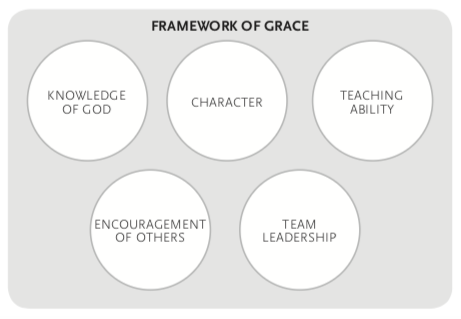
Richard identifies 5 core competencies for a small group leader:

  1. Knowledge of God
  2. Character
  3. Teaching ability
  4. Encouragement of others
  5. Leadership

Each of these competencies sit within a framework of grace. We will be more equipped in some than others, we will need to develop some more than others, but we must recognise that it will ultimately be God who develops these competencies in us, so we must rely upon him in prayer.

framework

As Richard considers each competency, he provides us with the grounds for the competency, a description of how it will be demonstrated in a small group setting, and some suggestions for developing the competency further.

Knowledge of God is more than what goes into the head. It impacts the heart and hands as well. This is relational knowledge, shaped by the Bible, contemplated and digested by the leader, and applied in words and action. This knowledge is important for more than individual and personal reasons. Leaders are called to set an example, teach, and guard God’s people in the truth. They need to know God well so as to lead others in relationship with him. Richard offers practical suggestions to grow in our knowledge of God through prayer, Bible reading, theological reading, and further theological training.

Character is that quality of being tested in life and proving solid. (p25) This area of competency matters because it’s really about applying our knowledge of God into our lives. Leaders are required to have integrity. Without it, people will not follow. Hypocrisy undermines leadership. But this isn’t a pragmatic competency—it’s one of essence. Richard outlines the Bible’s path to growing in character. It comes through prayerfully applying the word of God, in fellowship with others, as we face the trials of life. It is only by God’s grace that we can grow in godly character.

Teaching ability is the third competency identified in this book. Richard describes ‘the ability to teach’ as a skill, listed alongside many character qualities in 1 Timothy 3:

Here is a trustworthy saying: whoever aspires to be an overseer desires a noble task. Now the overseer is to be above reproach, faithful to his wife, temperate, self-controlled, respectable, hospitable, able to teach, not given to drunkenness, not violent but gentle, not quarrelsome, not a lover of money. He must manage his own family well and see that his children obey him, and he must do so in a manner worthy of full respect. (If anyone does not know how to manage his own family, how can he take care of God’s church?) He must not be a recent convert, or he may become conceited and fall under the same judgment as the devil. He must also have a good reputation with outsiders, so that he will not fall into disgrace and into the devil’s trap.
(1 Timothy 3:1-7 NIV emphasis mine)

Richard unpacks this skill with reference to awareness of others; an ability to let the group discover things for themselves; an ability to explain things; and creativity and a sense of fun. I agree that these things will help a small group leader to teach well in a group setting, and that these are skills worth developing, but I wonder if there is something else going on with ‘ability to teach’.

Given that ‘ability to teach’ is listed alongside other character qualities, are we meant to understand ‘ability to teach’ as a character quality also? The one who is qualified to teach is the one who puts their words into practice. They teach through example as well as words. They teach with life and doctrine. I know that this overlaps with the former points of the knowledge of God and character, so maybe I’m pushing an unnecessary barrow.

This book offers helpful suggestions about how to grow as teachers. The bottom line is that you grow as a teacher by teaching. But it doesn’t hurt to get hold of some quality resources and to seek further input, feedback, and coaching. Interestingly, this book suggests other books as the place to turn for such training (see especially Growth Groups by Col Marshall).

Encouragement of others is the fourth competency listed for small group leaders. Encouragement is at the heart of Christian ministry. It’s more than saying nice things to people. It’s about valuing a person’s walk with Jesus and doing what you can to urge them to keep on following him until the end. It’s about leading people to keep trusting their Lord and Saviour whatever obstacles, temptations, or threats might come their way. Leaders are called to help people to stay the course.

This is about more than preparing and leading a group once a week. The challenge to small group leaders is to engage with the lives of the people in the group, to stay interested and connected throughout the week.  This calls for investment in prayer for others, thinking about others, reaching out to others, offering help, following up on how people are going, and more. Richard refers to some helpful books for leaders, including Encouragement: How Words Change Lives by Gordon Cheng.

Team Leadership is the last of the competencies. Competency in knowing God, growing in godly character, ability to teach, and encouragement will all be essential to good team leadership. Yet it’s more than the sum of these parts. Leadership involves inspiring others to follow. It requires abilities to organise and manage, to listen and to communicate, to exercise direction and to submit to authority, to be wise and generous, to overcome fears and to grow in confidence, to be dependable and to depend on others.

This book is a very good primer on leading Christian small groups as part of a wider church ministry. It’s practical and purposeful. It offers questions for discussion and application. It doesn’t claim too much for itself, and generously links to other resources to explore matters in more depth. It’s a helpful and humble book seeking to equip competent and humble leaders who will depend on God’s grace to lead others in following Jesus Christ.

If you are the leader of a small group, or training others in leading small groups, or recruiting small group leaders, or overseeing a small group program, then I’m sure you will find many uses for this book. It’s worth buying for yourself and others. If you are keen to dig further into small group ministry, then you might like to check out some of my earlier posts by clicking on the small group ministry category of macarisms.

Assisted Suicide

Assisted-SuicideThis book was hard to read. It wasn’t difficult to understand or even poorly written. In fact, it was clear, logical, and helpful. I found it hard because the subject matter is personal, heart wrenching, and has at times been too close to the bone. It brought to mind a conversation in our home a few years back. A friend was arguing that not only should voluntary euthanasia be legalised, but that doctors should be legally bound to offer it when asked. My wife, being a doctor, was horrified by the thought. Whatever happened to the Hippocratic oath? And I, being a terminally ill cancer patient, wasn’t feeling too comfortable with the intensity or insensitivity of the conversation either! And I still find this book a difficult topic to wrap my mind and heart around.

Assisted Suicide is another book by Vaughan Roberts in the Talking Points series. It introduces the reader to terms and ideas to build their awareness of the topic. But it also engages with the emotion that drives these discussions. It’s no small thing for someone to want to take their own life. And it’s no small thing to contemplate assisting another person to do this. The issues are very deep and very raw. Over the past few years I believe that I’ve increased in empathy for people who might contemplate such a step. The world of cancer, overwhelming pain, harsh treatments, no hope of a cure, massive financial burdens, impact on wider friends and family, the ugly reality of feeling like there is no point living, and that you are only a burden, takes people down this route. I’m not describing my own personal feelings, but I sense the deep angst experienced by others.

The arguments for assisted suicide are complex. They cross relational, psychological, medical, moral, philosophical, theological, economic, and human rights boundaries. Most significantly they cannot remain theoretical and intellectual matters because they impact people’s lives and deaths. This alerts us to some of the problems talking with one another about the topic. One person may be driven by the pain of a loved one, while another is concerned about precedents and dangers, another with the ethical implications, or another the pragmatics of an ageing population with increasing health issues. We must listen and listen carefully to each other as we grapple with the issues. It’s to easy to talk across each other without any real understanding.

Our religious beliefs will necessarily come into play. If I believe that death is not the end (as I do) and that there’s a resurrection and judgment beyond the grave, then I must consider more than eu-thanasia or good dying. If I believe in the propensity of people to act selfishly (and I do), then I must consider how to protect the vulnerable elderly and terminally ill from selfish decisions to ‘remove’ an inconvenient burden. If I believe in the inherent worth of every human being as one specially created in the image of God (as I do) then I will not measure the value of a person in terms of their utility or costs to society. And I am persuaded that my life is not my own to dispose of, as I see fit. If I believe in the limits of human knowledge and our propensity to act on impulse (and I sure do), then I will be very cautious before making such a massive decision as to take my own life, or ask someone to assist me, because of a terminal diagnosis. Remember, I was given around a year to live and I’ve now lived for nearly seven. Doctors and others only make predictions. They don’t have crystal balls.

When people are dying the issues are complex and deeply charged, so it’s worth thinking through what you believe, and why, in the cool light of day. This book offers talking points, but before that it offers thinking points. I recommend thinking over them. It’s a brief book and only an introduction to a massive topic. This will be enough for some. Others will want to delve more deeply into the issues. Assisted Suicide offers a Christian framework for the journey. If you are a Christian then I suggest you read it, preferably with others. If you’re not, then I believe you will still benefit by considering the issues raised by Roberts.

Personally, I believe it’s a massive mistake for a society to legalise, support or promote assisted suicide. There are plenty of options for helping people to die well, without helping them kill themselves.


Transgender

bowieMy introduction to ‘transgender’ ideas took place in 1974, when I sat watching David Bowie on ‘GTK’ on our TV. My first album was The Rise and Fall of Ziggy Stardust and the Spiders from Mars. It’s still one of my go to and favourite albums to this day! But it was the appearance of Bowie that messed with my head. It was hard for me as a 12 year old to look at this man. Was he man or was he woman? What did it mean to be somewhere in between? I felt uncomfortable with the image, but I loved the music. It wasn’t really transgender, but it made me feel that something was askew.
Screen Shot 2018-10-03 at 10.01.04 amAnd there was Lou Reed with his mascara, high heels, stockings and the seedy haunting lyrics of Take a Walk on the Wide Side with Holly, Candy, Little Joe and the others. Like most people, I sang along: ‘Doo doo doo doo doo doo doo doo doo doo doo doo doo doo doo doo doo doo…’ Impossible not to, really! ‘Hey, babe, take a walk on the wild side’. I find myself singing along today when I hear this song. Why would I be singing along to a song about transvestite prostitution? A disturbing fact of music is that it sticks in your head, even when the lyrics might be distasteful. (Just ask any parent or grandparent who has heard the Baby Shark song—don’t kill me for mentioning it.) Why would I be singing along to a song about transvestite prostitution?

Back then such images were brash, confronting, distasteful (to me), and yet sometimes curious and seductive. Fast forward to 2018. Transgender is a big thing. It’s become a growing cultural and political avalanche. People don’t fit in their own skin. Growing numbers of people transitioning. Isolation and oppression. Arguments over pronouns. Debates over the rights of children, parents, teachers, doctors, governments. Identity politics. Cries for freedom. Chaos in sport. Confusion over toilets. Parents out of their depth. Fears of speaking up. Religious oppression. Male/female/other/custom forms. What does the future hold?

transTransgender: A Talking Points Book by Vaughan Roberts is a users guide to transgender from the perspective of an intelligent, sympathetic, well-researched Christian writer. The Talking Points series of books is particularly designed to encourage Christians to understand today’s big issues with a view to encouraging meaningful, gracious, and intelligent discussion on a range of ethical matters. Tim Thornborough, the series editor, writes:

The world is changing. Fast.
And not just about politics, technology, and communication, but our whole culture, morality and attitudes. Christians living in a Western culture have enjoyed the benefits of being in a world which largely shared our assumptions about what is fundamentally right and wrong. We can no longer assume that this is the case. (p7)

Roberts suggests that there are two common responses to the issue of transgender: ‘an unquestioning “Yuk!” and an unquestioning “Yes!” (p18) He warns us to avoid both superficial responses and work to understand people and what’s going on for them. The first point of understanding for many of us, is to understand the language, terms, and ideas that are being used. He quotes from the Stonewall website to explain terms such as trans, cis, gender dysphoria, gender identity, transitioning, and more.

Our post-modern, post-Christian world has elevated subjectivism and the rights of people to define themselves, rather than be defined by others. This is certainly the spirit of our age and an undergirding conviction for those who define themselves not by the gender they were born with, or ‘assigned’ at birth, or the composition of their chromosomes, but how they feel inside. Facebook has gone with this view of individual personal autonomy, and now offers over 70 gender options for people to express their ‘authentic’ self. Huge debates rage over how to respond to gender dysphoria, especially in children and adolescents. Should puberty-suspending hormone treatment be provided to pre-adolescent children experiencing gender dysphoria? What if such dysphoria swings, changes, or disappears over the years that follow? Does a child have the right to seek such treatment against parental wishes? Does the education department, medical system, or another state body have the right to override parental permission? Such questions are highly charged, politicised, and deeply distressing to many. How are we to think through and decide on these things?

Transgender offers a Christian perspective on human identity, where it comes from, how it has been damaged, and some of the implications for human struggle and human flourishing. Roberts engages well with the teaching of the Bible and the implications of creation, fall, and regeneration. His book offers a framework for careful reflection on the matters of gender confusion: who I am, how I am, and what I can be?

I recommend this book for all Christians who desire to be better informed and equipped to understand people and society, who want to be able to engage on passionate matters without coming across as bigoted, unkind, or even hateful. It’s a helpful book for those who aren’t Christian, but want an insight into how Christians might be grappling with these matters. This book should be read by parents whose children are facing a world far more confusing than the one they grew up in. And this book is also designed to be read with others, and discussed together. If you are part of book club, then when your turn comes around, why not suggest a Talking Points Book, such as Transgender. You could read it one week and discuss it the next, and the next, and likely the next.


One tough marathon

B2B_North-Brother5-1-1030x413Over the weekend Bonny Hills, where we live, was filled with people and festivities. Saturday featured the Back to Bonny’s community events with market stalls, historical displays, music, dancing, surf carnivals, a gala dinner, and more. Sunday saw another lesser-known event passing through our village. A crazy event really—the Beach to Brother Marathon.
This is no ordinary marathon. It’s a combination of 5km, 10km, half marathon, team marathon, and personal marathon, all in one. But the distinctive of this event is the terrain. It begins at Town Beach in Port Macquarie and continues on coastal trails, on beach sand, around back streets, on single tracks, and ends by climbing a mountain.

That’s the crazy bit. If it’s not hard enough to complete a ‘normal’ marathon, this one finishes by climbing 500 metres in only 3.7km of track. That’s an incline of more than 13.5 percent. We’ve driven up North Brother a number of times because it affords spectacular panoramas from the summit. The drive is 5 kms and it seems like an endless incline. And that’s only 10 percent incline and in a car! The run is even steeper, and it’s the last thing people do.

Why do they do it? I don’t know! But I suspect that a win for all involved is simply to finish. To be able to say they’ve completed the Beach to Brother.

The Bible describes life as a marathon. The focus for Christians is to get to the end and receive the prize. I’ve been looking at the Letter of James lately, and we read this in chapter 1 verse 12:

Blessed is the one who perseveres under trial because, having stood the test, that person will receive the crown of life that the Lord has promised to those who love him.

In the context of persevering under trials, James says it makes sense to keep going. It makes sense to endure when things get really tough. It makes sense to keep going in the face of opposition and difficulty. And it’s the prize at the end that makes sense of it all.

If this life is all there is, and it’s too hard to keep going, and the pain is overwhelming, and the suffering relentless, then it makes sense to give up. Surely avoiding pain and difficulties and trials is the smart thing to do. Why struggle if you don’t have to?

But, if this life is not all there is, if Jesus has risen from the dead, if there is a judgment to come, if faithfulness to God counts for anything, if trusting in Jesus is our only hope, then stay the course, keep on going, endure until the end. This makes abundant sense. God has promised a crown of life to those who love him. Do you love him?

In ancient times those who finished the marathon received a crown, more like a wreath. It would be an honour to wear such a prize, but it wouldn’t last long. By contrast God promises a crown of life. Keep going until the end because death is not the end. It may be the finish line in this marathon we are running, but there is life to follow. And this life is eternal in nature.

There’s something else about the Beach to Brother that gives me cause for concern. It doesn’t get easier as you go along. It gets harder, and the toughest part is at the end. I suspect this too could be a warning for those who follow Jesus. If we are going to stay the course, not give in to temptation, and continue to put Jesus first, then the toughest paths may well be yet to come. Perhaps your life has been pretty easy until now. If so, don’t let the past be a predictor of the future. Maybe you’ve been doing it tough for some time, then stay focused, it’s not over yet.

Most entrants to the Beach to Brother do the race as a team. There are transition points along the course where you can pass to another runner. A smart move, I reckon. The team runs for the prize together. That sounds more my scene—so long as I could get a flat stretch of beach! Another lesson for Christians: Don’t try and navigate life’s trials on your own. God gives us brothers and sisters. Following Jesus was never intended to be a individual event. We run together, support each other, and draw our strength from God who gives us the power of his Holy Spirit. Stay in touch with your support team and don’t stop until you reach that finish line.

The Gospel Comes with a House Key

9781433557866_grandeInspirational. Provocative. Enticing. Raw. These are some of the words that quickly come to mind as I reflect on Rosaria Butterfield’s new book, The Gospel Comes with a House Key. Let me confess, I didn’t read this book. I listened to Rosaria read it. She kept me captivated from the minute I left Canberra until I drove into my street in Bonny Hills. Eight hours of ‘radically ordinary hospitality’.

If you haven’t come across Rosaria Butterfield, let me introduce her briefly. She grew up in an atheist family and went to a Catholic school. She found herself attracted to the lesbian and homosexual communities at an early age, pursued studies in literature, and eventually became a professor in English and Women’s Studies at Syracuse University. Rosaria was a influential radical and a leader in LGBTQ rights. In an earlier book, The Secret Thoughts of an Unlikely Convert, Rosaria describes how she set out to write a book critiquing Christianity, and how in the process she became a Christian herself.

The Gospel Comes with a House Key is a book about the importance of hospitality. Not the hospitality of tea parties and lace tablecloths. This is a long distance from ‘entertaining’ others. This is radical and ordinary, and it is motivated and shaped by the Gospel of Jesus Christ. It’s about welcoming strangers and turning them into neighbours. It’s about welcoming neighbours and inviting them to become extended family.

Rosaria’s conversion came about over many months of dinners at the home of a Presbyterian minister and his wife. They demonstrated to her the deep difference between acceptance and approval. They accepted Rosaria for who she was. Her beliefs, lifestyle, aspirations, and politics were no barrier to real welcome, hospitality, acceptance, and friendship. Her experience of God’s grace through the hospitality of a Christian couple has radically shaped her desire to pass it forward. Together with her husband and family, they welcome anyone and everyone into their home, and they do it not occasionally, but on a daily basis. Their modest and functional home provides a safe haven for many in their community. They share meals, discuss current affairs, explore what it means to be a follower of Jesus, assist the needy, provide a refuge for discarded and abused, provide warmth, and model genuine love and friendship to others.

It’s a costly process. They give time and love in spades. Their food bill each week is double or triple what they would spend on themselves. Rosaria is making extra food literally every single day. When a family is in crisis, she is out delivering homemade meals. She makes regular offers on a social media app to the entire local community of 300 homes to assist the needy. All this on top of caring for her own family, supporting her husband in the ministry of their church, looking out for wider friends and family in need, studying the Scriptures, praying for many people, and even writing books. It’s a family lifestyle. The children consider it normal to reach out to others and invite people into their home. Her husband takes this attitude of hospitality to the jail, where he provides support for men who society has rejected and forgotten.

The Gospel Comes with a House Key is a gripping read because it is so real and raw. Rosaria tells story after story. We learn of her mother who absolutely hated Christianity and made life hell for the family. We meet the bloke across the street, his pit bull, and his drug addicted girl friend, and the account of the DEA raiding the house to dismantle his crystal meth lab. And we learn how God worked through the patience and love of Rosaria’s family to introduce these people and many more to the saving love of Jesus.

There is nothing showy about this hospitality. The regular menu revolves around rice and beans and the occasional chicken. Chairs are optional. Dogs are welcome. It’s barebones, rough, honest, and unpretentious. It’s attractive and daunting at the same time. Rosaria doesn’t have all the time and resources at her disposal, but she finds them and makes them. It’s costly and sacrificial.

There’s a warning too. Those who will find it most difficult to offer hospitality to the stranger, the sinner, the outcast, the unloved and unlovable will more than not be the rich—people like me, and maybe you. Those who have the most, fear they have the most to lose. They can’t risk their carpet, or their dining setting, or their polished reputation, or their safe, self-contained lifestyle. It’s hard following Jesus if you’re well off. Jesus had meals with ‘sinners’ and prostitutes. He met with lepers and social outcasts like the tax-collectors. He didn’t care about his reputation. He was willing to be waylaid and interrupted. He taught us what hospitality should really look like.

I asked myself a couple of questions after finishing this book:

  1. How much of my hospitality is merely catching up with friends, rather than reaching out to care for the needy or the alienated? How much of my hospitality is literally the philoxenia—love of strangers—that we find in the New Testament?
  2. We have a nice home, fairly new, matching furniture, close to the beach. Will I ensure that our home is for people? Will I care more for the welfare of those around us, than the welfare of our couches and coffee machine?

“Please God, help me to love others before myself. Help me to love people more than things. Help me to be generous with my time, gifts, possessions, and particularly our home. Teach me to become more and more hospitable. Teach me to delight in the love and care of those around me. Move me to share the great news of Jesus Christ with strangers and neighbours as you give me opportunity.”


Gospel economics

rawpixel-741658-unsplashWhen we’re hit by the trials of life, we face the temptation to look immediately to our own resources. We’re taught to do this—to be resilient and strong and resourceful. We draw on our experience, our education, our networks, our finances. And we should. If a nail is sticking out of the wall, and we have a hammer, then we knock it in. Problem solved. If an unexpected bill arrives, and there’s money in the bank, then we pay it. If we lose your job, and we have the right qualifications and experience, then we look for another. We can overcome adversity, we’ve done it before, we’ll do it again, and it’s all good.

On the other hand, sometimes we don’t hold the winning cards. We’re short-suited because we lack the resources that we need to face our crises. We despair because we lack the money, or training, or relationships, or optimism to carry on. The trials overcome us. We’re left troubled and weak and ashamed.

And it’s easy to envy. Some people never seem to face any trials. Their lives are endless pleasure cruises. They’re handed everything on a plate. Or so it seems.

Jesus warns us to beware the deceitfulness of wealth. Money, investments, financial strategies are dangerously deceptive. They seduce us into trusting in them. More than this, they have the audacity to call themselves ‘securities’. They promise everything, but they can’t ultimately deliver. We don’t have to look far to see the how empty such promises can be. Remember the GFC.

Every night as I watch the news, there are stories of war, crime, drought, corruption, drugs, disease, and new political leaders. And every night we are drawn to focus on finances. What is the dollar doing? What’s happening with the housing market? What’s rising and falling on the stock exchange? How is our economy comparing to yours?

It’s hard to escape the viewpoint that whatever problems we are facing in this world, the solutions are economic. If we’re wealthy, we’ll make it. If we’re poor, then we’ll struggle and fail. That’s how we’re measured and valued. It’s just the way life works. Except it’s not.

James knew this, and he tackles our warped perspectives as he shows us how to face trials of many kinds. He writes to Christian brothers and sisters with these words…

Believers in humble circumstances ought to take pride in their high position. But the rich should take pride in their humiliation—since they will pass away like a wild flower. For the sun rises with scorching heat and withers the plant; its blossom falls and its beauty is destroyed. In the same way, the rich will fade away even while they go about their business.
(James 1:9-11)

The deception of wealth is that the more we have the safer we feel. We look to our possessions as the source of our satisfaction and security. But they’re not. They’re like a mirage in the desert, or a chasing after the wind. Money can buy us lots of things but, as the Beatles said, it can’t buy us love. And more importantly is doesn’t buy security. How many of the multi-millionaires of the 19th century are still secure in their wealth? None of them. How much of their hard earned wealth and their clever investments did they lose when they died? Absolutely all of it. If we don’t waste it, or lose it in this life, then we will most certainly say goodbye to it all when we die. And we’re going to die! And death will make a complete mockery of our claims to be secure.

Do you feel rich? Or do you feel poor? My guess is that most of us feel somewhere in between. We move between confidence and fear, based on the measure of our cashflow, assets, and  savings. We get tossed around by the seduction of our society and the deception of our hearts.

If you know Jesus Christ, if you have been forgiven by the loving Heavenly Father, if you have received God’s Spirit as a down-payment on eternal security, then you have a far better hope. You have different economic values—gospel economics. You might not have much to lay claim to in this life, but you have an eternal home that is kept secure. You might be very comfortable, even wealthy in this life, but it would be a massive delusion to rely on what you have to get you where you ultimately need to go.

When the wealthy face trials of many kinds, they should humble themselves and remember their need for God. When the poor are troubled and overwhelmed they should remember the treasure that is theirs in God.

“Thank you Jesus Christ, that though you were rich beyond measure, you became poor, that in you we might become rich.”

Wisdom in crisis

cristian-palmer-718048-unsplashIt’s some time since I’ve been out in big surf. I don’t trust myself anymore. I’m certainly not as young or fit as I like to think I was. But there have been times in the past when I’ve been dumped by large waves, tossed and turned, struggling to find my way to the surface, desperate for air, wondering if I was going to drown.

Life can be like that. We can feel so tumbled and turned that we don’t know which way is up and which way down. It’s all too hard, too scary. Crises have the capacity to disorient and destabilise. Where do we turn when our world is falling apart around us, when the ground is shifting under us, when the sky is falling in on us?

James, in the New Testament, writes to his Christian brothers and sisters, calling them to have a joyful outlook as they face their fears. A nice thought, but when the trials come, that might well be the last thought to enter our minds. The darkness closes in and we struggle to find a glimmer of light. It’s seems easier to retreat, to curl into a ball, and to hope the darkness goes away. And so we will often miss out on what God wants to do in us doing in these tough times.

It’s no simple matter to find joy in the context of suffering and pain. It takes real wisdom to see the broader context and the deeper reality. So many time over the past few years, I’ve sat in a dentist chair while needles and probes and high speed drills have gone to work in my gums and teeth. It can be hard to focus on the ‘greater good’ when your gums are being stretched to splitting point and a high speed pain delivery device is doing its stuff. But there is a greater good. There is a genuine joy to be found in the midst of the suffering. The pain is short-term but the gain is long-term. And I need wisdom to remember this.

James writes into the the context of suffering…

Consider it pure joy, my brothers and sisters, whenever you face trials of many kinds, because you know that the testing of your faith produces perseverance. Let perseverance finish its work so that you may be mature and complete, not lacking anything. If any of you lacks wisdom, you should ask God, who gives generously to all without finding fault, and it will be given to you.
(James 1:2-5)

So often we lack wisdom. We can’t see the bigger picture. We are overcome by the circumstances we are facing, and joy seems an impossible dream, let alone a present experience. And into this crisis we are called to ask God for help.

It’s not humanly possible to find joy in the midst of all pain and suffering. Don’t waste your energy trying to lift yourself up by your shoelaces, to conjure up enough faith to carry on, to convince yourself that it will all work out fine. But do ask God for wisdom. The great promise is that God will give wisdom to those who ask him. He will. It’s a promise. This doesn’t mean you will necessarily feel wise, but God promises to give you wisdom all the same.

If…

That’s right, there is a proviso.

But when you ask, you must believe and not doubt, because the one who doubts is like a wave of the sea, blown and tossed by the wind. That person should not expect to receive anything from the Lord. Such a person is double-minded and unstable in all they do.
(James 1:6-8)

When you ask God for wisdom, be willing to receive it. Don’t be secretly working out your alternatives for when God doesn’t seem to give it. Don’t go through the facade of praying that God will give you his wisdom, but always planning to rely on everything else to get you through. These verses don’t mean that you have to be 100% sure of God, or that there is no place for confusion or fear. This isn’t about the power of positive spiritual thinking, or ‘name it and claim it’ word/faith mysticism. What they are saying is don’t be double-minded. You can’t have a bet each way. You need to come to God and rely on him to equip you with what you need. You can depend upon God. You don’t need your back up plan. That will only turn you away from God and keep you from his wisdom.

So if you struggle to see the greater good, if you can’t find the path to joy, if everything is overwhelming, then pray. Ask God to graciously open your eyes. Ask him to ease the pain in your heart and to find solace in him. Seek his supernatural help to keep on trusting in Him.

“Father God, please give me wisdom to see the unseen, to remember that you are at work in all things, to know deeply that you will never leave me nor forsake me, to grasp that there is real hope, to feel your comforting presence, to be reminded of your deep, costly, generous love in Jesus, and to keep my faith in you, now and for the future.”

Reflecting on suffering

aaron-burden-426280-unsplashJames, the brother of Jesus, opens the argument of his New Testament letter with these words…


Consider it pure joy, my brothers and sisters, whenever you face trials of many kinds
(James 1:2)

At first glance, this seems superficial—put on a happy face, smile, look on the bright side. At second glance, this seems a gloss or a pretence—things aren’t really that bad, there’s always someone worse off than you, you think you’ve got problems, luxury. At third glance, this seems to represent an asceticism or stoicism that’s detached from reality—pain is inherently good, no pain-no gain, harden up.

But if you only glance three times at this verse, then you will be ill-prepared to face the difficulties of this life, and you won’t have much that’s helpful to offer others.

I’m off to a funeral this morning. A young man, husband, father of two, son, brother, friend to many. Some will still be in shock. How could this happen? It’s so not right. Many will feel the pain acutely. Something tragic has taken place. Relationships have been severed. The grief will be palpable.

We will gather in a church—a building that many of us have gathered in many times. We’ve been there for weddings, baptisms, funerals. We’ve come looking for answers, searching to find hope, seeking to make some sense out of such horror. We will ponder two small children without their daddy. Not today, not tomorrow, not next year, not in this life. Our hearts will crumble as we listen to family sharing, friends praying, people crying.

What help does James 1:2 offer at such a time? Is it a verse for such an occasion? Will it only rub salt into our wounds? Is it best left for another time?

James 1:2 is a word for a such a season, because it is written specifically to brothers and sisters. Not flesh and blood, but spiritual siblings. Even though Jesus and James shared the same mother, it’s their spiritual bond that matters most. He writes for those who have been adopted into the God’s family through trusting in Jesus Christ. James has a word for Christians who call God their Father.

It’s a timely word for us today, for James is not saying to pucker up and smile. He’s saying first of all to think. That’s right, think. He doesn’t say ‘Be joyful’, he says ‘consider it pure joy’. He calls us to reflect, ponder, meditate upon, consider what’s really going on when we face trials of many kinds. When life is difficult beyond belief, when people are suffering, when there don’t seem to be answers, when it just hurts so deeply… at this time consider it joy. How so?

because you know that the testing of your faith produces perseverance. Let perseverance finish its work so that you may be mature and complete, not lacking anything.
(James 1:3-4)

A Christian funeral is not a place for platitudes. It’s not a place for wishful thinking, for simply hoping for the best, and least of all for glossing over the pain and hurt. Death is harsh. It’s unkind and unrelenting. It’s devastating and cruel to all who are left behind. And yet, for the brothers and sisters, for those who hope in Jesus, for the ones who trust that Jesus has conquered death and offers forgiveness and eternal life to all who trust him—death causes us to reflect again on what matters most. We are reminded to refocus, to maintain our hope in Jesus, and to persevere in trusting him.

We might not feel much joy on this occasion, but we have reason to be reminded of the objective joy of resurrection hope. My friend is now with his saviour. His wife, his children, his family, his friends, you and I, will one day be reunited for all eternity if we persevere in our faith. Death and funerals will test our faith. As we look to Jesus, this faith grow stronger.

“Dear Heavenly Father, as we mourn today, fill our hearts with the truth, enable us to trust in your good and loving purposes, enrich our faith in Jesus Christ, and remind us to see the joy in being with you for all eternity.”

Carry on baggage

clem-onojeghuo-254153-unsplash

Independent churches tend to attract people with baggage. At least that’s been my experience, having pastored two of them and now attending another. I suspect most churches attract people with baggage, in the sense that everyone has baggage, but I think independent churches are especially ripe for the experience.

Why so? We live in an age of church shopping. People are seeking a church that’s just right for them. If they don’t like what they get in one place, then it’s not hard to shop for another. If you are living in the bush, where there is only one church for the next hundred kilometres, then this probably isn’t your experience, but it’s certainly common in cities and larger towns.

Some of our independent evangelical churches have arisen because of perceived needs in certain areas. Existing churches aren’t growing, or aren’t preaching the Scriptures, or aren’t reaching out to the community, or aren’t providing anything for children and youth, or keep stubbornly riding their ridiculous hobby-horses, or something. When a new church is planted it isn’t too long before people are leaking out of other churches. Drifters, who’ve left their churches some time back, dribble into the new church, aiming to give it another go. All these people bring baggage. They might recognise it or they might not, but it will surface soon enough.

The baggage comes in different shapes and forms. Firstly, there is the idealist. They’ve created a picture of what church is to be like. Sadly, their last church didn’t live up to the ideal. Neither did the one before, or the one before. There will be a honeymoon period where they give you time to impress them. You might even find that you are the best church they’ve ever been to. You’re a breath of fresh air; an oasis in the desert. You might start to hear stories of the horrors of the past, the problems of their previous church, the failings of the pastor. Beware—you might be next!

Secondly, people come with an attachment to how things have been done. They might have left their denomination, but they haven’t necessarily discarded what attracted them there in the first place. It won’t be long before you start hearing what you ought to be doing and how church should function. You see, there is a right way to do things. It’s stunning how often I’ve heard ex-Baptists tell us we must baptise for membership, or ex-Presbyterians insist we have a council of elders, or ex-Pentecostals tell us we need to be more open to the working of the Holy Spirit, or ex-Anglicans tell us we should follow a particular liturgical form, or ex-Salvos tell us we should all wear uniforms and play brass instruments. OK, I made the last one up.

People move because they are unhappy, but they may remain deeply attached to familiar practices, forms, structures, and values. The independent church is considered a clean slate to be filled. People with baggage cling to ways that things should be done and feel strongly about ways they shouldn’t. Transfer growth is usually accompanied by excess baggage. History is often the strongest predictor of the future, and discontent will likely lead to more discontent.

Thirdly, people move churches because they’ve had a bad experience with a previous church. More often than not, they feel hurt or grieved by things that have been said, or done, or not done. In reality, the pain is mainly about people—being treated poorly by someone, often in leadership. They’re likely leaving because they haven’t resolved the conflict or haven’t dealt with the pain. So if you are a leader, it’s possible that you will be tested. Are you going to be just like the perpetrators of previous pain? Can you be trusted? Will you repeat the patterns of the past? It’s too easy to get these things very tangled when we leave matters of the past unresolved. And maybe they tried to resolve things, and it didn’t end well, and they are broken, and seeking care and compassion. They are looking to your church to be a safe haven.

So what can independent (and other) churches learn? Here are a eight suggestions:

  1. If people come to you from another church, then have a conversation with them early. Listen to them. Where did you come from? What was it like? What happened? Have you worked through these things? Does the church know you have left? Have you spoken with the pastor or leadership? Do you think you need to go back and work on things? Maybe, let them know you will give a courtesy call to their previous pastor. Be strong, but gracious and caring. Don’t be bullied by people seeking a platform for themselves. Don’t become a bully to people who are seeking refuge and help.
  2. Communicate clearly what your church is on about. Speak to the things you value. Make clear what you won’t fight about and what you will. Share your theological convictions, your mission, and your vision. Don’t just tell people what you do, but how you do things, and why you do them. Excite people about gospel priorities. Aim for simplicity and clarity. Draw people into God’s agenda. Explain that your church is not a place for competing human agendas, but a place to draw together in the one Spirit.
  3. Invite people to become part of the church on the church’s terms. Tell them where the church is at currently and where you are hoping to get to. Let them decide if they want to go on the journey. Of course, this means you need to know where you’re headed and how to communicate it.
  4. Hold orientation meetings for newcomers where you can share the matters of importance. This might be an evening in the home of the pastor or a course over multiple weeks in small groups. Whatever it is, create an opportunity for people to know who the church is and who it’s not, so they can be clear about what they are joining. Some people will leave early, saving you and them the pain of breakup down the track. Others will join more enthusiastically because they love the vision and appreciate your communication.
  5. Have a clear website that outlines what you are on about. Websites are the noticeboards, the yellow pages, the advertising brochures of the past. The flavour of the church should be clear before someone visits. If people want to dig deeper then they should be able to find your beliefs, values, priorities, and other essentials. Or at least they should know where they can find out more.
  6. For those digging deeper, consider an FAQ page or link to position papers on matters that might divide. This is not shop window stuff, but it is what you keep on your shelves inside. If need be, spell out your beliefs about things like church governance, tithing, communion, baptism, spiritual gifts, roles of men and women, creation, predestination, or whatever hot button topics are relevant in your context. If you take a position, then explain why it matters, how much it matters, and what it looks like in practice. If you are inclusive of different views, then make it clear why you accept different views, and what this will mean for unity in your church. Most importantly, work out what you believe and be prepared to explain this to others. If you leave a vacuum, then someone else is going to fill it.
  7. Be clear on how people can get involved. If you need to be a ‘member’ before you can exercise caring ministries, then explain how and why? Some churches are quick to rope people into various ministries, either to make them feel involved or because they can fill a pressing need. If you need to join a small group before you join a serve team, then explain why and help people navigate the steps. Go slow. Not too slow, but go wisely and carefully. Take the time to get to know people. Let them know the pathway to involvement and walk with them.
  8. Most importantly, be motivated by love, not suspicion. Knowing that people have baggage that they carry around with them, gives you the opportunity to help them lighten their load. Everyone has a history and every history is burdened by pain. Remember that we are called to share one another’s burdens. It’s the gospel that frees us from every weight. So speak and act from the gospel of grace. Don’t add further burdens, but help people to find freedom that comes from Jesus.

Gracious living

I was introduced to the idea of ‘gracious living’ by some friends—time out, good friends, laughter, rejoicing, wine and cheese, sunsets and oceans, enjoying the blessings of God.

For everything God created is good, and nothing is to be rejected if it is received with thanksgiving, (1 Timothy 4:4 NIV)

kat-yukawa-754726-unsplashBut at church this past weekend I was reminded of another kind of gracious living—the grace of giving generously. I had to pause and think. Do I really know what that means? Not just in theory, but in practice? Have I ever truly given generously? Or do I merely give out of my surplus, redistributing what I don’t need anyway?

Take a look at how the Apostle Paul describes the Christians in Macedonia:

And now, brothers and sisters, we want you to know about the grace that God has given the Macedonian churches. In the midst of a very severe trial, their overflowing joy and their extreme poverty welled up in rich generosity. For I testify that they gave as much as they were able, and even beyond their ability. Entirely on their own, they urgently pleaded with us for the privilege of sharing in this service to the Lord’s people. And they exceeded our expectations: They gave themselves first of all to the Lord, and then by the will of God also to us.
(2 Corinthians 8:1-5 NIV)

A close look at these verses challenges me to my core. It turns upside down many of my assumptions and expectations about the grace of God.

  1. God gives his grace to his people so that they are able to give to others who are in need. This is the idea of it being more blessed to give than to receive. God does a supernatural, gracious work in the hearts of the Macedonian Christians and this motivates and enables them to give.
  2. God’s grace works to prevent needy people becoming greedy people. The capacity to give doesn’t flow from having more than we need, and then giving the surplus away to appease our guilt. It comes from the joy of knowing that God provides, so that even in their poverty the Macedonians gave to meet the needs of others.
  3. Gracious giving is costly. It’s sacrificial. It’s giving beyond our assumed capacity to give. It is generous, not because of the amount that is given or the percentage that is given, but because it gives away what we would normally keep for ourselves.
  4. Gracious giving is taking the initiative to give to the needs of others without prompting, pleading, special marketing campaigns, or end of financial year fund raisers. It’s common to give when called upon to do so, but unusual to ‘entirely on our own’ plead for the privilege of being generous.
  5. Gracious giving is giving first of all to God and then to others. And it’s way more than money—and nothing less than giving our whole selves.

Have you discovered this grace in your life—the grace that moves you to delight in giving your God-given time, money, and resources to him and to others?

There was an Old Testament pattern of giving called a tithe. I grew up on the idea of a tithe, literally a tenth. So every time I earned money, I would set aside 10% of what I earned and give it to church, or missions, or charity, or child sponsorship, or such like. And I thought I was generous. But it didn’t hurt because I still had 90% left to spend on myself. Now I’m all grown up and I know how much more complicated it is. Giving 10% doesn’t mean that I have 90% for play money. There are never ending bills and expenses. There are the weekly, monthly, quarterly, yearly costs of groceries, fuel, utilities, insurance, education, clothing, housing, you name it. And it’s so easy to we consumed by these things.

It’s a rare thing for me to give beyond my ability. To be honest, I don’t know if I ever have. Have you? I’m missing out really—missing out on the gracious living that only comes from God.

Please God, lead me to give cheerfully, generously, graciously. Lead me to consider what I can give and then give more. And lead others who know your amazing grace to do the same. Amen

Muddled emotions

Recently I stumbled across a video clip of John Macarthur critiquing Joel Osteen. He read from his first book, Your Best Life Now, offering a harsh critique of his self-centred prosperity gospel. Macarthur went so far as to say that Osteen was making the same promises as Satan when he called Jesus to make the stones into bread and told him that all the kingdoms of the world could be his.

I have no problem with this criticism. It seems to me that Macarthur nailed it. The wealthiest pastor in the USA with the largest congregation in the USA, sadly has much to answer for. His massive TV audience, his millions of books, and his huge following, including the likes of Oprah Winfrey, make him a hugely influential figure. And I don’t believe it’s an influence for good or God. I believe our Christian bookshops should boycott his books and television stations should take him off air. They are my thoughts.

UnknownBut what disturbed me in the video, was the laughter of the audience when Macarthur quoted Osteen. There was much hilarity and amusement. Now, I’m not suggesting that Macarthur was using Osteen to whip up his congregation, or making light of what he was teaching, but is laughter really the appropriate response? Is what Osteen teaches funny? If it’s false and destructive, then shouldn’t it lead us to tears?
Many years ago, I gave a talk at a student conference and began with various critiques of false teachers. Some of the stories I quoted had been taken from a Macarthur book that highlighted the nonsense of what some had described as people claimed to have died and gone to heaven and back. Some of the stories were really weird. As I told these accounts, I had people in stitches. There was uncontrollable laughter at times. I found the accounts so bizarre and ridiculous that it was easy to generate comic relief. Even I had tears running down my eyes—not of sorrow but laughter.

After the talk I was taken aside by two young men I deeply respect, and by my wife. They had the courage to challenge me about what I’d said and done. Did I really believe this was false teaching? Did I care that it was leading people astray? Was I committed to the truth of the gospel? Then how could I make light of these things? How could I use them to grab quick laughs and build rapport with my listeners? They called me to repent. And I did. I asked God for forgiveness and I stood before the conference the next day and asked for their forgiveness.

If we are convinced that these things matter, then is no place for being flippant with the truth. False teaching is dangerous and should be no cause for hilarity. We’d do well to remember the example of the Apostle Paul when he speaks of those who oppose the truth…

For as I have often told you before and now tell you again even with tears, many live as enemies of the cross of Christ. (Philippians 3:18 NIV, my emphasis)

As he leaves the Ephesian elders to take care of the church, and to protect their congregation from false teachers, he reminds them…

Even from your own number men will arise and distort the truth in order to draw away disciples after them. So be on your guard! Remember that for three years I never stopped warning each of you night and day with tears‘Now I commit you to God and to the word of his grace, which can build you up and give you an inheritance among all those who are sanctified. (Acts 20:30-32 NIV, my emphasis)

I believe we are called to know the truth—the truth that sets us free—and to share this truth with others. This will mean opposing the post-modern nonsense that you can have your truth and I can have mine. There will be times when we must speak up for the truth and call out lies and falsehood. But when it comes to life and death, salvation and judgment, it’s not a game. It’s very real and the stakes are high. So let’s speak the truth, in love, and warn people of lies that destroy. And let’s remember what it cost Jesus to rescue people from hell and judgment. Jesus wept over Jerusalem because they ignored and opposed the truth. Will we weep over the blinding deceptions being propagated by the likes of Osteen and others?

Reflections on the beginnings of Crossroads

DM2In 1996 we planted Crossroads in Canberra. It was among the earliest of the now FIEC churches. Its origins are found in Dickson Baptist Church and a growing university ministry at the ANU and UC. In the lead up, I had been working as an associate pastor at Dickson as well as working with the Australian Fellowship of Evangelical Students leading the campus ministries. Dean Ingham worked alongside me in the church and on the campus.

Throughout the previous year Dickson Baptist had engaged Les Scarborough from John Mark Ministries to review and make recommendations about various ministries in the church. He spent many months surveying and interviewing pastoral staff, deacons, leaders and congregation members on a range of issues. Through this process, six recommendations were made for the church leading into the future. One of these was to plant a new independent church, with a particular focus on university ministry, under my leadership. A Dickson Baptist congregational meeting voted about 96% in favour of starting the new church, and it was launched on February 11, 1996.

Allow me to reflect on a couple of matters associated with this plant.

Firstly, it was a plant that had grown out of some adverse circumstances at the Baptist church. Not everything was going well, and the regular influx of students over the previous few years had changed the culture of the place. Some members wanted their old church back. Others were keen to see the strong synergy between church and campus ministries continue to make an impact. I suspect that the strong vote to plant Crossroads was shaped by both these desires.

Secondly, it was a careful process. Les Scarborough was able to guide us every step of the way. He continued to mentor me in the years following the plant. We had detailed conversations with AFES (my employer) about what this church plant would mean for interdenominational ministry. It was agreed that AFES wasn’t planting this church, and that I would cease to be employed by AFES and move to full employment by, and funding from, Crossroads. This took place over a few years. We held prayer meetings, vision meetings, planning meetings, and asked many from outside the core team to give advice and feedback.

Thirdly, planting independent evangelical churches wasn’t really a ‘thing’ in those days. We didn’t set out to be independent of other denominations—just independent of Dickson Baptist. In fact, we explored options with Presbyterian and Anglican denominations and talked with other churches, before settling on the decision to incorporate separate from existing denominational structures.

Fourthly, we realised that being independent had the potential to suggest that we were anti-denominational, divisive, or even cultish. For this reason we worked hard to establish ourselves carefully as a mainstream evangelical church. We wrote letters, made calls, and had meetings with pastors around Canberra. We chose a name that was conservative, but that stood out from the pack, without sounding whacko. Crossroads Christian Church was chosen over other options. We hoped that this would shrink in people’s memories to one word – ‘Crossroads’ – and it has.

Sadly, Crossroads quickly developed a bad name in Baptist circles, as did AFES. Some were spreading the perspective that Crossroads was a church split and that AFES (ie, me) had divided and damaged a Baptist church.  This happened despite the careful planning and congregational decisions by the Baptist church to plant Crossroads.

Fifthly, the risks associated with isolation and independent-mindedness, led us to engage a Board of Reference to increase our broader accountability. We invited men and women who weren’t part of Crossroads and who had a strong reputation for being mature Christian leaders to stand with us. We asked them to pray for our ministry, take an interest in what we were doing, consult with us if they saw problems, advise us on matters of doctrine, speak into any major changes the church might be considering. They had no governing authority, and weren’t required to meet as a group, but they stayed in touch with us. Let me say, this group was so helpful in our early days. We called on them as we established our constitution and shaped the directions of the church. We continued to draw on these people in the years to come as we faced some significant and difficult decisions as a church. We sought their input in times of staff tensions and we considered their advice with some major staff changes and appointments.

There is no doubt that risks are plenty among independent churches. Many of these risks can be avoided or overcome by pursuing fellowship with other churches. In 1996 we were pretty much just doing our own thing—going it alone, so to speak. Now, in 2018, independent churches are being planted with a view to being interdependent with others. While the churches are independently governed, many churches are choosing to join a fellowship with other independently governed churches. They recognise there is strength in numbers, pooled resources, and the wisdom of those who’ve gone before. They are making a choice to limit their absolute autonomy for the good of the gospel witness in our land. It’s been exciting to visit theological and Bible colleges and to invite students to consider joining a new movement of evangelical ministry in Australia through joining with the FIEC. We are independent churches, but in active fellowship with one another.

Along with the benefits of being a part of the fellowship, I am encouraging each of our independent churches to engage an external board of reference, or something equivalent. To have godly, experienced, mature, Christian leaders who will stand by us, help us to see our blind spots, offer support or advice in a crisis, pray and invest in our ministries, and more—is invaluable. I’d say that it’s basic common sense. And I’d worry about why a church might oppose such an idea. We need to be above reproach in our lives and ministries. Our decisions and processes should be open to scrutiny. And it’s so valuable to have others to speak into our circumstances because they are committed to our churches and the good of the gospel. In FIEC we are looking to encourage each of our churches into practical fellowship and to connect regularly with their external board of reference.

Our prayer is that we will keep growing churches for Jesus’ sake and that we will grow them in godliness and truth for the sake of all.