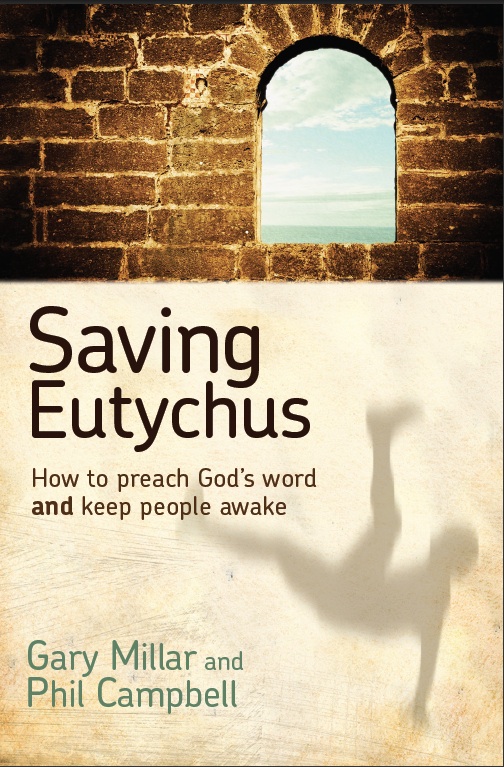
Saving Eutychus

Saving_EutychesI should declare my hand on this book. I’ve only met the Irish author, Gary Millar, on one occasion as he and his family sat in front of me at Chappo’s memorial service. I’ve known the Aussie one for over 30 years. Phil and I met at uni, studied theology together, and have partnered together in ministry often over many years. Phil sent me an advanced copy of this book (pdf only – I’m waiting for my published copy!) and invited a review. Here’s a quote from Phil’s email …

If you like it, we’d love a review on macarisms. If you don’t like it, it would be good to just forget you ever saw it 😉

This might sound like a ‘suck up’, but I really did enjoy reading this book! It’s full of wisdom, tried and tested, Biblical, theological and practical. I don’t preach as much these days, but I’m pleased to have been given this book just prior to my next gig. As I prepare this week and next to preach on Matthew 9 and 10, I plan to filter my preparation through the advice of this book.

Saving Eutychus, by Gary Millar and Phil Campbell, grabs it’s title from a popular eclectic blog written by Nathan Campbell. Eutychus was the bloke in Acts 20 who fell asleep, toppled out of the window, and died during a very long sermon by the Apostle Paul. Without criticising Paul, this book is an OH & S workbook to keep sermon listeners alive.

Saving Eutychus doesn’t just mean keeping him awake. It also means doing our best to keep him fresh and alert so he can hear the truth and be saved.  (p15)

The chapter I most needed to read was the opening on prayer. I easily identified with Gary’s temptations to get up and get busy. No time for prayer – there’s too many urgent things to do… like check Facebook, twitter, read the sports results etc. Sad, I know! And I need constant reminding that talking to God about stuff is the most useful thing I could be doing. This chapter encourages us to pray for our preachers. It also encourages preachers to pray that God will work through our words to transform and change people. Even having been struck with cancer, I still have a temptation to self-reliance. I need continual reminding that I might sow, plant, water and weed, but only God gives the growth. These words spoke to my heart:

God doesn’t use people because they are gifted. He uses people (even preachers) because he is gracious. Do we actually believe that? If we do believe it, then we will pray – we will pray before we speak, and we will pray for others before they speak. It’s that simple.  (p21)

The authors want to help us preach faithfully without being boring. This means people being profoundly impacted by what they hear. We should expect to be changed as we hear God’s word preached. In recent times, I’ve heard two words too often when it comes to describing preaching – encouraged and challenged. Now, there’s nothing wrong with these two responses to preaching, but God’s word promises to do so much more. Gary writes: I want to be challenged, humbled, corrected, excited, moved, strengthened, overawed, corrected, shaped, stretched and propelled out into the world a different person. (p27) In short, we want preaching that changes people.

The key to heart-changing preaching is not about tricks of emotional manipulation. It’s about letting God’s message come clearly through the sermon. The Bible is the life-giving, transforming, re-creating word from God. So the preacher can do no better than to let God speak. It’s not up to us to come up with a message. We simply need to put in the hard work to grasp God’s message and then let him speak. Don’t get in the way of what God has to say. This is what expository preaching is all about.

Phil has been banging a drum for a long time now. Clarity, clarity, clarity! It’s so important. If there’s a bushfire approaching your home, then you want the warning to be clear. If you’re taking potent drugs for a serious illness, then you want the labelling to be clear. If you have a message of life for all eternity, then you want the preaching to be clear. It matters! Saving Eutychus gives us a top ten list for making our preaching clearer and it’s good stuff.

  1. The more you say, the less people will remember
  2. Make the ‘big idea’ shape everything you say
  3. Choose the shortest, most ordinary words you can
  4. Use shorter sentences
  5. Forget everything your English teacher taught you
  6. Am I repeating myself?
  7. Translate narratives into present tense
  8. The six-million-dollar secret of illustrating
  9. People love to hear about people
  10. Work towards your key text

Not all these headings are self-explanatory, but together they offer great tips on making things clearer. Many good communicators tend to do these things instinctively. They’re the building blocks of clarity, especially with the spoken word. If you’re starting out as a preacher, or if you suspect that you’re not keeping people’s attention during your talks, then take the time to work through each of these points.

I’d say the big idea of this book is discovering the big idea of the Bible passage. If you don’t understand what the passage is saying, then you’ll simply pass on your confusion and ignorance. Hard work is required. Interrogate the Bible text until you’re clear on the big idea. What does it mean? What’s it saying? What does this have to do with me? If we can’t answer these questions, then we have no right preaching… yet. There’s more work to be done.

big_ideaPhil is a high-tech computer geek, but when it comes to working out the big idea, he goes old school. Strictly pen and paper. Write out the text, work out the logic, create a visual map of the argument, note repetitions, connections, links, and jot down questions to be explored. This takes time, but its rewards are great. You get it in your head to mull over and over during the week. Visual learners are able to see what’s happening. This exercise goes a long way to uncovering the big idea. And once you’ve got that idea, then you can start working out how it applies in the light of the gospel. Application is the goal, but you need to get there via the text, and that takes time.

Both authors are concerned that we produce gospel-shaped sermons. Gary writes: Just about the worst thing that can happen when we finish preaching is that someone will walk out the door of the church buoyed by their own resolve to try harder. (p77) The preacher’s role is to be faithful to the Bible in pointing people to Jesus. This means reading backwards and forwards. Things happened to others in the past that have been recorded for us in the present. I read the Bible as a Gentile not a Jew. This has big implications for how I relate to the Old Testament. I’m also a human being (yes!) and that puts me on common ground with Adam and everyone after him. It’s all about reading the Scriptures with wisdom and care, seeing how things progress towards and climax in Jesus. This book offers some good advice on preaching in a way that is shaped by the big idea of the Bible.

Saving Eutychus also includes practical tips for delivery. Varying pace, volume and pitch helps keep the listeners awake and engaged. How do you know where to put the emphases? Again, the answer is the same. It needs to be shaped by the big idea. If you’re clear on what you want to communicate, then you’re much more likely to communicate clearly!

In the last couple of chapters and the appendix we get to read a couple of sermons by the authors. These are run of the mill Sunday sermons. Phil shares the what and the why of his preparation and we get to see him putting his ideas into practice. Gary and Phil both critique each other, offering helpful insights and feedback at different points. It’s useful to see this modelled and to be offered a framework for providing feedback. They provide a sermon feedback form that can be used to invite feedback on our sermons, or to train others in preaching. When it comes to feedback, I agree with the authors that feedforward is preferable. It’s better to be able to improve the talk before you go live, than to wish you’d changed it afterwards.

So… I want a real copy of this book! I’ll be recommending it to the preachers in our church and networks. I’ll be encouraging those training to give Bible talks to work carefully through this book. I’ll be suggesting they listen to some recordings of the authors to see how they model what they teach. I’ll be critiquing my own preparation and talks in the light of the wisdom here.

But just one question… in a book that says to choose the shortest, most ordinary words you can… what’s with the “illocutionary effect”? Really!!
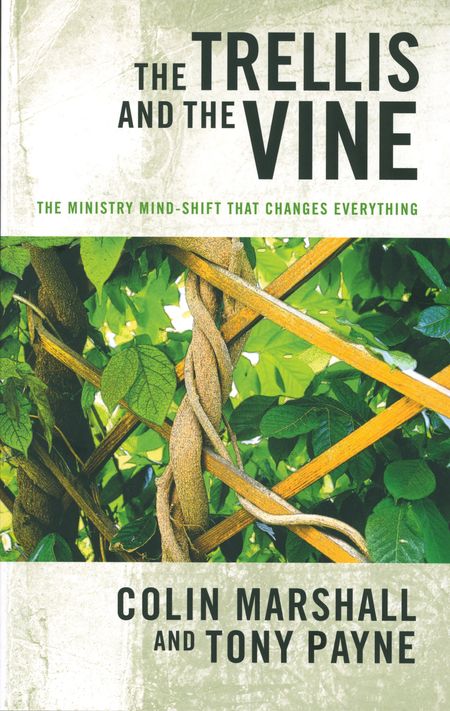

The trellis and the vine

Trellis and the VineFor some reason I’ve kept putting off reading The Trellis and the Vine by Colin Marshall and Tony Payne. It might be the familiarity breeds… thing. After all, I did a ministry apprenticeship with Col nearly 30 years ago, and I overlapped with Tony doing the same thing a year behind me. It could be that I thought I’d heard it all before. And I pretty much had! But it’s for this reason, and the passion and commitment of the authors, and the quality of the book, that I’m now keen to recommend it to others. I intend to provide an overview of the material, highlighting what I see as some key issues, share some ideas of how we are seeking to grapple with these things, and make some suggestions.

The two images of the trellis and the vine are used to describe two aspects of Christian ministry.

The basic work of any Christian ministry is to preach the gospel of Jesus Christ in the power of God’s Spirit, and to see people converted, changed and grow to maturity in that gospel. That’s the work of planting, watering, fertilizing and tending the vine.

However, just as some sort of framework is needed to help the vine grow, so Christian ministries also need some structure and support. It might not be much, but at very least we need somewhere to meet, some Bibles to read from, and some basic structures of leadership within our group.  (p8)

The observation of the authors is that so often in our churches the trellis work takes over from the vine work. We get caught up in committees, structures, activities, fund raising, keeping the machinery ticking over, such that we lose site of the reason for the trellises – that is, to support the vine. Drawing on the great commission in Matthew 28, this book argues for vine-growing as disciple-making which should be the normal agenda and priority of every church and every Christian disciple (p13).

As churches move away from erecting and maintaining structures to growing disciple-making disciples, a radical mind-shift is required. These changes of outlook will include…

      1. Building people rather than running programs
      2. Training people rather than running events
      3. Growing people rather than using them
      4. Training new workers rather than filling gaps
      5. Helping people make progress rather than solving problems
      6. Developing teams rather than focusing all on ordained ministry
      7. Forging ministry partnerships rather than focusing on church polity
      8. Establishing local training rather than relying only on training institutions
      9. Looking at the long term picture rather than being constrained by immediate pressures
      10. Engaging in ministry with people rather than being consumed by management
      11. Prioritising gospel growth over specific church growth

Col and Tony ground their claim to the priority of the vine over the trellis in the Scriptures. They examine what God’s plan is for his world, what he has been doing, and what he is doing now after the finished work of Christ. God is saving souls through the Spirit-backed proclamation of the gospel and this has big implications. Our small ambitions need to be laid aside for the cause of Christ and his gospel. God is calling people to be born anew in Christ and to grow into maturity. And this growth happens by the power of God’s Spirit as he applies the word to people’s hearts. It’s evident that this has little to do with structures and organisations and much more to do with prayerful word ministry.

The Trellis and the Vine aims to show that every Christian is called to be a part of this vine work. Not everyone is gifted in the same way, but we are all called to the task of being and making disciples. The beauty of the body of Christ is we can support one another in this work. The common clergy-laity divide is broken down as leaders and congregations begin to work off the same game plan. Modelling and teaching from pastors, elders, teachers, group leaders and others is focused on God’s agenda of proclaiming Christ and calling people to follow him. We read, discuss, and prayerfully apply the Scriptures together at church, in groups, one-on-one, in formal and informal contexts, with the same aim of growing into maturity as followers of Jesus.

I especially appreciated the careful defining of ‘training’ in this book. They contrast our popular understanding of training as a focus on skills development and show from the New Testament that it should be more focused on Christian thinking and living.

Have nothing to do with irreverent, silly myths. Rather train yourself for godliness.  (1 Timothy 4:7)

All Scripture is breathed out by God and profitable for teaching, for reproof, for correction, and for training in righteousness, that the man of God may be complete, equipped for every good work.  (2 Timothy 3:16-17)

Though training is not simply the imparting of information, the faithful passing on of sound teaching is essential.

And the things you have heard me say in the presence of many witnesses entrust to reliable people who will also be qualified to teach others.  (2 Timothy 2:2)

Training is also modelling a way of life. It is caught as well as taught and we are called to set one another an example. The ultimate example is that of Jesus Christ himself.

Do not cause anyone to stumble, whether Jews, Greeks or the church of God —  even as I try to please everyone in every way. For I am not seeking my own good but the good of many, so that they may be saved.  Follow my example, as I follow the example of Christ.  (1 Corinthians 10:32-11:1)

Not that trainers will be perfect, but they are called to watch their lives and teaching carefully. They will impact others profoundly as their progress is seen.

Practice these things, immerse yourself in them, so that all may see your progress. Keep a close watch on yourself and on the teaching. Persist in this, for by so doing you will save both yourself and your hearers.  (1 Timothy 4:15-16)

This understanding from the Bible has led the authors to summarise the nature and goal of training by three Cs.

Through personal relationship, prayer, teaching, modelling and practical instruction, we want to see people grow in:

  • conviction – their knowledge of God and understanding of the Bible
  • character – the godly character and life that accords with sound doctrine
  • competency – the ability to prayerfully speak God’s word to others in a variety of ways.  (p78)

Following the lead and language of the Book of Acts, the authors describe training as more concerned with gospel growth than particular church growth. This happens in the lives of people, not structures. It means we should be generous and willing to send off many whom we train for the sake of God’s church elsewhere. It requires us to see people as people, and not just cogs in the wheel for our own projects. As more and more people are trained in godliness and a good understanding of the truth, then we will find churches as they should be – growing in numbers and maturity, with people serving one another, encouraging and setting an example to each other. In other words, a long way from the ‘professional minister with all of his clients approach’, which does little more than stifle gospel growth.

For churches to adopt this radical mindset, it requires pastors and leaders to grasp the essential importance of training. It’s not sufficient to be the preacher, clergyman, CEO, or business manager. Leaders need to encourage their churches to become centres of training where disciple-making disciples are nurtured, equipped, and encouraged. In this way the opportunities for outreach, teaching, modelling, service and care are shared among the body of the church. Churches can grow in health as well as numbers and more and more people are mobilised. We would do well to conduct an honest audit of our congregational programs, structures and and activities and see how we measure up against this picture.

Recruiting co-workers is key to promoting gospel growth, but there are mistakes to be avoided. Here are a few:

  • Don’t compromise on core beliefs and values.
  • Don’t be impressed by enthusiasm over substance.
  • Don’t ignore their track record.
  • Don’t choose people who aren’t good at relating to people.
  • Don’t recruit in desperation.
  • Don’t select unteachable co-workers.
  • Don’t simply choose ‘yes’ people.
  • Don’t just advertise for volunteers.

The best way to recruit co-workers according to convictions, character, and competence is to train them. Keep on the look out for people who might be suitable to share the load with you. Always be thinking about whom you could be training. Consider if there are one, two or more people that you could especially invest in. Make it happen. Share in their lives, work through the Scriptures together, pray with one another, open your heart to them, delight in their progress, be honest and speak the truth in love, as you encourage them to grow as a disciple-making disciple.

A chapter is devoted in this book to the Ministry Training Strategy. This isn’t surprising given that Col was one of the founders of this ministry and Tony was one of the early trainees. They have shaped and refined this ministry over three decades, and commend it as an excellent strategy for preparing new Christian leaders. It’s basically a two-year apprenticeship that gives people real opportunity to grow in gospel ministry, by doing ministry under the supervision and guidance of a suitable trainer. It’s often a precursor to more formal theological training and has the benefit of enabling a good assessment of a person’s suitability for ministry leadership before investing everything in 3 or 4 years at college. A good outcome is a wise and godly decision at the end of the apprenticeship. I’m an advocate for this training experience before formal theological training. I benefitted greatly from receiving it myself and have subsequently led more than 60 apprentices through a similar program.

So what have I learned from this book?

The big thing has been the reminder to see training as part of the DNA of a healthy church. Not simply skills development, but the making of disciple-making disciples in response to the commission of Jesus. As churches grow it is easy to be consumed by organisation, structure, vision setting, strategic planning, and the like. We can lose sight of the people. It’s been a good reminder that God is seeking people with him for eternity, not clever programs!

The Trellis and Vine has also encouraged me to be more purposeful in training workers for ministry throughout our church. Training is not simply for the ‘professionals’. It’s about being transformed into the likeness of Jesus, and that’s for all. We need to audit our Sunday meetings, growth groups, children’s and youth ministries, and ask the hard questions. Are we occupied with a gospel work that will make a difference for eternity? Are people genuinely seeking to follow Jesus? Are we making disciples of one another, or are we sitting back assuming it will just happen automatically somehow?

My current pastoral focus is particularly on ministry training and leadership development. I’ve begun to assess how we are travelling with equipping and supporting our growth group leaders. A quick analysis shows there are a number who would really appreciate some training. This book is a helpful resource as I seek to encourage the leaders to make growing disciple-making disciple a priority in their groups.

A couple of suggestions

Given that this book is called The Trellis and the Vine there is very little about trellises. The author’s main point is to get us focused on vine growing and not distracted by erecting and maintaining trellises. However, I would appreciate more on how to create helpful trellises for vine growing. A lack of trellis or the wrong type of trellis can become a serious impediment to vine growth. Disorganised strategies and structures can certainly prevent gospel growth in our churches, but the inverse can also be true. It seems to me that we need to find the right trellis that enables the vine to grow. More could be said on this.

However, and I’m not sure if this point is made explicitly in the book, The Trellis and the Vine is itself a helpful trellis! Here is a strategy with organisational advice to increase the disciple-making outcome in our churches. Chaos is affirmed in the book as an expected outcome when the focus is on vine growing, but sometimes the chaos is an indicator that some trellis work needs to be done to keep the vine growing healthily.

I also had a concern in the section on ‘people worth watching’. The call is to become ‘talent scouts’, looking for people with extraordinary gifts in leadership, communication and management; people with vision, energy, intelligence and entrepreneurial spirit; people who are good with people, and who can understand and articulate ideas persuasively. If these are also godly servants of Christ who long for his kingdom, then why not headhunt them for a life of ‘recognised gospel ministry’? (p140) My concern here is the order and emphasis. It’s too easy look on the surface, see the gifts and talents, and fail to look deeply at the life and character of the person. In a book that has highlighted this issue, it would have been more helpful to illustrate the things that might give evidence of godly character.

A similar concern is the limited mention of ‘love’ as a defining characteristic of the disciple and his or her life and ministry. Interestingly, the first FAQ in the appendix illustrates what makes a great sales person. The answer is love for the product and care for the people. When it comes to the gospel and Jesus and other people, this is so important. I think it’s a point that could have been much stronger and more up front in the book. 1 Corinthians 12-14 would have been an excellent starting point for a chapter on the importance of love in building the church and making disciples. I worry sometimes that our catch-cry of looking for FAT people (faithful, available, teachable) people is not enough. I used to add an S (self-starting or sacrificial), to make FAST people! Maybe we should add an L (loving) to make FLAT people instead!

Overall

This is a very helpful book. I commend it to pastors, ministry leaders, small group leaders and any Christian who is keen to make their life count for eternity.

Macca’s book

Macca

Wow! I have my own book. Last Sunday I was welcomed back onto the staff team at Crossroads and presented with a book. I was gobsmacked and completely humbled as I looked through it. In fact, it was hard to concentrate on the rest of church. Sunday afternoon was spent reading it from cover to cover.

The book is full of thank you messages from friends. It represents 23 years of relationships here in Canberra, and it’s a great encouragement to hear how people have been impacted by God over this time. Some share of how they became Christians as we examined together what the Bible reveals about Jesus. Others speak of the impact of church or the FOCUS ministry or various trips we made to be involved with other churches on the coast.

I don’t know for sure whose idea it was, but I understand that special thanks goes to Marcus and Kelly, as well as the super-crafty Sara Sparks. Let me also thank Derek and Anna, David and Jenny, Monica, Bernie, Cath and Jamie, Klaus and Jude, Matt and Carla, Matt and Annette, Bron and Con, Anthea, Revin, Matt, Mik, Snicko and Anita, Richard and Pinnucia, Cam and Sue, Anton and Kylie, Sarah, Micaiah, Michael and Trish, Michael and Julie, Tim and Kate, Dan and Emma, Rob and Jenny, Steve and Cathy, James and Ali, Jonty and Beth, Sonya, Cliff and Jen, Lexi, Janine and Chris, Phil and Laura, Michelle, Michael and Susan, Andrew and Tanuja, Kate and Hamish, Keith and Joyce, Rob and Arabelle, Grace and Jono (best photo!), Matt, Mark and Louise, Dan and Celine, Eben, Philip and Rosi, Jennifer and Adi, Dave and Kate, Jo and Stuart, Russell and Kiri, Kathleen, Pete and Kate, Kell, Anne and Ian, Jared and Angela, Dan and Simone, Sam, Kerryn and Nathan, Dave, Tom, Ben and Beth, Deb, Nicola and Harry, Tim and Tegan, Mark and Katherine, Tim and Alison, Graeme and Chris, Mike and Donna, Mal and Vicki, Tim and Louise, Roslyn, Shan and Paul, Dean and Jo, Anita and Dave, Ralph and Kylie, Dave and Elissa, Andrew and Wendy, and families, and anyone else too slow to get in it!

Please come over and check it out if you’d like to see it. I was very touched. Thank you 🙂

PS If you click on the image above you can view the contents of the book!

Mistakes leaders make

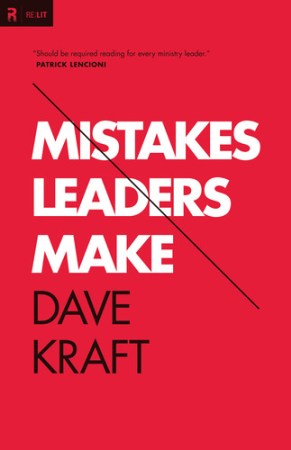
mistakes-leaders-makeDave Kraft has had plenty of time to make mistakes and to observe others doing the same. He’s been in Christian leadership for more than 43 years serving with Navigators and a variety of churches. In his recent book, Mistakes Leaders Make, he offers ten warnings of what not to do as a leader. This is an easy book to read. It took me less than a day, but I’d recommend taking it more slowly and working through the issues and questions he raises more carefully. It’s readability is increased by the style of writing. He follows the pattern of Lencioni in telling a story about a church and its various staff. While the church is fictional, the characters and issues are very real. Each chapter introduces a new character, and their mistakes, before teasing out some principles and practices.

Kraft recommends letting Psalm 139:23-24 be your prayer as you work through each chapter.

23 Search me, O God, and know my heart!
Try me and know my thoughts!
24 And see if there be any grievous way in me,
and lead me in the way everlasting!

The list of mistakes is very sobering. I have experienced temptation and failure in a number of these areas. Each one is worth considering carefully.

  1. 1. Allowing ministry to replace Jesus

The first mistake is very subtle and easy to deny. How could you possibly replace Jesus with ministry when ministry is about serving Jesus? You can and I have! It’s easy to be so caught up with the responsibilities of ministry that we neglect our relationship with our Lord. I don’t have time to talk to God because I’m too busy doing things for him. Successful ministry can become more important that honouring the one we serve. I think this area is a big trap for senior pastors and it has an awful ripple effect. Families, staff teams, and churches all suffer as this happens. The key to this mistake – indeed the solution to each of the mistakes in this book – is to keep Jesus at the centre of our lives and all we do.

2. Allowing comparing to replace contentment

Comparison versus contentment is another perennial fight for Christian leaders. Every denominational gathering, leadership conference, or ministry fraternal offers the temptation to pride or envy. How many on your team? Have you planted a new church this year? What’s your budget? How many people come each week? It’s a fools game. The solution is to be content with who you are, where you are, what you are doing, and what God is doing through you. (p33) Just remember you are God’s person, entrusted with God’s people, and God’s ministry. If you must compare, then ask yourself the question whether you are being all that you could be for God.

3. Allowing pride to replace humility

Kraft argues that pride is the root cause for the undoing and fall of most leaders. It’s so easy for the ministry to become all about us. He quotes Gary Thomas in his book, Thirsting for God:

Proud women and men relate everything back to themselves. They are all but incapable of seeing any situation except for how it affects them. Empathy is something they may read about but will never truly experience.  (p44)

Pride can be a particular issue for young, gifted leaders who experience success early in their ministry. It’s easy to be swept up in the praise, to believe we are the cause of our own success, and to lose sight of the contribution of others. Most significantly we can take our eyes of the Lord of the harvest altogether. I believe that this was a struggle of me at times. The solution is to refocus regularly on the cross of Jesus Christ and the extraordinary grace that we’ve been given from God.

4. Allowing pleasing people to replace pleasing God

People pleasing is a trap. If we spend our time worrying about what everyone else will think of what we do, then we will be torn this way and that and never lead effectively. Ultimately we play to an audience of one – God himself. He will judge our motives, words and actions. As Proverbs 29:25 says, The fear of man lays a snare, but whoever trusts in the Lord is safe.

5. Allowing busyness to replace visioning

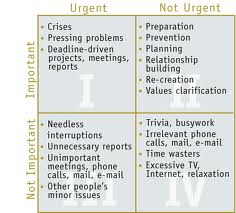
Busyness is a great enemy of Christian leadership. Too few leaders spend time thinking, praying, dreaming, looking ahead, and planning. The urgent gets our attention and we fail to set clear vision for the future. This mistake leads to ineffective and overly busy ministries, burnout of people, and disillusionment with what we’re doing. Leaders must look to the future. We need to be concerned with what could be not simply with what is.  This is a hard lesson to learn because we are so often tyrannised by the urgent. Let’s make time in our calendars to think, pray, reflect, dream, plan – both on our own and with our teams.

6. Allowing financial frugality to replace fearless faith

The temptation is to think that this mistake is one that only church boards and parish councils make! This is not true. We began our ministry on a shoestring. We had to clear a substantial debt in the beginning and for a number of years I was paid 6-8 weeks late. Everything was done on the cheap, money was kept and saved rather than spent, and I became overly concerned with getting a bargain. We need to be financially wise, but also filled with faith. We should remember that God is our provider and he calls us to use his resources for the advancement of his work.

7. Allowing artificial harmony to replace difficult conflict

We are not to be so loving that we don’t speak the truth, or so truthful that we don’t speak with love; there is a fine balance between the two that is essential to all human relationships, especially among church staff and in a leadership role.  (p79)

Avoiding conflict can be a big problem among Christian leaders.  I’ve been in staff meetings where it’s obvious people aren’t on board, but they remain compliant or passively aggressive. It’s awful! We’re tempted to work around people rather than confront them. Sometimes people are unable to do their job and we’d rather compensate for them at great cost to the organisation, than confront them or move them on. Conflict can be very healthy for teams. And healthy conflict depends on trust and relationships. I recommend reading Patrick Lencioni for more on this.

8. Allowing perennially hurting people to replace potential hungry leaders

There are always hurting people in our midst and the compassionate leader can find him or herself overwhelmed with trying to care for them. Eventually the leader is unable to keep it up and goes on stress leave or resigns. The problem is we try and do it all ourselves. Leadership is about building teams of people to share the load. We need to take the time to get the right people onto the team bus with us and them help them to find the right seats according to their gifts, abilities and passions. Grow the team and we grow the capacity to care. Leaders must be team builders.

9. Allowing information to replace transformation

It’s not what you know, but what you do, in dependence on the Holy Spirit, with what you know that makes all the difference.  (p99)

It’s easy to be so consumed with preparing, teaching, and passing on information, that we lose sight of the purpose of seeing people transformed by God. If we are teaching and learning, but never changing, then we have a massive problem. As leaders we should be on our knees asking God to transform us and the people we lead.

10. Allowing control to replace trust

Stressed and busy leaders are high risk to be controlling rather than trusting. We might fear things going wrong or getting out of control. We might worry that someone else will stuff things up or not do them properly. We might be jealous of others and try to guard our reputation. Good leadership is about helping others to have a go, to grow, and contribute, and be the people God made them to be. After all, this is God’s church and God’s ministry, so let’s lighten up and trust God!

This is an insightful and practical book. It cuts deeply. I recommend it especially to young blokes coming out of theological college who are planning to conquer the world! It’s also a must read for senior pastors who know deep down that they keep running in the red zone on empty!

Christmas uncut

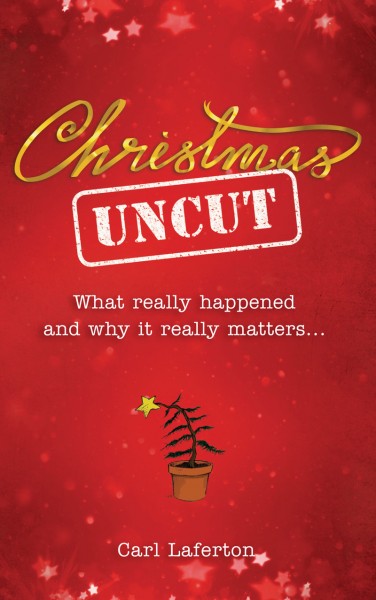
christmas_uncutA friend was telling me recently how much she enjoyed Christmas Uncut by Carl Laferton. I must have sounded interested because two copies arrived in the mail a few days later. It’s a good time to release a book like this, with Christmas only weeks (or is that days) away. I glanced through it, decided I liked what I saw, and promptly gave my two copies away! Anyway, I’ve since got hold of more copies and have now read it through carefully.

It doesn’t take long to finish this book, as there’s less than 60 pages with words on them. The pages are small and there’s even a few cartoons to keep you interested. Truth is, we don’t need pictures to hook us in. It’s well written, humorous, intriguing, matter of fact, and logical. Laferton shows how Christmas has become something of a children’s fiction. We all know that we’re not going to find Santa, or reindeer, or elves, or Christmas trees in the Bible. But what we don’t readily appreciate is how far from the truth many ‘Christian’ presentations of Christmas can be. Far from being a cute nativity story for kids, the real Christmas is filled with scandal, controversy, massacres and mystery. Maybe Stephen King and Stanley Kubrick should have teamed up to produce The Nativity – Director’s Cut!

carl_lafertonThis little book gets us beyond the commercialism and hype, the fiction and the fantasy, to the true message of the historical Christmas. Each chapter is divided into two parts: (1) what really happened, (2) why it really matters. Laferton uses real quotes from the Bible, accompanied by explanations and commentary of his own, to reveal exactly what took place. Then he explores some of the mind-blowing, earth-changing implications of these events. If you check out this video clip you can listen to the author tell you about his book, Christmas Uncut.

There are seven chapters, or ‘scenes’, in this book. Each one focuses on one character from the Christmas story and gives us a window into the significance of what took place for us today. Unlike many events in human history, that can be ignored without affecting anyone, the events concerning Jesus have major ongoing repercussions. Appropriately for Christmas, the bulk of the book deals with the accounts of Jesus’ birth and early years. However, these events cannot be fully understood without moving to the end of his life and examining the Easter accounts. The last two chapters tie all these pieces together.

Following the seven scenes are four brief chapters that point a way forward and begin to answer some common questions. The chapters are:

What next?
Yes but… isn’t this all made up?
Yes but… was Jesus really the Christ?
Yes but… surely Jesus didn’t really rise?

I enjoyed reading this book as it reminded me of what Christmas is really all about. It’s fun to read and it doesn’t take much time at all. This book makes for a cheap, worthwhile Christmas present. For less than $4 you can buy heaps of these, and if you speak to the publisher about bulk purchases they’ll probably do a deal (but don’t quote me!). I’m planning to get hold of more copies because I can think of many uses for this book…

  1. As Brumbies chaplain, I’ve decided to give one to each of the players, coaches, team staff and admin at the annual Christmas party.
  2. Your church could buy a whole bunch to give away to guests at your Christmas services or carols events.
  3. You could get one for each of your work colleagues.
  4. Your kids could give one to each of their teachers.
  5. You could stick one in your Operation Christmas Child shoe box next year.
  6. Get them to give away at your Gingerbread House, or equivalent, events.

If you’re a pastor, and you haven’t written your Christmas message, and you’re fishing for ideas, then this book will come to your rescue. There are at least seven Christmas sermons in this book. But don’t be so lazy!

Holding on to hope

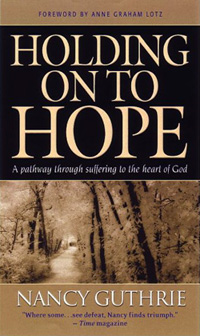
holding on to hopeSome things in life seem completely unfair. Having a baby, knowing that they will live for only a few short weeks or months, is one of these things. The pain and grief for the parents and siblings is too difficult to contemplate. For this to happen twice within the same family beggars belief. Holding on to Hope by Nancy Guthrie tells the story of the Guthrie family and their loss of two children with a metabolic disorder called Zellweger Syndrome. Their daughter, Hope, lived for just over 6 months and their son, Gabriel, lived for a little less than 6 months. Nancy describes their staggering loss and broken hearts. More than this, she writes of the wonderful hope to be experienced by turning to God in our brokenness.

Holding on to Hope invites us inside Nancy’s personal journey of suffering. She examines her own story of loss in the light of the biblical Book of Job. These Scriptures offer insights on dealing with pain, listening to others, grappling with despair, searching for meaning, struggling to trust God, handling our emotions, and where to find hope.

Job is the longest exploration of suffering, grief and hope in the Bible. Its sheer size and its apparently depressing tone have scared many readers away from learning its lessons. One friend of mine went to a church where the minister preached one chapter of Job every week for 41 weeks. It seemed like the minister wanted the congregation to get a taste of Job’s suffering! Surely 4 or 5 weeks would be a better approach. I preached it in one week! Another friend of mine is fearful of reading or preaching on this book, because he superstitiously expects things to go wrong if he does so. I would have thought that things are going to go wrong anyway, so we may as well learn what we can from Job!

Nancy Guthrie takes us gently through her experiences, engaging in every chapter with the text of Job. This is a book of compassionate wisdom. It’s the kind that you can confidently pass on to a friend who is suffering, knowing that you have left them in safe hands. This is no academic work or dispassionate apologetic – it’s a kind word from one who knows suffering and who listens to God’s word.

The overall structure of the book traces Nancy’s experience with her daughter, Hope, through pregnancy, birth, death and grieving. While the family is struggling to deal with the loss of their daughter, they are growing in the hope that comes from trusting the promises of God. Toward the close of the book we learn also of Nancy’s pregnancy with Gabriel, who also has Zellweger Syndrome. This is a tragic, yet hope-filled story.

Each chapter begins with a brief reading from Job, followed by a reflection on her own experiences. The chapter headings below will give you insight into the breadth of issues addressed:

Loss   Tears   Worship   Gratitude   Blame   Suffering   Despair   Why?   Eternity   Comforters   Mystery   Submission   Intimacy

Hold on to Hope is a journey of faith, hope and love. We see God at work by his Word and Spirit in the lives of Nancy and her husband, David. She helps us to grieve well, to turn to God in thanks, to trust God, to seek to honour him, to find hope in God’s promises and faithfulness. She shows us where to turn when it’s all too much, what to do when people’s words (or lack of) hurt more than heal, and why God should always be our strength and refuge.

I found some of her words very personally confronting. In one instance, she reverses a typical prayer for healing that’s accompanied by a whisper of “If it be your will”. She suggests instead the following:

Shouldn’t we cry out to God with boldness and passion and persistence in a prayer that says, “God, would you please accomplish your will? Would you give me a willing heart to embrace your plan and your purpose? Would you mould me into a vessel that you can use to accomplish what you have in mind?” And then, perhaps, we could add a tiny P.S. that says, “If that includes healing, we would be grateful.”

Isn’t real faith revealed more through pursuing God and what he wants than pursuing what we want?  (p79-80)

My wife read this book years ago. In fact, there are usually a few copies floating around our bookshelves because she keeps buying them to give away to others. One friend, whom she’d given a copy to, asked me on the weekend if I’d read it. So now I have! This was a woman who’d given birth to a little boy who died within an hour of his birth. She told me that she’d found it helpful and encouraging. I known Fiona has given copies of this book to grieving mothers of stillborn babies and others who’ve experienced significant tragedy and sorrow.

Don’t think it’s just a book for mothers or women. I found it spoke to personally to me. It has relevance for people struggling in a range of areas, such as unemployment, bereavement, serious illnesses such as cancer, divorce, depression, anxiety, loneliness, chronic fatigue. These are all circumstances where our hearts are tempted to turn away from God. This book gently draws us back.

The edition which I’ve just read contains additional resources for the reader. There’s a list of Bible passages related to the theme of each chapter. There’s also an 8 week study guide which is designed to be used by individuals or groups. These studies take the reader deeper into the Book of Job, as well as other Bible texts, and include questions for discussion and application. She invites you to visit her website at www.nancyguthrie.com to write a message, share your story, or discover more resources to help you find hope in the midst of suffering.

DIY kids’ books

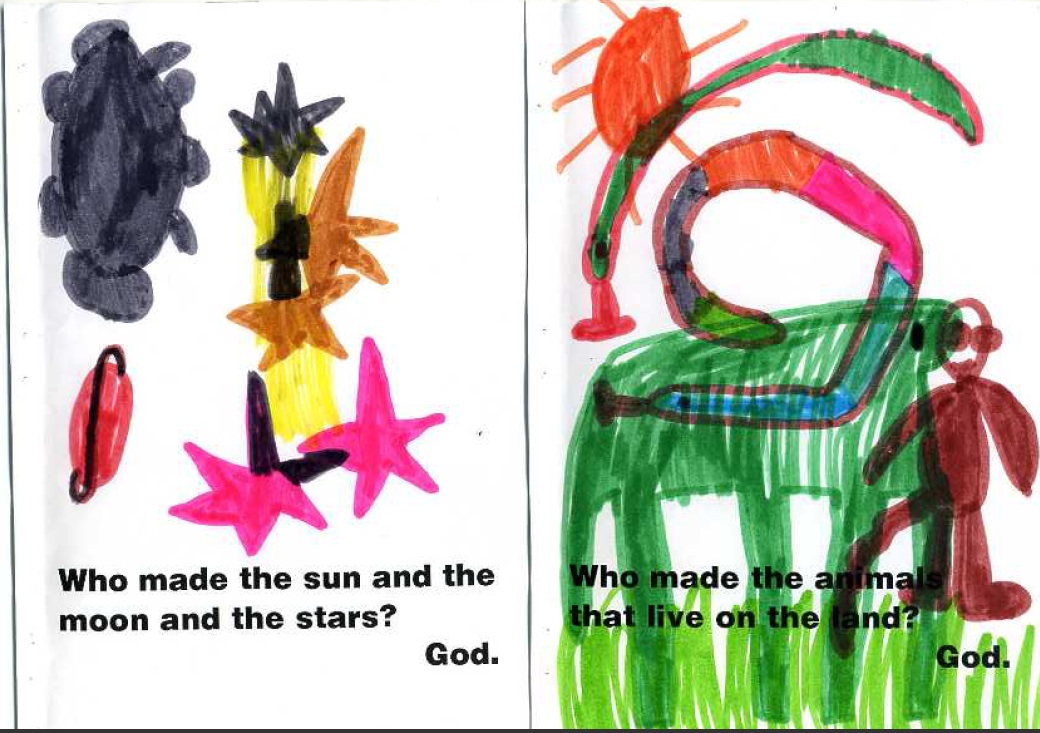
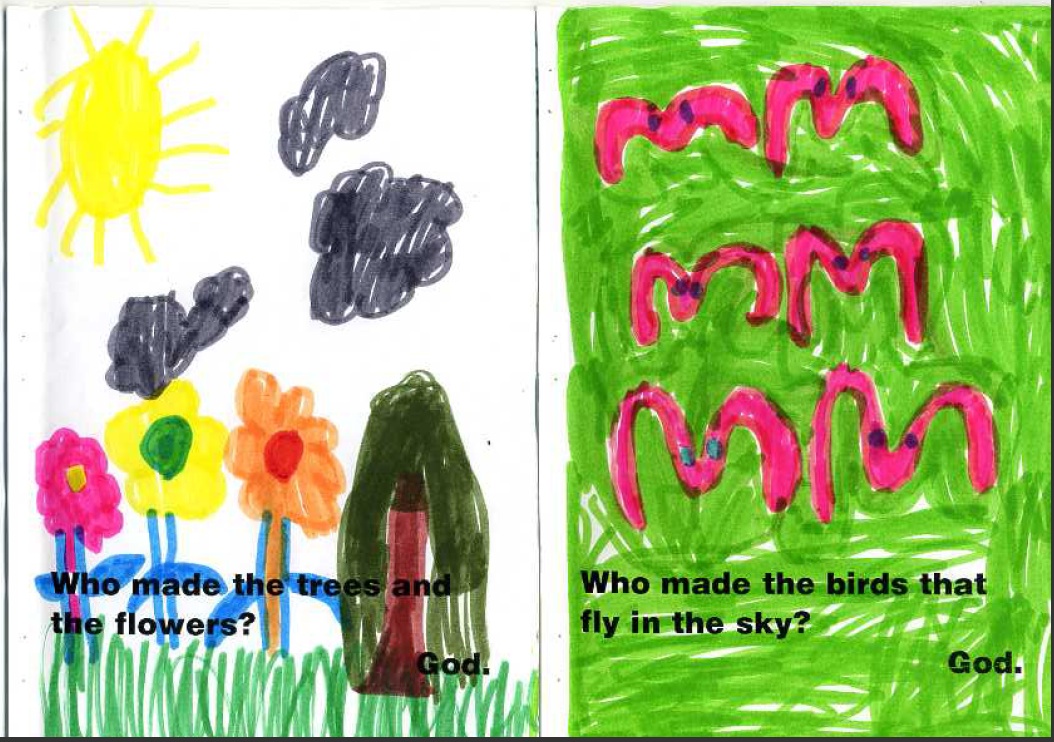
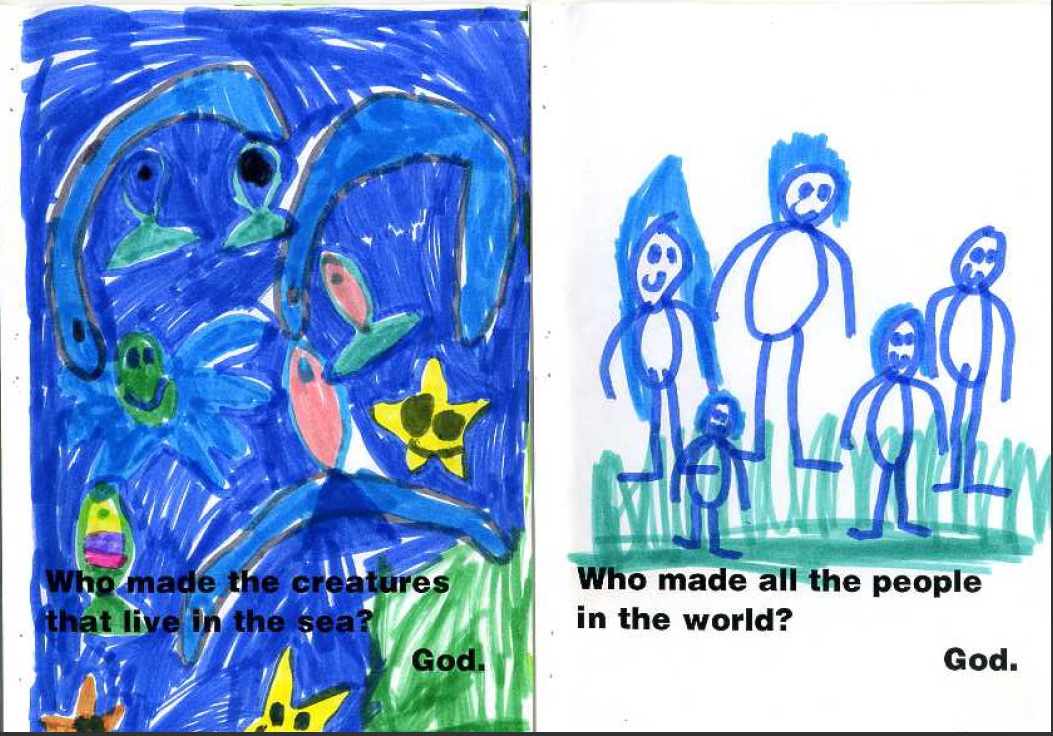
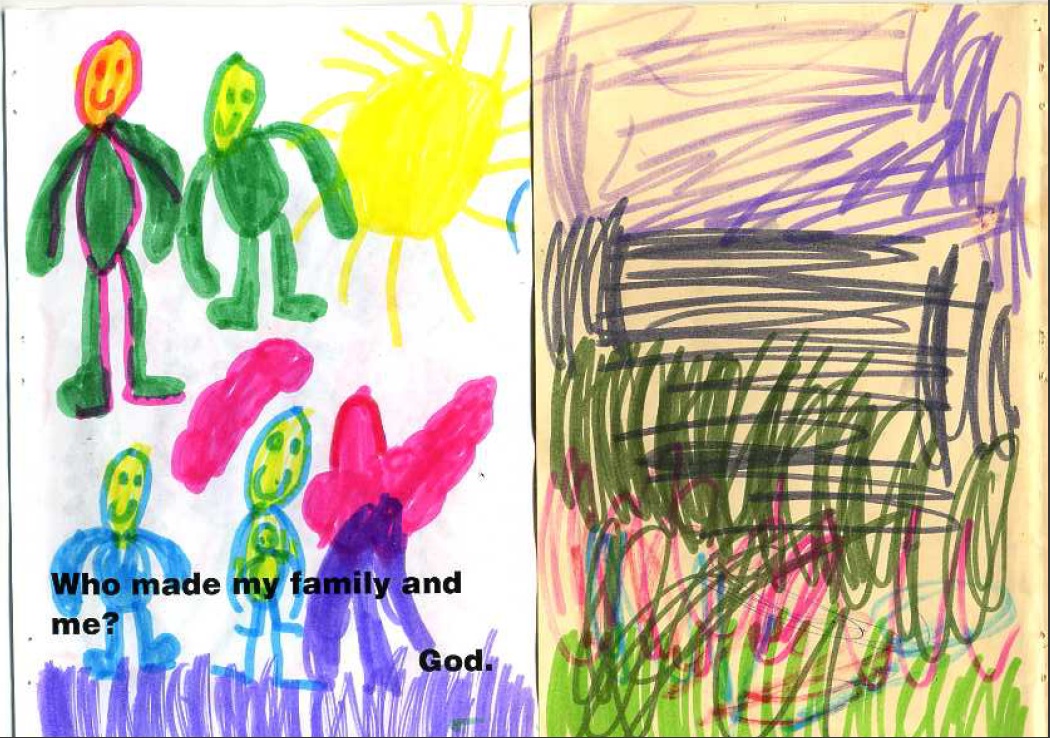
Cleaning out the filing cabinet is always a revealing experience. I was sorting through some cards, letters, artwork and other stuff, when I discovered a couple of my earlier book manuscripts! That’s right, I’m an author. This particular book was never published and was probably only read by four people. So here’s my chance to self-publish for a wider audience!

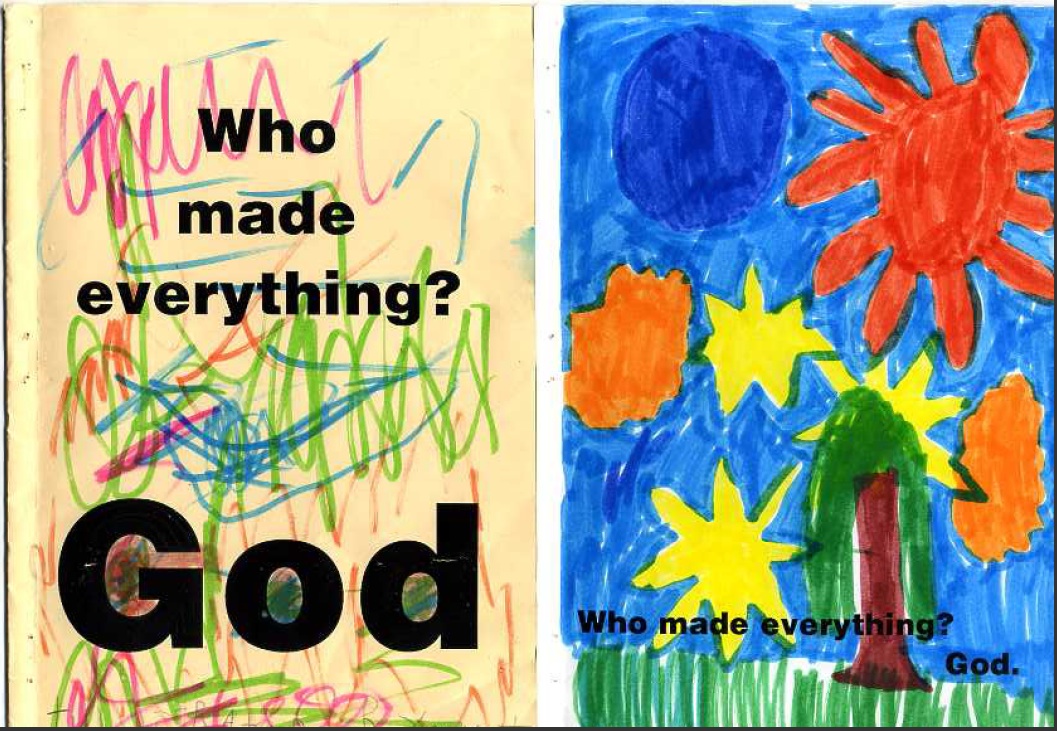
I was motivated to be teaching my kids (two young boys at the time) about God in a creative way. I’d been thinking about some of the question/response catechisms of yesteryear and this led to an idea for a DIY book for kids. I would write the text and my kids would do the artwork. Having written the words, I printed them into an A5 booklet, and invited my kids to draw the pictures. Below is the Limited First Edition entitled, Who made everything? God. Written by Dave McDonald and illustrated by Matt McDonald. Given that there is a baby either growing inside one of the family members, or in her arms, it must have been written around 1996, when Matt was 4 or 5 years old!

I produced another of these called Jesus is Special, where the text on every page began “Jesus is special because…“. We explored things Jesus said and did, his miracles, his death, his resurrection, and his exaltation – in simple words and sentences.

These books weren’t hard to do, we had fun together, and it was a creative way of getting our boys to learn about God. Why not give it a go, or share some of your own creative ideas.

who_made_everything_1

who_made_everything_2

who_made_everything_3

who_made_everything_4

who_made_everything_5

who_made_everything_6

Talking with kids about God

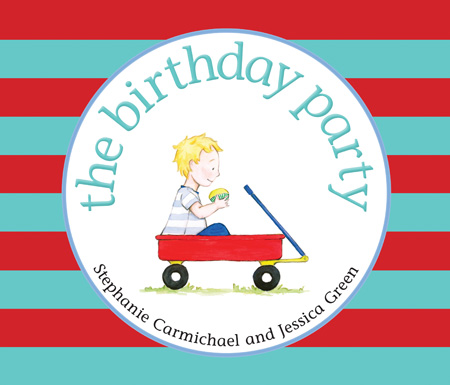
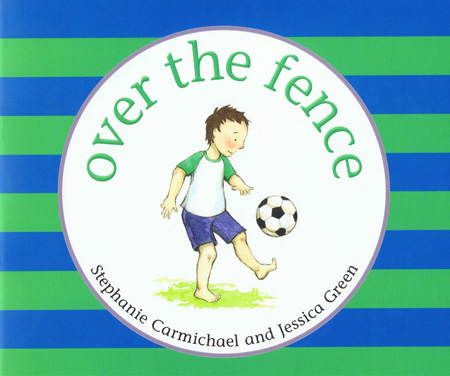
Birthday_Partyover_fencerag_dollgrumpy_day

Having read Grumpy Day, by Stephanie Carmichael and Jessica Green, I admit to having hoped there were more books in the series! There are four and they’re all delightful, with engaging stories and colourful, homely pictures. Friends have told me how much their kids love these books and how they’re often preferred over other ‘cooler’ story books.

There are a few things I’d like to highlight about these books:

  1. They are enjoyable stories for preschoolers and they introduce talk about God in a very natural way. I think this will help to give confidence to parents with their kids.
  2. The stories are simple and their messages are uncomplicated. Each book introduces the reader to a key characteristic of God. These are foundational ideas describing God as God, the one who made us, who knows about us, and who loves us, and whom we can talk to.
  3. The notes for parents section in each book offers excellent tips for making the most of these books and reinforcing the message with other activities.
  4. This note from the authors, printed in the front of each book, gets to the heart of it:

    One of our hopes for these stories is that they will give you an idea of how easily and naturally you can talk about God with your children through the day, helping them grow up in a world where our great God is at the centre (Deuteronomy 6:4-7; Psalm 145:3-7). It’s all about using the little opportunities that crop up each day.

If you’re starting to think about presents for Christmas, then why not take a look at these books. You can get them individually, but it makes better sense to grab the set of four. The publisher’s website enables you to read through each of these books before you buy. It’s an excellent idea to check out what you’re getting before you decide. Having read, or even listened to the author read her own book, you can then purchase with confidence. Your kids, grandkids, neighbours’ kids, random kids will love you for it. These books would also make an excellent gift for friends or to offer your local play group or preschool.

Here’s a final tip for the publishers – reprint the books in a shoebox size and encourage people to put them in next year’s Operation Christmas Child shoebox gifts! This way families all over the world will benefit from them.

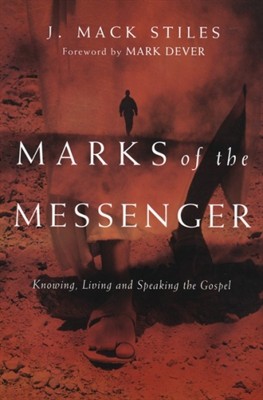
Marks of the messenger

MarksI’ve been complimented a few times in the past 24 hours for writing this book. Given that I’m thought to have written it, I thought I should read it at least. Why the compliments and the confusion? Well, yesterday I attended the AFES National Staff Conference, where I gave the opening address. Before the talk, Mack Stiles was interviewed about his work in Dubai and then I was interviewed about my experiences over the past year. During my interview, Richard Chin realised that he’d forgotten to plug Mack’s book. He held it up, said how good it was, and that Don Carson had said: “I do not think I have ever read a book on evangelism that makes me more eager to pass it on than this one – better, that makes me more eager to evangelize than this one.”

What Richard said, and what people thought he’d said, differ slightly. Read the next two sentences out loud…

Mack has written this book…
Macca’s written this book…

You can see or at least hear the reason why people were mistaken!

Now that I have read Marks of the MessengerI can say that I’d be very happy to have written it. Not just getting the royalties, or the accolades from the back cover, or it being my first book – but for what it says! It’s a book that encourages people to know Jesus, to live for Jesus, and to speak up for Jesus. Some books on evangelism make me cringe as they focus on methods and strategies for marketing the message and impacting zillions of people. This book is about being authentic as a follower of Jesus. These are the things that should mark a messenger of the good news about Jesus.

I had in mind to summarise many of the excellent ideas in this book but, as I neared the final pages, I discovered that Mack has done this for us. He distills the previous chapters into what he calls A Manifesto for Healthy Evangelism (p112-113). But let me offer a quick description of the main points of this book.

  1. You can’t really share the breaking news of Jesus Christ unless you have a genuine relationship with him. This means acknowledging that Jesus has authority over your life and putting your complete trust in him. As you trust him, so you trust his words of life and desire to share this with others.
  2. It’s important to know the gospel well. Don’t mess with it by adding bits you like or subtracting bits you don’t like. If you mess with it, then it will be no benefit to anyone.
  3. The gospel can be lost in three generations. If one generation accepts it, then the next assumes it, then the next confuses it, then the next will have lost it. So keep the gospel at the heart of every thing you do and say in your life and ministry.
  4. The first application of our understanding of the gospel is not necessarily to share our faith, but to live a gospel-centered life. (p112) The gospel should influence every nook and cranny of our lives. It helps us to remember our sins and failings, enables us to resolve conflicts, shapes our parenting, and so much more. Our lives should look like the message of grace we share.
  5. God calls us to love people by meeting their needs. Some people are lonely, some are hungry, some are oppressed. We are called to love them. All people are in need of forgiveness, and God calls us to love them in this need also. This may involve many things, but at the heart it will mean letting them know about Jesus.
  6. Before people can put their trust in Jesus and turn to him as their Lord, they need to understand what this means and how it happens. There’s no point in people making meaningless responses. What’s required is genuine, reasonable, change of heart, and this will result in changed lives.
  7. We’re called to be bold – not to fear people, or to be ashamed of the message, or fearful of being rejected. So let’s pray that our fear of people will be replaced by reverent fear of God.
  8. The love of God is so different to corrosive, wordly views of love. God’s love changes people and builds extraordinary communities. Jesus said that people would know we are Christians by the love we have for one another. As we apply this in our lives, it becomes the greatest image of the gospel we offer the world.
  9. As we speak the gospel to those who don’t know the gospel, we cycle through three foundational challenges in our minds: Do I know the gospel? Do I live the gospel? Do I speak the gospel? (p113)

I’ve had the privilege of getting to know Mack over the past few years as we’ve met at this conference. This morning we talked together, shared our lives together, wept together, and prayed together. Mack’s enthusiasm for people to know the truth about Jesus is infectious, in a positive way. You know he’s not going through the motions, because where he lives and works there’s absolutely no point pretending to be a Christian. It’d be stupid and dangerous. Mack knows Jesus personally and his great passion is that others will also come to know him. You know, that’s what God wants too! Marks of the Messenger will help you to be a part of this happening.

Encouragement: how words change lives

In Gordon Cheng’s book, Encouragement: How Words Change Lives, he advocates speaking the truth in love. In view of this, I feel the need to disclose a few facts. I’ve known Gordon since I began university. I’ve had to put up with his the endless Monty Python recitations, even being roped into performing some skits together in college reviews. We did some of our ministry and theological college training together, before both working in university ministry in different parts of the country. Our wives are both named Fiona and they shared a house together before they were married (to each of us respectively). Most importantly, I regularly won our push-up competitions.

In all seriousness, I say these things because we often don’t have a clue about the life of an author, and whether they practise what they preach. It’s one thing to write a book about ‘encouraging words’ and quite another to live it out. In my experience, this author walks the talk. Despite the silly banter between us, he’s always aiming to build up rather than tear down. He’s been quick to add encouraging comments to this blog and he’s spent time on the phone encouraging me in the struggles I’ve been going through this year. And he hasn’t offered any cash for comments here!

Encouragement is a word that’s commonly thrown around in Christian circles to mean whatever we want it to mean. This book offers a biblically-shaped definition:

Christian encouragement is speaking the truth in love, with the aim of building Christians up in Christ-likeness, as we wait for the day of judgement. Christian encouragement will likewise involve speaking the truth in love to unbelievers, thus encouraging them to put their trust in Christ for forgiveness and salvation.  (p11)

This definition draws on many parts of Scripture, but is particularly based in Ephesians 4:

11 So Christ himself gave the apostles, the prophets, the evangelists, the pastors and teachers, 12 to equip his people for works of service, so that the body of Christ may be built up 13 until we all reach unity in the faith and in the knowledge of the Son of God and become mature, attaining to the whole measure of the fullness of Christ.

14 Then we will no longer be infants, tossed back and forth by the waves, and blown here and there by every wind of teaching and by the cunning and craftiness of people in their deceitful scheming. 15 Instead, speaking the truth in love, we will grow to become in every respect the mature body of him who is the head, that is, Christ. 16 From him the whole body, joined and held together by every supporting ligament, grows and builds itself up in love, as each part does its work.  (Ephesians 4:11-16)

There are four parts to this definition. Truth and love are both essential for genuine Christian encouragement. Words of ‘truth’ can be used to cause harm – this is not encouragement. The truth can be distorted or lost, with the aim of ‘loving’ another – neither is this encouragement. Notice also, that there are two recipients in view, the Christian and the unbeliever. Truth and love, grounded in the message of Jesus Christ, is what will both build Christians and offer life to those who don’t as yet believe.

The overarching context for Christian encouragement is the coming day of judgement. If, as Hebrews 9:27 says, it’s appointed for all people to die and then to face judgement, then genuine Christian encouragement will be shaped and directed by this reality. How we live, and what we decide and do and say, matters. The reason we can offer encouragement in the face of judgement is because Jesus Christ, the One who was full of love and truth, has already taken the judgement in our place. Jesus’ death and resurrection changes everything, and this is the core message of encouragement we have to share.

In this postmodern world it’s easy to be dismissive of words, as if they are empty of real significance or power. However, the Bible demonstrates the enormous power of words. God is the one who spoke the universe into existence and who maintains everything by his powerful world. The same word that creates life also brings new life in Jesus. We’re encouraged to draw deeply on God’s powerful word, as we offer hope for life and bring encouragement to others. Soaking ourselves in the Scriptures will help equip us to offer the right words in season. However, we’re not talking about mindless parroting of the Bible here. There’ll be times to speak and times to refrain from speaking. There’ll be occasions to read from God’s word and occasions to apply godly wisdom and common sense. If we lack the ability to choose what to say, and if or when, and how to say it, then we’re urged to pray and ask God for wisdom. In fact, we’d be wise to pray whenever we seek to encourage others, asking God’s Spirit to guide our words, and to apply them, and for them to be well received.

I found Encouragement to be a very encouraging book! It models what it teaches. It’s a joy to read because it’s not fundamentally about tips and techniques. Rather, it points the reader to the greatest source of encouragement, in God himself. In so doing, it inspires me to become an encourager of others. It doesn’t leave me feeling a failure or guilty, but reminds me of God’s grace. This book is gospel-shaped.

There are so many practical suggestions scattered throughout Encouragement. A good example is the chapter on ‘How we say what we say’. The basic message is, consider your motives in speaking. Are you aiming to love and build up? Cheng offers five examples of how ‘speaking the truth in love’ might work out in practice:

  1. Always remember the gospel of grace and repentance
  2. Be specific
  3. Be humble
  4. Deal with important issues
  5. There is a time for silence.  (p86)

The section on grace is pure gold. There is absolutely no place for a rule-based, sickening, dead moralism! Throughout each of the following sections it was apparent how important listening is to being able to find the right words and the right time to speak. We’re often not too good at it because we’re more interested in speaking than we are at listening. But, good encouragers will be good listeners. Listening will help us to choose the specific words, to use them humbly, to focus on what matters most, and to know when words are not the best option.

I’d recommend Encouragement to any Christian who is wanting to make the most of their days in loving and serving others. It’s not just about how we speak – it’s about how we think and act and speak as God’s children in his world. It’s about living out the implications of the gospel of God’s grace in our lives. It’s about being a loving friend to others. It’s about having a ministry within your church, without needing an invitation, position, or job description. It’s about being wise as we engage with politics, or teach our kids about sex, or care for someone with terminal cancer. It’s about our God-given life. It’s for enthusiastic new Christians and it’s for crusty old Christians!

There is much I liked about this book. It contains some wonderful illustrations and stories of real people. It’s good humoured and gracious while making it’s points very clearly. The message of the Bible has shaped the argument throughout and there are many helpful references included in the text. I especially appreciated the smattering of Proverbs quoted and applied throughout. The author also shows genuine empathy for people who are doing it tough and this is especially helpful in a book on ‘encouragement’.

So I say, get yourself a copy and, while you’re at it, get one for someone else. You could read it together, or catch up and talk about what you’ve read. Perhaps you could use the study/review questions at the back. Help your friend, and get them to help you, become a better encourager of others. Maybe you could introduce this book into your book club. A friend told me last week that he reads out loud from good Christian books as he car-pools to work (and no, the others don’t mind!). This would be an excellent book to use for this purpose. Take it in bite size chunks and learn from it.

However you may choose to use this book, pray that God will apply his words of encouragement to your heart, so that you can pass them on to others also.

Beyond the first visit

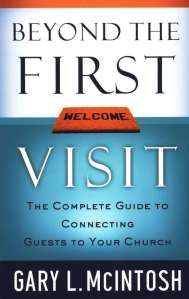
Welcoming is a gospel issue. Our God is a welcoming God. Jesus died so as to welcome people into relationship with God and with each other. He calls his followers to show hospitality to others as an expression of God’s love and grace. So how can we make this a vital feature of our congregations? One way is to be genuinely friendly when people come to our church. Next is to take the initiative in welcoming, follow-up, hospitality, and inviting people to join with us in what we are doing. Nearly every church assumes it is friendly and welcoming, but it’s not what the insiders think that really matters. We need to learn to see things from the outside in. How do we come across to visitors and guests? This book invites us to take a look.


Beyond the First Visit: The Complete Guide to Connecting Guests to your Church by Gary McIntosh is a book worth reading. I’d advise following the author’s suggestion:

To get the most out of this book, as you read each chapter, make notes in the margin of the book, scribbling your thoughts and ideas. Then make a list of action steps that you want your church to take during the next year to get ready for company. (p14)

McIntosh begins by suggesting we review our terminology – stop speaking about visitors and think of guests instead. We don’t always want visitors, but guests are expected. Visitors are expected to leave, but we plan for guests to stay and we make arrangements so they can. A guest mindset is what we need in our churches. This book encourages people in our churches to become great hosts. The following checklist is a good way to assess how and where we can improve:

  1. Invite your guests with a personal invitation.
  2. Arrive early to make sure everything is ready for the guests’ arrival.
  3. Greet the guests warmly at the entrance and escort them to their seats.
  4. Assist guests in understanding what is taking place.
  5. Anticipate and answer as many questions as possible in advance, so guests do not have to ask.
  6. Do something extra to make your guests’ visit special.
  7. Walk guests to the door and invite them back. (p17)

Welcoming guests doesn’t always happen naturally. We need to plan for it to be done well and it’s the responsibility of the church, not the guest. It’s worth thinking about how we’d treat a guest in our home, and applying this to church. We’d invite them in, offer to take their coat, show them where they can put their bag, take them into the appropriate room, invite them to take a seat, offer them a drink, ask them how they’re doing, engage in conversation, invite them to the table for a meal, let them know where the bathroom is, and more… And yet, when it comes to church, so often we expect people to work everything out for themselves. Healthy churches will take the responsibility for welcoming people and helping them to get involved in the life of their church.

People will sometimes make assessments of your church on the basis of a single impression. The long grass surrounding the old stone building makes it look abandoned and unused. The out of date website communicates that nothing much happens anymore. The paint on the sign, making it hard to read the service times, indicates that they don’t want me to come. Whereas the attractive brochure describing the Christmas Carols, with pictures of families, and a warm invitation to come along, makes me think my family could fit in here. It’s worth considering all the first impressions we make as a church. What assessments are people making about what we’re like? If we can’t work it out ourselves, then ask others – those who’ve come and those who haven’t.

Churches who have their own properties are urged to think of the impact their facilities have on others. Are they welcoming or alienating? McIntosh suggests a stroll around, examining everything that people will come into contact with when they check out your church. A mother with a couple of young kids isn’t likely to return if her first experience of the bathroom is a gloomy, smelly, dirty, inadequate facility. If all the parking spaces near the building are reserved for church staff, then you get the message of who’s most important. If things are bright and clean, if directions are clear, if people say ‘Hi’ and smile and offer to help, then second visits become much more likely.

The book contains many ideas on letting people know about church. I nearly gagged at the direct marketing/phoning suggestion! The best idea was simply word of mouth! Spread good rumours! If your church matters to you, if it encourages you, if it’s great for your kids, if you love getting to know God with others, if Sunday is a highlight of your week… then spread the rumour! But be warned. Don’t talk things up too highly. People like their expectations to be exceeded – not let down.

Getting Beyond the First Visit helps churches to examine the pathways for people getting involved and belonging. This can be very simple in a church of 100 or so, but may require much more organisation and communication in larger churches. There is no one size fits all. Some smaller churches may be small because they’re not good at letting others in. The danger for large churches is that people come and go and no one notices or cares. This book helps us not to take it for granted.

At one level this is very light book. It’s not big on theology and there’s not much Bible. It devotes a lot of attention to surface issues and impressions, and a few of the suggestions made me cringe. But overall, it’s full of helpful analysis and practical suggestions that will get us thinking about how we can do better. The central issue is so vitally important. At a time when our churches are becoming more and more marginalised, we need to make every effort to connect with people. People need to know God today, as much as they did in our parents’ generation, and as much as they did in Biblical times. Our churches shouldn’t make it hard for people to get to know God. There’s no excuse for unfriendliness. It’s not up to our guests to ‘make themselves at home’ while we go about our own business. It’s our job to welcome, introduce, connect, and build genuine relationships.

I bought this book last year, so as to examine the issues afresh as we began to plant a new church. If you think about the principles being discussed, rather than simply looking for practices to adopt, then I believe you will find it a useful tool. Church planters should get a copy, but so too should existing pastors and church leaders. How long since we reviewed this area of church life? Have we ever? Maybe things are in need of a tune up, or even a serious rebuild. This book can help you to think it through, without spending $1000s on a consultant – unless, of course, you want me to come! 😉

Keep the faith

Keep the faith: Shift your Thinking on Doubt is a book that I was very keen to get my hands on. This has been a year spent fighting for faith in the face of a range of struggles and doubts. Any help in dealing with issues of doubt and battling from a biblical standpoint in this area has been warmly welcomed. So I was full of anticipation as I began reading Keep the Faith and I dearly wanted to ‘love’ this book.

I liked a lot of it, but I didn’t fall in love with it. I’m very encouraged by the approach and direction that shapes this book, but it didn’t leave me satisfied that it had achieved all it could.

The central thesis is very sound. In today’s world Christian thinking and ways are no longer mainstream. Many intelligent and articulate people dismiss Christian faith as outdated, irrelevant, unsubstantiated myths, and sometimes even downright dangerous. We live in an atmosphere of unbelief and this can wear away at Christian faith.

Faith is helpfully explained as ‘trust’ or ‘reliance’. Faith is more than an intellectual assent or belief that something is true. It is a willingness to act on the basis of this belief. The distinctive of Christian faith, as opposed say to trusting the accuracy of the weather forecast and not taking an umbrella, is that so much rides on it. We’re dealing with matters of life and death, meaning and purpose. So both faith and doubt are hugely significant when it comes to Christianity.

Ayres warns the Christian of the importance of taking preventative measures so that we are not easily swayed, and so that we understand where people, including ourselves, are coming from. His key point here is to demolish any claims to neutrality when it comes to considering God. This is true both for those who reject God and those who follow him. We all bring our prejudices and predispositions to bear on our thinking and choices. He argues clearly from Romans 1, that every person has an awareness of God, that’s displayed in the creation. And that rather than accepting this revelation and honouring God, people choose to suppress this knowledge and replace God with other things in their lives.

18 The wrath of God is being revealed from heaven against all the godlessness and wickedness of people, who suppress the truth by their wickedness, 19 since what may be known about God is plain to them, because God has made it plain to them. 20 For since the creation of the world God’s invisible qualities—his eternal power and divine nature—have been clearly seen, being understood from what has been made, so that people are without excuse.

21 For although they knew God, they neither glorified him as God nor gave thanks to him, but their thinking became futile and their foolish hearts were darkened. 22 Although they claimed to be wise, they became fools 23 and exchanged the glory of the immortal God for images…  (Romans 1:18-23)

The implications of this run deep. He demonstrates that there is a moral component to rejecting God. It’s not simply that people are persuaded that the evidence doesn’t stack up. It’s that people do not want there to be a God who has a right to direct their lives. It’s a picture of a creation in rebellion against its creator. This might seem a rather harsh or insensitive analysis, but we should remember we’re not talking about abstract intellectual ideas. We’re talking about a relational God who lovingly desires a relationship with those he has made in his image. Ignoring God is to turn our back on this offer of relationship.

Martin Ayres describes atheists, and others who dismiss God, as being guilty of wishful thinking. I found this a somewhat refreshing change, because I’m more used to hearing arguments from the other side that Christians are the wishful thinkers (or non-thinkers!). While acknowledging that Christians are also guilty of wishful thinking, the bulk of the argument focuses on why we do not want there to be a God. He quotes the intellectual atheist, Thomas Nagel, saying:

I want atheism to be true and am made uneasy by the fact that some of the most intelligent and well informed people I know are religious believers. It isn’t just that I don’t believe in God and, naturally, hope that I’m right in my belief. It’s that I hope there is no God! I don’t want there to be a God; I don’t want the universe to be like that. My guess is that this cosmic authority problem is not a rare condition and that it is responsible for much of the scientism and reductionism of our time.  (p52; quoting T. Nagel, The Last Word, Oxford University Press, New York, 2001, pp.130-31)

The first part of this book helpfully critiques the claims to neutrality in assessing Christianity. It just can’t be done. I know a number of people who’ve sought to step away from Christian faith, for a time, to reassess their beliefs and the evidence for them. They’ve wanted to sit on the fence as an objective observer. The fact is, there’s no fence to sit on! One friend, decided to give himself 12 months to weigh up his beliefs. He read Hitchens, Dawkins, Harris and others. But this was nowhere near a neutral stance. He gave all the airtime to hearing from the atheists for that period. It was, sadly, no surprise to see him giving up on his faith.

The latter half of Keep the Faith encourages the reader to shift the way they act. This is not merely an intellectual struggle, it’s a spiritual one, and there are helpful strategies to follow. Ayres moves away from such approaches as learning about the reliability of the Bible, or the evidence for the resurrection, or the scientific or philosophical arguments for the existence of God. While acknowledging their place, and also recognising the benefits of focusing on how God has transformed lives, he offers another approach:

There are three things, however, that will equip every single Christian – regardless of who they are or where they are in their faith – to face doubts. Remember these three things as you begin to shift the way you act and continue on your journey in the Christian faith. When you’re struggling to keep the faith:

  • remember the Fall
  • remember your redeemer
  • remember the stakes.  (p83)

Ayres encourages us to doubt our doubts, and not let them dominate our thinking. Keep remembering what you are persuaded by, what you don’t doubt, rather than feeding and watering the doubts until they outgrow everything else. He encourages us to keep investing in our Christian lives and ministry, as this helps us keep perspective as we grapple with issues. And don’t be afraid to ask for help, from God in prayer and from mature Christians who may well have travelled a similar path.

Four chapters in the final section focus on Jesus and the incident when he raised his friend, Lazarus, after he’d been dead for four days. We’re given an insight into the character of Jesus, his love and compassion for others, his power and authority even over death, and his call for us to trust him. Jesus is shown to be able to do anything – even eradicate our doubts. Ayres claims that the more we focus on Jesus, the more delighted we’ll be. It’s a bit like any relationship, the more we avoid someone and choose to spend time with others, the less likely we are to stick together. How dangerous this can be for a marriage. How dangerous to our Christian faith, if we pay no regard to Jesus and only listen to the naysayers.

The final chapter calls us to remember the stakes. Unlike choosing a hobby or sport, making a decision about Jesus has eternal consequences. Take your doubts seriously. God has spoken and he calls us to listen to his word, not to be like those who chose to ignore him and perished. Doubts are not to be ignored and pushed aside. They’re to be confronted by listening carefully, with a humble heart, to the life-giving, life-changing word of God.

What I’ve described above is a book that offers an important and helpful perspective on how we can shift our thinking on doubt. It’s worth seriously taking these things on board. This isn’t really the book for those wanting to get the guts of the Christian message, or for the unbeliever to be persuaded of the truth of Christianity. They’d be better off reading Ayres’ first book, Naked God. Nor is it a book of apologetics, answering the questions or defeater beliefs that are challenging Christianity today. Something like Keller’s The Reason for God would be more useful. And I would argue that these types of books, together with honest reading of the Bible, are also very important in confronting our doubts. Keeping the Faith is a complement to these approaches.

So then, what are my concerns? What bothered me about this book? I will list a few points.

I felt there could be a stronger sense of empathy with those who are seriously struggling with doubt. Ayers’ concern for those who are struggling is evidenced by his writing this book and I’m very grateful to him for writing it. However, I would have been helped to hear of his struggles, or perhaps more case studies of those who have struggled, how their struggles impacted them, what they found helpful and unhelpful, and how their thinking shifted. I think a book like this needs to demonstrate that the author understands me, and more could be done to show this.

The section on wishful thinking is very helpful but, I fear, rather unbalanced. Far more attention is given to the unbelievers’ wishful thinking, than the Christian’s. This is appropriate at one level in such a book, but I felt that more could be said to help the believer who is being attacked for their wishful thinking – more than simply ‘atheists do it too’.

At a couple of points I was disappointed by short-hand references, even jargon, that assumed the reader was thinking in line with the author. The most significant of these was the reference to ‘the Fall’ in the chapter 10. When I remember the Fall, I’m taken back to Genesis 3. However, Genesis 3 doesn’t get a mention in the book and I’m guessing Ayres assumes we will link back to his exposition of Romans 1 instead. I think it was unhelpful to use ‘the Fall’ as a heading without reference to Genesis 3. Indeed, it could have been helpful to go back to Genesis and talk about the spiritual challenge to doubting God’s goodness and his promises, the human desire for independence, and the disaster we create as we defy God.

I had a similar concern over the references to ‘worship’ and ‘spiritual disciplines’ in chapter 11. While I agree that, if we worship straight, we can think straight (p103), there is too much confusion over worship to assume that people will understand what Ayres is meaning. He does go on to show that true worship focuses on Jesus, our redeemer, but I wonder if people will get stuck reading their own definitions of ‘worship’ into this equation.

One last concern I will mention is the final chapter. Ayers takes the reader to Hebrews 6, one of the most disputed and difficult passages in the Bible, in the closing part of the book. This is a very important passage and warrants attention in a book on this topic. His explanations of the passage in its context are very insightful. But the discussion is brief and to drop it into the final chapter seemed strange to me. People need time to work through this passage, to be satisfied they’ve understood it, and to feel its weight. This is a tough call in the final chapter of the book.

Having read this book over a couple of times now, I want to thank Martin Ayers for addressing this massive pastoral issue. I’ve seen it trouble new Christians and long term missionaries. We need to help one another through these struggles. Read over the book and take on board its lessons. I think you’ll find it helpful, and it should help you to help others.

Grumpy Day

It was raining yesterday, so I took the time to read Grumpy Day by Stephanie Carmichael and Jessica Green. To be honest, I didn’t make much time – just as long as it takes to read a children’s book. I’ve never written a book review longer than the book so, if I don’t want to set a precedent, I’d better keep this to less than 671 words!

I got hold of Grumpy Day because my wife has them. Actually, so I do and so do my kids and so do most people I know! This is a book we’ll put aside to read the grandkids one day, when we need to help them deal with their blues. The words and pictures are beautiful. I reckon it’ll connect well with younger children, but I should probably borrow some kids to test it out. It tells the story of things not working out for three siblings. Two of the problems can be solved simply by the creative mum. But the last is out of her hands – she can’t stop the rain. What she does is broaden her boy’s perspective on why God sends rain, helps him understand he’s not at the centre of the universe, and helps him to speak to God about his problems and feelings. I think this makes it a pretty helpful parenting manual!

On the parenting front, the inside cover helpfully suggests ways the book can be used. There are suggestions of Bible verses that reveal the foundations for the main theme of the book. You can read these to the children, preferably from a simple translation. The book can be used as a springboard to discuss things further with the kids. It offers an opportunity to talk about praying, and to model simply speaking with God and letting him know their needs. You might even want to take things further by doing some drawing, taking photographs, or making up a rhyme or song about things related to the story.

A book like this doesn’t take long to read, and I suggest it’s worth reading a children’s book before you read it to your kids or give it away to others. Not all so called ‘Christian’ children’s books are helpful. Some leave the false impression that in order to be a Christian you need to be a good person. They don’t have God at the centre, and they’re not consistent with the gospel of Jesus. While this book doesn’t actually mention Jesus, I believe it is faithful to the Bible.

Here’s where I have one suggestion. It would be helpful to mention Jesus, because I think it’s important for children to hear, from their youngest days, that Jesus is the way we have a relationship with God. There are probably ways that Jesus’ name could appear in this book without making dramatic changes.

I like this book. 480 words – enough said!

Heading home

I confess this is the first book that I’ve read by Naomi Reed. I think my mother and Fiona have read them all, and I’m just disappointed that I’ve waited this long. Heading Home: My Search for Purpose in a Temporary World is her third in an autobiographical series of books, following on from My Seventh Monsoon and No Ordinary View. I’ll need to catch up on these stories later.

This was a book in season for me, because we’ve spent a year working through where we belong, who we are, what we should be doing, why we do and don’t feel at home, and constantly being confronted by the Bible’s message that we are not at home until we are home with the Lord.

Naomi tells the story of returning to their ‘home’ in the Blue Mountains, near Sydney in Australia, after being overseas for some time, mainly in Nepal. The account is full of humour and pathos as we’re given a window into the confusion of reverse culture shock. After living through a revolution in Nepal, and being without many of the things Aussies take for granted, it was overwhelming to visit supermarkets and department stores with the complete over-indulgence of choice. And no time is worse than Christmas with it’s red and white pimping of the season. The real message of Christmas barely gets a look in. I’ve spoken to other returned missionaries, coming back from economically poorer countries, who’ve found this so difficult. One family vowed to never return to Australia in the lead up to Christmas. They found the whole experience obscene.

I’d suggest that returning missionaries would be helped and encouraged by reading this book, and knowing that those who support them have read it too. So why not read it yourself, encourage others in your church to do the same, and send a copy to your partners overseas before they return.

Heading Home is a mosaic of themes and ideas that paints the bigger picture of discovering and living out who we are in union with Christ. It’s a profound message that raises real issues for all who claim to follow Jesus. I believe that Naomi is well placed to write such a book for a number of reasons: (1) she has the advantage of looking at different societies both as an insider and an outsider; (2) she has taken the time to reflect, meditate, and have her thoughts informed by Scripture; and (3) she has an endearing humility that comes across in each chapter.

As I reflect on the impact of a year of cancer and treatment, the book has had much to say to me. Who am I? Where do I belong? What am I to do with my life? Why don’t I feel settled? Naomi’s shared experiences have rubbed a little salt into a few of my wounds – and I’m glad she has. It’s easy to think that I really should be in Darwin, planting a church for God, making a difference, finding fulfilment in the challenge of ‘exotic’ and recognised ministry. But I’m reminded that it’s not a matter of which particular vocation, or which particular location. It’s about being content in the fact that God is in control, and he will use us wherever, and however, to fulfil his purposes, and for his glory. Naomi writes of dreams and plans coming to an end, and feeling loss of purpose upon returning to Australia. I could relate to this and was moved to pray her prayer also:

Lord, there are times in our lives when we feel purposeless. The dream is over. We don’t even know what do anymore or why …
But Lord, when we feel like this – lost and directionless and lonely – please remind us that we find our living in you; we find our focus in you …  (p20)

This leads to a highlight of the book for me. Every chapter finishes with a heartfelt, well-considered prayer to God. Naomi is not satisfied with raising the dilemma, or even with finding resolution in the words of God – she brings these matters to God in prayer. This is an excellent model to us all as we grapple with issues in our lives:

      1. observe our circumstances
      2. analyse and consider what we’re going through
      3. reflect on Scripture
      4. change our attitudes and actions
      5. talk to God about it

Naomi models this, and her prayers give a head start to those of us facing similar issues in our own lives.

Heading Home is a helpful book for people who’re not sure where they belong, or who are going through significant, even unwanted life changes; people with illness that’s not going away; people who are experiencing significant job changes, redundancy, unemployment or retirement; people suffering bereavement and grief; people finding themselves strangers in a foreign place (that they might even know well). Its helpfulness and hope lies in applying God’s word into our lives, and then helping us to bring this to God in prayer. Ultimately, this book succeeds by reminding all Christians that God deeply understands our circumstances and this world is not our true home – heaven is.

So Lord, today, when we are surprised by being the outsider or by a myriad of choices or misunderstandings or falling in between two worlds, or not belonging anywhere, help us to comprehend the fact that you have walked our road and felt our pain and suffered for us, so that every day, here, we belong to you and that’s enough. Lord be glorified in all we do and are, today. And remind us that there will come a day when we will never be outsiders again.
Lord, thank you.
Amen  (p46)

A Fresh Start by Chappo

A_Fresh_StartOn Saturday afternoon we joined with hundreds of others in St Andrews Cathedral, to give thanks for John Chapman. His passing had affected people in a manner that I hadn’t seen since the death of Princess Diana in 1997. No doubt the death of Princess Diana impacted millions more than Chappo, but as I watched the flood of facebook tributes in the hours following his death, I was deeply moved. Chappo shaped the lives of thousands of people in ways that he would never have known. It was a joy to celebrate his life, to be reminded of his Saviour, to sing the songs he loved, to pray for the legacy of his life and ministry to continue, and to thank God that we were able to share in his life.

My relationship with this man grew over many years, from first hearing him speak as a uni student, to being trained by him as a preacher, to being mentored and encouraged by him as a pastor. He became a very good friend who was not afraid to tell me the honest truth. I sought his wisdom on many occasions, especially when faced with big decisions, and his advice was always controlled by a desire to honour Jesus Christ. He’d often give advice, even when it wasn’t asked for – but it was always good! Chappo loved nothing more that to explain the message of Jesus clearly, so that people would hear God’s wonderful message of life, forgiveness, relationship with God, and hope for eternity.

A Fresh Start by John Chapman is one of the clearest books explaining the guts of the Christian message that I’ve read. It’s written with charm and wit. If you’ve heard him speak a few times, you can almost hear the tone of voice in his writing. It’s full of stories and illustrations, but it doesn’t waffle or meander off track. I looked for a copy of this book on my shelf, following Chappo’s death, and I couldn’t find one. The reason is that as quickly as I buy them, I seem to give them away to others. So I’ve just ordered another 20 copies.

I remember some years back speaking at an annual Christian conference, and reviewing A Fresh Start to the gathering. I asked the question, ‘Who has been influenced to become a Christian through their reading of this book?’ A number of hands went up! One time I was with Chappo after he’d received a letter from someone in prison who’d been deeply affected by reading it. We talked about it, and Chappo humbly revealed to me that hardly a week went by when he didn’t receive a letter of thanks for this book.

I’m not going to summarise the contents of the book, other than to say it explains very clearly what a Christian is, and how you can become one. It focuses explicitly on Jesus Christ, revealing who he is, what he has done, and why he should be followed. Many of the questions that people ask about Christianity are well answered in this little book. It’s worth buying to read, and to pass onto others who are interested in finding out more.

On the 8th December last year, Chappo was very unwell in hospital in Sydney. As was I in Canberra. It was only days after I’d been diagnosed with cancer. My 13 year old, Marcus, had just finished reading A Fresh Start, and Fiona suggested that he write a note to Chappo thanking him. He did and I understand that Chappo was very moved by the letter. He mentioned it often, not only to us, but also to others. In fact, a friend approached me after the thanksgiving service and shared how he’d been with Chappo shortly after he received the letter. With tears in his eyes, he suggested that my friend would be encouraged as he read it too. And he was.

Marcus has agreed to me reproducing a slightly edited version of his personal letter to Chappo and we hope it’ll encourage others to read A Fresh Start.

Letter to Chappo 8/12/11

Dear John Chapman

My name is Marcus McDonald, son of David McDonald. I asked my dad for your book, a fresh start because one of my youth group leaders said it was a good book to read, and it was a great book to read. I became a Christian a few months ago at my youth group camp. I heard an amazing talk by Steve Prior and that’s when I decided to live for Christ. Since then I’ve been having a bit of trouble being a Christian at school. I’ve been too focused on what other people think of me and not what God thinks of me.

Your book has really led me back onto track with Jesus. I’m reading God’s word a lot more now. I’m reading through the New Testament and I’m up to Philippians. I finished your book the night I found out my father had cancer. It was a very hard night I felt very sad. I read the last chapter that night and it told me to just pray and let God decide what he wants to do. Your book has helped me with a lot of things and I want to thank you for writing this book and I hope to read more of your books.

When I found out my dad was in hospital I thought it would be nothing and that we would still go to Darwin and start a new church, but it doesn’t look like we will move after all. Which is disappointing because I was really looking forward to moving. I was looking forward to going to a Christian school and making more Christian friends, because at the moment I don’t have many Christian friends. I just have to trust God that he helps me live for him at school. I also wanted to go fishing a lot in Darwin.

I’ve heard you are in hospital and I hope that you will get better very soon. It’s sad to have a lot of sick people close to you. My grandad also has cancer in the throat and that’s been hard on him and my dad. I enjoy going to church and youth group and spending time with God and some friends. I went to one night of NTE and I loved the great Christian atmosphere and the singing was amazing fun, it was so loud.

So thank you so much.

Marcus

Suffering well

I’ve got vague memories of reading this book back in January/February this year. This isn’t a slight on the book, because I’ve only got vague memories of doing anything in that period! The early cancer months are something of a blur. Last week I read Suffering Well: the predictable surprise of Christian suffering by Paul Grimmond (again?). It’s a topic I felt I understood pretty well. The suffering bit anyway. Not so sure about the well. It was natural that I’d gravitate towards a book like this, as I’ve felt the last couple of years have been shaped by suffering of many kinds. A life-threatening car accident, cancer, serious illness in hospital, having our dreams of ministry in Darwin dashed. So what is God doing? What am I to learn?

The title sounds like an oxymoron – predictable surprise. And I think it is. It comes as a surprise only if we don’t grasp God’s word on this topic. If we soak ourselves in the Scriptures then there is something very predictable about suffering. God tells us to expect suffering. We live in a world subjected to futility and frustration. It’s been that way ever since the first man and woman decided to try and live without God.

20 For the creation was subjected to frustration, not by its own choice, but by the will of the one who subjected it, in hope 21 that the creation itself will be liberated from its bondage to decay and brought into the freedom and glory of the children of God. 22 We know that the whole creation has been groaning as in the pains of childbirth right up to the present time.  (Romans 8:20-22)

And there’s a specific suffering for those who are following Jesus. We’re warned to expect that we will suffer and be persecuted for our allegiance to Jesus.

For it has been granted to you on behalf of Christ not only to believe in him, but also to suffer for him,  (Philippians 1:29)

 In fact, everyone who wants to live a godly life in Christ Jesus will be persecuted,  (2 Timothy 3:12)

Suffering Well begins by highlighting the prevailing views about suffering and God in Western society. This is the cultural environment in which we experience suffering and it’s the tape that plays in our heads as we grapple with understanding our experiences. It goes something like this:

In our brave new world, suffering means that God is immoral and that Christians are immoral. Our only hope is a world freed from the Christian God, in which humanity invents its own understanding of right and wrong, guided by reason alone.  (p28)

Grimmond calls us to think from the Bible’s perspective about human suffering. He shows that the way to handle suffering well is to see through God’s eyes and to follow Jesus, whatever comes our way.

This book isn’t a theodicy, but it does show us God’s character in the face of suffering. We’re reminded that God is God and doesn’t have to give an account to us. However, God is revealed as a God of justice and a God of mercy. He can be trusted even when we have no specific explanation for our difficult circumstances. God’s character is shown most clearly in his willingness to personally embrace the suffering of our world. God became one of us and experienced the problems of injustice, sickness, death, persecution and betrayal. Jesus took on human sinfulness and paid the ultimate price on the cross, that God might offer us free forgiveness. These famous words reveal a God who can be trusted, even with suffering:

For God so loved the world that he gave his one and only Son, that whoever believes in him shall not perish but have eternal life.  (John 3:16)

This books focuses on showing that the New Testament has more to say about suffering for Jesus, than it does with discussing cancer, AIDs, warfare and famine. I found this confronting, as I often find myself focusing more on my sickness than on how I’m being treated as a follower of Jesus. Like many modern Christians, I’m tempted to say that I haven’t experienced much specific Christian suffering or persecution. But the big questions are, ‘What might keep me from persevering as a follower of Jesus?’ ‘Where are the threats to my faith?’ It’s worth contemplating carefully these words:

The great danger for Christians living in the West, is not physical death at the hands of persecutors, but the slow, spiritual death of a thousand tiny compromises, crouched at our door waiting to devour us.  (p97)

Sickness, suffering and death are the realities of our world. Christians will continue to be reviled because they trust in a persecuted, suffering Saviour. The key to suffering well is to keep our eyes focused upon Jesus. He’s the one who died for our sin and who was raised to life to be the ruler of God’s new creation. In Jesus, there is genuine hope for the future – hope for our futures – a future free from all suffering. For those trusting in Jesus, nothing can separate us from sharing in the fulfilment of this hope.

This book pushed me to refocus my thinking about suffering. It said it would – and it succeeded! There are a couple of issues I’d like to see explored further. The first is the link between general suffering in this world and the impact this can have on continuing to trust Jesus. My experience was that the weakness of my body, being confronted by my own mortality, and the feelings of grief and depression, all contributed to a personal crisis of faith in the early months of this year. The second issue is the question of links between specific sin and suffering. I confess to being unsatisfied with most explanations of James 5 and the links between sin, confession and healing, but these can be explored further on another occasion.

Overall, I found this a helpful book. It is full of Scripture and it models the way we should seek to live – by listening to God’s word. It calls us to look to Jesus, to follow him come what may, and to trust God in life and in death.

Whenever suffering comes along – of whatever kind – the right way to deal with it lies in staying true to Christ.  (p112)

You can find this book at Matthias Media.

The Big Idea

The Big Idea: Aligning the Ministries of your Church through Creative Collaboration by Ferguson, Ferguson and Bramlett challenges churches to think hard about the message we communicate and how we go about doing it. Fittingly, the strength of this book is its big idea. Disturbingly, I found some of its weaknesses lie in the details.

If you go to church regularly it’s a worthwhile exercise to write down how many different little ideas you have to take in each week. If you consider the welcome signs or banners, printed handouts, messages on the screen, various announcements, the MC or leaders comments, intros to songs, the songs themselves, children’s talks, prayers about different topics, video clips, Bible readings, the sermon, various connected or disconnected points within the sermon, more songs, closing comments, conversations over supper or morning tea… you can see the problem. What message do you take home from church? Add to this the family context – if children and youth are looking at unrelated material, learning about different things, and engaged in different activities, then families could have dozens of ‘take home messages’. What gets remembered? What sinks in? What gets put into action? This book argues for alignment, getting our message focused. It’s premised on the observation that more information means less clarity and less action.

We have bombarded our people with too many competing little ideas, and the result is a church with more information and less clarity than ever before.  (p19)

The passion behind the big idea is for churches to be communities of transformation, not simply information. This requires genuine relationships and a focus on personal change. Small groups, for example, aren’t to be tutorials or study groups, but rather places where people care and share, challenge and support, confide and confess, learn and grow together. At Community Christian Church, where the authors serve as pastors, they adopted sermon-based studies to align the small groups with the weekly church celebrations around the same big idea. This approach is much the same as that described by Larry Osborne in Sticky Church. Yet, not only do they seek to align small groups with the big idea, but also families, ministries, congregations and other churches in their network. One big idea shapes everything they do.

What does this look like? It begins with planning the preaching program a year ahead. Topics and series are worked out and positioned carefully with regard to the annual calendar. At thirteen weeks out, the teaching team write a short essay that fleshes out the series and each topic within. These are called big idea graphs. The graphs are distributed to the relevant people so that at nine weeks out a creative team meeting can brainstorm how to shape the church service by the big idea. This meeting will include the leaders of teaching, drama, music and other areas needed to determine and shape the service content. At five weeks this gets a reality check. At three weeks the teaching team and the small group curriculum writers collaborate to construct a big idea sermon and discussion guide. At two weeks the big idea teaching manuscript is finished so that preachers in different congregations or churches can take the manuscript and personalise it to their own style and to suit their congregations. This is also passed on to the media team and others who will organise slides, graphics, scriptures references, and other things needed for the particular service. The whole process is very collaborative and teams are the order of the day. Even the sermons are a cooperative exercise. The long lead times opens options for creativity and ensures that things are done well.

There is much to like about this approach, but I will reveal my concerns first. The authors openly admit that topical preaching is their preferred and normal practice. They brainstorm and discuss possible sermon ideas and vote on which ones to pursue in the following year. It seems that much of the creative work in preparing sermons takes place as people share their ideas about the topic. Working out which Bible texts might be relevant to the topic is only done after the topics are nutted out. I don’t believe this is the healthiest approach to determining a preaching plan. It can mean we’re driven by popular ideas and what we think people will find interesting. Many important themes addressed in the Bible will never be heard and certain hobby horses will often get ridden. I’d much prefer to follow a staple diet of expository preaching so that we let God’s word put the topics on our agenda. Look to get a balance from different parts of the Bible and mix it up from time to time with some specific topics and occasional messages. In fact, I’d love to see a book like this written from the starting point of expository preaching.

I’m also worried about what doesn’t really get described in this book. One example is their skeleton for weekly adult services:

  1. Praise choruses (opening of service)
  2. Campus pastor moment (greeting)
  3. Creative element (video, sketch, or song or a combination)
  4. Teaching
  5. Communion
  6. Giving back to God (offering)
  7. Praise choruses (closing of service)  (p133)

While admitting that we can replace the nouns we see with whatever describes our own church’s style, system and mode, it concerns me what they’ve left out. Where does prayer feature? Where does Bible reading fit in? What preparation goes into these areas? I have to admit that the heavy emphasis on the creative arts and the silence about prayer and Bible reading in the church service left me concerned. The storyline of this book is about BIG church and is dominated by the ‘performance’ on weekends. This is not to say it’s irrelevant to small churches with single pastors. I think there’s some great wisdom here, but it needs careful transposing.

So what did I find helpful? Let me focus on two strengths of The Big Idea. Firstly, the alignment of message in the church. My experience is that too often we have many little ideas competing for people’s attention and the message we most want people to hear gets seriously diluted. We have so many announcements that we forget most of them and can’t differentiate their importance. Sometimes the songs have no relationship to the message. Or the prayers are completely unrelated to everything else going on. Or the talk seems more like a commentary than a sermon, picking up too many ideas from the Bible passage without highlighting and applying the main one.

I’m not beating up on our church now. I’m very encouraged by the fact that our church has a weekly team meeting to discuss each service, make sure the different parts are connected, link the music to the message, integrate the kids talk, discuss priorities and emphases with the service leader, and more. We’ve also been following the same teaching programs with adults, youth, and children and this has enabled us to pool our resources and help families to focus on the big idea each week.

The second strength of this approach, is the emphasis on preparing well ahead. It worries me when I keep hearing of pastors writing their talks on the Saturday night before church, the kids talk being thrown together without much thought, the Bible reader being organised as we walk into church, the musicians not being given or not learning the songs until just before church. It doesn’t need to be this way. It doesn’t take any more work to be organised weeks ahead, but it does require discipline and organisation. 

I’ve always worked to get a draft preaching plan in place a year, or at least a term, ahead. This requires a lot of work, reading the relevant books, working out the preaching units, determining the big idea, conveying this briefly in a sermon title. It may mean setting aside a week or more to achieve it. We’ve mostly published these for the upcoming term so people know where we’re headed and can prepare as needed. In the preceding term I’ve been working on the upcoming book of the Bible, reading commentaries, writing notes and drafting ideas. I put these in a note book and draw on them when I get to preparing the actual sermons. I’ve tended to prepare the actual sermons in the week that I’ll deliver them. However, one year I managed to get about six weeks ahead with my talks. I’d write the rough draft weeks ahead, and tune it up in the final week. I can testify to this delivering a better product and removing a lot of stress. If I had my time again, I’d like to make this normal!

Our youth programs are worked out a term ahead and publicised. This enables the team to share responsibilities among the leaders while keeping to the big idea. Working on the children’s ministry material well ahead helps the creative process and good integration with the adult and youth programs.  Other churches manage to prepare Bible study and discussion guides for the upcoming teaching series. (We’ve only managed it once or twice, but we do manage to get them out each week!) These guides connect with the sermons. This means the big idea of all sermons needs to be worked out well ahead, so that the studies are integrated with the teaching. Advance planning assists the music teams to choose songs that connect with the big idea. It ensures we think carefully about what we’re praying about. It opens the door to creative ideas that we could never pull off the night before. And it takes some of the stress out of planning church.

All in all, I’d recommend this book to pastors and leaders as they look to the year ahead. Read it through before you spend a few days with your team planning for 2013. You did plan a planning time, didn’t you? Or perhaps you’re well organised and have already done it!

Gospel and Kingdom

I’ve got a book on my shelf outlining all the different phobias that plague people. It’s quite amusing really – unless you have a particular phobia! It includes all the common ones such as the fear of heights, the fear of confined spaces, and the fear of spiders and snakes. But it also contains some rather bizarre phobias such as the fear of being the thirteenth person at a table. I think that Christians have their own distinct phobias which could be added to the list. One example might be the fear of reading the Old Testament. We could call it some thing like fromgentomalaphobia, which translated means ‘from Genesis to Malachi phobia’. Do you suffer from this debilitating problem? Is the Old Testament a foreign, confusing or closed book for you? If so, then allow me to introduce a cure.

Graeme Goldsworthy’s book, Gospel and Kingdom, is written with the express purpose of helping Christians to read, understand and apply their Old Testaments. It does this in a number of ways. Firstly, it shows the coherence of the Old Testament. It hangs together, it reveals an historical narrative, it has a beginning and an end. Secondly, it shows how different types of literature interrelate to comprise the Old Testament. And thirdly, it reveals and develops an important theme, preparing the reader for the New Testament. The Old Testament isn’t locked into an ancient time zone, with absolutely no relevance for today. It points forward and finds it’s fulfilment in the Jesus Christ.

For no matter how many promises God has made, they are “Yes” in Christ. And so through him the “Amen” is spoken by us to the glory of God.  (2 Corinthians 1:20)

But how exactly are we to read these ancient documents? What do we make of all the laws and rituals? How do we move from historical stories to modern applications? Is it simply a matter of drawing analogies or looking for metaphors of the Christian life? Are there guidelines or restraints on what we, as modern readers, are to make of the Old Testament?

Goldsworthy illustrates the problem of how we handle the Old Testament, by describing a children’s talk that uses the story of David and Goliath:

There had been lots of excitement in the play-acting of that great victory by God’s chosen leader… The fellow dressed up as Goliath had progressively revealed a list of childhood sins by peeling strips off his breastplate one by one, as the speaker explained the kind of  ‘Goliaths’ we all have to meet. Then a strapping young David had appeared on cue, and produced his arsenal – a sling labelled ‘faith’ and five stones listed as ‘obedience’, ‘service’, ‘Bible reading’, ‘prayer’ and ‘fellowship’.  The speaker had omitted to say which stone actually killed Goliath…  (p10)

We might laugh at this account, but I think this way of using the Old Testament is all too common. Shortly after reading this book in the mid 1980s, I heard a well-known preacher giving much the same message about David and Goliath. I’ve used Bible reading notes and booklets that seem to treat the Old Testament purely as a springboard for ideas or as a collection of parables or fables. Surely this can’t be the right way to read the Old Testament, can it? There’s got to be some guiding principles or else we can end up making it say whatever we want it to say.

Goldsworthy’s book introduces us to the most important guideline for reading the Old Testament. As Christians we will always be looking at the Old Testament from the standpoint of the New Testament – from the framework of the gospel which is the goal of the Old Testament. This is not an arbitrary guideline, but rather one we find exhibited by Jesus himself. Everything points toward and finds its fulfilment in the person and work of Christ.

“Do not think that I have come to abolish the Law or the Prophets; I have not come to abolish them but to fulfil them.”  (Matthew 5:17)

And beginning with Moses and all the Prophets, he explained to them what was said in all the Scriptures concerning himself.  (Luke 24:27)

Goldsworthy uses the theme of the kingdom of God and the gospel as a grid by which to understand the development of the Old Testament. Thus, in the beginning we see God’s people (Adam and Eve) in God’s place (the garden) under God’s rule (God’s word). This theme can be traced throughout Israel’s history to its fulfilment in Jesus Christ. The Old Testament is understood as progressive revelation which leads us gradually to the full light of truth. This means the Old Testament is able to make us wise for salvation and to equip us to live Christian lives.

 14 But as for you, continue in what you have learned and have become convinced of, because you know those from whom you learned it, 15 and how from infancy you have known the Holy Scriptures, which are able to make you wise for salvation through faith in Christ Jesus. 16 All Scripture is God-breathed and is useful for teaching, rebuking, correcting and training in righteousness, 17 so that the servant of God may be thoroughly equipped for every good work.  (2 Timothy 3:14-17)

trilogyI hope this short introduction has whet your appetite to wipe away the cobwebs and get into the Old Testament. When I first read Gospel and Kingdom it blew my mind. I’d read this part of the Bible before, but I didn’t really know what to do with it. That was almost 30 years ago. Goldsworthy’s book is still going strong, and has been published recently as a ‘Biblical Classic’. If you’re looking to get a copy of this book it can be difficult to find on it’s own these days. Instead, you can easily purchase it as part of The Goldsworthy Trilogy (and usually at a good price). The trilogy also contains two more of Goldsworthy’s excellent books, Gospel & Wisdom and The Gospel in Revelation. 

It’s been my experience that Gospel and Kingdom helps overcome fromgentomalaphobia! Give it a read.

First things first

One of my favourite preachers is famous for using the line ‘the good is the enemy of the best’. Another is famous for saying ‘the main thing is to keep the main thing the main thing’. These two pithy proverbs are simply different sides to the same issue. There are so many good things demanding our time, attention and resources that we’re often prevented from focusing on what’s truly best. We need to focus, not simply on getting more done, but on the things that are most worth doing. This idea is developed extensively in First Things First by Covey, Merrill & Merrill. It builds on Covey’s earlier important book, The 7 habits of highly effective people.

Traditional time management helps us to become more efficient, but what we really need is to become more effective. There’s no point getting much done, if what we’re doing is unimportant. The approach of the authors is to transcend the typical faster-harder-smarter strategies by examining what it is that we really want to be achieving. They overlay the clock with the compass because where we’re headed is much more significant than how quickly we get there.

This book touches a nerve with many of us by identifying the gap between how we spend our time and what really matters to us. It’s so easy to have our lives ruled by the demands of others and the tyranny of the urgent. In fact, many of us are addicted to urgency, living off the adrenalin rush of handling crisis after crisis. Unfortunately, I know this experience all too well. We feel useful and successful because we’re solving immediate problems. This may be okay when the issues are important, but if we make it a habit, then we find ourselves doing anything urgent just to keep busy. The end result is a pattern of reactivity and often serious burn out.

First Things First illustrates a time management matrix around an urgency-importance axis. The strategy for effectiveness is to maximise the time spent in Quadrant II – the quadrant that includes activities that are ‘important but not urgent’. This puts the emphasis on things like preparation, prevention, values clarification, planning, relationship building, ‘true’ recreation and empowerment. These are the proactivities that enable us to spend our energies on the things that matter most. The more time and effort spent in this quadrant the less we are ruled by the urgent and the more satisfying life becomes.

This is a most helpful book because it takes us deeper than many other management tools. It should strike a chord with those who have strongly held convictions and want to see them lived out. It shows us a means to work from the inside out – to move from our convictions to our actions. It moves from theory to practice, providing simple and practical tools for implementation. My only trap was that once I became sold on the ideas, I fell easy prey to the myriad of other resources designed to make it all happen!

This book helped me to identify many of the factors that had been creating stress in my life. All too often I’d find myself having dropped the bundle in one or more areas of life while I concentrated on others. The main reason was that I was consistently reactive. I hadn’t put in the ground work, thinking ahead and planning without pressure. Unless something was urgent it didn’t always get my immediate attention. The problem was that once something became urgent it was often already a crisis of major proportions. When the areas included my marriage, family and key areas of ministry this became a major struggle. The ideas in this book helped remind me of the need to be proactive in all these important areas. In other words, to keep putting my first priorities first. And it offered tools to help me achieve this.

When I first became a devoted follower of Covey, I must confess to taking on board these ideas hook, line and sinker! I’ve since read over the book a number of times, implemented specific strategies, and adopted ideas for training leaders and running workshops on time management. I introduced this material to our staff and co-workers at church and on campus, and it was required reading for a number of years… until I got busy and distracted by other things!

In my opinion, one of this book’s most obvious weaknesses is the assumptions it makes about people. It has a very optimistic view of human nature that fails to acknowledge or integrate an understanding of selfishness or sin. It offers universal principles on which we can build our lives without any substantiation of their validity. This is not to completely undermine the validity of the points made, but they should be digested carefully. We need to pick out the bones and swallow the meat.

As a Christian reflecting on the thesis of this book, I’m reminded of the words of the Westminster Shorter Catechism, written in the 1640s. It opens with the following question and answer:

Q. What is the chief end of man?
A. Man’s chief end is to glorify God, and to enjoy him forever.

In other words, What are the first things that people should put first? The words of the catechism aim to reflect the message of the Bible. If the follower of Jesus is to put first things first, then they will seek first to honour God and to find their ultimate joy in him. It’s an awesome privilege to be able to glorify God!

11 Teach me your way, Lord,
that I may rely on your faithfulness;
give me an undivided heart,
that I may fear your name.
12 I will praise you, Lord my God, with all my heart;
I will glorify your name forever.
13 For great is your love toward me;
you have delivered me from the depths,
from the realm of the dead.  (Psalm 86:11-13)

So whether you eat or drink or whatever you do, do it all for the glory of God.  (1 Corinthians 10:31)

“You are worthy, our Lord and God,
to receive glory and honour and power,
for you created all things,
and by your will they were created
and have their being.”  (Revelation 4:11)

And it’s an amazing promise from God that because Jesus has defeated sin and death, therefore we can enjoy him forever.

Therefore my heart is glad and my tongue rejoices;
my body also will rest secure,
10 because you will not abandon me to the realm of the dead,
nor will you let your faithful one see decay.
11 You make known to me the path of life;
you will fill me with joy in your presence,
with eternal pleasures at your right hand.  (Psalm 16:9-11)

Let me ask you, are you keeping the main thing the main thing? Or is the good becoming the enemy of the best in your life? What are the matters that matter most to you? And are you putting first things first?

If it’s even possible that the message of Christianity could be true, then I reckon it’s worth carefully considering these words of the Apostle Paul:

For what I received I passed on to you as of first importance: that Christ died for our sins according to the Scriptures, that he was buried, that he was raised on the third day according to the Scriptures, and that he appeared to Cephas, and then to the Twelve. After that, he appeared to more than five hundred of the brothers and sisters at the same time, most of whom are still living…
(1 Corinthians 15:3-6 emphasis mine)

The contrarian’s guide to leadership

Without exaggeration, The Contrarian’s Guide to Leadership is one of the most insightful and compelling books on leadership I’ve read. Steven Sample is an analytical practitioner of the highest calibre. He’s an electrical engineer, musician, outdoorsman, professor, and inventor. For nearly 20 years Sample served as the president of the University of Southern California, leading it to become one of the premier universities in the US. This book is the product of research, reflection, observations and experience, woven together with wisdom and clarity. Many books about leadership are riddled with predictable cliches, whereas The Contrarian’s Guide offers fresh and profound insights in every chapter.

1. Thinking gray, and free

Don’t form an opinion about an important matter, until you’ve heard all the relevant facts and arguments, or until circumstances force you to form an opinion without recourse to all the facts.  (p7-8)

Sample explains how we often jump to conclusions, flip-flop between ideas, or believe things which we think are strongly believed by others. Thinking gray, suspending our binary instincts, filing away our first impressions, helps the leader to consider weighty issues more carefully. Free thinking takes ‘thinking outside the box’ and ‘brainstorming’ to the next level. It involves contemplating outrageous ideas without restraints, well-worn ruts, passions and prejudices getting in the way. A creative imagination, or the ability to encourage this in others, is a huge asset for a quality leader.

2. Artful listening

The average person suffers from three delusions: (1) that he is a good driver, (2) that he has a good sense of humor, and (3) that he is a good listener.  (p21)

Listening is a vital skill for a leader. It’s better to listen first and talk later. As we listen, so we learn, show respect for others, and gain the capacity to make wise decisions. Artful listening connects the leader to new perspectives that enable her to think independently and creatively. Costly misunderstandings and mistakes are often avoided when time is taken to hear from the right people.

3. Experts: Saviors and Charlatans

Experts can be helpful, but they’re no substitute for your own critical thinking and discernment.  (p189)

Sample argues that it’s necessary for an expert to be a ‘deep specialist’ and for a leader to be a ‘deep generalist’. The expert will know more than the leader in a specific field, but the leader needs to be able to integrate the advice of different experts into a coherent course of action. Leaders should never become too dependent on experts, they should maintain their intellectual independence and they should never kid themselves that expertise can be substituted for leadership.

4. You are what you read

In these tempestuous times it often appears that everything is changing, and changing at an increasingly rapid rate. In such an environment a leader can gain a tremendous competitive advantage by being able to discern the few things that are not changing at all, or changing only slowly or slightly. And nothing can help him do that better than developing a close relationship with a few of the supertexts.  (p57-58)

Not many books are still read 10 years after they’re published, let alone 50 years, or centuries later. Such enduring texts are significantly influential. Sample believes that such literature includes The Bible, The Qur’an, Plato’s Republic, the plays of Shakespeare, Machiavelli’s The Prince, and a handful of others. He describes them as supertexts due to their endurance and influence.

I expected Sample to be a freak who devours hundreds of books annually, but he focuses on only a few books and maintains a regular diet of truly significant writings. He briefly scans the newspaper, more for entertainment than information, and replaces his reading time with books of substance. He’s far more interested in understanding original ideas than reading another popular book that repackages and regurgitates the same old stuff. Sample recommends the advice of  Thoreau: “Read only the best books first, lest there not be time enough to read them all.”

This advice resonates strongly with my experience as a pastor, teacher and leader. Every week more books are published in my fields of interest than I could read in a year – if not a lifetime. I can’t keep up with all the latest fads and ideas. But nor do I need to. What offers the greatest reward is concentrating on the supertext that guides me in every area of life. This book was given to me by my grandparents when I was 6 years old and they highlighted these words inside the front cover…

Thy word is a lamp to my feet and a light to my path.
(Psalm 119:105 Revised Standard Version Bible)

5. Decisions, decisions

The contrarian leader’s approach to decision making can be summed up in two general rules:

1. Never make a decision yourself that can be reasonably be delegated to a lieutenant.  (p71)

2. Never make a decision today that can reasonably be put off to tomorrow.  (p72)

The key is to work out what’s reasonable, and this requires skill and practice. Sample argues that the leader must maintain responsibility for hiring and firing key staff, and making the decisions that will have the greatest impact on the organisation. He also argues for artful procrastination, allowing time to make better informed and wiser decisions. Of course, leaving things too long will result in missed opportunities or new problems developing.

6. Give the Devil his due

We must accept the fact that human beings and their institutions hardly ever measure up to our noblest ideals, and that to pretend otherwise is to invite ruin.  (p102)

Sample is a great fan of Machiavelli’s, The Prince. This chapter is his apologetic for drawing on the wisdom of this controversial writer. One of Machiavelli’s strengths is his honesty about the complexity of the human condition. People have capacity for both atrocity and altruism. The contrarian leader won’t be naive about the people and circumstances he’s dealing with. Many decisions will be very complex and the leader must discern the pitfalls of various options and choose the best on offer, knowing that there is no perfect solution.

7. Know which hill you’re willing to die on

When he turned 16, Sample was given the same advice by his father that my father gave me and that I’ve since passed on to my children:

“If a cat or dog or squirrel (or kangaroo in Australia!) runs in front of your car,” he told me, “just steel yourself and kill it like a man. You have the responsibility not to endanger people in your car or in other cars by swerving in an effort to save the animal.”  (p107)

Let me tell you, this is hard to do, and I’ve hit a few kangaroos in my time! But I’ve also seen people wipe out themselves and still hit the kangaroo by attempting to swerve. Some decisions are very tough and some are much tougher than the one above. Moral choices can be incredibly complex. Sample asks us to choose what hill we’re willing to die on. In other words, what moral compass will guide us to work out what we will and won’t do as leaders? The ethical dimensions of leadership are very important and they require us to ask difficult questions of ourselves. Every leader must come to terms with their own moral beliefs and be accountable for the decisions they make based on those beliefs. What you believe or don’t believe about God will play a significant part in this.

8. Work for those who work for you

If a would be leader wants glamour, he should try acting in the movies. However, if he in fact wants to make a consequential impact on a cause or organization, he needs to roll up his sleeves and be prepared to perform a series of grungy chores which are putatively beneath him, and for which he’ll never receive recognition or credit, but by virtue of  which his lieutenants will be inspired and enabled to achieve great things.  (p122)

I loved this chapter – haven’t always lived it out – but I love what it teaches! There is great wisdom here about who we employ and how we support them once they’re employed. There is sober advice about firing people, and how the leader should always do this in person. There are excellent recommendations for evaluating, assessing and equipping our key staff.

Choosing these people, motivating them, supporting them, helping them grow and achieve, inspiring them, evaluating them and firing them are among the most important things a leader does.  (p139)

9. Follow the Leader

Whatever the basis of his authority may be, when an effective leader turns in a new direction his followers turn with him; that’s the test of real leadership. To paraphrase Harry Truman, leadership in involves getting others to move in a new direction in which they’re not naturally inclined to move on their own.  (p142)

Sample identifies a number of skills required by effective leaders. Premium among these is communication. Words are their tools. Most highly effective leaders have an excellent command of language, either spoken or written or both. The most powerful form of communication between a leader and his followers is the spoken word. It’s not the email, bulletin or memo that’s going to inspire people – it’s direct, face to face, oral speech.

Leadership is about people; connecting with real people one to one. A leader may not be able to do this with everyone in the organisation, but it’s important that someone can and does. Sample emphasises the power and leverage of people chains, through which the leaders goals, vision and values are communicated orally and personally to every follower. Jesus was amazingly effective at achieving leadership leverage through people chains. A dozen followers grew to 120, then thousands, then thousands more, such that 2000 years later millions of people continue to follow him.

10. Being president versus doing president

The best physician won’t necessarily make a good hospital administrator or medical dean, the best engineer won’t necessarily make a good division president, the best teacher won’t necessarily make a good school principal, and the best athlete won’t necessarily make a good coach. There is no shame, and often much merit, in a person’s simply deciding he’s not cut out to have power and authority over, and responsibility for, a large number of followers.  (p161)

To which I would add from the world of my experience, the best people serving others in Christian ministry won’t necessarily make a good leader of a church. Effective leaders need to be well tuned to the people around them and they need to be clear on where they’re taking people and how they will do it. It’s important for would-be leaders to recognise that leadership often removes them from doing what they’re best at and enjoy doing the most. That remains the privilege of those who serve under them. In fact, Sample argues that even the best leaders, under ideal conditions, will spend less than 30% of their time and effort on substantive matters. The rest of the time will be spent reacting to or presiding over trivial, routine, or ephemeral matters. Wanting to be the leader and wanting to do the work of a leader are two very different things!

So…

If you’re a leader or a would-be leader then I’d put this on your short list of recommended reading. If you’re wanting some fresh input on leadership then get hold of this book. There are plenty of pearls to be plucked from its pages. Many of my texts on leadership are built on an explicitly Christian platform, deriving their message from the Bible. This isn’t one of them. Who knows, Steven Sample may be a follower of Jesus. He’s certainly familiar with Christianity’s supertext and much of his wisdom resonates with things I’ve learned from the Bible. Like any other good book, this one needs to be read with discernment and with a view to application.

Let me finish with the following quote:

…before you spend several hours carefully reading a relatively new book, you deserve a thoughtful preview from a person whose passions and prejudices are familiar to you. In many cases you’ll find that this thoughtful preview is all you’ll ever want or need to know about that particular book.  (p70)

Kind of justifies this blog, doesn’t it?! 😉