Last weekend I chatted with a friend whose father had cancer. She had given a copy of Hope Beyond Cure to her dad , but be was too unwell to be able to concentrate on the reading. “Have you thought of doing an audiobook? she said.
The truth is, we have thought of doing an audiobook for a decade. Maybe it seemed too hard. We had no idea what was involved. Who would we get to read it? How would it get distributed? All these questions, and more, led to inertia. That is, until now.
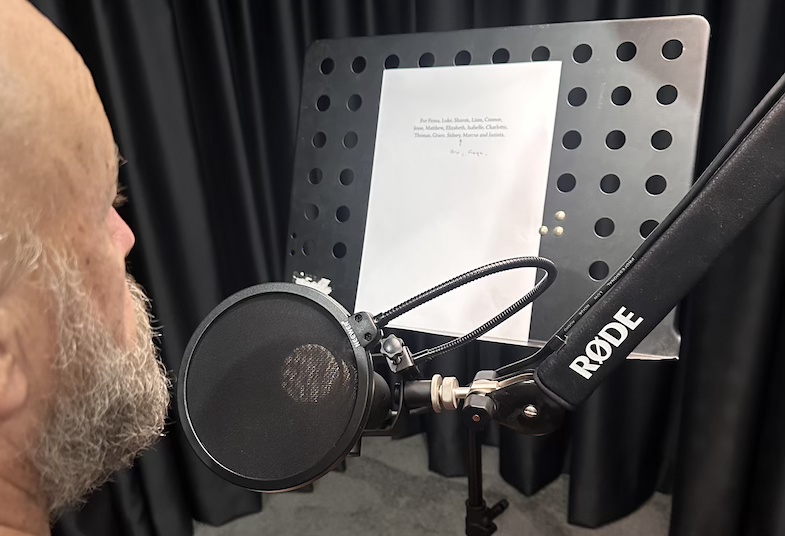
We spent yesterday in a recording studio in outer Sydney, where I read every word of Hope Beyond Cure into a microphone. Well, almost every word—Fiona read her section: ‘A carer’s perspective: 12 years on’. Ken Sandell and Marianne Campbell, from Audio Advice, were joined by Gavin Shume, from Matthias Media, and we laid down the tracks. It was a big day, but so satisfying.
There will need to be some editing and processing before it will go live on Audible. But we believe it should be available before Christmas. And we plan for it to be available at no cost. That’s right—free. We simply want to make a difference in people’s lives. Our desire is for people without hope to find eternal hope in Jesus. For those who are beyond reading to simply listen to the message of the gospel.
I thank God for enabling this venture. It really is a dream coming true. If you are a praying person, please thank God with us, and ask that God will use this tool to lead many people to eternal hope.
Treatments for cancer are getting better and better. I wasn’t expected to live 15 months and I’m now approaching 15 years. But the overall death rate remains the same. It’s tracking consistently at 100%. Every one of us has a terminal illness. It’s called life.
May God use Hope Beyond Cure—paperback, eBook, and now audiobook—to give us a real and certain hope in the face of our mortality.
Remember Korah? Not content with serving God, he wanted to become somebody in his own eyes. He grumbled and complained against Moses and Aaron. Worse still, he stood his ground against the warnings of God. And the ground opened, taking him to the depths. He and all that belonged to him was condemned to the judgement of God. This is a truly sobering story, and it warns us about the dangers of jealousy, pride and self-pity in Christian ministry.
But there is a puzzle. When we arrive at the Book of Psalms we discover a number written by none other than the sons of Korah. What’s going on? Didn’t they all get destroyed? Are the sons of Korah a kind of ancient tribute band, like the Beatnix to the Beatles? Why on earth would they even do that? Or is there something we’ve missed?
“The Sons of Korah Did Not Die
A few chapters after the judgement of God on Korah, we read of a census of the new generation of God’s people.
The sons of Eliab: Nemuel, Dathan, and Abiram. These are the Dathan and Abiram, chosen from the congregation, who contended against Moses and Aaron in the company of Korah, when they contended against the LORD and the earth opened its mouth and swallowed them up together with Korah, when that company died, when the fire devoured 250 men, and they became a warning. But the sons of Korah did not die. (Numbers 26:9–11. My emphasis.)
The sons of Korah somehow remained. The line of Korah continued. How could this be? The only answer is that they heeded God’s warning, given through Moses, when he said,
Depart, please, from the tents of these wicked men, and touch nothing of theirs, lest you be swept away with all their sins. (Number 16:26)
The sons of Korah chose not to dwell in the tents of their wicked father. They turned aside from evil and escaped God’s judgement.
The Ministry of Music
The sons of Korah continued their family ministry as doorkeepers at God’s tabernacle and later, under King David, they were also entrusted with the ministry of music. David put them
in charge of the service of song in the house of the Lord after the ark rested there. They ministered with song before the tabernacle of the tent of meeting until Solomon built the house of the Lord in Jerusalem, and they performed their service according to their order. (1 Chronicles 6:31–32)
The sons of Korah are a testament to the faithful love and mercy of the LORD. The LORD preserved their family and their ministries for generation after generation. Even more wonderfully, God by his Holy Spirit has spoken to us through these sons of Korah. These ancient musicians, inspired by God, continue to instruct God’s people and incline our hearts to worship. They point us to find fulfilment in our Lord and Saviour, Jesus Christ.
People Content in God Himself
One of the most beloved of their songs is Psalm 84, where we are reminded that
a day in God’s courts is better than a thousand elsewhere. I would rather be a doorkeeper in the house of my God than dwell in the tents of wickedness. (Psalm 84:10)
Can you hear these words with a new gravitas? There’s a deep thread weaving back to the days of their ancestor, Korah. His sons would rather continue in humble service to their Redeemer than have anything to do with the pride, envy, or self-pity of their father. They chose and continued to choose a different path to Korah.
Psalm 84 reveals God’s people content in God himself. They come before him in humility, with no sense of entitlement. They know that true blessing is to be found in the presence of God, and that we journey to him in his strength by trusting always and only in him. God alone is our sun and shield. He protects us, guides us, enlightens us, and satisfies us.
Our world with all its attractions ends up nothing more than a graveyard. True life is only to be found in the house of God. And we can only come into his house because God chooses to “look on the face of your anointed” (Ps 84:9) Jesus, our anointed Messiah, is our shield, our protector. It is only as God looks on his incarnate Son our Saviour that we who trust in him can be counted among the righteous.
When we are tempted to discontent and when feelings of personal entitlement raise their ugly heads, let’s turn to Psalm 84. We won’t find blessing by chasing the things of this world. Nor will we find blessing by envying the ministries of others. Satisfaction is found in trusting God and God alone. Father in heaven, satisfy our souls, by reminding us of your truly amazing grace. Fill us with the longing to be with you all our days. Keep us from giving into temptation. Strengthen us to persevere until that day we gather in your house forever more.
The green-eyed monster lurks in every human heart: If only I had what she has… If I was more like him, then I’d be satisfied… Why am I continually overlooked? … Why do they get the glory? Jealousy, envy, and coveting—we push them away and they keep finding their way back. They spoil everything.
Christian lives are corrupted by our dissatisfied desires. Ministries are damaged, relationships are ruined, and churches are compromised by people feeling entitled. And it’s not just them—it’s you, it’s me, it’s every one of us. We find it so natural to compare and complain. We think we deserve better and others should know better.
A man at church is asked to join the set up/pack up team, but he only wants to preach. A woman leaves the music ministry because she can’t be the song leader. A pastor moves to another church where he can do what he wants to do. Small group leaders doing their own thing because they don’t like the direction of the minister. Jealousy that your colleague gets the invitations to speak. Annoyance that another church is encroaching on your patch. Bothered that others get more praise than you do. Frustrated that I don’t get the opportunities or the recognition I deserve. Do you see glimpses of the green-eyed monster in your heart?
Korah
In Numbers 16 we see pride, envy, and self-pity at work in the heart of Korah. Korah’s responsibilities aren’t central. They’re on the edges. Moses and Aaron entered the most holy place to offer sacrifices, whereas Korah remained outside on the threshold. Moses and Aaron covered the ark and tabernacle furnishings when they moved camp, whereas Korah was not allowed to look at them, let alone handle them. What’s more, Korah had to carry them (without peeking at or touching the items) to the next camp. Korah has had enough. His pride takes control. He gathers 250 influential men and makes his case against Moses and Aaron:
You have gone too far! For all in the congregation are holy, every one of them, and the Lord is among them. Why then do you exalt yourselves above the assembly of the Lord? (Numbers 16:3)
Moses is gutted and the LORD is grieved. Moses says to Korah:
Hear now, you sons of Levi: is it too small a thing for you that the God of Israel has separated you from the congregation of Israel, to bring you near to himself, to do service in the tabernacle of the Lord and to stand before the congregation to minister to them, and that he has brought you near him, and all your brothers the sons of Levi with you? And would you seek the priesthood also? (verses 8–10)
The LORD had called Korah to minister to his people. The Almighty Creator and Redeemer had given Korah the privilege of serving him, by placing him in a special position with important responsibilities. This wasn’t earned by effort or merit, but was granted entirely by God’s grace. But that’s not enough for Korah. His wicked heart is revealed. This isn’t just petty jealousy, this is dissatisfaction with and dissent against God.
Sinkholes
The LORD God promises to bring judgement on Korah and his colleagues for their rebellion. Moses warns God’s people not to participate in Korah’s corruption. They are to flee from the tents of the wicked lest the ground swallow them up. This is their final call to repentance. Many do, but not Korah:
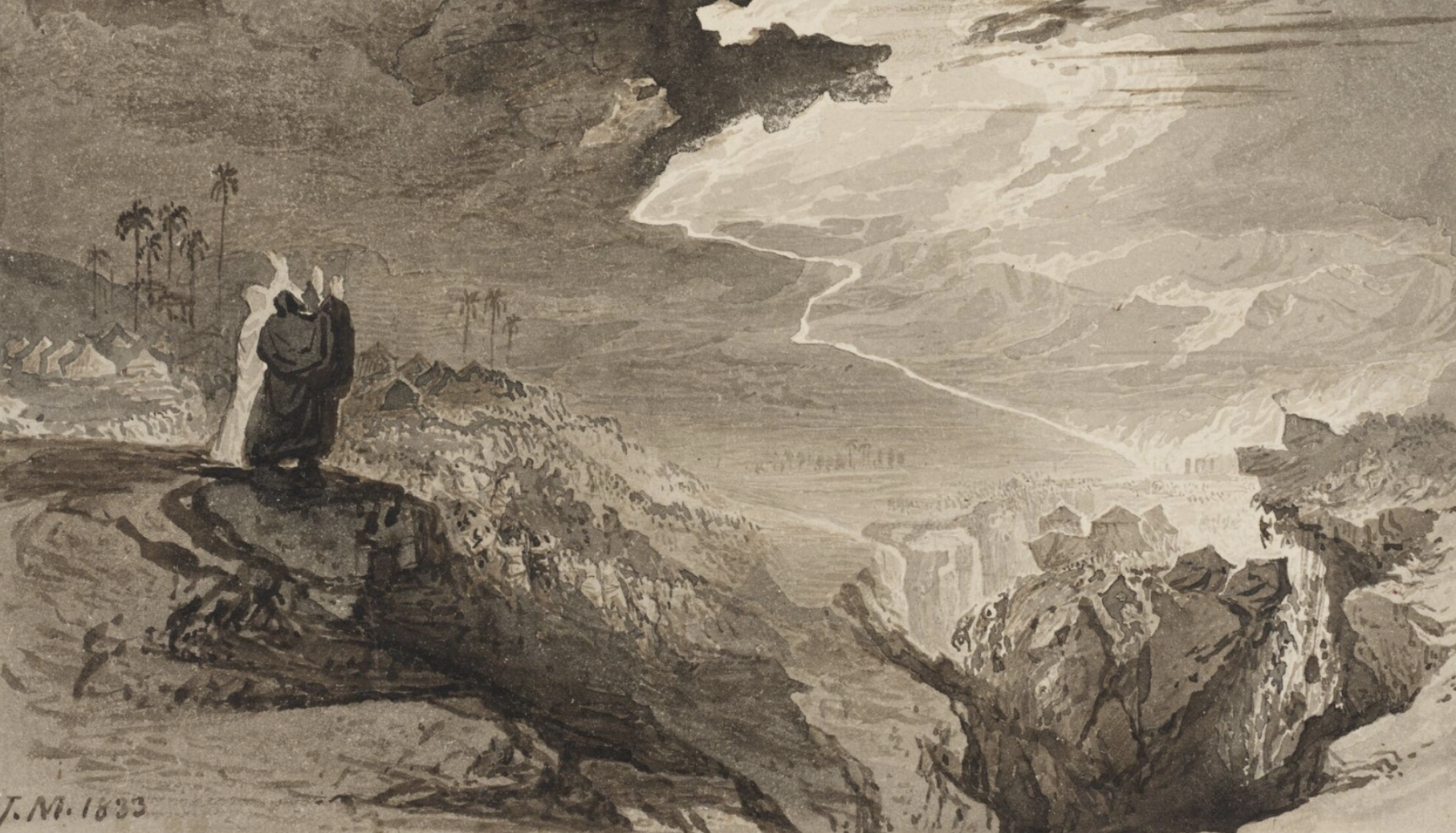
And as soon as he had finished speaking all these words, the ground under them split apart. And the earth opened its mouth and swallowed them up, with their households and all the people who belonged to Korah and all their goods. So they and all that belonged to them went down alive into Sheol, and the earth closed over them, and they perished from the midst of the assembly. (Numbers 16:31–33)
The LORD creates a sinkhole and it swallows all who rebelled against him. God will not be mocked. There is no place for grumbling, jealousy, pride, or discord among God’s people. He is the Holiest of Holies and it is only by his grace that anyone may stand in his presence. Being among God’s people is not a right, but a gift. Serving God is not an achievement, but a privilege. God owes us nothing. We owe him all.
Servant Hearts
There is another who, like Korah, goes down into Sheol, into the depths. One who (like Jonah, rather than Korah) spends three days and three nights in the heart of the earth (Matt 12:40). Unlike Korah, he is not guilty. He committed no sin. He knew no pride, no jealousy, no conceit, no rebellious dissatisfaction. Though he was entitled to all, he did not grab hold of it. He made no complaints. There was no earthly glory to be gained by his ministry—only the joy of serving and glorifying his Father. Jesus is the opposite of Korah. He succeeded where Korah failed. Jesus is pure where we are corrupted.
Jesus is the personification of humility, he is the antithesis of pride. He washed the dust and dung off his disciples’ feet (Jn 13:1–17). For the joy set before him Jesus endured the cross and despised its shame (Heb 12:2). Jesus gave his life for ours, the righteous for the unrighteous, to bring us to God (1Pet 3:18). And he set us the example of serving as he served. We are called not to seek our own vain glory, to be willingly overlooked, to do menial tasks, to not give in to pride or self-pity.
What about you? Are you satisfied in Jesus Christ? Do you shun rivalry and competition? Do you show humility by counting others more significant than yourself? Are you often worried about your own interests, or do you know deep down that Jesus has that covered, freeing you to focus on the interests of others (Phil 2:1–5)?
The number of books on my shelf grows at a much faster rate than the number of books I actually read. I keep piling books on top of books and eventually feel the guilt of too many unnecessary purchases. So, I grab a cardboard box and sift through the books I’ve never read and probably never will. Some get given to friends or family, others find their way to a give away table at church, and the remainder usually end up at a local Christian op shop.
The writer of Ecclesiastes couldn’t have begun to grasp the sheer volume of books, not to mention blogs, articles, and podcasts that saturate our world today. “Of making many books there is no end, and much study wearies the body.” (Ecclesiastes 12:12) I confess to feeling overwhelmed and weary. There has never been so much information to take on board. The internet floods our lives with content. So much information. How do I know what matters most? How much do I need to understand as a Christian leader? I can’t read everything, so should I read anything?
The danger is we give up. Let AI decide what we read, what we hear, how we think. Don’t do the hard work. Have someone else (something else) curate our learning. Take all the short cuts. Stop being curious. Give up on exploring, investigating, comparing, researching, and discussing.
God is in the business of transforming our minds and reshaping our thinking. Not just our knowledge, but our discernment, our priorities and perspectives. We’re called to be sober minded and to take every thought captive to make it obedient to Christ (2 Corinthians 10:5). “Therefore, I urge you, brothers and sisters, in view of God’s mercy, to offer your bodies as a living sacrifice, holy and pleasing to God – this is your true and proper worship. Do not conform to the pattern of this world, but be transformed by the renewing of your mind. Then you will be able to test and approve what God’s will is – his good, pleasing and perfect will.” (Romans 12:1-2)
So I’ve decided I must keep reading. Bible first. Good Christian books second. Other worthwhile books, articles, essays, and blogs. I believe God wants me to be a lifelong learner. To inform my mind for his glory, for the sake of all who live without the hope of Jesus, and for the building of my brothers and sisters in Christ.
I’ve set the goal of reading a book a fortnight. To be transparent, sometimes this will mean listening to an audio book and other times turning the pages of a hard copy or kindle. It’s challenging to do, but more than possible. Less time on the phone, computer, or tv could open up hours. In many cases that will mean averaging one or two chapters most days. I will listen to the recommendations of others so that I’m not wasting my time, and I will mix it up so I’m learning more widely. Thus far in 2026 I’m not quite achieving my goal, having read 12 books in a bit over 6 months. But it’s more than I managed last year, and the discipline is making it easier as I go along.
And writing? Yes I’m keen to start writing again. It clarifies my thoughts, pushes me to consider others, and offers a means for ministry to others. This is my first blog post in 3 years – you have to start somewhere!
Below are the books I have read so far this year. There is much more to be said about each of these books. Some commendations and some critiques. But that will be for another day.
Peter Adam, Prayerfulness An inspirational and practical call to have the Bible shape and fill our prayers. I must return to this book and read it more slowly.
Bobby Jamieson, Everything is Never Enough A rich and beautiful deep-dive into the book of Ecclesiastes. My only gripe is you need to hang in there until the end to find the hope of Jesus.
Salas and Tannenbaum, Teams that work A master-class on teamwork drawing on widespread research, giving evidence-based insight into what makes teams work well. A secular book with important insights for ministry leaders.
Carl Trueman, The Desecration of Man Somewhat brain-straining, though not as much as some of his former books. An important reminder that we are made in God’s image to show his glory. We are made to be God’s temple and our sin ‘desecrates’ this sanctuary.
Matt Smethurst, Before you open your Bible Good Bible reading requires more than in depth study. It takes a heart posture that is seeking to be transformed.
Karen Bell, The Adkar Advantage The ADKAR approach to change management is intuitive and evidence-based. The book argues that all successful change efforts will contain the same components in the same order. It rings true to me.
Timothy Paul Jones, Did the resurrection really happen? Easter provided a good opportunity to examine another resource for skeptics looking at evidence for the bodily resurrection of Jesus.
John Mark Comer, Practicing the Way Many people seemed to be greatly influenced by JMC’s books, podcasts, and resources. I wanted to understand why he was so popular and what to make of his emphasis on spiritual ‘practices’. To be honest, I’m concerned. While he diagnoses many of the ills of our modern busy lives, my fear is that he replaces them with a move to mysticism that has little regard for the local church. For a “Christian’ book, it did not seem to give much emphasis to the person and work of Christ.
Anna Boxwell, Amy Erickson, Laura Rademaker, God’s Yes to Women I started reading this on the plane returning from the overtly complementarian TGC Women’s Convention in Indianapolis. Knowing many of the book’s authors, I was keen to hear their arguments about egalitarianism. I found myself saying “yes, yes” to much in this book, but remained unpersuaded of its conclusions that all ministry roles are open to both men and women, and that God’s design for Christian marriage doesn’t involve an extraordinary synergy of loving headship and submission.
Craig Ott, The Church on Mission: A Biblical Vision for the Transformation among All People God’s plan to transform his image bearers is the key to understanding the church in this world. I read this book in preparation for the FIEC conference this coming week. To be fair, I need to read it again with a pen in hand.
Mark Vroegop, Dark Clouds, Deep Mercy It took me a while to get into this book but once I did I was gripped. Mark is the President of TGC in the US and I heard him give a passionate talk from Psalm 102 on the importance of lament. Lament is a category that I have been exploring deeply over the past year or so, and Mark Vroegop’s book is a biblical master class.
Collin Hansen, Timothy Keller: His Spiritual and Intellectual Formation Now that I’m working with TGCA I figured that I wanted to know some of the origin stories. Never having met Tim Keller and not knowing a great deal about him, I have found this book to be inspirational. Hansen gives us so many windows into who and what shaped Tim and Kathy Keller. I love a good biography and there is much to learn and apply in this volume.
From time to time I get asked why Christians believe that the man of history, Jesus Christ, is believed to be divine. It’s one thing to believe that he is special and that he’s left his mark on history, but it’s another thing altogether to believe that Jesus is God. Sometimes people support there critiques by claiming that Jesus never said he was God, or that the Bible doesn’t actually describe Jesus as God. While it is true that you won’t a quotation of Jesus saying “I am God” in the Bible, this is not to say that Jesus and the Bible writers deny this. In fact, there is significant evidence to support the claim that Jesus is divine.
If you are interested in considering the Bible’s claims on this matter, the following list of references is a helpful start. They’ve been adapted from the book by Murray Harris called Jesus as God.
Divine functions performed by Jesus
In relation to the universe
Creator (John 1:3; Col 1:16; Heb 1:2)
Sustainer (1 Cor 8:6; Col 1:16; Heb 1:3)
Author of life (John 1:4; Acts 3:15)
Ruler (Matt 28:18; Rom 14:9; Rev 1:5)
In relation to human beings
Healing the sick (Mark 1:32-34; Acts 3:6; 10:38)
Teaching authoritatively (Mark 1:21-22; 13:31)
Forgiving sins (Mark 2:1-12; Luke 24:47; Acts 5:31; Col 3:13)
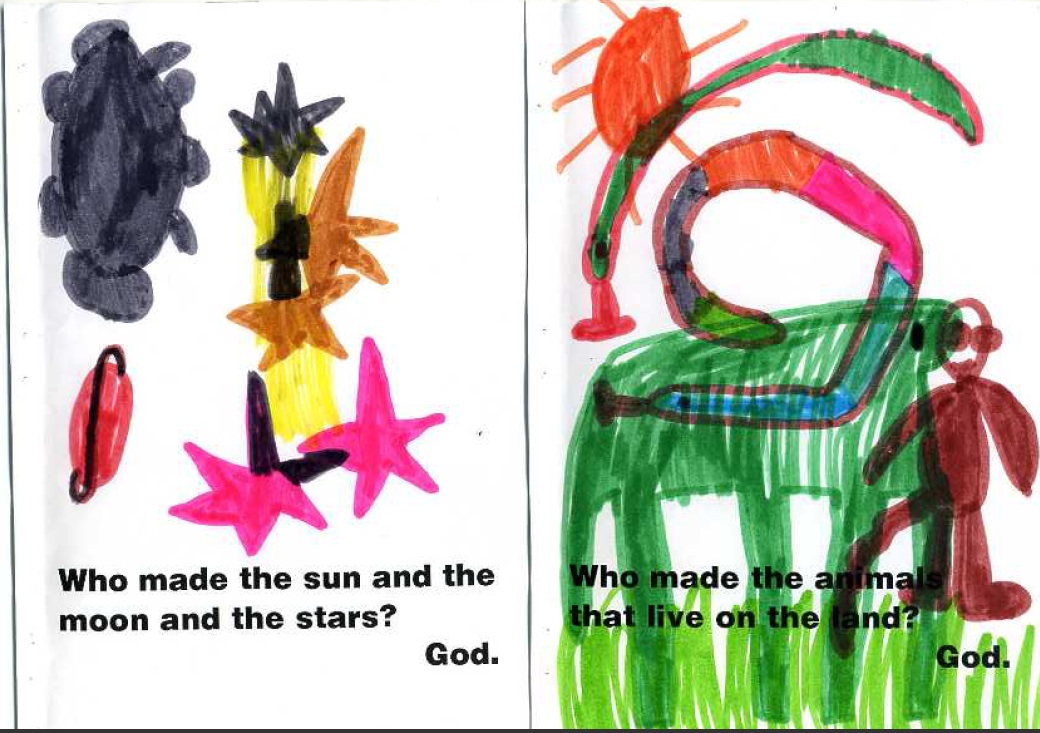
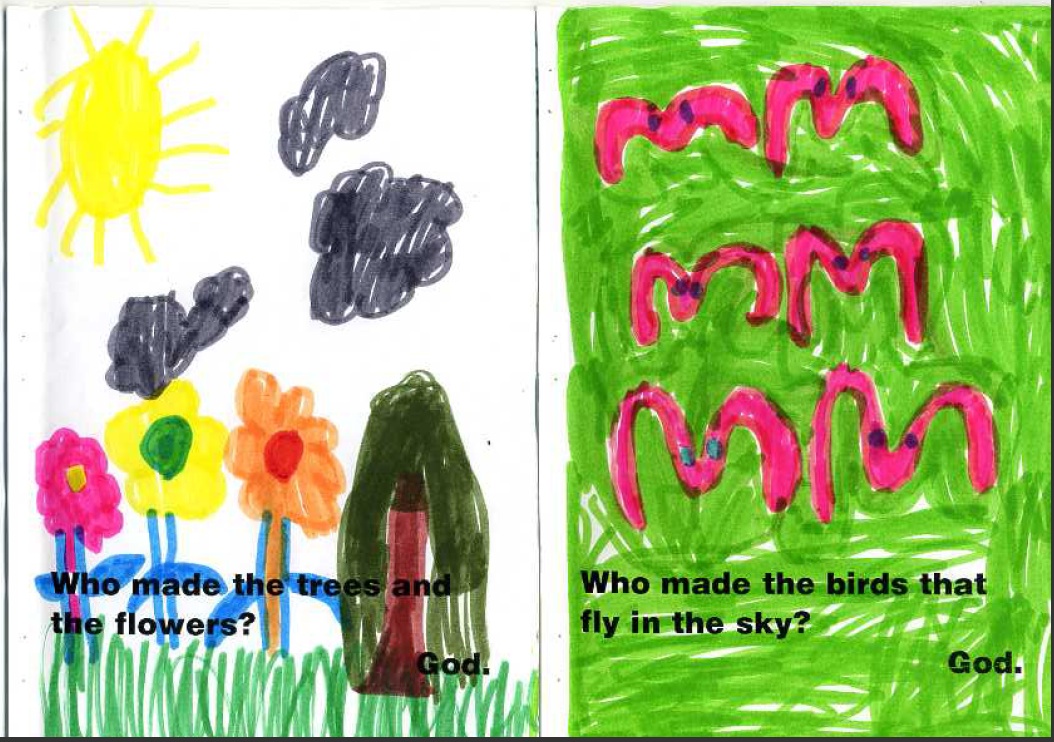
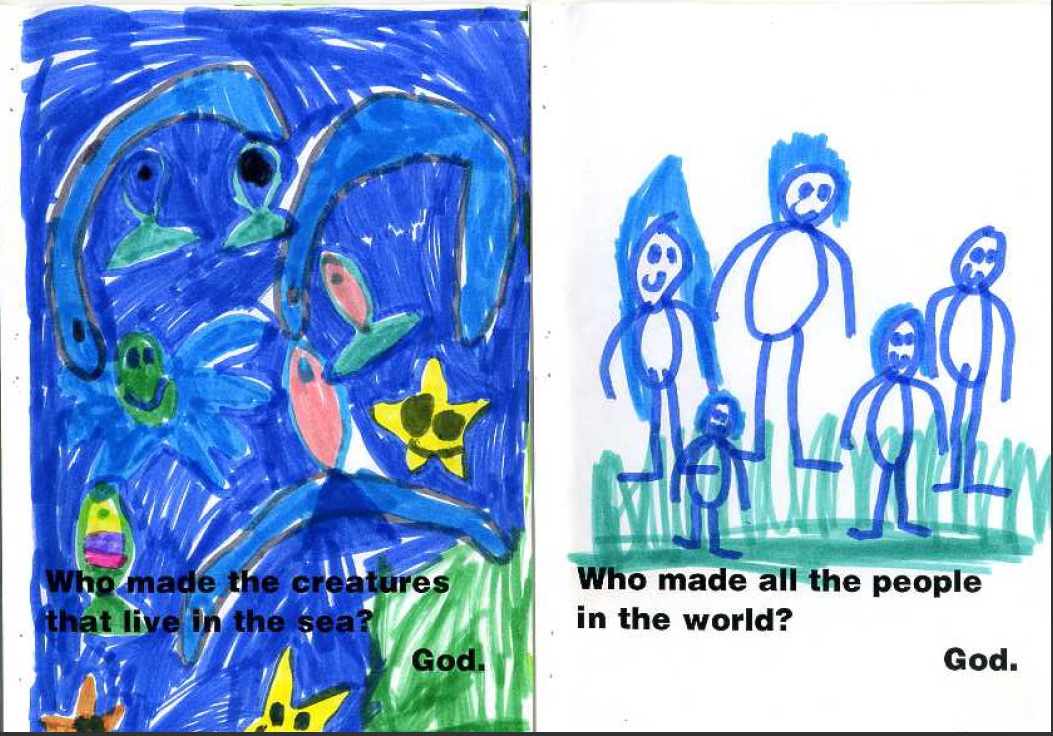
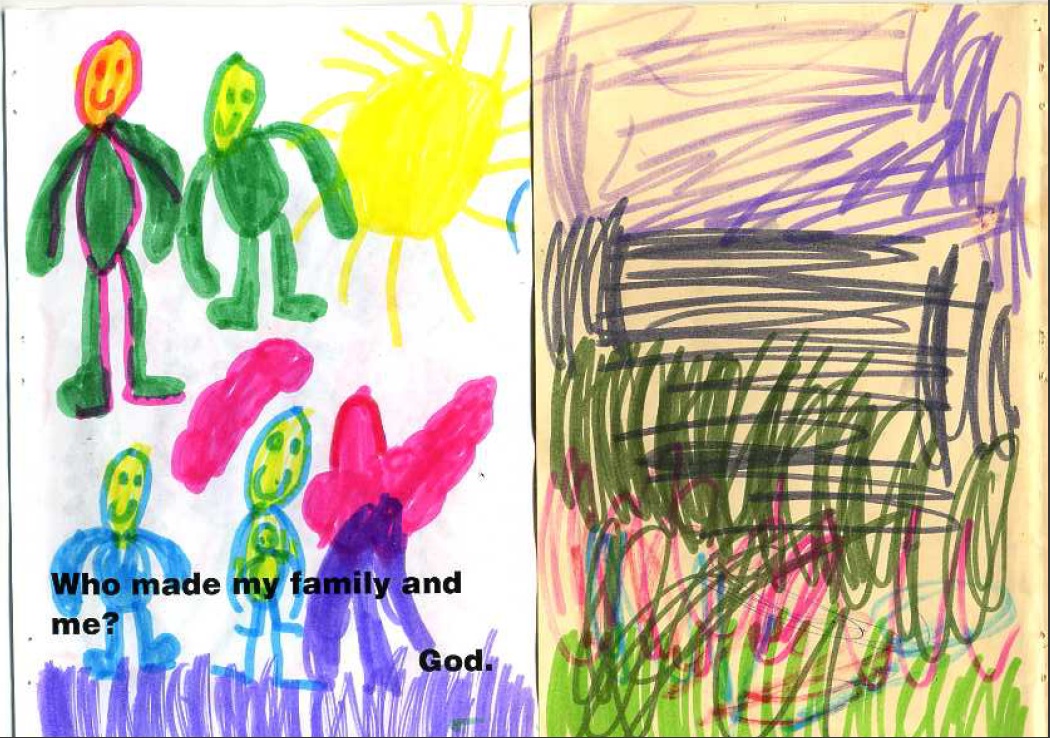
Cleaning out the filing cabinet is always a revealing experience. I was sorting through some cards, letters, artwork and other stuff, when I discovered a couple of my earlier book manuscripts! That’s right, I’m an author. This particular book was never published and was probably only read by four people. So here’s my chance to self-publish for a wider audience!
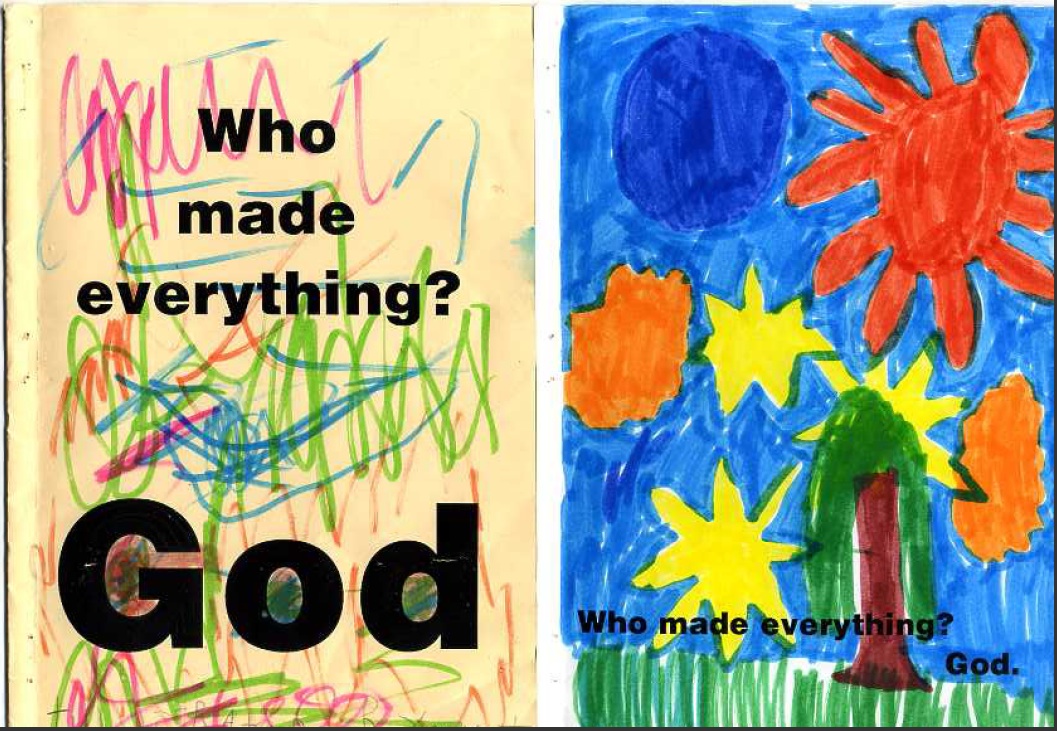
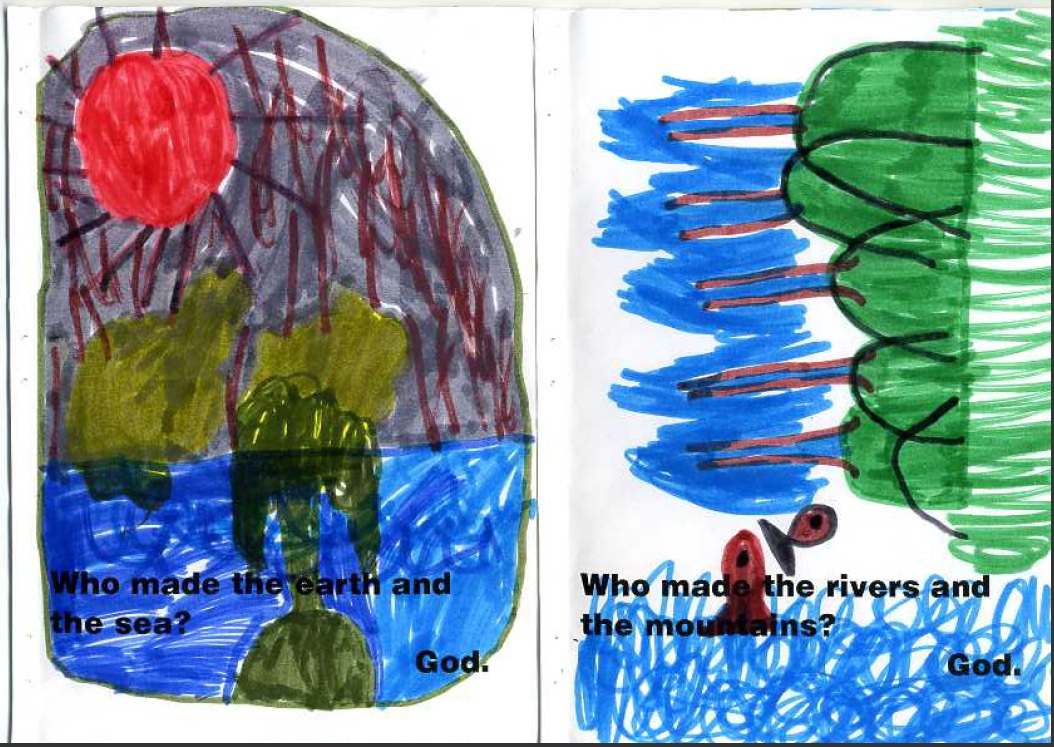
I was motivated to be teaching my kids (two young boys at the time) about God in a creative way. I’d been thinking about some of the question/response catechisms of yesteryear and this led to an idea for a DIY book for kids. I would write the text and my kids would do the artwork. Having written the words, I printed them into an A5 booklet, and invited my kids to draw the pictures. Below is the Limited First Edition entitled, Who made everything? God. Written by Dave McDonald and illustrated by Matt McDonald. Given that there is a baby either growing inside one of the family members, or in her arms, it must have been written around 1996, when Matt was 4 or 5 years old!
I produced another of these called Jesus is Special, where the text on every page began “Jesus is special because…“. We explored things Jesus said and did, his miracles, his death, his resurrection, and his exaltation – in simple words and sentences.
These books weren’t hard to do, we had fun together, and it was a creative way of getting our boys to learn about God. Why not give it a go, or share some of your own creative ideas.