

Independent churches tend to attract people with baggage. At least that’s been my experience, having pastored two of them and now attending another. I suspect most churches attract people with baggage, in the sense that everyone has baggage, but I think independent churches are especially ripe for the experience.
Why so? We live in an age of church shopping. People are seeking a church that’s just right for them. If they don’t like what they get in one place, then it’s not hard to shop for another. If you are living in the bush, where there is only one church for the next hundred kilometres, then this probably isn’t your experience, but it’s certainly common in cities and larger towns.
Some of our independent evangelical churches have arisen because of perceived needs in certain areas. Existing churches aren’t growing, or aren’t preaching the Scriptures, or aren’t reaching out to the community, or aren’t providing anything for children and youth, or keep stubbornly riding their ridiculous hobby-horses, or something. When a new church is planted it isn’t too long before people are leaking out of other churches. Drifters, who’ve left their churches some time back, dribble into the new church, aiming to give it another go. All these people bring baggage. They might recognise it or they might not, but it will surface soon enough.
The baggage comes in different shapes and forms. Firstly, there is the idealist. They’ve created a picture of what church is to be like. Sadly, their last church didn’t live up to the ideal. Neither did the one before, or the one before. There will be a honeymoon period where they give you time to impress them. You might even find that you are the best church they’ve ever been to. You’re a breath of fresh air; an oasis in the desert. You might start to hear stories of the horrors of the past, the problems of their previous church, the failings of the pastor. Beware—you might be next!
Secondly, people come with an attachment to how things have been done. They might have left their denomination, but they haven’t necessarily discarded what attracted them there in the first place. It won’t be long before you start hearing what you ought to be doing and how church should function. You see, there is a right way to do things. It’s stunning how often I’ve heard ex-Baptists tell us we must baptise for membership, or ex-Presbyterians insist we have a council of elders, or ex-Pentecostals tell us we need to be more open to the working of the Holy Spirit, or ex-Anglicans tell us we should follow a particular liturgical form, or ex-Salvos tell us we should all wear uniforms and play brass instruments. OK, I made the last one up.
People move because they are unhappy, but they may remain deeply attached to familiar practices, forms, structures, and values. The independent church is considered a clean slate to be filled. People with baggage cling to ways that things should be done and feel strongly about ways they shouldn’t. Transfer growth is usually accompanied by excess baggage. History is often the strongest predictor of the future, and discontent will likely lead to more discontent.
Thirdly, people move churches because they’ve had a bad experience with a previous church. More often than not, they feel hurt or grieved by things that have been said, or done, or not done. In reality, the pain is mainly about people—being treated poorly by someone, often in leadership. They’re likely leaving because they haven’t resolved the conflict or haven’t dealt with the pain. So if you are a leader, it’s possible that you will be tested. Are you going to be just like the perpetrators of previous pain? Can you be trusted? Will you repeat the patterns of the past? It’s too easy to get these things very tangled when we leave matters of the past unresolved. And maybe they tried to resolve things, and it didn’t end well, and they are broken, and seeking care and compassion. They are looking to your church to be a safe haven.
So what can independent (and other) churches learn? Here are a eight suggestions:
- If people come to you from another church, then have a conversation with them early. Listen to them. Where did you come from? What was it like? What happened? Have you worked through these things? Does the church know you have left? Have you spoken with the pastor or leadership? Do you think you need to go back and work on things? Maybe, let them know you will give a courtesy call to their previous pastor. Be strong, but gracious and caring. Don’t be bullied by people seeking a platform for themselves. Don’t become a bully to people who are seeking refuge and help.
- Communicate clearly what your church is on about. Speak to the things you value. Make clear what you won’t fight about and what you will. Share your theological convictions, your mission, and your vision. Don’t just tell people what you do, but how you do things, and why you do them. Excite people about gospel priorities. Aim for simplicity and clarity. Draw people into God’s agenda. Explain that your church is not a place for competing human agendas, but a place to draw together in the one Spirit.
- Invite people to become part of the church on the church’s terms. Tell them where the church is at currently and where you are hoping to get to. Let them decide if they want to go on the journey. Of course, this means you need to know where you’re headed and how to communicate it.
- Hold orientation meetings for newcomers where you can share the matters of importance. This might be an evening in the home of the pastor or a course over multiple weeks in small groups. Whatever it is, create an opportunity for people to know who the church is and who it’s not, so they can be clear about what they are joining. Some people will leave early, saving you and them the pain of breakup down the track. Others will join more enthusiastically because they love the vision and appreciate your communication.
- Have a clear website that outlines what you are on about. Websites are the noticeboards, the yellow pages, the advertising brochures of the past. The flavour of the church should be clear before someone visits. If people want to dig deeper then they should be able to find your beliefs, values, priorities, and other essentials. Or at least they should know where they can find out more.
- For those digging deeper, consider an FAQ page or link to position papers on matters that might divide. This is not shop window stuff, but it is what you keep on your shelves inside. If need be, spell out your beliefs about things like church governance, tithing, communion, baptism, spiritual gifts, roles of men and women, creation, predestination, or whatever hot button topics are relevant in your context. If you take a position, then explain why it matters, how much it matters, and what it looks like in practice. If you are inclusive of different views, then make it clear why you accept different views, and what this will mean for unity in your church. Most importantly, work out what you believe and be prepared to explain this to others. If you leave a vacuum, then someone else is going to fill it.
- Be clear on how people can get involved. If you need to be a ‘member’ before you can exercise caring ministries, then explain how and why? Some churches are quick to rope people into various ministries, either to make them feel involved or because they can fill a pressing need. If you need to join a small group before you join a serve team, then explain why and help people navigate the steps. Go slow. Not too slow, but go wisely and carefully. Take the time to get to know people. Let them know the pathway to involvement and walk with them.
- Most importantly, be motivated by love, not suspicion. Knowing that people have baggage that they carry around with them, gives you the opportunity to help them lighten their load. Everyone has a history and every history is burdened by pain. Remember that we are called to share one another’s burdens. It’s the gospel that frees us from every weight. So speak and act from the gospel of grace. Don’t add further burdens, but help people to find freedom that comes from Jesus.
 But at church this past weekend I was reminded of another kind of gracious living—the grace of giving generously. I had to pause and think. Do I really know what that means? Not just in theory, but in practice? Have I ever truly given generously? Or do I merely give out of my surplus, redistributing what I don’t need anyway?
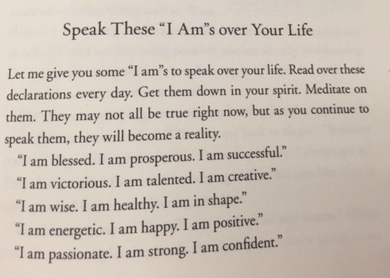
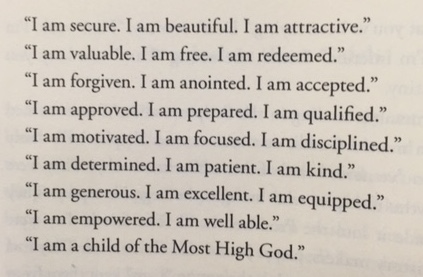
 But what disturbed me in the video, was the laughter of the audience when Macarthur quoted Osteen. There was much hilarity and amusement. Now, I’m not suggesting that Macarthur was using Osteen to whip up his congregation, or making light of what he was teaching, but is laughter really the appropriate response? Is what Osteen teaches funny? If it’s false and destructive, then shouldn’t it lead us to tears?
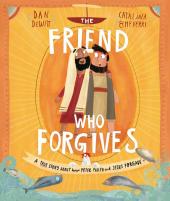 Now that I’m a grandpa, I’m on the look out for great kids’ books. We’ve still got a few at home that our kids haven’t taken with them, but we’re keen for some new ones for when the grandkids come to visit. So I was pleased when the The Good Book Company sent me a new children’s book to review. It’s The Friend who Forgives: A True Story about how Peter Failed and Jesus Forgave, written by Dan DeWitt and illustrated by Catalina Echeverri.
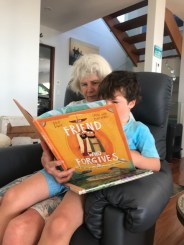 We tested the book yesterday with our nearly five year old grandson. He’s not reading yet so Nona read it to him. He listened intently, answering appropriately, and told me he enjoyed it at the end. We’ll read it to him again, next time he comes over.
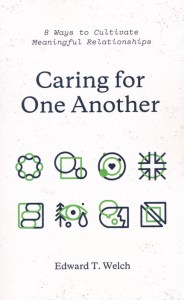 Who of us wouldn’t want our churches to be genuine communities of meaningful, caring relationships? Perhaps this is your experience already. People invest in each other, they look out for one another, they show genuine interest, they seek help, they ask what they can pray and then they pray. They do more than offer support to others, they show deep empathy, compassion, and practical care. Maybe this is a bit of overreach, but you see glimpses of it and you want it more and more. Right?
 Some of us have been on a date, a third date to be precise. It’s been a date of ‘fellowships’, or should that be ‘denominations’. The Fellowship of Independent Evangelical Churches has gone out with the Fellowship of Evangelical Churches of Australia. We had three leaders of each group meeting, listening, talking, exploring, wondering what it might be like to be in ministry together. Two of their leaders attended our national conference, then two of our leaders shared in their conference. We’ve begun to explore matters of unity in the gospel and what matters are non-negotiable when it comes to getting hitched. There has been much to thank God for and there is much more yet to be considered.
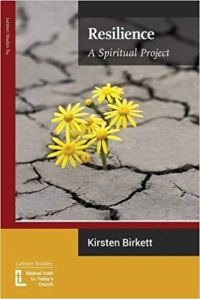 Resilience and burnout are big issues in work and ministry at present. In the field of Christian ministry the statistics of burnout seem alarmingly high and the focus on building resilience is both urgent and important. Kirsten Burkett has provided a great service by sharing her research into these areas in her latest book Resilience: A Spiritual Project. This isn’t a popular level book. For a start it’s published by The Latimer Trust, as the 84th of their brief academic studies. While only being 46 pages in length, it includes another 9 pages of bibliography, comprising mainly of academic journal articles. But don’t let these things put you off. Resilience: A Spiritual Project is compact, yet thorough, and I found it engaging and easy to read. While much of her book is surveying and summarising findings in the literature, Dr Birkett draws us to practical conclusions with profound pastoral implications.
 It’s been an anxious week as I’ve anticipated returning to the exact place and the same event where I first noticed the symptoms of my cancer. It was the Geneva Push church planting conference and I was speaking on leadership, church planting, and the vision to reach Australia with the good news of Jesus. It was the end of November in 2011 that I climbed the three flights of stairs at Scots Church in Melbourne, stopping on each landing, completely breathless, not knowing that within a few days I’d be in hospital fighting for my life.
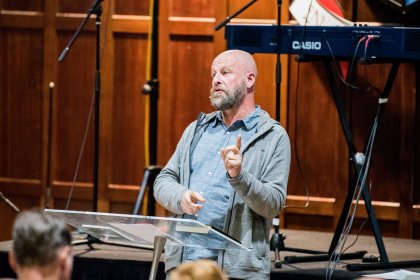 It’s a joy and honour to be able to gather with men and women, young and old, to spur each other on to reach Australia with the life transforming, eternally consequential message of Jesus. People are getting jaded by the endless cycle of meaninglessness promoted by our society. People are searching for meaning. Surely there has to be more that work, sleep, eat, over and over again. Or are we just caught up in an endless Groundhog Day?
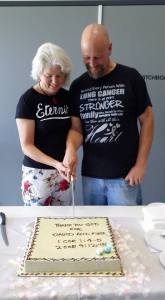 Today marks the end of another chapter of our life—a significant chapter that in many ways has felt like a bonus. Less than five years ago, I believed that my ministry days were done and dusted. I didn’t anticipate preaching again, far less leading a congregation or pastoring a church. Today we received special thanks from our brothers and sisters at Stromlo Christian Church for the past three years of serving among them. I preached my final sermon as lead pastor at Stromlo and later this week we will head away for a few weeks leave before commencing a new role in 2017.
 My new year resolutions for 2016 included reading a book a week. The plan was to finish 52 books before the end of the year. I wasn’t following a recommended reading list, but there were a few books that I was keen to knock over. Someone had suggested mixing things up with a range of genres and topics. There were issues I was interested in researching and their were numerous new books that piqued my interest. During this time I also discovered audio books and bought myself a kindle. So my list represents an eclectic mix of styles, difficulty, issues, media, and… quality. Yes, I also discovered that some books had done little more than steal my time.
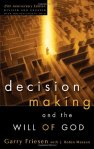 I first read Decision Making and the Will of God by Garry Friesen in 1982, when I was grappling with where my life was headed and what God wanted me to do. It revolutionised my thinking, pointed me to the freedom God has given us to make decisions, and lifted the burdens of guilt and insecurity from my shoulders. It’s a large book, but very easy to read. My only warning is that you must read past the first section of the book. No more spoilers.
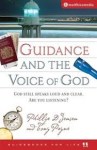 The person who has given me the most direct guidance about guidance is Phillip Jensen, who was the chaplain at UNSW where I studied Social Work in the early eighties. He helped me to love and trust the Bible, and I went to more than one conference where he taught us the importance and relevance of the Bible for understanding God’s will for our lives. Much of what I learned during this time is in included in an excellent little book called Guidance and the Voice of God by Phillip Jensen and Tony Payne. This book addresses an important matter that many overlook—and this is where God guides. To understand what God wants us to do with our lives, we must first understand where God is taking history. A clear grasp on salvation history and the purposes of God in Jesus give the essential perspective for understanding God’s will for each of our lives.
 Let me also recommend a third book on guidance that, I suspect, has been deeply influenced by both books above. Just Do Something by Kevin de Young is another short, clear resource for grappling with questions of God’s guidance. Some people get paralysed, wondering and confused, because God doesn’t seem to have revealed his specific will for their life. Every little decision becomes a blockage rather than an opportunity. This book aims to overcome the inertia of people waiting for God to reveal which step to take next. We have the Bible, God has revealed his plan for us to love him, to trust and obey him, and to enjoy the abundant freedom that comes from living this way.
 This interview by Dominic Steele with his friend, Andrew Barry, is deeply moving and profoundly encouraging. Andrew’s son has very serious cancer. His situation has moved me to pray for him regularly. In this heartfelt chat Andrew talks about suffering, marriage, family life, work, treatment, salvation and what it means to have an eternal perspective. Take the time to watch it all and grab the tissues! Click on this
  Looking for people who can read the Bible out loud in church? Trying to fill the Bible reading roster? Building a team of Bible readers? Then let me ask you “What qualifies someone to be able to read the Bible?” Do they need to have a background in performing arts? Or perhaps have been a newsreader in a previous life? Should they audition for the task? Or complete a training course for reading in front of others? Is volunteering enough or is vetting needed? What makes a good Bible reader?
 Once upon a time Christian ministers were viewed with respect. Ministry was voted among the more trustworthy of professions, but not so much any more. The appallingly bad behaviour of some has damaged the reputations of many.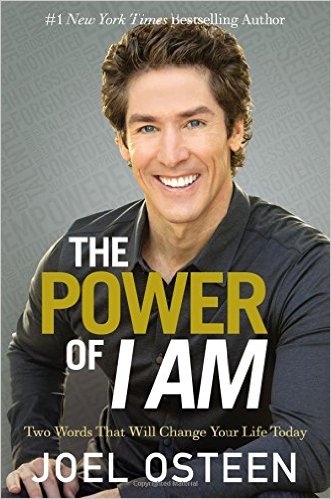


 macarisms