Ministry in the NT

IMG_0725I was totally persuaded we should head to the NT to begin a new ministry. Everything was pointing in that direction. The burden on our hearts. The enthusiasm of family and friends. The great need. The neglect of so many. The way everything was falling into place. A job, a house, schools, coworkers. A replacement back home. The time was right. The lights were green. The decisions were made. The belongings were gone. Only the farewells to go. Except for… cancer.

My God! What were you thinking? Why did you send us down that path? What’s the story? Did you change your mind? Were you playing tricks? Wasn’t it hard enough without raising our hopes and then dashing them?

I asked God to please explain. He reminded me of these words…

In their hearts humans plan their course,
but the Lord establishes their steps.  (Proverbs 16:9)

We make plans. We have to. It’s wise. It’s prudent. But we don’t have all the information. Our decisions are always provisional. We have enough trouble controlling ourselves, let alone every other factor.

Yet God is all knowing. God is all wise. God is all capable. God is all good. He has plans for us that we do not know. We plan our course, but the Lord establishes our steps.

I’ve learned that God does want us ministering in the NT. Not necessarily the Northern Territory, though we do not know. But in New Territory, that he had mapped out for us. Who would have thought that I’d be able to minister to people with cancer, as a fellow traveller? Who’d have thought I’d ever write anything? How could we have ever been brought to trust God in the face of death, except by being brought right to the edge of death itself? He has broadened our awareness. He has deepened our empathy. He has shown us deep comfort, and called us to share.

These aren’t the plans I’d have chosen. It wouldn’t have been in my script. In so many ways it doesn’t seem right. Yet what seems so wrong, God uses for good. This is God’s way. He did it long ago with Joseph…

You intended to harm me, but God intended it for good to accomplish what is now being done, the saving of many lives.  (Genesis 50:20)

He did it supremely with Jesus…

23 This man was handed over to you by God’s deliberate plan and foreknowledge; and you, with the help of wicked men, put him to death by nailing him to the cross. 24 But God raised him from the dead, freeing him from the agony of death, because it was impossible for death to keep its hold on him.  (Acts2:23-24)

And he promises to do it again and again…

And we know that in all things God works for the good of those who love him, who have been called according to his purpose.  (Romans 8:28)

We will keep making our plans. We need to do this. We’ll seek wisdom. Weigh up the possibilities. Talk with others. Search our hearts. Seek the will of God. Pray and read the Scriptures. We will plan our course. God knows we must. But we will seek to do so, recognising that it is ultimately the Lord who determines our steps.

Ministry in the NT?

Yes!

Thank God it is happening!

Our time is in God’s hands – Psalm 90

Teach us to number our days aright,
that we may gain a heart of wisdom.  (Psalm 90:12)

crosscalendarMy days are numbered. So are yours. There’s no point in denying it or ignoring it. It’s a fact we can’t overcome. What matters is how we choose to spend the days we have. Will we waste them away in meaningless trivia? Or will we make them count? My prayer is that I will number my days. Not literally count them down, because I don’t have sufficient information to do this. But understand deeply that they are limited, so that I use the time I have wisely.

I want my life to count for eternity, not by making a name for myself. It would soon be forgotten anyway. But by bringing honour and glory to God. By declaring his praises. By drawing people to his love and kindness. By showing people to the gateway of heaven, Jesus Christ. He alone is the way, the truth and the life.

In December last year, I celebrated a year since my cancer diagnosis in a rather strange and almost eerie way. I was invited to speak at the same conference I’d spoken at the year before. This was the conference I was attending when I was admitted to hospital. To tell the truth, I didn’t expect to be at another conference, let alone give the opening talk again. God had other plans! It seemed fitting to speak on Psalm 90. This is a psalm that highlights our weakness and mortality.  It calls us to fess up to who we are, to get real about our limitations, and to make the most of the time given to us. There is a rawness to this psalm and it spoke powerfully to my circumstances.

I believe it speaks to us all and the wise course is to consider it very carefully. I recommend you take the time to read over Psalm 90 and ask God for wisdom to help you number your days.

If you would like to listen to the talk I gave on Psalm 90 at the 2012 AFES staff conference, you can listen or download it here.

No comment? On reflection, comment!

In my recent post on A pastor’s pride I initially finished it with a request for people not to make comments. I wrote much the same thing on the Facebook link. It wasn’t that I was seeking to stifle comment or engagement on the topic. It was more that the post was raw, the subject was deeply personal, and I probably felt more vulnerable than usual. In particular, I didn’t want people stroking my ego or denying my analysis. I just wanted it to sit there and be heard.

However, it’s not hard to get around my request, and I received a number of comments via Facebook messages or email! Many of these included appreciation of the candid honesty of the post or statements about how they had been moved to reflect on their own pride. Two comments stood out from the rest. One suggested that I shouldn’t stifle comment because it would confirm that I or the church (I’m not sure) was ‘controlling’. I certainly didn’t want to promote this perception, so I removed the last sentence from my post. The other was a comment on the phone by my father, who suggested that allowing comments was fundamental to the nature of my blog. I was seeking engagement on the issues I wrote about, and commenting was a good way to get people thinking and acting.

P1010221My father sent this to me via email as a personal letter and invited me to determine whether I’d post it on the blog as a comment. I’ve decided instead to include it as the centrepiece of this post. The last 2 years have been seen important developments in the relationship between my father and I. Mid 2011, he was diagnosed with Non-Hodgkins Lymphoma following the discovery of a large tumour in his throat. This led to a series of successful chemotherapy treatments that have removed any evidence of the disease. About the same time my father was going into remission, in December 2011, I was diagnosed with an incurable lung cancer. I know how shocking this has been to both my father and my mother.

One of the blessings of this experience is that we have grown closer, having a deeper awareness of what we’re both experiencing. I think this has strengthened our relationship in a range of areas. Not that you want to have both of us suffer from cancer to nurture the relationship, but it’s not a bad side benefit! My father will often discuss issues from my blog with me over the phone and sometimes post a comment on the blog itself. Sometimes he’ll make suggestions, sometimes he’ll share how it’s got him thinking, and he regularly forwards the posts to others. Here’s the comment he sent me today:

Dear David my beloved son,

When you first posted “A Pastor’s Pride” you concluded with the sentence “And I think I’d prefer that you didn’t write comments on this.” I note that you have now removed that request. As your father, I had chosen to ignore your preference on this occasion, and I think my decision to comment is supported by the comments now appearing from others. There are several reasons, but let me comment on just one.

Over the past year you have shared your journey with cancer with us in a very public way. Macarisms have included the pain and struggle, the ups and downs, the challenges and the changes of so many aspects of the personal, medical, emotional, relational, social, spiritual dimensions of what it has meant to learn that you have a terminal cancer. It is evident that the macarism has become a significant part of the new ministry which you are discovering and which God is growing in you. It is also evident that macarisms have been fulfilling the hope that you expressed in the very first post – “that people will be blessed as they read and think about life.”

One of the important additional ways in which people might find that blessing is by themselves giving expression to what they have learned or what has happened to them as they have read the macarism and thought about life. That has been evidenced again and again in the comments written in response to the diverse range of subjects that you have covered in your blog. Dealing with pride is one of those subjects upon which we all might do well to read and think and respond.

It is likely that I was participating in a prayer gathering on Saturday morning considering future directions for our congregation at the same time that you were writing your blog. An issue that greatly influenced my thinking and shaped my praying was so close to your writing. Given my many years as a pastor and wide experience, part of my praying was seeking guidance on what is the best contribution I can make to my church’s ministry in this place? It is not an easy question for one who is retired, and our denomination has some expectations about how retired pastors might support but not interfere in the life and current leadership of a congregation. A sense of pride about past ministry can very easily stand in the way of hearing what God is saying about the here and now of his word and call for today.

I noted, too, that whilst you were with your oncologist on Wednesday being reminded that you still have a terminal illness, I was at the Cancer Clinic having my sixth cycle of post-chemo “booster” Mabthera treatment. I, too, have been enjoying the congratulations of people for looking and being and feeling so well in remission. How easy it is to neglect the goodness and grace of God when things are going well for us.

I rejoice in the experiences that you have had during the past week, tough though they have been, and thank God for those persons who have been ministers of his grace to you in this recent encounter.

May God’s grace continue to minister to you, as you minister to others and as others minister to you and to us.

A pastor’s pride

Late last night I wept. I lay in my bed and I cried until my pillow was wet. What brought it on? It suddenly hit me how proud I’d become. My heart was full of me. And this blog was a big part of it.

I wasn’t sure if I should write this post. It could be just another example of what brought me to tears. A proud response to my response to pride. But I need to write it. I want to apologise and I want to change. I think my pride had become public, and thus so should my confession.

My dramatic realisation of my own pride hit me hard. It was a bit like hearing that I had a tumour. I was devastated, the tears flowed, and I prayed. The kids were away, Fiona was in another room, and I cried out on my own to God.

I’d just written a post telling pastors to be humble and yet my own heart was hard. I was writing as the preacher, not the practitioner. I was pronouncing who pastors should and shouldn’t be, but it was me that needed to listen. Here was I, doing all my reading, making all my comments, implicitly claiming to be an authority, telling others what to do, and I wasn’t doing it.

Sometime last night God told me. I don’t know how exactly, but he made it very clear to me that my heart was the problem. I’d been getting the message all week, but I wasn’t listening.

On Sunday I joined in the memorial service for my friend Bronwyn. On the front cover of the order of service, were printed these words:

Not to us, LORD, not to us but to your name be the glory, because of your love and faithfulness.  (Psalm 115:1)

I was so convicted as I read and heard these words. These words seemed so true on the lips of Bronwyn, but as I mouthed them they seemed so hollow. In fact, even during the service I found my thoughts and tears and prayers wandering away to my self and my family instead.

There were so many people at that service to thank God for Bronwyn, support the family, and pay tribute to her life. I knew so many of them, and they kept coming up to me saying how good it was to see me looking so well, and how they’d been praying for me, even daily. And my heart swelled up. I’d become the prayer celebrity. Oh, how I hate it how my heart can take what is good and twist it so badly.

On Monday and Tuesday I joined a planning retreat with the staff of our church, and it did my head in. I was struggling with the effects of chemo, but that wasn’t the real problem. It was being in a situation I was so familiar with, but in a role that was totally foreign. I’d been the leader and now I wasn’t. It’s not that I wanted to be. I’m very grateful for Marcus, and for the grace that all the team have shown me. But I realise that my heart is still catching up with my head.

On Wednesday I went to the oncologist. It had been a while and I’d been doing so well. I wanted him to tell me that I was the best patient he’d had, that he’d been wrong about me, and that we could expect the cancer to disappear very soon. I now realise I’d become proud of how I’d been going. I’d had 23 cycles of chemo. Most people don’t have more than 5 or 6. I’d been battling cancer and winning. I could succeed where others had failed! How stupid and how arrogant. The oncologist made it clear that I still have a terminal illness. I’d done nothing, but fill myself with pride.

Thursday and Friday I’d been writing. Telling people what to look for in a pastor, what a pastor should be like. What I should have been doing was listening to the word of God that I was preaching. I should have been looking into the mirror and seeing what I looked like. We’d actually read these verses on our staff retreat only days before:

22 Do not merely listen to the word, and so deceive yourselves. Do what it says. 23 Anyone who listens to the word but does not do what it says is like someone who looks at his face in a mirror 24 and, after looking at himself, goes away and immediately forgets what he looks like.  (James 1:22-24)

And I’d been doing exactly that! It took the words of two friends to point it out to me. They don’t know it, but they were angels, messengers from God. They were true prophets, for they told me the truth from God. They weren’t so rude as to tell me outright, but their gentle and wise questions helped me to see the truth clearly last night. My heart was proud and it needed to change.

Last night I prayed and I cried, asking God to forgive me and to change me. Thank God, he is gracious and merciful and forgiving. My ongoing prayer is that God will gently work within me to give me humility.

I’ve written and published this because I believe that I owe you, my reader, an apology. Please forgive me my pride.

The pastor’s heart

Some years back we surveyed the members of our church about what they expected from their pastors. It was hard to know what to do with the results. There were almost as many ideas as there were respondents. Some emphasised preaching, whereas others played it down. Some focused on personal visitation, while others sought good administration. Some highlighted the importance of vision and leadership, while others desired warmth and relationship. There was a lot of confusion.

heart-monitor-500Among all the ideas of what a pastor should do, we mustn’t lose sight of who a pastor should be. Who he is on the inside is even more important than what we see on the outside. It’s the heart of the pastor that matters most. What does God desire of a pastor?

Let’s take a look at 1 Peter to be reminded of God’s will for pastors…

Therefore, as a fellow elder and witness to the sufferings of the Messiah and also a participant in the glory about to be revealed, I exhort the elders among you: Shepherd God’s flock among you, not overseeing out of compulsion but freely, according to God’s will; not for the money but eagerly; not lording it over those entrusted to you, but being examples to the flock. And when the chief Shepherd appears, you will receive the unfading crown of glory.  (1 Peter 5:1-4)

Before we get into the significance of this passage, a quick word of clarification is needed. Three different terms are used to refer to pastors – elder, overseeing, and shepherding. Depending on our church traditions, we have elders (or presbyters) in some churches, pastors in others, and bishops (or overseers) in others. While we may think of them differently, the Apostle Peter doesn’t. Peter writes to them as elders, calling them to do the work of shepherding (or pastoring) and overseeing. It all belongs together.

Pastor to pastor

Peter writes as a pastor to his fellow pastors because he is concerned with the spiritual health of the church. He is concerned that Christians honour God in how they live, that they seek the welfare of those around them, that they point people to what God has done through Jesus. The church is to have a positive influence in the world. God’s people are to be different – in a godly way – and this means the pastors too.

In this day and age where the church and it’s leaders have such an appalling reputation, where scandal after scandal is now being uncovered, where vulnerable people have been abused and mistreated, it’s so important we listen again to what God wants. Let’s get right to the heart of the matter.

God calls pastors to treat the church with great care. We’re not talking about a building or an organisation or an institution. We’re not thinking of St Blogs or a particular denomination. The church pastors are to treat carefully is made up of people who belong to God. People who have placed their trust in Jesus Christ. The church belongs to God. It’ his precious possession. He purchased it with his own blood, through Christ’s sufferings. The Apostle Paul put it this way in his final words to the Ephesian elders…

Be on guard for yourselves and for all the flock that the Holy Spirit has appointed you to as overseers, to shepherd the church of God, which He purchased with His own blood.  (Acts 20:28)

The church is God’s flock. It’s not my church, or your church, or our church. It’s the church of God. It belongs to God. The church should matter to us, because it matters so much to God. How we treat the church matters. What we do in church matters. How we lead the church matters. How we relate to people in church matters. Our use or abuse of money, sex, and power matters. There are no excuses for mistreating what’s so precious to God. Our hearts need to be changed so that we see things as God sees them, so that we love people as God loves them.

The Apostle Peter encourages his fellow pastors to have pastors’ hearts, and he describes what this will look like…

1. not overseeing out of compulsion but freely, according to God’s will

The pastor is called to oversee God’s church voluntarily. He’s to do it because he’s willing, not because he must. It shouldn’t be the position, or the job description, or the performance review, or the boss, or the demands of the congregation, that motivates the pastor to serve. It’s not to earn his pay, or to gain a promotion, or to satisfy his own performance standards. The pastor is called to serve freely, willingly, voluntarily, of his own accord, not because he has to, but because wants to. Just as God loves cheerful givers when it comes to our money (2 Corinthians 9:7) so he loves cheerful givers when it comes to pastoral ministry. This is pleasing to our Father in heaven.

But what about when ministry becomes a chore, a drudgery, a ball and chain? What about when the only thing that gets us out of bed in the morning is our sense of obligation and responsibility? Then it’s time to pray. It’s time to remind ourselves of the gospel. It’s time to dwell again on the grace of God who has given us everything we need to serve him. It’s time to ask God to fill us with his Spirit, so that we rediscover the mindset of Jesus Christ who delighted in serving others. It’s time to draw on the strength of God who delights in working through our weakness and frailty.

2. not for the money but eagerly

The Bible makes it clear that we can’t serve both God and money. The love of money is a root of all kinds of evil. Greed is idolatry and it’s a slippery path to destruction. Many ministries have been ruined because the pastors have been in it for the money. This shouldn’t be.

Peter calls us to banish greed from our hearts. Ministry is not about the money. It’s not about earthly rewards. It’s not about making ourselves comfortable. It’s not about what we can get, but what we can give. If we have the opportunity to pastor God’s church then we should remember what a privilege it is to be entrusted with something so precious to God and give of ourselves eagerly.

It’s so tempting to put our own needs first. Our world tells us to do this all the time. We’re urged to make sure we get all we can and to protect all we’ve got. Looking out for our own interests is simply ‘normal’ behaviour, isn’t it? No. Not for people who have already been given everything from God. Those who belong to Jesus Christ have already received so much. We have every spiritual blessing in Christ. We’ve been adopted into God’s family. He’s our Heavenly Father, who knows all our needs, and promises to watch over us.

The implications of this are profound. Because God has promised to take care of our needs, we don’t need to spend our time worrying about them. We don’t need to protect our own interests. We’re liberated to look to the needs of others. We’re freed to serve God and serve others eagerly.

3. not lording it over those entrusted to you, but being examples to the flock

The Apostle is passing on a lesson that he received directly from Jesus…

42 Jesus called them together and said, ‘You know that those who are regarded as rulers of the Gentiles lord it over them, and their high officials exercise authority over them. 43 Not so with you. Instead, whoever wants to become great among you must be your servant, 44 and whoever wants to be first must be slave of all. 45 For even the Son of Man did not come to be served, but to serve, and to give his life as a ransom for many.’

Now Peter passes it on to his fellow pastors. The overseer is to be the servant. Authority is to be exercised with humility. The supreme example of this is Jesus himself. He humbled himself, even to death on a cross. Jesus wasn’t in it for himself. He didn’t stand on his rights. Jesus made no claims to position or prestige, even though he had every right to do so. Jesus, the Chief Shepherd, offers us the ultimate example of what a pastor should be like.

Humility flows from following the example of Jesus, but it doesn’t happen without a profound change of heart. Let’s pray that God will liberate us from our selfishness, our controlling desires, and our quests for recognition. Let’s ask him to remind us daily of his generosity and grace towards us. Let’s dig deep into God’s Word and read again of God’s amazing love for his enemies. Let’s ask God to help us forget ourselves and to focus on serving those around us. Let’s ask God to give us pastors’ hearts.

And remember

…when the chief Shepherd appears, you will receive the unfading crown of glory.

We live, breathe, think, act and speak in the light of eternityPastors, here is your reward. As you live and even suffer for Jesus now, so you will one day share in his glory. This isn’t something we deserve, we don’t earn it, and we can’t demand it. It’s not payment for services rendered. It comes freely from God to the undeserving.

Let our hearts be satisfied in Jesus. Let’s fill our minds with the things of Jesus. Let’s keep our eyes on Jesus. Let’s trust him, serve him, seek to honour him, proclaim him, model our lives upon him, and point others toward him. For this is the pastor’s heart.

Dysfunctional pastors

Preaching cartoonPastors everywhere are not doing their job. They’re not doing what they’re called to do and it’s hurting our churches. Not only is it restricting the growth and health of our churches, but it runs contrary to God’s word on the matter.

Pastors are doing the work of ministry. They’re preaching, teaching, visiting, caring, counselling, administrating. They’re running Bible studies, prayer meetings, committee meetings. They’re leading church, leading singing, leading prayers, leading worship. They’re following up newcomers, chasing up non-comers, greeting all-comers. They’re organising dinners, lunches, afternoon teas. They’re holding evangelistic courses, missions meetings, aid campaigns. They do the baptisms, the weddings, the funerals, and all the preparations. They’re in the office, typing up news sheets, photocopying bulletins, updating the website, organising the rosters, snowed under with emails.

Our pastors are doing the ministry. They’re busy with ministry. All kinds of ministry. Exhausted from ministry. Never ending ministry. And here’s the real problem…

God doesn’t call pastors to do the ministry.

A dysfunctional church is where the pastor does all the ministry. It’s not what a church should look like. It’s not what God intends for his church. Ministry is not ‘the pastor’s job’. And if it’s not the pastor’s job, then we’ve got to stop employing pastors to do it. We mustn’t hire pastors to do all the ministry. It doesn’t help pastors and it doesn’t help churches.

God’s design is so much better. Take a look at the picture that Paul paints in Ephesians 4:

11 And He (Jesus) personally gave some to be apostles, some prophets, some evangelists, some pastors and teachers, 12 for the training of the saints in the work of ministry, to build up the body of Christ…  (Ephesians 4:11-12, my emphasis)

Here’s the job description, for the pastor and for the church. The original language suggests that pastors and teachers should probably be seen as one and the same in this list. What are they to do? Training, equipping, preparing, getting others ready. That’s their job. Not simply doing, but helping others to get doing. The pastor’s job description is to train the saints (the Christians in the church) in the work of ministry. The pastor is to be the trainer, the coach, the mentor. God calls the whole church to be involved in ministry, not simply the pastor. When the pastor does the ministry instead of the church, he breeds a dysfunctional, disobedient, and lazy church. He robs the people of their opportunity to be ministering to one another.

The stupidity of this scenario becomes clear when we transpose the situation to a rugby team. The coach’s job is to prepare the players to play the game. He must focus on training, equipping, coordinating others. If he decided that he wasn’t going to train others, then the team would lose. If he decided that he would play instead of the team… you can see the problem, and too many churches are just like this.

The picture of a healthy church is very different…

From Him (Jesus) the whole body, fitted and knit together by every supporting ligament, promotes the growth of the body for building up itself in love by the proper working of each individual part.  (Ephesians 4:16, my emphasis)

Ministry is for every part of the body. We’re all called to play our part. We need each other. God’s design for a healthy church is that ministry is to be shared by all. It’s not the exclusive domain of the pastor.

How can we get this happening? One fundamental strategy is to get pastors actually doing their job. They need to spend time on what God wants them to be doing… training Christians for ministry to one another. I haven’t done the research, but I have enough anecdotal evidence to suggest that this is often the first thing that gets dropped off the pastor’s list of priorities (if it was ever there at all).

If you are a pastor, let me ask you how much time do you spend training, equipping, preparing, apprenticing, coaching, mentoring others in their ministries? Too often, the honest answer is very little or no time at all. This is so wrong. We need to audit our timetables, calendars, priorities. We’ve got to stop neglecting our responsibilities. We’ve got to stop robbing our churches. We’ve got to stop getting in the way of others doing ministry. What is it that you need to change? And how can you make it happen? If we’re not prepared to invest in training others for ministry, then we should do the honest thing and resign as pastors.

If you’re part of a church looking for a new pastor, be careful what you look for. Don’t hire someone who will do all the ministry in your church. Don’t hire someone who is really good at ministry, but who never spends any time mobilising others. Look for someone who will prepare others. That’s the KPI that really matters. Maybe you could help your existing pastor by offering to get more involved in ministry yourself or asking him to help you get equipped.

Let’s pray for healthy churches and godly pastors. God wants pastors who take seriously their responsibility to help the whole church in building one another. God is seeking churches where everyone is involved in ministry.

Little acts of kindness

kindnessLittle acts of kindness may not seem like much, but they can go a long way and have a lasting impact. They bless the recipient and that’s good enough. But sometimes they can become contagious. What you receive, you pass on to others. If others get caught in the acts as well, and they become infected, and the kindness continues … WOW! You could even start an epidemic of kindness. How good would that be?!

I don’t watch much so called ‘reality’ television, but there’s something about the acts of kindness shows that tugs at the heartstrings. Sure, they’re more BIG acts of kindness, like doing up the back yard, or changing rooms, or winning the holiday of a lifetime. But how good is it to see people who are down on their luck, getting a treat. To see the tears of joy. To share in the experience.

We can create our own experiences. We don’t need lots of time, money, skills, expertise, or television crews. We can start with little things. And the place to start is with our eyes wide open. It begins with seeing beyond what’s going on in our own lives and noticing the needs of others. As the Apostle Paul wrote:

…in humility value others above yourselves, not looking to your own interests but each of you to the interests of the others.  (Philippians 2:3-4)

Who do you know who could do with a little act of kindness? Someone doing things a bit tough? A single mum struggling on her own… or dad? Someone recently separated from their spouse? An unemployed friend? A neighbour whose yard has got beyond them? Is there someone you haven’t seen for a while? Perhaps they could do with a call or a visit? Who might appreciate a meal dropped around? Or the kids minded for the afternoon? Or some movie tickets? Maybe your mum has been overwhelmed by all that’s going on and you could pay for a massage for her? Do you know individuals or families who might never get invited out? Why not have them over to your place?

Sometimes people’s problems don’t go away. Bereavement and loss. Chronic pain or fatigue. Depression or anxiety. The serious illness, such as cancer. It may seem like there isn’t much we can do. But, let me encourage you to think again. Maybe there’s something you could offer that would just make things a little easier. In fact, it might make all the difference in the world. It could be as simple as popping over for a cup of tea. Maybe you could offer to read the Bible with them or pray for them. If you offer anything, please make sure you follow up on it. Little things show that you are still thinking of them. They indicate that you care. They demonstrate commitment. They’re not hard to do. Little acts of kindness can make a very big impact.

I thank God for the little things that people have done for us. For the gifts, the visits, the calls, the practical help, the messages. And the prayers. A little prayer to our awesome God is a kindness of huge proportions. Thank you.

Please let us speak

CrossroadsDec2011‘Confessions of a blind pastor’ or ‘A new view from the pew’. These were potential titles for this post. You see, I’ve started to observe church a little differently over the past year or so. Instead of being up front nearly every week, viewing all that happens through my leadership glasses, I’ve gained a clearer perspective on how things look as part of the congregation.

If you’d ask me whether church should be an opportunity to speak, I’d have said yes. If you’d asked me whether church should involve interactive and two-way communication, I’d have said yes. If you’d asked me if people were getting an opportunity to speak using their own words during church, I’d have said yes. I’d have said yes, because I believed these things should be happening in church. And I’d have said yes, because I got to speak my own words in church just about every week. I was seeing things from my perspective as preacher or service leader, not as a member of the congregation. In fact, I think the answer is commonly no.

Let me illustrate. A few weeks back I went to church and sat down. We started singing and there were three or four songs in a row. During this time someone I didn’t know came in and sat beside me. The songs ran into each other, so I didn’t get an opportunity to speak. The leader then welcomed people and introduced church. We moved from singing, to praying, to having the Bible read, to listening to a sermon, then singing. I’d been consciously waiting for a break in what was happening up front so that I could at least say g’day and introduce myself to the person beside me. There wasn’t one provided and all I could manage was a very quick “Hi, I’m Dave!” while the musicians played an intro to a song. Church came to a finish, the leader wrapped things up, and then invited us to continue our conversations over supper.

That’s when it hit me. “Continue our conversations!?” We hadn’t even begun. We didn’t have a chance. There was no space. And it wasn’t on the run sheet.

The church I go to is independent. We have no traditional liturgy or forms of words. We’re supposed to be, almost by definition, relaxed and informal. And yet that night there was no space even to greet the person sitting next to me. I’d expect that more traditional churches with their formalities and fixed liturgies might be guilty of this, but not us! We’re supposed to be more relational. I’ve come to realise that independent and informal churches need to pay attention to this issue just as much as denominational and more formal churches.

Now there are some counter-arguments, and I’ve used them. People do get to speak up during church. Every time we sing, people are involved using their voices. When someone leads in prayer, we are invited to say amen. More formal liturgies often involve scripted call and response readings, corporate prayers, reciting of creeds together, and sometimes a break where people are instructed to walk around and ‘pass the peace’. This goes something like ‘Peace be with you’ followed by the reply ‘And also with you.’ Isn’t this evidence of people’s involvement in speaking during church?

It’s speaking, yes. But it’s not voluntary speech using our own words. It’s not natural conversation. It’s following a script. Scripted words can have an important place, but they’re not the ideal way to build relationships between people. Sometimes I’ve visited churches that have invited us to pass the peace to one another. A complete stranger comes up to me and says, ‘Peace be with you’. I find myself replying, ‘G’day. I’m Dave. Sorry, what’s your name?’ I crave an opportunity to relate to people, not to perform a ritual set of words.

So why do I think voluntary, natural, two-way personal communication is important in church? There are many reasons. Here’s a few:

  1. The experience of church should be very different to attending a concert, school speech night, watching a movie, or listening to a lecture. It should be the gathering of a community for the purpose of mutual edification. However amazing the sermon, songs, prayers, readings, videos, dramas, or up front interviews may be… they are all communication from the front.
  2. We shouldn’t force newcomers, guests, or visitors to sit among strangers for 75+ minutes before anyone speaks to them. (Unless they choose to.) It will simply make the people in church look extremely unfriendly. If we create space for a friendly ‘hello’ early on, then people will be more comfortable during church, and more likely to stay afterwards.
  3. Talking together during church can help us to engage more with what’s going on. If we are talking, even for a minute or so, on issues related to the sermon, we’re likely to be listening more attentively.
  4. As we hear God’s word it calls for our response. If we want to promote discussion and mutual edification after church, it’s much more likely to happen if we get it going during church.
  5. We should be helping people get to know one another at church. While the potential for this is limited in a large congregation, and we may rely heavily on small groups, we  should look for ways for people to connect during church also.
  6. It’s helpful for people to be able to share what God has been doing in their lives, or issues they are dealing with. Of course, there are limitations on how much we can do this in a large gathering, but we could at least give it some thought.

So how and when can we get this interaction happening? Here are a few suggestions to get us thinking. You may like to add your own.

  1. Encourage friendly conversations in your auditorium or church building before things officially kick off. During this time, look out for people sitting on their own, and make sure they are welcomed.
  2. The service leader, after welcoming people from the front, can allow 3-5 minutes for people to say g’day to those around them. The kids and youth head out to their own programs in our morning congregation. During this time people are encouraged to be friendly and talk together. Our evening congregation doesn’t have this opportunity, so we have to create one.
  3. The leader could also raise an issue for people to talk about for a minute or so. This could lead people into a Bible reading or the sermon. For example, if the passage deals with issues of suffering, we could get people sharing the questions they have about suffering. The leader could then invite a few responses from the congregation.
  4. While we can all add our amen to up front prayers, it is helpful to encourage people to make their own response in prayer. This can happen by allowing a time of silence for people to pray. In some cases we can invite people to pray with those seated around them (so long as no one feels uncomfortable or pressured to speak out loud).
  5. Questions and comments after the sermon are a helpful way to engage the congregation further in thinking and working through their understanding and application of the passage. If there’s no time for this, perhaps we could trim a little off the talk to allow it. I think people are more likely to discuss the message afterwards if they’ve already been doing it in church.
  6. People could be invited to share something of what God has been doing in their lives with the congregation. This is probably best arranged in advance, so as to give people time to think about what they want to say.

On the question of open sharing times during church we need to consider the logistics. In larger congregations like ours with 300+ people. If everyone spoke for 30 seconds with no breaks between, then it would take 2.5 hours just to get through everyone each week! If we gave everyone 5 minutes to speak and only had one person a week, you would get an opportunity to do this once every 6 years. Maybe this is feasible in a house church, but we have to be more selective in a larger congregation. But, if we allowed 3 minutes for each person to share something with the person beside them, then in 6 minutes everyone would have the opportunity to share something every time we met! Food for thought!

Easter Sunday and new life for Bronwyn

emptytombEaster Sunday. Resurrection Sunday. The day Jesus Christ rose from the grave and first appeared to his disciples. The first day of the week. The first day of a new life, a glorious future, for all eternity, with the God of all grace. What a day! Then and now.

chins2For you, Bronwyn, a day of glorious change. Like a butterfly, transformed from a caterpillar, only far more beautiful. All that was damaged and dying has been resurrected in wonder and joy. Weakness has been raised in power. The perishable has clothed itself with the imperishable. The earthly has been replaced with the heavenly. The mortal with immortality. Death has been swallowed up in victory. The sting of death has been taken away.

You now dwell with your God and Father. You are his precious child. Your tears have been wiped away. Your cancer has gone. You are suffering no longer.

Nothing could separate you from the love of Christ. Neither death nor life, neither angels nor demons, neither the present nor the future, nor any powers, neither height nor depth, nor anything else in all creation, could separate you from the love of God that is in Christ Jesus our Lord.

You are now with Christ, which is better by far.

You are loved. You are missed. Your husband, your children, your family, your friends, your brothers and sisters in Christ.

You inspired so many with your kindness and love. Your joy in the midst of sorrow. Your fighting spirit. Your love for your family. Your patient endurance in the face of suffering. Your concern for others. Your testimony to Jesus. Your passion for God’s glory. Your strong hope of life in God.

Bronwyn, you have shown us faith and hope and love in the face of death. We thank you. We miss you.

Get off the bandwagon

the-band-wagon-1I’ve seen a lot of bandwagons over the years. I’ve ridden a few too! Maybe you have as well. I wonder, is it time to get off the bandwagon? I’m thinking especially as a pastor, one in Christian ministry leadership. Fads and fashions come and go. Leaders and their ideas or catch cries become the latest big thing. People are in or out depending on what band wagon they are or aren’t riding.

If you’re riding a bandwagon now, you mightn’t even realise. Perhaps, you’ve become so comfortable riding in the back that you haven’t given too much thought to what you’re doing or where you’re going. Maybe it’s time to get off. Maybe you need to take a bit more control, bear a little more personal responsibility. You could be better off walking or riding a bicycle.

What is a ‘bandwagon’? According to Wikipedia:

In layman’s term the bandwagon effect refers to people doing certain things because other people are doing them, regardless of their own beliefs, which they may ignore or override. The perceived “popularity” of an object or person may have an effect on how it is viewed on a whole. For instance, once a product becomes popular, more people tend to “get on the bandwagon” and buy it, too. The bandwagon effect has wide implications, but is commonly seen in politics, consumer and social behaviour.

And it’s commonly seen in pastors, preachers, churches, denominations, Christian networks, and more. I’ve seen it many times over the years. When I was at university, studying Social Work, all the Christians were into the writings of Larry Crabb. Great stuff too. But after a while it seemed that every issue, every sermon, every relationship was dissected in terms of our security and significance. When I was at theological college, everyone was talking about John Wimber and the signs and wonders movement. Sometime later it was the Toronto Blessing. For a while everyone was heading to the mission field, then we needed to see 10% of Australia in churches. One denomination was in favour, then another, and then everyone wanted to be independent. We had our teaching gurus, our Carsons, and Kellers, and Driscolls, and Pipers. Our convention speakers like Jensen and Cook, our authors like Lewis or Lucado, our apologists like Zacharias or Craig, our evangelists like Graham or Gumbel, our bloggers like Challies, our spiritual guides like the Gospel Coalition.

And it’s not a new thing. Some followed Luther, some Calvin, some Zwingli, some Cranmer. Some flocked to hear Wesley, others to hear Whitefield. Some read Edwards and others were devoted to Spurgeon. Going back even further, bandwagons abounded:

Brothers and sisters, I could not address you as people who live by the Spirit but as people who are still worldly—mere infants in Christ. I gave you milk, not solid food, for you were not yet ready for it. Indeed, you are still not ready. You are still worldly. For since there is jealousy and quarreling among you, are you not worldly? Are you not acting like mere humans? For when one says, “I follow Paul,” and another, “I follow Apollos,” are you not mere human beings? What, after all, is Apollos? And what is Paul? Only servants, through whom you came to believe—as the Lord has assigned to each his task. I planted the seed, Apollos watered it, but God has been making it grow. So neither the one who plants nor the one who waters is anything, but only God, who makes things grow.

Band-Wagon-Effect1I suggest it’s time to stop and think. Are we just riding a bandwagon? Is it time to get off? Is there another way to travel? A better way? I suggest there is. God calls us to think, to be wise, to reflect carefully on his word, and to follow Him. We’d do well to be like the Bereans, who are commended for their careful analysis of the Apostle Paul’s teaching by it examining against Scripture.

10 As soon as it was night, the believers sent Paul and Silas away to Berea. On arriving there, they went to the Jewish synagogue. 11 Now the Berean Jews were of more noble character than those in Thessalonica, for they received the message with great eagerness and examined the Scriptures every day to see if what Paul said was true. 12 As a result, many of them believed, as did also a number of prominent Greek women and many Greek men.  (Acts 17:10-12)

Bandwagons are not a safe or reliable way to travel. They have are all sorts of problems and risks associated with them. Let me highlight some of the dangers:

Bandwagons are lazy. You can sit on the back and enjoy the ride without having to think or do any work. Others have done all the work, thought about the destination, the path, the means of getting there.  If you were asked where you’re going, or why, or why you’re going that way, would you have an answer? Would it be a thoughtful, God-honouring answer? Have you taken the time to weigh things up, to think about things carefully, to know where you’re headed, how you should get there, and why?

Bandwagons are comfortable.  It’s not just that you can sit back while others do all the heavy lifting. You have your friends with you. This is the ride for your tribe! It’s comfortable to go with the flow, follow the trends, especially when others you trust are doing exactly the same thing. The more comfortable you become, the harder it is to get off, to think independently, to risk a major break with those around you.

Bandwagons can be blind. It’s more difficult to see where you’re going when you’re stuck in the back with everyone else. You’re blinded to what’s ahead, to significant threats  and dangers, and you might not notice when everyone makes a wrong turn. What if you’re all misguided? Maybe you need to look at the map occasionally and not simply trust those leading the wagon.

Bandwagons don’t last the distance. They come and they go. They charge ahead, but eventually they all peter out. Before too long, they get overtaken by the next one coming. Some from your wagon jump ship for the next one, and you feel the pressure to join them. Sometimes this works, but from time to time the wagon gets stuck in a deep rut, the wheels fall off, it gets completely lost, and then so are you!

Maybe it’s time to take responsibility. Get off and walk. Get out your bike and pedal. It’ll be hard work and you might be tempted to stop. There’ll likely be sweat, and blood, and dirt, and tears. You’ll get a few flats, the tyres will wear, the chain might come off, you might even get hurt. You’ll see the wagons come and go, and you’ll be tempted to get on. But keep on riding. You’ll see much more clearly where you’re going. The threats and dangers will be still be there, but it should be easier to avoid them.

Don’t just go with the flow. The head of my residential college at university, Stuart Barton-Babbage, used to say, “Even a dead dog can swim with the tide.” Prayerfully, engage your brain, seek wisdom from God, and weigh carefully what you see and hear. Be like the Bereans. My pastor years ago, Phillip Jensen, kept urging us “not to believe what he said, but to check it out for ourselves from the Bible.” Great advice. I’ve tried to follow this and call others to do same when they hear me speak or read what I’ve written.

We need to avoid the genetic fallacy when it comes to authors and preachers. Just because Don Carson, John Piper, Kevin de Young, Tim Keller, or Mark Driscoll have spoken or written on the matter, doesn’t make it right or true. As reliable as I believe these men to be, they are not infallible. They’re not the Pope and they’re not God. They will make mistakes. I do need to listen with discernment, read with care, and weigh up what they’re communicating in the light of the Bible.

I love the writing of Carson, but I’ve got questions over his understanding of worship. I’ve found de Young’s books to be such an encouragement, but I’d question his emphases on holiness. Piper is a riveting writer and speaker, but I’m still pondering some of his statements about how to view cancer. Keller is an extraordinary thinker and communicator, but I wonder if the emphasis on the city is overstated. Driscoll is a storm-trooping preacher and evangelist, but I struggle sometimes to see what is Bible and what is Driscoll. Each of these men are highly gifted and seeking to be profoundly biblical, but this does not excuse us from the need for careful thought and reflection. We’re not simply to jump on their bandwagons.

I picked the men above to illustrate my point, not because they’re bad, but because they’re so good and have such a broad influence. Most of what I hear and read is very persuasive. And I’m sort of caught up in much the same tribes as these guys. I might be wrong in the questions or critiques above. All the more important for me to search the Scriptures and prayerfully work out which way ahead. And by the way, if I start driving a bandwagon, please don’t get on. Much better to make your own way.

Get on ya bike.

The pride of planting churches

A message to my tribe…

Church growth used to be all the rage in Christian circles a few years back. All the focus was on how to make your church bigger and bigger. If you really wanted to be successful,  you aspired to have a mega church one day!

Now it’s church planting. Church planters are the rock stars of the ministry world. Sure, anyone can maintain a church, some can even get a church to grow, but if you really want to get recognised, then you plant a new one.

Ministers used to get together and compare the size of their churches. We’d come away feeling smug or depressed, depending how we ranked against others. Now the accolades come from planting churches. How many churches has your church planted? Oh, you haven’t? When do you plan to? What, seriously, you’ve really planted 10 churches? Wow!

We used to get stroppy because the church down the street grew massive while we struggled. They’re all going there because of the music, the teaching, the youth program, the coffee machine. Now we get annoyed at anyone who wants to plant a new church in our backyard. Why do we need a new church here? Why don’t they go somewhere they’re really needed?

The truth is, I love church. And not half as much as God does. But all this stuff about church planting, or church growth, can be a massive worry. It can show up how pride-filled and pathetic we are. So much of it has to do with me… my ministry, my reputation, my church, my denomination, my ambitions.

What about what God is doing? Where does God fit in? What does God value? What does God expect from us? I wonder what God thinks of our petty politics, our jealousy, our pride? Truth is, I do know, and I’m embarrassed to say that it doesn’t always paint me or others in a good light.

Easter is a good time to focus again on what matters most. As the Apostle Paul wrote:

Now, brothers and sisters, I want to remind you of the gospel I preached to you, which you received and on which you have taken your stand. By this gospel you are saved, if you hold firmly to the word I preached to you. Otherwise, you have believed in vain.

For what I received I passed on to you as of first importance: that Christ died for our sins according to the Scriptures, that he was buried, that he was raised on the third day according to the Scriptures, and that he appeared to Cephas, and then to the Twelve. After that, he appeared to more than five hundred of the brothers… (1 Corinthians 15:1-6, my emphasis.)

It’s not about what we do. It’s about what God has done in Jesus Christ. A death on a cross. Resurrection appearances and an empty tomb. Forgiveness of sins. Salvation by grace alone. Hope for eternity.

It’s possible to plant churches, it’s possible to grow churches, without anything eternally significant happening. Sometimes, it’s simply people moving locations, joining new clubs, shuffling the deck, making our lives more convenient, starting your own adventure.

Worrying about a new church being planted nearby can be a strong indicator that we’ve lost the plot. We’re more concerned with our show than we are with people getting to know Jesus. Surely, we must rejoice at every person who hears the good news and responds! What matters is their rescue, not who’s in our ship.

Don’t we long for people to hear and respond to the message of the first Easter? Discovering real life through Jesus? And when that happens we have God to thank. How fantastic when that happens in our own backyard! How awesome when it happens in neighbouring suburbs or far off places! And how exciting when these people are gathered into churches – whether they’re new church plants, growing mega churches, or something else altogether!

Remember, it’s not my church, your church, our church, or their church. It’s God’s church. It’s the church of Jesus Christ.

To God be the glory, great things He has done;
So loved He the world that He gave us His Son,
Who yielded His life an atonement for sin,
And opened the life gate that all may go in.
(F.J. Crosby 1875)

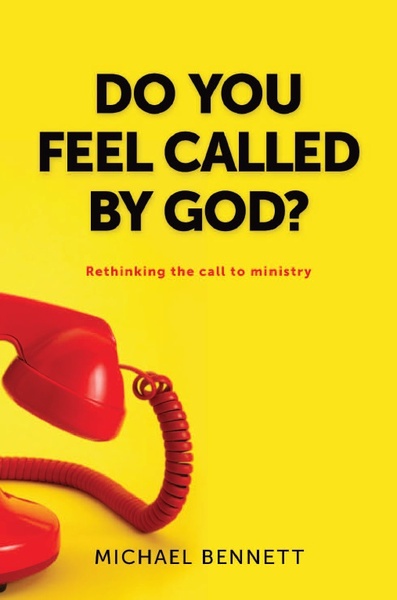
Do you feel called by God?

calledI think I need to take more plane trips. They’re a great way to set aside time for reading. Bit expensive though! This book was started on the trip back from Sydney and finished during chemo this morning. The chemo makes it even more expensive! Having now read Michael Bennett’s Do you feel called by God? Rethinking the call to ministry, I’m eager to share what I’ve discovered. This is a book that mirrors so much of my own experience, addresses so many of the same questions I’ve asked, and comes to the same conclusions. It’s easy to review a book that backs up your own opinions, but I can honestly say that it has also been a long and careful journey for me to be persuaded of these matters and I’ve never once had a conversation about them with Michael Bennett.

We’re told from the outset why Michael wrote this book and what conclusions he makes throughout. The book is spent substantiating these conclusions:

  1. The often-ward and almost universally accepted expression “I feel God is calling me” is totally foreign to the revealed content of both the Old and New Testaments of the Bible. The continued use of this unscriptural pietistic language may be having negative consequences for churches, missionary societies and other Christian organisations in the choosing and training of leaders.
  2. Without denying in any way God’s ability to call people by overt and supernatural signs, it is argued here that this is not usually God’s method today. The motivation to serve the Lord, particularly in what is called full-time ministry, is a human desire to do so, and not a felt call. However, this human desire, which must spring from one’s love for Jesus and the gospel and genuine compassion for people, is not sufficient or valid in itself: it must be rightly motivated and rightly tested. (p6-7)

I suspect by revealing his conclusions at the outset, Michael will lose some readers. “That’s not right. It can’t be right. It’s not what happened to me… or others I know.” And they’ll put the book down. Or because they’ve read this far in my review, they wont even bother buying it! Oops, sorry! Let me say this would be a huge mistake. Please judge these conclusions on the strength of the arguments, not on whether they confirm or run contrary to your current thinking.

This book is very autobiographical and anecdotal. We get to know Michael Bennett, the rugby player, Christian, Bible college student, and author. We journey with him as his questions and struggles are explored and answered. However, this is not a this happened to me and therefore I am the paradigm for everyone else book. Michael seriously engages with the Scriptures to find the answers. We are able to weigh up his arguments on the lines of whether they faithfully expound the teaching of the Bible.

‘Call’ and ‘calling’ are explored in the Old and New Testaments. Michael examines the key people called by God to particular tasks and roles, and how this is specifically described. The observation is made that the word of God comes directly and personally to some people for particular purposes, but that this never resembles a concept of ‘feeling called’ that is commonly described today.

Close attention is given to examining every reference to ‘call’ and its cognates in the Greek New Testament. Only after the serious word studies completed and the contexts explored, are conclusions drawn. Seven different uses of the words are identified in the New Testament and the conclusion is reached, after looking at over 300 verses, that God calls all people in two specific ways:

  • First, we are called to be Christians – to be disciples of Jesus.
  • Second, we are called to be holy – to grow in Christ-likeness. (p60)

Some of the references that speak of a call to holiness are another way of describing the call to be Christian. Christians are the ‘called out’, ‘set apart’, or ‘sanctified ones’. They’re the saints – not those who gain post humous titles for miracles and deeds done – but those who, because of Christ’s work now, belong to God. In 1991, I completed exactly the same comprehensive word studies and came to the same conclusions that this is how the Bible speaks to Christians about the nature of being called by God.

Michael Bennett addressed the potential criticism of simply playing semantics by showing that the implications of using Biblical words and phrases in non-Biblical ways can be dangerous and debilitating. If candidate committees, ministers, theological colleges, and mission organizations are all asking for evidence of a ‘calling’, when the Bible doesn’t make this necessary, then where do people turn? Perhaps they end up deifying their desires to justify their position.

This book contains a very helpful and bold chapter of Hudson Taylor. It’s a pertinent case-study exploring what’s going on for this towering missionary as he speaks of his ‘call’. Taylor is quoted as saying:

I felt that I was entering into a covenant with the Almighty. I felt as though I wished to withdraw my promise but could not. Something seemed to say: “Your prayer is answered”. And from that time on the conviction has never left me that I was called to China. (quoted on p70)

The language of Hudson Taylor is important to observe. He uses expression such as, “I felt”, “Something seemed to say”, and “the conviction”. He doesn’t speak categorically of God’s specific or clear personal command. Michael respectfully seeks to diagnose what’s going on in Taylor’s experiences and the way he describes them. He argues that Taylor uses the normal language of pietism in his day (and for many in the church today) to tie together a number of influences and motivations for mission work. These areas include his family and background, his conversion to Christ as he understands grace, his grasp of the eternal consequences of the gospel, his deep compassion for people, his desire to take action, and his extraordinary suitability for the task.

After discussing some issues of how we should expect to receive guidance from God, Michael Bennett hones in on the question so who should go into ministry? The answer is biblical and profound: every Christian is called to ministry, that is, we are reborn into a new life of serving God. Ministry is not limited to some elite Christians, it’s for all! What then of those we call ‘ministers’, or pastors, or missionaries, or ‘full-time’ ministers? How do you work out if you should make the step from being a minister to being a Minister in some special sense? Again, we are directed to the text of Scripture. Some are set apart as overseers, pastors, or bishops – three overlapping terms to describe persons who lead, teach and equip the body of Christ to each minister to one another. Others are set apart for pioneer mission work or evangelising. How do you know if you should be one of these people?

Michael shows from the Bible the relevance of the same factors he describes for Hudson Taylor. He shows how the human desire to be involved in Christian leadership ministry is a desire for something very worthwhile. This desire should be tested and weighed by others also. We’re taken especially 1 Timothy 3:1-10 to explore the criteria for suitability:

Here is a trustworthy saying: Whoever aspires to be an overseer desires a noble task. 2 Now the overseer is to be above reproach, faithful to his wife, temperate, self-controlled, respectable, hospitable, able to teach, 3 not given to drunkenness, not violent but gentle, not quarrelsome, not a lover of money. 4 He must manage his own family well and see that his children obey him, and he must do so in a manner worthy of full respect. 5 (If anyone does not know how to manage his own family, how can he take care of God’s church?) 6 He must not be a recent convert, or he may become conceited and fall under the same judgment as the devil. 7 He must also have a good reputation with outsiders, so that he will not fall into disgrace and into the devil’s trap.

8 In the same way, deacons are to be worthy of respect, sincere, not indulging in much wine, and not pursuing dishonest gain. 9 They must keep hold of the deep truths of the faith with a clear conscience. 10 They must first be tested; and then if there is nothing against them, let them serve as deacons.

Do you feel called by God? is a breath of fresh clear air on the topic of guidance into Christian ministry. It’s a book I will recommend to many, but before I do, let me raise a couple of issues and suggestions. I believe a strength and a weakness of this book is that it covers a lot of ground and explores a lot of side streets on the way to its destination. We get to hear about Michael’s journey to faith, his pathway through theological training, high and low church differences, Catholic and Anglican confusions, dip into wider issues of guidance, and much more. This may frustrate the impatient person who simply wants the shortest distance between A and B. However, it makes the book highly suitable for one who is still grappling with many basic fundamentals of Christian life and ministry.

I also think there is a passage of the Bible, that warrants careful exegesis on this topic, that has been overlooked or simply omitted from this book. I’m referring to 1 Corinthians 7:17-24.

17 Nevertheless, each person should live as a believer in whatever situation the Lord has assigned to them, just as God has called them. This is the rule I lay down in all the churches. 18 Was a man already circumcised when he was called? He should not become uncircumcised. Was a man uncircumcised when he was called? He should not be circumcised. 19 Circumcision is nothing and uncircumcision is nothing. Keeping God’s commands is what counts. 20 Each person should remain in the situation they were in when God called them.

21 Were you a slave when you were called? Don’t let it trouble you—although if you can gain your freedom, do so. 22 For the one who was a slave when called to faith in the Lord is the Lord’s freed person; similarly, the one who was free when called is Christ’s slave. 23 You were bought at a price; do not become slaves of human beings. 24 Brothers and sisters, each person, as responsible to God, should remain in the situation they were in when God called them. (NIV, my emphasis.)

I’ve spent much time helping people work through what this passage is saying about the nature of God’s call. A superficial reading has led many to speak of God calling people to particular careers, jobs, places, or ministries. This appears to be the meaning of verse 17. However, the verses that follow make it clear that Paul is speaking of the circumstances of life that people are in before and after they become Christians. The ‘call’ on view is the call to be Christian.

This is a book that should be read by many. It should be passed on to people who are exploring these issues for there lives. Last weekend I was asked by a young man at church if he should be heading into ministry. I plan to buy a copy of this book and give it to him and I’ll talk through the issues with him. It’s an excellent resource for people considering MTS (Ministry Training Strategy) apprenticeships, or exploring whether to head to Bible college, formal ministry, or the mission field.

I would make this book compulsory reading for church and denominational leaders who will be making decisions about whether to admit people into training or ministry positions. I’d would love all members of missionary candidates committees to take the time to work through this book. Bishops should read it. Theological and Bible college admissions departments should read it. Those endless committees deciding people’s futures should read this book. It’s such an important issue for many. Perhaps you should read it!

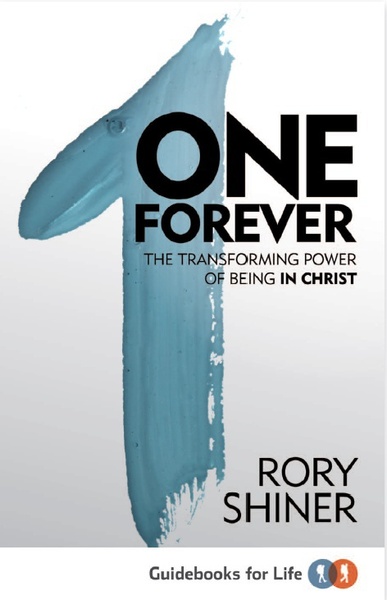
One forever

oneforeverI’ve recently received two books on union with Christ. One Forever by Rory Shiner and Paul and Union with Christ by Con Campbell. I’ve been keen to get into both these books and decided to bring one with me on a plane trip this morning. Rory’s book is 88 pages and Con’s is 479 pages. If I was flying to South Africa with the Brumbies, I’d have taken Con’s book, but given I was only flying from Canberra to Sydney, Rory’s it was. Con said his book would have helped me sleep on the plane! Hopefully, I’ll let you know later if that’s true. This is a great introduction to an often overlooked theme in the Bible. This book shows us how central and significant it is. Union with Christ belongs not only at the heart of theology, but at the heart of Christian experience.

Union with Christ is introduced against the backdrop of creation. We were created to be united with Christ. The picture of the man and woman being united in a one flesh relationship in Genesis 2 finds its ultimate expression in the union between Christ and his bride, the church, in Ephesians 5. We only become the people that God designed us to be as we are united together with Jesus. Fulfilment and completeness for human beings is experienced through entering into a genuine relationship with Jesus Christ.

The incarnation, where God became one of us, shows us God’s true intentions for humanity. Given our rebellion against God, it’s truly remarkable that God would enter into our world as a human being.

God doesn’t enter into humanity like a nuclear scientist holds radioactive material: with a massive suit on, at a distance, for fear of contamination. Rather, he enters into all that we are and is united to all that we are, so that all we can be healed and redeemed.  (p28)

The key to understanding the incarnation is the gospel. It reveals that God’s purpose in becoming fully human was to save people who’d turned their backs on him. Jesus, fully human, reveals the extent of God’s commitment to humanity and to restoring sinful people into relationship with God. The exalted post-resurrection Jesus shows us the picture of what God intends for humanity as we are reunited with our creator.

The heart of this book is the chapter on being a new creation in Christ. Very fittingly, given the context of me reading this book, Rory asks us to consider being on a plane! He asks what relationship we need to have with the plane if we are going to get to the destination. Would it help to be under the plane, or inspired by the plane, or following the plane? No, we need to be in it! He argues that the New Testament idea of being in Christ is something like this. In biblical terms, we get to participate in the benefits of salvation and justification because we are united with, or in, Christ in his death and resurrection. This is the plane journey that matters.

He develops the plane illustration further with some important pastoral implications. Contrast a business woman, well accustomed to flying, taking the journey in her stride, with an elderly man, an anxious first-time flyer, who keeps asking whether or not they’re going to make it. The woman clearly has stronger faith. The man is troubled by doubts and fears. But the plane gets both of them there! The heart of the matter is not how much faith you have, but where your faith is. (p41)

Union with Christ isn’t simply one angle to understanding what we have received as Christians. Rather, it’s the means by which we receive every blessing from God. We are justified, declared to be in right standing with God, through being united with Christ. Christ has paid the price of judgment for our sin so that when we are united with him by faith there is no further price to be paid. This is the basis of our assurance of salvation. Understanding the implications of union with Christ enables us to live in humble confidence, that is, a confidence that in Christ everything from God will be ours and nothing can take this away from us. As Paul writes in Romans 8:

38 For I am convinced that neither death nor life, neither angels nor demons, neither the present nor the future, nor any powers, 39 neither height nor depth, nor anything else in all creation, will be able to separate us from the love of God that is in Christ Jesus our Lord.  (Romans 8:38-39)

Rory includes an excellent chapter on dealing with sin in our lives. He describes union with Christ as our defence against the playground bullies of sin and temptation. (p56) He takes us to Romans 6, arguably one of the most important chapters in the Bible for understanding the life implications of being united with Christ in his death and resurrection. Many people, Christians included, believe that guilt is the way to change people. Rory argues instead that guilt, while being a good alarm system that something needs to change, is a lousy agent for change. Guilt lacks power to transform lives. By contrast grace is God’s power to change as we gain a clearer and stronger appreciation of the many privileges we have in Christ. I found this chapter compelling and faithful to the thrust of the New Testament.

One Forever reveals the implications of union with Christ for the church. There are many metaphors for church in the New Testament which reveal the corporate union between Christ and his people. Consider such pictures as the vine and the branches, the temple, the husband and his bride, the body of Christ, and so on. Christians belong to God and to each other. We are created and recreated, in diversity, with different gifts, for the purpose of sharing our profound unity in Christ. Rory asks: So why go to church? Answer: Because church is who you are. Church is the most concrete expression of your union with Christ. (p72) How we treat Christ and how we treat Christ’s people are intimately connected because the church is Christ’s own body.

The final chapter of this book takes us to the big issues of life, death and the climax of all things. Understanding union with Christ gives us clarity about what to expect in our futures. It’s the basis of a real hope beyond death. Christ died and Christ rose. Our union with him in his death guarantees our union with him in his resurrection. We can be freed from the despair of  living only to die, to devote ourselves to the things that will last for eternity – the work of the Lord (1 Corinthians 15:58). Our union with Christ will see us through, safe and glorified into the new creation. (p88)

If you’ve never thought much about what it means to be in Christ this book is a great primer. It’ll help you to head back to the New Testament and read it with clearer glasses. Dip back into John 15, or Ephesians 1, or Romans 6, or 1 Corinthians 15, and see how important is this theme. It’s far more than a theological window with which to view our relationship with Christ. It reveals the very essence of what it means to be Christian.

Fatigue

fatigueI’ve gone from sleeping 6-7 hours a night for years and years, to needing more than 9 hours a night. Some nights I need 11 or 12 and still wake up feeling tired. This on top of occasional nanna naps in the afternoons. It takes a huge effort in the mornings to open the eyelids and if I don’t get a shower and a coffee then I probably spend the first hour of every day sleep-walking.

No doubt it’s another effect of the chemo and, maybe, the high blood pressure caused by the chemo. It comes with its aches and pains, inability to concentrate, and the frustrations that go with both. I think it’s given me some small insight into how chronic fatigue sufferers might feel. Friends of mine have been struggling with fatigue for years and years. Some have given up any hope of life ever being different. Some are barely able to lift themselves from the bed, and time with family and friends leaves them exhausted. It’s difficult to know how to offer support sometimes, because a visit or phone call can deplete their already limited energy. One friend told me it takes days to recover from half an hour with a well-meaning visitor.

There’s also the difficulty of an illness that people can’t see and very few understand. Just go to bed earlier. Start exercising more. Change your diet. Snap out of it. It’s all in your head. I reckon you’re making it all up. This is some of the helpful advice that people get given. And then there’s often the person with the success story. My friend visited this specialist, started on that diet, discovered acupuncture, went to such and such healing service, moved to the beach… and now everything’s ok.

The reality of this life is that sickness, sadness, and suffering are all part of our experience. We ache and groan as we long for things to be better. But the truth is that things don’t always improve. More often than not they get worse. Old age sees our breakdown and decline. We don’t heal as quickly, illnesses become more complicated, some things become permanent. Our body struggles to recover, our mind isn’t what it used to be, and our spirit eventually loses the will to live. Sometimes it seems like life is one long tragedy. It might start well for some, but it always seems to end badly.

What a pessimistic post! Is this what fatigue does to me?! Let me presume to share a few thoughts with those of you who are struggling with fatigue.

Don’t give up hope. Maybe there will be a change for the better just over the horizon. Perhaps someone will understand what’s causing it. Maybe there is something that will help, even a cure. Keep looking, keep on trying. Pray. Talk to God. Ask God to take away your pain and suffering. Ask friends to pray for you or with you.

When everything feels dark and hopeless, cry out. Let your family and friends know how much it hurts. Ask for help, comfort, love, kindness. And call out to God. Your Father in heaven knows what you need. Maybe God wants you to depend more on him. If it’s not his intention to take away your suffering at this time, then ask him to help you trust in his grace. Ask him to strengthen your trust in his goodness. Ask him to help you draw near to him for comfort, even if he seems so remote.

Are there things you can do in your fatigue? Do your energy levels let you get up from time to time? How can you best fill that time? Is it your family who needs you most? Are you able to encourage others in your weakness? Can you spend time praying for other people? Can you make a list of things that you can do when you’re down and others when you’re up? Have you asked how God can use you in your frailty? Maybe you could brainstorm some ideas or chat to others about this.

But don’t compare yourself with others. “At least there are people who are suffering more than me!” How does that help, really? “Why do I suffer so much when those around me do whatever they please?” Self-pity, jealousy, anger, bitterness will only make things worse. There is one who is well acquainted with suffering, who understands what you are going through, who can help. His name is Jesus. He was betrayed, rejected, beaten, ridiculed, and crucified. He took the punishment we deserve in his body and paid the price. He endured all this in confident hope that God would raise him from the grave, as the first fruits for all who would follow after him.

Focus your hope on the future. Not just for this life, but for eternity. Keep your eyes on Jesus and remember the promise of a day with no more pain, suffering, fatigue or death. As your earthly body decays remember that God has in store a new, complete, and perfect body for all who trust in him. There is hope. God guarantees it!

For we know that if the earthly tent we live in is destroyed, we have a building from God, an eternal house in heaven, not built by human hands. Meanwhile we groan, longing to be clothed instead with our heavenly dwelling, because when we are clothed, we will not be found naked. For while we are in this tent, we groan and are burdened, because we do not wish to be unclothed but to be clothed instead with our heavenly dwelling, so that what is mortal may be swallowed up by life.
(2 Corinthians 5:1-4)

Not my problem

burdenI’ve noticed this phrase has made its way into our vernacular… Not My Problem. We can even send it as a text… NMP. It’s pretty callous and cold. It highlights our preoccupation with ourselves and our overall lack of responsibility. We watch the news and see terrorism and tsumanis, fires and famines, earthquakes and economic collapses, and maybe we think to ourselves… Not My Problem. Some of us have been inoculated against being contaminated by the plight of others. How easy is it for us to drive past the car that’s broken down, or make excuses why we can’t give to that appeal, or simply avoid the people whom we find awkward or demanding?

I don’t use the phrase much myself, except perhaps when the kids have left their homework until the night before it’s due! But I’m saddened that I regularly see evidence of it in my attitude. It’s so easy to ignore the plight of others, or simply feel too overwhelmed to be able to offer anything. As a Christian, I believe that relationship with God is the most important need people can have. I believe that we will all stand before God one day and give an account for how we’ve responded to him. And I’m persuaded that people desperately need to hear the outstanding news that peace with God is made possible by trusting in Jesus. I believe all that, and yet so often fail to do anything about it. I wouldn’t articulate it like this, but I think and speak and act as though it’s Not My Problem.

Let me tell you, I’m so glad that Jesus wasn’t like me. He engaged with people who were in desperate need. They were abused by their religious leaders and oppressed by their political leaders. They struggled with sickness, both physical and spiritual. They faced death in fear and without hope. Underlying all of their obvious problems, they were guilty of turning their backs on the God who’d given them everything. It would have been so easy for Jesus simply to have turned away and said Not My Problem. But he didn’t! In Matthew’s Gospel we read this about Jesus:

35 And Jesus went throughout all the cities and villages, teaching in their synagogues and proclaiming the gospel of the kingdom and healing every disease and every affliction. 36 When he saw the crowds, he had compassion for them, because they were harassed and helpless, like sheep without a shepherd. 37 Then he said to his disciples, “The harvest is plentiful, but the labourers are few; 38 therefore pray earnestly to the Lord of the harvest to send out labourers into his harvest.”  (Matthew 9:35-38)

Jesus showed extraordinary compassion for people. He connected with complete outcasts. He risked being contaminated by others. He sided with the powerless and vulnerable. He took on the pretence of the proud and powerful. He offered hope to the hopeless and life to the dead. Jesus was serious about the needs of his people. So serious that he went willingly to his death upon a cross, so as to offer the way to peace with God.

Whether I have compassion or not, there is genuine hope for people because of Jesus’ compassion. I thank him for this compassion, and how I wish there were more people like Jesus. How I wish I was more like Jesus! Jesus encouraged his followers to pray earnestly that God would raise up more people who were like him. I’ve been encouraged to pray the same thing. And I will ask God to transform my attitude and those of others so that we too will show compassion and concern, bear others burdens, and share the great news of Jesus, that he has taken their problems and made them his own.

Bloody facebook

facebook

I have a love/hate relationship with Facebook. It’s awesome for staying in touch with people, good for keeping contact details up to date, more interesting and engaging than email, fantastic for hearing what people are doing, a nice way to share photos, helpful for remembering birthdays (Happy 21st Matt), you can advertise events, get people into important causes, and lots more. But, what a distraction! How many hours, or should that be years, are wasted on games like FarmVille, words with friends (my archilles heel), personality tests, and other highly addictive activities. The clever predictive advertising annoys me, along with the many dating sites, and the lack of accountability for people posting pretty much anything they want.

But my big concern with Facebook at the moment is Christians. Christians using Facebook to air their grievances, stir up trouble, attack the words or actions or motives of other Christians. The bloodshed created in recent times has left me deeply disturbed. And I’m not just talking about the disturbed schizophrenic who posts constant attacks on my character, claiming I’m an agent of Satan being punished by God with cancer for not submitting to this person’s authority. I’m far more concerned about the rational, calculated, vitriolic, acidic use of Facebook as a medium for engaging in and stirring up conflict.

Yesterday, I found myself lured into some threads discussing John Dickson’s comments on QandA last week. Young Earth Creationists criticising John heavily for his expressed views on science and Jesus. Others getting in on the act and firing back. The temperature rising. Name calling and ridiculing, Blow for blow. Attacks on character. Attacks on motives. Accusations of selling out, heresy, ignorance, pride. I found myself arcing up many times. It was bloody! In all this, I believe that John acted with calm, restraint and humility.

Public wall posts on Facebook are not the forum for criticising others. You can at least private message. Facebook can be a very risky forum for passionate debate. It’s much more the canvas for smart remarks, clever quotes and pithy sound bites. It’s a great place for fun and a grotesque place for fighting. (Like that sound bite?!) It distresses me that I see Christians increasingly using this public forum to fight with one another.

If I can pick on my mate, John Dickson, once again… I’ve had a number of disagreements with John on different issues. We’ve argued over the exegesis of James 5, 1 Corinthians 11, 1 Peter 2, Colossians 1 and probably other parts of Scripture as well. I’m not persuaded by everything John has written. We have different views on some aspects of Christian faith and understanding. But we talk. Sometimes we write things down and send them to each other. Privately. Hopefully, with respect. And a deep appreciation that we are limited and inadequate in our understanding, that we act out of pride all too often, and that maybe we’re both wrong!

When it comes to conflict, public Facebook is hopeless. Private messages and email at least constrain it between the people involved – until one, accidently or even deliberately, passes it on. Phone calls make it a bit more personal, especially if you’re willing to listen and not simply accuse. You can hear tone of voice, clarify, ask questions. Perhaps, skype can make things more personal still. But there’s no real substitute for meeting face-to-face, in-the-flesh. This is where disagreements are to be worked through.

When it comes to Christians using Facebook, here’s a few of God’s words to consider very carefully (and maybe you can think of many more) …

34 “A new command I give you: Love one another. As I have loved you, so you must love one another. 35 By this everyone will know that you are my disciples, if you love one another.”  (John 13:34-25)

If any of you has a dispute with another, do you dare to take it before the ungodly for judgment instead of before the Lord’s people?  (1 Corinthians 6:1)

Conduct yourselves honorably among the Gentiles, so that in a case where they speak against you as those who do what is evil, they will, by observing your good works, glorify God on the day of visitation.  (1 Peter 2:12)

Always be ready to give a defense to anyone who asks you for a reason for the hope that is in you. 16 However, do this with gentleness and respect, keeping your conscience clear, so that when you are accused, those who denounce your Christian life will be put to shame.  (1 Peter 3:15-16)

 “If your brother sins against you, go and rebuke him in private. If he listens to you, you have won your brother.  (Matthew 18:15, my emphasis)

19 My dear brothers and sisters, take note of this: Everyone should be quick to listen, slow to speak and slow to become angry, 20 because human anger does not produce the righteousness that God desires.  (James 1:19-20)

The trellis and the vine

Trellis and the VineFor some reason I’ve kept putting off reading The Trellis and the Vine by Colin Marshall and Tony Payne. It might be the familiarity breeds… thing. After all, I did a ministry apprenticeship with Col nearly 30 years ago, and I overlapped with Tony doing the same thing a year behind me. It could be that I thought I’d heard it all before. And I pretty much had! But it’s for this reason, and the passion and commitment of the authors, and the quality of the book, that I’m now keen to recommend it to others. I intend to provide an overview of the material, highlighting what I see as some key issues, share some ideas of how we are seeking to grapple with these things, and make some suggestions.

The two images of the trellis and the vine are used to describe two aspects of Christian ministry.

The basic work of any Christian ministry is to preach the gospel of Jesus Christ in the power of God’s Spirit, and to see people converted, changed and grow to maturity in that gospel. That’s the work of planting, watering, fertilizing and tending the vine.

However, just as some sort of framework is needed to help the vine grow, so Christian ministries also need some structure and support. It might not be much, but at very least we need somewhere to meet, some Bibles to read from, and some basic structures of leadership within our group.  (p8)

The observation of the authors is that so often in our churches the trellis work takes over from the vine work. We get caught up in committees, structures, activities, fund raising, keeping the machinery ticking over, such that we lose site of the reason for the trellises – that is, to support the vine. Drawing on the great commission in Matthew 28, this book argues for vine-growing as disciple-making which should be the normal agenda and priority of every church and every Christian disciple (p13).

As churches move away from erecting and maintaining structures to growing disciple-making disciples, a radical mind-shift is required. These changes of outlook will include…

      1. Building people rather than running programs
      2. Training people rather than running events
      3. Growing people rather than using them
      4. Training new workers rather than filling gaps
      5. Helping people make progress rather than solving problems
      6. Developing teams rather than focusing all on ordained ministry
      7. Forging ministry partnerships rather than focusing on church polity
      8. Establishing local training rather than relying only on training institutions
      9. Looking at the long term picture rather than being constrained by immediate pressures
      10. Engaging in ministry with people rather than being consumed by management
      11. Prioritising gospel growth over specific church growth

Col and Tony ground their claim to the priority of the vine over the trellis in the Scriptures. They examine what God’s plan is for his world, what he has been doing, and what he is doing now after the finished work of Christ. God is saving souls through the Spirit-backed proclamation of the gospel and this has big implications. Our small ambitions need to be laid aside for the cause of Christ and his gospel. God is calling people to be born anew in Christ and to grow into maturity. And this growth happens by the power of God’s Spirit as he applies the word to people’s hearts. It’s evident that this has little to do with structures and organisations and much more to do with prayerful word ministry.

The Trellis and the Vine aims to show that every Christian is called to be a part of this vine work. Not everyone is gifted in the same way, but we are all called to the task of being and making disciples. The beauty of the body of Christ is we can support one another in this work. The common clergy-laity divide is broken down as leaders and congregations begin to work off the same game plan. Modelling and teaching from pastors, elders, teachers, group leaders and others is focused on God’s agenda of proclaiming Christ and calling people to follow him. We read, discuss, and prayerfully apply the Scriptures together at church, in groups, one-on-one, in formal and informal contexts, with the same aim of growing into maturity as followers of Jesus.

I especially appreciated the careful defining of ‘training’ in this book. They contrast our popular understanding of training as a focus on skills development and show from the New Testament that it should be more focused on Christian thinking and living.

Have nothing to do with irreverent, silly myths. Rather train yourself for godliness.  (1 Timothy 4:7)

All Scripture is breathed out by God and profitable for teaching, for reproof, for correction, and for training in righteousness, that the man of God may be complete, equipped for every good work.  (2 Timothy 3:16-17)

Though training is not simply the imparting of information, the faithful passing on of sound teaching is essential.

And the things you have heard me say in the presence of many witnesses entrust to reliable people who will also be qualified to teach others.  (2 Timothy 2:2)

Training is also modelling a way of life. It is caught as well as taught and we are called to set one another an example. The ultimate example is that of Jesus Christ himself.

Do not cause anyone to stumble, whether Jews, Greeks or the church of God —  even as I try to please everyone in every way. For I am not seeking my own good but the good of many, so that they may be saved.  Follow my example, as I follow the example of Christ.  (1 Corinthians 10:32-11:1)

Not that trainers will be perfect, but they are called to watch their lives and teaching carefully. They will impact others profoundly as their progress is seen.

Practice these things, immerse yourself in them, so that all may see your progress. Keep a close watch on yourself and on the teaching. Persist in this, for by so doing you will save both yourself and your hearers.  (1 Timothy 4:15-16)

This understanding from the Bible has led the authors to summarise the nature and goal of training by three Cs.

Through personal relationship, prayer, teaching, modelling and practical instruction, we want to see people grow in:

  • conviction – their knowledge of God and understanding of the Bible
  • character – the godly character and life that accords with sound doctrine
  • competency – the ability to prayerfully speak God’s word to others in a variety of ways.  (p78)

Following the lead and language of the Book of Acts, the authors describe training as more concerned with gospel growth than particular church growth. This happens in the lives of people, not structures. It means we should be generous and willing to send off many whom we train for the sake of God’s church elsewhere. It requires us to see people as people, and not just cogs in the wheel for our own projects. As more and more people are trained in godliness and a good understanding of the truth, then we will find churches as they should be – growing in numbers and maturity, with people serving one another, encouraging and setting an example to each other. In other words, a long way from the ‘professional minister with all of his clients approach’, which does little more than stifle gospel growth.

For churches to adopt this radical mindset, it requires pastors and leaders to grasp the essential importance of training. It’s not sufficient to be the preacher, clergyman, CEO, or business manager. Leaders need to encourage their churches to become centres of training where disciple-making disciples are nurtured, equipped, and encouraged. In this way the opportunities for outreach, teaching, modelling, service and care are shared among the body of the church. Churches can grow in health as well as numbers and more and more people are mobilised. We would do well to conduct an honest audit of our congregational programs, structures and and activities and see how we measure up against this picture.

Recruiting co-workers is key to promoting gospel growth, but there are mistakes to be avoided. Here are a few:

  • Don’t compromise on core beliefs and values.
  • Don’t be impressed by enthusiasm over substance.
  • Don’t ignore their track record.
  • Don’t choose people who aren’t good at relating to people.
  • Don’t recruit in desperation.
  • Don’t select unteachable co-workers.
  • Don’t simply choose ‘yes’ people.
  • Don’t just advertise for volunteers.

The best way to recruit co-workers according to convictions, character, and competence is to train them. Keep on the look out for people who might be suitable to share the load with you. Always be thinking about whom you could be training. Consider if there are one, two or more people that you could especially invest in. Make it happen. Share in their lives, work through the Scriptures together, pray with one another, open your heart to them, delight in their progress, be honest and speak the truth in love, as you encourage them to grow as a disciple-making disciple.

A chapter is devoted in this book to the Ministry Training Strategy. This isn’t surprising given that Col was one of the founders of this ministry and Tony was one of the early trainees. They have shaped and refined this ministry over three decades, and commend it as an excellent strategy for preparing new Christian leaders. It’s basically a two-year apprenticeship that gives people real opportunity to grow in gospel ministry, by doing ministry under the supervision and guidance of a suitable trainer. It’s often a precursor to more formal theological training and has the benefit of enabling a good assessment of a person’s suitability for ministry leadership before investing everything in 3 or 4 years at college. A good outcome is a wise and godly decision at the end of the apprenticeship. I’m an advocate for this training experience before formal theological training. I benefitted greatly from receiving it myself and have subsequently led more than 60 apprentices through a similar program.

So what have I learned from this book?

The big thing has been the reminder to see training as part of the DNA of a healthy church. Not simply skills development, but the making of disciple-making disciples in response to the commission of Jesus. As churches grow it is easy to be consumed by organisation, structure, vision setting, strategic planning, and the like. We can lose sight of the people. It’s been a good reminder that God is seeking people with him for eternity, not clever programs!

The Trellis and Vine has also encouraged me to be more purposeful in training workers for ministry throughout our church. Training is not simply for the ‘professionals’. It’s about being transformed into the likeness of Jesus, and that’s for all. We need to audit our Sunday meetings, growth groups, children’s and youth ministries, and ask the hard questions. Are we occupied with a gospel work that will make a difference for eternity? Are people genuinely seeking to follow Jesus? Are we making disciples of one another, or are we sitting back assuming it will just happen automatically somehow?

My current pastoral focus is particularly on ministry training and leadership development. I’ve begun to assess how we are travelling with equipping and supporting our growth group leaders. A quick analysis shows there are a number who would really appreciate some training. This book is a helpful resource as I seek to encourage the leaders to make growing disciple-making disciple a priority in their groups.

A couple of suggestions

Given that this book is called The Trellis and the Vine there is very little about trellises. The author’s main point is to get us focused on vine growing and not distracted by erecting and maintaining trellises. However, I would appreciate more on how to create helpful trellises for vine growing. A lack of trellis or the wrong type of trellis can become a serious impediment to vine growth. Disorganised strategies and structures can certainly prevent gospel growth in our churches, but the inverse can also be true. It seems to me that we need to find the right trellis that enables the vine to grow. More could be said on this.

However, and I’m not sure if this point is made explicitly in the book, The Trellis and the Vine is itself a helpful trellis! Here is a strategy with organisational advice to increase the disciple-making outcome in our churches. Chaos is affirmed in the book as an expected outcome when the focus is on vine growing, but sometimes the chaos is an indicator that some trellis work needs to be done to keep the vine growing healthily.

I also had a concern in the section on ‘people worth watching’. The call is to become ‘talent scouts’, looking for people with extraordinary gifts in leadership, communication and management; people with vision, energy, intelligence and entrepreneurial spirit; people who are good with people, and who can understand and articulate ideas persuasively. If these are also godly servants of Christ who long for his kingdom, then why not headhunt them for a life of ‘recognised gospel ministry’? (p140) My concern here is the order and emphasis. It’s too easy look on the surface, see the gifts and talents, and fail to look deeply at the life and character of the person. In a book that has highlighted this issue, it would have been more helpful to illustrate the things that might give evidence of godly character.

A similar concern is the limited mention of ‘love’ as a defining characteristic of the disciple and his or her life and ministry. Interestingly, the first FAQ in the appendix illustrates what makes a great sales person. The answer is love for the product and care for the people. When it comes to the gospel and Jesus and other people, this is so important. I think it’s a point that could have been much stronger and more up front in the book. 1 Corinthians 12-14 would have been an excellent starting point for a chapter on the importance of love in building the church and making disciples. I worry sometimes that our catch-cry of looking for FAT people (faithful, available, teachable) people is not enough. I used to add an S (self-starting or sacrificial), to make FAST people! Maybe we should add an L (loving) to make FLAT people instead!

Overall

This is a very helpful book. I commend it to pastors, ministry leaders, small group leaders and any Christian who is keen to make their life count for eternity.


Getting ready for Easter

easterThe department stores and supermarkets are always ready for Easter. I think once the Christmas stuff comes down, the Easter stuff goes up. There’s over-priced, over-packaged, hollow chocolate as far as the eye can see. I usually wait for the post-Easter sales and reductions on the broken eggs and rabbits. Churches don’t really need to advertise Easter because the shops do it for them!

But it does worry me that our shops are so focused on Easter, while many of our churches don’t seem to give it a lot of thought. We know it’s coming but we still seem to be ill-prepared and caught off guard when it arrives. The fact of the matter is that Easter is one of two occasions on the calendar when many people will visit church. I’m pleased that many take this step because I want them to hear and grasp why the Easter events are so absolutely crucial for all who follow Jesus.

Easter is a time where we remember a Galilean man of the first century who was executed by crucifixion under the Roman regime. It’s strange to celebrate this event two millennia later and stranger still to call it Good Friday. But this is the event that mends the broken relationship between God and us. That’s a whole lot better than good. And Easter Sunday demonstrates that this man is no longer dead. The empty tomb and the appearances of Jesus bear testimony to the efficacy of his sacrifice on the cross for us, and the fulfilment of his promises to die and rise again. Jesus is the risen Son of God, and we’re called to value him, turn to him, trust in him, honour him, and live for him. Resurrection beyond death is the hope of those who follow Jesus. Jesus’ death and resurrection has made this possible.

These are events of history that I’m keen for people to notice. There’s a fairly good chance they’ll get mentioned in churches over Easter (though no guarantee in some churches with little regard for the Bible) so I’d love my neighbours, workmates, teammates, relatives, occasional church-going mates, and anyone else to come along.

And if they’re going to be guests at our churches, then I want our churches to be ready. In the same way we prepare for guests at home – light up the barbie, organise food and drinks, welcome people, and seek to provide a good time – I want to prepare at church. I want people to feel especially welcome. I’d like them to feel comfortable with what’s going on. I’d love them to find us friendly, helpful and generous. I want the message of Easter to be so clear it can be repeated afterwards by one and all. I’m keen for people to get a window into how important it is, how much it means to people (like me) today. I’d like them to understand how they could find out more about Jesus, if they wanted to. And I’d love them to be pleasantly surprised about church, and want to come again… soon.

All this assumes people know it’s on, what’s happening, when and where to go. It requires advertising of some sort and people inviting others to join us. It would help if we could overcome a perception of ‘same old same old’ and ‘why would I bother coming cos I know what they’re going to do and say?’ Families would probably appreciate knowing what happens for kids and youth at church. We might want to check whether church is easy to find, whether their are clear signs directing the way. I reckon we should be offering top class refreshments to make it worth sticking around afterwards. And why not think about a gift that people could take home with them?

If you follow Jesus, let me ask have you and your church worked out what you’re doing at Easter yet? Now would be a good time to start if you haven’t already. Some churches have a season before Easter called Lent, so they’re probably ahead of the game. Our church doesn’t make much of lent, so we need to learn from the shops and get our act together.

If you don’t follow Jesus, but if you’re open-minded about Christianity and talking about God, then let me encourage you to check things out this Easter. If you know a Christian and you’re thinking of visiting their church, then I recommend you letting them know you want to get to the heart of message and not be distracted by religious fluff. Just saying!

And by the way, you probably shouldn’t buy me any Easter eggs. I’m supposed to be losing weight, lowering my blood-sugar levels, and reducing my blood pressure. Not fair!

Macca’s book

Macca

Wow! I have my own book. Last Sunday I was welcomed back onto the staff team at Crossroads and presented with a book. I was gobsmacked and completely humbled as I looked through it. In fact, it was hard to concentrate on the rest of church. Sunday afternoon was spent reading it from cover to cover.

The book is full of thank you messages from friends. It represents 23 years of relationships here in Canberra, and it’s a great encouragement to hear how people have been impacted by God over this time. Some share of how they became Christians as we examined together what the Bible reveals about Jesus. Others speak of the impact of church or the FOCUS ministry or various trips we made to be involved with other churches on the coast.

I don’t know for sure whose idea it was, but I understand that special thanks goes to Marcus and Kelly, as well as the super-crafty Sara Sparks. Let me also thank Derek and Anna, David and Jenny, Monica, Bernie, Cath and Jamie, Klaus and Jude, Matt and Carla, Matt and Annette, Bron and Con, Anthea, Revin, Matt, Mik, Snicko and Anita, Richard and Pinnucia, Cam and Sue, Anton and Kylie, Sarah, Micaiah, Michael and Trish, Michael and Julie, Tim and Kate, Dan and Emma, Rob and Jenny, Steve and Cathy, James and Ali, Jonty and Beth, Sonya, Cliff and Jen, Lexi, Janine and Chris, Phil and Laura, Michelle, Michael and Susan, Andrew and Tanuja, Kate and Hamish, Keith and Joyce, Rob and Arabelle, Grace and Jono (best photo!), Matt, Mark and Louise, Dan and Celine, Eben, Philip and Rosi, Jennifer and Adi, Dave and Kate, Jo and Stuart, Russell and Kiri, Kathleen, Pete and Kate, Kell, Anne and Ian, Jared and Angela, Dan and Simone, Sam, Kerryn and Nathan, Dave, Tom, Ben and Beth, Deb, Nicola and Harry, Tim and Tegan, Mark and Katherine, Tim and Alison, Graeme and Chris, Mike and Donna, Mal and Vicki, Tim and Louise, Roslyn, Shan and Paul, Dean and Jo, Anita and Dave, Ralph and Kylie, Dave and Elissa, Andrew and Wendy, and families, and anyone else too slow to get in it!

Please come over and check it out if you’d like to see it. I was very touched. Thank you 🙂

PS If you click on the image above you can view the contents of the book!

Retail therapy – a first world sin?

retail_therapyI don’t remember when I first came across the idea of ‘retail therapy’, but the idea has disturbed me for some time. For those who haven’t heard of it before, ‘retail therapy’ is a term to describe shopping when you need cheering up. If you’re feeling a bit down or depressed, then you go to the mall and make some ‘comfort buys’ to improve your mood.

According to Wikipedia, retail therapy was first used as a term in the 1980s with the first reference being this sentence in the Chicago Tribune of Christmas Eve 1986: “We’ve become a nation measuring out our lives in shopping bags and nursing our psychic ills through retail therapy.”

There’s now a website called ‘Retail Therapy’ hosting fashionable clothes for all shapes and sizes. Our local civic mall invites shoppers with these words: For those yearning for some retail therapy, Canberra’s City Centre offers an innovative retail experience at the Canberra Centre. It’s even a selling point for real estate near our city: The centre of Canberra is also a few minutes walk offering fabulous retail therapy , award winning dining experiences, vibrant funky cafes and…  The lists could go on, throughout our nation and in many wealthy countries around the world.

There’s something profoundly disturbing about thinking that buying more and more stuff will cheer us up. Are we really happier for having the latest, fastest, shiniest, brightest, hippest. Of course not. It’s out of fashion before it’s out of warranty! I came back from camping and got disturbed about all the clutter. I’d lived just fine without so many things in the tent, so why do I need more and more now! I got a little depressed about it, so what did I do? I bought another tarp and another tent! (Actually there are good reasons for this, but the point still stands.) More stuff does not equal more satisfaction.

I worry too that I can be quick to spend on myself, buying things that I don’t really need, to the neglect of those in great need. We support a number of families in Kenya and in India. They’re all living well below what we’d call the poverty line. For the most part I think they know genuine contentment, but I’m sure it wouldn’t cross their minds to earn money simply to spend it on trivia when they’re feeling down. Food, clothes, school – if they can cover these things then they’re doing well.

Yesterday I received an invitation from the Oaktree Foundation to Live Below the Lineliving on $2 a day, to tackle extreme poverty. I reckon if you’re feeling a little aimless, need a little cheering up, then living below the line will do a whole lot more for you and others, than some self-indulgent retail therapy. Or perhaps when the department stores are seducing you to part with your cash or go deeper into credit card debt, you could consider contacting TEAR or Compassion or World Vision or Médecins Sans Frontières or a similar group, and get into some generosity therapy instead.

Food for thought!