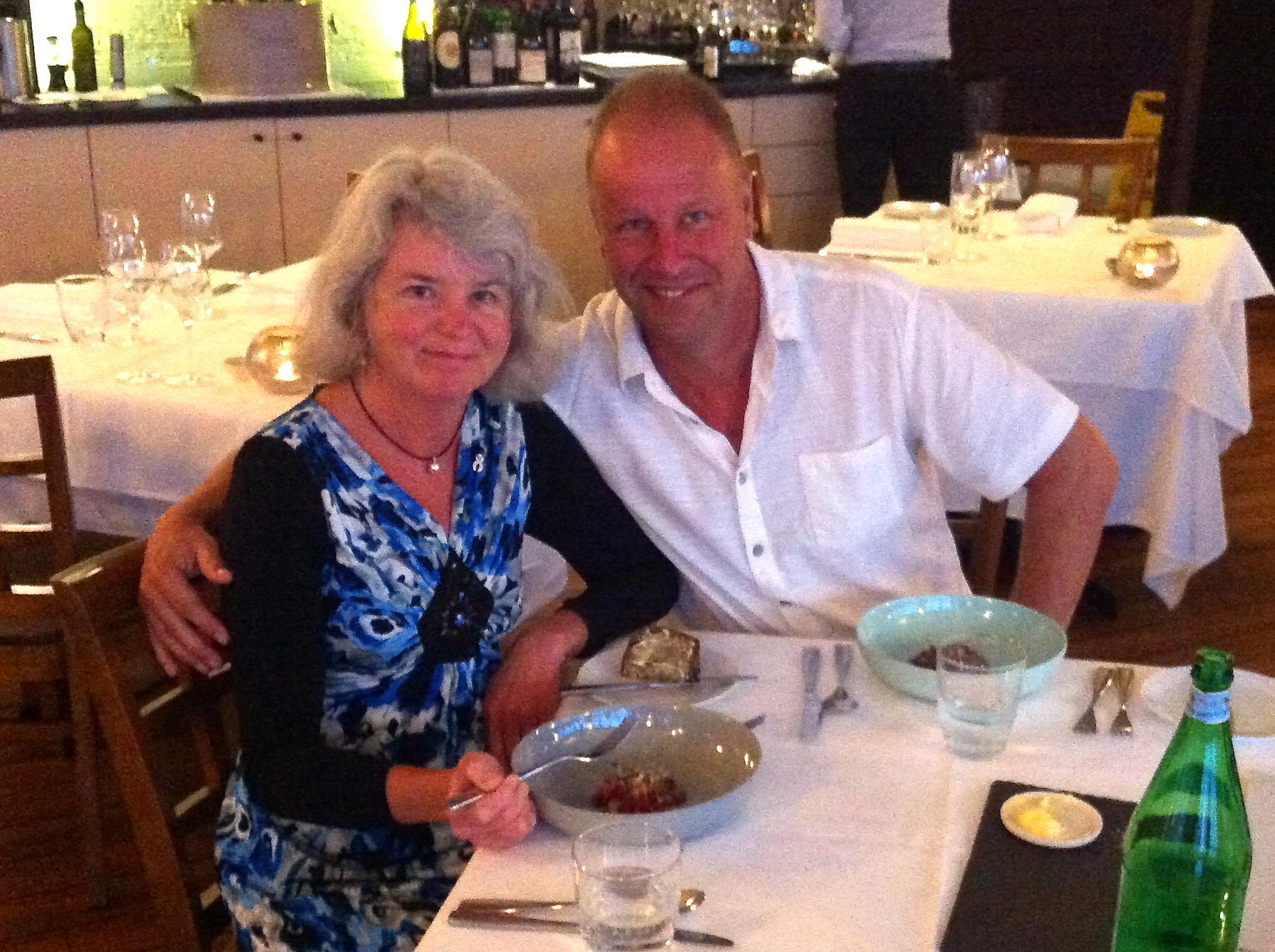
Amazing scan results NED

Dave & Fiona‘No evidence of neoplasm.’

This was the final sentence of the radiologist’s report on my CT scan from Tuesday. I went straight to wikipedia. Neoplasm wasn’t a word I’d been using. And my guess was right. There was no evidence of a tumour. Seriously? I don’t think I ever expected to read that. No evidence of cancer? I was stunned.

It’s exactly eighteen months this weekend since I was admitted to hospital, had my first CT scan, and discovered the tumour on my lung. It was about 24mm at the time. I’ve had two surgeries, twenty six courses of chemotherapy, and a number of CTs in this period. We’ve seen the tumour increase slightly to 26mm, then reduced to 18mm, to 12mm, and to 7mm in February this year. It went from a golf ball, to a pinball, to a marble, to a pea. A friend was praying it would shrink to a mustard seed next! Seems like it has. Whatever may or may not be there is too small to be seen by a CT scan. 🙂

We’ve discussed this with a couple of oncologists now. They were both amazed by how things have gone. My regular oncologist, who is very careful and conservative, kept saying this doesn’t normally happen with my type of cancer. I told him I was quite happy to be abnormal! Both oncologists have stated the importance of continuing with the chemo for now. The tumour is not evident on the CT scan, and this is a great outcome, but it doesn’t guarantee that I am cancer free. Cancer cells are microscopic. They could be anywhere and everywhere without having developed an observable tumour. The fact that my cancer was discovered at Stage 4 once it had already spread, and that cancer cells were discovered in other places, is a reminder not to make assumptions.

This scan result is the best result I could have received. To be described as N.E.D. – No Evidence of Disease – is a wonderful result. But it carries with it a huge amount of uncertainty. It’s like the results of a satellite image of a national park revealing no evidence of an escaped criminal. Higher resolution would be needed to gain more certainty. But even then he could be hiding behind a rock or under a tree and not observable. They cannot be sure with me. Even surgery, biopsies, and other types of scans have their limitations. They can identify cancer, but they can’t rule out it’s existence.

Our plan is for me to continue with chemo for a while and ask more questions. We’ll seek advice about other options for assessing how I’m going. We’ll seek to monitor the toxic and damaging impact of chemo. It’s clearly been the recipe for attacking my adenocarcenoma, but it’s leaving its mark on my body as well. I’m experiencing some neuropathic symptoms again, energy levels are low, fitness is harder to maintain, and I’m on medication to counteract significant side effects.

In short, the journey with cancer continues. In some ways I expect it will be harder. Until now I’ve had certainty. I’ve been sure of having cancer because I’ve seen the evidence. Now the evidence isn’t there. I assume there is still cancer present, and will act accordingly, but I can’t be sure.

My scan results are great news and I’m filled with gratitude to God for bringing me to this point. I thank you for your love, support and prayers. God has been listening and answering our prayers. He’s been kindly giving me time and opportunity to serve him. I’ve been praying since early last year that I would get to see Matt married and that I would get to be a grandfather. [I didn’t tell them this!] There’s now four weeks until Matt and Elizabeth get married and Luke and Sharon are halfway through their pregnancy. God willing, Fiona and I will also celebrate thirty years of marriage this year. Awesome. Thank you God for the days that you give me!

God has done a lot of work in me over this past eighteen months. In particular, he’s been strengthening my hope. Not hope in a cure necessarily, but a hope beyond cure. Hope that gives me reason to live, however many days I might have. Hope in life now and in eternity. Hope that is real even if cancer should one day overrun my body. Hope that sustains me through the ups and the downs. Hope grounded in God keeping his promises in Jesus Christ. My desire is for each one of you to know this hope. God is good.

Thank you again for your friendship, support, help, and generosity. As we continue this journey please rejoice with us and please keep on praying that God will remove all traces of cancer from my body. Please pray for wisdom for the medical specialists and for us as we decide what paths to take.

Macca
Where’s Walter?

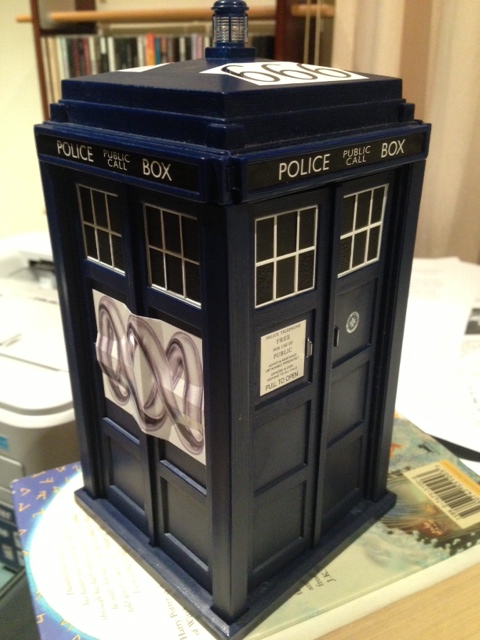
tardisA funny thing happened on the way to work today. Actually, it began last night when I was handed a small blue tardis containing a mobile phone belonging to ABC 666 Radio in Canberra. The phone was given a name this morning. It’s now called ‘Walter’. The full name is the Walter Burley Gri-phone! The phone is being passed from Canberra local to local. The ABC makes a call each morning to find out who has the phone and to line up an interview with Genevieve Jacobs. She doesn’t know who she’s going to interview one day to the next. I was the mystery guest this morning. My job is to make sure it’s in someone else’s hands before 10am tomorrow.

The interview was all over pretty quickly. I was asked about being a pastor at Crossroads, chaplain to the Brumbies, having Stage 4 lung cancer as a non-smoker, and writing a book on hope for those with cancer who aren’t being offered hope of a cure. I explained where hope can be found, both in practical things in this life and faith in God. Genevieve said how good it would be to interview me again in two years time. I agreed. I’d like to take her up on that!

Tomorrow morning won’t be as much fun. I have my first CT scan since February. This is my reality check to find out how the poison is working and where the cancer is up to. If you pray, please ask that the CT will be very clear, as I will probably need to have it without the usual contrast medications. Please also continue to ask God to take away the cancer. I’ve got an interview to do in 2015. Thanks.

Hope beyond failure

My flesh and my heart may fail,
but God is the strength of my heart
and my portion for ever.  (Psalm 73:26)

So true.

My body is breaking down. It’s the chemo today, but it fits with the trend. I’m not getting any stronger, faster, or fitter. I keep wearing out.

My spirit waxes and wanes. Today I ache and groan. Misery clouds the sunshine. Who knows about tomorrow?

I cannot depend on my flesh or my heart. They’re unreliable. They’re weak. They’re fickle. They’re false.

God is the one I can trust. He will not let me down. It’s not that I keep hold of him, but that he doesn’t let go of me.

fingerYet I am always with you;
you hold me by my right hand.
(Psalm 73:23)

Thank you God.

The pop-up cancer book. WARNING – this post contains cancer jokes!

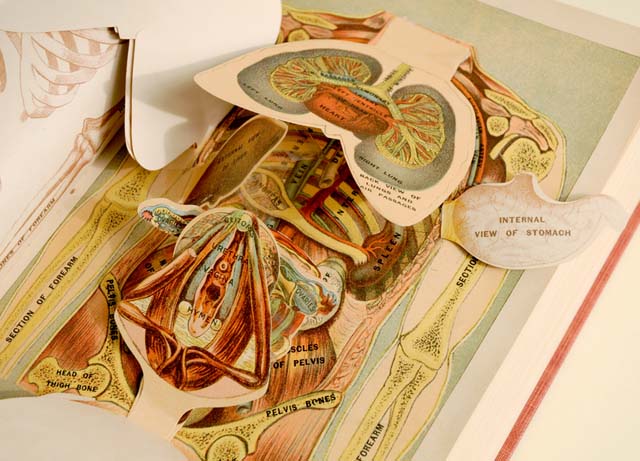
popupanatonmyA few weeks back I was engaging in a little banter on Facebook. The topic was the book I hoped to write and one friend quipped that I should write a pop-up book. What a great idea, I thought! And my imagination took off. Perhaps I could make a pop-up book, with all the relevant anatomy, and the cancer inside. The cancer could be surrounded by perforations. Surgery would be made easy. All we’d have to do to remove the cancer would be to tear along the dotted line. How easy would that be! How cool!

But then my brain went a little wild. I could try out some broad spectrum radiotherapy by putting the book in the microwave. Or targeted radiation with a magnifying glass in the sun. Or maybe settle for chemo by soaking the book in vinegar every two or three weeks. Acupuncture could really let us use our imaginations. Rehab could involve opening and closing the page quickly to strengthen the muscles and limbs. We could even trial some new therapies not yet approved by the TGA!

It doesn’t hurt to laugh a little, even at my own expense. I’m not making light of cancer or the severity of the treatments. I’ve got a year and a half of personal experience now. I’m applying the Jewish principle – Jewish people are allowed to make Jewish jokes. Well I have cancer. It’s not funny. But it probably does me good to laugh at it now and then!

Wednesdays were pretty normal

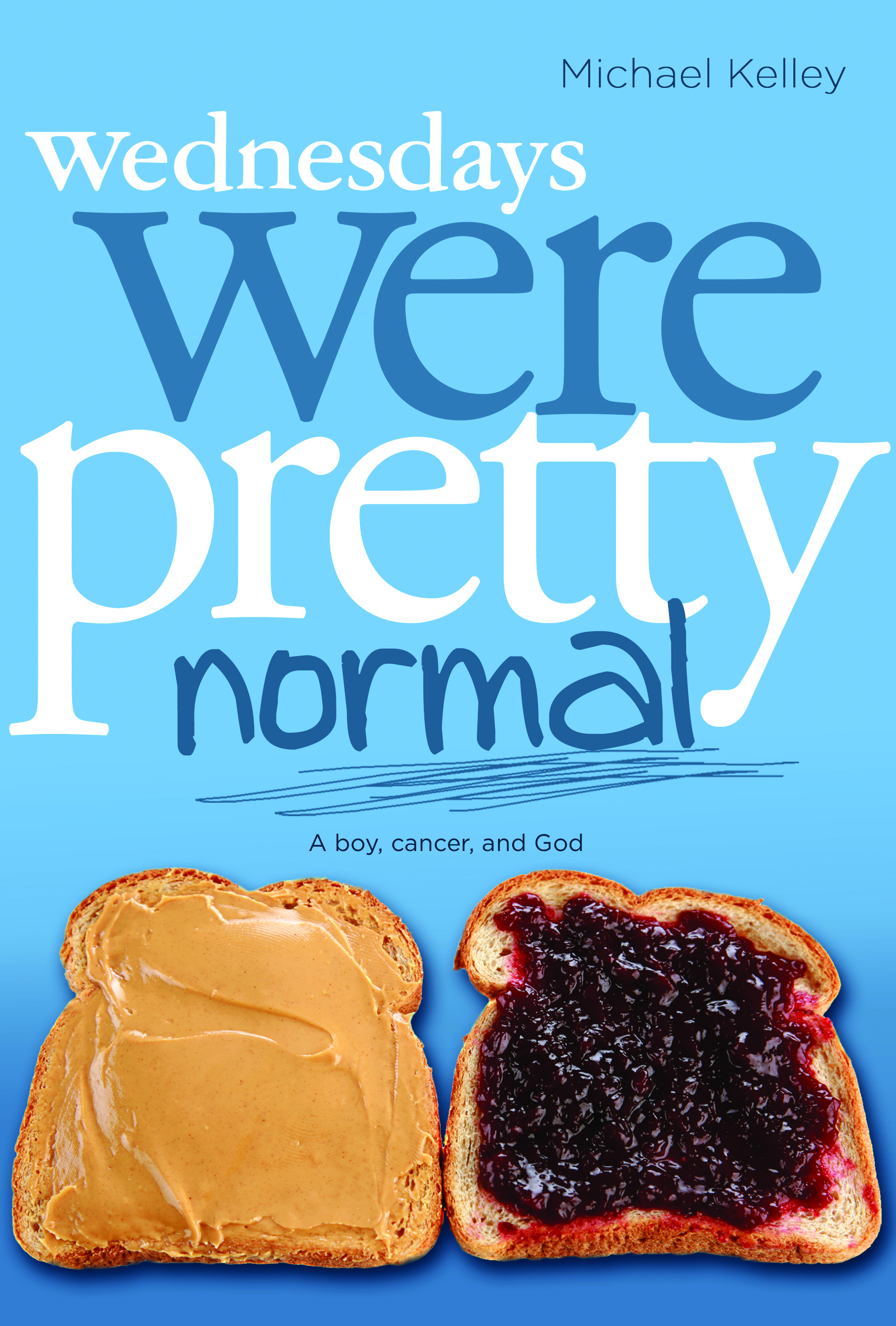
WednesdaysGreat title. Great cover. Great book! Wednesdays were pretty normal: A boy, cancer, and God by Michael Kelley has given me plenty to think about. It’s an open and honest story of a father wrestling with faith questions, after his boy is diagnosed with leukaemia. All the books I’ve read on cancer and serious illness so far, have been written by the patient themselves. This book, by the father, feels even more potent. When it’s happening to me, that’s bad enough, but if it were my own child, then I suspect I’d find it even harder. I especially recommend this book to parents who face the heartache of their children having serious illnesses. This is a battle ground for faith. Not just intellectual ascent, but struggle to keep trusting in God.

Kelley was trained as a pastor and thought he knew all the right answers to most problems. He figured he understood faith. It was a noun. Joshua’s cancer put this to the test. He began to realise it was something he needed to choose. It was one thing to have a set of beliefs, but another thing entirely to act on them in adversity. If God was truly in control of this world, then what did that mean for the evil and cruelty he saw and was now experiencing? He couldn’t pick and choose what he liked about God. If God was to be trusted for real, then this meant trusting him in the good times and the bad.

Faith and doubt are sometimes seen as opposites. Kelley shows how they are often part of the same experience. He’s on solid scriptural ground with this, quoting the man who came to Jesus in Mark 9:24, saying “I do believe; help me overcome my unbelief!” There is a humility in these words. The man’s failings are obvious. All he can do is trust in Jesus, because his own resources are lacking. Isn’t this the essence of faith – trusting in Jesus, rather than trusting in our own faith? I wonder how often those who are perceived to have a ‘strong faith’ are tempted to trust in the wrong thing – ultimately themselves? As Kelley writes…

What if our definition of faith is wrong? What if we have been putting faith in our own ability to have faith? What if real faith is not necessarily absent of questions and doubts; what if real faith is more about what we do with doubt than whether we have it?  (p33)

As Kelley describes the impact of chemo on his boy, I find myself feeling most of what he describes. He speaks of the toxic impact, the drugs, the side effects, the pain killers. He also describes the psychological impact, the emotional pain, and the spiritual questioning. Why are these things happening? He introduces us to the experience of Job in the Bible, and his quest to find answers from God. Job puts his challenges to God, and yet God chooses not to answer them. Instead, through four chapters, God makes himself known. Not why, but who, is the answer God gives.

Never once did God crack the door of eternity and say, “See this whole thing started when Satan came walking in here…” Never once did He take Job into the future to show him the good that would come from his struggle. Never once did He reveal the way He would redeem Job’s pain. Never did God show Job one of the billions of Bibles that would be printed in the future, all containing his story. Not one single answer to Job’s specific questions. Just descriptions of himself.  (p50)

Kelley shares his ongoing struggles to find evidence of God’s love. The circumstances of pain seem to argue against God being loving towards him. Where is God when he’s needed? Why doesn’t he fix things up when he’s asked? He writes…

I didn’t need a Jesus who was sleeping in the boat while the storms raged around His friends. I needed a Jesus who was turning over the tables of sickness and disease and calling out cancerous cells like they were demons.  (p56)

I can certainly relate. What a great picture! But, if we only look to our circumstances for proof of God’s love it can easily seem like God has given up on us. We need to remember how acquainted Jesus is with human suffering. He didn’t offer sympathy card platitudes. He shared in our pain and he shed tears like us. He faced rejection, betrayal, torture and death. He bore our sin in his body. He took the judgment we deserve. Here is compelling proof that God is not remote, that he hasn’t abandoned us, and that his love is profoundly deep.

Kelley shares the breadth of grief he experienced in dealing with his son’s cancer. The dreams that were shattered and the plans unfulfilled. He speaks of losing his identity, his sense of significance, and becoming poor in a variety of ways. The experience of Joshua’s sickness and treatment was hugely demanding. It took Kelley to the ends of his resources, and it was then that he began to picture himself more accurately. When career and health and achievements and family life are all altered and threatened, then the truth about ourselves comes into focus. It’s only when the things we’ve clung to to define ourselves are stripped away, that we are freed to see ourselves more clearly in Christ.

We learn in this book about how God has brought healing to Kelley through his son’s illness. God revealed to him sicknesses that he didn’t know he had.

It’s brought to light my shallowness. It’s brought to light my idealistic view of faith. It’s  brought to light my dependence on circumstances and my reluctance to accept responsibility. It’s brought to light my love of all things material.  (p146)

God taught Kelley many lessons about patience. Patience is faith that waits. Treatment for childhood leukaemia is a long term process. Even after the words remission were used, chemo had to continue for the remainder of three years. In the midst of their pain and exhaustion, the family kept looking ahead in hope, knowing that they couldn’t have what they wanted, just yet. Living in the western world leads us to expect instant gratification, and the church has also bought into this trap. So often God says to wait. He has good things for us, but we must wait.

There were many things in this book that stretched me. The big issues for me had to do with the nature of faith. It made me realise that there are times when I assume I’m exercising faith, when in reality I’m probably not. It’s just that I become used to the routine, what’s coming up. This is familiarity rather than faith. Faith is about looking to God when the routine is blown, when the expectations are shot, when I can’t control the circumstances. It’s also about recognising God’s hand and provision in the routine and mundane. This book has reminded me that passive faith isn’t really faith at all. Faith is active and we need to fight for it.

As the Apostle Paul wrote to his protege so long ago…

10 … (some) have wandered from the faith and pierced themselves with many griefs. 11 But you, man of God, flee from all this, and pursue righteousness, godliness, faith, love, endurance and gentleness. 12 Fight the good fight of the faith. Take hold of the eternal life to which you were called when you made your good confession in the presence of many witnesses.  (1 Timothy 6:10-12)

Hope beyond cure

‘Cancer free to no hope in less than two weeks.’

This was the headline to the post I read on a cancer forum yesterday. How could things change so quickly? The truth is, they hadn’t. There’d been a bad case of miscommunication.

I browse these forums from time to time. I can’t do it daily. I find it too sad, too overwhelming. People are sick, confused, powerless, dying, and so often lacking in hope. Every day there are desperate cries of anguish. There are pleas for prayer. There’s the outpouring of grief. Sometimes there’s an explosion of anger at the merciless killer, cancer.

As I read the headline above, it clarified in my mind what it is that I so want to communicate. It’s what I’m praying my book will achieve. My goal is to offer hope beyond cure.

Don’t get me wrong, I’m 100% pro-cure. I want my cancer to completely disappear. I pray that it will and I pray the same for others. I’m excited by medical advances and new discoveries. I absolutely love hearing that someone with cancer has no evidence of disease anymore. I love the hope that comes with this pronouncement. In a sense, life can begin again. A new chapter with a new outlook.

Yet when the prognosis is bad, when all attempts at medical intervention have been exhausted, when prayers have not been answered as we might wish… what then? Is there hope still? Or has all hope been exhausted?

Is cure the ultimate hope for those of us with cancer? Is this what we hope for beyond all else? I don’t know really. I haven’t asked enough people. My guess, is that we have a range of hopes. But I’m concerned if the hope of a cure for cancer is where we stop.

What happens if we are cured? We go back to life. Not as normal. More likely as radically changed people. But then we’re likely to get sick again. It could be the recurrence of cancer. It may be something else altogether. We may recover and we might keep recovering, but there will come a day when we won’t. Death will catch up with each of us eventually.

What then of hope? Is it a meaningless platitude? Was Nietzsche right when he wrote…

In reality, hope is the worst of all evils, because it prolongs the torments of man.

Or is there hope yet for those facing death? This is such an important question and yet so often it doesn’t get asked. We become so consumed with life here and now, that we don’t pause to consider the inevitability of our death. I may not have cancer when I die, but I will still die. Is there hope for me? Is there hope for any of us?

19 If only for this life we have hope in Christ, we are of all people most to be pitied. 20 But Christ has indeed been raised from the dead, the first fruits of those who have fallen asleep.  (1 Corinthians 15:18-19)

God’s Word tells me that the answer is YES! There is hope beyond death and it’s found in Jesus Christ. I long for people to know the certainty of this hope. This is a hope that stands on the evidence of the resurrection of Jesus from the dead. If Jesus is alive today, then there is hope beyond cure. There is hope beyond death.

Trust me I’m a Cancer Patient

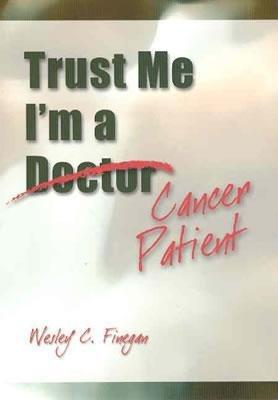
trust-me-im-a-cancer-patientTrust Me I’m a Doctor Cancer Patient by Wesley Finegan is a detailed manual for understandings symptoms of cancer, and it’s various treatments and side effects. Finegan worked for a number of years as a doctor with an interest in patients with cancer, before being appointed as a consultant in palliative medicine. Three years later, he became a cancer patient himself. People suggested that he would know all about this, but he had never been a patient before and he still had much to learn. He shares his wisdom in this book. This is the predecessor to his similarly structured book, Being a Cancer Patient’s Carer: A Guide. This book contains forty five chapters and each one follows the same practical structure (TANDEM):

The doctor says
Think
Ask
Note
Do
Explore
More information (pages viii-ix)

The first section of the book is focused on understanding Pain. It discusses the different ways that pain can be assessed, including the classic: ‘What number between 0 and 10 would you give your pain, with 0 being none at all and 10 being the most you could ever imagine?’ I remember being asked this so many times in hospital and usually finding it difficult to differentiate in the 3-7 range. However, there was one occasion when they ripped out my chest drain, that I understood what a 10 felt like!

Good assessment of pain is necessary for good management of pain. In many cases there are a range of pain management options available, so it is important to tune it to its effectiveness, side effects and so on. There has to be teamwork between the patient and doctors to get this right. Others not involved in your health care should not be allowed to interfere or change treatment, as this could be very dangerous. Pain killers need to be very carefully managed. Sometimes there are different means of administering the pain medication. The patient may be able to wear a patch, or be attached to a machine that limits the dose while they self-administer.

The second section of the book documents a long list of Physical Problems that may be associated with the disease or treatments. The list includes: loss of appetite; constipation; depression; diarrhoea; itchiness; sore mouth; difficulty sleeping; constant tiredness; weakness; and many more issues. I can identify personally with all these above. In my case, they are some of the side effects of the chemo, rather than symptoms of the cancer.

The beauty of this book is that you can look up whatever chapters may be relevant at different times. There may be times when I’d look up a number at once, and others that probably wouldn’t get a look in. Many of the chapters contain helpful diagnostic check lists to help you understand what is or isn’t happening to you. You are also encouraged to document pain and symptoms so that you can refer back when things reoccur. This help to recognise patterns, changes, and sometimes alleviate fears when things can be demonstrated to have minimal or temporary impact.

Section three focuses on Personal, Social and Spiritual Problems. Some of these chapters are unlikely to be read in advance by a patient. For example: I am expecting Bad News. You’d have to be very quick off the mark, getting onto this book! However, others offer great advice for further down the track. They deal with some pretty heavy issues, from early ones, such as How to tell my Children the Bad News down the track to I want to make a Will or Euthanasia, living wills (advance directives) and resuscitation.

It’s probably not wise or helpful for people in early stages of cancer to dwell on some of the final chapters. There’s no point and it’s probably not helpful to be rushing into thinking about worst case scenarios. But there will be other chapters in this section worth dipping into early on. Two that have been particularly relevant to me have dealt with thinking through complementary therapies, such as acupuncture, and a chapter on issues relating to returning to work. The 3rd last chapter deals with thinking about spiritual needs. Personally, I wouldn’t leave this until the end, especially in case the end comes earlier than anticipated.

This book would provide an excellent resource for medical students, doctors, nurses and other health professionals engaging with cancer. I’d also recommend families who have someone going through cancer, to get hold of a copy, as a reference book for all to read as relevant.

Journey with cancer 29 April – Hopeful

Dear family and friends,

Chemo number 24 today. I’m becoming part of the furniture in the chemo ward. The time still seems to stand still while I’m there. But today’s visit was made quicker and more enjoyable by my friend Jim Ramsay accompanying me on the visit and making conversation about all sorts of things.

I will have another treatment next month and then a scan to check on what’s going on inside. This will be a bit different as they will scan without the contrast, due to my recent allergic response. I’m praying this will work okay and they can still get some accurate data to go on. We’ll work out afterwards whether the chemo continues or not. Likelihood is that the chemo journey will continue for a while yet.

I’ve just returned from an unusual and fruitful two weeks on the south coast. Week one, I spent on my own and the next week I was joined by the family. The plan was to make a start on writing a book. I was hoping to do more research, come up with a book outline, proposal, and get a draft of a couple chapters out of the way. I thank God that he enabled me to achieve a lot more.

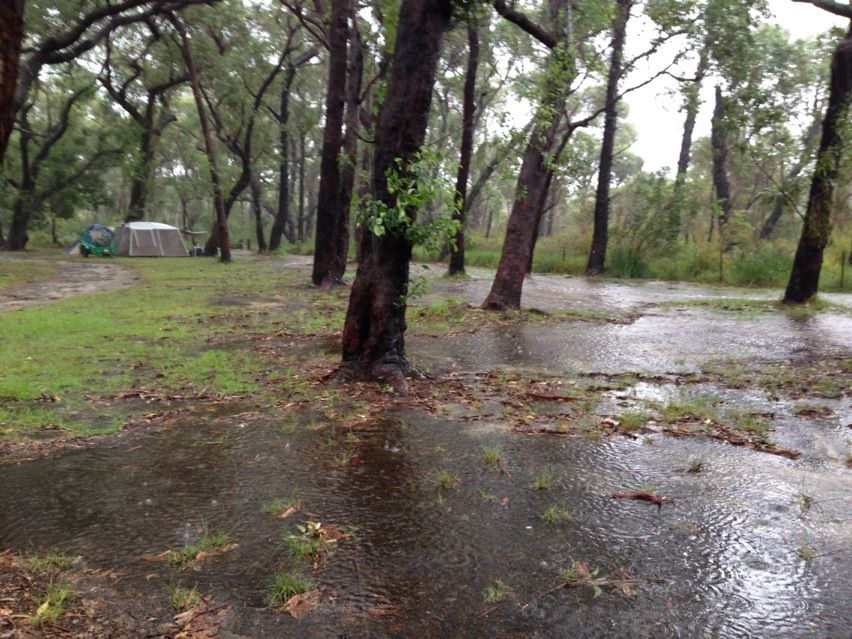
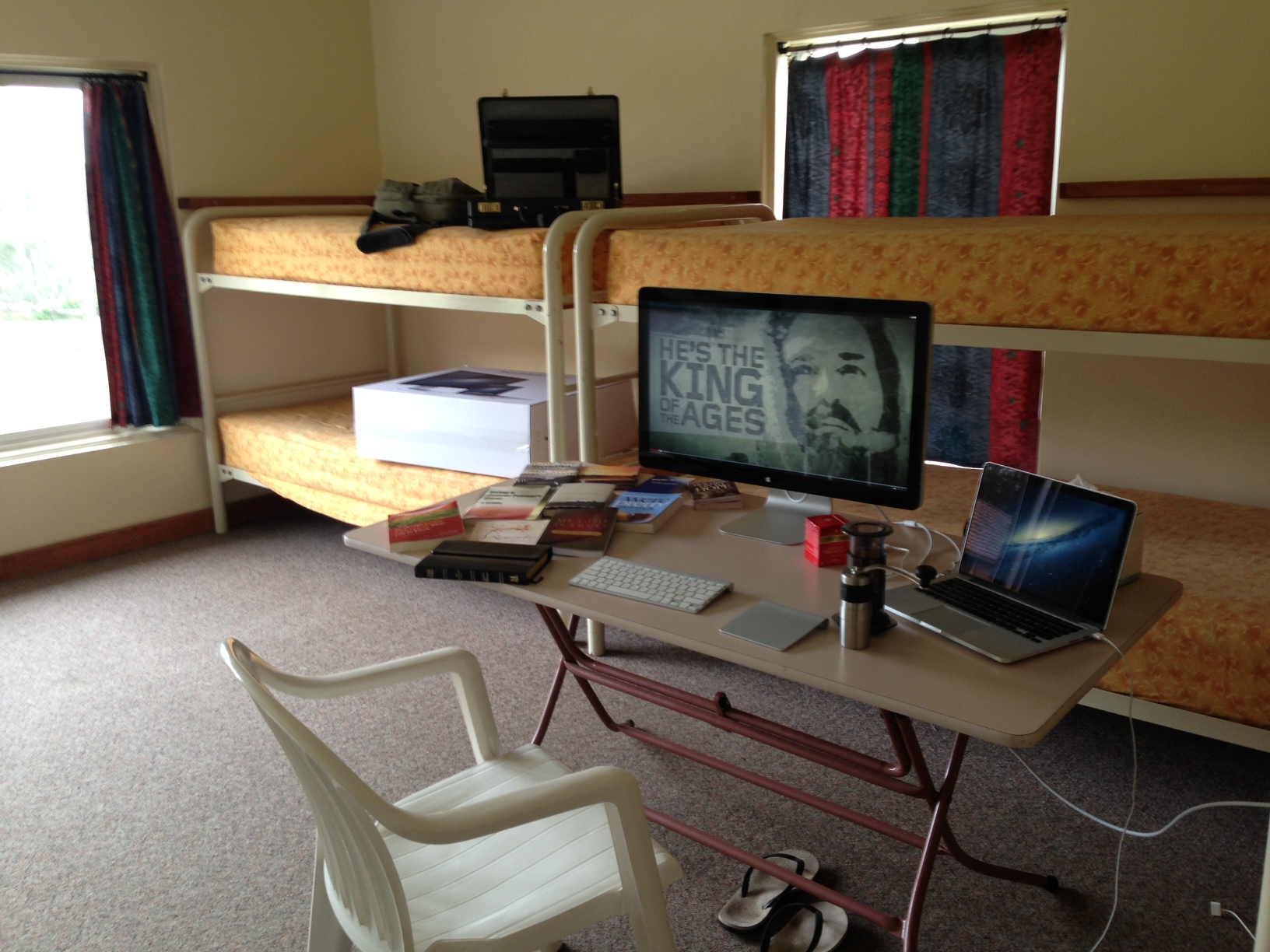
burill_2It was fun to work at the beach, though it always threatened to be distracting and give me plenty of alternatives for procrastination. I enjoyed some times working in a hammock chair, with kookaburras laughing nearby, listening to the sound of the surf, and sheltering in the shade of the trees. The biggest help to concentration was the huge amount of rain, flooding, driving winds and pounding surf over the weekend. It gave be no options but to stay indoors and tap away on the computer keyboard. I worked out how to make a nice cup of coffee with my Porlex and AeroPress. There was no TV to distract me and I managed to catch up on some sleep. God was good to me.

The idea of a book has been on my mind for a while, but it had been too daunting to know where to begin. Some suggested cutting and pasting some of these posts inside a front and back cover. That certainly had been tempting and I think I’d like to compile them some day as well. But I felt burdened to identify what gives me hope in the face of cancer and to share this with others. It was hard to get going, but once I did, I became lost in the world of the book, and started to enjoy the opportunity to write.

Midway through the time away I submitted by proposal, outline and two chapters to a publisher for them to consider. I received the welcome news a few days later that this publisher had agreed to support me in this project. They’ve assigned me an editor to help me work on it, and subject to them approving the final product, they will publish and distribute this book. I’m very excited about this! It gave me the incentive to knuckle down and complete the first seven chapters, Parts 1 and 2, roughly 20,000 words.

This is an outline, of where things are heading, God willing:

LIVING WITH HOPE
A journey with cancer and God

PART 1:  LOSING HOPE

1. Hopeless news
2. Hopeless dreams
3. Hope matters

PART 2:  HOPE RETURNS

4. Hope in medicine
5. Hope in understanding
6. Hope in lifestyle
7. Hope in relationships

PART 3:  DEEPER HOPE

8. Hope in God’s grace
9. Hope in God’s promises
10. Hope in God’s people
11. Hope in God’s goodness
12. Hope in God’s work
13. Hope in God’s healing

PART 4:  ENDURING HOPE

14. Hope in death
15. Hope in life
16. Hope in eternity

APPENDICES

That’s the plan, God willing. If you pray, then I’d ask you to join me in asking God to bless this project for his glory and people’s good.

Thank you,

Dave

Letters from the land of cancer

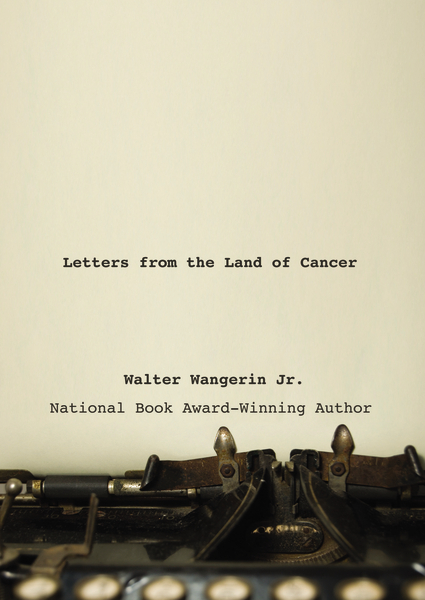
wangerinI began reading Letters from the Land of Cancer by Walter Wangerin Jr. nearly a year ago. However, I didn’t finish it. I think I felt a little overwhelmed by it. The topic, the intensity, the unrelenting discussion of cancer and death. I wasn’t yet ready to read 22 letters by a man reflecting on his cancer. I set myself the project of reading it all this week. If I was planning to write a book about living with cancer, then I needed to consider what it felt like for the reader. This probably makes me one of the more motivated of his readers. We share the same cancer, a similar profession, same number of children, grandchildren (that’s right – I’m awaiting delivery in October), love of motorcycles, and more.

The obvious difference is that Walter Wangerin is a world-class, well-respected, writer. That makes WW a WWW! (Grandad joke!) He’s a teacher of English literature and a prolific writer of fiction. He’s a wordsmith. He’s eloquent. He’s poetic. His writing is thick, like treacle. It’s deep, intense, heavy, profound. His words are disturbing, niggling, probing. But they’re also light and fresh and invigorating. They stir the soul to action. At least, they did mine. I’ve written so many notes and comments and questions.

I found this book hard to get into, but harder to put down. I wanted to know what happened next. What did you learn? How is your treatment? How is your wife? What are the doctors saying? What are the results of the next scan? How does this mesh with your faith? What is important to you now? What will you make your priorities? What’s it like to be on oxygen 24/7? Why don’t you pray for your own healing? Why do you look forward to death? How do your family feel? What leads you to say your cancer is an adventure? Or a blessing rather than a battle? I suspect that I was vicariously travelling this journey with him, and that these are more questions about me than him.

This book worked for me. It pushed me to reflect, to reconsider my own experiences, to look again to God. It’s heavy, but he’s writing about heavy stuff. Reading 22 letters one after the other is a bit like watching a still frame motion picture. You know, the ones that show a seed being planted, a sprout emerging from the ground, a plant growing to maturity. All frame by frame. One picture per day. It’s like that. We see the outside journey experienced by the Wangerins, and we also learn of the inner journey, the impact on his mind and heart, his faith and convictions.

I’m not sure who I’d give this book to. My dad has read it, so I’ll have to ask him his thoughts. I suspect you’d want to be a serious reader to tackle it. I also suspect you’d need to be willing to be confronted heavily with your own mortality. It’s no coincidence, that I wrote the poem, Pain, while reading this book. It’s an intense book.

Following his journey throughout this book, I fully expected the final chapter to be posthumous. Perhaps, a final word from his wife, speaking of Walter’s passing. But no. It’s all Walter. The cancer was discovered in 2005, the final letter of the book written in 2008, the publishing date 2010. As soon as I finished the book, I hurried to my computer and googled his name. So when did he die? According to his website he has a speaking engagement on May 31 in West Virginia, so I’m guessing not yet!

I’d love to meet this man. I think we’d have a lot to talk about!

Ministry in the NT

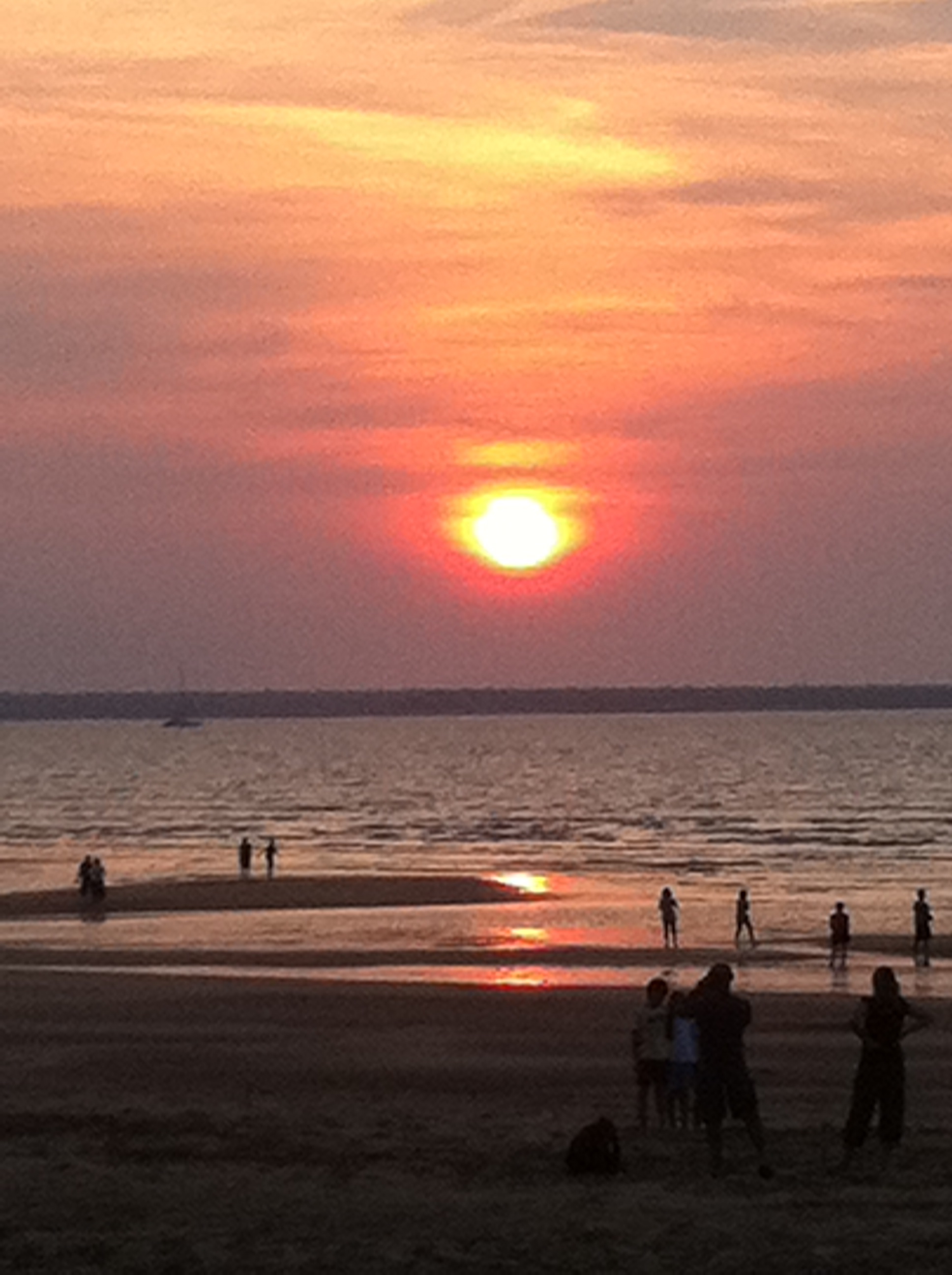
IMG_0725I was totally persuaded we should head to the NT to begin a new ministry. Everything was pointing in that direction. The burden on our hearts. The enthusiasm of family and friends. The great need. The neglect of so many. The way everything was falling into place. A job, a house, schools, coworkers. A replacement back home. The time was right. The lights were green. The decisions were made. The belongings were gone. Only the farewells to go. Except for… cancer.

My God! What were you thinking? Why did you send us down that path? What’s the story? Did you change your mind? Were you playing tricks? Wasn’t it hard enough without raising our hopes and then dashing them?

I asked God to please explain. He reminded me of these words…

In their hearts humans plan their course,
but the Lord establishes their steps.  (Proverbs 16:9)

We make plans. We have to. It’s wise. It’s prudent. But we don’t have all the information. Our decisions are always provisional. We have enough trouble controlling ourselves, let alone every other factor.

Yet God is all knowing. God is all wise. God is all capable. God is all good. He has plans for us that we do not know. We plan our course, but the Lord establishes our steps.

I’ve learned that God does want us ministering in the NT. Not necessarily the Northern Territory, though we do not know. But in New Territory, that he had mapped out for us. Who would have thought that I’d be able to minister to people with cancer, as a fellow traveller? Who’d have thought I’d ever write anything? How could we have ever been brought to trust God in the face of death, except by being brought right to the edge of death itself? He has broadened our awareness. He has deepened our empathy. He has shown us deep comfort, and called us to share.

These aren’t the plans I’d have chosen. It wouldn’t have been in my script. In so many ways it doesn’t seem right. Yet what seems so wrong, God uses for good. This is God’s way. He did it long ago with Joseph…

You intended to harm me, but God intended it for good to accomplish what is now being done, the saving of many lives.  (Genesis 50:20)

He did it supremely with Jesus…

23 This man was handed over to you by God’s deliberate plan and foreknowledge; and you, with the help of wicked men, put him to death by nailing him to the cross. 24 But God raised him from the dead, freeing him from the agony of death, because it was impossible for death to keep its hold on him.  (Acts2:23-24)

And he promises to do it again and again…

And we know that in all things God works for the good of those who love him, who have been called according to his purpose.  (Romans 8:28)

We will keep making our plans. We need to do this. We’ll seek wisdom. Weigh up the possibilities. Talk with others. Search our hearts. Seek the will of God. Pray and read the Scriptures. We will plan our course. God knows we must. But we will seek to do so, recognising that it is ultimately the Lord who determines our steps.

Ministry in the NT?

Yes!

Thank God it is happening!

Pain

maccapain
in my chest
an invader
yet part of me
sharp
dull
squeezing
grabbing
piercing
pulsing
throughout the day
as I wake at night
an ever present reminder
of my mortality

Our time is in God’s hands – Psalm 90

Teach us to number our days aright,
that we may gain a heart of wisdom.  (Psalm 90:12)

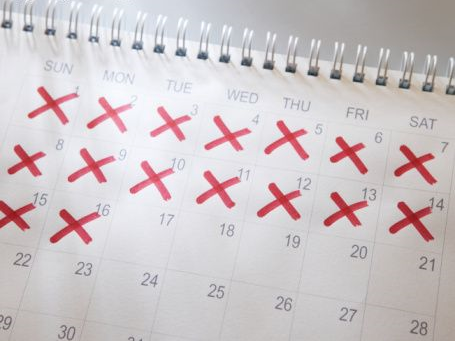
crosscalendarMy days are numbered. So are yours. There’s no point in denying it or ignoring it. It’s a fact we can’t overcome. What matters is how we choose to spend the days we have. Will we waste them away in meaningless trivia? Or will we make them count? My prayer is that I will number my days. Not literally count them down, because I don’t have sufficient information to do this. But understand deeply that they are limited, so that I use the time I have wisely.

I want my life to count for eternity, not by making a name for myself. It would soon be forgotten anyway. But by bringing honour and glory to God. By declaring his praises. By drawing people to his love and kindness. By showing people to the gateway of heaven, Jesus Christ. He alone is the way, the truth and the life.

In December last year, I celebrated a year since my cancer diagnosis in a rather strange and almost eerie way. I was invited to speak at the same conference I’d spoken at the year before. This was the conference I was attending when I was admitted to hospital. To tell the truth, I didn’t expect to be at another conference, let alone give the opening talk again. God had other plans! It seemed fitting to speak on Psalm 90. This is a psalm that highlights our weakness and mortality.  It calls us to fess up to who we are, to get real about our limitations, and to make the most of the time given to us. There is a rawness to this psalm and it spoke powerfully to my circumstances.

I believe it speaks to us all and the wise course is to consider it very carefully. I recommend you take the time to read over Psalm 90 and ask God for wisdom to help you number your days.

If you would like to listen to the talk I gave on Psalm 90 at the 2012 AFES staff conference, you can listen or download it here.

Being a cancer patient’s carer: A guide

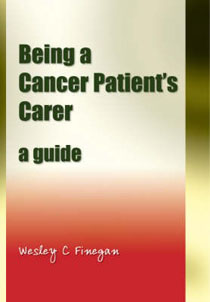
carerguideCancer is tough for the patient, but it’s also tough for those who care for them. It brings so many changes and challenges, and the carer is often as unprepared as the patient. Where does the carer go for help? Many hospitals have cancer support groups, open to both patients and their carers. There are numerous websites such as inspire.com and cancergrace.org that provide information, experience and support to patients and carers. You could contact your local cancer council or other cancer support organisation for help in finding support for carers. And you will find a wealth of informed practical wisdom in Being a Cancer Patient’s Carer: A Guide by Wesley Finegan.

Every person struggling with cancer relies on having carers. These people may be professionals such as specialists, nurses, and pain managers. They may also be personal friends or relatives, often a spouse or an adult child. A competent and compassionate carer is a great blessing. I am especially blessed to have a loving wife, who keeps herself well informed about the disease, treatments, possibilities, alternatives, and more. But then, not everyone with cancer is married to a doctor ;).

Finegan’s book won’t necessarily make someone compassionate, but it will go a long way to making someone competent as a carer. It’s hard to think of an author with greater credentials to write on the topic. He has MB BCh BAO MRCGP MICGP D Pal Med’ listed after his name! I’m not sure what they all refer to, but they sound impressive. More impressive again, is his experience. He worked in General Practice with a special interest in caring for patients with cancer. This led him to become a consultant in palliative medicine. In 1994 he became a cancer patient himself and in 2003 his wife developed cancer and he became her carer. These experiences have taught Finegan much and he generously shares his wisdom in this book.

This guide is intended for practical use. It’s well constructed and easy to follow. Each chapter – and there are 43 chapters, each roughly 4 pages long – is constructed around the acronym TANDEM. They begin with some basic facts to help people understand the particular problem being addressed and then the acronym is used to examine various issues from different perspectives:

T Think
You are facing new situations regularly as a carer. Hopefully I can help you think through the issues you might have to face.

A Ask
There is so much to learn. Where does one start? What do you need to know and who can tell you the answers? I’ll try and help you with some of the questions I have asked.

N Note
Making a note of a relevant detail now might save you a lot of difficulty remembering those elusive facts in a weeks’ time!

D Do
Here I will offer you some practical ideas that have been tried and tested by my patients and some that worked for Alice and me.

E Explore
Sometimes we want to know more or find out about something we would like to know about. I’ll try and guide you to the best sources of information.

M More information
If there is something that has not been said already and it’s relevant, you’ll find it here. (pages x-xi)

I’m not aware of any other books for carers that are as comprehensive and practical as this one. It begins with the first shock of diagnosis, then addresses a broad range of symptom, treatment, and care issues, before dealing with the difficult matters of failed treatment, dying, death and bereavement. It’s concerned for the well-being of the carer as well as the patient.

It’s probably too much to take in all at once, but the beauty of this book is that it’s so well arranged that you don’t have to. You can read whatever’s most relevant to you and your situation at the time. You’ll find it easy to come back to sections you’ve skipped over, if and when they become relevant. And you can follow the links and suggestions for more information or advice when needed. I would suggest consulting it regularly as different issues arise. Flick through the table of contents so you can see the scope of the book. It would also be useful to annotate the book with your own questions and observations, so that you can follow things up with the relevant people at another time.

If you are caring for someone who is going through cancer, then I highly recommend you get yourself a copy of this book. If you have cancer and want to support your carer, then you could purchase a copy for them. It’s readily available on line so you don’t need to worry about what bookshop to look in. You’ll appreciate it and so will they. Just let them know when you give it to them, that they’re doing a great job and you wanted to show your appreciation by giving them this book!

What cancer cannot do

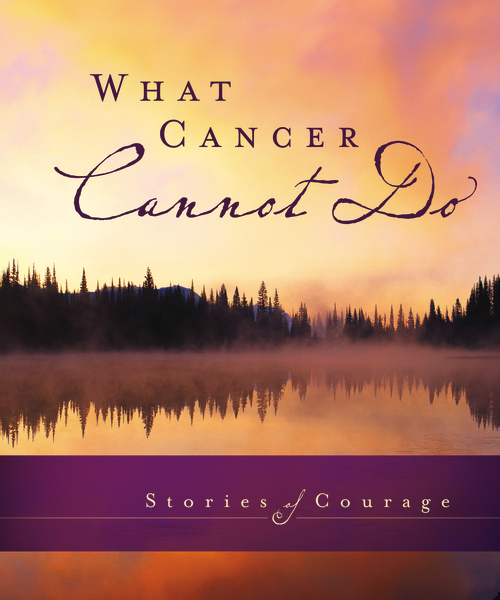
cancercannotdoPeople with cancer desperately need hope. They need a hope that’s real, that they can hold on to. They need reason to keep on going. They need inspiration to focus on what really matters. They need encouragement not to be overwhelmed by their circumstances. They need the cancer to get smaller and God to get bigger. If not physically, then at least in their hearts and minds.

Why do I say these things? Because I know them to be true in my own experience. Hope is the power to live and to live well. Lack of hope leads to despair and destruction. If we have genuine hope to offer people, then we have a life-enhancing medicine to share. This little book is such medicine.

What Cancer Cannot Do is designed to be given as a gift to someone who needs it. The inside cover has a page where you can write your and your friend’s names, much like a gift card. It’s an attractive book, full of colour. But the true beauty is found in the words. The book is divided into sections with the following perspectives on cancer:

It cannot cripple God’s love
It cannot shatter hope
It cannot corrode faith
It cannot destroy peace
It cannot kill friendship
It cannot shut out memories
It cannot silence courage
It cannot invade the soul
It cannot steal eternal life
It cannot conquer the spirit

These are words from the hearts of people who have journeyed with cancer. They offer encouragement and hope. They highlight the limitations of cancer. They share people’s stories. Stories of faith and hope and love making a real difference to people’s experience. Every one of the stories concludes with three or four poignant verses from the Bible. Each one is short and engaging. It’s ideal for people who are weak and weary and struggling to concentrate for any length of time. It includes wonderful testimonies like this:

Even if doctors were unable to control the spread of my bone cancer, even if I died, I would still have God’s love and I would spend eternity with him. (p113)

If you know someone who is doing it tough, who is struggling with cancer, who needs some encouragement, and won’t mind you offering the perspective of Christians, then why not get a copy of this little book to give to them? And just so you know, I’ve got a copy already!

No comment? On reflection, comment!

In my recent post on A pastor’s pride I initially finished it with a request for people not to make comments. I wrote much the same thing on the Facebook link. It wasn’t that I was seeking to stifle comment or engagement on the topic. It was more that the post was raw, the subject was deeply personal, and I probably felt more vulnerable than usual. In particular, I didn’t want people stroking my ego or denying my analysis. I just wanted it to sit there and be heard.

However, it’s not hard to get around my request, and I received a number of comments via Facebook messages or email! Many of these included appreciation of the candid honesty of the post or statements about how they had been moved to reflect on their own pride. Two comments stood out from the rest. One suggested that I shouldn’t stifle comment because it would confirm that I or the church (I’m not sure) was ‘controlling’. I certainly didn’t want to promote this perception, so I removed the last sentence from my post. The other was a comment on the phone by my father, who suggested that allowing comments was fundamental to the nature of my blog. I was seeking engagement on the issues I wrote about, and commenting was a good way to get people thinking and acting.

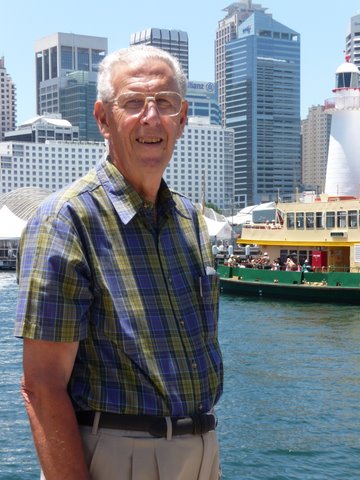
P1010221My father sent this to me via email as a personal letter and invited me to determine whether I’d post it on the blog as a comment. I’ve decided instead to include it as the centrepiece of this post. The last 2 years have been seen important developments in the relationship between my father and I. Mid 2011, he was diagnosed with Non-Hodgkins Lymphoma following the discovery of a large tumour in his throat. This led to a series of successful chemotherapy treatments that have removed any evidence of the disease. About the same time my father was going into remission, in December 2011, I was diagnosed with an incurable lung cancer. I know how shocking this has been to both my father and my mother.

One of the blessings of this experience is that we have grown closer, having a deeper awareness of what we’re both experiencing. I think this has strengthened our relationship in a range of areas. Not that you want to have both of us suffer from cancer to nurture the relationship, but it’s not a bad side benefit! My father will often discuss issues from my blog with me over the phone and sometimes post a comment on the blog itself. Sometimes he’ll make suggestions, sometimes he’ll share how it’s got him thinking, and he regularly forwards the posts to others. Here’s the comment he sent me today:

Dear David my beloved son,

When you first posted “A Pastor’s Pride” you concluded with the sentence “And I think I’d prefer that you didn’t write comments on this.” I note that you have now removed that request. As your father, I had chosen to ignore your preference on this occasion, and I think my decision to comment is supported by the comments now appearing from others. There are several reasons, but let me comment on just one.

Over the past year you have shared your journey with cancer with us in a very public way. Macarisms have included the pain and struggle, the ups and downs, the challenges and the changes of so many aspects of the personal, medical, emotional, relational, social, spiritual dimensions of what it has meant to learn that you have a terminal cancer. It is evident that the macarism has become a significant part of the new ministry which you are discovering and which God is growing in you. It is also evident that macarisms have been fulfilling the hope that you expressed in the very first post – “that people will be blessed as they read and think about life.”

One of the important additional ways in which people might find that blessing is by themselves giving expression to what they have learned or what has happened to them as they have read the macarism and thought about life. That has been evidenced again and again in the comments written in response to the diverse range of subjects that you have covered in your blog. Dealing with pride is one of those subjects upon which we all might do well to read and think and respond.

It is likely that I was participating in a prayer gathering on Saturday morning considering future directions for our congregation at the same time that you were writing your blog. An issue that greatly influenced my thinking and shaped my praying was so close to your writing. Given my many years as a pastor and wide experience, part of my praying was seeking guidance on what is the best contribution I can make to my church’s ministry in this place? It is not an easy question for one who is retired, and our denomination has some expectations about how retired pastors might support but not interfere in the life and current leadership of a congregation. A sense of pride about past ministry can very easily stand in the way of hearing what God is saying about the here and now of his word and call for today.

I noted, too, that whilst you were with your oncologist on Wednesday being reminded that you still have a terminal illness, I was at the Cancer Clinic having my sixth cycle of post-chemo “booster” Mabthera treatment. I, too, have been enjoying the congratulations of people for looking and being and feeling so well in remission. How easy it is to neglect the goodness and grace of God when things are going well for us.

I rejoice in the experiences that you have had during the past week, tough though they have been, and thank God for those persons who have been ministers of his grace to you in this recent encounter.

May God’s grace continue to minister to you, as you minister to others and as others minister to you and to us.

Book week

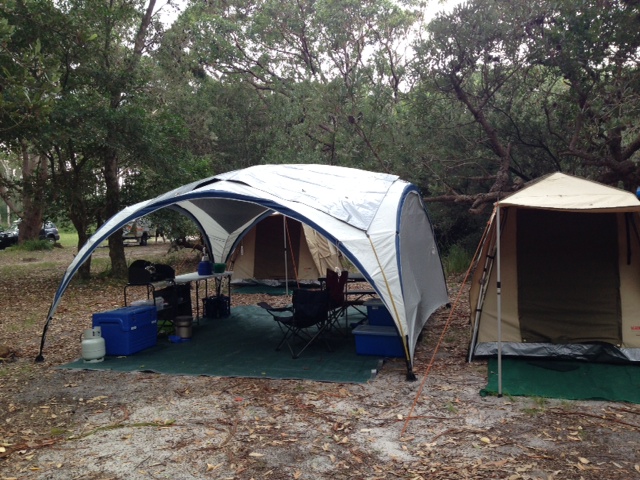
tentIt’s book week in the bush at Burrill. I’ve been looking forward to this week for some time. The time has come to consolidate my thoughts and have a crack at writing a book. I especially want to write something that gives hope to people who have cancer. There are few things more devastating than receiving a diagnosis of terminal cancer. Hope is sucked away and despair threatens to take over. My desire is to offer hope that is more than meaningless platitudes or wishful thinking.

burril_officeSo this is my hermit week. I’ve been given leave from family to set up at the beach. My new house is a tent and camping equipment. My new office is a cabin, trestle table, computer, big screen monitor, Bible and some good books. I’ve got my AeroPress, Porlex grinder, and fresh roasted coffee beans. Russell Morris is playing some good Aussie blues. The beach, the waves and the fish are waiting. Perhaps they can be my reward for inspiration and achievement!

I’ve done some praying, some preparation, some thinking, and some research. It’s time to stop procrastinating with posts like this, and get things happening. I thank God for the opportunity to write. I thank him for the humbling experiences of the past few days. It was important to be forced to acknowledge my pride and to seek God’s forgiveness before kicking this thing off. God has his ways of reminding me to depend on him!

Dear God, please guide me through this process. Please work through me to bring real hope to many who desperately seek it.

A pastor’s pride

Late last night I wept. I lay in my bed and I cried until my pillow was wet. What brought it on? It suddenly hit me how proud I’d become. My heart was full of me. And this blog was a big part of it.

I wasn’t sure if I should write this post. It could be just another example of what brought me to tears. A proud response to my response to pride. But I need to write it. I want to apologise and I want to change. I think my pride had become public, and thus so should my confession.

My dramatic realisation of my own pride hit me hard. It was a bit like hearing that I had a tumour. I was devastated, the tears flowed, and I prayed. The kids were away, Fiona was in another room, and I cried out on my own to God.

I’d just written a post telling pastors to be humble and yet my own heart was hard. I was writing as the preacher, not the practitioner. I was pronouncing who pastors should and shouldn’t be, but it was me that needed to listen. Here was I, doing all my reading, making all my comments, implicitly claiming to be an authority, telling others what to do, and I wasn’t doing it.

Sometime last night God told me. I don’t know how exactly, but he made it very clear to me that my heart was the problem. I’d been getting the message all week, but I wasn’t listening.

On Sunday I joined in the memorial service for my friend Bronwyn. On the front cover of the order of service, were printed these words:

Not to us, LORD, not to us but to your name be the glory, because of your love and faithfulness.  (Psalm 115:1)

I was so convicted as I read and heard these words. These words seemed so true on the lips of Bronwyn, but as I mouthed them they seemed so hollow. In fact, even during the service I found my thoughts and tears and prayers wandering away to my self and my family instead.

There were so many people at that service to thank God for Bronwyn, support the family, and pay tribute to her life. I knew so many of them, and they kept coming up to me saying how good it was to see me looking so well, and how they’d been praying for me, even daily. And my heart swelled up. I’d become the prayer celebrity. Oh, how I hate it how my heart can take what is good and twist it so badly.

On Monday and Tuesday I joined a planning retreat with the staff of our church, and it did my head in. I was struggling with the effects of chemo, but that wasn’t the real problem. It was being in a situation I was so familiar with, but in a role that was totally foreign. I’d been the leader and now I wasn’t. It’s not that I wanted to be. I’m very grateful for Marcus, and for the grace that all the team have shown me. But I realise that my heart is still catching up with my head.

On Wednesday I went to the oncologist. It had been a while and I’d been doing so well. I wanted him to tell me that I was the best patient he’d had, that he’d been wrong about me, and that we could expect the cancer to disappear very soon. I now realise I’d become proud of how I’d been going. I’d had 23 cycles of chemo. Most people don’t have more than 5 or 6. I’d been battling cancer and winning. I could succeed where others had failed! How stupid and how arrogant. The oncologist made it clear that I still have a terminal illness. I’d done nothing, but fill myself with pride.

Thursday and Friday I’d been writing. Telling people what to look for in a pastor, what a pastor should be like. What I should have been doing was listening to the word of God that I was preaching. I should have been looking into the mirror and seeing what I looked like. We’d actually read these verses on our staff retreat only days before:

22 Do not merely listen to the word, and so deceive yourselves. Do what it says. 23 Anyone who listens to the word but does not do what it says is like someone who looks at his face in a mirror 24 and, after looking at himself, goes away and immediately forgets what he looks like.  (James 1:22-24)

And I’d been doing exactly that! It took the words of two friends to point it out to me. They don’t know it, but they were angels, messengers from God. They were true prophets, for they told me the truth from God. They weren’t so rude as to tell me outright, but their gentle and wise questions helped me to see the truth clearly last night. My heart was proud and it needed to change.

Last night I prayed and I cried, asking God to forgive me and to change me. Thank God, he is gracious and merciful and forgiving. My ongoing prayer is that God will gently work within me to give me humility.

I’ve written and published this because I believe that I owe you, my reader, an apology. Please forgive me my pride.

Little acts of kindness

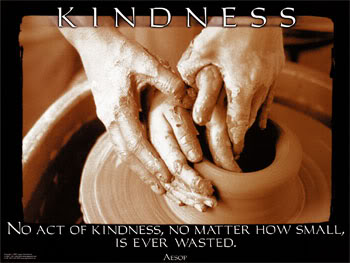
kindnessLittle acts of kindness may not seem like much, but they can go a long way and have a lasting impact. They bless the recipient and that’s good enough. But sometimes they can become contagious. What you receive, you pass on to others. If others get caught in the acts as well, and they become infected, and the kindness continues … WOW! You could even start an epidemic of kindness. How good would that be?!

I don’t watch much so called ‘reality’ television, but there’s something about the acts of kindness shows that tugs at the heartstrings. Sure, they’re more BIG acts of kindness, like doing up the back yard, or changing rooms, or winning the holiday of a lifetime. But how good is it to see people who are down on their luck, getting a treat. To see the tears of joy. To share in the experience.

We can create our own experiences. We don’t need lots of time, money, skills, expertise, or television crews. We can start with little things. And the place to start is with our eyes wide open. It begins with seeing beyond what’s going on in our own lives and noticing the needs of others. As the Apostle Paul wrote:

…in humility value others above yourselves, not looking to your own interests but each of you to the interests of the others.  (Philippians 2:3-4)

Who do you know who could do with a little act of kindness? Someone doing things a bit tough? A single mum struggling on her own… or dad? Someone recently separated from their spouse? An unemployed friend? A neighbour whose yard has got beyond them? Is there someone you haven’t seen for a while? Perhaps they could do with a call or a visit? Who might appreciate a meal dropped around? Or the kids minded for the afternoon? Or some movie tickets? Maybe your mum has been overwhelmed by all that’s going on and you could pay for a massage for her? Do you know individuals or families who might never get invited out? Why not have them over to your place?

Sometimes people’s problems don’t go away. Bereavement and loss. Chronic pain or fatigue. Depression or anxiety. The serious illness, such as cancer. It may seem like there isn’t much we can do. But, let me encourage you to think again. Maybe there’s something you could offer that would just make things a little easier. In fact, it might make all the difference in the world. It could be as simple as popping over for a cup of tea. Maybe you could offer to read the Bible with them or pray for them. If you offer anything, please make sure you follow up on it. Little things show that you are still thinking of them. They indicate that you care. They demonstrate commitment. They’re not hard to do. Little acts of kindness can make a very big impact.

I thank God for the little things that people have done for us. For the gifts, the visits, the calls, the practical help, the messages. And the prayers. A little prayer to our awesome God is a kindness of huge proportions. Thank you.

Easter Sunday and new life for Bronwyn

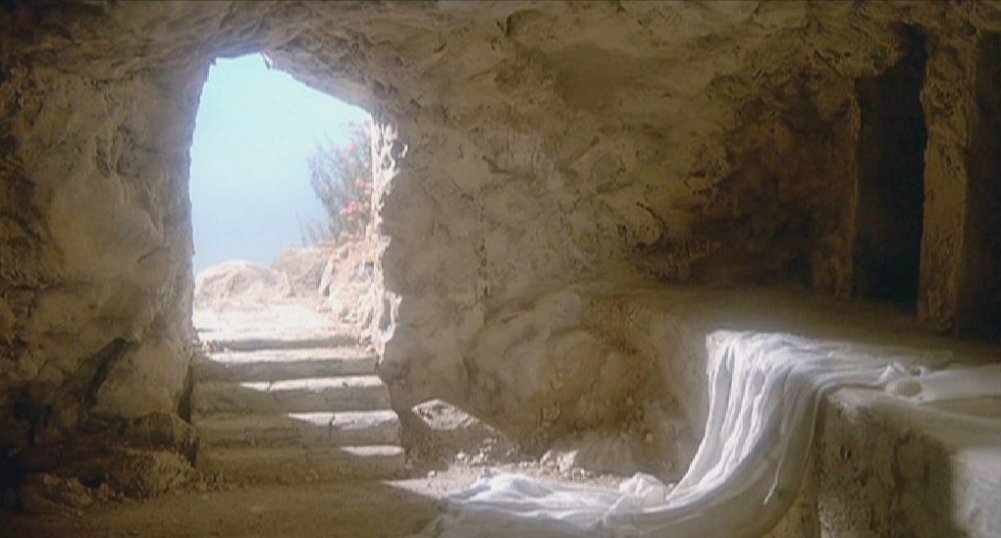
emptytombEaster Sunday. Resurrection Sunday. The day Jesus Christ rose from the grave and first appeared to his disciples. The first day of the week. The first day of a new life, a glorious future, for all eternity, with the God of all grace. What a day! Then and now.

chins2For you, Bronwyn, a day of glorious change. Like a butterfly, transformed from a caterpillar, only far more beautiful. All that was damaged and dying has been resurrected in wonder and joy. Weakness has been raised in power. The perishable has clothed itself with the imperishable. The earthly has been replaced with the heavenly. The mortal with immortality. Death has been swallowed up in victory. The sting of death has been taken away.

You now dwell with your God and Father. You are his precious child. Your tears have been wiped away. Your cancer has gone. You are suffering no longer.

Nothing could separate you from the love of Christ. Neither death nor life, neither angels nor demons, neither the present nor the future, nor any powers, neither height nor depth, nor anything else in all creation, could separate you from the love of God that is in Christ Jesus our Lord.

You are now with Christ, which is better by far.

You are loved. You are missed. Your husband, your children, your family, your friends, your brothers and sisters in Christ.

You inspired so many with your kindness and love. Your joy in the midst of sorrow. Your fighting spirit. Your love for your family. Your patient endurance in the face of suffering. Your concern for others. Your testimony to Jesus. Your passion for God’s glory. Your strong hope of life in God.

Bronwyn, you have shown us faith and hope and love in the face of death. We thank you. We miss you.