My own personal breakdown

I’m 50 years of age. I feel 70. My doctor tells me that my body is behaving like a 70 year old. It’s a little scary. Stage IV lung cancer and 15 months of non-stop chemo can do that to you.

The lightest of exercise elevates my heart rate. I get breathless quickly. It’s hard to suck in enough air. It takes nothing to raise a sweat. A crushing feeling in the chest. Shooting pains from the lungs.

I get pins and needles in my feet and hands. Aches in my ankles. Heaviness in the soles of my feet. The signs of peripheral neuropathy. So I only wear shoes when I have to – nothing new there! We reduce the chemo and add some antidepressants. Folic acid and daily cymbalta seems to do the trick.

Headaches are common. A band round the head. Pulsing pain in the temples. Light-headed, dizzy, a cloudy feeling. Couple of panadols, it is.

Blood pressure out of control. Topping the charts one day. Normal the next. Too high overall. Fears of heart failure, strokes, heart attacks. Not to mess around with. We’ll see if daily ramipil antihypertensives bring things down.

Fatigue is growing. I can’t seem to wake up. Some days I spend more time in bed than out of it.

Rashes and redness. Blemishes and acne. Sometimes I feel like a 70 year old going through puberty. The dexamethasone steroids help for a while (don’t tell ASADA), and then we can try some claratine antihistamines, or we can just wait for it to go away.

The weight coming on, then going off, then going on more. Metabolism out of control. Unable to eat. Unable not to eat. The cravings. Self control, diet, careful eating, not too much. Sometimes I think, who cares.

The blood sugar. Getting way too high. Diabetic levels. What next? No lollies, no soft drinks, no chocolate, no jams. That’s all the food groups. What’s left? Exercise more. Get the heart rate up. Burn more sugar. Use up the fuel. I’ll probably have to take a drug for this problem too!

Add an allergic reaction to the contrasts used in the CT scan. Because I came out in hives, they won’t allow me to take it any more, lest I have a more serious anaphylactic reaction.

And then there’s just the overall feeling of being heavily poisoned. Argh!

Where will it stop? When will it stop? I don’t know. But I have a choice.

I can dwell on my problems, be filled with self-pity. I can hide from others, ignore the good, forget God, complain and grumble. I can become a completely selfish pain in the bum. I’ve got a ticket that gives me permission to become a totally self-obsessed whinging prat. It’s called cancer. It lets you get away with all kind of stuff.

Or…

photoI can take responsibility. Get enough sleep and rest. Exercise even when I don’t feel like it. Show restraint with my diet. Be patient when the side effects are worst. Push on with what hurts knowing that it’s an absolute privilege to receive the medical care I have available.

I can rejoice. I can give thanks for my beautiful wife, my fantastic children, my supportive friends, my praying church. I can thank my doctors and nurses. I can praise God for life and hope. I can look outward and love. I can share and give. I can serve and support. I can wonder at the many doors God has opened, for every one that’s closed. I can stop wishing for change and change my wishes. Better still, I can fall on my knees and thank God for his amazing grace to me in the Lord Jesus Christ.

My life is not my own. It was given me by God and I was bought at a price. I’ve already died to myself so that I should live to God. And I can still do this, whatever bits of me don’t work! If God gives me days and months and years, then they are for him. To show perseverance in the face of suffering. To exercise faith in the midst of doubts. To offer kindness when I feel mistreated. To be a friend when I’m lonely. When I am weakest, God can shine through in strength.

I can learn from the Word of God…

Therefore, in order to keep me from becoming conceited, I was given a thorn in my flesh, a messenger of Satan, to torment me. 8 Three times I pleaded with the Lord to take it away from me. 9 But he said to me, “My grace is sufficient for you, for my power is made perfect in weakness.” Therefore I will boast all the more gladly about my weaknesses, so that Christ’s power may rest on me. 10 That is why, for Christ’s sake, I delight in weaknesses, in insults, in hardships, in persecutions, in difficulties. For when I am weak, then I am strong. (2 Corinthians 12:7-10)

Good Friday and the curse of cancer

Cancer has been front and centre this last week. Relay for Life on the weekend, with cancer survivors and carers, and the memory of loved ones now gone. Surgery today for our niece to remove any traces of melanoma. A funeral this morning for my friend’s mum, who lost her brief battle with lung cancer. Not long before there was Tony Grieg, and then Peter Harvey, and there have been so many others. Mums and dads, grandparents, cousins, uncles, children, bosses, neighbours, colleagues, passing acquaintances. Cancer is a cancer on our world. It invades our lives. It breaks our hearts.

Next Friday is Good Friday. A strange day, when we remember a man dying. In fact, I remember two men dying on this day. On Good Friday 2007 – it was the 6th April – I lost a good friend. He was only 29 years of age. He’d only been married for two years. We’d go to the gym together. He was my neighbour. He stood in the rain and helped us bury our family pet. He’d encourage me with stories – all true. He was my brother in Christ. Cancer took hold of my friend and it didn’t let go. I’d conducted his wedding and, soon after, I conducted his funeral.

It’s not right that a parent should have to view the death of their child.
It’s not right that a wife should lose a husband after only 2 years of marriage.
It’s not right that a man shouldn’t live to see his 30th birthday.

It’s not right. God knows it’s not right. I wondered, after my friend’s passing, if we’d be able to look on Good Friday as good ever again. How could it be good when every Easter we’d be reminded of the death of our friend, or husband, or son?

crossWe need to reflect on the death of the other man. He’s the reason we call it Good Friday. Jesus, who wasn’t much older than my friend. Jesus, who never married. Jesus, whose mother looked on in anguish at his death. Not a good Friday for Jesus. Nailed on a wooden cross. Between two criminals. Publicly ridiculed. Despised and rejected. Forsaken by his followers. Crying out, Eli, Eli, lama sabachthani? My God, my God, why have you forsaken me?

The worst of Fridays. The brutal execution of an innocent man. A genuinely good man. A just and merciful, compassionate and courageous man. But even more, this man Jesus was the Son of God, the Messiah, the Lord, and the Saviour. He was Immanuel, God with us. The death of Jesus was no accident. God wasn’t ambushed by the might of the Jews or Romans. There was a plan, a costly plan, a purpose to the death of Jesus. Something that would turn the worst of Fridays into the best day ever.

God had promised this day, centuries before, through the prophet Isaiah:

The servant grew up before God—a scrawny seedling,
a scrubby plant in a parched field.
There was nothing attractive about him,
nothing to cause us to take a second look.
He was looked down on and passed over,
a man who suffered, who knew pain firsthand.
One look at him and people turned away.
We looked down on him, thought he was scum.
But the fact is, it was our pains he carried—
our disfigurements, all the things wrong with us.
We thought he brought it on himself,
that God was punishing him for his own failures.
But it was our sins that did that to him,
that ripped and tore and crushed him—our sins!
He took the punishment, and that made us whole.
Through his bruises we get healed.
We’re all like sheep who’ve wandered off and gotten lost.
We’ve all done our own thing, gone our own way.
And God has piled all our sins, everything we’ve done wrong,
on him, on him. (Isaiah 53:2-6 The Message)

On that first Good Friday, Jesus took our sin upon himself and he bore the punishment. He paid the price. He won our forgiveness, our freedom, our life with God. As Jesus hung on that cross, it should’ve been me… and you. Jesus, the Righteous One, took the judgment we deserve. He endured it, himself, so that we don’t have to.

It’s because of that first Good Friday, that we can look on the day my friend died as a very good day. My friend knew the forgiveness of sins that comes through Jesus. He trusted Jesus, not only in his life, but unto death. He knew the significance of Good Friday and the sure hope of Resurrection Sunday. As I saw the lifeless body of my friend in the hospital on Good Friday, I recognised that he was no longer there. He’d already departed. He was now with his Saviour. Death no longer had hold on him. Cancer did not have the final word. That word belonged to Jesus.

Sober celebrations

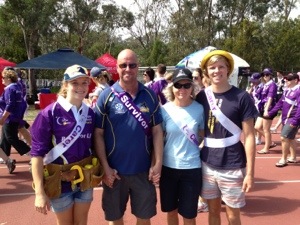
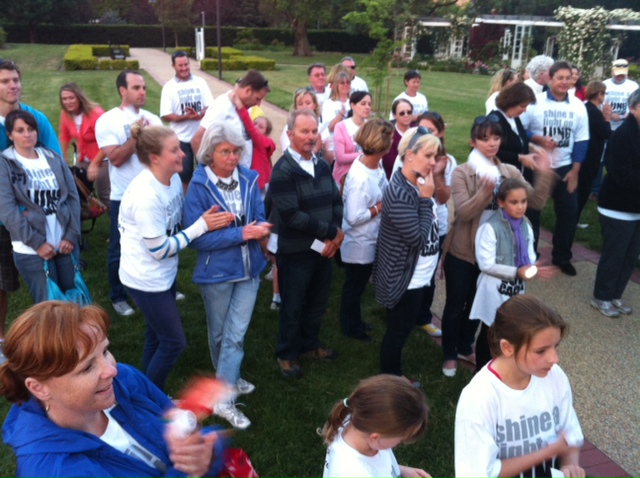
20130316-140139.jpgGrace has organized a team of 24 for the Relay for Life again this year. There are hundreds of people walking, running, hanging around. The theme is:

Celebrate. Remember. Fight Back.

There’s not much to celebrate about cancer. Only last night my very good friend lost his mum after a relatively short battle with lung cancer. It’s a cruel killer. It takes life and twists and distorts it. It ruins other lives and the sadness spreads. It reminds us that life isn’t how it should be. It’s a sign that our world has been subjected to disease, decay, and death and we groan for things to be set right once more.

Last year I walked the survivors lap and felt rather like a fraud. This year I celebrate a year of survival, another year of life. With God’s help, the support of family and friends, and powerful chemo, I’ve been fighting back.

I remember some who are no longer with us. Like my friend’s mum, my wife’s boss, my cousin, a number of friends, and countless friends’ friends.

More importantly I remember that God has fought back so that we can celebrate life forever through Jesus. We might beat cancer in this life but only God can enable us to beat death for eternity. Please turn to him while you have breath!

With love,
Macca

Fatigue

fatigueI’ve gone from sleeping 6-7 hours a night for years and years, to needing more than 9 hours a night. Some nights I need 11 or 12 and still wake up feeling tired. This on top of occasional nanna naps in the afternoons. It takes a huge effort in the mornings to open the eyelids and if I don’t get a shower and a coffee then I probably spend the first hour of every day sleep-walking.

No doubt it’s another effect of the chemo and, maybe, the high blood pressure caused by the chemo. It comes with its aches and pains, inability to concentrate, and the frustrations that go with both. I think it’s given me some small insight into how chronic fatigue sufferers might feel. Friends of mine have been struggling with fatigue for years and years. Some have given up any hope of life ever being different. Some are barely able to lift themselves from the bed, and time with family and friends leaves them exhausted. It’s difficult to know how to offer support sometimes, because a visit or phone call can deplete their already limited energy. One friend told me it takes days to recover from half an hour with a well-meaning visitor.

There’s also the difficulty of an illness that people can’t see and very few understand. Just go to bed earlier. Start exercising more. Change your diet. Snap out of it. It’s all in your head. I reckon you’re making it all up. This is some of the helpful advice that people get given. And then there’s often the person with the success story. My friend visited this specialist, started on that diet, discovered acupuncture, went to such and such healing service, moved to the beach… and now everything’s ok.

The reality of this life is that sickness, sadness, and suffering are all part of our experience. We ache and groan as we long for things to be better. But the truth is that things don’t always improve. More often than not they get worse. Old age sees our breakdown and decline. We don’t heal as quickly, illnesses become more complicated, some things become permanent. Our body struggles to recover, our mind isn’t what it used to be, and our spirit eventually loses the will to live. Sometimes it seems like life is one long tragedy. It might start well for some, but it always seems to end badly.

What a pessimistic post! Is this what fatigue does to me?! Let me presume to share a few thoughts with those of you who are struggling with fatigue.

Don’t give up hope. Maybe there will be a change for the better just over the horizon. Perhaps someone will understand what’s causing it. Maybe there is something that will help, even a cure. Keep looking, keep on trying. Pray. Talk to God. Ask God to take away your pain and suffering. Ask friends to pray for you or with you.

When everything feels dark and hopeless, cry out. Let your family and friends know how much it hurts. Ask for help, comfort, love, kindness. And call out to God. Your Father in heaven knows what you need. Maybe God wants you to depend more on him. If it’s not his intention to take away your suffering at this time, then ask him to help you trust in his grace. Ask him to strengthen your trust in his goodness. Ask him to help you draw near to him for comfort, even if he seems so remote.

Are there things you can do in your fatigue? Do your energy levels let you get up from time to time? How can you best fill that time? Is it your family who needs you most? Are you able to encourage others in your weakness? Can you spend time praying for other people? Can you make a list of things that you can do when you’re down and others when you’re up? Have you asked how God can use you in your frailty? Maybe you could brainstorm some ideas or chat to others about this.

But don’t compare yourself with others. “At least there are people who are suffering more than me!” How does that help, really? “Why do I suffer so much when those around me do whatever they please?” Self-pity, jealousy, anger, bitterness will only make things worse. There is one who is well acquainted with suffering, who understands what you are going through, who can help. His name is Jesus. He was betrayed, rejected, beaten, ridiculed, and crucified. He took the punishment we deserve in his body and paid the price. He endured all this in confident hope that God would raise him from the grave, as the first fruits for all who would follow after him.

Focus your hope on the future. Not just for this life, but for eternity. Keep your eyes on Jesus and remember the promise of a day with no more pain, suffering, fatigue or death. As your earthly body decays remember that God has in store a new, complete, and perfect body for all who trust in him. There is hope. God guarantees it!

For we know that if the earthly tent we live in is destroyed, we have a building from God, an eternal house in heaven, not built by human hands. Meanwhile we groan, longing to be clothed instead with our heavenly dwelling, because when we are clothed, we will not be found naked. For while we are in this tent, we groan and are burdened, because we do not wish to be unclothed but to be clothed instead with our heavenly dwelling, so that what is mortal may be swallowed up by life.
(2 Corinthians 5:1-4)

A year in the blogosphere

Tomorrow marks the 1st anniversary of macarisms. What a year! I never dreamed of reading a blog, let alone writing one. I didn’t expect I’d have much to say, or that people would be interested… maybe I don’t and they aren’t! But really, I’m just a preacher dressed up as blogger and now I write more than speak. I thought I’d take a look back and see what’s gone on. Here’s a a bit of a picture of a year in the blogosphere.

Posts  153 (3 a week)

Words  138,864 (posts average 900 words)

Followers  260 (thank you!)

Views  103,679 (2000 a week)

Most viewed posts

An open letter to Sam Harris  6,797
Chappo’s gain  1,829
Religious crap!  1,561

Books read and reviewed  52 (1 a week)

Most referrals

Facebook  33,181
Twitter  895
jeaninallhonesty  354 (thanks Jean, and many others who’ve passed things on)

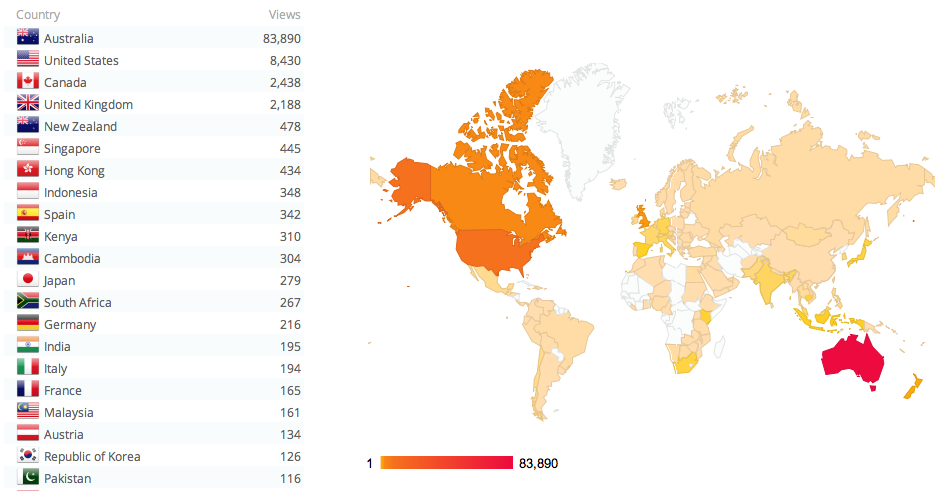
blogmapCountries reached  137 (who do you know in Greenland?)

It’s not about the stats, but I do find them interesting. The reach is amazing. I never imagined being read regularly by people in so many parts of the world. While most readers are in Australia, there are people reading from countries that I didn’t even know existed. And I won the HSC Geography award! It’s a privilege to be a blessing to people I’ve never met from places I’ve never visited.

I love it when people post comments on the blog. It’s encouraging to get feedback. I’ve approved every comment that I’ve received, other than spam and some bigoted comments that someone made about atheists. Some people find the process of replying to the blog a bit difficult or intimidating, and many more leave comments about the posts on Facebook.

Most times I write something, I send out an alert via Facebook and Twitter. I don’t have many Twitter followers (and I don’t really understand it anyway!) but Facebook has been very fruitful in spreading the word.

I’m humbled that so many people have been following my journey with cancer and offering so much encouragement along the way. The pledges of prayer have been overwhelming and I’ve felt very supported in this way. I’ve also met many people, from all over, who are battling cancer and serious illness or supporting others who are. Mutual encouragement has been a true blessing of macarisms. I thank God when I hear of others doing it tough who are being helped by reading my reflections on suffering, faith, and other matters.

It’s fascinating to see what people get into. Why were so many people interested in reading my thoughts on death and resurrection written to Sam Harris? I still don’t know for sure if they got through to Sam. I wasn’t surprised how many people wanted to read about Chappo given the widespread love and gratitude for this man. I was very surprised at the enthusiasm for the post on religious crap, but then maybe it shows that people are keen to get past all the junk to the heart of the matter.

The past year has been the year of reading and reviewing books. I doubt I’ve ever read as many, and I certainly haven’t summarised, reflected upon, and reviewed books as systematically. This has been a big help to me in consolidating my reading. It helps overcome the chemo brain to some extent. There’s a variety of books and they don’t interest everyone, but many pastors have commented that they appreciate the heads up. My tip to people starting out in their professional study or working life (especially if they’re involved in ministry) is to read aggressively! By this I mean, scribble all over your books, write notes, summaries, questions, ideas to question further, points to apply. If you take an extra few hours to write a review summary of the better books you read, I reckon you’ll thank yourself for doing it later!

One year of macarisms. Thank God! What does next year hold? More of the same, or different, God willing! I’d love ‘journey of cancer updates’ to report continued shrinkage and I long for the day when I can post:   IT’S GONE!!!   I understand that my heavenly Father hears our prayers and he will only give me what is best, and for this I thank him. My prayer is that macarisms will continue to be used by God to bring blessing to others.

I’m also keen to write a book. So many people’s lives are touched by cancer and so many find it very hard. Many are lacking any hope for this life or the next. I’m asking God to enable me to write on Living in Hope and I’d love it to be available to every person with cancer, every carer, every family affected, all oncologists, nurses, social workers, pastors, friends and any one else. But I need to write it first! Please pray that God will enable me to do this.

Thank you all for your support!

Journey with cancer 17 Feb 2013 – chain reactions

I’m still rejoicing in Tuesday’s amazing news of my cancer shrinking. This has renewed my commitment to persevering with the chemo. Why else would I submit to being poisoned every three weeks, AND pay thousands each time for the privilege?

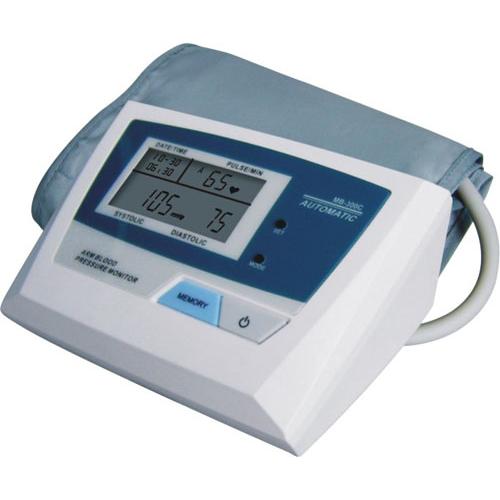
Digital Sphygmomanometer-500x500But Wednesday gave me a sober reminder that there are other costs. I stopped by a National Heart Foundation stall and let them take my blood pressure. I’m not sure who got the bigger shock – them or me? It was 180 over 106. This was off their charts and they told me I was high risk for a stroke or heart attack. Thanks guys! I checked it again at home. It wasn’t quite as bad, but still serious. I’ve been checking each day since and it’s not good.

I think it’s easy to explain. I don’t think it’s lifestyle or diet. It’s almost certainly the chemo, specifically the Avastin. So we may need to make a choice. Give up the Avastin or introduce new drugs to reduce the blood pressure. When the chemo is shrinking the cancer, I don’t feel like messing with the chemo cocktail. But I don’t want a stroke either, so I may have to take on another drug, and live with its side effects and repercussions.

There’s nothing simple about this cancer journey. If you pray, please ask God to grant us and the specialists wisdom to know how best to proceed. Please ask him to protect me from harm caused by high blood pressure. And please ask him to help me not be anxious, but to keep trusting him in all things.

Thanks,

Macca

Journey with cancer 13 Feb 2013 – surprisingly good news

It’s been some time since I posted on the progress of the cancer. I guess there hasn’t been much to report. October was the last time I had a scan. The cancer had been stable. I’d been feeling fairly well. In fact, for two or three cycles, the chemo hadn’t knocked me round too badly and I’d only been bed-ridden for a day or two.

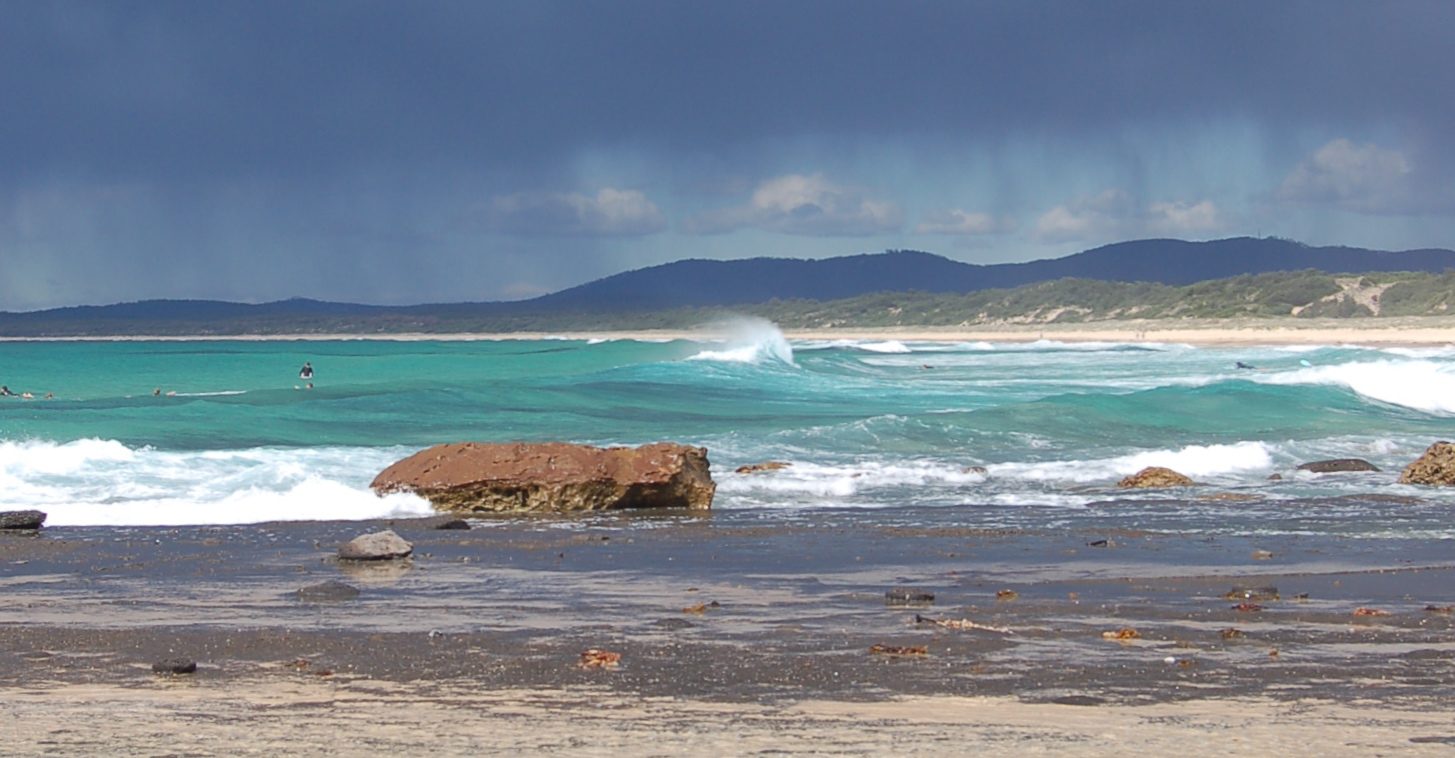
During the summer months I’d enjoyed some wonderful relaxing time with the family. We’d been camping at Burrill, enjoying the surf, catching some fish, chilling out in the hammocks, chatting round the campfire, learning to cook cakes in my ‘Shuttle Chef’. I stopped reading books for a while, slowed down on the blogging, played a bit of real life scrabble, and slept lots. We spent a couple of awesome weeks in Sydney house-sitting for friends. During this time I learned to ride a stand-up paddleboard (sort of), helped the kids to learn to wakeboard while I had heaps of fun driving the zodiac on Sydney Harbour. I didn’t even have to interrupt the Sydney holiday because we were able to arrange chemo in Sydney. Then, another week or so camping in Burrill. I had long walks on the beach, caught some salmon, flathead and whiting, cooked some more cakes, and even went out in the surf. For the first time in two years I went out on my bodyboard and caught some decent waves. It was exhilarating! Who would have thought a year ago?! Mind you, I suffered the next two days, as my ankles swelled up in such pain that I could barely walk. But, it was worth it!

Now I’m back at work. I’ve re-joined the team that I built, but in a new role, with new patterns, new responsibilities, and new challenges ahead. I will need to be disciplined in getting rest, taking time off, tuning out from the demands of ministry, saying ‘no’ to opportunities, and staying focused. But I’m excited at the possibilities.

marble-in-hand-cmykOn Monday I had a CT scan to check what was happening with the cancer. I must admit, that I’d been expecting this scan to show growth. It’s over a year now since I began chemo and it’s unusual for people with my cancer to show no progression for this long on this treatment. But, it’s not about statistics. Everyone is unique. And my results stunned everyone. Fiona rang for the results yesterday and we celebrated them over dinner. The tumour had shrunk again. After being stable for months, it had shrunk from 12mm to 7mm! Awesome! I’ve gone from having a marble inside me to having a pea!

peaThe oncologist this morning was smiling! In fact, he was pretty chirpy. They just don’t expect to see further shrinkage once things have plateaued on maintenance therapy. Plus, the neuropathy seems under control. So much to be thankful for.

A miracle? Yes, it is really. I’m not healed, but I’ve been healing in so many ways, and that is very encouraging. Why is this? The right drugs? It seems so. The combination of Alimta and Avastin isn’t that common, but in my case it’s proved to be very effective. It justifies the huge costs of the treatment. Is it good food, reasonable exercise, de-stressing and refocusing on life? I’m sure this has helped. And what about prayer? Can my improved condition be linked to the prayers of so many (I believe hundreds of people) praying regularly for me? I believe it can. I don’t know why, but it’s the mercy of God that I’m where I am today, and I thank him for listening to the pleas of so many. If you pray, please join me in praising God for his kindness and please keep asking him to shrink this cancer to oblivion!

Mixed up macarisms

Puzzle-300x182Looking back over the months, this blog has fulfilled a number of different purposes. I’ve been able to share what’s been going on with my cancer and treatment, and my physical, emotional, relational and spiritual responses to these things. I’ve reviewed a range of books – mainly Christian ministry and leadership material. I’ve shared my life as a Christian and invited others to seriously consider trusting in Jesus. I’ve written a few posts on leadership and I’ve even dabbled in a bit of poetry. It’s been pretty eclectic and nobody knows what I’ll write about next – not even me!

This has led to thoughts of starting another blog. Macarisms could remain the blog where I post on cancer and personal matters, and I could start another for leadership and ministry resources. In fact, these thoughts turned into action and I began a separate blog and started dividing the materials, creating new links, and so forth. But, I didn’t go live with the changes and I’ve since begun to think differently. I intend keeping the diversity on the one blog and I have, what I believe are, important reasons for doing so.

The internet is crowded with resources. Christian materials, blogs on leadership, people reviewing books, many selling their wares. We can view the resources, and maybe know the name of the author, but mostly we know absolutely nothing about the life of the people behind the words and ideas. Just lifeless, faceless men and women sprouting their wisdom via computers and phones.

I’m keen for macarisms to be different. I will write academic posts from time to time, but they will be placed alongside testimony and experience. I want people to understand how I do life as well as how I do theology. I hope to encourage, equip and inspire people from the Bible as I seek to live it out myself. In other words, I want to be someone who walks the talk.

The Bible teaches and models how important this is for Christian leaders…

Watch your life and doctrine closely.  (1 Timothy 4:16)

You know, brothers and sisters, that our visit to you was not without results. We had previously suffered and been treated outrageously in Philippi, as you know, but with the help of our God we dared to tell you his gospel in the face of strong opposition. For the appeal we make does not spring from error or impure motives, nor are we trying to trick you. On the contrary, we speak as those approved by God to be entrusted with the gospel. We are not trying to please people but God, who tests our hearts. You know we never used flattery, nor did we put on a mask to cover up greed—God is our witness. We were not looking for praise from people, not from you or anyone else, even though as apostles of Christ we could have asserted our authority. Instead, we were like young children among you. Just as a nursing mother cares for her children, so we cared for you. Because we loved you so much, we were delighted to share with you not only the gospel of God but our lives as well. Surely you remember, brothers and sisters, our toil and hardship; we worked night and day in order not to be a burden to anyonewhile we preached the gospel of God to you.
10 You are witnesses, and so is God, of how holy, righteous and blameless we were among you who believed. 11 For you know that we dealt with each of you as a father deals with his own children, 12 encouraging, comforting and urging you to live lives worthy of God, who calls you into his kingdom and glory.  (1 Thessalonians 2:1-12)

Integrity is priceless and absolutely essential for teachers. My aim is to live with integrity and so to speak and write with integrity also. For this reason I will offer a window or two into my life as I comment, teach and explore a range of different topics. I hope this works for you!

Signs of life

photoIt’s been roughly a month since I posted on this blog. Sometime around new year I decided that I needed a break from reading and writing… so everything stopped. What I hadn’t appreciated, was that some people were counting on my regular updates to know that I was still alive. The words alleviated their fears. The posts prompted them to pray. I received a number of emails and calls just checking I was still okay. It is nice to be missed!

Well, I’m still here! I’ve outlived my earliest prognosis. And I plan to continue fighting this cancer. My prayer is that God in his kindness will give me many more days, months and years. I want to treasure this life he’s given me, without holding on too tightly. I desire to make an impact for eternity with my choices, my words and my actions.

I don’t know exactly what’s in store for 2013, but yesterday I was to be welcomed back onto the Crossroads staff team at church. The only problem was I didn’t turn up! I couldn’t get out of bed. The impact of chemo, with the fatigue, nausea, aches, constipation, and a whole bunch more, left me unable to do much at all. So my first public day of ministry was a sickie! God has his ways of encouraging humility!

Surf

DSC_0917

The sea was sparkling,
the water was cool,
the surf was a good size.

I took off on a wave,
felt it pushing me forward,
and rode it to the beach.

My lungs were working hard,
sucking in every breath,
it was exhilarating!

Ride after ride,
heaving hard,
gasping for every breath.

Two years since I’d caught a wave,
last year I barely got wet,
and now I’m body surfing!

Simple things,
swimming and surfing,
smiling with joy.

I felt like I’d been given my life back.

Thank you God!

Diagnosing James chapter 5

James5Over the past 12 months I’ve been pointed numerous times to a passage in James chapter 5. This is an important and puzzling part of the Bible. It seems to make bold promises and yet, so often, doesn’t seem to deliver upon them. Is this because we’ve misunderstood the text? Is it because we’ve misapplied the text?

This part of the Bible has had me curious for many years. I’m not sure I’ve ever been completely satisfied with any of the commentary explanations. Is it a prescription for healing today? Should we follow the advice to apply oil, call the elders, confess sins and pray for healing? Should we have the faith that the sick person will be healed? Is this a promise of healing to the person who has repented of their sin?

My cancer has given me cause to reflect more seriously on these words of God. Over the years I’ve been called on a few times to pray for a seriously ill Christian and anoint them with oil. Earlier this year some of our pastors and elders prayed over me and anointed me with oil. Does this mean that I should expect to be healed from my cancer? Others have had similar experiences and haven’t been healed. What do we make of this?

A pastor friend took me to this passage while I was still in hospital last year and asked me to consider if there might be any sin that is causing my sickness. The truth is I can think of so many sins! But how would I know what sins might be serious enough to lead to serious sickness. And I trust God that he has accepted payment for all my sin in Christ. And I don’t think there is anything for which I remain unrepentant.

But it’s also the exegesis of this passage that puzzles me. So many commentaries see little or no links in the immediate and wider context, and this bothers me because it seems unlikely that James would drop a new and unrelated exhortation at the end of his letter. I wish to explore the meaning of these verses further and to ask whether it is possible to see a coherent argument from 5:7-20. So here are some of my thoughts for consideration.

The ESV translation of James 5:14-15 is as follows:

14 Is anyone among you sick? Let him call for the elders of the church, and let them pray over him, anointing him with oil in the name of the Lord. 15 And the prayer of faith will save the one who is sick, and the Lord will raise him up. And if he has committed sins, he will be forgiven. 

In these verses, one English word ‘sick’ is used to translate two different Greek words: astheneo (5:14) and kamnonta (5:15).

While astheneo in its various forms throughout the gospels seems to always refer to sickness, it is used more widely in the letters of the New Testament to mean weakness. Weakness can include physical sickness, or be caused by physical sickness, but it can also include a broader range of issues, such as the ill-informed conscience, spiritual struggle, and more. Hebrews 4:15 gives a good example of spiritual struggle:

For we do not have a high priest who is unable to sympathize with our weaknesses, but one who in every respect has been tempted as we are, yet was without sin.

The second word translated as sick (5:15) is kamnonta. This word is more easily pinned down. Its only other appearance is in Hebrews 12:3:

Consider him who endured from sinners such hostility against himself, so that you may not grow weary or fainthearted.

The same word appears in Revelation 2:3 in the Textus Receptus, where it also carries the meaning of weary in a similar context. The word kamnonta is also used in Job 10:1 (LXX) where Job is weary in his soul. This is particularly interesting, given the mention of Job in James 5:11. If kamnonta in James is being used in a similar way to its use in Hebrews 12, then it seems reasonable to adopt the broader translation of astheneo as ‘weak’ in verse 14. On this understanding, we could offer the following translation:

14 Is anyone among you weak? Let him call for the elders of the church, and let them pray over him, anointing him with oil in the name of the Lord. 15 And the prayer of faith will save the one who is weary, and the Lord will raise him up. And if he has committed sins, he will be forgiven.

Of course, there are other issues to be determined in these verses. How is ‘save’ (Gk. sozo in 5:15) being used? The NIV translates this word as ‘make well’, whereas the ESV translates as ‘save’. Does it refer to salvation from illness and death? Or is it speaking of salvation from God’s judgement? James uses this word on four other occasions and each time it refers to spiritual salvation.

Therefore put away all filthiness and rampant wickedness and receive with meekness the implanted word, which is able to save your souls.  (1:21)

What good is it, my brothers, if someone says he has faith but does not have works? Can that faith save him?  (2:14)

There is only one lawgiver and judge, he who is able to save and to destroy. But who are you to judge your neighbour?  (4:14)

…let him know that whoever brings back a sinner from his wandering will save his soul from death and will cover a multitude of sins.  (5:20)

Most telling, is the proximity of 5:20, which I would argue is a continuation of the same discussion by James. Thus, James could be saying that the prayer will restore the weak and weary person so that they will be saved from the judgement of God.

The reference to healing (Gk. iaomai in 5:16) could then be understood to be functioning metaphorically, as it does in Isaiah 53:5.

Therefore, confess your sins to one another and pray for one another, that you may be healed. The prayer of a righteous person has great power as it is working.  (5:16)

That is, the person is healed from their sin. Interestingly, in Hebrews 12:13 this word is used for ‘the healing of drooping hands and weak knees’. This is a picture of restoring the person who has grown weary and faint-hearted (Hebrews 12:3) in their struggle against sin. The same idea could well be on view in James 5.

This interpretation fits well with the context and helps us to see the development of James’ argument. In 5:7-11 James writes about the attitude his brothers and sisters should have toward suffering. They are exhorted to be patient and to persevere. They are to find encouragement in the example of the prophets (Job is noted) and the merciful character of God. This has an eschatological focus in the return of Christ and the final judgment.

Be patient, therefore, brothers, until the coming of the Lord. See how the farmer waits for the precious fruit of the earth, being patient about it, until it receives the early and the late rains. You also, be patientEstablish your hearts, for the coming of the Lord is at hand. Do not grumble against one another, brothers, so that you may not be judged; behold, the Judge is standing at the door. 10 As an example of suffering and patience, brothers, take the prophets who spoke in the name of the Lord. 11 Behold, we consider those blessed who remained steadfast. You have heard of the steadfastness of Job, and you have seen the purpose of the Lord, how the Lord is compassionate and merciful.

James 5:12 is harder to understand in the flow of James’ argument and is usually explained as an isolated saying. However, it’s possible that James is returning to his warnings about double-mindedness and his encouragement to his brothers and sisters to remain steadfast.

But above all, my brothers, do not swear, either by heaven or by earth or by any other oath, but let your “yes” be yes and your “no” be no, so that you may not fall under condemnation.  (5:12)

5:13 continues the matter of remaining godward in the face of suffering and trials, by encouraging the suffering person to pray. If the praise is also godward, then he encourages people to speak with God in good and bad circumstances.

Is anyone among you suffering? Let him pray. Is anyone cheerful? Let him sing praise.  (5:13)

But what of the weak person, the spiritually weary, the one who may be unable to pray in faith? Let him call the elders to pray so that he may be restored. Indeed, prayer is not limited to the elders. Prayer is something we should offer for one another, especially when they need help in overcoming sin. This whole argument is nicely concluded and summarised in 5:19-20 where we see that the heart of the matter is saving the sinner from his sin that leads to the death of his soul.

19 My brothers, if anyone among you wanders from the truth and someone brings him back, 20 let him know that whoever brings back a sinner from his wandering will save his soul from death and will cover a multitude of sins.

But what of Elijah in the midst of all this?

17 Elijah was a man with a nature like ours, and he prayed fervently that it might not rain, and for three years and six months it did not rain on the earth. 18 Then he prayed again, and heaven gave rain, and the earth bore its fruit.  (5:17-18)

Again, the reference to Elijah points to the continuity of argument, because the example of the prophets has already been raised in 5:10. Elijah serves as an example of a righteous pray-er. His ministry occurs during the time of drought and he is introduced in these terms in 1 Kings 17:1. For three and a half years the people have to wait, and the cause of the crisis is the sinfulness of the people of God. In particular, it is their double-mindedness as they flirt with other gods and fail to trust God’s covenant promises. This fits well with the introduction to this section of James, where in verse 7 the farmer waits for the rains, which are the coming of the Lord. 1 and 2 Kings reveals that Elijah was a man who prayed, but the prayers recorded are interesting. He prays for a little boy to be saved from death to life – and he was. A powerful prayer for healing, but James does not mention this. So, I understand the connection to be humble faith in God, as we wait patiently for him to bring the rain, or in the case of James – the return of Jesus.

This still leaves the puzzling reference to ‘anointing with oil’. The New Testament only mentions the practice of anointing with oil in relation to healing the sick in Mark 6:13. (There is also the reference to pouring oil and wine on the bandages of the good Samaritan in Luke 10:34.) So, it could be that a connection with healing prompts the mention of anointing with oil. This, on my view, could be a symbolic demonstration of God’s spiritual healing of the individual.

This ‘restoration of the weak and weary’ view fits well with the overall message of James. People become weak and weary when they fail to submit humbly to God’s word. Rather than strengthening their hearts (5:8), they become faint-hearted and weary of struggling against sin. They become double-minded, being tempted by the world’s ways rather than patiently trusting in the goodness of God.

James began his letter by calling upon people to remain steadfast under trial. They are to persevere patiently because God has promised a crown of life. James concludes his letter by returning to where he started. His big concern is that people live out their faith and not fall by the way, distracted by the pretence of the world. They are to keep trusting in God, come what may, and if anyone starts to stray, then their brothers and sisters should pray and do all they can to bring them back.

I recognise that this interpretation is not watertight and there have been various arguments against it. Commentators point to the calling of the elders as indicating the incapacity of the sick person to go themselves to the elders. The strong connections with Jesus’ teaching are seen as a pointer to the sickness/healing/saving theme of the gospels being repeated here. Further, the place of anointing with oil in a context other than healing is hard to explain.

I have weighed these arguments (and will continue to do so) and it seems to me that in the context of James’ letter ‘restoring the weary’ is a more likely interpretation than healing the sick. If I am wrong, then it is still likely that James explores a link between the weakness/sickness of individuals and the potential of sin having brought this about. Thus the prayer and concern for the sick person will be concerned with more than their physical healing. It will be concerned with the forgiveness and salvation made possible through Christ.

My recent experience of serious sickness has reminded me of the strong connections that can exist between physical sickness and spiritual struggle. Someone who is very ill and facing their own mortality may experience doubt and a struggle to maintain their faith in Christ. In such circumstances the prayers of the elders and encouragement of God’s people will be particularly important.

In all of this, I continue to pray fervently for others to be healed of their sicknesses and that God will strengthen their faith in him for salvation. I deeply appreciate the thousands of prayers that people have offered for my healing. Please don’t stop! Let’s pray to God, let’s pray for one another, especially for the sick and weary and weak and struggling, that God will raise them up. When things are especially tough, the prayers of our brothers and sisters are so important.

These reflections are a work in progress. I have grappled with this text over a number of years (preceding my illness) and recent events have pushed me to explore their application again. My prayer is that we will read them humbly and faithfully, leading us to trust God in whatever circumstances we are facing. I welcome your thoughts and prayers!

Smoking – because I care!

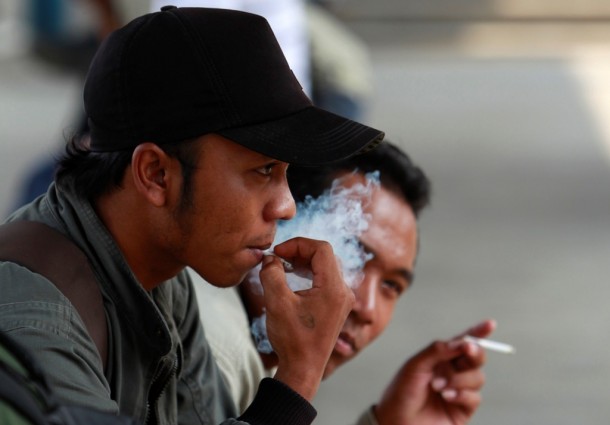
smokersEarlier today I visited the local chemist to pick up some scripts for drugs I’m taking. Pretty normal really. But the conversations I had out on the street, while I was waiting, weren’t! I spoke with four different guys, each of them were smoking, and the conversations went something like this…

Me… Hey mate, there’s a good chance you’ll get lung cancer if you keep smoking.

Him… (Smiles at me and keeps smoking)

Me… It’s true you know

Him… Yeah, I know

Me… I’ve got lung cancer and I can tell you it’s not much fun

Him… Yeah?

Me… You don’t know whether to believe me, do you?

Him… (Shrugs)

Me… It’s true. You want to see my scars?

Him… (Shrugs)

Me… (I lift up my shirt on the left side to reveal 3 rather ugly scars around my ribs) They had to stick tubes in me to drain out all the litres of fluid from round my lungs. You know, it’s a good idea to give up.

Him… Yeah, I know.

Me… I know it’s hard, but you should try. Start now, it’s worth it.

Him… Did you give up smoking?

Me… Mate, I didn’t smoke and I still got lung cancer!

Him… Yeah?! Have you got rid of it?

Me… Mate, I might never get rid of it. They can’t cut it out, and I’ve got to keep on chemo.

Him… Yeah?!

Me… So give it a shot, eh? It’s worth trying to give up now.

Him… Yeah, thanks mate. And hey, good luck eh!

Then, back in the chemist, picking up my scripts, I say “I understand you guys help people to quit smoking.” To which the pharmacist replies, “Yeah, that’s right.” And I say, “Well, there’s three guys outside smoking right now. You could help them!”

Holding on to hope

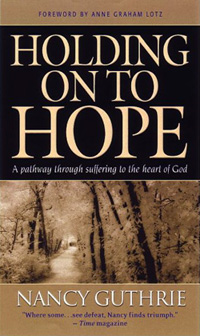
holding on to hopeSome things in life seem completely unfair. Having a baby, knowing that they will live for only a few short weeks or months, is one of these things. The pain and grief for the parents and siblings is too difficult to contemplate. For this to happen twice within the same family beggars belief. Holding on to Hope by Nancy Guthrie tells the story of the Guthrie family and their loss of two children with a metabolic disorder called Zellweger Syndrome. Their daughter, Hope, lived for just over 6 months and their son, Gabriel, lived for a little less than 6 months. Nancy describes their staggering loss and broken hearts. More than this, she writes of the wonderful hope to be experienced by turning to God in our brokenness.

Holding on to Hope invites us inside Nancy’s personal journey of suffering. She examines her own story of loss in the light of the biblical Book of Job. These Scriptures offer insights on dealing with pain, listening to others, grappling with despair, searching for meaning, struggling to trust God, handling our emotions, and where to find hope.

Job is the longest exploration of suffering, grief and hope in the Bible. Its sheer size and its apparently depressing tone have scared many readers away from learning its lessons. One friend of mine went to a church where the minister preached one chapter of Job every week for 41 weeks. It seemed like the minister wanted the congregation to get a taste of Job’s suffering! Surely 4 or 5 weeks would be a better approach. I preached it in one week! Another friend of mine is fearful of reading or preaching on this book, because he superstitiously expects things to go wrong if he does so. I would have thought that things are going to go wrong anyway, so we may as well learn what we can from Job!

Nancy Guthrie takes us gently through her experiences, engaging in every chapter with the text of Job. This is a book of compassionate wisdom. It’s the kind that you can confidently pass on to a friend who is suffering, knowing that you have left them in safe hands. This is no academic work or dispassionate apologetic – it’s a kind word from one who knows suffering and who listens to God’s word.

The overall structure of the book traces Nancy’s experience with her daughter, Hope, through pregnancy, birth, death and grieving. While the family is struggling to deal with the loss of their daughter, they are growing in the hope that comes from trusting the promises of God. Toward the close of the book we learn also of Nancy’s pregnancy with Gabriel, who also has Zellweger Syndrome. This is a tragic, yet hope-filled story.

Each chapter begins with a brief reading from Job, followed by a reflection on her own experiences. The chapter headings below will give you insight into the breadth of issues addressed:

Loss   Tears   Worship   Gratitude   Blame   Suffering   Despair   Why?   Eternity   Comforters   Mystery   Submission   Intimacy

Hold on to Hope is a journey of faith, hope and love. We see God at work by his Word and Spirit in the lives of Nancy and her husband, David. She helps us to grieve well, to turn to God in thanks, to trust God, to seek to honour him, to find hope in God’s promises and faithfulness. She shows us where to turn when it’s all too much, what to do when people’s words (or lack of) hurt more than heal, and why God should always be our strength and refuge.

I found some of her words very personally confronting. In one instance, she reverses a typical prayer for healing that’s accompanied by a whisper of “If it be your will”. She suggests instead the following:

Shouldn’t we cry out to God with boldness and passion and persistence in a prayer that says, “God, would you please accomplish your will? Would you give me a willing heart to embrace your plan and your purpose? Would you mould me into a vessel that you can use to accomplish what you have in mind?” And then, perhaps, we could add a tiny P.S. that says, “If that includes healing, we would be grateful.”

Isn’t real faith revealed more through pursuing God and what he wants than pursuing what we want?  (p79-80)

My wife read this book years ago. In fact, there are usually a few copies floating around our bookshelves because she keeps buying them to give away to others. One friend, whom she’d given a copy to, asked me on the weekend if I’d read it. So now I have! This was a woman who’d given birth to a little boy who died within an hour of his birth. She told me that she’d found it helpful and encouraging. I known Fiona has given copies of this book to grieving mothers of stillborn babies and others who’ve experienced significant tragedy and sorrow.

Don’t think it’s just a book for mothers or women. I found it spoke to personally to me. It has relevance for people struggling in a range of areas, such as unemployment, bereavement, serious illnesses such as cancer, divorce, depression, anxiety, loneliness, chronic fatigue. These are all circumstances where our hearts are tempted to turn away from God. This book gently draws us back.

The edition which I’ve just read contains additional resources for the reader. There’s a list of Bible passages related to the theme of each chapter. There’s also an 8 week study guide which is designed to be used by individuals or groups. These studies take the reader deeper into the Book of Job, as well as other Bible texts, and include questions for discussion and application. She invites you to visit her website at www.nancyguthrie.com to write a message, share your story, or discover more resources to help you find hope in the midst of suffering.

Please don’t stop praying

Having cancer isn’t much fun. From time to time I follow a forum where people share their stories of having cancer, or of caring for those who do. Some of these stories are heartbreaking. The pain, the fear, the loneliness, the hopelessness, the cruel and depersonalising invasion of cancer through the body. Once active, strong, happy individuals, being reduced to feeble shadows of their former selves.

What has both surprised and encouraged me, is how often people are asking others to pray. “I have scans tomorrow – please pray.” “My husband has developed pneumonia – please pray that it will clear up so he can continue his treatment.” “I’m so afraid of the prospect of losing her – please pray that I will be strong.” “My kids are really feeling it – please pray for them” “It’s spread into the brain. I’m so terrified – please pray for me.” “There doesn’t seem to anything left we can do – please pray.”

It’s not just the requests for prayer. It’s also the offers to pray. People will share their struggles and sometimes others reply, saying that they will pray for them. Sometimes people share that they’ve been praying for someone. Sometimes they even share what they’ve been praying.

NTE_prayer_2011I’ve been overwhelmed by how many people have been praying for me. Many of these I know about. Friends, family, people at church. I’ve been amazed to discover that I’ve got a spot in people’s prayer diaries. Some people have told me they pray everyday without fail – and I believe them. Others have said they pray every now and then, when they think of it. Some pray when they get news or when they read this blog. I was remembering tonight, as I visited the NTE conference with around 2000 other people, that 1500 or so students had gathered in small groups to pray for me at the same event last year.

Over this weekend I’ve met four strangers who, upon being introduced to me, said that they (and sometimes their churches) had been praying for me all year. A couple of months back I sat beside visitors at church who, when they discovered who I was, said it was so good to put a face to the name because they’d been praying for me for some time. These serendipitous experiences have been happening all year. What a blow out! So many people have been praying. People I’ve never met, who’ve never met me, but who’ve been moved to speak to God on my behalf. I’ve felt so privileged and have been so encouraged by this news.

Over the years, and even now, our family has also been praying for others with cancer and serious illnesses. We’ve prayed for my dad, Bronwyn, Peter, David, Judy, Nanette, David, Ed, Jenny, Eleanor and others. Some of these people are in remission, others are still fighting, and some have lost their lives. We also remember their families in our prayers. Sometimes I offer to pray for people I’ve met through forums, facebook, or the blog. I try to pray immediately after I make the offer, so that I don’t forget!

Our Heavenly Father is the one who holds our lives in his hands, so it makes enormous sense to speak to him about such life and death issues as cancer. I ask God to heal people, I ask him to heal me, and I ask others to pray for my healing. But I also ask God to work within my heart and mind, to change the way I think and feel about things. I want him to help me trust him, to rely upon his goodness, to treat others with love and kindness, and to hope for eternity in him. God may choose to heal me, and I hope he does, but whatever happens I pray that he will be honoured in my life and others.

So please pray and please keep on praying. Not just for me, but for yourselves, for others, for those with cancer, for their families and friends. And don’t limit your prayers to matters like cancer, even if your whole life is consumed by it. God says we can approach him on any matter. Nothing is too big or too small. So let’s pray, not as a last resort, but because God is more willing to do good in our lives than we are to ask him.

“Ask and it will be given to you; seek and you will find; knock and the door will be opened to you. For everyone who asks receives; he who seeks finds; and to him who knocks, the door will be opened. “Which of you, if his son asks for bread, will give him a stone? 10 Or if he asks for a fish, will give him a snake? 11 If you, then, though you are evil, know how to give good gifts to your children, how much more will your Father in heaven give good gifts to those who ask him!  (Matthew 7:7-11)

Do not be anxious about anything, but in everything, by prayer and petition, with thanksgiving, present your requests to God.  (Philippians 4:6)

Let us then approach the throne of grace with confidence, so that we may receive mercy and find grace to help us in our time of need.  (Hebrews 4:16)

Clearly God is inviting us to pray, but how long should we keep on praying? If we’ve prayed a few times and it hasn’t been answered, do we continue? Jesus prayed three times that God would take the cup from him. Paul prayed three times for the thorn to be removed from his flesh. Does this suggest three strikes and you’re out? Is it unreasonable for me to pray for the same things day after day after day? Is it wrong for me to request your continued prayers if you’ve been praying for a year already?

Doesn’t Jesus say we won’t be heard for our many words? It is true that Jesus said:

And when you pray, do not keep on babbling like pagans, for they think they will be heard because of their many words. Do not be like them, for your Father knows what you need before you ask him.  (Matthew 6:7-8)

It’s not the amount, or the frequency, or the specific words we pray that guarantee a hearing from God. He already knows our needs and invites us to humble ourselves before him. We are to come before God as his dependent children, trusting in his goodness, and seeking his will, as we present our requests. With this attitude, Jesus invites us to persist in our prayers:

Jesus told his disciples a parable to show them that they should always pray and not give up.  (Luke 18:1)

In fact, we could do a lot worse than to follow the example of Ephaphras, who kept working hard to pray for others:

He is always wrestling in prayer for you, that you may stand firm in all the will of God, mature and fully assured.  (Colossians 4:12)

And the Apostle Paul’s faithful persistence in prayer:

For this reason, since the day we heard about you, we have not stopped praying for you and asking God to fill you with the knowledge of his will through all spiritual wisdom and understanding. 10 And we pray this in order that you may live a life worthy of the Lord and may please him in every way: bearing fruit in every good work, growing in the knowledge of God, 11 being strengthened with all power according to his glorious might so that you may have great endurance and patience, and joyfully 12 giving thanks to the Father, who has qualified you to share in the inheritance of the saints in the kingdom of light. 13 For he has rescued us from the dominion of darkness and brought us into the kingdom of the Son he loves, 14 in whom we have redemption, the forgiveness of sins.  (Colossians 1:9-14)

But did you also notice what these guys were praying about? As huge as cancer is, there are bigger matters still. These are prayers that God will make our lives count, that we will persevere, stand firm, and bear good fruit in our lives. As much as I want you to keep praying for healing for people, including me, who have cancer, I’d ask you to pray for these things even more.

Thank you so much for praying, and please don’t stop!

Journey with Cancer 2 Dec 2012 – What a year!

tilleysTwelve months ago today, I was catching up with good friends in a coffee shop near home. We do it once a year, at roughly the same time, and we’ve been doing it for years. These guys come from Melbourne, Wollongong, Brisbane, Perth, and Canberra. We talk about what’s been going on, we share our plans for the future, and we spend some time praying for each other. Once a year means it’s pretty special and I look forward to our catch ups as a highlight.

As we drank our coffees and shared our news, I knew that something was wrong. I had a pain in my chest and between my shoulder blades. My left arm seemed to be going numb. My left leg didn’t feel right, either. I’d been putting up with it for a while, not wanting to break up our time together, but I couldn’t keep ignoring it. I wasn’t imagining things – something was wrong.

Half an hour later I was in hospital – query heart attack. ECG seemed normal, and nothing on the x-ray, but the CT scan showed that things weren’t right. There was a massive build up of fluid around my left lung and it was suggested that I could have a tumour. Mesothelioma produces symptoms like this and so can lung cancers. Over two litres of fluid were drained out of the pleural cavity. It was almost certainly cancer and it didn’t look good. But how? I hadn’t been a smoker. I couldn’t think that I’d been exposed to asbestos. What was happening?

That was Friday, 2nd December 2011, and a year has now passed. What a year it’s been! I consider this an anniversary of sorts. One year of ‘consciously’ living with cancer. They said that I’d probably had the cancer for more than three years previously, without being aware of it. Now it was making it’s presence felt. Now it was changing, shaping, directing, and even shortening my life. Something the size of a ping pong ball had grown, ruptured, spread, damaged and contaminated me. Stage IV inoperable non-small cell lung cancer. This foreign growth was turning my mid-life into an end-of-life crisis. Or so it seemed. The oncologist said it couldn’t be removed or cured. I’d probably see the next Christmas, but he didn’t offer anything more. My health crashed, my weight disappeared, my life seemed to be fading before my eyes. Many times we doubted that I’d live long at all.

That was a year ago and I’m still living with cancer! While I loathe the cancer, and I’d dearly love God to take it away, I thank God earnestly for the life he’s given me. How amazing to live! I no longer take living for granted. In fact, I don’t take breathing for granted any more. I can’t make assumptions about tomorrow, or next week, or next year. Each day, every breath, is a gift from God. I’ve been reminded of what the Scriptures say:

[God] himself gives everyone life and breath and everything else. (Acts 17:25)

Over this past year, God has been teaching me many things. A big one – and there’s much more to learn yet – is humility. God’s humbled me deeply, to trust in him rather than in myself and my resources and abilities. I’d been such an activist in so many ways. Set me a challenge and I’d have a crack. I tended to know my capabilities and I’d trust them. I’d say that I trusted God, but I suspect that I was often simply relying on myself. I’d make plans, get busy, forget to pray, work harder, and then call out to God if I was desperate. God has shown me that I can do nothing without him, and for this I thank him.

God has taught me to treasure people more. He’s shown me how much I value my family. He’s deepened my love and appreciation for my wife. He’s given me great delight in my children. He’s enabled me to enjoy renewed relationships where they were once strained. He’s brought new people into my life. He’s encouraged me with the love, support, and generosity of many friends. He’s given me opportunity to bless others and to be blessed by them. Thank you God!

God has renewed my desire to know him better. He’s reminded me that he’s the ultimate source of wisdom, and that I must know him before I can truly know myself. He’s gifted me with time to read and reflect and write, and a thirst to do this more and more. In writing, God has caused me to think and learn and articulate. He’s opened my eyes to see the amazing truths of his Word in new ways. He’s given me new understanding. He’s strengthened my delight and confidence in him.

God has taught me to lift my horizons. It’s so easy to be consumed by the things of life. Many of our lives are so comfortable, that it’s hard to imagine wanting for anything else. Many of us enjoy heaven here on earth – or so we think. God has burst this bubble. He’s reminded me that life is short. There’s so much more to life than the trivia that fills so much of our time. God has pushed me to focus on things that’ll make an impact for eternity. He’s lifted my heart and mind, to find my hope in him for eternity, and not in the fleeting things of this life.

Most of all, God has been teaching me to keep my faith in Jesus Christ. Every promise God has made, he has answered positively in Jesus. God has shown himself to be totally trustworthy. I’ve been tempted to doubt this – looking at my circumstances, wondering why, struggling for answers – but God keeps bringing me back to Jesus. God knows my weaknesses. He’s heard my cries. He’s seen my tears. And he keeps pointing me to his Son. Jesus is the proof that God is for me. Jesus is the evidence that God loves me. Jesus’ death is the reason God accepts me. Jesus’ resurrection is my hope for eternity.

I know these things more clearly today than I did a year ago, and for this I thank God. My great desire for my friends and family is that they might know these things too – but without getting cancer or facing difficult trials. To misquote John Lennon, “All I am saying is give God a chance!”

My prayer is that God will deepen my faith in him, my hope in eternity, and my love for others. And I would love to pray the same for you.

My heart was heavy

Today I had my 16th chemo visit for the year. This time it was a sobering experience.

It started well with a ‘chat’ with the parking inspectors about my last visit to the hospital! There were a few comments about my Mo for Movember. I asked the three girls beside me, who were visiting a patient, if they were doing Movember too! And they were! One had already raised over $1100. No they didn’t have facial hair on their upper lip – they each had cute mo-shaped earings. 🙂 I chatted with the nurses about a letter for the parking inspectors, about my first ever mouth ulcers, and about how I planned to have a treatment in Sydney in January. I got hooked up to the drugs and tried to connect my iPad to the new WiFi.

Then I began to notice some upsetting things happening around me. There was a patient who seemed to be quietly sobbing as a nurse consoled her. I thought I heard someone speak about what was happening with her dog. There was a young woman, who didn’t seem much older than 20, confidently having her treatment. Why so young?

But it was the conversation that I couldn’t help overhearing from the other side of the room, that disturbed me most. The man was very frail, in his late 70s I’d guess. His wife sat beside him. The nurses discussed the need to work out a treatment strategy with the doctors. It seemed he had a serious infection – one that he’d had before – and they were working out the treatment strategy. This was decision time for the man.

The conversation went something like this…

“Is there light at the end of the tunnel?” the patient asked.

“Not for the cancer.” replied a nurse. “But there is for the _____itis. We can treat that. We can improve your quality of life.”

“What life?” he said. “This isn’t living. It’s just agony. I can’t do anything. I don’t want to have more treatment.”

“And you don’t have to.” said the nurse. “It’s up to you. It’s your decision. We respect whatever decision you make.”

“I don’t want to have any more treatment!” he protested. “I’m just prolonging the inevitable.”

“It’s your decision. You have the right to choose.” said the nurse.

His wife seemed anxious, “But think of all we’ve been through. Now’s not the time to make the decision. Why don’t we treat the infection and then you can decide.”

The nurse agreed that it wasn’t the time to make such huge decisions, but the patient seemed to have made up his mind. “There’s no point.” he said. “I want to go home.”

“And you can go home,” said the nurse. “But don’t think that just because you told us today that you didn’t want to do anything, that you can’t change your mind tomorrow. You can change your mind any time. And when you get home ring palliative care right away. Right away, okay!”

“We will.” said his wife.

And they left.

This really was a life and death experience, I was witnessing. It was so hard for him. So hard for his wife. I found it hard. I wanted to go to him and talk about life and death and hope and God. But they were gone and I was hooked up in my chair. My heart was heavy. I prayed for them. Then I turned on Eva and closed my eyes.

As I reflect on this again, these words come to mind:

11 “What strength do I have, that I should still hope?
What prospects, that I should be patient?
12 Do I have the strength of stone?
Is my flesh bronze?
13 Do I have any power to help myself,
now that success has been driven from me?  (Job 6:11-13)

“My days are swifter than a weaver’s shuttle,
and they come to an end without hope.
Remember, O God, that my life is but a breath;
my eyes will never see happiness again.
The eye that now sees me will see me no longer;
you will look for me, but I will be no more.
As a cloud vanishes and is gone,
so one who goes down to the grave does not return.
10 He will never come to his house again;
his place will know him no more.  (Job 7:6-10)

Job, too, despaired of his life. I hope that he, and the man and wife in the chemo ward today, know these words of comfort and hope. They’re true for all who will turn to God and trust him. He’s the God who raised Jesus Christ as Lord:

4:18 So we fix our eyes not on what is seen, but on what is unseen, since what is seen is temporary, but what is unseen is eternal. 5:1 For we know that if the earthly tent we live in is destroyed, we have a building from God, an eternal house in heaven, not built by human hands. Meanwhile we groan, longing to be clothed instead with our heavenly dwelling, because when we are clothed, we will not be found naked. For while we are in this tent, we groan and are burdened, because we do not wish to be unclothed but to be clothed instead with our heavenly dwelling, so that what is mortal may be swallowed up by life. Now the one who has fashioned us for this very purpose is God, who has given us the Spirit as a deposit, guaranteeing what is to come.
(2 Corinthians 4:18-5:5)

Dying, surviving, or what?

How do you describe someone with advanced cancer? A cancer sufferer? A cancer patient? Struggling with cancer? Fighting cancer? Being treated for cancer? Having a terminal illness? Having the Big C?

It’s hard to know really. Is there an etiquette we should follow? In the last week or so I’ve been introduced to others both as a cancer survivor and as someone who is dying of cancer. Sounds to me like two different people!

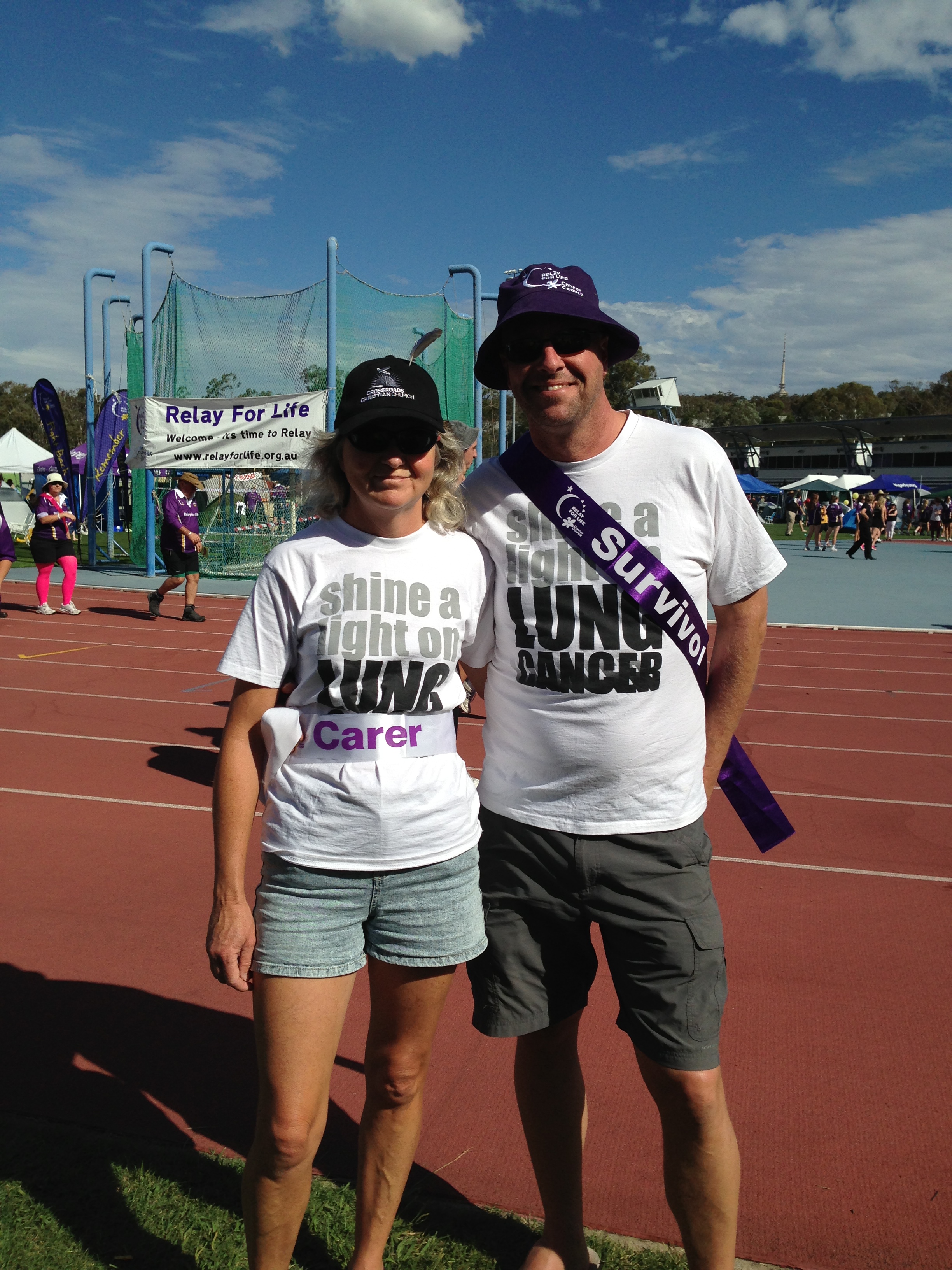
I’ve found the whole terminology thing awkward for a long time. Earlier this year we joined in the Relay for Life and I was invited to walk a lap of honour as a cancer survivor. Seemed strange to say the least. I wasn’t long out of hospital. I was still coming to grips with my diagnosis. You could hardly describe me as a survivor. I’d only just begun the journey and the prognosis was bad. Surely I’d need to be in remission, have no evidence of disease, or be pronounced ‘cancer free’, in order to qualify as a survivor! Last week I was introduced to a gathering of people with lung cancer – and their carers – as a cancer survivor. It seemed a little more reasonable now. I was still alive and I’m approaching my one year anniversary.

Am I survivor? The reality is I am. I’m still living, breathing, and at this point I’m in better health than I was when diagnosed. I’ll be a survivor until such time as I die. But to be honest, I’m keen to do much more than survive. I don’t want to be defined by my disease. I want to live well – not indulgently – but in a way that honours God and others. I want to have the life and death of Jesus at work in me, to serve others rather than serve myself.

I’ve also been described as dying of cancer. It’s understandable to speak in this way, because it’s potentially the most unique or distinctive thing about me. I’ve been described as ‘husband of Fiona’, ‘father of Luke or Matt or Grace or Marcus’, ‘son of Norman and Ruth’, ‘Pastor of Crossroads’, ‘chaplain to the Brumbies’, ‘keen on fishing’, ‘friend of someone or other’, and lots of less charitable things! At the moment, the characteristic I’m best known for is ‘having cancer’.

But, am I dying of cancer? I’ve been told what I have is incurable. The treatment is not expected to eradicate the cancer. The survival rate over 5 years for lung cancer is only 16%. Few people ever fully recover from lung cancer. Initial diagnosis at Stage IV is seriously bad news. So, am I dying of lung cancer? The truth is that I don’t know. Nobody does, not even the oncologists. People do get healed. God is completely capable of healing me. Will God heal me? I‘ve got no idea! Modern medical options are amazing. They’re discovering new things about cancer all the time. New treatments are being invented at a rapid rate. Who knows what the future holds? Many people die with cancer rather than of cancer. How will I die? High odds on it being the cancer that causes my death, but ultimately only God knows. And I’m happy about that!

The one thing I do know is that I am dying one way or the other. But it seems strange to introduce me as someone who is. After all, we’re ALL dying. It’s not unique to me. I’ve been reminded in this past week of how true this is. There was the sad story of the teenage girl who plunged to her death from the 22nd floor of a Gold Coast building, during schoolies week. Bryce Courtenay lost his fight with cancer, dying in his Canberra home at the age of 79. On Saturday I joined with others in celebrating the life of my good friend, Chappo, who passed away at the age of 82, because his body was no longer able to fight the infections. Another friend has just lost her sister. It may be sooner or it may be later, but we should recognise the fact that we’re dying. We need to take stock of this reality. In fact, a friend reminded me of this again recently, when she asked me what was on my bucket list!

I know it’s awkward, and it’s so hard to know how to say things, but maybe cancer survivor or dying of cancer aren’t the best ways to describe me. At present, I’m living with cancer. But I don’t want that to define me either. Yes, I’m dying, but I was dying before my cancer diagnosis. In reality, nothing has fundamentally changed. Maybe I’ve got a better idea of the time frame, but then I hope that I don’t! I’ve survived so far, thanks to God, but will I survive my cancer? In this life, I can’t say. But I firmly believe that this life is not all there is. Along with Chappo, who’s enjoying his new life now, I look forward to the day when there will be no more death or mourning or crying or pain, for the old order of things has passed away.  (Revelation 21:4) Can I encourage you to do the same?

Suffering well

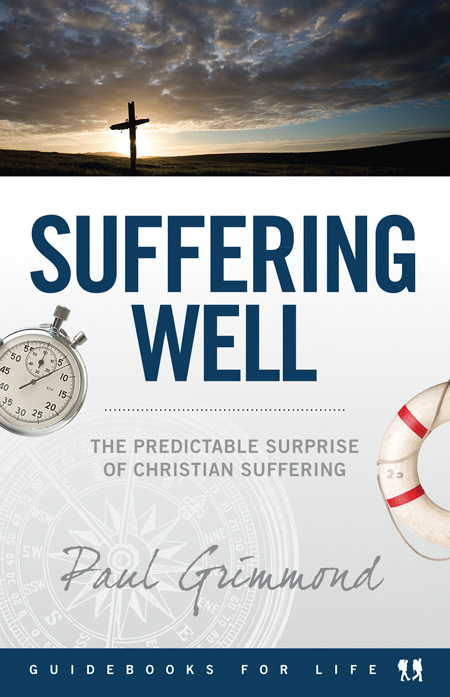
I’ve got vague memories of reading this book back in January/February this year. This isn’t a slight on the book, because I’ve only got vague memories of doing anything in that period! The early cancer months are something of a blur. Last week I read Suffering Well: the predictable surprise of Christian suffering by Paul Grimmond (again?). It’s a topic I felt I understood pretty well. The suffering bit anyway. Not so sure about the well. It was natural that I’d gravitate towards a book like this, as I’ve felt the last couple of years have been shaped by suffering of many kinds. A life-threatening car accident, cancer, serious illness in hospital, having our dreams of ministry in Darwin dashed. So what is God doing? What am I to learn?

The title sounds like an oxymoron – predictable surprise. And I think it is. It comes as a surprise only if we don’t grasp God’s word on this topic. If we soak ourselves in the Scriptures then there is something very predictable about suffering. God tells us to expect suffering. We live in a world subjected to futility and frustration. It’s been that way ever since the first man and woman decided to try and live without God.

20 For the creation was subjected to frustration, not by its own choice, but by the will of the one who subjected it, in hope 21 that the creation itself will be liberated from its bondage to decay and brought into the freedom and glory of the children of God. 22 We know that the whole creation has been groaning as in the pains of childbirth right up to the present time.  (Romans 8:20-22)

And there’s a specific suffering for those who are following Jesus. We’re warned to expect that we will suffer and be persecuted for our allegiance to Jesus.

For it has been granted to you on behalf of Christ not only to believe in him, but also to suffer for him,  (Philippians 1:29)

 In fact, everyone who wants to live a godly life in Christ Jesus will be persecuted,  (2 Timothy 3:12)

Suffering Well begins by highlighting the prevailing views about suffering and God in Western society. This is the cultural environment in which we experience suffering and it’s the tape that plays in our heads as we grapple with understanding our experiences. It goes something like this:

In our brave new world, suffering means that God is immoral and that Christians are immoral. Our only hope is a world freed from the Christian God, in which humanity invents its own understanding of right and wrong, guided by reason alone.  (p28)

Grimmond calls us to think from the Bible’s perspective about human suffering. He shows that the way to handle suffering well is to see through God’s eyes and to follow Jesus, whatever comes our way.

This book isn’t a theodicy, but it does show us God’s character in the face of suffering. We’re reminded that God is God and doesn’t have to give an account to us. However, God is revealed as a God of justice and a God of mercy. He can be trusted even when we have no specific explanation for our difficult circumstances. God’s character is shown most clearly in his willingness to personally embrace the suffering of our world. God became one of us and experienced the problems of injustice, sickness, death, persecution and betrayal. Jesus took on human sinfulness and paid the ultimate price on the cross, that God might offer us free forgiveness. These famous words reveal a God who can be trusted, even with suffering:

For God so loved the world that he gave his one and only Son, that whoever believes in him shall not perish but have eternal life.  (John 3:16)

This books focuses on showing that the New Testament has more to say about suffering for Jesus, than it does with discussing cancer, AIDs, warfare and famine. I found this confronting, as I often find myself focusing more on my sickness than on how I’m being treated as a follower of Jesus. Like many modern Christians, I’m tempted to say that I haven’t experienced much specific Christian suffering or persecution. But the big questions are, ‘What might keep me from persevering as a follower of Jesus?’ ‘Where are the threats to my faith?’ It’s worth contemplating carefully these words:

The great danger for Christians living in the West, is not physical death at the hands of persecutors, but the slow, spiritual death of a thousand tiny compromises, crouched at our door waiting to devour us.  (p97)

Sickness, suffering and death are the realities of our world. Christians will continue to be reviled because they trust in a persecuted, suffering Saviour. The key to suffering well is to keep our eyes focused upon Jesus. He’s the one who died for our sin and who was raised to life to be the ruler of God’s new creation. In Jesus, there is genuine hope for the future – hope for our futures – a future free from all suffering. For those trusting in Jesus, nothing can separate us from sharing in the fulfilment of this hope.

This book pushed me to refocus my thinking about suffering. It said it would – and it succeeded! There are a couple of issues I’d like to see explored further. The first is the link between general suffering in this world and the impact this can have on continuing to trust Jesus. My experience was that the weakness of my body, being confronted by my own mortality, and the feelings of grief and depression, all contributed to a personal crisis of faith in the early months of this year. The second issue is the question of links between specific sin and suffering. I confess to being unsatisfied with most explanations of James 5 and the links between sin, confession and healing, but these can be explored further on another occasion.

Overall, I found this a helpful book. It is full of Scripture and it models the way we should seek to live – by listening to God’s word. It calls us to look to Jesus, to follow him come what may, and to trust God in life and in death.

Whenever suffering comes along – of whatever kind – the right way to deal with it lies in staying true to Christ.  (p112)

You can find this book at Matthias Media.

End the unspoken

This has been a big media week for me. First time ever! On Tuesday, I was interviewed by Mike Welsh on 2CC radio about my experience with lung cancer. [Podcast for 13 Nov 2012] On Friday, I was interviewed by WIN News about the devastating impact of lung cancer. On Saturday night, my family and I joined with other lung cancer survivors, their families, carers and other supporters to Shine a Light on Lung Cancer. About 150 people gathered outside Parliament House, donned T-shirts, and walked together to the Old Parliament House rose garden. We shone our torches and observed a minute’s silence for those who had lost their battle with this killer. We heard some info about cancer from a local oncologist before I joined another lung cancer survivor and a carer in speaking about our experiences. Here’s a very brief outline of my words:

Three things give me hope and make me thankful…

  1. The wonderful support of my family and friends. Let’s show our appreciation to these people.
  2. The amazing oncology care available in our wealthy society, and the rapid advances in understanding and treatment that are taking place – especially genetic understanding and targeted therapies. We need our government to invest seriously in this.
  3. I’m thankful for the prayers of so many and my hope is firmly in God. He offers us genuine hope in this life and in eternity. Please call out to God and seek him. You have nothing to lose and everything to gain.

Lung cancer is the silent killer. Every year it kills more than 7500 Australians, which is more than 20 people each day. Lung cancer kills more people than breast, ovarian and prostate cancer combined. Recent research commissioned by the Global Lung Cancer Coalition found that Australian adults think breast cancer is the biggest cancer killer, followed by skin cancer. Whereas most other countries recognised that lung cancer was the biggest killer. I suspect this confusion is because breast cancer and skin cancer seem to get the most media attention. The excellent work of the McGrath Foundation and others in promoting awareness of breast cancer, and the high visibility of the Cancer Council on products such as sunscreen, hats and sunglasses, have increased awareness of both these diseases. And yet, other than anti-smoking campaigns, there has been virtually no publicity about lung cancer.

People don’t want to talk about lung cancer being the biggest killer. Tropfest winner and director of End the Unspoken, Jason van Genderen, was personally impacted by lung cancer as his father passed away late last year from the disease. He said:

“I have seen, first hand, how aggressive this cancer is and I hope End the Unspoken can raise awareness about this deadly disease. One in 16 Australians will develop lung cancer before they’re 85, yet it is a topic which is rarely spoken about. Perhaps this is because of the stigma which is attached to lung cancer?”

This week I met Victoria Tabor, a 31 year old teacher in Canberra. Victoria is a lung cancer survivor. She was not a smoker, yet an x-ray for a routine health check, before heading overseas for work, revealed a tumour on her left lung. As I spoke with Victoria, her experience was so close to my own, only it appears they caught the cancer earlier. She said in a recent Lung Cancer Foundation press release:

“I never had any symptoms but was diagnosed with lung cancer and have since had my left lung removed and been treated with both chemotherapy and radiation. I’m living proof that lung cancer doesn’t discriminate – it affects males and females, the old and the young, smokers and non-smokers – and is the most deadly cancer in Australia. I was so lucky to have been diagnosed early enough so doctors could operate and save my life.”

endtheunspokenbannerWe need people to speak up about lung cancer. While it’s true that smoking is the single biggest cause of lung cancer, and we need to dissuade people from taking it up, we also need to dispel the myth that it’s only smokers who will get this disease. You don’t have to smoke to get lung cancer, you only need to have lungs. Funding is needed to advance research, develop better treatments, and support those affected by this awful disease. We heard information last night showing that the Australian Government’s support for lung cancer has been very small, and it finishes next year. So far, there is no commitment for the future. We need to speak up, make some noise, and let people know the truth. This November is Lung Cancer Awareness month. Check out the Australian Lung Foundation website. Share this post with others. Do the very quick online survey. Please help end the unspoken.

My forced sabbatical

In some respects I view 2012 as a kind of forced sabbatical. I’ve read more books than normal and written more words than ever. It’s been incredibly helpful, to me at least, not only to read books, but to summarise, reflect and begin to apply what I’ve been reading. In fact, this has been some of the most careful reading I’ve done in a long time. Many of the summary/reviews have appeared on this blog and so far I’ve restricted myself to books that I’d encourage others to read. Books that haven’t made the grade have either been left unfinished or unreviewed.

When I began this process I worried that it wasn’t a good use of my time. If I wasn’t going to live that long, should I really waste it reading books? I knew it was a step up from watching TV and DVDs, but it still seemed a little introspective and indulgent. However, I don’t feel this way today. Rather, I’m keen to keep learning as long as I can so that I’ll be better equipped to encourage and resource others. My whole adult life has been shaped and influenced by books. Some of these books I’ve read and long forgotten, but others continue to guide me in the things that matter. Supreme among these is the Bible, followed by those that learn from the Bible and put it into practice. There are many others that contain great wisdom, make a practical difference in the lives of the reader, yet have nothing to do with the Bible. But we’d do well to be discerning about how we fill our minds and use up our time.

11 The words of the wise prod us to live well.
They’re like nails hammered home, holding life together.
They are given by God, the one Shepherd.

12-13 But regarding anything beyond this, dear friend, go easy. There’s no end to the publishing of books, and constant study wears you out so you’re no good for anything else. The last and final word is this:

Fear God.
Do what he tells you.

14 And that’s it. Eventually God will bring everything that we do out into the open and judge it according to its hidden intent, whether it’s good or evil.  (Ecclesiastes 12:11-14 The Message)

Someone once said that they wished 90% of writers wouldn’t bother and the other 10% would write more. It’s true that there is much drivel between the covers of books. My desire is to focus on the 10%, to learn myself, and to urge others to do the same. I thank God for his Book. And I thank him for creating people with the ability to think, imagine, create, and tell. Books are a wonderful gift.