
in fear
despairing
doubting
denying
dying
alonein hope
embracing
believing
rejoicing
living
in Christ
The curse of knowledge
 In their book, Made to Stick, Dan and Chip Heath speak of a major problem with communication. It’s called the ‘Curse of Knowledge’. Once we know something, it becomes difficult to imagine what it was like not to know it. We subconsciously assume our audience know what we know. It makes it harder to share our knowledge effectively with others, because we’re not connecting accurately with our reader or listener’s state of mind.
I was made aware of this recently when I received feedback from my editor on the first few chapters of my book. We are strangers to each other. She had not been reading this blog and knew nothing of my circumstances or background, other than what I’d written in the opening couple of chapters. It must have been like listening to one end of a phone conversation, trying to piece together what the other person was saying. She helped me to see all the assumptions that I’d been making about my audience. I had knowledge, therefore I assumed they did too. This is the curse of knowledge for the communicator.
I had only shown these chapters to two other people. Both of them knew me pretty well. They understood the ‘other side of the phone call’. They could fill in the blanks. One of these people was my father, who knew my circumstances very well. For him my assumptions of knowledge were reasonable, but not for a potential book audience. Changes are needed. Gaps need filling in.
It’s important for preachers and Bible teachers to be aware of the curse of knowledge. The more they study, the more they learn, the more they preach, the more they forget what others don’t know.
How many times have I heard a preacher say things like, ‘You will remember what it was like for the people of God in the wilderness’. The preacher knows what he means and, to be fair, so do most of the people in his congregation. He is referring to the 40 years that Israel spent between being rescued from slavery in Egypt to entering the promised land of Canaan, under the leadership of Moses, as described in the books of Exodus to Deuteronomy.
Imagine someone is at church who has never read or heard of these events. What might they be thinking? Here’s a few possible thoughts…
- I don’t remember, should I?
- What was it like? Was it good? Or was it bad?
- Who were the people of God?
- When was it?
- Were these really special religious people?
- Is he talking about the Tasmanian wilderness or some other one?
- Surely, wilderness must be a metaphor.
- I’ve no idea what he’s talking about.
- There’s an in group here, and I’m not part of it.
- (Subconscious) Is it worth listening to this guy? I don’t know enough.
- I wonder what time this finishes?
- What should I make for dinner?
If we want to engage people, if we want them to connect with our message and stay with us, if we want them to understand and remember what we’re talking about, if we want to see people’s lives transformed, then let’s beware of the curse of knowledge.
Pastoral care in growth groups
 Having been professionally trained as a social worker, I made the assumption for many years that pastoral care was the term for social work in the church. It was about visiting the sick, providing for the poor, counselling the messed up, befriending the lonely, caring for the needy, and helping people with their problems. This was the stuff pastors should do. Preachers preached, but pastors took care of people’s social, relational, physical, emotional (and sometimes spiritual) needs. That’s what I thought and, to be honest, I think most Christians I knew would have agreed with me. The trouble was that I’d never examined the Scriptures on the topic. We need to look at God’s definition of pastoral care, and allow his Word to shape our pastoral priorities.
As we consider the role of growth groups in the life of a church, we’ve identified pastoral care as a priority for groups. But what does this mean? What expectations should we have of the groups and their leaders? What will it look like for a group to take pastoral care seriously? Well, we need to be clear on how the Bible describes pastoral care. Pastoral care in the church and growth groups must be shaped by God’s plans as revealed in the Bible. What is the emphasis of pastoral care in the Bible?
God – the Shepherd
The word pastor comes from Latin word for shepherd. Pastoral ministry is the ministry of shepherding God’s people. It’s a leadership picture that uses the image of the shepherd to describe the roles and responsibilities of those who lead God’s people. It’s an idea that starts with God himself. God is the Shepherd and he leads his sheep where he wants them to go. Arguably the most famous description of this comes from Psalm 23.
The Lord is my shepherd, I lack nothing.
He makes me lie down in green pastures,
he leads me beside quiet waters,
he refreshes my soul.
He guides me along the right paths
for his name’s sake.
Even though I walk
through the darkest valley,
I will fear no evil,
for you are with me;
your rod and your staff,
they comfort me.
You prepare a table before me
in the presence of my enemies.
You anoint my head with oil;
my cup overflows.
Surely your goodness and love will follow me
all the days of my life,
and I will dwell in the house of the Lord
for ever.
In this Psalm the Shepherd leads, guides, feeds, comforts and protects his sheep. The Shepherd ensures the eternal security of his sheep.
The image of the shepherd is also applied to Israel’s leaders. They are to lead, guide, feed, comfort and protect the people by teaching and living out the Word of God among them. They fail dismally on this front. Instead of watching over the sheep, they feed on the sheep and destroy them. God holds the leaders accountable for this, and declares that he, himself, will replace these oppressive shepherds. God will act to save his sheep and provide for them.
7 Therefore, you shepherds, hear the word of the Lord: 8 as surely as I live, declares the Sovereign Lord, because my flock lacks a shepherd and so has been plundered and has become food for all the wild animals, and because my shepherds did not search for my flock but cared for themselves rather than for my flock, 9 therefore, you shepherds, hear the word of the Lord: 10 this is what the Sovereign Lord says: I am against the shepherds and will hold them accountable for my flock. I will remove them from tending the flock so that the shepherds can no longer feed themselves. I will rescue my flock from their mouths, and it will no longer be food for them. 11 For this is what the Sovereign Lord says: I myself will search for my sheep and look after them. (Ezekiel 34:7-11)
God specifically promised to send one special shepherd. This new shepherd will be the Messiah in the line of David and he will rule over and care for God’s people.
23 I will place over them one shepherd, my servant David, and he will tend them; he will tend them and be their shepherd. 24 I the Lord will be their God, and my servant David will be prince among them. I the Lord have spoken. (Ezekiel 34:23-24)
This remains the hope for God’s people throughout the Old Testament, and it’s not until the New Testament that we meet the one promised by God.
The Good Shepherd
Jesus fulfils God’s promises made through Ezekiel. He is the Davidic Messiah, the Good Shepherd who will rescue the sheep. He will not only gather in the lost sheep of Israel, but also people from all nations and he will unite them together under him. The amazing thing about this Shepherd is that instead of slaughtering the sheep, as Israel’s leaders had been doing, he allows himself to be slaughtered in their place. To mix the metaphors, the shepherd becomes the sacrificial lamb.
14 ‘I am the good shepherd; I know my sheep and my sheep know me – 15 just as the Father knows me and I know the Father – and I lay down my life for the sheep. 16 I have other sheep that are not of this sheepfold. I must bring them also. They too will listen to my voice, and there shall be one flock and one shepherd.
God’s plan in saving and caring for his sheep extends from Jesus to others who will lead under Jesus’ authority. Jesus as shepherd remains the model to follow.
Shepherds/pastors
The book of Acts introduces us to the beginnings of Christian pastoral ministry. As the gospel spreads and churches begin to grow, leaders are put in place to oversee the congregations. The Apostle Paul spent three years pastoring the church in Ephesus, and he uses the image of the shepherd/pastor when encouraging the Ephesian elders to continue his work. The church is precious to God. It’s purchased with his blood. It belongs to him. Pastoral care of God’s own flock is very important. Knowing this, Paul urges the Ephesian elders to teach God’s word of grace, so as to see the church growing into maturity, standing firm against false teaching, and persevering into eternity. This is to be their pastoral care. Paul had devoted himself to this responsibility and he now calls the elders to do likewise.
28 Keep watch over yourselves and all the flock of which the Holy Spirit has made you overseers. Be shepherds of the church of God, which he bought with his own blood. 29 I know that after I leave, savage wolves will come in among you and will not spare the flock. 30 Even from your own number men will arise and distort the truth in order to draw away disciples after them. 31 So be on your guard! Remember that for three years I never stopped warning each of you night and day with tears. 32 ‘Now I commit you to God and to the word of his grace, which can build you up and give you an inheritance among all those who are sanctified.
With the spread of the gospel and the establishment of churches, people are regularly being equipped and appointed to oversee and care for these congregations. Paul’s letters to Timothy and Titus are particularly helpful in understanding pastoral ministry. In fact, they are often described as the pastoral letters. Paul is looking to the future, raising up leaders, shaping their priorities, emphasising both life and doctrine, character and teaching. He is working to ensure that the gospel remains central to the life of the church. It’s worth taking the time to read these three letters very carefully in order to understand pastoral priorities.
The Apostle Peter also encourages pastoral care in the churches. He is concerned about the heart of the pastor/shepherd and calls his fellow elders to allow the gospel to shape their attitude to ministry. They are to be willing, generous, and eager servants as they exercise pastoral ministry among the flock, all the while looking forward to the return of the Chief Shepherd, the true Senior Pastor, Jesus Christ.
1 To the elders among you, I appeal as a fellow elder and a witness of Christ’s sufferings who also will share in the glory to be revealed: 2 be shepherds of God’s flock that is under your care, watching over them – not because you must, but because you are willing, as God wants you to be; not pursuing dishonest gain, but eager to serve; 3 not lording it over those entrusted to you, but being examples to the flock. 4 And when the Chief Shepherd appears, you will receive the crown of glory that will never fade away. (1 Peter 5:1-4)
Pastoral care
From this brief overview of shepherd/pastor ideas in the Bible we can distil some important ideas.
- God is the ultimate shepherd/pastor who promises to lead people into eternity with him.
- Jesus is God’s appointed shepherd/pastor who gives his life to bring people into relationship with God.
- Shepherd/pastors lead others by gospel-shaped teaching and modelling the application of God’s word of grace in their lives.
- Therefore, the goal of pastoral care is: under God, to lead God’s people, by the word of God’s grace, into eternity with God.
I suspect this is probably not the way we would have described pastoral care. It sounds more like a ministry of evangelism, teaching, discipleship and encouragement. And yes, it is. This is what flows from the pastoral heart of God. What God is doing in our world isn’t limited to the next ten, twenty or even seventy or eighty years. God is gathering his people for all eternity. He’s keen to see them secure in his grace in this life, so that they will enjoy his full blessing in the next. As Newton wrote in Amazing Grace: ’twas grace has brought me safe thus far, and grace will lead me home and when we’ve been there ten thousand years bright shining as the sun, we’ve no less days to sing God’s praise than when we first begun. Pastoral care is a ministry of God’s grace for a few years, focused on people enjoying God’s grace for a zillion years. This is the perspective we must carry.
In growth groups
If growth group leaders are to exercise pastoral care among the members of their groups, and if the people in our groups are to pastorally care for one another, then they will need to look backwards and forwards. Backwards to the saving grace of God in the Good Shepherd laying down his life for the sheep. Forwards to the Chief Shepherd returning to usher his people into glory. These are the trig points that give us bearings for our pastoral care.
The leader will be concerned first and foremost that every member of the group has become a member of God’s flock. Is each person in our group a Christian? Are they trusting in God’s grace through the death and resurrection of Jesus? Are they submitting to Jesus as the one who rules and directs their lives? If someone is not a Christian, then the most caring pastoral thing we can do for them is to help them to understand and respond to the gospel. This will likely mean praying for them, catching up with people one to one, reading and discussing the gospel together. There might be questions and doubts to resolve. If there are a number of people in the group who aren’t Christians, then perhaps the whole group might focus on these matters together.
Leaders, do we know where people are at? Have we taken time to get to know people, to understand what they believe, where they’re coming from, what they’re living for, what they’re trusting in? Maybe it’s time for some quiet conversations. This is the starting point for pastoral care.
The leader will desire to see each member of the group becoming more and more like the Chief Shepherd. Bible study will be central to this, as we seek to nourish and strengthen the members of our group in the grace of God. Not Bible study so as to know about the Bible, or even to know about God. We will examine God’s Word together, so as to get to know God himself. We want people growing together into maturity. This isn’t measured by how many theological books we’ve read or the Bible verses we’ve memorised. It’s not how much we know, but how we respond to what we know. It’s about being gripped by God’s grace and letting it shape our thinking and speech and behaviour. It’s about the wonder of the gospel freeing us to walk in God’s ways by the power of his Spirit. It’s about not being tossed around by false ideas. It means not being lured away from God by the idols of this world. It’s seen in patiently keeping our eyes fixed on Jesus and the things of eternity. This is what pastoral care is about.
Pastoral care will involve praying. We can’t bring about spiritual change. That’s the work of God’s Spirit. We need God to bring about deep inner transformation, and therefore we pray. We are weak and so we pray for God’s strength. God’s strength to persevere through trials and difficulty. God’s strength to stand firm against temptations. God’s strength to remain faithful in the face of persecution. God’s strength to work through our fears and doubts and struggles and selfishness. God’s strength to run the race to the end. And so we pray.
Pastoral care is gospel-shaped. It’s Bible-nourished. It’s prayer-dependent. This is God’s idea of pastoral care. We are seeking to grow leaders who will care pastorally for the people in their groups and encourage their groups to develop relationships where people care pastorally for one another. Please encourage the members of your group to become pastoral carers.
But I’m sure you are left with a few questions…
So what about things like visiting the sick, counselling, offering hospitality, providing practical helps, supporting couples or parents, caring for the elderly and orphans and widows? Aren’t we called to carry each others burdens? Isn’t this still pastoral care? Shouldn’t we be focusing on these things? Aren’t we expecting our growth groups to provide ‘practical’ care to one another?
This is the topic of another paper: Life together in growth groups.
Setting hearts on fire
 John Chapman’s Setting hearts on fire: A guide to giving evangelistic talks is the book that I wished I’d had when I started out as a preacher. It’s clear on the Bible and it’s clear about preaching the Bible. It offers a template for approaching, preparing, and delivering talks in a faithful and captivating manner. You don’t have to be an evangelistic preacher to gain from this book. You don’t even have to be a preacher at all. If you’re involved in teaching the Bible in Sunday School, youth group, Bible study, or school scripture then you’ll find so much of value here. In fact, if you want a book that will help you to read the Bible for yourself, know what the Bible is about, and know how to respond to the Bible, grab yourself a copy. It’s gold!
The opening chapter shows the importance of preaching. It matters because it involves being God’s mouthpiece to others.
That is the wonder of preaching and teaching. A human is speaking but the listeners encounter the living God speaking. (p23)
Chappo’s understanding of preaching comes from 2 Timothy 4:1, where Timothy is charged to Preach the Word. This is the task. It’s not simply imparting wise words from someone who is well trained and can come up with good ideas. No, it’s faithfully passing on the very words of God. God is a speaking God. He communicates by words. These are very powerful words. They bring life. They transform and change people. They bridge the chasm between God and people, such that people are welcomed back into relationship with God. Preaching, therefore, is a weighty responsibility.
Preaching God’s Word is an unequal partnership between God and the preacher. God works through the spoken word, by the power of his Spirit, to effect change in people. For this reason, we are called to pray for the work of understanding and proclaiming God’s message. We need to work hard at it. Praying and preaching are our side of the partnership. Chappo warns against three things that can get in the way of people responding to the preaching of God’s word. He mentions 1) unbiblical teaching; 2) preachers showing off; and 3) the spiritual blindness of listeners. I would add a fourth: 4) confusing the message. If the preacher hasn’t worked out what it means, or how to communicate it clearly, then people can be left unclear about what God is saying or how they should respond.
Chapter 2 of Setting hearts on fire is an inspiring chapter. It speaks of the gospel of Jesus Christ, the Saviour and King. Chappo shows how this is the entire message of the Bible in a nutshell. He takes us from Genesis to Revelation, with great clarity, summarising the big picture (or metanarrative) of the Bible. He shows how the Old Testament points to Jesus and how Jesus fulfils the Old Testament. If you’re not sure how the Bible hangs together then you should probably take 15 minutes to read through this chapter. What’s more you shouldn’t begin teaching the Bible until you do!
While this is a book on evangelistic preaching, Chappo shows how all biblically faithful preaching will be evangelistic because it will point people to Jesus. Three things distinguish evangelistic preaching in this book:
- its content is a summary of the whole Bible message of Jesus as the Saving Messiah
- it is aimed specifically at unbelievers
- its style is controlled by the target audience (eg. absence of jargon and technical terms, user friendly)
Chappo is not saying that every talk should have John 3:16 tacked on at the end of it, or that ever talk should be the same three point summary of the gospel. Rather, we should work within the context of the passage, the book, and the whole Bible, so as to point people to Jesus. His aim in this book, and for preaching in general is for people to respond to God’s word, in the same way that the disciples responded after hearing the resurrected Jesus teach them the Bible:
Were not our hearts burning within us, while he talked with us on the road and opened the Scriptures to us? (Luke 24:32)
Every sermon, talk and Bible study should be headed in the same direction – pointing people to Jesus. Every sermon, talk and Bible study should be seeking the same positive response to the Word of God – repentance (turning back to God) and faith (trusting in God to save them through the work of Jesus). Chappo shows us how to do this without violating the text or importing external ideas into the passage of the Bible.
This is a liberating book for the preacher, because it makes clear what is God’s work and what is the preacher’s work. How people respond is up to the listener and God. It’s good to be reminded that the Holy Spirit knows our listeners more than we do and loves them more than we do. This takes the pressure off the preacher. Our job is to proclaim the word faithfully, while God is responsible for changing people’s hearts. Therefore we should pray and work hard at our preaching.
After offering some tips on how to choose passages for evangelistic preaching, Chappo moves into the second half of the book on preparing and preaching the word. He offers us an excellent outline for structuring the shape of talks:
- State the point
- Show me in the Bible
- Explain it
- Illustrate the point
- Apply it
This is easy to remember. One point for each finger: 1) state it; 2) read it; 3) explain it; 4) illustrate it; 5) apply it. I’d recommend this as a good shape for any preacher. It gives balance in helping people to work from the Bible, to changing their lives. This chapter models how it’s done, with Chappo giving us the text of a talk he was working on at the time. He shows how he gets from there to here in a way that is clear and transparent. Sometimes I hear preachers and I wonder what mental gymnastics they’ve done to get to the sermon, or what they expect their listeners to do once they’ve finished. With Chappo’s model you work toward a coherent Bible-shaped message.
Chappo was a master illustrator, and he encouraged illustrations for a variety of reasons. They help clarify or reinforce an explanation. They arouse interest, recall attention, or offer a mental break to the listeners. They help people to learn a little about the speaker, which is especially important if people don’t know you. They engage the emotions as well as the intellect, and they tap into different learning styles. The main focus here seems to be in illustrating the explanation of the passage. I’ve found it can also be helpful to illustrate the application, or transition to the application by way of illustration. There are some good ideas about different types of illustrations and some important warnings about the unhelpful use of illustrations.
After the body of the talk has been prepared, Chappo urges us to give careful attention to its introduction and conclusion. Hooking people in at the start is critical if they’re going to stay with us for the next 20 minutes or more. He recommends a few ideas such as asking people a question, using a shocking statement or statistics, appealing to a known need, or telling a story. Likewise, it’s important to end the talk well. Assuming there’s been application throughout the talk, we should tie it together and restate key points as we finish. The conclusion shouldn’t be tacked on as an afterthought. This is the last thing people will hear, it should be important and clear.
Preachers vary from those who use a full manuscript to those who don’t use notes at all. Chappo used a half-way approach with notes and points and there is a sample in the book. Work out what works for you. If you use a full script, it’s important not to be dependent upon it. If you don’t use notes, then you will need to be disciplined and clear so you don’t meander all over the place. The important thing is to know your talk, and this will mean practising it beforehand.
There’s much more wisdom in this book: suggestions for styles of preaching from different parts of the Bible; choosing the kind of talk and length of talk; the temptations that face a preacher; words, emotions, body language; some sample talks and talk outlines; and a sermon assessment guideline.
I recommend every preacher have this book in their toolkit. If you’re starting out, then you’ll find it a huge help. If you’ve been doing it for a while, it will help you recalibrate. If you’re involved in equipping others, it will provide an excellent training manual. Get yourself a copy.
The pop-up cancer book. WARNING – this post contains cancer jokes!
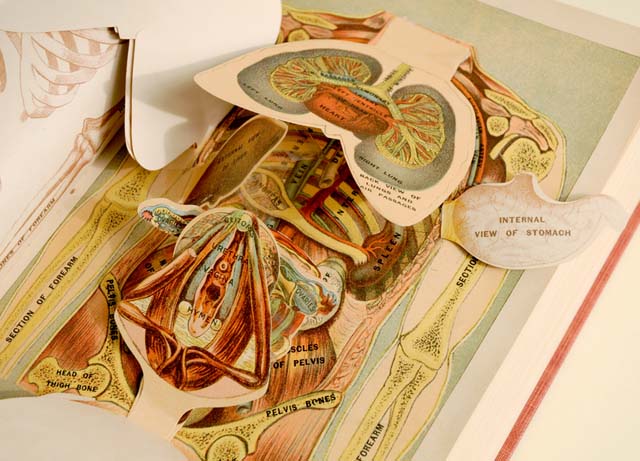 A few weeks back I was engaging in a little banter on Facebook. The topic was the book I hoped to write and one friend quipped that I should write a pop-up book. What a great idea, I thought! And my imagination took off. Perhaps I could make a pop-up book, with all the relevant anatomy, and the cancer inside. The cancer could be surrounded by perforations. Surgery would be made easy. All we’d have to do to remove the cancer would be to tear along the dotted line. How easy would that be! How cool!
But then my brain went a little wild. I could try out some broad spectrum radiotherapy by putting the book in the microwave. Or targeted radiation with a magnifying glass in the sun. Or maybe settle for chemo by soaking the book in vinegar every two or three weeks. Acupuncture could really let us use our imaginations. Rehab could involve opening and closing the page quickly to strengthen the muscles and limbs. We could even trial some new therapies not yet approved by the TGA!
It doesn’t hurt to laugh a little, even at my own expense. I’m not making light of cancer or the severity of the treatments. I’ve got a year and a half of personal experience now. I’m applying the Jewish principle – Jewish people are allowed to make Jewish jokes. Well I have cancer. It’s not funny. But it probably does me good to laugh at it now and then!
Made to Stick
 Over summer some of our tents got damaged. We had a major windstorm blow through the campground, causing trees and branches to come down everywhere. Two major rips in one tent and a dozen minor tears in the shade tarpaulin. Gaff Tape to the rescue! This tape is seriously potent stuff. It fixes the problems and it goes on easily. There’s really only one problem. You can’t get it off! You can pull the tape away, but the sticky residue remains as testimony to the holes it once covered. The stickiness sticks even after the tent has been professionally repaired. If only that were true of all my good ideas, all my sermons, all my visions for the future! Communicate and they stick – at least all the bits that really mattered.
Made to Stick: Why Some Ideas Survive and Others Die by Chip Heath and Dan Heath is a book for people who want to communicate. Not just say things, but be heard, understood, remembered, and embraced. The authors have written this book for people who want their ideas to change people’s opinions and behaviours – that is, to make their ideas stick. As a pastor, I don’t want to be merely whistling into the wind. I’m keen for people to be excited by the message of God, to remember what’s important, to change how they think and speak and act, and to pass the message on to others. How sticky are my words and ideas? How much is remembered from my sermons? How do I go about seeking to communicate the life giving words of God?
Sadly, I hear some preachers with a love for God’s message, who come across as boring as the paint job on a navy ship. And I hear others, whose messages are largely froth and bubble, a mix of cliches and pop psychology, who get remembered because they manage to communicate in a sticky way. A good message deserves to be communicated in the very best ways possible. This book offers some great ideas, and you’ll find that many of them are pretty sticky!
The authors have identified six common features to sticky ideas. They’ve expressed them by the acronym SUCCESs. A pity they couldn’t think of a seventh – but maybe the lack of a final S makes it even more sticky?! These are the principles they found at work…
Simplicity
Unexpectedness
Concreteness
Credibility
Emotions
Stories
1. Simplicity
This is not about creating sound bites or necessarily short messages. It has to do with stripping the idea down to its core. What is its essence?
A successful defense lawyer says, “If you argue ten points, even if each is a good point, then when they get back to the jury room they won’t remember any.” (p16)
This isn’t about dumbing things down. It’s separating the interesting ideas from the important. It’s separating the important from the most important. It’s distilling the essential out of the most important. Then you’ve got simple.
I see this as a trap for preachers. You’ve been working in a passage of Scripture, soaking yourself in it, picking out gems, discovering new paths, having the occasional ‘aha’ experience. You’ve worked hard in your preparation. There are so many things you want to say. And you do! You have enough different good ideas for a series of sermons and people are left wondering what on earth you said. Occasional preachers and student preachers are especially prone to this. If you only get to say things once every now and then, you’d better make the most of it. Yes! But that doesn’t mean saying everything! It means saying what you most want to say and making it stick.
2. Unexpectedness
The most basic way to get people’s attention is to break a pattern. We tend to be creatures of habit and we get lulled into the security of consistent patterns. Unexpected ideas are more likely to stick because they make us pay attention and think. The extra attention sticks the ideas into our memories.
I remember hearing a sermon by a friend, where he began by saying he had two important announcements to make. The first was that someone, let’s call him Tommy, was being kicked out of the church because he’d done a, b, c, f, j, k, m, p, and q. These things were seriously bad and you could have heard a pin drop in the auditorium. This was going to be a heavy time for the church. We’d never faced anything this intense before. How would it be handled? The speaker had everyone’s attention. No one would forget this sermon. In fact, they’d be hanging out to get home and recount it to others.
The second announcement was that there was no such person as Tommy. He’d made him up! He wanted to get us thinking what should we do, what would we do, if these things actually happened. You might argue that the intro was ‘gimmickry’, however I’d respond that it moved me quickly and directly to the weight of the issue. This was more than a trick to get my attention. It persuaded me why I needed to listen. I heard it over 20 years ago, and I think it remains one of the stickiest sermons I’ve ever heard. Because he got my attention and held it, I can even remember the main point and the passage of the Bible being taught.
Getting people’s attention is one thing. Keeping it is another. Too many messages start well, and then deteriorate into boredom. We need to maintain people’s interest. The ideal way to do this is to create mystery, to breed curiosity, to show a gap in the audience’s knowledge that they want filled. It’s this gap that holds people’s attention. This is why people will keep watching a B grade movie to the end. They want the gaps filled and the tensions resolved. This means we need to highlight gaps in people’s knowledge that they want filled. Rather than simply filling their minds with facts, we want them to be seeking answers to their own questions.
To make our communication more effective, we need to shift our thinking from “What information do I need to convey?” to “What questions do I want my audience to ask?” (p88)
3. Concreteness
Concrete ideas are stickier than abstract ideas. Aesop authored some of the stickiest stories in history. We remember the message of The Tortoise and the Hare or The Boy who cried Wolf or The Goose that laid the Golden Eggs, far more easily than we could ever remember the abstract messages they portray. Yet because of the concrete story, we also remember the meaning. Here’s an example:
One summer day a Fox was strolling through an orchard. He saw a bunch of grapes high on a grape vine. “Just the thing to quench my thirst,” he said. Backing up a few paces, he took a run and jumped at the grapes, just missing. Turning around again, he ran faster and jumped again. Still a miss. Again and again he jumped, until he gave up out of exhaustion. Walking away with his nose in the air, he said: “I am sure they are sour.” It is easy to despise what you can’t get. (p98)
If we want our ideas to stick we should err toward concrete ideas rather than abstractions. A V8 engine is concrete, whereas a high performance motor is abstract. A tightrope walker above Niagara Falls is concrete, whereas stepping out in faith is abstract. Engineering drawings are abstract, whereas walking onto the factory floor and showing where the part should go is concrete.
The authors argue that concreteness is the easiest of the six traits to embrace and that it may also be the most effective.
Crafting our ideas in an unexpected way takes a fair amount of effort and applied creativity. But being concrete isn’t hard, and it doesn’t require a lot of effort. The barrier is simply forgetfulness – we forget that we’re slipping back into abstract speak. We forget that other people don’t know what we know. We’re the engineers who keep flipping back to our drawings, not noticing that the assemblers just want us to follow them down to the factory floor. (p129)
4. Credibility
Why do people believe ideas? There’s a multitude of influencing factors. We’re influenced by our parents and friends. We believe because we’ve had experiences that lead us in this direction. Our religious beliefs have an impact. We believe because we trust authorities on the matter. People develop core beliefs that operate like a set of gates allowing them to accept or reject new ideas. If we want to persuade a skeptical audience to believe a new message, then we face an uphill battle against so many other influences.
External authorities, such as an expert or a celebrity, can add weight to a message. The trouble is we don’t always have access to such authorities. At these times it’s important that our ideas have internal credibility. They must be logical and coherent. They need to stand up for themselves.
An important way of establishing credibility is to make a ‘falsifiable claim’. You ask the audience to test the idea for themselves. Can they prove it wrong? Will they check it out to seek if it stacks up to its claim? Testable credentials can provide an enormous credibility boost, since they essentially allow your audience members to “try before they buy.” (p157)
This approach resonates with how I should see communication about God working. The external authority is God himself, but if people don’t recognise his authority, they can at least test the claims. They don’t need to begin with accepting the divine authorship of the Bible, but can ask questions of verification. One area of internal credibility has to do with “does it work?” I want to encourage people to check out Jesus. I argue that he makes a huge difference to people’s life. I explain the difference he has made to mine. And I invite people to check him out for themselves. Does he make a difference?
5. Emotions
Believing credible ideas isn’t enough. People need to care if they are going to act in response. Much of this chapter seems to be about appealing to people’s self-interest. People are motivated if they feel they’re going to get something out of it. Appealing to people’s self-interest gets their attention. An old advertising maxim says you have got to spell out the benefit of the benefit. In other words, people don’t buy quarter-inch drill bits. They buy quarter-inch holes so they can hang their children’s pictures. (p179) This is the WIIFY – what’s in it for you – aspect of advertising. The authors argue that good communication needs to include this aspect. People need to have their needs engaged if they’re going to buy into the idea.
There are principles here that are more than appealing to selfishness. It’s more to do with people understanding their need to engage with the ideas. That it matters. To them. This is more than facts and figures. It’s more than analysis and reason. It’s about making things personal, showing how much they matter.
The authors have identified that people care more about the particular than the pattern. Like Mother Theresa’s comment: If I look at the mass, I will never act. If I look at the one, I will. (p203) If we want people to act, then we need to do more than get them to make a rational response. They need to take off their analytical hats. We must show how our ideas connect with something they already care about. We appeal to what they value, who they are, and want they want to become.
All this might appear very manipulative, and it certainly could be used this way. We could simply end up reinforcing people’s selfishness by encouraging them to focus on their own desires. However, I think we should reflect on the emotional component of making ideas sticky. The world I come from tends to be very cerebral and doesn’t give much thought as to what moves people. We are emotional beings. Let’s not overlook this fact. We can be very passionate about things that matter deeply to us. Let’s tap into people’s passions as we communicate.
6. Stories
Good stories are very sticky. They can provide inspiration that moves people to action. They can help rehearse situations that enable people to perform better when they face similar real life circumstances in the future. A bit like a mental flight simulator that prepares people to respond more quickly and effectively.
Firefighters naturally swap stories after every fire, and by so doing they multiply their experience; after years of hearing stories, they have a richer, more complete mental catalog of critical situations they might confront during a fire and the appropriate responses to those situations. (p18)
Stories help anchor important ideas in reality. They could be used to explain the idea, illustrate the idea, or apply the idea. You don’t always have to create the sticky story idea. Sometimes it’s just a matter of identifying them when they come your way.
The beauty of stories is that they naturally embody most of the SUCCESs framework.
Stories are almost always Concrete. Most of them have Emotional and Unexpected elements. The hardest part of using stories effectively is making sure that they’re Simple – that they reflect your core message. (p237)
Application
If you’re in the business of communicating ideas that you want to change people’s lives, then read this book. You probably won’t like everything – I didn’t. Some things might clash with your worldview – they did mine. But it’s worth reading. The ideas here are worth considering. Communication is two sided. We can talk and talk, write and write, advertise and advertise, preach and preach… resulting in no visible change. No changed thinking. No resultant action.
There are no guarantees here. You could be the world’s greatest communicator and still no one changes. Isaiah the great prophet from around the eighth century BC had a powerful message to communicate, but he was told that the people would not change. Instead they would be ever hearing, but never understanding; be ever seeing, but never perceiving. (Isaiah 6:9)
We can’t control who will be changed by our message and who won’t, but we must not hide behind poor communication. If the message matters then so does the medium. If you want everyone to read something in the paper, then you write a gripping headline and put it on the cover. You don’t hide it away in small print somewhere toward the back.
In my role as a pastor/teacher I want to apply myself to my message, but also to improving my modes of communication. What will help people to grasp and retain the message? What will help people to understand why it matters so much? What will inspire people to take action? How can I make my sermons stickier? How can I communicate our vision in a stickier way? These are all questions worth asking.
Wednesdays were pretty normal
 Great title. Great cover. Great book! Wednesdays were pretty normal: A boy, cancer, and God by Michael Kelley has given me plenty to think about. It’s an open and honest story of a father wrestling with faith questions, after his boy is diagnosed with leukaemia. All the books I’ve read on cancer and serious illness so far, have been written by the patient themselves. This book, by the father, feels even more potent. When it’s happening to me, that’s bad enough, but if it were my own child, then I suspect I’d find it even harder. I especially recommend this book to parents who face the heartache of their children having serious illnesses. This is a battle ground for faith. Not just intellectual ascent, but struggle to keep trusting in God.
Kelley was trained as a pastor and thought he knew all the right answers to most problems. He figured he understood faith. It was a noun. Joshua’s cancer put this to the test. He began to realise it was something he needed to choose. It was one thing to have a set of beliefs, but another thing entirely to act on them in adversity. If God was truly in control of this world, then what did that mean for the evil and cruelty he saw and was now experiencing? He couldn’t pick and choose what he liked about God. If God was to be trusted for real, then this meant trusting him in the good times and the bad.
Faith and doubt are sometimes seen as opposites. Kelley shows how they are often part of the same experience. He’s on solid scriptural ground with this, quoting the man who came to Jesus in Mark 9:24, saying “I do believe; help me overcome my unbelief!” There is a humility in these words. The man’s failings are obvious. All he can do is trust in Jesus, because his own resources are lacking. Isn’t this the essence of faith – trusting in Jesus, rather than trusting in our own faith? I wonder how often those who are perceived to have a ‘strong faith’ are tempted to trust in the wrong thing – ultimately themselves? As Kelley writes…
What if our definition of faith is wrong? What if we have been putting faith in our own ability to have faith? What if real faith is not necessarily absent of questions and doubts; what if real faith is more about what we do with doubt than whether we have it? (p33)
As Kelley describes the impact of chemo on his boy, I find myself feeling most of what he describes. He speaks of the toxic impact, the drugs, the side effects, the pain killers. He also describes the psychological impact, the emotional pain, and the spiritual questioning. Why are these things happening? He introduces us to the experience of Job in the Bible, and his quest to find answers from God. Job puts his challenges to God, and yet God chooses not to answer them. Instead, through four chapters, God makes himself known. Not why, but who, is the answer God gives.
Never once did God crack the door of eternity and say, “See this whole thing started when Satan came walking in here…” Never once did He take Job into the future to show him the good that would come from his struggle. Never once did He reveal the way He would redeem Job’s pain. Never did God show Job one of the billions of Bibles that would be printed in the future, all containing his story. Not one single answer to Job’s specific questions. Just descriptions of himself. (p50)
Kelley shares his ongoing struggles to find evidence of God’s love. The circumstances of pain seem to argue against God being loving towards him. Where is God when he’s needed? Why doesn’t he fix things up when he’s asked? He writes…
I didn’t need a Jesus who was sleeping in the boat while the storms raged around His friends. I needed a Jesus who was turning over the tables of sickness and disease and calling out cancerous cells like they were demons. (p56)
I can certainly relate. What a great picture! But, if we only look to our circumstances for proof of God’s love it can easily seem like God has given up on us. We need to remember how acquainted Jesus is with human suffering. He didn’t offer sympathy card platitudes. He shared in our pain and he shed tears like us. He faced rejection, betrayal, torture and death. He bore our sin in his body. He took the judgment we deserve. Here is compelling proof that God is not remote, that he hasn’t abandoned us, and that his love is profoundly deep.
Kelley shares the breadth of grief he experienced in dealing with his son’s cancer. The dreams that were shattered and the plans unfulfilled. He speaks of losing his identity, his sense of significance, and becoming poor in a variety of ways. The experience of Joshua’s sickness and treatment was hugely demanding. It took Kelley to the ends of his resources, and it was then that he began to picture himself more accurately. When career and health and achievements and family life are all altered and threatened, then the truth about ourselves comes into focus. It’s only when the things we’ve clung to to define ourselves are stripped away, that we are freed to see ourselves more clearly in Christ.
We learn in this book about how God has brought healing to Kelley through his son’s illness. God revealed to him sicknesses that he didn’t know he had.
It’s brought to light my shallowness. It’s brought to light my idealistic view of faith. It’s brought to light my dependence on circumstances and my reluctance to accept responsibility. It’s brought to light my love of all things material. (p146)
God taught Kelley many lessons about patience. Patience is faith that waits. Treatment for childhood leukaemia is a long term process. Even after the words remission were used, chemo had to continue for the remainder of three years. In the midst of their pain and exhaustion, the family kept looking ahead in hope, knowing that they couldn’t have what they wanted, just yet. Living in the western world leads us to expect instant gratification, and the church has also bought into this trap. So often God says to wait. He has good things for us, but we must wait.
There were many things in this book that stretched me. The big issues for me had to do with the nature of faith. It made me realise that there are times when I assume I’m exercising faith, when in reality I’m probably not. It’s just that I become used to the routine, what’s coming up. This is familiarity rather than faith. Faith is about looking to God when the routine is blown, when the expectations are shot, when I can’t control the circumstances. It’s also about recognising God’s hand and provision in the routine and mundane. This book has reminded me that passive faith isn’t really faith at all. Faith is active and we need to fight for it.
As the Apostle Paul wrote to his protege so long ago…
10 … (some) have wandered from the faith and pierced themselves with many griefs. 11 But you, man of God, flee from all this, and pursue righteousness, godliness, faith, love, endurance and gentleness. 12 Fight the good fight of the faith. Take hold of the eternal life to which you were called when you made your good confession in the presence of many witnesses. (1 Timothy 6:10-12)
Hope beyond cure
‘Cancer free to no hope in less than two weeks.’
This was the headline to the post I read on a cancer forum yesterday. How could things change so quickly? The truth is, they hadn’t. There’d been a bad case of miscommunication.
I browse these forums from time to time. I can’t do it daily. I find it too sad, too overwhelming. People are sick, confused, powerless, dying, and so often lacking in hope. Every day there are desperate cries of anguish. There are pleas for prayer. There’s the outpouring of grief. Sometimes there’s an explosion of anger at the merciless killer, cancer.
As I read the headline above, it clarified in my mind what it is that I so want to communicate. It’s what I’m praying my book will achieve. My goal is to offer hope beyond cure.
Don’t get me wrong, I’m 100% pro-cure. I want my cancer to completely disappear. I pray that it will and I pray the same for others. I’m excited by medical advances and new discoveries. I absolutely love hearing that someone with cancer has no evidence of disease anymore. I love the hope that comes with this pronouncement. In a sense, life can begin again. A new chapter with a new outlook.
Yet when the prognosis is bad, when all attempts at medical intervention have been exhausted, when prayers have not been answered as we might wish… what then? Is there hope still? Or has all hope been exhausted?
Is cure the ultimate hope for those of us with cancer? Is this what we hope for beyond all else? I don’t know really. I haven’t asked enough people. My guess, is that we have a range of hopes. But I’m concerned if the hope of a cure for cancer is where we stop.
What happens if we are cured? We go back to life. Not as normal. More likely as radically changed people. But then we’re likely to get sick again. It could be the recurrence of cancer. It may be something else altogether. We may recover and we might keep recovering, but there will come a day when we won’t. Death will catch up with each of us eventually.
What then of hope? Is it a meaningless platitude? Was Nietzsche right when he wrote…
In reality, hope is the worst of all evils, because it prolongs the torments of man.
Or is there hope yet for those facing death? This is such an important question and yet so often it doesn’t get asked. We become so consumed with life here and now, that we don’t pause to consider the inevitability of our death. I may not have cancer when I die, but I will still die. Is there hope for me? Is there hope for any of us?
19 If only for this life we have hope in Christ, we are of all people most to be pitied. 20 But Christ has indeed been raised from the dead, the first fruits of those who have fallen asleep. (1 Corinthians 15:18-19)
God’s Word tells me that the answer is YES! There is hope beyond death and it’s found in Jesus Christ. I long for people to know the certainty of this hope. This is a hope that stands on the evidence of the resurrection of Jesus from the dead. If Jesus is alive today, then there is hope beyond cure. There is hope beyond death.
Trust me I’m a Cancer Patient
 Trust Me I’m a
 Doctor Cancer Patient by Wesley Finegan is a detailed manual for understandings symptoms of cancer, and it’s various treatments and side effects. Finegan worked for a number of years as a doctor with an interest in patients with cancer, before being appointed as a consultant in palliative medicine. Three years later, he became a cancer patient himself. People suggested that he would know all about this, but he had never been a patient before and he still had much to learn. He shares his wisdom in this book. This is the predecessor to his similarly structured book, Being a Cancer Patient’s Carer: A Guide. This book contains forty five chapters and each one follows the same practical structure (TANDEM):
The doctor says
Think
Ask
Note
Do
Explore
More information (pages viii-ix)
The first section of the book is focused on understanding Pain. It discusses the different ways that pain can be assessed, including the classic: ‘What number between 0 and 10 would you give your pain, with 0 being none at all and 10 being the most you could ever imagine?’ I remember being asked this so many times in hospital and usually finding it difficult to differentiate in the 3-7 range. However, there was one occasion when they ripped out my chest drain, that I understood what a 10 felt like!
Good assessment of pain is necessary for good management of pain. In many cases there are a range of pain management options available, so it is important to tune it to its effectiveness, side effects and so on. There has to be teamwork between the patient and doctors to get this right. Others not involved in your health care should not be allowed to interfere or change treatment, as this could be very dangerous. Pain killers need to be very carefully managed. Sometimes there are different means of administering the pain medication. The patient may be able to wear a patch, or be attached to a machine that limits the dose while they self-administer.
The second section of the book documents a long list of Physical Problems that may be associated with the disease or treatments. The list includes: loss of appetite; constipation; depression; diarrhoea; itchiness; sore mouth; difficulty sleeping; constant tiredness; weakness; and many more issues. I can identify personally with all these above. In my case, they are some of the side effects of the chemo, rather than symptoms of the cancer.
The beauty of this book is that you can look up whatever chapters may be relevant at different times. There may be times when I’d look up a number at once, and others that probably wouldn’t get a look in. Many of the chapters contain helpful diagnostic check lists to help you understand what is or isn’t happening to you. You are also encouraged to document pain and symptoms so that you can refer back when things reoccur. This help to recognise patterns, changes, and sometimes alleviate fears when things can be demonstrated to have minimal or temporary impact.
Section three focuses on Personal, Social and Spiritual Problems. Some of these chapters are unlikely to be read in advance by a patient. For example: I am expecting Bad News. You’d have to be very quick off the mark, getting onto this book! However, others offer great advice for further down the track. They deal with some pretty heavy issues, from early ones, such as How to tell my Children the Bad News down the track to I want to make a Will or Euthanasia, living wills (advance directives) and resuscitation.
It’s probably not wise or helpful for people in early stages of cancer to dwell on some of the final chapters. There’s no point and it’s probably not helpful to be rushing into thinking about worst case scenarios. But there will be other chapters in this section worth dipping into early on. Two that have been particularly relevant to me have dealt with thinking through complementary therapies, such as acupuncture, and a chapter on issues relating to returning to work. The 3rd last chapter deals with thinking about spiritual needs. Personally, I wouldn’t leave this until the end, especially in case the end comes earlier than anticipated.
This book would provide an excellent resource for medical students, doctors, nurses and other health professionals engaging with cancer. I’d also recommend families who have someone going through cancer, to get hold of a copy, as a reference book for all to read as relevant.
Journey with cancer 29 April – Hopeful
Dear family and friends,
Chemo number 24 today. I’m becoming part of the furniture in the chemo ward. The time still seems to stand still while I’m there. But today’s visit was made quicker and more enjoyable by my friend Jim Ramsay accompanying me on the visit and making conversation about all sorts of things.
I will have another treatment next month and then a scan to check on what’s going on inside. This will be a bit different as they will scan without the contrast, due to my recent allergic response. I’m praying this will work okay and they can still get some accurate data to go on. We’ll work out afterwards whether the chemo continues or not. Likelihood is that the chemo journey will continue for a while yet.
I’ve just returned from an unusual and fruitful two weeks on the south coast. Week one, I spent on my own and the next week I was joined by the family. The plan was to make a start on writing a book. I was hoping to do more research, come up with a book outline, proposal, and get a draft of a couple chapters out of the way. I thank God that he enabled me to achieve a lot more.
 It was fun to work at the beach, though it always threatened to be distracting and give me plenty of alternatives for procrastination. I enjoyed some times working in a hammock chair, with kookaburras laughing nearby, listening to the sound of the surf, and sheltering in the shade of the trees. The biggest help to concentration was the huge amount of rain, flooding, driving winds and pounding surf over the weekend. It gave be no options but to stay indoors and tap away on the computer keyboard. I worked out how to make a nice cup of coffee with my Porlex and AeroPress. There was no TV to distract me and I managed to catch up on some sleep. God was good to me.
The idea of a book has been on my mind for a while, but it had been too daunting to know where to begin. Some suggested cutting and pasting some of these posts inside a front and back cover. That certainly had been tempting and I think I’d like to compile them some day as well. But I felt burdened to identify what gives me hope in the face of cancer and to share this with others. It was hard to get going, but once I did, I became lost in the world of the book, and started to enjoy the opportunity to write.
Midway through the time away I submitted by proposal, outline and two chapters to a publisher for them to consider. I received the welcome news a few days later that this publisher had agreed to support me in this project. They’ve assigned me an editor to help me work on it, and subject to them approving the final product, they will publish and distribute this book. I’m very excited about this! It gave me the incentive to knuckle down and complete the first seven chapters, Parts 1 and 2, roughly 20,000 words.
This is an outline, of where things are heading, God willing:
LIVING WITH HOPE
A journey with cancer and God
PART 1: LOSING HOPE
1. Hopeless news
2. Hopeless dreams
3. Hope matters
PART 2: HOPE RETURNS
4. Hope in medicine
5. Hope in understanding
6. Hope in lifestyle
7. Hope in relationships
PART 3: DEEPER HOPE
8. Hope in God’s grace
9. Hope in God’s promises
10. Hope in God’s people
11. Hope in God’s goodness
12. Hope in God’s work
13. Hope in God’s healing
PART 4: ENDURING HOPE
14. Hope in death
15. Hope in life
16. Hope in eternity
APPENDICES
That’s the plan, God willing. If you pray, then I’d ask you to join me in asking God to bless this project for his glory and people’s good.
Thank you,
Dave
Faith, hope and tears
The shortest verse in the Bible is filled with empathy. Jesus, the author of life, understands what it feels like to experience grief and loss when a loved one dies. It hurts. It aches. We cry tears of sadness. We grieve in death. There’s a time for mourning, a time for weeping. As it says in John 11:35…
Jesus wept.
Some might question whether it’s necessary or appropriate for Christians to mourn the loss of a fellow believer. Don’t we believe they’ll be raised? Aren’t we confident they’re now with Jesus? Doesn’t our faith in eternal life make such sorrow out of place? Surely, a Christian funeral should be a celebration, not a time of grief and sadness?
Look again at John 11:35…
Jesus wept.
Jesus believed in resurrection. In fact he spoke of himself as the resurrection and the life. He knew that his good friend Lazarus would be raised from the dead. He knew, because he would raise him!
And yet, John 11:35…
Jesus wept.
If you’ve experienced the loss of someone you love, let the tears flow. Jesus did.
humble ORTHODOXY
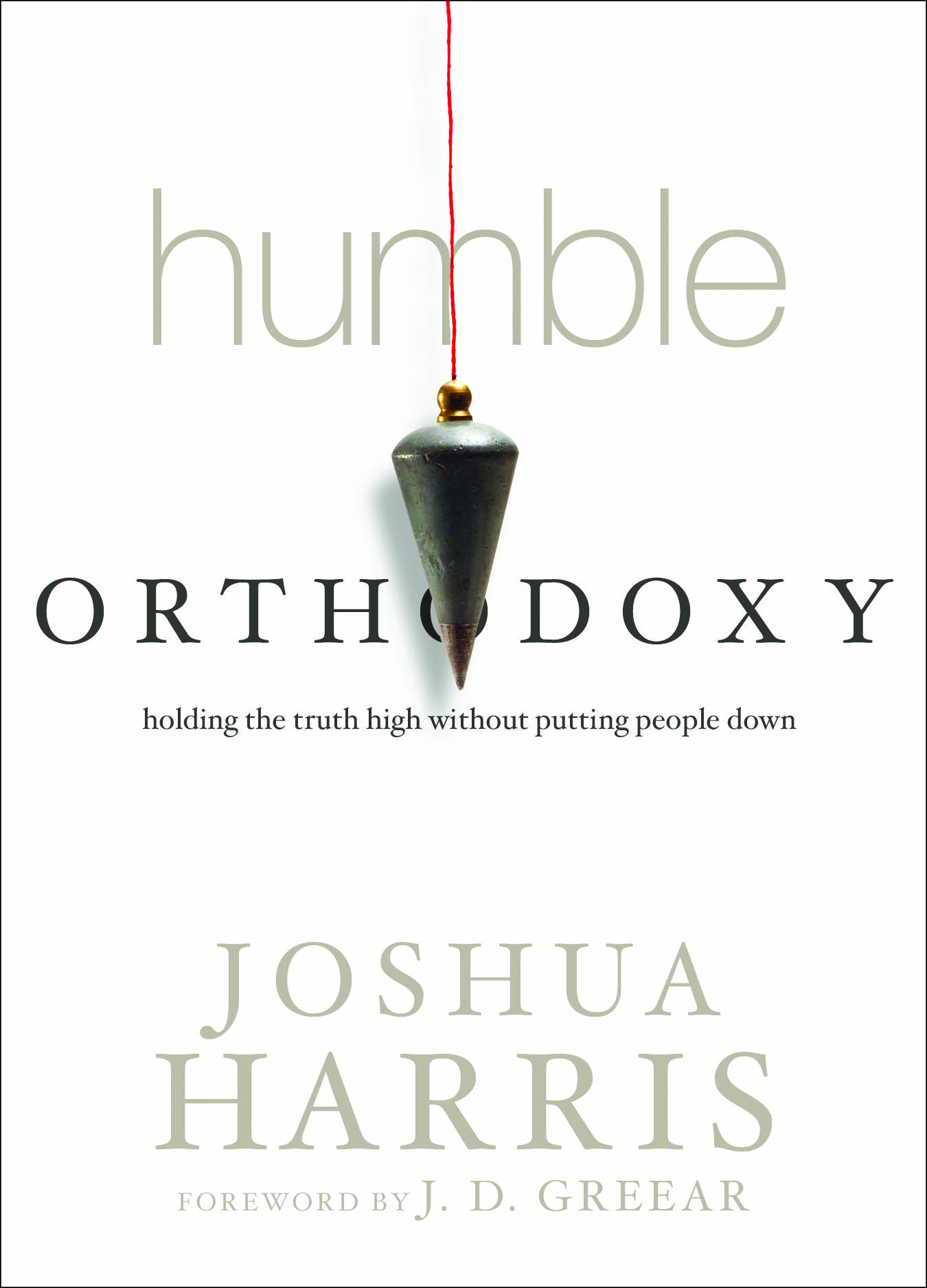 Humble orthodoxy: holding the truth high without putting people down by Joshua Harris is a potent little book. I think it should be recommended reading for all ministry trainees, all theological students, all pastors, all Christian academics. In reality, every Christian who struggles with, or gives into, pride should take the time to read this book. It’s a short book. It’s a simple message. It’s shaped by the gospel of God’s amazing grace. It reveals how truth must be accompanied by love and humility. This message is so easy to learn, but it seems so hard to put into practice. Yet it doesn’t have to be this way. God is in the business of changing and renovating prideful people. As Harris writes:
We don’t have to be jerks with the truth. We can remember how Jesus showed us mercy when we were his enemies. We can demonstrate a humble orthodoxy, holding onto our identity in the gospel. We are not those who are right; we are those who are redeemed. (p61)
This little book is filled with pithy statements – the kind worth pasting on our bathroom mirrors or the back of the toilet doors – somewhere where we won’t miss them. These are truths worth reminding ourselves of regularly. Humble orthodoxy is shaped by the Scriptures:
3 “Why do you look at the speck of sawdust in your brother’s eye and pay no attention to the plank in your own eye? 4 How can you say to your brother, ‘Let me take the speck out of your eye,’ when all the time there is a plank in your own eye? 5 You hypocrite, first take the plank out of your own eye, and then you will see clearly to remove the speck from your brother’s eye. (Matthew 7:3-5)
…knowledge puffs up while love builds up. (1 Corinthians 8:1)
23 Don’t have anything to do with foolish and stupid arguments, because you know they produce quarrels. 24 And the Lord’s servant must not be quarrelsome but must be kind to everyone, able to teach, not resentful. 25 Opponents must be gently instructed, in the hope that God will grant them repentance leading them to a knowledge of the truth, (2 Timothy 2:22-25)
Rather than summarise the message of this book in my own words, I’ll simply highlight a number of quotes that will give you much of the picture:
Orthodox truths are the plumb line that shows us how to think straight in a crooked world. (p3)
We must care deeply about the truth, and we must also defend and share the truth with compassion and humility. (p5)
One of the mistakes Christians make is that we learn to rebuke like Jesus but not love like Jesus. (p6)
Paul didn’t just want to beat his opponents in an argument; he wanted to win them to the truth. (p14)
We don’t have the luxury or the biblical permission to be uncertain about those things God has been clear on. (p16)
The message of Christian orthodoxy isn’t that I’m right and someone else is wrong. It’s that I am wrong and yet God is filled with grace. (p21)
Genuine orthodoxy – the heart of which is the death of God’s Son for undeserving sinners – is the most humbling, human-pride-smashing message in the world. (p29)
Are we giving as much energy to obeying God’s Word personally as we are to criticising its detractors? (p36)
Don’t measure yourself by what you know. Measure yourself by the practice of what you know. (p39)
There’s a difference between having a critical mind that carefully evaluates and having a critical spirit that loves to tear down. (p44)
The truth is not about us. It is about God. (p46)
In eternity we’ll see the silliness of self-righteousness and quarrelling over non-essentials. But we’ll also see with piercing clarity just how essential the essentials really are. (p57)
I needed to read this book. I wonder whether you do too?
Rhythm in growth groups
As I write this post, our growth group is taking a break. We’re not meeting this week. It’s the school holidays, between terms 1 and 2. Last week we had a social night, this week we won’t meet, and next week we’ll launch back into things again in term 2. Taking a break can be helpful. It’s not that people don’t want to meet. It’s more that a week off here and there, and changes now and again, helps keep things fresh. There are great benefits to be found in oscillating intensity and renewal. As Bruce Millar writes in Your Church in Rhythm, ‘Life is not a marathon but rather a series of sprints and rests. If churches try to keep a constant pace, they build up higher and higher levels of stress.’ (p141)
God has designed our world with rhythm. We have four seasons each year, at least in my part of the world we do! The moon gives us monthly rhythms, a fact that matters to fishermen at least. God has given us a weekly pattern of work six, rest one. Our days are balanced by night and day. Such rhythms give light and shade to our lives. They reveal a time for this and a time for that. They show the value of variety. Our school system rides these rhythms, with its 4 terms a year, 10 weeks a term, 5 days a week, three sessions a day. Years are broken up with summer breaks, terms with 2 week holidays, weeks with weekends, days with recess and lunch breaks. We’d do well to learn from the wisdom of those around us and go with some of the natural flows.
We want our growth groups to remain fresh, interesting, varied, and engaging. We don’t want leaders burning out before their time. We want to prevent groups fraying at the edges because people are bored with the same old same old. We want to encourage strategies for group life that energise rather than drain. So what can we do?
NB. Most of the following suggestions first appeared in my post Why churches should stop small groups
Yearly cycles
Starting and stopping our groups each year, helps people to pace themselves. It allows time to build relationships and it also offers an opt-out when the relationships aren’t really working, or we simply want to get to know others. Life changes each year. We move, we get new jobs, our kids get older, we enter into new relationships. These changes often mean people should move to a different group.
Consider carefully when groups begin. Our church often waited until March, when uni students got back into town, but this frustrated others who were looking for a group in January or when school started. It might be wise to advertise a number starting times. But equally, set a stop time, so that the group can finish on a strong note, people can be thanked and farewelled, celebrations can be shared. It’s not good when groups simply taper out and dissolve. This can be a recipe for hurt and disappointments. We need to stop our small groups well!
This is not to say that we should dissolve our groups every year. Some groups will continue for years and remain healthy. But giving people some time out at the close of the year can be very healthy. Taking a break from the group can function like an annual sabbath to enable everyone to have a rest – pastors, leaders, participants and their families. Sometimes, short term summer holiday groups can fill the gap for those who need a group during this period.
Term-based cycles
There is much to be gained by arranging our groups according to seasons, and often the most obvious is school terms. While not everyone’s life is shaped by terms, it does have the benefit of pacing the life of the group. We can oscillate between 9-11 weeks on and 1-3 weeks off. It gives the leaders and the group a break. It gives parents time to do things with their children during the holidays. People get time off for other things and don’t resent their group for always demanding their time.
It can also be helpful to match these groups with the program of the church. If the teaching is term-based this allows integration across the church. A short teaching series is offered in the school holidays and the groups get some time off. Larry Osborne, in Sticky Church, suggests that breaking between terms gives the groups an opportunity to take stock, reevaluate how the group is going, and sometimes to help people transition into another group if things aren’t working out. Stopping our groups in the holidays can also give space for doing other things with the group, perhaps a social outing, a special dinner, or a weekend away. If we want people to stay excited about the groups, I think there is great value in stopping our groups at the end of each term.
Weekly cycles
If our groups go for 9 or 10 weeks followed by a break, then we should plan how to use these weeks. Are we following the sermon series? Will the group need some variety over this time? Perhaps, a 4-1-4-1 plan to do studies, with a night of prayer in the centre, or a dinner together, or combine with another group in the church for a night. The church might encourage groups to do something different in one of the terms, perhaps encouraging the groups to do a training course, or to choose their own studies. If so, then we need to communicate well ahead and prepare people for the changes.
Sometimes the group will face a particular crisis and we need to break with the timetable or plan. Maybe a member is in hospital and the group will choose to stop a week so everyone gets a chance to visit. It could be a big issue that is facing the group that needs addressing, so we might stop the program and give this issue the attention it needs.
Daily cycles
It’s also worth considering the basic shape of each group meeting. How much time is given to catching up with each other, sharing needs or joys, learning and discussing God’s word, praying for one another and other things? Does the group share food together – a meal or simply refreshments? Is the group excited about how it uses it’s time?
People are creatures of habit and they build their expectations on their experiences. If a group always starts late and finishes after the agreed time, people will start coming late and often still get irritated when the group goes overtime. If we stick to the group’s agreed timetable, this will build confidence in the group and create a less stressful environment. If you need to, then agree together on extending the time we meet, otherwise we should stop our groups on time!
I hope reflecting on these rhythms will help increase the joy and decrease the stress in our growth groups!
Going the distance
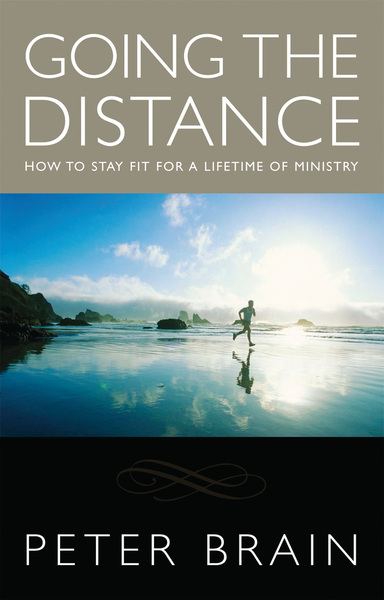 Going the distance: How to stay fit for a lifetime of ministry by Peter Brain is an important book for people in pastoral ministry. We should probably read it more than once! I read it years ago, when it was first published. It inspired me to make significant changes to my life and ministry and to encourage others to do the same. I remember inviting Peter to visit Canberra and lead 50 or more local ministers through his. We all found this time very confronting and useful. However, I also need to confess that some things need to be learned over and over. I’ve read this book for a second time over the past couple of days and I’ve kept finding areas where I’ve dropped the ball. Repeated mistakes that I should have dealt with. And fresh ideas to share with others.
Interestingly, I’ve also noticed that much of the encouragement to self-care, aimed at me as a pastor, is equally relevant to self-care for me as a cancer patient! Keeping fit, getting enough sleep, not feeding the adrenaline-stress cycle, investing in my family and friendships, taking time out, working well and relaxing equally well, spending time in God’s word and prayer, recognising the factors that lead to depression, enjoying a healthy sexual relationship with my wife, making holidays count, being willing to say ‘no’ so that my ‘yes’ means more, relying on God’s strength. These things are relevant for all people, not simply for pastors. But the problems come when pastors, like myself, assume that we are larger than life! When we think we can function differently to every one else. When we ignore the warning signs, we will eventually crash.
This book is a helpful road map for guiding us to avoid the pitfalls and dangers and disasters that will come our way, especially (but not exclusively) in pastoral ministry. If our lives are especially busy and draining, and if they revolve around caring for people, then we need to take these warnings seriously. Especially if we think we’re indispensable, or worse still, if we function as though we’re the Messiah, that no one can do without, then we’re in serious danger. Overall, this is a very good road map. It’s worth consulting many times on the journey. It’s worth spending time with others, looking at it together, and planning what steps to take next.
This book draws heavily on the work of one of Peter Brain’s teachers, Dr Arch Hart from Fuller Theological Seminary in the US. Hart has written a number of influential books, including Adrenaline and Stress and Coping with Depression in the Ministry and other Helping Professions. I remember my mother sending me Hart’s book on stress very early in my ministry, but I was too busy to read it! (I’m only semi-joking.) I put it aside, along with so many other helpful resources, because I didn’t have any problems and there were too many pressing things to be done. And there’s the problem! Straight and simple. We too often put off what’s important and replace it with the urgent. Eventually we can’t cope with the urgent or the important and we’ve become casualties of burnout.
Various statistics relating to the burnout of pastors are quoted in this book. It doesn’t matter whose stats we read, they’re always alarmingly high. Too many casualties. Too many avoidable tragedies. I can testify to having felt burnt out a number of times throughout my ministry. On one occasion a few years back, numerous people were asking me to consider a different ministry role, but I couldn’t even consider it because I knew at that time I’d have nothing to offer. It was then that I realised some things badly needed to change, and we took long service leave to recharge and try to sort them out.
Peter argues that the signs of burnout can be either friend or foe. It all depends on what response we make to the signs. If we ignore them, we’re headed for serious trouble. If we see the symptoms, and recognise them for what they are, then there’s real hope ahead. We have the opportunity to realign, take some better paths, and push on. I believe this experience will probably happen many times throughout a pastor’s ministry. Each time we should embrace it early, as an opportunity for change and growth.
If you’re involved in pastoral ministry or a ‘people-focused helping-profession’ of some sort, then I recommend you read and keep referring to this book. If you’ve never read it and you suspect that you may be at risk of crashing, then please get hold of a copy and read it. But also speak with someone you trust about your situation and how you’re feeling. This is a good book to read with some friends or colleagues. You can share what you learn, talk it through practically, relate it to your own situations, and agree to support and pray for each other. It will be worth the encroachment into your busy life. I promise!
Time for some self-care. I’m off to bed. 🙂
Letters from the land of cancer
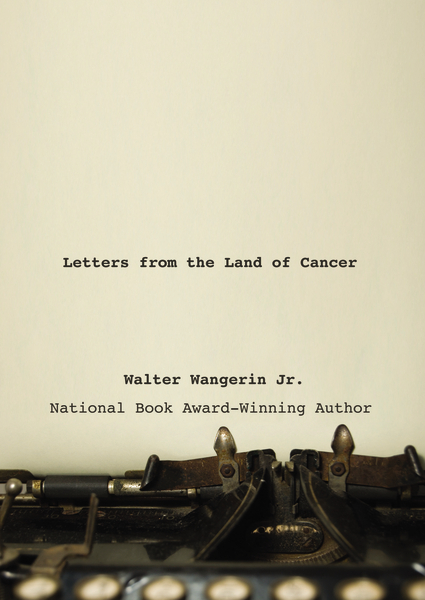 I began reading Letters from the Land of Cancer by Walter Wangerin Jr. nearly a year ago. However, I didn’t finish it. I think I felt a little overwhelmed by it. The topic, the intensity, the unrelenting discussion of cancer and death. I wasn’t yet ready to read 22 letters by a man reflecting on his cancer. I set myself the project of reading it all this week. If I was planning to write a book about living with cancer, then I needed to consider what it felt like for the reader. This probably makes me one of the more motivated of his readers. We share the same cancer, a similar profession, same number of children, grandchildren (that’s right – I’m awaiting delivery in October), love of motorcycles, and more.
The obvious difference is that Walter Wangerin is a world-class, well-respected, writer. That makes WW a WWW! (Grandad joke!) He’s a teacher of English literature and a prolific writer of fiction. He’s a wordsmith. He’s eloquent. He’s poetic. His writing is thick, like treacle. It’s deep, intense, heavy, profound. His words are disturbing, niggling, probing. But they’re also light and fresh and invigorating. They stir the soul to action. At least, they did mine. I’ve written so many notes and comments and questions.
I found this book hard to get into, but harder to put down. I wanted to know what happened next. What did you learn? How is your treatment? How is your wife? What are the doctors saying? What are the results of the next scan? How does this mesh with your faith? What is important to you now? What will you make your priorities? What’s it like to be on oxygen 24/7? Why don’t you pray for your own healing? Why do you look forward to death? How do your family feel? What leads you to say your cancer is an adventure? Or a blessing rather than a battle? I suspect that I was vicariously travelling this journey with him, and that these are more questions about me than him.
This book worked for me. It pushed me to reflect, to reconsider my own experiences, to look again to God. It’s heavy, but he’s writing about heavy stuff. Reading 22 letters one after the other is a bit like watching a still frame motion picture. You know, the ones that show a seed being planted, a sprout emerging from the ground, a plant growing to maturity. All frame by frame. One picture per day. It’s like that. We see the outside journey experienced by the Wangerins, and we also learn of the inner journey, the impact on his mind and heart, his faith and convictions.
I’m not sure who I’d give this book to. My dad has read it, so I’ll have to ask him his thoughts. I suspect you’d want to be a serious reader to tackle it. I also suspect you’d need to be willing to be confronted heavily with your own mortality. It’s no coincidence, that I wrote the poem, Pain, while reading this book. It’s an intense book.
Following his journey throughout this book, I fully expected the final chapter to be posthumous. Perhaps, a final word from his wife, speaking of Walter’s passing. But no. It’s all Walter. The cancer was discovered in 2005, the final letter of the book written in 2008, the publishing date 2010. As soon as I finished the book, I hurried to my computer and googled his name. So when did he die? According to his website he has a speaking engagement on May 31 in West Virginia, so I’m guessing not yet!
I’d love to meet this man. I think we’d have a lot to talk about!
Ministry in the NT
 I was totally persuaded we should head to the NT to begin a new ministry. Everything was pointing in that direction. The burden on our hearts. The enthusiasm of family and friends. The great need. The neglect of so many. The way everything was falling into place. A job, a house, schools, coworkers. A replacement back home. The time was right. The lights were green. The decisions were made. The belongings were gone. Only the farewells to go. Except for… cancer.
My God! What were you thinking? Why did you send us down that path? What’s the story? Did you change your mind? Were you playing tricks? Wasn’t it hard enough without raising our hopes and then dashing them?
I asked God to please explain. He reminded me of these words…
In their hearts humans plan their course,
but the Lord establishes their steps. (Proverbs 16:9)
We make plans. We have to. It’s wise. It’s prudent. But we don’t have all the information. Our decisions are always provisional. We have enough trouble controlling ourselves, let alone every other factor.
Yet God is all knowing. God is all wise. God is all capable. God is all good. He has plans for us that we do not know. We plan our course, but the Lord establishes our steps.
I’ve learned that God does want us ministering in the NT. Not necessarily the Northern Territory, though we do not know. But in New Territory, that he had mapped out for us. Who would have thought that I’d be able to minister to people with cancer, as a fellow traveller? Who’d have thought I’d ever write anything? How could we have ever been brought to trust God in the face of death, except by being brought right to the edge of death itself? He has broadened our awareness. He has deepened our empathy. He has shown us deep comfort, and called us to share.
These aren’t the plans I’d have chosen. It wouldn’t have been in my script. In so many ways it doesn’t seem right. Yet what seems so wrong, God uses for good. This is God’s way. He did it long ago with Joseph…
You intended to harm me, but God intended it for good to accomplish what is now being done, the saving of many lives. (Genesis 50:20)
He did it supremely with Jesus…
23 This man was handed over to you by God’s deliberate plan and foreknowledge; and you, with the help of wicked men, put him to death by nailing him to the cross. 24 But God raised him from the dead, freeing him from the agony of death, because it was impossible for death to keep its hold on him. (Acts2:23-24)
And he promises to do it again and again…
And we know that in all things God works for the good of those who love him, who have been called according to his purpose. (Romans 8:28)
We will keep making our plans. We need to do this. We’ll seek wisdom. Weigh up the possibilities. Talk with others. Search our hearts. Seek the will of God. Pray and read the Scriptures. We will plan our course. God knows we must. But we will seek to do so, recognising that it is ultimately the Lord who determines our steps.
Ministry in the NT?
Yes!
Thank God it is happening!
Pain
pain
in my chest
an invader
yet part of me
sharp
dull
squeezing
grabbing
piercing
pulsing
throughout the day
as I wake at night
an ever present reminder
of my mortality

Our time is in God’s hands – Psalm 90
Teach us to number our days aright,
that we may gain a heart of wisdom. (Psalm 90:12)
 My days are numbered. So are yours. There’s no point in denying it or ignoring it. It’s a fact we can’t overcome. What matters is how we choose to spend the days we have. Will we waste them away in meaningless trivia? Or will we make them count? My prayer is that I will number my days. Not literally count them down, because I don’t have sufficient information to do this. But understand deeply that they are limited, so that I use the time I have wisely.
I want my life to count for eternity, not by making a name for myself. It would soon be forgotten anyway. But by bringing honour and glory to God. By declaring his praises. By drawing people to his love and kindness. By showing people to the gateway of heaven, Jesus Christ. He alone is the way, the truth and the life.
In December last year, I celebrated a year since my cancer diagnosis in a rather strange and almost eerie way. I was invited to speak at the same conference I’d spoken at the year before. This was the conference I was attending when I was admitted to hospital. To tell the truth, I didn’t expect to be at another conference, let alone give the opening talk again. God had other plans! It seemed fitting to speak on Psalm 90. This is a psalm that highlights our weakness and mortality. It calls us to fess up to who we are, to get real about our limitations, and to make the most of the time given to us. There is a rawness to this psalm and it spoke powerfully to my circumstances.
I believe it speaks to us all and the wise course is to consider it very carefully. I recommend you take the time to read over Psalm 90 and ask God for wisdom to help you number your days.
If you would like to listen to the talk I gave on Psalm 90 at the 2012 AFES staff conference, you can listen or download it here.
Being a cancer patient’s carer: A guide
 Cancer is tough for the patient, but it’s also tough for those who care for them. It brings so many changes and challenges, and the carer is often as unprepared as the patient. Where does the carer go for help? Many hospitals have cancer support groups, open to both patients and their carers. There are numerous websites such as inspire.com and cancergrace.org that provide information, experience and support to patients and carers. You could contact your local cancer council or other cancer support organisation for help in finding support for carers. And you will find a wealth of informed practical wisdom in Being a Cancer Patient’s Carer: A Guide by Wesley Finegan.
Every person struggling with cancer relies on having carers. These people may be professionals such as specialists, nurses, and pain managers. They may also be personal friends or relatives, often a spouse or an adult child. A competent and compassionate carer is a great blessing. I am especially blessed to have a loving wife, who keeps herself well informed about the disease, treatments, possibilities, alternatives, and more. But then, not everyone with cancer is married to a doctor ;).
Finegan’s book won’t necessarily make someone compassionate, but it will go a long way to making someone competent as a carer. It’s hard to think of an author with greater credentials to write on the topic. He has ‘MB BCh BAO MRCGP MICGP D Pal Med’ listed after his name! I’m not sure what they all refer to, but they sound impressive. More impressive again, is his experience. He worked in General Practice with a special interest in caring for patients with cancer. This led him to become a consultant in palliative medicine. In 1994 he became a cancer patient himself and in 2003 his wife developed cancer and he became her carer. These experiences have taught Finegan much and he generously shares his wisdom in this book.
This guide is intended for practical use. It’s well constructed and easy to follow. Each chapter – and there are 43 chapters, each roughly 4 pages long – is constructed around the acronym TANDEM. They begin with some basic facts to help people understand the particular problem being addressed and then the acronym is used to examine various issues from different perspectives:
T Think
You are facing new situations regularly as a carer. Hopefully I can help you think through the issues you might have to face.A Ask
There is so much to learn. Where does one start? What do you need to know and who can tell you the answers? I’ll try and help you with some of the questions I have asked.N Note
Making a note of a relevant detail now might save you a lot of difficulty remembering those elusive facts in a weeks’ time!D Do
Here I will offer you some practical ideas that have been tried and tested by my patients and some that worked for Alice and me.E Explore
Sometimes we want to know more or find out about something we would like to know about. I’ll try and guide you to the best sources of information.M More information
If there is something that has not been said already and it’s relevant, you’ll find it here. (pages x-xi)
I’m not aware of any other books for carers that are as comprehensive and practical as this one. It begins with the first shock of diagnosis, then addresses a broad range of symptom, treatment, and care issues, before dealing with the difficult matters of failed treatment, dying, death and bereavement. It’s concerned for the well-being of the carer as well as the patient.
It’s probably too much to take in all at once, but the beauty of this book is that it’s so well arranged that you don’t have to. You can read whatever’s most relevant to you and your situation at the time. You’ll find it easy to come back to sections you’ve skipped over, if and when they become relevant. And you can follow the links and suggestions for more information or advice when needed. I would suggest consulting it regularly as different issues arise. Flick through the table of contents so you can see the scope of the book. It would also be useful to annotate the book with your own questions and observations, so that you can follow things up with the relevant people at another time.
If you are caring for someone who is going through cancer, then I highly recommend you get yourself a copy of this book. If you have cancer and want to support your carer, then you could purchase a copy for them. It’s readily available on line so you don’t need to worry about what bookshop to look in. You’ll appreciate it and so will they. Just let them know when you give it to them, that they’re doing a great job and you wanted to show your appreciation by giving them this book!
What cancer cannot do
 People with cancer desperately need hope. They need a hope that’s real, that they can hold on to. They need reason to keep on going. They need inspiration to focus on what really matters. They need encouragement not to be overwhelmed by their circumstances. They need the cancer to get smaller and God to get bigger. If not physically, then at least in their hearts and minds.
Why do I say these things? Because I know them to be true in my own experience. Hope is the power to live and to live well. Lack of hope leads to despair and destruction. If we have genuine hope to offer people, then we have a life-enhancing medicine to share. This little book is such medicine.
What Cancer Cannot Do is designed to be given as a gift to someone who needs it. The inside cover has a page where you can write your and your friend’s names, much like a gift card. It’s an attractive book, full of colour. But the true beauty is found in the words. The book is divided into sections with the following perspectives on cancer:
It cannot cripple God’s love
It cannot shatter hope
It cannot corrode faith
It cannot destroy peace
It cannot kill friendship
It cannot shut out memories
It cannot silence courage
It cannot invade the soul
It cannot steal eternal life
It cannot conquer the spirit
These are words from the hearts of people who have journeyed with cancer. They offer encouragement and hope. They highlight the limitations of cancer. They share people’s stories. Stories of faith and hope and love making a real difference to people’s experience. Every one of the stories concludes with three or four poignant verses from the Bible. Each one is short and engaging. It’s ideal for people who are weak and weary and struggling to concentrate for any length of time. It includes wonderful testimonies like this:
Even if doctors were unable to control the spread of my bone cancer, even if I died, I would still have God’s love and I would spend eternity with him. (p113)
If you know someone who is doing it tough, who is struggling with cancer, who needs some encouragement, and won’t mind you offering the perspective of Christians, then why not get a copy of this little book to give to them? And just so you know, I’ve got a copy already!
 macarisms