Outreach and the artist

outreach_artistI’m not an artist. I don’t play a musical instrument, my paintings haven’t progressed from primary school, I’m not much into acting, and no one would pay to hear me sing. But the author Con Campbell is an artist. More importantly he loves artists, and that’s what this book is about. Outreach and the artist expresses two of Con’s passions: (1) a desire for Christians to use the arts to reach out to others; and (2) a desire for Christians to engage with artist subcultures largely isolated from Christian faith. Con writes as a practitioner on both fronts. He is a highly acclaimed jazz saxophonist who has uses his craft to help communicate with others about Jesus and he keeps well connected with other artists, seeking to persuade them to take Jesus seriously.

This book is well written and easy to read. I read most of it yesterday while walking into town and back (while trying to avoid the pedestrian casualty list). There are many strengths to this book that I appreciate. Firstly, Con explains very clearly the content of the good news and how people actually become followers of Jesus. There is no watering down of the Christian message to make it more palatable for an edgy post-modern audience. He is clear that one only becomes a Christian by putting their trust in Jesus and that this is a non-negotiable. He doesn’t claim more for his or others’ art forms than they are able to deliver. No one is going to understand the good news of Jesus simply by being amazed by a painting or swept up in a beautiful piece of music. This may be an experience that God uses to stimulate their interest in  the creative God. It might lead them to enquire about the faith of the artist. It may provide a hearing for the artist to explain what they believe. But art, in and of itself, is not going to save people.

Secondly, Con is able to straddle the divide between the church and the arts. He is a highly gifted Bible scholar, teacher, theologian, writer and ministry practitioner. He is also respected as an artistic performer in the field of jazz. He knows how churches think and fail to think, and he understands the world in which the performing artist lives. Con has sought to bridge the divide in a number of ways.

He has performed over 250 jazz gigs with churches and Christian groups, with the aim of creating a relaxed and comfortable context for speaking about Jesus. I’ve witnessed a number of these gigs and love the way Con moves from introducing us to the forms of jazz to sharing his enthusiasm about Jesus. The freedom of the jazz musician to express himself within the groove, leads to Con explaining how Jesus is the groove that gives us real freedom to live.

He also helps churches to consider how their often rigid and judgmental attitudes serve to alienate many alternative types from their midst. The lifestyle of the artist is very different to the 9 to 5 office worker. Days or weeks can be spent just seeking inspiration, or reworking an idea. Productivity may seem non-existent. Thousands of hours can be ‘wasted’ or spent ‘indulging’ in practise, with little to show for it. Con challenges us to see things afresh. If we appreciate the craft of an elite artist, musician, or athlete, then we must also appreciate how many years of effort go into getting there. Most musicians work late nights and weekends. They recover by sleeping in. This doesn’t mean they are lazy. Churches are urged to think more empathetically about connecting with people who have very different lifestyles.

Thirdly, having been one who lived for the god of music, Con understands first hand many of the barriers to artists coming to trust in Jesus. He saw the idolatry in his own heart. He’d taken God’s good gift of creativity and ignored the Creator who gave it to him. Con understands the difficulties for artists whose life and being has been tied up with their craft. There is much for them to lose, but far more to be gained. Con shares how he recognised that he must give up his jazz to worship God instead, but then how God opened more doors than he could ever imagine to enjoy jazz and use it to serve God.

This book also contains a number of interviews with Christian artists. There are musicians, painters, actors. They speak of their appreciation of the arts, what they love, how they’ve struggled as Christians in this subculture, the various ministries they’ve been able to be involved in as artists, and what each believes to be the biggest barriers for artists coming to trust in Jesus.

I really loved this little book. For mine it’s an excellent example of living out the attitude we see in 1 Corinthians 9:19-23.

19 Though I am free and belong to no one, I have made myself a slave to everyone, to win as many as possible. 20 To the Jews I became like a Jew, to win the Jews. To those under the law I became like one under the law (though I myself am not under the law), so as to win those under the law. 21 To those not having the law I became like one not having the law (though I am not free from God’s law but am under Christ’s law), so as to win those not having the law. 22 To the weak I became weak, to win the weak. I have become all things to all people so that by all possible means I might save some. 23 I do all this for the sake of the gospel, that I may share in its blessings.

I would highly recommend this book to all Christian artists. I think it will help them to reflect on how they can appreciate the gifts and blessings that God has given them, and encourage them to use their opportunities to honour God.

I would also encourage pastors and leaders in church to read this book. It helps us to think about what’s needed to connect with people we’re just not reaching. It also contains some excellent advice on utilising the arts to make Christ known.

Thanks Con.

The writing bug

bugI’ve picked up a bug. Not the sore throat, chesty coughing, runny nose kind. Though I’ve got that at the moment too. I’ve been bitten by the writing bug. I never would have thought it, but most of the time I’m really enjoying writing. I look forward to it. I miss it when I don’t get the opportunity to write.

Last night I finished the first draft of my book called ‘Hope Beyond Cure’. It’s got eleven chapters and goes for about 32,ooo words. I’m blessed to have an editor to help me bang it into shape and then we will present it to the publisher for approval. To be honest, I don’t know if it’s that good or not, but I desperately want to be able to put a book into people’s hands that points them to real hope. I wouldn’t mind you praying that we’ll get this finished and into a good shape. And that it will prove a blessing to many people.

I’m enjoying the blogging. It enables me to give expression to many of my thoughts on a regular basis, and the book summaries help me to consolidate what I’m reading. I’d recommend to people who are starting out in their careers, especially in ministry, to consider summarising/reviewing the better books that they read. It helps things stick and makes it easier to remember when you come back to the book for a second time.

I’ve got more plans to keep writing. I know I tend to be a bit of a dreamer and have had many plans that have come to nothing. But now I feel a sense of urgency about writing. There’s things I want to say. Maybe even some more book ideas in the wings.

And for the teetotallers who would like an ‘I told you so moment’ I succeeded in knocking a glass of red wine over my keyboard on the weekend. So any typos will now be blamed on sticky keys and short-circuits of the motherboard. Grrr!

Please leave Hitler alone

Over the last couple of weeks I’ve been introduced to the ‘Make your own Hitler videos’. The idea is that you subtitle your own words over a clip from an old black and white Nazi movie. It can be very funny to interlace the vision of one movie with a completely unrelated script. The passion of the Hitler movie lends itself to making otherwise normal statements seem outrageous and humorous. I’ve watched two of these now. One relates to the election of an Anglican Archbishop in Sydney. The other is a promo for a student conference. While the videos certainly capture our attention, and they generate a lot of humour, I don’t think it’s a good idea for Christians to use them. Here are three reasons:

  1. A few years back I spent a week fishing in the Northern Territory with a Polish Jew in his seventies. He had his serial number from Auschwitz tattooed on his chest. I knew nothing of his situation other than he had spent close to three years in the Nazi concentration camp in his teens. He did not speak of family and I suspect they were executed in the camp. I would be deeply saddened if he watched this video and thought that Christians were making light of the horrors of his experience.
  2. Social media is a penetrating forum. We have very little control over who sees what. Therefore I expect that some, if not many, of the large Jewish population of Sydney (and elsewhere) will see how Christians are using the author of the Holocaust to create funny home videos that promote their causes. Don’t we want Jewish people to take seriously our claim that Jesus is the Messiah? Don’t we want our words and actions to attract people to the good news that God has kept all the promises he made to Abraham, Isaac and Jacob? I believe these videos could make it more difficult for the Jewish community to take Christians seriously.
  3. I understand that the whole concept of these videos is completely tongue in cheek, but I still find it offensive that we would use Hitler to promote a Christian message. How is it in anyway helpful to associate a genocidal megalomaniac, who took the lives of millions, with the humble Son of God, who gave his life for millions? Can’t we do better?

I suspect this is a case of acting without really thinking about the potential implications. I don’t believe for a minute that anyone meant to cause any harm or offense. But please think it through. My recommendation is to leave the ‘Make your own Hitler videos’ alone.

Good news

firstI’ve been overwhelmed by the encouragement I’ve received over the past couple of days. Since posting about my wonderful scan results I’ve received so many Facebook, email, phone, and face to face greetings. So many have expressed their gratitude to God for his kindness.

On Thursday I was able to speak to the Brumbies after they were presented with their jerseys at the Captain’s run. They encouraged me with their enthusiasm for my news. Some shared my thanks to God and others simply expressed what @#%! great news it was. Each in their own way!

I also had the privilege of sharing my news at church yesterday morning. One person tearfully hugged me, saying their family had prayed for me every day of the past eighteen months. This is very humbling. I didn’t deserve it, but so many have pleaded with God for my healing. One little boy was so excited to hear my news that he’d told his school principal! Some hugged me so strongly I was worried my weak lung might cave in!

Last night I spoke of my excellent medical outcomes again. I was introduced with the words: ‘Macca has some great news to tell us.’ It hit me that I should share the best news I have. So I did. I spoke of the news that around 2000 years ago, Jesus died by crucifixion and then rose from the dead, so that all who trust him could have hope of new life for eternity. This is by far the greatest news. And then I spoke of my scan results, and people clapped.

Let me remind you that my hope is not ultimately in NED or remission or cure. My hope is beyond cure. It’s in the news that matters most:

Now, brothers and sisters, I want to remind you of the gospel I preached to you, which you received and on which you have taken your stand. By this gospel you are saved, if you hold firmly to the word I preached to you. Otherwise, you have believed in vain. For what I received I passed on to you as of first importance: that Christ died for our sins according to the Scriptures, that he was buried, that he was raised on the third day according to the Scriptures.  (1 Corinthians 15:1-4 NIV)

Drive

drive_coverI was introduced to Daniel Pink’s book, Drive: The Surprising Truth About What Motivates Us, by watching his TED talk on ‘motivation’.

Pink discusses strategies for motivating human behaviour. Survival is the most basic motivator. A secondary motivator is the desire to seek reward and avoid punishment. Pink calls this second motivator: Motivation 2.0. People and organisations have built their existence on the assumption that the way to improve performance, increase productivity, and encourage excellence, is to reward the good and punish the bad. However, this approach is unreliable. It doesn’t always work.

Pink draws our attention to open-source software created by volunteers who receive no financial return. Firefox, Linux, and Apache occupy huge shares of the market and they are not driven by the promise of financial rewards. Microsoft pulled their expensive encyclopedia, Encarta, once it became clear that the volunteer-driven Wikipedia had totally blown it away. Open-source endeavours rely on intrinsic motivation. This is what Pink calls Motivation 3.0. One study of volunteers who participated in open-source endeavours found “that enjoyment-based intrinsic motivation, namely how creative a person feels when working on the project, is the strongest driver.” (p23) Motivation 2.0 has little room for these sorts of impulses.

While economists might assume that our primary goal is to maximize wealth. The reality is that our behaviour is more complex. People leave lucrative jobs to take positions with a clearer sense of purpose (such as ministry or unpaid voluntary work). People practice musical instruments without ever expecting any financial return. They work on puzzles for the satisfaction of completing them. There is much more to human motivation that external rewards and punishments.

Jobs are becoming more complex, more interesting, and more self-directed. Routine work, doing much the same thing over and over still exists, but there are more and more creative work options available. Motivation 2.0 (the proverbial carrot and stick) works well for routine tasks, but not for more heuristic ones. It assumes that work is not enjoyable, so we need to use external rewards and punishments to motivate people. However, this can actually demotivate people instead.

Studies have shown that rewards often have a short-term benefit, but lead to a loss of interest in the long-term. Extrinsic rewards can have a negative effect on creativity. Sometimes offering a financial reward eliminates the potential for altruism and the desire to do something good, and so reduces people’s incentive to be involved.

Extrinsic rewards sometimes contribute to unethical behaviour, such as taking short-cuts, cheating, or taking unwise risks. Working to get a reward can also become addictive. Once a reward is given, it becomes expected, and people no longer volunteer to do it for free. And you’ll probably have to increase the payment to keep getting the job done.

There are some circumstances where ‘carrot and stick’ motivation does work. When work is routine and doesn’t require creative thinking, rewards can provide some increased motivation. Rewards don’t undermine people’s intrinsic motivation for boring tasks because there isn’t much anyway.

Drive argues that intrinsically motivated people usually achieve more than reward motivated people. Neither dismiss money or recognition, but not everyone is motivated by the opportunity to get more. Intrinsic motivations can reward people with higher self-esteem, better interpersonal relationships, and increased general well-being.

Such behaviour depends on three nutrients: autonomy, mastery, and purpose. It’s self-directed, devoted to becoming better and better at something that matters, and directed to a larger purpose.

Autonomy

Autonomy is different from independence. It’s about acting with choice. One study demonstrated that…

It promotes greater conceptual understanding, better grades, enhanced persistence at school and in sporting activities, higher productivity, less burnout, and greater levels of psychological well-being. (p91)

People value autonomy over four aspects of their work: what they do, when they do it, how they do it, and with whom they do it. Their task, their time, their technique, and their team.

Task
Google is known for encouraging engineers to spend a day a week working on a side project of their choice. Most use this 20% discretionary time to develop something entirely new. More than half of Google’s new products have been created during this period of pure autonomy.

Time
Some workers, such as lawyers, are required to keep detailed accounts of their work time. Their focus is less on the output of their work (solving a client’s problem) and more on the input (billing as many hours as possible).

Contrast this with a ROWE (Results Only Work Environment). In a ROWE work environment people don’t have schedules. They aren’t required to be at work at specific times. They’re just required to get their work done. Some workplaces have demonstrated significant increases in productivity after moving to ROWE.

Technique
In a Motivation 3.0 environment workers have autonomy over technique. They have to achieve quality results, but how they do this is up to them.
Productivity, job satisfaction, and staff retention is increased.

Team
Open source is an example in which teams self-assemble to pursue a new project. At W.L. Gore and Associates, the makers of GORE-TEX fabric, people seeking promotion must be able to assemble people willing to work with them.

Some workers will desire more autonomy over their tasks, others their time, their techniques, or their teams. Organisations will achieve better outcomes if they seek to work with, rather than resist, these motivators. Some will baulk at these ‘progressive’ ideas, but it’s important to understand that…

…encouraging autonomy doesn’t mean discouraging accountability. People must be accountable for their work, but there are different ways to approach that end. Motivation 2.0 assumed that if people had freedom, they would shirk – and that having autonomy was a way of bypassing accountability. Motivation 3.0 begins with a different assumption. It presumes that people want to be accountable – and making sure they have control over their task, their time, their technique, and their team is a pathway to that destination. (p106-107)

Mastery

Mastery is the desire to get better at something that matters. Motivation 2.0 – the carrot and stick – will never engage people with this pursuit. It must come from an inner motivation.

A study of 11,000 industrial engineers and scientists found that the desire for intellectual challenge was the best predictor of productivity. Scientists motivated by intrinsic desire filed many more patents than those whose main motivation was money. Good organisations create opportunities for their workers to increase their mastery.

Mastery is a mindset. It’s a way of approaching life. It’s also a pain. It hurts, and often isn’t much fun. Mastery of sports, music, business requires effort over many years. Mastery is also an asymptote (a straight line that a curve approaches but never reaches). You can approach mastery, you can get really close, but you will never touch it. The joy is in the pursuit more than the achievement.

Purpose

Purpose provides a context for autonomy and mastery. The most deeply motivated people attach their desires to a much larger cause. Motivation 2.0 focused on profit maximization. Motivation 3.0 doesn’t dismiss profits, but it also focuses on purpose maximization.

People attaining purpose goals, and not simply profit goals, report higher levels of satisfaction and well-being, and low levels of anxiety and depression. Reaching meaningful goals helps people to feel good in their circumstances.

People who reported achieving only profit goals weren’t any happier. More money didn’t solve their issues. They showed increases in anxiety, depression, and other negative indicators even though they received plenty of money. It’s not that profit doesn’t matter in organisations, but it’s not the most important motive. History’s greatest achievements, from the printing press to finding cures for diseases, had more to do with purpose than profit.

What can we learn?

This book pushes me to think more about how we seek to motivate people. Working as a pastor means that I’m keen to be encouraging people to serve, to join ministry teams, to contribute to the life of the church, to reach out to others, to support the church financially and prayerfully. My temptation is sometimes to work from the assumption that people don’t want to do these things and that they need to be pushed hard to get involved. We can fall into the trap of using ‘guilt’ as the stick and ‘earning God’s favour’ as the carrot. This is a form of legalism.

Instead, we would do well to remember that people who are trusting in Christ and who have received God’s Spirit will be inclined to love, serve, give, and contribute. We will motivate them more effectively by reminding them of the wonder of the gospel, the freedom they have to live for God and others, and the rich purpose of working for things of eternal value.

A regular motivator in churches is to plead with people to fill rosters, to give more money, to work harder at being ‘good Christians’. This is short-sighted, ineffective, and ungodly motivation. Far better to inspire people to use the gifts God has given them, to work at developing these gifts, to strive together in the common cause of the gospel, and to seek God’s honour rather than our own. We do well to paint a vision of a life well-lived for Christ.

Autonomy, mastery and purpose can be entirely selfish drivers. They can be all about me. ‘Let me have the independence to do things my way.’ ‘Let me try to become the best I can be.’ ‘Let me determine what purpose or value I ascribe to things.’ Pink’s categories don’t guarantee any better motivation than those seeking to gain rewards or avoid punishments. However, when they are shaped by God’s word they can. They can inspire leaders to motivate people to take initiative in growing their gifts to serve God for his glory.

When leaders focus on their own autonomy and mastery, it can sometimes reinforce their tendency to be control freaks. We don’t want people doing things independently. We prevent people doing things because we believe that we can do it better. We’ve mastered the task and they haven’t. We love the opportunity to innovate, contribute, and grow our skills, yet we sometimes deny the same opportunities to others. This is all too common in churches and very short-sighted and selfish.

This book has pushed me to examine the issues of what inspires and motivates people to work. Not just paid employment, but voluntary work, and especially Christian service. I need to audit the strategies and methods that I tend to employ to determine how I can be a better motivator of others.

I don’t think this book is all that profound, but it does challenge the typical default strategies for getting people to work. It inspires me to reflect on my default strategies and to be more creative. It pushes me to work through Scripture again, asking how God motivates people, and how New Testament Christian leaders motivated people, and to think about how I can better motivate people in the future. One part of the Bible has motivated me for more that thirty years:

14 For Christ’s love compels us, because we are convinced that one died for all, and therefore all died. 15 And he died for all, that those who live should no longer live for themselves but for him who died for them and was raised again. (2 Corinthians 5:14-15 my emphasis)

A sense of urgency

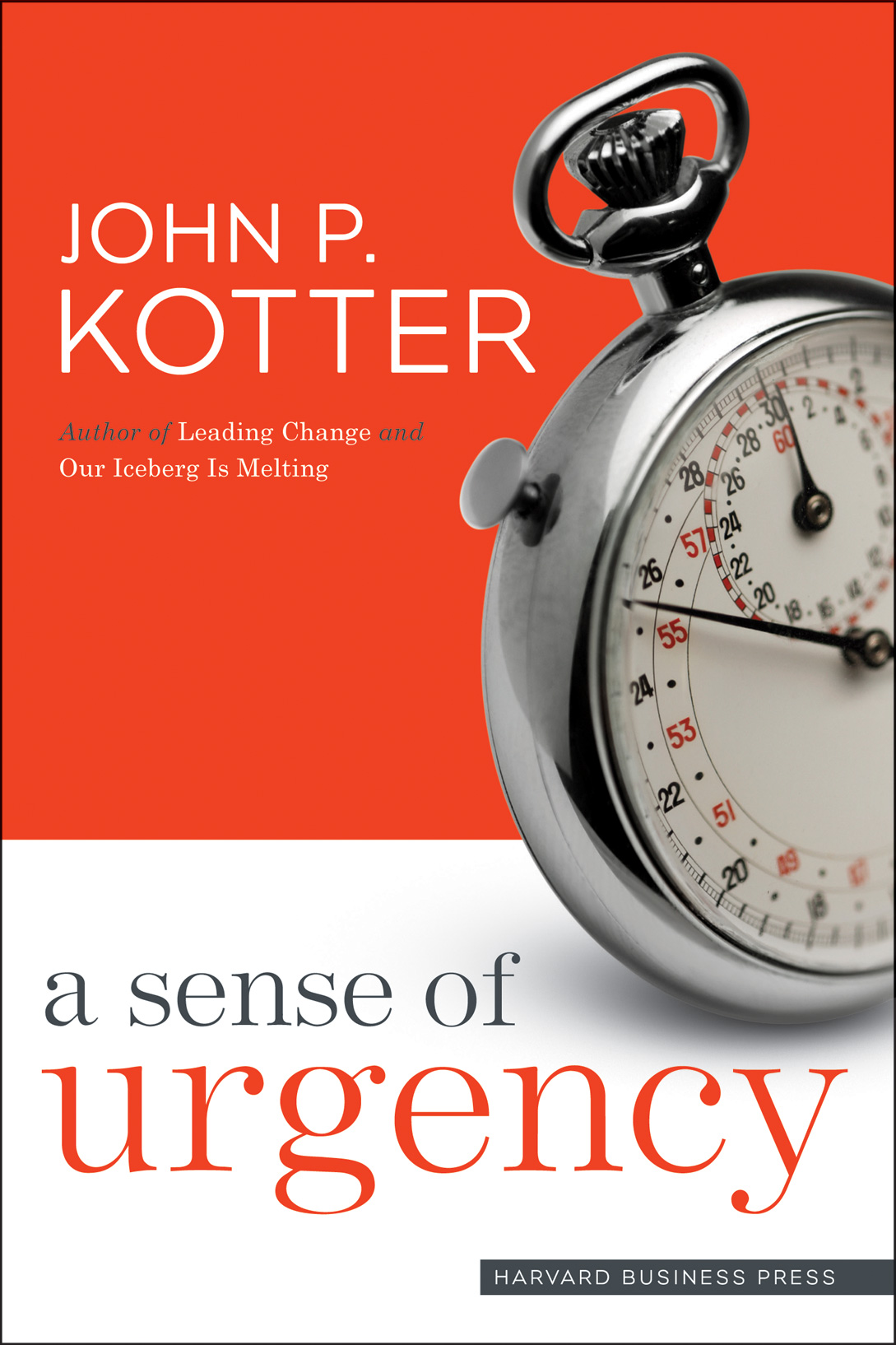
kotter_urgencyJohn Kotter is the organisational change guru. His book Leading Change continues to be one of most influential books on the topic. Many leaders and organisations implement Kotter’s eight step process for managing positive change. His more recent book, A Sense of Urgency, examines the factors that help or hinder change. He digs more deeply into what he believes to be the most significant factor in managing change – creating a sense of urgency.

At the beginning of any effort to make changes of any magnitude, if a sense of urgency is not high enough and complacency is not low enough, everything else becomes so much more difficult.  (ix)

It all starts with a sense of urgency

Complacency is a serious problem. When people are content to maintain the status quo, they fail to see the wonderful opportunities and dangerous threats before them. The best solution to the complacency problem is not to get frantically busy, but to create a true sense of urgency.

Urgency doesn’t mean frenetic activity. It’s not about getting faster or busier. It has to do with recognising things of ‘pressing importance’. It’s about acting on critical issues now, not when it’s convenient.

True urgency doesn’t build up stress levels, because it means sticking by priorities. It requires focus on the main game and not worrying about the trivia and irrelevant tasks that clog up our calendars.

Complacency and false urgency

The first step in creating a true sense of urgency is to deeply understand its opposites: complacency and false urgency.  (p19)

Complacency is very much a feeling and not simply a thought. It’s less about rational analysis and more about unconscious emotion. It’s possible to see problems and yet be complacent because you don’t feel that the problems require changes in your own behaviour.

False urgency is very different from complacency. Complacency leaves things the way they are, whereas false urgency adds more and more activity. While complacency is built on a feeling that everything is okay, false urgency is built on anxiety and anger. This can create activity without productivity. It can also be very destructive.

Increasing true urgency

Business cases tend to use analysis and logic to demonstrate that an issue is important and that a course of action should be taken. They try to reduce complacency by appealing to people’s minds. Yet, when it comes to affecting behaviour, feelings are more influential than thoughts. This is not a recipe for mindless emotional manipulation. The challenge is to fold a rational case directed toward the mind into an experience that is very much aimed at the heart. (p47)

Tactics that aim at the heart, and successfully increase urgency, all seem to have five key characteristics:

  1. They are thoughtfully created human experiences.
  2. Effective experiences work appropriately on all of our senses.
  3. The experiences make change-weary, cynical people believe in a positive future.
  4. The experiences rarely need explanation. The point is clear.
  5. The experiences almost inevitably lead us to raise our sights, to emotionally embrace goals beyond maintaining the status quo.

There are four tactics that get used to increase urgency with heart-head strategies:

Tactic one – bring the outside in

Tactic one is based on the observation that organisations tend to be too internally oriented. There is a disconnect between what insiders see, feel, and think and external opportunities. This reduces an organisation’s sense of urgency.

An inward-focused organisation often misses new opportunities and hazards coming from competitors, customers, and a changing environment. When these opportunities and hazards aren’t seen, the sense of urgency drops and complacency grows.

Organisations need to stay in touch with what’s happening around them. They need to take steps to find this out. When they discover they’re out of touch, this news needs to be shared widely. Sharing information can be a powerful way of increasing urgency. Leaders can increase urgency for change rather than retreating into damage control. Outsiders can be imported into the organisation to bring new perspective that enables people to see things afresh and develop a sense of urgency.

Tactic two – behave with urgency every day

People watch how quickly their leaders move on issues. Tone of voice, body language, and things like whether we start meetings on time, all send a message about urgency. We need to model urgency on a daily basis if we want our organisations to embrace it.

Lots of things hinder a leader’s ability to model urgency. Being too busy with dozens of different and often unrelated activities. Clutter and fatigue undermine true urgency.

We need to eliminate low priority items from our calendars and to do lists. Getting rid of clutter and freeing up space allows us to move faster. It enables us to focus on what’s really important.

Urgency is contagious, but only if it’s visible. Behaving urgently doesn’t mean constantly creating stress for others or getting frustrated when no one else completes every goal tomorrow. It requires ‘urgent patience’, acting every day with a sense of urgency, but having a realistic view of appropriate time frames.

Tactic three – find opportunity in crises

Some people view crises as bad because they can hurt people, disrupt plans, and can cripple organisations and communities. Others see crises as opportunities. They believe the greater danger is complacency, and a crisis may be required in order to confront it.

Turning a crisis to our advantage requires us to be looking for potential opportunities. The big challenge is almost always more a heart problem than a mind problem. We need to act with passion, conviction, optimism, and resolve.

Sometimes a crisis is needed to shake people from their complacency. We might even need to create a crisis. This needs to be done carefully without leading to an angry backlash because people feel manipulated. A crisis, whether natural or created, can be a powerful tool to reduce complacency, but it won’t happen automatically. We need to act wisely.

Tactic four – deal with NoNos

A NoNo is more than a skeptic. He’s always ready with ten reasons why the current situation is fine, why the problems and challenges others see don’t exist, or why you need more data before acting.  (p146)

NoNos are much more dangerous than we might believe, and that’s one of the reasons we make mistakes in dealing with them. People tend to either co-opt them or to isolate and ignore them. Neither strategy is effective. NoNos aren’t open-minded and are usually very intentional about delaying, hindering, or disrupting change. Ignored NoNos can create problems by stirring up trouble with others. They undercut the development of any sense of true urgency for change. A smart NoNo locates weak points in arguments and is expert at creating anxiety and undermining effort to take opportunities and avoid hazards.

There are three effective solutions for dealing with NoNos:

  1. Give them something important or meaningful to do that keeps them occupied but away from a place of influence.
  2. Remove them from the organisation.
  3. Expose their behaviour. Once people identify a person as a ‘NoNo’ their ability to exercise influence becomes extremely limited.

Sustaining urgency

Sustaining urgency over time requires that it not only be created, and created well, but that it be re-created again and again.  (p169)

Natural forces tend to push toward stability and contentment. The basic pattern is simple: urgency leads to success leads to complacency. For this reason, we need to build a culture of urgency, where people value the capacity to grab new opportunities, avoid new hazards, and continually find ways to succeed. We need to work at being constantly alert, focusing externally, moving fast, stopping low-value-added activities that absorb time and effort, and relentlessly pushing for change when it’s needed. Such a culture is rare, but worth seeking to create.

Creating urgent churches

A Sense of Urgency contains an urgent message for many churches. Things can move very slowly in some churches. ‘But we’ve always done it that way’ are too often the words of a dying church. Whether it’s fear of change or attachment to the status quo, many churches remain inert and unable to respond effectively to opportunities or threats.

Leaders need to build a sense of urgency. This shouldn’t be a false urgency that builds stress and over-commitment with everyone running around like headless chooks, achieving nothing of real value. We should seek to rally people to the good opportunities. This requires us to offer a compelling vision for change that captivates people’s hearts.

We also need to awaken people to the dangers of complacency. Too many churches that were once vibrant, energetic, growing, missional congregations, have long since become dormant museums to the glory days. They reminisce about how they used to be as they atrophy and die.

Churches have more reason than other organisations to behave with a healthy sense of urgency. We believe life is short and that people’s lives count. We understand that one day people will stand before God to give an account of their lives. We want people to hear the good news of salvation and to be reconciled to God. It concerns me how slowly we respond to the needs and opportunities around us. We spend too long discussing and often fail to get to doing. Church leaders would do well to read this book and think about how to increase the urgency of our church cultures. It begins with our own attitudes to what we do. Time is a valuable resource. Let’s not waste it.

Amazing scan results NED

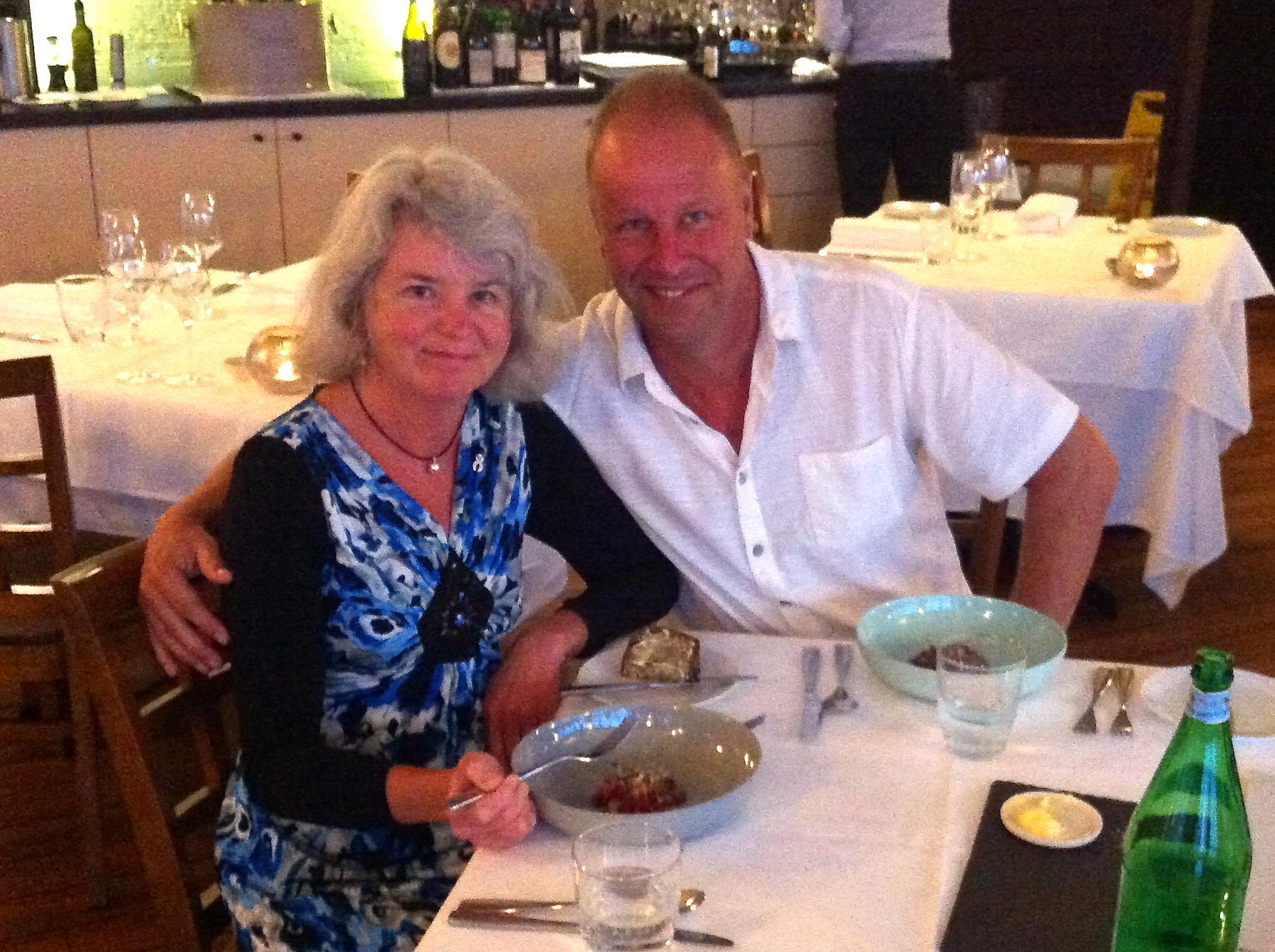
Dave & Fiona‘No evidence of neoplasm.’

This was the final sentence of the radiologist’s report on my CT scan from Tuesday. I went straight to wikipedia. Neoplasm wasn’t a word I’d been using. And my guess was right. There was no evidence of a tumour. Seriously? I don’t think I ever expected to read that. No evidence of cancer? I was stunned.

It’s exactly eighteen months this weekend since I was admitted to hospital, had my first CT scan, and discovered the tumour on my lung. It was about 24mm at the time. I’ve had two surgeries, twenty six courses of chemotherapy, and a number of CTs in this period. We’ve seen the tumour increase slightly to 26mm, then reduced to 18mm, to 12mm, and to 7mm in February this year. It went from a golf ball, to a pinball, to a marble, to a pea. A friend was praying it would shrink to a mustard seed next! Seems like it has. Whatever may or may not be there is too small to be seen by a CT scan. 🙂

We’ve discussed this with a couple of oncologists now. They were both amazed by how things have gone. My regular oncologist, who is very careful and conservative, kept saying this doesn’t normally happen with my type of cancer. I told him I was quite happy to be abnormal! Both oncologists have stated the importance of continuing with the chemo for now. The tumour is not evident on the CT scan, and this is a great outcome, but it doesn’t guarantee that I am cancer free. Cancer cells are microscopic. They could be anywhere and everywhere without having developed an observable tumour. The fact that my cancer was discovered at Stage 4 once it had already spread, and that cancer cells were discovered in other places, is a reminder not to make assumptions.

This scan result is the best result I could have received. To be described as N.E.D. – No Evidence of Disease – is a wonderful result. But it carries with it a huge amount of uncertainty. It’s like the results of a satellite image of a national park revealing no evidence of an escaped criminal. Higher resolution would be needed to gain more certainty. But even then he could be hiding behind a rock or under a tree and not observable. They cannot be sure with me. Even surgery, biopsies, and other types of scans have their limitations. They can identify cancer, but they can’t rule out it’s existence.

Our plan is for me to continue with chemo for a while and ask more questions. We’ll seek advice about other options for assessing how I’m going. We’ll seek to monitor the toxic and damaging impact of chemo. It’s clearly been the recipe for attacking my adenocarcenoma, but it’s leaving its mark on my body as well. I’m experiencing some neuropathic symptoms again, energy levels are low, fitness is harder to maintain, and I’m on medication to counteract significant side effects.

In short, the journey with cancer continues. In some ways I expect it will be harder. Until now I’ve had certainty. I’ve been sure of having cancer because I’ve seen the evidence. Now the evidence isn’t there. I assume there is still cancer present, and will act accordingly, but I can’t be sure.

My scan results are great news and I’m filled with gratitude to God for bringing me to this point. I thank you for your love, support and prayers. God has been listening and answering our prayers. He’s been kindly giving me time and opportunity to serve him. I’ve been praying since early last year that I would get to see Matt married and that I would get to be a grandfather. [I didn’t tell them this!] There’s now four weeks until Matt and Elizabeth get married and Luke and Sharon are halfway through their pregnancy. God willing, Fiona and I will also celebrate thirty years of marriage this year. Awesome. Thank you God for the days that you give me!

God has done a lot of work in me over this past eighteen months. In particular, he’s been strengthening my hope. Not hope in a cure necessarily, but a hope beyond cure. Hope that gives me reason to live, however many days I might have. Hope in life now and in eternity. Hope that is real even if cancer should one day overrun my body. Hope that sustains me through the ups and the downs. Hope grounded in God keeping his promises in Jesus Christ. My desire is for each one of you to know this hope. God is good.

Thank you again for your friendship, support, help, and generosity. As we continue this journey please rejoice with us and please keep on praying that God will remove all traces of cancer from my body. Please pray for wisdom for the medical specialists and for us as we decide what paths to take.

Macca

The game they play in heaven!

Brumbies-logoGreat to see the Brumbies tough out a win in the driving rain of Auckland over the weekend. Back on track now and here’s hoping we see finals rugby in Canberra. Well done Jake, Ben, and the boys!

On the chaplaincy front, I’ve been a bit discouraged by my irregularity this year. I love the work with the team, but the ups and downs of chemo and other things have resulted in me not being as engaged as I’d like to be. I’d love your prayers for opportunities to be a genuine encouragement to these guys.

On the family front, Marcus has had a tough time with rugby this season. He missed the first couple of games with swollen knees. On Saturday he had to leave the field after the largest guy on the opposition came down on his knee awkwardly. He’s been hobbling around and wearing more strapping on his legs than most seasoned players. His local team have faced the top four sides first up, and been demolished most weeks. Plus he missed the first and last representative trials through injury. Through all of this, Fiona and I have been very encouraged by his maturity and lack of complaining.

Today he received some wonderful news. They announced the final team for the State Championships in June. We hurried onto the website at 3pm, downloaded the Under 15s Brumbies team list, and there it was… Marcus McDonald. Awesome! Well done Marcus. Thank you God. He gets to play his third season with the junior Brumbies.

Multiplying leaders in growth groups

swiss_army_knifeswiss_army_knifeswiss_army_knifeswiss_army_knifeWe’re forever feeling the desperate need for more leaders. The shortage of leaders to cope with the growing demand for new groups, the exit of leaders moving on for reasons of work or the like, people dropping out of leadership when their lives change due to relationships, the attrition of leaders who’ve been serving for years. These are all reasons that we keep banging the drum for more people to sign up as leaders. They’re all reasonable reasons, but they’re not THE reason we should be committed to multiplying leaders. There’s a better reason by far…

We want to keep spreading the great news of Jesus Christ, because this honours God and it leads to people’s lives being transformed.

God’s word changes people. It keeps reminding us that we are not at the centre of the universe – God is! He is number one. He deserves all honour and praise. God has given us the great news about Jesus Christ so as to rescue people from despair and darkness, and to bring them into life and hope. We want to keep multiplying leaders so as to keep this news in front of people. We want more and more people in groups being encouraged to honour God, to trust God, to live for God. We want our groups to grow together in the truth of God’s word, in love for one another, in prayerful dependence on God, and with a passion to see others reached with the good news of salvation. We want to equip leaders who are focused on doing their part in building God’s kingdom.

The maths we are looking for is multiplication. We don’t want to divide leaders, nor do we want to subtract them. But it’s not enough to simply add leaders either. Our goal is for leaders to grow leaders to grow leaders. If one leader grows one leader in one year, then we have two. If the two leaders grow one leader each in one year, then we have four. If the four leaders grow one leader each in one year, then we have eight. You see how it can work.

If only the first leader adds one leader each year, then in ten years you have eleven leaders. But if every leader adds one leader each year, then in ten years you have over one thousand leaders! This is the power of multiplication. Of course, this is an ideal world. It doesn’t allow for drop out, attrition, failure to train, poor systems, and everything else that gets in the way. But what potential and it all starts with just one leader.

If this is going to happen, then multiplication needs to be built into our DNA as churches. We should not only seek to add a leader, but to add a leader who will add a leader who will add a leader. We need to communicate a vision for multiplying leaders. When someone is recruited and trained as a leader, we should be calling them not simply to be a leader, but to be a recruiter and trainer of more leaders, who will do the same.

Jesus didn’t just call men to himself. He called men to call men (and women and children). The Apostle Paul didn’t simply call Timothy to succeed him. He called him to this continuing task…

And the things you have heard me say in the presence of many witnesses entrust to reliable people who will also be qualified to teach others.  (2 Timothy 2:2)

Teasing this out, Paul is saying: ‘You Timothy (#2) take my words (#1) and entrust to reliable people (#3, #4, etc) who will do a good job teaching others (#5, #6, etc).’

Not counting the many witnesses, there are at least four generations, and six or more people, involved in this responsibility. Paul is looking to the future. This is his last letter. He’s nearing the end of his ministry and he’s passionate about the ministry of the gospel continuing. He wants the gospel to be protected and the way to protect it is by ensuring its faithful spread.

Perhaps you have heard the story of the Wollomi Pine. It was thought to be extinct, until a very small population of trees was found in the wild in NSW. The species needed to be protected, so what was the strategy? Fence off the small plantation to protect from outside influence? Would this ensure its survival? No. The plan to preserve the Wollomi Pine involved planting seeds everywhere. Nurseries, greenhouses, in the wild, wherever a patch of ground could be found. The key to its survival was its spread. It’s the same with the gospel. We guard it by passing it on to others who will keep doing the same.

What does this mean for our growth group leaders? It means we seek to keep growing leaders, not to meet our needs, but to guard the gospel, to honour God, and to see people’s lives transformed for eternity. So how do we do it?

Leaders on the look out

We want all our growth group leaders to be on the look out for more leaders. Sometimes we might see ready-made leaders just waiting for an opportunity to be asked or step up. This can happen due to people changing churches or being trained in another ministry, such as a university group, but not yet serving as a leader at church. However, more importantly, we should be looking for opportunities to grow new leaders, so as to keep multiplying.

There are a few things to look for in seeking out suitable people. I suggest looking for FAST people. Such people are faithful, available, sacrificial, and teachable. They show their commitment to the group by turning up each week. They do more than turn up. They’re seeking ways to serve others, following up people during the week, asking about answers to prayer. You’ll find them in the kitchen doing the dishes. They go out of their way to offer lifts to others. They show restraint in Bible study, not dominating the discussion, but contributing thoughtfully. They offer to lead a study here and there and ask for feedback and help. They look for ways to serve at church or in the group and they’re open to being trained.

Connecting with core people

Having identified potential leaders, we need to invest in them. Engage them in thinking about leadership and give them opportunities to grow. If there are one or two people in the group who could fill this role, then we suggest talking with them. Excite them about the potential to become leaders a little way down the track. Spend extra time with these people. Perhaps have them for a meal before the group now and then, or catch up for a coffee. You could talk together about how the group is going and how they could take a role in preparing to lead. You could pray for the members of your group. Maybe they could meet one to one with someone else in the group to pray and read the Bible. They could take a responsibility for some organisational role in the group such as coordinating meals, or sending out prayer points. It will help to give them opportunity to lead some studies or coordinate the prayer times. If they’re inexperienced at leading studies, then you could meet with them to help and provide suggestions and support. Give them helpful encouragement and feedback afterwards. Remember, you want to build leaders, not cut people down. So be thoughtful and considerate.

Apprenticing leaders

We want to encourage all our group leaders to seek to identify and purposefully get alongside one or more others in their group each year for the purpose of multiplying leaders. Some churches describe this process in an official or organised manner as ‘apprenticing leaders’. This is what we want to be doing, whether it’s ad hoc, informal, formal, or whatever. The apprenticing strategy has great strengths. It’s on-the-job, highly relational, contextual, personally targeted, intensive training. The apprentice gets to learn from the practitioner by becoming a practitioner also.

This can also reveal a weakness of apprenticeship training. It depends very much on the quality of the trainer. If the current leader sets a poor example, fails to invest time, neglects their leadership responsibilities, or has a maverick attitude to leading in the church, then these problems can sometimes be reproduced down the line. For this and other reasons, we recommend complementing the apprenticeship approach with a training course.

Training courses

Most training courses begin with a curriculum to be transferred to the participants. The key is to identify what should be in the core curriculum for growth group leaders. Two courses stand out in our experience. Both are reviewed on this site: Growth Groups and Spice it Up. Growth Groups is the longer and more detailed of the two courses. Spice it Up is briefer, but seeks to incorporate wisdom from both Growth Groups and Leading Better Bible StudiesOver the years many of our training courses have drawn on material from these and other sources.

These courses rightly focus mainly on the preparation and leading of Bible studies as the core component in the life of the group. We believe the emphasis should be here, because this is how God changes our hearts. However, we desire our growth groups to be contexts of prayer, pastoral care, every member ministry, promoting the gospel, training, supporting the church, and more. For this reason, a tailored training program that addresses the range of growth group issues is required.

We suggest that a course be conducted at least once a year, with sufficient time to prepare new leaders to begin leading in the year ahead. Third term seems ideal for this. We can build on the apprenticing work that has begun in the earlier part of the year, and give opportunities to put things into practice in the later part of the year. The hope will be that trained people will go on to become leaders, but this should never be assumed. We may discover that some people are not suited to serve in this way.

Multiplying groups

If we are going to multiply, or even add, groups in our churches, then this will require leaders to move from one group to another. There are a number of possible approaches:

  • groups disband at the end of the year and an increased number of groups begin in the new year, incorporating new leaders
  • some leaders are kept back from groups at the start of the year, so as to lead groups as needed later in the year
  • apprentice leaders take over the leadership of the group they belong to, while the existing leaders leave to start another
  • newly trained or apprentice leaders leave a group to start another group
  • the group divides into two with newly trained or apprentice leaders taking one half and the existing leaders the other

There are strengths and weaknesses with all these approaches. Disruption to relationships and the welfare of existing groups should be avoided where possible, but we will need to prepare for some discomfort if we are going to keep growing the growth groups ministry. Good communication, no surprises, sufficient time and preparation for change will all help.

Not just groups

The strategy of multiplying leaders is not just for our growth group ministry. Our goal is for every area of service within the church to embrace the culture of multiplication. Let’s keep training and equipping one another to build the church of Jesus Christ through evangelism and edification, for the sake of God’s glory.

Who could you get alongside to equip for ministry? How can you pass on what you’re doing to others? Not doing much? Then whom could you ask to train and equip you?

Where’s Walter?

tardisA funny thing happened on the way to work today. Actually, it began last night when I was handed a small blue tardis containing a mobile phone belonging to ABC 666 Radio in Canberra. The phone was given a name this morning. It’s now called ‘Walter’. The full name is the Walter Burley Gri-phone! The phone is being passed from Canberra local to local. The ABC makes a call each morning to find out who has the phone and to line up an interview with Genevieve Jacobs. She doesn’t know who she’s going to interview one day to the next. I was the mystery guest this morning. My job is to make sure it’s in someone else’s hands before 10am tomorrow.

The interview was all over pretty quickly. I was asked about being a pastor at Crossroads, chaplain to the Brumbies, having Stage 4 lung cancer as a non-smoker, and writing a book on hope for those with cancer who aren’t being offered hope of a cure. I explained where hope can be found, both in practical things in this life and faith in God. Genevieve said how good it would be to interview me again in two years time. I agreed. I’d like to take her up on that!

Tomorrow morning won’t be as much fun. I have my first CT scan since February. This is my reality check to find out how the poison is working and where the cancer is up to. If you pray, please ask that the CT will be very clear, as I will probably need to have it without the usual contrast medications. Please also continue to ask God to take away the cancer. I’ve got an interview to do in 2015. Thanks.

Hope beyond failure

My flesh and my heart may fail,
but God is the strength of my heart
and my portion for ever.  (Psalm 73:26)

So true.

My body is breaking down. It’s the chemo today, but it fits with the trend. I’m not getting any stronger, faster, or fitter. I keep wearing out.

My spirit waxes and wanes. Today I ache and groan. Misery clouds the sunshine. Who knows about tomorrow?

I cannot depend on my flesh or my heart. They’re unreliable. They’re weak. They’re fickle. They’re false.

God is the one I can trust. He will not let me down. It’s not that I keep hold of him, but that he doesn’t let go of me.

fingerYet I am always with you;
you hold me by my right hand.
(Psalm 73:23)

Thank you God.

Seven practices of effective ministry

seven_practices_of_effective_ministrySeven practices of effective ministry describes the philosophy of ministry at North Point Community Church in Atlanta. Andy Stanley, Lane Jones, and Reggie Joiner challenge their readers not to keep adding more and more programs before carefully evaluating the ones they already have. Churches have limited resources and they need to be allocated and used wisely. They have identified seven practices to assist in evaluating existing and proposed programs. These practices aren’t about telling churches what they should or shouldn’t do. They’re about equipping churches to ask helpful questions to determine what programs to start, what to improve, and what to stop.

#1 Clarify the win

Define what is important at every level of the organization

Clarifying the win means communicating to our team what is really important. This is essential to keep our team from guessing what a win looks like. We don’t want people following the loudest or most persuasive voice, simply because they haven’t been given clarity about what matters most. It doesn’t help if leaders are all defining the win to suit themselves. The church needs to be clear about what it’s doing, what is expected, and why. Clarifying the win helps your team stay on the same page. As the church grows it’s easy for things to get out of alignment. Effective leaders keep holding up a picture of what the church is supposed to be, and calling people back to this picture. This tends to build a positive momentum for ministry. It also helps us to use our limited resources wisely according to what is and what isn’t working.

There are four key steps to clarifying the win.

  1. Sum up the win in a simple phrase.
  2. Keep the win as specific as possible.
  3. Restate the win frequently and creatively.
  4. Meet to clarify the win at every level

#2 Think steps, not programs

Before you start anything, make sure it takes you where you need to go

Many churches adopt or design programs to meet the needs of members, but few develop clear steps to help move people where they want them to go.

  • A program is defined as ‘a system of services, opportunities, or projects, usually designed to meet a social need.’
  • A step is defined as ‘one of a series of actions, processes, or measures taken to achieve a goal.’

We need to ask ‘Where do we want people to be?’ and then ‘How are we going to get them there?’ These questions help us to focus on growing followers of Jesus. They get us thinking specifically about spiritual growth and the building of relationships in our churches.

Effective steps have three characteristics.

  1. Every step should be easy. If it’s too much of a jump, then people won’t move forward.
  2. Every step has to be obvious. People don’t like stepping into the unknown. They need to understand where to go next. Communicating the steps and their importance is essential.
  3. Every step must be strategic. It needs to lead somewhere. Once we know the specific destination that we want to lead people to, then the steps must clearly move them in that direction.

As we think more about steps and less about programs, synergy grows in our church and ministry teams. People are required to depend on each other, and the silo mentality becomes less of a problem. We’re more likely to see what’s not working and to work together to simplify our processes.

#3 Narrow the focus

Do fewer things in order to make a greater impact

A lot of churches are doing too much, but failing to reach more people. They have A.D.D. Over the years the number of programs grows and grows and effectiveness is diluted.

Here are four reasons churches drift into complexity, making it difficult to simplify their structures.

  1. Some churches have bought into a ministry ‘menu’ philosophy.
  2. Churches feel constant pressure to provide programs on the basis of needs.
  3. Individuals have been allowed to build their identity around a program, not a mission.
  4. Church leaders fear the fallout of eliminating certain programs.

The challenge is to simplify things. We need to learn to say ‘no’ to ideas and ministries that take away from our core focus. Sometimes things that are still working adequately need to be replaced by other things that will potentially work better. We need to design what we do to reach and connect with people effectively. As we narrow the focus of our ministries, relevance increases, people become better connected, quality improves as we try to do less things  better, and we have a stronger impact on our communities.

#4: Teach less for more

Say only what you need to say to the people who need to hear it

We all experience information overload. The danger is that our churches just add to the noise. We need to rethink what and how we communicate.

There are four steps to teaching less for more.

  1. Decide what you are going to say
  2. Decide to say one thing at a time
  3. Decide how you are going to say it
  4. Say it over and over again

These ideas are developed more fully in Communicating for a change.

#5: Listen to outsiders

Focus on who you’re trying to reach, not who you’re trying to keep

Some of us have been in church for so long, we’ve forgotten what it’s like to never attend. We have believed what we believe for so long, we don’t know how an unbeliever thinks anymore.  (p142)

Our churches should be on about helping believers grow and reaching unbelievers. The problem is it’s easier to look inside than outside. North Point Community Church developed a strategy to reach people in their community. They called it ‘Invest and Invite’. Every member is encouraged to make a personal investment in someone’s life and invite them to one of the church’s ministry environments. The responsibility of the church is to create the effective environments for their members to bring people.

This has led to members being more attuned to what an outsider would hear and experience when they come to church. They want to create a positive first impression of church and to make people feel at home. They’re keen for the teaching to be clear and understandable.

Billions of dollars are spent by organisations seeking to understand their market. Churches at least need to listen to the people who aren’t there. When we listen to outsiders, we begin to see our church in a whole new light.

#6: Replace yourself

Learn to hand off what you do

If you fail to develop a strategy to replace yourself, you will…

  • force talented individuals to remain in the wings
  • cause potential leaders to exit the organisation
  • stifle needed insight from valuable team members
  • hinder your ability to recruit volunteers
  • limit the growth of your programs and ministries  (p160)

Succession planning is important. We won’t be leaders forever. Now is the time to use our opportunities to influence and shape those who will come after us. Teaching what we know by apprenticing others helps the ongoing transition of people into leadership roles. If leaders set the example of investing in future leaders, this gets modelled through the church. Every area of ministry should be focused on building leaders for the future. This is critical to sustaining and building long term ministry.

Successfully handing off leadership requires three steps.

  1. Break it down into clear and doable steps
  2. Hand it off. You are giving something away. Many thoughts and emotions will be going on inside of you. Let the new person make their own mistakes and their own progress.
  3. Let it go. Move on. Trust the new guy!

#7: Work on it

Take time to evaluate your work and to celebrate your wins

Self-evaluation is an important practice that must be pursued intentionally. We need to examine what is working and what’s not. It’s not likely to happen effectively unless we build evaluation into our calendars on a regular basis. We need to stop, look back, and review. We need to step outside of our work and take a look at it.

They describe this as ‘creating margin’. It can happen on a weekly basis to evaluate regular activities. It can be done less regularly to review the bigger picture.

When we evaluate, we will discover areas that need improvement. This often means people get threatened when their areas are critiqued. It’s essential to build an environment of trust where we commit to these reviews for the sake of our common goals.

It’s also important to celebrate the successes. Saying thank you publicly is very powerful. Sharing stories builds energy and gratitude for what God is doing.

Review

This book is a helpful tool for assessing the organisational health of our churches. It pushes us to seek clarity and simplicity. It urges us to make a priority of encouraging people to grow in their knowledge and love of God, and to understand how they can serve God in this particular church context. 

My experience of church is that everyone tends to be busy. Busyness is not a virtue. We can be very busy doing nothing of value. Churches can be very busy, but unclear where they’re headed or why. This book is a call to identify what things really matter, what our churches must focus upon, and how we are going to do it. Then we can help people to serve God together.

If you feel that your church is chasing its tail and you’re not quite sure why you’re doing what you’re doing, then this book should help you to ask some good questions.

I found the emphasis on steps rather than programs to be particularly useful. Instead of being content with a smorgasbord of unrelated ministries, it’s more important to be clear and intentional on how one thing relates to another. This encourages us to think about where we want people to end up. How do we want people to grow and change? What will assist this to happen? What do we hope for children over the seven years they might spend in Kingdom Kids (Sunday School)? How do we help people find their way into the life of our church, join a growth group, serve in a ministry team? It helps us to build pathways and show the way ahead. We’ve more work to do on this front – but it is happening!

The three signs of a miserable job

3-signs-of-a-miserable-jobThe three signs of a miserable job is another helpful analysis by leadership and teams expert, Patrick Lencioni. A miserable job is the one that’s tough to get out of bed for. You dread going to work and you can’t wait to get home. It’s not about the actual work. Nor is it about the money. An executive on a seven-figure salary can be miserable, while a waitress finds great satisfaction in her work. It can be any type of job, any business, and any time. No one is immune.

There are huge economic and personal costs to this misery. It damages the individual’s physical and psychological health. It spreads through homes, families, marriages, friendships and society.

The three signs of a miserable job

Anonymity
People can’t be fulfilled in their work if they aren’t known. We all need to be understood and appreciated by someone in authority over us. People who see themselves as invisible, generic, or anonymous are not going to love their jobs.

Irrelevance
Everyone needs to know that their job is important to someone else, even if it’s just the boss. Without seeing a sense of connection between the work and satisfaction of another person or group of people, an employee will not find fulfilment.

Immeasurement
Workers need to be able to gauge for themselves their progress and level of contribution. They won’t be satisfied in their work if success depends on the whims or opinions of others. Without a tangible means for assessing success or failure, motivation eventually deteriorates as people see themselves as unable to control their own fate.

The benefits of managing for job fulfilment

Employees who find their jobs rewarding will work with more enthusiasm, passion, and commitment to quality than those who do not. They’ll develop a sense of ownership and pride in what they are doing.

There will be less staff turnover, with employees holding onto fulfilling jobs as long as they can. Fulfilled employees tend to attract other good employees, ultimately resulting in fewer costs to the organisation. The organisation will enjoy greater stability and cohesion. Being known as a satisfying place to work is a valuable point of difference with other organisations.

The obstacles to managing for job fulfilment

Sometimes employees fail to find fulfilment in their work because they put too much emphasis on getting the right amount of money or finding the ideal job. Yet even people who are paid well for doing something they love can be miserable if they feel anonymous, or irrelevant, or they don’t know if they are succeeding or not.

Sometimes the problem is the organisation. The business and its leaders are slow to see their employee dissatisfaction issues and, when they do, they focus on the wrong things. If they don’t notice until people are starting to resign, then it’s too late. Often people will not honestly state why they are leaving and issues of anonymity, irrelevance, and immeasurability are left unaddressed.

In order to be the kind of leader who demonstrates genuine interest in employees and who can help people discover the relevance of their work, a person must have a level of personal confidence and emotional vulnerability. Without it, managers will often feel uncomfortable, even embarrassed, about having such simple, behavioural conversations with their employees. They will mistakenly feel more like kindergarten teachers or little league coaches delivering a simple pep talk, even though their employees  – at all levels – are yearning for just such a conversation.  (p228)

Addressing anonymity

If you feel that others on the team know and understand you as an individual, then you’re much less likely to want to leave the team. Leaders must take a personal interest in the members of their team. This doesn’t necessarily mean that you start watching the same TV shows they do or listening to their music. Simply get to know them. Take time to sit down with them and ask them about their lives. Keep it real. It must be a genuine interest. Not once off, but over and over again. Show interest and follow it up.

People want to be managed as people, not as mere workers.  (p231)

Addressing irrelevance

Why are so many athletes, rock stars, and actors living such messed up and unsatisfied lives? Lencioni believes the root cause is a subtle fear of irrelevance. He says this because it’s hard to understand how someone who earns truckloads of money doing something they love, and who gets constant attention from others, can be unhappy. And conversely how low-paid, ‘hiding in the background’ workers can be happy. The answer has to do with being needed and having an impact on the lives of others.

Human beings need to be needed. They need to know that they are helping others, not merely serving themselves. Leaders need to help employees (or volunteers) answer two questions in order to establish relevance in their jobs.

‘Who am I helping?’
For many workers, the answer will be the customers, but some people are in jobs where they don’t have direct contact with customers. It could be other employees, colleagues, or departments within the organisation, or even their own boss. Leaders can be reluctant to speak of how people’s work helps them, but most people get a great deal of satisfaction when their supervisor thanks them for what they’ve done or says how helpful and significant it has been.

How am I helping?
The answer to that question isn’t always obvious. When a room attendant at a hotel brings breakfast to a guest, he isn’t just delivering food. He’s helping a weary traveler feel a little better about having to be on the road, which can have a significant impact on their outlook on life that day.

One of the most important things that managers must do is help employees see why their work matters to someone. Even if this sounds touchy-feely to some, it is a fundamental part of human nature.  (p235)

Addressing immeasurement

Effective job measurement lies in identifying the areas that an employee can directly influence. Leaders need to see the importance of the people on their teams having clear measurement criteria. Some measurements will be behavioural in nature and may be achieved by an informal survey of customers or a by identifying behaviours that indicates satisfaction with their work. If people can’t see any clear link between their daily responsibilities and the metric they are being measured against, they lose interest, feeling unable to control their own destiny. This is why so many salespeople enjoy their jobs. They don’t depend on others to tell them whether they’ve succeeded or failed.

Taking action

How can you go about putting all this into action, depends on who you are.

If you’re a manager…

Anonymity: Do I really know my people, their family situations, their interests, or how they spend their spare time?

Irrelevance: Do they know who their work impacts, and how?

Immeasurement: Do they know how to assess their own progress or success?

Employee assessments allow people to confirm or deny the accuracy of your answers. Finally, develop a plan to overcome any inadequacies around the three signs. This could be done one on one or in a team session. Make clear what you are trying to do, so that people don’t assume ulterior motives.

If you’re an employee or looking for a job…

You can do some things to increase the odds that your job will be fulfilling. Talk with your boss (or prospective boss) about the three signs and your desire to avoid them. A good leader will take this seriously. If you’re looking for a job, ask how they show interest in employees, how the job you’re discussing has an impact on people, and how you will be measured. If you’re hearing answers that indicate anonymity, irrelevance, or immeasurement, then it might be the job to avoid.

The ministry of management

I have come to the realisation that all managers can – and really should – view their work as a ministry. A service to others.

By helping people find fulfillment in their work, and helping them succeed in whatever they’re doing, a manager can have a profound impact on the emotional, financial, physical, and spiritual health of workers and their families.  They can also create an environment where employees do the same for their peers, giving them a sort of ministry of their own. (p253)

Some further thoughts on working with volunteers

Much of what I do as a church leader involves working with unpaid volunteers. Lencioni’s diagnosis of the signs of a miserable job is valuable for thinking about how to encourage people to serve in a range of voluntary roles. Are our volunteers feeling recognised, valued, appreciated, and purposeful? Do they understand the importance of their contribution to the ministry of the whole church or organisation? Are they able to assess whether they are doing a good job or not? Or are they left constantly wondering if anyone notices or cares?

How do we recruit volunteers to roles within our ministry? In my experience we often stress the gaps that need filling and push people to fill places on rosters. It’s far more helpful to inspire people with the opportunities for valuable ministry. Explain the essential contribution their work will have to the ministry as a whole. Offer examples, case studies, statistics or personal testimonies. Show the outcomes when this is done well. Highlight the potential for people to use their gifts and grow.

Sometimes we equip volunteers for the work we want them to do and then leave them to do it. The team leader’s job doesn’t stop with training. It flows on into encouragement, feedback, support, and celebrations. Keep reminding people of the relevance and value of their contribution. Empower them to recruit others and play a role in training and developing people in their roles. Acknowledge their contribution publicly in the organisation. Help develop clear metrics by which people can assess the success or failure of their contribution.

If we’re experiencing a high turnover or drop out rate among our volunteers, we should take the time to assess the reasons why. It’s highly likely that people are experiencing one or more of these signs of a miserable job. Leaders would do well to put their minds to helping volunteers overcome feelings of anonymity, irrelevance and immeasurability. It could help to engage volunteers so as to better understand the factors that contribute to or overcome such feelings. This could be done ad hoc or on a regular basis. It could form the basis of a regular formal review with volunteers and teams.

The effective executive

effective-executiveThe effective executive: The definitive guide to getting the right things done by leadership guru, Peter Drucker, is primarily a book about how to manage yourself. This is the necessary prerequisite for managing other people. If we can’t manage ourselves effectively then how can we possibly manage five, or fifty or five hundred? Effectiveness is not simply about intelligence and hard work, or about having special gifts, aptitudes, or training. It’s about learning some relatively simple things and then practicing them until they become a habit. Effectiveness for an executive is about ‘executing’ the right things.

Know thy time

Many books tell us that effectiveness flows from planning our time well, whereas Drucker says we first need to understand where our time actually goes. Only then can we attempt to manage our time and cut back on unproductive demands. After this we can consolidate our time for it’s most effective use.

Time tends to be our scarcest resource. Leaders are often vague about their actual use of time. How we think we use it and how we actually do are often very different. If we want to know the truth, then we need to record our actual use of time. Drucker recommends running a log of our time for three to four weeks twice a year on a regular schedule. This will ensure we are dealing with reality.

Then we will be able to find the nonproductive time-wasting activities and attempt to get rid of them. Ask questions like, ‘What would happen if this were not done at all?’ If the answer is ‘Nothing’ then it’s a no-brainer. Stop it! Then ask ‘What things on my time log could be done by somebody else just as well, if not better?’ The only way that we can get to the most important things is by delegating everything that can be done by others. We should also ask how we might be wasting other people’s time and eliminate these things. Ask, ‘What do I do that wastes your time without contributing to your effectiveness?’

After getting rid of the things that are wasting time, the leader needs to work out how to create large chunks of discretionary time where they can be productive. Small bits of time here and there are rarely productive. Consolidating time into blocks helps us to get more done.

What can I contribute?

Drucker claims that most executives are occupied with efforts rather than results. By focusing on contribution instead, our attention is shifted from our particular specialty to the performance of the whole organisation.

Organisations need performance in three main areas:

  1. direct results;
  2. building of values and their reaffirmation; and
  3. building and developing people for tomorrow.

It is important for executives to give attention to each of these areas, and if any are neglected the organisation will suffer dramatically.

Productive relationships are developed in organisations where the leaders take their contribution seriously. Communication, teamwork, self-development and the development of others are encouraged and strengthened. Executives who take responsibility for their own contributions gain more respect from their colleagues and subordinates. They have credibility in demanding that others take responsibilities seriously. They can ask questions like, ‘What are the contributions I should hold you accountable for? What should we expect of you?’ Focusing on our own contribution also leads to better communication with colleagues and improved teamwork.

Individual self-development also stems from the focus on contribution. The leader who asks himself, ‘What is the most important contribution I can make to the performance of this organisation?’ is establishing what self-development will be helpful. This will flow on to encouraging others to develop themselves. They set standards that are not personal but grounded in what’s needed to perform their tasks effectively.

Making strength productive

Effective executives focus on strengths rather than weaknesses. When adding staff they look to identify what special things people can do, not what they can’t do. They staff so as to maximise strengths, not minimise weaknesses. Some executives are threatened by the strengths of others and this leads them to build a mediocre team. Such executives end up putting themselves above the needs of the organisation.

When staffing to build strength it’s important to guard against the impossible job that only superman could fulfil. It might look okay on paper, but no one can actually accomplish it. Having said this, jobs should be sufficiently big and challenging. They should bring out the strengths of the one who does the job. People appreciate being stretched to work to their potential.

First things first

The secret of effectiveness is concentration. Effective executives do first things first and they do one thing at a time. They turn from being busy to achieving results. This takes sustained efforts that require significant chunks of time to bear fruit. Setting aside half days or weeks of really productive time requires self-discipline and saying no to other things.

We might be tempted to think that doing a little bit of everything all the time will get more done. The opposite is true. If we set aside good slabs of time and focus on one thing, then we will get things done much more quickly and effectively. Some people work a great deal harder, but because they don’t invest concentrated time on one thing, they achieve much less. Effective executives know that they have to get lots done well, so they concentrate their time and energy on doing one thing at a time, and on doing first things first. The hardest thing is to determine what doesn’t get done and who or what to say ‘no’ to. It’s tough, but it has to be done.

The elements of decision making

Effective executives must make effective decisions. They don’t necessarily make a lot of decisions, but they concentrate on the important ones. They focus on what is strategic and generic, rather than being tied up with ‘problem solving’. They assume that a problem is generic, a symptom of a deeper problem, until proven otherwise. It’s important to understand what decisions get made on principle and what decisions are resolved pragmatically. They clarify what objectives a decision needs to reach and the minimum goals it has to attain. These are the boundary conditions that every effective decision needs to satisfy.

Converting the decision into action is a critical element in the decision process. It is often time consuming. Yet a decision will not become effective unless the action commitments have been built into the decision from the start.

In fact, no decision has been made unless carrying it out in specific steps has become someone’s work assignment and responsibility. Until then, there are only good intentions. Converting a decision into action requires answering several questions: Who has to know of this decision? What action has to be taken? Who has to take it?  (p136)

Finally, feedback has to be built into the decision to provide continuous testing, against actual events, of the expectations that underlie the decision. Even the best decisions will prove to be wrong or need changing over time.

Effective decisions

A decision is a judgment. It’s a choice between alternatives. It’s rarely a choice between right and wrong. It’s at best a choice between ‘almost right’ and ‘probably wrong’. It’s mostly a choice between two courses of action with no clear, or proven, right choice.

Executives who make effective decisions know that you don’t start with facts, you start with opinions. Effective decision making doesn’t come from a consensus on the facts, but out of the conflict and consideration of divergent opinions. People inevitably start out with an opinion. Asking them to search for the facts first not helpful. They’ll simply look for the facts that fit the conclusion they’ve already reached. Starting with opinions, views and hypotheses means we need to test them.

The first rule in decision-making is that one doesn’t make a decision unless there is disagreement.  (p148)

Disagreements can provide alternatives to a decision and they are meant to stimulate the imagination, which helps develop creative solutions. We should assume people’s opinions are rational, and seek to understand how they see reality that leads them to their options. Many executives start out with the certainty that what they see is the only way to see at all. This leads to stifled decision making with little exploration of options.

Before making decisions it’s important to determine whether, in fact, a decision actually needs to be made at all. Sometimes things will deteriorate if nothing is done. Other times things will take care of themselves if nothing is done, or the reality is that the problem isn’t really important and shouldn’t be wasting our time and attention.

The final thing is to have the courage to make the decision! Don’t put it off, or explore yet another study. It’s probably not more information that’s needed, just a little more fortitude.

What I’ve learned…

  1. It’s helpful to know where all my time is going. Rather than simply planning how I will use my time, I will benefit from reviewing how I have been using my time. This will enable me to make adjustments and reset priorities.
  2. I appreciated the emphasis on blocks of time being crucial to effective completion of tasks. There are so many distractions in our work environment today. We can have the phone on, email open, twitter, Facebook, and Google. At the same time we have people demanding this and that, and we’ve got two or three tasks on the go at once. And nothing gets done! I’ve determined over time that some tasks need to be started and finished in one block or else they will significantly expand the time needed to complete them. You spend the start of the next time period trying to remember where you were up to. When there is insufficient time to complete a task, then it’s useful to break it down into parts and use the time to achieve completion of one or more of the parts. Writing sermons is a task that I like to break up into parts. Weeks before I read and jot down notes with the basic idea. Early in the week before I go over these notes and flesh them out until I have a clear outline. Later in the week I fill out the sermon in the outline. A day or two before the talk, I write out the notes neatly and get the logic clearly into my head, ready to speak. Each part is achieved with separate blocks of time.
    I’ve found it helpful to use Omnifocus project software (for Mac) to get things out of my head, and keep track of what I’ve committed to doing.
  3. The emphasis on encouraging different opinions, disagreement, and creative conflict in order to get good outcomes is scary, but true. It requires a platform of trust that we need to keep working on. Lencioni’s work is also very helpful on this topic. I have a tendency to seek consensus and unity in a way that probably stifles some of this debate. It was helpful to be reminded that people are rational and intelligent and that if they have an opinion different to mine or others, then it means I need to understand how they see things and where they are coming from (rather than assuming they’re simply wrong, stupid, or trying to create problems).
  4. I appreciated Drucker’s reminder that a decision hasn’t been made until the action plan has been fully worked out. We have a tendency in meetings to have good discussions, assume we’ve decided something, not appoint anyone to activate it, and wonder why nothing has happened by the next meeting. Action and communication plans are essential.

The four obsessions of an extraordinary executive

four-obsessionsThe four obsessions of an extraordinary executive is another easy-read, high-return leadership book by Patrick Lencioni. This book describes a competitive advantage available to every organisation. It’s not about technology, strategy, marketing, or money. It’s about organisational health. Extraordinary executives and standout leaders are described as paying attention to the health of the organisation they lead. Healthy organisations put less drain on morale, time, energy, and output. There is less staff turnover and greater work place satisfaction. We all want our organisations to be like this. As a pastor, I want our church to be like this. The book recommends four leadership priorities that will help build such organisations.

#1 Build and maintain a cohesive leadership team

This is the most important discipline because it enables the others. It doesn’t come easily because it commitment from the leader and team. People must grow to trust each other. This means being willing to work through disagreements and issues together. It requires people willing to be vulnerable, and fight over issues often. The fights are not to be personal, but focused on issues and achieving the best outcomes for the organisation. People learn to ask difficult questions and challenge ideas. Others learn to respond without feeling threatened or taking things personally. Working to achieve cohesive teams requires the effort and investment of all the leaders.by ever but it’s well worth the effort.

Cohesive teams require trust, and an effective way of building trust is what Lencioni calls ‘getting naked’. Don’t worry! He’s not speaking literally. It’s about team members becoming comfortable with their colleagues seeing them for who they really are. There are various tools that can help with this. He suggests teams take the Myers-Briggs Type Indicator test, which is a very effective tool for helping people understand each other. He also recommends The Wisdom of Teams by Jon Katzenbach and Douglas Smith, and his book The Five Temptations of a CEO as good books to help teams identify and address weaknesses and problems.

Sharing personal histories helps people get to know each others backgrounds, family circumstances, personal philosophies, hobbies, and interests. Spending time together is essential. And teams that have been through difficult times together can develop strong levels of trust, but it needs to be maintained by a willingness to address core issues.

#2 Create organisational clarity

Most executives profess to understand the importance of creating clarity in their organizations, but ironically, they often fail to achieve it.  (p151)

Organisational clarity isn’t about choosing the right words to describe mission, strategy, or values. It’s about agreeing on the underlying concepts that drive them. This type of clarity provides everyone throughout the organisation with a common vocabulary and set of assumptions about what’s important and what’s not. It builds a sense of unity around everything it does. Resources get aligned around agreed values, goals, and strategies.

These basic questions help the organisation to build clarity:

  • Why does the organisation exist, and what difference does it make in the world?
  • What behavioural values are irreplaceable and fundamental?
  • What business are we in, and against whom do we compete?
  • How does our approach differ from that of our competition?
  • What are our goals this month, this quarter, this year, five years from now?
  • Who has to do what for us to achieve our goals this month, this quarter, this year, next year, five years from now?  (p154-155)

#3 Over-communicate organisational clarity

Organisational clarity must be communicated throughout the organisation. This is the simplest of the disciplines, but a common point of failure. Much of the hard work in achieving clarity gets wasted through poor communication. Over-communication is much better than a failure to communicate. People might get sick of the message, but at least they get the message.

The three most critical practices of effective communication (are) repetition, simple messages, and multiple mediums.  (p168)

Some experts say that people need to hear a message six times before they begin to believe and internalize it. The problem is we don’t like to keep repeating the same message over and over.

We also need to avoid over-complicating important messages. In an age when people are bombarded by useless information, we need to be crystal clear about where our organisation is going and how people can contribute to getting there.

Multiple mediums help to get the message through. Most leaders have a preferred form of communication and stick to it. It could be large groups announcements, special meetings, emails, or communicating through other staff to the relevant areas. We need as many mediums as are required to hit the maximum number of people effectively. We need to tune into people’s preferred means of receiving messages too.

Lencioni believes the most powerful communication strategy in any sized organisation is ‘cascading communication’. After every executive staff meeting, there are usually important decisions that have to be communicated to the organisation. Sometimes people leave meetings with different understandings of what’s been decided and what needs to be communicated. So take a few minutes at the end of the meeting and ask the question, ‘What do we have to communicate to our people?’ This will show up what issues need clarification and which are ready to be communicated.

#4 Reinforce organisational clarity through human systems

Over-communication isn’t enough to maintain clarity in an organisation. Clarity must be reinforces by being built into the processes and systems that drive human behaviour. The challenge is to do this well without getting tied up in red tape.

There are four primary systems in an organization that reinforce clarity:

Hiring profiles
Employ people and appoint leaders who match the values of the organisation. Look at behaviour and seek to objectively evaluate if the applicant aligns with the core values. This is very different from asking ‘Did you like him?’ which tells you next to nothing about how they might fit with your organisation.

Performance management
This is not about filling in endless forms and having endless interviews. The goal is to foster good communication and healthy alignment. The best performance management is an ongoing dialogue, rather than an occasional event. This means managers and leaders need to make a priority of investing their time into other leaders.

Rewards and recognition
This system has to do with how organisations reinforce behaviour. Healthy organisations remove as much subjectivity as possible. They use consistent criteria for paying, recognising, rewarding and promoting staff. Recognition should be more about alignment to the organisation’s values than increased productivity.

Dismissal
Healthy organizations use their values, and other issues related to clarity, to guide their decisions about firing people. This prevents decisions being subjective or arbitrary and limits the costs to the people and the organisation.

Conclusion

The model described here is a holistic one: each discipline is necessary to achieve success. Different organisations will struggle with different aspects of the model. Some teams building trust but fail to put good systems in place. Others love strategy but lose interest in repeatedly communicating their plans.

Successful organisations are healthy organisations and leaders need to keep this their number one priority. Extraordinary executives focus on that above all else. The ability to identify a few simple things and stick to them over time is one of the most powerful tools any leader has. An executive who does this will be extraordinary and will often end up leading an extraordinary organisation.

Some thoughts on how this can impact church leadership teams

The focus on organisational health is important for churches. It’s easy to be swept up in the latest fads, establishing clear vision statements, adopting a special program, engaging new ministries, employing new staff, planting new churches… and fail to notice how unhealthy the church has become. We don’t want to reproduce sick churches. We don’t want to drive ailing churches toward terminal illness. So organisational health is critical. And we need to be biblically clear about what this should look like. A desire for God’s glory, love for one another, care for all, compassion for the hurting, submission to Scripture, humble prayer, passion to see people saved, a willingness to serve, growing leaders, sacrificial service, generous giving, and more.

Pastors and leaders can get so busy and caught up in chasing their tails that they fail to step back and focus on how and where to lead the church. We get so occupied in the ministry that we don’t have time to work on the ministry. If the pastor and leaders cant see the big picture because they are so buried in the detail, then church won’t know where it’s headed. We need to gain perspective. We need to look at the function of our churches as a whole. We need to evaluate our systems and determine what’s working, what needs changing, what needs axing and what needs adding. We need to open our calendars and determine ways to get ahead of the game, so that we’re not always reacting to the latest problem.

Senior pastors and overall leaders need to spend time with their ‘direct reports’. Associate pastors, elders, youth workers, children’s ministry coordinators, and so on. These are key people for creating clarity and alignment for the church. If the lead guy doesn’t do this, then he will soon discover that the church is headed every which way. People will fill the vacuum with their own ideas and priorities. Teamwork will be little more than an idea. The health of the church will suffer.

This Lencioni book is another opportunity to ‘spoil from the Egyptians’, as Augustine put it. Sift through the ideas, apply some uncommon sense, filter it through the message of the Bible, and improve the way you lead your church.

Life together in growth groups

swiss_army_knifeWe’ve previously seen how the Bible describes pastoral care in growth groups as being under God, leading God’s people, by the word of God’s grace, into eternity with God. Pastoral ministry looks back to the Good Shepherd dying for his sheep and looks forward to the return of the Great Shepherd who will gather his sheep for eternity. These are the trig points that give us bearings for caring for one another. Pastoral care should be shaped by teaching and modelling God’s word of grace, and by prayerfully depending on the power of God’s Spirit to change people’s hearts and minds. These are the priorities of the one true Shepherd, God himself, and they should shape the priorities of our churches and growth groups.

Family relationships

As we seek to live out God’s word of grace in our lives this will profoundly impact how we live with one another as God’s people. We’ve been called into God’s family as his adopted children. We’re now united with brothers and sisters in Christ having the same Spirit who unites us to each other.

There is one body and one Spirit, just as you were called to one hope when you were called; one Lord, one faith, one baptism; one God and Father of all, who is over all and through all and in all.  (Ephesians 4:3-6)

When we gather in our growth groups we get to share in a small family gathering. We catch up with each other, hear what our Father has to say, we’re reminded of the awesome work of our Father’s number one Son, and we attend to family business together. We also hear what’s been going on in each other’s lives, seek to encourage and spur each other on, celebrate family joys and share in family worries and sorrows, and we bring our requests and offer thanks to our heavenly Father.

Families exist even when they’re not together. This means our growth groups have opportunity to express our relationships in Christ throughout the week in other ways. Obviously, we see each other at church. This is a natural place to catch up and connect. It’s worth thinking about what you can follow-up from your group meetings at church, and vice versa. It helps to build relationships by connecting with one another over meals, coffees, and doing social things together. If you have space in your calendar, there is great value in catching up with different members of the group on a rotational basis. It’s amazing how much better people know one another simply by spending time chatting over dinner every now and then.

One way of turbo-charging relational connections in your groups is to spend time away as a group. A weekend away at a holiday house will often be worth a year of weekly meetings in getting people comfortable with one another, and deeper into each other’s live. Meals together on a weekly or monthly basis, occasional social nights, prayer and testimony evenings are all ways of strengthening the bonds between the brothers and sisters in your group.

Some families are big on remembering special events. Perhaps you could create a calendar for your group and celebrate each person’s birthday, wedding anniversary, or other significant special occasion. Discover each person’s favourite cake or special ice-cream or whatever as a way of showing you care.

The Apostle Paul provides a model of family-type pastoral care in the way he went about his ministry to others. He taught, dialogued and reasoned from the Scriptures with the people he served. But he also invested his life into them. He used words and life to communicate with integrity the life-changing message of Christ. Take a look at the family language in these words he wrote to the Thessalonian Christians:

7 Just as a nursing mother cares for her childrenso we cared for you. Because we loved you so much, we were delighted to share with you not only the gospel of God but our lives as well. Surely you remember, brothers and sisters, our toil and hardship; we worked night and day in order not to be a burden to anyone while we preached the gospel of God to you. 10 You are witnesses, and so is God, of how holy, righteous and blameless we were among you who believed. 11 For you know that we dealt with each of you as a father deals with his own children12 encouraging, comforting and urging you to live lives worthy of God, who calls you into his kingdom and glory. 13 And we also thank God continually because, when you received the word of God, which you heard from us, you accepted it not as a human word, but as it actually is, the word of God, which is indeed at work in you who believe.

17 But, brothers and sisters, when we were orphaned by being separated from you for a short time (in person, not in thought), out of our intense longing we made every effort to see you. 18 For we wanted to come to you – certainly I, Paul, did, again and again – but Satan blocked our way. 19 For what is our hope, our joy, or the crown in which we will glory in the presence of our Lord Jesus when he comes? Is it not you?20 Indeed, you are our glory and joy.  (1 Thessalonians 2:7-13, 17-20)

Whether you are a leader or a group member, we have the opportunity to invest in each other’s lives. As Paul worked night and day for his ‘growth group’, it won’t hurt us to put ourselves out for each other, to go the extra mile. Let’s seek to put each other’s needs before our own. What can you do that would make a practical difference in the lives of one or two of your brothers and sisters?

Well functioning families spend time doing things together. Dysfunctional families sometimes pass like ships in the night and grow apart in the process. I understand how busy we all are, and it might be that your relational ‘dance card’ already seems very full, but it will make a big difference to others, especially those who are new to your church or group, if you spend time together. Do you share similar interests? Maybe you work in a similar area, department or business. If you are going bike riding, catching a movie, having a night at the pub, inviting friends around for a barbecue, going for a Saturday site-seeing trip, playing touch footy, scrap-booking, joining a gym, hanging out in a cafe after church, heading to a sporting event or concert, or whatever else you’re into, then why not think about inviting others from your group?

Encouragement

If we care deeply for our brothers and sisters in Christ, then we will want them to share eternity with us. We’ll want them to run the race, to keep trusting in Christ, and to reach the finishing line rejoicing in their Saviour. If you’ve ever run cross-country, long distances, or even marathons, then you will appreciate the importance of support from others. Sometimes it’s the spectators who’ve made the effort to get alongside the track and cheer you along. Sometimes it’s your fellow runners who encourage you. It’s so helpful to have a running buddy who keeps pace with you, urges you up the hills, or sticks with you when you hit the wall. It’s tough trying do it all on your own.

God wants us to be there for each other. As we run the race, we shouldn’t have to do it alone. We’re urged to keep up with one another often. We need each other: the support, the encouragement, the help along the way. The Christian life is tough and there are so many obstacles and difficult times that we need to spur each other on. The writer to the Hebrews is focused on Christians making it all the way to the end, remaining reliant on the grace of God in the gospel, and keeping our eyes fixed on Jesus. In the light of the gospel of Jesus Christ, he urges his readers:

24 And let us consider how we may spur one another on towards love and good deeds, 25 not giving up meeting together, as some are in the habit of doing, but encouraging one another – and all the more as you see the Day approaching.  (Hebrews 10:23-25)

We are urged to consider how – to think in advance – about how we can keep each other living and growing as followers of Jesus. This begins at home before we gather in our groups and at church. Who will be there tonight? What’s going on in their lives? What was it we prayed for them last week? I must remember to ask them about it. (Hint: it helps to keep your own prayer diary, jot notes, pray during the week, and follow up with people.) I wonder how they are getting along with their boss who’s been giving them a hard time? Have they had an opportunity to share what they believe with their class mates? Speak with them about what you’ve been praying, ask for other things to pray, show a spiritual interest in one another. Time to stop cruising. If the best we do every time we meet is discuss the footy, grumble about work, and engage in small talk, then we are missing out on wonderful opportunities to love one another.

You might notice that some people in your group are struggling. Perhaps some have doubts, others are being tested by their unbelieving families, some are battling the weariness of chronic illness and rarely get to the group. How can you encourage and spur on these brothers and sisters? You could commit this to prayer, make regular personal contact, put your mind to ways that you could be helpful. Each member of the group can do this sort of thing. You don’t have to be the leader to be an encouragement to others. Anyone can and should do it. The love and support of group members shows the family of God functioning well.

Care in a crisis

A crisis in someone’s life is an opportunity for the group to show love to their brother or sister. There is no end to the types of crises that happen to people. Here are a few crises we’ve experienced in our groups…

  • someone losing their job
  • unrealistic workload expectations placing massive strain on health, family, or involvement in church
  • bullying at work
  • a serious illness to a group member or someone in their family
  • child acting out or refusing to go to school
  • injuries in a car accident
  • difficulties associated with pregnancy
  • sleep deprivation following the birth of a child
  • difficulties associated with pregnancy
  • serious doubts over the Christian faith
  • relationship troubles such as a broken engagement or marriage
  • extended family putting pressure to turn from faith in Jesus

There are many more issues and I expect you could continue this list. These sorts of crises test families. They need to rally together, assess their resources, change the way they function, take on new responsibilities, and sometimes seek external support or expertise. It’s very similar for a growth group. A crisis is an opportunity time for the group. They can step up a gear, plan how to collectively offer care, pray together, and offer genuine practical help.

We’ve seen some groups do this very well. One time when my wife was bed-ridden with a difficult pregnancy our group arranged shopping, baby-sitting, cooperated in leading studies and took other initiatives that helped our family. Another group had a member hospitalised following a heart attack and the group helped with visits, practical help, and set up a buddy exercise program and roster. Couples with babies often appreciate the support of meals in the first few weeks. Sometimes people have paired-up to read the Bible, pray, and talk through issues with another person. My experience is that our groups often rise well to a crisis.

However, sometimes the needs of a person are beyond the capacity of the group to cope on their own. They may require more people to be involved due to the magnitude of the problem. They might need greater expertise than they have in their group. A marriage break-up, legal issues, psychiatric illness, or domestic abuse are the types of matters that require the involvement of other qualified people.

We recommend sharing these needs with an appropriate person in the church. Maybe you could raise matters with your growth group mentor or coach, a pastor on the church staff, or a specialist pastoral care team, depending on whom you have in your church. These matters will often need to be referred to people beyond the congregation. At this point the role of the group should be to provide support, love, prayer, and care for the person/s rather than seeing itself as responsible to provide the specialised help needed. They might have further tough times ahead, so your care will be very significant.

Care when it’s chronic

Not all significant needs remain crises. Sometimes the matters are ongoing for weeks, months, or years. There are real and often painful issues that simply don’t go away. Again, growth groups have the opportunity to provide ongoing loving care for these people or families that can make the world of difference. These are some examples of chronic care needs that we have experienced in our groups…

  • ongoing depression or mental illness
  • psychiatric disorders
  • chronic back pain or other physical illness
  • physical or mental disabilities, such as cerebral palsy or downs syndrome
  • families members who have chronic needs, especially children or ageing parents
  • chronic fatigue, long-term insomnia
  • eating disorders
  • bereavement, especially the loss of a spouse or child
  • prolonged unemployment
  • ongoing legal battles

Once again there are many more expressions of chronic difficulties facing the members of our groups and families. The love and care of growth groups is so valuable. Often these people become irregular, occasional, or non-attending members of our groups. Don’t forget them or give up on them. Stay in touch. You can call, visit, write, help out in practical ways. It can help for the group to coordinate its efforts. Find out what you can pray for them each week, ask in advance and follow it up afterwards. Remember them when the group does things that are different, especially if they weren’t at the group to find out. Make sure they hear about the special social night or weekend away. Let them know the news of the group: who had the baby, who is heading on a short-term mission trip, who’s friend has become a Christian, who won the netball grand final, and so on.

Maybe there are people in the church with ongoing chronic needs whom you could adopt as partners to your group. Ask your pastor or pastoral care team who might appreciate you connecting with them. Again, you can go the extra mile with these people. Maybe they’re shut in through illness and would love visitors, or to be taken out now and again. Perhaps, someone would love you to visit, read the Scriptures, pray and talk with them now and again. We adopt missionaries into our groups, so why not do something similar with those in need who can’t actually make it to groups. You know, there might even be people who’ve been burned by groups in the past, who through your love and kindness find their way back into a growth group where they experience the love of Jesus in practice.

As with those experiencing crises, some of these chronic needs will involve the wider church community or the specialised help of people outside the church. This is important.  As groups and individuals we need to recognise our limitations. Our role is to provide the ongoing relational love and support throughout their journey.

One particular issue to consider, is how these people are affected by holidays and the changes that happen with our groups from year to year. If a group stops meeting or disbands, don’t forget the people you’ve been caring for who haven’t been making it along. Talk together as a group about whether you continue to offer group support during breaks, whether individuals maintain support when a group disbands, or whether you need to discuss this with a pastor or coordinator.

Growth groups, not therapy groups

Our growth groups are primarily about growing followers of Jesus. This has an eternal focus anchored in the present. It is very easily to allow the immediate, obvious, pressing needs of people to overshadow their eternal needs. Jesus understood this pressure and temptation as he was confronted daily by suffering, struggling, needy individuals. He often chose to relieve people’s suffering and to care for them in practical ways. His compassion was unsurpassed.

However, Jesus came on a bigger mission than emptying hospitals. He came preaching the good news of the Kingdom of God and how people could experience healing of their sins for eternity. We see Jesus alignment with these priorities throughout the gospels.

32 That evening after sunset the people brought to Jesus all who were ill and demon-possessed. 33 The whole town gathered at the door, 34 and Jesus healed many who had various diseases. He also drove out many demons, but he would not let the demons speak because they knew who he was.

35 Very early in the morning, while it was still dark, Jesus got up, left the house and went off to a solitary place, where he prayed. 36 Simon and his companions went to look for him, 37 and when they found him, they exclaimed: ‘Everyone is looking for you!’

38 Jesus replied, ‘Let us go somewhere else – to the nearby villages – so that I can preach there also. That is why I have come.’  (Mark 1:32-38)

Jesus chose to leave the pressing needs of people in one town, firstly to spend time praying, and secondly to go elsewhere to proclaim the eternal message of hope for all who turn to God. He came to seek and to save people who were truly lost. He came to call people into his kingdom. He placed the eternal needs of people over, but not to the exclusion, of their earthly needs. We see this distinction in the incident when some mates bring a paralysed man to Jesus to be healed.

Some men came, bringing to him a paralysed man, carried by four of them. Since they could not get him to Jesus because of the crowd, they made an opening in the roof above Jesus by digging through it and then lowered the mat the man was lying on. When Jesus saw their faith, he said to the paralysed man, ‘Son, your sins are forgiven.’

Now some teachers of the law were sitting there, thinking to themselves, ‘Why does this fellow talk like that? He’s blaspheming! Who can forgive sins but God alone?’

Immediately Jesus knew in his spirit that this was what they were thinking in their hearts, and he said to them, ‘Why are you thinking these things? Which is easier: to say to this paralysed man, “Your sins are forgiven,” or to say, “Get up, take your mat and walk”? 10 But I want you to know that the Son of Man has authority on earth to forgive sins.’ So he said to the man, 11 ‘I tell you, get up, take your mat and go home.’12 He got up, took his mat and walked out in full view of them all. This amazed everyone and they praised God, saying, ‘We have never seen anything like this!’

I assume that the forgiveness of this man’s sins were far from the thinking of the four mates. They had seen or heard about Jesus healing serious illnesses and disabilities, so they did all they could to see their friend get a piece of the action. How surprised they must have been when Jesus simply forgave his sins. Yes, Jesus forgave sins and then healed the man, but don’t forget one action lasted for eternity and the other only a few years. Forgiveness is the only gateway to healing that lasts for all time.

It can be easy to be dominated by people’s crisis and chronic concerns. We can even build a culture where needs becomes the way to get each other’s or the leader’s time and attention. This is not healthy. Let’s not lose the ministry of the word and prayer. And let’s invest in building leaders and the capacity of our group to serve and care for one another, as this will result in people’s temporal and eternal needs getting the love and support they need. Let’s keep God’s perspective in our growth groups.

Leading from the second chair

second-chair1Leading from the second chair: Serving your church, fulfilling your, and realizing your dreams by Mike Bonem and Roger Patterson is a book I used to recommended to my associate staff. Now that I’m one of them I figured I should look at it more carefully!

A second chair leader is a person in a subordinate role whose influence with others adds value throughout the organization. (p2) They exercise leadership that is not based on the power and authority of a position. Their effectiveness has more to do with influence and relationships. You don’t have to be the number two person to be a second chair leader. Anyone who is not the lead leader can fall into this category.

Leading from the second chair involves three paradoxes: the subordinate/leader paradox; the deep/wide paradox; and the contentment/dreaming paradox. This is the work environment for the second chair leader. They need to focus on how they manage their relationships (subordinate/leader), their work habits (deep/wide), and their emotions (contentment/dreaming).

Most organisations, churches included, have lots more second chair leaders than first chair leaders. They need to be equipped, supported, and allowed to exercise leadership. A lot of second chairs see their current position as a stepping stone towards becoming the first chair. This book is not about how to get promoted. It’s about growing and contributing to the organisation from the second chair.

Determining whether you are a second chair leader is not so much about your title (eg. associate pastor) but your influence. Regardless of your title or position, your influence will grow as you build strong relationships and make wise decisions for the good of the organisation. It can take longer to achieve this influence when you don’t occupy the first chair. It requires patience, persistence, and consistency. It takes commitment to teamwork and cooperation. It requires to to be committed to the whole of the organisation and not just your particular focus of responsibility.

Relationships

Effectiveness in the second chair is greatly impacted by the quality of relationship with the first chair.

If the relationship is healthy, most second chairs find a sense of freedom and fulfillment in their job, irrespective of the responsibilities assigned to them. But if ongoing tension or detachment characterizes the relationship, it is difficult to feel successful, even while the organization is flourishing. (p27)

The second chair is required to be subordinate. They must accept that they are not the overall leader. They don’t have the final authority or the ultimate responsibility. This requires genuine humility and gladness. It grows out of reverence for God, understanding that God is the ultimate authority. They must remain loyal to the first chair even when things are difficult. They need to be committed to supporting the first chair in his work.

The big test of subordination comes when the first chair does disagrees with the second chair’s advice , criticises the second chair’s actions, or gives a role to someone else that the second chair expected would be theirs. What happens then? There are three options:

  1. Fight: you openly disagree and directly challenge your first chair.
  2. Flight: you walk away wounded and feel like giving up.
  3. Stay involved without confrontation: you accept the decision for what it is but stay engaged in the discussion and accept the first chair’s final decision, whatever it may be. (p33)

Relationship is absolutely critical. The right relationship is more important than the right answer. This can be difficult for a second chair who often has more information available than the first chair. It doesn’t mean you don’t state your views, but relationship must trump getting your own way. The more the relationship grows the more the second chair is likely to influence the decisions being made.

Trust is the foundation for an effective partnership between first and second chair leaders. This requires faithful service and patience over a long period of time. Mutual respect, complementary skills, and common vision and passion are important. As trust builds so does communication, morale and teamwork across the organisation. A warning for first chair leaders: micromanagement is one of the best ways of damaging trust.

Inevitably conflict will arise. It might be caused by personal clashes, unresolved issues from the past, or different visions. Sometimes the second chair crosses over an invisible line. They might be seen as overstepping authority or being insubordinate. It may simply be a matter of taking initiative that is not appreciated by the leader. It’s important to recognise that a line exists. It outlines responsibility and authority and is more than what’s written in a job description. Sometimes the line can be moved, but it takes time and trust before this can happen. If the second chair is in doubt as to where a line is, they are wise to seek clarification. Better to ask, than to appear insubordinate. Sometimes it will happen accidentally, in which case a prompt apology might be all that’s needed.

Work habits

The truth is that adding value throughout the organization is not a function of position; it is a matter of perspective. (p71)

Some second chair leaders love the big picture and get lost in the details. Others are experts in their particular area but have trouble seeing how it relates to the whole. Second chair leaders need to be both deep and wide. They need to develop their systems thinking, to see the interrelationships rather than isolated parts. Systems thinking helps them to grasp that a change in one place creates a ripple effect throughout the organisation. For example, hiring a new kids and youth pastor results in more families coming to church, which means we need more growth groups for parents, which means we need to equip more leaders, and so on. To think systems means asking lots of ‘why’ and ‘what if. questions. It means thinking logically down the line. Know the people, the problems, and the opportunities. The most effective second chair leaders develop a deep/wide perspective that enables them to be effective in their particular area of responsibility and to add value to the whole organization.

Too many second chair leaders think they require formal authority before they can truly have an impact on their organisation. We need to remember that leadership is influence, and if we can’t lead through influence then we shouldn’t be given more authority. Second chairs not only need a healthy relationship with their first chair, they also need to build strong, trust-based relationships with their peers. Effective teams are very important. Such teams are collaborative, mutually dependent, and typically operate by consensus. They can take months or even years to develop working well, but once they do it is good news for the organisation. Roles in teams need to be clear, otherwise people can end up defining their own jobs and having expectations of others that may not be accurate or fair. This requires good communication. Everyone needs to be on the same page.

Being deep and wide requires the second chair to be a generalist, as well as as well as a specialist. There are four practices that can make people deeper and wider as a leader:

Be a pulse taker
Stay in touch with what others are thinking and feeling. Keep your finger on the pulse of the organisation. Often the senior pastor has the worst seat in the house when it comes to pulse taking! Many people just won’t tell him what they’re really thinking. Helping the first chair to stay informed and in touch is very helpful.

Be a vision amplifier
The first chair is the primary vision caster, but the second chair leader can repeat, clarify, and reinforce the vision. In taking the pulse, you also have an opportunity to influence the pulse. In talking with people you can help them to understand the vision.

Be a leader multiplier
Recruiting leaders to the vision should be an ongoing priority. As you amplify the vision, you will discover people who are on board and have leadership potential. We need to make a priority of growing and developing leaders.

Be a gap filler
Many second chair end up filling gaps when suitable leaders can’t be found. They should be prepared to do this. Gap filling can be a function of the first chair’s strengths and weaknesses. If the second chairs fills these gaps it can lead to a stronger and more effective organisation.

A note to first chairs: if you really want your second chairs to be deep and wide, you need to allow them to participate in the big picture. This is more than going to a meeting; it’s involving them in shaping the picture. That means not being a control freak!

Emotions

The contentment/dreaming paradox captures our internal struggles as leaders. It’s not always easy to serve faithfully and diligently wherever we are. We need to learn to be content.

Contentment in the second chair is your choice to stay and grow and excel, for a season, regardless of current circumstances. (p124)

The most important part of this definition is that contentment is a choice. Contentment is possible if we choose to recognise that something more is always at work, beyond our needs, expectations, and frustrations. Contentment is difficult when society is always telling us that we should be on the lookout for the next opportunity, a better prospect, and that we shouldn’t stay in one place too long. This is a recipe for dissatisfaction.

On the other hand, we need God’s grace to offset and overcome our impatience. We should remember that our identity is found in Christ, not our title or role. Contentment can be encouraged through developing healthy relationships. Celebrating the fruit of our ministry helps us to see how we’re making a difference. Patience is an important character trait to develop. It’s easy to get frustrated when things don’t happen as fast as we want them to, or the way we want them to. But patience is a choice! Don’t imagine that leaving our current ministry situation will solve all the problems we are having in the second chair. The grass isn’t actually always greener somewhere else.

Second chair leaders often think they’re not allowed to dream big dreams. Just as we must pursue contentment, the paradox is that we should also pursue our dreams. It’s good to dream, but we need to check our egos at the door. We mustn’t be arrogant or overconfident. We should always remember that ministry leadership is about serving others.

It can be good to dream with your first chair. It’s not easy, but neither should it be impossible. A first chair’s dream for the organisation is often big and broad, but may not answer all the how questions. The second chair has plenty of room to pursue their vision, so long as it’s in step with the general direction of the first chair. Look for opportunities where our passion and gifts intersects with the first chair’s overall vision.

Moving on

Most second chair leaders leave their positions eventually, but not all leave well. Some leave because they want to take a first chair role, others take a new second chair position, and others retire. Leaving well is important for you and the organisation. It’s helpful to be honest and clear with yourself and others about why you are leaving.

In terms of leaving, you need to think carefully about whether you should move on, and if so whether it’s the right time for you and the organisation. Some people leave too soon and others hang on too long. Sometimes leaving isn’t your choice. You may be asked to move on. This isn’t easy. Whether voluntary or not, the challenge is to leave well. Try to maintain a good relationship with your first chair and others on your team, even if you feel you’ve been treated badly. Don’t badmouth or undermine the first chair or the organisation. It will probably come back to haunt you. Don’t burn your bridges. Seek to leave with the good will of the first chair and the organisation, and offer your good will also.

A very useful book

Leading from the second chair is a unique and important contribution to the literature on leadership. Most books are addressed to the first chair leader, the senior pastor, or the CEO. There seems to be very little written specifically for the team members and subordinate leaders. There is much to be learned about working well with others in this book.

I only half read this book when I was a working as a senior pastor, but I should have given it my full attention. There are specific sections for the first chair to assist them to develop and encourage their second chair leaders. In fact, much of what is written is directly applicable to first chairs also. It’s helpful to be reminded that real leadership is more a matter of influence than positional authority. I recommend senior pastors read this book before they add staff to their teams. If you are about to make your first associate pastor appointment, then consider these ideas very carefully. It could make the difference between a frustrated colleague who moves on quickly, and a long term associate with whom you share some exceptional teamwork.

The five temptations of a CEO

FiveTemptationsofCEOBeing a self-confessed Patrick Lencioni fan, I figured it was time to re-read another of his books. I love reading them because he writes so well, and he begins most of his books with ‘A leadership fable’. He tells a story that illustrates the main points of the book. You get swept along in the story, and the points are obvious once he’s finished. The five temptations of a CEO is a complement to another of his books: The five dysfunctions of a teamThis book isn’t just for CEOs. It’s valuable for leaders everywhere. The temptations that Lencioni identifies are common to leaders in many contexts. My leadership experience has been mainly in churches and Christian organisations, and I can testify that these temptations are very real.

The first temptation: Choosing status over results

Lencioni argues that the most important principle the CEO must embrace is a desire to produce results. Sadly, this is what gets many people into the position but their attention changes to preserving their status. This results in CEOs making decisions to protect their ego and standing. They tend to reward people who support them, rather than who produce the greatest results for the organisation. Contrast two answers to a question presented to a sporting coach: ‘What was the greatest day in your career?’

Answer 1: ‘The day I was hired.’
Answer 2: ‘The day our team won the championship.’

The first answer is about the coach and his position. The second is about the results of the organisation. This is why he is coach. The CEO is responsible, not for maintaining his position or status, but for leading the organisation to achieve results.

The second temptation : Choosing popularity over accountability

We all agree about the importance of holding people accountable, yet we rarely do it. I suspect this is an even bigger issue in many churches than it is in companies. It’s not easy. Nobody wants to be the bad guy. We all want to be liked – I know I do – and it’s a dangerous trait for a leader. We want to develop friendly relationships with our staff and that can make it harder to keep people accountable. Especially if someone we like is consistently not doing what is expected of them.

If the leader doesn’t hold people accountable, this will breed a culture of lack of accountability in the organisation. The irony is that some CEOs will fire people who do not perform, but they are too gutless to walk through processes of accountability with them beforehand, which might have avoided the need to fire them.

Holding people accountable requires that you give them clear targets to shoot for. They need to be very clear about expectations. They also need to understand the consequences if they don’t meet expectations. These are difficult conversations for many leaders, who would rather avoid them than feel awkward. The temptation to be liked can cripple an organisation.

The third temptation: Choosing certainty over clarity

Some CEOs will not make decisions until they are certain that they are correct. This is often impossible because outcomes are affected by so many unknown variables. This can paralyse the leader and the organisation. It often means that leaders are deliberately vague with others as they attempt to gain clarity for themselves. This wastes a lot of time and damages good will from others. The leader can end up frustrating their staff by their failure to make decisions or clarify directions.

What organisations need is clarity, and it is the leader’s job to provide it. Clarity about the goals of the organisation, what it’s aiming to achieve, the roles and responsibilities of the employees and other leaders, and the consequences for success and failure. This has to do with core things like vision, mission, values, and goals. It’s easy to give lip service to these terms, or to waste endless time getting the right words but failing to make any changes.

If the leader is spending his time trying to make sure that he makes every decision correctly, then he won’t offer the clarity the organisation needs. He’s more likely to fudge, just in case he’s wrong. He will remain deliberately vague about matters about which others desperately need clarity.

It’s okay to be wrong. Some would say it’s the CEO’s job to be wrong. If he discovers he’s wrong then he can fix it. If everything stays vague, if decisions don’t get made, then he will never know what needs fixing.

The fourth temptation: Choosing harmony over productive conflict

It’s normal to want peace and harmony, but it can be counterproductive to good decision making. If harmony or consensus is our goal then we will naturally restrict conflict, but Lencioni argues that healthy conflict helps us to create the best outcomes. He’s not talking about interpersonal conflict targeted at people, but healthy exchanges of different opinions on issues. The best decisions are made when all the knowledge and perspectives get aired. And people are more confident in decisions if they’ve had a chance to contribute. Meetings can be a good indicator of problems in this area.

Pleasant meetings – or even worse, boring, meetings ones – are indications that there is not a proper level of overt, constructive, ideological conflict taking place.  (p129)

The fifth temptation: Choosing invulnerability over trust

Even leaders who resist the temptation to protect their status, to be popular with their staff, to make correct decisions, and to create harmony sometimes fail. Why? Because even though they are willing to cultivate productive conflict, their people may not be willing to do so.

temptationsMany leaders are not willing to allow themselves to be vulnerable. They mistakenly believe that they will lose credibility if people feel too comfortable challenging their ideas. No matter how much a leader encourages healthy conflict, it’s only going to happen if people feel safe to engage. Otherwise people will passively line up with what they think the leader expects. It’s about trust. People who trust each other aren’t fearful about offering their opinions. But if you want people to trust you, then you need to trust them, and this means being vulnerable.

Five temptations of a senior pastor

Some time back out staff team spent a couple of days away and we watched a video of Patrick Lencioni teaching about the five dysfunctions of a team. I think we decided that we had all of them in varying degrees. If we’d been assessing the five temptations of a senior pastor, then I suspect the rest of the team would have identified me as giving into all of them in varying degrees too!

If you lead a church or a Christian organisation, then my guess is that this book will diagnose some of your temptations and give you areas to work on. I also suspect that your team will be pleased if you do.

Temptation 1
My temptation was not to measure anything. If you don’t measure then you can’t fail, but nor can you know how you are going. The results for a church will be measured in very different ways to a company or business. We will be focused on the impact on people’s lives, people growing into maturity as believers, people committing to serving one another, people not being tossed around by the latest ideas, people loving one another and reaching out to their neighbours.

Temptation 2
I’ve never been very good at holding others accountable for their work. A desire to avoid unpleasant conversations has led me to let some things slide. This might have been motivated by kindness, but in the end it’s not kind. It hurts the individual and frustrates the people they lead. Sometimes I would let things go until I became exasperated. The danger is that this would sometimes lead to overreacting. If I had my time again, I would establish clearer expectations for the members of my team and hold them more accountable. Regular clarification, update and review meetings would have helped people to perform better and meet expectations.

Temptation 3
Vagueness breeds frustration and can lead to a work environment becoming toxic. If people aren’t clear on their roles and responsibilities, then they will likely step on each other’s toes and annoy one another. Turf wars sometimes result. I’ve seen this in our teams when people do not have clear job descriptions. Ministry trainees working with different staff across different areas can find this especially difficult. Clarity covers over a multitude of sins – or should that be charity?! Maybe both.

Temptation 4
I think I’ve led far too many boring meetings. People have often wondered why they need to be there. I should have read Lencioni on meetings at the start of my ministry leadership. The only trouble was he hadn’t written the book yet! It’s important to encourage constructive conflict in our meetings, but this will only happen from a foundation of trust. People need to know that we’re on the same team and we can disagree together to arrive at the best outcomes for everyone. Leaders need to work hard to create such an environment, otherwise we just end up avoiding conflict so we don’t hurt each other’s feelings.

Temptation 5
Have I been willing to be vulnerable? I think so, but maybe there are blind spots that I haven’t seen. I can remember breaking down in tears during a few staff meetings. I can remember apologising to my team for what I’d done or failed to do. But I can also recall getting very defensive about people criticising my ideas and decisions.

We need to remember that we’re called to lead others by serving them, putting their needs before our own. The greatest example of one who did this is Jesus Christ. My desire is to follow his example, with his help, for the sake of his honour and glory, not my own.

1 Therefore, since through God’s mercy we have this ministry, we do not lose heart. Rather, we have renounced secret and shameful ways; we do not use deception, nor do we distort the word of God. On the contrary, by setting forth the truth plainly we commend ourselves to everyone’s conscience in the sight of God.

For what we preach is not ourselves, but Jesus Christ as Lord, and ourselves as your servants for Jesus’ sake.  (2 Corinthians 4:1-2, 5)

What got you here won’t get you there

goldsmithWhat got you here won’t get you there: How successful people become even more successful by Marshall Goldsmith is a book that I’ve put off reading for some time. It was recommended by a friend in Christian ministry who I consider to be very successful. I could see how it would be relevant for him. He’s the kind of guy who keeps taking things to the next level. I figured that I needed the prequel – How to get here in the first place – if there was such a book! I was also put off by the emphasis on success in the title. Is this really going to be helpful to people working in the church who view success not in terms of competition and profits, but in terms of service and faithfulness? Now that I’ve read it, I can confess to being rather surprised. There is much to learn from this book.

This book is primarily about blind spots, the problems we have that we can’t see or don’t recognise. It’s our blind spots that often get in the way of our progress. If we’re going to keep moving forward, then it’s likely we’re going to need to understand the things about ourselves that stand in the way. We’ll need to work out how to see these foibles and this will most likely require the humility to let others, who know our failures only too well, tell us what we need to change.

Goldsmith believes that it’s successful people who most need to hear these things. Unsuccessful people are more likely to look at what’s not working, what needs fixing, and how they might be contributing to the problems. Successful people can rest on their previous successes and assume that what got them here will still get them there.

One of the greatest mistakes of successful people is the assumption “I am successful. I behave this way. Therefore, I must be successful because I behave this way!” The challenge is to make them see that sometimes they are successful in spite of this behaviour.”  (p21)

Successful people tend to be overly optimistic. They expect success and pursue opportunities with enthusiasm. They can find it hard to say ‘no’ to opportunities. The danger with this is it can lead to staff burnout, high turnover, and a weaker team. Overcommitment then becomes a serious barrier to success.

Successful people believe that they are doing what they choose to do, because they choose to do it. The more successful a person is, the more likely this is to be true. The problem is the more we believe that our behaviour is because of our own choices and commitments, the less likely we are to want to change our behaviour.

The upshot of this is that successful people are less likely to want to change, to see the need for or the desirability of change, or even to be able to make changes. When things get difficult, they are more likely to stay the course, rather than navigate a change. Sticking with what they know, rather than risking a disaster, is the irony of their thinking.

The second section of this book lists The twenty habits that hold you back from the top: in which we identify the most annoying interpersonal issues in the workplace and help you figure out which ones apply to you. (p33) Brace yourself and see whether you can recognise one or two – in you, not in others!

  1. Winning too much: winning at all costs, whether it really matters or not.
  2. Adding too much value: adding our two cents to every discussion.
  3. Passing judgment: the need to rate others according to our standards.
  4. Making destructive comments: needless sarcasm or cutting remarks.
  5. Starting with ‘No,’ ‘But’ or ‘However’: overusing negative qualifiers.
  6. Telling the world how smart we are: boasting about our successes.
  7. Speaking when angry: usually results in saying something you regret later.
  8. Negativity, or ‘Let me explain why that won’t work’: even when we’re not being asked.
  9. Withholding information: in order to gain an advantage over others.
  10. Failing to give proper recognition: inability to praise and reward.
  11. Claiming credit we don’t deserve: almost guarantees resentment from staff or coworkers.
  12. Making excuses: that justify our annoying behaviours forever.
  13. Clinging to the past
  14. Playing favorites
  15. Refusing to express regret: inability to apologise.
  16. Not listening: the most passive-aggressive form of disrespect for colleagues.
  17. Failing to express gratitude
  18. Punishing the messenger: attacking those who are usually just trying to help.
  19. Passing the buck: blaming others for our mistakes or failures.
  20. An excessive need to be ‘me’. Exalting our faults as virtues, simply because they’re who we are.

If you recognise that any of the annoying habits belong to you, then you are doing well. Many of us need to ask the people around us to point them out, and this is what the authors suggest we do. They suggest a few approaches to identifying and changing our behavioural problems.

Firstly, seek feedback from the people around you about your annoying habits in the work place. (You could probably benefit from trying this at home with your wife/husband and kids too, if you’re brave enough!) The ideal question is ‘How can I do better?’ It might help if you give people the opportunity to provide confidential feedback.

Pure unadulterated issue-free feedback that makes change possible has to (a) solicit advice rather than criticism, (b) be directed towards the future rather than be obsessed with the negative past, and (c) be couched in a way that suggest you will act on it, that in fact you are trying to do better. (p122)

Goldsmith’s approach takes much much of the negativity and fear out of feedback and encourages the proactive positive contribution of others to helping you do a better job – which, in is exactly what is going to help them. When you get the feedback, treasure it as a gift. Don’t argue or debate it. Just thank people for it.

Secondly, apologise to all those affected by your failings. Do it promptly, clearly, and succinctly. Then everyone can get back to work!

Thirdly, let people know regularly that you are working on improving. It can often be harder to change people’s perceptions of your behaviour than it is to change your actual behaviour. It doesn’t hurt to ask people how you are doing. It will also model the importance of change to others.

Fourthly, listen to what people say without judging or debating it. Goldsmith believes that 80% of our success in learning from others is based on how well we listen. He identifies three things that all good listeners do: they think before they speak; they listen with respect; and they always temper their response by thinking about how it might make the other person feel.

Fifthly, thank people for their feedback and support. Only good will ever come of this.

The sixth step is follow-up. This is the most important step. Roughly once a month you should re-connect with the people who gave you feedback initially to get more input as you go. This helps to keep you focused and will keep your efforts in front of others. Ask ‘How am I doing?’

Lastly, Goldsmith says to pursue feedforward. Feedforward is simply asking people ‘How can I do better?’ Pick the one area you want to focus on and discuss this personally one on one with others. Ask them to help you work on the area. Feedforward helps turn your potential critics into allies who are invested in you making successful changes.

My thoughts

This book was not what I expected. It’s not a bunch of business speak. Nor is it a book that necessarily breeds selfishness. There is much to learn about relating well to others, and especially others we work with. Many of the ideas in this book will be of great value in the workplace, wherever you work. I think it also speaks to how we relate with our families in our homes. There is probably greater potential for blind spots at home than anywhere else.

Goldsmith aims this book at successful people, but I believe that unsuccessful people probably have just as many blind spots, if not more. It might be why they remain unsuccessful. I suggest that the problem is really one of pride, whether we are successful or not. We don’t like having to confront our weaknesses. Failing to acknowledge our weaknesses merely adds another weakness! We would do well to remember the Apostle Paul’s words in 1 and 2 Corinthians:

26 Brothers and sisters, think of what you were when you were called. Not many of you were wise by human standards; not many were influential; not many were of noble birth. 27 But God chose the foolish things of the world to shame the wise; God chose the weak things of the world to shame the strong. 28 God chose the lowly things of this world and the despised things – and the things that are not – to nullify the things that are, 29 so that no one may boast before him. 30 It is because of him that you are in Christ Jesus, who has become for us wisdom from God – that is, our righteousness, holiness and redemption. 31 Therefore, as it is written: ‘Let the one who boasts boast in the Lord.’  (1 Corinthians 1:26-31)

But he (God) said to me, ‘My grace is sufficient for you, for my power is made perfect in weakness.’ Therefore I will boast all the more gladly about my weaknesses, so that Christ’s power may rest on me. 10 That is why, for Christ’s sake, I delight in weaknesses, in insults, in hardships, in persecutions, in difficulties. For when I am weak, then I am strong.  (2 Corinthians 12:9-10)

As a staff member on a ministry team, I can see the value in reviewing the things I do that might make it difficult for others. This is especially relevant at present, as my role has changed so much. I would do well to ask my colleagues to help me out here. I think our team, like many others, has a fear of feedback and feedforward that we need to overcome.

The idea of feedforward is especially helpful. I’ve used it for years in helping people prepare talks. It seems more helpful to get the talk right before you ‘go live’ than wish you’d changed it afterwards. However, I haven’t applied the ideas of this book to help me focus on changing particular things in my behaviour. I think this would be useful.

What are the areas I most need to change? I can see a few in the list above, but this book reminds me that it’s less what I think and more about what the people around me think. They see things that I can’t. Receiving their feedback will help me tune into my blind spots.

Leading on empty

leading_on_emptyBurnout is a huge issue. It takes a massive toll on individuals, families, organisations and society. Leading experts in stress and burnout have identified church pastors as very high-risk candidates. Most will face these issues in their ministry. Many will face them multiple times. A disturbingly large group have already left their ministries as a result of burnout.

Wayne Cordeiro has written a helpful book on the topic, called Leading on empty: Refilling your tank and renewing your passion. A friend of mine read this book during his stress leave. I’ve since read it a couple of times and passed it on to others facing this issue.

How do you lead when you don’t feel like leading? And how do you sail through the dead waters when the wind has died down and that which was a festival now demands the intentional? When exhilaration turns to perspiration? Like pages torn out of my journal, this book chronicles my collision with burnout and my subsequent journey to a newly defined life.  (p11)

Much of this book details Cordeiro’s experience and what he has found helpful in moving beyond burnout with a renewed passion for ministry. He argues that when the first signs of burnout appear, then it’s time for a break. What are the common signs? Here are a few experienced by Cordeiro:

  • Ministry became more arduous.
  • Daily tasks seemed unending.
  • Decisions—even small ones—seemed to paralyze him.
  • Creativity began to flag and he found it easier to imitate rather than innovate.
  • People he deeply cared about became problems to be avoided.
  • Casting vision no longer stirred his soul.
  • What started as a joy, had become a drain.

His doctor explained what was happening to him physically and emotionally. Cordeiro recounts:

“You have depleted your system. Your serotonin levels are completely exhausted… Serotonin is a chemical like an endorphin. It replenishes during times of rest and then fuels you while you’re working. If, however, you continue to drive yourself without replenishing, your store of serotonin will be depleted. As a substitute your body will be forced to replace serotonin with adrenaline. The problem is that adrenaline is designed for emergency use only.”

“Serotonin can get depleted when you don’t live with a cadence that allows it to be replenished… Depression takes the place of initiative; your indecision and anxiety increases. You begin to feel a greater need for aloneness and isolation.”  (p25-26)

He was told that he needed to replace his serotonin levels. This would need to take place slowly, like trickle charging a battery. He was urged to take off six months to a year, or as long as he could manage. If he didn’t first replenish his system, he was warned to prepare for a crash. He could understand this because his RPMs were above the red line and he was unable to change gears.

Cordeiro needed to learn things the hard way. He was leading a very large, highly ‘successful’ church. His influence was wide and his responsibilities were vast. It wasn’t until he started experiencing anxiety attacks and depression that he woke to the necessity for major change. He was drowning in his feelings of worthlessness and hopelessness. His faith and confidence were under attack and he lacked energy and interest in life.

It’s hard to admit to depression when you are a very public leader in ministry. The reality, however, is that it’s widespread and always has been. Such great ones as William Cowper, Charles Spurgeon, Abraham Lincoln, Mother Theresa, and Martin Luther King, all struggled under its dark cloud.

Cordeiro advocates developing an early warning system. If we can see it coming then we have the opportunity to avoid much of the wreckage. Symptoms of depression that he identifies include: a sense of hopelessness; frequent tears; difficulty concentrating; decision making comes hard; irritability; insomnia; lowered activity levels; feeling alone; lack of marital attraction; eating disorders; aches and pains. In another place, he rather humorously suggests the following signs of being in the early stages of burnout or depression:

  1. One year in solitary confinement is sounding more and more like a good option.
  2. Spending time with your mother-in-law begins to be more inviting than going to work.
  3. Your ministry leader calls for the third time wondering where you have been. You consider changing your number and possibly moving.
  4. The site of a ministry volunteer sign-up sheet brings on a severe allergic reaction.
  5. You realize you are in this ministry for life, which is funny, because you feel you no longer have one.  (p65)

Having identified the issues the bulk of the book deals with how to move forward. He needed to take time out and he had to sort through issues. There was no point simply having a break and then jumping headlong into the same chaos and intensity.

A major issue was recognising the difference between a concern and a personal responsibilityConcerns are things we should pray about, and then leave them with God. If we treat them as responsibilities we end up trying to carry the world on our shoulders. Responsibilities are the things that only I can accomplish. They cannot be delegated, ignored, or dumped off onto someone else.

He pushes us to identify the top 5% of life. Cordeiro argues that 85% of what we do, anyone can do. These are the things that don’t require any expertise, and many of them can be easily delegated. 10% of what we do, someone with some training should be able to accomplish. But 5% of what I do, only I can do. This is the most important 5% for me. This 5% will determine the effectiveness of the other 95%. Now we could argue the figures, but the overall point stands. We need to work out what our 5% is, and let this get first priority.

Once we’ve identified the key areas in our 5%, they require a daily investment of our time and heart. The condition of these areas will, to a large extent, determine the state of our life. If these areas are compromised, the consequences will create a domino effect. We often fill our days with the 85% because it’s easy. We then dip into the next 10%. But during the season of burnout, even that becomes draining and we have nothing left for the crucial 5%. Sadly this will often mean that our faith, our marriage, our family, and our health are critical areas that get neglected.

Cordeiro encourages us to do as many things as possible that fill our emotional reservoir. Some activities will fill us more than drain us, and others will drain us more than fill us. We need to know the difference. The danger is the busier we get, the less time we have for activities that replenish us. He didn’t play sports because he had deadlines to meet. He didn’t read books because he had sermons to prepare. He was leading on empty, with more drain than fill.

He encourages us to make a list of the things that drained us and the things that fill us. Include at least six items in each category. Have our spouse do the same, and then share them. Help each other by encouraging each other to do what fills our tanks, and do what we can to remove or change things that drain them.

We probably need to restructure our lives. This is needed if we’re to last for the long haul. This includes changing our behaviours, and most likely also our motivations, habits and subconscious patterns. Cordeiro started making these changes, but he was impatient, and crashed badly. Out of this collapse he draws seven lessons:

Lesson One: Do Not Overproduce
He had to learn that he could say “no” or “come back tomorrow.” He didn’t have to be available 24/7. He could take time to recharge. 

Lesson Two: Steward Your Energy
A leader’s greatest asset is not necessarily time. It is energy and this is not unlimited. A person with energy may be able to accomplish more in four hours than one without energy can in four days.

Lesson Three: Rest Well, My Friend
We are most vulnerable to depression from burnout when we are totally fatigued and overtired. One of the very first steps in reversing depression and regaining a sense of resilience is rest. (p122)
Schedule rests in before your calendar fills up. Rest is not an afterthought; it has to be a primary responsibility. It brings a rhythm back to life and a cadence that makes life sustainable. (p125)
Lead out of a place of rest and you will be able to put your heart into everything God asks of you. Without rest you are leading on empty. (p128)

Cordeiro makes a very helpful suggestion about how we view our days. Think of them beginning the night before. This way you begin each day with rest. Your day starts when you go to sleep. Rest begins your new day, not coffee. (p129)

Lesson Four: Exercise Your Way to Recovery
Exercise is important for both physical and mental health. It can help with recovery from depression. Consistency is more important than how much you do or how hard you work each time.

Lesson Five: Eating Your Way to a Good Life
What you eat is related to how you feel. Dietary changes
can bring psychological as well as physiological changes.

Lesson Six: Recharge Daily
Cordeiro recharges every day during his daily devotions. God’s word and prayer fills his inner tank, so he is able to reserve adequate time and energy for his family and his life.

Lesson Seven: Fight For Your Family
Too many have sacrificed marital harmony and family on the altar of success. It’s not worth it. (p140)

Leading on Empty stresses the importance of living intentionally. The key to living intentionally is to imagine your ideal future and write down. Also write down your most important relationships, that need to remain healthy regardless of how you feel or what happens: your relationship with Christ and your spouse and family. Writing things down gives you something to come back to, and helps keep you from basing your life on how you feel in the moment. It also helps you keep focused on hope for the future.

Living an intentional life requires consistent monitoring and assessment. It requires restructuring our days in order to live intentionally. A healthy life cadence will contribute to being a healthy pastor or leader. Cordeiro suggests a rhythm, or life cadence, that he tries to maintain:

Daily
Being at home. He tries to avoid being out three nights in a row, and refuses to be gone four. He also commits to doing some things every day, even if it is a small amount: Devotions, exercise, planning his time, and reading. 

Weekly
He takes a day off every week, and fills it with things that fill his tank.

Seasonal
He takes a monthly
Personal Retreat Day, to get refocused on God’s agenda. This personal retreat day has proven to be very helpful. It’s a day out of the office where he can get the scattered pieces of his life back in order, and spend some prolonged time with God. It won’t happen if you don’t plan for it and schedule it, so write it down on your calendar! He also makes a priority of renewing relationships by such things as keeping birthdays and holidays special, and celebrating often. 

Seasons of Life
After seven years of ministry, he takes a three month sabbatical to get renewed. Taking a sabbatical, or long service leave, provides the opportunity for a complete break, refreshment, renewal and refocus. The best time to organise this is when you start out and agree to a contract.

The first time I read this book, I needed to. It was just prior to our long service leave and I was feeling the strain of many years in ministry, some tense and difficult times, seeking to mediate and navigate some big tensions between others, working long hours, not looking after my physical health, going without sleep, and more. I found it a breath of fresh air. Interestingly, I caught up with a distant colleague shortly afterwards and discovered that he’d also been reading the same book to help him progress past burnout. This book isn’t the final word on the topic, but I believe it makes a very helpful contribution. Ideally, it will be read early in people’s working lives and ministries, and assist them in establishing good priorities and practises. If not, then it’s not too late to pick it up and read now.