Is God anti-gay?

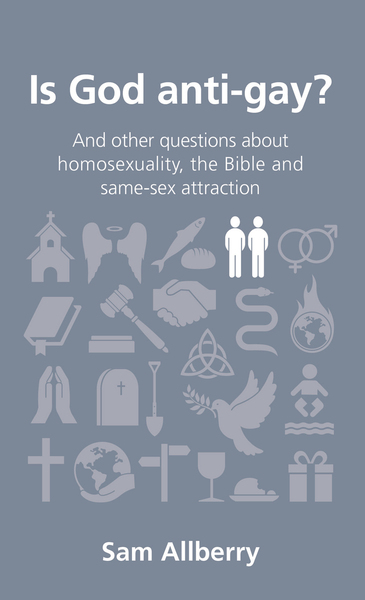
gayChristians have bad press when it comes to homosexuality. This hasn’t been helped by the bigotry and hatred of the Westboro Baptists in the United States and their appalling website godhatesfagsdotcom. The assumption by many is that all Christians are homophobic and therefore God must be anti-gay. The reality is the opposite—John 3:16 famously declares…

For God so loved the world that he gave his one and only Son, that whoever believes in him shall not perish but have eternal life.

By extension, this also means…

For God so loved gay people that he gave his one and only Son, that whoever believes in him shall not perish but have eternal life.

Sam Allberry’s little book, Is God anti-gay? And other questions about homosexuality, the Bible and same-sex attraction is an excellent guide to this issue. It’s not shaped by politics, sensationalism, or right-wing ideologies. It’s not seeking to ride the trends of culture or church opinion. This book is an attempt to seek the mind of God honestly and sensitively from the Bible.

Allberry writes with sympathy for the matters at hand. He discloses to his readers that his own sexual orientation is homosexual. However, he does not presume to speak for everyone for whom homosexuality is an issue. As a Christian, and minister of a church, this has caused him to grapple seriously both with Scripture and it’s application in his life. He prefers not to describe himself as ‘gay’ but rather as ‘someone who experiences same-sex attraction’. He writes:

But describing myself like this is a way for me to recognise that the kind of sexual attractions I experience are not fundamental to my identity. They are part of what I feel but they are not who I am in a fundamental sense. I am far more than my sexuality. (p8-9)

Allberry explains that the way to understand homosexuality is to view it against the backdrop of God’s good purposes for gender and sexuality. We need to understand what it means to be made in God’s image, to understand one-flesh union in marriage, and to explore God’s reasons for the gift of sex. We must also recognise that in our fallen world there will be many temptations to live alternatively to God’s ways. Some of these pressures come from the outside, others come from within us. We will all face trials and temptations of different kinds—this doesn’t mean we blame our DNA or upbringing or culture, but that we seek God’s help to trust and follow him.

While acknowledging that God’s design for sex as outlined in the Bible is heterosexual, within a loving and faithful marriage relationship, this doesn’t mean that God is anti-gay. It is, however, a significant call to trust God when our preferences and passions don’t align with his. Allbery reminds Christians who are attracted to persons of the same sex, that they should take the opportunity to talk to God about it—about our confusion or distress, our temptations, or our failings and sins. He reminds us that particular feelings do not disqualify or define us as Christians. All Christians struggle with a multitude of feelings and temptations. What matters is how we respond to these things. We are also reminded that Christians need to be willing to support one another in these matters.

Sadly, many churches do not engage well with matters of sexuality, and especially with homosexuality. Many people with same sex attraction have felt deep rejection at the hands of Christians. There is much for our churches to change in how we engage with people whom God clearly loves.

Allbery offers helpful advice to Christians in engaging with people who are homosexual in orientation. He prefers to start at the centre and work outwards, rather than start at the edge and work in. The matter of sexuality is not of first importance. Jesus’ death and resurrection take centre stage. This is where God is most fully revealed. It shows his heart towards all people.

This is what I most want people to know—for people to be bowled over by the God of the cross and resurrection. And, once gripped by this, to help them think through what trusting in this God will involve—what will need to be given over to him, including our messed up sexuality.

But I want the conversation to take place in the context of the gospel, rather than start with their sexuality and try to get from there to the gospel … So when a gay couple start coming to my church, my priority for them is the same as for anyone else: to hear the gospel and to experience the welcome of a Christian community. (p63-64)

I found this book to be very helpful in understanding issues of same-sex attraction from the perspective of the Bible. It is written with warmth, insight and compassion. It upholds the dignity of all people, and it demonstrates the depths of God’s love for all, regardless of sexual orientation or anything else. I commend it especially to Christian people wanting to understand the mind and heart of God in todays cultural climate.

How will the world end?

world_endThe beauty of a couple of interstate bus trips and a return flight to Brisbane over the past couple of weeks, is that I’ve been able to find time to do some more reading. And the brief books from the Questions Christians Ask series have been ideal travel reading—far better than most stuff you pick up at the airport bookstores!

How will the world end? And other questions about the last things and the second coming of Christ by Jeramie Rinne takes us into some hotly debated topics among Christians. We are very good at dividing over millennial positions, the meaning of world events, identification of the anti-Christ, when the end will happen, and more. Careful reading of the Bible is paramount to understand God’s intentions in these matters.

The book starts by affirming that the end of the world will arrive according to God’s design and purpose. It won’t be the result of arbitrary forces of the universe, nor the inescapable consequence of human failure to care for our planet.

The problem facing the human race is not that it’s on a collision course with an asteroid. Our problem is far worse: we are on a collision course with a holy God who is coming to judge a sinful world. (p13)

God has promised to address our sin and rebellion and to bring us to account. In fact, we could not describe God as ‘good’ if he was to ignore sin and tolerate evil forever. His judgment reveals that he cares about this world that he has made and the people within it. Though we don’t know when, God promises that he has set a day when he will judge this world through his Son. This is the day when Jesus will return.

Rinne discusses what will happen before this day when Jesus returns to judge the world. He does so with special reference to Matthew 24. We are warned that there will be false messiahs; many who oppose Jesus; wars and disasters; persecution of Jesus’ followers; wickedness and evil; growth in the gospel. These things are not the end—but they are signs that the end is on the way. The overwhelming testimony of the New Testament is that we are in the Last Days now. Not because we live in 2014 when there is evidence of these things all around us—this has been true of every age since Jesus first spoken these words. Jesus came to inaugurate the last days and he will bring them to an end when he returns.

A chapter of this book is devoted to helping Christians understand and navigate the various millennial perspectives that arise from Revelation 20. This provides a clear and helpful introduction to people’s thoughts on this matter. He concludes the chapter saying:

It’s probably all too much to hope that this chapter would clear up all the questions. But I hope that it did at least three things:

  1. I trust this chapter lifted you above the trees to see the forest.
  2. I pray this section increased your humility and patience toward others with different views.
  3. I hope this chapter increased your appetite to learn more about God’s word.

As your mind works to make sense of the details, may your heart swell with excitement that our Lord is returning! (p65)

How will the world end? draws heavily on the book of Revelation to make it’s case. However, I am always a little cautious about going to Revelation as the primary place to build my theological understanding. My rule of thumb tends to be ‘check my theology of Revelation with what I can verify clearly from the rest of Scripture’. Having said this, I do believe that Rinne handles Revelation faithfully and clearly.

From Revelation 20 we’re reminded that when Jesus returns to judge there will be ‘the books’ and the ‘book’. The ‘books’ will contain a record of our thoughts, words, and deeds. These will provide the incontrovertible evidence that God’s judgment is fully-informed, just and true. There is no hope for anyone in these books. It is the ‘book’ that offers hope. This is the Lamb’s book of life—what matters is whether our names are recorded in this book. The book of life reveals all who have trusted not in our deeds, but only in the sacrificial death of Jesus in our place. Is your name in this book?

For those not listed in the Lamb’s book of life the future is very grim. Images of hell and judgment speak of an everlasting judgment on all who reject God’s offer of rescue through Jesus. It is impossible for us to appreciate the magnitude, or indeed the rightness, of God’s judgment because we don’t have any sense of the gravity of our crime. (p76).

The closing chapter explores how we should live as we wait for Jesus’ return. He starts with the basics—because Jesus is returning to judge, we need to turn from our sins and put our trust in Jesus now. As we trust in Jesus, he doesn’t merely save us from our sins, but his grace transforms us and teaches us to live godly, Christ-like lives while we wait (Titus 2:11-14). We are urged to pray (1 Peter 4:7) and encourage one another to pray. We’re to remember our calling to take the good news of Jesus to all nations. As this world is passing we should not be too attached to stuff (1 Corinthians 7:29-31). We should remember that whatever trials and suffering we will face in this life, they are not worth comparing to the glory that will be revealed in us (Romans 8:18).

It is far too easy for us to live our lives stuck in the moment, to assume this life is all we’ve got, to lose sight of the end that is coming. This book is an important corrective.

Who on earth is the Holy Spirit?

holy_spiritWho on earth is the Holy Spirit? by Tim Chester and Christopher de la Hoyde is written to reassure believers about the experience of the Spirit in their lives. It’s also written to help believers become more aware of the work of the Spirit. The writers want to raise people’s expectations…

When you pray, we want you to expect the Spirit to work miracles. When you talk about Jesus, we want you to expect the Spirit to create faith in people’s hearts. When you read God’s word, we want you to expect the Spirit to create intimacy with the Father. When you’re tempted, we want you to expect the Spirit to give you alternative desires.

In your daily life, we want you to expect the Spirit to show you how you can serve others in love. We want you to be able to appeal to the experience of the Spirit as Paul does in Galatians 3 v 2-5.  (p8-9)

These are wonderful aims for the book, and filled me with great anticipation as I set about reading another book in the Questions Christians Ask series. The book begins by demonstrating the fundamental role of the Spirit in giving us spiritual life. Without the Spirit’s work we are unable to recognise the beauty of Jesus and the power of his work, or to turn to him and trust him. The Spirit gives us new birth or ‘regeneration’. The life-giving work of the Spirit reveals that salvation is God’s work from beginning to end. It is entirely a work of grace—even our faith is a gift from God. Put simply, if we don’t have the Spirit then we cannot be Christian.

If anyone does not have the Spirit of Christ, he does not belong to Christ. (Romans 8:9)

God was at work through his Spirit in the work of creation, bringing order out of disorder. The work of the Spirit continues to sustain and renew the creation. The Spirit is God’s seal upon his people, rather like God’s name tag, stating clearly that we belong to him. And the Spirit gives us a foretaste of life in the new creation. He’s the first instalment of the new creation, given to us as a guarantee that it really is coming. This is more than an a divine engagement ring, given as a pledge of the marriage to come—it’s more like a lover’s kiss, given as a foretaste of what is to be experienced.

Chester and de la Hoyde show us from the Scriptures how the Spirit is at work in us, making Christ present in and among believers. He dwells in the church and individual believers, and works in us to transform us into Christ’s likeness. We are reminded of the wonderful promise that if we live by the Spirit, we won’t gratify the desires of our sinful natures. (Galatians 5:16).

I appreciated the chapter entitled The Spirit of love where we are reminded that throughout all eternity God has been a Trinity of persons-in-relationship, an eternal family, a community of love. (p40) God has existed forever in a relationship of love between Father, Son and Spirit. Thus God can be known simply as being ‘love’. He always has been—it’s part of his essential being. The extraordinary thing is that we can be drawn into this family of love by the Spirit. God adopts us into his family and he wants us to know that we belong to him and are loved by him. (Galatians 4:4-7)

However, I also found some of the author’s comments about our relationship to the Spirit ambiguous and potentially unhelpful…

But it’s possible to grow less aware or sensitive to the Spirit’s prompting in our hearts. It’s possible to find ourselves acting more like God’s employees than his children. That’s what’s happened to the Galatians. They’ve lost their joy (4 v 15) Why? Because they’ve been duped into thinking they can earn their relationship with God. They’re going back to the law (4 v 8-11). They’ve become deaf to the Spirit. (p51)

I agree that the Galatians are being drawn back to reliance on the law, thinking they can earn their way to God. This is not the way of the Spirit. They began with the Spirit in reliance on Christ alone, and they are called to continue in the same fashion. I understand that this is, in fact, becoming deaf to the Spirit. However, describing this as growing less aware or sensitive to the Spirit’s promptings opens the way to confusion and misunderstanding. I don’t believe that the Galatians’ problem was one of failing to tune into ‘promptings’, but that of being drawn away from the true gospel of grace to a self-righteous gospel of works of the law.

The language of ‘being sensitive to the promptings of the Spirit’ (eg. p64) is used by the authors on a number of occasions in this book and I’m not persuaded it’s helpful. Don’t get me wrong—I believe whole-heartedly that the Spirit can prompt people, and that he has prompted me on many occasions. Yet, the authors seem to me to go beyond the promises of Scripture on this matter. They seem to be greater advocates of the freedom of God than the explicit promises of God. We need to be careful about ‘tuning into promptings’ and be encouraged to weigh up carefully the ideas of others, our inner hunches, the desires of our hearts, the circumstantial evidence, the feelings that these things must be from God. We also need to be careful not dismiss what is of God. Thus, we will do well to follow the advice of Paul to the Thessalonians:

Do not quench the Spirit. Do not treat prophecies with contempt but test them all; hold on to what is good, reject every kind of evil. (1 Thessalonians 5:19-22)

I had a couple of other minor complaints about this book, such as the author’s unwillingness to state clearly that the baptism in the Spirit in 1 Corinthians 12:13 refers to the conversion experience of being united with Christ, rather than a second experience of the Spirit after becoming Christian. I am persuaded that to understand Paul to be speaking of an experience subsequent to conversion, is to undo his argument in this passage altogether. The authors may agree with me, but they leave it ambiguous. Perhaps, they do not want to make an issue of this point thereby making their book more accessible to a broader readership.

Despite my reservations, this book has much to commend it. It’s anchored in Scripture and it warmly invites the reader to embrace the work of God’s Spirit in our lives. We have nothing to fear in doing this. Rather, we enter more deeply into the blessings of God for his beloved children.

What happens when I die?

dieWhat happens when I die? And other questions about heaven, hell and the life to come by Marcus Nodder is another little book in the Questions Christians Ask series by the Good Book Company. Firstly, let me commend Nodder for being willing to share his life with the reader. This is not an academic book, written in ignorance of the pain of death. It’s a book that integrates the promises of God with the experience of death. He begins by reflecting on the death of his dad, and I immediately warmed to the author as one who would empathise with people’s experiences. I am convinced that this should be a vital component of any book that deals with sensitive and painful matters of life and suffering.

Nodder identifies the reality that death is not part of popular conversation and in the developed world we’ve become very adept at avoiding the issue altogether. Yet death intrudes on each of us, and the reality of death confronts us with some uncomfortable truths. I could identify with these words:

If you’ve been diagnosed with a terminal illness, you will need no convincing of this, but for the rest of us Sigmund Freud was onto something when he once wrote: “No-one really believes in his own death”. (p6)

This book takes us to Jesus who knows what lies beyond the grave and, not only that, provides the solution to the problem of death. Jesus broke the power that death holds over people, so that in turning to him and trusting him, we can look forward to life with God beyond death.

The basis for our hope for life beyond death lies in the evidence for the resurrection of Jesus from the dead. The empty tomb; the appearances to various people at various times; the eye-witness testimonies; the circumstantial (even embarrassing ) evidence for the resurrection recorded in the New Testament; the transformation of his followers, many of whom would give their lives rather than change their testimonies; all points to good reasons for trusting God on this matter.

If anyone at any time after the resurrection of Christ had been able to produce Jesus’ body —his corpse—Christianity would have sunk without a trace and that would have been the end of it. But there was no corpse because the body had been raised to life. The empty tomb is a powerful piece of evidence. You can go to the Red Square in Moscow and see Lenin’s embalmed body on public display. Followers of Bruce Lee go to visit his grace in Seattle’s Lake View Cemetery, where the remains of his super-fit body are interred. Followers of Mohammed go on a pilgrimage to the Mosque of the Prophet in Medina, where the the prophet is buried. But followers of Jesus Christ going to the Garden Tomb in Jerusalem find just an empty grace. (p39-40)

Many important practical and pastoral concerns are addressed in this book’s 94 pages. The author addresses such matters as What will happen to my body?; What will it be like to die?; How do we cope with bereavement?; and What will life be like in eternity? There are also brief answers to questions relating to prayers for the dead, ghosts, cremation versus burial, soul sleep, rewards in heaven, recognising loved ones, what is a soul or spirit, and even whether our pets will join us in the new creation! There is much to consider in this book, and each matter is addressed with appropriate sensitivity.

Nodder writes also of his grandmother dying of cancer. She was in her seventies and ready to go home to be with her Lord. However, she was bothered by well-meaning Christians who couldn’t accept the place of death. The reality is that one day we will all die. It may be tragic and sudden, or it may be slow and peaceful. There will be a day when our organs will cease to function, when there is no more healing to be found in this life. This is God’s will for each of us—for since the fall we are no longer equipped to live forever in this life, and God has something far greater in store for all who trust him. Sadly, there are some Christians doing much damage by their unwillingness to accept this.

Some people by their obsession with healing seem to me to rob Christian souls of their privilege and opportunity to glorify God in the way they die. Instead of a triumphant acceptance of death, as simply one more step in the purposes of God for them, we find instead an hysterical search for healing as if it were quite impossible that it should be God’s will for a Christian to die. Instead of courageous testimony, we find an attitude to death that resembles in many ways the conspiracy of silence and the double-think that we find in the world. It ought not to be so. (p59)

I notice ads on the TV for life insurance, funeral insurance, and leaving a will, a lot more often since I’ve been diagnosed with a terminal cancer. They’ve probably all ways been on TV and I haven’t noticed. Perhaps I just watch more TV now! The ads are correct in highlighting the need to make decisions about these matters while we can; but they almost suggest that once these choices are made, we can go back to just getting on with life. It’s not sufficient to consider our death—we need to make plans and preparations beyond death, and this means we need to go to the Bible.

The philosopher, Cicero, said that “to study philosophy is nothing but to prepare ourselves to die.” God says the only way to prepare ourselves is to put our trust in Jesus as our Rescuer and Ruler before we meet him as our Judge. (p61)

Is forgiveness really free?

forgivenessIs forgiveness really free: And other questions about grace, the law and being saved by Michael Jensen is definitely worth a read. I must admit, however, that I came to the book with a different set of questions and expectations that all had to do with the intricacies of forgiveness—particularly our forgiveness of one another. Fundamentally, this is a book about God’s forgiveness of us. It’s about ‘grace’ and grace is something we all need to be reminded of all the time. Maybe ‘grace’ should have appeared in the title and ‘forgiveness’ dropped to the subtitle. Anyway, I don’t want to be a pedant.

Michael’s aim in writing this book is to help you plunge into a deeper and richer experience of God’s grace, so that it may make a huge difference in your life. (p7) I read this book at the same time as viewing the recent movie Freedom. This is a story about rescuing American slaves to freedom in Canada. There is also a back story throughout of John Newton and the writing of his powerful hymn Amazing Grace. Both the movie and the book warmed my heart.

Some of the book describes my transformation to becoming a believer. For years I was confused and lacked assurance of my standing before God. I needed to focus on the death of Jesus to so as to reject the following erroneous ideas:

God’s grace to us in Christ is not conditional on our performance in any way, or upon taking part in certain rituals, or on our having confessed in precise detail everything we can think of we have done wrong. Those false views of grace only lead to a life filled with guilt, uncertainty and a lack of assurance. (p15)

I loved Michael’s section on Jesus’ crazy economicsIt’s so helpful to be reminded that God’s economy is the economy not of the wage but of the gift. (p24) God gives to those who haven’t earned or deserved anything from him. It comes entirely from the generosity of his heart, not because of any debt or obligation to us for services rendered. But we are also carefully reminded that while the grace of God is free, it is not cheap. The cost is to the giver, not the receiver. It comes at great price—through the death of Jesus Christ for our sins.

Michael includes a pastoral word for those with a tender conscience who are scared that they, or others might fall away and separate themselves from God’s grace. He writes:

The confidence that Hebrews speaks about is not a confidence that we are saved because of some past decision or prayer of commitment; but rather a confidence in God, that also means a right fear of him.

Can grace be taken away? The right answer is not “yes” or “no”, but: God is faithful: cling onto him with all your might. (p46)

Is forgiveness really free? goes on to describe the relationship of the Old Testament law to grace and Christian living; to debunk the challenge that grace is simply a license to sin; to show how grace transforms our lives to make us more like Jesus; and to challenge to our pride that we should need such grace in the first place.

I found this book pointed me back to the important truths of grace from the Scriptures and reminded me that “but for the grace of God go I” goes far beyond a cliche. It’s the foundation of a life lived in the transforming power of God.

Did the devil make me do it?

devilI’m on a roll with these little books. Yesterday, I hid from the rain and cold by reading another edition in front of a raging open fire in our lounge room. Nice! This time it was Mike McKinley’s Did the devil make me do it? And other questions about Satan, demons and evil spirits. I must admit it’s not my normal fireside reading. While I’ve read all the Harry Potter series, I don’t much care for horror thrillers or teenage vampire love stories. So why this book?

Quite simply, because it’s an issue where there’s so much speculation and confusion among Christians. While the Bible speaks unashamedly about these things, it seems that many people are more informed by movies and novels than the Scriptures when it come to the understanding powers of evil.

McKinley acknowledges the polarity of opinions about the devil that exist. C.S. Lewis wrote in his classic book, The Screwtape Letters:

There are two equal and opposite errors into which our race can fall about the devils. One is to disbelieve in their existence. The other is to believe, and to feel an excessive and unhealthy interest in them. (quoted on p7)

As a product of our scientific, naturalistic age, my tendency is toward the former. I’m the one who is likely to be taken in by the classic line from the movie, The Usual Suspects:

The greatest trick the devil ever pulled was convincing the world he didn’t exist.

I raise a few eyebrows when I start speaking with friends about God, Jesus, the Holy Spirit, miracles, resurrection, and the like. But if I start discussing angels, the devil, demons, evil spirits, and spiritual warfare, then people will know I’ve lost it. There are probably many Christians who feel the same.

However, I’ve also met the opposite—Christians who seem totally obsessed with everything to do with evil spirits and the like. They’re forever speaking against, strategising against, incantating against, at war against, some power of evil. Some look for skeletons in the closet of family trees—your great uncle was a mason so you have to be released from the masonic stronghold that oppresses you still. Some suggest that every negative factor in a person’s life has some close connection to demonic forces—the spirit of alcoholism, or addiction, or doubt, or fear.

Did the devil make me do it? is a breath of fresh air. It’s not cynical or dismissive, but neither is it speculative or superstitious. This book directs us to the Bible for our answers. It engages with the text of Scripture to remind us that there is a created being called the devil, and we must take him very seriously. Jesus did. It also encourages us to remember that he is only a created being, and we needn’t be overwhelmed by him. Jesus wasn’t.

The centre-piece of this book isn’t the devil, or the demons, or the havoc they seek to create. It is, in fact, JESUS.  Jesus entered into our world to overcome the power of the devil. He came to destroy the devil’s work, to disarm him, and to rescue people from his influence. Reading any of the gospels reveals how Jesus’ life and ministry was a confrontation with the devil. Examining his crucifixion and resurrection shows the power of his victory over God’s enemy. The way ahead for Christians is to focus on Jesus, not on the enemy of Jesus. It’s to listen to Jesus, not the lies, deceptions, or accusations of the devil.

One of the things I appreciated about this short book, is that the author gets us to reexamine what the Bible teaches on these topics. He quotes and discusses and applies the Word of God. The book itself is an example of how we should address any topic of concern—by examining what God has to say on the matter. Again, and especially for occasional readers, the brevity of this book is a bonus. Yet, it’s also a weakness. There are times when I would like to be pointed to the source of ideas in the book. There are other times where I’d like to be able to explore issues in greater depth than 80 pages will allow.

Perhaps, the publishers could consider adding a Further Reading section in each of these books to help people move from introductory to intermediate study on these topics. They could highlight books they believe to be reliable and helpful. Maybe, they could even consider an index of important Bible passages for further reading and study.

Can I really trust the Bible?

trust_bibleThis is the second book in the series on Questions Christians Ask that I’ve read during the past week. It’s a new series of books by the Good Book Company in the UK on a range of important topics for Christians and enquirers alike. I’m excited by these books because I think they will help non-readers become readers. We’re told that people are reading less and less in this media and internet age. The danger is that we’re therefore becoming more and more biblically and theologically illiterate. This series of books could be a stepping stone to changing this trend for followers of Jesus. So far I’ve found they’re compact, engaging, easy to read, and deal with real issues.

Barry Cooper’s book, Can I trust the Bible? And other questions about Scripture, truth and how God speaks is a good introduction to the topics of biblical authorship, authority, reliability, readability and more. The book is framed around three questions…

  1. Does the Bible claim to be God’s word?
  2. Does the Bible seem to be God’s word?
  3. Does the Bible prove to be God’s word?

The premise of the first question is that we need to firstly consider the Bible on its own terms. How does the Old Testament view itself? What perspective does the New Testament offer on the Old? How did Jesus treat the writings of the Old Testament? How did New Testament authors describe each other’s writings? Exploring these questions points to a consensus that the Bible—Old and New Testaments—claimed to be the word of God.

Cooper goes on to describe the connection between God and his word. The analogy is drawn between Jesus, the Word of God, being both human and divine, and the Bible being both human and divine in origin. God works through real people, in real life historical circumstances, with real personalities, writing in different literary genres, to communicate his message to us. The human element doesn’t rule out the divine, not does the divine eliminate the human. As it says in 2 Peter 1:20-21:

Above all, you must understand that no prophecy of Scripture came about by the prophet’s own interpretation of things. For prophecy never had its origin in the human will, but prophets, though human, spoke from God as they were carried along by the Holy Spirit.

One piece of evidence that confirms for me the reliability of the Bible as the word of God is the fact that it was written by multiple authors over many centuries, without collaboration, and yet maintains an incredibly coherent message. Cooper asks:

What if multiple authors had each written a single page of this little book you’re holding? What if each author wrote in different genres, in different centuries, in different countries, with no “master plan” for them to consult? What is the likelihood that it would make any sense at all? (p38)

Not only is the Bible coherent, but its central theme is consistent. Everything points to Jesus and all things find their fulfilment in him. These are things that the greatest human minds in concert, even with the aid of Doctor Who and time travel, couldn’t conceive.

Scattered throughout this book there are also short answers to a range of contemporary questions. These include:

  • Doesn’t the argument for biblical authority go round in circles?
  • Isn’t the Bible socially, culturally and sexually out of date? Isn’t it just a product of its time?
  • Hasn’t the Bible been used to justify terrible things?
  • Isn’t reported/oral information unreliable?
  • How can I trust the Bible when it has miracles in it?
  • Who’s to say the Qu’ran isn’t also the word of God?
  • If God really wants to speak to us through the Bible, why is some of it so hard to understand?

These are important questions—and there are more. Cooper is to be commended for raising these and addressing them. Bear in mind, this book is very brief. Thus, the answers to these questions are little more than introductions. They’re unlikely to satisfy the person who has stumbled heavily on one or other of these issues, but they do point to the fact that there are answers, and the honest enquirer can certainly look into these questions more deeply.

The final chapter of this book pushes us to be more than observers or students of the Bible. We’re encouraged to put what we read into practice, or to taste the Scriptures. Reading the Bible was never intended to be a merely academic endeavour. God gives his word for our nourishment. The proof of the pudding is in the eating.

The decrees of the Lord are firm,
    and all of them are righteous.

They are more precious than gold,
    than much pure gold;
they are sweeter than honey,
    than honey from the honeycomb.
(Psalm 19:9-10)

Why did Jesus have to die?

why _jesus_dieOf all the questions that have ever been asked in the history of this universe, this must be one of the most important: Why did Jesus have to die? The little book of this name by Marcus Nodder gets to the very core of what matters matter most.

Other than the golden arches, the cross must be one of the world’s most recognisable and identifiable logos. It goes with church, and Christians, and God, and all that stuff. We know that. But why do Christians focus on the cross—a symbol of torture and capital punishment? It’s the belief that the death of Jesus Christ, by crucifixion, is indispensable and central to Christianity. It is the very means by which we can have a relationship with God at all. It provides the shape and direction for a life lived trusting and serving God.

The aim of Nodder’s book about the death of Jesus is that…

we would understand the cross more deeply, and treasure it more dearly. And that, as a result, we would live increasingly cross-centred and cross-shaped lives, and love and worship more the one who did not spare his own Son but gave him up for us all. (p8)

There are many profoundly important books that have been written on the death of Jesus over the centuries. In recent times books such as Leon Morris’s The Apostolic Preaching of the Cross or John Stott’s classic The Cross stand out. Serious followers of Jesus would do well to engage with these books. But if you’ve never opened a book that discusses the importance of the atoning death of Jesus, then Why did Jesus have to die? is an excellent place to begin.

Rather surprisingly, this book about Jesus begins in the Old rather than the New Testament. We’re invited to explore Isaiah’s wonderful vision of the Most Holy God. It is no simple thing for corrupt human beings to have a relationship with a pure and almighty God. We need to be cleansed for this to be possible. The following chapter invites us to ponder the promises of God to make people right with him—promises given hundreds of years before Jesus, through the prophet Isaiah. This was God’s plan all along to welcome people into his presence through the sacrificial death of his Son.

There is so much more to Jesus’ crucifixion than what we see on the surface. This wasn’t simply one tragic death among many. Jesus willingly gave his life as a substitute for us. He takes the punishment of God for our sins, experiences the full horror of spiritual suffering, so that we might be spared. The ideas of justification, redemption, grace, reconciliation, adoption, and justice are all shown to be more than abstract theological notions. They lie at the heart of the privilege of knowing God and being known by him. And none of this is possible without the death of Jesus.

The book closes with a chapter on how the cross gives our life direction. We don’t simply begin with the death of Jesus and then move on to other things. The Bible reminds us to keep our eyes on the cross always. We’re called to live a sacrificial life following Jesus—to give up our lives for his sake, that we might gain life eternal.

One of the things I especially appreciated about this book is the clarity and simplicity of illustrations helping us to grasp the significance of Jesus’ death. Nodder uses stories, images, and ideas to help us understand the importance of the cross. For some, like myself, who’ve heard about the death of Jesus again and again, this book will offer you a fresh insight into the absolute heart of God’s love. It’s only 92 pages long—so do yourself a favour, pick it up and read it.


Tim Challies reviews Hope Beyond Cure

Screen Shot 2014-05-21 at 1.37.17 pmI woke this morning afternoon to a number of messages informing me that Tim Challies—a prominent North American blogger—had picked up my book and written a review. I share it with you here…

It began with two devastating words: “tumor” and “incurable.” If they are not words you have ever heard, they are probably words heard by someone near you, someone you love or loved. They were words David McDonald heard as well.

McDonald had pastored for just about twenty years and by 2011 had decided to begin a new work. He and his family would leave Canberra, Australia, and move thousands of kilometers north to Darwin, a remote but needy city. They were going there to found a new church. They secured support, made the journey a couple of times, found a place to live, made all the necessary preparations, packed the truck, and sent it off. They were all ready to begin the next twenty years of ministry.

And then, just days before the big move, there was shortness of breath, numbness in the limbs. Something was wrong. Really wrong. There was a visit to the specialist and the terrible diagnosis: lung cancer. Incurable. Stage 4. Best-case scenario: he might live to see next Christmas.

In all the difficulty and in all the devastation, he needed to find hope. With the fatal diagnosis and with the best of modern medicine unable to offer the promise of health, he knew he had to look for hope beyond cure.

Hope Beyond Cure describes his search for hope. Yes, he was a pastor. Yes, he had walked with others through devastating and even terminal illness. But now it was him and now he was the one whose faith had been rocked and whose dreams had been shattered. He wasn’t ever tempted to throw away his Christian faith. Not at all. But he did realize the importance of deep and deeply satisfying answers.

Faith and reason have shaped this book. Together they have given me hope. I don’t know everything there is to know about cancer or God. I’ve studied them both, but my understanding is partial and limited. My ignorance outweighs my knowledge, even though I’m learning more day by day. But this knowledge of cancer and of God isn’t simply in my head—it’s deeply personal. I don’t just know about them—they are part of my life and my experience. I know cancer and I know God. And it’s because I know God that I believe there is real hope for those who have cancer, for those who are struggling, for those who have lost hope—for everyone.

The hope he describes is the best and truest hope because it is founded upon the best and truest reality—that God is real and that he has sent his Son into this world to redeem sinners. McDonald goes to the gospel, but he does it in such a faith-stirring and helpful way. These aren’t easy answers. These aren’t trite solutions to deep problems. These are truths drawn carefully and consistently from the Bible, and all the while combined with the strength of human experience.

Each of us knows someone who will suffer from cancer. Many who read these words will some day be diagnosed. Hope Beyond Cure is a book to read if you, like McDonald, are a Christian and suffering and need to be reminded of what is true. It is an appropriate book to hand to an unbeliever as well; it is written in a gentle and humble style that is not the least bit offensive.

As Christians, we have nothing better to offer than what the Bible tells us and no better hope than the hope it describes—a hope beyond cure. Here is a book that offers deep answers to deep questions, all the while tempered by deep wells of experience. It is powerful, it is helpful, and it comes highly recommended.

Will you be my Facebook friend?

facebookSome books are long. Others are short. Don’t judge the value of a book by its size. Will you be my Facebook friend? Social Media and the Gospel is only 48 pages short. The font size is large and the lines are well spaced, but the message is profoundly important. Tim Chester asks us to carefully consider both the benefits and the pitfalls of social media. This isn’t a tirade against the internet, but rather a plea to use it wisely. Social media has the capacity to radically distort reality, and we need to be wise to the dangers. Chester doesn’t leave us with a call to be more self-disciplined, which will lead only to pride or despair. Rather, he reminds us how the gospel reorients our lives and puts them back in real perspective—God’s perspective.

Here are a few words to consider…

The genius of Facebook is that all your friends come to you and all your friends come to them. So we simultaneously all inhabit our own little worlds, each with me at the centre. (p20)

Is your Facebook self more attractive or successful than your real-world self? (p26)

Am I using Facebook to enhance real-world relationships, or to replace them? (p39)

Remember the medium is the message, and Facebook was designed by a teenage nerd. (p42)

The Facebook comments wither and the tweets fall, but the word of our God stands forever. (p46)

If you or your kids are into Facebook, Twitter, Tumblr, Pinterest, spend hours in front of the TV, surf the net, scour blog sites, or the like—then do yourself a favour, turn off the computer, the TV, the X-Box, or whatever else, make yourself a coffee and read this book. It might take two cups of coffee, but I think you’ll find it worthwhile!

Crazy Busy

crazybusyI read this book some months back and was intending to review it immediately. But then something happened—I got crazy busy! I took on a new ministry role and pretty soon I had a full diary, began skipping exercise, let my good eating habits go, kept myself awake at night thinking about things, and couldn’t even find time to finish a summary/review of what is a fairly short and simple book.

Crazy Busy: a (mercifully) short book about a (really) big problem is a book for Christian leaders that was always destined to be a best-seller. I’ve yet to meet a pastor who doesn’t cry ‘busy’. To be honest, it’s rare to meet anyone these days who doesn’t lay claim to being crazy busy. Busyness is epidemic in our fast-paced, technologically-advanced, opportunity-laden, affluent, western societies. All the ridiculous promises for the future—that we will have so much time on our hands that we won’t know what to do with it—were just that: ridiculous promises. In fact, in some circles busyness is worn as a badge of honour. Unless someone is busy they shouldn’t be taken seriously.

De Young warns of the dangers of busyness…

But if the strain is mental—as is the case for most jobs and for most of us—the negative impact on the body can be huge. So don’t ignore the physical danger of busyness. Just remember the most serious threats are spiritual. When we are crazy busy, we put our souls at risk. The challenge is not merely to make a few bad habits go away. The challenge is not to let our spiritual lives slip away. The dangers are serious, and they are growing. And few of us are as safe as we may think. (p26)

Busyness can blind us to problems that are deep and destructive. Our lives can become joyless as we struggle to keep up with all the demands. It can rob our hearts of the opportunities to reflect, learn, and grow. Discontent can eat away at us as we envy the time, opportunities, and ‘freedoms’ of others. Busyness can cover up deeper problems within our souls. Having our diaries and planners crammed full does not equate to faithfulness or fruitfulness. It only means you are busy, just like everyone else. And like everyone else, your joy, your heart, and your soul are in danger. (p32)

Crazy Busy offers seven diagnoses to consider in understanding the depth of our problems with busyness. The first of these is pride. He strings a list of ‘P’ words together to make his point. These include people-pleasing, proving ourselves, seeking pity, poor planning, a need for power, the problem of perfectionism, seeking prestige, and more. De Young has found one simple question helps him to assess whether pride lies behind his busyness…

Am I trying to do good, or make myself look good? (p39)

The second diagnosis has to do with obligation. Are we trying to do what God doesn’t expect us to do? We need to be reminded often that we are not the Christ; that the gospel is great news of joy—not a demand of all that must be done; that care is not the same as do; that we have different gifts and different callings; that the church is a body with many parts; that prayer is something positive and practical we can do; and that even Jesus didn’t do it all. Above all, we need to remember that it’s not up to us to keep the universe going—God has that covered.

De Young’s third diagnosis focuses on mission creep. He reminds us of the importance of setting and sticking to priorities. Jesus recognised that there were so many good things he could do, but he would not let the good get in the way of his number one priorities. Jesus was not ultimately driven by the needs or the approval of others. He was focused on his divine mission. Not that we are on a mission from God in the same vein as Jesus, but the point is that if Jesus had to set and stick to priorities, then so must we. We simply cannot do everything and nor should we try.

Fourthly, we are warned to stop freaking out about our kids. He reminds us that it’s harder to ruin our kids than we think and it’s impossible to guarantee their future successes. In trying to do more and more for our kids we may be increasing the build up of stress in our lives and theirs. De Young refers to a Galinsky survey of more than thousand children in grades three to twelve. He asked the kids what was one thing they would change about the way their parents’ work was affecting them.

The kids rarely wished for more time with their parents, but much to the parents’ surprise, they wished their parents were less tired and less stressed.  (p70)

The fifth diagnosis looks at the impact of the screen and technology. De Young confesses that he used to roll his eyes about technophiles, until he became one!

Now I have a blog, a Facebook Page, a Twitter handle, a Bluetooth headset, an iPhone, an iPad, wifi at work and at home, cable TV, a Wii, a Blu-ray player, multiple email accounts, and unlimited texting. (p78)

We’re warned to take seriously the threat of addiction to all our devices. Multiple lines of instant communication can be a continual distraction to achieving anything productive. Our busyness makes us more prone to descending into trivia and mindlessly tuning out in front of the TV or the internet. It’s hard to be alone when we are ‘on call’ all the time—and being alone is important. We need to ask the hard questions about whether our new technologies are making our lives simpler, or more complicated. What steps should we take to ensure that such things remain our servants and don’t become our masters?

Diagnosis number six reminds us of the necessity of rest. God’s design was that we work and we rest. The danger these days is that we blur these two. Life becomes overwhelming because our days and weeks and years lack rhythm. We take work home with us. Our phones and lap tops are part work/part pleasure. We give lip service to the idea of day off, but we’re never totally on or off. (I confess this is my struggle.) De Young reminds us that we need to work hard just to rest. Breaks need to be planned. Unscheduled time needs to be scheduled. The rhythms of work and rest need planning. (p98)

The final diagnosis is a surprise one. We are busy because we are supposed to be busy. We’re too quick to assume that life was intended to be easy, comfortable, relaxed, calm. The reality is that we are sinful beings living in a complex world. We should expect to struggle with tiredness, illness, confusion, complex relationships, burdens and busyness. Sometimes our problem lies not with the circumstances but with our attitudes to them. We’re caught out, confused, and we don’t know how to respond.

The antidote to busyness of soul is not sloth and indifference. The antidote is rest, rhythm, death to pride, acceptance of our own finitude, and trust in the providence of God. (p102)

De Young’s answer is to point us to Jesus. We are encouraged to spend time ‘at his feet’ listening to his words. We’re called to devote ourselves to the Word of God and prayer. The problem is, when I hear this, it can sound like another busyness burden to add to all the others. And so I need to be reminded that it is God’s word that refocuses and refreshes me. It is through prayer that I can unload my burdens and anxieties upon God. Beginning the day with God helps me to keep perspective. To Do lists, difficult conversations, meetings, preparation and planning, sermons, studies, and everything else, need to be seen from the perspective that only God’s word can provide—eternity. And so I will learn again to humbly ask for God’s wisdom, grace, and strength, to do what he would have me do, for his glory.

Getting the book out

launchThe last two Sundays have been busy-busy days, not least because we have been launching my book at Central and Crossroads congregations. It’s been a thrill to see people eager to read this story and be encouraged. But it’s been even more exciting to see people buying the book to give away. Some have picked up five, ten, twenty, even forty copies to give away.

I’ve been deeply gratified and humbled to be able to write brief notes to people in the front. An encouraging word to someone battling with advanced cancer, a note of comfort to one whose mother has recently passed away, a note encouraging someone to look carefully at this promise of hope. What a privilege to share with so many people who are keen to love and encourage others.

People have told me they love the fact that this is a short book! They’ve written and thanked me for being willing to share my story—which, by the way, it isn’t—this is a book about hope in God, not self. I’ve asked permission to pass on the following note from a friend who is struggling with Motor Neurone Disease. He was a preacher and a singer, but he can no longer use his voice because of this destructive illness. He shared with me these kind words…

Hi Dave
Your book arrived in the mail today – thank you so much for it.
I did something I’ve never done before with a book, long or short – devoured it in one sitting!
Bravo – you have brilliantly encapsulated the essence of faith and the reasons for belief in the midst of your own very powerful story.
I can identify with everything – the grief, the groaning, and sense of loss, and the questioning – not just of God but of my own life and its worth.
It’s all brilliantly expressed and becomes a wonderful witness to our hope in Jesus.
So thanks – it’s THE book I’ll be recommending on sickness and finding hope.
Blessings,
Don.

It’s arrived!

mumHope Beyond Cure has arrived. The book, that is! I had the privilege of presenting the very first copy to my parents on my mother’s birthday. This week 17 boxes of the books were delivered to our home!

My desire is for people to know the real and eternal hope that can be found in Jesus Christ. This is a hope that can never perish, spoil or fade. Death can’t stand in it’s way.

If you would like a copy of my book, then the best way forward is to go to the publisher’s website where you can purchase copies. There are discounts for bulk purchases. If you want an eBook, it’s preferable to buy direct from the publisher rather than Amazon or iTunes because they offer a two-for-one licensed copy.

Over the next couple of weeks we will be launching the book at Crossroads and Central Churches in Canberra and there will be discounted copies of the book available. If you’re nearby, then you are welcome to join us on these occasions.

9 February
9.30am at Central Evangelical Church, Stromlo High School, Waramanga
6.30pm at Crossroads Christian Church, Manning Clark Theatre, ANU

16 February
9.30am at Crossroads Christian Church, Merici College, Braddon
4.00pm at Crossroads Christian Church, Belconnen Community Centre

If you can’t make it, then you are also very welcome to contact me about getting copies.

Staying on the Leading Edge

johngrayI must admit to being a little suspicious when I saw the promo for Staying on the Leading Edge—Without Killing Yourself by John Gray. The title and the cover photo reminded me of the many ‘real men’ books I’ve seen lately. I was worried that it would be a ‘Rambo Theology’ for pastors; a ‘you can conquer the world if you believe in yourself’ manifesto. Well, it isn’t. In fact, it’s exactly the opposite. This book calls upon leaders to humble themselves before God and to apply God’s Word in their leadership of God’s church on God’s mission. This book is shaped by the Bible and applies God’s blueprint for leadership to the task of Christian leadership. There are many books out there on leadership in the church and this book deserves its place among them.

Gray has written Staying on the Leading Edge for three purposes:

“Firstly, I write to provide a framework for those who have an internal drive to lead.”

“Secondly, I want to contribute to the debate on a theology of leadership.”

“Thirdly, I write for those who are battle weary.”

I figure that this will engage most Christian leaders on each of the three levels. It’s important for us to be clear why we do what we do and how we should go about it. Most leaders I know who’ve been leading for any length of time, are feeling or have felt battle weary. Some may feel this way all the time.

Most books I’ve read about leadership stress the importance of the leader having a vision. We are told that the leader’s task is to present his people with a compelling vision of the future to strive for. The strength of this book is that it doesn’t rely on the leader to create the vision for the future, nor to decipher the specific vision that God has for this leader or this group of people. Rather, the vision for the future has already been given by God in his word. It is this vision that the leader calls his people to follow. Gray draws this vision from the Bible, quoting such wonderful passages as Isaiah 25:6-8…

On this mountain the LORD Almighty will prepare a feast of rich food for all peoples,
a banquet of aged wine—the best of meats and the finest of wines.

On this mountain he will destroy the shroud that enfolds all peoples,
the sheet that covers all nations; he will swallow up death forever.

The Sovereign LORD will wipe away the tears from all faces;
he will remove the disgrace of his people from all the earth.
The LORD has spoken.

He also quotes Napoleon as saying Leaders are merchants of hope. What a wonderful picture for the Christian leader to consider—to present people with a vision of hope. This is true to God as revealed in his word, for the Scriptures are a message of hope, and God is calling people to an eternal hope that nothing can destroy. I wonder how many pastors, youth leaders, Bible study leaders, chaplains or evangelists think of themselves as ‘hope merchants’. Not that we are selling the hope—it comes free and guaranteed by God himself. Hope is our message, and hope should shape our methods and goals.

This book addresses the character of leaders over and above their competency. Of course, both are required, but character is often forced to take a backseat to competency. Gray warns that:

“Churches are seriously burned, deeply hurt and even destroyed when leaders full of passion and vision lead with hubris.”

“Character is important for at least two reasons: it will keep a leader upright during the worst of storms and, secondly, it will provide a model of a life so irresistible that others will be drawn to it and, therefore, to Christ.”

We are warned against the risks of basing our leadership on personal claims to authority. There is no place for lording it over others or bullying people into responding. Rather, we are called to serve, to set an example, to love at cost to ourselves. Leading and teaching need to be more than propositions and words—they need to be accompanied by a godly example for others to follow. Jesus calls us to follow him. The apostle Paul called upon people to follow his example, as he followed the example of Jesus. The cynicism of our age and the poor track record of churches and their leaders makes this every bit as important as it was 2000 years ago—if not more. Gray writes:

“The longer we travel in a post-modern world, with an increasing emphasis on narcissism, the more crucial it is that people see evidence that the kingdom of God transforms lives. They are looking for a life that is worth living. If they could see it in the life of leaders, then they would follow it.”

Character and convictions must also be accompanied by competence. God is seeking skilled leaders who will lead his people well.

And David shepherded them with integrity of heart;
with skilful hands he led them.  (Psalm 78:72)

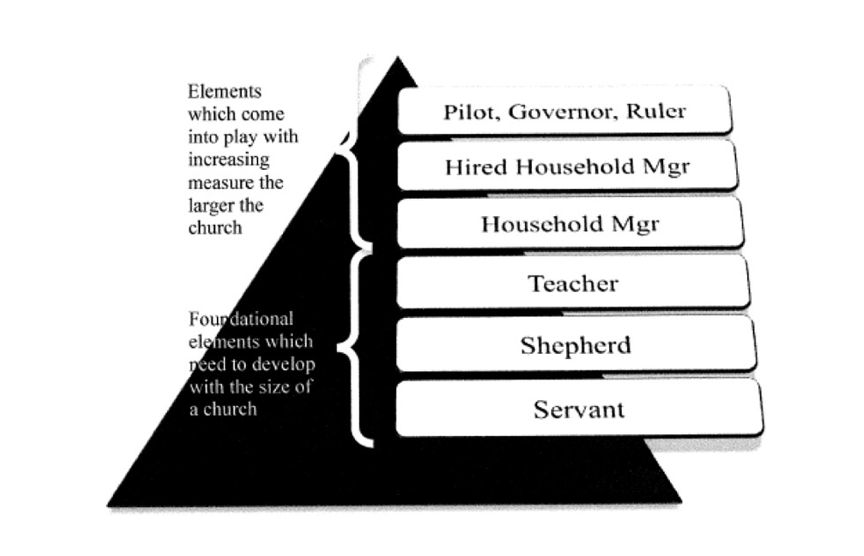
From the Pastoral Letters of Paul, two skills receive particular attention: the ability to teach; and the ability to lead others within the household context. These areas of competency are essential to good leadership. If people are unable to communicate clearly, then they won’t be able to lead people. If people can’t demonstrate leadership in a smaller setting such as a household, small business, small group, or community organisation, then they are not ready to be entrusted with a church. Gray argues that with increasing size and complexity in churches, greater skill must be demonstrated before people are entrusted with greater leadership. He describes the various New Testament windows into the nature of good leadership, and illustrates this with the following diagram:
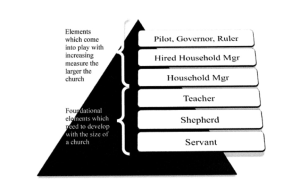
leadership_diagram

“Leadership in the church, therefore, is a matter of:

  • following and emulating the great servant, Christ;
  • developing a godly and exemplary life which others can emulate;
  • being able to teach sound doctrine;
  • developing skills commensurate with church size and complexity.”

Necessary skill must be accompanied by appropriate character, lest the highly articulate and experienced leader succeed in leading people down the garden path, or somewhere a lot worse. 

Gray is committed to encouraging leaders to keep at it for the long haul. He refers to stats that describe 12,000 ex-pastors in Australia who no longer lead their churches because something has gone wrong. This would remain a scary number even if it was only 10% true. His recommendations for equipping and encouraging leaders include drawing on the wisdom of:

  • Scripture
  • books
  • conferences
  • other leaders

He draws on Jethro’s wisdom to Moses to appoint leaders to help him lead well as the numbers of Israel grew. Moses then built an infrastructure of leaders who shared the load of caring for the people. They were instructed to bear the load unless it was too great for them, in which case things were passed up the chain to Moses. Gray has adopted this strategy in his own ministry with one notable and very personal change:

“I have added a piece to the “Moses model”. I not only ask the team to bring me that which is “too much for them”. I also ask them to pass on the celebration moments of life and the times when, unfortunately, a loved one passes away. As soon as anyone on the team hears about an engagement, the birth of a child or a passing of life, they get that info to me.”

He highlights the benefits he has discovered in reading widely on leadership. He draws from Christian and secular material to glean whatever wisdom will better equip him to lead.

Conferences can be a helpful source of inspiration. However, the danger is that we can simply become tossed around by the latest and greatest, thinking that the next conference will offer us the silver bullet for solving our leadership crises. I appreciated the idea of ‘do it yourself’ conferences that Gray describes. He speaks of regularly getting together with peers who are facing similar issues with their leadership, and being accompanied by a ‘grandfather’—someone older and wiser who understands the issues—and; a ‘pace-setting leader’—someone who is a few steps ahead of the rest of you, who can offer contemporary help in navigating the challenges.

He also stresses the benefits of having mentor figures that we can call on for advice and help at different times. He recommends keeping the contacts brief, perhaps offering to buy them a coffee or meal, or limiting time on the phone to 10 to 15 minutes. He urges us to value the time they give us by being well prepared in advance. They way to glean wisdom from them is to:

  • “Prepare 2 or 3 questions ahead of time. Work out what you want to ask. You know what it is like to find time in a crowded diary. It is more difficult for a leader of a larger church. Preparing questions will say to another leader, “I value your time. I do not want to waste it.”
  • “Be a good student. Take notes as you get answers to your questions. It matters not what media you take notes on, just take notes. When I take notes on my phone I always say something like “just want to let you know I am taking notes – not playing games.” This says to the leader I really do want to learn from you. I will not rely on my memory.”
  • “Take only the time you need. Your pace setter may not be looking for a friend. They already have friends.”

Gray reminds leaders to continually draw near to God and rely on his strength. We are encouraged to go regularly to the Word of God—not only for the latest sermon preparation—but to be nourished by God. He recalls how Wayne Cordeiro, at a pastors conference, encouraged him to grab his Bible, a pen, a notebook, and some time—and how it turned out to be exactly what he needed to hear and do. He now follows this pattern:

Read
Record the key verse from the passages you have read. This will be the verse that stands out most for you.
Explore
Summarise the text surrounding the verse you have written down.
Application
Record your answer to this question: “How will I be different today because of what I have just read?”
Prayer
Write out a prayer in the light of what you have read.

There are some excellent practical recommendations in Staying on the Leading Edge that will help leaders to keep their zeal while staying the distance. Running at a human pace is the goal. We are not God—whatever we may tell ourselves!

“If we are to lead (and keep leading) with the vision of the Kingdom of God fuelling us, if we are to stay on the leading edge avoiding burnout and the curse of the conservative middle ground, then there are lessons we need to learn.”

roseHe discusses the importance of leading from a position of rest. This requires adequate quality sleep, regular days off, sufficient annual leave. It means refilling our physical, emotional, relational, mental, and spiritual tanks. He urges us to keep our eyes fixed on Jesus, to let him be our guide and pace-setter, and to draw near to him in our times of need.

Finally, I loved Gray’s ritual for welcoming new leaders onto his staff team. He gives them a single, long stemmed, red rose, and tells them that he wants them to make time to smell the roses.

Start with why

start-with-whyIn Start with Why: How great leaders inspire everyone to take action, Simon Sinek argues that there are only two ways to influence human behaviour: manipulation or inspiration. Manipulation doesn’t have to be viewed negatively. A business can manipulate behaviour by dropping prices, offering incentives, running promotions, etc. Such manipulation works, but it costs. After a while customers expect the discount, or wait for the next promotion. It doesn’t build a loyal customer base. Over time, such strategies become too expensive to sustain. Customers only return for what they can get, rather than a commitment to the business or its products. Manipulation strategies have become the norm in many organisations. But there is another way.

Some are born leaders—others need to learn. The good news is that those of us who need to learn, can! And the big thing we need to learn is the power of WHY.

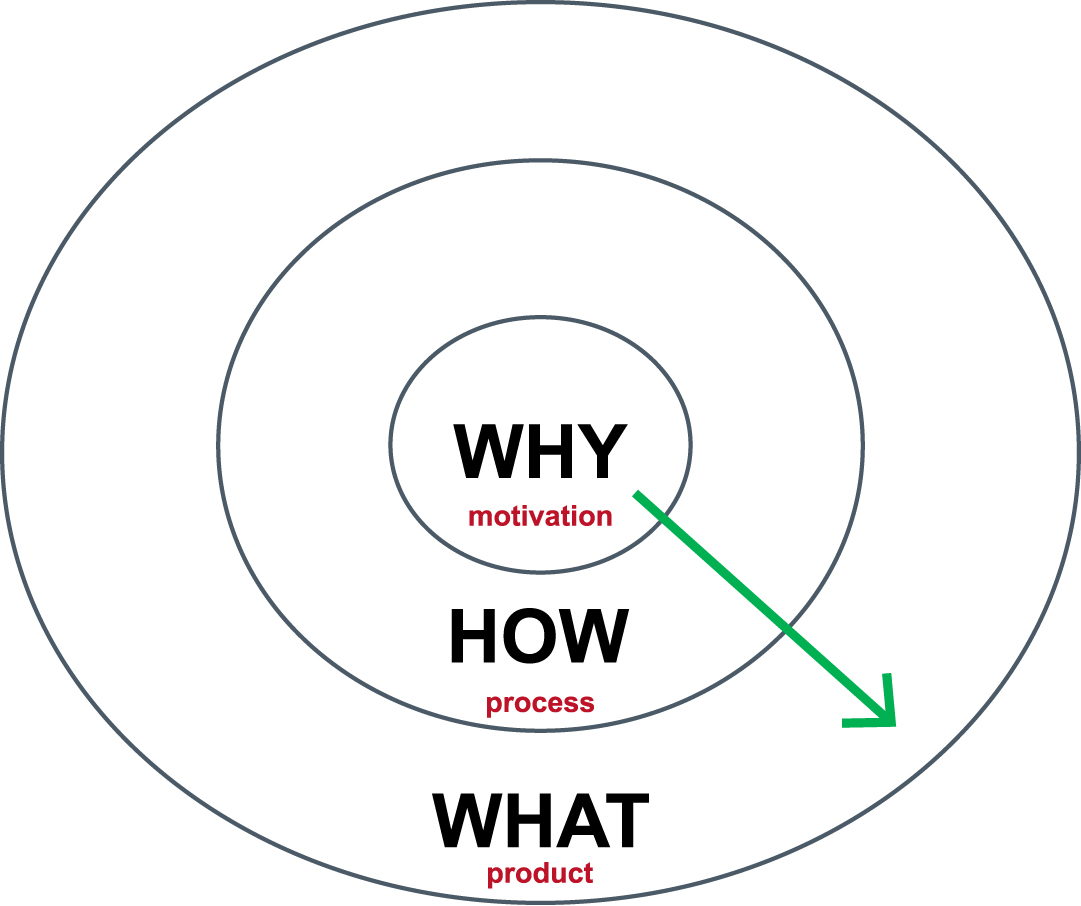
goldencircleSome leaders inspire rather than manipulate. They operate by a process that Sinek calls the golden circle. This approach works from the inside out. Instead of focusing on what or how, they begin with why. Many people and organisations can explain what they do and how they do things, but they struggle to clearly articulate why they do what they do or why they do it how they do it. Why has to do with purpose, reason, and cause. Why exposes our motivations and beliefs, and these are the things that inspire.

For the golden circle to work there must be clarity about the why. Once we can clearly articulate the why, we can then work out the how. How embodies the values and principles that flow from the why. And the what is the results that flow from the why and the how. When the golden circle is in balance, then the organisation or business or individual is seen as authentic and real. This isn’t easy to achieve and it requires us to continually go back to the why and work outward from there, rather than manipulating people with what.

In turn, this builds trust in customers and clients. Such trust is more than a rational experience—it’s a feeling we have when we believe the organisation or leader is behaving with integrity (whether they are successful or not). This feeling of trust inspires people to action.

Why types tend to be the visionaries and optimists who imagine what the world can become. How types are the realists and practitioners who focus on getting things done. Why types need how types, and vice-versa. Truly inspirational organisations display a healthy partnership between the two. A why without a how can be little more than unstructured passion and destined for failure.

Over time it’s easy to become focused on the what and how and forget the why. We become accomplished at what we do, and know how to do things intuitively, but we can lose sight of why we do them in the first place. We need to continually return to the why—the compass that sets our direction and motivates us to action.

Reflections

I have mixed feelings about this book. I agree with the basic thesis and the shape of the golden circle. We should proceed from the why to the how to the what. Being clear about why we do what we do, and why we do it how we do it, is the key to acting with integrity and authenticity. This is what will lead others to trust us. This is what will inspire others to follow.

My problem with the book lies in its length and the choice of illustrations throughout. Sinek takes a whole book to make some very simple and fundamental points. It could have easily been argued in a pithy article of 10 to 20 pages. He colours the book with examples of organisations like Apple and Harley Davidson. While I’ve been a fan of Apple since 1987 and Harley Davidson for even longer, such iconic companies don’t exactly represent the typical organisation or individual. I’d love the same arguments to be made with reference to more ‘average’ people or businesses.

I appreciated the contrast between manipulation and inspiration. As a pastor and Christian leader, my desire is to inspire people to follow Jesus. I don’t want to manipulate people’s behaviour with sticks and carrots, but to inspire people with the gospel of Jesus and the grace-filled word of God.

Asking why I do what I do, is something I’d be wise to do often. It’s so easy to fall into ruts and patterns; to perpetuate the same old same old; to do things because this is just what we do, or because it’s what we’ve always done. Why offers the energy to initiate personal and organisational change. We can critique what we do or tinker with how we do things, but the real benefits are found in regularly reviewing why. I hope to be able to do this at a personal level and to lead review at an organisational level in the context of my leadership.

As a Christian, I find the why comes not from my passions and priorities, but ultimately in following God’s revealed will. The author of life offers meaning and purpose to life and this shapes what I do and how I go about it. My challenge is to anchor what I do in the word of God’s grace. It’s to teach and model the why, as well as the how and the what.

Better living with lung cancer

Last night I received an email from my wife (I’m away for a few days) entitled, The book I thought to write. For those of you who don’t know already, Fiona is my primary care giver and medical advocate. She does all she can to stay up with the latest about lung cancer and treatment developments. Fiona has been a huge help to me and a number of others in understanding our condition and making wise decisions about the way forward.

On Sunday night we attended this year’s event—Shine a light on Lung Cancer. Something happened at the event that disturbed both of us. A man with mesothelioma spoke about his diagnosis and condition, and at one time described consulting ‘Dr Google’.

“He shouldn’t have to do that!” Fiona exclaimed, and I agree.

If a patient has a life-threatening disease or a terminal illness, then they shouldn’t have to be scouring the internet to understand their disease or to know what to do next. Good, accurate, up-to-date information should be readily accessible and made available to all who need it. In a world that boasts the technology, resources and medical advances that we enjoy, we should be able to get what we need without having to hope we stumble across it.

This led Fiona to the Lung Foundation Australia website. We haven’t been to this site before, because we weren’t aware of its existence. Maybe we should have been, but the reality is that besides being the biggest cancer killer, lung cancer rarely gets a mention in the media. Sure, there is much said and written about the risks of smoking—but there is virtually nothing in the media offering support to the patients and survivors of lung cancer.

Just compare this with the ubiquity of publicity and support being offered to the breast cancer community—and I don’t begrudge this for a minute. The work of the McGrath Foundation should be the benchmark for all cancers support organisations. If only lung cancer received a small portion of the empathy offered many of the other cancers.

We also learned at the Shine a Light event that the government is shrinking funding for the support of lung cancer patients. Surely the government number crunchers, the economic rationalists, and even the most hard-hearted bureaucrats can do the maths. The cost of lung cancer to our community versus the money put into supporting those with lung cancer and other lung diseases such as mesothelioma ought to seriously embarrass everyone. Yes, we should aim to prevent it where we can, but we should also aim to have people well supported as they face the traumas ahead.

Anyway, off my rant and back to my point! Fiona has wanted to get good info into the hands of those who needed it, and had even contemplated writing a book to this effect. And then, on the lung foundation site, she found it. And she emailed it to me…

Better Living with Lung Cancer—A Patients Guide

Better_livingI read this book last night and was amazed. It’s really good. Well produced, good information, easy to understand, positive and encouraging. So why doesn’t every person with lung cancer, and every carer, have a copy. From time to time I go to a support group for those with lung cancer, but I haven’t heard it mentioned. We are pretty well-informed in this area, and have been on the journey for two years, but only just stumbled upon this resource.

So go the publicity machine!

This book exists in two forms—a pdf copy that is also available chapter by chapter; and a printed handbook that you can order for $18 (including postage in Australia). I’ve now read through the online version, and ordered a hard copy. I still prefer real books!

The chapter topics show the coverage of this resource and you can link to each chapter separately…

Contents by chapter

  1. Understanding Cancer and The Lungs
  2. Understanding Lung Cancer
  3. Diagnosing Lung Cancer
  4. Multidisciplinary Care
  5. Managing Lung Cancer Symptoms
  6. Treatment Options
  7. Lung Surgery – Preparation and Recovery
  8. Treatment Side Effects and Management
  9. Accessing New Treatments via Clinical Trials
  10. Palliative and Supportive Care
  11. Living Well with Lung Cancer
  12. Making Decisions about Treatment
  13. Financial and Legal Considerations
  14. Seeking Support
  15. Life after Treatment
  16. Information for Carers
  17. Other Resources
  18. About Lung Foundation Australia
 It is excellent that this book is readily available free of charge on the Lung Foundation site. We just need to let people know. So here are a few ideas to get the word out:
  1. Post this, or another link to the book, via twitter, Facebook, Pinterest, email, or whatever you do, to all those you know with lung cancer or caring for those who do.
  2. Ask your oncologist or GP whether they are aware of this resource and suggest they get a copy or copies to offer their patients.
  3. Encourage the Lung Foundation to print up postcards, flyers, leaflets, business cards (all of the above or something even better) to make available to patients on diagnosis, pin on notice boards in hospital waiting rooms, and the like.
  4. Write to your local health minister and ask them what they are doing to support people suffering from lung cancer—and recommend they invest in this resource to make available to those who need it.
  5. Contact the Cancer Council or other cancer support organisations to encourage them to get behind this and other similar resources.

P Day

HBCToday is P Day. It’s the day that Hope Beyond Cure gets sent to the printers. I didn’t want to get cancer.  I wasn’t supposed to be alive two years later. I never planned to write a book. I didn’t expect I ever would. But here it is! 

I’ve been so encouraged during this process. The care and guidance of Tara, Emma, Tony and others. The feedback, comments, and advice of family and many special friends. The encouragement and support of medical staff, people at church, friends at the Brumbies, good mates, a loving wife, awesome kids.

My prayer is that this book will offer hope to those who lack it. I want to point people to real and substantial hope. If people are struggling with cancer, experiencing suffering and pain, lacking purpose and meaning, searching for truth, investigating faith, rethinking their lives and futures, then I hope this book can be part of the conversation. If they’d just like to see what matters matter to a fellow human being, then I hope my story will enrich their lives. If people have an open mind, then this is for them.

I understand it should be available some time in January 2014. It won’t be out for Christmas, but then it’s probably not a stocking-filler anyway. I just thank God that it’s happening!

Christian men and books

booksIt’s been said that men no longer read. I have no idea how true this is, but if it’s true then we have a crisis on our hands.  The forecast is not good. We will be left with an ill-informed, illiterate generation—men who lack knowledge for encouraging their wives, teaching their children, serving in the church, and living in society.

If you can read, then let me encourage you to read. If you’re a Christian man, then let me encourage you especially to read. I’d say that number one in your top ten list of books should always be the Bible, for this word will equip you for life now and life eternal.

Beyond this, I recommend you choose wisely what books to read. There are more books produced every day than you could read in a lifetime—so be selective. Begin by filling your mind with matters of substance, meaning, logic and truth. Aim to fill your heart and mind with the glory of God, the wonder of his salvation, the freedom of his grace, and the hope of eternity.

Two books in my recommended top 10 would be Knowing God by JI Packer and The Cross of Christ by John Stott. These two books take you to the heart of what matters really matter. Neither is short or simplistic, but they’ll both reward your time and attention. Many readers I know have started both, and yet finished neither. But don’t give up. Take them in chapter-sized bites and enjoy the nourishment.

If you’re like me, then you can read something and quickly forget it. There’s no point in reading for reading’s sake. Read to remember, to learn, and to apply. I suggest having a pen or pencil in hand as you read. When you discover a helpful explanation, a good idea, or a point to apply—use your pencil to help it stick. Underline, write in the margins, put boxes around great quotes, asterisk points that you plan to apply, write practical notes at the end of the book to follow up later. 

Better still, write yourself a summary and share it with others.

I am a church member

I Am a Church MemberI am a Church Member by Thom Rainer is a heart-warming and encouraging little book. It gently urges the Christian reader to understand and fulfil their role as an active participant in the church. Rainer contrasts the church with the image of a country club. In the club a member is one who pays their annual subscription and then feels entitled to receive certain perks and to be served by others. People come to the country club with expectations and demands. Membership of the church is more integral and organic. If we belong to Jesus, then we are already essential members of the church body, and we each have an important part to play. We are called to serve one another rather than seek to be served.

The commendations for this book run for many pages and read like a ‘who’s who’ of contemporary church leaders. But this doesn’t guarantee the merits of the book. It’s strength lies in it’s biblical foundations. Ultimately church membership is viewed as a gift from God. It comes through God’s grace in salvation through the death and resurrection of Jesus Christ. It’s a privilege, not a burden, or a set of rules to be followed.

I appreciated the way that prominence is given to love as the centrepiece of Christian relationships. The church is called to express itself in love for one another (1 Corinthians 12-14) and love is to be the hallmark of true Christians (John 13:35). Sadly, churches are easily damaged by a lack of love, disunity, gossip, and a lack of forgiveness. We are called to remember how we have been treated by Jesus Christ. He forgave the unlovely, and we are called to the same attitude.

Rainer reminds us that the word servant occurs 57 times in the New Testament and the word serve 58 times. Jesus modelled this and he called his followers to do the same. Church is not the place to have our personal preferences satisfied by others. It’s the context for putting the wellbeing and needs of others before our own.

The book finishes with the reminder that church is the fruit of the gospel. Rainer outlines how the sacrifice of Jesus Christ calls us into relationship with God. It’s the joy of salvation, rather than legalistic obligation, that will draw us into loving one another as part of God’s church.

I appreciated this book because it is short and simple (only 79 small pages). In many ways it would be a good book to offer newcomers to our churches, at the close of a welcome or orientation program, or as they are welcomed into some kind of formal membership. It is also an important book for old-comers or occasional-comers to our churches, because it urges us to look afresh at what church is really all about.

Interestingly, each of the six chapters in I am a Church Member finishes with a pledge for the reader to sign. This seemed rather counter-cultural to me. Perhaps, it’s more of an American thing, or typical of other church traditions. Whatever, the intent is clear—Rainer wants to encourage the reader to act on what he has written; to make a difference in our churches. And so we should!

Growing yourself up

GYUThis book takes me back a quarter of a century to my times as a social worker. In the final year of my BSW degree, I focused primarily on studying family therapy and the writings of Murray Bowen were very influential. I loved this stuff. It was so helpful to see people as part of a family system and to explore the influences and impact of relationships, family members, experiences, and expectations. One time we saw an adolescent boy for counselling. He had been acting out at school and finding a multitude of ways to get into trouble. It wasn’t until we met with his family and discovered that his father had become dependent on a kidney dialysis machine, that we were able to begin understanding and helping him. It wasn’t his problem alone–it was a family problem.

I enjoyed reading through this book and discovered many insights relevant to my circumstances. I know others have found much benefit in this material, but one or two have commented to me that they’ve found it hard going, like entering another world with its own vocal and jargon. Perhaps, my earlier training made this book easier.

Jenny Brown has built heavily on the work of Bowen in her excellent book, Growing Yourself Up. You could probably describe this as a ‘self help’ book, but with a difference. It’s about helping the reader to gain an increased sense of ‘self’ to enable them to enjoy better relationships with others. We grow into personal maturity as we learn to more clearly differentiate ourselves from others so that we develop healthy personal relationships. This book draws on family systems theory to help us understand who we are in the light of, and distinct from, our relationships with others. Our families of origin have a profound impact on who we are—how we think and act and speak.

Brown’s underlying conviction is that it’s never too late for any of us do do some more growing up. Greater emotional maturity is at the heart of this goal.

This book starts with the big question: Are you willing to take a fresh look at your own maturity gaps, instead of declaring that another needs to ‘grow up’?  (p8)

Growing Yourself Up helps us to see and understand the immature part that that we are playing in our relationships with others. Instead of pointing the blame, we are helped to see our own contribution to the problems and impasses we find ourselves caught up in. Unlike much recent psychotherapy which focuses on finding our inner child, this approach is about growing our inner adult in all areas of our relationships. Moving beyond childhood to adulthood can be expressed by the following attributes:

  1. Have your feelings without letting them dominate; tolerate delayed gratification
  2. Work on inner guidelines; refrain from blaming
  3. Accept people with different views; keep connected
  4. Be responsible for solving our own problems
  5. Hold onto your principles
  6. See the bigger picture of reactions and counter-reactions  (p17-19)

It takes time to work through these things. We need to learn about ourselves in relationship with others. We need to learn not to let our emotions dominate our thinking. We need to learn how to take control of our anxieties. This is all part of growing our inner adult—slowly.

Relationships—close relationships, while remaining a distinct self—are at the core of adult maturity. Our experiences of relationship from our earliest times vary along a continuum of feeling isolated and abandoned, through to feeling inseparable or smothered by others. We are helped to understand more clearly the strengths and weaknesses of our previous experiences of relationships—especially those in our family of origin—and how they impact our decision making in the present.

This book takes us through various key life stages, circumstances, and changes. It looks at the threats to and opportunities for growing in maturity. Such areas include leaving home, single adulthood, marriage, sex, parenting, work, facing setbacks such as separation or divorce, midlife, ageing, empty nests, retirement, old age, and facing death. Pretty well covers it really! In all these situations there are issues to face in our quest to grow into adult-maturity. This book helps us to understand our part in navigating these changes and stages wisely.

One section in this book, I found particularly helpful deals with the temptation to triangulate our relationships, especially in situations of conflict. This is one of the major threats to adult maturity. A relationship triangle is where the tensions between two people are relieved by escaping to a third party. (p44) This may serve to dissipate tension and help families and groups to manage, but it also results in issues not being addressed and often placing the third person is a vary awkward position. It’s helpful to examine how we might have been (or currently be) involved in such triangles, and why. Such triangles are very common and universally unhelpful for dealing with conflict and tensions in families, churches, teams, and a range of relationships.

This is the type of book that you benefit from reading through completely and then returning to digest the most relevant sections in more detail. As a pastor who deals with people all the time, I found this book offering many helpful insights. It is especially important to understand people in the context of their relationships. And it’s in these relationships that we grow ourselves up.