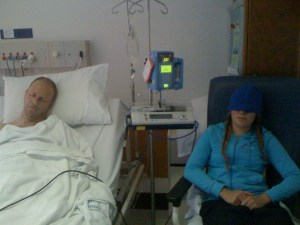
Blindspots


It’s been fun trying to explain to explain my new role in our organisation to people.
“I used to work for an IEC”, I say.
“But now I’m employed by an F.”
Each letter of our acronym and each word in our title is significant. I wouldn’t say that they each bear equal significance, but together they paint a picture of who we are and what we are on about.
Let’s start with independent. This doesn’t, or at least it shouldn’t, mean that we are a bunch of lone rangers. We’re not to be a motley bunch of mavericks who despise denominations, resent others having input to our decisions, or simply can’t get along with anyone else. ‘Independent’ mustn’t describe an unwillingness to fellowship with other believers or an isolationist mindset—this is profoundly unChristian. It simply affirms the fact that each church is self-governed, with its own constitution, leaders, and ways of doing things. I’d like to think that we are little ‘i’ independents!
So how do we function as a fellowship? While upholding the independent governance of each church, we share a vision for reaching Australia with the gospel of Jesus through planting and building healthy evangelical churches. We understand that together we can teach and learn, and give and gain, to and from each other. We can pool resources, encourage one another in our shared vision, share our joys, and carry one another’s burdens. We can seek to build one another through teaching from God’s word at conferences and courses, and commit to regular prayer for our members. Together, we can share ideas, learn from others’ experiences, cooperate in ventures, and provide help to those who need guidance and support.
Ours is a fellowship that is shaped by firm beliefs. We are unashamedly evangelical. We are persuaded that true Christianity is evangelical in its very essence. That is, people are reconciled into relationship with God, and churches are created and grow, through the work of God’s ‘evangel’—the good news that Jesus Christ was crucified for the forgiveness of sins and was raised physically from the dead to rule over God’s world. We learn this good news from the Bible—not people’s best ideas about God, but God’s specific revelation of himself.
Finally, we are a fellowship of churches—evangelically persuaded and independently governed churches. We don’t view FiEC as ‘our church’, ‘the church’, or even ‘a church’. Rather, we are a network or ‘denomination’ comprised of many churches who voluntarily take steps to fellowship with one another in various ways. It is impractical for all of our churches to meet together—we are scattered across this vast country. However, we seek to gather members of each of our churches together at different events during the year so as to encourage personal and practical fellowship. The official representatives of each church—usually the senior pastors—meet together at formal meetings of the FiEC to review, plan, and pray for our fellowship.
DNA is who we are. It’s you and I boiled down to our most basic fundamental parts. It’s our point of difference, our unique identifier. It’s the building block of our health and biological integrity. DNA gets passed from generation to generation during reproduction. Zillions of pieces of code are transmitted intact so that new things grow. Occasionally there are mistakes in the code. Sometimes things go wrong—like in me! I have a genetic mutation. My second chromosome has flipped around, fused with the fifth chromosome, and created a genetic short circuit, thus producing cancer of the lungs.
What about other bodies? What about the body of Christ we call the church? How is it reproduced? What keeps it healthy? The answer is Gospel DNA. The gospel gives spiritual life to churches. People respond to the gospel in repentance and faith, are thereby incorporated in Christ’s body, and knit together by his Spirit. Healthy churches reproduce this gospel DNA without allowing mutations to develop.
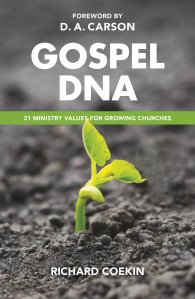
Richard Coekin’s new book Gospel DNA is a spiritual health manual for evangelical churches. He focuses on what he calls an ‘electrifying training seminar’ for church leaders. You and I might know it as the Apostle Paul’s words to the Ephesian elders recorded in Acts 20:17-38. In a handful of verses, Paul condenses the essence of what it takes to grow and reproduce healthy gospel-shaped churches. He identifies the matters that matter to God, responsibilities of leaders, the convictions that must shape all we do, and the threats to healthy church growth and reproduction. Richard Coekin spends 22 chapters exploring 22 verses of the Bible that are nothing less than a masterclass for gospel ministers.
I’ve long turned to Acts 20 for encouragement and inspiration for the work of gospel ministry. Simply being reminded that the church belongs to God and has been purchased by his blood, is enough to call me back into line. Paul’s words refocus my lens when I’m pulled here and there by the pressures and challenges of leading a church. They retune me to the matters of first importance to God. They remind me what the church is, why it matters so much to God, what will see it grow bigger and stronger, and warn me to stay alert to attacks.
This book isn’t so much a commentary on Acts 20:17-38 as it is a reflection on the Apostle Paul’s ‘ministry values’. No doubt Paul had more to say to the Ephesian elders, but the message that Luke records takes us deep into his core values of gospel ministry. Richard Coekin works off Paul’s script to explore these values in greater detail, by taking us to other parts of the Bible that expound each value. He explains their significance for promoting faithful and fruitful gospel ministry, often illustrating from his own experience with the Co-Mission network of churches in the UK.
I’m keen to get multiple copies of this book so that I can start reading it with others. In fact, I recommend the churches and leaders in our FiEC network make use of this book as a training manual. It’s a book to read slowly, chapter by chapter, pausing to review, discussing how we can apply its lessons, and making plans to change for the better. Gospel DNA is an excellent resource to use in personal ministry, training our leaders, enriching our elders, inspiring our potential missionaries, and preparing our future church planters.
(Richard Coekin, Gospel DNA: 21 Ministry Values for Growing Churches, The Good Book Company, 2017)
Many of you will know that I’ve recently taken on a new job. I’m now over 3 weeks into working as the National Director for the Fellowship of Independent Evangelical Churches in Australia. This is a ‘start up’ role and I’m currently working out where I need to get to, checking my bearings, and mapping out the routes I will need to take.
A big part of this role will focus on communication. Sharing the vision for who we are and who we are seeking to become. It will be my job to be the CRO of the organisation—what Patrick Lencioni describes as the ‘Chief Reinforcement Officer’. It’s easy for us to grow forgetful, get distracted, experience mission drift, live off the past, or get tired and merely go through the motions. God’s word calls us not to grow weary or stop caring.
Our vision under God is to grow healthy gospel-shaped churches throughout this land (and beyond). We need to keep one other on target, on mission, and focused on what matters most. I pray that God will use me in a small way to keep reinforcing his message.
It was my honour and privilege to speak at the thanksgiving service for Howard Bradbury at the Australian National University last Saturday. I first met Dr Bradbury (as I knew him then) early in 1975 when we moved to Canberra. I last met Howard (as I’ve known him for some time) at the ICU at National Capital Private Hospital only days before he died. Our lives have connected in so many ways over so many years, and I truly thank God for our friendship and his lasting influence upon me.
Dr Bradbury completed a PhD in polymer chemistry at Birmingham University in record time. After a postdoctoral fellowship at Harvard University, and working at CSIRO Wool Research Laboratories, he joined the Chemistry Department at the ANU in 1961. He has pursued sabbatical research at Cornell and Oxford Universities. He has been award a DSc from both Melbourne University and ANU. He received the David Syme Research Prize from Melbourne University and the Rennie Memorial Medal and H G Smith Memorial Medal from the Royal Australian Chemical Institute. In 2007 he was appointed a Member of the Order of Australia for his contributions.
The Director of the ANU Research School of Chemistry, Professor John Carver, was Professor Bradbury’s PhD student and friend. He spoke highly at the thanksgiving service about Dr Bradbury’s lasting impact in the lives of so many people—both academically and personally. Dr Bradbury was a scientists’ scientist. And yet, I knew next to nothing of this influence prior to his passing.
I’ve been aware for some time of Dr Bradbury’s extraordinary commitment to using his science for humanitarian good. He retired from his salaried position at the ANU at the early age of 61 so that he could devote himself more fully to exploring the chemistry of food and providing solutions to the plight of the poorest people in the world. He continued this brilliant work, unpaid for another 28 years, inventing and producing simple and affordable techniques to remove cyanide from cassava. Thousands and thousands have been rescued from the debilitating paralysis of konzo. It was deeply moving at the thanksgiving service to be reminded of the generous humanitarian impact of his work.
Yet my experience of the impact of Howard Bradbury, together with Ruth—his wife of 64
years—began with their hospitality. As a young teenager I was welcomed into the world of university student ministry at Reid Methodist (Uniting from 1977) Church. Howard and Ruth would reach out to students in the colleges, invite them into their home, provide transport, cook meals, offer support, encourage fun, and generously pour out Christian love. Howard and Ruth loved students and, even more, they loved students to enter into a real relationship with God through Jesus Christ. And this has left its legacy on me.
When I left home for university it made sense to seek out a church that understood university students and that had a passion to see their lives transformed. This I found at the University of NSW with the ministry of Phillip Jensen and St Matthias. Howard’s passion to impact students with the message of Jesus became my passion. I pursued this with vigour and eventually moved back to the place where I had seen it first—the ANU—where I started the ministry of FOCUS and later Crossroads Christian Church.
Howard and Ruth supported Fiona and me as we began this new work in Canberra. They would ask us how we were going and pray for us. Howard joined the committee to support the university ministry and, together with Ken Mackay, opened up many doors for ministry on the campus.
Over the last decade or more of Howard’s life our friendship has been enriched in new ways. Being unimpressed with the compromise of the Uniting Church on some matters of biblical importance, Howard led the planting of a new church called the Canberra Christian Fellowship (in the Methodist Tradition). I would visit this congregation often, regularly providing preaching support, and always dropping the average age significantly! While small in numbers, this body of believers has always been big in heart, no doubt encouraged by the wisdom, grace and love of Howard and Ruth. Each time I would join with this fellowship I would come away encouraged to keep on going myself.
Howard Bradbury was a man of science, esteemed across the globe. He was a man of the people, loved by his wife, children, grandchildren, and 20 great grandchildren. His love for people shaped his application of his science to the needs of others. But deeper still, Howard was a man of faith in God through Jesus Christ. His knowledge of God laid a solid foundation for his scientific passion. The mercy and kindness of his Saviour pushed him to love, respect, and invest in people.
At a time when it is normal to view Science in opposition to Christianity and reason as the antithesis of faith, Howard causes us to pause and reconsider. Here was a man whose faith was founded on good reasons. Jesus Christ, who died and was buried, was raised and appeared to eye-witnesses, who testified to what they saw. These events in history transformed Emeritus Professor James Howard Bradbury AM, PhD (Birmingham), DSc (Melbourne), DSc (ANU), to apply his immense scientific brain to consider the claims and promises of God.
Will you do the same?
Today marks the end of another chapter of our life—a significant chapter that in many ways has felt like a bonus. Less than five years ago, I believed that my ministry days were done and dusted. I didn’t anticipate preaching again, far less leading a congregation or pastoring a church. Today we received special thanks from our brothers and sisters at Stromlo Christian Church for the past three years of serving among them. I preached my final sermon as lead pastor at Stromlo and later this week we will head away for a few weeks leave before commencing a new role in 2017.
It has been a privilege to exercise this ministry and we thank God for equipping and enabling us to do his work. Two years of juggling the impact of chemo around preaching, leading, pastoring, equipping, outreach, and other ministry commitments. It has been hard—at times very hard—but God’s grace has been sufficient. We’ve been blessed my people’s understanding, encouragement, and response to his word. We’ve been spurred on by many people, generously offering their time and resources, and using their gifts to build the church.
We are thankful to have had godly leaders to serve alongside, who have invested in our lives and the lives of others. I have not felt pressured to meet others’ expectations—it has only been my own that I’ve had to manage. The decision of the Stromlo Admin Committee to provide me with extra ‘Chemo Leave’ has helped refresh my body, but also my spirit, as I’ve worked to do what I can. God has enabled me to do more than I imagined, with the help of others’ support and the prayers of many.
We believe this is the right time to hand on the reigns of leadership and spiritual oversight to others. We thank God that Dan Evers has been appointed to become lead pastor in the new year, and Paul Avis to support him as associate pastor. We also thank God that Sarah Rootes will continue her wonderful work with the children and youth.
So what does 2017 hold?
In February 2017, God-willing, I am taking up the inaugural position as National Director of the Fellowship of Independent Evangelical Churches (FIEC). My role will be to help define and shape the manner in which our churches ‘fellowship’ and work together, and to lead both in strengthening our churches and their leaders for the long haul, and in developing and driving strategies for extending the reach of the gospel through church planting in Australia and beyond. This will be a full-time position. I will be accountable to the FIEC board, and will work together with Jim and Lesley Ramsay, FIEC pastors, and others.
We plan to remain based in Canberra as we explore what this role will involve. Canberra seems a logical place from which to lead a national organisation—I seem to remember it being built for this purpose some years back. Our hope is to continue involvement in the Stromlo church community, but there will be times when we are away with other churches around our nation. Our youngest child has now finished school, so Fiona and I are moving into new territory as parents and grandparents. We are keen to share some aspects of the ministry within FIEC together, and for Fiona to help provide support to ministers’ wives.
As we reflect back on our lives, the experiences God has given us, the churches we’ve been involved in, and the struggles of life and ministry, we think that God has equipped us in so many ways for the challenges that lie ahead. But we are also very aware of our weakness and inadequacy. We will need to rely on God’s strength to do this work.
Please partner with us in this next chapter, asking God to strengthen and sustain us, and provide us with everything we need to lead with humility, integrity, grace, and wisdom. We approach the future with a mixture of excitement and enthusiasm, but also fear and trepidation. It will be very different not leading a church. I expect to miss the weekly preaching and teaching of God’s word. We anticipate feeling a little isolated and we feel pulled in many different directions. So please pray for us and encourage us in this new role. We will not be able to do this alone—and nor do we want to!
I lay alone in my hospital bed, the words and music of David Bowie filling my headphones…
Pushing through the market square,
So many mothers sighing
News had just come over,
We had five years left to cry inNews guy wept and told us,
Earth was really dying
Cried so much his face was wet,
Then I knew he was not lyingWe’ve got five years, what a surprise
Five years, stuck on my eyes
We’ve got five years, my brain hurts a lot
Five years, that’s all we’ve gotFive years
Five years
Five years
Five years
I wept to the music. Five years seemed so far away. A future I would never experience. A very remote possibility at best.
I’m listening to it again now. Bowie has gone. Another lost to cancer.
Five years is a landmark for those with cancer. We measure the statistics for five year survival. Early detection increases the odds. Isolating the cancer and effective surgery seem the keys to success. Sadly, many cancers are detected late. Symptoms go unrecognised. Patients and doctors assume there must be a simple explanation. It’s only a cough. You’re probably just tired. Don’t make things worse by worrying about it. You’re just unfit. The blood tests seemed good. The x-ray didn’t show anything. You’ll be over it in no time.
Lung cancer is too often diagnosed too late. Many of the symptoms resemble a common cold or flu. And, if you don’t smoke, then why would you even contemplate the idea of lung cancer? Late diagnosis takes options off the table. If it has already spread, then surgery is normally not an option. A stage IV diagnosis is considered terminal. Metastatic (spread to other organs) lung cancer requires a chemical strategy, but it’s not considered curative. Until very recently this was only chemotherapy but, in many cases, this is now moving to targeted drugs that work on the cancer at the genetic level. Another frontier is immunotherapy that strengthens the body’s own defence system to attack the cancer. Combinations of strategies are being tested. Cure, however, still seems a long way away.
In many ways five years is merely arbitrary, simply a number—like a cricketer who reaches a century, 100 runs. Statistics are only descriptors of what has been, not predictors of what will be. Nevertheless, five years is five years. It’s five years of life. It must not be taken for granted.
Cancer.org lists the five year life expectancy for non-small cell lung cancer. This is my particular cancer type. This is what people like me are told they can expect. It’s not pretty.
- The 5-year survival rate for people with stage IA NSCLC is about 49%. For people with stage IB NSCLC, the 5-year survival rate is about 45%.
- For stage IIA cancer, the 5-year survival rate is about 30%. For stage IIB cancer, the survival rate is about 31%.
- The 5-year survival rate for stage IIIA NSCLC is about 14%. For stage IIIB cancers the survival rate is about 5%.
- NSCLC that has spread to other parts of the body is often hard to treat. Metastatic, or stage IV NSCLC, has a 5-year survival rate of about 1%. Still, there are often many treatment options available for people with this stage of cancer.
So, you see, five years was a lifetime away. Five years was out of reach. Five years was a dream and a prayer.
Today marks FIVE YEARS since I was admitted to hospital and diagnosed with stage IV NSCLC. FIVE YEARS. FIVE YEARS. FIVE YEARS.
I remain NED (no evidence of disease).
It’s a year since I last had chemo.
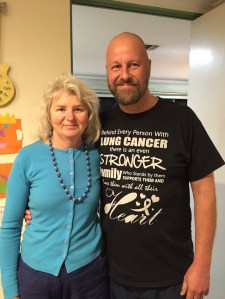
Time to say “Thank you”.
I thank God for giving me life, forgiveness, a relationship with him, and the real hope of eternity. I thank God for giving me purpose in life.
I thank God for my beautiful wife—who researched options, sought the best care, stuck by my side, urged me on, watched over our family, worked hard to pay for my medical costs, prayed for me, and kept on going even while everything hurt her so much.
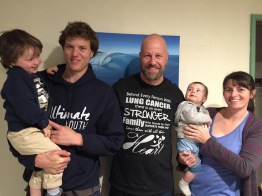
I thank God for my awesome children and daughters-in-law. I thank God that he upheld them in the brutal reality of their dad having ‘incurable’ cancer.
I thank God for my two beautiful little grandsons. Boys I never expected to meet, who bring me such joy.
I thank God for my father and mother, for their prayers, visits, phone calls, and compassionate support, while facing many difficulties themselves.
I thank God for my family and friends, who have suffered alongside my suffering and rejoiced in my progress and healing.
I thank God for my church, and my other church, and praying people everywhere who have taken the time to ask God to heal me and help me. It blows my mind.
I thank God for my oncologists, my nurses, my surgeon, my exercise physiologist, my acupuncturist, and my many helpers.
I thank God for my cancer buddies. Some I’ve shared with face to face, some who have not lived to see five years, some I only know through Facebook. I thank God for their friendship, their generosity, their tenacity, their compassion, their faith, and their hope.
I thank God for giving me Hope Beyond Cure and then giving me time to share this with others.
I thank God for my five years!
And, dear God, please can I have some more.
My new year resolutions for 2016 included reading a book a week. The plan was to finish 52 books before the end of the year. I wasn’t following a recommended reading list, but there were a few books that I was keen to knock over. Someone had suggested mixing things up with a range of genres and topics. There were issues I was interested in researching and their were numerous new books that piqued my interest. During this time I also discovered audio books and bought myself a kindle. So my list represents an eclectic mix of styles, difficulty, issues, media, and… quality. Yes, I also discovered that some books had done little more than steal my time.
Here is my list:
1. Forever, Paul Tripp
2. The Story of Everything, Jared Wilson
3. Why Trust the Bible, Greg Gilbert
4. Ordinary, Michael Horton
5. Seven Practices of Effective Ministry, Andy Stanley
6. The Martian, Andy Weir
7. Brothers, We Are Not Professionals, John Piper
8. The Rider, Tim Krabbé
9. The Churchill Factor, Boris Johnson
10. The Pilgrim’s Progress, John Bunyan
11. Sex and Money, Paul Tripp
12. Side By Side, Edward Welsh
13. Dangerous Calling, Paul Tripp
14. Lectures to my Students, Charles Spurgeon
15. Creating Community, Andy Stanley and Bill Willits
16. Knowing God, J.I. Packer
17. Do More Better, Tim Challies
18. Teaching Isaiah, David Jackman
19. Organising love in church, Tim Adeney and Stuart Heath
20. Mission Drift, Peter Greer and Chris Horst
21. Why bother with church? Sam Allberry
22. The Cross of Christ, John Stott
23. Taking God at his Word, Kevin DeYoung
24. Zeal without Burnout, Christopher Ash
25. Living Forward, Michael Hyatt and Daniel Harkavy
26. Seeking Allah Finding Jesus, Nabeel Qureshi
27. Praying the Bible, Donald S. Whitney
28. Word-filled Women’s Ministry, Gloria Furman and Kathleen Nielson
29. Living in the Light, John Piper
30. What’s Best Next, Matthew Perman
31. The Ideal Team Player, Patrick Lencioni
32. Who Moved My Pulpit? Thom Rainer
33. Strong and Weak, Andy Crouch
34. Big Blue Sky, Peter Garrett
35. Wild at Heart, John Eldredge
36. The Life You Can Call Your Own, David Aspenson
37. I am a Church Member, Thom Rainer
38. Unashamed, Lecrae Moore
39. Autopsy of a Deceased Church, Thom Rainer
40. The Gospel, Freedom, and the Sacraments, Barry Newman
41. Fool’s Talk, Os Guinness
42. How to Read Proverbs, Tremper Longman 3rd
43. Life Together, Dietrich Bonhoeffer
44. Shattered Shepherds, Steve Swartz
45. Canon Revisited, Michael J. Kruger
46. What is a Healthy Church Member? Thabiti Anyabwile
47. Center Church, Tim Keller
48. The Gospel and Mental Illness, Heath Lambert
49. True Friendship, Vaughan Roberts
50. A Model of Christian Maturity, D.A. Carson
51. Why Your Pastor Left, Christopher Schmitz
52. Independent Church, John Stevens
I’m not planning in this post to a comment on each of these books, but rather to share some overall observations, and in no particular order.
True to form, I didn’t read many novels. It’s rare for me to read fiction. But, on reflection, it would do me good to read more. Sitting in a hammock, reading The Martian, took me to another place! This book, together with Boris Johnson’s riveting biography, The Churchill Factor, were my most relaxing reads of the year. They both helped me to forget about my life for a while.
Audio books have been a great find. They’ve made long car trips pass effortlessly and they’ve redeemed so much wasted time in daily commutes. Some books are more suited to this media than others. If you’re grappling with a new topic and need to take notes, then it’s probably not the best approach. I’ve found great reward in using audio books to ‘re-read’ a few important books that I have been deeply influenced by in years past. Packer’s Knowing God, Spurgeon’s Lectures to my Students, Stott’s Cross of Christ, and Tripp’s Dangerous Calling had all previously left their mark on me. Hearing them over again was an excellent way to refresh.
Much of my reading has focused on thinking through ministry, mission, and leadership matters. Life Together is a classic that I come back to regularly. What’s Best Next is full of wisdom, but way way way too long. Zeal without Burnout is a simple book that I anticipate revisiting over and over.
Center Church has been sitting on my shelf for a few years. It’s been too intimidating to start, but people keep referencing it, so I decided to dig in and give it a go. This is Keller’s magnum opus on church and his philosophy of ministry. I haven’t digested everything as yet. Much was stimulating, but some parts were just annoying. Maybe I will attempt a serious review sometime in the future.
I will offer three awards:
Overall, I think I’ve probably read too much too quickly and taken too little in. I don’t remember much about some of these books and I haven’t allowed sufficient time for important discoveries to take root. Unlike previous efforts, I’ve neglected to annotate most of these books, failed to record important ideas and quotes, and not written summaries or reviews. For these reasons, some of these books are going back onto the desk for another go next year—a little more slowly, and a lot more carefully.
There seems no end to books on divine guidance and discovering the will of God. How do you know what’s worth reading? Proverbs says to seek advice before making a decision, so let me offer mine. I’d steer clear of books that claim to teach you how to listen to God’s voice outside the Bible. The assumption of these books is that Scripture is insufficient and you need to discover additional messages, directly from God to you, in order to discern his will.
My contention is that God doesn’t contradict himself. So his words in 2 Timothy 3:15-16 that “all Scripture is God-breathed” and will make the person of God “complete and thoroughly equipped for every good work” must be taken seriously. The Bible gives us everything we need for life and godliness. This must be our framework for approaching guidance and seeking God’s will. This doesn’t mean that we shouldn’t seek the counsel of others, read extra books, or weigh up the options. The Bible itself affirms the necessity for using wisdom in making decisions. In fact, we have whole books devoted to helping us do this—Proverbs, Ecclesiastes, Job—and parts of many others.
If you want to read books on guidance, and I recommend you do, then read books that will point you to understanding God’s revealed will in the Scriptures. This means that the best book on guidance and for guidance is the Bible itself. And every other book must be measured against how faithfully it represents Scripture.
Here are a few that I’ve found helpful…
I first read Decision Making and the Will of God by Garry Friesen in 1982, when I was grappling with where my life was headed and what God wanted me to do. It revolutionised my thinking, pointed me to the freedom God has given us to make decisions, and lifted the burdens of guilt and insecurity from my shoulders. It’s a large book, but very easy to read. My only warning is that you must read past the first section of the book. No more spoilers.
The person who has given me the most direct guidance about guidance is Phillip Jensen, who was the chaplain at UNSW where I studied Social Work in the early eighties. He helped me to love and trust the Bible, and I went to more than one conference where he taught us the importance and relevance of the Bible for understanding God’s will for our lives. Much of what I learned during this time is in included in an excellent little book called Guidance and the Voice of God by Phillip Jensen and Tony Payne. This book addresses an important matter that many overlook—and this is where God guides. To understand what God wants us to do with our lives, we must first understand where God is taking history. A clear grasp on salvation history and the purposes of God in Jesus give the essential perspective for understanding God’s will for each of our lives.
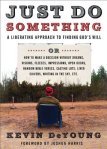
Let me also recommend a third book on guidance that, I suspect, has been deeply influenced by both books above. Just Do Something by Kevin de Young is another short, clear resource for grappling with questions of God’s guidance. Some people get paralysed, wondering and confused, because God doesn’t seem to have revealed his specific will for their life. Every little decision becomes a blockage rather than an opportunity. This book aims to overcome the inertia of people waiting for God to reveal which step to take next. We have the Bible, God has revealed his plan for us to love him, to trust and obey him, and to enjoy the abundant freedom that comes from living this way.

Finally, any book on guidance is only as useful as how it gets used. A map may include the best routes and most precise details for getting from A to B, but if we don’t follow its instructions it becomes functionally useless. Let’s not render God’s word obsolete in our lives. Rather, let’s unfold the map and follow where it leads us.
This interview by Dominic Steele with his friend, Andrew Barry, is deeply moving and profoundly encouraging. Andrew’s son has very serious cancer. His situation has moved me to pray for him regularly. In this heartfelt chat Andrew talks about suffering, marriage, family life, work, treatment, salvation and what it means to have an eternal perspective. Take the time to watch it all and grab the tissues! Click on this link to watch the conversation.

Looking for people who can read the Bible out loud in church? Trying to fill the Bible reading roster? Building a team of Bible readers? Then let me ask you “What qualifies someone to be able to read the Bible?” Do they need to have a background in performing arts? Or perhaps have been a newsreader in a previous life? Should they audition for the task? Or complete a training course for reading in front of others? Is volunteering enough or is vetting needed? What makes a good Bible reader?
I’m sure that there are plenty of good ideas that will help people to read well in church, but I wonder if we might overlook the most important qualifications. Here are four qualifications to keep at the top of your lists.
To qualify for reading the Bible out loud in front of church you must be…
Does this all sound a bit much? Does it sound more like the qualifications for the preacher or teacher? Perhaps this is why the Apostle Paul called Timothy to devote himself to it.
Until I come, devote yourself to the public reading of Scripture, to preaching and to teaching. (1 Timothy 4:13)
There’s an obvious lesson in all this for service leaders and preachers. If we want good Bible readers at church, then we need to find suitable people and give them plenty of time to prepare. We should be willing to work with people in helping them to understand, apply, and communicate the Scriptures. Extra work? Absolutely—and worth it.
Now to go and put this into practice.
Once upon a time Christian ministers were viewed with respect. Ministry was voted among the more trustworthy of professions, but not so much any more. The appallingly bad behaviour of some has damaged the reputations of many.

The solution is simple. People serving in ministry must first be Christians—born again by the Spirit of God. Genuine ministry isn’t something you can fake. There’s no place for bluffing your way as a leader in God’s church. Leaders must first be followers—followers of Jesus. Pastors (or shepherds) of the flock need to understand they are first of all sheep, and they always remain sheep, guided by the Chief Shepherd.
Ministry is about God and people and life. It’s about change and transformation, character and integrity, truth and love. These aren’t the lessons you learn in the lecture room. You can’t download them from the internet, or glean them from books. These lessons are taught by God in the business of life. They come through practice, experience, application, devotion, heartache, weakness, and failure.
Those who would lead God’s people are to watch their lives and doctrine carefully (1 Timothy 4:16). Of course, this means hard work in studying the Word of God, but not in academic isolation. It’s not simply the head, but also the heart and the hands that need to be changed.
It’s for these reasons, and more, that I worry when people are in a hurry to go to theological college in preparation for a life of ministry. I worry when people dismiss the idea of growing into their ministry now, to work out if they are suited for more ministry later. I’ve observed impatient men and women dismissing the idea of practical training and jumping quickly into academic training.
Don’t get me wrong—theological education is so important for training in Christian ministry. But training must also be personal and practical and relational and communal.
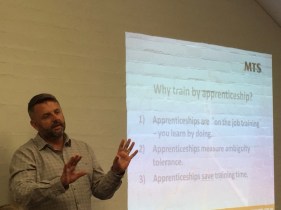
For this reason, apprenticeships can be an excellent format for helping people to assess their suitability for Christian ministry. Spending time with a trainer, growing in life and ministry together, can offer an excellent opportunity to work out what it means to serve and lead others in the ways of God. You can focus on ministry competencies, while growing in theological conviction, and building Christian character.
If you are serious about preparing for a life time of ministry, then I encourage you to consider a ministry apprenticeship. You can talk with me or contact the Ministry Training Strategy.
This is not a solicited or paid advertisement!
Since receiving my cancer diagnosis, many have assumed that my big questions are “Why?” and “What?” Why am I going through this? Why did God let it happen? What did I do to deserve it? What could I have done to prevent it? What specifically caused it?
The truth is that I haven’t been too obsessed with either of these questions. I’ve been more impacted by the questions “Where?” and “Who?” More particularly… “Where am I?” and “Who am I?”
Where am I?
When cancer hits, life shifts course. The journey changes for the worst. Our plans are detoured, deferred, or destroyed. We feel confused and disoriented, out of control and sometimes totally lost. We’re not where we want to be. We’ve got things to do, places to see, people to meet, tasks to complete, dreams to be realised. But we discover our course has shifted and we might never find our way back.
There is a blessing to be found when we discover we’re lost. It’s time to take a look at the GPS. Time to get our bearings. The truth is, we’ve never been in control and our destinations have never been certain.
In their hearts humans plan their course,
but the Lord establishes their steps. (Proverbs 16:9)
I need to let go of the belief that I can make my life happen the way I want. I need to humble myself before God and recognise that it’s his overall plan that will prevail. I don’t even know what will happen tomorrow, but I can know the One who does. I can rest secure in the knowledge that my detours and diversions can never separate me from the love of God.
…neither height nor depth, nor anything else in all creation, will be able to separate us from the love of God that is in Christ Jesus our Lord. (Romans 8:39)
Who am I?
So much of our identity is tied to what we do and what we hope to do. Our jobs, hobbies, relationships, achievements, physical prowess, intellectual acumen, brushes with fame—they all make us into somebody. Yesterday I heard Usain Bolt say that winning the Olympic 100 metres three times in a row will make him immortal. If only!
Cancer can strip us of all that makes us who we are. Our dreams are destroyed and our hopes are dashed. Sickness keeps us from the very things on which we pin our identities. Who am I if I’m no longer an athlete, a lover, a worker, a success? Am I stuck being a patient, an object of sympathy, a statistic? Is my identity now shaped by my disease? Am I a victim, a survivor, a success, or a failure? It’s no wonder confusion reigns.
Again, there is blessing to be found in the moment of crisis. I need to be reminded that I’m not the sum total of what I think, own, achieve, say, or hope for. My identity isn’t something that I need to build for myself. God has made me in his image to reflect his glory. He has redeemed me through the death of his Son to be adopted as his child. I am richly blessed in Christ. God has given his Holy Spirit as a guarantee of a deep personal relationship with him and a glorious eternal future.
The Spirit himself testifies with our spirit that we are God’s children. Now if we are children, then we are heirs – heirs of God and co-heirs with Christ, if indeed we share in his sufferings in order that we may also share in his glory. (Romans 8:16-17)
Cancer cannot take this away from me. My identity is to be found in God, not in my circumstances. So long as I look to my circumstances, I will remain confused and lost. Far better that I keep my eyes fixed on Jesus.
…let us run with perseverance the race marked out for us, fixing our eyes on Jesus, the pioneer and perfecter of faith. For the joy that was set before him he endured the cross, scorning its shame, and sat down at the right hand of the throne of God. Consider him who endured such opposition from sinners, so that you will not grow weary and lose heart. (Hebrews 12:1-3)
Don’t fear the questions. Only look to God for the answers.
Someone contacted the church office recently, wanting to know if I was still alive! A fair question really—they’d read my book and suspected the worse. Well, despite my lack of blogging recently, I’m alive and enjoying the life God has given me.
This week I’ve celebrated my fifth birthday since diagnosis. And today my CT scan showed that I am still no evidence of disease. It’s over three years that I’ve been N.E.D. I’d prepared myself for bad news—somehow expecting that I’d have to change my name to E.D. But my results show no change. Thank you God!
Most of you will not know that it’s now nine months since my last cycle of chemo. It’s a real joy not to be poisoning myself every three weeks. Some of my regular side effects have disappeared. Others like fatigue, chemo brain, and anxiety continue. It’s been wonderfully liberating not having to plan my life around three weekly cycles of sickness.
Four years is a very long time to have non-stop chemotherapy. It’s tough physically and emotionally. It’s hard to keep getting poisoned when you are not sure if it is working or necessary. I was prepared to stay the course whatever, but a number of doctors raised questions about whether, after showing good results for so long, it might be worth taking an extended break. So in November last year my break began. I’ve had three scans in this period, and each one has show N.E.D. My break continues.
I described my circumstances to people the other day as like being in a battle zone. Through the years of chemo it was like I was wearing body armour to protect me from the enemy. At the beginning the enemy lines were clearly visible. After I became N.E.D. it changed to a fight against a hidden opposition—like terror cells that can pop up anywhere. I didn’t know where or when or how the enemy might appear, what shape it might take, or what it might do to me. My oncologists believed the enemy remained real and would seek any and every opportunity to attack. So the body armour was essential—I was urged to stay with the chemo indefinitely. The strategy was vigilance, protection, prevention.
Now that I’m not taking regular chemo, it’s like going out without the body armour. The enemy may or may not be present—there is no way to be sure. There are risks. The cancer may raise its head again. We cannot know. I’ve received mixed advice from the medical experts. They cannot tell me anything decisive. Scans are clear, but their scope is limited. Nothing microscopic will ever show on scans. Some say the cancer is still there—simply because they don’t believe treatment can cure my cancer. I’ve been described as a ‘super-responder’. My results are off the charts and there is no data out there to definitively advise me what to do.
So I will stay in touch with medical updates, clinical trials, and the latest in treatment strategies. I will keep talking to my ‘cancer buddies’ about what they are experiencing and discovering. I will continue three monthly CT scans and introduce six monthly MRIs of the brain. I will gradually increase my exercise and try to eat well. But mostly, I will remember to number my days, using the time that God has giving me to trust him and live for him. I will thank him for his saving love, for his gift of life, for the blessing of family and friends, and for the honour of praising him.
I want to honour my family for supporting me on this long and often painful journey. It’s been hard for them and I owe them a huge debt of gratitude.
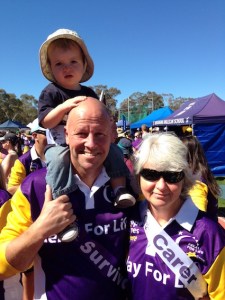
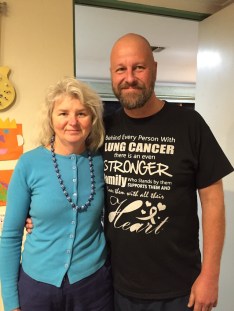
Like my tee shirt?

Tomorrow I walk around the AIS track with the Cancer Council’s Relay for Life for the 5th year in a row. Every time I have walked as a survivor. The first year I went very reluctantly, feeling that I wasn’t much of a survivor. If you’d told me then I’d be walking the track again 4 years later, I would not have believed you. But here I am—thankful to God for another year and another opportunity.
This year I’m hoping to give away as many copies of Hope Beyond Cure as I can. My desire is for people impacted by cancer to know that there is real hope to be found. I’m keen for conversations with survivors and carers. I’m keen to walk alongside others going through similar trials and difficulties.
I’m also working hard to raise support for the Cancer Council. There are over 200 relays around the country each year and they are the major fundraiser to help people affected by cancer.
If you would like to support me doing the relay tomorrow, you can donate online by clicking here.
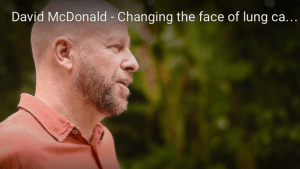
This month the Lung Foundation Australia are aiming to change how people view lung cancer. They’ve asked me, and a bunch of others, to share our stories. You can view the video of an interview with me here. Lung cancer can impact anyone. While smoking remains the leading cause of lung cancer, more and more people are getting this disease who have never smoked. It continues to be the biggest cancer killer in Australia. Sadly, most people are probably like me in thinking it could never happen to them. If you can breathe then it can. If you’re struggling to breathe, or experiencing pain or discomfort that you don’t recognise, then speak to your doctor. Early diagnosis rapidly improves people’s chances of survival. Thank you Lung Foundation for all your hard work and support to so many.
Yesterday I had a routine CT scan to check on any progression of my cancer. Thank God, there was no change. I remain NED! While this has been the pattern for some time, these results were especially encouraging because I haven’t had chemo since last November. I am taking a longer break from chemo to give my body and mind some reprieve. The constant barrage of toxins over the past 4 years has taken its toll.
Today I revisited my treatment strategy with my oncologist. Once again I was encouraged to not assume that I am healed and to return to the IV chemicals every three weeks. The advice was expected, and I can understand it from the doctor’s viewpoint. Why mess with success? The question is at what cost? Mind you, the alternative approach is also at what cost? If I give up on the chemo, and the cancer remains in my body, am I surrendering the advantage to the enemy.
And where does trust in God come in? I believe that God is powerful and loving. I trust that he can and does heal people. But has he removed my cancer completely? Does it display greater faith to go off treatment or to go back on treatment? Some people assume that God is the explanation for what cannot be explained. If we can explain it, then that can’t be God. But I don’t think this way. I believe that God has ordered this world in such a way that we can use our minds, talents, training, research, and skill to accomplish God’s good purposes. I will thank God for miracles and I will thank God for medicine.
I believe that I can and should trust God—whatever happens to me. God has demonstrated that he can be trusted in Jesus Christ. Jesus died and rose to bring me forgiveness and life, hope and eternity. I don’t know what the future holds, but I do know God, and I know that he knows.
For now, I plan to remember that life is short, so I’d better not waste it. I’m NED (no evidence of disease) but I’m still terminal—we all are—so God help me to make the most of this life that you’ve given me.
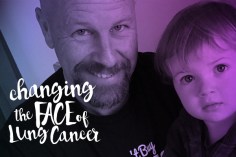
Tomorrow is World Cancer Day. The Lung Foundation are launching a campaign called Changing the face of lung cancer. The aim is to increase awareness, reduce stigma, and encourage people to understand the importance of recognising symptoms to aid in early detection. Along with a number of others, I’ve been asked to share my story. You can view it here. Let me encourage you to read each of the stories on this site. When it comes to reporting on cancer, so often we simply hear the statistics. Well, every statistic is a precious life that matters to God, to family, and to many others. You will meet many wonderful people as you read through their stories.
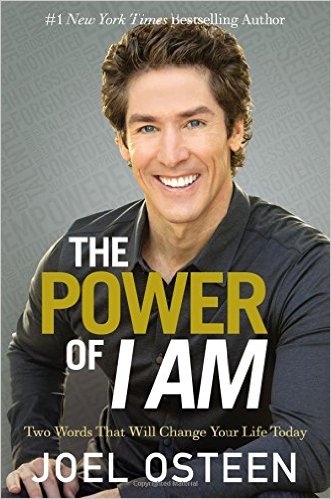
I am grieved. I am angry. I am appalled. I am not going to buy this book. I am calling people to stay clear of this false gospel. There—I’ve said it. This is fundamentally false teaching. Some might say this is blasphemy. I’d say it’s ignorant and dangerous at best. It’s popular. It sells. And it’s toxic. This is not what our world needs. This is not what our God is offering. This is graceless, hopeless, truth less, and fruitless. If this is indicative of what this man teaches, then keep your distance.
Why the rant? Because I just visited my local Christian bookshop and found this volume prominently displayed in the new release section. I stayed a while and skim read the book. I arrived home, gathered my mail, and found this same book on the recommended Christmas reading list of a Christian bookshop catalogue. So, woe to me if I do not speak. If a blind man prepared to step off the edge of a cliff, I would take hold of him tightly. If my grandson picked a toadstool believing it to be a mushroom, I would snatch it from his mouth. So I say, beware this book. It might look real, it might look healthy, it might even reference the Bible again and again, but it will leave you unwell.
Pardon my naivety, but I opened this book expecting to read of the wonder and power of Yahweh—the one true God, the great I AM or maybe to be reminded of the wondrous I AM sayings of Jesus in John’s Gospel. Instead I read the narcissistic promises of a ‘name it and claim it’ speech-faith preacher. Rather than hearing the call to humble myself before the God of all the earth, I am told to banish all negative thoughts and place ‘me’ at the centre. I am told to be positive or be quiet. No!
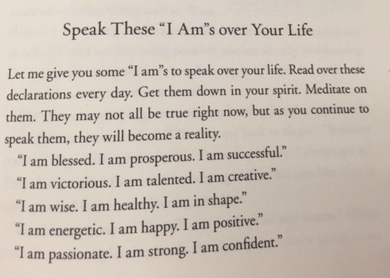
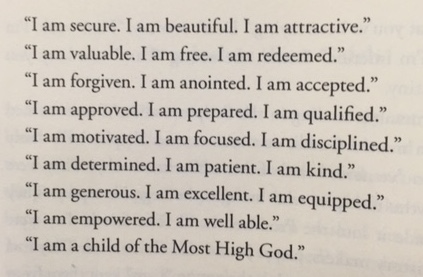
Osteen calls his readers to Speak These “I Am”s over Your Life
Please, whatever happened to I am undeserving, I am weak, I am a slave, I am rejoicing in suffering, I am being poured out like a drink offering? Where is the call to lose our lives for Christ’s sake? Why has the glory of God been replaced with the glory of self?
Joel Osteen, follow the example of Volkswagen, and recall your fraudulent books.
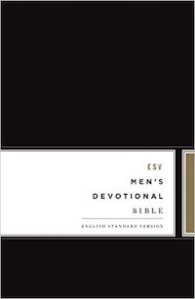
Last week I received a free copy of the ESV Men’s Devotional Bible. I was surprised as I couldn’t remember ordering it. The accompanying letter asked if I would be willing to review it. Normally I would read a book from cover to cover before writing a review. I can honestly say I’ve only read a small portion of this volume over the past week. But I have read other versions of the same book. Some years I’ve read it through more than once. I’ve read this ESV translation and I’ve also read other translations, such as the NIV and the HCSB.
So, on the basis of my previous readings, let me say this is a must read. It’s living and active. I believe it’s the word of God himself through multiple human authors over multiple centuries in multiple real life contexts. It’s an awesome collection of works, of different genres, revealing a coherent narrative. It’s helpful and practical. It’s graceful and glorious. It’s simple and sometimes complicated. It shines a spotlight on the Almighty God and climaxes in the revelation of his Son. It holds a mirror to my heart. It gives me hope beyond my circumstances. It speaks into every context of my life. It liberates me from religious law keeping. It guides my decision making. It offers me deep wisdom. It inspires me from grace to grace.
I must confess this book sometimes spends too much time on my shelf. It gets reduced to a means for ministry rather than being a gateway to intimacy with God. I turn reading into a chore rather than a delight. I rush my way through this volume rather than pausing to meditate on the beauty it reveals. And so I miss out.
I’m grateful to be asked to review this Bible because it gives me cause to open this book of books and look again on the glory God.
But, I have a feeling that the publisher may desire something a little different from a review! Perhaps a comment on this particular publication. And not just the text of the Bible, but the other bits they’ve added. So here goes.
This Bible’s appearance is plain and yet formal and sophisticated, even professional. It’s black with page numbers and headings printed in gold text. This looks impressive, but I find the headings hard to read in certain light.
This is a devotional bible, especially for men. I like the idea because men need to read the Bible—and yet often don’t—and Bible reading should lead to devotion to God. Various authors have contributed brief articles to assist us to reflect on the meaning and application of Bible as we read. I know a few of the authors and I’m encouraged that they have a deep respect for the Bible. They are keen to let it speak for itself. There are 365 of these scattered throughout, so this might give you an idea about how to pace yourself in your reading. The articles I’ve read have all highlighted important truths in the text, and not simply used the Bible passage to launch into another issue. Some have been more applicational and devotion-inspiring than others.
In addition to the daily devotional comments, there are some slightly longer articles of particular relevance to men. These include such topics as work, singleness, identity, fathering, pornography, life in the local church, doubt, and more. While none of these matters are uniquely relevant to fellas, they cover topics that I often hear men asking about.
Each book of the Bible is preceded by a brief introduction to orient us as we start our reading. While many of the comments can be discovered through the process of reading, it doesn’t hurt to see a map or some key landmarks before we embark on our journey.
Sometimes I worry about extra stuff that gets printed in Bibles. The mere fact that additional text has been bound together with the Word of God can confuse the novice reader. Which bits have authority and which sections should I be evaluating for their accuracy and relevance? There is a good argument for printing a companion volume to the Bible—perhaps one you could slip inside the cover or packaging of the Bible. At least this way, it will be clearer what is human and what is divine. They could have matching covers and cross-references to help you turn to comments on the text you are reading. But I haven’t been asked to design my own devotional Bible!
A related danger of printing articles on topics as ‘part of’ the Bible is that they can too easily be regarded as the last word on the matter. What do you do if you find yourself disagreeing with part of this volume of the Bible, even if it’s not really part of the Bible? The discerning reader can make these assessments, but the novice needs to be guided to make the appropriate distinctions.
If you are a bloke who desires to read the Bible to get to know God more closely then this publication might help you to get on with it. You don’t need a ‘devotional’ Bible to do this, but having the wisdom of some Christian brothers guiding you along the way might help you—especially in some of the more difficult sections. To be honest, I don’t mind if you read this particular ‘model’ of the Bible or not. I’d just love you to discover the delight of reading God’s life-giving, life-shaping Word—whatever the packaging.