Christmas at Burrill

20121225-164927.jpg

Christmas is different here at the beach
Nature’s chorus has so much to teach
For God made it all for every and each
To showcase his glorious ways

The ocean is rolling in with a roar
Waves are crashing onto the shore
God’s power and strength we were made to adore
As we celebrate Christmas day

Rosellas screech and call and sing
Kookaburras laughing at everything
They’re caroling praises to the King
To the God who became a boy

The wind dances over the trees
Branches gently sway in the breeze
Dappled light sneaks through the limbs and the leaves
Christmas, God’s gift to enjoy

Merry Christmas

20121223-180522.jpgHere’s the Times Square Christmas message from the American Atheists. And I agree! The only problem is they put the captions with the wrong pictures.

The crucifixion of Jesus is no myth. It’s well attested in biblical and non-biblical historical sources. The baby born at Christmas grew up and gave his life to bring us good news of great joy – that bad people can receive God’s amazing gift of forgiveness. That’s the truly merry news of Christmas.

On the other hand, the Santa story grows more powerful every year. Maybe once upon a time there was a Saint Nick. I don’t know? But I do know that today there are millions. No shopping mall can be without one. And they all perpetuate the same myth – be good and you get presents. Trouble is we’re not. But why spoil a good myth for the sake of truth and real joy at Christmas?

Diagnosing James chapter 5

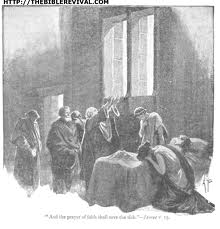
James5Over the past 12 months I’ve been pointed numerous times to a passage in James chapter 5. This is an important and puzzling part of the Bible. It seems to make bold promises and yet, so often, doesn’t seem to deliver upon them. Is this because we’ve misunderstood the text? Is it because we’ve misapplied the text?

This part of the Bible has had me curious for many years. I’m not sure I’ve ever been completely satisfied with any of the commentary explanations. Is it a prescription for healing today? Should we follow the advice to apply oil, call the elders, confess sins and pray for healing? Should we have the faith that the sick person will be healed? Is this a promise of healing to the person who has repented of their sin?

My cancer has given me cause to reflect more seriously on these words of God. Over the years I’ve been called on a few times to pray for a seriously ill Christian and anoint them with oil. Earlier this year some of our pastors and elders prayed over me and anointed me with oil. Does this mean that I should expect to be healed from my cancer? Others have had similar experiences and haven’t been healed. What do we make of this?

A pastor friend took me to this passage while I was still in hospital last year and asked me to consider if there might be any sin that is causing my sickness. The truth is I can think of so many sins! But how would I know what sins might be serious enough to lead to serious sickness. And I trust God that he has accepted payment for all my sin in Christ. And I don’t think there is anything for which I remain unrepentant.

But it’s also the exegesis of this passage that puzzles me. So many commentaries see little or no links in the immediate and wider context, and this bothers me because it seems unlikely that James would drop a new and unrelated exhortation at the end of his letter. I wish to explore the meaning of these verses further and to ask whether it is possible to see a coherent argument from 5:7-20. So here are some of my thoughts for consideration.

The ESV translation of James 5:14-15 is as follows:

14 Is anyone among you sick? Let him call for the elders of the church, and let them pray over him, anointing him with oil in the name of the Lord. 15 And the prayer of faith will save the one who is sick, and the Lord will raise him up. And if he has committed sins, he will be forgiven. 

In these verses, one English word ‘sick’ is used to translate two different Greek words: astheneo (5:14) and kamnonta (5:15).

While astheneo in its various forms throughout the gospels seems to always refer to sickness, it is used more widely in the letters of the New Testament to mean weakness. Weakness can include physical sickness, or be caused by physical sickness, but it can also include a broader range of issues, such as the ill-informed conscience, spiritual struggle, and more. Hebrews 4:15 gives a good example of spiritual struggle:

For we do not have a high priest who is unable to sympathize with our weaknesses, but one who in every respect has been tempted as we are, yet was without sin.

The second word translated as sick (5:15) is kamnonta. This word is more easily pinned down. Its only other appearance is in Hebrews 12:3:

Consider him who endured from sinners such hostility against himself, so that you may not grow weary or fainthearted.

The same word appears in Revelation 2:3 in the Textus Receptus, where it also carries the meaning of weary in a similar context. The word kamnonta is also used in Job 10:1 (LXX) where Job is weary in his soul. This is particularly interesting, given the mention of Job in James 5:11. If kamnonta in James is being used in a similar way to its use in Hebrews 12, then it seems reasonable to adopt the broader translation of astheneo as ‘weak’ in verse 14. On this understanding, we could offer the following translation:

14 Is anyone among you weak? Let him call for the elders of the church, and let them pray over him, anointing him with oil in the name of the Lord. 15 And the prayer of faith will save the one who is weary, and the Lord will raise him up. And if he has committed sins, he will be forgiven.

Of course, there are other issues to be determined in these verses. How is ‘save’ (Gk. sozo in 5:15) being used? The NIV translates this word as ‘make well’, whereas the ESV translates as ‘save’. Does it refer to salvation from illness and death? Or is it speaking of salvation from God’s judgement? James uses this word on four other occasions and each time it refers to spiritual salvation.

Therefore put away all filthiness and rampant wickedness and receive with meekness the implanted word, which is able to save your souls.  (1:21)

What good is it, my brothers, if someone says he has faith but does not have works? Can that faith save him?  (2:14)

There is only one lawgiver and judge, he who is able to save and to destroy. But who are you to judge your neighbour?  (4:14)

…let him know that whoever brings back a sinner from his wandering will save his soul from death and will cover a multitude of sins.  (5:20)

Most telling, is the proximity of 5:20, which I would argue is a continuation of the same discussion by James. Thus, James could be saying that the prayer will restore the weak and weary person so that they will be saved from the judgement of God.

The reference to healing (Gk. iaomai in 5:16) could then be understood to be functioning metaphorically, as it does in Isaiah 53:5.

Therefore, confess your sins to one another and pray for one another, that you may be healed. The prayer of a righteous person has great power as it is working.  (5:16)

That is, the person is healed from their sin. Interestingly, in Hebrews 12:13 this word is used for ‘the healing of drooping hands and weak knees’. This is a picture of restoring the person who has grown weary and faint-hearted (Hebrews 12:3) in their struggle against sin. The same idea could well be on view in James 5.

This interpretation fits well with the context and helps us to see the development of James’ argument. In 5:7-11 James writes about the attitude his brothers and sisters should have toward suffering. They are exhorted to be patient and to persevere. They are to find encouragement in the example of the prophets (Job is noted) and the merciful character of God. This has an eschatological focus in the return of Christ and the final judgment.

7 Be patient, therefore, brothers, until the coming of the Lord. See how the farmer waits for the precious fruit of the earth, being patient about it, until it receives the early and the late rains. 8 You also, be patient. Establish your hearts, for the coming of the Lord is at hand. 9 Do not grumble against one another, brothers, so that you may not be judged; behold, the Judge is standing at the door. 10 As an example of suffering and patience, brothers, take the prophets who spoke in the name of the Lord. 11 Behold, we consider those blessed who remained steadfast. You have heard of the steadfastness of Job, and you have seen the purpose of the Lord, how the Lord is compassionate and merciful.

James 5:12 is harder to understand in the flow of James’ argument and is usually explained as an isolated saying. However, it’s possible that James is returning to his warnings about double-mindedness and his encouragement to his brothers and sisters to remain steadfast.

But above all, my brothers, do not swear, either by heaven or by earth or by any other oath, but let your “yes” be yes and your “no” be no, so that you may not fall under condemnation.  (5:12)

5:13 continues the matter of remaining godward in the face of suffering and trials, by encouraging the suffering person to pray. If the praise is also godward, then he encourages people to speak with God in good and bad circumstances.

Is anyone among you suffering? Let him pray. Is anyone cheerful? Let him sing praise.  (5:13)

But what of the weak person, the spiritually weary, the one who may be unable to pray in faith? Let him call the elders to pray so that he may be restored. Indeed, prayer is not limited to the elders. Prayer is something we should offer for one another, especially when they need help in overcoming sin. This whole argument is nicely concluded and summarised in 5:19-20 where we see that the heart of the matter is saving the sinner from his sin that leads to the death of his soul.

19 My brothers, if anyone among you wanders from the truth and someone brings him back, 20 let him know that whoever brings back a sinner from his wandering will save his soul from death and will cover a multitude of sins.

But what of Elijah in the midst of all this?

17 Elijah was a man with a nature like ours, and he prayed fervently that it might not rain, and for three years and six months it did not rain on the earth. 18 Then he prayed again, and heaven gave rain, and the earth bore its fruit.  (5:17-18)

Again, the reference to Elijah points to the continuity of argument, because the example of the prophets has already been raised in 5:10. Elijah serves as an example of a righteous pray-er. His ministry occurs during the time of drought and he is introduced in these terms in 1 Kings 17:1. For three and a half years the people have to wait, and the cause of the crisis is the sinfulness of the people of God. In particular, it is their double-mindedness as they flirt with other gods and fail to trust God’s covenant promises. This fits well with the introduction to this section of James, where in verse 7 the farmer waits for the rains, which are the coming of the Lord. 1 and 2 Kings reveals that Elijah was a man who prayed, but the prayers recorded are interesting. He prays for a little boy to be saved from death to life – and he was. A powerful prayer for healing, but James does not mention this. So, I understand the connection to be humble faith in God, as we wait patiently for him to bring the rain, or in the case of James – the return of Jesus.

This still leaves the puzzling reference to ‘anointing with oil’. The New Testament only mentions the practice of anointing with oil in relation to healing the sick in Mark 6:13. (There is also the reference to pouring oil and wine on the bandages of the good Samaritan in Luke 10:34.) So, it could be that a connection with healing prompts the mention of anointing with oil. This, on my view, could be a symbolic demonstration of God’s spiritual healing of the individual.

This ‘restoration of the weak and weary’ view fits well with the overall message of James. People become weak and weary when they fail to submit humbly to God’s word. Rather than strengthening their hearts (5:8), they become faint-hearted and weary of struggling against sin. They become double-minded, being tempted by the world’s ways rather than patiently trusting in the goodness of God.

James began his letter by calling upon people to remain steadfast under trial. They are to persevere patiently because God has promised a crown of life. James concludes his letter by returning to where he started. His big concern is that people live out their faith and not fall by the way, distracted by the pretence of the world. They are to keep trusting in God, come what may, and if anyone starts to stray, then their brothers and sisters should pray and do all they can to bring them back.

I recognise that this interpretation is not watertight and there have been various arguments against it. Commentators point to the calling of the elders as indicating the incapacity of the sick person to go themselves to the elders. The strong connections with Jesus’ teaching are seen as a pointer to the sickness/healing/saving theme of the gospels being repeated here. Further, the place of anointing with oil in a context other than healing is hard to explain.

I have weighed these arguments (and will continue to do so) and it seems to me that in the context of James’ letter ‘restoring the weary’ is a more likely interpretation than healing the sick. If I am wrong, then it is still likely that James explores a link between the weakness/sickness of individuals and the potential of sin having brought this about. Thus the prayer and concern for the sick person will be concerned with more than their physical healing. It will be concerned with the forgiveness and salvation made possible through Christ.

My recent experience of serious sickness has reminded me of the strong connections that can exist between physical sickness and spiritual struggle. Someone who is very ill and facing their own mortality may experience doubt and a struggle to maintain their faith in Christ. In such circumstances the prayers of the elders and encouragement of God’s people will be particularly important.

In all of this, I continue to pray fervently for others to be healed of their sicknesses and that God will strengthen their faith in him for salvation. I deeply appreciate the thousands of prayers that people have offered for my healing. Please don’t stop! Let’s pray to God, let’s pray for one another, especially for the sick and weary and weak and struggling, that God will raise them up. When things are especially tough, the prayers of our brothers and sisters are so important.

These reflections are a work in progress. I have grappled with this text over a number of years (preceding my illness) and recent events have pushed me to explore their application again. My prayer is that we will read them humbly and faithfully, leading us to trust God in whatever circumstances we are facing. I welcome your thoughts and prayers!

Simple schoolies alternative

Over recent months I’ve been meeting with other parents from church, to pray for our teenagers. The adolescent years can be pretty volatile. Kids are turning into adults. Hormones are kicking in. Once delightful compliant children can morph into something from the Twilight series. Key among these changes are issues of faith. Do I believe what mum and dad believe, and do mum and dad really believe it any way? Have I just been swept along by the expectations of my church or youth group? What is real?

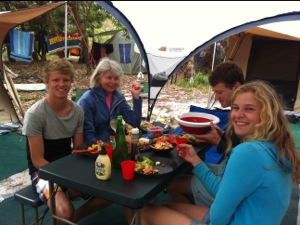
Burrill2As I was talking (and later praying) with another dad from church a few weeks back, I got the idea of offering to take a bunch of graduating year 12 boys/young men away for a couple of days to focus on life after school from God’s perspective. I invited 10 guys in our church and ended up having 6 come away with me, and my son, Luke, and our youth director, Steve, for the weekend. We headed to the coast and set up camp for the weekend. Some time was spent in the surf, playing various games, or just chilling around the campsite. The main game was to open the Bible and to talk together about stuff that mattered – and we did!

Here is a simple summary of what we looked at:

Saturday morning
Getting to the guts of the gospel. I shared my experiences as a teenager of constantly failing God, wondering if I was really a Christian, wondering if it was true, not being able to turn over a new leaf, hoping a change from Canberra to Sydney would change everything, and more. During 1st year uni I came to understand Romans 5:6-11 and this changed everything. God wasn’t waiting for me to make myself good enough for him. He was reaching out to me as a rebel, forgiving all of my sin in Jesus, and having guaranteed my current standing with him as not-guilty, I had nothing to fear from God, and was freed up to serve him with joy.

6 You see, at just the right time, when we were still powerless, Christ died for the ungodly. 7 Very rarely will anyone die for a righteous person, though for a good person someone might possibly dare to die. 8 But God demonstrates his own love for us in this: While we were still sinners, Christ died for us. 9 Since we have now been justified by his blood, how much more shall we be saved from God’s wrath through him! 10 For if, while we were God’s enemies, we were reconciled to him through the death of his Son, how much more, having been reconciled, shall we be saved through his life! 11 Not only is this so, but we also boast in God through our Lord Jesus Christ, through whom we have now received reconciliation. (Romans 5:6-11)

Saturday afternoon
Beginning with the end in mind. We talked about how the shortness of time clarifies what’s important. If 80 minutes has passed in a game of rugby and your team is 4 points behind, then you hang on to the ball for phase after phase, aiming for that 5 point try. If you have an exam tomorrow, then it makes sense to start studying. If your life is short, then it’s important to know what is worthwhile doing. I shared how my cancer diagnosis has sharpened my focus of what matters in life.

I got all the boys to share their plans for the year ahead and beyond. Some were looking at gap years, others heading to uni or tech, some leaving home, others staying with family. We looked together at Psalm 90 and saw how the eternal God has numbered our days and called us to live for him and find our satisfaction in him. In particular we brainstormed what this verse would look like for each of us in our contexts.

Teach us to number our days aright,
that we may gain a heart of wisdom. (Psalm 90:12)

We also looked at the typical Aussie dream and how chasing affluence, influence, pleasure and security are the messages we hear every day. Jesus critiques these ideas and shows how the brevity of life and the certainty of death make a mockery of a life spent chasing this stuff.

15 Then he (Jesus) said to them, “Watch out! Be on your guard against all kinds of greed; a man’s life does not consist in the abundance of his possessions.”

16 And he told them this parable: “The ground of a certain rich man produced a good crop. 17 He thought to himself, ‘What shall I do? I have no place to store my crops.’ 18 “Then he said, ‘This is what I’ll do. I will tear down my barns and build bigger ones, and there I will store all my grain and my goods. 19 And I’ll say to myself, “You have plenty of good things laid up for many years. Take life easy; eat, drink and be merry.”’

20 “But God said to him, ‘You fool! This very night your life will be demanded from you. Then who will get what you have prepared for yourself?’

21 “This is how it will be with anyone who stores up things for himself but is not rich toward God.” (Luke 12:15-21)

This bloke made 3 fatal mistakes. He thought riches would guarantee him security. He thought he had all the time in the world. And ultimately he thought only of himself, leaving God right out of the picture. That night his life was demanded of him. I urged the boys not to fall into the same foolish and fatal mistakes.

Saturday night
Q and A. We built a raging campfire and sat around with the boys asking me questions. We covered a lot of ground with different topics. These included relationships, marriage and sex; life in residential colleges; helping people grapple with issues such as the horrors done in the name of Christianity, or what happens to people who’ve never had a chance to hear about Christianity; what to do when you’re struggling; and more.

Sunday morning
Don’t sell out for a bowl of soup. We looked at how temptations can be so appealing and seem to offer so much, and yet how easy it is to get everything out of perspective. Everyone agreed that we wouldn’t swap an inheritance from our parents for a meal, and yet this is the risk when it comes to inheritance from God. We can be tempted to look at people not following Jesus and think we’d be better off if we were like them. Perhaps it’s their perceived sexual freedom, or their power or wealth, or maybe it’s that our inheritance from God seems so intangible or remote. We checked out these verses from Hebrews:

24 By faith Moses, when he had grown up, refused to be known as the son of Pharaoh’s daughter. 25 He chose to be mistreated along with the people of God rather than to enjoy the pleasures of sin for a short time. 26 He regarded disgrace for the sake of Christ as of greater value than the treasures of Egypt, because he was looking ahead to his reward. (Hebrews 11:24-26)

15 See to it that no one misses the grace of God and that no bitter root grows up to cause trouble and defile many. 16 See that no one is sexually immoral, or is godless like Esau, who for a single meal sold his inheritance rights as the oldest son. (Hebrews 12:15-16)

We talked together about how being Christian is for the long haul and God wants us to encourage each other to persevere and live our lives for him. These verses show how we can invest in the lives of one another.

23 Let us hold unswervingly to the hope we profess, for he who promised is faithful. 24 And let us consider how we may spur one another on toward love and good deeds. 25 Let us not give up meeting together, as some are in the habit of doing, but let us encourage one another—and all the more as you see the Day approaching. (Hebrews 10:23-25)

God doesn’t expect us to be Robinson Crusoe Christians. The boys shared how they thought they could encourage each other. There were some great ideas that focused around being genuine, getting past trivia, and caring about how each is going with God. This was important, given they were heading in different directions, with different challenges ahead.

Finally, we discussed how we would all stuff up and why it was so important to remember the grace of God. Rather than hiding from God when we feel that we don’t measure up, or when we know we are guilty of not living for him, this is the time to draw near and rely on his grace. Jesus knows what we’re going through. He was tempted as we are. He was challenged to give up his inheritance for a ‘bowl of soup’ too. But he drew near to God and trusted him, even to death.

14 Therefore, since we have a great high priest who has gone through the heavens, Jesus the Son of God, let us hold firmly to the faith we profess. 15 For we do not have a high priest who is unable to sympathize with our weaknesses, but we have one who has been tempted in every way, just as we are—yet was without sin. 16 Let us then approach the throne of grace with confidence, so that we may receive mercy and find grace to help us in our time of need. (Hebrews 4:14-16)

BurrillI think this was a good weekend. The boys told me so! One shared how it had encouraged him as he struggled with his faith. My prayer is that it will help these guys to remember the gospel, and live it out as they face massive changes in the year ahead.

It wasn’t hard to pull off a weekend like this. It’s a simple schoolies alternative, or add-on. It was fun, relaxed, and at its heart it was a serious time together. Maybe next time we’ll do it for 3 or 4 days. Perhaps you could consider this with year 12s from your church or network. I focused on boys so as to keep things simple, but there would be opportunities with girls too. God-willing, we might try to do both separately next year. If you’d like to know more about how it worked or to talk through possibilities for something similar, please get in touch.

Smoking – because I care!

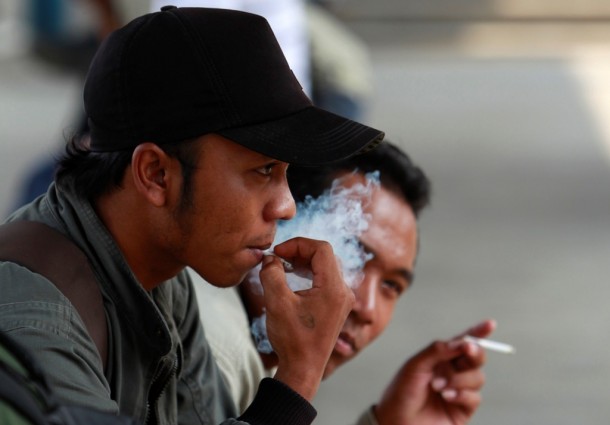
smokersEarlier today I visited the local chemist to pick up some scripts for drugs I’m taking. Pretty normal really. But the conversations I had out on the street, while I was waiting, weren’t! I spoke with four different guys, each of them were smoking, and the conversations went something like this…

Me… Hey mate, there’s a good chance you’ll get lung cancer if you keep smoking.

Him… (Smiles at me and keeps smoking)

Me… It’s true you know

Him… Yeah, I know

Me… I’ve got lung cancer and I can tell you it’s not much fun

Him… Yeah?

Me… You don’t know whether to believe me, do you?

Him… (Shrugs)

Me… It’s true. You want to see my scars?

Him… (Shrugs)

Me… (I lift up my shirt on the left side to reveal 3 rather ugly scars around my ribs) They had to stick tubes in me to drain out all the litres of fluid from round my lungs. You know, it’s a good idea to give up.

Him… Yeah, I know.

Me… I know it’s hard, but you should try. Start now, it’s worth it.

Him… Did you give up smoking?

Me… Mate, I didn’t smoke and I still got lung cancer!

Him… Yeah?! Have you got rid of it?

Me… Mate, I might never get rid of it. They can’t cut it out, and I’ve got to keep on chemo.

Him… Yeah?!

Me… So give it a shot, eh? It’s worth trying to give up now.

Him… Yeah, thanks mate. And hey, good luck eh!

Then, back in the chemist, picking up my scripts, I say “I understand you guys help people to quit smoking.” To which the pharmacist replies, “Yeah, that’s right.” And I say, “Well, there’s three guys outside smoking right now. You could help them!”

Custom make your own conference

This time last year I was enjoying the Geneva Push In the Chute conference in Melbourne. I gathered with others from all over Australia, young and old, from a range of denominations, to encourage each other in the work of planting new churches. In some ways, I was the middle-aged pinup boy, heading to the Top End to begin all over. It was exhilarating to feel the energy, especially from those who were moving to new places to reach out with the message of Jesus. I had the privilege of teaching on why we need to keep planting new churches, how to build ministry teams, as well as sharing our specific dreams and plans for outreach in the Darwin area.

This year, I’m unable to attend. I’d truly love to be at the conference, listening to Don Carson teach, finding out how some of the new churches are travelling, and generally being encouraged to keep on with the work of ministry. However, health, other commitments, and distance are keeping me away this time round.

Depending on our networks, some of us could spend an awful lot of time at conference after conference. In my case, I get drawn towards church conferences, FIEC conferences, men’s conventions, CMS summer schools, Geneva Push conferences, MTS conferences, AFES conferences, FOCUS camps and conferences, RUPA conferences, Easter conventions, Arrow Alumni conferences, AFES staff and regional directors conferences, speaking at other camps and conferences, and the list could go on!  Sometimes it’s simply too much and not all of them are always that relevant. I understand that I’m there for what I can give as well as what I might get, but there are times when I just crave to focus on some particulars and we just don’t go there.

3stoogesI thought I’d share a do-it-yourself idea that I came up with a couple of years back. I customised my own mini-conference that just involved 3 or 4 people. Our church was going through a few strategic and structural changes and I was keen to gain wisdom from others in thinking through these issues. I made contact with a couple of other senior pastors, whose churches were at a similar size and stage, and we organised to set aside two half days to talk things through together. I took a colleague with me, and we flew to Brisbane to catch up with the other guys.

In order to maximise our time together, I wrote up a couple of pages of topics and issues that I was keen for us to discuss. This helped us to think ahead and to stay on topic in the limited time we had together. Each of us had been reading one or two of the same books that had been shaping our thinking about ministry, and so we were able to interact with these ideas also.

I confess to driving the agenda because there were things that I was keen to nut out. We were able to explore how each of us approached different ministry issues, what our churches were doing in a range of areas, how we planned and organised, and more. Talking together afterwards revealed that each of us had benefited in different ways through our time together.

Some of my peers do a similar thing from time to time, so as to focus on their preaching. They meet together for a couple of days, share ideas for a series of talks, preach and critique each others sermons, discuss their exegesis or illustrations or applications, and show how they’ve integrated the preaching with a series of Bible studies.

The advantage of these do-it-yourself mini conferences is that they are tailor-made. You meet for a clear purpose, you contribute to that purpose, and you get out of it what you put into it. It can be organised around your timetables and calendars. You can do it in-house if you have a large staff team, or you can coordinate with others in other places if you’re more isolated. This strategy will work to connect people in similar types of ministries also. Children’s workers can get together with other children’s workers … so can youth workers, women’s workers, executive pastors, small group coordinators, evangelists, school chaplains, and so on.

If you want to make the most of your time, then I recommend you consider the following:

  • agree on the main purpose of your conference
  • put together an agenda or list of issues to be discussed and allow time for people to prepare in advance
  • consider a book or two, or other resources, that are related to your issues, and get people reading these in advance so as to inform your discussion
  • clear your diaries of other commitments and meet in a comfortable place that is free of distractions
  • pray for each other throughout your time together
  • take notes of ideas and have someone distribute a follow up summary of discussion and ideas
  • contact each other a few weeks after your conference to see how things have progressed.

As iron sharpens iron, so one person sharpens another.  (Proverbs 27:17)

Christmas uncut

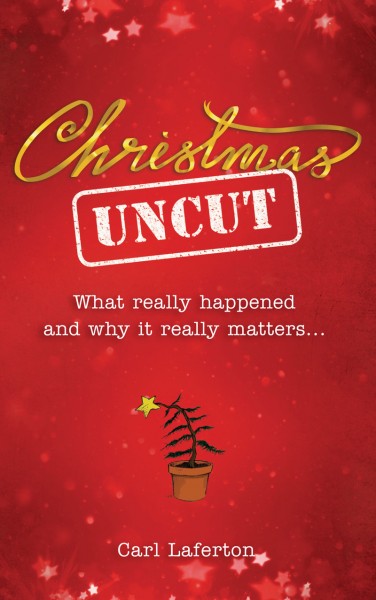
christmas_uncutA friend was telling me recently how much she enjoyed Christmas Uncut by Carl Laferton. I must have sounded interested because two copies arrived in the mail a few days later. It’s a good time to release a book like this, with Christmas only weeks (or is that days) away. I glanced through it, decided I liked what I saw, and promptly gave my two copies away! Anyway, I’ve since got hold of more copies and have now read it through carefully.

It doesn’t take long to finish this book, as there’s less than 60 pages with words on them. The pages are small and there’s even a few cartoons to keep you interested. Truth is, we don’t need pictures to hook us in. It’s well written, humorous, intriguing, matter of fact, and logical. Laferton shows how Christmas has become something of a children’s fiction. We all know that we’re not going to find Santa, or reindeer, or elves, or Christmas trees in the Bible. But what we don’t readily appreciate is how far from the truth many ‘Christian’ presentations of Christmas can be. Far from being a cute nativity story for kids, the real Christmas is filled with scandal, controversy, massacres and mystery. Maybe Stephen King and Stanley Kubrick should have teamed up to produce The Nativity – Director’s Cut!

carl_lafertonThis little book gets us beyond the commercialism and hype, the fiction and the fantasy, to the true message of the historical Christmas. Each chapter is divided into two parts: (1) what really happened, (2) why it really matters. Laferton uses real quotes from the Bible, accompanied by explanations and commentary of his own, to reveal exactly what took place. Then he explores some of the mind-blowing, earth-changing implications of these events. If you check out this video clip you can listen to the author tell you about his book, Christmas Uncut.

There are seven chapters, or ‘scenes’, in this book. Each one focuses on one character from the Christmas story and gives us a window into the significance of what took place for us today. Unlike many events in human history, that can be ignored without affecting anyone, the events concerning Jesus have major ongoing repercussions. Appropriately for Christmas, the bulk of the book deals with the accounts of Jesus’ birth and early years. However, these events cannot be fully understood without moving to the end of his life and examining the Easter accounts. The last two chapters tie all these pieces together.

Following the seven scenes are four brief chapters that point a way forward and begin to answer some common questions. The chapters are:

What next?
Yes but… isn’t this all made up?
Yes but… was Jesus really the Christ?
Yes but… surely Jesus didn’t really rise?

I enjoyed reading this book as it reminded me of what Christmas is really all about. It’s fun to read and it doesn’t take much time at all. This book makes for a cheap, worthwhile Christmas present. For less than $4 you can buy heaps of these, and if you speak to the publisher about bulk purchases they’ll probably do a deal (but don’t quote me!). I’m planning to get hold of more copies because I can think of many uses for this book…

  1. As Brumbies chaplain, I’ve decided to give one to each of the players, coaches, team staff and admin at the annual Christmas party.
  2. Your church could buy a whole bunch to give away to guests at your Christmas services or carols events.
  3. You could get one for each of your work colleagues.
  4. Your kids could give one to each of their teachers.
  5. You could stick one in your Operation Christmas Child shoe box next year.
  6. Get them to give away at your Gingerbread House, or equivalent, events.

If you’re a pastor, and you haven’t written your Christmas message, and you’re fishing for ideas, then this book will come to your rescue. There are at least seven Christmas sermons in this book. But don’t be so lazy!

Holding on to hope

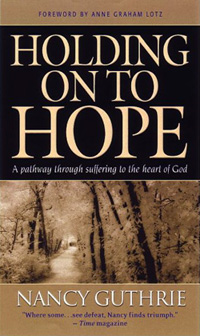
holding on to hopeSome things in life seem completely unfair. Having a baby, knowing that they will live for only a few short weeks or months, is one of these things. The pain and grief for the parents and siblings is too difficult to contemplate. For this to happen twice within the same family beggars belief. Holding on to Hope by Nancy Guthrie tells the story of the Guthrie family and their loss of two children with a metabolic disorder called Zellweger Syndrome. Their daughter, Hope, lived for just over 6 months and their son, Gabriel, lived for a little less than 6 months. Nancy describes their staggering loss and broken hearts. More than this, she writes of the wonderful hope to be experienced by turning to God in our brokenness.

Holding on to Hope invites us inside Nancy’s personal journey of suffering. She examines her own story of loss in the light of the biblical Book of Job. These Scriptures offer insights on dealing with pain, listening to others, grappling with despair, searching for meaning, struggling to trust God, handling our emotions, and where to find hope.

Job is the longest exploration of suffering, grief and hope in the Bible. Its sheer size and its apparently depressing tone have scared many readers away from learning its lessons. One friend of mine went to a church where the minister preached one chapter of Job every week for 41 weeks. It seemed like the minister wanted the congregation to get a taste of Job’s suffering! Surely 4 or 5 weeks would be a better approach. I preached it in one week! Another friend of mine is fearful of reading or preaching on this book, because he superstitiously expects things to go wrong if he does so. I would have thought that things are going to go wrong anyway, so we may as well learn what we can from Job!

Nancy Guthrie takes us gently through her experiences, engaging in every chapter with the text of Job. This is a book of compassionate wisdom. It’s the kind that you can confidently pass on to a friend who is suffering, knowing that you have left them in safe hands. This is no academic work or dispassionate apologetic – it’s a kind word from one who knows suffering and who listens to God’s word.

The overall structure of the book traces Nancy’s experience with her daughter, Hope, through pregnancy, birth, death and grieving. While the family is struggling to deal with the loss of their daughter, they are growing in the hope that comes from trusting the promises of God. Toward the close of the book we learn also of Nancy’s pregnancy with Gabriel, who also has Zellweger Syndrome. This is a tragic, yet hope-filled story.

Each chapter begins with a brief reading from Job, followed by a reflection on her own experiences. The chapter headings below will give you insight into the breadth of issues addressed:

Loss   Tears   Worship   Gratitude   Blame   Suffering   Despair   Why?   Eternity   Comforters   Mystery   Submission   Intimacy

Hold on to Hope is a journey of faith, hope and love. We see God at work by his Word and Spirit in the lives of Nancy and her husband, David. She helps us to grieve well, to turn to God in thanks, to trust God, to seek to honour him, to find hope in God’s promises and faithfulness. She shows us where to turn when it’s all too much, what to do when people’s words (or lack of) hurt more than heal, and why God should always be our strength and refuge.

I found some of her words very personally confronting. In one instance, she reverses a typical prayer for healing that’s accompanied by a whisper of “If it be your will”. She suggests instead the following:

Shouldn’t we cry out to God with boldness and passion and persistence in a prayer that says, “God, would you please accomplish your will? Would you give me a willing heart to embrace your plan and your purpose? Would you mould me into a vessel that you can use to accomplish what you have in mind?” And then, perhaps, we could add a tiny P.S. that says, “If that includes healing, we would be grateful.”

Isn’t real faith revealed more through pursuing God and what he wants than pursuing what we want?  (p79-80)

My wife read this book years ago. In fact, there are usually a few copies floating around our bookshelves because she keeps buying them to give away to others. One friend, whom she’d given a copy to, asked me on the weekend if I’d read it. So now I have! This was a woman who’d given birth to a little boy who died within an hour of his birth. She told me that she’d found it helpful and encouraging. I known Fiona has given copies of this book to grieving mothers of stillborn babies and others who’ve experienced significant tragedy and sorrow.

Don’t think it’s just a book for mothers or women. I found it spoke to personally to me. It has relevance for people struggling in a range of areas, such as unemployment, bereavement, serious illnesses such as cancer, divorce, depression, anxiety, loneliness, chronic fatigue. These are all circumstances where our hearts are tempted to turn away from God. This book gently draws us back.

The edition which I’ve just read contains additional resources for the reader. There’s a list of Bible passages related to the theme of each chapter. There’s also an 8 week study guide which is designed to be used by individuals or groups. These studies take the reader deeper into the Book of Job, as well as other Bible texts, and include questions for discussion and application. She invites you to visit her website at www.nancyguthrie.com to write a message, share your story, or discover more resources to help you find hope in the midst of suffering.

Please don’t stop praying

Having cancer isn’t much fun. From time to time I follow a forum where people share their stories of having cancer, or of caring for those who do. Some of these stories are heartbreaking. The pain, the fear, the loneliness, the hopelessness, the cruel and depersonalising invasion of cancer through the body. Once active, strong, happy individuals, being reduced to feeble shadows of their former selves.

What has both surprised and encouraged me, is how often people are asking others to pray. “I have scans tomorrow – please pray.” “My husband has developed pneumonia – please pray that it will clear up so he can continue his treatment.” “I’m so afraid of the prospect of losing her – please pray that I will be strong.” “My kids are really feeling it – please pray for them” “It’s spread into the brain. I’m so terrified – please pray for me.” “There doesn’t seem to anything left we can do – please pray.”

It’s not just the requests for prayer. It’s also the offers to pray. People will share their struggles and sometimes others reply, saying that they will pray for them. Sometimes people share that they’ve been praying for someone. Sometimes they even share what they’ve been praying.

NTE_prayer_2011I’ve been overwhelmed by how many people have been praying for me. Many of these I know about. Friends, family, people at church. I’ve been amazed to discover that I’ve got a spot in people’s prayer diaries. Some people have told me they pray everyday without fail – and I believe them. Others have said they pray every now and then, when they think of it. Some pray when they get news or when they read this blog. I was remembering tonight, as I visited the NTE conference with around 2000 other people, that 1500 or so students had gathered in small groups to pray for me at the same event last year.

Over this weekend I’ve met four strangers who, upon being introduced to me, said that they (and sometimes their churches) had been praying for me all year. A couple of months back I sat beside visitors at church who, when they discovered who I was, said it was so good to put a face to the name because they’d been praying for me for some time. These serendipitous experiences have been happening all year. What a blow out! So many people have been praying. People I’ve never met, who’ve never met me, but who’ve been moved to speak to God on my behalf. I’ve felt so privileged and have been so encouraged by this news.

Over the years, and even now, our family has also been praying for others with cancer and serious illnesses. We’ve prayed for my dad, Bronwyn, Peter, David, Judy, Nanette, David, Ed, Jenny, Eleanor and others. Some of these people are in remission, others are still fighting, and some have lost their lives. We also remember their families in our prayers. Sometimes I offer to pray for people I’ve met through forums, facebook, or the blog. I try to pray immediately after I make the offer, so that I don’t forget!

Our Heavenly Father is the one who holds our lives in his hands, so it makes enormous sense to speak to him about such life and death issues as cancer. I ask God to heal people, I ask him to heal me, and I ask others to pray for my healing. But I also ask God to work within my heart and mind, to change the way I think and feel about things. I want him to help me trust him, to rely upon his goodness, to treat others with love and kindness, and to hope for eternity in him. God may choose to heal me, and I hope he does, but whatever happens I pray that he will be honoured in my life and others.

So please pray and please keep on praying. Not just for me, but for yourselves, for others, for those with cancer, for their families and friends. And don’t limit your prayers to matters like cancer, even if your whole life is consumed by it. God says we can approach him on any matter. Nothing is too big or too small. So let’s pray, not as a last resort, but because God is more willing to do good in our lives than we are to ask him.

7 “Ask and it will be given to you; seek and you will find; knock and the door will be opened to you. 8 For everyone who asks receives; he who seeks finds; and to him who knocks, the door will be opened. 9 “Which of you, if his son asks for bread, will give him a stone? 10 Or if he asks for a fish, will give him a snake? 11 If you, then, though you are evil, know how to give good gifts to your children, how much more will your Father in heaven give good gifts to those who ask him!  (Matthew 7:7-11)

Do not be anxious about anything, but in everything, by prayer and petition, with thanksgiving, present your requests to God.  (Philippians 4:6)

Let us then approach the throne of grace with confidence, so that we may receive mercy and find grace to help us in our time of need.  (Hebrews 4:16)

Clearly God is inviting us to pray, but how long should we keep on praying? If we’ve prayed a few times and it hasn’t been answered, do we continue? Jesus prayed three times that God would take the cup from him. Paul prayed three times for the thorn to be removed from his flesh. Does this suggest three strikes and you’re out? Is it unreasonable for me to pray for the same things day after day after day? Is it wrong for me to request your continued prayers if you’ve been praying for a year already?

Doesn’t Jesus say we won’t be heard for our many words? It is true that Jesus said:

7 And when you pray, do not keep on babbling like pagans, for they think they will be heard because of their many words. 8 Do not be like them, for your Father knows what you need before you ask him.  (Matthew 6:7-8)

It’s not the amount, or the frequency, or the specific words we pray that guarantee a hearing from God. He already knows our needs and invites us to humble ourselves before him. We are to come before God as his dependent children, trusting in his goodness, and seeking his will, as we present our requests. With this attitude, Jesus invites us to persist in our prayers:

Jesus told his disciples a parable to show them that they should always pray and not give up.  (Luke 18:1)

In fact, we could do a lot worse than to follow the example of Ephaphras, who kept working hard to pray for others:

He is always wrestling in prayer for you, that you may stand firm in all the will of God, mature and fully assured.  (Colossians 4:12)

And the Apostle Paul’s faithful persistence in prayer:

9 For this reason, since the day we heard about you, we have not stopped praying for you and asking God to fill you with the knowledge of his will through all spiritual wisdom and understanding. 10 And we pray this in order that you may live a life worthy of the Lord and may please him in every way: bearing fruit in every good work, growing in the knowledge of God, 11 being strengthened with all power according to his glorious might so that you may have great endurance and patience, and joyfully 12 giving thanks to the Father, who has qualified you to share in the inheritance of the saints in the kingdom of light. 13 For he has rescued us from the dominion of darkness and brought us into the kingdom of the Son he loves, 14 in whom we have redemption, the forgiveness of sins.  (Colossians 1:9-14)

But did you also notice what these guys were praying about? As huge as cancer is, there are bigger matters still. These are prayers that God will make our lives count, that we will persevere, stand firm, and bear good fruit in our lives. As much as I want you to keep praying for healing for people, including me, who have cancer, I’d ask you to pray for these things even more.

Thank you so much for praying, and please don’t stop!

DIY kids’ books

Cleaning out the filing cabinet is always a revealing experience. I was sorting through some cards, letters, artwork and other stuff, when I discovered a couple of my earlier book manuscripts! That’s right, I’m an author. This particular book was never published and was probably only read by four people. So here’s my chance to self-publish for a wider audience!

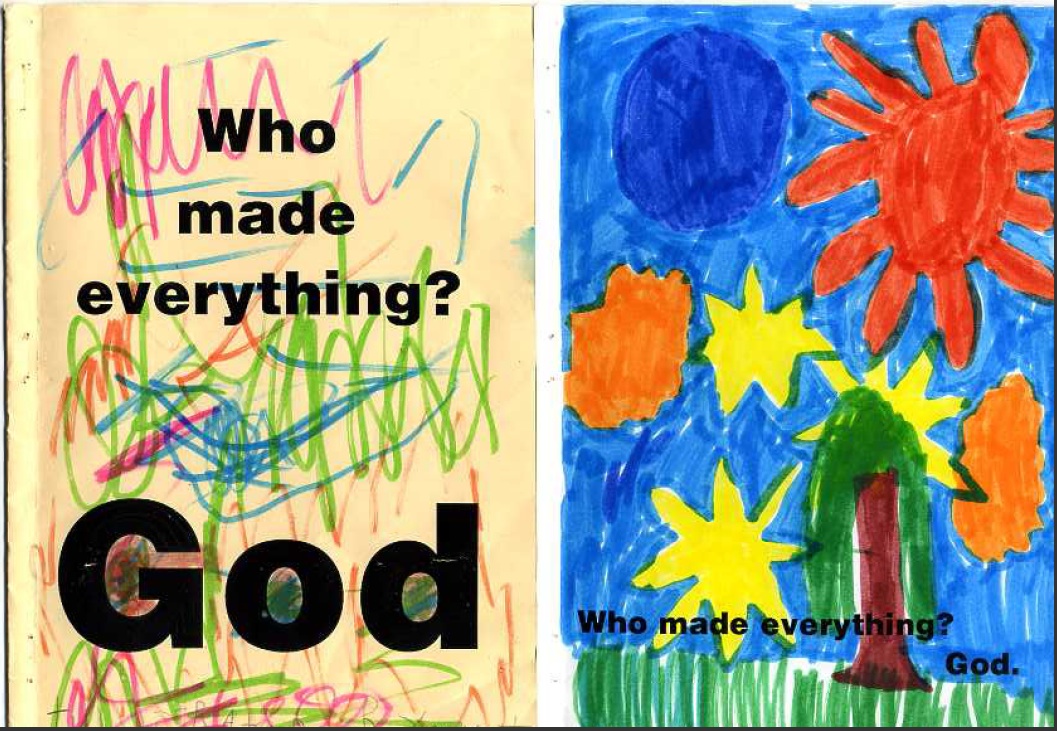
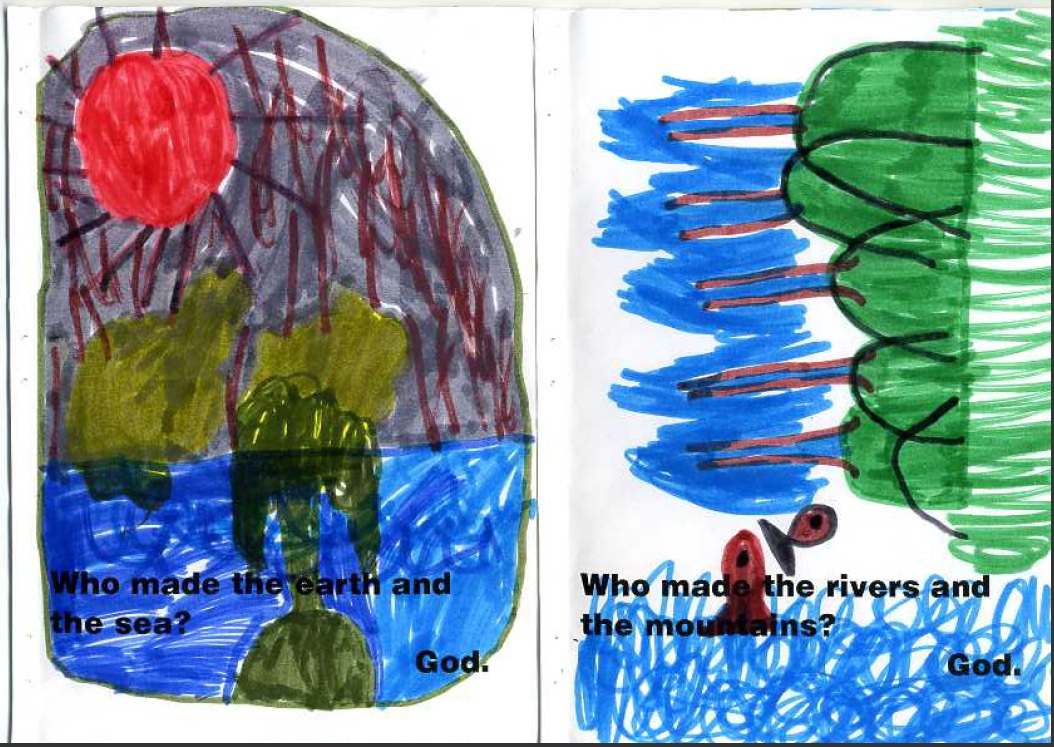
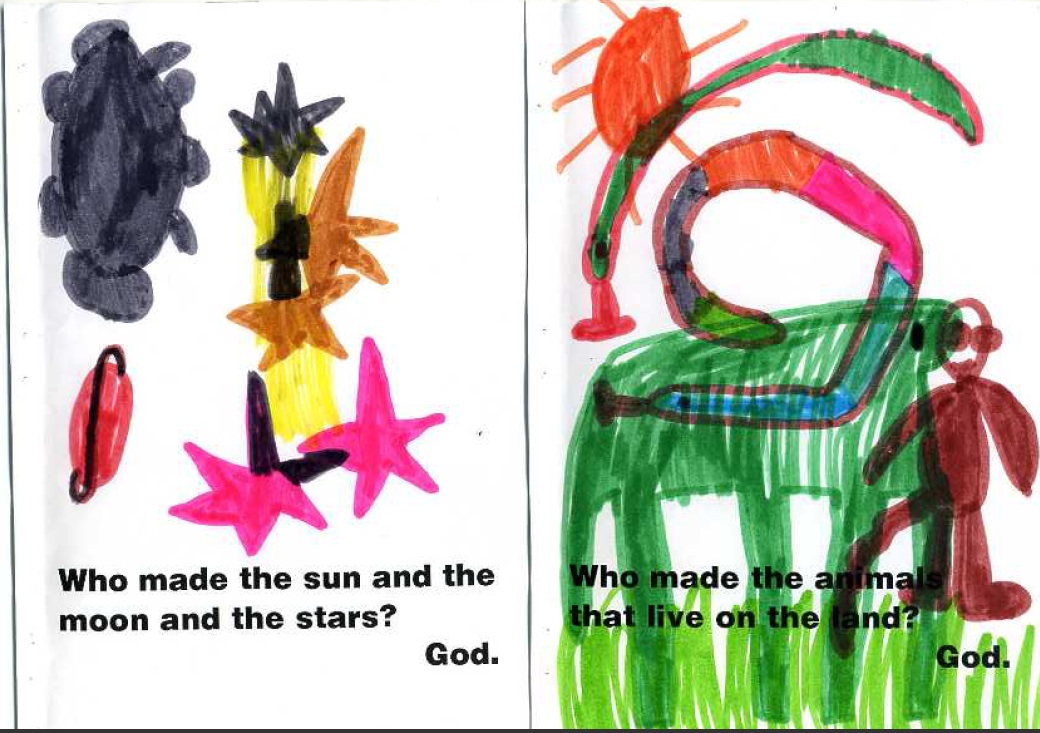
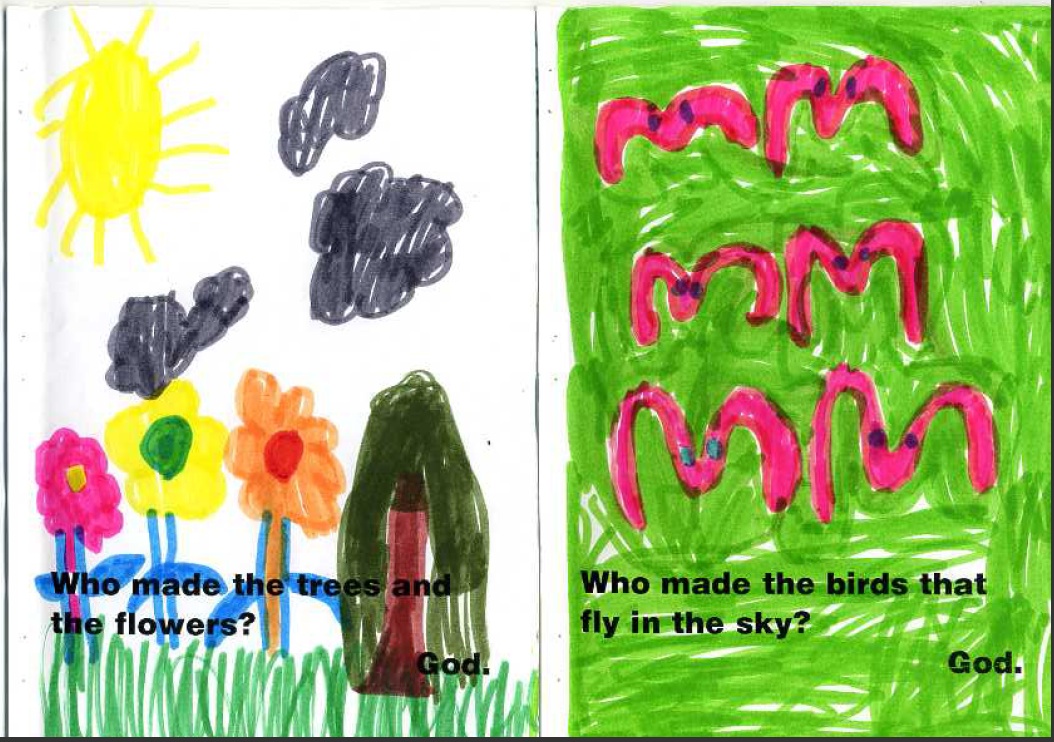
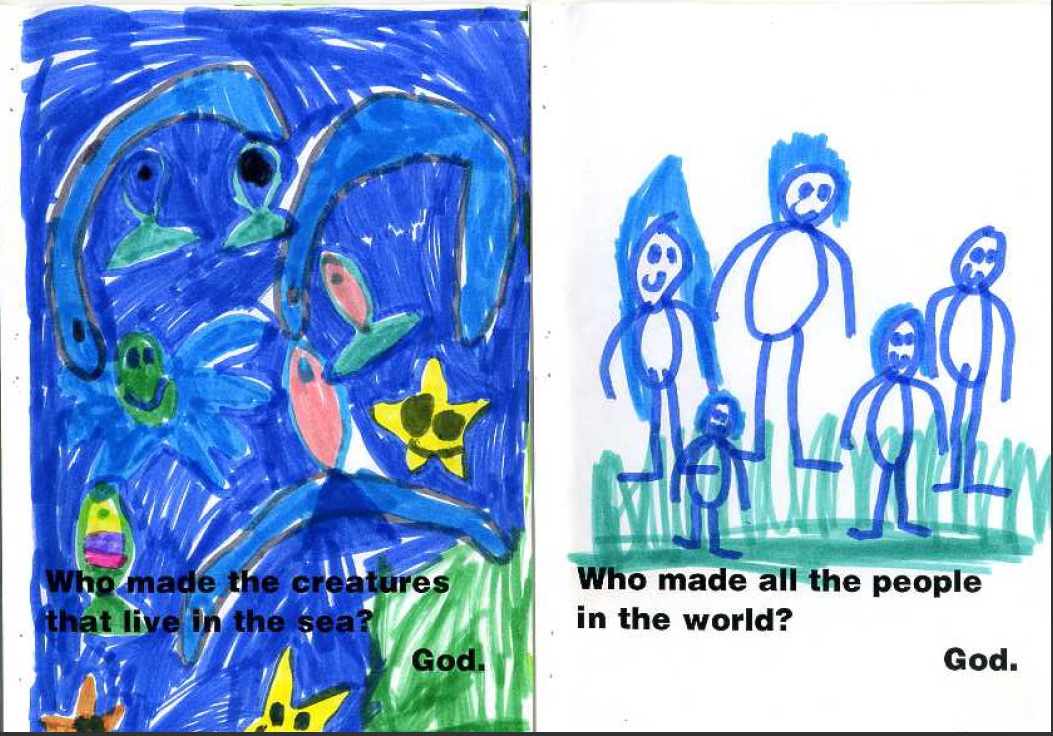
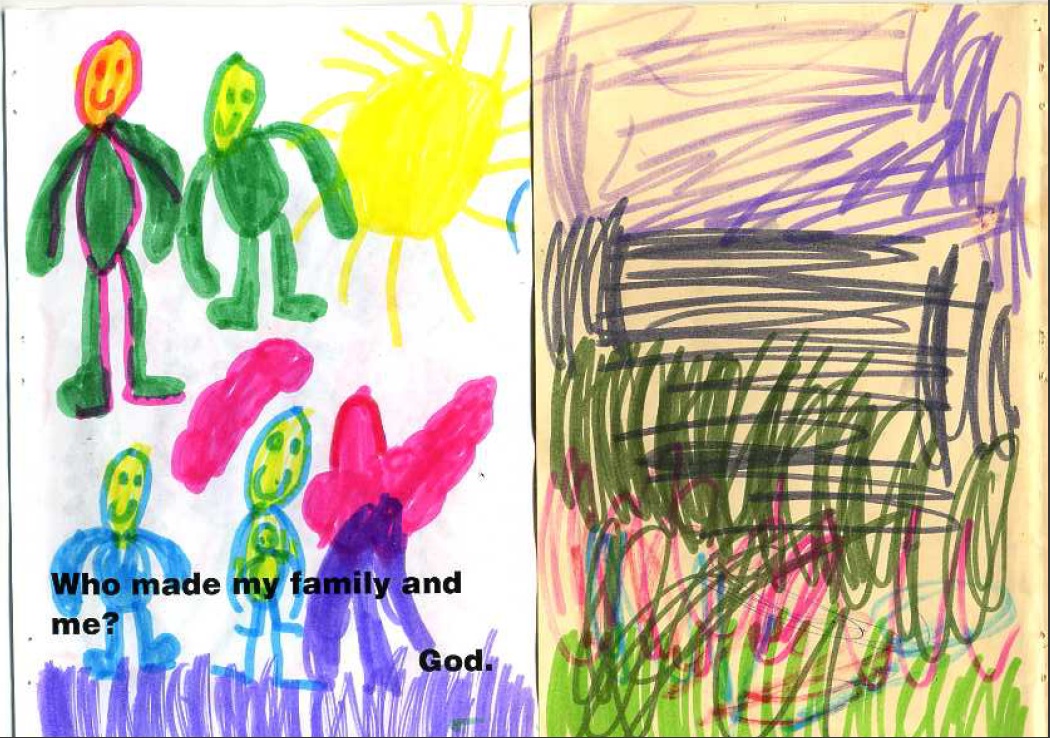
I was motivated to be teaching my kids (two young boys at the time) about God in a creative way. I’d been thinking about some of the question/response catechisms of yesteryear and this led to an idea for a DIY book for kids. I would write the text and my kids would do the artwork. Having written the words, I printed them into an A5 booklet, and invited my kids to draw the pictures. Below is the Limited First Edition entitled, Who made everything? God. Written by Dave McDonald and illustrated by Matt McDonald. Given that there is a baby either growing inside one of the family members, or in her arms, it must have been written around 1996, when Matt was 4 or 5 years old!

I produced another of these called Jesus is Special, where the text on every page began “Jesus is special because…“. We explored things Jesus said and did, his miracles, his death, his resurrection, and his exaltation – in simple words and sentences.

These books weren’t hard to do, we had fun together, and it was a creative way of getting our boys to learn about God. Why not give it a go, or share some of your own creative ideas.

who_made_everything_1

who_made_everything_2

who_made_everything_3

who_made_everything_4

who_made_everything_5

who_made_everything_6

Talking with kids about God

Birthday_Partyover_fencerag_dollgrumpy_day

Having read Grumpy Day, by Stephanie Carmichael and Jessica Green, I admit to having hoped there were more books in the series! There are four and they’re all delightful, with engaging stories and colourful, homely pictures. Friends have told me how much their kids love these books and how they’re often preferred over other ‘cooler’ story books.

There are a few things I’d like to highlight about these books:

  1. They are enjoyable stories for preschoolers and they introduce talk about God in a very natural way. I think this will help to give confidence to parents with their kids.
  2. The stories are simple and their messages are uncomplicated. Each book introduces the reader to a key characteristic of God. These are foundational ideas describing God as God, the one who made us, who knows about us, and who loves us, and whom we can talk to.
  3. The notes for parents section in each book offers excellent tips for making the most of these books and reinforcing the message with other activities.
  4. This note from the authors, printed in the front of each book, gets to the heart of it:

    One of our hopes for these stories is that they will give you an idea of how easily and naturally you can talk about God with your children through the day, helping them grow up in a world where our great God is at the centre (Deuteronomy 6:4-7; Psalm 145:3-7). It’s all about using the little opportunities that crop up each day.

If you’re starting to think about presents for Christmas, then why not take a look at these books. You can get them individually, but it makes better sense to grab the set of four. The publisher’s website enables you to read through each of these books before you buy. It’s an excellent idea to check out what you’re getting before you decide. Having read, or even listened to the author read her own book, you can then purchase with confidence. Your kids, grandkids, neighbours’ kids, random kids will love you for it. These books would also make an excellent gift for friends or to offer your local play group or preschool.

Here’s a final tip for the publishers – reprint the books in a shoebox size and encourage people to put them in next year’s Operation Christmas Child shoebox gifts! This way families all over the world will benefit from them.

Marks of the messenger

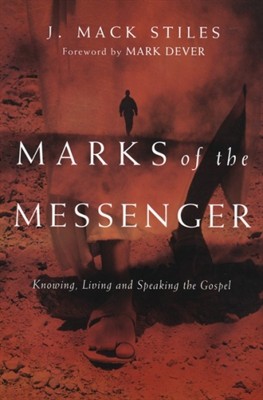
MarksI’ve been complimented a few times in the past 24 hours for writing this book. Given that I’m thought to have written it, I thought I should read it at least. Why the compliments and the confusion? Well, yesterday I attended the AFES National Staff Conference, where I gave the opening address. Before the talk, Mack Stiles was interviewed about his work in Dubai and then I was interviewed about my experiences over the past year. During my interview, Richard Chin realised that he’d forgotten to plug Mack’s book. He held it up, said how good it was, and that Don Carson had said: “I do not think I have ever read a book on evangelism that makes me more eager to pass it on than this one – better, that makes me more eager to evangelize than this one.”

What Richard said, and what people thought he’d said, differ slightly. Read the next two sentences out loud…

Mack has written this book…
Macca’s written this book…

You can see or at least hear the reason why people were mistaken!

Now that I have read Marks of the Messenger, I can say that I’d be very happy to have written it. Not just getting the royalties, or the accolades from the back cover, or it being my first book – but for what it says! It’s a book that encourages people to know Jesus, to live for Jesus, and to speak up for Jesus. Some books on evangelism make me cringe as they focus on methods and strategies for marketing the message and impacting zillions of people. This book is about being authentic as a follower of Jesus. These are the things that should mark a messenger of the good news about Jesus.

I had in mind to summarise many of the excellent ideas in this book but, as I neared the final pages, I discovered that Mack has done this for us. He distills the previous chapters into what he calls A Manifesto for Healthy Evangelism (p112-113). But let me offer a quick description of the main points of this book.

  1. You can’t really share the breaking news of Jesus Christ unless you have a genuine relationship with him. This means acknowledging that Jesus has authority over your life and putting your complete trust in him. As you trust him, so you trust his words of life and desire to share this with others.
  2. It’s important to know the gospel well. Don’t mess with it by adding bits you like or subtracting bits you don’t like. If you mess with it, then it will be no benefit to anyone.
  3. The gospel can be lost in three generations. If one generation accepts it, then the next assumes it, then the next confuses it, then the next will have lost it. So keep the gospel at the heart of every thing you do and say in your life and ministry.
  4. The first application of our understanding of the gospel is not necessarily to share our faith, but to live a gospel-centered life. (p112) The gospel should influence every nook and cranny of our lives. It helps us to remember our sins and failings, enables us to resolve conflicts, shapes our parenting, and so much more. Our lives should look like the message of grace we share.
  5. God calls us to love people by meeting their needs. Some people are lonely, some are hungry, some are oppressed. We are called to love them. All people are in need of forgiveness, and God calls us to love them in this need also. This may involve many things, but at the heart it will mean letting them know about Jesus.
  6. Before people can put their trust in Jesus and turn to him as their Lord, they need to understand what this means and how it happens. There’s no point in people making meaningless responses. What’s required is genuine, reasonable, change of heart, and this will result in changed lives.
  7. We’re called to be bold – not to fear people, or to be ashamed of the message, or fearful of being rejected. So let’s pray that our fear of people will be replaced by reverent fear of God.
  8. The love of God is so different to corrosive, wordly views of love. God’s love changes people and builds extraordinary communities. Jesus said that people would know we are Christians by the love we have for one another. As we apply this in our lives, it becomes the greatest image of the gospel we offer the world.
  9. As we speak the gospel to those who don’t know the gospel, we cycle through three foundational challenges in our minds: Do I know the gospel? Do I live the gospel? Do I speak the gospel? (p113)

I’ve had the privilege of getting to know Mack over the past few years as we’ve met at this conference. This morning we talked together, shared our lives together, wept together, and prayed together. Mack’s enthusiasm for people to know the truth about Jesus is infectious, in a positive way. You know he’s not going through the motions, because where he lives and works there’s absolutely no point pretending to be a Christian. It’d be stupid and dangerous. Mack knows Jesus personally and his great passion is that others will also come to know him. You know, that’s what God wants too! Marks of the Messenger will help you to be a part of this happening.

The man in black is now wearing white

Johnny-CashI confess to being a huge fan of Johnny Cash. I’ve got many of his albums, but I never got to see him perform live. A couple of years back, Tex Perkins’ The Man in Black: The Johnny Cash Story came to the Canberra Theatre. It was so good! It was fitting that someone would do a cover version of his story and songs, because Cash had recorded some of of the most amazing covers ever performed. This afternoon, the same friend who got me those tickets, sent me this clip of Cash performing on the Jools Holland Show in 1994. I loved it – the music, the man, and his message!

Cash had a blemished life, to say the least. He knew how to make a mess of himself and the people around him. He understood drugs and depression and divorce. He understood and was open about his sin. He knew that the one he’d hurt most of all was God himself. On this clip he speaks of his sin, but he also speaks of redemption. He says without redemption he wouldn’t be here. Cash spoke of redemption as more than a fresh start. It wasn’t simply getting his life back on track. He knew a hope beyond this life through the redemptive work of Jesus Christ. Cash knew these truths from Scripture:

In him we have redemption through his blood, the forgiveness of sins, in accordance with the riches of God’s grace.
(Ephesians 1:7)

“He himself bore our sins” in his body on the tree [cross], so that we might die to sins and live for righteousness.”  (1 Peter 2:24)

Jesus said: “I am the vine; you are the branches. If you remain in me and I in you, you will bear much fruit; apart from me you can do nothing.  (John 15:5)

“Blessed are those who wash their robes, that they may have the right to the tree of life and may go through the gates into the city.  (Revelation 22:14)

After this I looked, and there before me was a great multitude that no one could count, from every nation, tribe, people and language, standing before the throne and before the Lamb. They were wearing white robes and were holding palm branches in their hands. And they cried out in a loud voice: “Salvation belongs to our God, who sits on the throne, and to the Lamb [Jesus].”  (Revelation 7:9-10)

Cash’s song is dripping with images of redemption. He focuses on Jesus, the one who hung upon the tree, paying the price for his sin with his own blood, redeeming him from captivity to sin, and grafting him into his vine. Johnny Cash looked to Jesus for help and hope and life forever. What Cash longed for and sang about, he now experiences in all its fulness. The man in black is now wearing the white robe of redemption.

Redemption is an extraordinary gift from God. No matter what we’ve done, no matter what we’ve become, God wants to buy us back. He wants us to know the freedom that comes from relationship with him. It wasn’t easy for God. It cost Jesus his life. The events of that first Easter are testimony to the amazing long-suffering generous forgiveness of God. I love listening to Cash sing the songs of redemption – and he sings many – but even more, I love enjoying the privilege of being redeemed. One day I hope to thank Jesus for what he did. And one day I hope to thank Johnny Cash for singing about it.

Redemption by Johnny Cash

From the hands it came down
From the side it came down
From the feet it came down
And ran to the ground

Between heaven and hell
A teardrop fell
In the deep crimson dew
The tree of life grew

And the blood gave life
To the branches of the tree
And the blood was the price
That set the captives free

And the numbers that came
Through the fire and the flood
Clung to the tree
And we’re redeemed by the blood

From the tree streamed a light
That started the fight’
Round the tree grew a vine
On whose fruit I could dine

My old friend Lucifer came
Fought to keep me in chains
But I saw through the tricks
Of six-sixty-six

And a small inner voice
Said, “You do have a choice”
The vine engrafted me
And I clung to the tree

And the blood gave life
To the branches of the tree
And the blood was the price
That set the captives free

And the numbers that came
Through the fire and the flood
Clung to the tree
And we’re redeemed by the blood

Johnny Cash Redemption

Encouragement: how words change lives

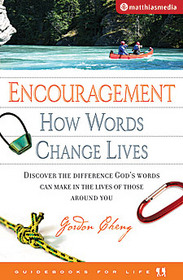
In Gordon Cheng’s book, Encouragement: How Words Change Lives, he advocates speaking the truth in love. In view of this, I feel the need to disclose a few facts. I’ve known Gordon since I began university. I’ve had to put up with his the endless Monty Python recitations, even being roped into performing some skits together in college reviews. We did some of our ministry and theological college training together, before both working in university ministry in different parts of the country. Our wives are both named Fiona and they shared a house together before they were married (to each of us respectively). Most importantly, I regularly won our push-up competitions.

In all seriousness, I say these things because we often don’t have a clue about the life of an author, and whether they practise what they preach. It’s one thing to write a book about ‘encouraging words’ and quite another to live it out. In my experience, this author walks the talk. Despite the silly banter between us, he’s always aiming to build up rather than tear down. He’s been quick to add encouraging comments to this blog and he’s spent time on the phone encouraging me in the struggles I’ve been going through this year. And he hasn’t offered any cash for comments here!

Encouragement is a word that’s commonly thrown around in Christian circles to mean whatever we want it to mean. This book offers a biblically-shaped definition:

Christian encouragement is speaking the truth in love, with the aim of building Christians up in Christ-likeness, as we wait for the day of judgement. Christian encouragement will likewise involve speaking the truth in love to unbelievers, thus encouraging them to put their trust in Christ for forgiveness and salvation.  (p11)

This definition draws on many parts of Scripture, but is particularly based in Ephesians 4:

11 So Christ himself gave the apostles, the prophets, the evangelists, the pastors and teachers, 12 to equip his people for works of service, so that the body of Christ may be built up 13 until we all reach unity in the faith and in the knowledge of the Son of God and become mature, attaining to the whole measure of the fullness of Christ.

14 Then we will no longer be infants, tossed back and forth by the waves, and blown here and there by every wind of teaching and by the cunning and craftiness of people in their deceitful scheming. 15 Instead, speaking the truth in love, we will grow to become in every respect the mature body of him who is the head, that is, Christ. 16 From him the whole body, joined and held together by every supporting ligament, grows and builds itself up in love, as each part does its work.  (Ephesians 4:11-16)

There are four parts to this definition. Truth and love are both essential for genuine Christian encouragement. Words of ‘truth’ can be used to cause harm – this is not encouragement. The truth can be distorted or lost, with the aim of ‘loving’ another – neither is this encouragement. Notice also, that there are two recipients in view, the Christian and the unbeliever. Truth and love, grounded in the message of Jesus Christ, is what will both build Christians and offer life to those who don’t as yet believe.

The overarching context for Christian encouragement is the coming day of judgement. If, as Hebrews 9:27 says, it’s appointed for all people to die and then to face judgement, then genuine Christian encouragement will be shaped and directed by this reality. How we live, and what we decide and do and say, matters. The reason we can offer encouragement in the face of judgement is because Jesus Christ, the One who was full of love and truth, has already taken the judgement in our place. Jesus’ death and resurrection changes everything, and this is the core message of encouragement we have to share.

In this postmodern world it’s easy to be dismissive of words, as if they are empty of real significance or power. However, the Bible demonstrates the enormous power of words. God is the one who spoke the universe into existence and who maintains everything by his powerful world. The same word that creates life also brings new life in Jesus. We’re encouraged to draw deeply on God’s powerful word, as we offer hope for life and bring encouragement to others. Soaking ourselves in the Scriptures will help equip us to offer the right words in season. However, we’re not talking about mindless parroting of the Bible here. There’ll be times to speak and times to refrain from speaking. There’ll be occasions to read from God’s word and occasions to apply godly wisdom and common sense. If we lack the ability to choose what to say, and if or when, and how to say it, then we’re urged to pray and ask God for wisdom. In fact, we’d be wise to pray whenever we seek to encourage others, asking God’s Spirit to guide our words, and to apply them, and for them to be well received.

I found Encouragement to be a very encouraging book! It models what it teaches. It’s a joy to read because it’s not fundamentally about tips and techniques. Rather, it points the reader to the greatest source of encouragement, in God himself. In so doing, it inspires me to become an encourager of others. It doesn’t leave me feeling a failure or guilty, but reminds me of God’s grace. This book is gospel-shaped.

There are so many practical suggestions scattered throughout Encouragement. A good example is the chapter on ‘How we say what we say’. The basic message is, consider your motives in speaking. Are you aiming to love and build up? Cheng offers five examples of how ‘speaking the truth in love’ might work out in practice:

  1. Always remember the gospel of grace and repentance
  2. Be specific
  3. Be humble
  4. Deal with important issues
  5. There is a time for silence.  (p86)

The section on grace is pure gold. There is absolutely no place for a rule-based, sickening, dead moralism! Throughout each of the following sections it was apparent how important listening is to being able to find the right words and the right time to speak. We’re often not too good at it because we’re more interested in speaking than we are at listening. But, good encouragers will be good listeners. Listening will help us to choose the specific words, to use them humbly, to focus on what matters most, and to know when words are not the best option.

I’d recommend Encouragement to any Christian who is wanting to make the most of their days in loving and serving others. It’s not just about how we speak – it’s about how we think and act and speak as God’s children in his world. It’s about living out the implications of the gospel of God’s grace in our lives. It’s about being a loving friend to others. It’s about having a ministry within your church, without needing an invitation, position, or job description. It’s about being wise as we engage with politics, or teach our kids about sex, or care for someone with terminal cancer. It’s about our God-given life. It’s for enthusiastic new Christians and it’s for crusty old Christians!

There is much I liked about this book. It contains some wonderful illustrations and stories of real people. It’s good humoured and gracious while making it’s points very clearly. The message of the Bible has shaped the argument throughout and there are many helpful references included in the text. I especially appreciated the smattering of Proverbs quoted and applied throughout. The author also shows genuine empathy for people who are doing it tough and this is especially helpful in a book on ‘encouragement’.

So I say, get yourself a copy and, while you’re at it, get one for someone else. You could read it together, or catch up and talk about what you’ve read. Perhaps you could use the study/review questions at the back. Help your friend, and get them to help you, become a better encourager of others. Maybe you could introduce this book into your book club. A friend told me last week that he reads out loud from good Christian books as he car-pools to work (and no, the others don’t mind!). This would be an excellent book to use for this purpose. Take it in bite size chunks and learn from it.

However you may choose to use this book, pray that God will apply his words of encouragement to your heart, so that you can pass them on to others also.

Love is a verb

Love ain’t a drug
Despite what you’ve heard
Yeah love ain’t a thing
Love is a verb
Love ain’t a thing
Love is a verb
(John Mayer)

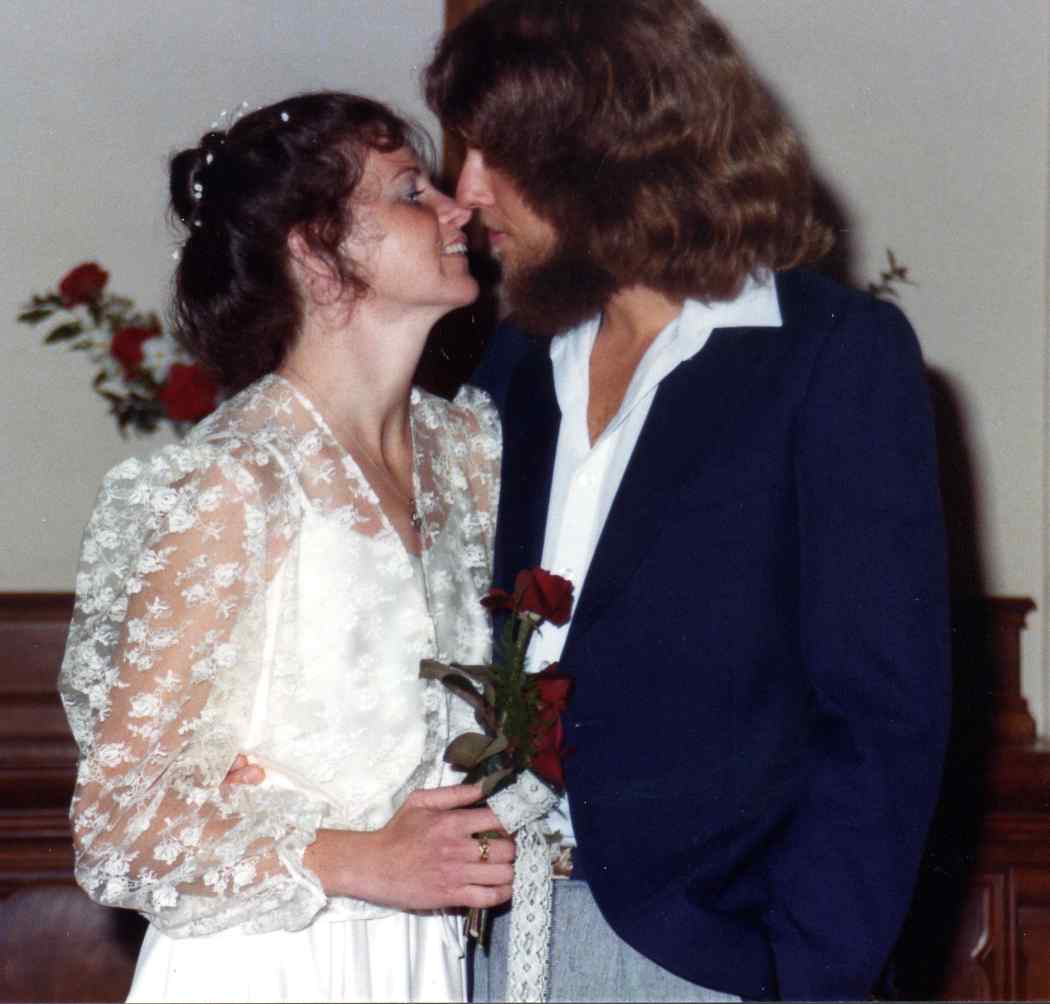
Wedding005Today is another anniversary – far more special to me than yesterday’s. It marks the beginning of the 30th year of my marriage with Fiona. I think we should take the whole year off and celebrate! 🙂 Someone said to me once, that birthdays just keep coming round. You don’t have to do anything. But wedding anniversaries take a lot of work and a lot of love. Well, I’m no longer sure of the first statement, but I reckon the second still holds true. Love is a verb – a ‘doing’ word. It’s not simply about falling in love, or feeling love for someone… it’s about LOVING them. The covenant we made with each other on 3 December 1983 was to love each other, whatever came our way. This means whether or not we feel like it, whether or not it comes naturally, whether or not we think they deserve it (I don’t deserve it), whether or not they choose to love me. I can’t remember our promises exactly, but I think they went something like this…

In the name of God,
I, (name), take you, (name),
to be my wife/husband,
to have and to hold from this day forward,
for better or worse,
for richer or poorer,
in sickness and in health,
to love and to cherish,
until we are parted by death.
This is my solemn vow.

Better, worse, sickness, health! I wonder if we’d known what we’d be in for …! Of course, no one has any idea, really. That’s why they are promises. Unconditional promises. Forever promises. Love is a verb promises. And we need God’s help to keep them.

I’m so grateful to God for giving me my precious partner, Fiona. God calls me to love Fiona with all my being, to encourage and nurture her as my one flesh soul mate. I don’t think I always do a great job at this, but I pray that in God’s strength, I will keep getting better. It’s been a real joy to share these years together, and I pray God will give us many more.

It hasn’t always been easy, and I’ve spoken before about how some of the hardest times have enriched our relationship the most. We’re thankful that so often God has drawn us together in adversity. We’ve had our own conflicts… yes! But God, in his mercy has enabled one or both of us each time, eventually, to extend an olive branch. We’ve sought to be forgiving and peacemaking and to learn from our mistakes. If we learn from our mistakes, then we’ve done a lot of learning together!

I thank God for these 29 years together. I thank him for the beautiful wife he’s entrusted to me. Please God, help me to be like Jesus to my bride.

Husbands, go all out in your love for your wives, exactly as Christ did for the church—a love marked by giving, not getting. Christ’s love makes the church whole. His words evoke her beauty. Everything he does and says is designed to bring the best out of her, dressing her in dazzling white silk, radiant with holiness. And that is how husbands ought to love their wives.  (Ephesians 5:25-28, The Message)

Journey with Cancer 2 Dec 2012 – What a year!

tilleysTwelve months ago today, I was catching up with good friends in a coffee shop near home. We do it once a year, at roughly the same time, and we’ve been doing it for years. These guys come from Melbourne, Wollongong, Brisbane, Perth, and Canberra. We talk about what’s been going on, we share our plans for the future, and we spend some time praying for each other. Once a year means it’s pretty special and I look forward to our catch ups as a highlight.

As we drank our coffees and shared our news, I knew that something was wrong. I had a pain in my chest and between my shoulder blades. My left arm seemed to be going numb. My left leg didn’t feel right, either. I’d been putting up with it for a while, not wanting to break up our time together, but I couldn’t keep ignoring it. I wasn’t imagining things – something was wrong.

Half an hour later I was in hospital – query heart attack. ECG seemed normal, and nothing on the x-ray, but the CT scan showed that things weren’t right. There was a massive build up of fluid around my left lung and it was suggested that I could have a tumour. Mesothelioma produces symptoms like this and so can lung cancers. Over two litres of fluid were drained out of the pleural cavity. It was almost certainly cancer and it didn’t look good. But how? I hadn’t been a smoker. I couldn’t think that I’d been exposed to asbestos. What was happening?

That was Friday, 2nd December 2011, and a year has now passed. What a year it’s been! I consider this an anniversary of sorts. One year of ‘consciously’ living with cancer. They said that I’d probably had the cancer for more than three years previously, without being aware of it. Now it was making it’s presence felt. Now it was changing, shaping, directing, and even shortening my life. Something the size of a ping pong ball had grown, ruptured, spread, damaged and contaminated me. Stage IV inoperable non-small cell lung cancer. This foreign growth was turning my mid-life into an end-of-life crisis. Or so it seemed. The oncologist said it couldn’t be removed or cured. I’d probably see the next Christmas, but he didn’t offer anything more. My health crashed, my weight disappeared, my life seemed to be fading before my eyes. Many times we doubted that I’d live long at all.

That was a year ago and I’m still living with cancer! While I loathe the cancer, and I’d dearly love God to take it away, I thank God earnestly for the life he’s given me. How amazing to live! I no longer take living for granted. In fact, I don’t take breathing for granted any more. I can’t make assumptions about tomorrow, or next week, or next year. Each day, every breath, is a gift from God. I’ve been reminded of what the Scriptures say:

[God] himself gives everyone life and breath and everything else. (Acts 17:25)

Over this past year, God has been teaching me many things. A big one – and there’s much more to learn yet – is humility. God’s humbled me deeply, to trust in him rather than in myself and my resources and abilities. I’d been such an activist in so many ways. Set me a challenge and I’d have a crack. I tended to know my capabilities and I’d trust them. I’d say that I trusted God, but I suspect that I was often simply relying on myself. I’d make plans, get busy, forget to pray, work harder, and then call out to God if I was desperate. God has shown me that I can do nothing without him, and for this I thank him.

God has taught me to treasure people more. He’s shown me how much I value my family. He’s deepened my love and appreciation for my wife. He’s given me great delight in my children. He’s enabled me to enjoy renewed relationships where they were once strained. He’s brought new people into my life. He’s encouraged me with the love, support, and generosity of many friends. He’s given me opportunity to bless others and to be blessed by them. Thank you God!

God has renewed my desire to know him better. He’s reminded me that he’s the ultimate source of wisdom, and that I must know him before I can truly know myself. He’s gifted me with time to read and reflect and write, and a thirst to do this more and more. In writing, God has caused me to think and learn and articulate. He’s opened my eyes to see the amazing truths of his Word in new ways. He’s given me new understanding. He’s strengthened my delight and confidence in him.

God has taught me to lift my horizons. It’s so easy to be consumed by the things of life. Many of our lives are so comfortable, that it’s hard to imagine wanting for anything else. Many of us enjoy heaven here on earth – or so we think. God has burst this bubble. He’s reminded me that life is short. There’s so much more to life than the trivia that fills so much of our time. God has pushed me to focus on things that’ll make an impact for eternity. He’s lifted my heart and mind, to find my hope in him for eternity, and not in the fleeting things of this life.

Most of all, God has been teaching me to keep my faith in Jesus Christ. Every promise God has made, he has answered positively in Jesus. God has shown himself to be totally trustworthy. I’ve been tempted to doubt this – looking at my circumstances, wondering why, struggling for answers – but God keeps bringing me back to Jesus. God knows my weaknesses. He’s heard my cries. He’s seen my tears. And he keeps pointing me to his Son. Jesus is the proof that God is for me. Jesus is the evidence that God loves me. Jesus’ death is the reason God accepts me. Jesus’ resurrection is my hope for eternity.

I know these things more clearly today than I did a year ago, and for this I thank God. My great desire for my friends and family is that they might know these things too – but without getting cancer or facing difficult trials. To misquote John Lennon, “All I am saying is give God a chance!”

My prayer is that God will deepen my faith in him, my hope in eternity, and my love for others. And I would love to pray the same for you.