Relay number 5

IMG_0412
2015 Relay for Life

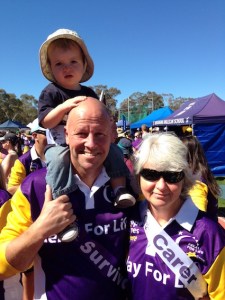
Tomorrow I walk around the AIS track with the Cancer Council’s Relay for Life for the 5th year in a row. Every time I have walked as a survivor. The first year I went very reluctantly, feeling that I wasn’t much of a survivor. If you’d told me then I’d be walking the track again 4 years later, I would not have believed you. But here I am—thankful to God for another year and another opportunity.

This year I’m hoping to give away as many copies of Hope Beyond Cure as I can. My desire is for people impacted by cancer to know that there is real hope to be found. I’m keen for conversations with survivors and carers. I’m keen to walk alongside others going through similar trials and difficulties.

I’m also working hard to raise support for the Cancer Council. There are over 200 relays around the country each year and they are the major fundraiser to help people affected by cancer.

If you would like to support me doing the relay tomorrow, you can donate online by clicking here.

My story

Screen Shot 2016-02-21 at 5.17.44 PMThis month the Lung Foundation Australia are aiming to change how people view lung cancer. They’ve asked me, and a bunch of others, to share our stories. You can view the video of an interview with me here. Lung cancer can impact anyone. While smoking remains the leading cause of lung cancer, more and more people are getting this disease who have never smoked. It continues to be the biggest cancer killer in Australia. Sadly, most people are probably like me in thinking it could never happen to them. If you can breathe then it can. If you’re struggling to breathe, or experiencing pain or discomfort that you don’t recognise, then speak to your doctor. Early diagnosis rapidly improves people’s chances of survival. Thank you Lung Foundation for all your hard work and support to so many.

Good news scans

IMG_1783Yesterday I had a routine CT scan to check on any progression of my cancer. Thank God, there was no change. I remain NED! While this has been the pattern for some time, these results were especially encouraging because I haven’t had chemo since last November. I am taking a longer break from chemo to give my body and mind some reprieve. The constant barrage of toxins over the past 4 years has taken its toll.

Today I revisited my treatment strategy with my oncologist. Once again I was encouraged to not assume that I am healed and to return to the IV chemicals every three weeks. The advice was expected, and I can understand it from the doctor’s viewpoint. Why mess with success? The question is at what cost? Mind you, the alternative approach is also at what cost? If I give up on the chemo, and the cancer remains in my body, am I surrendering the advantage to the enemy.

And where does trust in God come in? I believe that God is powerful and loving. I trust that he can and does heal people. But has he removed my cancer completely? Does it display greater faith to go off treatment or to go back on treatment? Some people assume that God is the explanation for what cannot be explained. If we can explain it, then that can’t be God. But I don’t think this way. I believe that God has ordered this world in such a way that we can use our minds, talents, training, research, and skill to accomplish God’s good purposes. I will thank God for miracles and I will thank God for medicine.

I believe that I can and should trust God—whatever happens to me. God has demonstrated that he can be trusted in Jesus Christ. Jesus died and rose to bring me forgiveness and life, hope and eternity. I don’t know what the future holds, but I do know God, and I know that he knows.

For now, I plan to remember that life is short, so I’d better not waste it. I’m NED (no evidence of disease) but I’m still terminal—we all are—so God help me to make the most of this life that you’ve given me.

Changing the face of lung cancer

06B-DavidTomorrow is World Cancer Day. The Lung Foundation are launching a campaign called Changing the face of lung cancer. The aim is to increase awareness, reduce stigma, and encourage people to understand the importance of recognising symptoms to aid in early detection. Along with a number of others, I’ve been asked to share my story. You can view it here. Let me encourage you to read each of the stories on this site. When it comes to reporting on cancer, so often we simply hear the statistics. Well, every statistic is a precious life that matters to God, to family, and to many others. You will meet many wonderful people as you read through their stories.

Distressingly desensitised

lung_cancer_awarenessI headed to the chemo ward last week, much the same as any other week. But there was a difference—it wasn’t my week for treatment. I was visiting a friend who was having chemo for the first time and I figured he’d like some support.

As I drove to the hospital I became distressed. Not because I was heading to my least favourite place in the universe. Not because my friend had cancer. Not because he was only 17 years of age.

I was upset that the whole experience seemed normal. It seemed okay to be visiting a boy with cancer. I wasn’t shocked or horrified that this should be happening to someone so young and fit, who had their whole life ahead of them. There were no cries or tears or anger. I realised that cancer had become normalised for me. And I hated that fact.

There is nothing normal or acceptable about cancer. It’s a blight. It’s a parasite. It feeds on life. It steals life. It destroys life.

Dear God, please fix my blurred vision to see things for what they truly are. May I not grow desensitised to disease and suffering and death. May I not grow blasé to the horrors of cancer. Enable me to weep with those who weep. Fill my heart with compassion and kindness. Strengthen my hope in your saving grace and lead me to share this with others.

R U OK?

IMG_1281Today is ‘Keep a low profile’ day. Well, I expect it will be for many. It’s actually R U OK day – a day to remind us all that it’s important to look out for one another. The trouble is that many will cringe if the only time people care for them is on a designated day. Every day is a good day to ask R U OK. So let’s slow down sufficiently to keep an eye out for each other.

I know a good number of my friends aren’t OK. Life sucks sometimes, and sometimes often. I get this. Sometimes life feels like the walls are closing in on me and I need help to see the big picture.

So if you’re not OK, please reach out.

Beyond Blue  1300 224 636

Lifeline  13 11 14

(Original artwork by Liam)

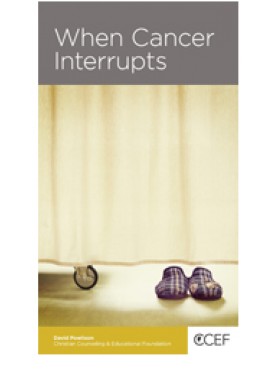
When Cancer Interrupts

when-cancer-interrupts-1Books on cancer—I tend to buy them, read them, and subject them to greater scrutiny than many other books. When Cancer Interrupts by David Powlison is more of an essay than a book, being only 20 pages in length. And this is one of it’s strengths. People facing such trauma as a cancer diagnosis are unlikely to settle down with anything that seems too heavy or unwieldy. Let me say at the outset that I am very encouraged and positive about this little book. But before I explain why, I need to express my only criticism and a plea to the author and publishers.

Please chop out the following sentences in the opening paragraph!

It is a bit like coming home after an evening out to discover your home broken into, every drawer ransacked, and your most treasured possession stolen. You feel betrayed. The enemy got inside.” (p3)

No it’s not! I’ve had the experience of having our house broken into a number of times. I’ve had my wedding ring stolen. I’ve had my motorcycle stolen. We’ve had treasured gifts to my wife stolen. But, with respect, this is nothing compared to being diagnosed with terminal cancer. This illustration trivialises the impact of being told that your life is now effectively over. Life is not equal to stuff.

Take out these sentences and I’m engaged. You understand my plight. You sympathise with my fears. You invite me to journey with you in your book.

Personally, I don’t think you need any metaphor. Just tell it like it is. You’ve been through it four times. Wow!

Having got that off my chest, let me say how wonderful this booklet is. I’d make this a go to book in ministering among those with cancer and their carers. In fact, I’d love it to be available online as a free pdf to get it out there as easily as possible (I had to order my copy from the USA).

Powlison brings comfort and hope by pointing his readers to the beautiful words of Scripture. I found myself saying “Yes. Yes. Yes.” as he quotes the words of the Spirit.

God is our refuge and strength,
    a very present help in trouble.
Therefore we will not fear though the earth gives way.
(Psalm 46:1-2)

He has said, “I will never leave you nor forsake you.”
(Hebrews 13:5)

Even though I walk through the valley of the shadow of death, I will fear no evil, for you are with me.
(Psalm 23:4)

When Cancer Interrupts takes us on a journey from fear to faith. It sympathises with our troubles; understands our uncertainties, pain, and fears; recognises our questions; identifies with our loss; feels our vulnerability; and calls us to acknowledge our struggles.

We are reminded that God is always with us and he invites us to cry out our troubles to him. He listens and cares. Rather than God being absent in the face of a serious cancer diagnosis, he remains close. God is the rock solid constant. He calls us to live out our faith in the midst of our fears. While we benefit so greatly from the love and support of close family and friends, Christ walks closely with us even through the valley of the shadow of death. He will stay with us even when and where others cannot.

Powlison calls us to cling to Christ by faith when we face the trials of cancer. I found the following words to be especially helpful and wise.

If your faith does not come to life in your weakness and need, then fear and false hopes take over. “I’m deathly afraid” and “I can beat this” are evil twins. On the one hand, fear bullies you into putting your ultimate hope in something that’s never good enough—doctors, percentages, treatments, a cure, strategies for self-healing, keeping yourself busy, self-numbing. On the other hand, pride and self-trust seduce you into thinking that you don’t need to be afraid, that faith is a crutch for weak people, and that you can be stronger than cancer and stronger than the shadow of death. (p14)

I find this to be so true. People speak of battling cancer, struggling against cancer, fighting the cancer. They’re admired for their strength, for being champions. And sadly we also describe losing the battle or giving up the fight. Why can’t we be allowed to acknowledge our weakness, our needs, our frailty, our dependence of people, medicine, circumstances outside our control, and ultimately our need for God.

This is not a self-centred or self-help book. It takes us to God, invites us to rest in him, and shows how we can reach out, even in our sickness, with love for others. Little things can make such a difference. And God is in the business of working his strength through our weaknesses.

If we don’t know the love of God in Jesus Christ, then this book points us to the source of life and hope. If we do know him, then we are called to come to him in our times of need.

David Powlison, thank you for writing this little book.

Double delight

Yesterday marked two years since I’d been declared NED (no evidence of disease) and tomorrow marks three and a half years since diagnosis. I thank God for the days he has given me and the opportunity to enjoy life and serve him in new ways.

Screen Shot 2015-06-01 at 9.21.08 pmYesterday also marked the announcement by the government that Crizotinib was going to be added to the Pharmaceutical Benefits Scheme from 1 July 2015. This is very exciting, especially for those who have been paying for this targeted lung cancer treatment treatment. The price drops from $80,000 a year to $456 a year. I have not commenced this treatment as yet, but it means it will be affordable if and when I need it. For now, I continue on chemo. Why—because it’s working, and if it aint broke then I shouldn’t change it, apparently!

Click on the picture to watch this brief video.

Cancer, death, funerals, hope

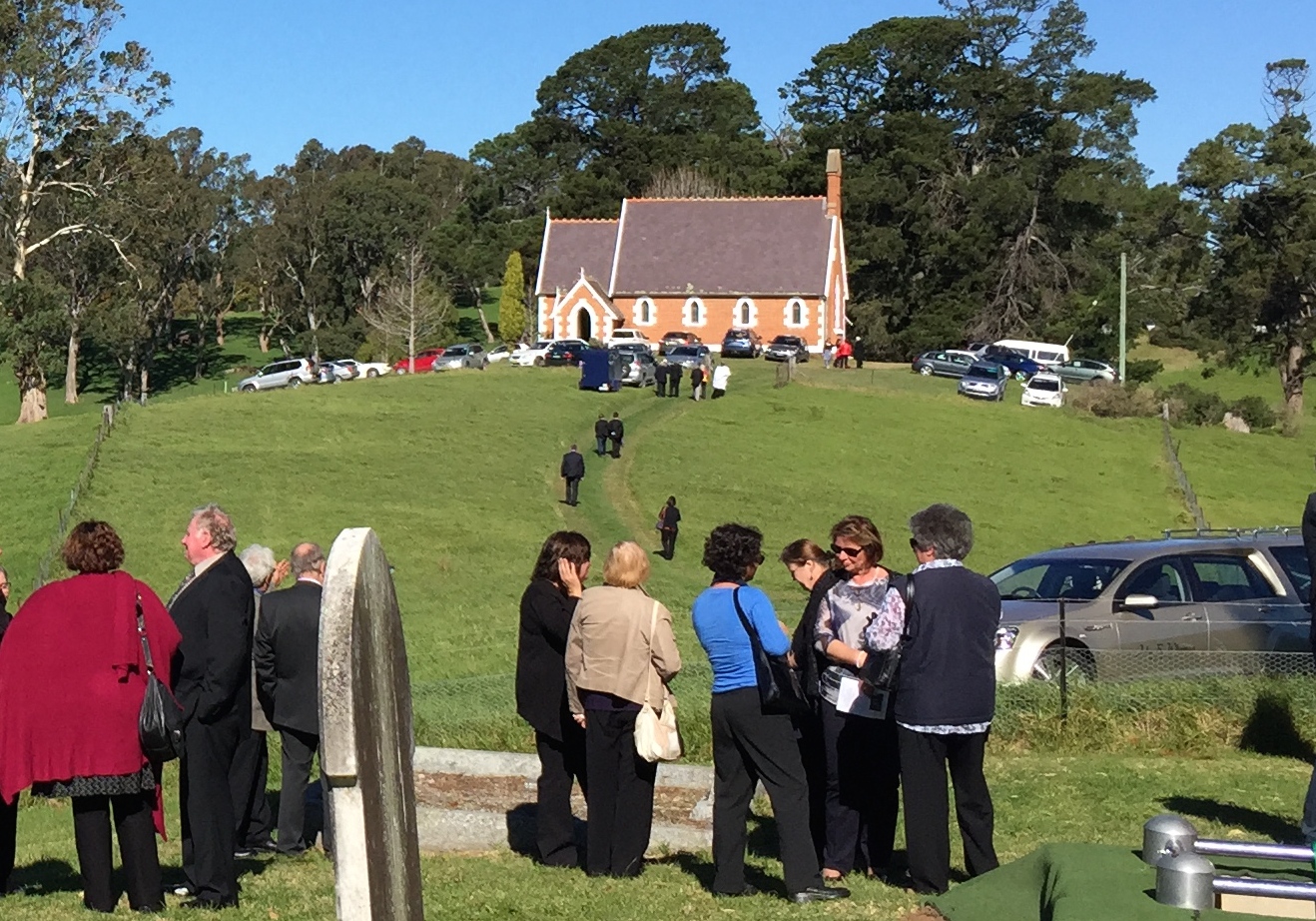
IMG_0545I’ve been to two funerals in the past eight days.

The first was a man I met through having cancer myself. We were both diagnosed with lung cancer in our forties. We were both concerned for our wives and children. And we both trusted in Jesus for a hope beyond the grave.

My friend’s funeral was a testimony to his faith in God and his hope in resurrection. While the funeral was distinctively Christian, I got the impression that many present did not share my friend’s convictions. I didn’t really know anyone there, having only briefly met his wife on one occasion, but my heart longed for people to know the truth that gave my friend hope that death was not the victor.

Yesterday I attended a family funeral. Fiona’s uncle had passed away after cancer had overrun his body. He left behind a loving wife and daughter, adoring grandchildren, extended family, and many friends. It was a privilege to share in his farewell. Fiona and I came away wishing that we had known him more closely. We heard tributes to a devoted husband and grandfather, a wonderful educator, a hard working farmer, a wise confidant, and much more. We were reminded that he placed his trust in Jesus until his final breaths and that he was confident of being united Jesus in the life ahead.

Ecclesiastes tells us that…

It is better to go to a house of mourning
    than to go to a house of feasting,
for death is the destiny of everyone;
    the living should take this to heart.  (7:2)

This is so true. Funerals focus us deeply on what matters really matter. Both these funerals were times of grieving and tears, but they were not without hope—real hope. They were coloured by the confidence that all is not lost, cancer has not won, death is not the end, and there is an awesome future for all who hope in Christ.

I came away from both funerals wanting everyone to take personally the news that each man went to their death with a strong hope beyond cure. This is far more than wishful thinking, more than a positive outlook to lift everyone’s spirits—it’s a confident hope based on the resurrection of Jesus.

ALK+ lung cancer drug now affordable

jayNo, I’m not applauding the government or the PBS. None of us understand why Australia has to lag so far behind much of the world in making advanced cancer treatments available to those who need them. Crizotinib still hasn’t made it onto the PBS despite the recommendation of the PBAC. Until recently needy patients were forced to find around $8000 per month or miss out. Some people have had to sell important assets or spend all their time fund raising just to stay alive.

But I do want to thank Pfizer Pharmaceuticals for making Crizotinib available to those who need it on a special access scheme. Quality health care should be available to all—not only those with very deep pockets. It’s time for the PBS to catch up.

Last week I had the privilege of catching up with Jay, a fellow ALK+ survivor living in Brisbane. Take a look at his video.

https://youtu.be/4cznFAzNdlI 

Terminally optimistic

What wonderful words…

terminally optimistic

So much better than terminally ill. This is how Linnea Duff describes herself. Linnea was diagnosed with lung cancer in 2005, they discovered her ALK mutation in 2008, and she has been on a succession of clinical trials and targeted therapies since then. This year marks 10 years of living with cancer. So encouraging!

Rejoicing in lament

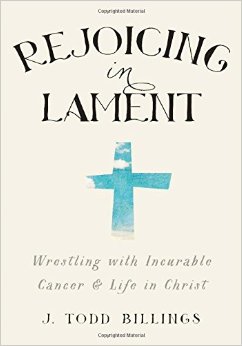
Todd Stern’s review of Rejoicing in Lament by J. Todd Billings. This review first appeared on The Gospel Coalition website on 18 March 2015.

rejoicingWhen Christians are confronted with significant tragedy, we are often reminded of Paul’s words to the church at Philippi: “Do not be anxious about anything. . . . [There is] a peace that passes all understanding. . . . I can do all things through Christ who strengthens me” (Phil. 4:6, 7, 13). While all this is wonderfully true, less often do we hear the line that immediately follows: “It was good of you to share in my troubles” (Phil. 4:14).

Dealing with our own troubles and sharing in those of others are among the most challenging aspects of the Christian life. It isn’t always easy to weep with those who weep (Rom. 12:15). Foolish and insensitive things get said by well-meaning folks. J. Todd Billings’s excellent new book, Rejoicing in Lament: Wrestling with Incurable Cancer and Life in Christ, will go a long way in equipping us to endure and to minister to one another in more theologically grounded and helpful ways.

How does Billings, professor of Reformed theology at Western Theological Seminary in Holland, Michigan, accomplish this task?

Writing from the Cauldron

If you’ve ever heard the harrowing words, “You have cancer,” you will quickly realize that Billings has “street cred.” He isn’t writing from a position of dispassionate analysis but rather from the cauldron, speaking openly and honestly of his experience of being diagnosed at age 39 with Myeloma, a rare and incurable cancer. Throughout Rejoicing in Lament he references his CarePages, an online journal for sharing with others the progression in his own thinking as he moves from the immediate upheaval surrounding the initial diagnosis to dealing with the “new normal.”

It is instructive how well reasoned even his early entries are. Even though Billings may have been surprised by the diagnosis, he was already well versed in truth, which enabled him to find solace and comfort in the only place it can truly be found—at the foot of the cross and in the pages of the Bible. Don’t wait for a crisis to read this book—strengthen your faith now, even in a peaceful season, by building these truths into your soul.

Praying the Psalms

Billings provides excellent instruction on praying the Psalms—particularly the psalms of lament—with all the honesty, struggle, and emotion of the Spirit-breathed writers themselves. He deals with these in detail throughout the book, teaching us how to fight our fears with faith and the language of Scripture. This discipline frees us to be honest and calls us to reflect on God’s wonderful promises, even when we can’t fully understand all that’s happening to us.

Billings helpfully explains that, as with Job, God does not owe us an explanation for why he allows severe trials. There is mystery here, yet we can rely on the truth that only he fully understands our suffering. We waste precious energy when we seek answers that only reside in the secret places of the Most High (Deut. 29:29).

Helping the Church

Billings also offers practical instruction for the church in chapters 6 and 7, “Death in the Story of God and in the Church” and “Praying for Healing and Praying for the Kingdom.” These chapters are particularly accessible and illuminating. The church is the place to run to rather than avoid when experiencing suffering. Sometimes we want to “grieve in private” or don’t want others to “see our pain,” but that can be profoundly counterproductive.

I hadn’t considered Billings’s point that the church is the one place where we celebrate birth, baptism, marriage, and death—a point that reinforced to me the importance of faithful perseverance in the church from cradle to grave.

Two Small Cautions

Lay readers (like me) should know in advance that Billings is an accomplished theologian and academician. As a result, some of the book’s language may be less accessible to the typical person wrestling with a trial of this magnitude. I’d counsel readers to stick with it, however, because there’s much gold to be mined in these pages.

A challenge in writing a book so tightly interwoven with the author’s experience is that he can share what he experienced and how he handled it, yet the reader’s experience may differ. While there may be certain commonalities in all Christian suffering, changing just one variable in a trial can make a world of difference experientially. Therefore, there cannot be a “one size fits all” approach. Questions that surface for some won’t rise for others. New and different questions may demand fresh and distinct responses.

I, too, have been diagnosed with incurable cancer. Even as I write this review, my chemo regimen is changing after 34 rounds because the tumors are continuing to grow. Additionally, today is the six-month anniversary of my wife’s death from her incurable cancer. I don’t have exactly the same struggles or questions as Billings: the “why” question hasn’t bothered me as deeply; I haven’t really experienced anger at God; and I find peace in the certain knowledge that he’s promised to “never leave us or forsake us” (Deut. 31:6, 8; Heb. 13:5). Billings implies at times that this sort of response is dangerously close to blind stoicism—but it might just be how God has prepared me to endure this trial. We all experience and respond to affliction in slightly different ways, and that’s okay.

Caught Up into His Story

All Christians can agree with Billings when he writes:

Even when we feel left in the dark, even when suffering and death seem senseless, we are empowered by the Spirit to groan, lament, and yet rejoice. God’s promise is trustworthy, and this same Spirit has united us to Christ, through whom we are able to call out to the Father as adopted children. We rejoice, we lament. In all of this, our own stories are not preserved in a pristine way; we are displaced (“I am not my own”) and incorporated into a much larger story—God’s story in Christ. (p170)

That message of truth needs to be heard loud and clear throughout the church, and Billings brings it home in a brilliant and powerful way. Whether you are walking with someone who is suffering, you are suffering yourself, or you want to be prepared to suffer, Billings can lead and guide you to do so in a God-honoring way.

Our 31st anniversary present

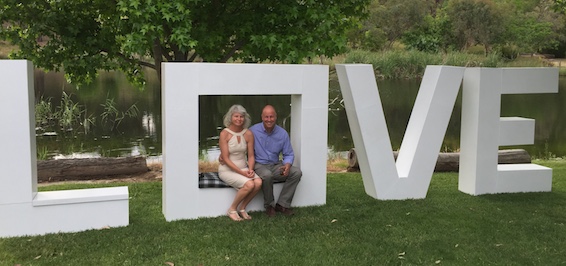
loveWe received a wonderful wedding anniversary present this morning—yesterday’s CT scan showed that I’m still NED! There is no evidence of cancer in my body. I don’t know why things have been going so well for me, especially when cancer destroys the lives of so many, but I’m very thankful to God. It is now over 18 months that I’ve been NED.

Do I have to continue with the chemo? Yes. Can I take a break? Yes. My oncologist was happy with the idea of me skipping two treatments over the summer. That could mean I get eight weeks in a row without the awful side effects of chemo. Awesome 🙂 We’ll need to make a decision about exactly what to do, but I’m looking forward to a bit of a break.

It’s fair to say that I have a bit of a spring in my step today. I am so appreciative to God for his loving kindness.

Marking a milestone

threeToday marks a significant milestone for me. Three years ago I was admitted to hospital with cancer and, within days, a year seemed like an eternity. Now three years, two operations, 50 cycles of chemotherapy, God’s kindness, and a lot of love from a lot of people, and I’m still here—thank God!

And thank you! For your prayers, your visits, your emails, your phone calls, your messages, your meals, your financial help, our walks, the words with friends, the motorbikes, the holidays, your feedback, your encouragement, your wisdom, your nursing, your doctoring, your acupuncture, your physio, the rugby, the camping, the fishing, the reading, the playing…

I thank God for my life! And I thank him for the solid hope of life to come!

The value of a life

I’ve written recently about our desire to see Crizotnib on the Pharmaceutical Benefits Scheme (PBS) in Australia as soon as possible. This decision must be made by the Pharmaceutical Benefits Advisory Committee (PBAC) who meet three times each year, in March, July, and November.

The PBAC is an independent expert body appointed by the Australian Government. Members include doctors, health professionals, health economists and consumer representatives. Its primary role is to recommend new medicines for listing on the PBS. No new medicine can be listed unless the committee makes a positive recommendation. When recommending a medicine for listing, the PBAC takes into account the medical conditions for which the medicine was registered for use in Australia, its clinical effectiveness, safety and cost-effectiveness (‘value for money’) compared with other treatments.

There are real difficulties knowing how to measure cost-effectiveness. The temptation is that a an expensive drug that helps a small number of patients, which is not guaranteed to be curative, will quickly be considered non-cost effective. However, when you factor in that the person or the government might be spending similar sums on other treatment; that the targeted therapy may have better medical outcomes; that it may introduce a much improved quality of life; that it may enable the patient to return to work and not experience the financial and personal costs of joblessness; and more… the equation is not simple.

And another important factor, and I do not know if this is considered by the PBAC or not—if a drug enables the person to live an extra six months, or six years, or whatever, with their family, friends, and community, isn’t this worth something. I know it is to me, and my wife, and my children, and my grandchild, and my friends, and my church, and a bunch of others.

I’ve recently met up with people from Rare Cancers Australia. They are doing a great work of helping to support people who cannot afford the treatments they need. This month they have launched a campaign called Sick or Treat. Please take a look and see if you might be able to help.

anitaPlease also watch this clip from the Today Show. Anita has the same cancer and mutation as me, and it is excellent that this is getting publicity. If you feel like lobbying the PBAC, please do. If you pray, please ask God that they will approve this drug and many others like it.

Please put Crizotnib on the PBS. Please!

This an edited version of a letter my wife, Fiona, sent to support an application to the Therapeutic Goods Association (TGA) to ask them to please put Crizotnib (Xalkori) on the Pharmaceutical Benefits Scheme (PBS). This drug has proven results and yet is virtually unaffordable to all, at $7400 per month.

I understand you are collecting letters of support for Crizotinib being accepted on PBS. I’m not sure if TGA read submissions from individuals, but here goes…

This is not a scientific submission, but more a letter from one family suffering through a family member having ALK+ lung cancer. Whilst the TGA doesn’t court letters of submission from patients, this is an attempt to explain how TGA decisions affect individual families.

My perfectly well husband presented with a pleural effusion in Dec 11, being diagnosed with ALK+ lung cancer. He missed getting on the Crizotinib trial, because by the time we got the result, he had already received his first cycle of carboplatinum, alimta, and avastin, thus making him ineligible for the trial.
I chose this combination over what was being offered by the PBS (and our oncologist) at the time—Carbo/Docetaxel—because international research seemed to suggest it was more effective and had less severe side effects for general lung cancers.

My understanding when I spoke to the TGA a couple of years ago, was that the testing for ALK had to be passed by MSAC, with Crizotinib going before PBAC at the same time, before the TGA could consider putting Crizotinib on the PBS. My understanding is that both MSAC and PBAC have again deferred decisions as of Nov 2013. At that point they were struggling to understand who to allow ALK testing for.

As a carer for her non-smoking 49 year old Aussie husband it was pretty obvious to me, especially when he came back EGFR negative, that we should ask for and pay for the ALK test.

Looking through the ‘ALK+ roll call’ discussions on http://www.inspire.com it’s still obvious to me who should get tested for ALK. They are all younger non-smokers, who present late with stage 4 metastatic symptoms, because the original is on the periphery, not in the bronchi like standard smoking cancers. There are also histological features which are more suggestive of ALK—signet ring or acinar histology.

Our pathologist noted these on David’s histology, alerting the thoracic surgeon that this was unusual for standard lung cancer, and that maybe there was something else going on.

Surely it’s not too hard to offer ALK testing as a priority to patients in this category.

I’ve also heard that there’s new testing becoming available, which will be much cheaper, quicker, and give more of an idea as to whom to send for the more expensive testing. Hopefully, this will be commonplace soon.

In 2014, about 11550 Australians are expected to be diagnosed with lung cancer. Approximately 15-20%, or roughly 2000 people, will be non-smokers with a genetic mutation. Of these approximately 3-4 %, or 35 people, will be ALK+.

The Inspire roll call only found about 10, but obviously not everyone reads or visits http://www.inspire.com, and nor is everyone connected via a clinical trial.

We do not know of any other ALK+ patients in Canberra, but then oncologists don’t share patient information. There hasn’t been anyone else with this mutation coming to the lung cancer support group at Canberra Hospital.

But then again, how many are being tested, or not tested because of financial reasons?

I’ve just referred a younger,  unusual, possible lung cancer patient to Canberra Hospital in this last week, and I’ll be willing to find money for him through my workplace or the Eden-Monaro Cancer Support Group, if need be, because he couldn’t necessarily afford the money for testing.

As stated earlier, my understanding was that PBS approval for Crizotnib was again deferred in Nov 2013. This seemed more due to semantics than actual proof that Crizotinib did or didn’t work, or the cost-benefits of approval.

Even for intelligent people in the medical profession, it is difficult to read and understand the documents deferring approval. To read that PFS has shown ‘statistical improvement’ is hugely exciting. But to read ‘that OS hasn’t been demonstrated’—how does one prove that, except by time and death?

As a carer it’s also hard to read the statistics of overall survival and progression free survival without taking it personally. These statistics are talking about the future of my husband. He can’t read them without being overwhelmed, even though he’s been outside the statistics thus far.

It shouldn’t be up  to the patients and carers to have to trawl through these statistics to prove to the government that life is worth living, that some good quality of life is better than life cut short for lack of funding for medication that works, even if just for a limited time.

My husband has responded miraculously to an Alimta/Avastin combo for over 40 cycles, being NED for nearly a year and a half now. These treatments have cost us very large sums of money. Avastin isn’t on the standard guidelines treatment plan and the study on the benefits of adding Avastin to Alimta has not yet been released. Given that this combination has worked for my husband, he continues to endure the physical impact and financial costs until there is definitive proof that it doesn’t help.

But, we still need Crizotinib to be placed on the PBS list. Please consider the following…

1. The demand of  3 weekly cycles is hard. It’s hard for my husband to psyche himself to go to the hospital every 3 weeks to pump poison into his veins, knowing that its going to make him sick for the next week, often spending 3 or 4 days in bed. Not that the following 2 weeks till the next cycle are easy, with fatigue, headache, GIT upset, mouth/tongue ulceration, pain, acne, skin rash, itch, and more.

From early on he’s had to add in Cymbalta for peripheral neuropathy, increasing amounts of antihypertensive, pain relief, antinauseants, dexamethasone, folic acid, Vitamin B12 injections, etc.

Do they consider the cost effectiveness of paying for medications to deal with the side effects of ‘standard chemo treatment’? There is also the cost of the private chemo ward every 3 weeks.
Because Alimta or Avastin weren’t on PBS when he started, all treatment had to be done through a private hospital.

How much simpler it would be—physically, mentally, emotionally, financially—if my husband had been able to simply take a Crizotnib tablet twice a day.

2. Unfortunately chemo brain is a real phenomenon too (as is carer’s brain). His memory isn’t as good as it was, and nor is mine. The 3 weekly cycles take a toll on all our family, including the kids.

3. Furthermore, no one can tell us how long one can continue on maintenance therapy. When my husband was diagnosed, it was still being debated as to whether patients shoud go on maintenance therapy, whether it added anything. Fortunately that debate has been won and put to rest.

There are some in the USA, in the Inspire network, who’ve been on maintenance for longer than my husband (I think about 5-6 years is the longest). But how long can one continue to use non-targetted therapy, continually killing ordinary, healthy cells every 3 weeks, without doing some permanent harm, perhaps even causing further cancer. There is no answer to that question yet.

4. He’s worked part time since mid 2012, returning to full time work this year. He’s continued to pay taxes since his diagnosis, using sick leave and long service leave until returning to work, paying his taxes at the same rate as prediagnosis.

I’ve had to work more, to pay for the chemo, so now I pay even more tax. We have never applied for Centrelink help, or been able to because of our income. I understand that even the Centrelink payments are being tightened up, it has to be proven that you’ll die within 2 years, when all you really want to do is prove them wrong and keep living. Having not asked the government for help with living, are we also to be denied the cost of medication by the same government as we continue both to live and pay for medication, and pay taxes?

Has the cost benefit analysis been done on how I and my 4 children would have coped with me as a widow and them fatherless?

I’ve been willing to pay the cost of initial chemo and maintenance chemo, as opposed to what the PBS would have given us for free, because I think the cost benefit analysis of having a husband who’s alive has been worth it. But not everyone is as fortunate financially or with such generous friends or workplaces, who’ve supported us through the financial impact.

5. We’ve always been told he could go to Crizotinib once the Alimta/Avastin failed. It’s always been his next step. But it’s extraordinarily expensive, at $7400 month, now it’s off the special access scheme. Suddenly our next step is unsure.

6. Access to trials isn’t a certainty, as we’ve already experienced.
Nor is it without cost, as ALK+ Australian patients have moved cities to be able to access the trials in the few major centres that are offering them. Had we gained access to the initial phase 3 Crizotinib trial, we would have had to travel to either Melbourne or Sydney.

7. Highly regarded world class experts in the field of ALK+ Adenocarcinoma, including an Australian, recommend first line Crizotinib. The latest “Up to Date”, does so: http://www.uptodate.com/contents/anaplastic-lymphoma-kinase-alk-fusion-oncogene-positive-non-small-cell-lung-cancer
How can doctors follow recommended international guidelines, if the Australian PBS is still years behind?

It’s quite distressing to me to have to be writing this submission in support of Crizotinib, when I wrote a very similar submission (a begging letter really) almost two years ago. Nothing has changed in Australia, in those years. Except more friends, colleagues, patients have died of lung cancer.

Lung cancer continues to be one of Australia’s biggest killer. Crizotinib has been approved as first or second line therapy in so many countries throughout the world. It is normal in other countries, but for some reason we continue to drag the chain on best-practice care.

In the USA the FDA has now approved the second generation targetted therapies for ALK+ patients, both as initial and as second line treatments. We haven’t even got the first generation treatment approved as yet.

It is so frustrating that Australia is lagging so far behind. Bureaucracy seems to be holding us back unnecessarily. The irony is that Australians have been been benefitting from Crizotinib, at least since the phase 3 trial initiated in 2011.
Pfizer have been generously supplying both patients on the trials, and allowing patients to access the medication via the special access scheme until 30/6/14, when such access ceased.

Since that date, there have been at least two patients who’ve signed up to the Inspire Australian roll call for ALK+ patients who are struggling to how they can possibly afford $7, 400 per month. We should not be a country that only provides quality health care to the wealthy.

It’s enough being confronted with advanced lung cancer at a young age, let alone being faced with an unaffordable financial bill.

How many more people are either not being tested or not being treated because of financially prohibitive costs?

We can’t blame the drug company for trying to recoup some of their costs, when the Australian government has benefitted from their provision of the drug via trials and a special access scheme for two and a half years.

With the new trials investigating LDK378 initiation in both Crizotinib resistant and naïve patients in Australia, isn’t it time that Crizotinib is given government recognition for it’s important place in the treatment pathways?

Chemotherapy isn’t a one size fits all. As proven, Alimta/Avastin chemo has been a God-given, proven-thus-far combination for my husband. But it hasn’t worked for others.

Crizotinib has worked amazingly for some, but some have had resistance develop fairly quickly. The second generation targeted drugs will no doubt have similar success and failure stories. But that doesn’t mean people should be denied access to them if they can’t afford to obtain them privately.

What is obvious was that the older, cheaper drugs like Docetaxel were failures in PFS, OS, quality of life and every parameter you can think to measure them by, but they’re still held up as the ‘gold standard’ of treatment, by which to compare newer medications which aren’t designed to act it the same way, so shouldn’t be compared. This is ludicrous.

I hope this helps the application for Crizotnib to be place on the PBS.

Yours sincerely

Dr Fiona McDonald  (MB BS)

My cancer, my future, my request…

xalkoriI love what this man and these people are doing. He has my cancer, my mutation, and my needs for affordable treatments. Many need this drug more than me, and have no possible means to afford it. We need the Pharmaceutical Benefits Scheme to support people who would benefit so much by this drug Xalkori (Crizotnib) targeted therapy. Currently it costs around $90,000 per year. Please click on the image above to watch, and then share this hope-filled video with others.

Serious hope for Adam

hope-beyond-cure

A review of Hope Beyond Cure by Adam Scott, first posted by Dave Miers

“It’s actually very serious.”

That was the last thing I wanted to hear from the doctors treating me.

An MRI had apparently revealed a large arterial tear in my neck and the consensus was that I’d probably had a stroke.  It all started feeling very serious.  I was 28 years old, laying in a hospital bed, surrounded by pensioners who were apparently healthier than I was – go figure!

It was the first time in my life that someone spoke candidly and clinically with me about the reality of dying and it was terrifying. I’d always expected dying to be a future, far-off, unfortunate but inevitable reality, but someone with more authority on the subject was telling me that perhaps my presumptions were wrong.

That’s probably why I’ve appreciated reading Hope Beyond Cure by David McDonald as much as I have. It’s a book written by a pastor who was humble enough to admit that facing death can be terrifying and perhaps our presumptions are wrong.

The opening chapters recount the events leading up to his cancer diagnosis and the emotional turmoil that followed. He talks openly about how the insidious nature of his illness filled him with fear, doubt and hopelessness. It’s a gutting and incredibly humble way to start a book about hope: in the context of a terminal illness.

Given how raw and real the book begins, you’re left with the impression that the kind of hope it’s going to dish up is going to have to be robust enough to withstand a daunting prognosis and remain relevant in the face of death. That’s not an easy task given that hope has become synonymous with wishful thinking in our culture.

For example, Ben Folds sings a song called Picture Window that talks about hope that’s cruel and inappropriate in the context of a terminal illness. He sings:

“you know what hope is,
hope is a bastard,
hope is a liar, a cheat and tease,
hope comes near you, kick it’s backside,
got no place in days like these”

Hope Beyond Cure engages with the kind of false hope that Ben Folds sings about and exposes a few of our favourite places to find it. Whether it’s in medicine, positive thinking or relationships, David gently points out that they all leave us exposed and each can be the very thing that Ben Folds describes: a liar, a cheat and a tease. They’re false hopes because none of them can promise to endure in the face of death.

Off the back of that David argues that we need something solid to anchor hope in. Because death is a serious business, we need a equally serious hope – not wishful thinking or clutching at straws. We need a serious hope that aims even higher than a cure for the illnesses that will ultimately take us, a hope that will flavour life and endure in the face of death. That’s the kind of hope that David ends up introducing when he talks about Jesus.

Hope in Jesus isn’t cruelly inappropriate wishful thinking. It’s all the things false hope isn’t: true, trustworthy and reliable. It doesn’t become inappropriate or irrelevant when we’re facing death, and because of that, hope in Jesus is worth having.

Towards the end of the book David writes this:

“I have no idea how many days, weeks or months I have before me – few of us do. Our times are in God’s hands and he alone knows when they will come to an end. But we don’t need to fear that day. In the resurrection of Jesus, God has taken away the sting of death. As Paul reminds us:

“When the perishable has been clothed with the imperishable, and the mortal with immortality, then the saying that is written will come true:
“Death has been swallowed up in victory.
Where, O death, is your victory?
Where, O death, is your sting?”

In the years that followed my injury, I’ve had countless scans. Apparently, there’s no longer any evidence of that terrifying time. I’m really glad about that, but the truth is one day something else is going to break and the wheels will fall off. That’s why I’m so thankful that real, authentic, robust hope is what I have – it’s what we need to endure in the face of death and to flavour life in the here and now.

Hope Beyond Cure says that hope is found in Jesus and I couldn’t agree more.

What happens when I die?

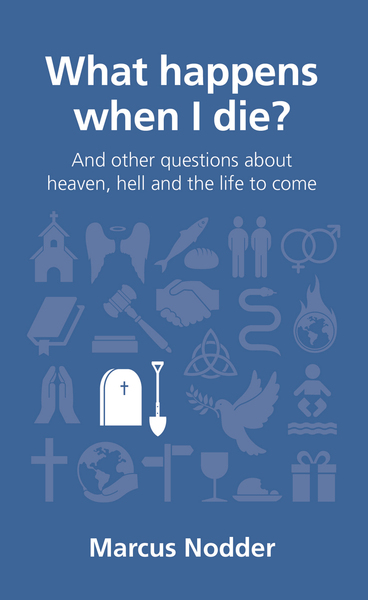
dieWhat happens when I die? And other questions about heaven, hell and the life to come by Marcus Nodder is another little book in the Questions Christians Ask series by the Good Book Company. Firstly, let me commend Nodder for being willing to share his life with the reader. This is not an academic book, written in ignorance of the pain of death. It’s a book that integrates the promises of God with the experience of death. He begins by reflecting on the death of his dad, and I immediately warmed to the author as one who would empathise with people’s experiences. I am convinced that this should be a vital component of any book that deals with sensitive and painful matters of life and suffering.

Nodder identifies the reality that death is not part of popular conversation and in the developed world we’ve become very adept at avoiding the issue altogether. Yet death intrudes on each of us, and the reality of death confronts us with some uncomfortable truths. I could identify with these words:

If you’ve been diagnosed with a terminal illness, you will need no convincing of this, but for the rest of us Sigmund Freud was onto something when he once wrote: “No-one really believes in his own death”. (p6)

This book takes us to Jesus who knows what lies beyond the grave and, not only that, provides the solution to the problem of death. Jesus broke the power that death holds over people, so that in turning to him and trusting him, we can look forward to life with God beyond death.

The basis for our hope for life beyond death lies in the evidence for the resurrection of Jesus from the dead. The empty tomb; the appearances to various people at various times; the eye-witness testimonies; the circumstantial (even embarrassing ) evidence for the resurrection recorded in the New Testament; the transformation of his followers, many of whom would give their lives rather than change their testimonies; all points to good reasons for trusting God on this matter.

If anyone at any time after the resurrection of Christ had been able to produce Jesus’ body —his corpse—Christianity would have sunk without a trace and that would have been the end of it. But there was no corpse because the body had been raised to life. The empty tomb is a powerful piece of evidence. You can go to the Red Square in Moscow and see Lenin’s embalmed body on public display. Followers of Bruce Lee go to visit his grace in Seattle’s Lake View Cemetery, where the remains of his super-fit body are interred. Followers of Mohammed go on a pilgrimage to the Mosque of the Prophet in Medina, where the the prophet is buried. But followers of Jesus Christ going to the Garden Tomb in Jerusalem find just an empty grace. (p39-40)

Many important practical and pastoral concerns are addressed in this book’s 94 pages. The author addresses such matters as What will happen to my body?; What will it be like to die?; How do we cope with bereavement?; and What will life be like in eternity? There are also brief answers to questions relating to prayers for the dead, ghosts, cremation versus burial, soul sleep, rewards in heaven, recognising loved ones, what is a soul or spirit, and even whether our pets will join us in the new creation! There is much to consider in this book, and each matter is addressed with appropriate sensitivity.

Nodder writes also of his grandmother dying of cancer. She was in her seventies and ready to go home to be with her Lord. However, she was bothered by well-meaning Christians who couldn’t accept the place of death. The reality is that one day we will all die. It may be tragic and sudden, or it may be slow and peaceful. There will be a day when our organs will cease to function, when there is no more healing to be found in this life. This is God’s will for each of us—for since the fall we are no longer equipped to live forever in this life, and God has something far greater in store for all who trust him. Sadly, there are some Christians doing much damage by their unwillingness to accept this.

Some people by their obsession with healing seem to me to rob Christian souls of their privilege and opportunity to glorify God in the way they die. Instead of a triumphant acceptance of death, as simply one more step in the purposes of God for them, we find instead an hysterical search for healing as if it were quite impossible that it should be God’s will for a Christian to die. Instead of courageous testimony, we find an attitude to death that resembles in many ways the conspiracy of silence and the double-think that we find in the world. It ought not to be so. (p59)

I notice ads on the TV for life insurance, funeral insurance, and leaving a will, a lot more often since I’ve been diagnosed with a terminal cancer. They’ve probably all ways been on TV and I haven’t noticed. Perhaps I just watch more TV now! The ads are correct in highlighting the need to make decisions about these matters while we can; but they almost suggest that once these choices are made, we can go back to just getting on with life. It’s not sufficient to consider our death—we need to make plans and preparations beyond death, and this means we need to go to the Bible.

The philosopher, Cicero, said that “to study philosophy is nothing but to prepare ourselves to die.” God says the only way to prepare ourselves is to put our trust in Jesus as our Rescuer and Ruler before we meet him as our Judge. (p61)

Chemo setback

chemoYesterday I went to hospital for my mid-fortieth chemotherapy treatment. It’s been a long time I’ve been doing this. You know I don’t look forward to it and yesterday was no different. Well, actually it was. I’ve been fighting tooth and jaw pains each day for the past week. It seems that hot and cold foods and chewing set off the pain—and the pain has been extreme. I’ve had to buy two boxes of paracetamol. If only all my drugs were only 4c a tablet instead of $120 a tablet!

I arrived at hospital feeling a little under the weather. Each time I have chemo they test my blood pressure, review blood tests for white cell count and other things, and test my urine for protein. Everything needs to be right for me to proceed. The truth is things are never totally ‘right’ but nothing so far has prevented me from having chemo—until yesterday.

My protein count was much too high, my blood pressure was up, and they were wondering about the tooth situation. So after ringing the oncologist, I was informed that I would be given the Alimta, but I could not have the Avastin. It seems my kidneys need a break from the Avastin, and they were concerned that my teeth scenario might not improve if I was on the drug.

It was a little strange not being able to have Avastin. I didn’t mind the whole experience being over in half the time. But it was another reminder that I’m a patient, that I’m being treated for cancer, that the drugs are extremely powerful with potentially harmful and irreversible side effects. I’m praying that the kidneys and protein in the urine situation will settle down, that there won’t be enduring damage to my kidneys, and that whatever treatment I am able to receive does its job of keeping the cancer at bay.