Is forgiveness really free?

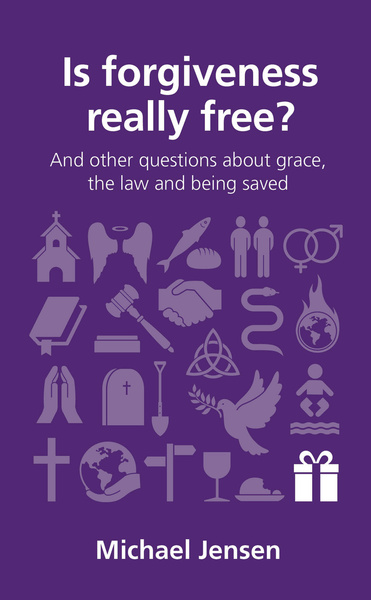
forgivenessIs forgiveness really free: And other questions about grace, the law and being saved by Michael Jensen is definitely worth a read. I must admit, however, that I came to the book with a different set of questions and expectations that all had to do with the intricacies of forgiveness—particularly our forgiveness of one another. Fundamentally, this is a book about God’s forgiveness of us. It’s about ‘grace’ and grace is something we all need to be reminded of all the time. Maybe ‘grace’ should have appeared in the title and ‘forgiveness’ dropped to the subtitle. Anyway, I don’t want to be a pedant.

Michael’s aim in writing this book is to help you plunge into a deeper and richer experience of God’s grace, so that it may make a huge difference in your life. (p7) I read this book at the same time as viewing the recent movie Freedom. This is a story about rescuing American slaves to freedom in Canada. There is also a back story throughout of John Newton and the writing of his powerful hymn Amazing Grace. Both the movie and the book warmed my heart.

Some of the book describes my transformation to becoming a believer. For years I was confused and lacked assurance of my standing before God. I needed to focus on the death of Jesus to so as to reject the following erroneous ideas:

God’s grace to us in Christ is not conditional on our performance in any way, or upon taking part in certain rituals, or on our having confessed in precise detail everything we can think of we have done wrong. Those false views of grace only lead to a life filled with guilt, uncertainty and a lack of assurance. (p15)

I loved Michael’s section on Jesus’ crazy economicsIt’s so helpful to be reminded that God’s economy is the economy not of the wage but of the gift. (p24) God gives to those who haven’t earned or deserved anything from him. It comes entirely from the generosity of his heart, not because of any debt or obligation to us for services rendered. But we are also carefully reminded that while the grace of God is free, it is not cheap. The cost is to the giver, not the receiver. It comes at great price—through the death of Jesus Christ for our sins.

Michael includes a pastoral word for those with a tender conscience who are scared that they, or others might fall away and separate themselves from God’s grace. He writes:

The confidence that Hebrews speaks about is not a confidence that we are saved because of some past decision or prayer of commitment; but rather a confidence in God, that also means a right fear of him.

Can grace be taken away? The right answer is not “yes” or “no”, but: God is faithful: cling onto him with all your might. (p46)

Is forgiveness really free? goes on to describe the relationship of the Old Testament law to grace and Christian living; to debunk the challenge that grace is simply a license to sin; to show how grace transforms our lives to make us more like Jesus; and to challenge to our pride that we should need such grace in the first place.

I found this book pointed me back to the important truths of grace from the Scriptures and reminded me that “but for the grace of God go I” goes far beyond a cliche. It’s the foundation of a life lived in the transforming power of God.

Chemo setback

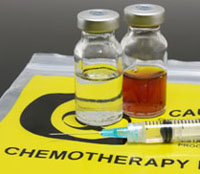
chemoYesterday I went to hospital for my mid-fortieth chemotherapy treatment. It’s been a long time I’ve been doing this. You know I don’t look forward to it and yesterday was no different. Well, actually it was. I’ve been fighting tooth and jaw pains each day for the past week. It seems that hot and cold foods and chewing set off the pain—and the pain has been extreme. I’ve had to buy two boxes of paracetamol. If only all my drugs were only 4c a tablet instead of $120 a tablet!

I arrived at hospital feeling a little under the weather. Each time I have chemo they test my blood pressure, review blood tests for white cell count and other things, and test my urine for protein. Everything needs to be right for me to proceed. The truth is things are never totally ‘right’ but nothing so far has prevented me from having chemo—until yesterday.

My protein count was much too high, my blood pressure was up, and they were wondering about the tooth situation. So after ringing the oncologist, I was informed that I would be given the Alimta, but I could not have the Avastin. It seems my kidneys need a break from the Avastin, and they were concerned that my teeth scenario might not improve if I was on the drug.

It was a little strange not being able to have Avastin. I didn’t mind the whole experience being over in half the time. But it was another reminder that I’m a patient, that I’m being treated for cancer, that the drugs are extremely powerful with potentially harmful and irreversible side effects. I’m praying that the kidneys and protein in the urine situation will settle down, that there won’t be enduring damage to my kidneys, and that whatever treatment I am able to receive does its job of keeping the cancer at bay.

Did the devil make me do it?

devilI’m on a roll with these little books. Yesterday, I hid from the rain and cold by reading another edition in front of a raging open fire in our lounge room. Nice! This time it was Mike McKinley’s Did the devil make me do it? And other questions about Satan, demons and evil spirits. I must admit it’s not my normal fireside reading. While I’ve read all the Harry Potter series, I don’t much care for horror thrillers or teenage vampire love stories. So why this book?

Quite simply, because it’s an issue where there’s so much speculation and confusion among Christians. While the Bible speaks unashamedly about these things, it seems that many people are more informed by movies and novels than the Scriptures when it come to the understanding powers of evil.

McKinley acknowledges the polarity of opinions about the devil that exist. C.S. Lewis wrote in his classic book, The Screwtape Letters:

There are two equal and opposite errors into which our race can fall about the devils. One is to disbelieve in their existence. The other is to believe, and to feel an excessive and unhealthy interest in them. (quoted on p7)

As a product of our scientific, naturalistic age, my tendency is toward the former. I’m the one who is likely to be taken in by the classic line from the movie, The Usual Suspects:

The greatest trick the devil ever pulled was convincing the world he didn’t exist.

I raise a few eyebrows when I start speaking with friends about God, Jesus, the Holy Spirit, miracles, resurrection, and the like. But if I start discussing angels, the devil, demons, evil spirits, and spiritual warfare, then people will know I’ve lost it. There are probably many Christians who feel the same.

However, I’ve also met the opposite—Christians who seem totally obsessed with everything to do with evil spirits and the like. They’re forever speaking against, strategising against, incantating against, at war against, some power of evil. Some look for skeletons in the closet of family trees—your great uncle was a mason so you have to be released from the masonic stronghold that oppresses you still. Some suggest that every negative factor in a person’s life has some close connection to demonic forces—the spirit of alcoholism, or addiction, or doubt, or fear.

Did the devil make me do it? is a breath of fresh air. It’s not cynical or dismissive, but neither is it speculative or superstitious. This book directs us to the Bible for our answers. It engages with the text of Scripture to remind us that there is a created being called the devil, and we must take him very seriously. Jesus did. It also encourages us to remember that he is only a created being, and we needn’t be overwhelmed by him. Jesus wasn’t.

The centre-piece of this book isn’t the devil, or the demons, or the havoc they seek to create. It is, in fact, JESUS.  Jesus entered into our world to overcome the power of the devil. He came to destroy the devil’s work, to disarm him, and to rescue people from his influence. Reading any of the gospels reveals how Jesus’ life and ministry was a confrontation with the devil. Examining his crucifixion and resurrection shows the power of his victory over God’s enemy. The way ahead for Christians is to focus on Jesus, not on the enemy of Jesus. It’s to listen to Jesus, not the lies, deceptions, or accusations of the devil.

One of the things I appreciated about this short book, is that the author gets us to reexamine what the Bible teaches on these topics. He quotes and discusses and applies the Word of God. The book itself is an example of how we should address any topic of concern—by examining what God has to say on the matter. Again, and especially for occasional readers, the brevity of this book is a bonus. Yet, it’s also a weakness. There are times when I would like to be pointed to the source of ideas in the book. There are other times where I’d like to be able to explore issues in greater depth than 80 pages will allow.

Perhaps, the publishers could consider adding a Further Reading section in each of these books to help people move from introductory to intermediate study on these topics. They could highlight books they believe to be reliable and helpful. Maybe, they could even consider an index of important Bible passages for further reading and study.

Can I really trust the Bible?

trust_bibleThis is the second book in the series on Questions Christians Ask that I’ve read during the past week. It’s a new series of books by the Good Book Company in the UK on a range of important topics for Christians and enquirers alike. I’m excited by these books because I think they will help non-readers become readers. We’re told that people are reading less and less in this media and internet age. The danger is that we’re therefore becoming more and more biblically and theologically illiterate. This series of books could be a stepping stone to changing this trend for followers of Jesus. So far I’ve found they’re compact, engaging, easy to read, and deal with real issues.

Barry Cooper’s book, Can I trust the Bible? And other questions about Scripture, truth and how God speaks is a good introduction to the topics of biblical authorship, authority, reliability, readability and more. The book is framed around three questions…

  1. Does the Bible claim to be God’s word?
  2. Does the Bible seem to be God’s word?
  3. Does the Bible prove to be God’s word?

The premise of the first question is that we need to firstly consider the Bible on its own terms. How does the Old Testament view itself? What perspective does the New Testament offer on the Old? How did Jesus treat the writings of the Old Testament? How did New Testament authors describe each other’s writings? Exploring these questions points to a consensus that the Bible—Old and New Testaments—claimed to be the word of God.

Cooper goes on to describe the connection between God and his word. The analogy is drawn between Jesus, the Word of God, being both human and divine, and the Bible being both human and divine in origin. God works through real people, in real life historical circumstances, with real personalities, writing in different literary genres, to communicate his message to us. The human element doesn’t rule out the divine, not does the divine eliminate the human. As it says in 2 Peter 1:20-21:

Above all, you must understand that no prophecy of Scripture came about by the prophet’s own interpretation of things. For prophecy never had its origin in the human will, but prophets, though human, spoke from God as they were carried along by the Holy Spirit.

One piece of evidence that confirms for me the reliability of the Bible as the word of God is the fact that it was written by multiple authors over many centuries, without collaboration, and yet maintains an incredibly coherent message. Cooper asks:

What if multiple authors had each written a single page of this little book you’re holding? What if each author wrote in different genres, in different centuries, in different countries, with no “master plan” for them to consult? What is the likelihood that it would make any sense at all? (p38)

Not only is the Bible coherent, but its central theme is consistent. Everything points to Jesus and all things find their fulfilment in him. These are things that the greatest human minds in concert, even with the aid of Doctor Who and time travel, couldn’t conceive.

Scattered throughout this book there are also short answers to a range of contemporary questions. These include:

  • Doesn’t the argument for biblical authority go round in circles?
  • Isn’t the Bible socially, culturally and sexually out of date? Isn’t it just a product of its time?
  • Hasn’t the Bible been used to justify terrible things?
  • Isn’t reported/oral information unreliable?
  • How can I trust the Bible when it has miracles in it?
  • Who’s to say the Qu’ran isn’t also the word of God?
  • If God really wants to speak to us through the Bible, why is some of it so hard to understand?

These are important questions—and there are more. Cooper is to be commended for raising these and addressing them. Bear in mind, this book is very brief. Thus, the answers to these questions are little more than introductions. They’re unlikely to satisfy the person who has stumbled heavily on one or other of these issues, but they do point to the fact that there are answers, and the honest enquirer can certainly look into these questions more deeply.

The final chapter of this book pushes us to be more than observers or students of the Bible. We’re encouraged to put what we read into practice, or to taste the Scriptures. Reading the Bible was never intended to be a merely academic endeavour. God gives his word for our nourishment. The proof of the pudding is in the eating.

The decrees of the Lord are firm,
    and all of them are righteous.

They are more precious than gold,
    than much pure gold;
they are sweeter than honey,
    than honey from the honeycomb.
(Psalm 19:9-10)

Why did Jesus have to die?

why _jesus_dieOf all the questions that have ever been asked in the history of this universe, this must be one of the most important: Why did Jesus have to die? The little book of this name by Marcus Nodder gets to the very core of what matters matter most.

Other than the golden arches, the cross must be one of the world’s most recognisable and identifiable logos. It goes with church, and Christians, and God, and all that stuff. We know that. But why do Christians focus on the cross—a symbol of torture and capital punishment? It’s the belief that the death of Jesus Christ, by crucifixion, is indispensable and central to Christianity. It is the very means by which we can have a relationship with God at all. It provides the shape and direction for a life lived trusting and serving God.

The aim of Nodder’s book about the death of Jesus is that…

we would understand the cross more deeply, and treasure it more dearly. And that, as a result, we would live increasingly cross-centred and cross-shaped lives, and love and worship more the one who did not spare his own Son but gave him up for us all. (p8)

There are many profoundly important books that have been written on the death of Jesus over the centuries. In recent times books such as Leon Morris’s The Apostolic Preaching of the Cross or John Stott’s classic The Cross stand out. Serious followers of Jesus would do well to engage with these books. But if you’ve never opened a book that discusses the importance of the atoning death of Jesus, then Why did Jesus have to die? is an excellent place to begin.

Rather surprisingly, this book about Jesus begins in the Old rather than the New Testament. We’re invited to explore Isaiah’s wonderful vision of the Most Holy God. It is no simple thing for corrupt human beings to have a relationship with a pure and almighty God. We need to be cleansed for this to be possible. The following chapter invites us to ponder the promises of God to make people right with him—promises given hundreds of years before Jesus, through the prophet Isaiah. This was God’s plan all along to welcome people into his presence through the sacrificial death of his Son.

There is so much more to Jesus’ crucifixion than what we see on the surface. This wasn’t simply one tragic death among many. Jesus willingly gave his life as a substitute for us. He takes the punishment of God for our sins, experiences the full horror of spiritual suffering, so that we might be spared. The ideas of justification, redemption, grace, reconciliation, adoption, and justice are all shown to be more than abstract theological notions. They lie at the heart of the privilege of knowing God and being known by him. And none of this is possible without the death of Jesus.

The book closes with a chapter on how the cross gives our life direction. We don’t simply begin with the death of Jesus and then move on to other things. The Bible reminds us to keep our eyes on the cross always. We’re called to live a sacrificial life following Jesus—to give up our lives for his sake, that we might gain life eternal.

One of the things I especially appreciated about this book is the clarity and simplicity of illustrations helping us to grasp the significance of Jesus’ death. Nodder uses stories, images, and ideas to help us understand the importance of the cross. For some, like myself, who’ve heard about the death of Jesus again and again, this book will offer you a fresh insight into the absolute heart of God’s love. It’s only 92 pages long—so do yourself a favour, pick it up and read it.


My drug habits

chemoI’ve had some good news these past couple of weeks. Yesterday, I had my 3 months CT scan and nothing had changed. That means I’ve been NED now for 14 months! Perhaps I’ve even begun to take this result for granted, as I forgot to let our kids know straight away. We are very thankful to God for this news and praying that things will stay this way. I’ve now been NED for longer than they expected me to live.

I remain on the chemo-cocktail of Alimta and Avastin every three weeks. These drugs have dealt with the cancer, and could be continuing to keep it from reemerging. I met with a new oncologist registrar today who expressed considerable surprise at the duration that I’ve been on chemo. He indicated that many people simply found it too hard and gave up, preferring to take their chances with the cancer rather than submit to further poison. He wasn’t aware of many patients who’ve had more than a dozen cycles of maintenance chemo. By God’s grace I’ve been able to cope with two and a half years of continuous chemo.

I’ve mentioned various times on this site that I have a mutation called ALK+ that is found in about 3% of the people with my type of lung cancer. There are now two generations of targeted therapies available to treat this mutation-driven cancer. These are typically taken as two tablets a day, every day, and have far less side effects. I haven’t started on any of these drugs as yet, because the chemo has been effective. The theory is that if something is working, then don’t change it. Targeted therapies remain genuine options for the future if the cancer rears it’s ugly head again. Over the past year one of these drugs, called Crizotnib, was being offered to ALK+ patients on a benevolent scheme for $100 a month or $1.67 a tablet. Sadly, this scheme was stopped on 1/7/14 and the cost of the drugs is now $7400 a month or $123 a tablet. Yep, that’s right! $88,800 per year, and if it keeps you alive for five years then you will have parted with $444,000. It will cost over $1million to live for 12 years.

Please pray that this will change. How many people are going to be able to afford that? How many will even earn that much?

Anyway—I have good news. My oncologist discovered that this was about to happen and so he quickly signed me up for the scheme. It remains in place for all who were registered on the scheme prior to 1 July, but unavailable to join after this time! So I now qualify for the $100 a month offer. Thank you God and thank you Mr Oncologist. $100 a month is an excellent insurance policy–even on top of the high costs of chemo–to save having to pay the astronomical amounts they’ve started charging.

If you are a praying person, then I’d covet your continued prayers. Please pray for my continued good health. Please also pray for patience and less anxiety for myself and those around me, because it is hard persisting with the treatment. And please pray that the government will provide subsidies for these brilliant new drugs so that they can be afforded by those who most need them.

Thanks for your support,

Dave

Q & A about Hope Beyond Cure

Screen Shot 2014-06-21 at 5.09.42 pm
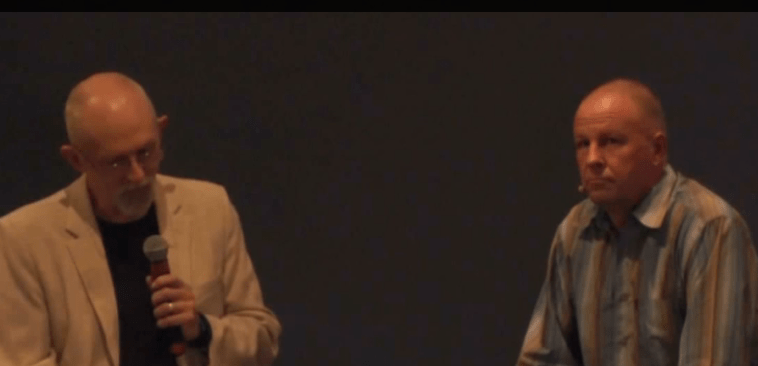
Dave is interviewed by his friend Phil Campbell at Mitchelton Presbyterian Church’s annual Food For Thought Dinner on 15 May 2014. Dave shares his journey with cancer and his struggle to rediscover solid hope in the face of a terminal cancer diagnosis. Click on the image above to watch this 64 minute video.

Hiep and the hope of heaven

sunriseThis afternoon my friend, Hiep, went to be with his Lord. We sadly farewell him and will miss him. Some of you will know Hiep as the friendly face who greeted you at the door of FOCUS at UC or Crossroads at ANU on a Sunday night. He loved the opportunity to welcome people and shake their hands. Only last Thursday, as Fiona and I sat talking with Hiep, he asked that I pray for God to heal him so he could return to welcoming people into the gatherings at Uni.

Hiep and I shared a very personal journey over the past year or so. We both had lung cancer. We were both non-smokers. We both feared the impact of our disease. Fiona pushed for genetic testing for me and she was able to do the same for Hiep. This led to treatment options that gave him more time with his family and friends.

As we’d meet, on a semi-regular basis, we sought to encourage each other with the hope of eternity. He would spur me on to trust in God, even in the midst of pain and suffering. Hiep was not one to seek distractions or to live in denial. Often he would ask me to turn the television off, and just read a verse or two from the Bible, and pray for him.

Last week I planned to read a few verses from 1 Peter 1:3-9. I’d left my Bible at home, and for some reason my phone Bible got stuck on a paraphrase called The Message, so I read him these words. How apt they were…

What a God we have! And how fortunate we are to have him, this Father of our Master Jesus! Because Jesus was raised from the dead, we’ve been given a brand-new life and have everything to live for, including a future in heaven—and the future starts now! God is keeping careful watch over us and the future. The Day is coming when you’ll have it all—life healed and whole.

I know how great this makes you feel, even though you have to put up with every kind of aggravation in the meantime. Pure gold put in the fire comes out of it proved pure; genuine faith put through this suffering comes out proved genuine. When Jesus wraps this all up, it’s your faith, not your gold, that God will have on display as evidence of his victory.

You never saw him, yet you love him. You still don’t see him, yet you trust him—with laughter and singing. Because you kept on believing, you’ll get what you’re looking forward to: total salvation.

Hiep shared with me some time back his confident hope beyond cure. He asked if he could contribute his testimony to a future edition of the book! He said, “This is true—this is my hope.” Hiep now has what he has been looking forward to—the realisation of his hope. I can almost picture him extending his hand of greeting, smiling, and offering a heartfelt welcome to people as they enter into the presence of God. 

Worth celebrating

IMG_2218Today marks exactly two and a half years since I was admitted to hospital with lung cancer. It’s normal in cancer circles to speak about 5 year survival rates. With stage 4 lung cancer the 5 year survival is very low indeed. Well, here I am, doing well, 40 something chemo cycles later, generally pretty healthy, back into regular ministry, enjoying my grandson, time with my family… plenty to thank God for!

Saturday marked another anniversary—my first birthday as NED! On May 31 2013, the CT scan report declared me to be NED (no evidence of disease). Recent scans confirmed that I am still NED a year later. Thank you God!

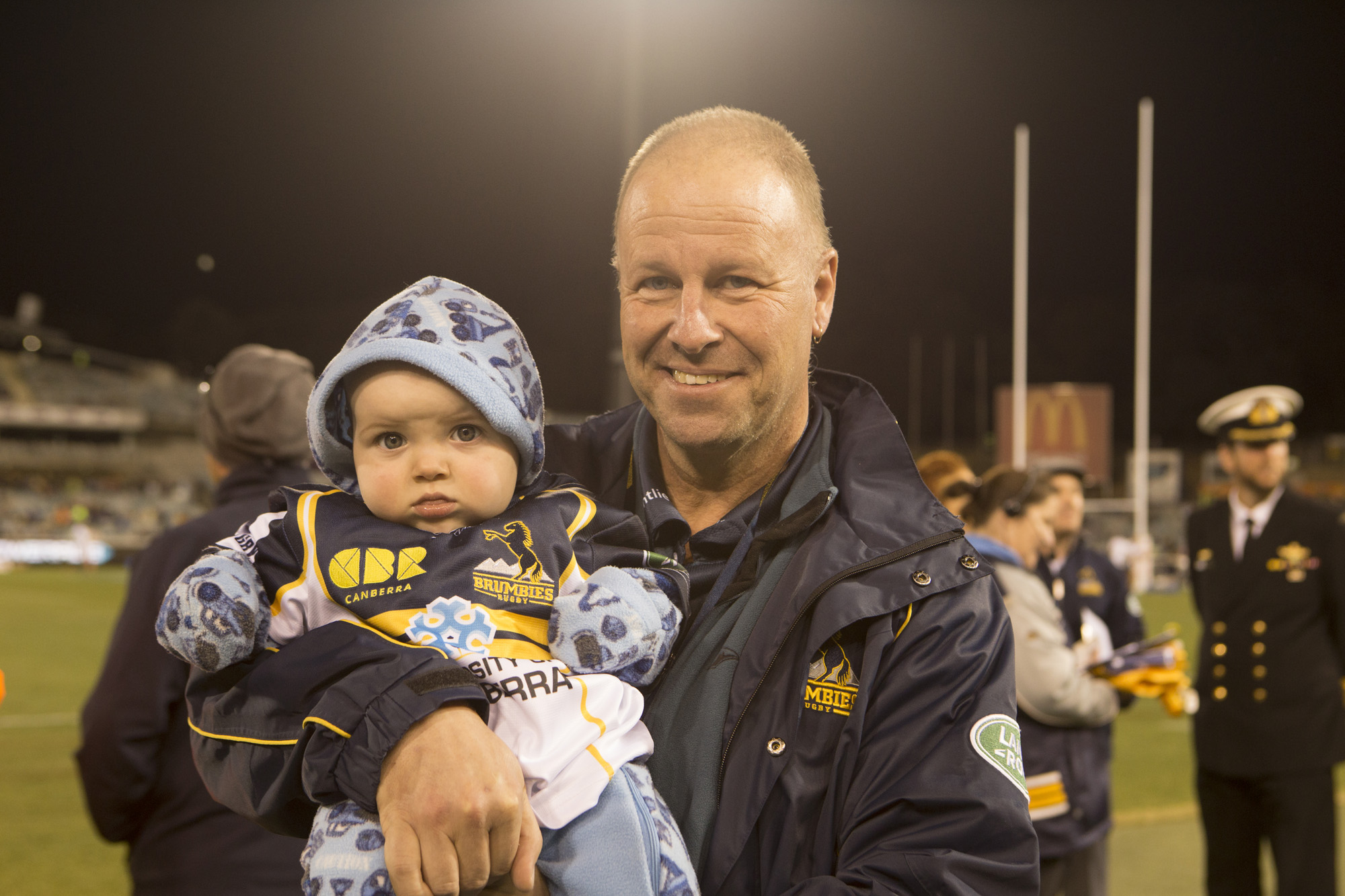
I mentioned to Steve Larkham last week that this was an important anniversary weekend for me. He called back and invited me to address the players at the captains run, before presenting each player with his jersey for the game against the Rebels. This was an honour indeed, and I shared with them how my circumstances had led me to number my days, take nothing for granted, make the most of my opportunities, and prioritise what I value most.

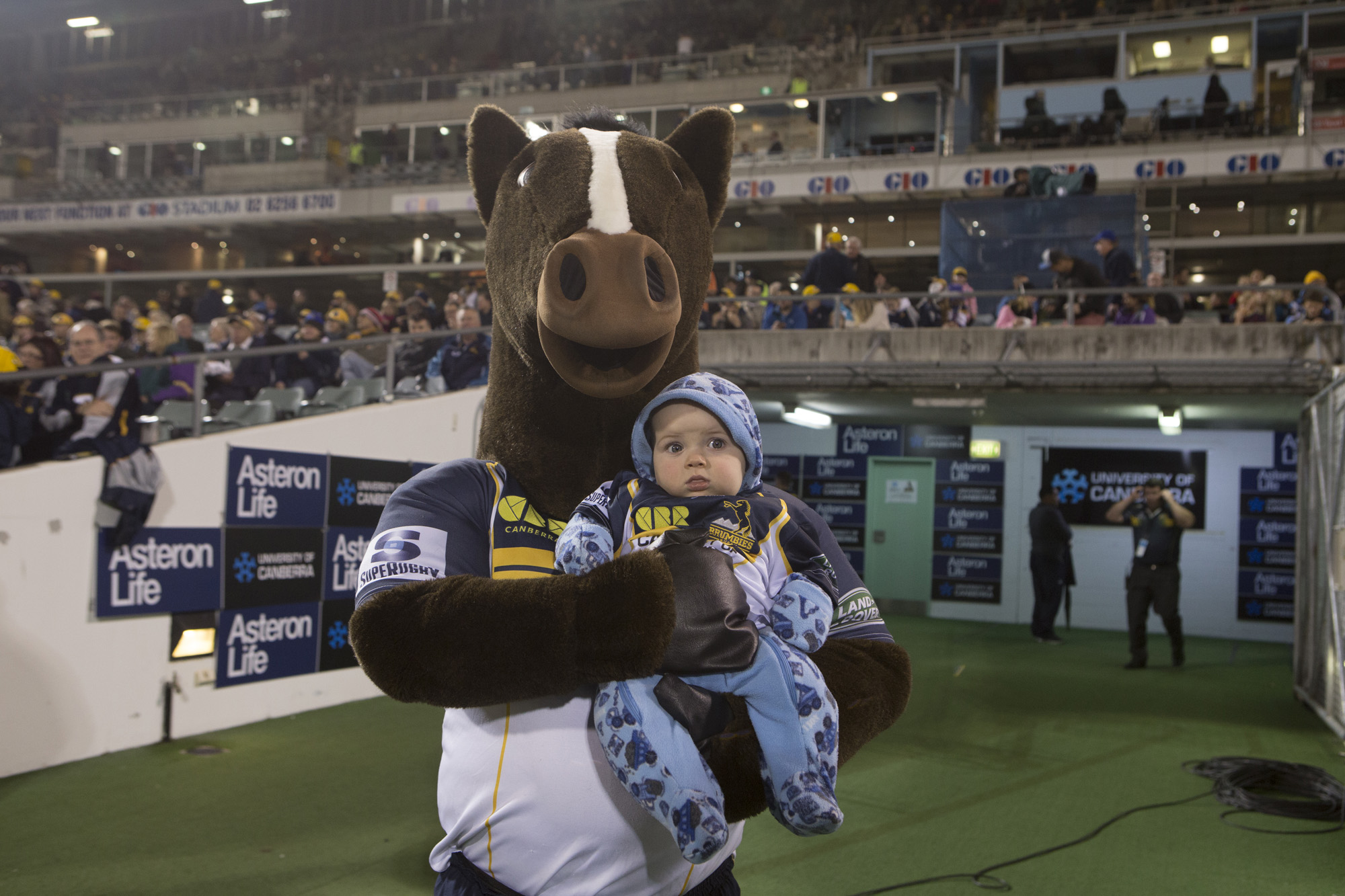
IMG_2230It was a great night on Saturday. I enjoyed watching the Brumbies with my family. Liam got to take in the atmosphere from the sidelines before the game, as well as meeting the Brumbies mascot, Brumby Jack. Our team had their most convincing win of the year, collecting a bonus point against the Rebels. After the game, I got to catch up with Julian Huxley (former Brumby/Rebel and brain cancer survivor) and we shared a few words and a few hugs. The coaches, Laurie, Stephen, and a few others suggested I give the speech before other games if we’re going to win like that each time. I think I’ll keep my record intact with one-from-one!

Tim Challies reviews Hope Beyond Cure

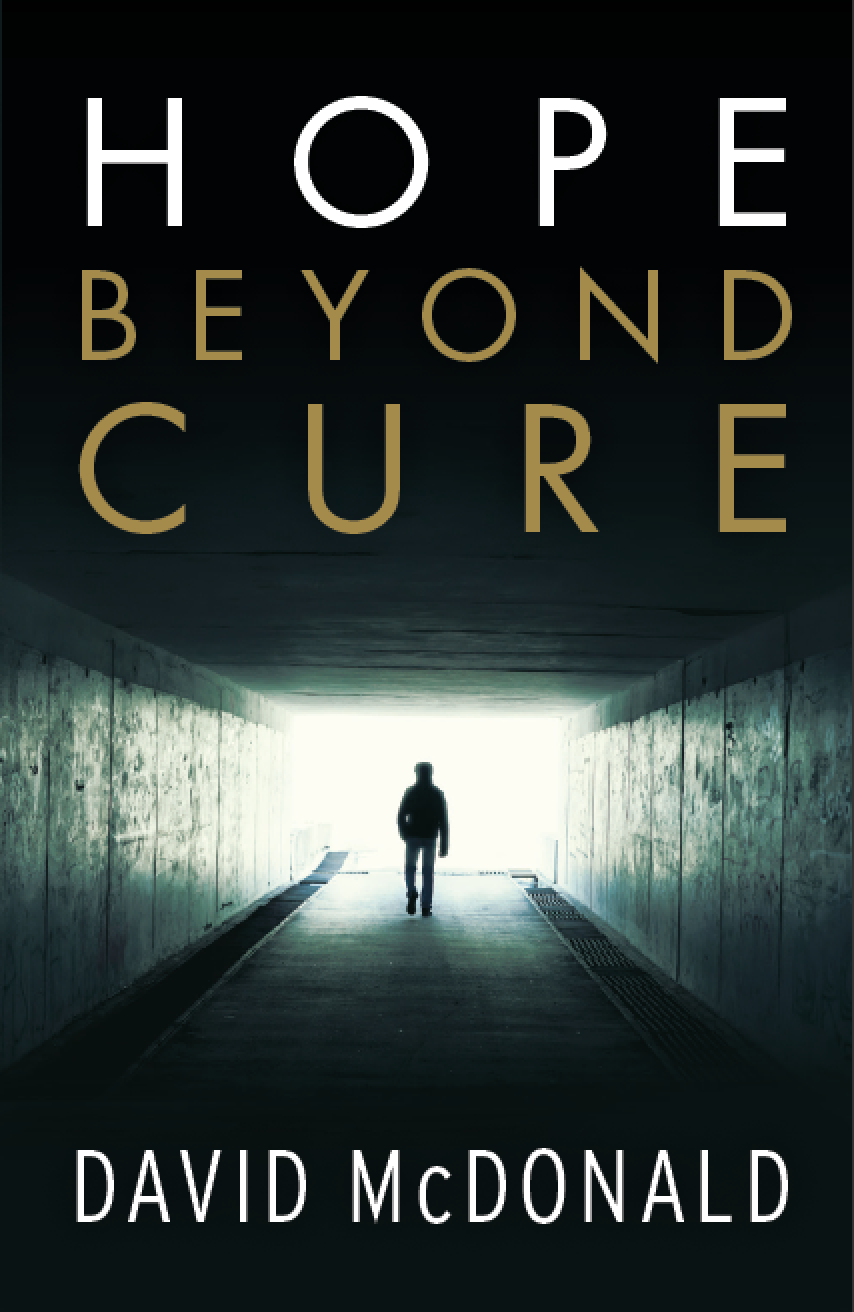
Screen Shot 2014-05-21 at 1.37.17 pmI woke this morning afternoon to a number of messages informing me that Tim Challies—a prominent North American blogger—had picked up my book and written a review. I share it with you here…

It began with two devastating words: “tumor” and “incurable.” If they are not words you have ever heard, they are probably words heard by someone near you, someone you love or loved. They were words David McDonald heard as well.

McDonald had pastored for just about twenty years and by 2011 had decided to begin a new work. He and his family would leave Canberra, Australia, and move thousands of kilometers north to Darwin, a remote but needy city. They were going there to found a new church. They secured support, made the journey a couple of times, found a place to live, made all the necessary preparations, packed the truck, and sent it off. They were all ready to begin the next twenty years of ministry.

And then, just days before the big move, there was shortness of breath, numbness in the limbs. Something was wrong. Really wrong. There was a visit to the specialist and the terrible diagnosis: lung cancer. Incurable. Stage 4. Best-case scenario: he might live to see next Christmas.

In all the difficulty and in all the devastation, he needed to find hope. With the fatal diagnosis and with the best of modern medicine unable to offer the promise of health, he knew he had to look for hope beyond cure.

Hope Beyond Cure describes his search for hope. Yes, he was a pastor. Yes, he had walked with others through devastating and even terminal illness. But now it was him and now he was the one whose faith had been rocked and whose dreams had been shattered. He wasn’t ever tempted to throw away his Christian faith. Not at all. But he did realize the importance of deep and deeply satisfying answers.

Faith and reason have shaped this book. Together they have given me hope. I don’t know everything there is to know about cancer or God. I’ve studied them both, but my understanding is partial and limited. My ignorance outweighs my knowledge, even though I’m learning more day by day. But this knowledge of cancer and of God isn’t simply in my head—it’s deeply personal. I don’t just know about them—they are part of my life and my experience. I know cancer and I know God. And it’s because I know God that I believe there is real hope for those who have cancer, for those who are struggling, for those who have lost hope—for everyone.

The hope he describes is the best and truest hope because it is founded upon the best and truest reality—that God is real and that he has sent his Son into this world to redeem sinners. McDonald goes to the gospel, but he does it in such a faith-stirring and helpful way. These aren’t easy answers. These aren’t trite solutions to deep problems. These are truths drawn carefully and consistently from the Bible, and all the while combined with the strength of human experience.

Each of us knows someone who will suffer from cancer. Many who read these words will some day be diagnosed. Hope Beyond Cure is a book to read if you, like McDonald, are a Christian and suffering and need to be reminded of what is true. It is an appropriate book to hand to an unbeliever as well; it is written in a gentle and humble style that is not the least bit offensive.

As Christians, we have nothing better to offer than what the Bible tells us and no better hope than the hope it describes—a hope beyond cure. Here is a book that offers deep answers to deep questions, all the while tempered by deep wells of experience. It is powerful, it is helpful, and it comes highly recommended.

Wow!

I’m overjoyed at the reach and impact Hope Beyond Cure is having, and how God is using this book to give people—all sorts of people—real and lasting hope. I received this message from a friend last week. The names have been changed…

Hi Dave,

Spoke to a friend of mine who works at the Catholic Aged Care facility. She noticed your book on Sister Mary’s desk and asked her about it (Sister Mary is the chaplain). Sister Mary raved about it, apparently it has been passed around to all the old nuns and priests, many of whom are terminally ill. She explained to Robyn, my friend, that many are afraid of death because they are afraid that they have not done enough good works to get to heaven. They have been so excited about the book that they can have assurance of eternal life. A number of the nuns have given up the struggle to live and died peacefully after reading the book, thankful that finally they can be sure of being with their heavenly father! All I can say in response to this is WOW. Robyn is going to ask Sister Mary to write to you.

Your sister in Christ

Will you be my Facebook friend?

facebookSome books are long. Others are short. Don’t judge the value of a book by its size. Will you be my Facebook friend? Social Media and the Gospel is only 48 pages short. The font size is large and the lines are well spaced, but the message is profoundly important. Tim Chester asks us to carefully consider both the benefits and the pitfalls of social media. This isn’t a tirade against the internet, but rather a plea to use it wisely. Social media has the capacity to radically distort reality, and we need to be wise to the dangers. Chester doesn’t leave us with a call to be more self-disciplined, which will lead only to pride or despair. Rather, he reminds us how the gospel reorients our lives and puts them back in real perspective—God’s perspective.

Here are a few words to consider…

The genius of Facebook is that all your friends come to you and all your friends come to them. So we simultaneously all inhabit our own little worlds, each with me at the centre. (p20)

Is your Facebook self more attractive or successful than your real-world self? (p26)

Am I using Facebook to enhance real-world relationships, or to replace them? (p39)

Remember the medium is the message, and Facebook was designed by a teenage nerd. (p42)

The Facebook comments wither and the tweets fall, but the word of our God stands forever. (p46)

If you or your kids are into Facebook, Twitter, Tumblr, Pinterest, spend hours in front of the TV, surf the net, scour blog sites, or the like—then do yourself a favour, turn off the computer, the TV, the X-Box, or whatever else, make yourself a coffee and read this book. It might take two cups of coffee, but I think you’ll find it worthwhile!

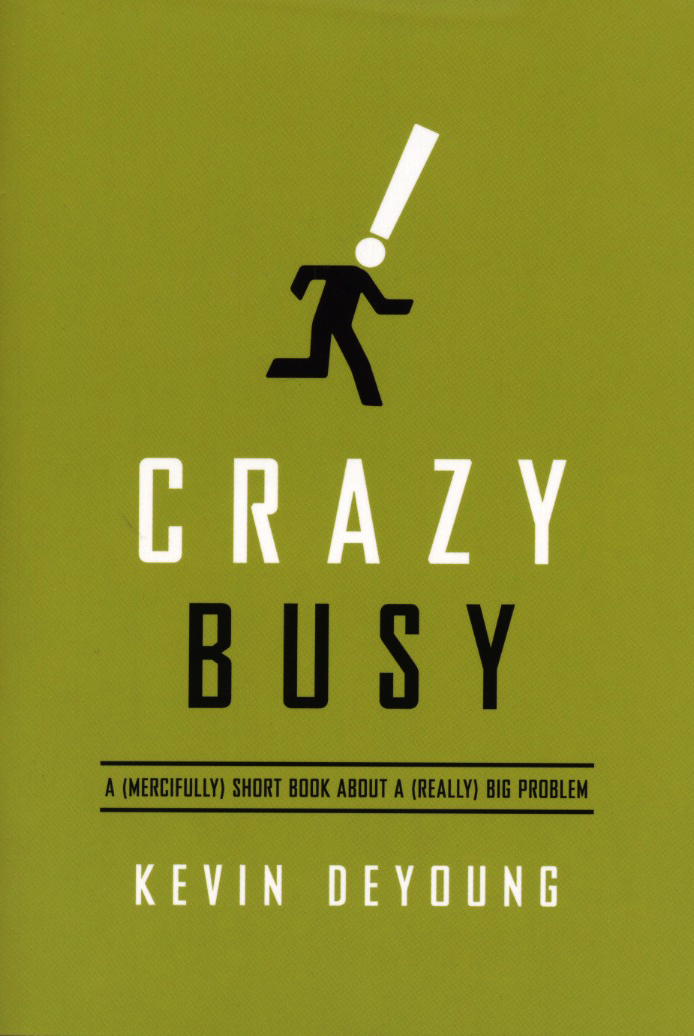
Crazy Busy

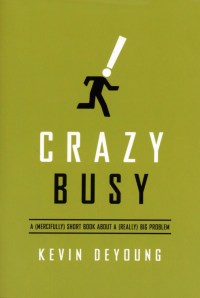
crazybusyI read this book some months back and was intending to review it immediately. But then something happened—I got crazy busy! I took on a new ministry role and pretty soon I had a full diary, began skipping exercise, let my good eating habits go, kept myself awake at night thinking about things, and couldn’t even find time to finish a summary/review of what is a fairly short and simple book.

Crazy Busy: a (mercifully) short book about a (really) big problem is a book for Christian leaders that was always destined to be a best-seller. I’ve yet to meet a pastor who doesn’t cry ‘busy’. To be honest, it’s rare to meet anyone these days who doesn’t lay claim to being crazy busy. Busyness is epidemic in our fast-paced, technologically-advanced, opportunity-laden, affluent, western societies. All the ridiculous promises for the future—that we will have so much time on our hands that we won’t know what to do with it—were just that: ridiculous promises. In fact, in some circles busyness is worn as a badge of honour. Unless someone is busy they shouldn’t be taken seriously.

De Young warns of the dangers of busyness…

But if the strain is mental—as is the case for most jobs and for most of us—the negative impact on the body can be huge. So don’t ignore the physical danger of busyness. Just remember the most serious threats are spiritual. When we are crazy busy, we put our souls at risk. The challenge is not merely to make a few bad habits go away. The challenge is not to let our spiritual lives slip away. The dangers are serious, and they are growing. And few of us are as safe as we may think. (p26)

Busyness can blind us to problems that are deep and destructive. Our lives can become joyless as we struggle to keep up with all the demands. It can rob our hearts of the opportunities to reflect, learn, and grow. Discontent can eat away at us as we envy the time, opportunities, and ‘freedoms’ of others. Busyness can cover up deeper problems within our souls. Having our diaries and planners crammed full does not equate to faithfulness or fruitfulness. It only means you are busy, just like everyone else. And like everyone else, your joy, your heart, and your soul are in danger. (p32)

Crazy Busy offers seven diagnoses to consider in understanding the depth of our problems with busyness. The first of these is pride. He strings a list of ‘P’ words together to make his point. These include people-pleasing, proving ourselves, seeking pity, poor planning, a need for power, the problem of perfectionism, seeking prestige, and more. De Young has found one simple question helps him to assess whether pride lies behind his busyness…

Am I trying to do good, or make myself look good? (p39)

The second diagnosis has to do with obligation. Are we trying to do what God doesn’t expect us to do? We need to be reminded often that we are not the Christ; that the gospel is great news of joy—not a demand of all that must be done; that care is not the same as do; that we have different gifts and different callings; that the church is a body with many parts; that prayer is something positive and practical we can do; and that even Jesus didn’t do it all. Above all, we need to remember that it’s not up to us to keep the universe going—God has that covered.

De Young’s third diagnosis focuses on mission creep. He reminds us of the importance of setting and sticking to priorities. Jesus recognised that there were so many good things he could do, but he would not let the good get in the way of his number one priorities. Jesus was not ultimately driven by the needs or the approval of others. He was focused on his divine mission. Not that we are on a mission from God in the same vein as Jesus, but the point is that if Jesus had to set and stick to priorities, then so must we. We simply cannot do everything and nor should we try.

Fourthly, we are warned to stop freaking out about our kids. He reminds us that it’s harder to ruin our kids than we think and it’s impossible to guarantee their future successes. In trying to do more and more for our kids we may be increasing the build up of stress in our lives and theirs. De Young refers to a Galinsky survey of more than thousand children in grades three to twelve. He asked the kids what was one thing they would change about the way their parents’ work was affecting them.

The kids rarely wished for more time with their parents, but much to the parents’ surprise, they wished their parents were less tired and less stressed.  (p70)

The fifth diagnosis looks at the impact of the screen and technology. De Young confesses that he used to roll his eyes about technophiles, until he became one!

Now I have a blog, a Facebook Page, a Twitter handle, a Bluetooth headset, an iPhone, an iPad, wifi at work and at home, cable TV, a Wii, a Blu-ray player, multiple email accounts, and unlimited texting. (p78)

We’re warned to take seriously the threat of addiction to all our devices. Multiple lines of instant communication can be a continual distraction to achieving anything productive. Our busyness makes us more prone to descending into trivia and mindlessly tuning out in front of the TV or the internet. It’s hard to be alone when we are ‘on call’ all the time—and being alone is important. We need to ask the hard questions about whether our new technologies are making our lives simpler, or more complicated. What steps should we take to ensure that such things remain our servants and don’t become our masters?

Diagnosis number six reminds us of the necessity of rest. God’s design was that we work and we rest. The danger these days is that we blur these two. Life becomes overwhelming because our days and weeks and years lack rhythm. We take work home with us. Our phones and lap tops are part work/part pleasure. We give lip service to the idea of day off, but we’re never totally on or off. (I confess this is my struggle.) De Young reminds us that we need to work hard just to rest. Breaks need to be planned. Unscheduled time needs to be scheduled. The rhythms of work and rest need planning. (p98)

The final diagnosis is a surprise one. We are busy because we are supposed to be busy. We’re too quick to assume that life was intended to be easy, comfortable, relaxed, calm. The reality is that we are sinful beings living in a complex world. We should expect to struggle with tiredness, illness, confusion, complex relationships, burdens and busyness. Sometimes our problem lies not with the circumstances but with our attitudes to them. We’re caught out, confused, and we don’t know how to respond.

The antidote to busyness of soul is not sloth and indifference. The antidote is rest, rhythm, death to pride, acceptance of our own finitude, and trust in the providence of God. (p102)

De Young’s answer is to point us to Jesus. We are encouraged to spend time ‘at his feet’ listening to his words. We’re called to devote ourselves to the Word of God and prayer. The problem is, when I hear this, it can sound like another busyness burden to add to all the others. And so I need to be reminded that it is God’s word that refocuses and refreshes me. It is through prayer that I can unload my burdens and anxieties upon God. Beginning the day with God helps me to keep perspective. To Do lists, difficult conversations, meetings, preparation and planning, sermons, studies, and everything else, need to be seen from the perspective that only God’s word can provide—eternity. And so I will learn again to humbly ask for God’s wisdom, grace, and strength, to do what he would have me do, for his glory.

Surprised by prayer

Screen Shot 2014-04-28 at 5.06.38 pm

As I drove to chemo this afternoon, I asked God to removed my anxiety and help me to be calm through the experience. God’s word tells us to cast our cares on him, and so I did. I also planned to drink lots of water, eat a few lollies, and try to keep my mind on other things.

When I arrived at the hospital, I withdrew some cash from the ATM, and as I walked away a woman on crutches asked me,

“Are you David?”

“Yes I am”, I replied.

She told me that she knew me from university, and had recently been following my blog, and finding it very encouraging. I explained that I was at the hospital for another round of chemo.

“I’ll pray for you,” she said. “Right now.”

I thanked her, amazed at our chance (God-arranged) meeting. And yes, chemo seemed to go much quicker than it had in a quite a while.

More hope

HBCMatthias Media have just informed me that they’ve almost sold out of the first print run of 7000 books, and they’ve ordered the printing of 5000 more. This is great news.

This Easter has been a time of pointing to the hope of eternity. I was able to preach on Good Friday at Stromlo about the faithfulness of God in keeping his promises through Jesus. The crucifixion was no accident of history. It took place according to God’s predetermined plan.

On Saturday I was interviewed at Katoomba Easter Convention about my hope in God amidst the journey with cancer. They promoted the book and I was privileged to write notes in dozens of books being given to friends and family who are struggling with life.

Easter Sunday we took Fiona’s mum to church at St Michaels in Wollongong. After a message on the resurrection I was interviewed by Sandy about my hope in Jesus. Later that afternoon I met with a friend who has been bedridden for years due to debilitating chronic fatigue and its many consequences. We shared together about many things, not least was our common hope for renewed bodies in the resurrection. Sunday night I was interviewed by Kel Richards on 2CH about the real and certain hope we can have because Jesus rose from the dead.

Monday morning we had breakfast with friends and discussed a plan to develop a ministry of hope among the ‘cancer community’. This was followed by morning tea with good friends who have just celebrated their 60th wedding anniversary and one of whom turns 90 tomorrow. They too shared their confidence in God for their future.

The last few days have been a change of pace. We’ve been helping my parents pack and clean their house as they prepared to move today into a retirement village on the Central Coast of NSW. It’s tempting to think this will be their final move. However, I realise this simply isn’t true. This will likely be their penultimate transition before they make their final move to glory—with resurrected bodies, to spend eternity with our great God.

Is God’s love unconditional?

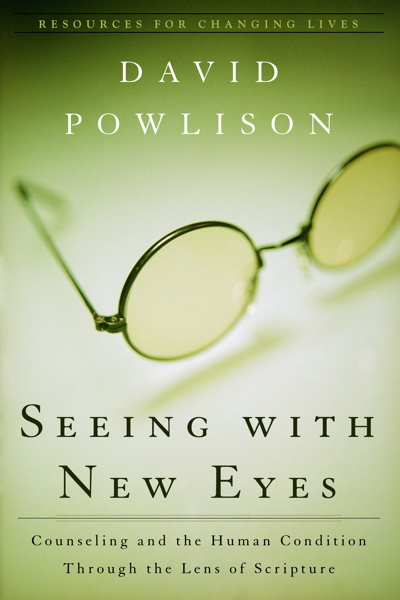
Wire Rim Glasses ca. 2002I believe if I asked many of my friends whether they thought that God’s love is unconditional, I’d get a mix of responses.

There would be some who’d say, ‘No way!’ They believe that God is the ‘ultimate in condition-imposing beings’. He sets the standards, sets them way too high, and then delights in marking everyone down. This is the God of ‘Do nots’—just look at the ten commandments, then add the hundreds of other laws. This is the God who delights in judgement.

Others would say, ‘No way!’ because they believe that God is all about setting the bar low enough that people can meet it. God rewards the basically good, the religious, the moral, the upright, the disciplined, the churchy, those who aren’t perfect but never cross the ‘line’.

And then there’d be those who’d say, ‘Yes of course!’ God welcomes everybody unconditionally. David Powlison argues that most people think unconditional love means it simply doesn’t matter what they think, believe or do.

Deep down you’re okay; God accepts you as you are. God smiles on you even if you don’t jump through any hoops. You have intrinsic worth. God accepts you, warts and all. You can relax, bask in his smile, and let the basically good, real you emerge. (Seeing with new eyes, p169)

Such diversity of perspectives about God; such confusion about what God wants, how God relates; such contrast in what love means and how it works. How can this be overcome? Is there a path to clarity? Are there answers and can they be known? I say, ‘Yes!’ The Bible cuts through our subjectivity. It does so by spotlighting the significance of the events of Go0d Friday.

This Easter we’re reminded again of the awesome love of God. I want the world to know this love, to embrace it, and live by it. I want people to understand that I don’t preach a message of salvation by works or religion or discipline or ritual or moral goodness. The Christian message is one of acceptance and freedom and mercy and grace. But I need to be careful, lest this message is misunderstood.

God isn’t wet and wimpy, vague and valueless, tepid and tolerant, affirming and all-accepting. The God who demands nothing, ultimately offers nothing. This is a God who can be ignored as irrelevant.

By contrast the true God, revealed through his Word, is loving in a way that is costly and courageous, vigorous and complex, effective and transforming. This love can only be understood in the light of the death of Jesus Christ. There is no better day to search intently into this love of God than Good Friday. On this day, we learn that God’s love is not strictly unconditional.

While it’s true that God’s love does not depend upon what you do, it very much depends on what Jesus Christ did for you. In that sense it is highly conditional. It cost Jesus his life.

… unconditional love? No, something much better, something costly and hard and generous. (Seeing with new eyes, p168)

I’m praying that this Easter we are provoked, troubled, comforted, inspired, and transformed by the love of God.

For God so loved the world that he gave his one and only Son, that whoever believes in him shall not perish but have eternal life. (John 3:16)

Whoever believes in the Son has eternal life, but whoever rejects the Son will not see life, for God’s wrath remains on them. (John 3:36)

This is love: not that we loved God, but that he loved us and sent his Son as an atoning sacrifice for our sins. (1 John 4:10)

Learning to be content

NED2014I had scans again yesterday— a CT scan of my chest and abdomen. It was easy. Drink a couple of bottles of contrast, strip to my undies, lie on a movable platform, hold my breath, and pass through the nuclear donut! Then off for a coffee and breakfast. This time there was no scanxiety. I slept well the night before and didn’t worry about chasing my results immediately afterwards.

Why was this? Is it just that I’ve grown so used to the multiple procedures? No—if anything, my anxiety with chemo has grown worse over time. Is it that I presumed the results would be good? No—I prayed, and asked others to pray, that there would be no evidence of cancer this time round. But I had also thought about what we’d need to do if the results showed regrowth or metastases.

I think the answer is that God had enabled me to trust him with the process and the outcome. I think I’ve been pushed to put my beliefs in God’s sovereign oversight of all things into practice. I think God has been changing me to gradually learn the secret of being content. As the Apostle Paul wrote in Philippians 4:12-13:

I know what it is to be in need, and I know what it is to have plenty. I have learned the secret of being content in any and every situation, whether well fed or hungry, whether living in plenty or in want. I can do all this through him who gives me strength.

Or to paraphrase this for my own circumstances:

I know what it is to be very ill, and I know what it is to be healthy. I have learned (and am learning) the secret of contentment, in any and every situation, whether good scan results or bad, whether living with cancer or without. I can do all this through him who gives me strength.

Here I am, sitting in the same cafe where this cancer journey started. I’ve enjoyed a coffee and a bite to eat. The phone just rang. My results…

No change, still NED, no evidence of disease. I’ve been NED for nearly twelve months. Praise God!

Our new church with a new name

On February 1 this year I took up the position of lead pastor at Central Evangelical Church in Canberra. The previous pastor had resigned in September and the church was seeking a pastor with experience to lead them into the future. It was a big decision as to whether to take on this role. The state of my health loomed large in the equation, but so did the fact that I expected to have to work through many issues facing the church—and some of these weren’t likely to be easy.

Over two months have now past since taking on this role. I’ve moved my chemotherapy back to Mondays in order to maximise the likelihood of being able to make church every Sunday. So far, so good! I’ve just finishing preaching for nine consecutive weeks—something I hadn’t achieved since 2011, before cancer. In fact, I hadn’t done three weeks in a row since then.

We’ve been working through the book of 1 Peter, which has proved most helpful in focusing the church on the things of God. Last Sunday people shared together what they’d been learning from this New Testament letter and it was a great joy to see the impact of God’s word in people’s lives.

stromloLast Sunday we voted as a church to change our name to Stromlo Christian Church. We believed this will help us to engage better with our local community. While it may not have been the wisest thing to push for a name change so early in the transition, we recognised that much would flow from this—websites, advertising, signs, and the like. There was strong support for the new name and this helps us to proceed in unity together.

If you would like to see some of the things that are going on at Stromlo, then you can check out my new blog at jamesfourfifteen.com. I’m using this blog to facilitate communication with the church about issues we are facing, changes we are making, and to share a vision for gospel ministry as we move forward.

Hope in Eternity

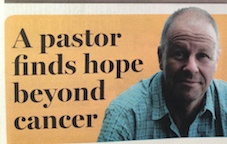
hoep beyond cancerToday I received a copy of an Aussie Christian newspaper called Eternity. And there I was on the front cover and page 4. It’s a bit overwhelming to turn the page and see an almost life-size version of my ugly profile staring me in the face! However, I count it a privilege to be able to share something of my story and to point people to the solid hope that can be found in Jesus. God has brought good out of the cancer, as he promised he would (And we know that in all things God works for the good of those who love him, who have been called according to his purpose. Romans 8:28). I thank him for this.

You can read the article by Joshua Maule online.

You can read a review of the book by Stuart Adamson, a Sydney-based hospital chaplain and pastoral supervisor.

eternity


Covering over sin

coversinLove covers over a multitude of sins. Love doesn’t hold a grudge against the perpetrator. But neither does love ignore sin or sweep it under the carpet. Love forgives. Love bears the cost of letting go. Love doesn’t seek revenge or retribution. Love fights the growing seduction of bitterness. Love leaves justice in the hands of the righteous God. Love looks to the cross where the price for sin is paid, so that mercy can be offered.

Thank you God for love.