P.S.

Sometimes I astound myself with my own ability—to be stupid!

This morning was a case in point. I began by speaking with a good friend about my good ideas. They were well-considered, innovative, creative and an excellent solution to the problem. But my friend cut me off before I’d even finished. They weren’t impressed—with the idea or with me. And pretty soon, I wasn’t that impressed with them either. What had gone wrong?

Put simply, I presented them with my solution to our problem, before they even knew there was a problem. I started with the end and planned to work backwards to the beginning. I didn’t engage my friend with the issues. I failed to invite their creative input. I came across with a package—here’s the solution.

Let me tell you, this isn’t the way to solve problems with others. It’s not the way to conduct a marriage, build a team, lead a church, or build collaborative relationships. And it’s damaging to trust.

It’s obvious really—we should start with the problem and work to a solution, together. Co-operation. Teamwork. Share the problem. Share the problem solving. Share the solution. Share the outcome.

The order is P then S. It’s about Partnership and Sharing, People and Synergy, Protecting and Strengthening relationships.

Problem, then Solution.

Big changes in 2014

Screen Shot 2013-12-18 at 6.56.04 pmLast Sunday my family and I made a big decision—we accepted the invitation from Central Evangelical Church in Weston Creek, Canberra for me to be their senior pastor from February 2014. We thank God that I am even in a position to consider such a move. Only two years before I had been struggling in hospital, devastated that God had taken our dream of ministry in Darwin away. Over recent months God has given me new opportunities to serve him. He has restored my health, such that I’m able to get two or more good weeks every three, and he has pushed me to take this new ministry role seriously.

I’m well aware that I will be leading with a limp! Fiona and I will be very dependent on the grace of God to equip and strengthen us for this challenge. We’re encouraged that God’s grace is sufficient.

This is an excerpt from the letter that I wrote to the church to accept the position…

Dear brothers and sisters at Central,

Thank you for the offer to become your new senior pastor. We have prayed about this, discussed the possibility with many people, and believe it is the right decision to accept your offer. Hence, I accept the position with the support of Fiona and the others in our family.

It’s with a mix of emotions that we look to move across to Central. There is much grief in moving away from many friends and family at Crossroads. The church represents the major chapter of our life and ministry in Canberra and we love the people dearly. They have shown us considerable love and support through the ups and downs of the past three years especially.

Our pledge is to love and serve among you, as we are enabled by God. My desire is to let God’s Word shape our lives so that we are filled with his grace. I pray that we will be drawn by the freedom of the gospel to love God, to love our neighbours, and to love one another.

Our plan is to take holidays over the summer, to refresh, and to spend time together with our family. We will be on deck to begin at Central from the beginning of February. My plan is to preach through 1 Peter in first term to remind us of the awesome hope we have in Jesus.

Our desire is to get to know people, to discover how God is working in your lives, and how he has equipped you to serve in his family.

I can happily report that the CT scan this week, continued to show no evidence of the tumour. We thank God for this news and it adds confidence to the decision to join with you.

Please continue to pray for us, as we will for you, that God will equip us for the good that he has planned to do through us all. We look forward to seeing you all in February.

Yours in Christ,

Dave McDonald
15th December 2013

I don’t think the impact of these changes have truly sunk in as yet. Today we had our Crossroads Christmas gathering and, as we do every year, we thanked and prayed for those who were leaving. This year I was on the receiving end! People shared kind words about Fiona and I, and Marcus Reeves prayed for us. Of course, it’s not as far away as the Northern Territory, and we will be staying in our current home so that Grace and Marcus can continue with their schooling uninterrupted (or perhaps simply so we can be close to our grandson!). But there will be new relationships to make, new people to share with, new opportunities to show love, new people to encourage in God’s word, and many new challenges we can’t even imagine.

If you pray, then please ask God to help us serve him in this new context, please pray for the people at Crossroads as we leave, please pray for Anton and Kylie as they move on from Central, and please pray for Central as we enter this new chapter together.

New website at hopebeyondcure.com

Screen Shot 2013-12-08 at 5.01.14 pmI’ve just launched a new blog site at hopebeyondcure.com. This site will provide access to the book and, over time, related resources. I will continue to post about the journey with cancer on this site, while also aiming to build resources for people with cancer and those caring for them on the new site.

I am grateful to Matthias Media for all the work they have done to get this book ready. The official launch date is 1 March 2014, but we expect to have the printed books available from mid to late January. They have fast-tracked the eBook and Kindle versions of the book to make available to some of our friends who are struggling in the later stages of their cancer now. If you are interested in getting an electronic edition of Hope Beyond Cure you can purchase it by following the link on the new site above.

NED for Christmas

DaveLast Saturday, I received good news from the Imaging Department of Calvary Hospital. Actually, God gave me a wonderful Christmas present. My scan results showed no change. I’m still considered NED (No Evidence of Disease). Is this a miracle? I believe so. Did God use my chemotherapy to bring this result? Again, I believe so. In fact, I believe that life itself is a miracle and I want to give thanks again to the author of life this Christmas.

Staying on the Leading Edge

johngrayI must admit to being a little suspicious when I saw the promo for Staying on the Leading Edge—Without Killing Yourself by John Gray. The title and the cover photo reminded me of the many ‘real men’ books I’ve seen lately. I was worried that it would be a ‘Rambo Theology’ for pastors; a ‘you can conquer the world if you believe in yourself’ manifesto. Well, it isn’t. In fact, it’s exactly the opposite. This book calls upon leaders to humble themselves before God and to apply God’s Word in their leadership of God’s church on God’s mission. This book is shaped by the Bible and applies God’s blueprint for leadership to the task of Christian leadership. There are many books out there on leadership in the church and this book deserves its place among them.

Gray has written Staying on the Leading Edge for three purposes:

“Firstly, I write to provide a framework for those who have an internal drive to lead.”

“Secondly, I want to contribute to the debate on a theology of leadership.”

“Thirdly, I write for those who are battle weary.”

I figure that this will engage most Christian leaders on each of the three levels. It’s important for us to be clear why we do what we do and how we should go about it. Most leaders I know who’ve been leading for any length of time, are feeling or have felt battle weary. Some may feel this way all the time.

Most books I’ve read about leadership stress the importance of the leader having a vision. We are told that the leader’s task is to present his people with a compelling vision of the future to strive for. The strength of this book is that it doesn’t rely on the leader to create the vision for the future, nor to decipher the specific vision that God has for this leader or this group of people. Rather, the vision for the future has already been given by God in his word. It is this vision that the leader calls his people to follow. Gray draws this vision from the Bible, quoting such wonderful passages as Isaiah 25:6-8…

On this mountain the LORD Almighty will prepare a feast of rich food for all peoples,
a banquet of aged wine—the best of meats and the finest of wines.

On this mountain he will destroy the shroud that enfolds all peoples,
the sheet that covers all nations; he will swallow up death forever.

The Sovereign LORD will wipe away the tears from all faces;
he will remove the disgrace of his people from all the earth.
The LORD has spoken.

He also quotes Napoleon as saying Leaders are merchants of hope. What a wonderful picture for the Christian leader to consider—to present people with a vision of hope. This is true to God as revealed in his word, for the Scriptures are a message of hope, and God is calling people to an eternal hope that nothing can destroy. I wonder how many pastors, youth leaders, Bible study leaders, chaplains or evangelists think of themselves as ‘hope merchants’. Not that we are selling the hope—it comes free and guaranteed by God himself. Hope is our message, and hope should shape our methods and goals.

This book addresses the character of leaders over and above their competency. Of course, both are required, but character is often forced to take a backseat to competency. Gray warns that:

“Churches are seriously burned, deeply hurt and even destroyed when leaders full of passion and vision lead with hubris.”

“Character is important for at least two reasons: it will keep a leader upright during the worst of storms and, secondly, it will provide a model of a life so irresistible that others will be drawn to it and, therefore, to Christ.”

We are warned against the risks of basing our leadership on personal claims to authority. There is no place for lording it over others or bullying people into responding. Rather, we are called to serve, to set an example, to love at cost to ourselves. Leading and teaching need to be more than propositions and words—they need to be accompanied by a godly example for others to follow. Jesus calls us to follow him. The apostle Paul called upon people to follow his example, as he followed the example of Jesus. The cynicism of our age and the poor track record of churches and their leaders makes this every bit as important as it was 2000 years ago—if not more. Gray writes:

“The longer we travel in a post-modern world, with an increasing emphasis on narcissism, the more crucial it is that people see evidence that the kingdom of God transforms lives. They are looking for a life that is worth living. If they could see it in the life of leaders, then they would follow it.”

Character and convictions must also be accompanied by competence. God is seeking skilled leaders who will lead his people well.

And David shepherded them with integrity of heart;
with skilful hands he led them.  (Psalm 78:72)

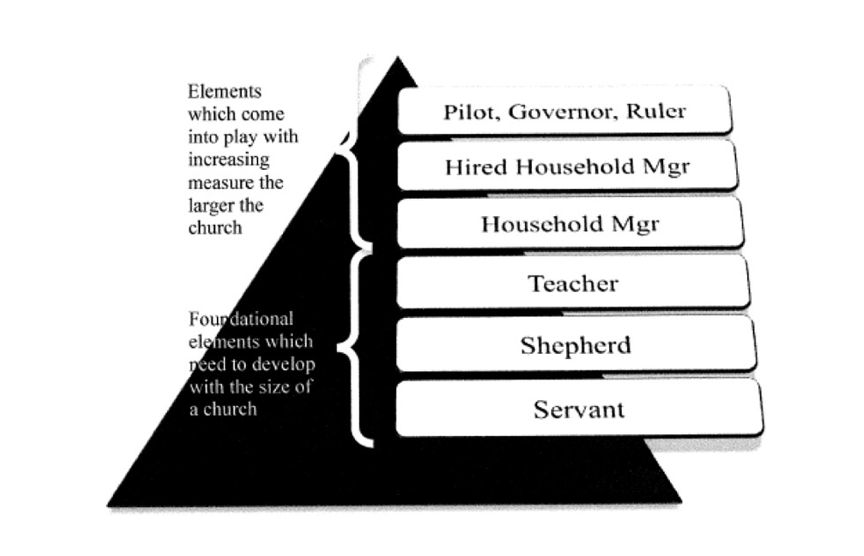
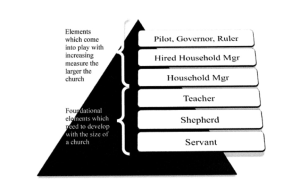
From the Pastoral Letters of Paul, two skills receive particular attention: the ability to teach; and the ability to lead others within the household context. These areas of competency are essential to good leadership. If people are unable to communicate clearly, then they won’t be able to lead people. If people can’t demonstrate leadership in a smaller setting such as a household, small business, small group, or community organisation, then they are not ready to be entrusted with a church. Gray argues that with increasing size and complexity in churches, greater skill must be demonstrated before people are entrusted with greater leadership. He describes the various New Testament windows into the nature of good leadership, and illustrates this with the following diagram:
leadership_diagram

“Leadership in the church, therefore, is a matter of:

  • following and emulating the great servant, Christ;
  • developing a godly and exemplary life which others can emulate;
  • being able to teach sound doctrine;
  • developing skills commensurate with church size and complexity.”

Necessary skill must be accompanied by appropriate character, lest the highly articulate and experienced leader succeed in leading people down the garden path, or somewhere a lot worse. 

Gray is committed to encouraging leaders to keep at it for the long haul. He refers to stats that describe 12,000 ex-pastors in Australia who no longer lead their churches because something has gone wrong. This would remain a scary number even if it was only 10% true. His recommendations for equipping and encouraging leaders include drawing on the wisdom of:

  • Scripture
  • books
  • conferences
  • other leaders

He draws on Jethro’s wisdom to Moses to appoint leaders to help him lead well as the numbers of Israel grew. Moses then built an infrastructure of leaders who shared the load of caring for the people. They were instructed to bear the load unless it was too great for them, in which case things were passed up the chain to Moses. Gray has adopted this strategy in his own ministry with one notable and very personal change:

“I have added a piece to the “Moses model”. I not only ask the team to bring me that which is “too much for them”. I also ask them to pass on the celebration moments of life and the times when, unfortunately, a loved one passes away. As soon as anyone on the team hears about an engagement, the birth of a child or a passing of life, they get that info to me.”

He highlights the benefits he has discovered in reading widely on leadership. He draws from Christian and secular material to glean whatever wisdom will better equip him to lead.

Conferences can be a helpful source of inspiration. However, the danger is that we can simply become tossed around by the latest and greatest, thinking that the next conference will offer us the silver bullet for solving our leadership crises. I appreciated the idea of ‘do it yourself’ conferences that Gray describes. He speaks of regularly getting together with peers who are facing similar issues with their leadership, and being accompanied by a ‘grandfather’—someone older and wiser who understands the issues—and; a ‘pace-setting leader’—someone who is a few steps ahead of the rest of you, who can offer contemporary help in navigating the challenges.

He also stresses the benefits of having mentor figures that we can call on for advice and help at different times. He recommends keeping the contacts brief, perhaps offering to buy them a coffee or meal, or limiting time on the phone to 10 to 15 minutes. He urges us to value the time they give us by being well prepared in advance. They way to glean wisdom from them is to:

  • “Prepare 2 or 3 questions ahead of time. Work out what you want to ask. You know what it is like to find time in a crowded diary. It is more difficult for a leader of a larger church. Preparing questions will say to another leader, “I value your time. I do not want to waste it.”
  • “Be a good student. Take notes as you get answers to your questions. It matters not what media you take notes on, just take notes. When I take notes on my phone I always say something like “just want to let you know I am taking notes – not playing games.” This says to the leader I really do want to learn from you. I will not rely on my memory.”
  • “Take only the time you need. Your pace setter may not be looking for a friend. They already have friends.”

Gray reminds leaders to continually draw near to God and rely on his strength. We are encouraged to go regularly to the Word of God—not only for the latest sermon preparation—but to be nourished by God. He recalls how Wayne Cordeiro, at a pastors conference, encouraged him to grab his Bible, a pen, a notebook, and some time—and how it turned out to be exactly what he needed to hear and do. He now follows this pattern:

Read
Record the key verse from the passages you have read. This will be the verse that stands out most for you.
Explore
Summarise the text surrounding the verse you have written down.
Application
Record your answer to this question: “How will I be different today because of what I have just read?”
Prayer
Write out a prayer in the light of what you have read.

There are some excellent practical recommendations in Staying on the Leading Edge that will help leaders to keep their zeal while staying the distance. Running at a human pace is the goal. We are not God—whatever we may tell ourselves!

“If we are to lead (and keep leading) with the vision of the Kingdom of God fuelling us, if we are to stay on the leading edge avoiding burnout and the curse of the conservative middle ground, then there are lessons we need to learn.”

roseHe discusses the importance of leading from a position of rest. This requires adequate quality sleep, regular days off, sufficient annual leave. It means refilling our physical, emotional, relational, mental, and spiritual tanks. He urges us to keep our eyes fixed on Jesus, to let him be our guide and pace-setter, and to draw near to him in our times of need.

Finally, I loved Gray’s ritual for welcoming new leaders onto his staff team. He gives them a single, long stemmed, red rose, and tells them that he wants them to make time to smell the roses.


Co-leaders co-operate

nutsboltssmalliconI’ve recently been teaching a course to train leaders—not simply to prepare and lead Bible studies, but to exercise pastoral ministry in the context of their groups. After one session a leader approached me concerned that I had lifted the bar too high. She explained how it was all she could manage to put in the time to understand the Bible passage and lead the group in a helpful study and discussion. How could I reasonably expect leaders to focus on equipping others, encouraging prayer, caring for people in times of crisis or chronic struggles, supporting people as they share their faith with others, and more?

I sympathise with her concerns and I don’t want to lay burdens on people who are already serving as best they are able. By the same token, these groups are the natural context in our churches for encouraging genuine Christian relationships, spurring each other on, helping one another develop our gifts for service, and for exercising loving concern for one another. So what is the way forward? Am I expecting too much? Is this simply idealism?

These concerns support a strong case for groups having more than one leader. Two is usually better than one, and it’s certainly the case when it comes to our growth group ministry. Two leaders can share the load between them, and ideally utilise each other’s strengths.

When leading a study, one leader might be focused on the content being taught, discussed, or applied. The other might pay closer attention to the group dynamics, working out who is engaged or who is off with the fairies. A co-leader might be able to address the problem where someone is dominating discussion while others are prevented from contributing. Co-leaders can co-operate to assist everyone getting maximum benefit from the studies. But the teamwork can go further.

One leader might focus on preparing the material, while the other manages the communication with the group, arranging supper rosters, or planning times of prayer.

One leader might be the point of contact for pastoral concerns, while the other is spending time training new leaders and building the leadership base.

The leaders might tag-team, leading a week about, a month about, or a term about. This would allow greater preparation time, provide variety in the approach, and help keep the leaders fresh.

In a mixed group with male and female co-leaders, they might decide to focus on building and strengthening relationships along gender lines.

If we feel like every aspect of leadership depends on us, then we will likely be overwhelmed very quickly. Burnout will become all too common. But if we get people to team up, then leadership will not become as much of a burden.

Start with why

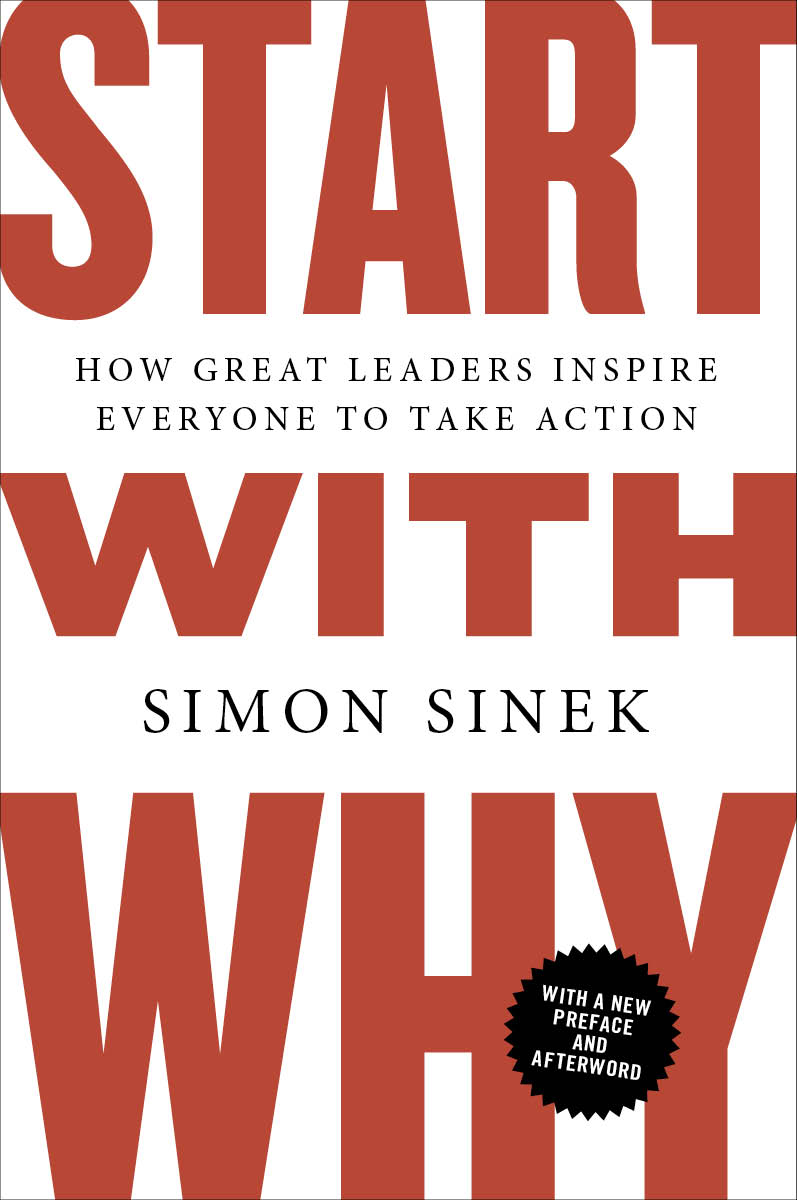
start-with-whyIn Start with Why: How great leaders inspire everyone to take action, Simon Sinek argues that there are only two ways to influence human behaviour: manipulation or inspiration. Manipulation doesn’t have to be viewed negatively. A business can manipulate behaviour by dropping prices, offering incentives, running promotions, etc. Such manipulation works, but it costs. After a while customers expect the discount, or wait for the next promotion. It doesn’t build a loyal customer base. Over time, such strategies become too expensive to sustain. Customers only return for what they can get, rather than a commitment to the business or its products. Manipulation strategies have become the norm in many organisations. But there is another way.

Some are born leaders—others need to learn. The good news is that those of us who need to learn, can! And the big thing we need to learn is the power of WHY.

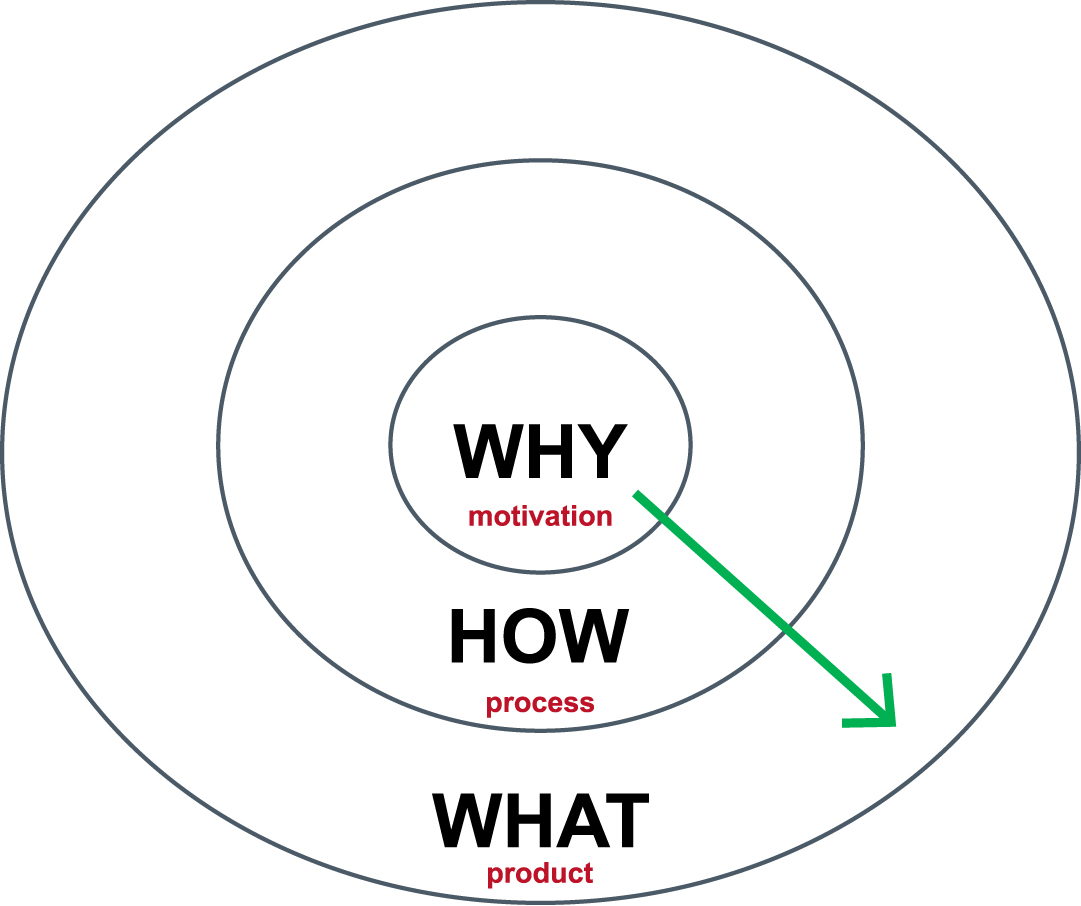
goldencircleSome leaders inspire rather than manipulate. They operate by a process that Sinek calls the golden circle. This approach works from the inside out. Instead of focusing on what or how, they begin with why. Many people and organisations can explain what they do and how they do things, but they struggle to clearly articulate why they do what they do or why they do it how they do it. Why has to do with purpose, reason, and cause. Why exposes our motivations and beliefs, and these are the things that inspire.

For the golden circle to work there must be clarity about the why. Once we can clearly articulate the why, we can then work out the how. How embodies the values and principles that flow from the why. And the what is the results that flow from the why and the how. When the golden circle is in balance, then the organisation or business or individual is seen as authentic and real. This isn’t easy to achieve and it requires us to continually go back to the why and work outward from there, rather than manipulating people with what.

In turn, this builds trust in customers and clients. Such trust is more than a rational experience—it’s a feeling we have when we believe the organisation or leader is behaving with integrity (whether they are successful or not). This feeling of trust inspires people to action.

Why types tend to be the visionaries and optimists who imagine what the world can become. How types are the realists and practitioners who focus on getting things done. Why types need how types, and vice-versa. Truly inspirational organisations display a healthy partnership between the two. A why without a how can be little more than unstructured passion and destined for failure.

Over time it’s easy to become focused on the what and how and forget the why. We become accomplished at what we do, and know how to do things intuitively, but we can lose sight of why we do them in the first place. We need to continually return to the why—the compass that sets our direction and motivates us to action.

Reflections

I have mixed feelings about this book. I agree with the basic thesis and the shape of the golden circle. We should proceed from the why to the how to the what. Being clear about why we do what we do, and why we do it how we do it, is the key to acting with integrity and authenticity. This is what will lead others to trust us. This is what will inspire others to follow.

My problem with the book lies in its length and the choice of illustrations throughout. Sinek takes a whole book to make some very simple and fundamental points. It could have easily been argued in a pithy article of 10 to 20 pages. He colours the book with examples of organisations like Apple and Harley Davidson. While I’ve been a fan of Apple since 1987 and Harley Davidson for even longer, such iconic companies don’t exactly represent the typical organisation or individual. I’d love the same arguments to be made with reference to more ‘average’ people or businesses.

I appreciated the contrast between manipulation and inspiration. As a pastor and Christian leader, my desire is to inspire people to follow Jesus. I don’t want to manipulate people’s behaviour with sticks and carrots, but to inspire people with the gospel of Jesus and the grace-filled word of God.

Asking why I do what I do, is something I’d be wise to do often. It’s so easy to fall into ruts and patterns; to perpetuate the same old same old; to do things because this is just what we do, or because it’s what we’ve always done. Why offers the energy to initiate personal and organisational change. We can critique what we do or tinker with how we do things, but the real benefits are found in regularly reviewing why. I hope to be able to do this at a personal level and to lead review at an organisational level in the context of my leadership.

As a Christian, I find the why comes not from my passions and priorities, but ultimately in following God’s revealed will. The author of life offers meaning and purpose to life and this shapes what I do and how I go about it. My challenge is to anchor what I do in the word of God’s grace. It’s to teach and model the why, as well as the how and the what.

Better living with lung cancer

Last night I received an email from my wife (I’m away for a few days) entitled, The book I thought to write. For those of you who don’t know already, Fiona is my primary care giver and medical advocate. She does all she can to stay up with the latest about lung cancer and treatment developments. Fiona has been a huge help to me and a number of others in understanding our condition and making wise decisions about the way forward.

On Sunday night we attended this year’s event—Shine a light on Lung Cancer. Something happened at the event that disturbed both of us. A man with mesothelioma spoke about his diagnosis and condition, and at one time described consulting ‘Dr Google’.

“He shouldn’t have to do that!” Fiona exclaimed, and I agree.

If a patient has a life-threatening disease or a terminal illness, then they shouldn’t have to be scouring the internet to understand their disease or to know what to do next. Good, accurate, up-to-date information should be readily accessible and made available to all who need it. In a world that boasts the technology, resources and medical advances that we enjoy, we should be able to get what we need without having to hope we stumble across it.

This led Fiona to the Lung Foundation Australia website. We haven’t been to this site before, because we weren’t aware of its existence. Maybe we should have been, but the reality is that besides being the biggest cancer killer, lung cancer rarely gets a mention in the media. Sure, there is much said and written about the risks of smoking—but there is virtually nothing in the media offering support to the patients and survivors of lung cancer.

Just compare this with the ubiquity of publicity and support being offered to the breast cancer community—and I don’t begrudge this for a minute. The work of the McGrath Foundation should be the benchmark for all cancers support organisations. If only lung cancer received a small portion of the empathy offered many of the other cancers.

We also learned at the Shine a Light event that the government is shrinking funding for the support of lung cancer patients. Surely the government number crunchers, the economic rationalists, and even the most hard-hearted bureaucrats can do the maths. The cost of lung cancer to our community versus the money put into supporting those with lung cancer and other lung diseases such as mesothelioma ought to seriously embarrass everyone. Yes, we should aim to prevent it where we can, but we should also aim to have people well supported as they face the traumas ahead.

Anyway, off my rant and back to my point! Fiona has wanted to get good info into the hands of those who needed it, and had even contemplated writing a book to this effect. And then, on the lung foundation site, she found it. And she emailed it to me…

Better Living with Lung Cancer—A Patients Guide

Better_livingI read this book last night and was amazed. It’s really good. Well produced, good information, easy to understand, positive and encouraging. So why doesn’t every person with lung cancer, and every carer, have a copy. From time to time I go to a support group for those with lung cancer, but I haven’t heard it mentioned. We are pretty well-informed in this area, and have been on the journey for two years, but only just stumbled upon this resource.

So go the publicity machine!

This book exists in two forms—a pdf copy that is also available chapter by chapter; and a printed handbook that you can order for $18 (including postage in Australia). I’ve now read through the online version, and ordered a hard copy. I still prefer real books!

The chapter topics show the coverage of this resource and you can link to each chapter separately…

Contents by chapter

  1. Understanding Cancer and The Lungs
  2. Understanding Lung Cancer
  3. Diagnosing Lung Cancer
  4. Multidisciplinary Care
  5. Managing Lung Cancer Symptoms
  6. Treatment Options
  7. Lung Surgery – Preparation and Recovery
  8. Treatment Side Effects and Management
  9. Accessing New Treatments via Clinical Trials
  10. Palliative and Supportive Care
  11. Living Well with Lung Cancer
  12. Making Decisions about Treatment
  13. Financial and Legal Considerations
  14. Seeking Support
  15. Life after Treatment
  16. Information for Carers
  17. Other Resources
  18. About Lung Foundation Australia
 It is excellent that this book is readily available free of charge on the Lung Foundation site. We just need to let people know. So here are a few ideas to get the word out:
  1. Post this, or another link to the book, via twitter, Facebook, Pinterest, email, or whatever you do, to all those you know with lung cancer or caring for those who do.
  2. Ask your oncologist or GP whether they are aware of this resource and suggest they get a copy or copies to offer their patients.
  3. Encourage the Lung Foundation to print up postcards, flyers, leaflets, business cards (all of the above or something even better) to make available to patients on diagnosis, pin on notice boards in hospital waiting rooms, and the like.
  4. Write to your local health minister and ask them what they are doing to support people suffering from lung cancer—and recommend they invest in this resource to make available to those who need it.
  5. Contact the Cancer Council or other cancer support organisations to encourage them to get behind this and other similar resources.

P Day

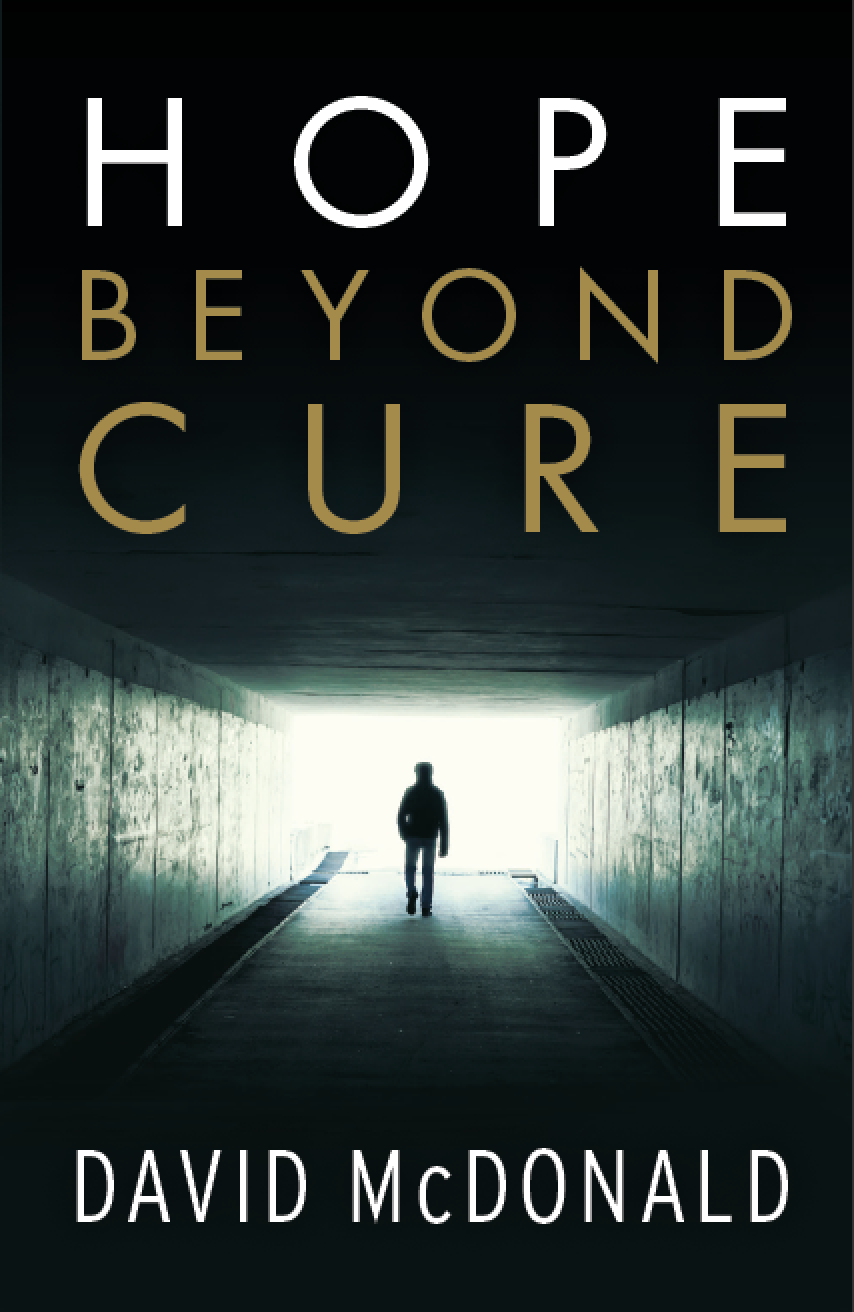
HBCToday is P Day. It’s the day that Hope Beyond Cure gets sent to the printers. I didn’t want to get cancer.  I wasn’t supposed to be alive two years later. I never planned to write a book. I didn’t expect I ever would. But here it is! 

I’ve been so encouraged during this process. The care and guidance of Tara, Emma, Tony and others. The feedback, comments, and advice of family and many special friends. The encouragement and support of medical staff, people at church, friends at the Brumbies, good mates, a loving wife, awesome kids.

My prayer is that this book will offer hope to those who lack it. I want to point people to real and substantial hope. If people are struggling with cancer, experiencing suffering and pain, lacking purpose and meaning, searching for truth, investigating faith, rethinking their lives and futures, then I hope this book can be part of the conversation. If they’d just like to see what matters matter to a fellow human being, then I hope my story will enrich their lives. If people have an open mind, then this is for them.

I understand it should be available some time in January 2014. It won’t be out for Christmas, but then it’s probably not a stocking-filler anyway. I just thank God that it’s happening!

Christian men and books

booksIt’s been said that men no longer read. I have no idea how true this is, but if it’s true then we have a crisis on our hands.  The forecast is not good. We will be left with an ill-informed, illiterate generation—men who lack knowledge for encouraging their wives, teaching their children, serving in the church, and living in society.

If you can read, then let me encourage you to read. If you’re a Christian man, then let me encourage you especially to read. I’d say that number one in your top ten list of books should always be the Bible, for this word will equip you for life now and life eternal.

Beyond this, I recommend you choose wisely what books to read. There are more books produced every day than you could read in a lifetime—so be selective. Begin by filling your mind with matters of substance, meaning, logic and truth. Aim to fill your heart and mind with the glory of God, the wonder of his salvation, the freedom of his grace, and the hope of eternity.

Two books in my recommended top 10 would be Knowing God by JI Packer and The Cross of Christ by John Stott. These two books take you to the heart of what matters really matter. Neither is short or simplistic, but they’ll both reward your time and attention. Many readers I know have started both, and yet finished neither. But don’t give up. Take them in chapter-sized bites and enjoy the nourishment.

If you’re like me, then you can read something and quickly forget it. There’s no point in reading for reading’s sake. Read to remember, to learn, and to apply. I suggest having a pen or pencil in hand as you read. When you discover a helpful explanation, a good idea, or a point to apply—use your pencil to help it stick. Underline, write in the margins, put boxes around great quotes, asterisk points that you plan to apply, write practical notes at the end of the book to follow up later. 

Better still, write yourself a summary and share it with others.

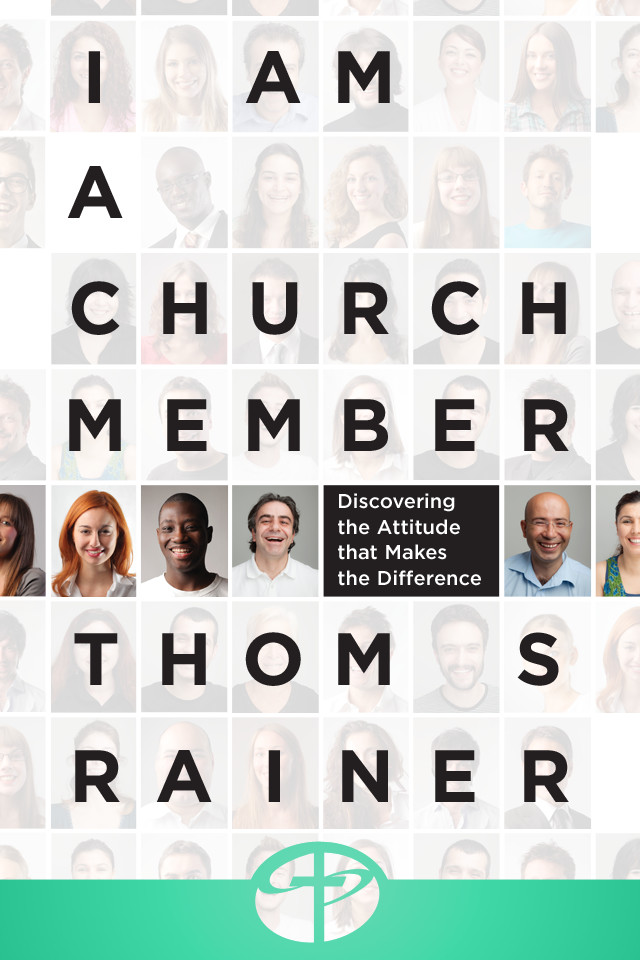
I am a church member

I Am a Church MemberI am a Church Member by Thom Rainer is a heart-warming and encouraging little book. It gently urges the Christian reader to understand and fulfil their role as an active participant in the church. Rainer contrasts the church with the image of a country club. In the club a member is one who pays their annual subscription and then feels entitled to receive certain perks and to be served by others. People come to the country club with expectations and demands. Membership of the church is more integral and organic. If we belong to Jesus, then we are already essential members of the church body, and we each have an important part to play. We are called to serve one another rather than seek to be served.

The commendations for this book run for many pages and read like a ‘who’s who’ of contemporary church leaders. But this doesn’t guarantee the merits of the book. It’s strength lies in it’s biblical foundations. Ultimately church membership is viewed as a gift from God. It comes through God’s grace in salvation through the death and resurrection of Jesus Christ. It’s a privilege, not a burden, or a set of rules to be followed.

I appreciated the way that prominence is given to love as the centrepiece of Christian relationships. The church is called to express itself in love for one another (1 Corinthians 12-14) and love is to be the hallmark of true Christians (John 13:35). Sadly, churches are easily damaged by a lack of love, disunity, gossip, and a lack of forgiveness. We are called to remember how we have been treated by Jesus Christ. He forgave the unlovely, and we are called to the same attitude.

Rainer reminds us that the word servant occurs 57 times in the New Testament and the word serve 58 times. Jesus modelled this and he called his followers to do the same. Church is not the place to have our personal preferences satisfied by others. It’s the context for putting the wellbeing and needs of others before our own.

The book finishes with the reminder that church is the fruit of the gospel. Rainer outlines how the sacrifice of Jesus Christ calls us into relationship with God. It’s the joy of salvation, rather than legalistic obligation, that will draw us into loving one another as part of God’s church.

I appreciated this book because it is short and simple (only 79 small pages). In many ways it would be a good book to offer newcomers to our churches, at the close of a welcome or orientation program, or as they are welcomed into some kind of formal membership. It is also an important book for old-comers or occasional-comers to our churches, because it urges us to look afresh at what church is really all about.

Interestingly, each of the six chapters in I am a Church Member finishes with a pledge for the reader to sign. This seemed rather counter-cultural to me. Perhaps, it’s more of an American thing, or typical of other church traditions. Whatever, the intent is clear—Rainer wants to encourage the reader to act on what he has written; to make a difference in our churches. And so we should!

A bucket list prayer answered

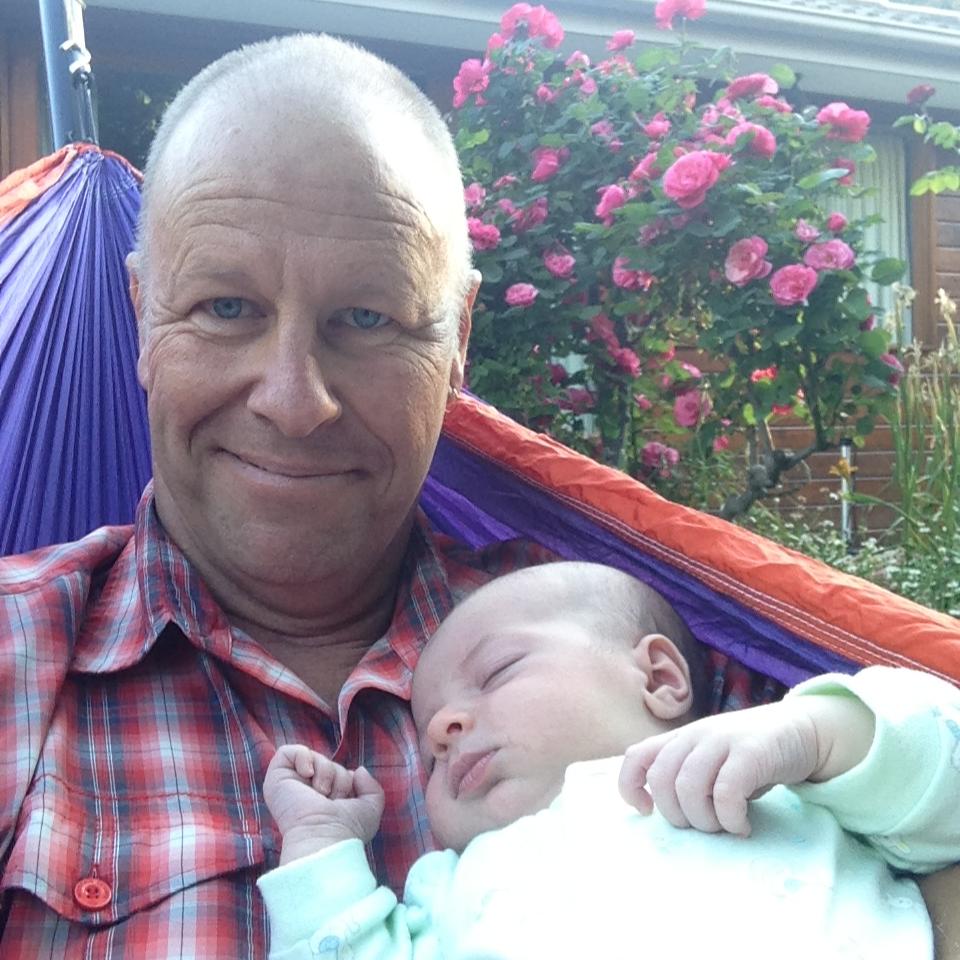
liamAs I lay in hospital nearly two years ago, I prayed that God would be gracious to me and allow me to live long enough to meet my first grandchild. Mind you, I didn’t share this prayer point with my children because I didn’t want to put any pressure on them! Well, two weeks ago God answered my bucket list prayer when Liam John was born to Sharon and Luke. We love him. I have to pinch myself to believe that I’m actually a grandpa, but it’s pretty cool. He doesn’t say much, but we like hanging out together in the hammock in our backyard!

Bubble bubble toil and trouble

BubblingI’ve now officially lost count of how many courses of chemo I’ve had. Somewhere over 30 is the answer. I just keep on putting more and more poison into my body! People have asked me whether it gets easier. That’s difficult to answer. I struggle more with anxiety now. As the day approaches, the blood tests, the smell of the ward, the needles, the confinement, the knowledge of what’s to come. It all seems to increase my anxiety.

The last couple of treatments I’ve displayed more physical anxiety symptoms. My temperature goes up and I start sweating. The nurses bring me an iced water, I raise my feet, and I try to relax. It’s easier if I can pass the time quickly, but I can’t stay focused on anything. I need to shut my eyes. It would be easiest if I fell asleep. I ask the nurses to speed up my dose, to get out of there more quickly. I do pray about my anxiety, but God doesn’t necessarily take it away. Still, it’s good to talk to him about it.

The after-effects vary considerably. In some ways, knowing what to expect makes it easier. But this last cycle surprised me. The aching, and cramps, headaches, and nausea all seemed so much worse. I wondered if it was because I’d lost so much weight. I thought perhaps they were overdosing me with the poison, because the dose is calculated according to bodyweight. But a call to the ward today revealed they’d been under-dosing me for a year or so! It had been based on a weight that I haven’t been since April last year.

This has been a difficult week to feel so sick. My mother has been in hospital, my parents’ house is under threat from the fires, there are big issues on the horizon, we’re expecting our first grandchild, there are talks to be written, and clear head and able body would be so helpful. But I can’t control these things. Only God can. And he decided that I’d be better off spending time in bed and achieving very little rather than busy solving the world’s problems—or even my own.

Another good lesson is patience, humility, and trust.

Targeted therapy now available

Yesterday I met with my oncologist to discuss how things were going. He was pleased with my condition, commented on my weight loss, and was open to discussing longer term strategies. The immediate future means continuing on the three-weekly regime of chemo with Alimta and Avastin. This has proven the right cocktail for attacking my cancer, even if it has resulted in some damage to the rest of me. I’m also hoping to take a brief rest every now and then to help the body recover.

He also informed me that Crizotinib (Xalkori) has now been approved by the TGA for use in Australia. It is available in many countries throughout the world, but Australia has been dragging the chain. If you’ve been following this blog for some time, you might remember that this is a targeted therapy for the particular genetic mutation (ALK+) that is driving my cancer. This drug blocks the cancer pathway without having much impact on the other organs in my body. While not being a cure, Crizotinib has given medical hope to many lung cancer patients throughout the world. We thank God for this development as it opens the door to other treatment options down the track if needed. Thank you especially to those who have prayed that this drug would become available.

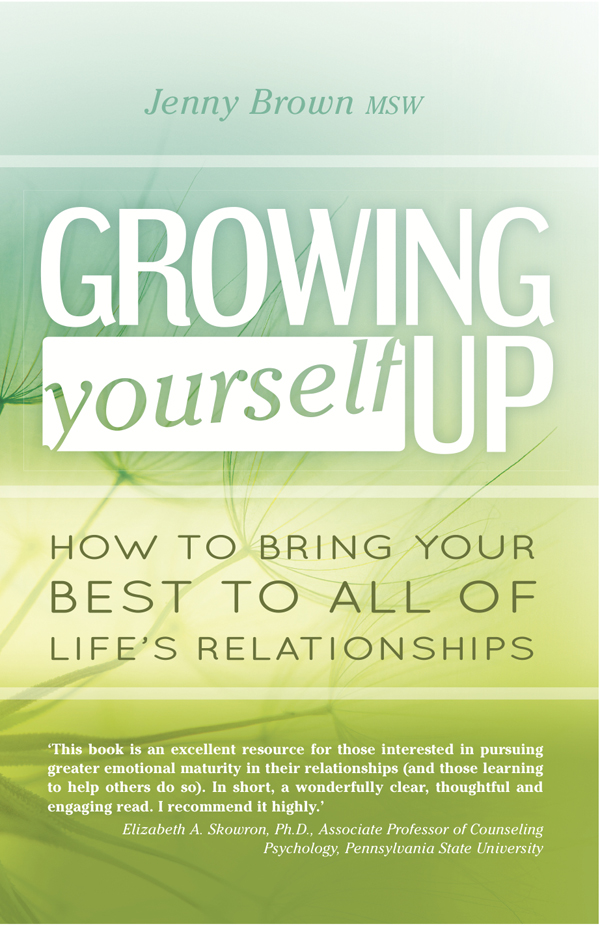
Growing yourself up

GYUThis book takes me back a quarter of a century to my times as a social worker. In the final year of my BSW degree, I focused primarily on studying family therapy and the writings of Murray Bowen were very influential. I loved this stuff. It was so helpful to see people as part of a family system and to explore the influences and impact of relationships, family members, experiences, and expectations. One time we saw an adolescent boy for counselling. He had been acting out at school and finding a multitude of ways to get into trouble. It wasn’t until we met with his family and discovered that his father had become dependent on a kidney dialysis machine, that we were able to begin understanding and helping him. It wasn’t his problem alone–it was a family problem.

I enjoyed reading through this book and discovered many insights relevant to my circumstances. I know others have found much benefit in this material, but one or two have commented to me that they’ve found it hard going, like entering another world with its own vocal and jargon. Perhaps, my earlier training made this book easier.

Jenny Brown has built heavily on the work of Bowen in her excellent book, Growing Yourself Up. You could probably describe this as a ‘self help’ book, but with a difference. It’s about helping the reader to gain an increased sense of ‘self’ to enable them to enjoy better relationships with others. We grow into personal maturity as we learn to more clearly differentiate ourselves from others so that we develop healthy personal relationships. This book draws on family systems theory to help us understand who we are in the light of, and distinct from, our relationships with others. Our families of origin have a profound impact on who we are—how we think and act and speak.

Brown’s underlying conviction is that it’s never too late for any of us do do some more growing up. Greater emotional maturity is at the heart of this goal.

This book starts with the big question: Are you willing to take a fresh look at your own maturity gaps, instead of declaring that another needs to ‘grow up’?  (p8)

Growing Yourself Up helps us to see and understand the immature part that that we are playing in our relationships with others. Instead of pointing the blame, we are helped to see our own contribution to the problems and impasses we find ourselves caught up in. Unlike much recent psychotherapy which focuses on finding our inner child, this approach is about growing our inner adult in all areas of our relationships. Moving beyond childhood to adulthood can be expressed by the following attributes:

  1. Have your feelings without letting them dominate; tolerate delayed gratification
  2. Work on inner guidelines; refrain from blaming
  3. Accept people with different views; keep connected
  4. Be responsible for solving our own problems
  5. Hold onto your principles
  6. See the bigger picture of reactions and counter-reactions  (p17-19)

It takes time to work through these things. We need to learn about ourselves in relationship with others. We need to learn not to let our emotions dominate our thinking. We need to learn how to take control of our anxieties. This is all part of growing our inner adult—slowly.

Relationships—close relationships, while remaining a distinct self—are at the core of adult maturity. Our experiences of relationship from our earliest times vary along a continuum of feeling isolated and abandoned, through to feeling inseparable or smothered by others. We are helped to understand more clearly the strengths and weaknesses of our previous experiences of relationships—especially those in our family of origin—and how they impact our decision making in the present.

This book takes us through various key life stages, circumstances, and changes. It looks at the threats to and opportunities for growing in maturity. Such areas include leaving home, single adulthood, marriage, sex, parenting, work, facing setbacks such as separation or divorce, midlife, ageing, empty nests, retirement, old age, and facing death. Pretty well covers it really! In all these situations there are issues to face in our quest to grow into adult-maturity. This book helps us to understand our part in navigating these changes and stages wisely.

One section in this book, I found particularly helpful deals with the temptation to triangulate our relationships, especially in situations of conflict. This is one of the major threats to adult maturity. A relationship triangle is where the tensions between two people are relieved by escaping to a third party. (p44) This may serve to dissipate tension and help families and groups to manage, but it also results in issues not being addressed and often placing the third person is a vary awkward position. It’s helpful to examine how we might have been (or currently be) involved in such triangles, and why. Such triangles are very common and universally unhelpful for dealing with conflict and tensions in families, churches, teams, and a range of relationships.

This is the type of book that you benefit from reading through completely and then returning to digest the most relevant sections in more detail. As a pastor who deals with people all the time, I found this book offering many helpful insights. It is especially important to understand people in the context of their relationships. And it’s in these relationships that we grow ourselves up.

Life’s for the living

Recently I’ve been listening to a fair bit of Passenger. I love the music and the poetry of the lyrics. One song goes:

Don’t you cry for the lost
Smile for the living
Get what you need and give what you’re given
Life’s for the living so live it
Or you’re better of dead

Life is for living, and I feel so privileged to have spent a few days camping by the ocean. There’s something about being outside, under the trees, by the sand and the sea, to make you feel alive. I thank God that I’m alive and for the treats He’s given me over the past few days:

Time with my son away from the TV.
Swimming in the glassy ocean, hiding from the hot northerly winds.
Watching a young seal playfully skimming through the waves.
Learning to catch bream and spending forever cleaning, filleting, barbecuing, and eating them.
Rocking gently in the hammock to the sound of the wind in the trees and the surf on the beach.
Soaking up the sunsets.
Sitting by the campfire, shifting my gaze from the flames to the moon and the stars.
Talking to my Father in heaven and thanking him for life.

fire sunset burrillsunset bream

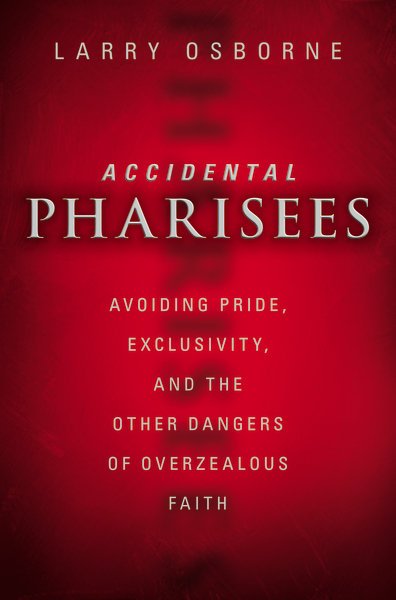
Accidental Pharisees

accidentalphariseesAccidental Pharisees by Larry Osborne has been recommended to me a couple of times recently. Having now read it, I’m wondering if my friends figured that I needed to learn the truth about myself or whether they simply wanted to know what I thought about the book. It has helped me to see more clearly how easily I can fall into pharisaic behaviour. For one thing, it’s easier to see others in the book rather than myself—surely this alone makes me a classic Pharisee! But I can also see my own capacity to make rules where the Bible has none and to measure myself and others by things other than the gospel of God’s grace in Jesus Christ. This book is sharp, yet gentle. It allows us the gracious assumption that we don’t want to be Pharisees—but it’s easy to accidentally become one.

Accidental Pharisees resonates with a worry that I’ve had for some time–that it’s easier to follow the tribal position than to assess how we think and speak and act in the light of Scripture. I touched on some of these themes when I wrote a post called Get off the Bandwagon. It addresses some of the same issues as Joshua Harris’s excellent little book, Humble Orthodoxy. My worry is that we can major on the minor issues and lose sight of the major issue. And we argue our positions with such a passion that we fail to love the people who take a contrary viewpoint. I’ve seen evidence of this in blog comments and Facebook posts over recent times, with reference to such matters as the Sydney Archbishop election. Sadly, I’ve seen a stronger push for Christians to distance themselves from one another over non-salvation issues, than they have to affirm their unity in salvation.

This is not to say that doctrine is unimportant. Nor that the Scriptures are not the authoritative and clear revelation of God. Doctrinal truth brings life and the Bible leads us to faith in Jesus Christ and equips us fully for every good work. Truth is foundational to life and to unity. But the Scriptures are a message of love, grace, mercy and kindness. If we speak ‘truth’ without love then we are distorting God’s word. If we seek to love without truth, then we will ultimately fail, for only the truth can be truly loving. And so we are called to speak the truth in love and not separate the two (Ephesian 4).

I believe that Accidental Pharisees is a word in season. It addresses all kinds of blind spots. It challenges us against taking the higher moral ground and looking down on others. It warns against the dangers of pride and exclusivity. It unpacks some of the new ways we can introduce legalism. It spotlights the dangers of seeking uniformity rather than rejoicing in our unity in diversity.

There is a tendency among Christians to divide into tribes along non-essential lines. Osborne writes that:

We’ve coined words like radical, crazy, missional, gospel-centred, revolutionary, organic, and a host of other buzzwords to let everyone know that our tribe is far more biblical, committed, and pleasing to the Lord than the deluded masses who fail to match up. (p90)

These labels have their usefulness. They can be used to correct wrong emphases or to call the troops to action. But they become dangerous when used as a shibboleth to divide Christians from one another. We have centuries of tradition in doing this—Baptists separating from Presbyterians; Methodists from Anglicans; Congregationalists from Episcopal churches. There have been good reasons for many of these distinctions and even separations, but the label or the club is not what defines or describes a true believer. That privilege belongs to the gospel of Jesus Christ alone. Of one thing we can be sure—none of these badges will have any relevance in heaven.

Accidental Pharisees also warns against a bullying behaviour that is more keen to separate the sheep from the goats than it is to win back the lost sheep. Some churches and their leaders are very committed to setting a high bar of ‘Christian’ performance and they castigate the under-performing and the luke-warm. This change strategy tends to favour the big stick over the winsome power of the gospel. It can easily become a slippery path to a legalism that has forgotten the gospel all together. We would do well to remember that but for the grace of God go I.

I expect a book like Accidental Pharisees to receive a mixed response in the Christian community. Some will embrace it because they see the Pharisee so clearly in others. Some will reject it because they see it as an excuse for discipline-less Christianity. I recommend we read it with a view to log extraction, so that we can see more clearly to help one another with our various splinters.

‘Do not judge, or you too will be judged. For in the same way as you judge others, you will be judged, and with the measure you use, it will be measured to you.

‘Why do you look at the speck of sawdust in your brother’s eye and pay no attention to the plank in your own eye? How can you say to your brother, “Let me take the speck out of your eye,” when all the time there is a plank in your own eye? You hypocrite, first take the plank out of your own eye, and then you will see clearly to remove the speck from your brother’s eye. (Matthew 7:1-5)

Consider—consult—contribute

nutsboltssmalliconThere are many reasons why people might find it difficult to speak up in a Bible study. Some will fear getting the answers wrong; some will be too shy to speak up; some will be intimidated by the group setting; some won’t have their head in the game and be distracted by other matters. So how can we make it easier for people to engage?

You might also find that the same people tend to dominate discussion. They are quick to jump in and answer questions or perhaps they will tend to offer an opinion on most topics. Some people are more confident in handling the Bible and others rely on their experience or general knowledge in answering questions. So how can we get others to contribute and keep the study from being a forum for one or two ‘experts’?

Here’s a suggestion: try the consider—consult—contribute approach.

Consider
When you ask the group a question get people to take some time to consider the answer for themselves. Point them back to the Bible and get them thinking about what it means and how it applies. No one needs to speak up at this point.

Consult
Then suggest people get together in twos and threes to discuss their observations and answers together. If there are only two or three people, it will make it easier for the less confident people to speak up. Make it okay for people ‘not to be sure’ and get people cooperating by sharing their thoughts and ideas. Encourage people to listen to each other and give one another equal time.

Contribute
After people have had time to work things through in their pairs and triplets, a few people can be invited to share their little group’s findings with the group as a whole. If you ask a few questions using this approach, then you can ensure that a variety of people contribute by sharing with the group.

Sounds of silence

nutsboltssmalliconYou ask a question of your group and you’re met with blank looks and the sounds of silence. What do you do?

We all have different tolerance levels when it comes to silence. Some leaders are tempted to jump in and immediately answer their own questions. This isn’t a good idea, as it doesn’t do much for group dynamics! If you need to answer your own questions then you might as well be giving a lecture, not leading a small group discussion or Bible study.

As a general rule you can assume that the silence will seem longer to you than it will to others. People need thinking and processing time. Some need more than others. If the silence continues for an unbearable period, then you might want to ask the group if anyone understood your question. Perhaps your question was unclear, confusing, or too complicated. Maybe you’ve actually woven more than one question together and people are trying to unpack what you’ve asked. It might be helpful to rephrase your question, or ask if there is someone in the group who could repeat the question in their own words. Asking good questions is a skill to be mastered and we will pick up on this in other posts.

Under contract

ContractOn Friday I signed a contract with Matthias Media for them to publish my book, Hope beyond cure. I’m very excited to have this opportunity. It’s not a book I ever envisaged writing—actually I never envisaged writing any book. My desire is for this book to encourage people. I pray that people will journey with me as I explore where hope can be found. I thank God that he has given me this opportunity.

Thank you to all of you who encouraged me to write. It has been a steep learning curve, but I hope what I’ve learned will encourage others. At this stage, we are expecting the book to be available sometime early in the new year. It won’t be ready for Christmas, but then it’s not really a Christmas present type of book. If you know people who are doing it tough, struggling to find purpose in life, have questions and doubts regarding faith, going through serious illness, even facing off against death, or just like reading—this could be for them. I believe it engages with many of the serious questions we all face, but rarely discuss—but I’ll leave it to you to decide (shameless early plug)!