Custom make your own conference

This time last year I was enjoying the Geneva Push In the Chute conference in Melbourne. I gathered with others from all over Australia, young and old, from a range of denominations, to encourage each other in the work of planting new churches. In some ways, I was the middle-aged pinup boy, heading to the Top End to begin all over. It was exhilarating to feel the energy, especially from those who were moving to new places to reach out with the message of Jesus. I had the privilege of teaching on why we need to keep planting new churches, how to build ministry teams, as well as sharing our specific dreams and plans for outreach in the Darwin area.

This year, I’m unable to attend. I’d truly love to be at the conference, listening to Don Carson teach, finding out how some of the new churches are travelling, and generally being encouraged to keep on with the work of ministry. However, health, other commitments, and distance are keeping me away this time round.

Depending on our networks, some of us could spend an awful lot of time at conference after conference. In my case, I get drawn towards church conferences, FIEC conferences, men’s conventions, CMS summer schools, Geneva Push conferences, MTS conferences, AFES conferences, FOCUS camps and conferences, RUPA conferences, Easter conventions, Arrow Alumni conferences, AFES staff and regional directors conferences, speaking at other camps and conferences, and the list could go on!  Sometimes it’s simply too much and not all of them are always that relevant. I understand that I’m there for what I can give as well as what I might get, but there are times when I just crave to focus on some particulars and we just don’t go there.

3stoogesI thought I’d share a do-it-yourself idea that I came up with a couple of years back. I customised my own mini-conference that just involved 3 or 4 people. Our church was going through a few strategic and structural changes and I was keen to gain wisdom from others in thinking through these issues. I made contact with a couple of other senior pastors, whose churches were at a similar size and stage, and we organised to set aside two half days to talk things through together. I took a colleague with me, and we flew to Brisbane to catch up with the other guys.

In order to maximise our time together, I wrote up a couple of pages of topics and issues that I was keen for us to discuss. This helped us to think ahead and to stay on topic in the limited time we had together. Each of us had been reading one or two of the same books that had been shaping our thinking about ministry, and so we were able to interact with these ideas also.

I confess to driving the agenda because there were things that I was keen to nut out. We were able to explore how each of us approached different ministry issues, what our churches were doing in a range of areas, how we planned and organised, and more. Talking together afterwards revealed that each of us had benefited in different ways through our time together.

Some of my peers do a similar thing from time to time, so as to focus on their preaching. They meet together for a couple of days, share ideas for a series of talks, preach and critique each others sermons, discuss their exegesis or illustrations or applications, and show how they’ve integrated the preaching with a series of Bible studies.

The advantage of these do-it-yourself mini conferences is that they are tailor-made. You meet for a clear purpose, you contribute to that purpose, and you get out of it what you put into it. It can be organised around your timetables and calendars. You can do it in-house if you have a large staff team, or you can coordinate with others in other places if you’re more isolated. This strategy will work to connect people in similar types of ministries also. Children’s workers can get together with other children’s workers … so can youth workers, women’s workers, executive pastors, small group coordinators, evangelists, school chaplains, and so on.

If you want to make the most of your time, then I recommend you consider the following:

  • agree on the main purpose of your conference
  • put together an agenda or list of issues to be discussed and allow time for people to prepare in advance
  • consider a book or two, or other resources, that are related to your issues, and get people reading these in advance so as to inform your discussion
  • clear your diaries of other commitments and meet in a comfortable place that is free of distractions
  • pray for each other throughout your time together
  • take notes of ideas and have someone distribute a follow up summary of discussion and ideas
  • contact each other a few weeks after your conference to see how things have progressed.

As iron sharpens iron, so one person sharpens another.  (Proverbs 27:17)

Christmas uncut

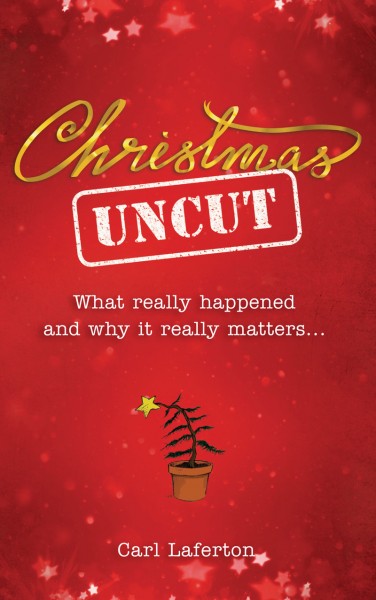
christmas_uncutA friend was telling me recently how much she enjoyed Christmas Uncut by Carl Laferton. I must have sounded interested because two copies arrived in the mail a few days later. It’s a good time to release a book like this, with Christmas only weeks (or is that days) away. I glanced through it, decided I liked what I saw, and promptly gave my two copies away! Anyway, I’ve since got hold of more copies and have now read it through carefully.

It doesn’t take long to finish this book, as there’s less than 60 pages with words on them. The pages are small and there’s even a few cartoons to keep you interested. Truth is, we don’t need pictures to hook us in. It’s well written, humorous, intriguing, matter of fact, and logical. Laferton shows how Christmas has become something of a children’s fiction. We all know that we’re not going to find Santa, or reindeer, or elves, or Christmas trees in the Bible. But what we don’t readily appreciate is how far from the truth many ‘Christian’ presentations of Christmas can be. Far from being a cute nativity story for kids, the real Christmas is filled with scandal, controversy, massacres and mystery. Maybe Stephen King and Stanley Kubrick should have teamed up to produce The Nativity – Director’s Cut!

carl_lafertonThis little book gets us beyond the commercialism and hype, the fiction and the fantasy, to the true message of the historical Christmas. Each chapter is divided into two parts: (1) what really happened, (2) why it really matters. Laferton uses real quotes from the Bible, accompanied by explanations and commentary of his own, to reveal exactly what took place. Then he explores some of the mind-blowing, earth-changing implications of these events. If you check out this video clip you can listen to the author tell you about his book, Christmas Uncut.

There are seven chapters, or ‘scenes’, in this book. Each one focuses on one character from the Christmas story and gives us a window into the significance of what took place for us today. Unlike many events in human history, that can be ignored without affecting anyone, the events concerning Jesus have major ongoing repercussions. Appropriately for Christmas, the bulk of the book deals with the accounts of Jesus’ birth and early years. However, these events cannot be fully understood without moving to the end of his life and examining the Easter accounts. The last two chapters tie all these pieces together.

Following the seven scenes are four brief chapters that point a way forward and begin to answer some common questions. The chapters are:

What next?
Yes but… isn’t this all made up?
Yes but… was Jesus really the Christ?
Yes but… surely Jesus didn’t really rise?

I enjoyed reading this book as it reminded me of what Christmas is really all about. It’s fun to read and it doesn’t take much time at all. This book makes for a cheap, worthwhile Christmas present. For less than $4 you can buy heaps of these, and if you speak to the publisher about bulk purchases they’ll probably do a deal (but don’t quote me!). I’m planning to get hold of more copies because I can think of many uses for this book…

  1. As Brumbies chaplain, I’ve decided to give one to each of the players, coaches, team staff and admin at the annual Christmas party.
  2. Your church could buy a whole bunch to give away to guests at your Christmas services or carols events.
  3. You could get one for each of your work colleagues.
  4. Your kids could give one to each of their teachers.
  5. You could stick one in your Operation Christmas Child shoe box next year.
  6. Get them to give away at your Gingerbread House, or equivalent, events.

If you’re a pastor, and you haven’t written your Christmas message, and you’re fishing for ideas, then this book will come to your rescue. There are at least seven Christmas sermons in this book. But don’t be so lazy!

Holding on to hope

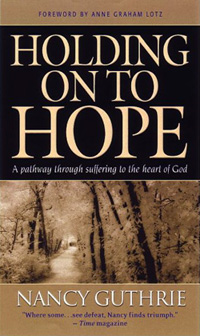
holding on to hopeSome things in life seem completely unfair. Having a baby, knowing that they will live for only a few short weeks or months, is one of these things. The pain and grief for the parents and siblings is too difficult to contemplate. For this to happen twice within the same family beggars belief. Holding on to Hope by Nancy Guthrie tells the story of the Guthrie family and their loss of two children with a metabolic disorder called Zellweger Syndrome. Their daughter, Hope, lived for just over 6 months and their son, Gabriel, lived for a little less than 6 months. Nancy describes their staggering loss and broken hearts. More than this, she writes of the wonderful hope to be experienced by turning to God in our brokenness.

Holding on to Hope invites us inside Nancy’s personal journey of suffering. She examines her own story of loss in the light of the biblical Book of Job. These Scriptures offer insights on dealing with pain, listening to others, grappling with despair, searching for meaning, struggling to trust God, handling our emotions, and where to find hope.

Job is the longest exploration of suffering, grief and hope in the Bible. Its sheer size and its apparently depressing tone have scared many readers away from learning its lessons. One friend of mine went to a church where the minister preached one chapter of Job every week for 41 weeks. It seemed like the minister wanted the congregation to get a taste of Job’s suffering! Surely 4 or 5 weeks would be a better approach. I preached it in one week! Another friend of mine is fearful of reading or preaching on this book, because he superstitiously expects things to go wrong if he does so. I would have thought that things are going to go wrong anyway, so we may as well learn what we can from Job!

Nancy Guthrie takes us gently through her experiences, engaging in every chapter with the text of Job. This is a book of compassionate wisdom. It’s the kind that you can confidently pass on to a friend who is suffering, knowing that you have left them in safe hands. This is no academic work or dispassionate apologetic – it’s a kind word from one who knows suffering and who listens to God’s word.

The overall structure of the book traces Nancy’s experience with her daughter, Hope, through pregnancy, birth, death and grieving. While the family is struggling to deal with the loss of their daughter, they are growing in the hope that comes from trusting the promises of God. Toward the close of the book we learn also of Nancy’s pregnancy with Gabriel, who also has Zellweger Syndrome. This is a tragic, yet hope-filled story.

Each chapter begins with a brief reading from Job, followed by a reflection on her own experiences. The chapter headings below will give you insight into the breadth of issues addressed:

Loss   Tears   Worship   Gratitude   Blame   Suffering   Despair   Why?   Eternity   Comforters   Mystery   Submission   Intimacy

Hold on to Hope is a journey of faith, hope and love. We see God at work by his Word and Spirit in the lives of Nancy and her husband, David. She helps us to grieve well, to turn to God in thanks, to trust God, to seek to honour him, to find hope in God’s promises and faithfulness. She shows us where to turn when it’s all too much, what to do when people’s words (or lack of) hurt more than heal, and why God should always be our strength and refuge.

I found some of her words very personally confronting. In one instance, she reverses a typical prayer for healing that’s accompanied by a whisper of “If it be your will”. She suggests instead the following:

Shouldn’t we cry out to God with boldness and passion and persistence in a prayer that says, “God, would you please accomplish your will? Would you give me a willing heart to embrace your plan and your purpose? Would you mould me into a vessel that you can use to accomplish what you have in mind?” And then, perhaps, we could add a tiny P.S. that says, “If that includes healing, we would be grateful.”

Isn’t real faith revealed more through pursuing God and what he wants than pursuing what we want?  (p79-80)

My wife read this book years ago. In fact, there are usually a few copies floating around our bookshelves because she keeps buying them to give away to others. One friend, whom she’d given a copy to, asked me on the weekend if I’d read it. So now I have! This was a woman who’d given birth to a little boy who died within an hour of his birth. She told me that she’d found it helpful and encouraging. I known Fiona has given copies of this book to grieving mothers of stillborn babies and others who’ve experienced significant tragedy and sorrow.

Don’t think it’s just a book for mothers or women. I found it spoke to personally to me. It has relevance for people struggling in a range of areas, such as unemployment, bereavement, serious illnesses such as cancer, divorce, depression, anxiety, loneliness, chronic fatigue. These are all circumstances where our hearts are tempted to turn away from God. This book gently draws us back.

The edition which I’ve just read contains additional resources for the reader. There’s a list of Bible passages related to the theme of each chapter. There’s also an 8 week study guide which is designed to be used by individuals or groups. These studies take the reader deeper into the Book of Job, as well as other Bible texts, and include questions for discussion and application. She invites you to visit her website at www.nancyguthrie.com to write a message, share your story, or discover more resources to help you find hope in the midst of suffering.

Please don’t stop praying

Having cancer isn’t much fun. From time to time I follow a forum where people share their stories of having cancer, or of caring for those who do. Some of these stories are heartbreaking. The pain, the fear, the loneliness, the hopelessness, the cruel and depersonalising invasion of cancer through the body. Once active, strong, happy individuals, being reduced to feeble shadows of their former selves.

What has both surprised and encouraged me, is how often people are asking others to pray. “I have scans tomorrow – please pray.” “My husband has developed pneumonia – please pray that it will clear up so he can continue his treatment.” “I’m so afraid of the prospect of losing her – please pray that I will be strong.” “My kids are really feeling it – please pray for them” “It’s spread into the brain. I’m so terrified – please pray for me.” “There doesn’t seem to anything left we can do – please pray.”

It’s not just the requests for prayer. It’s also the offers to pray. People will share their struggles and sometimes others reply, saying that they will pray for them. Sometimes people share that they’ve been praying for someone. Sometimes they even share what they’ve been praying.

NTE_prayer_2011I’ve been overwhelmed by how many people have been praying for me. Many of these I know about. Friends, family, people at church. I’ve been amazed to discover that I’ve got a spot in people’s prayer diaries. Some people have told me they pray everyday without fail – and I believe them. Others have said they pray every now and then, when they think of it. Some pray when they get news or when they read this blog. I was remembering tonight, as I visited the NTE conference with around 2000 other people, that 1500 or so students had gathered in small groups to pray for me at the same event last year.

Over this weekend I’ve met four strangers who, upon being introduced to me, said that they (and sometimes their churches) had been praying for me all year. A couple of months back I sat beside visitors at church who, when they discovered who I was, said it was so good to put a face to the name because they’d been praying for me for some time. These serendipitous experiences have been happening all year. What a blow out! So many people have been praying. People I’ve never met, who’ve never met me, but who’ve been moved to speak to God on my behalf. I’ve felt so privileged and have been so encouraged by this news.

Over the years, and even now, our family has also been praying for others with cancer and serious illnesses. We’ve prayed for my dad, Bronwyn, Peter, David, Judy, Nanette, David, Ed, Jenny, Eleanor and others. Some of these people are in remission, others are still fighting, and some have lost their lives. We also remember their families in our prayers. Sometimes I offer to pray for people I’ve met through forums, facebook, or the blog. I try to pray immediately after I make the offer, so that I don’t forget!

Our Heavenly Father is the one who holds our lives in his hands, so it makes enormous sense to speak to him about such life and death issues as cancer. I ask God to heal people, I ask him to heal me, and I ask others to pray for my healing. But I also ask God to work within my heart and mind, to change the way I think and feel about things. I want him to help me trust him, to rely upon his goodness, to treat others with love and kindness, and to hope for eternity in him. God may choose to heal me, and I hope he does, but whatever happens I pray that he will be honoured in my life and others.

So please pray and please keep on praying. Not just for me, but for yourselves, for others, for those with cancer, for their families and friends. And don’t limit your prayers to matters like cancer, even if your whole life is consumed by it. God says we can approach him on any matter. Nothing is too big or too small. So let’s pray, not as a last resort, but because God is more willing to do good in our lives than we are to ask him.

“Ask and it will be given to you; seek and you will find; knock and the door will be opened to you. For everyone who asks receives; he who seeks finds; and to him who knocks, the door will be opened. “Which of you, if his son asks for bread, will give him a stone? 10 Or if he asks for a fish, will give him a snake? 11 If you, then, though you are evil, know how to give good gifts to your children, how much more will your Father in heaven give good gifts to those who ask him!  (Matthew 7:7-11)

Do not be anxious about anything, but in everything, by prayer and petition, with thanksgiving, present your requests to God.  (Philippians 4:6)

Let us then approach the throne of grace with confidence, so that we may receive mercy and find grace to help us in our time of need.  (Hebrews 4:16)

Clearly God is inviting us to pray, but how long should we keep on praying? If we’ve prayed a few times and it hasn’t been answered, do we continue? Jesus prayed three times that God would take the cup from him. Paul prayed three times for the thorn to be removed from his flesh. Does this suggest three strikes and you’re out? Is it unreasonable for me to pray for the same things day after day after day? Is it wrong for me to request your continued prayers if you’ve been praying for a year already?

Doesn’t Jesus say we won’t be heard for our many words? It is true that Jesus said:

And when you pray, do not keep on babbling like pagans, for they think they will be heard because of their many words. Do not be like them, for your Father knows what you need before you ask him.  (Matthew 6:7-8)

It’s not the amount, or the frequency, or the specific words we pray that guarantee a hearing from God. He already knows our needs and invites us to humble ourselves before him. We are to come before God as his dependent children, trusting in his goodness, and seeking his will, as we present our requests. With this attitude, Jesus invites us to persist in our prayers:

Jesus told his disciples a parable to show them that they should always pray and not give up.  (Luke 18:1)

In fact, we could do a lot worse than to follow the example of Ephaphras, who kept working hard to pray for others:

He is always wrestling in prayer for you, that you may stand firm in all the will of God, mature and fully assured.  (Colossians 4:12)

And the Apostle Paul’s faithful persistence in prayer:

For this reason, since the day we heard about you, we have not stopped praying for you and asking God to fill you with the knowledge of his will through all spiritual wisdom and understanding. 10 And we pray this in order that you may live a life worthy of the Lord and may please him in every way: bearing fruit in every good work, growing in the knowledge of God, 11 being strengthened with all power according to his glorious might so that you may have great endurance and patience, and joyfully 12 giving thanks to the Father, who has qualified you to share in the inheritance of the saints in the kingdom of light. 13 For he has rescued us from the dominion of darkness and brought us into the kingdom of the Son he loves, 14 in whom we have redemption, the forgiveness of sins.  (Colossians 1:9-14)

But did you also notice what these guys were praying about? As huge as cancer is, there are bigger matters still. These are prayers that God will make our lives count, that we will persevere, stand firm, and bear good fruit in our lives. As much as I want you to keep praying for healing for people, including me, who have cancer, I’d ask you to pray for these things even more.

Thank you so much for praying, and please don’t stop!

DIY kids’ books

Cleaning out the filing cabinet is always a revealing experience. I was sorting through some cards, letters, artwork and other stuff, when I discovered a couple of my earlier book manuscripts! That’s right, I’m an author. This particular book was never published and was probably only read by four people. So here’s my chance to self-publish for a wider audience!

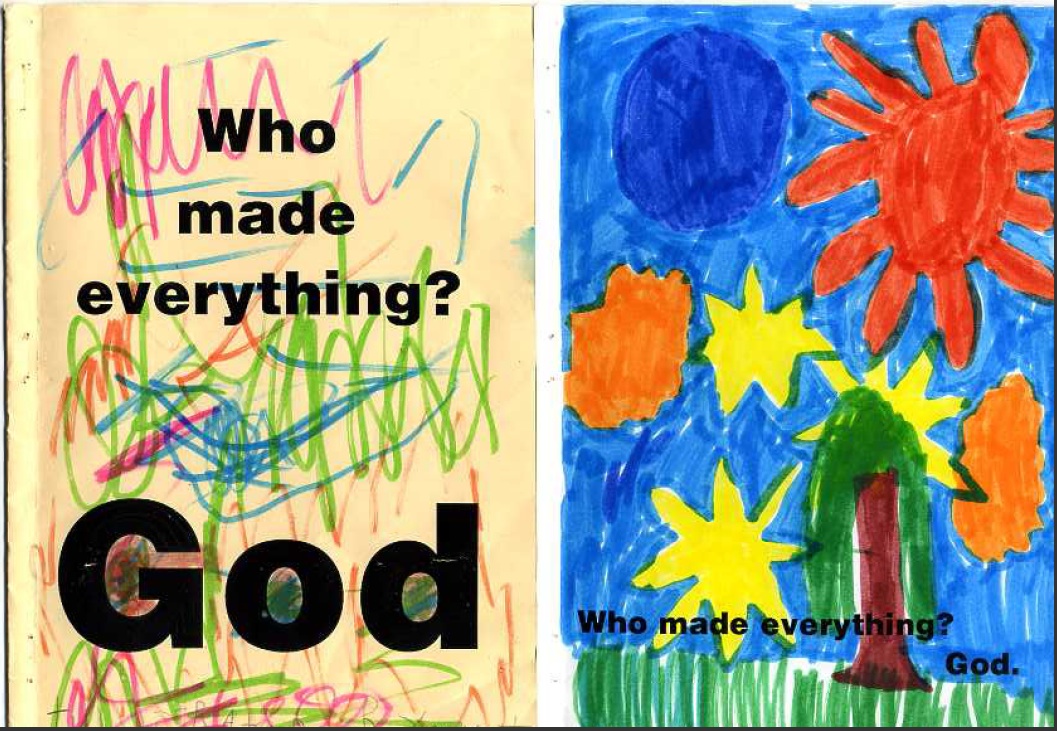
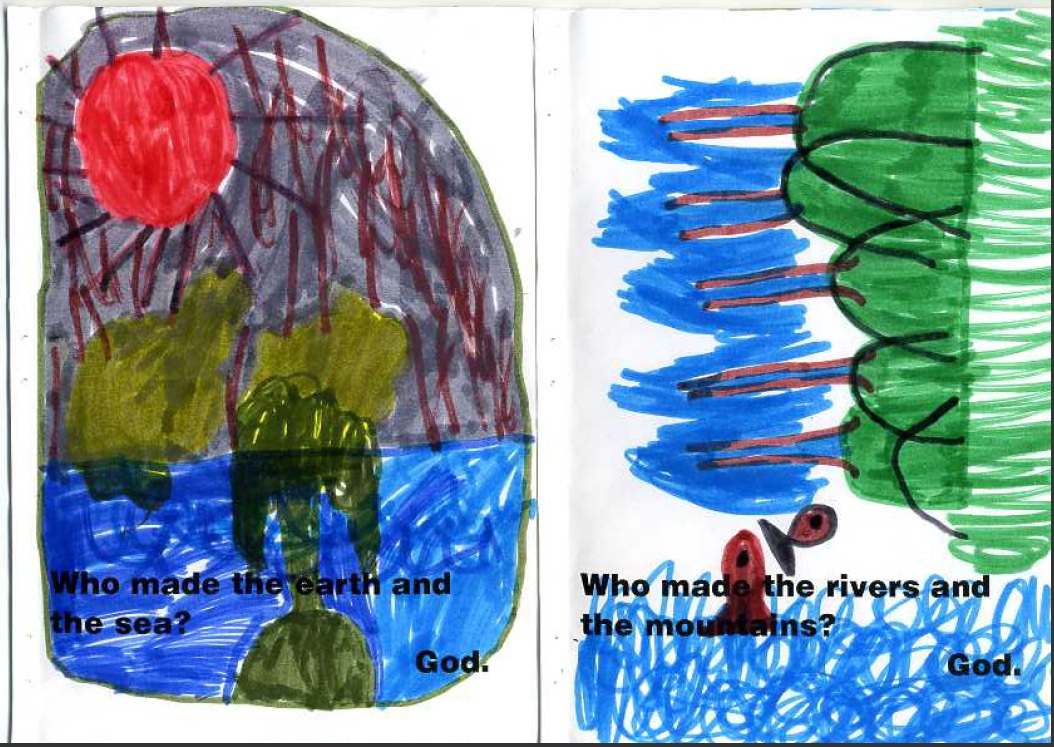
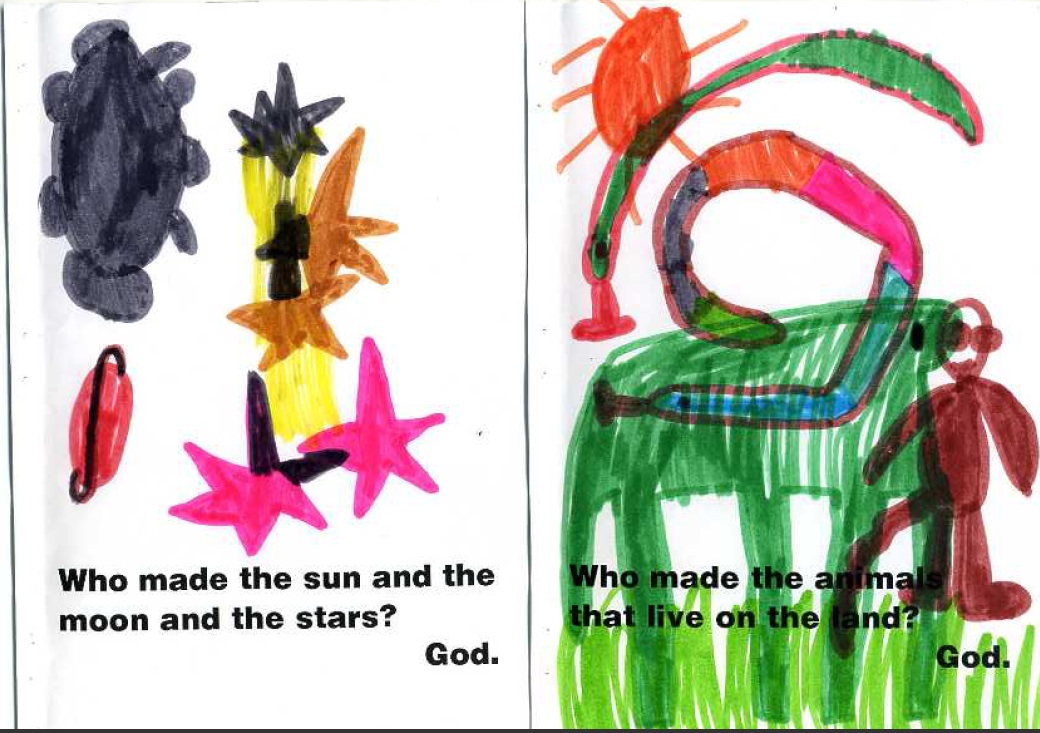
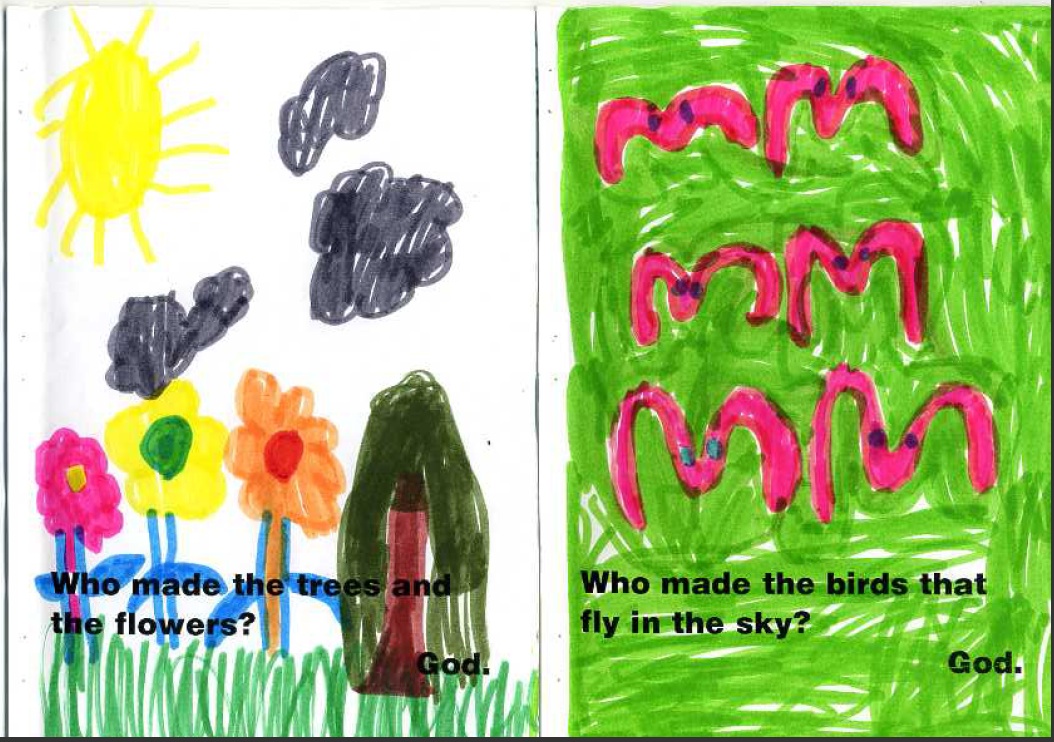
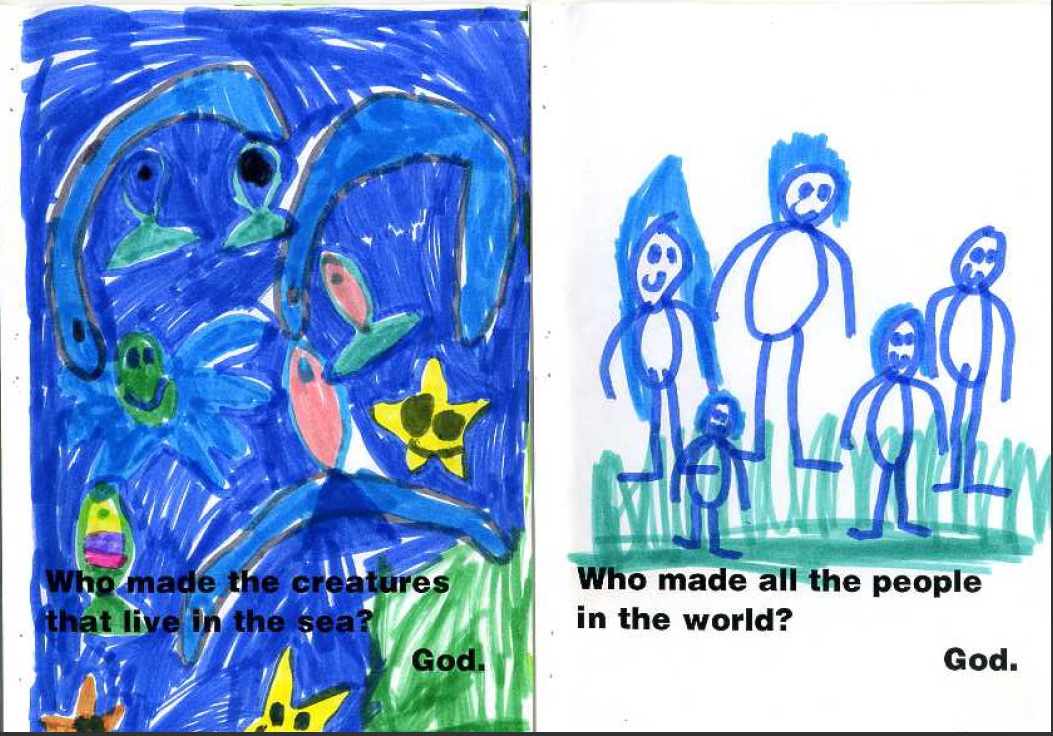
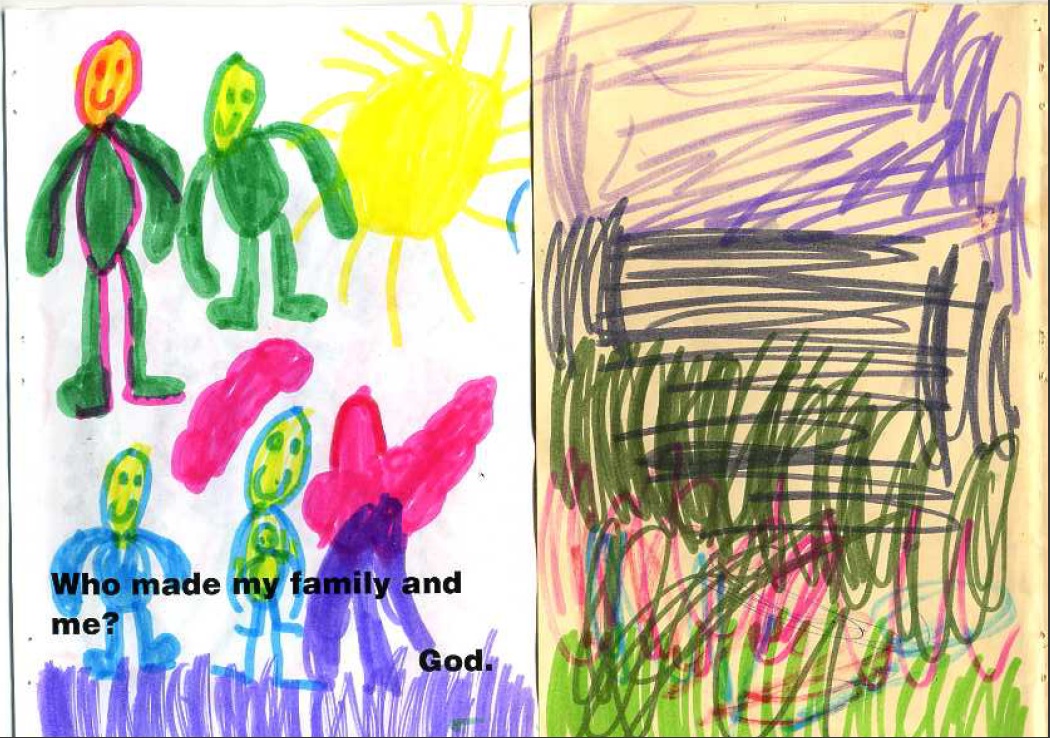
I was motivated to be teaching my kids (two young boys at the time) about God in a creative way. I’d been thinking about some of the question/response catechisms of yesteryear and this led to an idea for a DIY book for kids. I would write the text and my kids would do the artwork. Having written the words, I printed them into an A5 booklet, and invited my kids to draw the pictures. Below is the Limited First Edition entitled, Who made everything? God. Written by Dave McDonald and illustrated by Matt McDonald. Given that there is a baby either growing inside one of the family members, or in her arms, it must have been written around 1996, when Matt was 4 or 5 years old!

I produced another of these called Jesus is Special, where the text on every page began “Jesus is special because…“. We explored things Jesus said and did, his miracles, his death, his resurrection, and his exaltation – in simple words and sentences.

These books weren’t hard to do, we had fun together, and it was a creative way of getting our boys to learn about God. Why not give it a go, or share some of your own creative ideas.

who_made_everything_1

who_made_everything_2

who_made_everything_3

who_made_everything_4

who_made_everything_5

who_made_everything_6

Talking with kids about God

Birthday_Partyover_fencerag_dollgrumpy_day

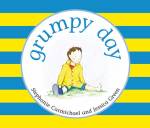
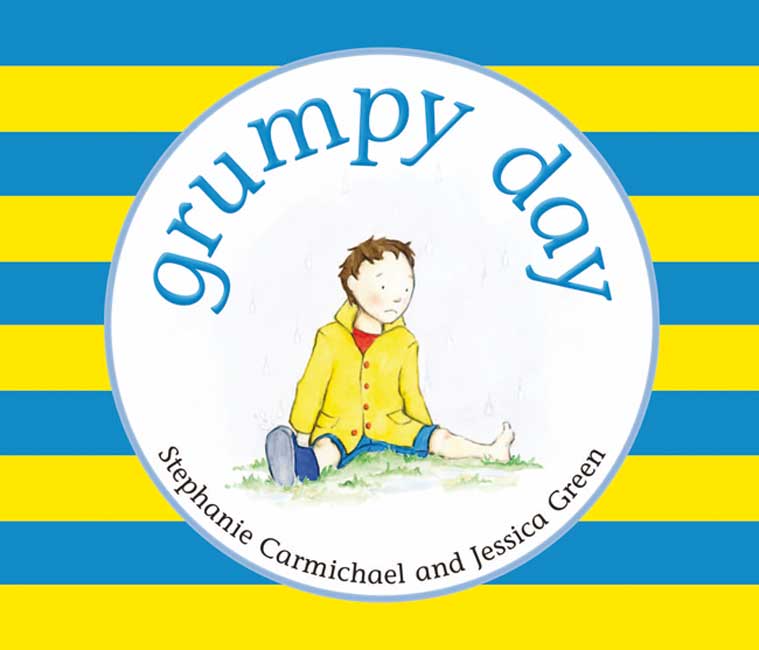
Having read Grumpy Day, by Stephanie Carmichael and Jessica Green, I admit to having hoped there were more books in the series! There are four and they’re all delightful, with engaging stories and colourful, homely pictures. Friends have told me how much their kids love these books and how they’re often preferred over other ‘cooler’ story books.

There are a few things I’d like to highlight about these books:

  1. They are enjoyable stories for preschoolers and they introduce talk about God in a very natural way. I think this will help to give confidence to parents with their kids.
  2. The stories are simple and their messages are uncomplicated. Each book introduces the reader to a key characteristic of God. These are foundational ideas describing God as God, the one who made us, who knows about us, and who loves us, and whom we can talk to.
  3. The notes for parents section in each book offers excellent tips for making the most of these books and reinforcing the message with other activities.
  4. This note from the authors, printed in the front of each book, gets to the heart of it:

    One of our hopes for these stories is that they will give you an idea of how easily and naturally you can talk about God with your children through the day, helping them grow up in a world where our great God is at the centre (Deuteronomy 6:4-7; Psalm 145:3-7). It’s all about using the little opportunities that crop up each day.

If you’re starting to think about presents for Christmas, then why not take a look at these books. You can get them individually, but it makes better sense to grab the set of four. The publisher’s website enables you to read through each of these books before you buy. It’s an excellent idea to check out what you’re getting before you decide. Having read, or even listened to the author read her own book, you can then purchase with confidence. Your kids, grandkids, neighbours’ kids, random kids will love you for it. These books would also make an excellent gift for friends or to offer your local play group or preschool.

Here’s a final tip for the publishers – reprint the books in a shoebox size and encourage people to put them in next year’s Operation Christmas Child shoebox gifts! This way families all over the world will benefit from them.

Marks of the messenger

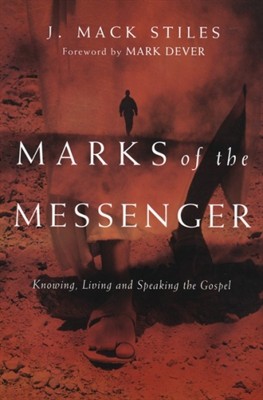
MarksI’ve been complimented a few times in the past 24 hours for writing this book. Given that I’m thought to have written it, I thought I should read it at least. Why the compliments and the confusion? Well, yesterday I attended the AFES National Staff Conference, where I gave the opening address. Before the talk, Mack Stiles was interviewed about his work in Dubai and then I was interviewed about my experiences over the past year. During my interview, Richard Chin realised that he’d forgotten to plug Mack’s book. He held it up, said how good it was, and that Don Carson had said: “I do not think I have ever read a book on evangelism that makes me more eager to pass it on than this one – better, that makes me more eager to evangelize than this one.”

What Richard said, and what people thought he’d said, differ slightly. Read the next two sentences out loud…

Mack has written this book…
Macca’s written this book…

You can see or at least hear the reason why people were mistaken!

Now that I have read Marks of the MessengerI can say that I’d be very happy to have written it. Not just getting the royalties, or the accolades from the back cover, or it being my first book – but for what it says! It’s a book that encourages people to know Jesus, to live for Jesus, and to speak up for Jesus. Some books on evangelism make me cringe as they focus on methods and strategies for marketing the message and impacting zillions of people. This book is about being authentic as a follower of Jesus. These are the things that should mark a messenger of the good news about Jesus.

I had in mind to summarise many of the excellent ideas in this book but, as I neared the final pages, I discovered that Mack has done this for us. He distills the previous chapters into what he calls A Manifesto for Healthy Evangelism (p112-113). But let me offer a quick description of the main points of this book.

  1. You can’t really share the breaking news of Jesus Christ unless you have a genuine relationship with him. This means acknowledging that Jesus has authority over your life and putting your complete trust in him. As you trust him, so you trust his words of life and desire to share this with others.
  2. It’s important to know the gospel well. Don’t mess with it by adding bits you like or subtracting bits you don’t like. If you mess with it, then it will be no benefit to anyone.
  3. The gospel can be lost in three generations. If one generation accepts it, then the next assumes it, then the next confuses it, then the next will have lost it. So keep the gospel at the heart of every thing you do and say in your life and ministry.
  4. The first application of our understanding of the gospel is not necessarily to share our faith, but to live a gospel-centered life. (p112) The gospel should influence every nook and cranny of our lives. It helps us to remember our sins and failings, enables us to resolve conflicts, shapes our parenting, and so much more. Our lives should look like the message of grace we share.
  5. God calls us to love people by meeting their needs. Some people are lonely, some are hungry, some are oppressed. We are called to love them. All people are in need of forgiveness, and God calls us to love them in this need also. This may involve many things, but at the heart it will mean letting them know about Jesus.
  6. Before people can put their trust in Jesus and turn to him as their Lord, they need to understand what this means and how it happens. There’s no point in people making meaningless responses. What’s required is genuine, reasonable, change of heart, and this will result in changed lives.
  7. We’re called to be bold – not to fear people, or to be ashamed of the message, or fearful of being rejected. So let’s pray that our fear of people will be replaced by reverent fear of God.
  8. The love of God is so different to corrosive, wordly views of love. God’s love changes people and builds extraordinary communities. Jesus said that people would know we are Christians by the love we have for one another. As we apply this in our lives, it becomes the greatest image of the gospel we offer the world.
  9. As we speak the gospel to those who don’t know the gospel, we cycle through three foundational challenges in our minds: Do I know the gospel? Do I live the gospel? Do I speak the gospel? (p113)

I’ve had the privilege of getting to know Mack over the past few years as we’ve met at this conference. This morning we talked together, shared our lives together, wept together, and prayed together. Mack’s enthusiasm for people to know the truth about Jesus is infectious, in a positive way. You know he’s not going through the motions, because where he lives and works there’s absolutely no point pretending to be a Christian. It’d be stupid and dangerous. Mack knows Jesus personally and his great passion is that others will also come to know him. You know, that’s what God wants too! Marks of the Messenger will help you to be a part of this happening.

The man in black is now wearing white

Johnny-CashI confess to being a huge fan of Johnny Cash. I’ve got many of his albums, but I never got to see him perform live. A couple of years back, Tex Perkins’ The Man in Black: The Johnny Cash Story came to the Canberra Theatre. It was so good! It was fitting that someone would do a cover version of his story and songs, because Cash had recorded some of of the most amazing covers ever performed. This afternoon, the same friend who got me those tickets, sent me this clip of Cash performing on the Jools Holland Show in 1994. I loved it – the music, the man, and his message!

Cash had a blemished life, to say the least. He knew how to make a mess of himself and the people around him. He understood drugs and depression and divorce. He understood and was open about his sin. He knew that the one he’d hurt most of all was God himself. On this clip he speaks of his sin, but he also speaks of redemption. He says without redemption he wouldn’t be here. Cash spoke of redemption as more than a fresh start. It wasn’t simply getting his life back on track. He knew a hope beyond this life through the redemptive work of Jesus Christ. Cash knew these truths from Scripture:

In him we have redemption through his blood, the forgiveness of sins, in accordance with the riches of God’s grace.
(Ephesians 1:7)

“He himself bore our sins” in his body on the tree [cross], so that we might die to sins and live for righteousness.”  (1 Peter 2:24)

Jesus said: “I am the vine; you are the branches. If you remain in me and I in you, you will bear much fruit; apart from me you can do nothing.  (John 15:5)

“Blessed are those who wash their robes, that they may have the right to the tree of life and may go through the gates into the city.  (Revelation 22:14)

After this I looked, and there before me was a great multitude that no one could count, from every nation, tribe, people and language, standing before the throne and before the Lamb. They were wearing white robes and were holding palm branches in their hands. And they cried out in a loud voice: “Salvation belongs to our God, who sits on the throne, and to the Lamb [Jesus].”  (Revelation 7:9-10)

Cash’s song is dripping with images of redemption. He focuses on Jesus, the one who hung upon the tree, paying the price for his sin with his own blood, redeeming him from captivity to sin, and grafting him into his vine. Johnny Cash looked to Jesus for help and hope and life forever. What Cash longed for and sang about, he now experiences in all its fulness. The man in black is now wearing the white robe of redemption.

Redemption is an extraordinary gift from God. No matter what we’ve done, no matter what we’ve become, God wants to buy us back. He wants us to know the freedom that comes from relationship with him. It wasn’t easy for God. It cost Jesus his life. The events of that first Easter are testimony to the amazing long-suffering generous forgiveness of God. I love listening to Cash sing the songs of redemption – and he sings many – but even more, I love enjoying the privilege of being redeemed. One day I hope to thank Jesus for what he did. And one day I hope to thank Johnny Cash for singing about it.

Redemption by Johnny Cash

From the hands it came down
From the side it came down
From the feet it came down
And ran to the ground

Between heaven and hell
A teardrop fell
In the deep crimson dew
The tree of life grew

And the blood gave life
To the branches of the tree
And the blood was the price
That set the captives free

And the numbers that came
Through the fire and the flood
Clung to the tree
And we’re redeemed by the blood

From the tree streamed a light
That started the fight’
Round the tree grew a vine
On whose fruit I could dine

My old friend Lucifer came
Fought to keep me in chains
But I saw through the tricks
Of six-sixty-six

And a small inner voice
Said, “You do have a choice”
The vine engrafted me
And I clung to the tree

And the blood gave life
To the branches of the tree
And the blood was the price
That set the captives free

And the numbers that came
Through the fire and the flood
Clung to the tree
And we’re redeemed by the blood

Johnny Cash Redemption

Encouragement: how words change lives

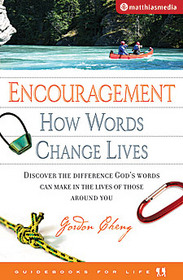
In Gordon Cheng’s book, Encouragement: How Words Change Lives, he advocates speaking the truth in love. In view of this, I feel the need to disclose a few facts. I’ve known Gordon since I began university. I’ve had to put up with his the endless Monty Python recitations, even being roped into performing some skits together in college reviews. We did some of our ministry and theological college training together, before both working in university ministry in different parts of the country. Our wives are both named Fiona and they shared a house together before they were married (to each of us respectively). Most importantly, I regularly won our push-up competitions.

In all seriousness, I say these things because we often don’t have a clue about the life of an author, and whether they practise what they preach. It’s one thing to write a book about ‘encouraging words’ and quite another to live it out. In my experience, this author walks the talk. Despite the silly banter between us, he’s always aiming to build up rather than tear down. He’s been quick to add encouraging comments to this blog and he’s spent time on the phone encouraging me in the struggles I’ve been going through this year. And he hasn’t offered any cash for comments here!

Encouragement is a word that’s commonly thrown around in Christian circles to mean whatever we want it to mean. This book offers a biblically-shaped definition:

Christian encouragement is speaking the truth in love, with the aim of building Christians up in Christ-likeness, as we wait for the day of judgement. Christian encouragement will likewise involve speaking the truth in love to unbelievers, thus encouraging them to put their trust in Christ for forgiveness and salvation.  (p11)

This definition draws on many parts of Scripture, but is particularly based in Ephesians 4:

11 So Christ himself gave the apostles, the prophets, the evangelists, the pastors and teachers, 12 to equip his people for works of service, so that the body of Christ may be built up 13 until we all reach unity in the faith and in the knowledge of the Son of God and become mature, attaining to the whole measure of the fullness of Christ.

14 Then we will no longer be infants, tossed back and forth by the waves, and blown here and there by every wind of teaching and by the cunning and craftiness of people in their deceitful scheming. 15 Instead, speaking the truth in love, we will grow to become in every respect the mature body of him who is the head, that is, Christ. 16 From him the whole body, joined and held together by every supporting ligament, grows and builds itself up in love, as each part does its work.  (Ephesians 4:11-16)

There are four parts to this definition. Truth and love are both essential for genuine Christian encouragement. Words of ‘truth’ can be used to cause harm – this is not encouragement. The truth can be distorted or lost, with the aim of ‘loving’ another – neither is this encouragement. Notice also, that there are two recipients in view, the Christian and the unbeliever. Truth and love, grounded in the message of Jesus Christ, is what will both build Christians and offer life to those who don’t as yet believe.

The overarching context for Christian encouragement is the coming day of judgement. If, as Hebrews 9:27 says, it’s appointed for all people to die and then to face judgement, then genuine Christian encouragement will be shaped and directed by this reality. How we live, and what we decide and do and say, matters. The reason we can offer encouragement in the face of judgement is because Jesus Christ, the One who was full of love and truth, has already taken the judgement in our place. Jesus’ death and resurrection changes everything, and this is the core message of encouragement we have to share.

In this postmodern world it’s easy to be dismissive of words, as if they are empty of real significance or power. However, the Bible demonstrates the enormous power of words. God is the one who spoke the universe into existence and who maintains everything by his powerful world. The same word that creates life also brings new life in Jesus. We’re encouraged to draw deeply on God’s powerful word, as we offer hope for life and bring encouragement to others. Soaking ourselves in the Scriptures will help equip us to offer the right words in season. However, we’re not talking about mindless parroting of the Bible here. There’ll be times to speak and times to refrain from speaking. There’ll be occasions to read from God’s word and occasions to apply godly wisdom and common sense. If we lack the ability to choose what to say, and if or when, and how to say it, then we’re urged to pray and ask God for wisdom. In fact, we’d be wise to pray whenever we seek to encourage others, asking God’s Spirit to guide our words, and to apply them, and for them to be well received.

I found Encouragement to be a very encouraging book! It models what it teaches. It’s a joy to read because it’s not fundamentally about tips and techniques. Rather, it points the reader to the greatest source of encouragement, in God himself. In so doing, it inspires me to become an encourager of others. It doesn’t leave me feeling a failure or guilty, but reminds me of God’s grace. This book is gospel-shaped.

There are so many practical suggestions scattered throughout Encouragement. A good example is the chapter on ‘How we say what we say’. The basic message is, consider your motives in speaking. Are you aiming to love and build up? Cheng offers five examples of how ‘speaking the truth in love’ might work out in practice:

  1. Always remember the gospel of grace and repentance
  2. Be specific
  3. Be humble
  4. Deal with important issues
  5. There is a time for silence.  (p86)

The section on grace is pure gold. There is absolutely no place for a rule-based, sickening, dead moralism! Throughout each of the following sections it was apparent how important listening is to being able to find the right words and the right time to speak. We’re often not too good at it because we’re more interested in speaking than we are at listening. But, good encouragers will be good listeners. Listening will help us to choose the specific words, to use them humbly, to focus on what matters most, and to know when words are not the best option.

I’d recommend Encouragement to any Christian who is wanting to make the most of their days in loving and serving others. It’s not just about how we speak – it’s about how we think and act and speak as God’s children in his world. It’s about living out the implications of the gospel of God’s grace in our lives. It’s about being a loving friend to others. It’s about having a ministry within your church, without needing an invitation, position, or job description. It’s about being wise as we engage with politics, or teach our kids about sex, or care for someone with terminal cancer. It’s about our God-given life. It’s for enthusiastic new Christians and it’s for crusty old Christians!

There is much I liked about this book. It contains some wonderful illustrations and stories of real people. It’s good humoured and gracious while making it’s points very clearly. The message of the Bible has shaped the argument throughout and there are many helpful references included in the text. I especially appreciated the smattering of Proverbs quoted and applied throughout. The author also shows genuine empathy for people who are doing it tough and this is especially helpful in a book on ‘encouragement’.

So I say, get yourself a copy and, while you’re at it, get one for someone else. You could read it together, or catch up and talk about what you’ve read. Perhaps you could use the study/review questions at the back. Help your friend, and get them to help you, become a better encourager of others. Maybe you could introduce this book into your book club. A friend told me last week that he reads out loud from good Christian books as he car-pools to work (and no, the others don’t mind!). This would be an excellent book to use for this purpose. Take it in bite size chunks and learn from it.

However you may choose to use this book, pray that God will apply his words of encouragement to your heart, so that you can pass them on to others also.

Love is a verb

Love ain’t a drug
Despite what you’ve heard
Yeah love ain’t a thing
Love is a verb
Love ain’t a thing
Love is a verb
(John Mayer)

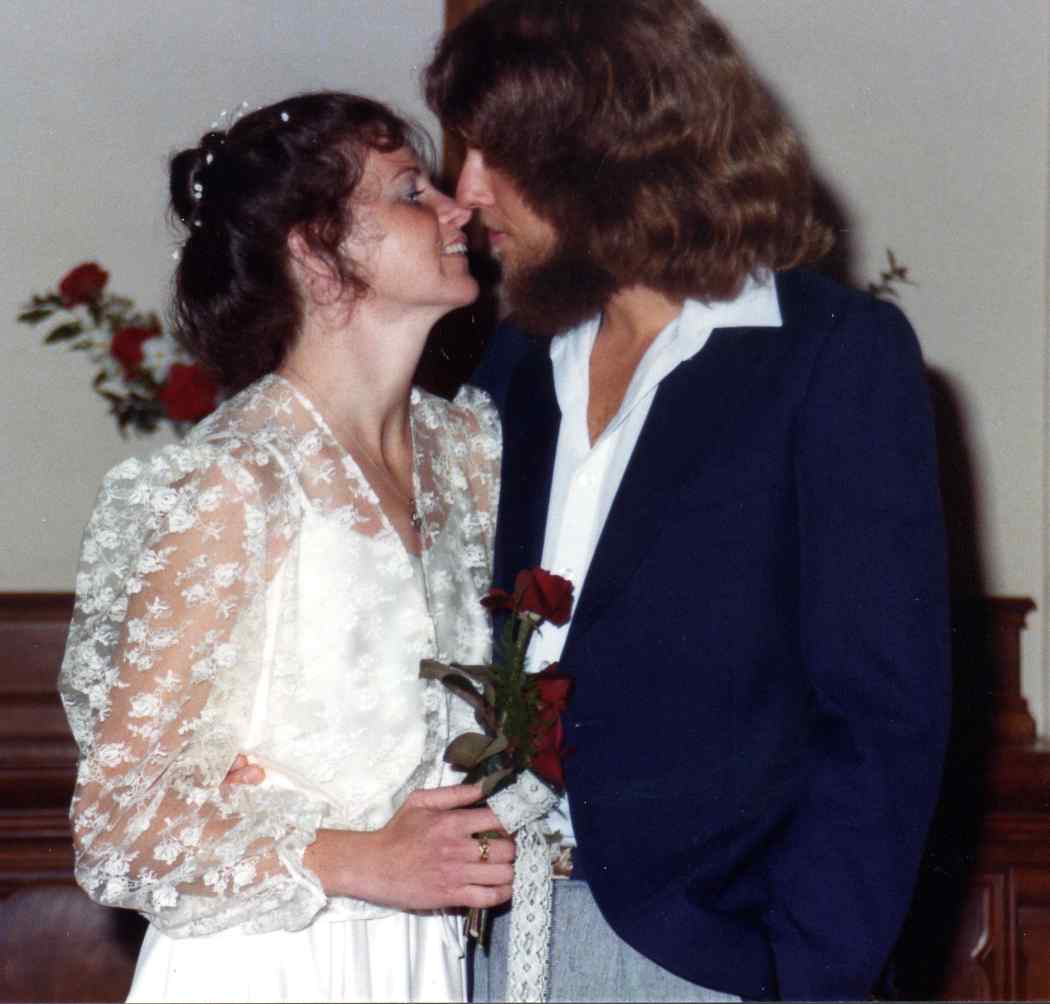
Wedding005Today is another anniversary – far more special to me than yesterday’s. It marks the beginning of the 30th year of my marriage with Fiona. I think we should take the whole year off and celebrate! 🙂 Someone said to me once, that birthdays just keep coming round. You don’t have to do anything. But wedding anniversaries take a lot of work and a lot of love. Well, I’m no longer sure of the first statement, but I reckon the second still holds true. Love is a verb – a ‘doing’ word. It’s not simply about falling in love, or feeling love for someone… it’s about LOVING them. The covenant we made with each other on 3 December 1983 was to love each other, whatever came our way. This means whether or not we feel like it, whether or not it comes naturally, whether or not we think they deserve it (I don’t deserve it), whether or not they choose to love me. I can’t remember our promises exactly, but I think they went something like this…

In the name of God,
I, (name), take you, (name),
to be my wife/husband,
to have and to hold from this day forward,
for better or worse,
for richer or poorer,
in sickness and in health,
to love and to cherish,
until we are parted by death.
This is my solemn vow.

Better, worse, sickness, health! I wonder if we’d known what we’d be in for …! Of course, no one has any idea, really. That’s why they are promises. Unconditional promises. Forever promises. Love is a verb promises. And we need God’s help to keep them.

I’m so grateful to God for giving me my precious partner, Fiona. God calls me to love Fiona with all my being, to encourage and nurture her as my one flesh soul mate. I don’t think I always do a great job at this, but I pray that in God’s strength, I will keep getting better. It’s been a real joy to share these years together, and I pray God will give us many more.

It hasn’t always been easy, and I’ve spoken before about how some of the hardest times have enriched our relationship the most. We’re thankful that so often God has drawn us together in adversity. We’ve had our own conflicts… yes! But God, in his mercy has enabled one or both of us each time, eventually, to extend an olive branch. We’ve sought to be forgiving and peacemaking and to learn from our mistakes. If we learn from our mistakes, then we’ve done a lot of learning together!

I thank God for these 29 years together. I thank him for the beautiful wife he’s entrusted to me. Please God, help me to be like Jesus to my bride.

Husbands, go all out in your love for your wives, exactly as Christ did for the church—a love marked by giving, not getting. Christ’s love makes the church whole. His words evoke her beauty. Everything he does and says is designed to bring the best out of her, dressing her in dazzling white silk, radiant with holiness. And that is how husbands ought to love their wives.  (Ephesians 5:25-28, The Message)

Journey with Cancer 2 Dec 2012 – What a year!

tilleysTwelve months ago today, I was catching up with good friends in a coffee shop near home. We do it once a year, at roughly the same time, and we’ve been doing it for years. These guys come from Melbourne, Wollongong, Brisbane, Perth, and Canberra. We talk about what’s been going on, we share our plans for the future, and we spend some time praying for each other. Once a year means it’s pretty special and I look forward to our catch ups as a highlight.

As we drank our coffees and shared our news, I knew that something was wrong. I had a pain in my chest and between my shoulder blades. My left arm seemed to be going numb. My left leg didn’t feel right, either. I’d been putting up with it for a while, not wanting to break up our time together, but I couldn’t keep ignoring it. I wasn’t imagining things – something was wrong.

Half an hour later I was in hospital – query heart attack. ECG seemed normal, and nothing on the x-ray, but the CT scan showed that things weren’t right. There was a massive build up of fluid around my left lung and it was suggested that I could have a tumour. Mesothelioma produces symptoms like this and so can lung cancers. Over two litres of fluid were drained out of the pleural cavity. It was almost certainly cancer and it didn’t look good. But how? I hadn’t been a smoker. I couldn’t think that I’d been exposed to asbestos. What was happening?

That was Friday, 2nd December 2011, and a year has now passed. What a year it’s been! I consider this an anniversary of sorts. One year of ‘consciously’ living with cancer. They said that I’d probably had the cancer for more than three years previously, without being aware of it. Now it was making it’s presence felt. Now it was changing, shaping, directing, and even shortening my life. Something the size of a ping pong ball had grown, ruptured, spread, damaged and contaminated me. Stage IV inoperable non-small cell lung cancer. This foreign growth was turning my mid-life into an end-of-life crisis. Or so it seemed. The oncologist said it couldn’t be removed or cured. I’d probably see the next Christmas, but he didn’t offer anything more. My health crashed, my weight disappeared, my life seemed to be fading before my eyes. Many times we doubted that I’d live long at all.

That was a year ago and I’m still living with cancer! While I loathe the cancer, and I’d dearly love God to take it away, I thank God earnestly for the life he’s given me. How amazing to live! I no longer take living for granted. In fact, I don’t take breathing for granted any more. I can’t make assumptions about tomorrow, or next week, or next year. Each day, every breath, is a gift from God. I’ve been reminded of what the Scriptures say:

[God] himself gives everyone life and breath and everything else. (Acts 17:25)

Over this past year, God has been teaching me many things. A big one – and there’s much more to learn yet – is humility. God’s humbled me deeply, to trust in him rather than in myself and my resources and abilities. I’d been such an activist in so many ways. Set me a challenge and I’d have a crack. I tended to know my capabilities and I’d trust them. I’d say that I trusted God, but I suspect that I was often simply relying on myself. I’d make plans, get busy, forget to pray, work harder, and then call out to God if I was desperate. God has shown me that I can do nothing without him, and for this I thank him.

God has taught me to treasure people more. He’s shown me how much I value my family. He’s deepened my love and appreciation for my wife. He’s given me great delight in my children. He’s enabled me to enjoy renewed relationships where they were once strained. He’s brought new people into my life. He’s encouraged me with the love, support, and generosity of many friends. He’s given me opportunity to bless others and to be blessed by them. Thank you God!

God has renewed my desire to know him better. He’s reminded me that he’s the ultimate source of wisdom, and that I must know him before I can truly know myself. He’s gifted me with time to read and reflect and write, and a thirst to do this more and more. In writing, God has caused me to think and learn and articulate. He’s opened my eyes to see the amazing truths of his Word in new ways. He’s given me new understanding. He’s strengthened my delight and confidence in him.

God has taught me to lift my horizons. It’s so easy to be consumed by the things of life. Many of our lives are so comfortable, that it’s hard to imagine wanting for anything else. Many of us enjoy heaven here on earth – or so we think. God has burst this bubble. He’s reminded me that life is short. There’s so much more to life than the trivia that fills so much of our time. God has pushed me to focus on things that’ll make an impact for eternity. He’s lifted my heart and mind, to find my hope in him for eternity, and not in the fleeting things of this life.

Most of all, God has been teaching me to keep my faith in Jesus Christ. Every promise God has made, he has answered positively in Jesus. God has shown himself to be totally trustworthy. I’ve been tempted to doubt this – looking at my circumstances, wondering why, struggling for answers – but God keeps bringing me back to Jesus. God knows my weaknesses. He’s heard my cries. He’s seen my tears. And he keeps pointing me to his Son. Jesus is the proof that God is for me. Jesus is the evidence that God loves me. Jesus’ death is the reason God accepts me. Jesus’ resurrection is my hope for eternity.

I know these things more clearly today than I did a year ago, and for this I thank God. My great desire for my friends and family is that they might know these things too – but without getting cancer or facing difficult trials. To misquote John Lennon, “All I am saying is give God a chance!”

My prayer is that God will deepen my faith in him, my hope in eternity, and my love for others. And I would love to pray the same for you.

Beyond the first visit

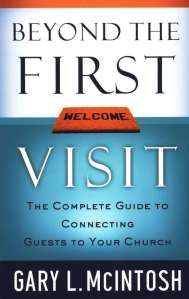
Welcoming is a gospel issue. Our God is a welcoming God. Jesus died so as to welcome people into relationship with God and with each other. He calls his followers to show hospitality to others as an expression of God’s love and grace. So how can we make this a vital feature of our congregations? One way is to be genuinely friendly when people come to our church. Next is to take the initiative in welcoming, follow-up, hospitality, and inviting people to join with us in what we are doing. Nearly every church assumes it is friendly and welcoming, but it’s not what the insiders think that really matters. We need to learn to see things from the outside in. How do we come across to visitors and guests? This book invites us to take a look.

Beyond the First Visit: The Complete Guide to Connecting Guests to your Church by Gary McIntosh is a book worth reading. I’d advise following the author’s suggestion:

To get the most out of this book, as you read each chapter, make notes in the margin of the book, scribbling your thoughts and ideas. Then make a list of action steps that you want your church to take during the next year to get ready for company. (p14)

McIntosh begins by suggesting we review our terminology – stop speaking about visitors and think of guests instead. We don’t always want visitors, but guests are expected. Visitors are expected to leave, but we plan for guests to stay and we make arrangements so they can. A guest mindset is what we need in our churches. This book encourages people in our churches to become great hosts. The following checklist is a good way to assess how and where we can improve:

  1. Invite your guests with a personal invitation.
  2. Arrive early to make sure everything is ready for the guests’ arrival.
  3. Greet the guests warmly at the entrance and escort them to their seats.
  4. Assist guests in understanding what is taking place.
  5. Anticipate and answer as many questions as possible in advance, so guests do not have to ask.
  6. Do something extra to make your guests’ visit special.
  7. Walk guests to the door and invite them back. (p17)

Welcoming guests doesn’t always happen naturally. We need to plan for it to be done well and it’s the responsibility of the church, not the guest. It’s worth thinking about how we’d treat a guest in our home, and applying this to church. We’d invite them in, offer to take their coat, show them where they can put their bag, take them into the appropriate room, invite them to take a seat, offer them a drink, ask them how they’re doing, engage in conversation, invite them to the table for a meal, let them know where the bathroom is, and more… And yet, when it comes to church, so often we expect people to work everything out for themselves. Healthy churches will take the responsibility for welcoming people and helping them to get involved in the life of their church.

People will sometimes make assessments of your church on the basis of a single impression. The long grass surrounding the old stone building makes it look abandoned and unused. The out of date website communicates that nothing much happens anymore. The paint on the sign, making it hard to read the service times, indicates that they don’t want me to come. Whereas the attractive brochure describing the Christmas Carols, with pictures of families, and a warm invitation to come along, makes me think my family could fit in here. It’s worth considering all the first impressions we make as a church. What assessments are people making about what we’re like? If we can’t work it out ourselves, then ask others – those who’ve come and those who haven’t.

Churches who have their own properties are urged to think of the impact their facilities have on others. Are they welcoming or alienating? McIntosh suggests a stroll around, examining everything that people will come into contact with when they check out your church. A mother with a couple of young kids isn’t likely to return if her first experience of the bathroom is a gloomy, smelly, dirty, inadequate facility. If all the parking spaces near the building are reserved for church staff, then you get the message of who’s most important. If things are bright and clean, if directions are clear, if people say ‘Hi’ and smile and offer to help, then second visits become much more likely.

The book contains many ideas on letting people know about church. I nearly gagged at the direct marketing/phoning suggestion! The best idea was simply word of mouth! Spread good rumours! If your church matters to you, if it encourages you, if it’s great for your kids, if you love getting to know God with others, if Sunday is a highlight of your week… then spread the rumour! But be warned. Don’t talk things up too highly. People like their expectations to be exceeded – not let down.

Getting Beyond the First Visit helps churches to examine the pathways for people getting involved and belonging. This can be very simple in a church of 100 or so, but may require much more organisation and communication in larger churches. There is no one size fits all. Some smaller churches may be small because they’re not good at letting others in. The danger for large churches is that people come and go and no one notices or cares. This book helps us not to take it for granted.

At one level this is very light book. It’s not big on theology and there’s not much Bible. It devotes a lot of attention to surface issues and impressions, and a few of the suggestions made me cringe. But overall, it’s full of helpful analysis and practical suggestions that will get us thinking about how we can do better. The central issue is so vitally important. At a time when our churches are becoming more and more marginalised, we need to make every effort to connect with people. People need to know God today, as much as they did in our parents’ generation, and as much as they did in Biblical times. Our churches shouldn’t make it hard for people to get to know God. There’s no excuse for unfriendliness. It’s not up to our guests to ‘make themselves at home’ while we go about our own business. It’s our job to welcome, introduce, connect, and build genuine relationships.

I bought this book last year, so as to examine the issues afresh as we began to plant a new church. If you think about the principles being discussed, rather than simply looking for practices to adopt, then I believe you will find it a useful tool. Church planters should get a copy, but so too should existing pastors and church leaders. How long since we reviewed this area of church life? Have we ever? Maybe things are in need of a tune up, or even a serious rebuild. This book can help you to think it through, without spending $1000s on a consultant – unless, of course, you want me to come! 😉

Keep the faith

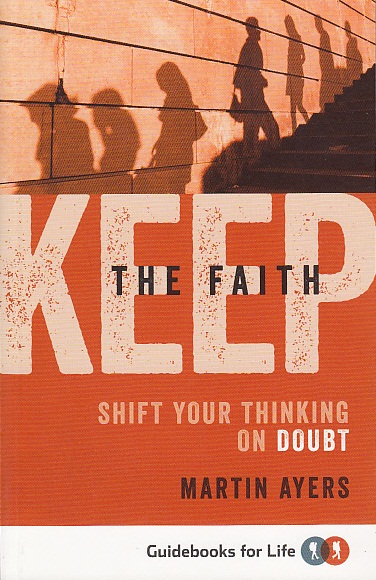
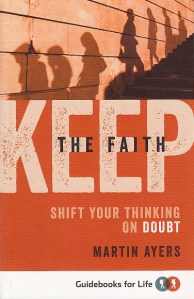
Keep the faith: Shift your Thinking on Doubt is a book that I was very keen to get my hands on. This has been a year spent fighting for faith in the face of a range of struggles and doubts. Any help in dealing with issues of doubt and battling from a biblical standpoint in this area has been warmly welcomed. So I was full of anticipation as I began reading Keep the Faith and I dearly wanted to ‘love’ this book.

I liked a lot of it, but I didn’t fall in love with it. I’m very encouraged by the approach and direction that shapes this book, but it didn’t leave me satisfied that it had achieved all it could.

The central thesis is very sound. In today’s world Christian thinking and ways are no longer mainstream. Many intelligent and articulate people dismiss Christian faith as outdated, irrelevant, unsubstantiated myths, and sometimes even downright dangerous. We live in an atmosphere of unbelief and this can wear away at Christian faith.

Faith is helpfully explained as ‘trust’ or ‘reliance’. Faith is more than an intellectual assent or belief that something is true. It is a willingness to act on the basis of this belief. The distinctive of Christian faith, as opposed say to trusting the accuracy of the weather forecast and not taking an umbrella, is that so much rides on it. We’re dealing with matters of life and death, meaning and purpose. So both faith and doubt are hugely significant when it comes to Christianity.

Ayres warns the Christian of the importance of taking preventative measures so that we are not easily swayed, and so that we understand where people, including ourselves, are coming from. His key point here is to demolish any claims to neutrality when it comes to considering God. This is true both for those who reject God and those who follow him. We all bring our prejudices and predispositions to bear on our thinking and choices. He argues clearly from Romans 1, that every person has an awareness of God, that’s displayed in the creation. And that rather than accepting this revelation and honouring God, people choose to suppress this knowledge and replace God with other things in their lives.

18 The wrath of God is being revealed from heaven against all the godlessness and wickedness of people, who suppress the truth by their wickedness, 19 since what may be known about God is plain to them, because God has made it plain to them. 20 For since the creation of the world God’s invisible qualities—his eternal power and divine nature—have been clearly seen, being understood from what has been made, so that people are without excuse.

21 For although they knew God, they neither glorified him as God nor gave thanks to him, but their thinking became futile and their foolish hearts were darkened. 22 Although they claimed to be wise, they became fools 23 and exchanged the glory of the immortal God for images…  (Romans 1:18-23)

The implications of this run deep. He demonstrates that there is a moral component to rejecting God. It’s not simply that people are persuaded that the evidence doesn’t stack up. It’s that people do not want there to be a God who has a right to direct their lives. It’s a picture of a creation in rebellion against its creator. This might seem a rather harsh or insensitive analysis, but we should remember we’re not talking about abstract intellectual ideas. We’re talking about a relational God who lovingly desires a relationship with those he has made in his image. Ignoring God is to turn our back on this offer of relationship.

Martin Ayres describes atheists, and others who dismiss God, as being guilty of wishful thinking. I found this a somewhat refreshing change, because I’m more used to hearing arguments from the other side that Christians are the wishful thinkers (or non-thinkers!). While acknowledging that Christians are also guilty of wishful thinking, the bulk of the argument focuses on why we do not want there to be a God. He quotes the intellectual atheist, Thomas Nagel, saying:

I want atheism to be true and am made uneasy by the fact that some of the most intelligent and well informed people I know are religious believers. It isn’t just that I don’t believe in God and, naturally, hope that I’m right in my belief. It’s that I hope there is no God! I don’t want there to be a God; I don’t want the universe to be like that. My guess is that this cosmic authority problem is not a rare condition and that it is responsible for much of the scientism and reductionism of our time.  (p52; quoting T. Nagel, The Last Word, Oxford University Press, New York, 2001, pp.130-31)

The first part of this book helpfully critiques the claims to neutrality in assessing Christianity. It just can’t be done. I know a number of people who’ve sought to step away from Christian faith, for a time, to reassess their beliefs and the evidence for them. They’ve wanted to sit on the fence as an objective observer. The fact is, there’s no fence to sit on! One friend, decided to give himself 12 months to weigh up his beliefs. He read Hitchens, Dawkins, Harris and others. But this was nowhere near a neutral stance. He gave all the airtime to hearing from the atheists for that period. It was, sadly, no surprise to see him giving up on his faith.

The latter half of Keep the Faith encourages the reader to shift the way they act. This is not merely an intellectual struggle, it’s a spiritual one, and there are helpful strategies to follow. Ayres moves away from such approaches as learning about the reliability of the Bible, or the evidence for the resurrection, or the scientific or philosophical arguments for the existence of God. While acknowledging their place, and also recognising the benefits of focusing on how God has transformed lives, he offers another approach:

There are three things, however, that will equip every single Christian – regardless of who they are or where they are in their faith – to face doubts. Remember these three things as you begin to shift the way you act and continue on your journey in the Christian faith. When you’re struggling to keep the faith:

  • remember the Fall
  • remember your redeemer
  • remember the stakes.  (p83)

Ayres encourages us to doubt our doubts, and not let them dominate our thinking. Keep remembering what you are persuaded by, what you don’t doubt, rather than feeding and watering the doubts until they outgrow everything else. He encourages us to keep investing in our Christian lives and ministry, as this helps us keep perspective as we grapple with issues. And don’t be afraid to ask for help, from God in prayer and from mature Christians who may well have travelled a similar path.

Four chapters in the final section focus on Jesus and the incident when he raised his friend, Lazarus, after he’d been dead for four days. We’re given an insight into the character of Jesus, his love and compassion for others, his power and authority even over death, and his call for us to trust him. Jesus is shown to be able to do anything – even eradicate our doubts. Ayres claims that the more we focus on Jesus, the more delighted we’ll be. It’s a bit like any relationship, the more we avoid someone and choose to spend time with others, the less likely we are to stick together. How dangerous this can be for a marriage. How dangerous to our Christian faith, if we pay no regard to Jesus and only listen to the naysayers.

The final chapter calls us to remember the stakes. Unlike choosing a hobby or sport, making a decision about Jesus has eternal consequences. Take your doubts seriously. God has spoken and he calls us to listen to his word, not to be like those who chose to ignore him and perished. Doubts are not to be ignored and pushed aside. They’re to be confronted by listening carefully, with a humble heart, to the life-giving, life-changing word of God.

What I’ve described above is a book that offers an important and helpful perspective on how we can shift our thinking on doubt. It’s worth seriously taking these things on board. This isn’t really the book for those wanting to get the guts of the Christian message, or for the unbeliever to be persuaded of the truth of Christianity. They’d be better off reading Ayres’ first book, Naked God. Nor is it a book of apologetics, answering the questions or defeater beliefs that are challenging Christianity today. Something like Keller’s The Reason for God would be more useful. And I would argue that these types of books, together with honest reading of the Bible, are also very important in confronting our doubts. Keeping the Faith is a complement to these approaches.

So then, what are my concerns? What bothered me about this book? I will list a few points.

I felt there could be a stronger sense of empathy with those who are seriously struggling with doubt. Ayers’ concern for those who are struggling is evidenced by his writing this book and I’m very grateful to him for writing it. However, I would have been helped to hear of his struggles, or perhaps more case studies of those who have struggled, how their struggles impacted them, what they found helpful and unhelpful, and how their thinking shifted. I think a book like this needs to demonstrate that the author understands me, and more could be done to show this.

The section on wishful thinking is very helpful but, I fear, rather unbalanced. Far more attention is given to the unbelievers’ wishful thinking, than the Christian’s. This is appropriate at one level in such a book, but I felt that more could be said to help the believer who is being attacked for their wishful thinking – more than simply ‘atheists do it too’.

At a couple of points I was disappointed by short-hand references, even jargon, that assumed the reader was thinking in line with the author. The most significant of these was the reference to ‘the Fall’ in the chapter 10. When I remember the Fall, I’m taken back to Genesis 3. However, Genesis 3 doesn’t get a mention in the book and I’m guessing Ayres assumes we will link back to his exposition of Romans 1 instead. I think it was unhelpful to use ‘the Fall’ as a heading without reference to Genesis 3. Indeed, it could have been helpful to go back to Genesis and talk about the spiritual challenge to doubting God’s goodness and his promises, the human desire for independence, and the disaster we create as we defy God.

I had a similar concern over the references to ‘worship’ and ‘spiritual disciplines’ in chapter 11. While I agree that, if we worship straight, we can think straight (p103), there is too much confusion over worship to assume that people will understand what Ayres is meaning. He does go on to show that true worship focuses on Jesus, our redeemer, but I wonder if people will get stuck reading their own definitions of ‘worship’ into this equation.

One last concern I will mention is the final chapter. Ayers takes the reader to Hebrews 6, one of the most disputed and difficult passages in the Bible, in the closing part of the book. This is a very important passage and warrants attention in a book on this topic. His explanations of the passage in its context are very insightful. But the discussion is brief and to drop it into the final chapter seemed strange to me. People need time to work through this passage, to be satisfied they’ve understood it, and to feel its weight. This is a tough call in the final chapter of the book.

Having read this book over a couple of times now, I want to thank Martin Ayers for addressing this massive pastoral issue. I’ve seen it trouble new Christians and long term missionaries. We need to help one another through these struggles. Read over the book and take on board its lessons. I think you’ll find it helpful, and it should help you to help others.


Grumpy Day

It was raining yesterday, so I took the time to read Grumpy Day by Stephanie Carmichael and Jessica Green. To be honest, I didn’t make much time – just as long as it takes to read a children’s book. I’ve never written a book review longer than the book so, if I don’t want to set a precedent, I’d better keep this to less than 671 words!

I got hold of Grumpy Day because my wife has them. Actually, so I do and so do my kids and so do most people I know! This is a book we’ll put aside to read the grandkids one day, when we need to help them deal with their blues. The words and pictures are beautiful. I reckon it’ll connect well with younger children, but I should probably borrow some kids to test it out. It tells the story of things not working out for three siblings. Two of the problems can be solved simply by the creative mum. But the last is out of her hands – she can’t stop the rain. What she does is broaden her boy’s perspective on why God sends rain, helps him understand he’s not at the centre of the universe, and helps him to speak to God about his problems and feelings. I think this makes it a pretty helpful parenting manual!

On the parenting front, the inside cover helpfully suggests ways the book can be used. There are suggestions of Bible verses that reveal the foundations for the main theme of the book. You can read these to the children, preferably from a simple translation. The book can be used as a springboard to discuss things further with the kids. It offers an opportunity to talk about praying, and to model simply speaking with God and letting him know their needs. You might even want to take things further by doing some drawing, taking photographs, or making up a rhyme or song about things related to the story.

A book like this doesn’t take long to read, and I suggest it’s worth reading a children’s book before you read it to your kids or give it away to others. Not all so called ‘Christian’ children’s books are helpful. Some leave the false impression that in order to be a Christian you need to be a good person. They don’t have God at the centre, and they’re not consistent with the gospel of Jesus. While this book doesn’t actually mention Jesus, I believe it is faithful to the Bible.

Here’s where I have one suggestion. It would be helpful to mention Jesus, because I think it’s important for children to hear, from their youngest days, that Jesus is the way we have a relationship with God. There are probably ways that Jesus’ name could appear in this book without making dramatic changes.

I like this book. 480 words – enough said!

Heading home

I confess this is the first book that I’ve read by Naomi Reed. I think my mother and Fiona have read them all, and I’m just disappointed that I’ve waited this long. Heading Home: My Search for Purpose in a Temporary World is her third in an autobiographical series of books, following on from My Seventh Monsoon and No Ordinary View. I’ll need to catch up on these stories later.

This was a book in season for me, because we’ve spent a year working through where we belong, who we are, what we should be doing, why we do and don’t feel at home, and constantly being confronted by the Bible’s message that we are not at home until we are home with the Lord.

Naomi tells the story of returning to their ‘home’ in the Blue Mountains, near Sydney in Australia, after being overseas for some time, mainly in Nepal. The account is full of humour and pathos as we’re given a window into the confusion of reverse culture shock. After living through a revolution in Nepal, and being without many of the things Aussies take for granted, it was overwhelming to visit supermarkets and department stores with the complete over-indulgence of choice. And no time is worse than Christmas with it’s red and white pimping of the season. The real message of Christmas barely gets a look in. I’ve spoken to other returned missionaries, coming back from economically poorer countries, who’ve found this so difficult. One family vowed to never return to Australia in the lead up to Christmas. They found the whole experience obscene.

I’d suggest that returning missionaries would be helped and encouraged by reading this book, and knowing that those who support them have read it too. So why not read it yourself, encourage others in your church to do the same, and send a copy to your partners overseas before they return.

Heading Home is a mosaic of themes and ideas that paints the bigger picture of discovering and living out who we are in union with Christ. It’s a profound message that raises real issues for all who claim to follow Jesus. I believe that Naomi is well placed to write such a book for a number of reasons: (1) she has the advantage of looking at different societies both as an insider and an outsider; (2) she has taken the time to reflect, meditate, and have her thoughts informed by Scripture; and (3) she has an endearing humility that comes across in each chapter.

As I reflect on the impact of a year of cancer and treatment, the book has had much to say to me. Who am I? Where do I belong? What am I to do with my life? Why don’t I feel settled? Naomi’s shared experiences have rubbed a little salt into a few of my wounds – and I’m glad she has. It’s easy to think that I really should be in Darwin, planting a church for God, making a difference, finding fulfilment in the challenge of ‘exotic’ and recognised ministry. But I’m reminded that it’s not a matter of which particular vocation, or which particular location. It’s about being content in the fact that God is in control, and he will use us wherever, and however, to fulfil his purposes, and for his glory. Naomi writes of dreams and plans coming to an end, and feeling loss of purpose upon returning to Australia. I could relate to this and was moved to pray her prayer also:

Lord, there are times in our lives when we feel purposeless. The dream is over. We don’t even know what do anymore or why …
But Lord, when we feel like this – lost and directionless and lonely – please remind us that we find our living in you; we find our focus in you …  (p20)

This leads to a highlight of the book for me. Every chapter finishes with a heartfelt, well-considered prayer to God. Naomi is not satisfied with raising the dilemma, or even with finding resolution in the words of God – she brings these matters to God in prayer. This is an excellent model to us all as we grapple with issues in our lives:

      1. observe our circumstances
      2. analyse and consider what we’re going through
      3. reflect on Scripture
      4. change our attitudes and actions
      5. talk to God about it

Naomi models this, and her prayers give a head start to those of us facing similar issues in our own lives.

Heading Home is a helpful book for people who’re not sure where they belong, or who are going through significant, even unwanted life changes; people with illness that’s not going away; people who are experiencing significant job changes, redundancy, unemployment or retirement; people suffering bereavement and grief; people finding themselves strangers in a foreign place (that they might even know well). Its helpfulness and hope lies in applying God’s word into our lives, and then helping us to bring this to God in prayer. Ultimately, this book succeeds by reminding all Christians that God deeply understands our circumstances and this world is not our true home – heaven is.

So Lord, today, when we are surprised by being the outsider or by a myriad of choices or misunderstandings or falling in between two worlds, or not belonging anywhere, help us to comprehend the fact that you have walked our road and felt our pain and suffered for us, so that every day, here, we belong to you and that’s enough. Lord be glorified in all we do and are, today. And remind us that there will come a day when we will never be outsiders again.
Lord, thank you.
Amen  (p46)

My heart was heavy

Today I had my 16th chemo visit for the year. This time it was a sobering experience.

It started well with a ‘chat’ with the parking inspectors about my last visit to the hospital! There were a few comments about my Mo for Movember. I asked the three girls beside me, who were visiting a patient, if they were doing Movember too! And they were! One had already raised over $1100. No they didn’t have facial hair on their upper lip – they each had cute mo-shaped earings. 🙂 I chatted with the nurses about a letter for the parking inspectors, about my first ever mouth ulcers, and about how I planned to have a treatment in Sydney in January. I got hooked up to the drugs and tried to connect my iPad to the new WiFi.

Then I began to notice some upsetting things happening around me. There was a patient who seemed to be quietly sobbing as a nurse consoled her. I thought I heard someone speak about what was happening with her dog. There was a young woman, who didn’t seem much older than 20, confidently having her treatment. Why so young?

But it was the conversation that I couldn’t help overhearing from the other side of the room, that disturbed me most. The man was very frail, in his late 70s I’d guess. His wife sat beside him. The nurses discussed the need to work out a treatment strategy with the doctors. It seemed he had a serious infection – one that he’d had before – and they were working out the treatment strategy. This was decision time for the man.

The conversation went something like this…

“Is there light at the end of the tunnel?” the patient asked.

“Not for the cancer.” replied a nurse. “But there is for the _____itis. We can treat that. We can improve your quality of life.”

“What life?” he said. “This isn’t living. It’s just agony. I can’t do anything. I don’t want to have more treatment.”

“And you don’t have to.” said the nurse. “It’s up to you. It’s your decision. We respect whatever decision you make.”

“I don’t want to have any more treatment!” he protested. “I’m just prolonging the inevitable.”

“It’s your decision. You have the right to choose.” said the nurse.

His wife seemed anxious, “But think of all we’ve been through. Now’s not the time to make the decision. Why don’t we treat the infection and then you can decide.”

The nurse agreed that it wasn’t the time to make such huge decisions, but the patient seemed to have made up his mind. “There’s no point.” he said. “I want to go home.”

“And you can go home,” said the nurse. “But don’t think that just because you told us today that you didn’t want to do anything, that you can’t change your mind tomorrow. You can change your mind any time. And when you get home ring palliative care right away. Right away, okay!”

“We will.” said his wife.

And they left.

This really was a life and death experience, I was witnessing. It was so hard for him. So hard for his wife. I found it hard. I wanted to go to him and talk about life and death and hope and God. But they were gone and I was hooked up in my chair. My heart was heavy. I prayed for them. Then I turned on Eva and closed my eyes.

As I reflect on this again, these words come to mind:

11 “What strength do I have, that I should still hope?
What prospects, that I should be patient?
12 Do I have the strength of stone?
Is my flesh bronze?
13 Do I have any power to help myself,
now that success has been driven from me?  (Job 6:11-13)

“My days are swifter than a weaver’s shuttle,
and they come to an end without hope.
Remember, O God, that my life is but a breath;
my eyes will never see happiness again.
The eye that now sees me will see me no longer;
you will look for me, but I will be no more.
As a cloud vanishes and is gone,
so one who goes down to the grave does not return.
10 He will never come to his house again;
his place will know him no more.  (Job 7:6-10)

Job, too, despaired of his life. I hope that he, and the man and wife in the chemo ward today, know these words of comfort and hope. They’re true for all who will turn to God and trust him. He’s the God who raised Jesus Christ as Lord:

4:18 So we fix our eyes not on what is seen, but on what is unseen, since what is seen is temporary, but what is unseen is eternal. 5:1 For we know that if the earthly tent we live in is destroyed, we have a building from God, an eternal house in heaven, not built by human hands. Meanwhile we groan, longing to be clothed instead with our heavenly dwelling, because when we are clothed, we will not be found naked. For while we are in this tent, we groan and are burdened, because we do not wish to be unclothed but to be clothed instead with our heavenly dwelling, so that what is mortal may be swallowed up by life. Now the one who has fashioned us for this very purpose is God, who has given us the Spirit as a deposit, guaranteeing what is to come.
(2 Corinthians 4:18-5:5)

A Fresh Start by Chappo

A_Fresh_StartOn Saturday afternoon we joined with hundreds of others in St Andrews Cathedral, to give thanks for John Chapman. His passing had affected people in a manner that I hadn’t seen since the death of Princess Diana in 1997. No doubt the death of Princess Diana impacted millions more than Chappo, but as I watched the flood of facebook tributes in the hours following his death, I was deeply moved. Chappo shaped the lives of thousands of people in ways that he would never have known. It was a joy to celebrate his life, to be reminded of his Saviour, to sing the songs he loved, to pray for the legacy of his life and ministry to continue, and to thank God that we were able to share in his life.

My relationship with this man grew over many years, from first hearing him speak as a uni student, to being trained by him as a preacher, to being mentored and encouraged by him as a pastor. He became a very good friend who was not afraid to tell me the honest truth. I sought his wisdom on many occasions, especially when faced with big decisions, and his advice was always controlled by a desire to honour Jesus Christ. He’d often give advice, even when it wasn’t asked for – but it was always good! Chappo loved nothing more that to explain the message of Jesus clearly, so that people would hear God’s wonderful message of life, forgiveness, relationship with God, and hope for eternity.

A Fresh Start by John Chapman is one of the clearest books explaining the guts of the Christian message that I’ve read. It’s written with charm and wit. If you’ve heard him speak a few times, you can almost hear the tone of voice in his writing. It’s full of stories and illustrations, but it doesn’t waffle or meander off track. I looked for a copy of this book on my shelf, following Chappo’s death, and I couldn’t find one. The reason is that as quickly as I buy them, I seem to give them away to others. So I’ve just ordered another 20 copies.

I remember some years back speaking at an annual Christian conference, and reviewing A Fresh Start to the gathering. I asked the question, ‘Who has been influenced to become a Christian through their reading of this book?’ A number of hands went up! One time I was with Chappo after he’d received a letter from someone in prison who’d been deeply affected by reading it. We talked about it, and Chappo humbly revealed to me that hardly a week went by when he didn’t receive a letter of thanks for this book.

I’m not going to summarise the contents of the book, other than to say it explains very clearly what a Christian is, and how you can become one. It focuses explicitly on Jesus Christ, revealing who he is, what he has done, and why he should be followed. Many of the questions that people ask about Christianity are well answered in this little book. It’s worth buying to read, and to pass onto others who are interested in finding out more.

On the 8th December last year, Chappo was very unwell in hospital in Sydney. As was I in Canberra. It was only days after I’d been diagnosed with cancer. My 13 year old, Marcus, had just finished reading A Fresh Start, and Fiona suggested that he write a note to Chappo thanking him. He did and I understand that Chappo was very moved by the letter. He mentioned it often, not only to us, but also to others. In fact, a friend approached me after the thanksgiving service and shared how he’d been with Chappo shortly after he received the letter. With tears in his eyes, he suggested that my friend would be encouraged as he read it too. And he was.

Marcus has agreed to me reproducing a slightly edited version of his personal letter to Chappo and we hope it’ll encourage others to read A Fresh Start.

Letter to Chappo 8/12/11

Dear John Chapman

My name is Marcus McDonald, son of David McDonald. I asked my dad for your book, a fresh start because one of my youth group leaders said it was a good book to read, and it was a great book to read. I became a Christian a few months ago at my youth group camp. I heard an amazing talk by Steve Prior and that’s when I decided to live for Christ. Since then I’ve been having a bit of trouble being a Christian at school. I’ve been too focused on what other people think of me and not what God thinks of me.

Your book has really led me back onto track with Jesus. I’m reading God’s word a lot more now. I’m reading through the New Testament and I’m up to Philippians. I finished your book the night I found out my father had cancer. It was a very hard night I felt very sad. I read the last chapter that night and it told me to just pray and let God decide what he wants to do. Your book has helped me with a lot of things and I want to thank you for writing this book and I hope to read more of your books.

When I found out my dad was in hospital I thought it would be nothing and that we would still go to Darwin and start a new church, but it doesn’t look like we will move after all. Which is disappointing because I was really looking forward to moving. I was looking forward to going to a Christian school and making more Christian friends, because at the moment I don’t have many Christian friends. I just have to trust God that he helps me live for him at school. I also wanted to go fishing a lot in Darwin.

I’ve heard you are in hospital and I hope that you will get better very soon. It’s sad to have a lot of sick people close to you. My grandad also has cancer in the throat and that’s been hard on him and my dad. I enjoy going to church and youth group and spending time with God and some friends. I went to one night of NTE and I loved the great Christian atmosphere and the singing was amazing fun, it was so loud.

So thank you so much.

Marcus

Dying, surviving, or what?

How do you describe someone with advanced cancer? A cancer sufferer? A cancer patient? Struggling with cancer? Fighting cancer? Being treated for cancer? Having a terminal illness? Having the Big C?

It’s hard to know really. Is there an etiquette we should follow? In the last week or so I’ve been introduced to others both as a cancer survivor and as someone who is dying of cancer. Sounds to me like two different people!

I’ve found the whole terminology thing awkward for a long time. Earlier this year we joined in the Relay for Life and I was invited to walk a lap of honour as a cancer survivor. Seemed strange to say the least. I wasn’t long out of hospital. I was still coming to grips with my diagnosis. You could hardly describe me as a survivor. I’d only just begun the journey and the prognosis was bad. Surely I’d need to be in remission, have no evidence of disease, or be pronounced ‘cancer free’, in order to qualify as a survivor! Last week I was introduced to a gathering of people with lung cancer – and their carers – as a cancer survivor. It seemed a little more reasonable now. I was still alive and I’m approaching my one year anniversary.

Am I survivor? The reality is I am. I’m still living, breathing, and at this point I’m in better health than I was when diagnosed. I’ll be a survivor until such time as I die. But to be honest, I’m keen to do much more than survive. I don’t want to be defined by my disease. I want to live well – not indulgently – but in a way that honours God and others. I want to have the life and death of Jesus at work in me, to serve others rather than serve myself.

I’ve also been described as dying of cancer. It’s understandable to speak in this way, because it’s potentially the most unique or distinctive thing about me. I’ve been described as ‘husband of Fiona’, ‘father of Luke or Matt or Grace or Marcus’, ‘son of Norman and Ruth’, ‘Pastor of Crossroads’, ‘chaplain to the Brumbies’, ‘keen on fishing’, ‘friend of someone or other’, and lots of less charitable things! At the moment, the characteristic I’m best known for is ‘having cancer’.

But, am I dying of cancer? I’ve been told what I have is incurable. The treatment is not expected to eradicate the cancer. The survival rate over 5 years for lung cancer is only 16%. Few people ever fully recover from lung cancer. Initial diagnosis at Stage IV is seriously bad news. So, am I dying of lung cancer? The truth is that I don’t know. Nobody does, not even the oncologists. People do get healed. God is completely capable of healing me. Will God heal me? I‘ve got no idea! Modern medical options are amazing. They’re discovering new things about cancer all the time. New treatments are being invented at a rapid rate. Who knows what the future holds? Many people die with cancer rather than of cancer. How will I die? High odds on it being the cancer that causes my death, but ultimately only God knows. And I’m happy about that!

The one thing I do know is that I am dying one way or the other. But it seems strange to introduce me as someone who is. After all, we’re ALL dying. It’s not unique to me. I’ve been reminded in this past week of how true this is. There was the sad story of the teenage girl who plunged to her death from the 22nd floor of a Gold Coast building, during schoolies week. Bryce Courtenay lost his fight with cancer, dying in his Canberra home at the age of 79. On Saturday I joined with others in celebrating the life of my good friend, Chappo, who passed away at the age of 82, because his body was no longer able to fight the infections. Another friend has just lost her sister. It may be sooner or it may be later, but we should recognise the fact that we’re dying. We need to take stock of this reality. In fact, a friend reminded me of this again recently, when she asked me what was on my bucket list!

I know it’s awkward, and it’s so hard to know how to say things, but maybe cancer survivor or dying of cancer aren’t the best ways to describe me. At present, I’m living with cancer. But I don’t want that to define me either. Yes, I’m dying, but I was dying before my cancer diagnosis. In reality, nothing has fundamentally changed. Maybe I’ve got a better idea of the time frame, but then I hope that I don’t! I’ve survived so far, thanks to God, but will I survive my cancer? In this life, I can’t say. But I firmly believe that this life is not all there is. Along with Chappo, who’s enjoying his new life now, I look forward to the day when there will be no more death or mourning or crying or pain, for the old order of things has passed away.  (Revelation 21:4) Can I encourage you to do the same?

Suffering well

I’ve got vague memories of reading this book back in January/February this year. This isn’t a slight on the book, because I’ve only got vague memories of doing anything in that period! The early cancer months are something of a blur. Last week I read Suffering Well: the predictable surprise of Christian suffering by Paul Grimmond (again?). It’s a topic I felt I understood pretty well. The suffering bit anyway. Not so sure about the well. It was natural that I’d gravitate towards a book like this, as I’ve felt the last couple of years have been shaped by suffering of many kinds. A life-threatening car accident, cancer, serious illness in hospital, having our dreams of ministry in Darwin dashed. So what is God doing? What am I to learn?

The title sounds like an oxymoron – predictable surprise. And I think it is. It comes as a surprise only if we don’t grasp God’s word on this topic. If we soak ourselves in the Scriptures then there is something very predictable about suffering. God tells us to expect suffering. We live in a world subjected to futility and frustration. It’s been that way ever since the first man and woman decided to try and live without God.

20 For the creation was subjected to frustration, not by its own choice, but by the will of the one who subjected it, in hope 21 that the creation itself will be liberated from its bondage to decay and brought into the freedom and glory of the children of God. 22 We know that the whole creation has been groaning as in the pains of childbirth right up to the present time.  (Romans 8:20-22)

And there’s a specific suffering for those who are following Jesus. We’re warned to expect that we will suffer and be persecuted for our allegiance to Jesus.

For it has been granted to you on behalf of Christ not only to believe in him, but also to suffer for him,  (Philippians 1:29)

 In fact, everyone who wants to live a godly life in Christ Jesus will be persecuted,  (2 Timothy 3:12)

Suffering Well begins by highlighting the prevailing views about suffering and God in Western society. This is the cultural environment in which we experience suffering and it’s the tape that plays in our heads as we grapple with understanding our experiences. It goes something like this:

In our brave new world, suffering means that God is immoral and that Christians are immoral. Our only hope is a world freed from the Christian God, in which humanity invents its own understanding of right and wrong, guided by reason alone.  (p28)

Grimmond calls us to think from the Bible’s perspective about human suffering. He shows that the way to handle suffering well is to see through God’s eyes and to follow Jesus, whatever comes our way.

This book isn’t a theodicy, but it does show us God’s character in the face of suffering. We’re reminded that God is God and doesn’t have to give an account to us. However, God is revealed as a God of justice and a God of mercy. He can be trusted even when we have no specific explanation for our difficult circumstances. God’s character is shown most clearly in his willingness to personally embrace the suffering of our world. God became one of us and experienced the problems of injustice, sickness, death, persecution and betrayal. Jesus took on human sinfulness and paid the ultimate price on the cross, that God might offer us free forgiveness. These famous words reveal a God who can be trusted, even with suffering:

For God so loved the world that he gave his one and only Son, that whoever believes in him shall not perish but have eternal life.  (John 3:16)

This books focuses on showing that the New Testament has more to say about suffering for Jesus, than it does with discussing cancer, AIDs, warfare and famine. I found this confronting, as I often find myself focusing more on my sickness than on how I’m being treated as a follower of Jesus. Like many modern Christians, I’m tempted to say that I haven’t experienced much specific Christian suffering or persecution. But the big questions are, ‘What might keep me from persevering as a follower of Jesus?’ ‘Where are the threats to my faith?’ It’s worth contemplating carefully these words:

The great danger for Christians living in the West, is not physical death at the hands of persecutors, but the slow, spiritual death of a thousand tiny compromises, crouched at our door waiting to devour us.  (p97)

Sickness, suffering and death are the realities of our world. Christians will continue to be reviled because they trust in a persecuted, suffering Saviour. The key to suffering well is to keep our eyes focused upon Jesus. He’s the one who died for our sin and who was raised to life to be the ruler of God’s new creation. In Jesus, there is genuine hope for the future – hope for our futures – a future free from all suffering. For those trusting in Jesus, nothing can separate us from sharing in the fulfilment of this hope.

This book pushed me to refocus my thinking about suffering. It said it would – and it succeeded! There are a couple of issues I’d like to see explored further. The first is the link between general suffering in this world and the impact this can have on continuing to trust Jesus. My experience was that the weakness of my body, being confronted by my own mortality, and the feelings of grief and depression, all contributed to a personal crisis of faith in the early months of this year. The second issue is the question of links between specific sin and suffering. I confess to being unsatisfied with most explanations of James 5 and the links between sin, confession and healing, but these can be explored further on another occasion.

Overall, I found this a helpful book. It is full of Scripture and it models the way we should seek to live – by listening to God’s word. It calls us to look to Jesus, to follow him come what may, and to trust God in life and in death.

Whenever suffering comes along – of whatever kind – the right way to deal with it lies in staying true to Christ.  (p112)

You can find this book at Matthias Media.

Misplaced confidence

Misplaced confidence #1

The people of Israel at the time of Jeremiah believed they were invincible. After all, God had chosen them, made promises to them, and brought them into the promised land. They could live as they pleased and worship who they wanted because they had something that made them untouchable. They had the temple of the Lord.

But God had a message for them in Jeremiah chapter 7:

Do not trust in deceptive words and say, “This is the temple of the Lord, the temple of the Lord, the temple of the Lord!”

“‘Will you steal and murder, commit adultery and perjury, burn incense to Baal and follow other gods you have not known, 10 and then come and stand before me in this house, which bears my Name, and say, “We are safe”—safe to do all these detestable things?

Misplaced confidence #2

The people of Australia in 2012 believe we have a right to dominate world sport. After all, we’re the sporting nation, we hold the world records, the championships. We’re the best at AFL, swimming, cycling, tennis, rugby, shooting, hurdling, triathlon, netball, basketball, sailing, cricket… aren’t we? Even when we lose, we’re still the best! It’s our right. Of course we’re better than South African, New Zealand, England…

But maybe there’s a message for us:

2011 ICC World Cup - Australia Portrait SessionDo not trust in deceptive words and say, “We have Michael Clarke, Michael Clarke, Michael Clarke!”

Will you perform badly, fail to score tries, get out for ducks, take performance enhancing drugs, throw away privileged contracts, act like prima donnas and then blame it on a bad day, the coaches, the umpires, the poor training facilities? What gives?

Misplaced confidence #3

The religious person, the church goer, the ‘Christian’ can become confident in their position. After all, we believe in God, we go to church every week, month, at least every Christmas and Easter. We don’t think much about God at home, or at work, or when we’re out with their mates. We’ve been baptised, we have communion, we’re a member of the church. We’re decent people really and never really do anyone any harm.

Well, let me paraphrase Jeremiah’s words for a modern audience:

Do not trust in deceptive words and say, “I call myself a Christian, I go to church, I do good things!”

“‘Will you worship your careers, your wealth, your relationships, your reputations, your entertainment, your retirement plans. Will you give more attention to ‘stuff’ than you do to God? Will you trust in your basic goodness, and forget about Jesus? Will you live as you please during the week, then turn up to church, and assume God will be pleased with you?”

Well placed confidence

One place only. The promises of God fulfilled in Jesus Christ!

Check out Hebrews 10, quoting the words of Jeremiah:

15 The Holy Spirit also testifies to us about this. First he says:

16 “This is the covenant I will make with them
after that time, says the Lord.
I will put my laws in their hearts,
and I will write them on their minds.”

17 Then he adds:

“Their sins and lawless acts
I will remember no more.”

18 And where these have been forgiven, sacrifice for sin is no longer necessary.

19 Therefore, brothers and sisters, since we have confidence to enter the Most Holy Place by the blood of Jesus, 20 by a new and living way opened for us through the curtain, that is, his body, 21 and since we have a great priest over the house of God, 22 let us draw near to God with a sincere heart and with the full assurance that faith brings, having our hearts sprinkled to cleanse us from a guilty conscience and having our bodies washed with pure water.