Religious crap!

Some of you might be upset that I’ve used an offensive word in the title. To which I’m tempted to apologise for using the word ‘religious’! But seriously, I needed to use an offensive word, and I can think of more offensive words, but ‘crap’ seemed a good compromise. Why use it? Let me explain.

I think the average Aussie believes that Christians are religious people who are trying hard to get into God’s good books. They think a Christian is one who keeps various rules, regulations, and rituals in order to get right with God. If it was a comparison between a drug dealer and a nun, then the nun would be seen as closer to God. The more you do for God, the more likely you are to be in his good books. The better your religious resume, the more confident you can be of going to heaven. I know not everyone thinks this way, but enough do to make it an issue. What worries me, is that people think this is what Christianity is all about. And it’s scary.

If this were true, then I reckon I’d shape up pretty well…

Born while my dad was at theological college.
Grandfather a minister.
Dad a minister.
Uncle who’s a minister.
Another who was a missionary.
Pretty good pedigree!

Been to church nearly every Sunday I’ve been alive.
Still remember feeling guilty the first time we skipped to go on a train ride.
Went to Sunday School, Christian Endeavour, and church holiday camps.
Involved in youth group and Christian Fellowship at high school.
Even paid my own way to a National Christian Youth Convention.
On track and doing well!

At university I joined a campus Bible study.
More Christian camps and conferences.
Did a lay preaching course.
Began occasional preaching.
Organised and ran Bible studies and camps.
Better than average!

After uni I did a ministry apprenticeship.
Working for a church.
Off to Moore Theological College.
Bachelor of Theology with Honours.
Trained as a preacher by Chappo.
Master of Arts in Theology.
A-Grade training!

Ministry in Canberra.
Building Christian groups on the campuses.
Founding a new church.
Growing church, growing staff team, growing budget.
Planting another church.
Training ministry apprentices.
Sending out missionaries.
A ‘successful’ ministry, surely!

Preaching everywhere.
Baptist, Presbyterian, Uniting, Anglican, Independent.
Australia, South Africa, Kenya.
Canberra, Perth, Sydney, Hobart, Adelaide, Melbourne, Brisbane.
Only Darwin missing.
Not a bad resume!

If religious pedigree, training, and experience counts with God, then surely I’ve got what it takes. If I miss out, then only an elite few will ever get in. Surely, I can be confident that I’ve done enough? Can’t I?

NO!

In fact all that stuff is nothing more than crap, if I think God will be impressed by it. It’s worse than useless as a means of getting right with God. Let me prove this by giving you a case study.

If anyone else thinks he has grounds for confidence in the flesh, I have more: circumcised the eighth day; of the nation of Israel, of the tribe of Benjamin, a Hebrew born of Hebrews; regarding the law, a Pharisee; regarding zeal, persecuting the church; regarding the righteousness that is in the law, blameless.

But everything that was a gain to me, I have considered to be a loss because of Christ. More than that, I also consider everything to be a loss in view of the surpassing value of knowing Christ Jesus my Lord. Because of Him I have suffered the loss of all things and consider them filth, so that I may gain Christ and be found in Him, not having a righteousness of my own from the law, but one that is through faith in Christ—the righteousness from God based on faith.  (Philippians 3:4-9 HCSB)

The Apostle Paul had it all – pedigree, training and experience. What Sonny Bill Williams is to rugby league, union, boxing and ticket sales, so was the apostle to religion! He was the superstar. He came from the right stock, he’d worked hard, and he was perched at the top of the religious tree. Surely he could be confident of his standing with God, couldn’t he?

NO!

What he thought was to his profit, was actually loss. In fact, he says all his religious credentials are ‘filth’. The word is literally dung or excrement. The Message translates it as ‘dog dung’ and the Common English Bible as ‘sewer trash’. It’s fit for the toilet. It’s crap! Everything he was, everything he’d worked for, everything he’d achieved – all filthy. And remember it’s his religious credentials he’s describing. What would make him say this?

His knowledge of Jesus Christ.

Paul came to understand that to be a Christian was to be a follower of Jesus Christ. It meant putting his trust in Jesus rather than himself. It meant recognising that even though Jesus once hung upon a cross, God had now raised him to life and placed him in the position of supreme authority. It meant recognising that Jesus hadn’t died for his own sins (he was sinless), he’d died for Paul’s, and mine, and yours.

Paul came to recognise that being a Christian had nothing whatsoever to do with being religious. It’s not about rules and regulations. It’s not about religious rites and rituals.

It’s about having a real RELATIONSHIP with Jesus.

His religious resume was excellent, unsurpassed even. If you had to be good and do all the right things for God to accept you, then Paul would have passed with high distinctions. But once he recognised who Jesus was, and what he had done, everything changed. He recognised that it’s not about our religious performance.

Christianity is not about what we DO for God.
It’s about what Jesus has DONE for us.

So if you’re tempted to put your confidence in your religious achievements, please don’t. It’s a dead end, literally. It’s filth. It’s to your loss, not your gain. What would you prefer –  to stand before God depending on your self-achieved righteousness? Or to trust in the God-given righteousness that comes by trusting in Jesus alone? Those who suggest that being a Christian is about religious performance are peddling dangerous and deceptive lies. To suggest that being Christian is about anything other than following Jesus is absolute crap! Don’t be deceived!

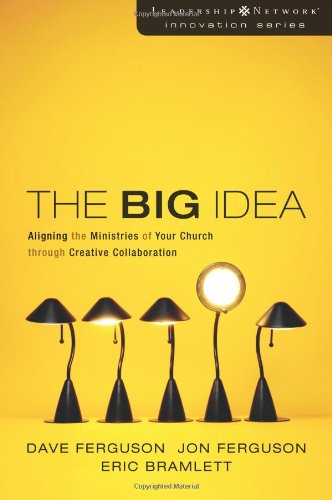
The Big Idea

The Big Idea: Aligning the Ministries of your Church through Creative Collaboration by Ferguson, Ferguson and Bramlett challenges churches to think hard about the message we communicate and how we go about doing it. Fittingly, the strength of this book is its big idea. Disturbingly, I found some of its weaknesses lie in the details.

If you go to church regularly it’s a worthwhile exercise to write down how many different little ideas you have to take in each week. If you consider the welcome signs or banners, printed handouts, messages on the screen, various announcements, the MC or leaders comments, intros to songs, the songs themselves, children’s talks, prayers about different topics, video clips, Bible readings, the sermon, various connected or disconnected points within the sermon, more songs, closing comments, conversations over supper or morning tea… you can see the problem. What message do you take home from church? Add to this the family context – if children and youth are looking at unrelated material, learning about different things, and engaged in different activities, then families could have dozens of ‘take home messages’. What gets remembered? What sinks in? What gets put into action? This book argues for alignment, getting our message focused. It’s premised on the observation that more information means less clarity and less action.

We have bombarded our people with too many competing little ideas, and the result is a church with more information and less clarity than ever before.  (p19)

The passion behind the big idea is for churches to be communities of transformation, not simply information. This requires genuine relationships and a focus on personal change. Small groups, for example, aren’t to be tutorials or study groups, but rather places where people care and share, challenge and support, confide and confess, learn and grow together. At Community Christian Church, where the authors serve as pastors, they adopted sermon-based studies to align the small groups with the weekly church celebrations around the same big idea. This approach is much the same as that described by Larry Osborne in Sticky Church. Yet, not only do they seek to align small groups with the big idea, but also families, ministries, congregations and other churches in their network. One big idea shapes everything they do.

What does this look like? It begins with planning the preaching program a year ahead. Topics and series are worked out and positioned carefully with regard to the annual calendar. At thirteen weeks out, the teaching team write a short essay that fleshes out the series and each topic within. These are called big idea graphs. The graphs are distributed to the relevant people so that at nine weeks out a creative team meeting can brainstorm how to shape the church service by the big idea. This meeting will include the leaders of teaching, drama, music and other areas needed to determine and shape the service content. At five weeks this gets a reality check. At three weeks the teaching team and the small group curriculum writers collaborate to construct a big idea sermon and discussion guide. At two weeks the big idea teaching manuscript is finished so that preachers in different congregations or churches can take the manuscript and personalise it to their own style and to suit their congregations. This is also passed on to the media team and others who will organise slides, graphics, scriptures references, and other things needed for the particular service. The whole process is very collaborative and teams are the order of the day. Even the sermons are a cooperative exercise. The long lead times opens options for creativity and ensures that things are done well.

There is much to like about this approach, but I will reveal my concerns first. The authors openly admit that topical preaching is their preferred and normal practice. They brainstorm and discuss possible sermon ideas and vote on which ones to pursue in the following year. It seems that much of the creative work in preparing sermons takes place as people share their ideas about the topic. Working out which Bible texts might be relevant to the topic is only done after the topics are nutted out. I don’t believe this is the healthiest approach to determining a preaching plan. It can mean we’re driven by popular ideas and what we think people will find interesting. Many important themes addressed in the Bible will never be heard and certain hobby horses will often get ridden. I’d much prefer to follow a staple diet of expository preaching so that we let God’s word put the topics on our agenda. Look to get a balance from different parts of the Bible and mix it up from time to time with some specific topics and occasional messages. In fact, I’d love to see a book like this written from the starting point of expository preaching.

I’m also worried about what doesn’t really get described in this book. One example is their skeleton for weekly adult services:

  1. Praise choruses (opening of service)
  2. Campus pastor moment (greeting)
  3. Creative element (video, sketch, or song or a combination)
  4. Teaching
  5. Communion
  6. Giving back to God (offering)
  7. Praise choruses (closing of service)  (p133)

While admitting that we can replace the nouns we see with whatever describes our own church’s style, system and mode, it concerns me what they’ve left out. Where does prayer feature? Where does Bible reading fit in? What preparation goes into these areas? I have to admit that the heavy emphasis on the creative arts and the silence about prayer and Bible reading in the church service left me concerned. The storyline of this book is about BIG church and is dominated by the ‘performance’ on weekends. This is not to say it’s irrelevant to small churches with single pastors. I think there’s some great wisdom here, but it needs careful transposing.

So what did I find helpful? Let me focus on two strengths of The Big Idea. Firstly, the alignment of message in the church. My experience is that too often we have many little ideas competing for people’s attention and the message we most want people to hear gets seriously diluted. We have so many announcements that we forget most of them and can’t differentiate their importance. Sometimes the songs have no relationship to the message. Or the prayers are completely unrelated to everything else going on. Or the talk seems more like a commentary than a sermon, picking up too many ideas from the Bible passage without highlighting and applying the main one.

I’m not beating up on our church now. I’m very encouraged by the fact that our church has a weekly team meeting to discuss each service, make sure the different parts are connected, link the music to the message, integrate the kids talk, discuss priorities and emphases with the service leader, and more. We’ve also been following the same teaching programs with adults, youth, and children and this has enabled us to pool our resources and help families to focus on the big idea each week.

The second strength of this approach, is the emphasis on preparing well ahead. It worries me when I keep hearing of pastors writing their talks on the Saturday night before church, the kids talk being thrown together without much thought, the Bible reader being organised as we walk into church, the musicians not being given or not learning the songs until just before church. It doesn’t need to be this way. It doesn’t take any more work to be organised weeks ahead, but it does require discipline and organisation. 

I’ve always worked to get a draft preaching plan in place a year, or at least a term, ahead. This requires a lot of work, reading the relevant books, working out the preaching units, determining the big idea, conveying this briefly in a sermon title. It may mean setting aside a week or more to achieve it. We’ve mostly published these for the upcoming term so people know where we’re headed and can prepare as needed. In the preceding term I’ve been working on the upcoming book of the Bible, reading commentaries, writing notes and drafting ideas. I put these in a note book and draw on them when I get to preparing the actual sermons. I’ve tended to prepare the actual sermons in the week that I’ll deliver them. However, one year I managed to get about six weeks ahead with my talks. I’d write the rough draft weeks ahead, and tune it up in the final week. I can testify to this delivering a better product and removing a lot of stress. If I had my time again, I’d like to make this normal!

Our youth programs are worked out a term ahead and publicised. This enables the team to share responsibilities among the leaders while keeping to the big idea. Working on the children’s ministry material well ahead helps the creative process and good integration with the adult and youth programs.  Other churches manage to prepare Bible study and discussion guides for the upcoming teaching series. (We’ve only managed it once or twice, but we do manage to get them out each week!) These guides connect with the sermons. This means the big idea of all sermons needs to be worked out well ahead, so that the studies are integrated with the teaching. Advance planning assists the music teams to choose songs that connect with the big idea. It ensures we think carefully about what we’re praying about. It opens the door to creative ideas that we could never pull off the night before. And it takes some of the stress out of planning church.

All in all, I’d recommend this book to pastors and leaders as they look to the year ahead. Read it through before you spend a few days with your team planning for 2013. You did plan a planning time, didn’t you? Or perhaps you’re well organised and have already done it!

Gospel and Kingdom

I’ve got a book on my shelf outlining all the different phobias that plague people. It’s quite amusing really – unless you have a particular phobia! It includes all the common ones such as the fear of heights, the fear of confined spaces, and the fear of spiders and snakes. But it also contains some rather bizarre phobias such as the fear of being the thirteenth person at a table. I think that Christians have their own distinct phobias which could be added to the list. One example might be the fear of reading the Old Testament. We could call it some thing like fromgentomalaphobia, which translated means ‘from Genesis to Malachi phobia’. Do you suffer from this debilitating problem? Is the Old Testament a foreign, confusing or closed book for you? If so, then allow me to introduce a cure.

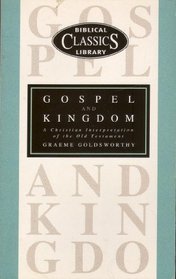
Graeme Goldsworthy’s book, Gospel and Kingdom, is written with the express purpose of helping Christians to read, understand and apply their Old Testaments. It does this in a number of ways. Firstly, it shows the coherence of the Old Testament. It hangs together, it reveals an historical narrative, it has a beginning and an end. Secondly, it shows how different types of literature interrelate to comprise the Old Testament. And thirdly, it reveals and develops an important theme, preparing the reader for the New Testament. The Old Testament isn’t locked into an ancient time zone, with absolutely no relevance for today. It points forward and finds it’s fulfilment in the Jesus Christ.

For no matter how many promises God has made, they are “Yes” in Christ. And so through him the “Amen” is spoken by us to the glory of God.  (2 Corinthians 1:20)

But how exactly are we to read these ancient documents? What do we make of all the laws and rituals? How do we move from historical stories to modern applications? Is it simply a matter of drawing analogies or looking for metaphors of the Christian life? Are there guidelines or restraints on what we, as modern readers, are to make of the Old Testament?

Goldsworthy illustrates the problem of how we handle the Old Testament, by describing a children’s talk that uses the story of David and Goliath:

There had been lots of excitement in the play-acting of that great victory by God’s chosen leader… The fellow dressed up as Goliath had progressively revealed a list of childhood sins by peeling strips off his breastplate one by one, as the speaker explained the kind of  ‘Goliaths’ we all have to meet. Then a strapping young David had appeared on cue, and produced his arsenal – a sling labelled ‘faith’ and five stones listed as ‘obedience’, ‘service’, ‘Bible reading’, ‘prayer’ and ‘fellowship’.  The speaker had omitted to say which stone actually killed Goliath…  (p10)

We might laugh at this account, but I think this way of using the Old Testament is all too common. Shortly after reading this book in the mid 1980s, I heard a well-known preacher giving much the same message about David and Goliath. I’ve used Bible reading notes and booklets that seem to treat the Old Testament purely as a springboard for ideas or as a collection of parables or fables. Surely this can’t be the right way to read the Old Testament, can it? There’s got to be some guiding principles or else we can end up making it say whatever we want it to say.

Goldsworthy’s book introduces us to the most important guideline for reading the Old Testament. As Christians we will always be looking at the Old Testament from the standpoint of the New Testament – from the framework of the gospel which is the goal of the Old Testament. This is not an arbitrary guideline, but rather one we find exhibited by Jesus himself. Everything points toward and finds its fulfilment in the person and work of Christ.

“Do not think that I have come to abolish the Law or the Prophets; I have not come to abolish them but to fulfil them.”  (Matthew 5:17)

And beginning with Moses and all the Prophets, he explained to them what was said in all the Scriptures concerning himself.  (Luke 24:27)

Goldsworthy uses the theme of the kingdom of God and the gospel as a grid by which to understand the development of the Old Testament. Thus, in the beginning we see God’s people (Adam and Eve) in God’s place (the garden) under God’s rule (God’s word). This theme can be traced throughout Israel’s history to its fulfilment in Jesus Christ. The Old Testament is understood as progressive revelation which leads us gradually to the full light of truth. This means the Old Testament is able to make us wise for salvation and to equip us to live Christian lives.

 14 But as for you, continue in what you have learned and have become convinced of, because you know those from whom you learned it, 15 and how from infancy you have known the Holy Scriptures, which are able to make you wise for salvation through faith in Christ Jesus. 16 All Scripture is God-breathed and is useful for teaching, rebuking, correcting and training in righteousness, 17 so that the servant of God may be thoroughly equipped for every good work.  (2 Timothy 3:14-17)

trilogyI hope this short introduction has whet your appetite to wipe away the cobwebs and get into the Old Testament. When I first read Gospel and Kingdom it blew my mind. I’d read this part of the Bible before, but I didn’t really know what to do with it. That was almost 30 years ago. Goldsworthy’s book is still going strong, and has been published recently as a ‘Biblical Classic’. If you’re looking to get a copy of this book it can be difficult to find on it’s own these days. Instead, you can easily purchase it as part of The Goldsworthy Trilogy (and usually at a good price). The trilogy also contains two more of Goldsworthy’s excellent books, Gospel & Wisdom and The Gospel in Revelation. 

It’s been my experience that Gospel and Kingdom helps overcome fromgentomalaphobia! Give it a read.

End the unspoken

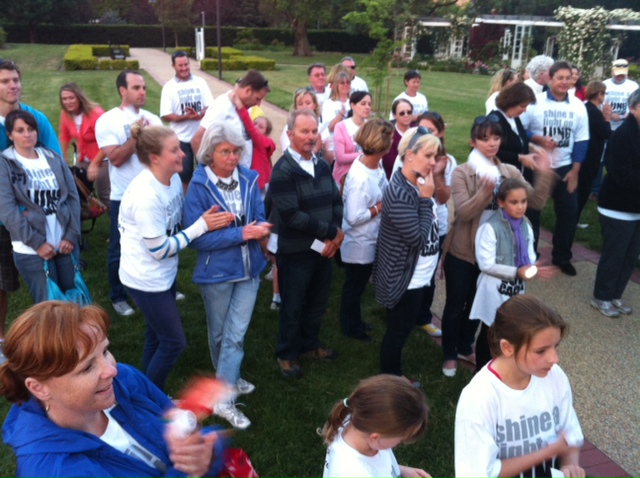
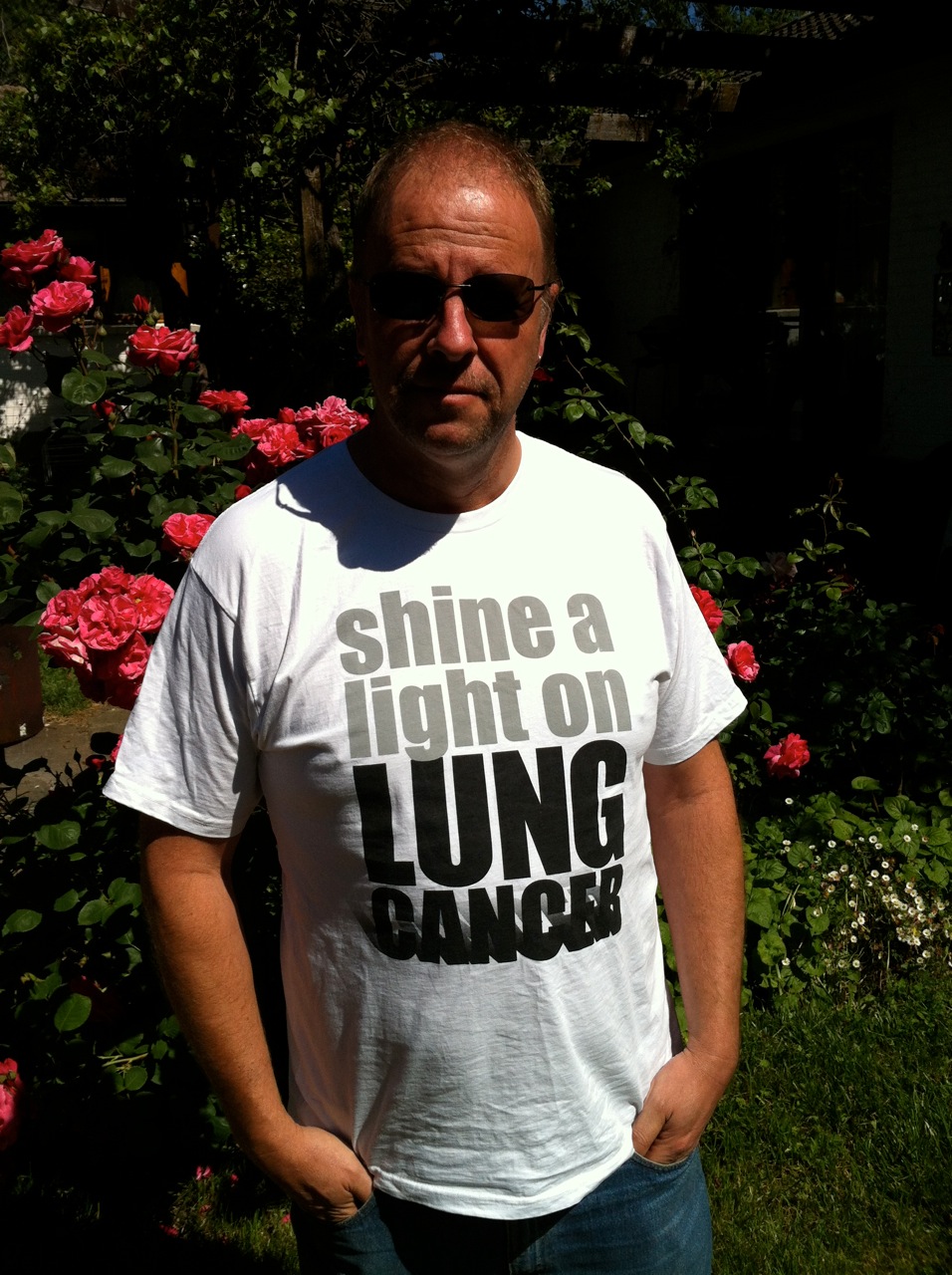
This has been a big media week for me. First time ever! On Tuesday, I was interviewed by Mike Welsh on 2CC radio about my experience with lung cancer. [Podcast for 13 Nov 2012] On Friday, I was interviewed by WIN News about the devastating impact of lung cancer. On Saturday night, my family and I joined with other lung cancer survivors, their families, carers and other supporters to Shine a Light on Lung Cancer. About 150 people gathered outside Parliament House, donned T-shirts, and walked together to the Old Parliament House rose garden. We shone our torches and observed a minute’s silence for those who had lost their battle with this killer. We heard some info about cancer from a local oncologist before I joined another lung cancer survivor and a carer in speaking about our experiences. Here’s a very brief outline of my words:

Three things give me hope and make me thankful…

  1. The wonderful support of my family and friends. Let’s show our appreciation to these people.
  2. The amazing oncology care available in our wealthy society, and the rapid advances in understanding and treatment that are taking place – especially genetic understanding and targeted therapies. We need our government to invest seriously in this.
  3. I’m thankful for the prayers of so many and my hope is firmly in God. He offers us genuine hope in this life and in eternity. Please call out to God and seek him. You have nothing to lose and everything to gain.

Lung cancer is the silent killer. Every year it kills more than 7500 Australians, which is more than 20 people each day. Lung cancer kills more people than breast, ovarian and prostate cancer combined. Recent research commissioned by the Global Lung Cancer Coalition found that Australian adults think breast cancer is the biggest cancer killer, followed by skin cancer. Whereas most other countries recognised that lung cancer was the biggest killer. I suspect this confusion is because breast cancer and skin cancer seem to get the most media attention. The excellent work of the McGrath Foundation and others in promoting awareness of breast cancer, and the high visibility of the Cancer Council on products such as sunscreen, hats and sunglasses, have increased awareness of both these diseases. And yet, other than anti-smoking campaigns, there has been virtually no publicity about lung cancer.

People don’t want to talk about lung cancer being the biggest killer. Tropfest winner and director of End the Unspoken, Jason van Genderen, was personally impacted by lung cancer as his father passed away late last year from the disease. He said:

“I have seen, first hand, how aggressive this cancer is and I hope End the Unspoken can raise awareness about this deadly disease. One in 16 Australians will develop lung cancer before they’re 85, yet it is a topic which is rarely spoken about. Perhaps this is because of the stigma which is attached to lung cancer?”

This week I met Victoria Tabor, a 31 year old teacher in Canberra. Victoria is a lung cancer survivor. She was not a smoker, yet an x-ray for a routine health check, before heading overseas for work, revealed a tumour on her left lung. As I spoke with Victoria, her experience was so close to my own, only it appears they caught the cancer earlier. She said in a recent Lung Cancer Foundation press release:

“I never had any symptoms but was diagnosed with lung cancer and have since had my left lung removed and been treated with both chemotherapy and radiation. I’m living proof that lung cancer doesn’t discriminate – it affects males and females, the old and the young, smokers and non-smokers – and is the most deadly cancer in Australia. I was so lucky to have been diagnosed early enough so doctors could operate and save my life.”

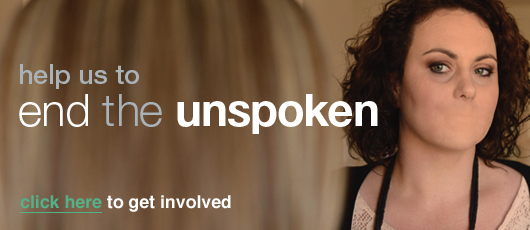
endtheunspokenbannerWe need people to speak up about lung cancer. While it’s true that smoking is the single biggest cause of lung cancer, and we need to dissuade people from taking it up, we also need to dispel the myth that it’s only smokers who will get this disease. You don’t have to smoke to get lung cancer, you only need to have lungs. Funding is needed to advance research, develop better treatments, and support those affected by this awful disease. We heard information last night showing that the Australian Government’s support for lung cancer has been very small, and it finishes next year. So far, there is no commitment for the future. We need to speak up, make some noise, and let people know the truth. This November is Lung Cancer Awareness month. Check out the Australian Lung Foundation website. Share this post with others. Do the very quick online survey. Please help end the unspoken.

Our miracle baby

This has been a big weekend. I’ve spent much of the day talking with people about our wonderful friend, Chappo, who went home to be with the Lord last night. We’ve just returned from the ‘Shine a Light on Lung Cancer’ vigil at Parliament House, where I got to speak about my experiences with the disease. Today, November 17, is International Lung Cancer Awareness Day.  And I’ve just discovered that today is also World Prematurity Day.

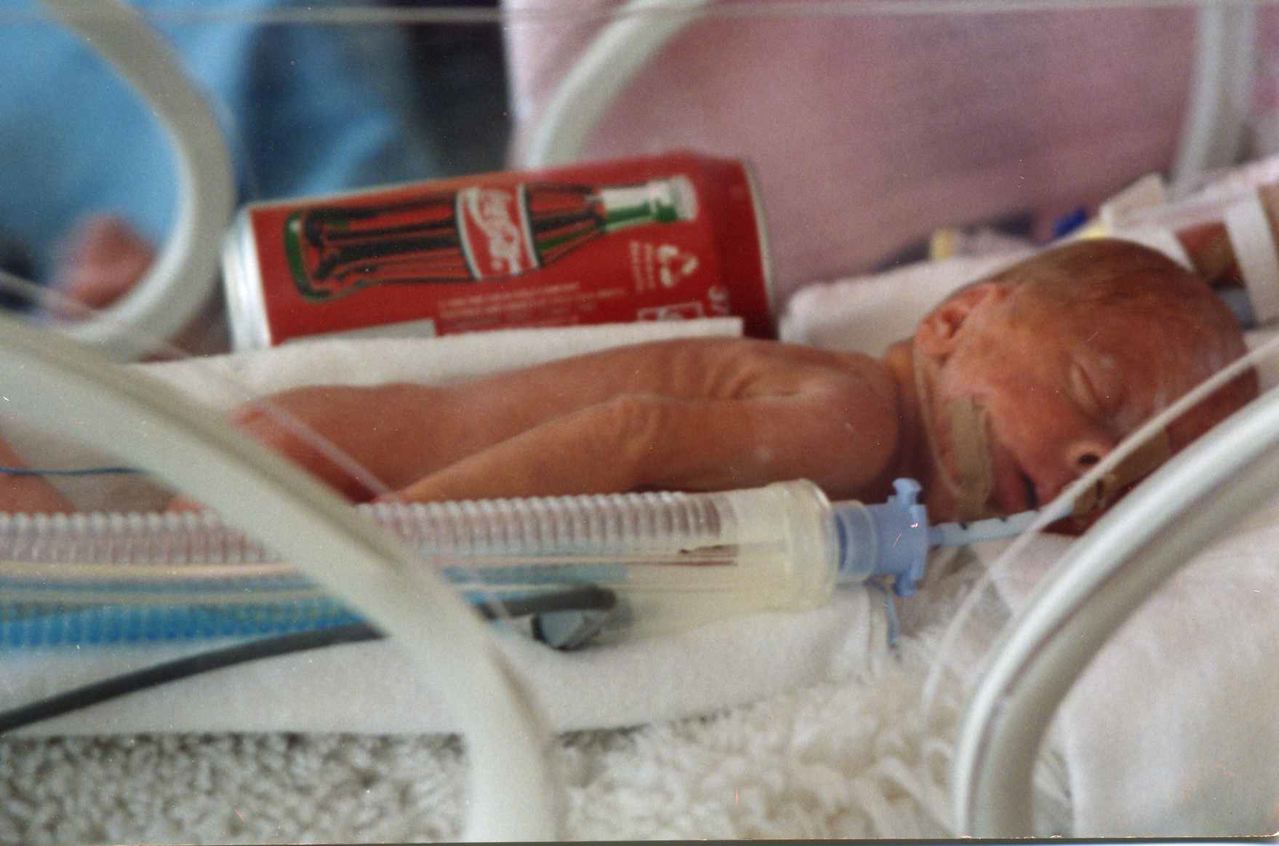
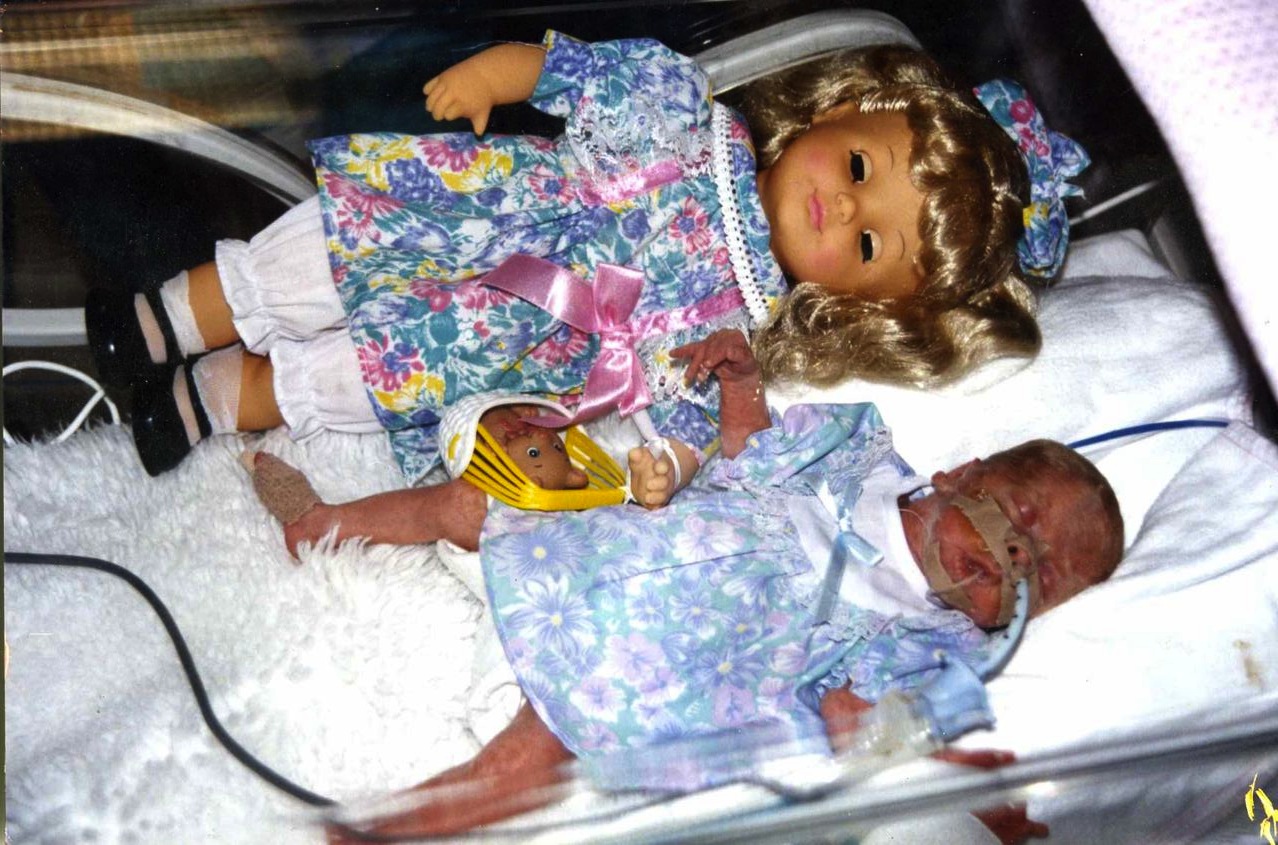
Our family has a very special affinity with premature babies. We’ve recently been praying for a little boy called Noah who was born extremely premature. It’s a tough journey for baby and parents and it’s been a joy to see this little boy slowly growing stronger and eventually heading home from hospital. The reason for our special interest in premature babies goes back to the birth of our third child, 16 years ago. Our daughter was unexpectedly and dramatically born 14 weeks premature. Here’s a letter that we shared with people praying for our daughter in December of 1996…

As 1996 began, we knew this year would be a big one, but we weren’t prepared for just how big. Without a doubt the biggest thing in our lives this year – or should that be the smallest – has been the arrival of Grace Alyssa. Here’s a brief history…

September 30 – we were enjoying a much needed rest on the beach at Coffs Harbour. October 1 began with Fiona going into labour. We hurried to Coffs Hospital, not sure what would happen – but certainly not expecting a baby yet. The doctor told us our baby would be born that day and if he or she lived, we could expect a massive catalogue of complications. In a state of shock I contacted a few friends and family and asked them to pray. A newborn emergency transfer team (NETS) flew up from Sydney and arrived about 1pm. At 2.55pm Grace was born by caesarean section, weighing only 900 grams. The NETS team took charge and attached Grace to every piece of machinery you could imagine. After she was stabilised Fiona and Grace flew to Canberra Hospital and Grace was admitted to the neo-natal intensive care unit (NICU). My boys and I stayed overnight with friends in Coffs before driving to Canberra the next day. Day one in a nutshell.

Grace is now 79 days old and has spent her whole life in intensive care. We have visited her every day and grown very attached to her. But the past 11 weeks have been a roller coaster we could never have imagined. She’s had major dramas with her heart, her lungs, and her gut. She has suffered major infections causing serious setbacks. She’s had three air ambulance rides. We’ve spent time at the Children’s Hospital in Westmead. We’ve done a few thousand extra kilometres in our car. There’ve been many times when we thought she was going to die. We’ve experienced the excitement of taking a step forward only to suffer the heartache of slipping three steps backwards. We’ve seen other babies die in the ward around us and wondered if Grace would be next. We’ve watched the joy of parents taking their little ones home and prayed for the day when that’d be us. About five hours every day is taken up with Fiona expressing milk and spending time with Grace. It’s been a long haul so far.

Grace has come a long way. Sometimes we’ve felt silly reporting on Grace because a few hours later the information has been wrong. It has been very much a day to day, hour by hour, journey so far. But the big picture is getting better. Grace is now approaching her expected birth date, 7th January. She’s grown to 2 kilos, is breathing well and drinking breast milk via a tube into the stomach. She no longer seems quite so fragile and vulnerable. We rejoice at the progress she’s made. We hope she’ll come through with no lasting problems. But our journey will in some ways get harder still. Fiona will have to step up the travel as they attempt to establish breast feeding, and then eventually we’ll have to cope with bringing her home and all the changes there. Please keep praying for us, sometimes it all seems a bit much.

In all this we’ve seen God at work. We thank Him for the joy of our little girl. We thank Him for the medical expertise, expensive equipment, and care that Grace has been privileged to receive. We thank Him for the love and support of family, and friends at church and in other places. We thank Him for the many hundreds of individuals and groups all over the world who have spent time praying for Grace. We feel we have the most blessed little girl in the world!

This was more than 16 years ago. Then she was tiny and vulnerable – now she’s strong and healthy. Sadly, for many parents, the outcomes of their stories aren’t as happy as ours. The Miracle Baby Foundation reports that in Australia each year approximately 25,000 babies are born premature and up to 1000 babies lose their fight for life. We thank God for the care and support of the NICU, then and now. We thank God for our miracle baby.

13 For you created my inmost being;
you knit me together in my mother’s womb.
14 I praise you because I am fearfully and wonderfully made;
your works are wonderful,
I know that full well.
15 My frame was not hidden from you
when I was made in the secret place,
when I was woven together in the depths of the earth.
16 Your eyes saw my unformed body;
all the days ordained for me were written in your book
before one of them came to be.  (Psalm 139:13-16)

Chappo’s gain

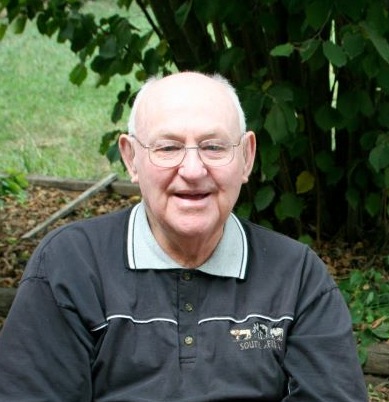
 Chappo
John Charles Chapman
23 July 1930 – 16 November 2012
being with Christ is better by far

I received news earlier this evening that John Chapman was not expected to live much longer. He was in ICU, his breathing was shallow, and he was no longer responding to people around him. I wanted to call and tell him that we loved him, to thank him for his kindness, generosity, love and prayers. I wanted to thank him again for writing to our youngest son, encouraging him to read his Bible, sending him books, praying for him. I wanted to tell him what a huge influence he’d had on my life and so many others. As I spoke with a friend at the hospital, I asked if he would read Chappo Psalm 62, so that he would be reminded again that his God is all powerful and all loving.

At 9.15 this evening Chappo departed to be with his Lord and Saviour. This was the occasion he’d been looking forward to since he was a teenager. This was the hope that Chappo had shared with all who’d listen. Chappo loved explaining to people that Jesus had given his life to pay for their sins and offer forgiveness. He’d share how God had raised Jesus from the dead, and how he was now the Lord of this universe. He’d passionately plead with people to consider how they’d been treating God, to turn and seek forgiveness, and to hand over control of their lives to Jesus.

What a privilege to have known Chappo as a brother and friend, and I look forward to catching up with him one day in heaven. In fact, as we spoke with each other (both in hospital) nearly a year ago, I think I said that maybe I’d make it there before him. It wasn’t to be.

John Chapman gave up his life tonight. But he’d given up his life daily for the last 57 or so years. He gave up his life in the service of God and others. For Chappo, to live was to serve Christ, and to die was to be in the presence of Christ. He kept on serving Christ to the very end, sharing his faith, encouraging others, preaching in the last few weeks, and publishing his latest book. It’s been better for us that Chappo has lived! And now it’s Chappo’s gain. He’s where he truly belongs – not because he was a great man, but because he has a great Saviour. The words of the Apostle Paul to the Philippians truly describe how Chappo lived and died…

20 I eagerly expect and hope that I will in no way be ashamed, but will have sufficient courage so that now as always Christ will be exalted in my body, whether by life or by death. 21 For to me, to live is Christ and to die is gain. 22 If I am to go on living in the body, this will mean fruitful labor for me. Yet what shall I choose? I do not know! 23 I am torn between the two: I desire to depart and be with Christ, which is better by far; 24 but it is more necessary for you that I remain in the body.  (Philippians 1:20-24)

I miss Chappo already. My heart is heavy. There’s sadness and tears. And yet, I also feel joy because God has completed the work he began in my brother. Thank you God.

Thank you God for bringing us into Chappo’s life and he into ours.

Thank you God  for Chappo’s gruelling sermon deconstructions and critiques.

Thank you God for the huge encouragement I received after preaching at Sydney University, when Chappo came up to me and said, “If I wasn’t a Christian already, I’d have become one immediately after that talk!”

Thank you God that Chappo kept our family in his prayer diary for the past 24 years – and that he prayed!

Thank you God for Chappo’s prayers for Fiona and our family after the accident.

Thank you God that each time he got up at night to go to the toilet, he’d pray for me and his other ‘oncology friends’!

Thank you God that Chappo would write and ring up, just to offer a word of encouragement – even though he had the worst phone manner of anyone!

Thank you God that Chappo preached at our first ever Crossroads Christian Church service and many more after that.

Thank you God for letting me and many of my friends and family share my 50th birthday with Chappo this year.

Thank you God for placing it on Chappo’s heart to write and encourage my son.

Thank you God for Chappo’s passion for preaching Christ.

Thank you God for changing people’s hearts as they came to know Christ through Chappo’s preaching and writing.

But mostly, thank you God that you have removed the sting of death, that you’ve prepared a place for Chappo, and that he’s now free from sickness and suffering, and enjoying your presence forever and ever.

First things first

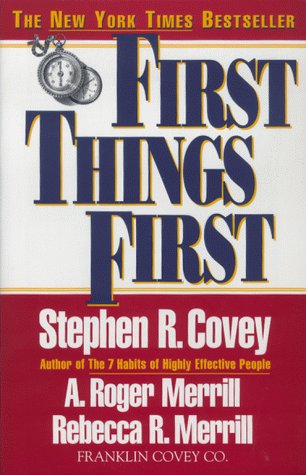
One of my favourite preachers is famous for using the line ‘the good is the enemy of the best’. Another is famous for saying ‘the main thing is to keep the main thing the main thing’. These two pithy proverbs are simply different sides to the same issue. There are so many good things demanding our time, attention and resources that we’re often prevented from focusing on what’s truly best. We need to focus, not simply on getting more done, but on the things that are most worth doing. This idea is developed extensively in First Things First by Covey, Merrill & Merrill. It builds on Covey’s earlier important book, The 7 habits of highly effective people.

Traditional time management helps us to become more efficient, but what we really need is to become more effective. There’s no point getting much done, if what we’re doing is unimportant. The approach of the authors is to transcend the typical faster-harder-smarter strategies by examining what it is that we really want to be achieving. They overlay the clock with the compass because where we’re headed is much more significant than how quickly we get there.

This book touches a nerve with many of us by identifying the gap between how we spend our time and what really matters to us. It’s so easy to have our lives ruled by the demands of others and the tyranny of the urgent. In fact, many of us are addicted to urgency, living off the adrenalin rush of handling crisis after crisis. Unfortunately, I know this experience all too well. We feel useful and successful because we’re solving immediate problems. This may be okay when the issues are important, but if we make it a habit, then we find ourselves doing anything urgent just to keep busy. The end result is a pattern of reactivity and often serious burn out.

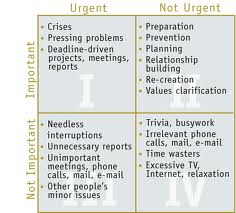
First Things First illustrates a time management matrix around an urgency-importance axis. The strategy for effectiveness is to maximise the time spent in Quadrant II – the quadrant that includes activities that are ‘important but not urgent’. This puts the emphasis on things like preparation, prevention, values clarification, planning, relationship building, ‘true’ recreation and empowerment. These are the proactivities that enable us to spend our energies on the things that matter most. The more time and effort spent in this quadrant the less we are ruled by the urgent and the more satisfying life becomes.

This is a most helpful book because it takes us deeper than many other management tools. It should strike a chord with those who have strongly held convictions and want to see them lived out. It shows us a means to work from the inside out – to move from our convictions to our actions. It moves from theory to practice, providing simple and practical tools for implementation. My only trap was that once I became sold on the ideas, I fell easy prey to the myriad of other resources designed to make it all happen!

This book helped me to identify many of the factors that had been creating stress in my life. All too often I’d find myself having dropped the bundle in one or more areas of life while I concentrated on others. The main reason was that I was consistently reactive. I hadn’t put in the ground work, thinking ahead and planning without pressure. Unless something was urgent it didn’t always get my immediate attention. The problem was that once something became urgent it was often already a crisis of major proportions. When the areas included my marriage, family and key areas of ministry this became a major struggle. The ideas in this book helped remind me of the need to be proactive in all these important areas. In other words, to keep putting my first priorities first. And it offered tools to help me achieve this.

When I first became a devoted follower of Covey, I must confess to taking on board these ideas hook, line and sinker! I’ve since read over the book a number of times, implemented specific strategies, and adopted ideas for training leaders and running workshops on time management. I introduced this material to our staff and co-workers at church and on campus, and it was required reading for a number of years… until I got busy and distracted by other things!

In my opinion, one of this book’s most obvious weaknesses is the assumptions it makes about people. It has a very optimistic view of human nature that fails to acknowledge or integrate an understanding of selfishness or sin. It offers universal principles on which we can build our lives without any substantiation of their validity. This is not to completely undermine the validity of the points made, but they should be digested carefully. We need to pick out the bones and swallow the meat.

As a Christian reflecting on the thesis of this book, I’m reminded of the words of the Westminster Shorter Catechism, written in the 1640s. It opens with the following question and answer:

Q. What is the chief end of man?
A. Man’s chief end is to glorify God, and to enjoy him forever.

In other words, What are the first things that people should put first? The words of the catechism aim to reflect the message of the Bible. If the follower of Jesus is to put first things first, then they will seek first to honour God and to find their ultimate joy in him. It’s an awesome privilege to be able to glorify God!

11 Teach me your way, Lord,
that I may rely on your faithfulness;
give me an undivided heart,
that I may fear your name.
12 I will praise you, Lord my God, with all my heart;
I will glorify your name forever.
13 For great is your love toward me;
you have delivered me from the depths,
from the realm of the dead.  (Psalm 86:11-13)

So whether you eat or drink or whatever you do, do it all for the glory of God.  (1 Corinthians 10:31)

“You are worthy, our Lord and God,
to receive glory and honour and power,
for you created all things,
and by your will they were created
and have their being.”  (Revelation 4:11)

And it’s an amazing promise from God that because Jesus has defeated sin and death, therefore we can enjoy him forever.

Therefore my heart is glad and my tongue rejoices;
my body also will rest secure,
10 because you will not abandon me to the realm of the dead,
nor will you let your faithful one see decay.
11 You make known to me the path of life;
you will fill me with joy in your presence,
with eternal pleasures at your right hand.  (Psalm 16:9-11)

Let me ask you, are you keeping the main thing the main thing? Or is the good becoming the enemy of the best in your life? What are the matters that matter most to you? And are you putting first things first?

If it’s even possible that the message of Christianity could be true, then I reckon it’s worth carefully considering these words of the Apostle Paul:

For what I received I passed on to you as of first importance: that Christ died for our sins according to the Scriptures, that he was buried, that he was raised on the third day according to the Scriptures, and that he appeared to Cephas, and then to the Twelve. After that, he appeared to more than five hundred of the brothers and sisters at the same time, most of whom are still living…
(1 Corinthians 15:3-6 emphasis mine)

The contrarian’s guide to leadership

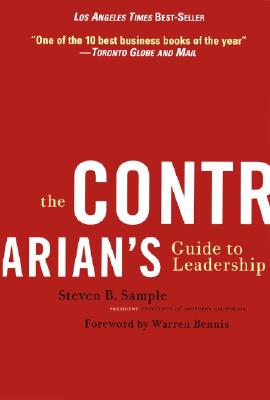
Without exaggeration, The Contrarian’s Guide to Leadership is one of the most insightful and compelling books on leadership I’ve read. Steven Sample is an analytical practitioner of the highest calibre. He’s an electrical engineer, musician, outdoorsman, professor, and inventor. For nearly 20 years Sample served as the president of the University of Southern California, leading it to become one of the premier universities in the US. This book is the product of research, reflection, observations and experience, woven together with wisdom and clarity. Many books about leadership are riddled with predictable cliches, whereas The Contrarian’s Guide offers fresh and profound insights in every chapter.

1. Thinking gray, and free

Don’t form an opinion about an important matter, until you’ve heard all the relevant facts and arguments, or until circumstances force you to form an opinion without recourse to all the facts.  (p7-8)

Sample explains how we often jump to conclusions, flip-flop between ideas, or believe things which we think are strongly believed by others. Thinking gray, suspending our binary instincts, filing away our first impressions, helps the leader to consider weighty issues more carefully. Free thinking takes ‘thinking outside the box’ and ‘brainstorming’ to the next level. It involves contemplating outrageous ideas without restraints, well-worn ruts, passions and prejudices getting in the way. A creative imagination, or the ability to encourage this in others, is a huge asset for a quality leader.

2. Artful listening

The average person suffers from three delusions: (1) that he is a good driver, (2) that he has a good sense of humor, and (3) that he is a good listener.  (p21)

Listening is a vital skill for a leader. It’s better to listen first and talk later. As we listen, so we learn, show respect for others, and gain the capacity to make wise decisions. Artful listening connects the leader to new perspectives that enable her to think independently and creatively. Costly misunderstandings and mistakes are often avoided when time is taken to hear from the right people.

3. Experts: Saviors and Charlatans

Experts can be helpful, but they’re no substitute for your own critical thinking and discernment.  (p189)

Sample argues that it’s necessary for an expert to be a ‘deep specialist’ and for a leader to be a ‘deep generalist’. The expert will know more than the leader in a specific field, but the leader needs to be able to integrate the advice of different experts into a coherent course of action. Leaders should never become too dependent on experts, they should maintain their intellectual independence and they should never kid themselves that expertise can be substituted for leadership.

4. You are what you read

In these tempestuous times it often appears that everything is changing, and changing at an increasingly rapid rate. In such an environment a leader can gain a tremendous competitive advantage by being able to discern the few things that are not changing at all, or changing only slowly or slightly. And nothing can help him do that better than developing a close relationship with a few of the supertexts.  (p57-58)

Not many books are still read 10 years after they’re published, let alone 50 years, or centuries later. Such enduring texts are significantly influential. Sample believes that such literature includes The Bible, The Qur’an, Plato’s Republic, the plays of Shakespeare, Machiavelli’s The Prince, and a handful of others. He describes them as supertexts due to their endurance and influence.

I expected Sample to be a freak who devours hundreds of books annually, but he focuses on only a few books and maintains a regular diet of truly significant writings. He briefly scans the newspaper, more for entertainment than information, and replaces his reading time with books of substance. He’s far more interested in understanding original ideas than reading another popular book that repackages and regurgitates the same old stuff. Sample recommends the advice of  Thoreau: “Read only the best books first, lest there not be time enough to read them all.”

This advice resonates strongly with my experience as a pastor, teacher and leader. Every week more books are published in my fields of interest than I could read in a year – if not a lifetime. I can’t keep up with all the latest fads and ideas. But nor do I need to. What offers the greatest reward is concentrating on the supertext that guides me in every area of life. This book was given to me by my grandparents when I was 6 years old and they highlighted these words inside the front cover…

Thy word is a lamp to my feet and a light to my path.
(Psalm 119:105 Revised Standard Version Bible)

5. Decisions, decisions

The contrarian leader’s approach to decision making can be summed up in two general rules:

1. Never make a decision yourself that can be reasonably be delegated to a lieutenant.  (p71)

2. Never make a decision today that can reasonably be put off to tomorrow.  (p72)

The key is to work out what’s reasonable, and this requires skill and practice. Sample argues that the leader must maintain responsibility for hiring and firing key staff, and making the decisions that will have the greatest impact on the organisation. He also argues for artful procrastination, allowing time to make better informed and wiser decisions. Of course, leaving things too long will result in missed opportunities or new problems developing.

6. Give the Devil his due

We must accept the fact that human beings and their institutions hardly ever measure up to our noblest ideals, and that to pretend otherwise is to invite ruin.  (p102)

Sample is a great fan of Machiavelli’s, The Prince. This chapter is his apologetic for drawing on the wisdom of this controversial writer. One of Machiavelli’s strengths is his honesty about the complexity of the human condition. People have capacity for both atrocity and altruism. The contrarian leader won’t be naive about the people and circumstances he’s dealing with. Many decisions will be very complex and the leader must discern the pitfalls of various options and choose the best on offer, knowing that there is no perfect solution.

7. Know which hill you’re willing to die on

When he turned 16, Sample was given the same advice by his father that my father gave me and that I’ve since passed on to my children:

“If a cat or dog or squirrel (or kangaroo in Australia!) runs in front of your car,” he told me, “just steel yourself and kill it like a man. You have the responsibility not to endanger people in your car or in other cars by swerving in an effort to save the animal.”  (p107)

Let me tell you, this is hard to do, and I’ve hit a few kangaroos in my time! But I’ve also seen people wipe out themselves and still hit the kangaroo by attempting to swerve. Some decisions are very tough and some are much tougher than the one above. Moral choices can be incredibly complex. Sample asks us to choose what hill we’re willing to die on. In other words, what moral compass will guide us to work out what we will and won’t do as leaders? The ethical dimensions of leadership are very important and they require us to ask difficult questions of ourselves. Every leader must come to terms with their own moral beliefs and be accountable for the decisions they make based on those beliefs. What you believe or don’t believe about God will play a significant part in this.

8. Work for those who work for you

If a would be leader wants glamour, he should try acting in the movies. However, if he in fact wants to make a consequential impact on a cause or organization, he needs to roll up his sleeves and be prepared to perform a series of grungy chores which are putatively beneath him, and for which he’ll never receive recognition or credit, but by virtue of  which his lieutenants will be inspired and enabled to achieve great things.  (p122)

I loved this chapter – haven’t always lived it out – but I love what it teaches! There is great wisdom here about who we employ and how we support them once they’re employed. There is sober advice about firing people, and how the leader should always do this in person. There are excellent recommendations for evaluating, assessing and equipping our key staff.

Choosing these people, motivating them, supporting them, helping them grow and achieve, inspiring them, evaluating them and firing them are among the most important things a leader does.  (p139)

9. Follow the Leader

Whatever the basis of his authority may be, when an effective leader turns in a new direction his followers turn with him; that’s the test of real leadership. To paraphrase Harry Truman, leadership in involves getting others to move in a new direction in which they’re not naturally inclined to move on their own.  (p142)

Sample identifies a number of skills required by effective leaders. Premium among these is communication. Words are their tools. Most highly effective leaders have an excellent command of language, either spoken or written or both. The most powerful form of communication between a leader and his followers is the spoken word. It’s not the email, bulletin or memo that’s going to inspire people – it’s direct, face to face, oral speech.

Leadership is about people; connecting with real people one to one. A leader may not be able to do this with everyone in the organisation, but it’s important that someone can and does. Sample emphasises the power and leverage of people chains, through which the leaders goals, vision and values are communicated orally and personally to every follower. Jesus was amazingly effective at achieving leadership leverage through people chains. A dozen followers grew to 120, then thousands, then thousands more, such that 2000 years later millions of people continue to follow him.

10. Being president versus doing president

The best physician won’t necessarily make a good hospital administrator or medical dean, the best engineer won’t necessarily make a good division president, the best teacher won’t necessarily make a good school principal, and the best athlete won’t necessarily make a good coach. There is no shame, and often much merit, in a person’s simply deciding he’s not cut out to have power and authority over, and responsibility for, a large number of followers.  (p161)

To which I would add from the world of my experience, the best people serving others in Christian ministry won’t necessarily make a good leader of a church. Effective leaders need to be well tuned to the people around them and they need to be clear on where they’re taking people and how they will do it. It’s important for would-be leaders to recognise that leadership often removes them from doing what they’re best at and enjoy doing the most. That remains the privilege of those who serve under them. In fact, Sample argues that even the best leaders, under ideal conditions, will spend less than 30% of their time and effort on substantive matters. The rest of the time will be spent reacting to or presiding over trivial, routine, or ephemeral matters. Wanting to be the leader and wanting to do the work of a leader are two very different things!

So…

If you’re a leader or a would-be leader then I’d put this on your short list of recommended reading. If you’re wanting some fresh input on leadership then get hold of this book. There are plenty of pearls to be plucked from its pages. Many of my texts on leadership are built on an explicitly Christian platform, deriving their message from the Bible. This isn’t one of them. Who knows, Steven Sample may be a follower of Jesus. He’s certainly familiar with Christianity’s supertext and much of his wisdom resonates with things I’ve learned from the Bible. Like any other good book, this one needs to be read with discernment and with a view to application.

Let me finish with the following quote:

…before you spend several hours carefully reading a relatively new book, you deserve a thoughtful preview from a person whose passions and prejudices are familiar to you. In many cases you’ll find that this thoughtful preview is all you’ll ever want or need to know about that particular book.  (p70)

Kind of justifies this blog, doesn’t it?! 😉

My forced sabbatical

In some respects I view 2012 as a kind of forced sabbatical. I’ve read more books than normal and written more words than ever. It’s been incredibly helpful, to me at least, not only to read books, but to summarise, reflect and begin to apply what I’ve been reading. In fact, this has been some of the most careful reading I’ve done in a long time. Many of the summary/reviews have appeared on this blog and so far I’ve restricted myself to books that I’d encourage others to read. Books that haven’t made the grade have either been left unfinished or unreviewed.

When I began this process I worried that it wasn’t a good use of my time. If I wasn’t going to live that long, should I really waste it reading books? I knew it was a step up from watching TV and DVDs, but it still seemed a little introspective and indulgent. However, I don’t feel this way today. Rather, I’m keen to keep learning as long as I can so that I’ll be better equipped to encourage and resource others. My whole adult life has been shaped and influenced by books. Some of these books I’ve read and long forgotten, but others continue to guide me in the things that matter. Supreme among these is the Bible, followed by those that learn from the Bible and put it into practice. There are many others that contain great wisdom, make a practical difference in the lives of the reader, yet have nothing to do with the Bible. But we’d do well to be discerning about how we fill our minds and use up our time.

11 The words of the wise prod us to live well.
They’re like nails hammered home, holding life together.
They are given by God, the one Shepherd.

12-13 But regarding anything beyond this, dear friend, go easy. There’s no end to the publishing of books, and constant study wears you out so you’re no good for anything else. The last and final word is this:

Fear God.
Do what he tells you.

14 And that’s it. Eventually God will bring everything that we do out into the open and judge it according to its hidden intent, whether it’s good or evil.  (Ecclesiastes 12:11-14 The Message)

Someone once said that they wished 90% of writers wouldn’t bother and the other 10% would write more. It’s true that there is much drivel between the covers of books. My desire is to focus on the 10%, to learn myself, and to urge others to do the same. I thank God for his Book. And I thank him for creating people with the ability to think, imagine, create, and tell. Books are a wonderful gift.

Journey with cancer 13 Nov 2012 – best week yet

Dear friends and family

Just wanted to share with you briefly about my reaction to the chemo in the past week. There was nothing much different about it, other than getting booked for parking in the wrong place! I was more relaxed this time and succeeded in falling asleep while the poison went in. Prayer, breathing and music all did their job!

A typical post-chemo week involves getting pretty sick sometime in the first 2 days, going downhill for a few more, and getting back to equilibrium somewhere between days 6 and 10. This one was different. Monday, chemo, visiting a wonderful prem baby survivor in NICU, meeting to discuss Shine a light on lung cancer vigil, before having a friend for dinner. Tuesday, I read and wrote all day. Wednesday, I was out and about, doing some writing, and spending time catching up with my father. Thursday, I read Chappo’s book, wrote a review, and had a couple of meetings. Friday, was active. Saturday, I spent the day looking at trailers and thinking about camping, wrote my 100th blog post, and had a great night out with friends. Sunday, went to church, had an old buddy to lunch, and taught a mate how to drive his new espresso machine. Monday, more reading, writing, staff meetings, shopping, people to dinner, family counseling afterwards. Today…

Over a week since chemo and I haven’t been bed-ridden at all! That’s a record! Feeling a bit off – yes. Toxic cloud – yes. Digestion problems – yes. Aches and pains – yes. Chemo brain – oh yes. But otherwise, normal. I probably could have been at work! Wow. Thank you God! What a treat! Grace, Fiona and I all wondered if they’d given me the wrong chemo or the wrong dosage. 🙂 This cancer journey is anything but predictable. It has its stresses and challenges, big time! What happened this time is no guarantee of what’s ahead, but I’ll rejoice in the good times of this past week, and give praise to God for his kindness.

And by the way, if you know our good mate, John Chapman, please pray for him. I understand he’s been in ICU for a few days and isn’t doing too well.

With love,

Dave

The key to resolving conflict

I’m not much of a fan of conflict – especially when it involves me. I don’t like causing it and I don’t like being on the receiving end of it. Give me peace and harmony any day! But conflict happens. We disagree, we argue, we get defensive, we sulk, we blow up in anger, we grow resentful, we wallow in bitterness. It’s a death cycle for relationships and it’s way too common.

As I look back over my life, I can see the damage caused by conflict with others. Good friendships gone bad. Working relationships broken down. Tensions with relatives. Relationships strained and awkward.

Most of the conflicts were nothing at first. A word here or there. An oversight. Simple misunderstandings. Unmet expectations. Assumptions. Nothing to worry about. It’ll be all right. Things will blow over.

But they don’t blow over. They stay, and they grow, and we feed them. The small problem gets bigger and bigger and, before too long, we have an unresolvable crisis. Judgments have been made. We become entrenched in our position. They in their position. Neither of us will budge. We appoint blame and demand the other change. Apologies are empty, we’ve heard it all before, there’s no hope, the relationship’s over.

Conflict hurts. We know the pain. We live with the scars. Couples, families, homes, workplaces, teams, schools, churches. It doesn’t matter where. Conflict is far too common and we keep failing to overcome it. So what hope is there?

In my experience there is one key to resolving conflict. It’s very simple to understand, but so hard to put into practice. It’s not a technique. It’s not a set of words or exercises. It doesn’t require counselling or courts to make it happen. It needs something much more profound – a change of heart.

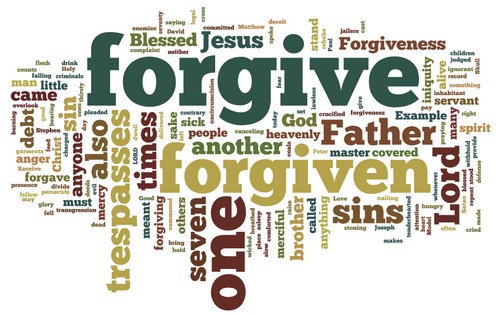
The key to resolving conflict is forgiveness.

forgive-bible-quotesThat’s what it takes. So simple, yet so difficult. To forgive means to count the cost, to absorb the hurt, to no longer hold it against them. To forgive means to cancel the debt, to let go of your pride, to release your bitterness. To forgive means to value the other person, to seek the relationship, to work for reconciliation. That simple! That impossible!!

What really stands in the way of resolving conflicts is me! I’d prefer to stand on my rights, to demand an apology, to wallow in my self-pity or pride. I’m the problem and, left to my own resources, I’m a problem I can’t fix!

But… God can. The power to forgive comes from forgiveness received. As I recognise how much God has forgiven me through the death of his Son, Jesus Christ, so I become more able to forgive others. God has wiped my slate fully clean. He’s forgiven me all my selfish thoughts, words and actions. He’s washed me cleaner than snow. He’s removed a debt that I could never repay.

I need to be constantly reminded of the magnitude of God’s forgiveness of me. The enormous cost that he paid to remove the conflict between us. God is the ultimate peacemaker. He’s the awesome reconciler. He’s the author of forgiveness. As I begin to appreciate how much I’ve been forgiven, what could be too much for me to forgive others? And God doesn’t leave me to try and become a forgiving person on my own, relying on my own strength and resources. He pours out his Holy Spirit to bring peace into our lives and relationships.

It’s worth remembering this story that Jesus told:

21 Then Peter came to Jesus and asked, “Lord, how many times shall I forgive my brother or sister who sins against me? Up to seven times?”

22 Jesus answered, “I tell you, not seven times, but seventy-seven times.

23 “Therefore, the kingdom of heaven is like a king who wanted to settle accounts with his servants. 24 As he began the settlement, a man who owed him ten thousand bags of gold was brought to him. 25 Since he was not able to pay, the master ordered that he and his wife and his children and all that he had be sold to repay the debt.

26 “At this the servant fell on his knees before him. ‘Be patient with me,’ he begged, ‘and I will pay back everything.’ 27 The servant’s master took pity on him, canceled the debt and let him go.

28 “But when that servant went out, he found one of his fellow servants who owed him a hundred silver coins. He grabbed him and began to choke him. ‘Pay back what you owe me!’ he demanded.

29 “His fellow servant fell to his knees and begged him, ‘Be patient with me, and I will pay it back.’

30 “But he refused. Instead, he went off and had the man thrown into prison until he could pay the debt. 31 When the other servants saw what had happened, they were outraged and went and told their master everything that had happened.

Hopefully, you too are outraged by the response of the servant. He’d been forgiven 10,000 bags of gold and he can’t even bring himself to forgive 100 silver coins. Wow!

Of course, there’s a sting in this tale. If we’ve received forgiveness from God for every selfish thing we’ve ever done, then how can we not forgive others the petty grievances we so willingly cling on to. Perspective please!

God wants us to enjoy peaceful relationships. Firstly, with him, and he calls us to put our trust in Jesus so that we can receive his forgiveness. Secondly, with each other, and he expects us to keep the forgiveness going. Don’t give in to conflict. It’ll destroy relationships and it’ll ultimately destroy your soul. If you need forgiveness, then please seek it. Otherwise, please humble yourself and be willing to offer forgiveness to others.

Growing in godwardness

I’ve seen something disturbing in recent years. Couples, out together, but not communicating with each other. They’re both communicating, but with someone other than the one they’re with. Walking along, holding hands, each one talking on their mobile phones. Sitting in a cafe, sharing a coffee, but each one busy checking their facebook or sending texts to other people. It’s bizarre. It’s just plain rude! And I feel sheepishly guilty as I say this, because I know I’ve done it too.

It got me thinking that sometimes we treat God the same way. How many times have I sat down to read God’s word only to be distracted by a pressing email, a job that has to be done, a request from the kids, or a random thought that takes me elsewhere? How many times have I begun to pray when I remember something that needs doing, my mind drifts, or I fall asleep? In fact, only today I was praying with friends, when my phone alerted me to some messages… I checked the messages and I quickly forgot we were talking to God.

I suspect it’s also a symptom of God seeming such a long way away. We can’t see him or touch him, and we’re probably not hearing his audible voice. It’s easy to get distracted by the things that invade our senses. We experience the presence of those around us, but we forget about God. God has promised that he is near to all who put their trust in him. We need reminding of his presence and his commitment to us. He desires to speak to us through his Scriptures and to have us listen to him. He wants us to speak to him in prayer and he promises to listen to us. Relationships are about communication, and God wants to communicate with us.

The words of Psalm 145 give us great cause to spend time communicating with God. He’s trustworthy and faithful. He powerful and generous. He provides for our needs. He lifts us up when we’re down. He’s able and willing to satisfy the desires of our hearts. He promises to save all who call on him in honesty and humility, recognising that he alone is God.

 The Lord is trustworthy in all he promises
and faithful in all he does.
14 The Lord upholds all who fall
and lifts up all who are bowed down.
15 The eyes of all look to you,
and you give them their food at the proper time.
16 You open your hand
and satisfy the desires of every living thing.

17 The Lord is righteous in all his ways
and faithful in all he does.
18 The Lord is near to all who call on him,
to all who call on him in truth.
19 He fulfills the desires of those who fear him;
he hears their cry and saves them.
20 The Lord watches over all who love him,
but all the wicked he will destroy.

21 My mouth will speak in praise of the Lord.
Let every creature praise his holy name
for ever and ever.  (Psalm 145:13-21)

The godward person recognises their dependence upon God. We all need God. We need his help. We’ve been created for a relationship with God, not to go it alone. It makes sense that he should be the first one we speak to when we’re in need and the first one we praise when we’re happy.

Is anyone among you in trouble?
Let them pray.
Is anyone happy?
Let them sing songs of praise.  (James 5:13)

When trouble and suffering comes our way, let’s remember our loving and powerful God. Let’s pray. We might ask him to remove our suffering. We might ask him to help us persevere through it. We mightn’t know exactly what or how to pray. But let’s turn our hearts and minds godward.

And when things are a delight, when all is happy, when there’s cause to celebrate, let’s not forget our generous Father in heaven who gives all good gifts. Let’s not become proud or conceited, drawing praise to ourselves. Instead, let’s offer praise to God. Let’s rejoice in his mercies. Let’s sing together of the wonders of his love. Let’s grow in godwardness.

Making the most of the Bible

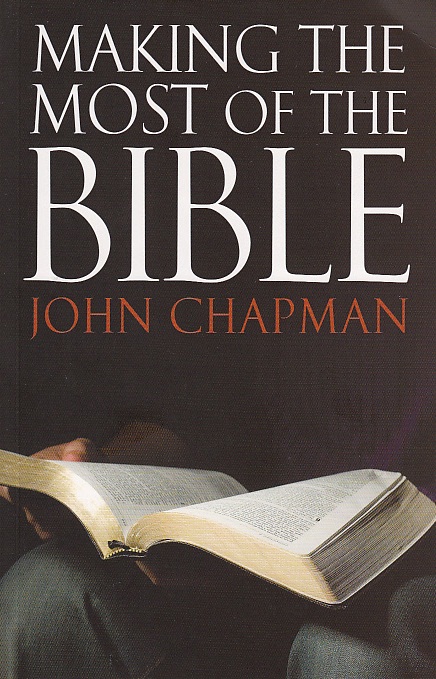
My youngest son received a wonderful parcel in the mail this morning – four copies of Making the most of the Bible sent by its author, John Chapman. One for him, another for his sister, one for Fiona and I, and another to give away. Thanks so much Chappo!

This is a great little primer for getting the most out of reading the Scriptures. It’s warm and engaging without wasting words. It’s more about attitude to the Bible than any special approach to reading. It’s only 66 pages short, I read it between breakfast and morning tea, and it’s the first book I’ve been able to read all year without glasses (nice large print)!

Chappo begins with the importance of faith. Reading the Bible should be more than an academic pursuit. We read it to discover the joy of trusting God with our lives. The Gospels reveal Jesus to be someone who can be completely trusted. He is reliable and always keeps his promises. As we read the Bible we have two choices: (1) either we approach it with hard hearts, only accepting what fits with our own desires and dismissing what doesn’t, or (2) we open our minds to discovering who God is, what he’s like, with a willingness grow in trusting him. Our attitude will make all the difference.

Making the most of the Bible focuses upon Jesus understanding and use of the Scriptures. This is an excellent approach, because anyone claiming to follow Jesus will surely want to see how Jesus treated the Bible. If we’re going to follow him with our lives, then we’ll also want to follow his lead with the Bible.

What was Jesus’ attitude to the Old Testament, what do we make of Jesus’ own words, and what was Jesus’ view of the New Testament?

The first thing we discover is that Jesus treated the Old Testament as having authority because he believed it to be God’s own words. He submitted to these words and called others to do the same. Jesus resisted the ancient temptation to doubt God’s truth and goodness, instead placing his full confidence in God’s promises. Jesus also claimed a special relationship to these words. He declared that the whole Old Testament points to him, and finds its fulfilment in him. These are bold claims, and they offer us the key to understanding the whole message of the Bible. After his resurrection, Jesus explained his life and ministry to his followers in these words:

44 He said to them, “This is what I told you while I was still with you: Everything must be fulfilled that is written about me in the Law of Moses, the Prophets and the Psalms.” 45 Then he opened their minds so they could understand the Scriptures.  (Luke 24:44-45)

It’s common for people to grab hold of some of Jesus’ teaching, without any intention of following him personally. Chappo reminds us that Jesus’ person, works and words are all tied together. Jesus’ life and teaching reveal who he is and his words calls us to follow him. Jesus claims to reveal God to us and backs this up with all he says and does. We might not appreciate this today, but at the time the religious authorities recognised the magnitude of his claim and they killed him for it. As Jesus reminded one of his followers at the last supper:

Jesus answered: “Don’t you know me, Philip, even after I have been among you such a long time? Anyone who has seen me has seen the Father. How can you say, ‘Show us the Father’? 10 Don’t you believe that I am in the Father, and that the Father is in me? The words I say to you I do not speak on my own authority. Rather, it is the Father, living in me, who is doing his work.  (John 14:9-10)

Jesus also explained why the New Testament should be accepted as God’s word. The apostles are the key. Jesus had spent time teaching them before and after his resurrection. It was his plan that they would pass on his message, and do it with an inspired accuracy. He promised the apostles that God’s Spirit would oversee this happening:

12 “I have much more to say to you, more than you can now bear. 13 But when he, the Spirit of truth, comes, he will guide you into all the truth. He will not speak on his own; he will speak only what he hears, and he will tell you what is yet to come. 14 He will glorify me because it is from me that he will receive what he will make known to you. 15 All that belongs to the Father is mine. That is why I said the Spirit will receive from me what he will make known to you.”  (John 16:12-15)

Chappo takes us to the heart of the Bible’s message, drawing us to God’s awesome offer of forgiveness and life with him for eternity. These promises are rooted in the Old Testament and find their full expression in Jesus. My heart was warmed as I was reminded of some of the wonderful promises contained in the Bible:

11 For as high as the heavens are above the earth,
so great is his love for those who fear him;
12 as far as the east is from the west,
so far has he removed our transgressions from us.
13 As a father has compassion on his children,
so the Lord has compassion on those who fear him;  (Psalm 103:11-13)

34 No longer will they teach their neighbor,
or say to one another, ‘Know the Lord,’
because they will all know me,
from the least of them to the greatest,”
declares the Lord.
“For I will forgive their wickedness
and will remember their sins no more.”  (Jeremiah 31:34)

And I heard a loud voice from the throne saying, “Look! God’s dwelling place is now among the people, and he will dwell with them. They will be his people, and God himself will be with them and be their God. ‘He will wipe every tear from their eyes.There will be no more death’ or mourning or crying or pain, for the old order of things has passed away.”
(Revelation 21:3-4)

What an awesome God! What wonderful promises he makes! What a beautiful hope he offers all who will take him at his word and put their trust in the Lord Jesus.

The final sections of this little book, highlight how to respect the Bible as literature and read it with understanding. They address commonly held concerns over the reliability of the Bible, confidence in the transmission of the manuscripts, and evidence for Jesus’ divinity.

Making the most of the Bible is an excellent introduction for people who want to understand what the Bible is about, why it matters and how we should approach it. I recommend it. Read it and think about who you can pass a copy to. Christmas is coming! I’d give this book to my two teenagers… but Chappo has beaten me to it!

The garden in the window

  photo[1]  photo

As I lie in bed
I see through my window
our garden of delight
greens and pinks
reds and purples.

Today
drops of water
beading on branches
the sound of rain
trickling through leaves.

Tomorrow
blossom will fall
leaves will wither
beauty will fade.
and death will come.

Long ago
another garden
unlike any other
harmony and perfection
the gift of God.

Generously given
so quickly lost
we knew better
than to listen to God
and now it’s gone.

Through another window
the promise of God
a garden to come
a city of joy
a reason for hope.

The Son will return
coming through clouds
restoring the earth
healing the broken
fulfilling our hope.

Turn to the Son
he gave his life
in exchange for yours
hope for the contrite
of a future redeemed.

Why churches should stop small groups

Hear me on this one. I believe that home groups, growth groups, prayer and Bible groups, gospel groups, connect groups, cell groups, small groups – or whatever else we may call them – are a vital part of church life. They enable people to develop relationships with others in ways that are otherwise difficult in a larger church. They provide an excellent opportunity to read, learn, discuss and apply the Bible in fellowship with others. They enable personal prayers to be shared with one another. People can be encouraged, supported, and cared for, without always relying on the professional pastor to do all the work.

Stop_SignBut we need to stop them! Some groups just seem to go on and on, without clear expectations or direction. Some groups become so cliquey that nobody can ever break into them. Others get so toxic with gossip, divisions, or grumbling, that they need to be shut down for the sake of everyone involved, and often the church as a whole. Some groups develop there own agenda which clearly competes with that of the church as a whole. Sometimes groups are simply unhealthy and need to be stopped.

However, it’s not the euthanasia of groups that I’m primarily concerned with here, but the need to build helpful rhythms into our groups. I want to apply some of the insights from Bruce Miller’s helpful book, Your Church in Rhythm and Larry Osborne’s book on small groups, Sticky Church. We need to communicate about when and how our small groups will begin and end. We should also consider the value of various starts and finishes within the life span of the groups. Let’s consider Miller’s chronos cycles and examine the benefits to be gained by pacing our groups wisely and oscillating them between intensity and renewal. Let’s work out when and how to stop them!

Yearly cycles

Starting and stopping our groups each year, helps people to pace themselves. It allows time to build relationships and it also offers an opt-out when the relationships aren’t really working, or we simply want to get to know others. Life changes each year. We move, we get new jobs, our kids get older, we enter into new relationships. These changes often mean people should move to a different group.

Consider carefully when groups begin. Our church often waited until March, when uni students got back into town, but this frustrated others who were looking for a group in January or when school started. It might be wise to advertise a number starting times. But equally, set a stop time, so that the group can finish on a strong note, people can be thanked and farewelled, celebrations can be shared. It’s not good when groups simply taper out and dissolve. This can be a recipe for hurt and disappointments. We need to stop our small groups well!

[This is not to say that we should dissolve our groups every year. Some groups will continue for years and continue to be healthy. But giving people some time out at the close of the year can be very healthy. Taking a break from the small group can function like an annual sabbath to enable everyone to have a rest – pastors, leaders, participants and their families. Sometimes, short term summer holiday groups can fill the gap for those who need a group during this period.]

Term-based cycles

There is much to be gained by arranging our groups according to seasons, and often the most obvious is school terms. While not everyone’s life is shaped by terms, it does have the benefit of pacing the life of the group. We can oscillate between 9-10 weeks on and 2-3 weeks off. It gives the leaders and the group a break. People get time off for other things and don’t resent their group for always demanding their time.

It can also be helpful to match these groups with program of the church. If the teaching is term-based this allows integration across the church. A short teaching series is offered in the school holidays and the groups get some time off. Osborne also suggests that breaking between terms gives the groups an opportunity to take stock, reevaluate how the group is going, and sometimes to help people transition into another group if things aren’t working out. Stopping our groups in the holidays can also give space for doing other things with the group, perhaps a social outing, a special dinner, or a weekend away. If we want people to stay excited about the groups, I think there is great value in stopping our groups at the end of each term.

Weekly cycles

If our groups go for 9 or 10 weeks followed by a break, then we should plan how to use these weeks. Are we following the sermon series? Will the group need some variety over this time? Perhaps, a 4-1-4 plan to do studies, with a night of prayer in the centre, or a dinner together, or combine with another group in the church for a night. The church might encourage groups to do something different in one of the terms, perhaps encouraging the groups to do a training course, or to choose their own studies. If so, then we need to communicate well ahead and prepare people for the changes.

Sometimes the group will face a particular crisis and we need to break with the timetable or plan. Maybe a member is in hospital and the group will choose to stop a week so everyone gets a chance to visit. It could be a big issue that is facing the group that needs addressing, so we might stop the program and give this issue the attention it needs.

Daily cycles

It’s also worth considering the basic shape of each group meeting. How much time is given to catching up with each other, sharing needs or joys, learning and discussing God’s word, praying for one another and other things? Does the group share food together – a meal or simply refreshments? Is the group excited about how it uses it’s time?

People are creatures of habit and they build their expectations on their experiences. If a group always starts late and finishes after the agreed time, people will start coming late and often still get irritated when the group goes overtime. If we stick to the group’s agreed timetable, this will build confidence in the group and create a less stressful environment. If you need to, then agree together on extending the time we meet, otherwise we should stop our groups on time!

I hope these reflections help increase the joy and decrease the stress in our small groups!

Your church in rhythm

A catch-cry of recent years has been the search for ‘work-life balance’. Very few of us would be brave enough to claim achieving such equilibrium. And what is true for individuals has also been true for my experience of church. There are so many things clamouring for our attention and we feel guilty every time we notice that some aren’t getting any. So it was quite a breath of fresh air to read Bruce Miller’s Your Church in Rhythm. In his preface he argues for rhythm as the best picture of a healthy life and critiques the so-called balanced life as being…

…unbiblical, impossible, and toxic.

Here’s some questions to ask yourself right now:

Has our church got everything in balance?
Are we reaching out enough?
Are we giving enough time to preparation of sermons and lessons?
How is our care and counselling ministry?
Are we leading well? Are we developing leaders effectively?
Are we praying enough?
How are our administrative systems and processes?
How are our ministries to children and youth?
Are our small groups vibrant?
How are we doing at following up with our guests?
How is our communication with the church family?
How is our discipleship process?
Am I reading enough to grow personally?
Am I current on email and other correspondence?  (p. xxii)

If you’re a church pastor, elder, leader or committed member of your church, then I’d bet you’re probably feeling guilt, guilt and more guilt after reading this list. We just get one thing humming when another falls apart. We start to feel good about what we’re doing and then realise how much more is not getting done.

Miller gets us asking the question, “What time is it in your church?”. If we understand the times, he believes that our experience of church and ministry will become more effective and enjoyable. There will be less fatigue and burnout, less boredom and apathy, more enthusiasm and engagement, we will work harder and rest more thoroughly, and there will be greater outcomes for the kingdom of God. Does it sound like the kind of book you’d like to read? You can’t lose really. At least you’ll be able to tick your ‘Commitment to professional development’ box when you finish!

Your Church in Rhythm describes two types of time: kairos and chronos. Kairos time is experienced time, shaped by organisational stages and ministry seasons. Chronos time is measured time, it’s cyclical, and can be divided into days, weeks, months, quarters and years. Recognising the impact of the stages and seasons helps you to determine what is most appropriate for now. Understanding the five chronos cycles enables you to pace your ministry better.

By choosing rhythm, you will invite your church to live in harmony with the flow of life – to be content in all circumstances, to make the most of the moments, to rejoice at all times – and to set your hope on what’s to come.  (p. xxv)

A guideline is offered to understanding organisational stages in a church. The life span of a church is broken down into five stages: inception, growth, maturity, decline, death or renewal. This can be complicated further by recognising that larger churches are collections of congregations and ministries which also have their own life cycles. These stages rarely follow a simple straight pathway and are commonly impacted by crises or major transitions. What’s important is that we seek to discern what stage our church is in, to understand the times, so that we can identify what best to focus upon now.

Ministry seasons are shorter than organisational stages. They may only impact one ministry area, they can be experienced more than once, and a church could be in several seasons simultaneously. Throughout this book Miller engages helpfully with other literature and I will be following up various leads. In this chapter he draws on Kubler-Ross’s research on loss and grief cycles and John Kotter’s important work on change management. These perspectives are useful for appreciating what churches and ministries go through over time. If a church loses a pastor, gains a new one, shuts down a ministry, starts up another, builds a property, restructures its leadership, negotiates a difficult crisis, seeks to increase its giving, plants another church, or goes through a period of transition – these are seasons, not simply events. Their impact needs to be appreciated and navigated well.

Miller identifies six strategies for getting your church into rhythm, and then a conclusion that is a must read! The following table (p169) highlights the structure of this thinking:
rhythmI won’t develop each strategy in any detail, as I don’t want to simply repeat the content of the book. The real benefits will come as you get into the book for yourself, identify your own organisational stage and ministry seasons, and consider the impact of the different chronos cycles on your church, people and community. You may disagree with the specific stages or strategies identified in this book, you may disconnect with some of his examples or illustrations, but I believe Miller’s overall thesis is both helpful and liberating. Let’s briefly skim over them.

Release expectations

Releasing expectations involves accepting that we can’t do everything. There are limitations placed upon us by our stage and season. There’s no point envying churches that are in different stages or wishing we were in a different season. Releasing expectations helps us to grow in contentment and focus on the time we’ve been given.

A heart at peace gives life to the body,
but envy rots the bones.  (Proverbs 14:30)

I have learned to be content whatever the circumstances.
(Philippians 4:11)

Consider a church that has just been planted and is getting underway. Now is probably not the time to worry about developing lots of ministry programs, you don’t need detailed systems in place, and you’ll manage fine without a sophisticated newcomer follow-up process. Just work hard at getting to know each other, invite people to your place for a meal, set the tone for your church community, relationships, and gospel priorities. As you move into your growth stage, as you add staff and become more complicated, then you will need clearer processes and systems so that you care effectively for the church and continue to reach your wider community. But there will be a time for this, it can wait for a while!

Likewise, recognising the seasons you are experiencing will help shape your focus and enable you to release expectations. If you’re falling well behind budget and encouraging your regulars to give, it’s not the time for embarking on a new program to reach all the local schools. If you’re transitioning between members of staff, it’s probably not wise to introduce a bunch of new ministry ventures. If the church has been impacted by a season of grief, then it’d be wise to forget the rah-rah and allow people the space to work through things carefully.

Seize opportunities

Open your eyes to the opportunities around you. Sometimes we can be so locked into our longterm strategic plans and goals that we fail to take up valuable opportunities before us. We need to discern whether to hold to the plan and pass on the opportunity, or to alter the plan and seize the opportunity. Evaluate your motives, ask what’s at stake. Most importantly, weigh things in the light of God’s agenda.

Any opportunity worth pursuing should advance the cause of Christ. Will this opportunity advance the Gospel better than the current plan and better than any of the other opportunities we could pursue?  (p77-78)

In the inception of a new church, people are more open than they will ever be. Seize the opportunities to establish culture, mission, vision and values. Focus on the unique low-key relational opportunities. It’s a time of firsts – make the most of them. It’s a busy period, but pause, catch your breath, and delight in what God is doing among you. Likewise, later stages and ministry seasons will offer you special opportunities to advance the cause of Christ. Look out for them, explore them, critique them, and weigh up the best way to move forward.

Anticipate what’s next

We need to live fully in the present stage or season, but looking forward fuels hope with anticipation. You can work hard for a season if you’re looking forward to the outcomes and you’ve planned for a time of rest afterwards. Change can be a difficult season in the life of a church, so it’s important to emphasise that it’s temporary, and for leaders to shepherd their people through the processes. Anticipating what’s ahead is a key to this.

It’s also important to consider all our stages and seasons in the light of the big picture. As Miller writes:

All stages and seasons will culminate in the final stage of all history: the new heavens and new earth. Our ultimate hope is the return of Christ who will make all things new. We do our work in anticipation of what God will do in the near future. We can persevere knowing these are temporary seasons. Our role in these seasons is to announce and demonstrate the Kingdom that has come and is coming.  (p94)

Some seasons can feel like they’re never going to finish, or that they will destroy our church. A building project can cause all kinds of stresses and grief. False teaching or moral failure by a leader can mark a terribly difficult time for the whole church. Anticipate that there will be better times ahead. And whatever our particular church may experience, it’s important to remember Jesus’ promise that nothing will destroy his church (even if our particular organisation struggles or dies).

Pace your church

Pacing is the technique of spreading out your strength over time so that you do not burn out before the end. (p111)

Athletes are acutely aware of the importance of pacing, but it doesn’t stop with them. It applies to many areas of life and work, and it’s important for organisations like churches. Church leaders need to pace themselves so that they run well for Christ, rather than burning out and quitting. Congregations need to pace themselves well, so that people don’t migrate from church to church, or drop out altogether.

It’s worth asking, what do we expect of people every day, every week, every month, every term, every year. There is a time for many things, but when everything happens at once we clearly haven’t paced things well. Miller suggests using the five chronos cycles as a foundational grid for identifying and assigning appropriate frequencies what what we do as a church. If we’re expecting people to come to church each week and to participate in a small group, then how much and how often can we expect more from them? Pacing our planning around terms and years assists people to grasp the bigger picture of where church is heading and what we’re trying to achieve. Giving people time out and time off on a regular basis helps them to remain in the game for the long haul.

Being aware of the natural rhythms of the community will help you to pace things more effectively also. Some coastal churches don’t run Sunday morning family services because many families are caught up with the surf programs running at that time. When we were preparing to plant a church in Darwin, we recognised the impact of the dry season, the build up and the wet season on community involvement and activities. There’s no point cutting across these natural flows if we intend on connecting with those around us.

Build mission-enhancing rituals

Mmmm! Coming from an independent church with very few of the trapping and rituals of traditional churches, I had to think hard on this one! But the key is ‘mission-enhancing’, not ritual for ritual sake. What patterns, practices and habits will help people to appreciate and engage in building Christ’s church? Some annual rituals or weekly practices can carry power explicitly by their repetition. Repetition can be mindless and meaningless, but it can also highlight what’s really matters.

Miller illustrates this with an example of how his church changed how they approached personal, small group and church-wide Bible study and preaching. The goal was to see people transformed and impacting others as they engaged with the Scriptures. They adopted a study → listen → discuss → share strategy. Everyone in the church was given a guide that helped them to study the passage of scripture during the week. Then on Sunday the sermon was preached from that passage. Small groups met in the following week and discussed the application of the passage, and people were encouraged to share and encourage one another with what they’d learned. This pattern increased alignment in the church and helped deepen people’s understanding and personal ministry to each other.

Oscillate intensity and renewal

Too many church leaders are not oscillating, and neither are their churches. We are neither working hard enough nor resting deeply enough.  (p140)

Life is not a marathon but rather a series of sprints and rests. If churches try to keep a constant pace, they build up higher and higher levels of stress.  (p141)

Miller argues that in each of the chronos cycles, we should experience an oscillation between intensity and renewal, work and rest. This is not the same as work-life balance, it’s about rhythm. God built this type of oscillation into his creation. Working six days, resting on the seventh. Sometimes we need to put our foot down on the accelerator, at other times we need to coast. There’s no place for workaholism and there’s no place for laziness. But there can be a time for climbing mountains and a time for lying on beaches, without feeling guilty for doing either!

Holidays, breaks, doing something different, changing things around. They can all help us to stay the course. Giving our leaders time out, refreshment, and encouragement will help them to want to do the work again. Encouraging our congregation to join together every week, but acknowledging there will be things that keep them away from time to time, can reduce guilt and increase enthusiasm for meeting together. Pastors taking a day off each week, protecting their annual holidays, having some study leave or taking a sabbatical, can decrease burn out and aid perseverance. Sleep matters, so does exercise, so does having other interests and so does working hard when we’re working! Oscillation is built into the rhythm of life – go with the flow!

Conclusion

Miller has written this book to be used. Each chapter contains a case study and a worksheet. There’s a ‘next step’ summary plan at the end of the book. I recommend we approach this as a workbook and take the time to apply it to our lives and gather with others to apply it to our churches. It’s about leveraging insights into the times and cycles we experience, so as to advance the cause of Christ. And it’s up to us what we make of it.

I appreciate the way this book recognises the ups and downs, seasons and stages, needs and opportunities in life. I’ve been persuaded that rhythm, rather than balance, is a better picture for describing the good life. Most of all, I’m warmed by the bigger picture that frames this book. As Miller writes:

It is the rhythm of eternity that empowers us to be steadfast and immoveable, giving ourselves whole-heartedly to the work of the Lord.

We can endure difficult days when we remember that ultimate rest is coming. A focus on the ultimate future sustains us today with vivid hope. Understanding the ultimate rhythm can help us release false expectations. In this case, we can – and should – release the erroneous expectation that this life will ever be paradise. Seize opportunities to do that which will last forever. Anticipate eternal joy to come. That is the source of true and rich hope. So in view of the eternal rhythm to come, we want to flow our ministries as well as possible in the earthly kairos and chronos rhythms.  (p157-158)

Lung cancer awareness

We’ve all heard of Movember. During the month of November moustaches sprout on men’s faces everywhere. The aim of this campaign is to raise funds and awareness for men’s health, specifically prostate cancer and male mental health. The mo has played an important role in lifting the lid on some huge issues that have been kept private for too long.

I wasn’t aware until very recently that November is also Lung Cancer Awareness Month. It comes hot on the heels of the global pink month, promoting awareness of breast cancer. Whereas pink ribbons are ubiquitous, I’ve never noticed the pearl or white ribbons for lung cancer. Nor did I realise that there are purple, blue, jade, periwinkle, orange, violet, gold, green, and a whole bunch of other coloured ribbons promoting awareness of many different cancers. Without taking away from the importance of increasing awareness for all cancers, there are some particular issues facing the lung cancer community.

Worldwide, lung cancer is the bigger killer of all the cancers in both men and women. It kills more people than breast cancer, prostate cancer and colon cancer combined. Sadly, five year survival rates for those diagnosed with lung cancer are very low. It’s seriously bad news to be diagnosed with lung cancer. However, it’s not the statistics that matter most, it’s the people affected. Men, women, mothers, fathers, wives, husbands, grandparents, parents, children, neighbours, isolated, lonely, leaders, labourers, politicians, teachers, workmates, unemployed, you name it! Real people, with real lives. People shocked, hurting, scared. People with hope, people without hope.

Some month’s back I don’t think I knew anyone with lung cancer. Now I’m meeting more and more every week: a dad, like me, with a wife and four kids; a young woman in her 30s; an older guy in his 70s; a large spectrum of age and sex and life circumstances. I’m learning that lung cancer doesn’t discriminate.

Some of my biggest surprises have been very personal. If you’d asked me last year to name what causes lung cancer, I’d have said quite simply ‘smoking’. We hear this message daily. The campaign against tobacco smoking is now huge. Of course, smoking often does cause cancer, but my mistake was that I thought it was the only cause of lung cancer. But now I had lung cancer… and I’d never smoked (other than a small number of experimental cigarettes in my teens). Nor was I a passive smoker, as I hadn’t spent much time in the company of smokers.

lungcancerI learned that there are different types of lung cancers, and they’re not all caused by smoking. I had what could be described as a ‘non-smokers lung cancer’. It’s usually difficult, if not impossible, to determine what causes this cancer. We’ve wondered about a range of personal and environmental factors, but we really have no idea. In my case there are genetic factors involved, but much more research is needed to understand this cancer, and more still to keep improving treatments and ultimately find a cure.

As I’ve learned more about lung cancer and met some of the people who are battling it, I realise that many are battling another issue as well… stigma.

“How long did you smoke?”
“I didn’t know you were a closet smoker.”
“Too bad he didn’t quit smoking sooner.”

Unlike the unconditional and unquestioning support given to those with other cancers, many with lung cancer often feel singled out, like somehow they deserve to have cancer. There’s a feeling among the general public that lung cancer is a self-inflicted disease. Whereas other cancers are simply tough luck, lung cancer is viewed as ‘your own fault’.

Let’s consider this and give it some perspective. Most of those who have ‘smoking related’ lung cancer today, took up smoking years ago when it was cool to smoke, when society promoted and advertised the benefits of smoking, when serious health links weren’t well understood. We now criticise them for not knowing better or we blame them for not overcoming their addiction. This seems pretty self-righteous, bigoted and cruel to me. Add to this, the fact that an increasing percentage of people with lung cancer have never smoked or gave up decades ago and you can see the problem. A recent series of ads in the US has highlighted the wrongness and naivety of these attitudes…


The reality is all cancer is awful, nobody wants it, and nobody asks for it. Most people will be impacted seriously by cancer at some stage of their life. No one is out of reach. It’s tough to say, but it could hit you and it could hit those close to you. It’s worth asking, “How would I want to be treated if I have cancer?” and “Would it make any difference if it was lung cancer?” I think I’ve got a pretty good idea of your answers. Lung cancer doesn’t discriminate, and neither should we.

November is lung cancer awareness month. I hope you can take the opportunity to become more aware. Look for opportunities to learn. Find out what you can. Maybe google a few sites. You could take a look at a recent post, Help Me Live, which gets inside the experience of those with cancer. I’m planning to attend a Shine a Light on Lung Cancer vigil to promote awareness. Maybe there’s one near you that you could get along to. Lung cancer needs to move beyond the stereotypes and stigma. People with lung cancer need your support. Our society, our governments, our charities, our big business, our scientists, our researchers, our medical profession, our drug companies need to invest in tackling this killer. This takes commitment, time, and money.

Please repost this, pass in on, and share this with others!

Thank you.

Journey with cancer 31 Oct 2012 – no change

Dear family and friends

Good news. Scans yesterday revealed no change to the cancer. The primary tumour remains only 12mm across and there’s been no spread. It’s been this way now for four to five months. So things are stable, the chemo seems to be working, and God is giving me more days. Thank you God! And thank you to all of you for your prayers and well wishes.

Fiona rang me yesterday with the results and I immediately felt lighter and brighter. In fact, some of the pain I’d been experiencing in my chest began to dissipate. I need to remember that there seems to be chemo-induced pain at the same time each cycle, and that I tend to get anxious. I’ve been challenged to complain less, remember the patterns, trust God with my experiences, and not get over-alarmed or alarm others. I need to remember the words of Scripture…

Humble yourselves, therefore, under God’s mighty hand, that he may lift you up in due time. Cast all your anxiety on him because he cares for you.  (1 Peter 5:6-7)

The pain and discomfort I’d been feeling in my feet and hands has also subsided. I’ve been taking daily cymbalta (antidepressant) tablets for the past 6 weeks and no longer experience any of the symptoms of peripheral neuropathy. This is another answer to the prayers of many, and I’m very thankful because it means that I’m able to get about, go for long walks, and exercise. Thank you God!

Looking ahead this means that my 3 weekly life rhythm will likely continue for the next two to three months or more. We will juggle things over Christmas, aim to get some time away with family, and gear up for the year ahead. We’re hoping to be able to make some decisions about work and ministry options for 2013 and this is a massive answer to prayer. Ten months ago, the prospects for 2013 weren’t even being considered! Thank you God! And once again, thank you for your love and support. Thank you for your prayers and encouragement. Thank you for sharing our journeying, and please keep hanging in there with us.

With love,

Dave (and Fiona)

Please God

Please God
I just want to be well
Is that too much to ask
The pain in my chest and side and back
It worries me
I long for health
I hope for the future
I mourn too soon
Scans today
A look inside
Frightening and illuminating
There’s a fight going on
Chemo versus cancer
Short odds on the cancer
But I’m not a betting man
Please God
Draw me close
Lift my heart to you
Deepen my trust
Strengthen my spirit
Guide me in wisdom
Show me again the riches of your love
May your love change me
And those around me
Please God

The 7 Habits of Highly Effective People

This is an oldie, but a goodie! It took me a while to discover The Seven Habits of Highly Effective People by Stephen Covey. It wasn’t recommended to me by anyone. I was simply browsing a local bookstore and the title caught my attention. I figured it wouldn’t hurt to read it because I was feeling particularly ineffective at the time! The holidays were approaching and I was looking for a book to read on the beach at Byron Bay. All I remember now, is feeling that this book must have been written about me. It identified at least seven areas that I needed to change… urgently!

Since this time, over 20 years ago, I’ve reread this book or parts of it numerous times. I still believe it’s one of the most helpful ‘personal organisation/time management/self help’ type books available. So if you’re feeling a little disorganised, don’t have enough hours in the day or days in the month, feeling overworked and underproductive, then I recommend dipping into the 7 habits.

This book stands apart from many contemporary ‘success’ or ‘personal management’ books, in that it focuses on character and principle-centred living. It’s not full of techniques, tricks, or tools, for getting ahead. Rather, it pushes the reader to focus on what matters matter most, so as to ensure that these values shape the way we live. This book deals with internal personal transformation as well as external interpersonal relationships. It seeks to help us reshape our lives so as to create sustainable changes for the better.

I will introduce each of the 7 habits, before offering some reflections on the usefulness and limitations of Covey’s approach.

Habit #1  Be Proactive

We have a tendency to see life as the product of our circumstances. We inherit traits from our parents and grandparents. The environment we grow up in, learn in, work in, live in, is said to determine how we will deal with the stuff that comes our way. Covey critiques this reactionary outlook on life, reminding us that we have the freedom to choose what happens between stimulus and response. Proactive people are driven by principles rather than circumstances. They have response-ability. The proactive person is focused on their circle of influence which is a subset of their wider circle of concern. There are somethings we can’t change and there is no point being all consumed with these. Rather we become more effective as we focus our energy in areas where we have direct or indirect control.

Habit #2  Begin with the End in Mind

Covey illustrates the second habit by asking the reader to envisage their own funeral. We are invited to imagine the eulogy. How will we be remembered? What do we want people to be saying about us? What type of a person are we? We’re encouraged to look to the end and ask what we need to do in order to get there. The suggestion is made to develop a personal mission statement as a guide to a principle-centred life. This exercise pushes us to consider what matters most, what we value in life, what shapes and drives our choices.

It’s incredibly easy to get caught up in an activity trap, in the busyness of life, to work harder and harder at climbing the ladder of success only to discover it’s leaning against the wrong wall. It’s possible to be busy – very busy – without being very effective.  (p98)

Habit #3  Put First Things First

This habit challenges traditional ways of looking at time management. It moves beyond ‘to do’ lists, calendars and diaries, and even priority listing. Covey describes his approach as fourth generational time management that includes people and relationship needs alongside efficiency and results. He suggests we identify our key relational roles, set goals in each area, schedule weekly to address our goals, and adapt daily as required.

All activities can be defined as either important or unimportant, and urgent or non-urgent. Covey introduces a matrix to illustrate these variables and help us to put first things first. He argues that the more time we spend in quadrant 2, on non-urgent and important activity, the less time we need to spend on urgent matters, the less we experience burn out, and the more our personal effectiveness increases.

Habit #4  Think Win/Win

Relationships, work, ministry, teams, and life itself, will inevitably involve us in situations of disagreement and conflict. In many cases this ends very badly in a win/lose or even a lose/lose outcome. Unlike a game of rugby where win/lose is the desired outcome for players and fans (unless you’re on the losing side) win/win is the desirable goal for interpersonal relationships. Covey calls individuals and organisations to encourage and reward win/win solutions. He suggests following a four-step process:

First, see the problem from the other point of view. Really seek to understand and give expression to the needs and concerns of the other party as well as or better that they can themselves.

Second, identify the key issues and concerns (not positions) involved.

Third, determine what results would constitute a fully acceptable solution.

And fourth, identify possible new options to achieve those results.  (p233)

Habit #5  Seek First to Understand, then to be Understood

It doesn’t matter if we’re talking about marriage or work or international diplomacy, good communication is essential to good relationships. Seeking first to understand represents a paradigm shift for most of us. We typically want to be understood first and foremost. Instead of listening with the intent to understand, we listen with the intent to reply. Covey illustrates this with a quote:

A father once told me, “I can’t understand my kid. He just won’t listen to me at all.”  (p239)

I trust you can see the problem! In order to understand another person we need to listen to them. Empathic listening is required. We listen so as to understand, and then we get to communicate so as to be understood. In fact, we will do a far better job of communication if we’ve made the effort to understand the listener before we express our views.

Habit #6  Synergize

What is synergy? Simply defined, it means that the whole is greater than the sum of its parts. It means that the relationship which the parts have to each other is a part in and of itself. It is not only a part, but the most catalytic, the most empowering, the most unifying, and the most exciting part.  (p262-263)

synergyIn order to achieve synergy, there needs to be high levels of trust and high levels of cooperation. This opens the door to creative outcomes and solutions. When there’s a lack of trust and cooperation, conflict, deadlock or compromise, may be the best that can be achieved. Synergy is achieved through the application of putting first things first, seeking to understand before seeking to be understood, and looking for win/win solutions. Covey describes the search for synergy as fishing for the third alternative. His more recent book entitled The 3rd Alternative examines this in much more detail.

Habit #7  Sharpen the Saw

This habit is focused on personal renewal. It’s illustrated by the story of a wood-cutter who takes a couple of minutes each hour to sharpen his saw, resulting in far greater effectiveness than the one who perseveres long and hard with a blunt saw. Covey identifies four dimensions to the self: physical, mental, social/emotional, and spiritual. He argues that a balanced lifestyle, that cares for and nurtures the self, will have a profound impact on personal effectiveness.

The physical dimension translates into issues of diet, exercise, rest and relaxation, and there are no quick fixes. He identifies such factors as prayer, meditation, religious literature, and music, in the spiritual dimension. The mental dimension means investing in the mind, strengthening and enriching it by reading, study and continued education. The social and emotional dimensions are tied together because of the significant impact of relationships on our emotional wellbeing. All four dimensions are important and the neglect of any will impact the other three.

Personal reflections

This book had a profound influence on me, especially as I sought to juggle or balance many important roles and responsibilities in life. How could I make investments in being a husband, a dad, a team leader, a pastor, a sports chaplain, a preacher/teacher, a trainer, and various other things all at the same time? I seemed to keep spending my life dropping one ball after another. I’d ignore some areas (often of vital importance) simply because other things had become more pressing.

Covey’s approach encouraged me to pay attention to each of my major roles every week. It urged me to focus on quadrant 2, non-urgent and important, activities. These are the activities that reap the greatest rewards down the track and they help keep us from being run ragged by the urgent. It also helped me understand why I often found myself in quadrant 4, the non-urgent and unimportant. This is the burnout zone, where you hide when you can no longer cope with all the demands upon you.

I followed this guide on a regular basis and encouraged our staff and trainees to do the same. It was very helpful. The emphasis on effectiveness over efficiency was especially important. I made sure I was investing in personal renewal areas. I’d keep developing long-term important goals and working towards them. I’d set aside time to reflect and examine how things were going, to plan and set a new course for the future. I even purchased a Seven Habits Diary to help me get it all together!

As a Christian I found that much of this book resonated with me, and it offered a framework for personal and time management that I could use consistently with my beliefs and values. My understanding is that Stephen Covey was not a Christian, but a member of the Church of Jesus Christ of Latter-Day Saints. While I’m certainly not a Mormon, and do not follow Mormon teaching, I found there was much in this book that I could apply to my life without compromising or abandoning my own beliefs.

But herein lies an important issue. We need to be clear on what our beliefs are. How can we assess the importance or relevance of these particular habits? What do we value? What really matters in life? What is the end that we should be heading towards? Covey’s book won’t answer these questions. If we have no clear principles, then we’re not going to find them by reading this or many other self-help type books. 7 Habits makes assumptions and claims about what matters matter that are based primarily on observation and experience. Some will read them and agree, others will look in other places.

I look to the Bible for my answers to these significant questions. I find my compass for life, as I trust in Jesus Christ and seek to follow his lead. The Bible offers me a guiding light for life and decision making. It shows me that wisdom is to be found by respecting God and honouring him in my thoughts, words and actions. Jesus provides the supreme example of one who truly began with the end in mind and followed this all through his life. He came to seek and to save the lost, knowing fully that it would cost him his life. He put the needs of others above his own. He depended on his heavenly Father and made time to escape the heavy demands upon him to spend time in prayer. He entrusted himself to God, in the face of of opposition and execution, for the greater goal of offering forgiveness and reconciliation to all.

If your life feels out of control, if you’re running on empty, dropping important balls all over the place, drowning in endless tasks, or dissolving into trivia… can I encourage you to take a step back and look at who you are and where you’re headed. I recommend you take a good look at the Bible, as I’m persuaded that it offers you the most accurate compass to follow. And if you’ve got that worked out, then I think you could do a lot worse than thinking through each of these 7 habits.